1. Introduction
Road surfaces covered by snow and ice represent a persistent and hazardous challenge for transportation safety in seasonal cold regions worldwide. Statistics indicate that a vast portion of global landmasses is subject to significant annual snowfall, creating a normalized but high-risk driving environment [
1]. In electric vehicles (EVs), the torque response of electric motors is significantly faster (typically 1–5 ms) compared to internal combustion engines [
2]. This high-bandwidth actuation requires a perception layer that can provide road friction data at a matching speed to prevent sudden wheel slip and ensure stability. As a typical low-friction interface, the friction coefficient of snow-covered roads generally ranges from 0.1 to 0.28, which is markedly lower than the 0.7 to 0.8 range observed on dry asphalt. This extreme reduction in traction often leads to severe traffic incidents, such as wheel slip, sideslipping, and vehicle instability [
3]. Given that the probability of accidents under snowy conditions is significantly higher than in normal weather, the accurate and real-time estimation of the Road Friction Coefficient (RFC) is paramount for the effective operation of active safety systems, including Anti-lock Braking Systems (ABS) and Electronic Stability Control (ESC). Particularly for electric vehicles, the challenge is further amplified. The high-torque and fast-response characteristics of electric motors, while providing superior performance, can lead to sudden wheel slip on slippery surfaces if the control strategy lacks precise road–tire interaction data. Therefore, the development of an advanced E-Chassis control system requires a perception layer capable of providing high-fidelity friction information to match the millisecond-level response bandwidth of power electronics.
Traditional RFC estimation methods primarily rely on vehicle dynamics signals, such as wheel speed and longitudinal/lateral acceleration. However, these indirect methods often suffer from inherent latency because they depend on the vehicle’s macroscopic response after the friction limit has already been approached or exceeded. To better understand the mechanical dynamics at this interface [
4], extensive research has been conducted on modeling the interaction between wheels and snow soil, typically categorized into empirical, analytical, and numerical approaches [
5]. In terms of mechanical properties, snow is often characterized as a viscoelastic material, where its rheological behavior can be qualitatively represented by combining Maxwell and Voigt models to account for stress relaxation times [
6]. Regarding macroscopic interaction, empirical studies have focused on pressure-sinkage relationships; for instance, Bourassa et al. [
7] proposed a rigid-body dynamic model to evaluate the motion of ski-tracked vehicles based on a constitutive model for snow compaction. Furthermore, Blaisdell et al. [
8] developed the Shallow Snow Mobility Model (SSM) to estimate motion resistance based on air-filled tire interactions and snow density evolution. With the advancement of computational power, Finite Element Method (FEM) simulations have gained prominence. Jonah et al. [
9,
10] utilized the Modified Drucker–Prager Cap (MDPC) model to simulate the complex plasticity of snow, analyzing contact stresses and interfacial forces under various conditions, including combined longitudinal and lateral slips. Shoop et al. [
11] further validated these FEM models against experimental data regarding snow density distribution under the tire. Despite these theoretical achievements, conventional models frequently overlook the micro-mechanical incubation period of the interaction between tire tread patterns and the complex, porous structure of snow. This limitation hinders the ability of control systems to respond proactively to sudden road transitions, especially when moving from high-friction pavement to loose snow. Moreover, traditional indirect estimation methods face significant limitations in EVs equipped with regenerative braking systems. During energy recovery, the coupling of mechanical and electromagnetic braking forces makes it difficult for vehicle-body-based sensors to decouple the tire’s actual slip state from the motor torque perturbations. Intelligent tires offer a direct sensing modality that is immune to drivetrain torque oscillations, providing a more robust input for the stability control of distributed drive EVs.
To overcome these barriers, Intelligent Tire technology has emerged as a transformative solution by utilizing in-tire sensors to transform the tire into an active information source. Over the past decade, researchers have explored various sensing modalities, including optical sensors (PSD) [
12], piezoelectric films (PVDF) [
13], strain gauges [
14], and magnetic sensors [
15], to monitor the tire–road interface [
16]. Among these, Micro-Electro-Mechanical Systems (MEMS) tri-axial accelerometers have gained significant attention. As highlighted in previous studies, MEMS accelerometers offer critical advantages such as compact size, low cost, high reliability, and, crucially, high robustness against fluctuating operating temperatures [
17], making them ideal for extreme cold environments. By capturing high-frequency vibrations and strain signals directly within the contact patch, intelligent tires can perceive changes in the road medium and friction potential before the vehicle reaches its stability limit. Unlike previous studies, this paper specifically addresses the requirements of E-Chassis stability control in extreme cold regions. By mapping the ‘cliff-like’ feature collapse of in-tire signals directly to the reduction in road adhesion, the proposed method provides a proactive physical criterion. This enables the EV’s central controller to preemptively adjust motor torque distribution within the first rotation cycle of the tire, significantly narrowing the response gap between perception and actuation in intelligent electric vehicles.
Despite these advancements, intelligent tire signals remain highly nonlinear and are frequently contaminated by noise from tire carcass resonance and road irregularities. This paper proposes a methodological framework that integrates intelligent tire signal processing with deep learning to address the challenges of road friction estimation on snow-covered surfaces. By implementing the Savitzky–Golay (S-G) convolutional smoothing algorithm, the raw radial acceleration signals are reconstructed to identify contact patch boundaries precisely. A five-dimensional feature vector—capturing macroscopic velocity and microscopic mechanical responses—is extracted to train a Back-Propagation (BP) neural network for real-time prediction. This study validates the proposed approach through field experiments, revealing the unique natural filtering effect of snow on tire vibrations and establishing a robust physical criterion for autonomous vehicle control in cold-region environments.
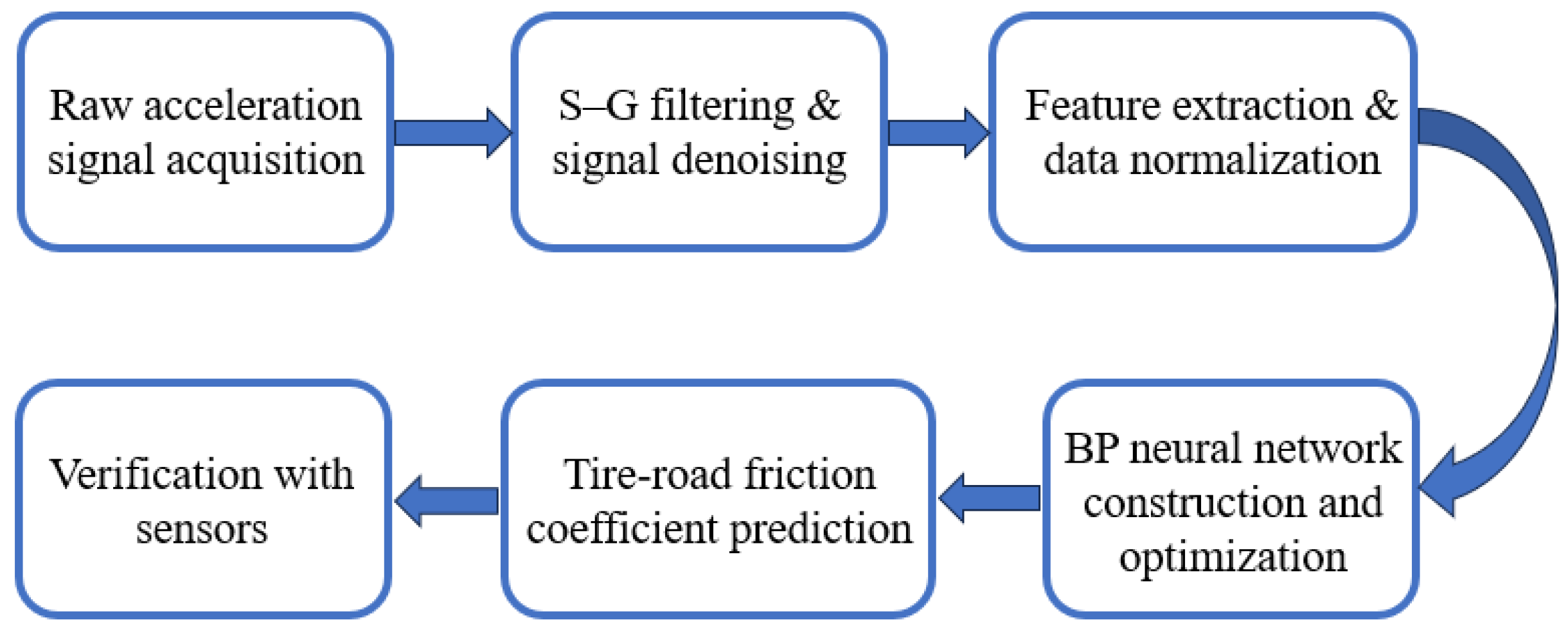
To clearly illustrate the overall framework of the proposed tire–road friction estimation system, a concise flowchart is presented in
Figure 1. The whole procedure includes signal acquisition, preprocessing, feature extraction, model training, friction prediction, and verification, which ensures the transparency, stability, and reproducibility of the method.
2. Materials and Methods
2.1. Theoretical Analysis of Tire–Snow Interaction
The mechanical response of tires on snow is fundamentally different from that on rigid pavements due to the sinkage and compaction characteristics of the snow medium [
18,
19]. According to Bekker’s theory [
20], the pressure-sinkage relationship is defined as
where
P is the pressure per unit area, kPa;
kc is the cohesive deformation modulus of snow;
kϕ is the frictional deformation modulus of snow; n is the sinkage exponent of snow;
b is the short-side length of the contact area, mm; and
Z is the sinkage depth, mm.
To characterize the compaction state of the snow layer under tire loading, the height difference between the undisturbed snow surface and the lowest point of the tire is defined as
h0, and the height difference between the compacted snow surface and the lowest point of the tire is defined as
h1. On this basis, the compaction height ratio
λ is introduced as:
Unlike rigid surfaces, the tire–snow interface exhibits an asymmetric contact geometry, where the entry angle
θ2 and exit angle
θ1 differ due to the snow wedge effect and elastic recovery [
21]. This asymmetric pressure distribution forms the physical basis for the subsequent feature extraction from the in-tire acceleration signals.
2.2. Experimental Configuration and Data Acquisition Strategy
A Volkswagen Magotan was utilized as the mobile testing platform for all field trials. The main specifications of the vehicle are listed in
Table 1. During the experiments, the vehicle was maintained in a half-load configuration, including the driver, a data acquisition operator, and the necessary onboard testing equipment. The total operational mass was approximately 1625 kg, with a calculated average vertical load of 4000 N per wheel. The test vehicle was equipped with Michelin Energy Mile 205/55R16 91V radial tires, featuring a standard four-longitudinal-groove tread design. The captured intelligent tire signals originate from the fundamental mechanical interaction at the tire–road interface. These microscopic vibration and strain characteristics are inherently platform-independent. The use of this standardized testing platform allows for the extraction of universal road–tire interaction features, which are directly transferable to electric vehicle architectures where high-bandwidth motor control can more effectively exploit such high-fidelity sensing data.
The intelligent tire monitoring system comprises embedded sensor nodes, an in-vehicle data receiver, and a host computer terminal. The core of the sensor node integrates a flexible strain gauge and an ADXL372 MEMS tri-axial accelerometer. The key technical parameters of the strain sensor are listed in
Table 2, while the detailed specifications of the ADXL372 accelerometer are provided in
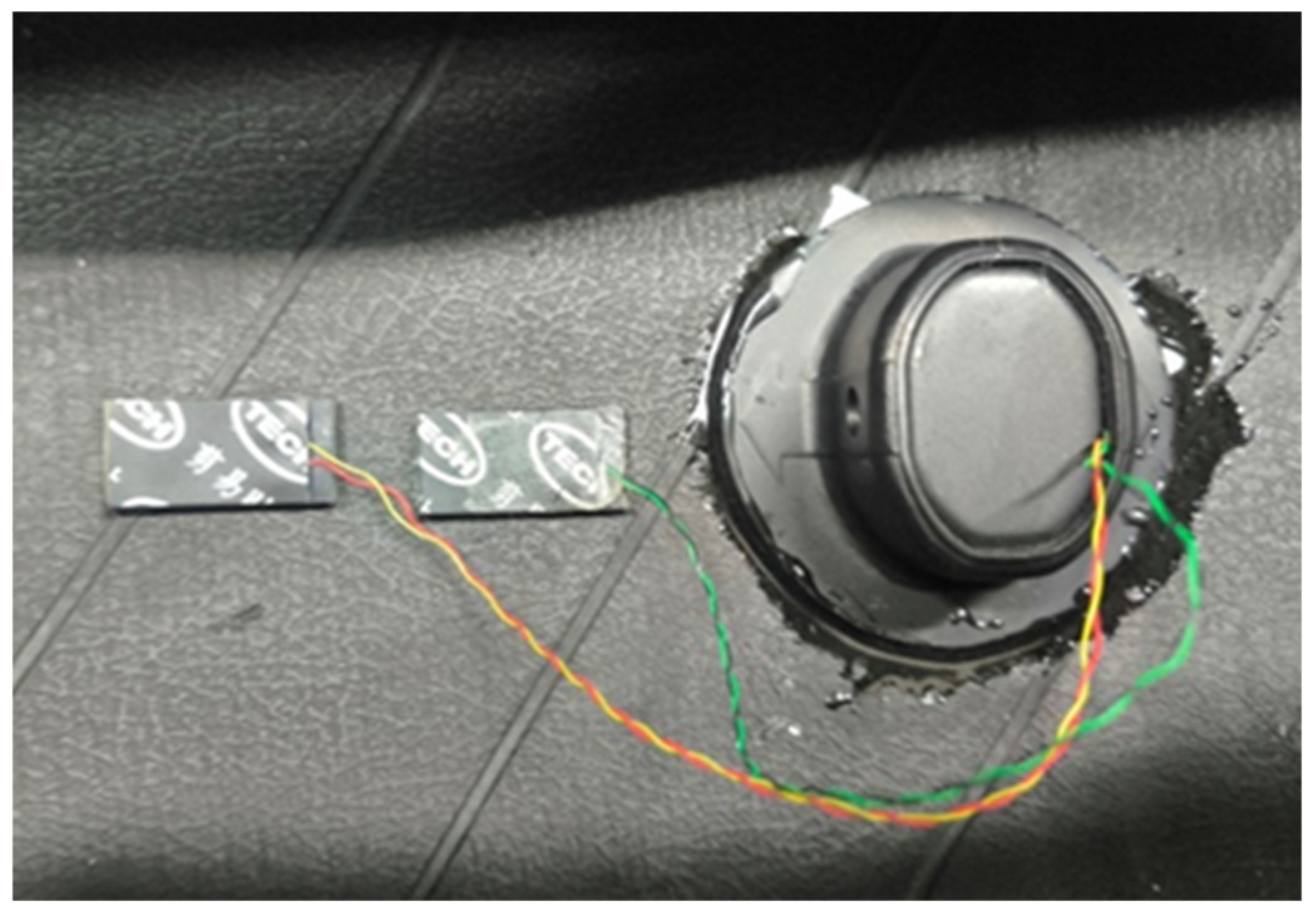
Table 3. This accelerometer possesses an ultra-high measurement range of ±200 g, which is essential for withstanding the high centrifugal forces generated during high-speed tire rotation. The sensor module was bonded to the geometric center of the tire’s inner liner using high-strength cyanoacrylate adhesive. To eliminate the impact of physical wiring on tire balance and deformation, the sensor module utilized Low-Energy Bluetooth (BLE) technology for wireless raw signal transmission to the data acquisition terminal. The physical integration of the sensor module on the tire inner liner is shown in
Figure 2.
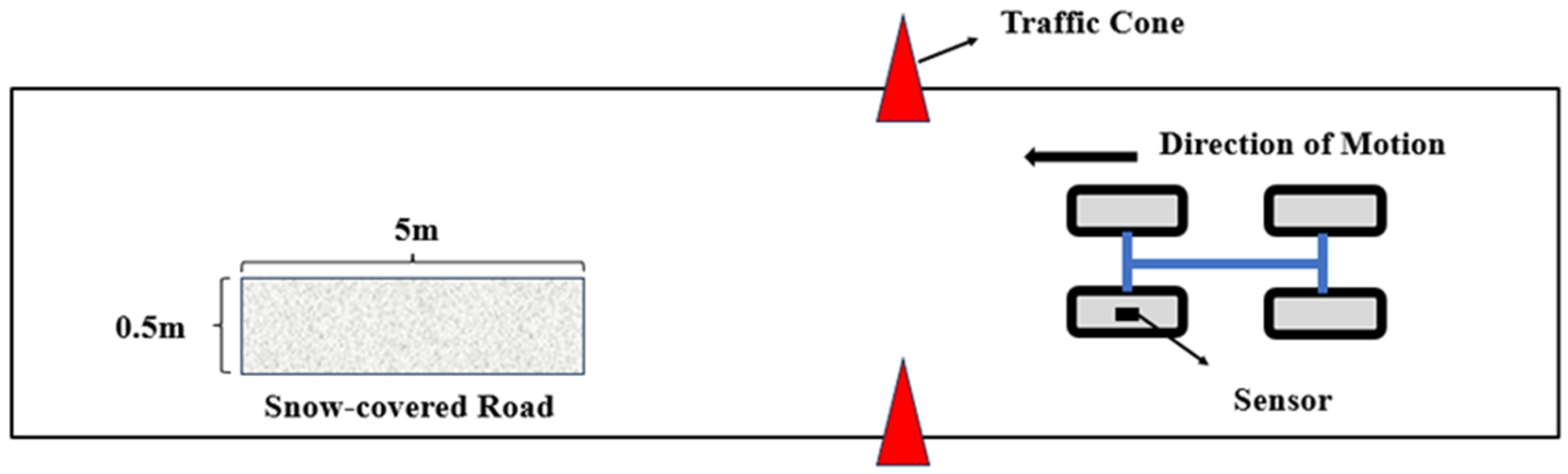
Field tests were conducted on a straight, dry cement pavement section. The snow-covered road scenario was meticulously simulated by spreading a layer of fresh, uniform snow, approximately 50 mm thick, onto the cement surface. The snow section measured 5 m in length and 0.5 m in width. This length was specifically designed to ensure that the intelligent tire could record at least two complete contact patch cycles—corresponding to the tire’s 2-m circumference—at the preset speeds. The schematic of the experimental site layout for snow-surface testing is shown in
Figure 3.
The experimental protocol encompassed a velocity gradient of 10 km/h, 20 km/h, 30 km/h, 40 km/h, and 50 km/h. A 30-m acceleration zone was established before the snow section, marked with traffic cones to guide the driver in maintaining a constant target speed upon entering the snow layer. For each velocity condition, three valid experimental runs were performed. All data were recorded synchronously at a sampling rate of 8 kHz to capture microscopic dynamic characteristics during the tire–snow interaction.
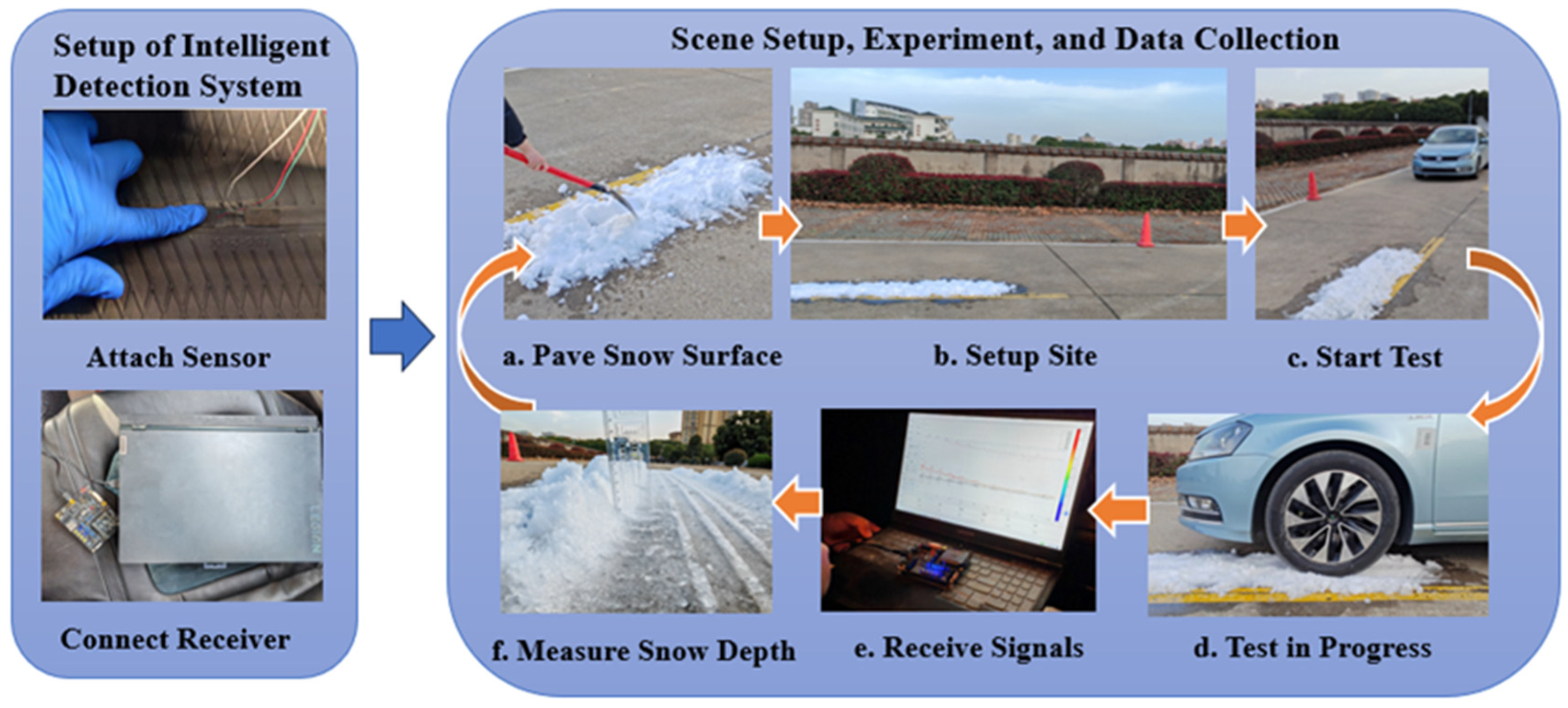
The specific steps of this field vehicle test were conducted as follows:
The sensor was adhered and secured to the inner liner of the tire tread, and the tire was installed on the front-left position of the test vehicle.
The Bluetooth connection status was verified to ensure that the receiver was successfully linked with the sensor module.
The test site was set up according to the layout design illustrated in the figure.
The driver accelerated the vehicle from a standstill at the end of the road and stabilized the vehicle at the target speed before reaching the red traffic cones. Simultaneously, the onboard data recording operator pressed the “Start” button.
(a) Constant Speed Test: The driver maintained a constant speed while traversing the snow-covered surface. Upon reaching the other end of the track, the driver applied the brakes, and the data collector pressed the “Pause” button. Tests were conducted at five velocity levels: 10 km/h, 20 km/h, 30 km/h, 40 km/h, and 50 km/h, with three repetitions for each group.
(b) Braking Test: The driver immediately applied the brakes upon passing the traffic cones. Once the vehicle came to a complete stop, the data collector pressed the “Pause” button. Braking data were collected for four initial velocities: 35 km/h, 40 km/h, 45 km/h, and 50 km/h, with three repetitions for each group.
The data acquisition interface was monitored; if no valid signal trend was observed or the recording cycle was incomplete, the trial was repeated. Note that before each experiment, the snow-covered surface was re-leveled, and the snow depth was measured with a ruler to ensure consistency in the state and thickness of the snow layer for every run.
The data were collected and processed.
To visually illustrate the operational procedures described above, the comprehensive workflow ranging from sensor integration and scene construction to data acquisition is depicted in
Figure 4.
To obtain accurate ground truth labels of the road friction coefficient for model training, emergency braking tests were performed on both dry cement and snow-covered surfaces. The simplified relationship μ = a/g was revised and enhanced to reduce systematic deviations, with full consideration of dynamic load transfer, rolling resistance, ABS intervention intervals, and data selection from the stable braking segment (excluding the short force rise period). The road adhesion coefficient was calculated using the steady-state portion of the braking deceleration curve rather than assuming constant deceleration over the entire stop.
Each test condition was repeated three times to improve statistical reliability, and the mean value with standard deviation was provided for each surface. Independent verification was conducted using wheel speed sensors and a vehicle-mounted six-component force transducer. The calibrated reference friction coefficients are 0.75 ± 0.013 for the dry cement surface and 0.23 ± 0.011 for the snow-covered surface, respectively.
These values are consistent with typical ranges for cement and fresh snow, ensuring the validity and credibility of the labels used for neural network training.
2.3. Signal Processing and Deep Learning Model Construction
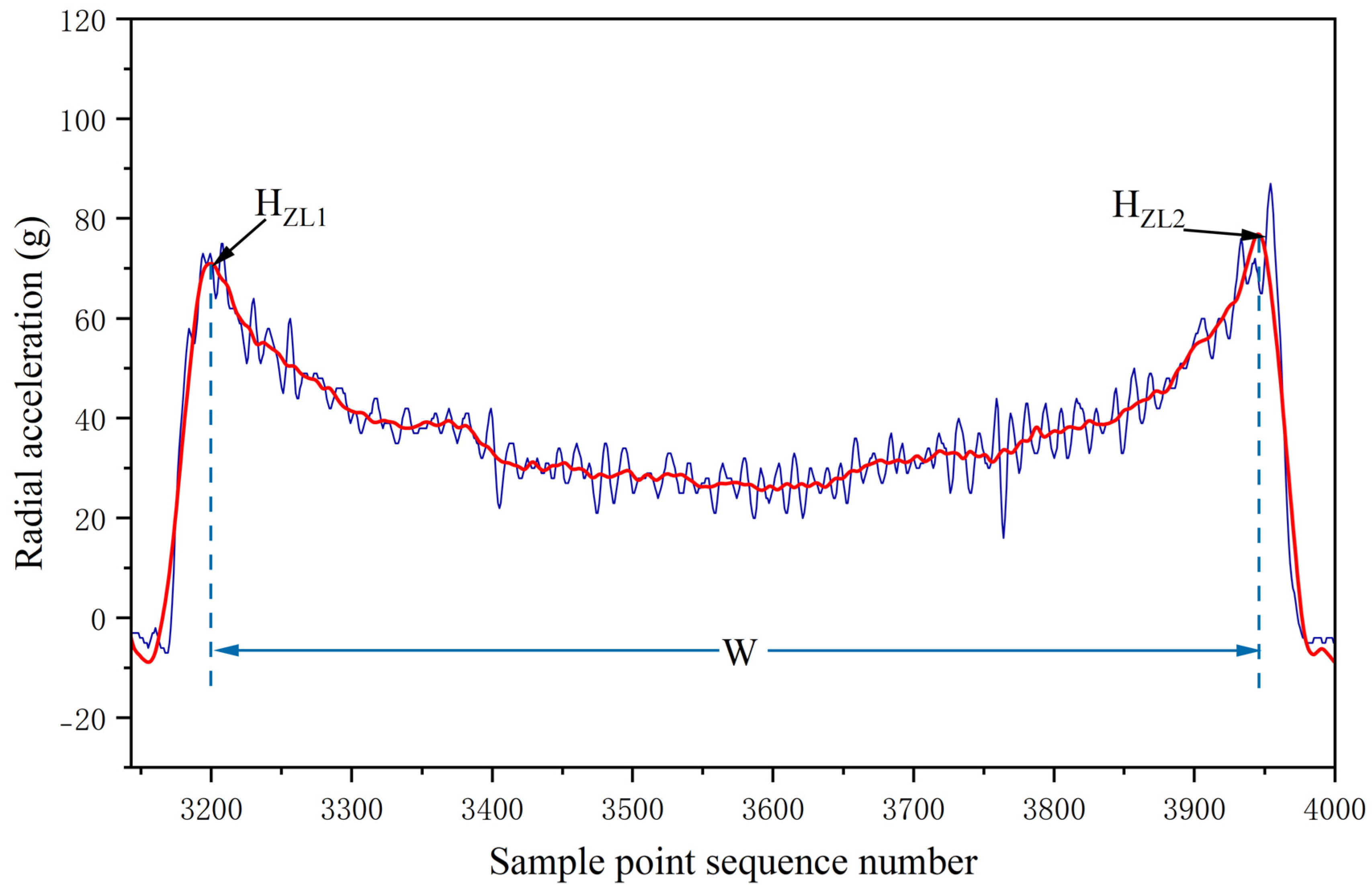
The raw radial acceleration signals often exhibit significant high-frequency noise caused by the random excitation of tire tread blocks and road surface roughness. In this study, the Savitzky–Golay (S-G) convolutional smoothing algorithm was implemented for signal reconstruction. The window length was set to 51 points and the polynomial order to 2, which can effectively eliminate high-frequency electronic noise while preserving the topological envelope and phase information of the acceleration pulses.
A second-order polynomial is employed to avoid excessive signal smoothing and distortion while maintaining the shape and timing of key contact pulses; a third-order polynomial tends to overfit local noise and distort transient feature edges, so the second-order configuration is more suitable for feature extraction. The window length of 51 points is determined via comparative tests to balance noise reduction performance and time-domain resolution, since an overlarge window would blur transient features and an overly small window cannot suppress noise effectively.
Verification shows that the time error of contact pulse identification before and after filtering is less than 0.1 ms, and no obvious waveform distortion occurs. As a global smoothing filter based on local polynomial fitting, the Savitzky–Golay algorithm avoids artificial abrupt changes in the waveform and maintains the continuity of the time-domain signal, so no obvious signal mutation is introduced during filtering.
As depicted in
Figure 5, the raw high-frequency radial acceleration signal is processed using the Savitzky–Golay smoothing algorithm to suppress noise while retaining critical feature information. The original signal and smoothed signal are clearly distinguished, and key feature points including tire entry pulse, exit pulse, peak strain, peak-to-peak acceleration, and contact patch width are marked accordingly. These features lay the foundation for the subsequent five-dimensional feature vector extraction.
Based on the underlying physical mechanical mechanisms, five key features were extracted to construct the identification vector:
Vehicle Velocity (): Included to correct the nonlinear influence of speed on signal frequency and amplitude.
Peak Strain (): Characterizing the intensity of local compressive deformation under tire–road interaction.
Contact Patch Width (): Calculated from the time interval between the entry and exit pulses combined with the rolling radius, reflecting the actual contact geometry.
Peak-to-Peak Acceleration (): Characterizing the impact energy absorbed by the tire carcass at the contact patch boundaries.
Signal Standard Deviation (): Reflecting the degree of signal dispersion. Due to the vibration-filtering effect of snow, the standard deviation on snow-covered roads typically decreases significantly compared to cement surfaces, serving as a core criterion for road type identification.
The extracted mechanical features from intelligent tire signals are summarized in
Table 4.
Physical Justification of Feature Selection: Velocity eliminates speed-induced amplitude drift; peak strain and peak-to-peak acceleration describe local contact mechanics; contact patch width directly reflects snow sinkage; standard deviation quantifies the natural filtering effect of snow. Pearson correlation analysis shows all pairwise correlation coefficients are below 0.6, indicating no severe multicollinearity. Ablation-based sensitivity analysis reveals the contribution order: contact patch width (32.7%) > signal standard deviation (24.1%) > peak-to-peak acceleration (18.5%) > peak strain (15.3%) > velocity (9.4%).
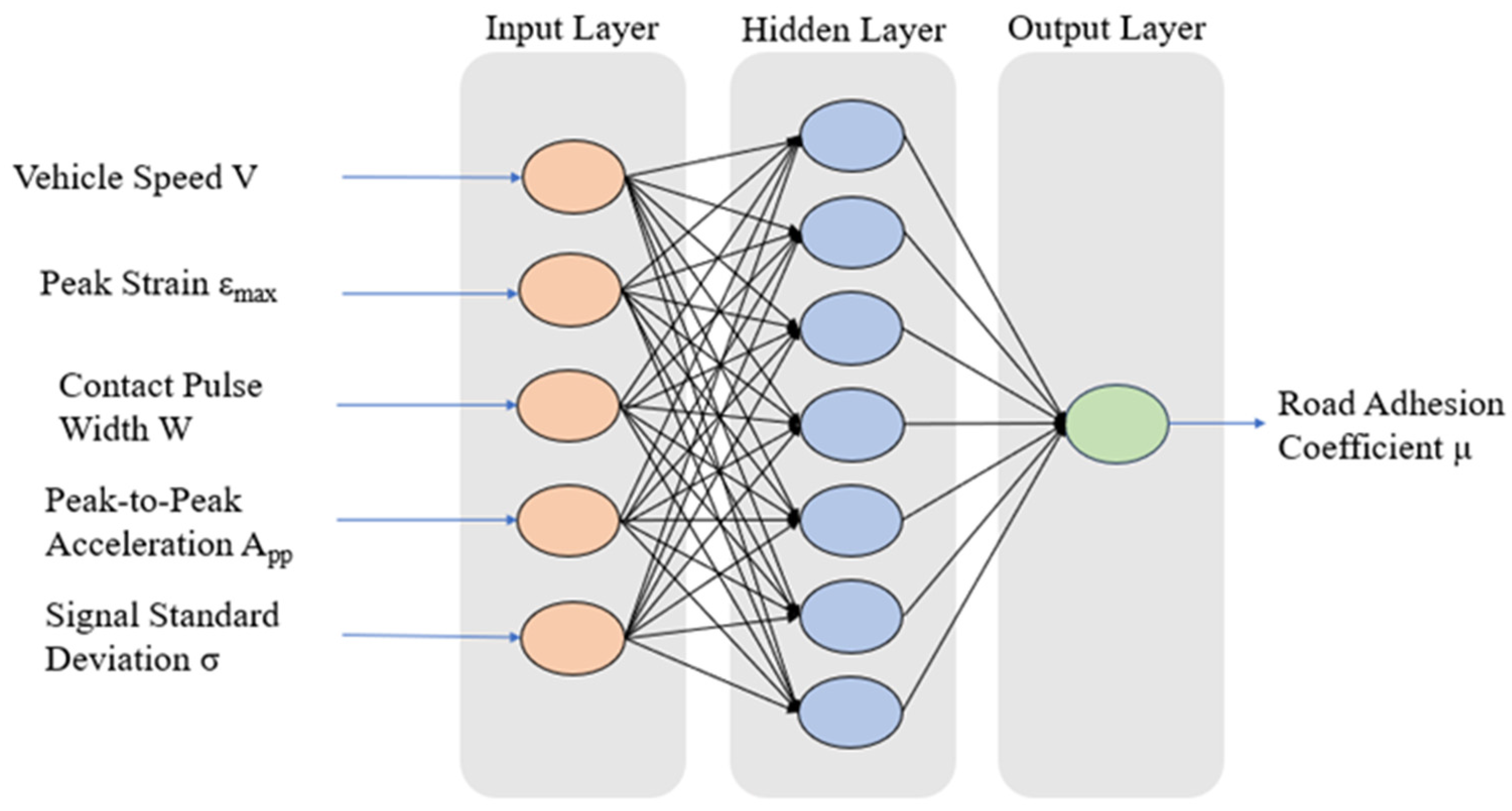
To map the nonlinear relationship between intelligent tire signals and road friction coefficient, a three-layer BP neural network with 5-7-1 architecture is constructed. The number of hidden-layer neurons (7) is determined by the empirical formula: 2 × input + 1, balancing fitting ability and anti-overfitting.
Input layer: 5-dimensional feature vector;
Hidden layer: 7 neurons, Tanh activation function;
Output layer: 1 neuron (friction coefficient), Sigmoid activation (constrained to [0,1]);
Loss function: Mean Squared Error (MSE);
Optimizer: Adam;
Learning rate: 0.001;
Epochs: 500;
Convergence threshold: 1 × 10⁻⁵.
Total training samples: 1200 groups. The dataset is divided as: training set 70%, validation set 10%, and test set 20%. Tem-fold cross-validation is adopted to ensure reliability. All features are normalized to [0,1] to eliminate magnitude differences. The topology of the proposed 5-7-1 BP neural network for RFC estimation is illustrated in
Figure 6.
3. Results
3.1. Intelligent Tire Signal Characteristics Across Different Road Surfaces
By comparing the experimental data across a velocity gradient of 10–50 km/h, significant evolution patterns in the intelligent tire signals can be observed under different road media. On the cement pavement, the radial acceleration signals exhibit intense high-frequency vibration characteristics, primarily stemming from the rigid impact between the tire tread blocks and the hard road surface. In contrast, when the vehicle transitions to the snow-covered surface, the signals manifest a pronounced smoothing trend.
As shown in
Table 3, the quantitative analysis indicates that the signal standard deviation (
σ) on the snow surface is significantly lower than that on the cement surface at the same speed. For instance, at 20 km/h, the
σ for the cement surface is 15.4, whereas it is only 4.2 for the snow surface; at 10 km/h, the
σ on snow drops to 0.6. This discrepancy originates from the natural filtering effect of snow as a porous elastic medium, which absorbs most of the high-frequency vibration energy excited in the tire carcass. The spectrum analysis shows that high-frequency components above 1 kHz are significantly attenuated on snow, which confirms the filtering effect of the porous snow medium. The sampling frequency of 8 kHz is sufficient to capture key dynamic features and meets the bandwidth requirements of the designed sensing system.
3.2. Transient Dynamic Response at the Moment of Road Entry
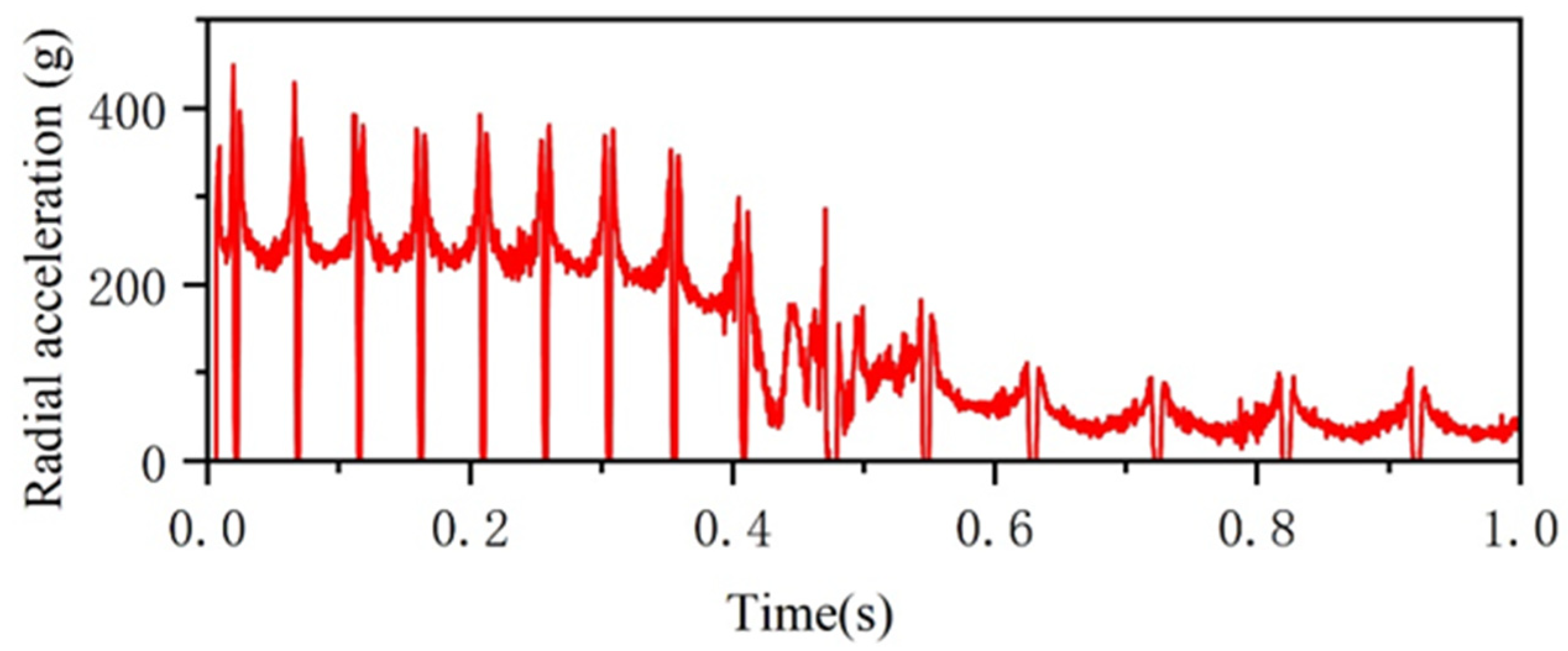
To verify the sensitivity of the intelligent tire in perceiving sudden road changes, this study focused on the dynamic process as the vehicle enters the snow zone from the cement pavement. The experimental results reveal a cliff-like collapse of the acceleration signal features at the instant of snow entry.
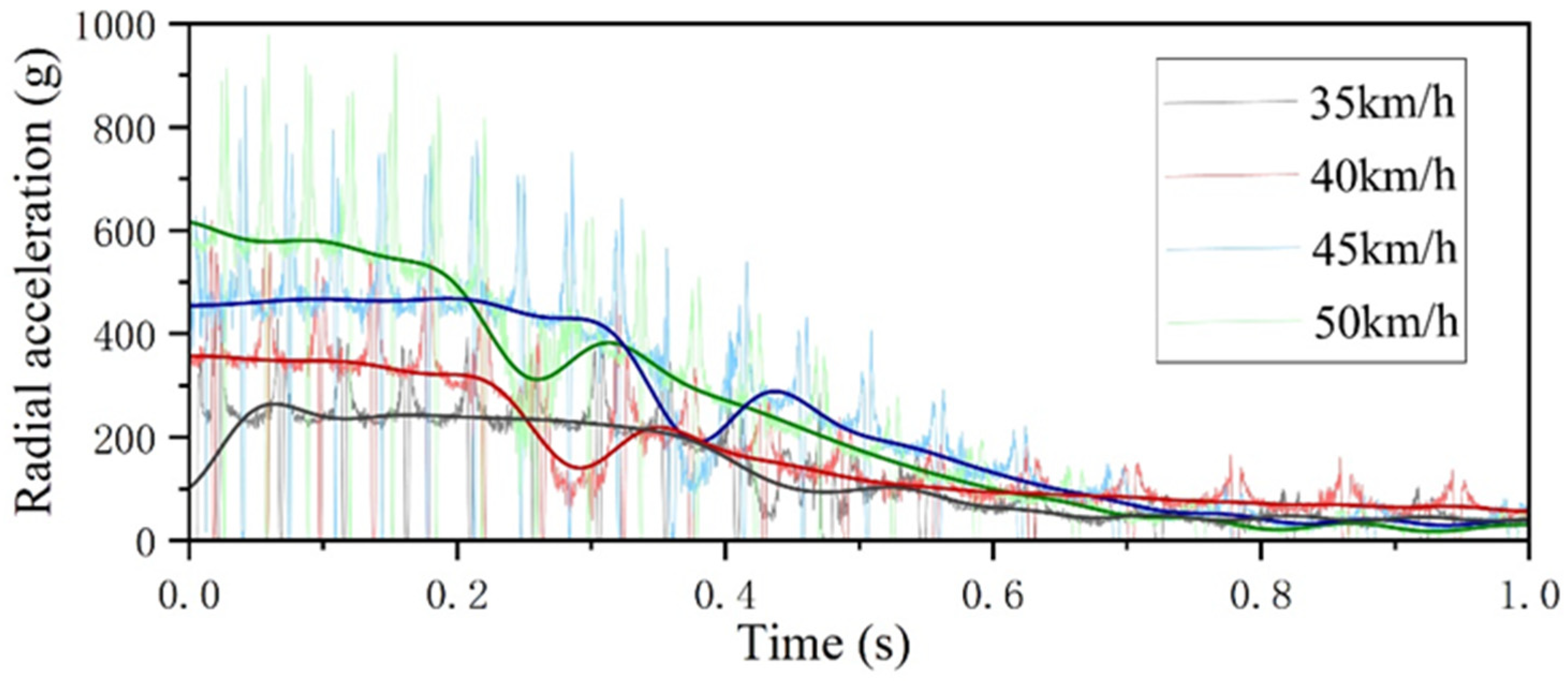
Taking the 35 km/h braking condition as an example (as shown in
Figure 7), when the tire contacts the snow layer at approximately 0.38 s, the peak-to-peak radial acceleration (
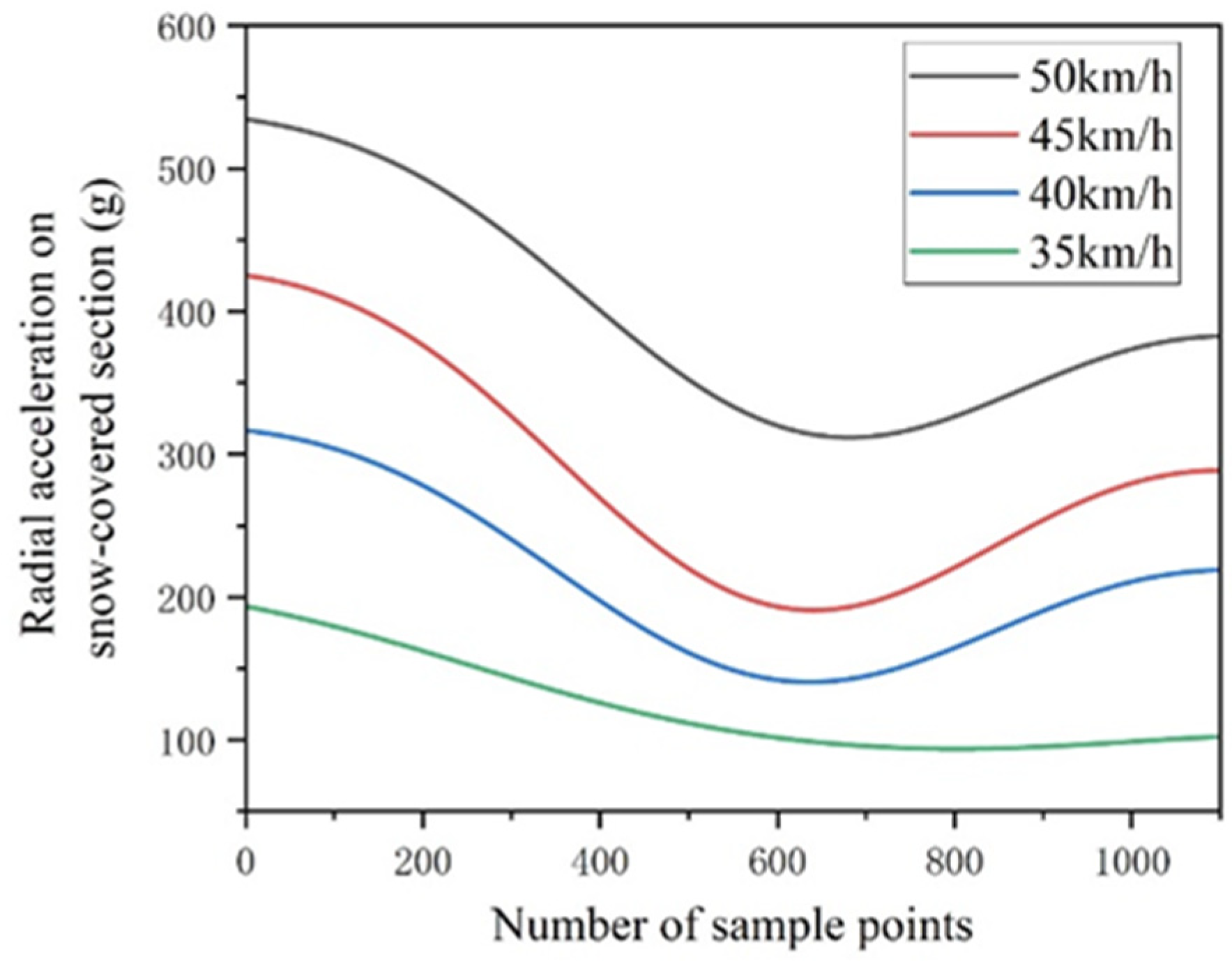
App) shrinks to about 30% of its original value within an extremely short duration. This characteristic collapse caused by the change in the physical medium proves that the intelligent tire can capture severe fluctuations in road properties within the first physical rotation cycle. Furthermore, as the initial velocity increases, the longitudinal load transfer at the moment of contact becomes more intense, leading to a higher degree of compaction in the snow wedge formed at the tire’s leading edge. Consequently, the smoothing evolution of the signal becomes more rapid and thorough.
To further investigate the influence of initial velocity, a comparison of the transient signal responses across a range of speeds (35–50 km/h) is presented in
Figure 8, confirming the consistency of the observed signal attenuation patterns.
3.3. Evaluation of Neural Network Identification Performance
Based on the extracted five-dimensional feature vectors, the 5-7-1 BP neural network was trained for 500 iterations. The identification results demonstrate high convergence precision under steady-state driving conditions. Test set results indicate that the RMSE remains below 0.015, the coefficient of determination () reaches above 0.96, and the overall identification accuracy is as high as 96.2%.
Further analysis of feature sensitivity reveals that the contact patch width (
W) broadens significantly on snow-covered surfaces. At identical speeds, the
W on snow is, on average, 105.8% wider than on cement, providing a primary physical criterion for identifying snow conditions. Through spatial feature alignment (as shown in
Figure 9), it is confirmed that the signal features maintain a high degree of underlying consistency across the 10 km/h to 50 km/h velocity gradient.
The 5-7-1 BP neural network was trained for 500 iterations, and the test set results demonstrate that the root mean square error (RMSE) is below 0.015, the coefficient of determination (R2) exceeds 0.96, and the overall identification accuracy reaches 96.2%. Here, the identification accuracy is defined as the average relative accuracy within the allowable error range. In addition, 10-fold cross-validation is implemented throughout model evaluation, which verifies that the proposed network exhibits favorable stability and strong generalization ability under different working conditions.
3.4. Dynamic Real-Time Estimation of Road Friction Coefficient
Inputting the transient feature sequences from the entry process into the trained network, the real-time road friction coefficient (
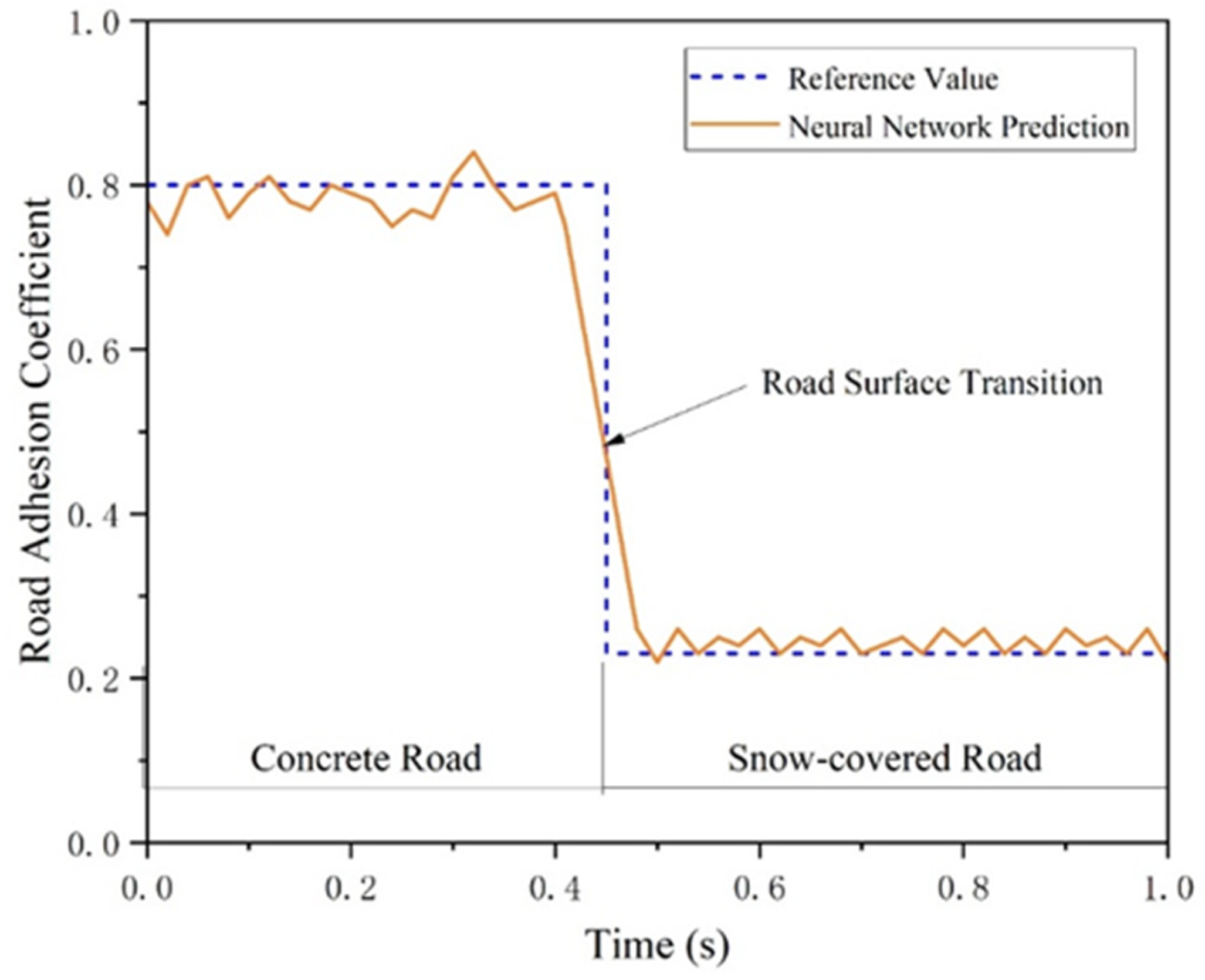
μ) output by the model shows excellent tracking performance. As illustrated in
Figure 10, when the vehicle enters the snow zone, the predicted
μ transitions rapidly and smoothly from approximately 0.75 for the cement surface to about 0.23 for the snow surface. The prediction curve exhibits a high degree of temporal alignment with the reference values, with the steady-state error on the snow surface maintained within a narrow range. This demonstrates that the BP neural network successfully maps the cliff-like collapse of radial acceleration features into a quantified reduction in road adhesion.
The response latency of this identification process is extremely low, effectively overcoming the identification blind spots of traditional algorithms under low-speed or high-slip conditions. The results indicate that the transient features extracted from micro-intelligent tire signals not only perceive abrupt changes in road types but also demonstrate strong dynamic robustness, as the prediction accuracy is minimally affected by fluctuations in initial velocity. Furthermore, during the emergency braking phase, even though the intense longitudinal load transfer and tire–snow wedge compaction introduce significant non-linear disturbances to the raw signals, the model effectively decouples these interferences to maintain a stable output. This consistency suggests that the five-dimensional feature vector captures the intrinsic mechanical fingerprints of the road medium rather than just macroscopic kinematic changes. From the perspective of vehicle active safety, this real-time μ estimation provides a critical lead time of approximately one tire rotation cycle. This proactive information is invaluable for early-stage intervention of ABS and ESC, allowing for the optimization of brake pressure distribution before the vehicle enters an unstable state.
The proposed intelligent tire-based friction estimation method is compared with the Pacejka magic formula model, the brush tire model, and conventional vehicle dynamics-based road friction estimation approaches. Quantitative evaluation results indicate that the root mean square error (RMSE) of the proposed method is approximately 0.012, which is significantly lower than that of traditional methods, which typically exceed 0.035. In addition, the proposed method does not depend on a high slip ratio to achieve effective identification and can complete road friction recognition within the first physical rotation cycle of the tire. Furthermore, the proposed method is immune to the torque coupling interference caused by regenerative braking, which makes it more robust and suitable for real-time stability control applications of intelligent E-Chassis in electric vehicles.
4. Discussion
4.1. Modulation Mechanism of Snow-Covered Surfaces on Tire Vibration Signals
The smoothing trend observed in the experimental signals originates from the mechanical properties of snow as a porous elastic medium. Unlike rigid cement pavement, fresh snow exhibits a lower compressive modulus and high energy dissipation capacity. When tire tread blocks impact the road surface, the snow layer acts as an elastic buffer, absorbing and suppressing most of the high-frequency vibration energy. In the frequency domain, this effect manifests as a significant collapse of PSD in the high-frequency bands, while in the time domain, it directly leads to a drastic reduction in the signal standard deviation. This finding confirms that the statistical characteristics of intelligent tire signals serve as physical fingerprints for identifying the porosity and looseness of the road medium.
4.2. Mechanical Interpretation of Feature Collapse at the Moment of Contact
The cliff-like feature collapse, with the peak-to-peak acceleration reduced by approximately 70%, observed at the moment of road transition reveals the nonlinear mutation characteristics of tire–snow interaction. Due to the nonlinear sinkage properties of snow, a significant snow wedge effect occurs at the instant of entry, drastically increasing the effective resistive area at the tire’s leading edge. Coupled with the longitudinal load transfer during emergency braking, the compaction of the leading-edge snow layer is further intensified. This rapid change in the physical state of the medium is mapped in real-time onto the in-tire acceleration signals. This proves that, compared to traditional vehicle-body sensors relying on slip ratios, intelligent tire signals can capture the medium evolution at the contact interface much earlier, providing critical lead time for active safety control.
4.3. Feature Fusion and Cross-Velocity Robustness of the Model
The proposed five-dimensional feature vector fuses macroscopic kinematics with microscopic mechanics. Experiments demonstrate that while speed variations cause a nonlinear increase in acceleration amplitude, the BP neural network can decouple speed interference and extract stable road friction features through the synergistic constraints of contact patch width and signal standard deviation. The high degree of consistency exhibited by the feature sequences across the 10–50 km/h velocity range validates the strong environmental perception robustness of the intelligent tire system under dynamic slip conditions, effectively overcoming the non-uniqueness problems associated with single physical features in complex operating conditions.
4.4. Implications for E-Chassis Stability and EV Control Integration
The rapid transition of the road friction coefficient from 0.75 on cement to 0.23 on snow identified in this study presents a critical challenge for the stability control of electric vehicles. Unlike internal combustion engine vehicles, the high bandwidth and fast-torque response of electric motors require a preemptive perception layer to prevent wheel-slip-induced instability. When the test vehicle enters the snow zone at 35 km/h, the proposed BP neural network detects the cliff-like friction collapse within the first physical rotation cycle, providing a vital feed-forward input for the Vehicle Control Unit (VCU). As the maximum transmissible torque decreases by nearly 70% during this transition, the VCU must immediately adjust the motor inverter commands, particularly when the EV is in regenerative braking mode, to reduce electromagnetic braking torque and prevent sudden wheel lock-up. This integration forms a high-speed Perception-to-Actuation response chain: the intelligent tire sensing layer captures microscopic vibration and deformation features, which are processed by the edge perception layer to inform the vehicle decision layer (VCU/ESC). The VCU then calculates the instantaneous torque limit and commands the MCU to clip target torque or execute torque vectoring across the E-Chassis. This integrated loop effectively bridges the latency gap inherent in traditional vehicle-body-based observers, establishing a robust physical foundation for the stability control of intelligent electric vehicles in extreme cold environments.
Compared with existing studies, this work is the first to combine intelligent tire micro-signals with deep learning for road friction estimation of E-Chassis on snowy roads. The natural filtering effect caused by the porous elastic structure of snow and the cliff-like signal collapse at the moment of snow entry reveal the unique mechanical response of the tire–snow interface. These findings provide a new physical mechanism for proactive road adhesion perception and can be used as a feedforward criterion for torque vectoring and regenerative braking stability control in electric vehicles.
Nevertheless, this study has several limitations. The tests are only conducted on fresh uniform snow and cement surfaces, while more typical road conditions such as dry/wet asphalt, compacted snow, and ice surfaces are not involved, which may bring potential overfitting risks to the model. The valid velocity range is limited to 10–50 km/h, and the performance under medium and high driving speeds needs further verification. In addition, only straight-line driving experiments under single load and fixed tire type are carried out, and typical conditions such as steering, acceleration, variable loads, and multiple tire types are not covered, which still restricts the further generalization and engineering application of the proposed method.
5. Conclusions
This study proposed and validated a real-time road friction estimation method based on micro-signals from intelligent tires and deep learning for snow-covered environments in cold regions. A comprehensive perception framework was developed through in-tire integrated sensors and the Savitzky–Golay smoothing algorithm, successfully extracting high-fidelity mechanical signals while addressing the challenge of high-frequency noise interference. The integration of tri-axial accelerometers and strain gauges allows for a multi-modal perception of the tire–road interface, capturing both the impact vibrations and local carcass deformations. The experimental results reveal that the porous medium properties of snow exert a natural filtering effect on tire carcass vibrations, leading to a 60–70% reduction in signal standard deviation compared to rigid cement surfaces.
Utilizing these physical insights, the 5-7-1 BP neural network model achieved an identification accuracy of 96.2% across a velocity gradient of 10–50 km/h. Notably, the model acutely captured the transient signal collapse at the moment of snow entry, enabling a seamless real-time prediction of the friction coefficient transitioning from 0.75 to 0.23. This identification, completed within the first physical rotation cycle, matches the millisecond-level torque response of electric motors, effectively bridging the latency gap between environmental perception and E-Chassis actuation.
Compared to traditional dynamics-based methods, the proposed intelligent tire system offers a proactive feed-forward criterion that is platform-independent and uniquely suited for electric vehicles. By providing high-fidelity friction data before a large slip ratio occurs, this framework enables advanced E-Chassis functions such as precise torque vectoring and the dynamic adjustment of regenerative braking intensity. This provides a robust safety foundation for intelligent electric vehicles operating under extreme climatic conditions, establishing a framework for next-generation active safety strategies.