3.1.1. Load Spectrum Compilation
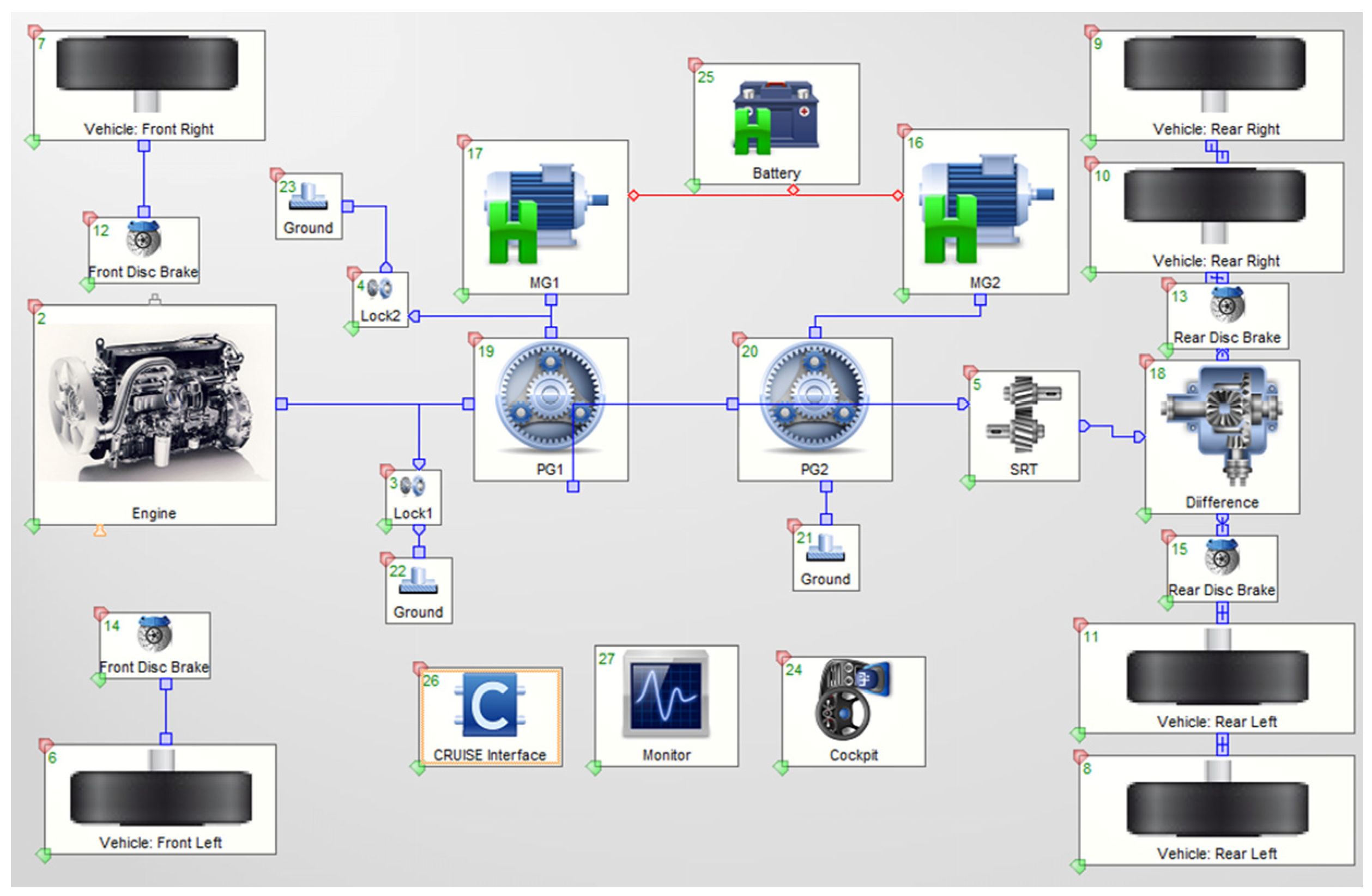
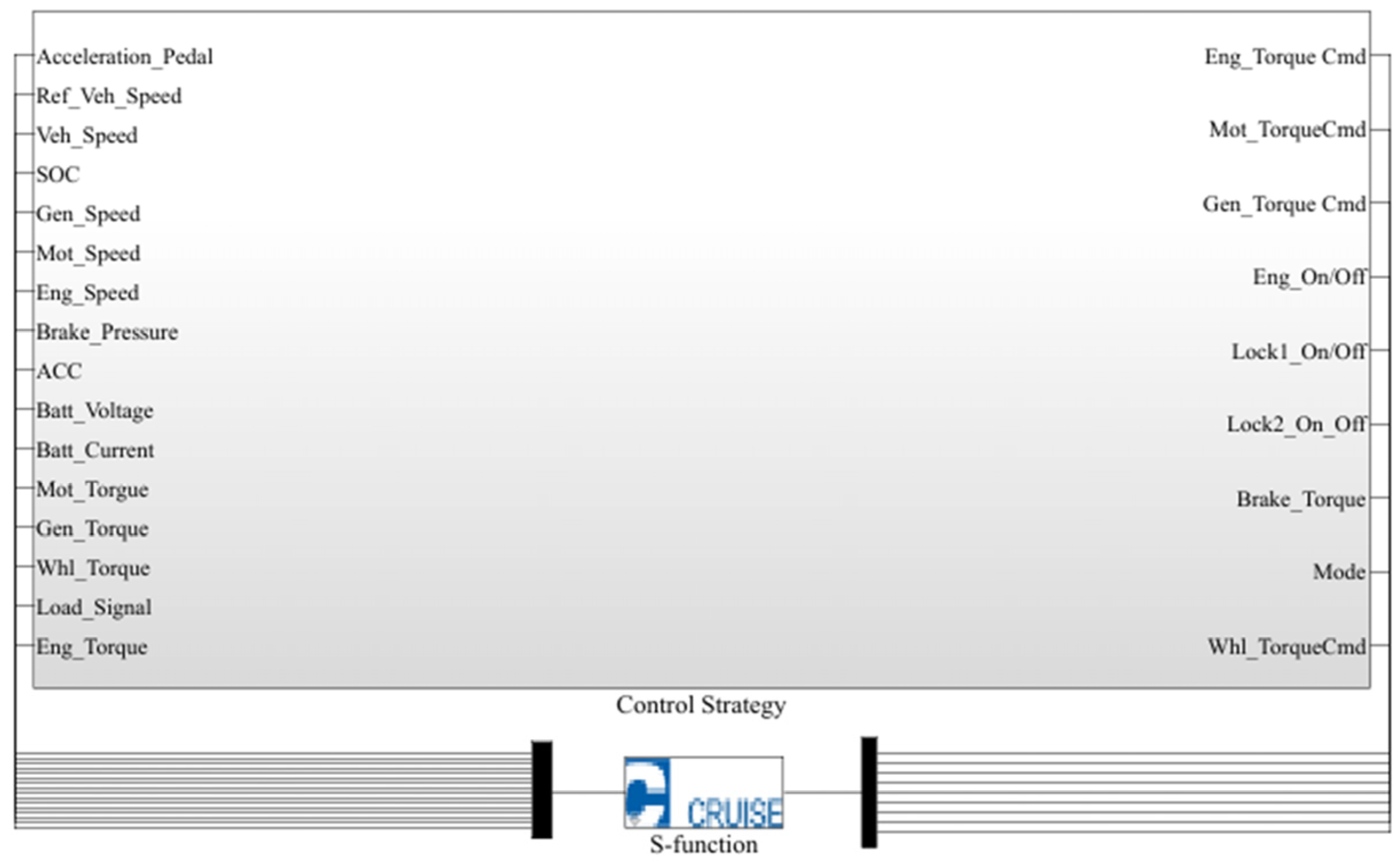
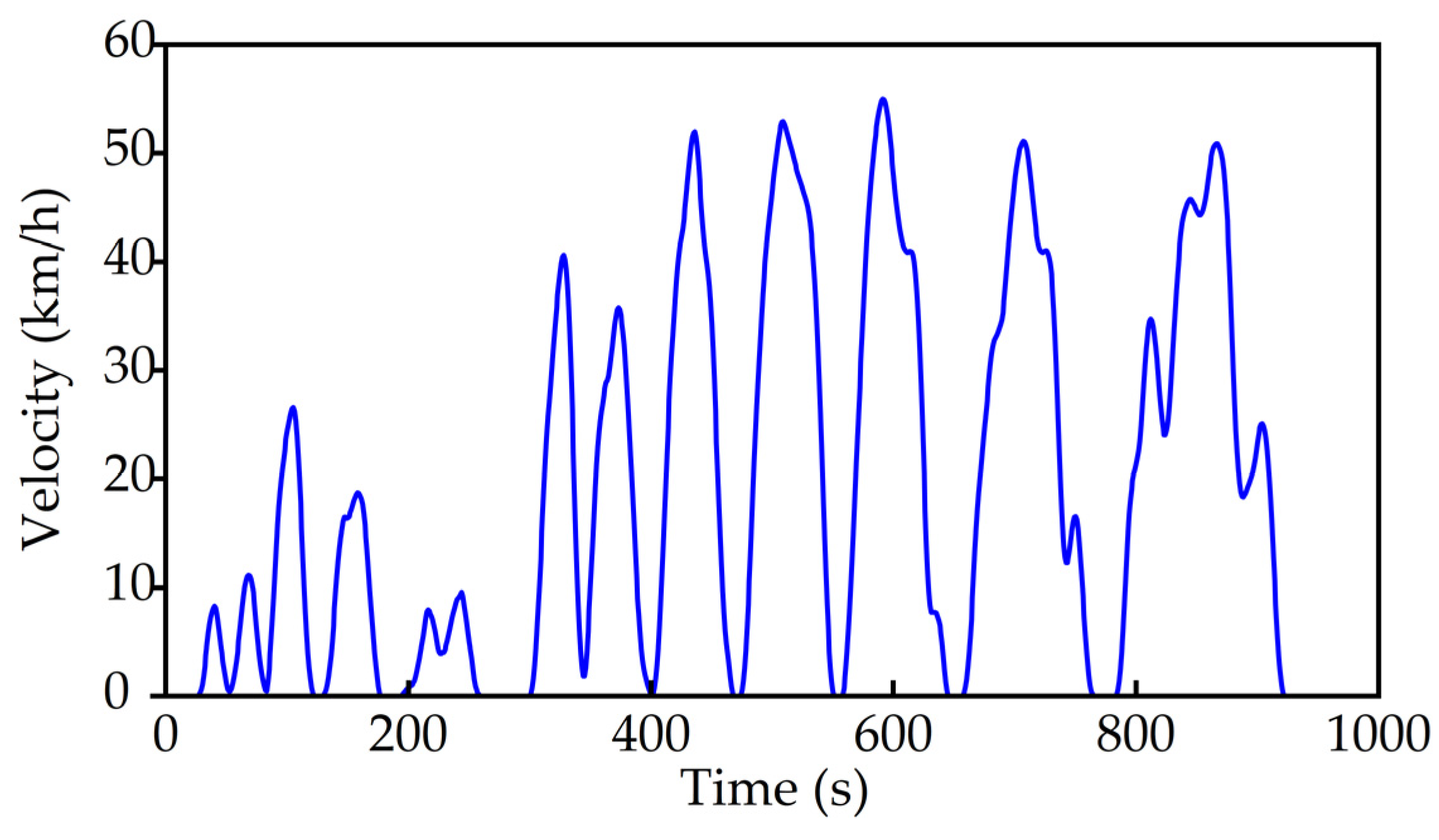
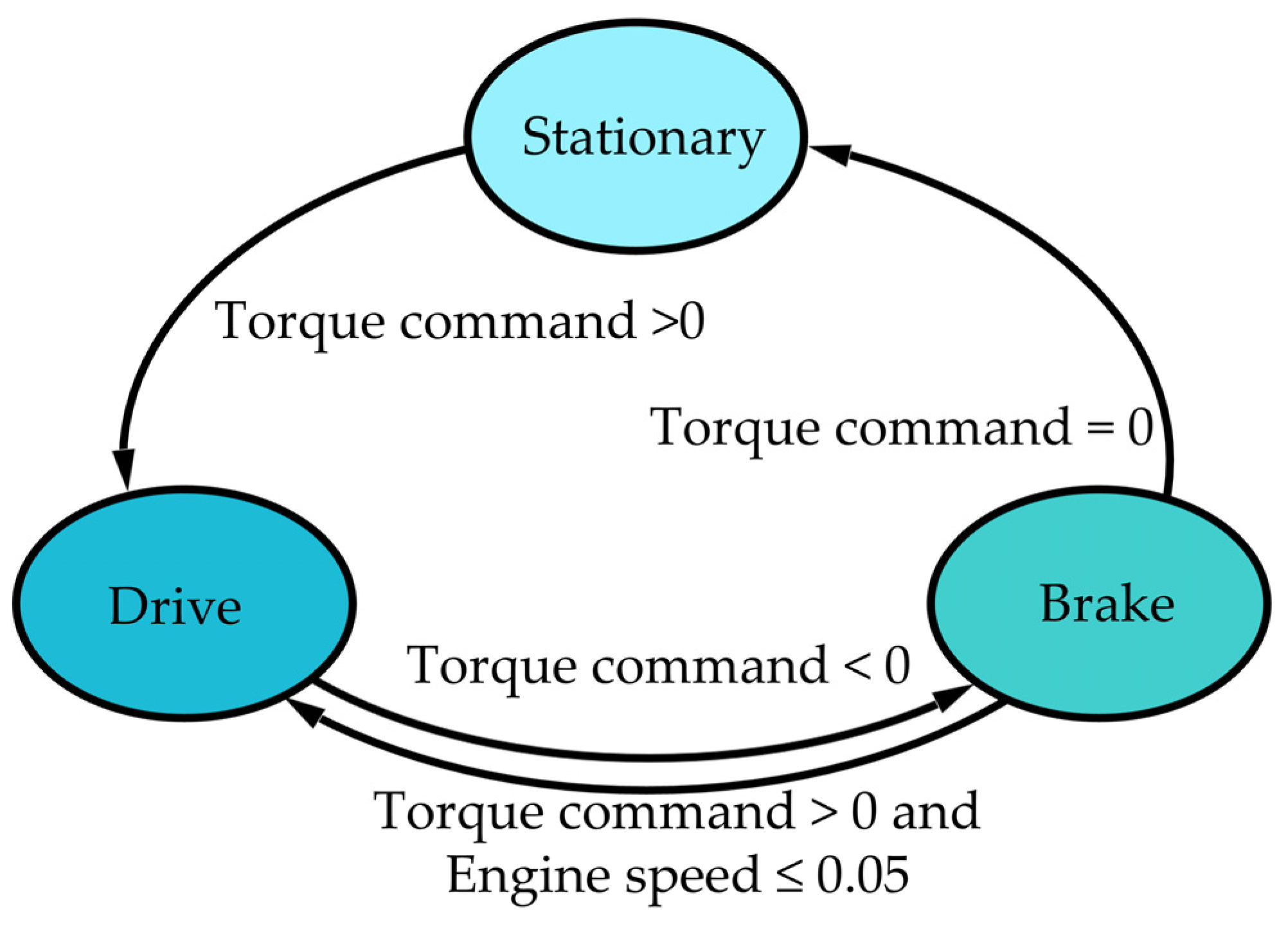
The accuracy of gear fatigue life prediction highly depends on the precision of the fatigue loading spectrum. Based on the hybrid electric vehicle model established through CRUISE/Simulink co-simulation, this study will extract the actual operating load data of the planetary gear set and subsequently compile the fatigue loading spectrum. Compared with traditional assumptions or single-operating-condition data, the load data obtained by this method are closer to the actual vehicle operating conditions, and simultaneously cover both steady-state and transient conditions, particularly capable of capturing the gear load characteristics under multiple operating modes.
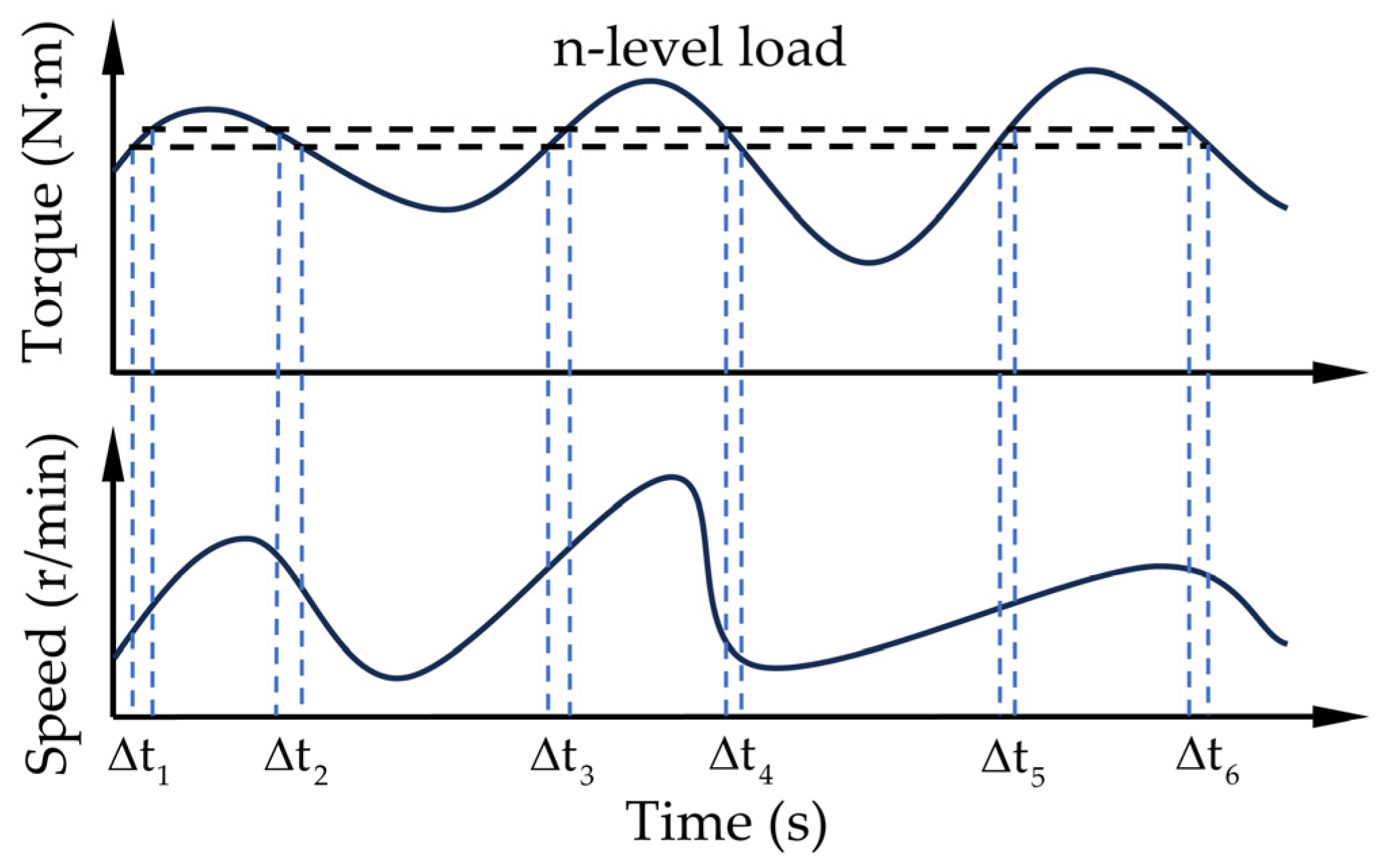
During gear rotation, each tooth undergoes a periodic “engagement–meshing–disengagement” process, and the load exhibits significant pulsating characteristics (i.e., one loading cycle corresponds to one revolution), rather than continuous variation. To accurately capture the pulsating characteristics of gear loads, this study employs the histogram counting method for planetary gear load analysis [
35]. This method divides the torque load into n amplitude intervals, and calculates the number of cycles in each interval by combining rotational speed and action time, thereby constructing a fatigue loading spectrum that conforms to gear transmission characteristics. The principle and the calculation formula for the number of cycles are shown in
Figure 9 and Equation (4), respectively.
where
Ni is the number of revolutions corresponding to the nth-level torque load,
n (
t) is the rotational speed of the gear, and
m is the number of time intervals.
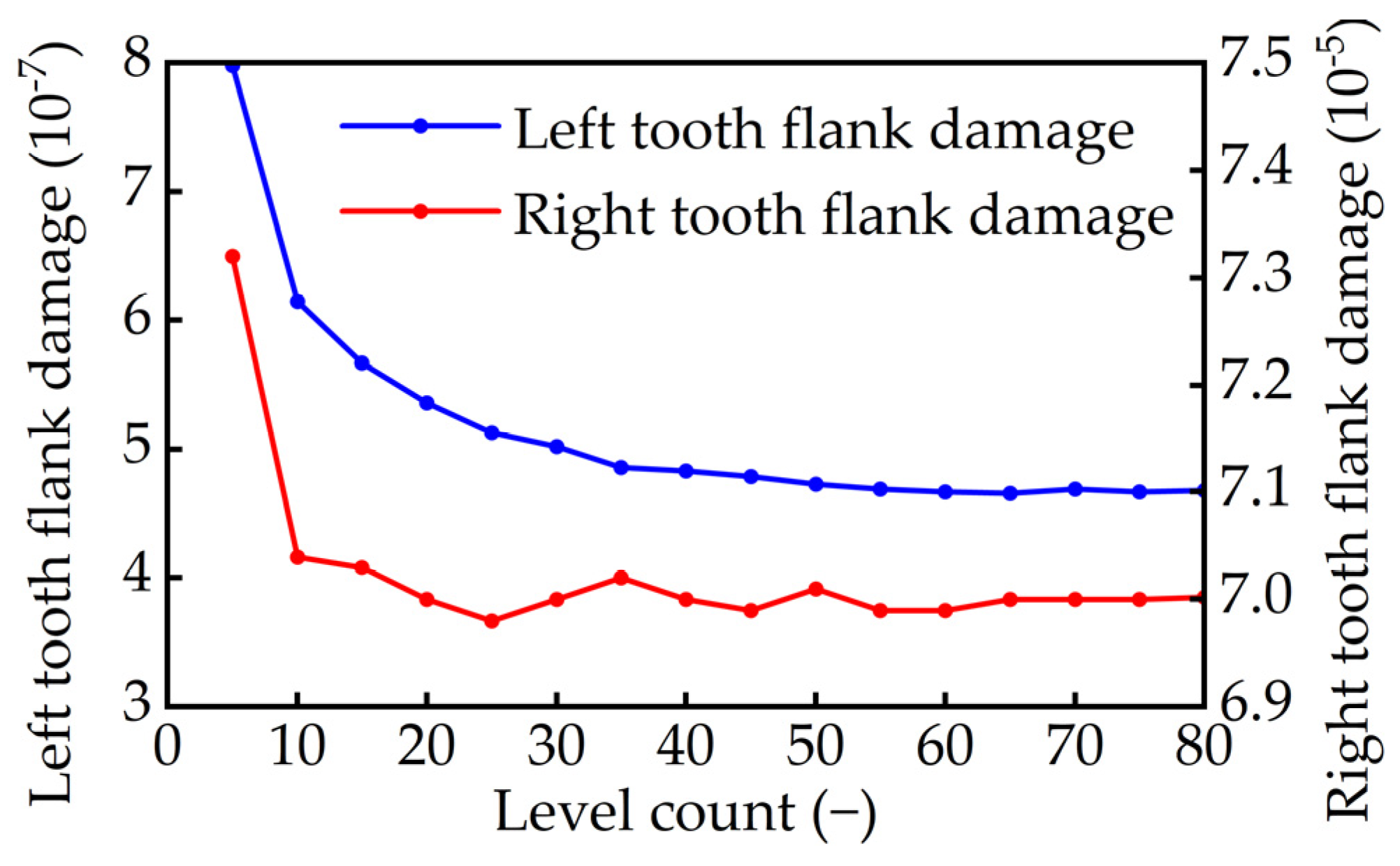
The full-operating-condition full-load data obtained from the CRUISE/Simulink co-simulation were statistically processed using the histogram counting method. To determine the optimal number of load division levels, a sensitivity analysis of the level count was conducted. Preliminary fatigue damage simulation results, as shown in
Figure 10, indicate that the fatigue damage on both the left and right tooth surfaces fully converges after 60 levels. Therefore, the load is ultimately divided into 60 levels.
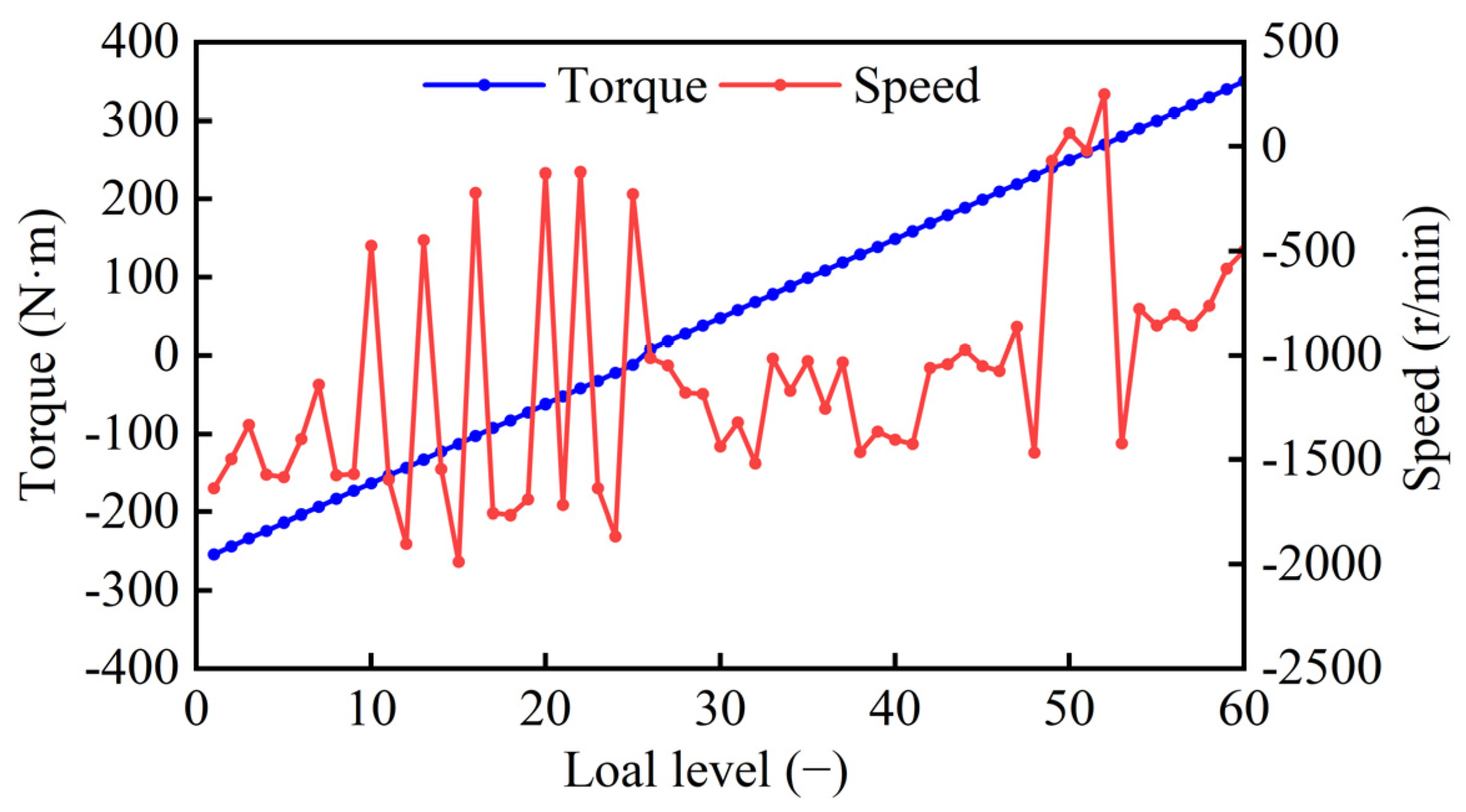
As indicated by the statistical results of the sun gear fatigue life loading spectrum in
Figure 11, this loading spectrum fully covers the full operating range of the planetary gear set under all operating conditions, with a torque range from −254 N·m to 350 N·m and a rotational speed range from −1258 r/min to 1259 r/min. It encompasses all types of operating conditions including driving, braking, and steady-state cruising under forward and reverse meshing.
3.1.2. Simulation Calculation and Damage Analysis of Tooth Surface Fatigue
The planetary gear parameters designed and verified according to the hybrid system parameters and ISO 6336 are shown in
Table 5 [
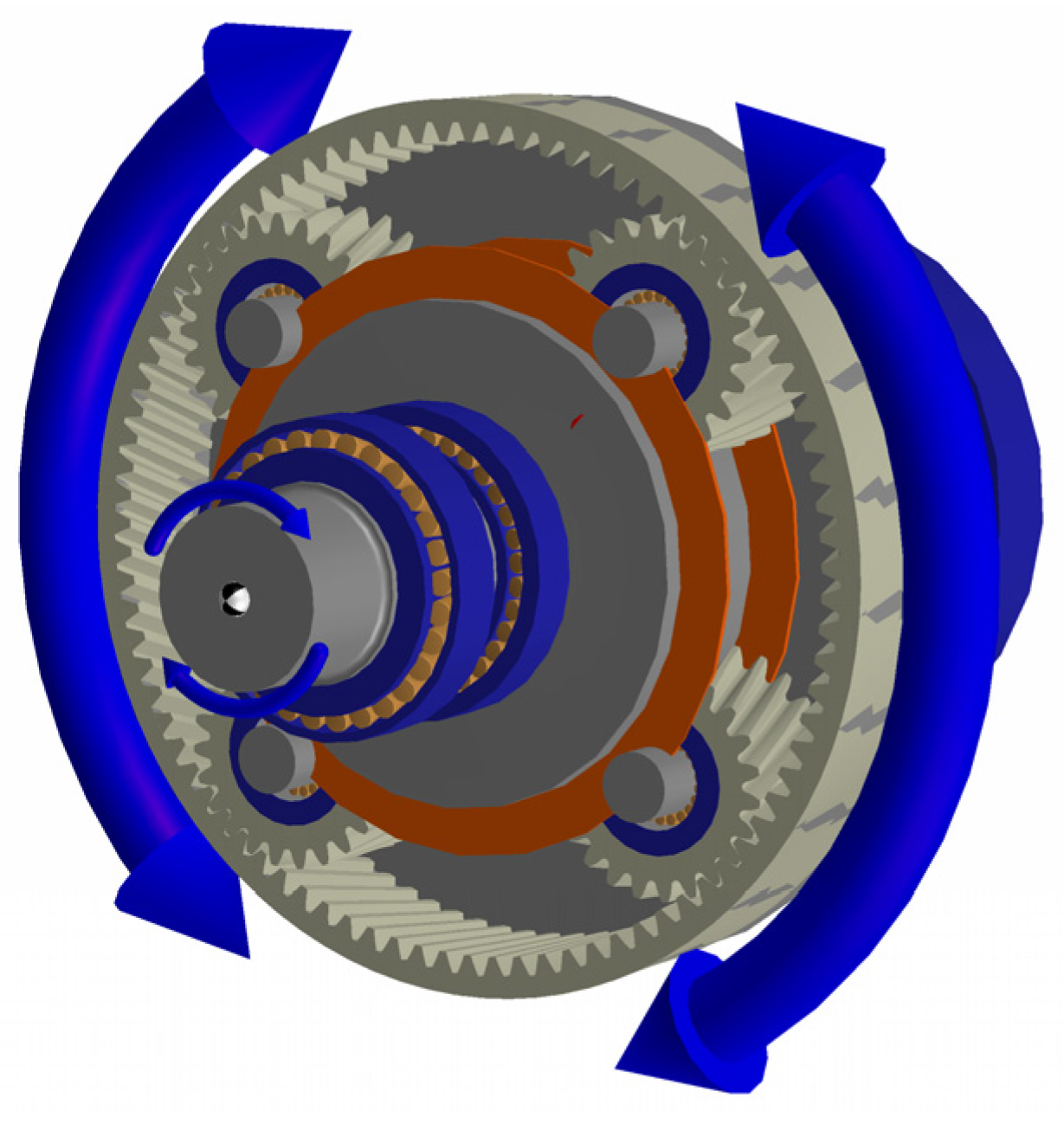
36], and the constructed rigid–flexible coupling dynamics model of the planetary gear set is shown in
Figure 12.
As the planetary gears are subject to high service loads under actual operating conditions, 20CrMnTi was selected as the gear material, with its performance parameters presented in
Table 6 [
37].
Bearings are added to provide constraints for the gear shafts. All bearings adopted are tapered roller bearings that have passed the verification, and their specific designations are listed in
Table 7.
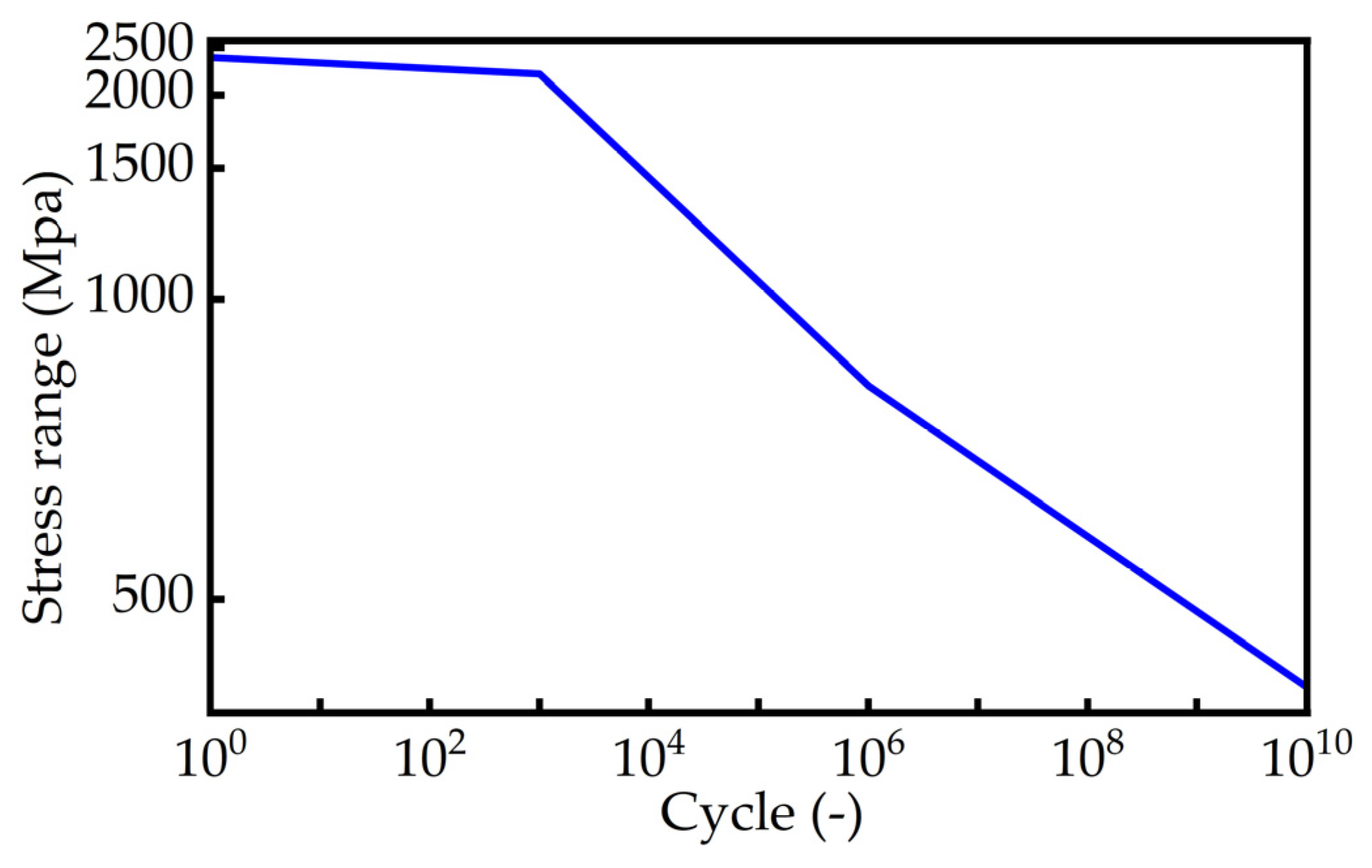
The S-N curve of 20CrMnTi material [
38] is shown in
Figure 13. This study calculates fatigue damage based on the aforementioned S-N curve, with the specific procedure as follows:
The fatigue loading spectrum developed in this paper is input into the planetary gear dynamic simulation model. Maximum contact stress values at critical contact zones under each load level are extracted via finite element analysis. Leveraging the stress-life mapping relationship of the S-N curve, the material’s ultimate cyclic life corresponding to each stress level is determined. Combined with the actual cyclic count of that load level, the fatigue damage per single load level is computed. Finally, applying Miner’s linear fatigue damage accumulation criterion, the fatigue damage across all load levels is aggregated to derive the total fatigue damage per single complete loading cycle. This value is then extrapolated to obtain the total contact fatigue life of the gear structure.
The SAE 85W-90 API GL-5 gear lubricant is adopted in the simulation to match the heavy-duty operating conditions of the planetary gear train. As a core factor affecting gear dynamic load and fatigue life, lubricant temperature directly changes the kinematic viscosity of the oil, and further affects the oil film thickness and friction coefficient of the tooth surface under elastohydrodynamic lubrication. Specifically, rising oil temperature will reduce viscosity, thin the oil film, aggravate friction loss and transmission error, intensify the dynamic excitation of the gear system, and eventually lead to an increase in the dynamic load factor
Kv and a decline in gear contact and bending fatigue life. The reference oil temperature for conventional steady-state conditions is set to 70 °C in this study, which corresponds to the typical operating oil temperature of the gearbox for the target hybrid electric bus in urban scenarios [
39].
The calculation of fatigue damage is based on the linear fatigue damage accumulation theory. The Miner’s rule is adopted in this paper to calculate the fatigue damage, with its principle shown in Equation (5).
where
D is the cumulative value of fatigue damage,
ni is the number of load cycles of the material at the
i-th stress level,
Ni is the number of cycles to fatigue failure of the material at the
i-th stress level, and
di is the single-cycle fatigue damage at the
i-th stress level.
This study applies ISO 6336 [
37] and Miner’s rule to independently calculate cumulative fatigue damage on the left and right gear flanks under bidirectional loading. Each working flank is treated as an independent unit, with decoupled meshing conditions, stress states, and load histories between flanks—no cross-flank damage interaction or stress superposition occurs.
Based on the fatigue life loading spectrum, the power loads of rotational speed and torque are applied to the sun gear and planet carrier of the planetary gear model. The software is run to generate the analysis results of the gear load spectrum. The simulation results show that the bending fatigue damage of the planetary gears is zero, and the contact fatigue damage is presented in the table below.
As shown in
Table 8 and
Table 9, the right tooth flank of the PG1 sun gear exhibits the maximum contact fatigue damage with a value of 7.04 × 10
−5, making it the critical component that determines the fatigue life of the planetary gear train. This is followed by the planetary gears, with a right tooth flank damage value of 3.14 × 10
−5. The ring gear has the minimum contact fatigue damage, with a damage value of 0 for both the left and right tooth flanks.
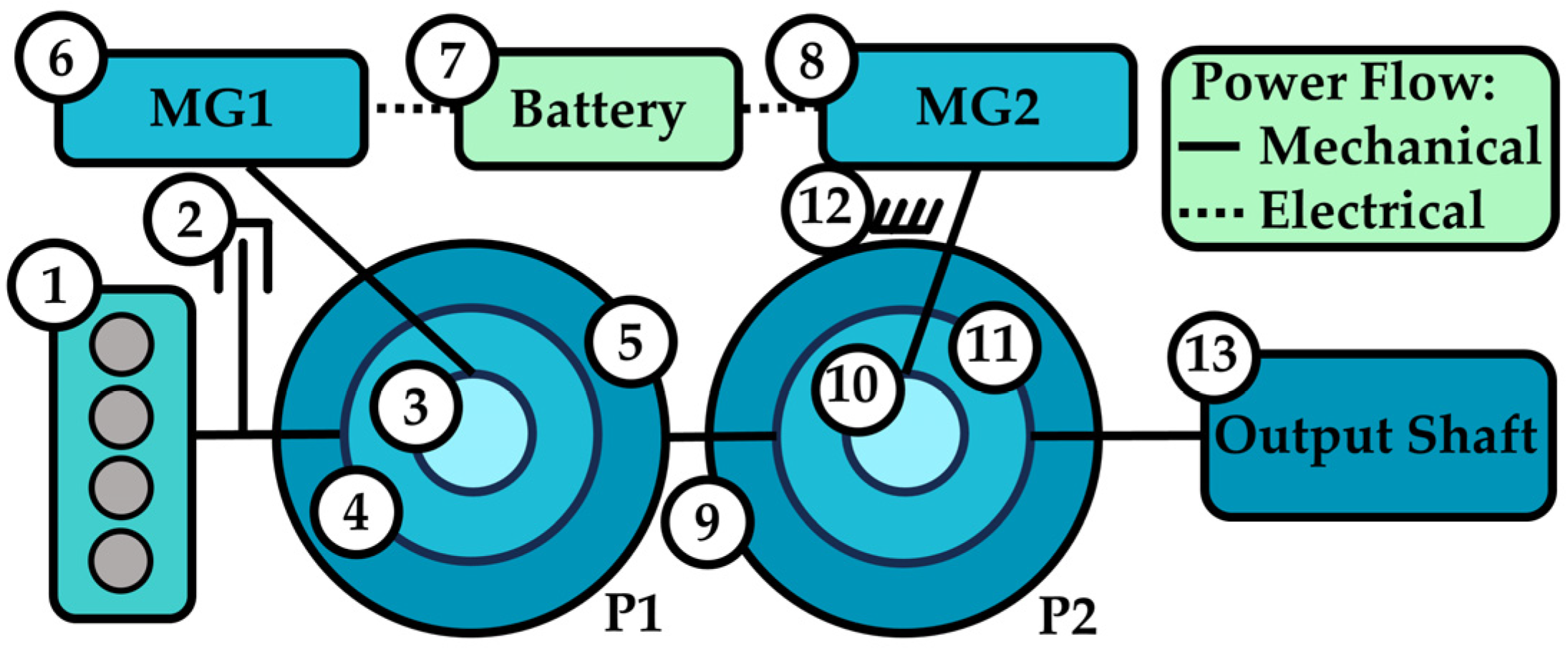
Combined with the architecture analysis of the power-split hybrid powertrain system, the PG1 sun gear is directly connected to MG1 and bears the high-amplitude, high-frequency loads output by MG1, with a maximum contact stress of 951 MPa, thus resulting in the most significant fatigue damage. Additionally, during gear meshing, positive torque corresponds to the sun gear’s right flank engagement under load, while negative torque corresponds to the left flank engagement. Based on full-condition load history statistics, the ratio of cumulative load duration for negative torque (left flank damage) to positive torque (right flank damage) is 1:102. Positive torque accounts for over 99% of the total load duration. According to Miner’s linear fatigue damage accumulation rule, fatigue damage is linearly proportional to the number of load cycles. Consequently, the cumulative fatigue damage on the right flank vastly exceeds that on the left flank.
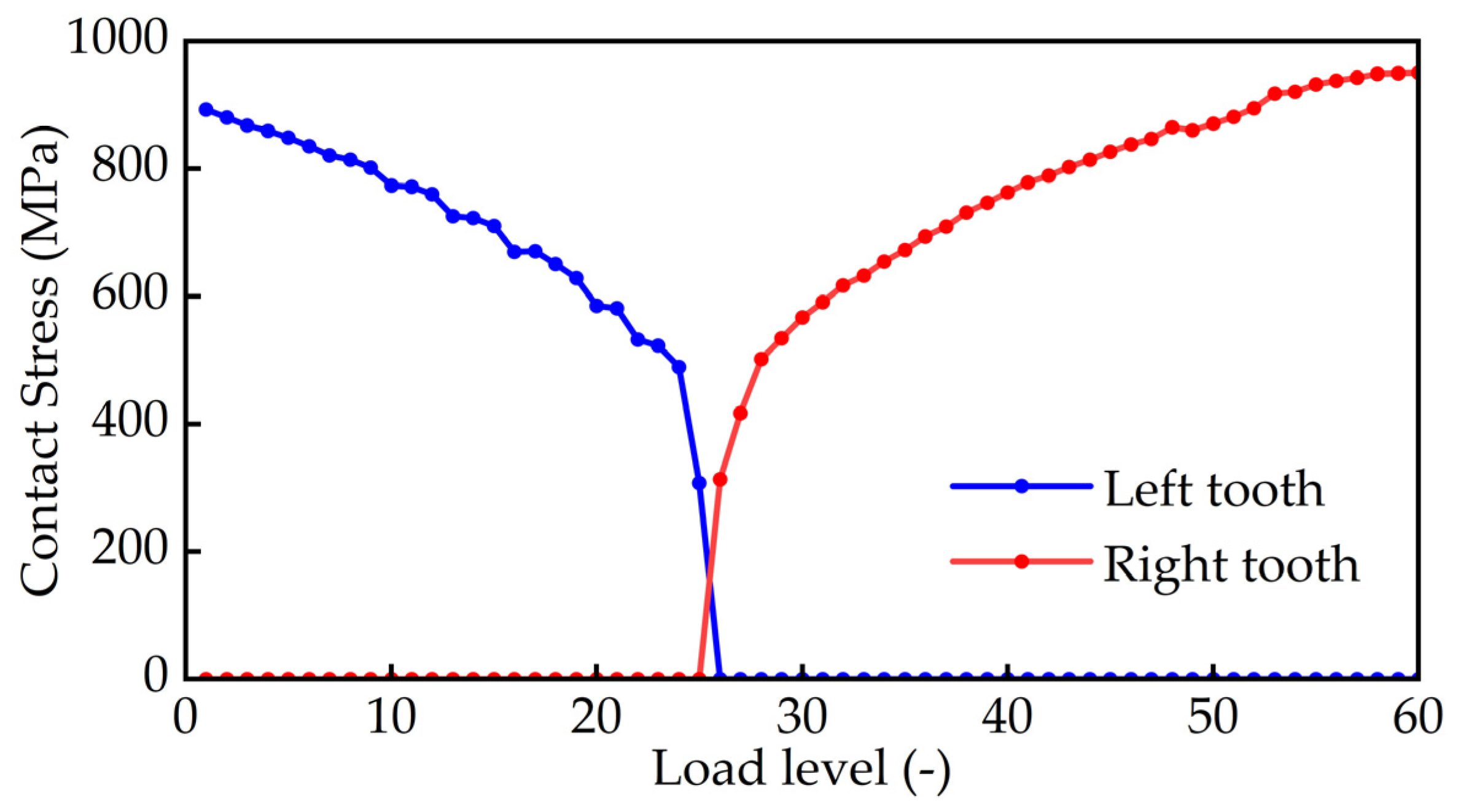
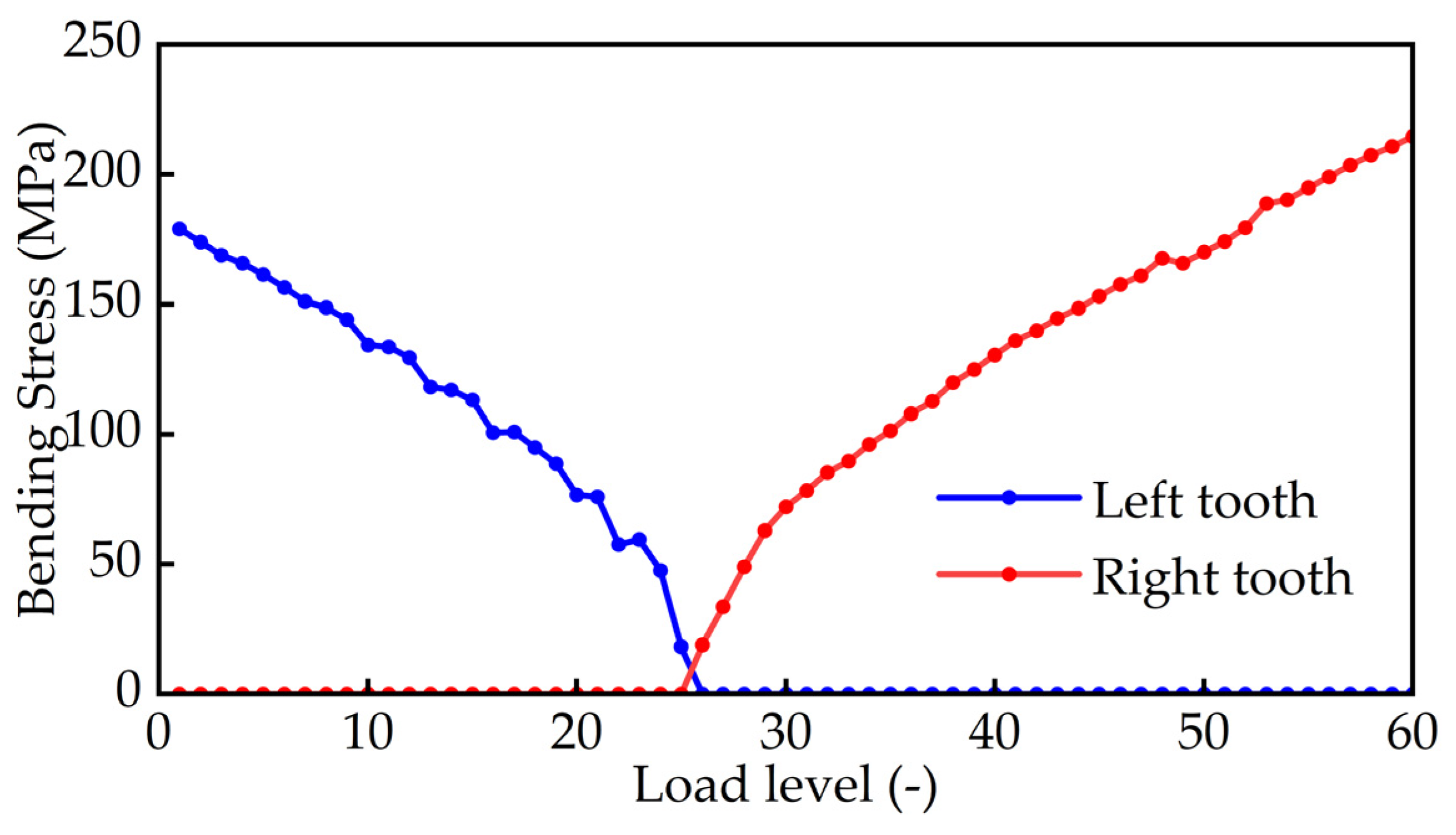
Figure 14 and
Figure 15 show the maximum contact stress and maximum bending stress of the PG1 sun gear under various load levels, while
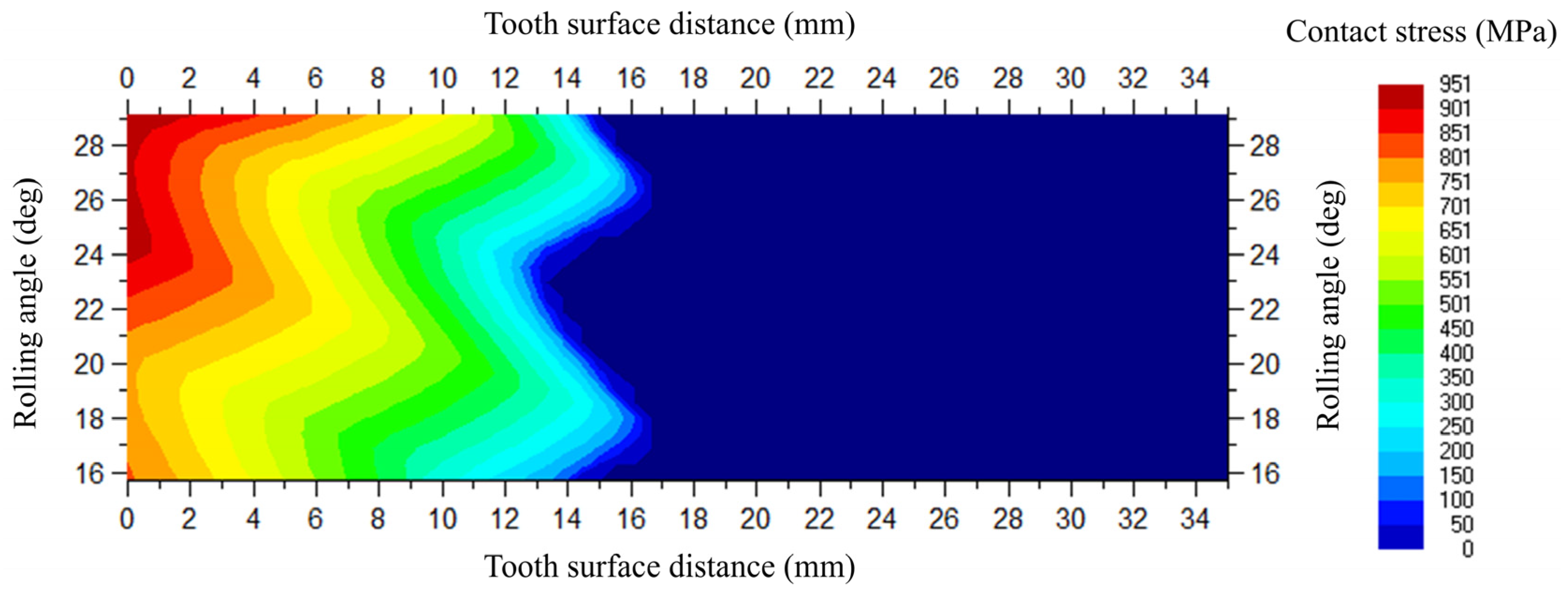
Figure 16,
Figure 17 and
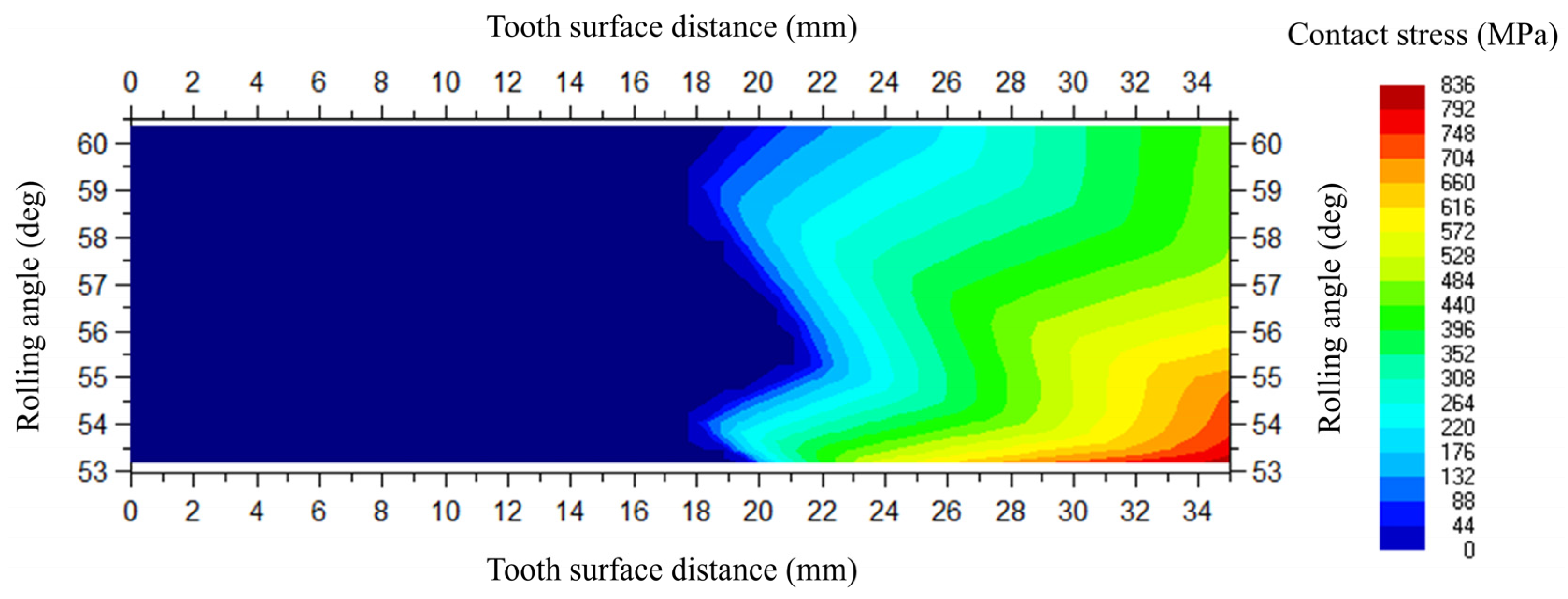
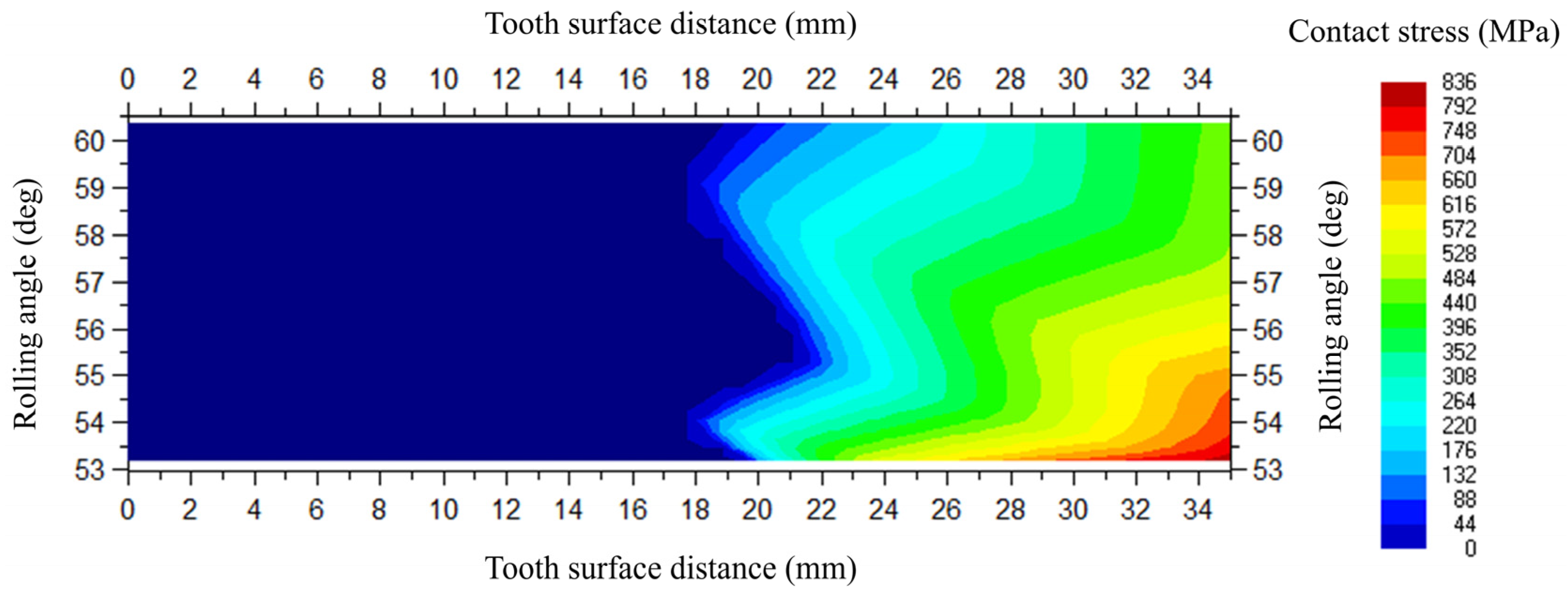
Figure 18 show the maximum contact stress nephograms of the sun gear, planetary gear, and ring gear respectively. It can be seen from the figures that the load on the tooth surface of the planetary gear is obviously uneven, resulting in severe stress concentration.
Based on the statistical results of the maximum tooth flank contact stress and bending stress of the PG1 sun gear under full operating conditions, significant differences are observed in the loaded meshing flank of the sun gear under different operating modes: For load level 1–25, only the left tooth flank bears the meshing load, while the stress on the right tooth flank is 0. The maximum contact stress of the left tooth flank reaches 893 MPa, with a corresponding maximum bending stress of 179 MPa. Load reversal occurs under load level 26–60, where only the right tooth flank participates in meshing. The contact stress and bending stress increase gradually with the rise in operating load, and reach the full-condition peak under load level 60. The maximum contact stress of the right tooth flank is 951 MPa, with a corresponding bending stress of 215 MPa, which is significantly higher than the peak level of the left tooth flank.
Combined with the contact stress contour plots in
Figure 16,
Figure 17 and
Figure 18, the tooth flank contact stress exhibits a significant non-uniform distribution along the face width and tooth depth directions. Affected by the gear helix angle, an obvious stress concentration occurs at the tooth flank end, where the local stress peak is significantly higher than the average level of the entire tooth flank.
In summary, the analysis of the combined full-condition loading spectrum identifies the PG1 sun gear as the critical weak component of the planetary gear train, and reveals the distribution characteristics of asymmetric contact fatigue damage on its tooth flanks. However, this method cannot separate the damage contribution from each operating mode and mode-switching process, making it difficult to locate the core damage-causing operating conditions and clarify the damage formation mechanism. To break through this limitation, this paper splits the full-condition loads and carries out an analysis of the load characteristics and fatigue damage laws of each operating mode.