Article

Status Quo Bias and EV Adoption: A Prospect Theory Perspective from a Developing Country Context


by
Dilupa Theekshana
1,
Kelum A. A. Gamage
2,*,
Renuka Herath
3,*,
Chathumi Ayanthi Kavirathna
1,
Shan Jayasinghe
4 and
W. A. S. Weerakkody
5
1
Department of Industrial Management, Faculty of Science, University of Kelaniya, Kelaniya 11300, Sri Lanka
2
James Watt School of Engineering, University of Glasgow, Glasgow G12 8QQ, UK
3
Faculty of Business, Sri Lanka Institute of Information Technology, Malabe 10115, Sri Lanka
4
School of Business, Law, and Society, Southampton Solent University, Southampton SO14 0YN, UK
5
Department of Human Resource Management, Faculty of Commerce and Management Studies, University of Kelaniya, Kelaniya 11300, Sri Lanka
*
Authors to whom correspondence should be addressed.
World Electr. Veh. J. 2026, 17(4), 187; https://doi.org/10.3390/wevj17040187
Submission received: 18 March 2026 / Accepted: 27 March 2026 / Published: 1 April 2026
(This article belongs to the Section Marketing, Promotion and Socio Economics)

Abstract

Electric vehicles (EVs) are promoted to decarbonise road transport, yet uptake remains slow in many emerging markets. This study examines consumer resistance to EV adoption in Sri Lanka by modelling status quo bias (SQB) using a Prospect Theory lens. An online survey of urban vehicle owners and near-term buyers yielded 157 responses; after screening and removing influential outliers, 151 cases were analysed using partial least squares structural equation modelling (PLS-SEM). The model tests five Prospect Theory-aligned antecedents, namely, loss aversion, reference dependence, risk perception, framing effects, and uncertainty aversion, and evaluates environmental concern as a moderator. Results indicate that loss aversion has a significant positive effect on SQB (β = 0.216, p = 0.005) and uncertainty aversion is the strongest predictor (β = 0.453, p < 0.001), while reference dependence, risk perception, and framing effects show positive but statistically non-significant direct effects. Moderation tests show that environmental concern significantly moderates the effects of reference dependence (β = 0.181, p = 0.039) and framing effects (β = 0.179, p = 0.037) on SQB, but does not significantly moderate the loss aversion, risk perception, or uncertainty aversion paths. Overall, perceived losses and—especially—ambiguity surrounding EV ownership appear to sustain reliance on internal combustion vehicles in this developing-country context, underscoring the need for interventions that reduce uncertainty (credible infrastructure signals, stable policy, service capability) and mitigate perceived losses (warranties, resale assurances) alongside carefully framed communications.

1. Introduction

Climate change has moved from a distant environmental concern to an immediate economic and social risk [1], shaping national policy agendas through its links to coastal flooding [2], water stress [3], food insecurity [4], and broader ecological degradation [5]. Among the main drivers, carbon dioxide (CO2) emissions remain central, and the transport sector stands out as a particularly difficult source to abate [6]. Globally, transport contributes roughly a quarter of energy-related CO2 emissions [7] and remains highly dependent on oil through a rapidly expanding vehicle fleet [8]. Since 1990, transport emissions have risen substantially, reinforcing the urgency of decarbonising mobility alongside power generation [9]. In response, governments have introduced increasingly stringent regulatory pathways: the European Union has implemented progressively tighter fleet-average standards and legislated the phase-out of new internal combustion engine vehicles (ICEVs) by 2035 to align with the Paris Agreement [10]. International climate diplomacy, including COP28, has further elevated the expectation that nations accelerate transitions toward low-carbon transport systems [11].
Electric vehicles (EVs) have therefore emerged as a leading technological pathway in sustainable mobility transitions [12,13,14]. Battery electric vehicles (BEVs) in particular, eliminate tailpipe emissions and can substantially reduce life-cycle greenhouse gas emissions when electricity systems increasingly rely on low-carbon generation [15,16]. Beyond emissions, EVs may reduce local air pollutants, improve energy security, and lower operating costs over time, making them attractive components of climate and industrial strategies [17]. Yet the diffusion of EVs is not simply an engineering challenge. It is equally a behavioural and socio-technical transition that depends on consumers’ willingness to shift away from familiar vehicle technologies, refuelling practices, maintenance routines, and market expectations [18]. In many contexts, adoption has lagged behind policy ambitions, indicating that financial incentives and expanding model availability alone may not be sufficient [19].
A persistent barrier is consumer acceptance [20]. Despite rapid improvements in range, charging speeds, and battery performance, many buyers continue to evaluate EVs through perceived disadvantages and uncertainties, namely, charging convenience, public infrastructure availability, reliability, resale value [21], and service networks [22], relative to ICEVs. These concerns are often amplified by limited personal experience with EVs [23] and by risk-averse decision-making under uncertainty [24]. Consequently, consumers may overemphasise potential downsides of switching even when long-term cost savings and environmental benefits exist [25]. This problem is especially salient in emerging and middle-income economies, where infrastructure gaps, income constraints, and information asymmetries can interact with psychological resistance to change.
Sri Lanka provides a compelling setting for examining these dynamics. The transport sector is a dominant contributor to national emissions, with recent estimates indicating 9.4 million tons of CO2 in 2023, around 46% of total emissions [26]. Growth in private vehicle ownership has intensified these impacts, with registered vehicles reaching approximately 8.4 million by 2022 [26]. In parallel, Sri Lanka has announced ambitious sustainability goals, most notably a long-term decarbonization trajectory for electricity and has positioned e-mobility as a flagship transport intervention under its NDC framework [27]. The 2022 economic crisis and fuel shortages further exposed the vulnerability of fossil fuel dependence [28], highlighting the strategic value of alternative mobility pathways. Yet the country’s transport system remains structurally and culturally anchored in ICE-based mobility [29].
Home and workplace charging infrastructure has been widely recognised as a critical determinant of EV adoption. Prior research shows that access to residential charging significantly increases the convenience and practicality of EV ownership, as most daily charging activities typically occur at home where vehicles remain parked for extended periods [30]. Similarly, workplace charging facilities can reduce range anxiety and provide additional flexibility for users who travel longer distances or lack access to home charging. A growing body of simulation and real-world mobility studies further demonstrates that the availability of home and workplace charging can significantly influence travel patterns, charging frequency, total kilometers travelled, and travel time when switching from conventional internal combustion engine vehicles to EVs [31]. In this sense, charging accessibility often distinguishes “easy adopters,” who can conveniently integrate EV charging into their daily routines, from potential adopters who face structural constraints due to limited charging access. Consequently, the availability and feasibility of home and workplace charging infrastructure are increasingly considered key enabling conditions for large-scale EV adoption.
Existing research on EV adoption in Sri Lanka and comparable contexts has largely emphasised external constraints such as charging infrastructure deficits, policy uncertainty, high purchase prices, and technological limitations [32], as well as factors influencing consumers’ intention to purchase EVs [33,34]. Furthermore, a growing body of work highlights the importance of experienced mobility and charging frictions, including range limitations, charging/refuelling time [35], changes in travel distance and travel time (e.g., extra minutes, detours, and additional stops) [31], access to home and workplace charging [30], and charging behaviour strategies (such as planned versus opportunistic charging), as critical determinants of EV adoption and use. While important, these perspectives may understate the internal decision-making processes that sustain resistance even when supportive conditions emerge. Behavioural economics offers a useful lens here, particularly Status Quo Bias (SQB), the systematic tendency to prefer current states and avoid change, even when alternatives offer objective improvements [36]. Prospect Theory provides a micro-foundation for SQB by showing how individuals evaluate outcomes relative to a reference point and weigh losses more heavily than equivalent gains [37,38]. Applied to EV adoption, this implies that prospective losses such as range anxiety, charging inconvenience, perceived performance risk, uncertainty about battery degradation and resale value, unfamiliar maintenance systems, can loom larger than environmental benefits or future fuel savings [39]. In Sri Lanka, SQB may be reinforced by contextual conditions such as the prevalence of used ICE vehicles, historically subsidised fuel regimes [40], limited EV exposure, and limited access to reliable information and greater decision complexity when assessing long-term cost–benefit trade-offs under the economic uncertainty created by the ongoing economic crisis [33].
Crucially, environmental concern may shape how strongly these antecedents translate into SQB. Consumers with high environmental concern may be more willing to tolerate switching frictions [41], interpret uncertainty more optimistically [42], and reframe adoption trade-offs as meaningful contributions to a social good [43], potentially weakening the pull of the status quo. Conversely, when environmental concern is low, the same antecedents may exert stronger effects, reinforce inertia and delay diffusion.
Against this background, this study investigates EV adoption resistance in Sri Lanka by positioning Status Quo Bias, grounded in Prospect Theory as a central explanatory mechanism. The study pursues three objectives: (1) to identify and empirically validate the key antecedents of Status Quo Bias that drive consumer resistance to adopting EVs in Sri Lanka; (2) to examine the moderating role of environmental concern on the relationships between each antecedent and Status Quo Bias, clarifying when and for whom these drivers are most influential; and (3) to derive theoretical and practical implications for accelerating EV diffusion through behaviourally informed policy design and market strategies. By integrating behavioural theory with the realities of an emerging-market mobility system, the study contributes to a more complete explanation of why EV transitions stall and what interventions can effectively shift consumers away from carbon-intensive transport lock-ins.

2. Literature Review and Hypothesis Development

Status Quo Bias (SQB) helps explain why many consumers remain reluctant to switch from internal combustion engine (ICE) vehicles to electric vehicles (EVs) even when EVs are increasingly available and promoted for their environmental benefits. While prior EV studies often emphasise external barriers (e.g., [32]) such as purchase price, charging infrastructure and policy incentives, these factors do not fully explain persistent resistance under improving market conditions. A behavioural perspective is therefore necessary. Prospect Theory offers a strong foundation for this study because it describes how individuals evaluate alternatives relative to a reference point, typically the current state, and how perceived losses and uncertainty can dominate decision-making [37,38]. Building on this lens, this section reviews SQB in consumer decisions, synthesises evidence from EV-related contexts, and develops hypotheses around key psychological antecedents of SQB. Environmental concern is positioned as a moderator that may alter the strength of these relationships.

2.1. Status Quo Bias in Consumer Decision-Making

SQB refers to a systematic tendency to maintain current choices, even when switching is objectively beneficial [36]. Rather than reflecting careful optimisation, SQB is driven by psychological frictions that make change feel costly, risky, and emotionally undesirable [44]. Three mechanisms recur in the literature. First, individuals often perceive switching as involving costs (time, effort, learning, search, and adjustment), which increases inertia [45]. Second, uncertainty over outcomes encourages reliance on the incumbent option as the “safer” default [36]. Third, loss aversion causes potential disadvantages of change to be weighted more heavily than comparable gains, strengthening preference for the current state [46]. These mechanisms have been observed across domains such as insurance, healthcare, and technology adoption, suggesting that resistance to change can persist even when alternatives improve [47].

2.2. Status Quo Bias in Automotive and EV Adoption Decisions

Automotive decisions are especially susceptible to SQB [48] because vehicle purchases involve high financial stakes, long ownership horizons, and strong performance expectations. Consumers often anchor to familiar ICE attributes such refuelling convenience, and predictable range making ICE the natural reference point for evaluating EVs [49]. Even when consumers understand EV environmental benefits, adoption can be constrained by perceived inconvenience and uncertainty around charging access, charging time, and maintenance capability [50]. Studies in different contexts show that information and model availability help, but they do not necessarily eliminate hesitation when switching is perceived as risky or disruptive [51]. This indicates that EV resistance is frequently sustained through cognitive evaluations of loss and uncertainty rather than technology deficits alone.

2.3. Status Quo Bias and EV Adoption in Sri Lanka

Sri Lanka provides a developing country context where SQB is likely to be reinforced by market structure and lived experience. Mobility practices have historically developed around ICE vehicles [33] supported by established fuel supply, servicing routines, and consumer familiarity. Against this background, EVs are often interpreted as uncertain and demanding, particularly where charging infrastructure is uneven [35] and technical support is perceived as limited [52]. Moreover, concerns about range suitability, and number of models available [53] may also raise the subjective “cost of switching,” strengthening preference for the familiar ICE option. Although Sri Lankan studies have highlighted infrastructure and policy-related barriers (e.g., [33]), there is comparatively limited empirical work that explicitly models SQB as a behavioural mechanism grounded in decision theory, and even less evidence on when pro-environmental motivation can counteract SQB-driven inertia. This gap motivates a Prospect Theory-based examination of the psychological antecedents of SQB in Sri Lankan EV adoption.

2.4. Prospect Theory as the Overarching Lens

A number of well-established theories could plausibly serve as the overarching lens for EV switching and adoption. Technology acceptance models such as TAM and extensions and UTAUT are widely used for explaining why individuals adopt or intend to use new technologies, particularly in contexts where the focal outcome is acceptance of an innovation or system. Likewise, Theory of Planned Behavior (TPB) and related attitudinal frameworks emphasize how attitudes, subjective norms, and perceived behavioral control shape intentions, while Diffusion of Innovations (DOI) highlights innovation attributes such as relative advantage, compatibility, and complexity. These frameworks are valuable for identifying broad determinants of adoption and for benchmarking predictors across settings; however, they are less explicit about the asymmetric psychology of switching from an incumbent option to a replacement, especially when the decision is dominated by downside sensitivity, uncertainty, and status quo comparisons.
In contrast, Prospect Theory directly explains how individuals evaluate outcomes relative to a reference point and why losses are typically weighted more heavily than equivalent gains [37]. This feature is particularly well-suited to EV switching because the consumer’s current ICE-based driving experience naturally functions as the reference point [39]. When contemplating a transition to an EV, consumers may frame salient aspects of the change such as charging routines, range constraints, unfamiliar planning effort, and uncertainty about long-run costs as potential losses relative to the familiar ICE baseline, even when EV ownership may offer gains such as reduced operating costs and lower emissions. Importantly, many EV benefits are delayed, probabilistic, or less tangible in day-to-day experience, which can further reduce their psychological weight in the decision calculus. Prospect Theory therefore provides a more precise explanation for switching hesitation and status quo bias (SQB): consumers may overweight EV-related drawbacks and uncertainty while underweighting longer-term or less certain benefits, leading to inertia even when objective conditions (e.g., infrastructure expansion or incentives) improve.
Accordingly, while UTAUT and similar adoption models are useful for capturing general technology acceptance drivers, Prospect Theory is better aligned with the central phenomenon examined here and therefore serves as the most appropriate overarching lens for the proposed framework.

2.5. Key Antecedents of Status Quo Bias and Moderating Role of Environmental Concern

Guided by Prospect Theory and SQB research, this study focuses on five psychological antecedents expected to strengthen SQB in EV adoption, namely, loss aversion, reference dependence, risk perception, framing effects, and uncertainty aversion. The antecedents were chosen for their strong theoretical alignment and recurring use in Prospect Theory informed switching research. Loss aversion, reference dependence, and framing effects are core Prospect Theory mechanisms, while risk perception and uncertainty aversion are context-salient extensions capturing perceived downside and ambiguity in EV switching. Loss aversion reflects a stronger focus on potential losses from switching than on equivalent gains, increasing reluctance to move away from conventional vehicles. Reference dependence captures consumers’ tendency to evaluate EV adoption relative to a current or expected status quo benchmark (e.g., existing ownership, running costs, convenience), which can anchor preferences and reinforce resistance to change. Risk perception reflects concerns about the likelihood and consequences of undesirable outcomes associated with EV ownership (e.g., performance, charging availability, battery life, service support, and resale value). Framing effects capture how the presentation of information (e.g., emphasising gains versus losses, or short-term versus long-term outcomes) can influence evaluations and strengthen preference for the current choice. Uncertainty aversion reflects discomfort with ambiguous or unpredictable outcomes and can intensify the tendency to delay or avoid switching under conditions of limited information. The study focuses specifically on the psychological mechanisms underlying switching resistance, drawing on Prospect Theory to explain how perceived risks and losses shape consumers’ preference for the status quo. As a result, structural mobility variables such as travel distance, travel time adjustments, charging detours and certain charging feasibility indicators, such as home charger ownership, the ability to install residential charging, or workplace charging access were not operationalized as direct explanatory variables, as they fall beyond the behavioral scope of the current analytical framework and remains limited in the Sri Lankan context due to the lack of consistent and reliable datasets.
In addition, environmental concern is expected to shape how strongly these antecedents translate into SQB. Consumers with higher environmental concern may be more willing to tolerate transitional frictions and may evaluate potential losses and uncertainties through a broader, purpose-driven lens. Accordingly, environmental concern is proposed to moderate the relationships between each antecedent and SQB, weakening the extent to which loss aversion, reference dependence, risk perception, framing effects, and uncertainty aversion generate resistance to EV adoption. The following sub-section develops hypotheses for these direct and moderating effects for empirical testing.

2.5.1. Loss Aversion

Loss aversion refers to the tendency for individuals to experience potential losses more strongly than equivalent gains, leading them to prioritise avoiding negative outcomes over pursuing benefits [54]. This mechanism is consistently observed in technology and sustainability-related choices, where the prospect of switching triggers heightened sensitivity to downside risks [55]. In the EV context, consumers may interpret adoption not as an “upgrade,” but as exposure to possible losses such as reduced convenience, uncertainty over battery durability, limited maintenance support, and resale value risk. Because these perceived losses are psychologically overweighted, consumers are more likely to protect the current ICE-based reference position and remain with the default option. Consequently, even well-designed incentives or environmental appeals may underperform if perceived losses are not explicitly reduced or compensated [56]. Therefore, the following hypothesis can be formulated.
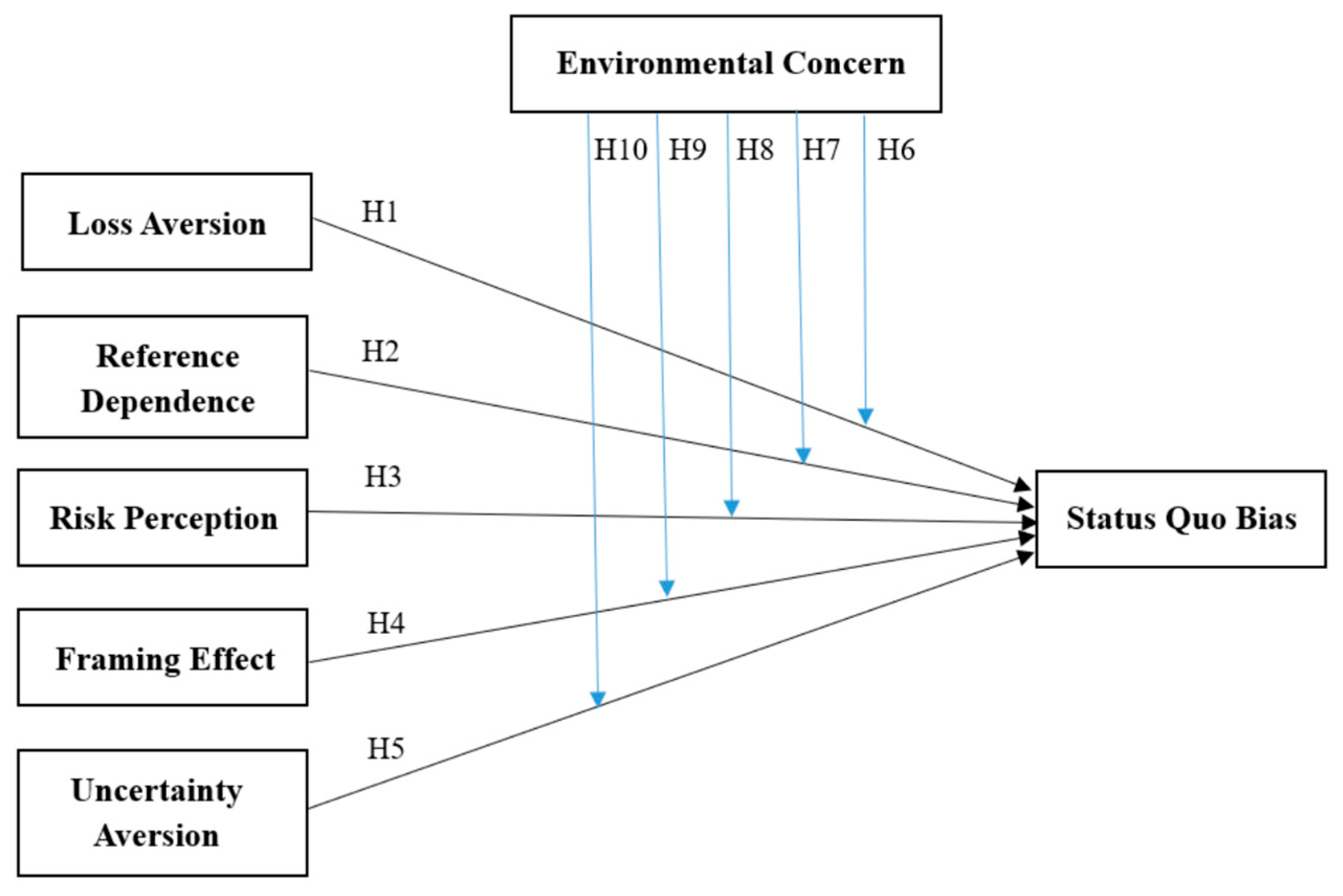
H1. 
Loss aversion positively influences Status Quo Bias in consumer resistance to electric vehicle adoption in the Sri Lankan automotive market.

2.5.2. Reference Dependence

Reference dependence suggests that individuals evaluate outcomes relative to a baseline (reference point) rather than in absolute terms [54,57]. In vehicle choice, the reference point is typically defined by familiar ICE ownership experiences, refuelling time, driving range, repair accessibility, and predictable operating practices [39]. EV attributes are therefore assessed as “deviations” from this baseline, meaning the same EV characteristic can be interpreted as a gain or a loss depending on what consumers consider normal [58]. When the ICE reference point dominates evaluation, EV-related deviations (e.g., charging routines, trip planning, perceived range limitations) are more likely to be framed as losses than as improvements. This emphasis on relative comparison strengthens inertia and reinforces SQB [59], particularly in contexts where ICE norms are deeply embedded. Thus, based on this background, the following hypothesis can be proposed.
H2. 
Reference dependence positively influences Status Quo Bias in consumer resistance to electric vehicle adoption in the Sri Lankan automotive market.

2.5.3. Risk Perception

Risk perception captures consumers’ subjective expectations of negative outcomes associated with a decision [60] and is a well-established driver of resistance to novel technologies [61]. In EV adoption, perceived risks often relate to functional performance (range adequacy, charging access, charging time), financial outcomes (battery replacement costs, resale value), and service reliability (availability of skilled repair networks) [39]. Risk perceptions intensify under low trust and limited information, and can vary systematically by demographic and experiential factors [62], leading some groups to overestimate EV-related uncertainties. From a Prospect Theory perspective, such perceptions shape how uncertain outcomes are interpreted and can disproportionately elevate the “downside” salience of switching [63]. In mobility decisions, where reliability and convenience are highly valued, heightened risk perception is likely to strongly reinforce SQB and reduce openness [64] to EV adoption. Thus, the following hypothesis can be proposed.
H3. 
Risk perception positively influences Status Quo Bias in consumer resistance to electric vehicle adoption in the Sri Lankan automotive market.

2.5.4. Framing Effects

Framing effects occur when the same information leads to different choices depending on whether it is presented in terms of gains or losses [65]. Prospect Theory suggests that loss-framed messages can trigger stronger reactions than gain-framed messages because losses loom larger than gains [66]. In EV contexts, messages emphasising what consumers might “lose” by switching (e.g., convenience, time, certainty) can unintentionally amplify SQB by increasing the perceived downside of adoption. In contrast, gain-framed messages (e.g., lower running costs, quieter driving, environmental benefits) have been found to support pro-environmental mobility shifts, although effects can be context dependent and influenced by audience characteristics and trust [67,68]. Overall, framing is relevant because it shapes whether EV attributes are encoded as threatening losses or attractive gains, thereby influencing inertia. Thus, based on the above arguments, the following hypothesis can be formed.
H4. 
Framing effects significantly influence Status Quo Bias in consumer resistance to electric vehicle adoption in the Sri Lankan automotive market.

2.5.5. Uncertainty Aversion

Uncertainty aversion reflects a preference for known risks over ambiguous or poorly understood outcomes, leading individuals to favour familiar options when information is incomplete [69]. In EV adoption, uncertainty may relate to battery longevity, future resale markets, charging availability, repair expertise, and even policy stability. Because these outcomes are difficult to predict, consumers may overweight uncertain future costs and discount uncertain benefits, especially when they have limited experience with EVs [55]. Empirical work suggests that even modest probabilities of negative cost surprises can materially reduce EV preference [70]. In a market where ICE ownership is familiar and the EV ecosystem is still emerging; uncertainty aversion is likely to strengthen SQB by making the status quo appear comparatively safe and controllable. Hence, the following hypothesis can be formulated.
H5. 
Uncertainty aversion positively influences Status Quo Bias in consumer resistance to electric vehicle adoption in the Sri Lankan automotive market.

2.6. Environmental Concern as a Moderator

Environmental concern reflects the extent to which individuals value ecological well-being and incorporate environmental impacts into their consumption decisions [71]. In the context of electric vehicle (EV) adoption, this concern can shape how consumers interpret the trade-offs associated with switching away from internal combustion engine (ICE) vehicles. Consumers who are highly concerned about environmental degradation may place greater weight on the potential societal and ecological benefits of EVs (e.g., reduced emissions and improved air quality), which could make them more willing to tolerate practical inconveniences, learning demands, and uncertainty associated with a new technology.
From a Prospect Theory perspective, environmental concern can influence the reference point and the subjective weighting of losses and gains. For instance, environmentally concerned consumers may evaluate EV adoption not only through a personal cost–benefit lens, but also through a moral or collective-benefit frame. This may reduce the psychological impact of perceived losses (e.g., charging inconvenience or uncertainty about resale value) and weaken the tendency to remain with the status quo. Supporting this logic, prior research suggests that individuals with stronger environmental concern are more likely to accept disadvantages in exchange for sustainability outcomes [72].
Accordingly, this study positions environmental concern as a moderating variable that may alter the strength of the relationships between Prospect Theory-aligned antecedents and Status Quo Bias (SQB). Specifically, environmental concern is expected to dampen the extent to which loss aversion, reference dependence, risk perception, framing effects, and uncertainty aversion translate into SQB and resistance to EV adoption.
H6. 
Environmental concern moderates the relationship between loss aversion and status quo bias.
H7. 
Environmental concern moderates the relationship between reference dependence and status quo bias.
H8. 
Environmental concern moderates the relationship between risk perception and status quo bias.
H9. 
Environmental concern moderates the relationship between framing effect and status quo bias.
H10. 
Environmental concern moderates the relationship between uncertainty aversion and status quo bias.

2.7. Proposed Conceptual Framework

Based on the hypotheses presented previously, this section presents the conceptual framework (Figure 1). Drawing on Prospect Theory, the model specifies five antecedents, namely, loss aversion, reference dependence, risk perception, framing effects, and uncertainty aversion as predictors of Status Quo Bias underlying resistance to EV adoption in Sri Lanka (H1–H5). Environmental concern is incorporated as a moderating variable (H6–H10), expected to weaken or reshape these relationships. Together, the framework links cognitive biases and environmental values to adoption inertia.

3. Methodology

With the aim of empirically validating the conceptual model, the study adopted a positivist paradigm and a quantitative methodology using a survey research strategy. This approach enables the systematic measurement of psychological and behavioural constructs related to Status Quo Bias (SQB) and is appropriate for testing hypotheses derived from Prospect Theory.

3.1. Measures

All measurement scales were adapted from validated instruments in prior literature and modified to suit the Sri Lankan EV adoption context. The measurement instrument consisted of seven constructs operationalised reflectively and measured using a five-point Likert scale anchored on 1 = “strongly disagree” and 5 = “strongly agree,” in line with recommendations [73,74].
Loss Aversion (4 items) was adapted from [75], with wording contextualised to reflect perceived losses and gains when switching from internal combustion engine (ICE) vehicles to EVs. Reference Dependence (4 items) was measured using items from [76], reworded to capture comparisons between EV adoption and current vehicle ownership experience. Risk Perception (4 items) was adapted from [77] to assess perceived risks related to EV performance, cost, infrastructure, and maintenance.
Framing Effect (4 items) was measured using items adapted from [65], comparing gain- versus loss-framed EV information. Uncertainty Aversion (4 items) was adapted from [78], capturing preferences for familiar ICE technologies under ambiguous conditions. Status Quo Bias (4 items) was measured using items adapted from [47], reflecting the tendency to maintain ICE vehicle ownership despite the benefits of EVs. Environmental Concern (4 items) was measured using the Environmental Concern Scale developed by [79], adapted to capture individuals’ general concern about environmental quality, pollution, and ecological preservation in the context of transportation and vehicle choice. The detailed questionnaire used in the study is provided in the Appendix A (Table A1).
All constructs and indicators were reviewed for clarity and content validity, with minor wording adjustments to ensure contextual relevance to Sri Lankan consumers.

3.2. Data Collection, Population and Sample

A structured self-administered online questionnaire was used to gather responses from private vehicle owners and prospective buyers residing in urban districts of Sri Lanka. The target population consisted of adults intending to purchase a passenger vehicle in the near future, reflecting higher exposure to EV-related information, infrastructure and policy initiatives in major urban areas such as Colombo, Gampaha, Kandy and Galle. The individual consumer served as the unit of analysis, consistent with prior studies highlighting that vehicle purchase decisions are made at the personal or household level [80].
Given the absence of a complete sampling frame, convenience sampling was employed, enabling efficient access to respondents through LinkedIn and Facebook [81]. This approach was appropriate due to operational ease and the difficulty of obtaining complete lists of potential vehicle buyers within the Sri Lankan urban market. Moreover, LinkedIn and Facebook were used because researchers are more familiar with and active on these two social media platforms. Data was collected through Google Forms.
The required sample size was determined following [82] statistical power guidelines. With five independent variables and one moderator, a minimum of 130 observations was required to detect an R2 value ≥ 0.1 at a 5% error probability. This satisfied the recommendations of [83] for PLS-SEM models involving multiple latent variables. Accordingly, the study targeted 130 responses and collected 157 valid responses.
A filtering question ensured that only respondents who either own a private vehicle or intend to purchase one soon were included. Individuals without vehicle ownership or purchase intention were excluded.

4. Data Analysis

4.1. Data Analysis Strategy

SPSS Version 29 and SmartPLS 4 were employed to analyse the empirical data. SPSS was first used to perform data purification. First, researchers checked whether there are any outliers and checked for unengaged responses. Then, assess statistical assumptions to ensure that the dataset was suitable for variance-based structural equation modelling. Since the preliminary tests indicated deviations from normality, Partial Least Squares Structural Equation Modelling (PLS-SEM) was selected as the primary analytical technique, because, PLS-SEM is appropriate when data do not follow a normal distribution, and sample size is comparably small which was the case in this study [84].
After screening the data, six responses were flagged as influential outliers using boxplots (i.e., values falling beyond the boxplot whiskers), reflecting extreme item ratings that were markedly different from the rest of the sample and therefore had the potential to disproportionately affect model estimates. To ensure that hypothesis testing was not driven by a small number of atypical cases, we conducted a sensitivity check by comparing results with and without these observations and confirmed that the overall pattern of findings and substantive conclusions remained consistent, while removal improved the stability of the estimation. After removing these six cases, the final dataset consisted of 151 valid responses, with no evidence of unengaged responding. SmartPLS was then used to test both the outer measurement and structural models. This approach enabled examining construct reliability, convergent and discriminant validity, and hypothesis testing through bootstrapping with 5000 subsamples. The overall purpose of the analysis was to test the conceptual model derived from Prospect Theory and evaluate the antecedents of Status Quo Bias (SQB) influencing resistance to electric vehicle (EV) adoption.

4.2. Demographic Profile of Respondents

Table 1 summarises the demographic characteristics of the respondents. A total of 151 valid responses were retained for analysis. The demographic breakdown indicates a sample dominated by male respondents (104; 68.9%) compared to female respondents (47; 31.1%). The age distribution shows that the largest segment falls within the 25–34 category (61; 40.4%), followed by those under 25 (40; 26.5%), 35–44 (33; 21.9%), and ≥45 (17; 11.3%). In terms of education, most participants reported holding a Bachelor’s degree (82; 54.3%), while Diploma holders accounted for 37 (24.5%), Secondary education for 19 (12.6%), and Master’s or above for 13 (8.6%).
Geographically, respondents were concentrated in Colombo district (82; 54.3%), with representation from Galle (21; 13.9%), Gampaha (19; 12.6%), Kurunegala (13; 8.6%), Kandy (6; 4.0%), and other districts (10; 6.6%). Regarding current vehicle ownership, the majority owned internal combustion engine (ICE) vehicles (95; 62.9%), followed by hybrid owners (27; 17.9%), while 29 respondents (19.2%) reported no vehicle ownership at the time of the survey.

4.3. Outer Measurement Model Assessment

As the first step in the PLS path modelling process, the outer measurement model was evaluated by assessing indicator reliability, internal consistency, convergent validity, and discriminant validity, as recommended by [84].

4.3.1. Reliability Analysis

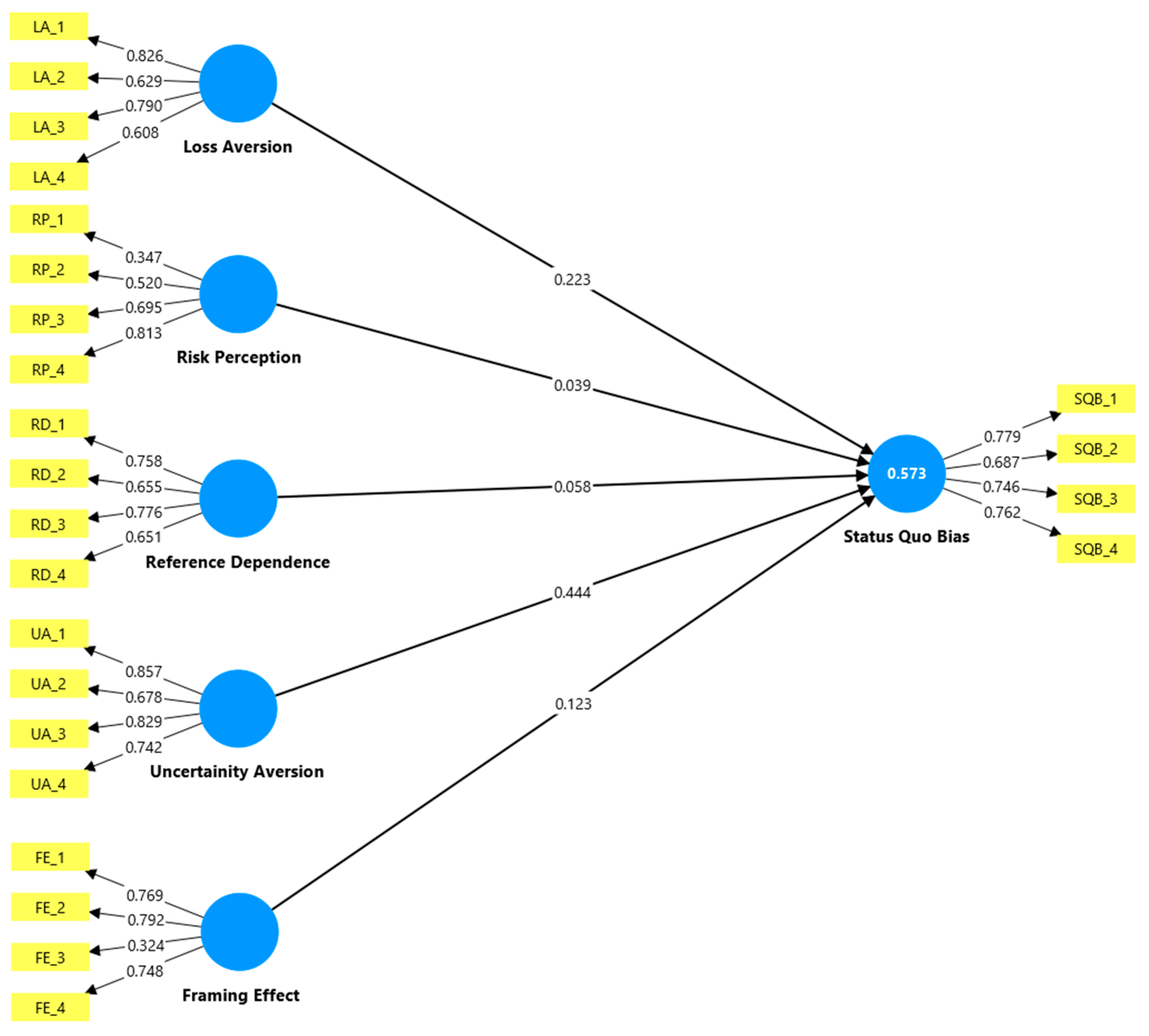
Indicator loadings (please see Figure 2 below), Cronbach’s Alpha, and Composite Reliability (CR) were examined to verify internal consistency. Following the recommended threshold of 0.60 [84,85], low-loading indicators were removed before final estimation (i.e., RP_1 and RP_2). As shown in Table 2, all constructs demonstrated acceptable reliability, with CR values ranging from 0.781 to 0.860. Although Cronbach’s alpha for Risk Perception is 0.440, the construct was retained in the model because its CR exceeds 0.70. Since CR is generally considered a more appropriate reliability measure in SEM-based studies, retaining Risk Perception is justified [86].

4.3.2. Convergent Validity

Convergent validity was assessed using Average Variance Extracted (AVE). All AVE values exceeded the recommended 0.50 threshold [84], demonstrating that the constructs adequately captured variance from their indicators (please see Table 3 below).

4.3.3. Discriminant Validity

Discriminant validity was assessed by examining cross-loadings. Discriminant validity is supported when each indicator loads most strongly on its assigned construct [84]. When the PLS path model was executed, this condition was met. Therefore, discriminant validity was confirmed for the outer model.
Together, these results confirm that the measurement model meets reliability and validity requirements.

4.4. Structural Model Assessment

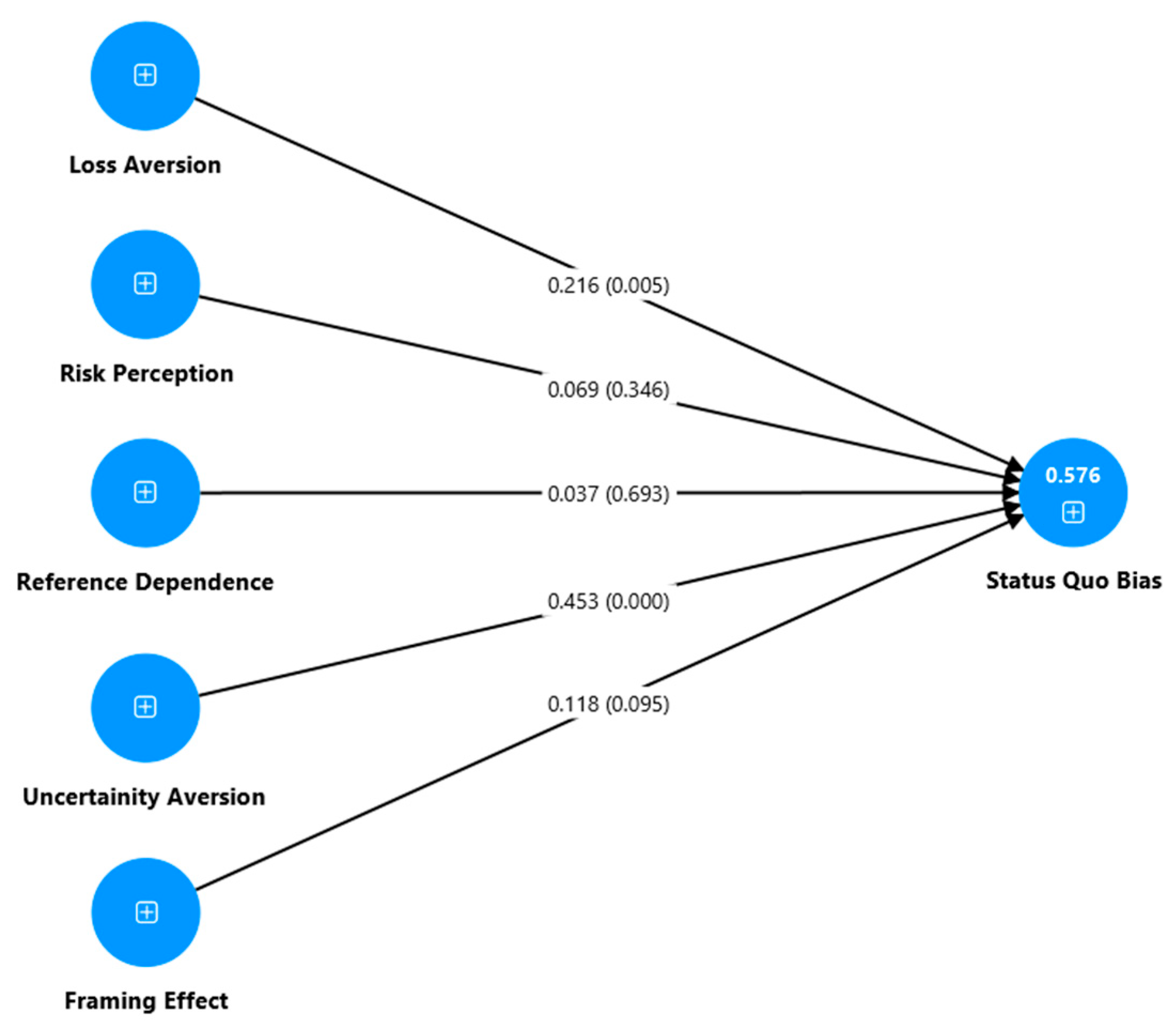
After establishing the adequacy of the measurement model, the structural model (please see Figure 3 below) was analysed to evaluate hypothesised relationships. Bootstrapping with 5000 subsamples generated path coefficients, t-statistics, and p-values.

4.4.1. Direct Effects

Table 4 summarises structural relationships. Two antecedents; Loss Aversion (β = 0.216, p = 0.005) and Uncertainty Aversion (β = 0.453, p = 0.000) had significant positive effects on Status Quo Bias. These results align with Prospect Theory, indicating that consumers who are highly loss-averse or uncertainty-averse are more likely to maintain preferences for conventional vehicles.
In contrast, Framing Effect, Reference Dependence, and Risk Perception exhibited positive but statistically insignificant effects on Status Quo Bias (p > 0.05).

4.4.2. Moderating Effects of Environmental Concern

Table 5 presents the moderation results for Environmental Concern (EC) on the relationships between the Prospect Theory-based antecedents (Loss Aversion, Reference Dependence, Risk Perception, Framing Effect, and Uncertainty Aversion) and Status Quo Bias (SQB).
Overall, the findings provide partial support for EC as a moderator. Two interaction terms were statistically significant at the 0.05 level: EC × Reference Dependence → SQB (β = 0.181, t = 2.065, p = 0.039) and EC × Framing Effect → SQB (β = 0.179, t = 2.083, p = 0.037). These positive coefficients indicate that higher environmental concern strengthens the positive effects of reference dependence and the framing effect on SQB. Accordingly, H7 and H9 were supported.
In contrast, EC did not significantly moderate the effects of Risk Perception (β = 0.178, p = 0.073), Loss Aversion (β = 0.157, p = 0.056), or Uncertainty Aversion (β = 0.180, p = 0.055) on SQB, and therefore H8, H6, and H10 were not supported. Notably, the interaction effects for Loss Aversion and Uncertainty Aversion were marginally non-significant (p-values slightly above 0.05), suggesting a possible weak moderating tendency that did not meet conventional significance criteria in this sample.
Finally, the bias-corrected confidence intervals reported in Table 5 were considered alongside the p-values. As displayed, the intervals include zero for all interaction terms, which implies that the moderation evidence, particularly for the two “supported” effects. Taken together, the moderation analysis indicates that environmental concern plays a limited but meaningful role by amplifying specific cognitive mechanisms (reference dependence and framing) underlying status quo bias in the context of EV adoption.

5. Summary of the Findings

The structural model identified two significant direct predictors of Status Quo Bias: Loss Aversion (β = 0.216, p = 0.005) and Uncertainty Aversion (β = 0.453, p < 0.001). These findings provide strong empirical support for Prospect Theory in explaining consumer resistance to EV adoption.
Loss Aversion’s significant effect confirms that Sri Lankan consumers weigh potential losses associated with EV adoption, such as upfront costs, resale value uncertainty, and performance concerns more heavily than equivalent gains like environmental benefits or fuel savings. This aligns with foundational Prospect Theory principles [37] and is consistent with prior research demonstrating that consumers perceive switching to new technologies as potentially costly mistakes rather than improvements [87]. In Sri Lanka’s automotive market, dominated by ICE vehicles with established second-hand markets and accessible repair networks, loss aversion becomes particularly powerful in anchoring consumers to familiar technologies.
Uncertainty Aversion emerged as the strongest predictor of Status Quo Bias, highlighting the critical role of ambiguity in shaping resistance. Consumers prefer familiar ICE technologies over ambiguous EV alternatives because uncertainty about battery lifespan, charging infrastructure availability, government policy stability, and long-term operating costs creates substantial cognitive discomfort. This finding extends the work on ambiguity aversion by [69] and aligns with recent studies showing that even modest probabilities of increased costs significantly reduce EV preference [8]. In Sri Lanka’s emerging EV market, where infrastructure is developing and policy frameworks are evolving, uncertainty aversion is particularly pronounced.
Contrary to expectations, Reference Dependence, Risk Perception, and Framing Effect did not exhibit statistically significant direct effects on Status Quo Bias. This may indicate that these constructs operate through more complex pathways or are subsumed by the stronger effects of Loss Aversion and Uncertainty Aversion. Reference dependence may function as a foundational cognitive mechanism underlying other constructs rather than as an independent predictor, while risk perception’s influence may be absorbed by the broader construct of uncertainty aversion when ambiguity is high.
Regarding Environmental Concern’s moderating role, the findings provide partial support for the hypothesised effects. While Environmental Concern did not significantly moderate the relationships between Loss Aversion and SQB (β = 0.157, p = 0.056) or between Uncertainty Aversion and SQB (β = 0.180, p = 0.055), leading to the rejection of H6 and H10, it did significantly moderate the effects of Reference Dependence (β = 0.181, p = 0.039) and the Framing Effect (β = 0.179, p = 0.037) on SQB, supporting H7 and H9. These positive interaction coefficients indicate that higher environmental concern strengthens, rather than weakens the influence of reference points and message framing on consumers’ tendency to maintain the status quo, suggesting that even environmentally concerned individuals may be more sensitive to how EV adoption is positioned relative to their current vehicle and how potential gains/losses are presented.
At the same time, the non-significant interactions for loss- and uncertainty-related biases imply that pro-environmental concern alone may be insufficient to offset deeper psychological barriers tied to perceived losses and uncertainty. Even among consumers with strong sustainability values, apprehensions surrounding financial risk, technological ambiguity, infrastructure limitations, and long-term usability may remain salient. In emerging market contexts such as Sri Lanka, these structural constraints and information gaps may continue to dominate decision-making, limiting the extent to which environmental values translate into reduced resistance to EV adoption.

6. Discussion

Based on the findings of this study, several theoretical implications can be proposed to advance research on consumer resistance and behavioural inertia in the context of electric vehicle adoption in Sri Lanka and the wider developing world. In particular, the study extend the application of Prospect Theory by demonstrating how loss-oriented and uncertainty-oriented cognitive bias reinforce Status Quo Bias toward internal combustion engine technology within an emerging market context. Moreover, the findings offer several important implications for practice, especially for policy design and market intervention aimed at accelerating electric vehicle uptake. This section discusses these implications. In addition, this section presents limitations of the study and provides direction for future research.

6.1. Theoretical Implications

This study offers several important theoretical contributions to behavioural economics, environmental psychology, and sustainable consumption research by advancing understanding of how psychological mechanisms shape sustainable mobility decisions in emerging market contexts. First, it extends Prospect Theory beyond its traditional application in financial and investment decision-making by demonstrating its relevance to sustainable technology adoption in developing economies. The findings show that Uncertainty Aversion is a stronger predictor of Status Quo Bias than Loss Aversion, suggesting that in markets characterised by infrastructural gaps, information asymmetries, and policy instability, ambiguity-related concerns exert a more dominant influence than loss-based considerations. This refines existing theoretical assumptions by highlighting how the relative importance of Prospect Theory mechanisms varies across different stages of market development.
Second, the study contributes to environmental psychology by challenging the assumption that pro-environmental values inherently facilitate sustainable behaviour. Rather than weakening psychological barriers, Environmental Concern strengthened the effects of key Prospect Theory mechanisms on Status Quo Bias, most notably for Reference Dependence and Framing Effect. This pattern extends attitude-behaviour gap arguments by suggesting that strong environmental concern may, under certain conditions, intensify resistance to green innovation: simple slope comparisons indicate that psychological barriers were substantially stronger among highly concerned consumers. Theoretically, this paradox is consistent with how complexity and ambiguity can disrupt sensemaking and stall action, with heightened stakes and pressure effects that can undermine performance in consequential choices [88], and with cognitive dissonance processes, especially when individuals feel responsible for aversive consequences, that can prompt defensive rationalisation rather than follow through [89]; consequently, greater engagement with sustainability does not automatically translate into behavioural follow through.
Third, the findings advance behavioural economics by showing that Prospect Theory processes are not merely stable across value orientations but may be amplified by them in particular domains. The significant moderation for reference dependence and framing implies that when environmental concern is high, consumers become more sensitive to reference points (e.g., comparisons with the current vehicle) and to the way EV outcomes are presented as gains or losses, thereby reinforcing the attractiveness of the status quo. This challenges technology adoption models that treat pro-environmental attitudes as a straightforward buffer against behavioural biases and instead suggests that value-based motivation can increase the perceived consequences of the decision, making loss-related and ambiguity-related considerations more psychologically potent. In this way, the study refines Prospect Theory applications to sustainable technology adoption by indicating that the strength of cognitive biases can vary systematically with value-based involvement, not only with economic or informational factors.
Finally, the research contextualises behavioural theory within emerging market realities by illustrating how structural constraints and information conditions interact with environmental values to shape resistance. In Sri Lanka, limited charging infrastructure, uncertain resale and maintenance conditions, evolving policy signals, and incomplete market information may generate information overload and amplify perceived risk—effects that can be particularly pronounced among environmentally concerned consumers who actively seek information and therefore encounter more contradictory or cautionary signals. As a result, the gap between environmental aspirations and practical feasibility becomes more salient, potentially increasing defensiveness and reinforcing reliance on the status quo. Collectively, these contributions deepen theoretical understanding of sustainable technology adoption by showing that environmental concern does not uniformly reduce resistance; instead, under contextual constraints, it can heighten sensitivity to framing and reference points and thereby intensify cognitive barriers to adopting green innovations.

6.2. Managerial Implications

The findings of this study offer several actionable implications for policymakers, automotive industry stakeholders, and marketing practitioners seeking to accelerate electric vehicle (EV) adoption in Sri Lanka and other emerging markets facing similar constraints the study provides empirical evidence on the psychological mechanisms driving status quo bias in EV adoption, an area that remains underexplored in developing country contexts. First, given the significant role of Loss Aversion in reinforcing consumer inertia, interventions must directly address perceptions of financial risk. Policymakers should introduce comprehensive long-term battery warranties, guaranteed buyback or resale value protection schemes, and subsidised or low-interest financing mechanisms to reduce perceived economic losses associated with EV adoption. Complementary insurance products covering EV-specific risks, such as battery degradation and charging-related failures, can further enhance consumer confidence. In parallel, manufacturers and dealers should provide transparent, locally validated data on performance, maintenance costs, and battery longevity to reduce uncertainty surrounding real-world usage.
Second, as Uncertainty Aversion emerged as the strongest predictor of Status Quo Bias, reducing ambiguity is critical to encouraging behavioural change. Governments should establish stable, long-term EV policies covering import duties, fiscal incentives, and infrastructure investment to minimise policy volatility that exacerbates consumer uncertainty. Accelerating the development of visible and reliable charging infrastructure, supported by clear implementation timelines and public progress reporting, can provide both functional support and psychological reassurance. Public education campaigns delivered through trusted institutions should disseminate evidence-based information on total cost of ownership, charging options, and maintenance requirements. Experiential initiatives such as test-drive programs, short-term rentals, and pilot fleet projects can further reduce uncertainty by enabling consumers to gain firsthand experience with EV technology. Prior research has demonstrated that access to residential or workplace charging can significantly influence EV adoption decisions, often distinguishing consumers who can easily integrate EVs into their daily mobility patterns from those facing structural constraints [30]. While such indicators were not directly measured in the study due to data limitations in the Sri Lankan context, the observed role of perceived risk and switching resistance may partially reflect underlying concerns related to charging accessibility and convenience.
Third, the findings suggest that Environmental Concern alone is insufficient to overcome loss-related and uncertainty-related psychological barriers. Accordingly, EV promotion strategies should not rely exclusively on environmental messaging. While sustainability narratives remain important for awareness-building, they must be complemented by concrete assurances addressing financial viability, reliability, and infrastructure readiness. Communication strategies should clearly link environmental benefits with practical feasibility, emphasising how existing and planned policy measures reduce risk and uncertainty rather than assuming that pro-environmental values will directly translate into adoption behaviour.
Fourth, effective communication requires segmentation-based messaging. Financially oriented consumers are more responsive to messages highlighting total cost of ownership, fuel savings, and financial incentives, while risk-averse consumers require reassurance through warranties, infrastructure guarantees, and service network coverage. Technology-oriented consumers may be motivated by innovation-related attributes, performance features, and long-term technological advantages. Tailoring communication strategies to these distinct segments can enhance message relevance and reduce cognitive resistance.
Fifth, the EV adoption process often involves behavioural adaptation, particularly in learning new charging practices and planning trips around charging availability. Prior research suggests that drivers may adopt different charging strategies, such as stopping specifically to charge or charging opportunistically while conducting other activities. However, measuring such charging-behaviour patterns is methodologically demanding, as it typically requires detailed travel diaries, telematics data, or longitudinal mobility tracking to accurately capture real-world charging decisions and route adjustments. Within the scope of the present study, these behavioural adaptations are reflected indirectly through broader perceptual constructs such as perceived risk and switching resistance, which capture consumers’ overall evaluation of inconvenience, uncertainty, and adjustment costs associated with EV use.
Finally, overcoming Status Quo Bias in the Sri Lankan EV market requires coordinated multi-stakeholder action. Government agencies must anchor the ecosystem through consistent policy frameworks and infrastructure investment; automotive firms should strengthen after-sales service, warranty systems, and reliability assurances; financial institutions must develop lending and insurance products aligned with EV-specific risk profiles; and civil society organizations can support awareness, peer learning, and community-level engagement. Collectively, these coordinated actions address not only structural market barriers but also the underlying psychological forces sustaining consumer inertia in emerging market contexts.

6.3. Limitations of the Study

While this study offers theoretically grounded insights into status quo bias and electric vehicle (EV) adoption resistance in Sri Lanka, several limitations should be acknowledged. First, the study relied on online convenience sampling, which may limit the generalisability of the findings to the broader Sri Lankan population, particularly individuals in rural areas or those with limited digital access. In addition, because data on the EV-owner population were unavailable, we were unable to assess formally whether the sample is representative. Nevertheless, this approach is pragmatic and methodologically common in emerging-technology contexts, where potential respondents are more likely to be digitally connected and exposed to EV-related information. Consistent with this, the sample was drawn largely from urban districts, particularly Colombo which may reflect the reality that EV awareness, infrastructure exposure, and market activity typically emerge first in urban centres during the early stages of diffusion.
The sample was predominantly male (68.8%). Although this may limit the strength of gender-based conclusions, it should be noted that Sri Lanka’s driver population itself is highly male-skewed. Official figures reported by the Department of Motor Traffic indicate that women account for approximately 1.12 million out of 12.7 million licensed drivers (roughly 9%), suggesting that a male-dominant sample may partially align with the underlying driver-license holding population structure. Nevertheless, future research should intentionally oversample female drivers and potential adopters to better capture gendered mobility needs and technology perceptions.
Second, the study employed a cross-sectional design, capturing perceptions and intentions at a single point in time. This limits causal inference and prevents observation of how Status Quo Bias and related beliefs may evolve as market conditions change. At the same time, cross-sectional surveys are well suited to providing a snapshot of theoretically informed behavioural relationships, especially in settings where the EV transition is still developing and baseline evidence is limited. Longitudinal studies could extend this work by tracking changes in consumer biases alongside improvements in charging infrastructure, price dynamics, and policy direction.
Third, some constructs, particularly Reference Dependence, Risk Perception, and Framing Effects exhibited weaker-than-expected relationships with Status Quo Bias. This may indicate that the measurement instruments did not fully capture how these concepts operate in Sri Lanka’s EV adoption context. In particular, Risk Perception showed a low Cronbach’s Alpha (0.440), although Composite Reliability remained acceptable. Future studies could improve explanatory power by refining item wording, validating scales with qualitative pre-testing, and exploring alternative operationalizations that are sensitive to local EV concerns and information environments.
Fourth, this study intentionally focused on psychological and behavioural determinants of switching resistance, grounded in Prospect Theory, and therefore did not directly operationalise several structural and mobility-related factors as separate explanatory variables. In particular, the model did not include explicit indicators of experienced mobility friction, such as changes in travel distance or travel time (e.g., extra minutes, detours, and additional charging stops), nor did it include direct charging-feasibility indicators such as home charger ownership, ability to install home charging, or workplace charging availability. These operational and infrastructure-related variables require detailed mobility, spatial, or usage data, which extend beyond the behavioural survey-based scope of the present study, for this limitation relates to the data context of Sri Lanka, where reliable and statistically consistent information on residential and workplace charging access remains limited.
Finally, the moderating role of Environmental Concern should be interpreted cautiously and may be highly context dependent. It is plausible that the way environmental concern shapes decision processes varies with factors such as EV affordability, the national energy mix, policy credibility, and the maturity of the supporting ecosystem. Because adoption conditions differ across countries and across stages of diffusion, replication studies and cross country comparisons are needed to clarify when and how environmental concern interacts with cognitive bias mechanisms in shaping sustainable mobility decisions.

6.4. Suggestions for Future Research

Several promising avenues for future research emerge from this study. First, longitudinal research should track how Status Quo Bias and its antecedents evolve as Sri Lanka’s EV market matures, infrastructure expands, and consumer familiarity increases. Understanding temporal dynamics would inform the timing and sequencing of policy interventions.
Second, cross-cultural comparative studies should examine whether the amplifying effect of Environmental Concern on psychological barriers is specific to emerging markets or occurs in developed markets as well. Comparing Sri Lanka with mature EV markets (Norway, The Netherlands) and other emerging markets (India, Indonesia) would clarify boundary conditions.
Third, future research could integrate such structural and operational mobility variables with behavioural constructs to develop a more comprehensive framework that captures both infrastructure-driven constraints and cognitive decision-making processes.
Fourth, experimental designs manipulating message framing, information provision, and experiential exposure could establish causal relationships and test specific intervention strategies. Field experiments with trial programs or community-based interventions would provide particularly valuable evidence.
Fifth, future research should investigate additional moderators and mediators, including self-efficacy, perceived behavioural control, trust in government and industry, social norms, and peer influence. Understanding how these factors interact with Prospect Theory mechanisms would enrich theoretical models.
Sixth, qualitative approaches, including interviews or focus groups, could provide deeper insight into how consumers cognitively process uncertainty and perceived loss when evaluating electric vehicles in emerging market settings.
Finally, research should examine specific policy mechanisms such as different incentive structures, infrastructure configurations, or information campaign designs to identify which interventions most effectively mitigate Status Quo Bias in practice.

7. Conclusions

This study examined Status Quo Bias as a key driver of consumer resistance to electric vehicle adoption in Sri Lanka using a Prospect Theory framework. The findings show that Loss Aversion and, more strongly, Uncertainty Aversion significantly reinforce status quo bias, explaining why consumers continue to prefer familiar internal combustion engine technology despite long-term economic and environmental benefit associated with electric vehicle adoption. The result indicates that in an emerging market context, adoption resistance reflects more than limited awareness or low interest and instead arise from loss-sensitive and ambiguity-sensitive decision-making, where switching to electric vehicle appears psychologically and economically risky.
Beyond the Sri Lankan context, the same behavioural pattern may apply to the wider developing world, particularly during an early phase of electric vehicle transition. In such a setting, adoption intention often remains constrained by uncertainty related to charging availability, maintenance support, resale value, battery durability, and policy consistency. Each uncertainty factor amplifies hesitation and makes the status quo appear safer and more dependable. Therefore, electric vehicle diffusion in the developing world may be limited not only by affordability constraint and infrastructure gap, but also by behavioural inertia driven by uncertainty and perceived downside risk. This highlights the value of applying behavioural theory when examining sustainable mobility transition in a context where consumer confidence remains underdeveloped.
The moderation analysis further indicates that Environmental Concern does not significantly weaken the influence of loss-related and uncertainty-related cognitive bias on status quo bias. This suggests that although pro-environmental value may exist at an attitudinal level, it remains insufficient to overcome adoption resistance when economic and infrastructure uncertainty continues to dominate evaluation. In short, the finding aligns with the attitude–behavior gap, showing that environmental concern alone cannot reliably translate into electric vehicle adoption readiness in a developing context where perceived risk outweigh perceived benefit.
For policymaker and industry actor, the result implies that accelerating electric vehicle adoption in Sri Lanka, and more broadly in the developing world, require intervention that reduce perceived loss and perceived uncertainty rather than relying mainly on environmental appeal. Practical direction includes improving infrastructure visibility, providing credible warranty and after-sale support, reducing financial exposure through incentive and risk-sharing mechanism, and ensuring consistent policy signal that strengthens consumer confidence. Overall, this research contributes to theory by demonstrating how Prospect Theory mechanisms shape resistance to sustainable technology and it offers actionable insight for supporting electric vehicle uptake in a developing market context where uncertainty and loss sensitivity remain central barrier to behavioural change.

Author Contributions

Conceptualization, D.T., C.A.K. and S.J.; methodology, R.H. and W.A.S.W.; software, D.T. and S.J.; validation, K.A.A.G., C.A.K., R.H. and W.A.S.W.; formal analysis, D.T. and S.J.; investigation, D.T., C.A.K. and S.J.; resources, K.A.A.G., R.H. and W.A.S.W.; data curation, K.A.A.G. and R.H.; writing—original draft preparation, D.T. and S.J.; writing—review and editing, K.A.A.G., R.H. and W.A.S.W.; supervision, K.A.A.G., R.H. and W.A.S.W.; project administration, K.A.A.G. and R.H. All authors have read and agreed to the published version of the manuscript.

Funding

This research received no external funding.

Data Availability Statement

Data available on request from the corresponding authors due to restrictions. The data is not publicly available since the respondent requested not to make data publicly available.

Conflicts of Interest

The authors declare no conflict of interest.

Appendix A

Table A1. Questionnaire Used for the Survey.
Loss AversionStrongly
Disagree
DisagreeNeither
Agree
Nor
Disagree
AgreeStrongly
Agree
1I prefer to keep ICE(Petrol/Diesel) vehicle rather than switch to an EV when the change feels risky.
2A higher purchase price or possible battery cost would make me reject an EV.
3Negative news about EVs (e.g., battery failure) would stop me from buying one.
4I feel more anxiety about possible EV losses than excitement about EV benefits.
Risk PerceptionStrongly
Disagree
DisagreeNeither
Agree
Nor
Disagree
AgreeStrongly
Agree
5Limited public and home charging availability is a risk for using an EV in daily travel.
6The higher purchase price and uncertain resale value make EV ownership financially risky for me.
7The driving range of EVs may not always meet my travel needs.
8Charging time and battery maintenance (including replacement) make EVs less convenient than conventional vehicles.
Reference DependenceStrongly
Disagree
DisagreeNeither
Agree
Nor
Disagree
AgreeStrongly
Agree
9I judge an EV by comparing it to ICE (Petrol/Diesel) vehicle.
10I see EV advantages as gains only if they beat what I get from ICE (Petrol/Diesel) vehicle.
11I see EV drawbacks (e.g., charging time) as losses compared with ICE (Petrol/Diesel) vehicle.
12I react more to EV drawbacks when I compare them to ICE (Petrol/Diesel) vehicle.
Uncertainty AversionStrongly
Disagree
DisagreeNeither
Agree
Nor
Disagree
AgreeStrongly
Agree
13I prefer conventional vehicles because EV charging availability during travel feels uncertain.
14I hesitate to choose EVs because trip planning and charging stops may be unpredictable.
15I worry that using an EV may increase travel time due to charging or detours.
16I avoid EVs when future policies or incentives are unclear.
Framing EffectStrongly
Disagree
DisagreeNeither
Agree
Nor
Disagree
AgreeStrongly
Agree
17Adopting an EV saves fuel money each year.
18Not adopting an EV means you will spend more on fuel each year.
19I would be more interested in buying an EV if it was explained as helping me avoid extra costs (like fuel expenses).
20The way information about EVs is presented (positive or negative) changes how I feel about them.
Status Quo BiasStrongly
Disagree
DisagreeNeither
Agree
Nor
Disagree
AgreeStrongly
Agree
21I prefer ICE (Petrol or Diesel) vehicles rather than switching to an EV.
22I tend to overestimate EV risks and underestimate EV benefits compared with ICE vehicle.
23I stick with familiar ICE features and routines, which makes me reject EVs.
24I resist moving to EVs because I prefer the existing state.
Environmental ConcernStrongly
Disagree
DisagreeNeither
Agree
Nor
Disagree
AgreeStrongly
Agree
25Protecting the environment is important in my purchase decisions.
26I support products that cut emissions, even if they cost a bit more.
27I am willing to try cleaner technologies to reduce environmental harm.
28Environmental benefits should be a priority when choosing a vehicle.

References

  1. World Economic Forum. The Global Risk Report 2025; World Economic Forumg: Geneva, Switzerland, 2025; Available online: https://reports.weforum.org/docs/WEF_Global_Risks_Report_2025.pdf (accessed on 7 December 2025).
  2. Lindsey, R. Climate Change: Global Sea Level. 2023. Available online: https://www.climate.gov/news-features/understanding-climate/climate-change-global-sea-level (accessed on 7 December 2025).
  3. World Bank Group. High and Dry: Climate Change, Water, and The Economy. 2016. Available online: https://www.worldbank.org/en/topic/water/publication/high-and-dry-climate-change-water-and-the-economy (accessed on 7 December 2025).
  4. FAO. Global Food Security Challenges and Its Drivers: Conflicts and Wars in Ukraine and Other Countries, Slowdowns and Downturns, and Climate Change. 2023. Available online: www.fao.org/3/nl652en/nl652en.pdf (accessed on 7 December 2025).
  5. IPCC. Climate Change 2023 Synthesis Report: Summary for Policymakers; IPCC: Geneva, Switzerland, 2023; Available online: https://www.ipcc.ch/report/ar6/syr/downloads/report/IPCC_AR6_SYR_SPM.pdf (accessed on 7 December 2025).
  6. IPCC. IPCC Sixth Assessment Report: Working Group III: Mitigation of Climate Change. 2022. Available online: https://www.ipcc.ch/report/ar6/wg3/ (accessed on 7 December 2025).
  7. Basmantra, I.N.; Santiarsa, N.K.S.; Widodo, R.D.; Mimaki, C.A. How the adoption of EVs in developing countries can be effective: Indonesia’s case. World Electr. Veh. J. 2025, 16, 428. [Google Scholar] [CrossRef]
  8. Zhao, X.; Li, X.; Wang, A.; Fang, J. The impact of energy prices on electric vehicle adoption: From a perspective of consumer expectations. Sustain. Futures 2025, 9, 100437. [Google Scholar] [CrossRef]
  9. Brand, C.; Marsden, G.; Anable, J.L.; Dixon, J.; Barrett, J. Achieving deep transport energy demand reductions in the United Kingdom. Renew. Sustain. Energy Rev. 2025, 207, 114941. [Google Scholar] [CrossRef]
  10. European Commisson. Zero Emission Vehicles: First ‘Fit for 55’ Deal Will End the Sale of New CO2 Emitting Cars in Europe by 2035; European Commisson: Brussel, Belgium, 2022. Available online: https://ec.europa.eu/commission/presscorner/api/files/document/print/en/ip_22_6462/IP_22_6462_EN.pdf (accessed on 8 December 2025).
  11. United Nations Climate Change. COP 28: What Was Achieved and What Happens Next? 2023. Available online: https://unfccc.int/cop28/5-key-takeaways (accessed on 7 December 2025).
  12. Acheampong, T.Y.; Tóth, G.L. Who benefits from the EV transition? Electric vehicle adoption and progress toward the SDGs across income groups. World Electr. Veh. J. 2026, 17, 34. [Google Scholar] [CrossRef]
  13. Udendhran, R.; Mohan, T.R.; R, B.; Uthra, R.A.; G, A.C.; Selvakumarasamy, S.; Dinesh, G.; Mukhopadhyay, M.; Saraswat, V.; Chakraborty, P. Transitioning to sustainable e-vehicle systems—Global perspectives on the challenges, policies, and opportunities. J. Hazard. Mater. Adv. 2025, 17, 100619. [Google Scholar] [CrossRef]
  14. Uy, J.R.R.; Ong, A.K.S.; De Guzman, D.M.B.; Dela Cruz, I.T.; Dela Cruz, J.C. Consumer segmentation and market analysis for sustainable marketing strategy of electric vehicles in the Philippines. World Electr. Veh. J. 2024, 15, 301. [Google Scholar] [CrossRef]
  15. Verma, S.; Dwivedi, G.; Verma, P. Life cycle assessment of electric vehicles in comparison to combustion engine vehicles: A review. Mater. Today Proc. 2022, 49, 217–222. [Google Scholar] [CrossRef]
  16. Waseem, M.; Lakshmi, G.S.; Ahmad, M.; Suhaib, M. Energy storage technology and its impact in electric vehicle: Current progress and future outlook. Next Energy 2025, 6, 100202. [Google Scholar] [CrossRef]
  17. Chang, S.Y.; Huang, J.; Chaveste, M.R.; Lurmann, F.W.; Eisinger, D.S.; Mukherjee, A.D.; Erdakos, G.B.; Alexander, M.; Knipping, E. Electric vehicle fleet penetration helps address inequalities in air quality and improves environmental justice. Commun. Earth Environ. 2023, 4, 135. [Google Scholar] [CrossRef]
  18. Xia, Z.; Wu, D.; Zhang, L. Economic, functional, and social factors influencing electric vehicles’ adoption: An empirical study based on the diffusion of innovation theory. Sustainability 2022, 14, 6283. [Google Scholar] [CrossRef]
  19. Qadir, S.A.; Ahmad, F.; Al-Wahedi, A.M.A.B.; Iqbal, A.; Ali, A. Navigating the complex realities of electric vehicle adoption: A comprehensive study of government strategies, policies, and incentives. Energy Strategy Rev. 2024, 53, 101379. [Google Scholar] [CrossRef]
  20. Xue, Y.; Zhang, X.; Zhang, Y.; Luo, E. Understanding the barriers to consumer purchasing of electric vehicles: The innovation resistance theory. Sustainability 2024, 16, 2420. [Google Scholar] [CrossRef]
  21. Malik, M.A.I.; Kalam, M.A.; Ikram, A.; Zeeshan, S.; Raza Zahidi, S.Q. Energy transition towards electric vehicle technology: Recent advancements. Energy Rep. 2025, 13, 2958–2996. [Google Scholar] [CrossRef]
  22. Mesquita, A.R.; de Abreu, V.H.S.; Poyares, C.N.; Santos, A.S. Barriers to electric vehicle adoption: A framework to accelerate the transition to sustainable mobility. Sustainability 2025, 17, 8318. [Google Scholar] [CrossRef]
  23. Jiang, Y.; Fu, Q.; Thomopoulos, N.; Chen, J.L. Understanding the influence of past driving experience on electric vehicle purchase intention in China. Transp. Policy 2025, 162, 270–282. [Google Scholar] [CrossRef]
  24. Chang, R.; Chanda, R.C.; Vafaei-Zadeh, A.; Hanifah, H. Decoding electric vehicle adoption intention in densely populated cities: An integrated hybrid SEM-ANN approach. Energy Strategy Rev. 2025, 62, 101964. [Google Scholar] [CrossRef]
  25. Mohd Noor, N.A.; Muhammad, A.; Isa, F.M.; Shamsudin, M.F.; Abaidah, T.N.A.T. The electric vehicle (EV) revolution: How consumption values, consumer attitudes, and infrastructure readiness influence the intention to purchase electric vehicles in Malaysia. World Electr. Veh. J. 2025, 16, 556. [Google Scholar] [CrossRef]
  26. Asian Transport Outlook. Transport and Climate Profile: Sri Lanka; Asian Transport Outlook: Manila, Philippines, 2024; Available online: https://asiantransportobservatory.org/documents/217/Sri_Lanka-transport-and-climate-policy.pdf (accessed on 8 December 2025).
  27. Fernando, G.L.; Liyanage, M.H.; Anandarajah, G.; Attalage, R.A.; Karunaratne, S. Achieving near-zero carbon dioxide emissions from energy use: The case of Sri Lanka. Sustain. Prod. Consum. 2023, 40, 236–251. [Google Scholar] [CrossRef]
  28. Caldera, U.; Gulagi, A.; Jayasinghe, N.; Breyer, C. Looking island wide to overcome Sri Lanka’s energy crisis while gaining independence from fossil fuel imports. Renew. Energy 2023, 218, 119261. [Google Scholar] [CrossRef]
  29. De Silva, M.M.; Fernando, N.; Kumarage, A.S.; Sivakumar, T.; Sugathapala, A.G.T.; Nakayama, T. Transitioning Sri Lanka’s urban transport: A system dynamics approach to electrification and decarbonization. In Urban Sustainability: Navigating Environmental Transition Challenges in Global South; Dashora, L.K., Firoz, C.M., Shaw, R., Eds.; Springer Nature: Singapore, 2025; pp. 273–298. [Google Scholar] [CrossRef]
  30. Wang, R.; Kwon, H.-K.; Jordan, K.H.; Moura, S.J.; Boloor, M.; Machala, M.L. Leveraging commuting patterns and workplace charging to advance equitable EV charger access. Transp. Res. Part D Transp. Environ. 2026, 150, 105089. [Google Scholar] [CrossRef]
  31. Fridgen, G.; Thimmel, M.; Weibelzahl, M.; Wolf, L. Smarter charging: Power allocation accounting for travel time of electric vehicle drivers. Transp. Res. Part D Transp. Environ. 2021, 97, 102916. [Google Scholar] [CrossRef]
  32. Saranjan, P.; Thilakshan, T.; Bandara, J.M.S.J. Analyzing key determinants affecting electric vehicle adoption in Sri Lanka: A comprehensive evaluation. In Proceedings of the 2023 Moratuwa Engineering Research Conference, Moratuwa, Sri Lanka, 9–11 November 2023. [Google Scholar]
  33. Alawathugoda, R.M.N.U.; Jayawardane, V.P.T. Key factors influencing Sri Lankan conventional fuel vehicle owners towards switching to electric vehicles: A study based on consumer purchase intention. Eng. J. Inst. Eng. Sri Lanka 2025, 58, 49–59. [Google Scholar] [CrossRef]
  34. Samarasinghe, D.; Kuruppu, G.N.; Dissanayake, T. Factors influencing the purchase intention toward electric vehicles: A nonuser perspective. South Asian J. Mark. 2024, 5, 149–165. [Google Scholar] [CrossRef]
  35. Okika, M.C.; Musonda, I. A Review: Charging infrastructure optimisation to support widespread adoption of electric vehicles. Energy Convers. Manag. X 2025, 27, 101069. [Google Scholar] [CrossRef]
  36. Samuelson, W.; Zeckhauser, R. Status quo bias in decision making. J. Risk Uncertain. 1988, 1, 7–59. [Google Scholar] [CrossRef]
  37. Kahneman, D.; Tversky, A. Prospect theory: An analysis of decision under risk. Econometrica 1979, 47, 263–291. [Google Scholar] [CrossRef]
  38. Tversky, A.; Kahneman, D. Loss aversion in riskless choice: A reference-dependent Model. Q. J. Econ. 1991, 106, 1039–1061. [Google Scholar] [CrossRef]
  39. Venus, A.; Schaufuss, P.; Möller, T. How European Consumers Perceive Electric Vehicles. 2024. Available online: https://www.mckinsey.com/industries/automotive-and-assembly/our-insights/how-european-consumers-perceive-electric-vehicles#/ (accessed on 11 December 2025).
  40. Coady, D.; El-Said, M.; Gillingham, R.; Kpodar, K.; Medas, P.; Newhouse, D. The Magnitude and Distribution of Fuel Subsidies: Evidence from Bolivia, Ghana, Jordan, Mali, and Sri Lanka; International Monetary Fund: Washington, DC, USA, 2006; Available online: https://www.imf.org/external/pubs/ft/wp/2006/wp06247.pdf (accessed on 11 December 2025).
  41. He, H.; Wang, C.; Wang, S.; Ma, F.; Sun, Q.; Zhao, X. Does environmental concern promote EV sales? Duopoly pricing analysis considering consumer heterogeneity. Transp. Res. Part D Transp. Environ. 2021, 91, 102695. [Google Scholar] [CrossRef]
  42. Featherman, M.; Jia, S.; Califf, C.B.; Hajli, N. The impact of new technologies on consumers beliefs: Reducing the perceived risks of electric vehicle adoption. Technol. Forecast. Soc. Change 2021, 169, 120847. [Google Scholar] [CrossRef]
  43. Ho, C.-W.; Wu, C.-C.; Hsieh, M.-T. The impact of awareness for the consequences from adopting electric scooters—The crucial role of warm glow and extrinsic appeal. Energies 2023, 16, 1062. [Google Scholar] [CrossRef]
  44. Ntinas, K.M. Status quo bias and resistance to positive behaviour support: Implications for leaders. Tizard Learn. Disabil. Rev. 2022, 27, 144–151. [Google Scholar] [CrossRef]
  45. Burnham, T.A.; Frels, J.K.; Mahajan, V. Consumer switching costs: A typology, antecedents, and consequences. J. Acad. Mark. Sci. 2003, 31, 109–126. [Google Scholar] [CrossRef]
  46. Kahneman, D.; Knetsch, J.L.; Thaler, R.H. Anomalies: The endowment effect, loss aversion, and status quo bias. J. Econ. Perspect. 1991, 5, 193–206. [Google Scholar] [CrossRef]
  47. Godefroid, M.E.; Plattfaut, R.; Niehaves, B. How to measure the status quo bias? A review of current literature. Manag. Rev. Q. 2023, 73, 1667–1711. [Google Scholar] [CrossRef]
  48. Choi, H.; Koo, Y. Do I have to buy it now? A vehicle replacement model considering strategic consumer behavior. Transp. Res. Part D Transp. Environ. 2019, 73, 318–337. [Google Scholar] [CrossRef]
  49. New Zealand Government. Reducing Barriers to Electric Vehicle Uptake: Behavioural Insights: Analysis and Review; New Zealand Government: Wellington, New Zealand, 2018. Available online: https://environment.govt.nz/assets/Publications/Files/Reducing-Barriers-to-Electric-Vehicle-Uptake-Behavioural-Insights-Analysis-and-Review-final.pdf (accessed on 11 December 2025).
  50. Purwanto, E.; Irawan, A.P. The willingness to purchase electric vehicles: A comprehensive review. In IOP Conference Series: Earth and Environmental Science, Proceedings of the 7th International Conference on Eco Engineering Development, Online, 8 November 2023; IOP Publishing: Bristol, UK, 2024; Volume 1324. [Google Scholar] [CrossRef]
  51. Hu, X.; Yusof, R.N.R.; Mansor, Z.D. Consumers’ purchase intentions towards new energy vehicles based on the theory of planned behaviour on perceived value: An empirical survey of China. World Electr. Veh. J. 2025, 16, 120. [Google Scholar] [CrossRef]
  52. Cutter, S.C. Six Essentials for Mainstream EV Adoption. 2023. Available online: https://www.ey.com/en_gl/insights/energy-resources/six-essentials-for-mainstream-ev-adoption (accessed on 11 December 2025).
  53. Kim, S.; Lee, J.; Lee, C. Does driving range of electric vehicles influence electric vehicle adoption? Sustainability 2017, 9, 1783. [Google Scholar] [CrossRef]
  54. Prieto, M.; Caemmerer, B.; Baltas, G. Using a hedonic price model to test prospect theory assertions: The asymmetrical and nonlinear effect of reliability on used car prices. J. Retail. Consum. Serv. 2015, 22, 206–212. [Google Scholar] [CrossRef]
  55. Yue, C.; Lai, Y.; Watkins, E.; Patton, A.; Braun, R. A behavioral approach to identify barriers to adoption of new technology: A case study of low-input turfgrasses. J. Agric. Appl. Econ. 2023, 55, 72–99. [Google Scholar] [CrossRef]
  56. Broadbent, G.H.; Drozdzewski, D.; Metternicht, G. Electric vehicle adoption: An analysis of best practice and pitfalls for policy making from experiences of Europe and the US. Geogr. Compass 2018, 12, e12358. [Google Scholar] [CrossRef]
  57. Markle, A.; Wu, G.; White, R.; Sackett, A. Goals as reference points in marathon running: A novel test of reference dependence. J. Risk Uncertain. 2018, 56, 19–50. [Google Scholar] [CrossRef]
  58. Wang, Y.; Hazen, B.T. Consumer product knowledge and intention to purchase remanufactured products. Int. J. Prod. Econ. 2016, 181, 460–469. [Google Scholar] [CrossRef]
  59. Masiero, L.; Hensher, D.A. Analyzing loss aversion and diminishing sensitivity in a freight transport stated choice experiment. Transp. Res. Part A Policy Pract. 2010, 44, 349–358. [Google Scholar] [CrossRef]
  60. Dowling, G.R.; Staelin, R. A model of perceived risk and intended risk-handling activity. J. Consum. Res. 1994, 21, 119–134. [Google Scholar] [CrossRef]
  61. Sun, D.; Zhang, L. The social contagion of risk perceptions of emerging technologies through evolutionary game in networks. Systems 2024, 12, 411. [Google Scholar] [CrossRef]
  62. Goyal, S.; Venkatesh, V.; Shi, X. Role of users’ status quo on continuance intentions. Inf. Manag. 2022, 59, 103686. [Google Scholar] [CrossRef]
  63. Ryu, J.; Kim, J. A prospect-theoretic game approach to demand response market participation through energy sharing in energy storage systems under uncertainty. Energy Rep. 2023, 9, 1093–1103. [Google Scholar] [CrossRef]
  64. Liu, J.; Jian, S.; Wu, C.; Dixit, V. Risky choice and diminishing sensitivity in MaaS context: A nonlinear logit analysis of traveler behavior. Transp. Res. Part C Emerg. Technol. 2024, 162, 104603. [Google Scholar] [CrossRef]
  65. Levin, I.P.; Gaeth, G.J.; Schreiber, J.; Lauriola, M. A new look at framing effects: Distribution of effect sizes, individual differences, and independence of types of effects. Organ. Behav. Hum. Decis. Process. 2002, 88, 411–429. [Google Scholar] [CrossRef]
  66. Barberis, N.C. Thirty years of prospect theory in economics: A review and assessment. J. Econ. Perspect. 2013, 27, 173–196. [Google Scholar] [CrossRef]
  67. Bao, H.X.H.; Lim, Y. Behavioural interventions for micro-mobility adoption: Low-hanging fruits or hard nuts to crack? Transp. Res. Part F Traffic Psychol. Behav. 2022, 84, 423–441. [Google Scholar] [CrossRef]
  68. Wolske, K.S.; Todd, A.; Rossol, M.; McCall, J.; Sigrin, B. Accelerating demand for residential solar photovoltaics: Can simple framing strategies increase consumer interest? Glob. Environ. Change 2018, 53, 68–77. [Google Scholar] [CrossRef]
  69. Fox, C.R.; Tversky, A. Ambiguity aversion and comparative ignorance. Q. J. Econ. 1995, 110, 585–603. [Google Scholar] [CrossRef]
  70. Steren, A.; Parag, Y.; Teschner, N.A.; Zemah-Shamir, S. Consumer preferences and willingness to pay for EV charging: Implications for incentives to promote off-peak charging and renewables integration. Appl. Energy 2025, 392, 125981. [Google Scholar] [CrossRef]
  71. Chen, L.; Wu, Q.; Jiang, L. Impact of environmental concern on ecological purchasing behavior: The moderating effect of prosociality. Sustainability 2022, 14, 3004. [Google Scholar] [CrossRef]
  72. Ar, I.M. The impact of green product innovation on firm performance and competitive capability: The moderating role of managerial environmental concern. Procedia Soc. Behav. Sci. 2012, 62, 854–864. [Google Scholar] [CrossRef]
  73. Dawes, J. Do Data Characteristics Change According to the Number of Scale Points Used? An Experiment Using 5-Point, 7-Point and 10-Point Scales. Int. J. Mark. Res. 2008, 50, 61–104. [Google Scholar] [CrossRef]
  74. Revilla, M.A.; Saris, W.E.; Krosnick, J.A. Choosing the Number of Categories in Agree-Disagree Scales. Sociol. Methods Res. 2014, 43, 73–97. [Google Scholar] [CrossRef]
  75. Guillemette, M.; Yao, R.; James, R.N. An analysis of risk assessment questions based on loss-averse preferences. J. Financ. Couns. Plan. 2015, 26, 17–29. [Google Scholar] [CrossRef]
  76. Munro, A.; Sugden, R. On the theory of reference-dependent preferences. J. Econ. Behav. Organ. 2003, 50, 407–428. [Google Scholar] [CrossRef]
  77. Marcon, A.; Nguyen, G.; Rava, M.; Braggion, M.; Grassi, M.; Zanolin, M.E. A score for measuring health risk perception in environmental surveys. Sci. Total Environ. 2015, 527–528, 270–278. [Google Scholar] [CrossRef] [PubMed]
  78. Tsang, M. Estimating uncertainty aversion using the source method in stylized tasks with varying degrees of uncertainty. J. Behav. Exp. Econ. 2020, 84, 101477. [Google Scholar] [CrossRef]
  79. Weigel, R.; Weigel, J. Environmental concern:The development of a measure. Environ. Behav. 1978, 10, 3–15. [Google Scholar] [CrossRef]
  80. Khan, N.A.; Habib, M. When do households make vehicle transactions? What type of vehicle households choose after transaction events? Travel Behav. Soc. 2021, 22, 32–47. [Google Scholar] [CrossRef]
  81. Etikan, I.; Musa, S.A.; Alkassim, R.S. Comparison of convenience sampling and purposive sampling. Am. J. Theor. Appl. Stat. 2016, 5, 1–4. [Google Scholar] [CrossRef]
  82. Cohen, J. Statistical power analysis. Curr. Dir. Psychol. Sci. 1992, 1, 98–101. [Google Scholar] [CrossRef]
  83. Hair, J.F.; Matthews, L.M.; Matthews, R.L.; Sarstedt, M. PLS-SEM or CB-SEM: Updated guidelines on which method to use. Int. J. Multivar. Data Anal. 2017, 1, 107–123. [Google Scholar] [CrossRef]
  84. Henseler, J.; Ringle, C.M.; Sinkovics, R.R. The use of partial least squares path modeling in international marketing. In New Challenges to International Marketing; Sinkovics, R.R., Ghauri, P.N., Eds.; Emerald Group Publishing Limited: Leeds, UK, 2009; Volume 20, pp. 277–319. [Google Scholar] [CrossRef]
  85. Hair, J.F.; Risher, J.J.; Sarstedt, M.; Ringle, C.M. When to use and how to report the results of PLS-SEM. Eur. Bus. Rev. 2019, 31, 2–24. [Google Scholar] [CrossRef]
  86. Cheung, G.W.; Cooper-Thomas, H.D.; Lau, R.S.; Wang, L.C. Reporting reliability, convergent and discriminant validity with structural equation modeling: A review and best-practice recommendations. Asia Pac. J. Manag. 2024, 41, 745–783. [Google Scholar] [CrossRef]
  87. Foroudi, P.; Gupta, S.; Sivarajah, U.; Broderick, A. Investigating the effects of smart technology on customer dynamics and customer experience. Comput. Hum. Behav. 2018, 80, 271–282. [Google Scholar] [CrossRef]
  88. Baumeister, R.F. Choking under pressure: Self-consciousness and paradoxical effects of incentives on skillful performance. J. Personal. Soc. Psychol. 1984, 46, 610–620. [Google Scholar] [CrossRef] [PubMed]
  89. Cooper, J.; Fazio, R.H. A new look at dissonance theory. In Advances in Experimental Social Psychology; Berkowitz, L.B.T., Ed.; Academic Press: Cambridge, MA, USA, 1984; Volume 17, pp. 229–266. [Google Scholar] [CrossRef]
Figure 1. Conceptual framework.
Wevj 17 00187 g001
Figure 2. Factor loadings.
Wevj 17 00187 g002
Figure 3. Structural model.
Wevj 17 00187 g003
Table 1. Demographic characteristics of the sample.
ParameterCategoriesN (%)
GenderMale104 (68.9%)
Female47 (31.1%)
Age groupUnder 2540 (26.5%)
25–3461 (40.4%)
35–4433 (21.9%)
Over 4417 (11.3%)
EducationSecondary19 (12.6%)
Diploma37 (24.5%)
Bachelor’s82 (54.3%)
Masters13 (8.6%)
DistrictColombo82 (54.3%)
Galle21 (13.9%)
Gampaha19 (12.6%)
Kandy6 (4.0%)
Kurunegala13 (8.6%)
Other10 (6.6%)
Vehicle ownershipICE95 (62.9%)
Hybrid27 (17.9%)
None29 (19.2%)
Table 2. Cronbach’s Alpha, and Composite Reliability (CR) values of each variable.
VariableCronbach’s AlphaComposite Reliability
Framing Effect0.6580.814
Loss Aversion0.6870.808
Reference Dependence0.6790.804
Risk Perception0.4400.781
Status Quo Bias0.7320.832
Framing Effect0.6580.814
Table 3. Average Variance Extracted (AVE) values of each variable.
VariableAverage Variance Extracted (AVE)
Framing Effect0.593
Loss Aversion0.518
Reference Dependence0.508
Risk Perception0.640
Status Quo Bias0.554
Framing Effect0.608
Table 4. Direct path coefficient.
HypothesisPathPath Coefficient (β)t-Valuep-ValueDecision
H1Loss Aversion → Status Quo Bias0.2162.8370.005Supported
H2Reference Dependence → Status Quo Bias0.0370.3950.693Not Supported
H3Risk Perception → Status Quo Bias0.0690.9430.346Not Supported
H4Framing Effect → Status Quo Bias0.1181.6720.095Not Supported
H5Uncertainty Aversion → Status Quo Bias0.4534.5160.0000Supported
Table 5. Results of the moderation analysis.
HypothesisModerationPath βt-Valuep-Value2.5% CI97.5% CIDecision
H6EC × Loss Aversion → SQB0.1571.9110.056−0.0940.276Not Supported
H7EC × Reference Dependence → SQB0.1812.0650.039−0.0690.305Supported
H8EC × Risk Perception → SQB0.1781.7960.073−0.1380.306Not Supported
H9EC × Framing Effect → SQB0.1792.0830.037−0.0230.315Supported
H10EC × Uncertainty Aversion → SQB0.1801.9190.055−0.1350.291Not Supported
Disclaimer/Publisher’s Note: The statements, opinions and data contained in all publications are solely those of the individual author(s) and contributor(s) and not of MDPI and/or the editor(s). MDPI and/or the editor(s) disclaim responsibility for any injury to people or property resulting from any ideas, methods, instructions or products referred to in the content.