


Abstract
The fast growth of electric vehicles (EVs) and renewable energy motivates reliable charging infrastructure with balanced energy management and good power quality. However, conventional converter controllers like proportional and integral (PI) and fuzzy logic controllers (FLCs) exhibit slow dynamic response, poor adaptability to varying solar conditions, unbalanced energy management, low power quality, and higher total harmonic distortion (THD). To overcome these limitations, this work proposes an adaptive neuro-fuzzy inference system (ANFIS) controller for balanced energy management and improved power quality in EV charging stations. The ANFIS controller is a combination of a fuzzy inference system (FIS) and a neural network (NN). The FIS provides the best maximum power point tracking and robust control during changing solar PV conditions. The NN optimally controls the flow of power between the solar PV system, energy storage battery (ESB), EV, and utility grid. The entire system is simulated in MATLAB/Simulink. It consists of a PV system with a capacity of 2 kW, an ESB with a capacity of 10 kWh and an EV battery with a capacity of 4 kWh, which are linked by bidirectional DC/DC converters. A 30 kVA bidirectional inverter, along with an LCL filter, is connected between the 500 V DC bus and 440 V utility grid, allowing for both directions. The results validate the effectiveness of the proposed ANFIS controller in terms of DC bus voltage stability, faster dynamic response, enhanced renewable energy utilization, improved efficiency to 98.86%, reduced voltage and current THD to 4.65% and 2.15% respectively, reduced utility grid stress, and enhanced energy management compared to conventional PI and FLCs.
1. Introduction
Electrical energy is one of the major sources of energy for people in their daily lives. Two significant barriers stand in the way of human advancement in the twenty-first century: one has to do with the expansion of the world’s energy needs, and the other is related to environmental issues [1]. The automotive industry is facing considerable challenges as a result of the widespread use of conventional automobiles/IC engine vehicles and reliance on fossil fuels as their primary energy source [2]. Because conventional vehicles are used so frequently, a considerable quantity of carbon emissions from the automotive industry is discharged into the environment, which significantly raises the concentrations of greenhouse gases [3]. Both global warming and environmental damage are caused by the usage of fossil fuels. In total, 51% of CO2 emissions come from the power and energy sectors, and 24% from the transportation sector. India is the world’s third-largest energy producer and consumer, with a total electricity generation capacity of approximately 500 GW (September 2025), with thermal power plants accounting for approximately 75% of the total generation (236,108.72 MW). By October 2022, India reached a renewable energy capacity of 166 GW, representing 41.4% of the total installed capacity [4]. The Indian government plans to develop solar power facilities, with a target of 100 GW of solar capacity using an investment of Rs 695.075 billion by 2022 [5]. EVs are more advantageous in terms of energy efficiency and environmental friendliness. Since EVs do not emit harmful gases like greenhouse gases and particulate matter into the atmosphere, they do not contribute to air pollution, which keeps the atmosphere uncontaminated [6]. Manufacturing and sales of electric vehicles have greatly increased on a global scale. China has the largest fleet, around 4.5 million, and Europe is adopting the highest volume of EVs per year, around 3.2 million [7]. In the entire world, Norway has the highest number of EV owners. Germany, the United Kingdom, Italy, France, Switzerland, Sweden, and the Netherlands are among the countries with significant EV markets [8]. Many countries employ electric vehicles extensively, including Canada, Austria, Japan, Australia, New Zealand, and Spain. The top three regions for EV shipments this year are China, Europe, and North America, with three, two, and one million units shipped, respectively [9]. More than 6 million electric cars, including battery electric vehicles (BEVs) and plug-in hybrid electric vehicles (PHEVs), will be shipped this year, a 34.6% increase from 4.5 million in 2021. Global EV shipments increased by 34.4% to 6.3 million units in 2022 when compared to the previous year. At the Conference of the Parties (COP26) in Nov 2021, the zero-emission vehicle transition council agreed that EV manufacturing companies should be committed to promoting only zero-emission vehicles by 2040, and strictly instructed the automobile sectors to prepare only decarbonized vehicles for shipment [10]. The automobile industry is investing more in businesses that provide charging infrastructure and vehicle battery technology as governments around the world implement new regulation policies, subsidies, and incentives to promote EV sales. This will aid consumers and businesses in making the switch to EVs. According to Gartner, the number of global public EV chargers climbed from 1.6 million in 2021 to 2.1 million in 2022 [11].
To promote the progressive rollout of reliable, affordable, and efficient electric and hybrid vehicles (x-EV), the Indian government has initiated various policies. In 2013, the India government launched its National Electric Mobility Mission Plan (NEMMP) 2020, which is a complex policy document aimed at promoting electric mobility in the country. The mission framework emphasizes accelerating the process of adopting and producing electric and hybrid vehicles, with a final goal of addressing various strategic goals. The greatest of these goals is the aim to reach an annual 6–7 million electric and hybrid vehicles in the year 2020. In addition, it is aimed that the NEMMP will improve the energy security of the country by reducing fossil energy consumption and will stimulate environmentally friendly modes of transportation [12,13].
In India, the Faster Adoption and Manufacturing of (Hybrid &) Electric Vehicles (FAME) scheme, launched in 2015 under the National Electric Mobility Mission Plan (NEMMP), aims to accelerate EV adoption through financial incentives, technology development, and charging infrastructure expansion. The subsequent FAME-II phase, introduced in 2019 and later extended, further strengthened support for electric two-, three-, and four-wheelers as well as public transport electrification. These initiatives emphasize large-scale EV deployment and highlight the growing need for reliable, renewable-integrated charging infrastructure with efficient energy management and improved power quality. These amendments were made to improve affordability and speed up adoption of EVs across the country [14].
EVs are overshadowing the use of internal-combustion-engine vehicles because of their greater efficiency, reduced emissions, and lower noise production in efforts to mitigate global warming. EVs operate on electricity supplied to battery packs, which need to be charged regularly at electric vehicle charging stations (EVCSs). The possibility of time-consuming charging with three-phase systems is gained at the expense of power quality concerns of harmonic distortion, voltage fluctuations, and frequency deviation when nonlinear power electronic converters are applied in EV chargers. The distortions have a counterproductive impact on grid stability and exert more burden on distribution utilities [15].
Despite significant advancements in intelligent control strategies for renewable-integrated systems, existing PV–EV charging architectures often rely on independent MPPT and converter controllers without coordinated energy management and harmonic mitigation. Moreover, conventional PI and FLCs exhibit limited adaptability under rapid irradiance variation and bidirectional power flow conditions. Therefore, there is a need for an integrated intelligent control framework capable of simultaneously ensuring stable DC bus regulation, adaptive power sharing, and improved power quality.
To enhance the power quality of distribution systems, especially when affected by the loads of EV charging, various compensation devices are used. The automatic voltage regulator (AVR) serves to stabilize the voltage level by making changes to the output voltage as far as the fluctuations are concerned. The dynamic voltage restorer (DVR) is used in mitigating or sensing voltage sags and transients by injecting compensation voltage in series with the supply line. The unified power quality conditioner (UPQC) combines series and shunt active filters to offer mitigation of voltage as well as current-related disturbances comprehensively, like sags, swells, and harmonics. The shunt-connected, solid-state distribution static compensator (D-STATCOM) is capable of improving the voltage regulations and dynamic reactive power compensation, with the resultant effect of reducing the current harmonics, and helping power factor correction. The devices are important in stabilizing the grid and improving the quality of power, particularly to build systems that have a large penetration of nonlinear EV charging infrastructure [16,17,18]. EV charging needs a constant source of power that is not disrupted. Relying solely on grid electricity as a source of power makes it challenging to manage the extra power that high-capacity EV chargers can consume at peak load times. In addition, charging EVs with electricity powered by fossil fuels reduces the ecological impact of electric mobility. To overcome such limitations, photovoltaic (PV) systems have been suggested as another suitable option to serve both grid support and direct EV charging. Solar energy provides a sustainable, decentralized, clean source of energy, thus decreasing grid dependence and greenhouse gas emissions. The government of India has realized that the integration of solar energy is indeed a strategic move, and hence has acted to ensure that solar power is generated. In early 2014, the Reserve Bank of India (RBI) classified loans of up to 15 crores to install grid-connected rooftop as well as ground-mounted solar-PV-driven systems under priority sector lending, there by stimulating investment in renewable energy infrastructure [19].
Solar energy has the potential to be a viable solution to charge EVs because it is renewable and eco-friendly. To facilitate the use of clean and sustainable energy in EV systems, there is a need for a solar-based charging infrastructure system [20]. Since reducing greenhouse gas emissions and improving the sustainability of electric transportation are considered the key aims of the given research, the choice of clean energy source, i.e., solar power, is extremely important [21]. To achieve a sustainable transport system, environmental experts emphasize the widespread application of renewable-energy-integrated EV charging points in order to minimize environmental effects [22,23]. Solar energy is one of the most popular renewable sources, but it is only available intermittently, and its production depends on weather conditions; this can reduce its applicability to charge EVs continuously. An energy storage battery system (ESBS) is recommended to increase the stability and reliability of charging stations run on solar energy. The ESBS can be enabled to interface with the charging station and utility grid so that energy can be stored during periods of solar excess and made available during low irradiance or peak-demand situations. With this hybrid system, the system resilience will be enhanced and can guarantee the smooth supply of power to EV users [24]. A complete EV charging infrastructure is presented in this paper, in which an energy storage battery (ESB) and solar photovoltaic (PV) system are integrated into a charging station to provide a continuous and solid power supply with the utility grid. Depending on the availability of power, ESBS electric vehicles are charged either through the solar energy system or directly from the utility grid. In the proposed system, the ESB, solar PV system, and main utility grid continuously supply power to EVs; there is no interruption in the operation of EVs [25]. Moreover, to reduce grid loads, ESBs are introduced to supply the battery, especially under peak demand. To maximize the exploitation of solar energy, the system has an FIS controller to extract maximum power out of the PV array. ANN is used to control the inverter current and controls the DC bus voltage at a constant value, thereby enhancing system stability.
Although ANFIS and neural network-based controllers have been individually reported in the literature, the novelty of the proposed approach lies in their structured and coordinated integration for adaptive power quality enhancement in a grid-connected microgrid environment. Unlike conventional standalone intelligent controllers, the proposed ANFIS–NN framework enables dynamic parameter adaptation under varying operating conditions, improving robustness and disturbance rejection capability. Furthermore, the controller structure, input–output configuration, training procedure, and parameter selection are explicitly detailed to ensure reproducibility and fair benchmarking against widely adopted baseline controllers such as PI and FLCs.
The paper’s contributions are summarized as follows:
- ▪
- An intelligent ANFIS (combines both the FIS and NN) controller is designed to manage energy and power efficiently under grid, solar PV array, ESB, and dynamic EV load conditions.
- ▪
- A grid interface based on LCL filters is modeled to minimize voltage and current harmonics and ensure smooth power exchange, in compliance with IEEE Std. 519 2014.
- ▪
- The controller supports the bidirectional power flow by keeping the DC link voltage at 500 V and a steady-state overshoot of less than 1.2%, which allows the controller to transition between grid and battery sources without any trouble.
2. Problem Statement
The imminent rollout of EVs in the power system has also fueled the necessity for smart-grid-connected solar photovoltaic (PV) charging stations. This system works effectively in dynamic conditions, such as changeable solar irradiance, variable EV loads, and SOC limitations of battery storage systems. Thus, the main goal is to create an efficient energy management system (EMS), which guarantees the maximum, stable, and constant power transfer between PV, grid, energy storage battery (ESB), and EV loads. The power distortion is added to the systems when power electronic converters and nonlinear charging loads are involved, raising a lot of power quality problems, such as voltage distortion and current harmonics [26]. When not balanced, these distortions may lead to the transgression of the harmonic limits established by the IEEE 519-2014, creating grid instability and wasteful energy transmission. Therefore, EMS is required to meet limits on THD and DC bus voltage regulation. In grid-connected solar PV electric vehicle charging facilities, both variable solar generation and fluctuating EV charging loads can be challenging with regard to reliable real-time energy management. The control objectives of the grid-integrated PV–EV charging station are as follows:
- (1)
- Maintain the DC bus voltage given in Equation (1).
- (2)
- Enable power balancing of multiple sources, including the solar PV system, the ESB, and the utility grid; the total EV loads are represented in Equation (2).
The large-scale application of nonlinear power electronic converters in electric vehicle (EV) charging systems can cause harmonic distortion to current and voltage waveforms. These distortions violate the harmonic limits suggested by IEEE Std. 519-2014. Hence, there is a need to examine and reduce the overall harmonic distortion (THD) of current and voltage in the EV charging system to achieve efficient performance and compatibility with the grid [27]. The total harmonic distortion of current and voltages is calculated from Equation (3).
where In and Vn are the RMS values of the nth-order current and voltage harmonics; I1 and V1 are the corresponding fundamental values. The proposed ANFIS controller simultaneously regulates voltage error and power flow to satisfy these objectives under varying irradiance and load conditions. Therefore, the control strategy can be considered a multi-objective regulation problem.
3. Modeling of Proposed Grid-Integrated Solar PV Charging Station
The proposed grid-integrated EV charging station consists of a 2 kW solar PV array, a 10 kWh ESB, a 4 kWh EV battery, a 30 kVA bidirectional inverter, and a 440 V, 10 kVA utility grid, as shown in Figure 1. The 2 kW PV system is a rooftop-size installation, and the 4 kWh EV battery is a realistic real-time EV charging case of partial state-of-charge renewal when operating under normal day-to-day conditions. The 10 kWh ESB is capable of assisting in the peak load shifting and DC link voltage regulation. The 30 kVA inverter has a comfortable margin of two-way power flow as well as harmonic reduction. The 440 V, 50 Hz grid is associated with the standard three-phase low-voltage distribution interface. The proposed design can be described as a modular prototype architecture that can be expanded to higher-capacity EV charging systems. The system architecture maximizes the utilization of renewable energy, stabilizes the DC bus voltage, and provides reliable EV charging with improved power quality. The solar PV system is the main renewable energy source, and has a nominal power of 2 kW under the standard test conditions (1000, 500, 300, 200, and 100 W/m2 irradiances at 25 °C). The PV system output is a DC voltage suitable for the 500 V DC bus and is connected via a DC-DC boost converter. Maximum power point tracking (MPPT) is used with PI, fuzzy, and ANFIS-based controllers to extract the maximum available power [28].
Figure 1.
Architecture of grid-integrated solar PV charging station.
Under peak available solar energy, the PV array can completely charge the 4 kWh EV battery in about 1 h or partially charge the 10 kWh ESB. The ESB works as a buffer between the PV array and the EV load. It is rated at 10 kWh, 240 V nominal, and 40 Ah, which allows it to support up to five full charging cycles of the 4 kWh EV battery. It is interfaced to the DC bus by a bidirectional DC-AC converter, which allows it to be charged when PV generation is higher than the EV demand and discharged when solar irradiance is low. The converter allows the SOC to be regulated between 90% and 20% in order to guarantee the long-term battery health. The single EV battery that is used in this system is a 240 V nominal battery with a rated capacity of 7 Ah. The charging is performed using a DC/DC converter, which provides a regulated charging current and voltage. At rated charge conditions, the EV battery takes about 1 h to fully charge from the PV array and about 12 min when charged from the ESB at max rated power. This allows flexibility for both normal and fast charge modes based on source availability.
The bidirectional converters maintain the DC bus at a constant 500 V and control the energy storage battery (ESB) state of charge (SOC) between 20% and 90% in order to balance power dynamically during generation step changes. The inverter helps with two-way power exchange between the DC bus and the AC grid. It is rated at 10 kVA, 440 V, and loss-free active power transfer up to 8 kW at unity power factor. An LCL filter is built into the inverter’s output, and it is designed for 10 kVA at 440 V. This reduces high-frequency harmonics produced by inverter switching and ensures that the grid current THD does not exceed 5%, in accordance with the IEEE 519 standard. The three-phase grid rated 10 kVA and 440 V serves the dual purpose of a backup source and energy sink. When PV generation and ESB discharge are not enough, the grid meets the EV charging demand. Conversely, when the renewable generation exceeds the demand, the inverter exports the power to the grid, thus allowing renewable integration and grid support services. This will allow maximum renewable penetration, reduced system reliance on the grid, and maximum system efficiency.
3.1. Solar PV Cell Modeling
The solar-based EV charging station mainly depends on the solar PV system. The PV cell modeling is significant in determining the size of the solar power generation system to address the unique requirements of the EV charging station. The single-diode model has become widespread, and this model has a combination of basic electrical components such as a diode, current generated by light, series resistance, and shunt resistance, as shown in Figure 2a. In order to achieve the highest power output characteristics, a solar cell must be driven at its optimal voltage (Vopt), also called the maximum power point (MPP) and denoted as maximum voltage (Vmp), as shown in Figure 2b.
Figure 2.
Solar PV cell (a) equivalent circuit and (b) power and current characteristics.
The solar-powered charging station is modeled using mathematical expressions that denote the PV cell voltage (calculated from Equation (4)) and current [29].
Here, Icell is cell output current, Ip is photocurrent, Io is diode reverse saturation current, Rse is cell series resistance, Ta is ambient temperature, and Vcell is cell voltage.
To obtain the required voltage with respect to the system voltage rating, which must be twice the phase voltage from the primary power supply, the number of series cells Nse must be increased based on each cell voltage. The voltage required at the DC link is calculated from Equation (5).
Here, VL is the line voltage of the three-phase supply source, and m is the modulation index considered as 1. Therefore, the required DC voltage from the PV source is given in Equation (6). The DC link capacitance is calculated mathematically by using Equation (7). Here, K is the energy variation dynamic factor, which is set to 0.1, A is the overloading factor taken as 1.5, VP is phase voltage, Ish is phase shunt compensation current, t is steady-state time, Vdc is DC bus voltage, and Vdc1 is the possible lower DC voltage.
3.2. Boost Converter Control Circuit
The schematic layout of the ANFIS-based control system with a solar photovoltaic (PV) array and an electric vehicle (EV) load connected with a regulated DC bus at 500 V is shown in Figure 3. The solar PV system works under variable irradiance (1000, 500, 300, 200, and 100 W/m2) and constant temperature (25 °C) conditions. The ANFIS controller takes input parameters of the environmental information, like irradiance and temperature, as an input signal and calculates the optimal reference signal based on the MPP [30]. This reference signal is then pre-added to and compared with the PV output voltage to produce the necessary switching pulses to the DC-DC boost converter. The converter controls and amplifies the PV output voltage to provide a constant 500 V DC bus, to provide efficient power transfer. The regulated DC bus feeds the EV load, which is operated at 20% SOC, which allows the charging to be optimum and the energy delivery to be reliable. This design guarantees fast and accurate tracking of MPP in dynamic environmental changes, as well as better voltage stability and high energy conversion efficiency throughout the DC microgrid.
Figure 3.
Control circuit of ANFIS-based boost converter.
3.3. Gate Pulse Generation for Inverter Circuit
The artificial neural network (ANN) is an intelligent device; it was developed as a computational device that mimics the functionality of the human brain to perform various tasks like classification, pattern recognition, optimization, etc. It is much faster than traditional systems like a computer. It is an efficient information-processing system that resembles the characteristics of a biological neural network, and it can help the system make intelligent decisions with limited human assistance. The NN models the relationship between input and output data and models the mathematical model of a nonlinear and complex system, as shown in Figure 4.
Figure 4.
Neural network model circuit.
The NN-based control architecture is proposed in the grid-connected PV charging station to control the inverter circuit, as shown in Figure 5. The controller takes input parameters, which include the SOC of the ESB and the PV output power (PPV), to produce optimized reference signals to control inverter currents. The NN-based controller processes these inputs to generate reference current components (Iα, Iβ) in the stationary (αβ0) reference frame. The signals are then transformed into the dq rotating reference frame (Id, Iq) using the park transformation (dq0) in order to compare with the current feedback of the inverter (IINV). The synchronization angle (ωt) is the product of the grid voltage that provides a good phase match between reference and feedback quantities. The resultant current error is converted to generate control signals, which are converted back (dq0–αβ0) to create suitable switching pulses to the inverter [31]. This method increases dynamic response, reduces steady-state error, and provides better power quality and grid current synchronization with changing irradiance and load conditions.
Figure 5.
Control architecture of NN-based inverter.
In this αβ0 ⇌ dq0 transformation process, the inverter current control is achieved using Equation (8), which converts sinusoidal quantities in the stationary frame to DC-equivalent quantities in line with the grid voltage vector. The synchronized reference currents in the stationary frame to generate the PWM signals are then reconstructed using Equation (9) and thus ensure effective inverter current regulation and accurate grid synchronization.
3.4. ANFIS-Based Energy Management System
The primary function of an energy management system (EMS) is to maintain an optimal balance among various available energy sources, including the conventional power grid, solar photovoltaic (PV) systems, energy storage systems (ESSs), and electric vehicle (EV) batteries [32,33]. In recent decades, the global increase in population and industrialization has led to a significant surge in energy demand, resulting in the accelerated depletion of conventional energy resources such as coal, crude oil, and natural gas. The extensive utilization of these fossil-based resources contributes to elevated greenhouse gas emissions, thereby intensifying environmental degradation. To mitigate these adverse effects, numerous countries have formulated and implemented policies aimed at integrating renewable energy sources into power generation and transportation sectors, thereby promoting sustainable and cleaner energy utilization. The energy management in this work is accomplished with the use of a neural network, and the power flow in the PV-integrated hybrid charging station is explained in Figure 6.
Figure 6.
Power flow diagram of PV-integrated EV charging station.
- ▪
- PV Available Condition: Depending on the amount of solar energy, the PV system (PEV) provides power to EVs, ESBs, and the grid. The capacitor of the DC link (CD) is used to stabilize the voltage of all sources. The PV power is excessively stored in the ESB and sent to the grid (PV to EV).
- ▪
- Low PV and High Load Demand Condition: The utility grid (PG) allows EVs and ESBs to be charged via bidirectional converters. The EMS also focuses on critical loads, including EV charging, without compromising the stability of the grid (G to EV).
- ▪
- Peak Load Condition: The ESB releases power (PESB) to aid in charging of EVs and to return power to the utility grid. This reduces the burden on the grid when the demand is high (ESB to EV).
The energy management system (EMS) is reformulated in order to be technically clear and reproducible. The power management is equivalent to converter-level control (DC link voltage regulation, current tracking, harmful reduction), and energy management is at the supervisory level to arrange real-time power sharing. The power balance relationship, Equation (1), is used to govern the EMS with the following limitations: the battery state of charge is , the inverter apparent power limit is , the DC link voltage is regulated to 500 V, and exchange of grid power is within the rated limit. The supervisory control is focused on optimal use of accessible PV energy for controlled charging/discharging of the ESB and stabilizing grid support to reduce harmonic distortion and minimize harmonic distortion. The main focus of the proposed EMS is system coordination and improved power quality instead of the optimization of the economic costs. The EMS thus adheres to a constraint-based supervisory coordination model that is appropriate to be implemented in real time, and all goals, constraints, and priority regulations are now clearly outlined to make them reproducible.
3.5. ANFIS Controller Implementation
The ANFIS controller is particularly effective for nonlinear and uncertain systems, such as converters and inverters used in EV charging and renewable energy integration. This controller provides fast dynamic response and minimal steady-state error, ensuring accurate DC bus voltage regulation and current control. The controller adapts to varying load and supply conditions, maintaining system stability and robustness. Its hybrid learning structure allows superior handling of system nonlinearities compared to standalone fuzzy and neural techniques [34]. This system improves power quality by reducing harmonic distortion and transient oscillations [35,36]. It ensures optimal system performance under both grid-connected and solar PV modes.
Thus, ANFIS serves as a reliable, accurate, and efficient intelligent controller for modern energy management systems. This controller is a very powerful approach for modeling nonlinear and complex systems with less input and output training data. This system is modeled using the fuzzy toolbox from the MATLAB (R2021a version) library, and the controller tests and trains the data for the execution rule viewer. This combines the ability of artificial neural networks (ANNs) to learn from processors with the fuzzy logic controller (FLC)’s capability to handle uncertain information to achieve optimum results [37]. The ANFIS controller architecture is designed to integrate the learning properties of ANN with the reasoning process of FLS to bring about accurate nonlinear control, as shown in Figure 7.
Figure 7.
Architecture of ANFIS controller.
The ANFIS model has been designed with five layers that are interconnected to each other, with each layer playing a certain computational role in the fuzzy inference process, as shown from Equation (10) to Equation (15).
- ▪
- Layer 1: It is an input layer/fuzzification layer, where the received input data is mapped into membership functions to determine the membership degree of that input.
- ▪
- Layer 2: Rule layer—fuzzy rules are used to relate between input and output, and the output of this layer is the multiplication of all incoming signals.
- ▪
- Layer 3: Normalization layer—the third layer normalizes the output and passes it to the fourth layer.
- ▪
- Layer 4: Defuzzification layer—this layer node is called an adaptive node, and this layer maps the output data and provides the output membership function.
- ▪
- Layer 5: This is the output/final layer, which produces a single output by summing all the input signals.
The ANFIS modeling stages are represented in Figure 8, where two input variables, namely error (e) and change in error (∆e), are used to develop and train the controller model.
Figure 8.
Flowchart of proposed ANFIS.
- Stage 1 (Data Loading): The input and output datasets relating to the error (e) and the change in error (∆e) are gathered and put into the workspace to train.
- Stage 2 (ANFIS Training): This stage deals with the best optimization algorithm selection and the production of an FIS file with network training.
- Stage 3 (ANFIS Testing): The trained FIS model is tested, and the performance of the model is tested by examining the root mean square error (RMSE); if the RMSE is not small, the training is carried out again.
- Stage 4 (Modeling): The optimized ANFIS model is stored in the workspace when the minimum RMSE is obtained.
3.6. Training Details of Proposed ANFIS and NN
The implementation of the ANFIS and neural network (NN) training is also necessary in grid-integrated solar-powered charging stations to manage nonlinearities in the system, uncertainty in parameters, and stochastic variation due to solar irradiance, battery dynamics, and grid disturbances. These models, based on data, allow real-time prediction, adaptive control, and optimal power flow management, which improve the voltage regulation, dynamic stability, energy efficiency, and general power quality of the integrated charging infrastructure. In this regard, the ANFIS training implementation steps and NN implementation steps provided in this section are undertaken in develop accurate data-driven models of the grid-integrated solar-powered charging station.
ANFIS Training Implementation Steps:
- The fuzzy rule based on two-input, one-output ANFIS (irradiance and temperature as inputs and PV power as output) was implemented with five Gaussian membership functions per input, which formed 25 fuzzy rules.
- The hybrid learning algorithm based on least-squares estimation and gradient descent was used to optimize premise and consequent parameters with 100 training epochs.
- The dataset was divided into 70% training, 15% validation, and 15% testing sets, and convergence of the model was assessed using RMSE in order to guarantee accuracy and ability to generalize.
Figure 9 gives the detailed information about training of ANFIS. Figure 9a is a comparison of actual PV power and output as predicted by ANFIS under different irradiances and temperatures. Figure 9b shows how the RMSE of both training and validation datasets decreased gradually in 100 epochs of ANFIS training. The close and smooth curves suggest that convergence is stable and is well generalized with no evidence of over-fitting. The resulting RMSE of 1.6968 × 10⁻⁶ shows very high levels of prediction and power to map the trained ANFIS model. All in all, the findings validate the strength and accuracy of the applied training framework. Figure 9c shows the ANFIS surface viewer that depicts the nonlinear relationship between irradiance, temperature, and PV output power. There is a positive correlation between irradiance and PV power and temperature in that order, indicating a slight negative effect of temperature on PV power, which is in line with PV thermal behavior. The preservation of the smooth and continuous surface justifies the correct interpolation of fuzzy rules and constant parameter adjustment.
Figure 9.
Proposed ANFIS: (a) actual vs. ANFIS prediction; (b) RMSE validation; (c) surface viewer; (d) training plot.
This confirms the ability of the ANFIS model to provide accurate approximations of PV system behavior throughout the working range. Figure 9d shows the ANFIS training interface that indicates the comparison between training data and FIS output across the sample index. This is due to the proximity between the circular markers (training data) and the star markers (FIS output), which means that the trained fuzzy inference system successfully follows the dataset with a minimum deviation. The ANFIS model is set to have two inputs, one output, and three membership functions of each input, which are created through the grid partition method. The hybrid optimization algorithm is used to conduct the training with 101 epochs and a zero-error margin to achieve an accurate convergence. The high accuracy and the effectiveness of the developed ANFIS model are proved by the extremely low average testing error estimated to be about 1.6968 × 10⁻⁶.
The rule outputs are then mapped into output membership function nodes, which represent the contribution of all the active rules. Ultimately, the defuzzification method will merge these signals to form one sharp signal, showing the entire inference process of the ANFIS model.
Finally, the suggested ANFIS model shows high prediction accuracy, minimized RMSE, effective training convergence, and steady rule and surface behavior for the grid-integrated solar-powered charging station. The high consistency between the actual and predicted outputs confirms its robust learning and generalization behavior. Thus, the model is a sound and sturdy method for predicting and controlling nonlinear systems associated with a grid-integrated solar-powered charging station.
The Implementation Steps of Neural Network (NN).
- The feed-forward multilayer perceptron (MLP) NN was created such that it could yield the correct energy management control signal necessary to produce a signal by taking two inputs, which in this case are the state of charge (SOC) of the energy storage battery (ESB) and the available solar power.
- The network has one hidden layer with nonlinear activation functions (tansig) and a linear output layer (purelin) and is trained using the Levenberg–Marquardt back-propagation algorithm to minimize the mean square error (MSE).
- The dataset was separated into 70% training subsets, 15% validation subsets, and 15% testing subsets to ensure high levels of learning, short convergence, and consistency of decision-making across different generations and storage conditions.
Figure 10 shows the training details of the neural network. The Levenberg–Marquardt back-propagation algorithm and mean square error (MSE) were used as the performance index and training algorithm, respectively, with random data division for training, validating, and testing. The network, as illustrated in the figure, was able to complete 100 epochs with a final performance value of 0.309 with a lower gradient magnitude, which implies that it converged without early validation halting. The regression plots depict how the network outputs relate to the target values being trained, validated, and tested in training datasets and how the network relates to the entire datasets. There is a tight concentration of the data points around the fitted line, and this implies that the predicted and actual outputs are closely correlated with a slight dispersion. The closeness of the fit line to the reference line (Y = T) indicates that the trained NN learns satisfactorily and has good generalization potential, as shown in Figure 10a. The error histogram is a graph used to show the distribution of prediction error of the training, validation, and testing datasets against the zero-error reference. Most of the errors are concentrated at zero with a symmetric distribution, which means the trained model is unbiased in prediction and has a good generalization behavior, as shown in Figure 10b. The training-state plot indicates how the gradient, damping factor (mu), and validation checks change with 100 epochs, as represented in Figure 10c. The decrease in the gradient value with time is a sign of successful reduction in the error, and the weights of the network settle at a fixed weight. The variable μ is controlled, and the number of checks performed at the end of the training is constantly increased to ensure that training does not prematurely deactivate or become unstable. The performance plot demonstrates how the mean square error (MSE) of the training, validation, and testing datasets changes as the number of epochs increases to 100. The curves converge rapidly with similar error values, which mean that there is no over-fitting or error, as depicted in Figure 10d.
Figure 10.
The proposed NN model: (a) regression plot; (b) error histogram; (c) training-state plot; (d) validation plot.
The implementation of the NN is shown to converge steadily, achieve low errors of prediction, and be consistent in prediction when using training, validation, and testing data. The results of the regression, performance, and error distribution analysis indicate the capability to generalize well and no evidence of over-fitting or instability. The NN model helps make adaptive decisions in terms of energy management based on the background of SOC and solar power changes in the proposed system.
Unlike a standalone fuzzy logic controller, which relies on fixed membership functions and rule bases, the proposed ANFIS controller adaptively tunes its parameters through neural network learning, thereby improving dynamic response under changing irradiance and load conditions. Compared to a pure neural network controller, ANFIS retains the interpretability and structured decision-making capability of fuzzy inference systems while avoiding excessive training dependency and instability. This hybrid structure combines the robustness of fuzzy logic with the adaptability of neural networks, resulting in improved DC bus voltage stability, coordinated power sharing, and reduced harmonic distortion in the grid-connected EV charging system.
4. Simulation Results and Discussion
The effectiveness of the proposed ANFIS-based energy management scheme of a grid-integrated solar PV charging station is implemented by assessing various power quality metrics, such as voltage variations, voltage transients, frequency variations, total harmonic distortion (THD), and the efficiency of the system under varying operating conditions. The proposed control mechanism is tested and verified with the MATLAB/Simulink 2021a environment, and the system simulation parameters are listed in Table 1. The simulation results obtained are discussed in detail, and the implications of this discussion on the improved quality of power and reliability of the system are provided in the following subsections.
Table 1.
Specifications of the system used for simulation.
4.1. Analysis of Solar Power Generation
The dynamic performance of the PV system under varying solar irradiance conditions and constant ambient temperature is shown in Figure 11. A comparison is made among three controllers, namely the PI controller, the FLC, and the ANFIS controller. The first subplot is the irradiation profile on the solar array being fed into the PV array. The irradiance starts at 1000 W/m2 and decreases stepwise at 0.4 s, 0.8 s, 1.2 s, and 1.6 s to stabilize at a value of 200 W/m2. This represents rapidly changing weather conditions, such as passing cloud shadows. The second subplot shows the ambient temperature profile, which is kept constant at 25 °C over the period of a 2 s simulation. This guarantees that the variations in PV output are ascribed to the irradiance variations and not to the variations in temperature. The third subplot shows the response of PV output power under the three controllers. At an initial irradiance of 1000 W/m2, the PV system produces almost 2 kW. The irradiance decreases to a level of 500 W/m2 (at 0.4 s); the PV output is reduced in proportion to 1 kW and further reduced according to the irradiance steps.
Figure 11.
Dynamic performance of the PV system with different irradiance conditions.
4.2. Analysis of Solar Power Characteristics
The voltage, current, and power profiles of solar PV systems are compared with PI controllers, FLCs, and ANFIS controllers, as shown in Figure 12. The PV voltage response is shown in the upper subplot. First, the PV array voltage increases to about 250 V in 0.05 s, which is proportional to the irradiance (1000 W/m2) applied. Throughout the phase shifts of irradiance (0.4 s, 0.8 s, 1.2 s, and 1.6 s), the voltage is controlled between 245 V and 250 V, which is in line with the nominal maximum power point of the array. The PI controller has a specific oscillatory response at 1.1 s to 1.3 s with a variation in the 240–250 V range, as indicated in the inset zoom. In comparison, the FLC and the ANFIS controller have a smoother and more stable voltage profile and are more robust to irradiance transients. The PV current waveform is displayed in the middle subplot. At initial peak irradiance, the PV current reaches a steady state of about 8 A, which is equal to a power output of almost 2 kW. Whenever the irradiance of the system is dropped, the current of the solar system drops proportionately, stabilizing at around 4 A and then at around 1 A at the lowest irradiance level. The ANFIS controller makes sure that the overshoot is minimum (less than 0.3 A) when compared to the PI controller (around 0.8 A) and FLC (around 0.5 A), hence providing the smoother dynamic current tracking. The lower subplot is the PV output power response. The array will supply the rated 2 kW in full irradiance and proportional fractions in the form of adverse irradiance to full irradiance (1 kW and 0.2 kW).
Figure 12.
Comparison of solar PV characteristics with PI controllers, FLCs, and ANFIS controllers.
The PI controller shows apparent but small power dips and oscillations (1 kW) at transitions, while the FLC has better damping. The ANFIS controller has the highest performance with virtually oscillation-free power tracking, and it settles at steady-state values within 0.05 s of each irradiance step. The ANFIS controller has a relatively better MPPT when compared to a controller that reduces steady-state oscillations and transient overshoot in current and voltage. The ANFIS controller quantitatively cuts voltage ripple by a factor of less than 0.2 V when compared to the 5 V and 0.29 V variability of PI and FLCs, respectively.
4.3. Battery Characteristics
The EV battery charging characteristics are compared for PI controllers, FLCs, and ANFIS controllers, as shown in Figure 13. The performance is assessed in terms of SOC evolution and charging current profile over a 2 s simulation time. The upper subplot shows the variation in the EV battery SOC. The initial SOC is 20%, and it is linearly increased to about 20.12% at the end of the simulation under the applied charging current. The very similar SOC curves for all three controllers indicate that all three strategies effectively provide stable charging, but that the rate of increase of SOC is directly controlled by current regulation quality.
Figure 13.
Charging characteristics of the EV battery.
The lower subplot shows the current at which the EV battery is charged. At the beginning of charging (t = 0 s), there is an inrush current of approximately −18 A, which quickly stabilizes out at −15 A, and the changes are clearly visible at 0.2 s and 0.42 s as a result of load switching and power sharing. The proposed ANFIS controller keeps the current stability within a band of 0.15 A in a steady-state condition, the PI controller exhibits fluctuations within a band of 1 A, and the FLC exhibits fluctuations within a band of 0.5 A. The superior tracking performance of the proposed ANFIS controller not only helps enhance the charging efficiency but also helps increase the EV battery lifetime by reducing ripples and stress on the battery during dynamic operation.
The dynamic response of the ESB when charged and discharged through an EV under different load and irradiance conditions with three control strategies of PI controller, FLC, and the proposed ANFIS controller is depicted in Figure 14. The results are analyzed in terms of %SOC and current during a 2 s simulation period. The upper subplot shows the SOC profile of the ESB, which is set at a starting value of about 90%. At the initial transient phase (0–0.13 s), ESB current is negative with a value of approximately −14 A, which represents a charging stage. This is because the solar PV array produces excess power to the DC bus at low-load conditions, hence resulting in a minor rise in SOC of 91%. Between 0.13 s and 0.42 s, there is a peak in load demand, which results in a reversal of direction of the ESB current and an increase in positive magnitude of +18 A, pointing to a discharging stage. The ESB supplies extra power to the DC bus between 0.25 and 2 s to assist in the charging of the EV and to keep the power balanced so that the SOC decreases gradually from91% to 89.983% at the end of the simulation.
Figure 14.
The characteristics of the ESB with PI, Fuzzy, and ANFIS controllers.
From 0.42 s to 2 s, the system transitions between variable operating conditions, and the ESB switches between mild charging and discharging. The current stabilizes at +12 A with a small amount of ripple and the SOC slowly drops to 89.983% by the end of the simulation, indicating the presence of steady-state discharge behavior. This indicates that the ESB is mainly used to balance the power flow and DC bus voltage stability during varying solar irradiance and load demand. The proposed ANFIS controller has the best regulation ability in comparative performance evaluation, the quickest transient reaction, and the steadiest steady-state dynamics. The proposed ANFIS controller attains quick current settling in the range of 0.25 s and constant-state current fluctuation over a range of ± 0.3 A, with SOC fluctuation at under 0.005%. Conversely, the FLC has a moderate dynamic response with slight overshoot and a steady-state ripple of about ±0.6 A, whereas the conventional PI controller has slower settling and larger current oscillations of up to ±1 A. According to the overall analysis, the proposed ANFIS controller achieves superior energy management through the smooth coordination of power exchanges between the PV array, ESB, and EV loads in dynamic environments.
4.4. Analysis of Voltage and Current Characteristics
The dynamic behavior of the grid-connected system with respect to grid voltage and grid current under the PI, fuzzy, and ANFIS controllers is controlled throughout a simulation period of 2 s, as shown in Figure 15. The grid voltage in the upper subplot has a relatively sinusoidal signal with RMS amplitude of approximately 440 V across all the controllers, which is evidence that the grid voltage is regulated effectively and synchronized to the grid.
Figure 15.
Grid voltage and current characteristics.
The waveform is steady during the period of observation, which means that the control strategies guarantee the constant magnitude and frequency of the voltage under the conditions of dynamic loads and changes in the irradiance. The lower subplot shows the grid current response under the PI, fuzzy, and ANFIS controllers at various time intervals. The transient response in the system at the period 0–0.1 s, with the PI controller, has a peak of about 55 A, with high overshoot and poor damping. The FLC restricts the peak to approximately 40 A, which provides moderate improvement, whereas the ANFIS controller limits the current to almost 35 A, providing smoother damping and less harmonic generation. From 0.1 to 0.22 s, the system is in the dynamic settling stage; the PI controller continues to oscillate with a high amplitude of 15 A, the FLC generates a moderate amplitude of 10 A and the ANFIS controller keeps the current amplitude very low at 8 A. From 0.22 to 0.4 s, the system achieves a steady state and the PI controller stabilizes at 18 A, the FLC at 17 A and the ANFIS controller nearly sinusoidal with an amplitude of about 16 A. All controllers stabilize the current at 8 A during the 0.4–0.8 s interval. At 0.812 s, weak disturbances result in the PI controller oscillating to up to 6 A, the FLC reaching about 3.5 A, and the ANFIS controller reacting swiftly with just 1.8 A variation with a high percentage of adaptive control and little harmonic effect. During 1.2–1.6 s, all controllers’ currents are around 3 A, which provides great tracking and synchronization. Lastly, at 1.6 s, the PI, fuzzy, and ANFIS controllers stabilize at about 3 A, 2 A, and 0.8 A, respectively. The ANFIS controller has a pure sinusoidal signal at this point with only a very small amount of distortion. In all time periods, the ANFIS controller exhibits the lowest value of current disturbance, the quickest reaction, and the optimum harmonic repression against the PI and fuzzy controllers, which guarantee enhanced adherence to IEEE power quality standards.
Figure 16 represents the grid current and inverter current waveforms, which are anti-phase to each other, which proves that the inverter and the grid exchange power. The change in the solar irradiance per time interval is 1000, 500, 300, 200, and 100 W/m2, respectively. The high switching spikes occur from0 to 0.1 s (1000 W/m2), with the PI controller producing the highest peaks of about ±45 A, FLC restricting peaks to about ± 35 A, and the ANFIS controller restricting the spikes to around ±25 A. As the irradiance of the solar cell varies, the PI controller maintains oscillations (±15 A), the FLC provides moderate dampening (±10 A), and the ANFIS controller retains its current (±8 A) with rapid stabilization as irradiance decreases between 0.1 s and 0.22 s. Between 0.22 and 0.4 s, the system is more stable; PI currents vary around ±18 A, FLC around ±17 A, and ANFIS only around ±16 A and are almost sinusoidal. At 0.4–0.8 s (500 W/m2), the grid and the inverter current are synchronized in amplitudes of PI controllers, FLCs, and ANFIS controllers, which keeps the ripples small, i.e., ±5 A, ±3.5 A, and ±3 A, respectively. At 0.812 s and 1.216 s (300 W/m2), the transient ripples return as the irradiance fluctuates once more, and transient peaks of all controllers’ currents were found to be 3 A and settled quickly. All controllers come to a steady state at 1.22–1.62 s, and the PI controller and FLC enable ANFIS only at 5 A. At 1.62–2 s, all controllers retain a current of ±8 A and almost pure sinusoidal waveforms. These results demonstrate that the ANFIS controller gives a high quality of current and improved transient response, and grid compliance is ensured in the proposed charging system compared to conventional PI and FLCs.
Figure 16.
Grid current and inverter current characteristics.
The dynamic response of the DC link voltage under three different control schemes is depicted in Figure 17, i.e., PI controller (red), FLC (blue), and ANFIS controller (magenta), with reference value of 500 V. All controllers control the DC link voltage to the reference; however, their transient and steady-state characteristics are very different. The PI controller has a maximum overshoot of about 5 V (1%) and undershoot of about −5 V (1%), thus oscillating with a range of ±5 V about the reference voltage. The FLC minimizes the overshoot to 4 V (0.8%) and undershoot to 4 V (0.8%) with oscillations only in a range of ±4 V of the reference. Conversely, the proposed ANFIS controller is more stable with the voltage held within the range of ±1 V (0.1%) of the reference voltage with very low overshoot and undershoot. With regard to steady-state error, the PI and FLCs have deviations of about ±1% and ±0.8%, respectively; nevertheless, the proposed ANFIS controller reduces the error to about the range of ±0.1%. Moreover, the response time to settle within the tolerance band of 2% (490–510 V) takes about 0.55 s to stabilize in the PI controller, 0.50 s in the FLC, and just 0.38 s in the proposed ANFIS controller. A zoom-in view of the DC link voltage response between 1.2 and 1.3 s shows the oscillatory behavior of the PI and FLCs at steady-state conditions, whereas the proposed ANFIS controller has a ripple-free response at the nominal value of 500 V in comparison with conventional PI and FLCs. From the findings, the proposed ANFIS controller has better dynamic performance, smaller overshoot, reduced steady-state error, and quicker settling time.
Figure 17.
The dynamic response of the DC link voltage with PI, Fuzzy and ANFIS controllers.
4.5. Frequency Characteristics
The waveform shows the frequency response of the system at the nominal frequency (50 Hz) of the grid over a 2 s simulation period, as shown in Figure 18. The acceptable frequency deviation under the dynamic operation is in the range of ±0.5 Hz, and thus stable grid synchronization and consistent inverter output can be achieved. In this plot, it can be seen that oscillations manifest only in the temporary state between 0 and 0.27 s, and after 0.27 s, all the controllers are in the steady state and follow the nominal 50 Hz reference with no observable deviation. The PI controller has the highest oscillatory deviation with an overshoot to the maximum of about 50.2 Hz and undershoots to the minimum of about 49.6 Hz during the transient interval (0–27 s) with a deviation of 0.19 Hz (0.36%). The FLC works slightly better, limiting the oscillations to the range of 49.85–50.18 Hz, which is a deviation of about 0.18 Hz (0.34%).
Figure 18.
Frequency response characteristics with PI, Fuzzy and ANFIS controllers.
On the contrary, the ANFIS controller is the steadiest in its response with a slight deviation of up to 0.16 Hz (0.32%), which reduces the oscillations fast and stabilizes the system at steady-state synchronization long before 0.27 s. Once the transient is over, the system frequency is held by all the controllers to exactly 50 Hz, within the specified steady-state frequency tolerance. The ANFIS controller is, however, superior in transient response with low overshoot, faster settling time, and an improved frequency regulation error, thus exhibiting the most robust and IEEE-compliant frequency control of all the evaluated controllers.
4.6. Real and Reactive Power Characteristics
The dynamic behavior of the real power and reactive power under the three modes of control, including the PI controller, the FLC, and the proposed ANFIS controller, is shown in Figure 19. This system is subjected to various step changes in power demand, and the controllers are compared by the amount of overshoot, settling time, and steady-state accuracy. In real-power response, the PI controller indicates the highest response in each transient, reaching about 1200 W at the first step (about a 20% deviation), and the FLC decreases the response to about 1000 W (about 15% deviation).
Figure 19.
Real and reactive power characteristics with PI, Fuzzy ANFIS controllers.
The proposed ANFIS controller shows the smoothest transition with the least overshoot of 5%. At steady state, the three controllers all follow the desired real-power values with a large value of precision, though the PI controller causes oscillations around 50 W, the FLC would allow oscillations of 30 W, and the ANFIS controller allows 10 W. The settling times of the PI and FLC are about 0.12 s and 0.08 s, respectively, whereas the ANFIS controller stabilizes after each step change, requiring about 0.05 s. A similar behavior is recorded for reactive power response. The PI controller gives peak spikes of up to ±250 VAR in transients, and the FLC restricts them to ±150 VAR. The ANFIS controller has enhanced damping, and the maximum deviation is limited to less than 50 VAR. The PI controller exhibits constant oscillations of ±20 VAR, the FLC reduces it to ±10 VAR, and the ANFIS controller effectively eliminates oscillations and maintains the reactive power profile at almost zero as desired. Overall, the ANFIS controller offers the most practical dynamic and steady-state performance with minimum overshoot, quick settling time, and a negligible steady-state error.
4.7. Efficiency Performance Characteristics
The efficiency performance characteristics of the PI, fuzzy, and ANFIS controllers are compared to each other in the process of the EV energy management system, which is being charged in a grid-to-vehicle (G2V) setup, as shown in Figure 20. The convergence of converters and DC link capacitor to a stable operating level is accompanied by a rapid increase in efficiency in all controllers during the first transient period (0–0.2 s).
Figure 20.
Efficiency performance characteristics with PI, Fuzzy and ANFIS controllers.
The PI controller displays a relatively slower increase, with the controller attaining 90.84% of its final efficiency at about t = 0.14 s with an observable overshoot of about 1.6% of its steady-state value (96.84%). The oscillations occur until around t = 0.28 s when the system attains a steady state. The fixed proportional and integral gains that are unable to match nonlinear changes during load transients cause this behavior, which causes energy overshoot and a slightly longer settling time. The FLC is more rapid and smoother in transient response. It attains 90% of its final efficiency (97.92%) at 0.12 s, and the overshoot is slight (around 0.6%). The settling time is minimized to around 0.22 s, and this gives improved damping characteristics. The fuzzy inference system can adapt to system nonlinearities by the use of rule-based decision-making, thereby eliminating overshoot and enhancing convergence of dynamic efficiency in relation to the conventional PI control.
The ANFIS controller has the most positive dynamic and steady-state performance. The curve exhibits a fast-ascending curve with 90% of final efficiency (98.86%) achieved in t = 0.10 s, and the curve reaches full stabilization with minimal overshoot (0.1%) at t = 0.16 s. The exponential convergence at a smooth rate and without oscillation reflects the excellent self-tuning properties of ANFIS, that is, a combination of neural network learning and fuzzy reasoning that optimizes the gain adjustment in real time. This causes the optimum transformation of energy with a minimum of transient losses. At t > 0.4 s, the controllers are all operating at steady values with efficiencies near their rated values. The general comparison shows that the ANFIS controller is superior to PI and FLCs in transient and steady-state phases, being faster, having less overshoot and a shorter settling period, and being more efficient in steady state.
4.8. Power Flow Management
The power sharing characteristics of a solar PV array, an ESB, an EV, and the utility grid are as shown in Figure 21. Under this arrangement, the solar PV system is used as the main source of power, and the ESB is used as a backup unit to balance power transfer and minimize the dependence on the utility grid. This synchronized action makes sure that EV charging is possible at any level of solar irradiance and load, and thus system flexibility and maximization of the total energy management capacity are enhanced. At 1000 W/m2, and at 0–0.4 s, the PV array produces its rated value of 2 kW and is directly added to the EV load. In the 0–0.1 s period, to control the initial inrush current and stabilize the DC link, a momentary grid import of 0.2 kW is noted, which gives a total power of about 4 kW. When the DC bus stabilizes at a steady state, between 0.1 and 0.4 s, the PV array still provides 2 kW, whereas the grid contribution decreases with time, and the excess PV energy is momentarily used to sustain the ESB float conditions. When irradiance is reduced to 500 W/m2 (0.4–0.8 s), the solar power generation is reduced to 1 kW, and the ESB is ready to discharge 3 kW to sustain the 4 kW EV charging load. At this stage, the grid is almost neutral and slightly absorbing 0.2 kW power; thus, it is evident that the PV + ESB power combination is good to ensure the continuity of EV charging. A further decrease in the irradiance to 300 W/m2 (0.812 s) results in only 0.7 kW of power output by the PV array and a significant contribution of ESB to the grid, approximately 3.3 kW, as well as small-scale power export (approximately 0.1 kW). At an irradiance of 200 W/m2 and time intervals of 1.2–1.6 s, solar power generation is reduced to 0.5 kW, the ESB contributes approximately 2 kW, and the remaining 1.5 kW is brought in through the grid. This shows a hybrid supply mode. Lastly, there is a transition to the grid as the most dominant source at 1.6–2 s, at the lowest irradiance (100 W/m2, 0.3 kW solar output), with the grid supplying approximately 2.7 kW and the ESB supplying approximately 1.0 kW to keep the EV load at 4 kW. This result confirms the adaptive and dynamic nature of the proposed system, where the energy contribution to the proposed system is always changing between the PV, ESB, and the grid in accordance with the stability of the irradiance and the DC link voltage.
Figure 21.
Power sharing characteristics of the grid, EV, PV array, and the ESB.
To achieve better energy management, the proposed grid-integrated solar PV charging system is tested using three control strategies, namely the PI controller, FLC, and ANFIS controller. In the case of the grid power response, the PI controller generates the largest transient overshoot, reaching a maximum of +6 kW with an oscillation of ±500 W before reaching a steady point. The FLC suppresses the peak overshoot to +5 kW with small oscillations, whereas the ANFIS controller suppresses the peak overshoot to +4 kW (approximately 30% less than the PI controller) and converges smoothly with few oscillations (less than 0.1 kW). The settling time is about 0.35 s in the PI controller, 0.25 s in the FLC, and 0.15 s in the ANFIS controller. In the case of the EV power demand, the PI controller exhibits high oscillatory behavior, with transients of about 3.2 kW and oscillations of about 0.2 kW around the constant value. The FLC reduces this to −4 kW with reduced ripples (around +0.1 kW). The ANFIS controller has the best tracking performance, with deviations within the range of ± 0.05 kW, and stabilizes in 0.1 s compared to 0.3 s for the PI controller and 0.2 s for the FLC. Similar characteristics are exhibited by the solar power output. The PI controller produces 2.2 kW overshoot spikes and a settling time of about 0.3 s. This performance is enhanced by the FLC, which settles at 2 kW with a settling time of 0.2 s.
The ANFIS controller has the smoothest performance, and with a small overshoot, a steady state of 2 kW can be achieved in about 0.1 s. In case of ESB power support, the PI controller experiences a high overshoot of about +4.5 kW and undershooting of about −2 kW during the transitions, followed by oscillations of about ±0.2 kW. The FLC minimizes the overshoot to +4 kW with moderate oscillations of −0.1 kW. The proposed ANFIS controller provides the most stable behavior, with the overshoot limited to 6.4 kW and quickly stabilized (less than 0.15 s), with the least ripples (less than 0.05 kW). Among the controllers, the ANFIS controller shows better dynamic response and intelligent adaptability under different irradiance conditions. It successfully regulates actual power flow between the PV array, ESB, and the grid to keep the DC link voltage at 500 V and ensure smooth EV charging. The ANFIS-based controller is superior in terms of power balance, transient recovery, decreased grid stress, and system stability compared to the PI and FLCs, hence providing efficient management of power and energy in all available operating conditions. The dynamic power flow management characteristics between the grid, PV, ESB, and EV operating under the PI controller are represented in Figure 22. In the first transient (0–0.1 s), the EV and ESB start charging, and the grid and PV supply the DC bus with power. The grid initially provides a peak of 6.2 kW at 0.02 s to stabilize the DC link voltage and meet the immediate EV demand at an impressive 4.2 kW. The ESB momentarily takes energy and switches to discharge mode, supplying close to 1 kW, as compared to the PV, which supplies close to 2 kW.
Figure 22.
Characteristics of PI controller-based power management.
During the next period, 0.1–0.4 s, the EV is charging again with nearly the same power as the PV as well as ESB to provide the necessary power to the DC bus, with contributions of almost +2 kW and +4.2 kW, respectively. The grid is reversed to absorb the surplus power, and it works at an approximate rate of −2.5 kW. This is an indication of effective two-way power management. The PV output decreases to approximately1 kW, and the ESB continues to discharge +3.8 kW during the period between 0.4 s and 0.8 s to sustain the EV charging load. The grid takes in a lesser percentage of approximately 1.2 kW to ensure a balance of energy. Between 0.8 s and 1.2 s, the PV and ESB maintain their power supplies (about +1 kW and +3.5 kW respectively), the EV consumes about −4 kW, and the grid is about −0.9 kW.
The system stabilizes slowly, with minimization of deviations by the PI controller. From 1.2 s to 1.6 s, the grid starts supplying power again, supplying approximately +0.8 kW, whereas the PV and ESB supply approximately +1 kW and +3.2 kW respectively, with the EV continuing to draw a constant +4 kW. Lastly, in the 1.6–2 s period, the whole system reaches a steady-state performance where PV (approx. 0.9–1 kW), ESB (+3–3.2 kW), and grid (+0.8 kW) are all jointly sufficient to satisfy the EV demand (4.0–3.8 kW). During these transitions, the temporary spikes of the grid, like the starting spike of +6.2 kW of the grid and the peak spike of +4.8 kW of the ESB, are in effect smoothed out by the PI controller. The hybrid energy system with an FLC is effective in the coordination of power sharing among the PV array, grid, ESB, and EV during 2 s, as shown in Figure 23.
Figure 23.
Characteristics of FLC-based power management.
Between 0 and 0.1 s, the EV and ESB are charging, the grid and the PV supply power, the grid has a peak of approximately 5.6 kW, the PV provides 2 kW, and the EV and ESB are charging with 4 kW and 2.5 kW, respectively. From 0.1 to 0.4 s, the EV remains charged with −3.8 kW, the ESB discharges at +4.5 kW, the grid absorbs excess power of −2.5 kW, and the PV remains supplying +2 kW. The dominant suppliers during 0.4–0.8 s are PV and ESB (1.2 kW, 3.8 kW), at the time when the EV and grid consume power (−4 kW, −1 kW). Between 0.8 and 1.6 s, PV (+1 kW), ESB (+3.6 kW), and grid (+0.8 kW) provide energy to the EV (−4 kW), and the process remains constant in operation. The spikes and dips are not more than 10% of the rated limits, which means that there are fast transient damping and steady-state performance. From the findings, the FLC has smooth energy transitions, reduced oscillations, and a more stable DC link compared to the PI controller.
The hybrid energy system with the ANFIS controller has a high coordination of power sharing of PV, grid, ESB, and EV, as shown in Figure 24. In the interval of 0–0.1 s, the EV and ESB are being charged, and the grid and PV provide power. The grid provides a controlled peak of +5.4 kW of a transient nature, the PV is +2 kW, and the EV and ESB consume approximately −4.1 kW and −1.2 kW respectively. From0.1 to 0.4 s, the EV remains charged with −3.8 kW, the ESB is switched to discharging of +4.5 kW, the grid absorbs power around −2 to −2.5 kW, and the PV supplies power of +2 kW.
Figure 24.
Characteristics of ANFIS-based power management.
Between 0.4 and 0.8 s, the solar PV and ESB are the largest suppliers around +1.2 kW and +3.8 kW, respectively, and the EV (−4 kW) and grid (−1.2 kW) absorb power. From0.8 to 1.2 s, the solar PV (+1 kW) and ESB (+3.6 kW) are further supplying power to the EV (−4 kW), and the grid slightly absorbs (−0.8 kW) to ensure the situation remains unchanged. At 1.2 to 1.6 s, PV (+1.0 kW), ESB (+3.2 kW), and grid (+0.8 kW) are effective in powering the EV load (−4.0 kW). The same state of balance appears between 1.6 and 2 s with slight temporary changes. The peak spikes are at 0–0.1 s (grid −5.4 kW) and 0.1–0.25 s (ESB −4.6 kW), both not exceeding 10% of rated capacity. The ANFIS controller adapts the membership parameters and learning rules, which allows for more seamless transitions, less overshoot, and close to zero steady-state error when compared to the PI and fuzzy controllers. Altogether, ANFIS offers the best power management that ensures efficient power exchange, DC link stability, and better transient performance.
4.9. Analysis of THD
THD is an important power quality index that represents distortion in a waveform caused by harmonics and also shows how electrical systems meet the standards of a grid, like IEEE 519. The FFT Analysis tool (powergui) is used to compute the THD of the AC bus voltage and currents at the point of common coupling (PCC) at a fundamental frequency of 50 Hz. The steady-state region is chosen, and an integer number of fundamental cycles is used to estimate the harmonics in the analysis window once transient effects have subsided.
The analysis is up to 1 kHz (including the dominant higher-order components), and the value of THD obtained is compared with the accepted grid limit of 5% and 8% of the voltage and current THD, respectively. The grid-side voltage and current are analyzed to compare the THD generated by the traditional and the proposed systems. Figure 25 and Figure 26 plot the THD of grid voltage and grid currents, respectively. The quantitative values of the THD for the voltage and current features are summarized as follows.
Figure 25.
THD of AC bus voltage with (a) conventional PI controller, (b) conventional FLC, and (c) proposed ANFIS controller.
Figure 26.
THD of AC bus current with (a) conventional PI controller, (b) conventional FLC, and (c) proposed ANFIS controller.
- ▪
- The grid voltage THD of the proposed ANFIS controller is 4.65%, which is well within the 5% voltage distortion limit of IEEE Std. 519-2014. By comparison, the traditional PI and FLCs capture much larger voltage THDs of 12.28% and 7.45, respectively.
- ▪
- The current THD of the grid using the proposed ANFIS controller is 2.15%, which is far less than the 8% of current harmonics of the IEEE 519-2014 standard. By comparison, the traditional PI and FLCs have larger current THDs of 14.36% and 7.84%, respectively. In accordance with the quantitative analysis of all simulation results, it can be concluded that the proposed ANFIS controller-based charging station outperforms as compared to the conventional charging station.
4.10. Summary and Discussion of Performance Parameters
The proposed grid-integrated charging station is dynamically evaluated in terms of performance and power quality through the comparison of the ANFIS controller to traditional PI and FLC strategies. This relative benchmarking is performed in the same step-change irradiance conditions, as the superior adaptability, temporary recovery, and harmonic repression of the neuro-fuzzy method are highlighted.
Table 2 is a summary of the steady-state performance metrics and the harmonic levels, which prove that the proposed system satisfies the standards of IEEE 519-2014.
Table 2.
Comparison of power quality parameters.
The transient response and stability of the power flow management between the grid, EV, and ESB components are described in Table 3.
Table 3.
Energy management system (EMS) benchmarking.
5. Conclusions
This paper proposed an ANFIS-based control architecture to achieve successful energy and power management in a grid-integrated solar-powered EV charging station, including an ESB. The suggested system guarantees the maximum coordination and bidirectional energy flow between the PV source, ESB, and utility grid with dynamically changing irradiance and load profiles. The ANFIS controller attains intelligent self-tuned energy management that dynamically adjusts the generation, storage, and demand. The effectiveness of the proposed control strategy in achieving stable and efficient energy flow is validated by simulation results. The achievements of this work are summarized as follows.
- The ANFIS controller keeps the DC link voltage around 500 V, allowing for fast transient recovery, a settling time around 0.05 s, and an overshoot reduced to less than 1.2%.
- The system achieves a total energy conversion efficiency of 98.86%, which is higher than the conventional PI and FLC values of 96.84% and 97.92%, respectively.
- The proposed controller dynamically controls the process of battery charging/discharging, optimizes the grid support, and gives priority to the use of renewable energy to operate sustainably and stably.
- With respect to the power quality parameters, the proposed ANFIS controller outperforms in reducing harmonic distortion and increasing the waveform linearity. The obtained grid current THD of 2.15% and grid voltage THD of 4.65% are both under the IEEE Std. 519-2014 limits.
- The proposed ANFIS-based power management system is a comprehensive and dynamic solution to enhance system performance and also achieve real-time intelligent energy coordination between the distributed sources and the storage units.
The autonomous control of multi-energy resources, stability of DC link, and reduced conversion switching losses make it a technically superior solution. Based on the overall findings and its intelligent control, the ANFIS controller is highly recommended for grid-connected renewable energy systems, next-generation smart microgrids, and EV charging infrastructures, which require adaptive energy management, enhanced power quality, and IEEE 519-compliant operation.
Limitations and Future Scope
- Future work will take into consideration extended-duration simulations over minutes to hours, incorporating realistic EV charging cycles, long-term SOC development, and thermal characteristics.
- Experimental verification by hardware implementation and hardware-in-the-loop (HIL) testing will be done in future studies to widen the scope of the current simulation-based framework.
- Future studies will conduct robustness and sensitivity analyses when the grid impedances vary or there are parameter uncertainties, measurement noise or parameter drift, and improved battery model fidelity will be performed to determine controller reliability under non-ideal operating conditions.
- To ensure real-world application of the proposed system control strategy, high-performance digital controllers like DSP or FPGA with appropriate sensing, protection, and communication interfaces can be used to deploy it. The scalability to larger-capacity EV charging systems and other computational and cost implications will be determined in future research.
Author Contributions
Conceptualization, Y.V.P.K.; Data curation, S.M. and S.N.V.B.R.; Formal analysis, S.N.V.B.R.; Funding acquisition, S.N.V.B.R. and Y.V.P.K.; Investigation, S.M. and Y.V.P.K.; Methodology, Y.V.P.K.; Project administration, Y.V.P.K.; Resources, S.N.V.B.R.; Software, S.N.V.B.R.; Supervision, Y.V.P.K.; Validation, S.M.; Visualization, S.N.V.B.R.; Writing—original draft, S.M.; Writing—review and editing, Y.V.P.K. and S.N.V.B.R. All authors have read and agreed to the published version of the manuscript.
Funding
This research received no external funding.
Institutional Review Board Statement
Not applicable.
Informed Consent Statement
Not applicable.
Data Availability Statement
The original contributions presented in this study are included in the article. Further inquiries can be directed to the corresponding authors.
Conflicts of Interest
The authors declare no conflicts of interest.
References
- Qiao, Q.; Zhao, F.; Liu, Z.; He, X.; Hao, H. Life cycle greenhouse gas emissions of electric vehicles in China: Combining the vehicle cycle and fuel cycle. Energy 2019, 177, 222–233. [Google Scholar] [CrossRef] [Scilit]
- Safarian, S. Environmental and energy impacts of battery electric and conventional vehicles: A study in Sweden under recycling scenarios. Fuel Commun. 2023, 14, 100083. [Google Scholar] [CrossRef] [Scilit]
- Allen, S.A.A.; Ree, A.G.; Ayodeji, S.A.M.; Deborah, S.A.E.; Ejike, O.M. Secondary inorganic aerosols: Impacts on the global climate system and human health. Biodivers. Int. J. 2019, 3, 249–259. [Google Scholar] [CrossRef] [Scilit]
- Pandey, A.; Pandey, P.; Tumuluru, J.S. Solar energy production in India and commonly used technologies—An overview. Energies 2022, 15, 500. [Google Scholar] [CrossRef] [Scilit]
- Government of India. National Electric Mobility Mission Plan; Ministry of Heavy Industries & Public Enterprises: New Delhi, India, 2015.
- Kapustin, A.; Rakov, V. Assessing safety of gas, petrol and electric vehicles. Transp. Res. Procedia 2018, 36, 260–265. [Google Scholar] [CrossRef] [Scilit]
- Li, W.; Long, R.; Chen, H. Consumers’ evaluation of national new energy vehicle policy in China: An analysis based on a four-paradigm model. Energy Policy 2016, 99, 33–41. [Google Scholar] [CrossRef] [Scilit]
- Ahmad, A.; Khan, Z.A.; Alam, M.S.; Khateeb, S. A review of the electric vehicle charging techniques, standards, progression and evolution of EV technologies in Germany. Smart Sci. 2018, 6, 36–53. [Google Scholar] [CrossRef] [Scilit]
- Gong, H.; Wang, M.Q.; Wang, H. New energy vehicles in China: Policies, demonstration, and progress. Mitig. Adapt. Strateg. Glob. Change 2013, 18, 207–228. [Google Scholar] [CrossRef] [Scilit]
- Wang, Y.; Liu, Y.; Gu, B. COP26: Progress, challenges, and outlook. Adv. Atmos. Sci. 2022, 39, 1209–1216. [Google Scholar]
- Gartner. The Zero-Emission Vehicle Transition Council Agreed that EV Manufacturing. In Proceedings of the Conference of the Parties (COP26), Glasgow, UK, 31 October–13 November 2021; UNFCCC: Bonn, Germany, 2021; pp. 2–4. [Google Scholar]
- Srikanth, R. Role of electric mobility in a sustainable and energy-secure future for India. Curr. Sci. 2018, 114, 732–739. [Google Scholar] [CrossRef] [Scilit]
- Ministry of Heavy Industries. National Electric Mobility Mission Plan 2020; Government of India: New Delhi, India, 2020.
- Sharma, S.; Anwer, N. Electric vehicles adoption in India: A comparative data analysis of different states. Adv. Electr. Electron. Eng. 2021, 1, 97–106. [Google Scholar]
- Padma, K.; Rao, S.N.V.B. Coordinated control algorithm for integration of multiple microgrids at a distribution center. Int. J. Innov. Res. Sci. Eng. Technol. 2021, 10, 13545–13551. [Google Scholar]
- Benachaiba, C.; Ferdi, B. Power quality improvement using DVR. Am. J. Appl. Sci. 2009, 6, 396–400. [Google Scholar] [CrossRef] [Scilit]
- Dharmalingam, R.; Dash, S.S.; Senthilnathan, K.; Mayilvaganan, A.B.; Chinnamuthu, S. Power quality improvement by unified power quality conditioner based on CSC topology using synchronous reference frame theory. Sci. World J. 2014, 391975. [Google Scholar] [CrossRef] [Scilit]
- Xu, Q.; Ma, F.; Luo, A.; He, Z.; Xiao, H. Analysis and control of M3C-based UPQC for power quality improvement in medium/high-voltage power grid. IEEE Trans. Power Electron. 2016, 31, 8182–8194. [Google Scholar] [CrossRef] [Scilit]
- Khan, W.; Ahmad, F.; Alam, M.S. Fast EV charging station integration with grid ensuring optimal and quality power exchange. Eng. Sci. Technol. Int. J. 2019, 22, 143–152. [Google Scholar] [CrossRef] [Scilit]
- Mamidala, S.; Prajapati, A.K. Grid-Integrated EV Charging Infrastructure. Lecture Notes in Electrical Engineering. In Proceedings of the 4th Electric Power and Renewable Energy Conference (EPREC 2023), Jharkhand, India, 25–27 May 2023. [Google Scholar]
- Sarp, M.; Altin, N. Review on vehicle-to-grid systems: The most recent trends and smart grid interaction technologies. Gazi Univ. J. Sci. 2020, 33, 394–411. [Google Scholar] [CrossRef] [Scilit]
- Shafiq, A.; Iqbal, S.; Habib, S.; Rehman, A.U.; Rehman, A.U.; Selim, A.; Ahmed, E.M.; Kamel, S. Solar PV-based electric vehicle charging station for security bikes: A techno-economic and environmental analysis. Sustainability 2022, 14, 13767. [Google Scholar] [CrossRef] [Scilit]
- Verma, A.; Singh, B. An implementation of renewable energy based grid interactive charging station. In Proceedings of the 2019 IEEE ITEC, Detroit, MI, USA, 19–21 June 2019; IEEE: New York, NY, USA, 2022; pp. 1–6. [Google Scholar]
- Rafi, A.H.; Bauman, J. A comprehensive review of DC fast-charging stations with energy storage: Architectures, power converters, and analysis. IEEE Trans. Transp. Electrif. 2021, 7, 345–368. [Google Scholar] [CrossRef] [Scilit]
- Verma, A.; Singh, B. A solar PV, BES, grid and DG set based hybrid charging station for uninterruptible charging at minimized charging cost. In Proceedings of the 13th International Conference on Information Assurance and Security (IAS 2018), Porto, Portugal, 13–15 December 2018. [Google Scholar] [CrossRef] [Scilit]
- Elgammal, A.; Boodoo, C. Improving power quality and mitigation of harmonic distortion impact at photovoltaic electric vehicle charging system. Eur. J. Electr. Eng. Comput. Sci. 2021, 5, 25–32. [Google Scholar] [CrossRef] [Scilit]
- Mamidala, S.; Kumar, Y.V.P. Revolutionizing electric vehicle charging stations with efficient deep Q networks powered by multimodal bioinspired analysis for improved performance. Energies 2025, 18, 1750. [Google Scholar] [CrossRef] [Scilit]
- Mamidala, S.; Kumar, Y.V.P. Critical Review of Key DC/DC Converters for Maximum Power Extraction in Solar-Powered Electric Vehicle Charging Stations. Int. J. Renew. Energy Resour. 2025; in press.
- Singh, B.; Verma, A.; Chandra, A.; Al-Haddad, K. Implementation of Solar PV-Battery and Diesel Generator based electric vehicle charging station. IEEE Trans. Ind. Appl. 2020, 56, 4007–4016. [Google Scholar] [CrossRef] [Scilit]
- Srinivasan, S.; Tiwari, R.; Krishnamoorthy, M. Neural network-based MPPT control with reconfigured quadratic boost converter for fuel cell application. Int. J. Hydrogen Energy 2020, 46, 6709–6719. [Google Scholar] [CrossRef] [Scilit]
- Mohamed, I.S.; Rovetta, S. A neural-network-based model predictive control of three-phase inverter with an output LC filter. IEEE Access 2019, 7, 124737–124749. [Google Scholar] [CrossRef] [Scilit]
- Reddy, A.Y.J.; Kumar, Y.P.; Raju, K.P.; Ramsesh, A. PLC based energy management and control design for an alternative energy power system with improved power quality. Int. J. Eng. Res. Appl. 2013, 3, 186–193. [Google Scholar]
- Ouai, A.; Mokrani, L.; Machmoum, M.; Houari, A. Control and energy management of a large-scale grid-connected PV system for power quality improvement. Sol. Energy 2018, 171, 893–906. [Google Scholar] [CrossRef] [Scilit]
- Rao, S.N.V.B.; Kumar, Y.V.P. An adaptive neuro-fuzzy control strategy for improved power quality in multi-microgrid clusters. IEEE Access 2022, 10, 128007–128021. [Google Scholar] [CrossRef] [Scilit]
- Mamidala, S.; Prajapati, A.K.; Simhachalam, R. Modeling of buck converter charging station to improve the power quality using three-phase single tuned harmonic filter for electric transportation. In Proceedings of the IEEE SeFeT 2022, Hyderabad, India, 4–6 August 2022; IEEE: New York, NY, USA, 2022. [Google Scholar] [CrossRef] [Scilit]
- Mamidala, S.; Kumar, Y.P. Closed loop battery current controlled zeta converter for improved power quality in electric vehicle charging stations. Trans. Energy Syst. Eng. Appl. 2024, 5, 1–19. [Google Scholar] [CrossRef] [Scilit]
- Khan, N.; Ullah, F.U.M.; Afnan, A.; Ullah, A.; Lee, M.Y.; Baik, S.W. Batteries state of health estimation via efficient neural networks with multiple channel charging profiles. IEEE Access 2021, 9, 7797–7813. [Google Scholar] [CrossRef] [Scilit]
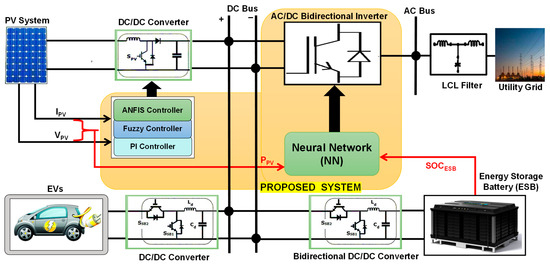
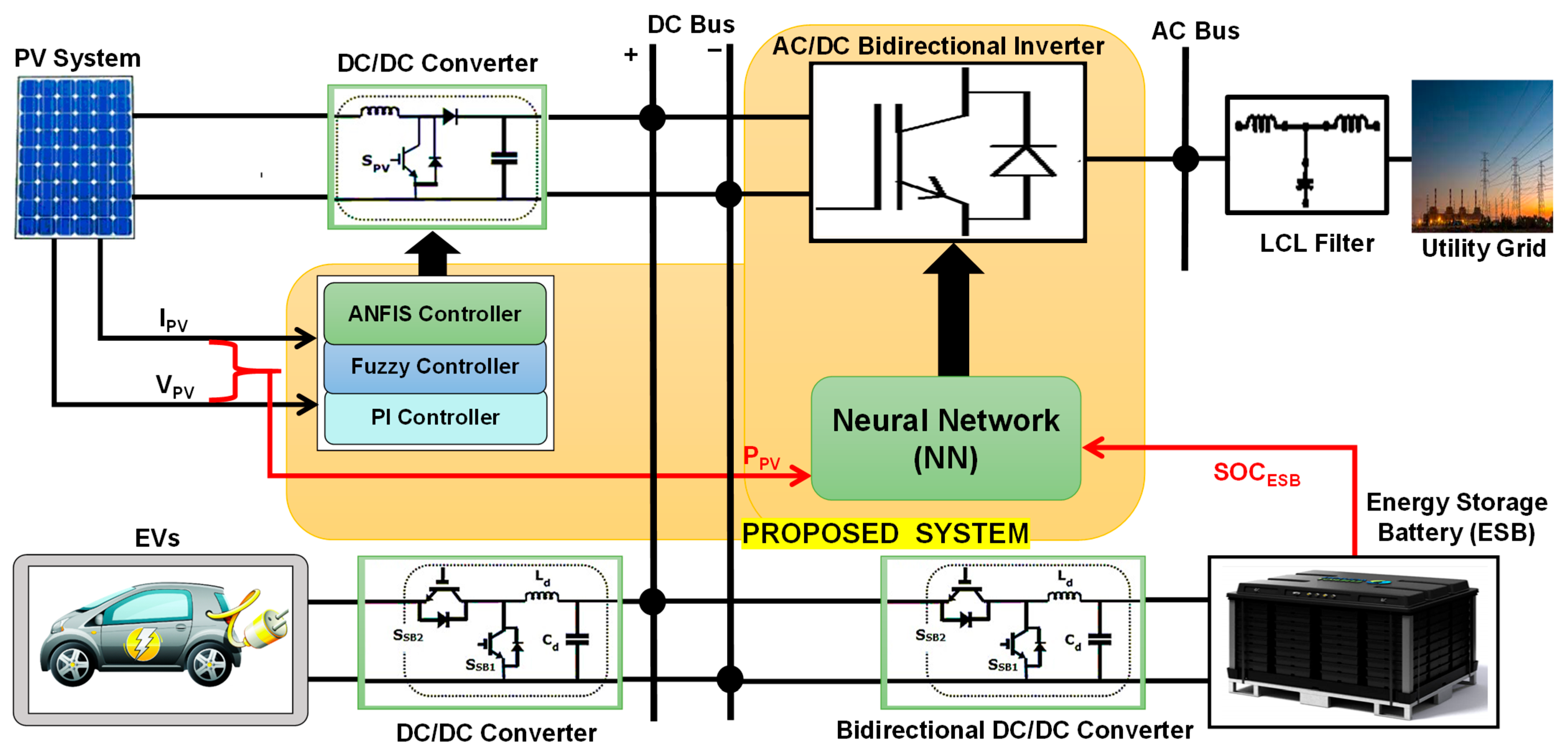
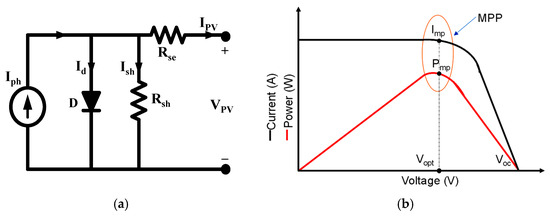
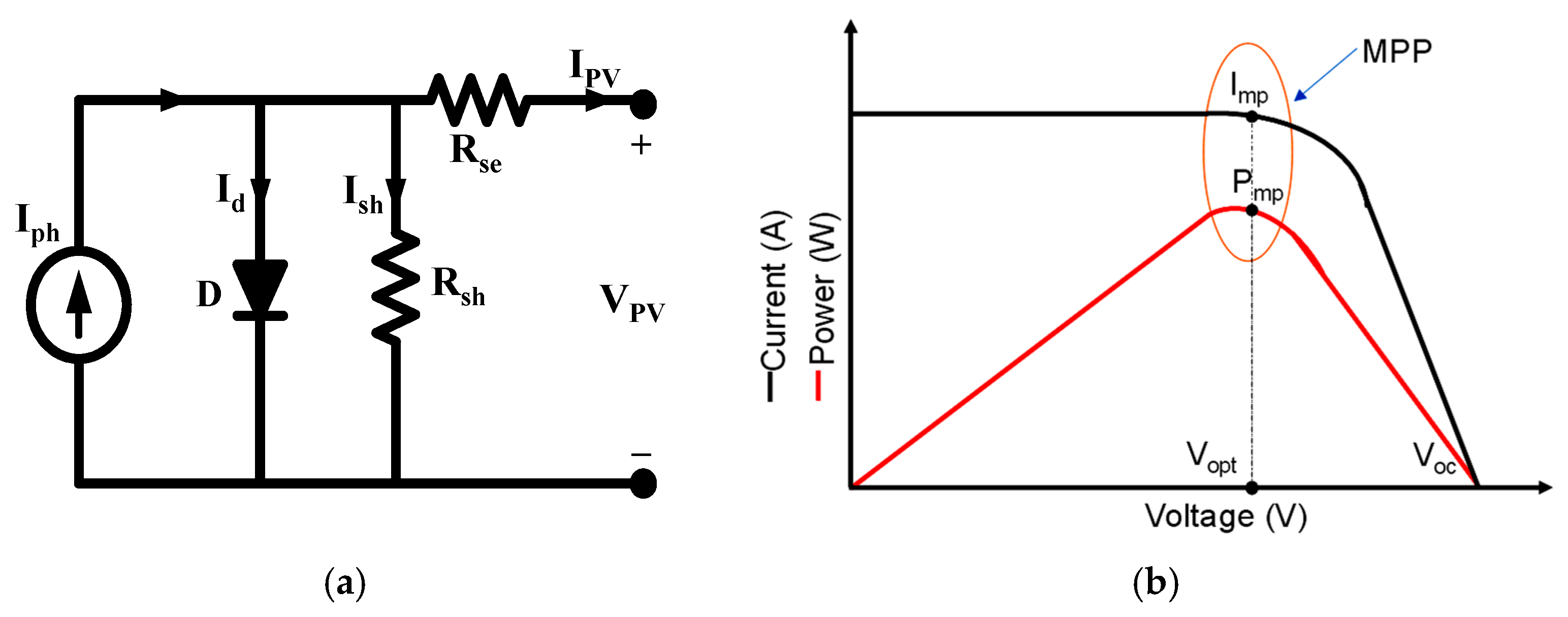
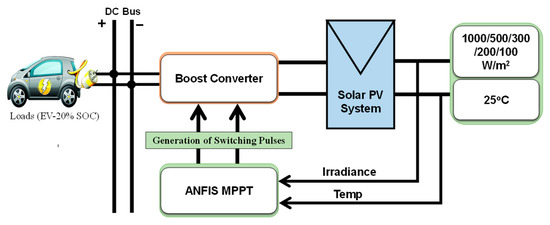
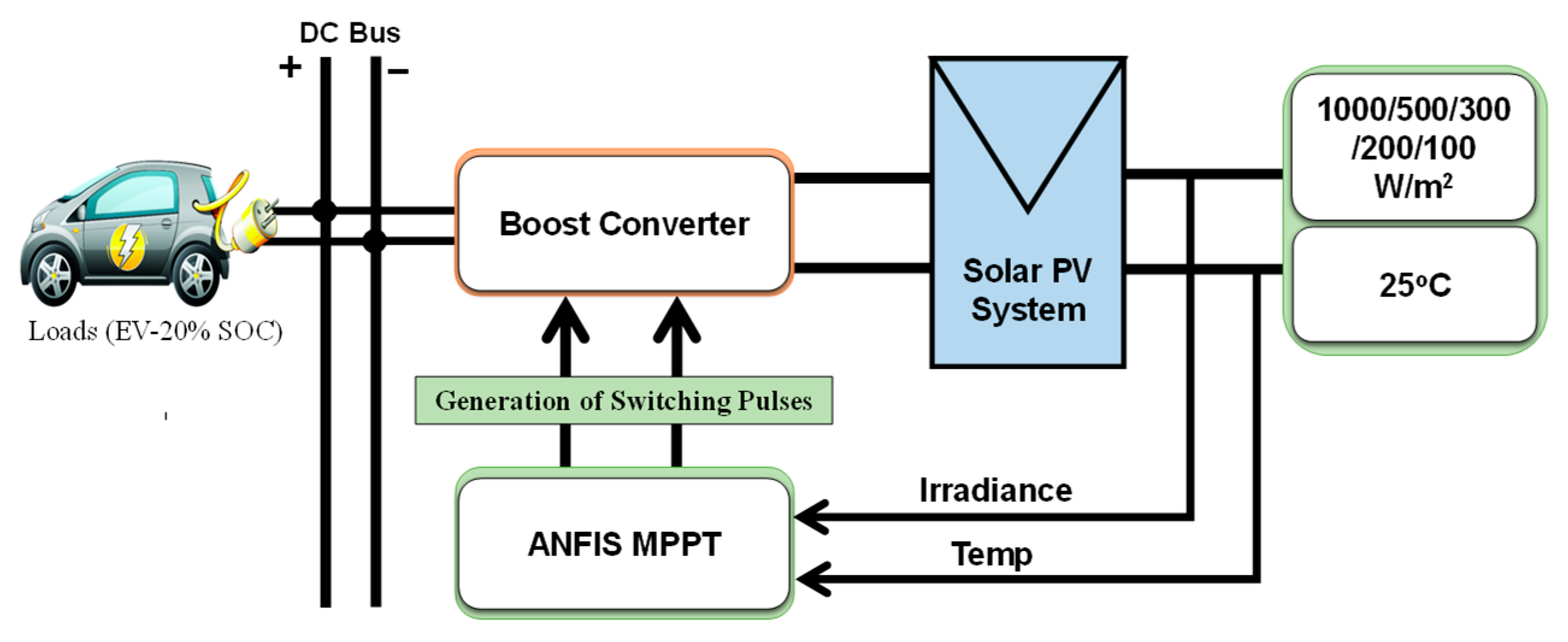
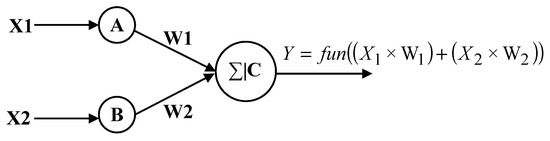
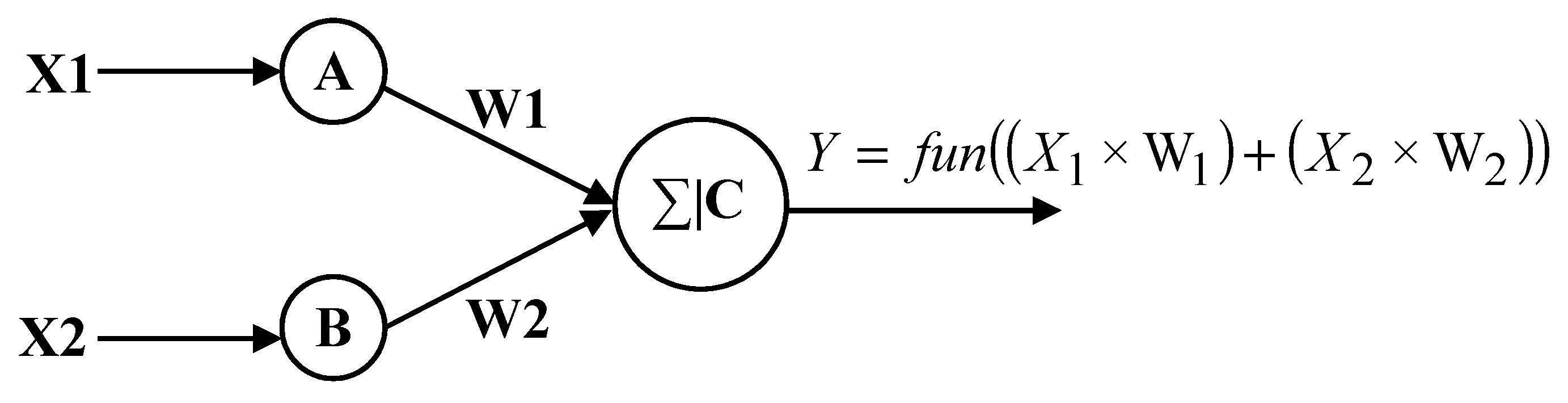
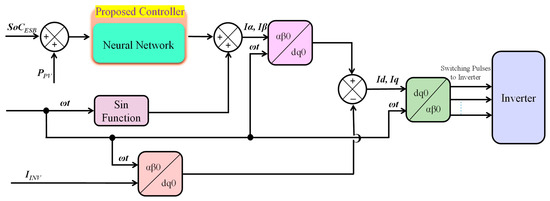
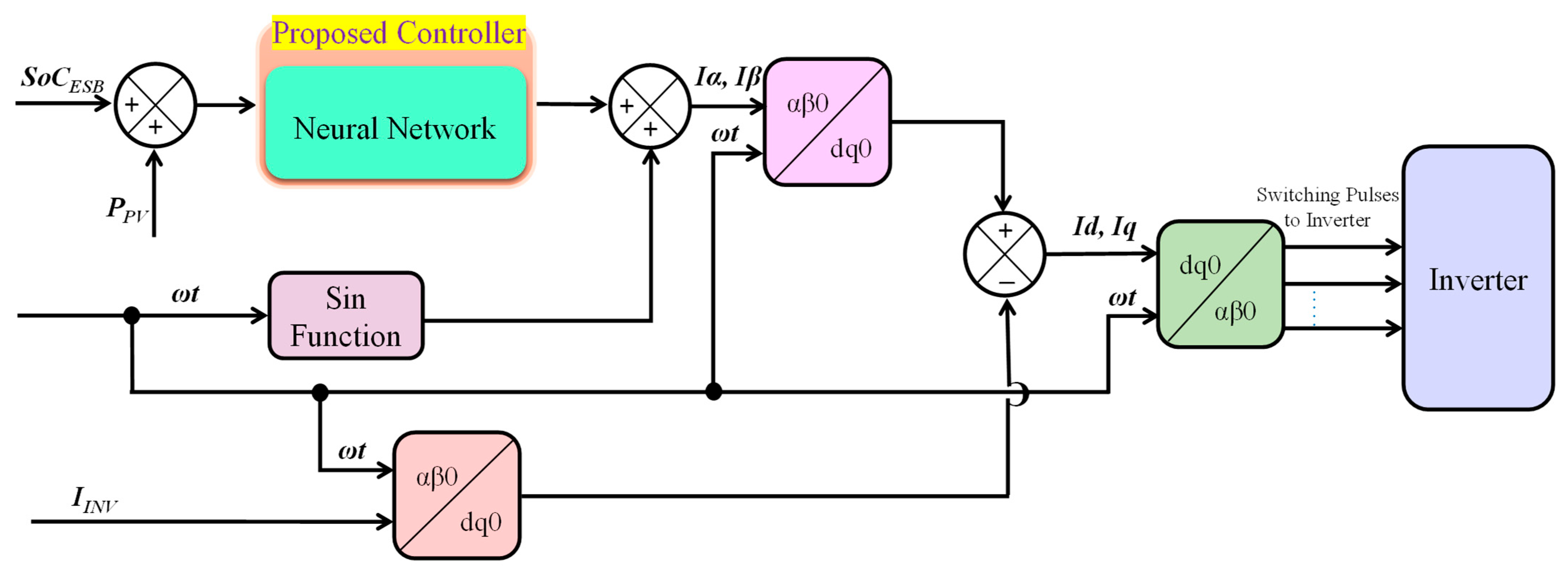
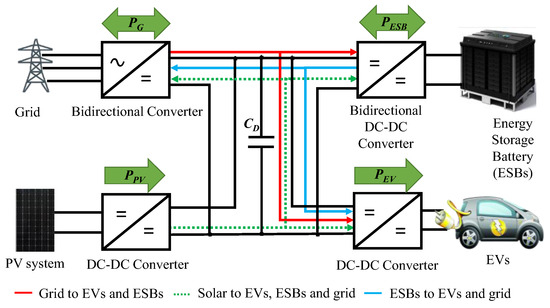
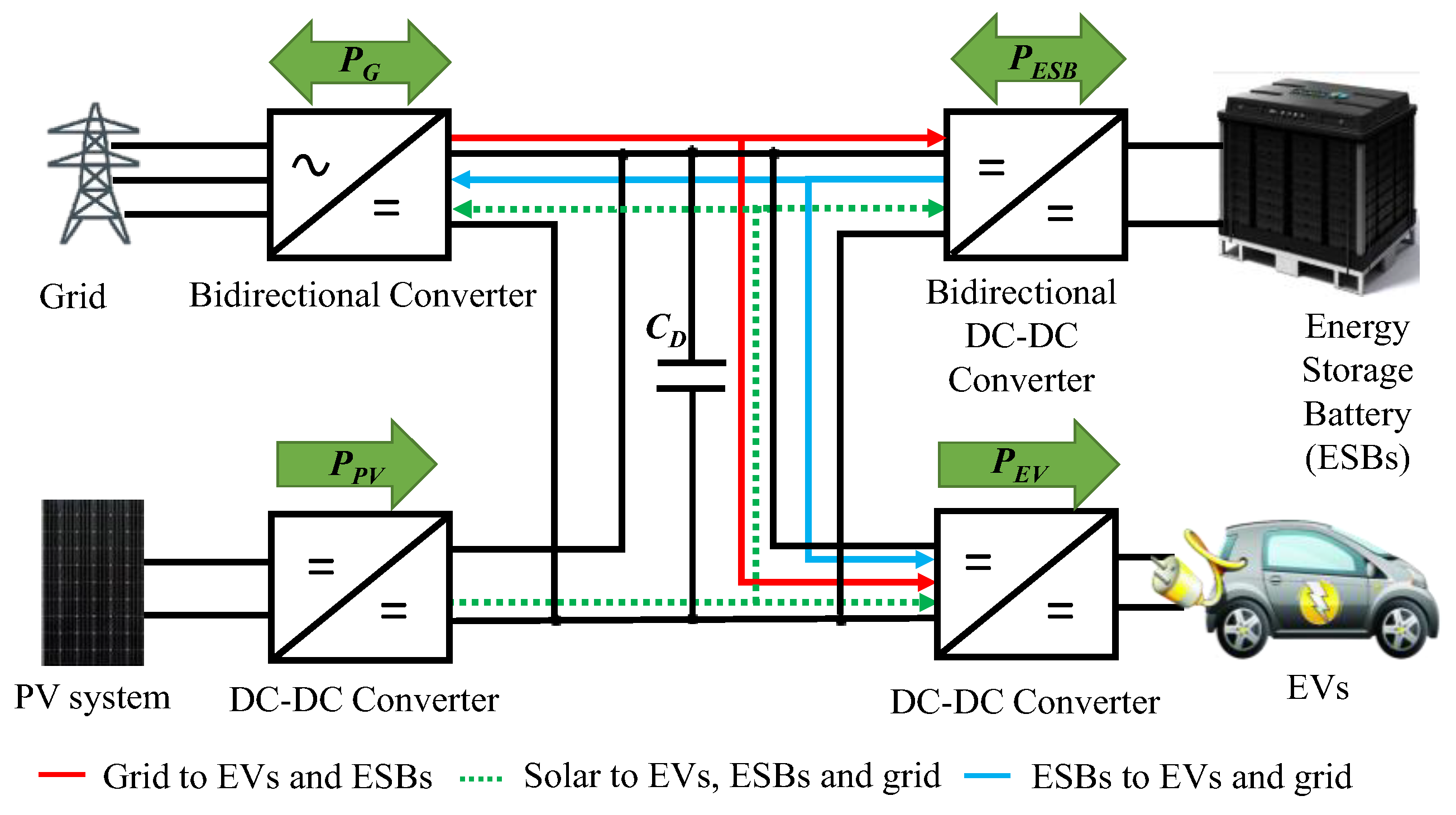
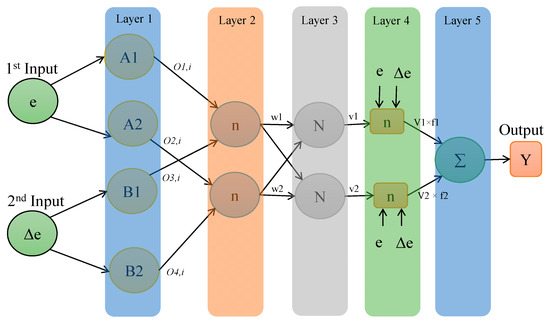
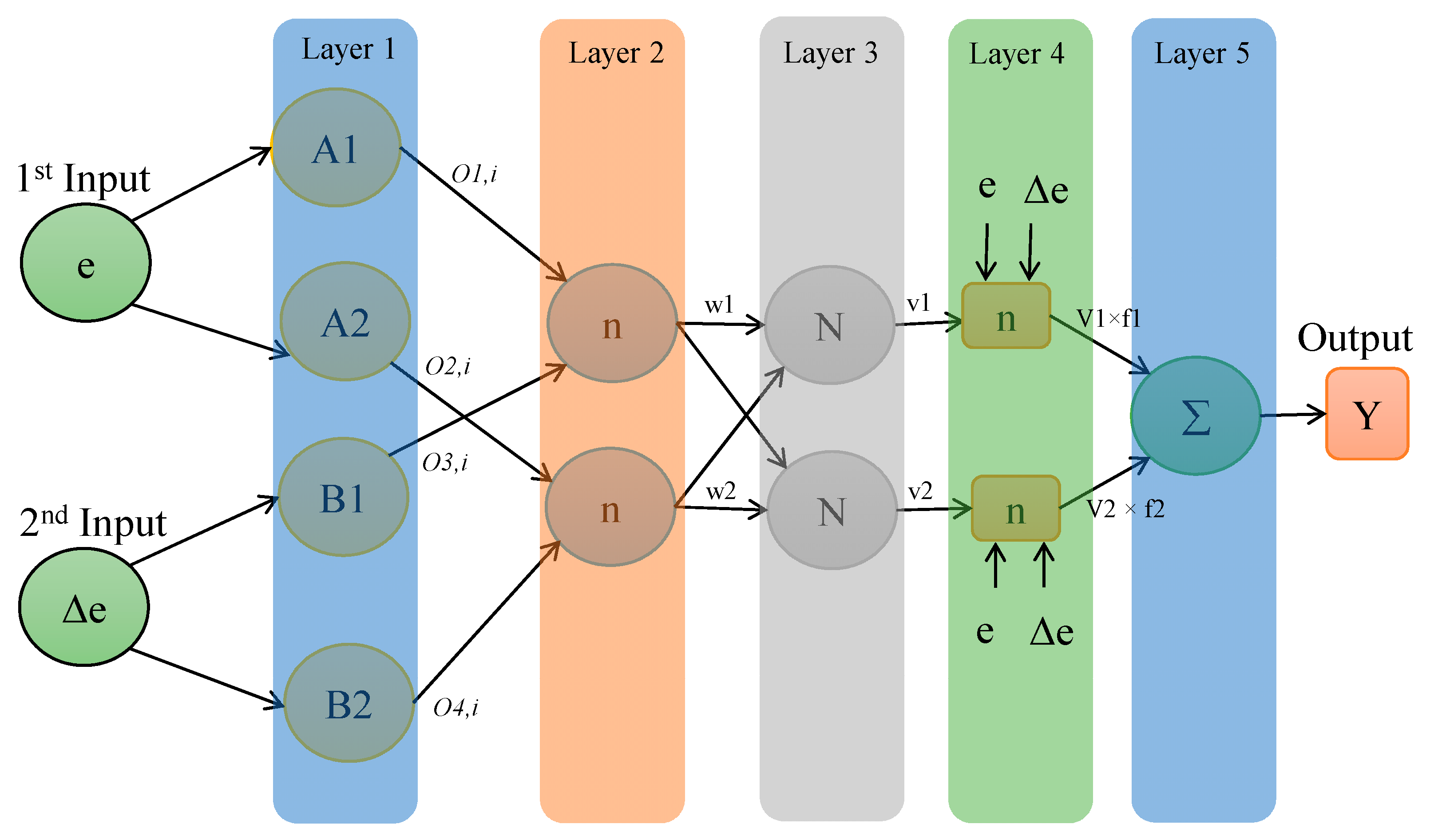
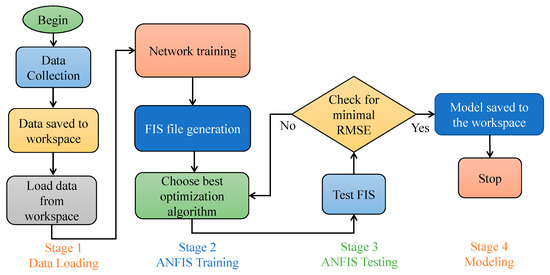
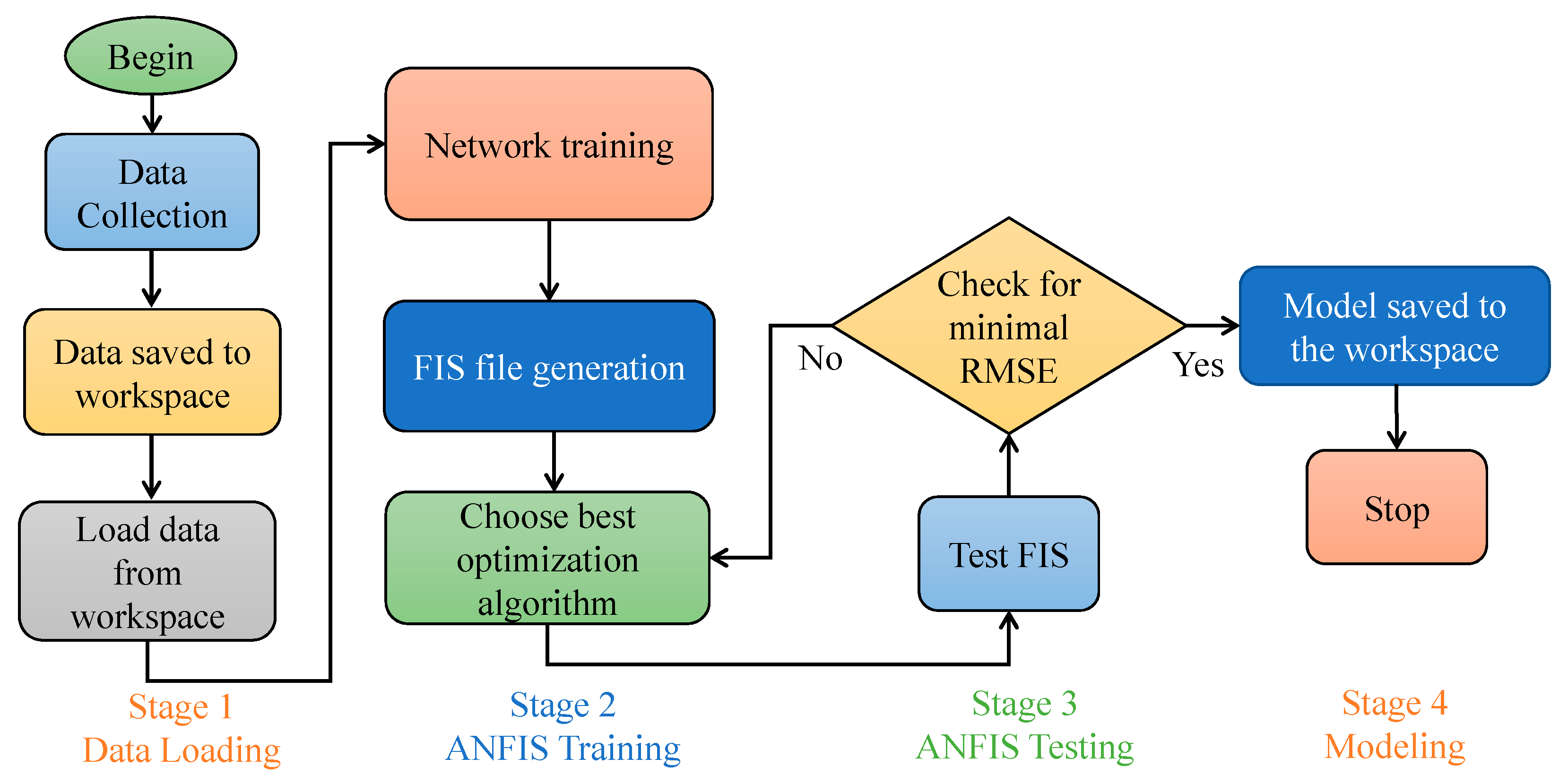
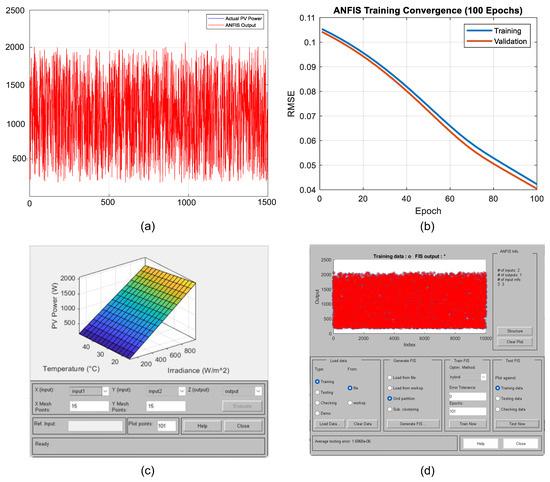
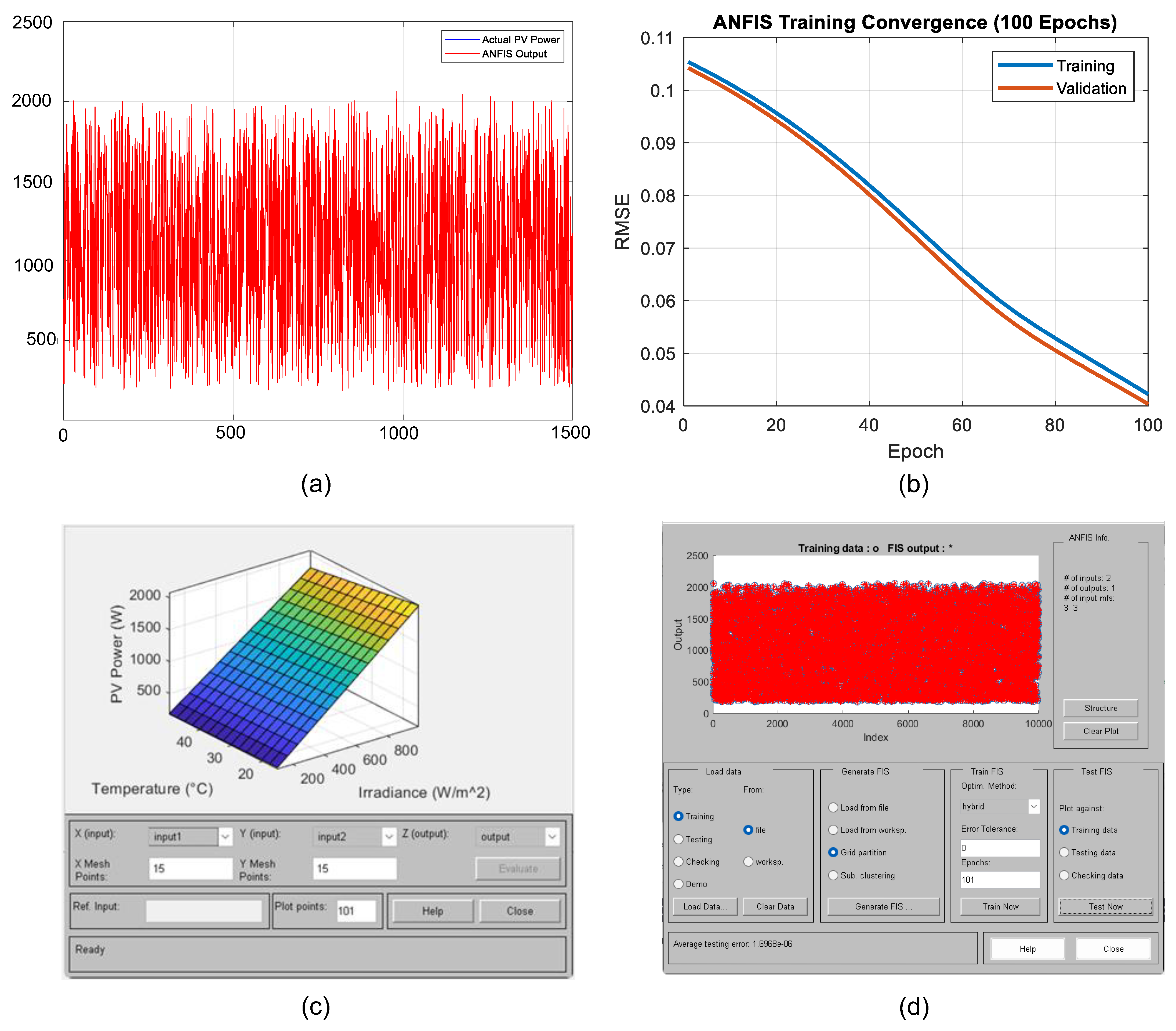
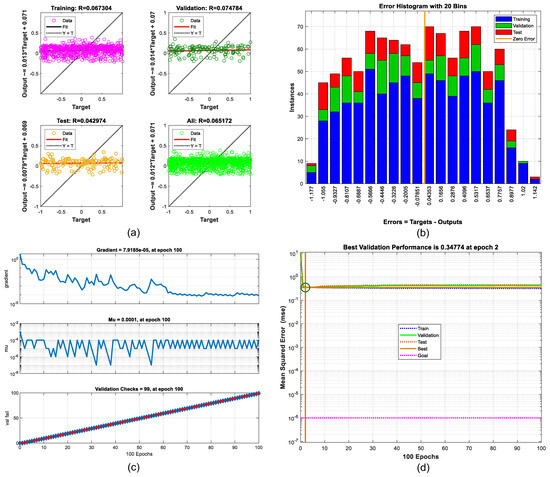
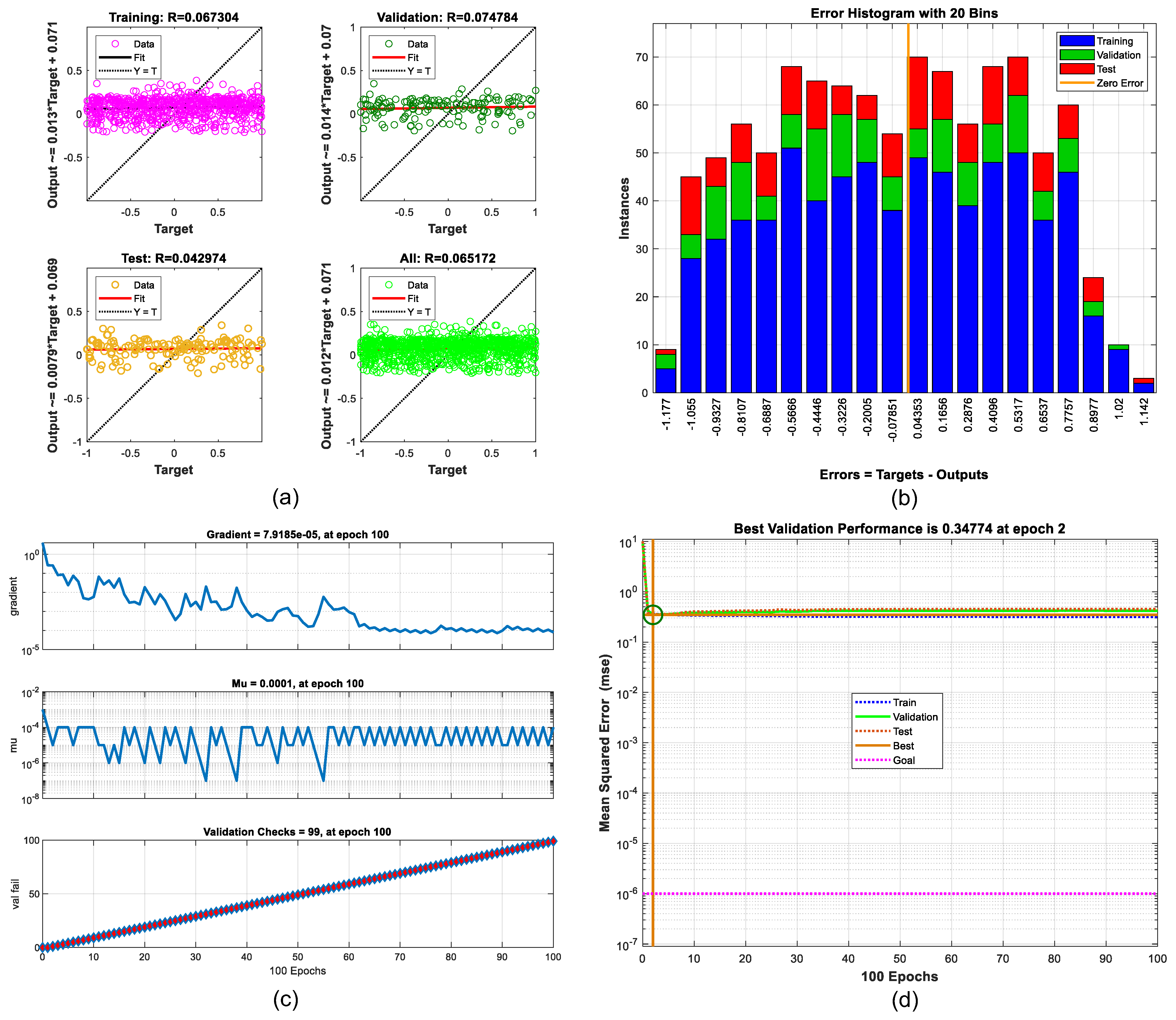
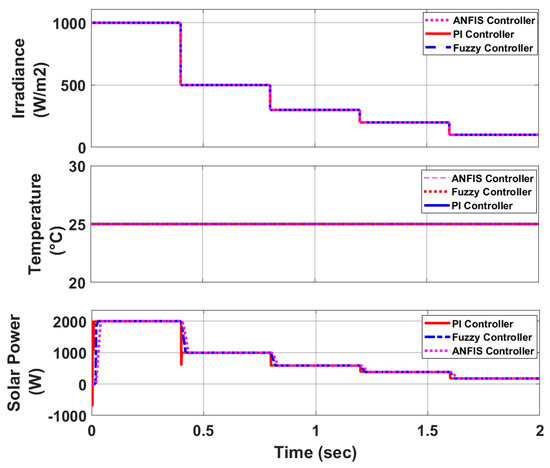
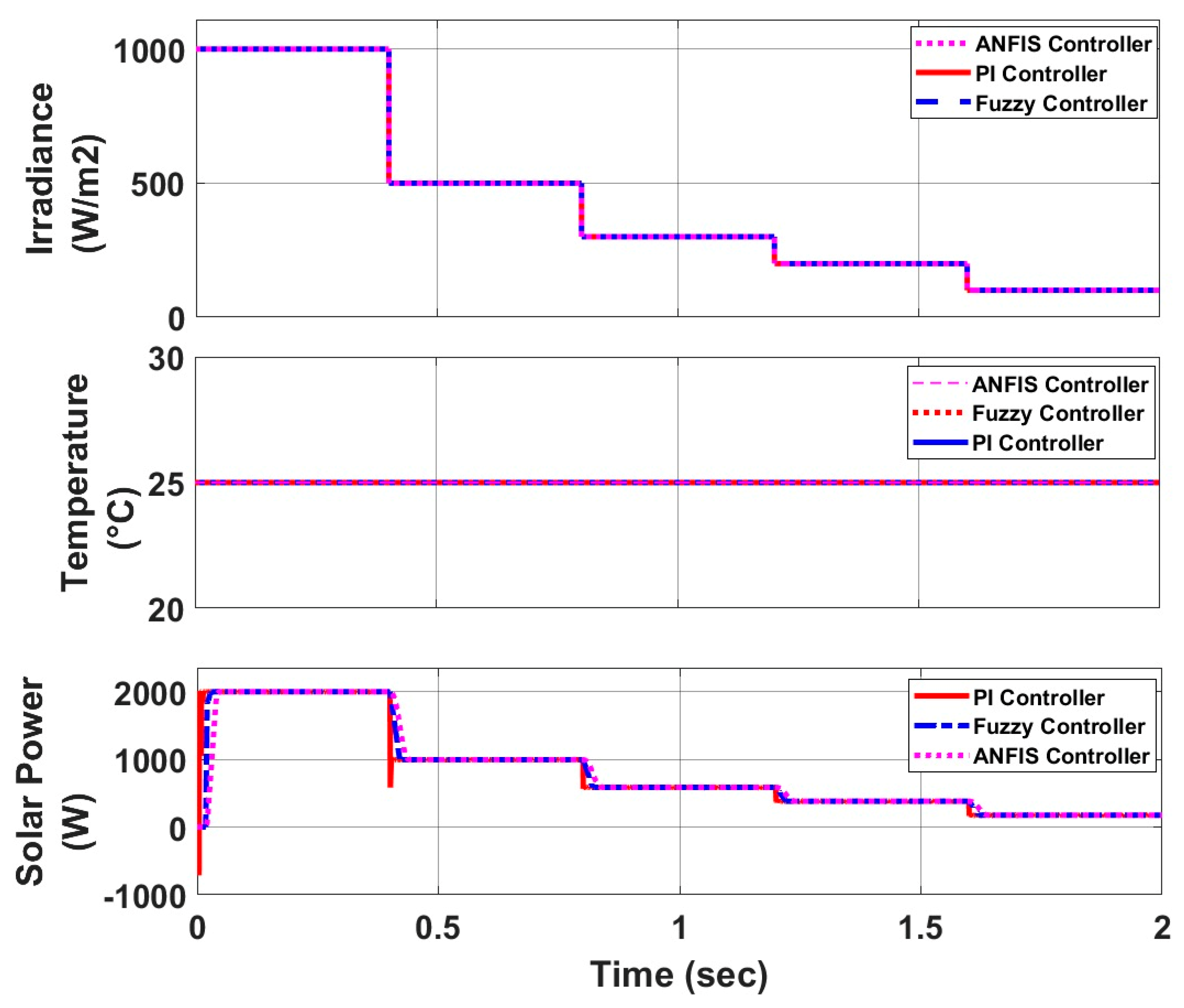
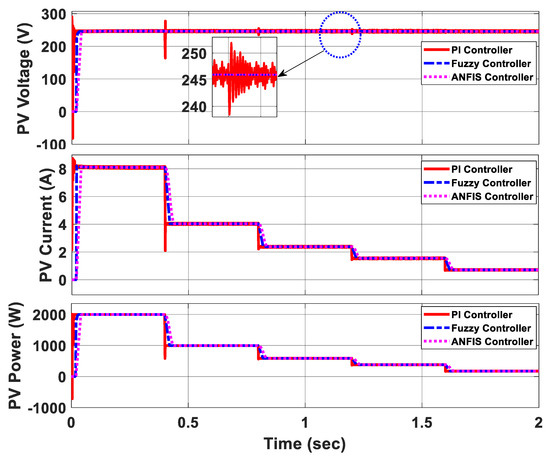
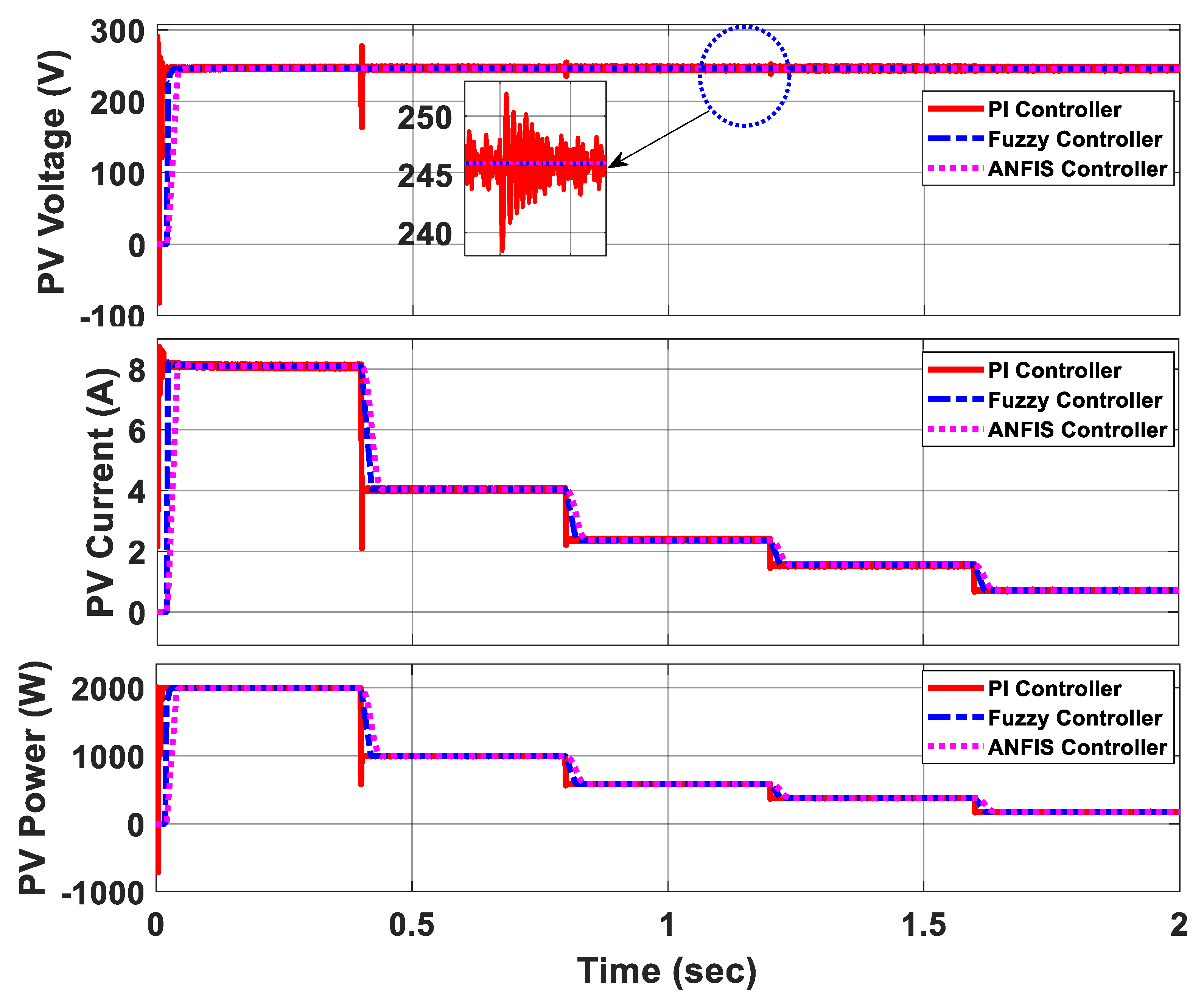
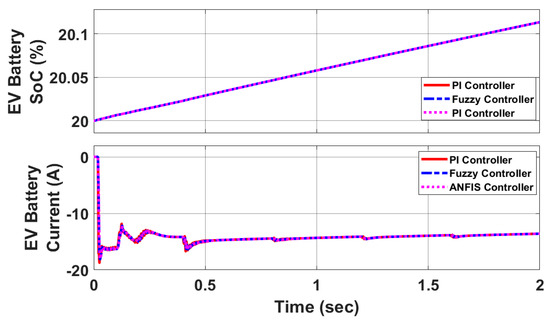
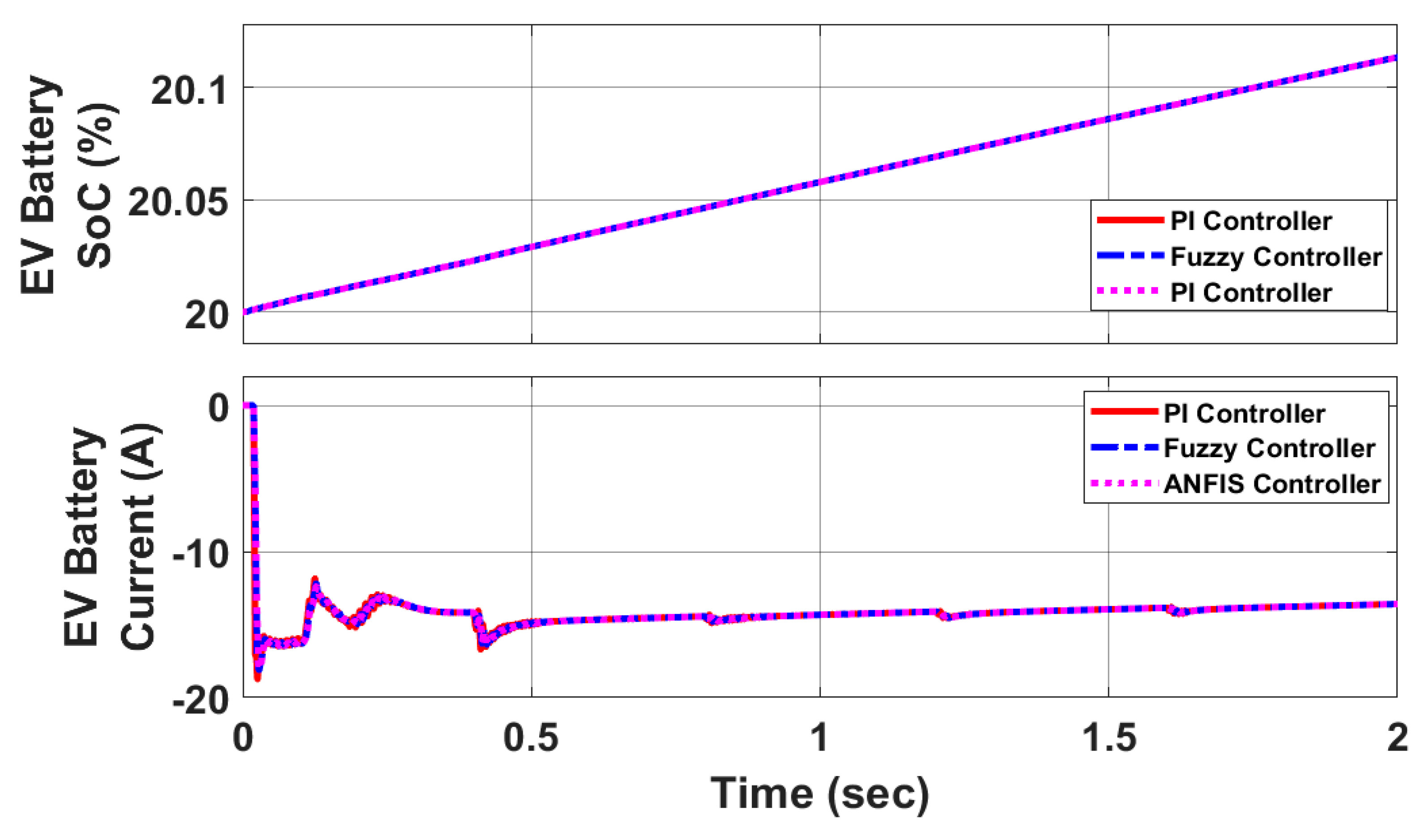
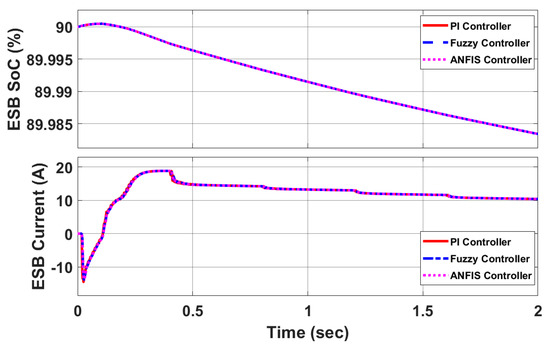
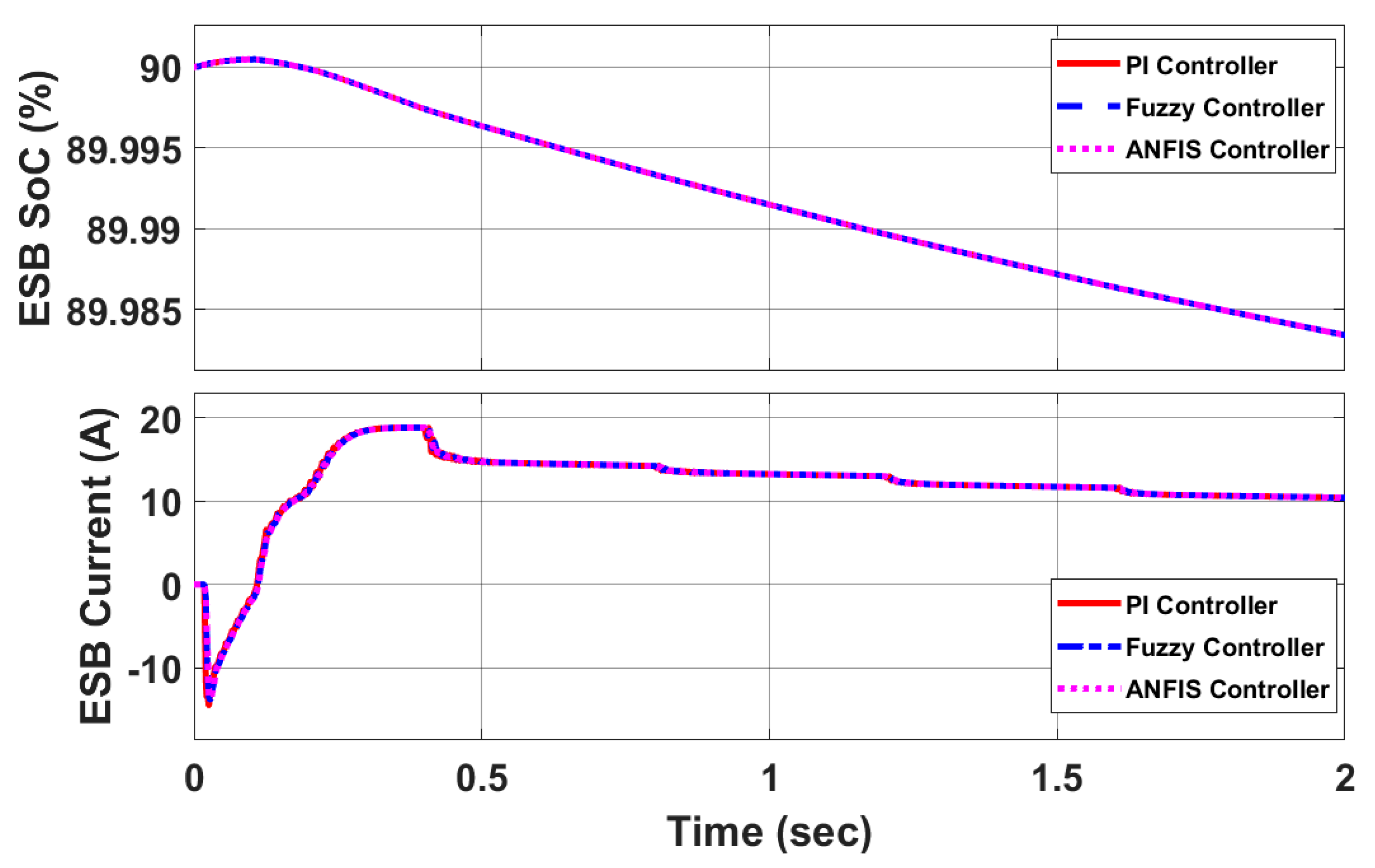
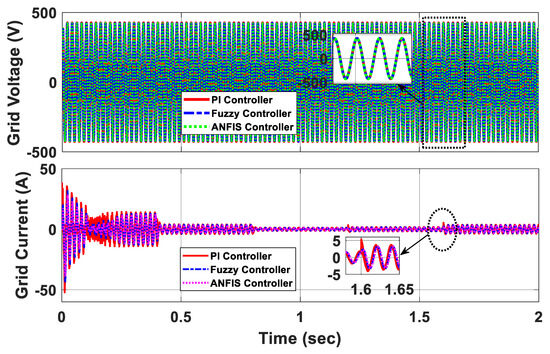
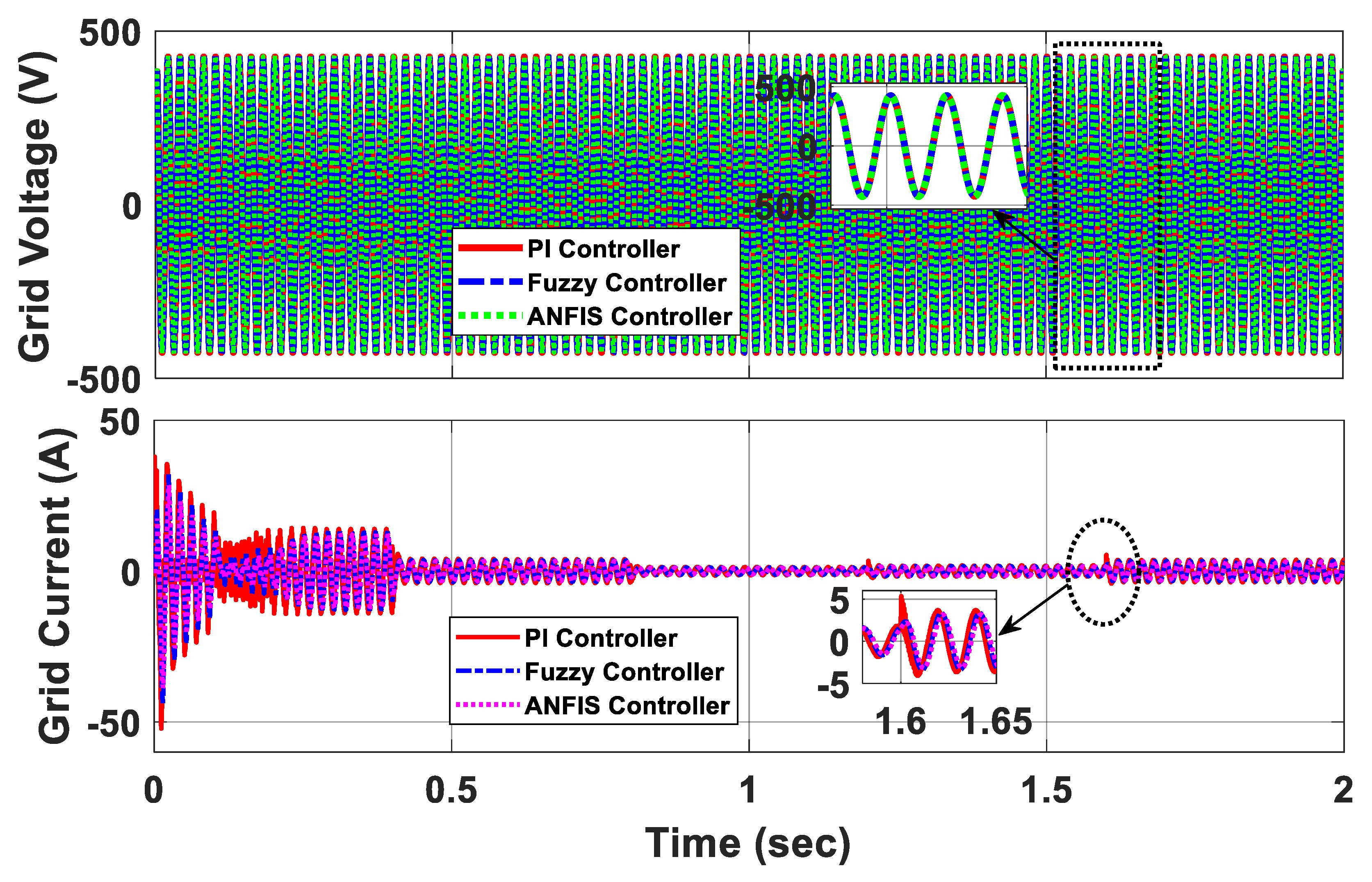
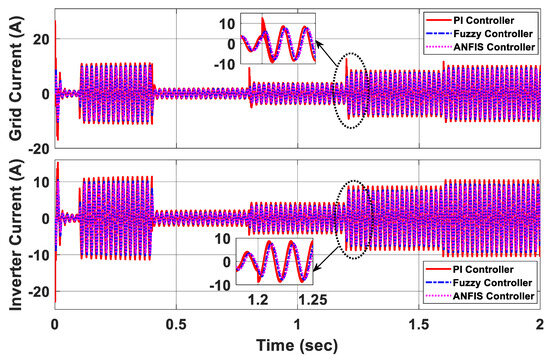
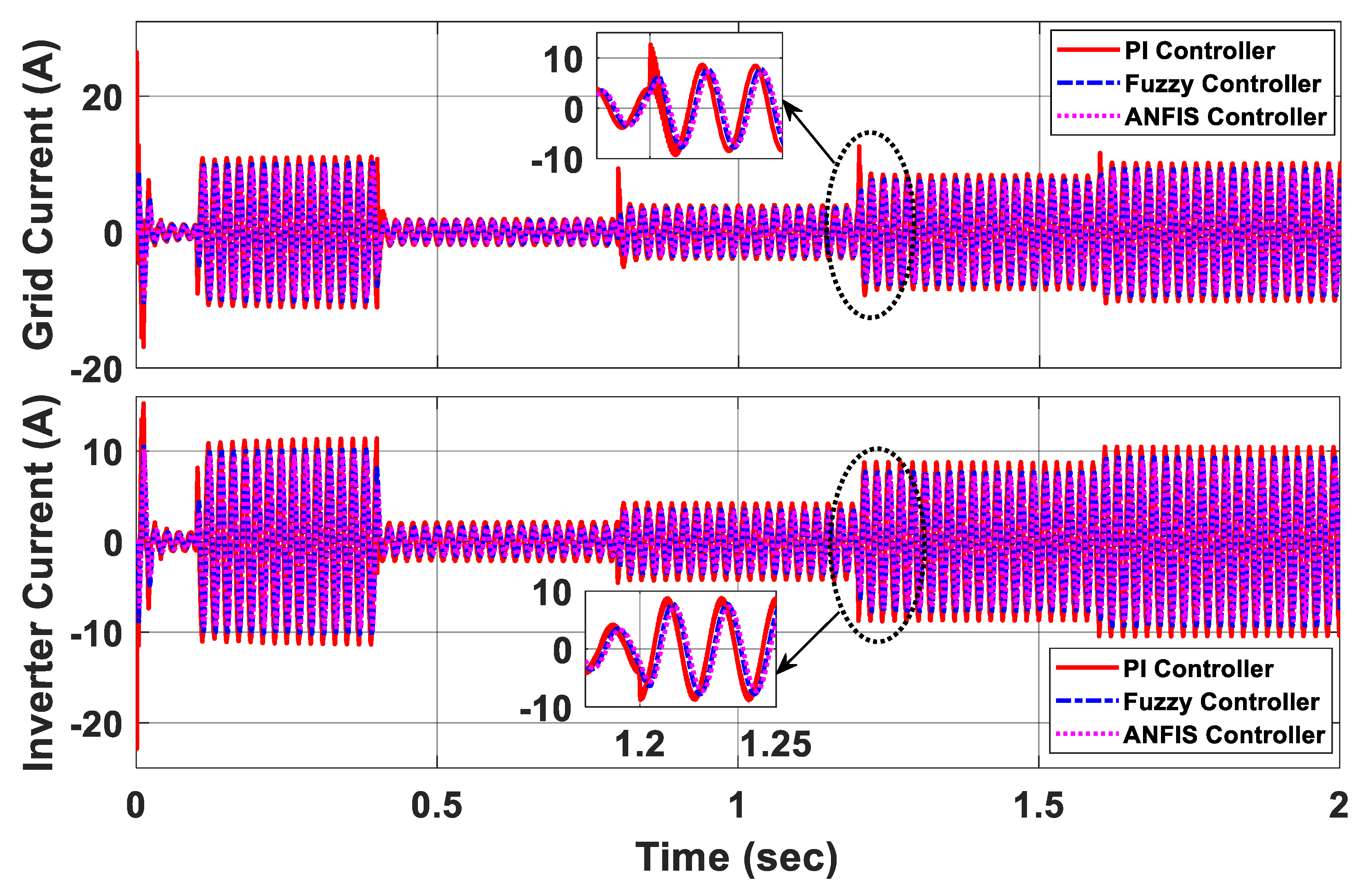
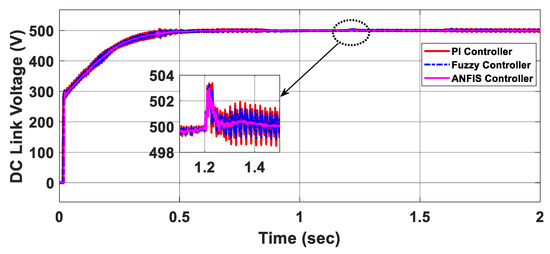
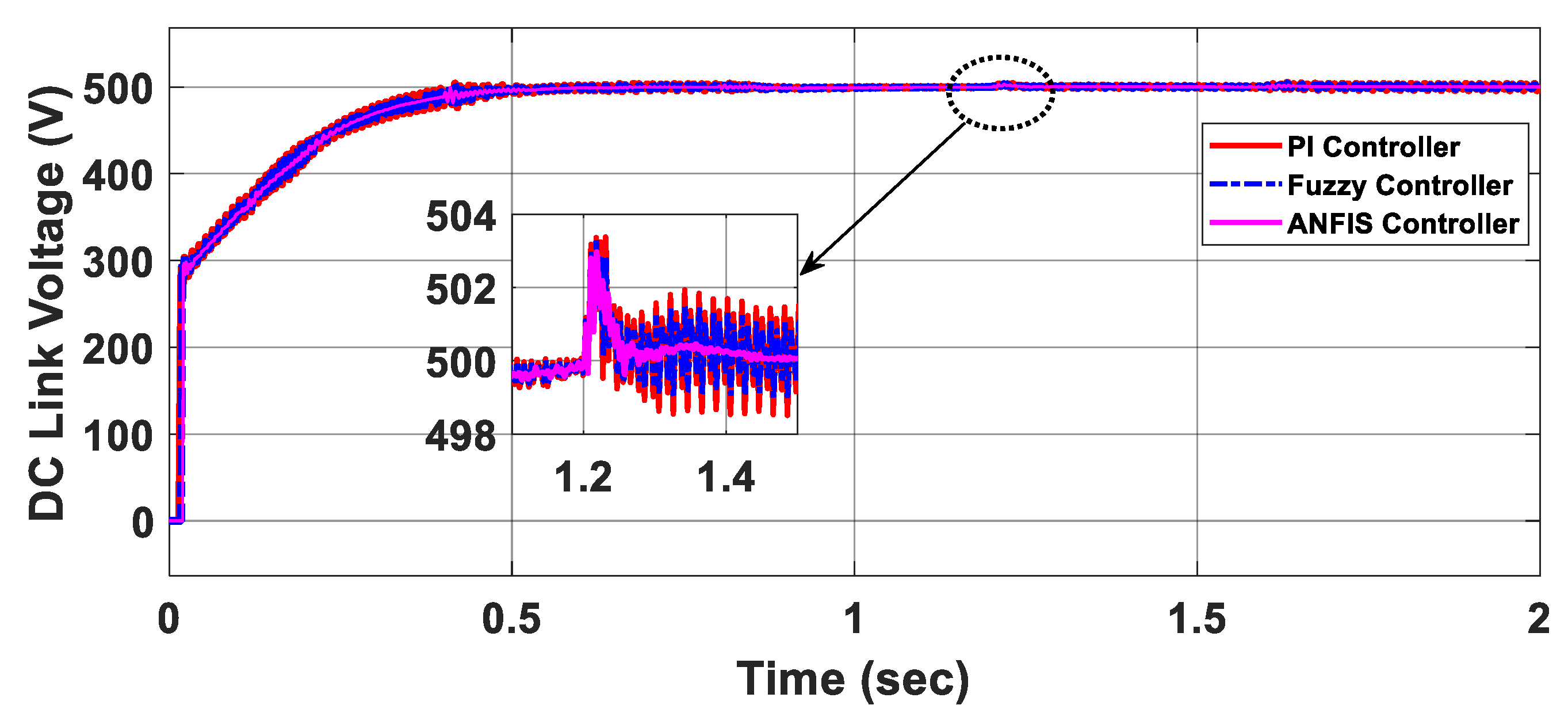
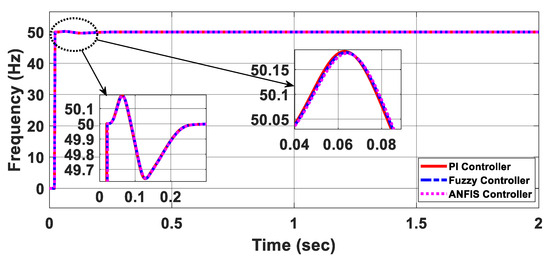
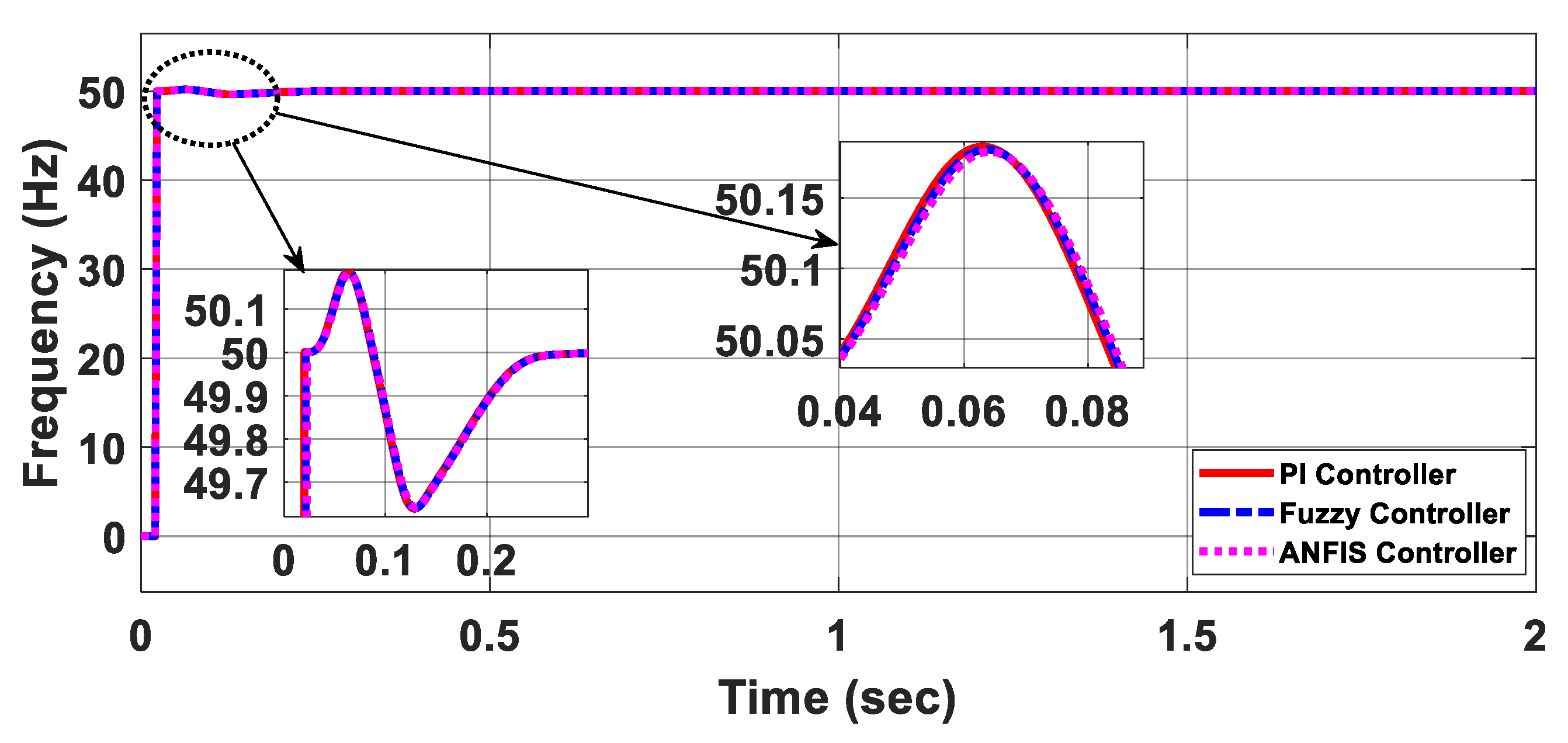
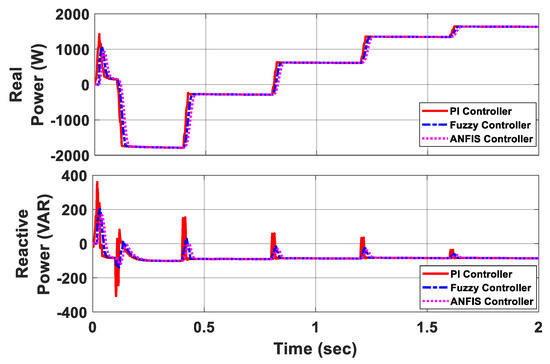
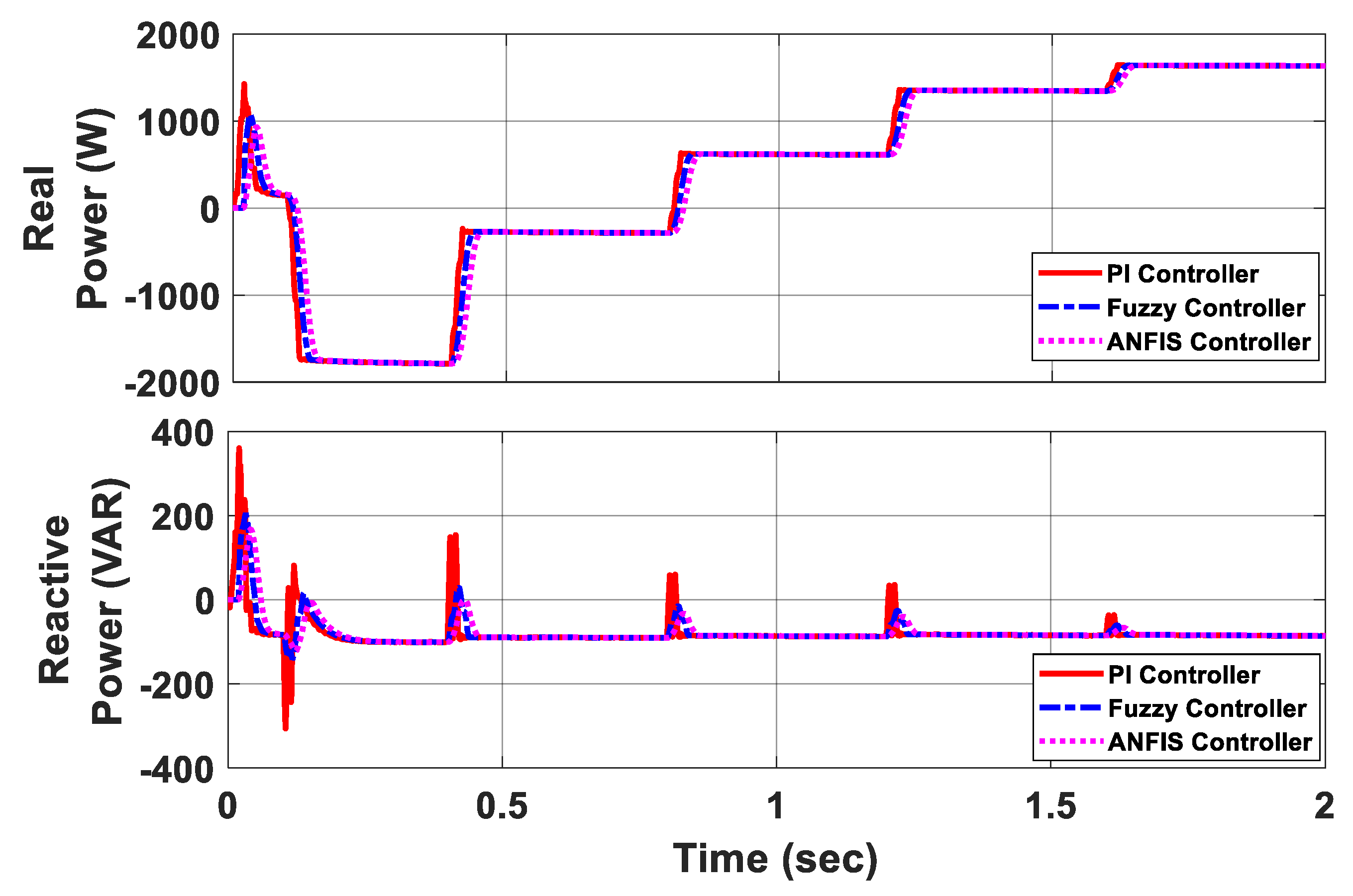
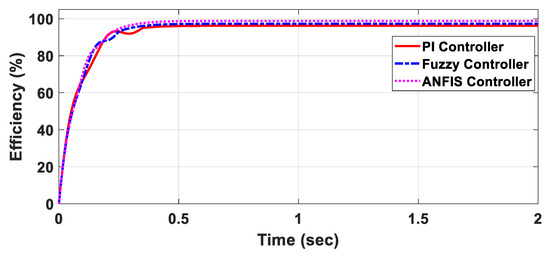
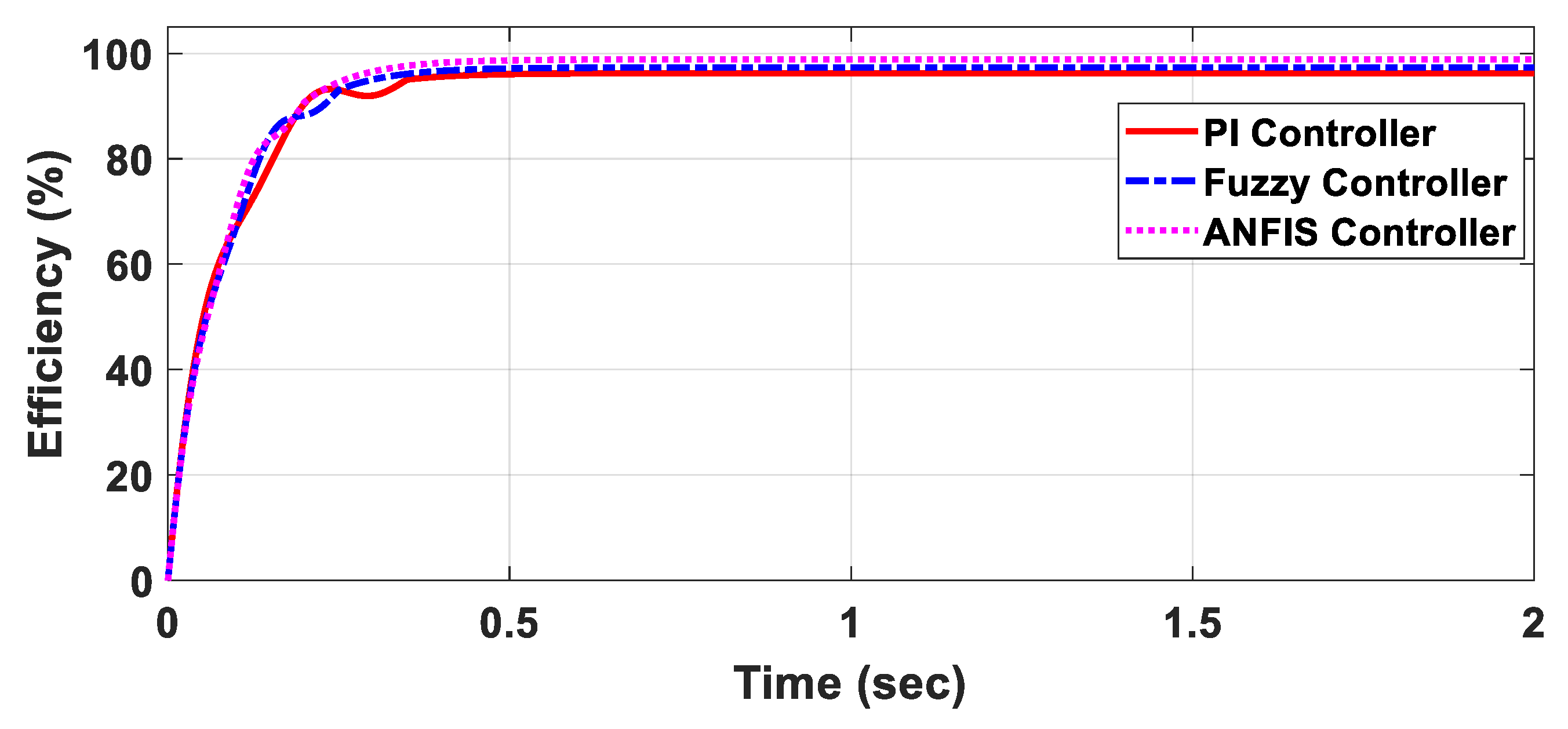
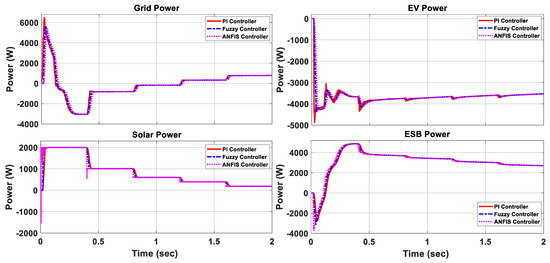
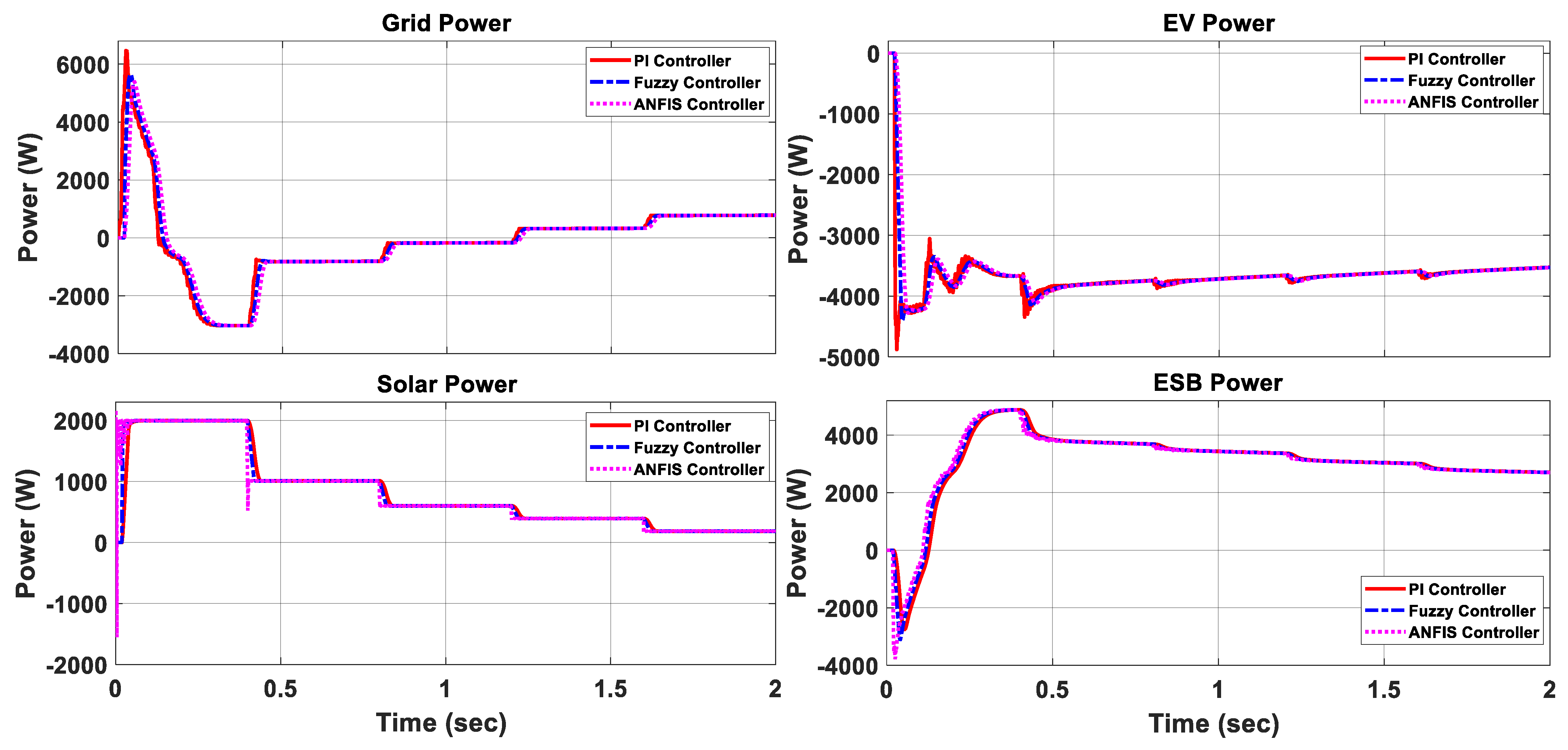
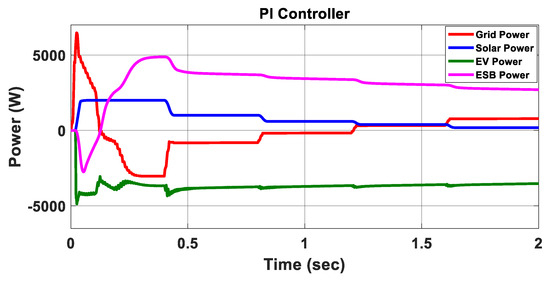
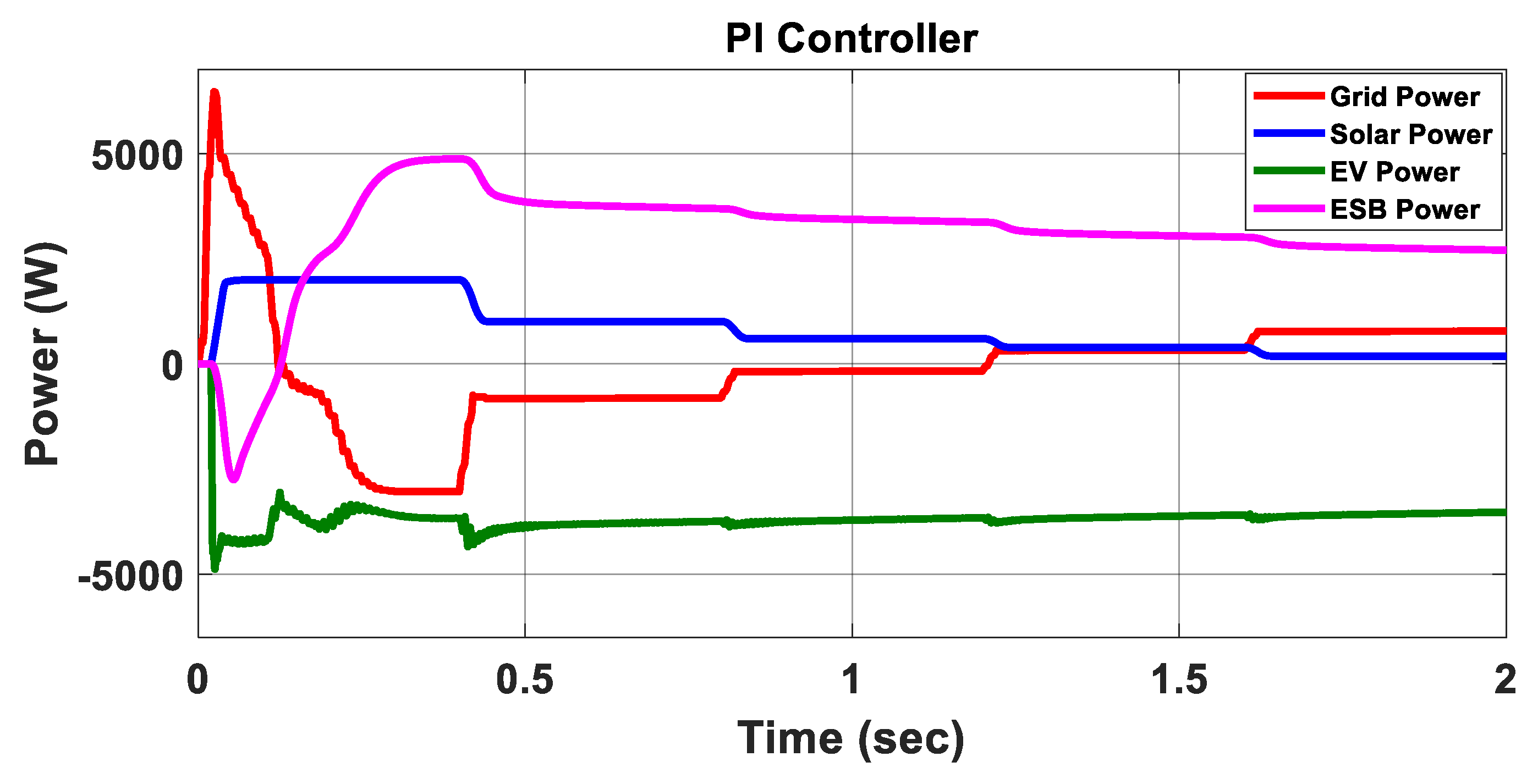
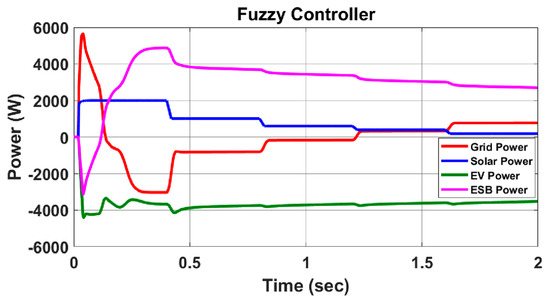
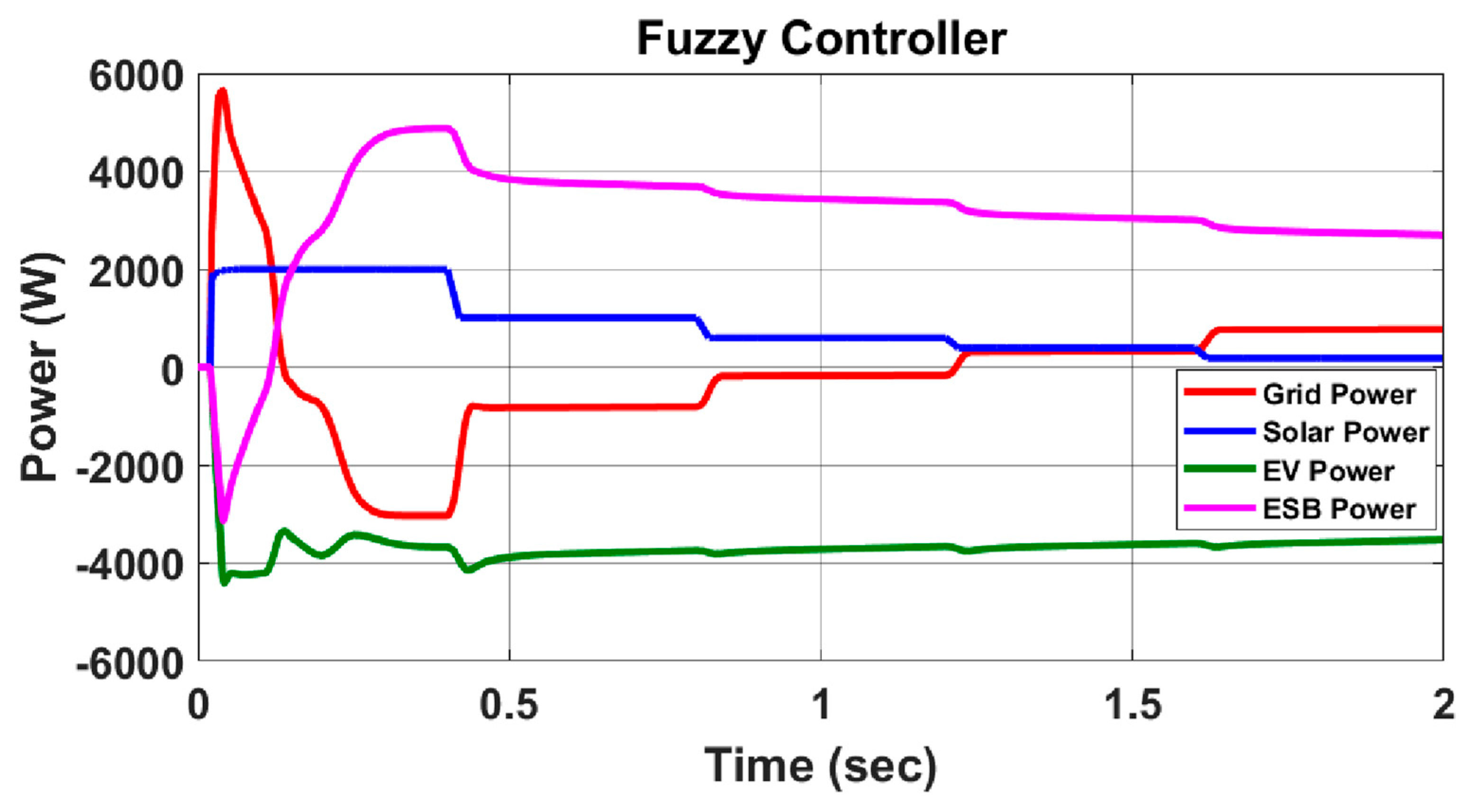
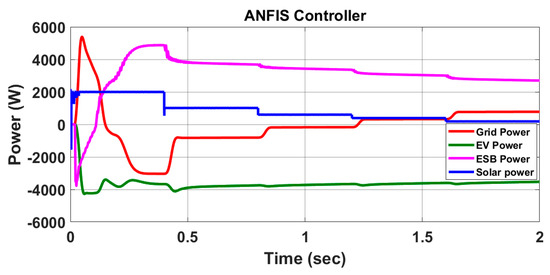
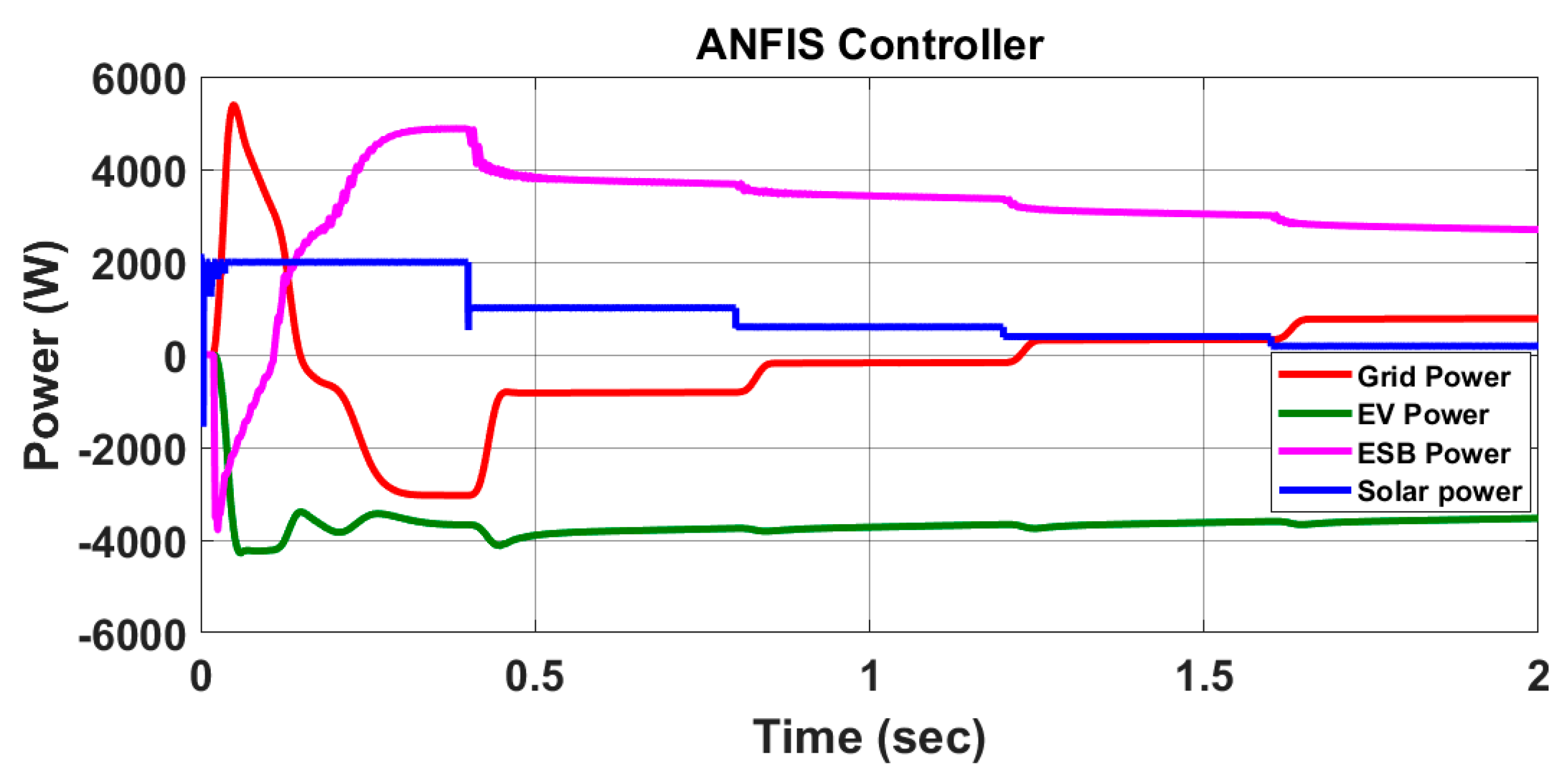
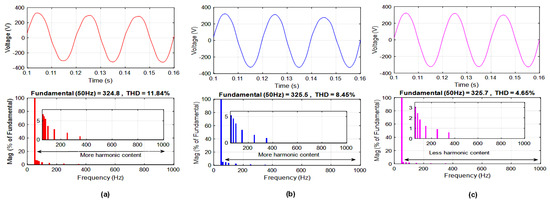
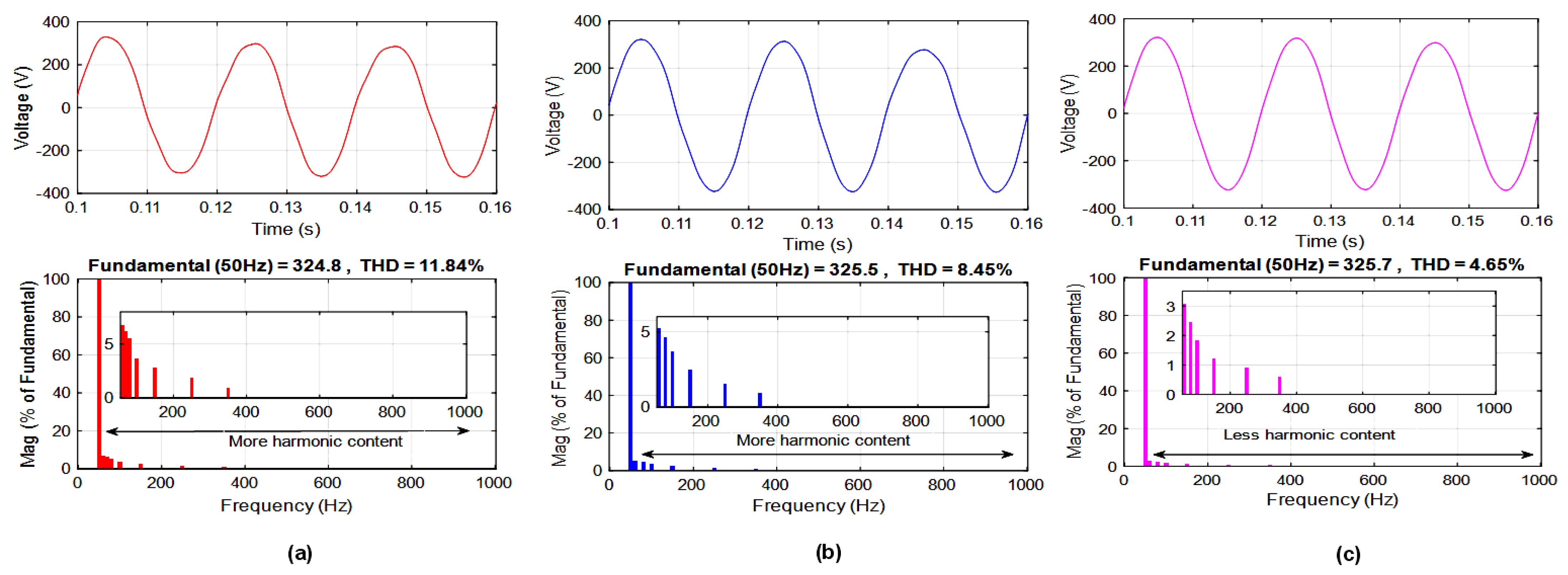
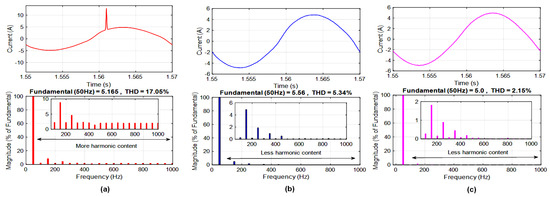
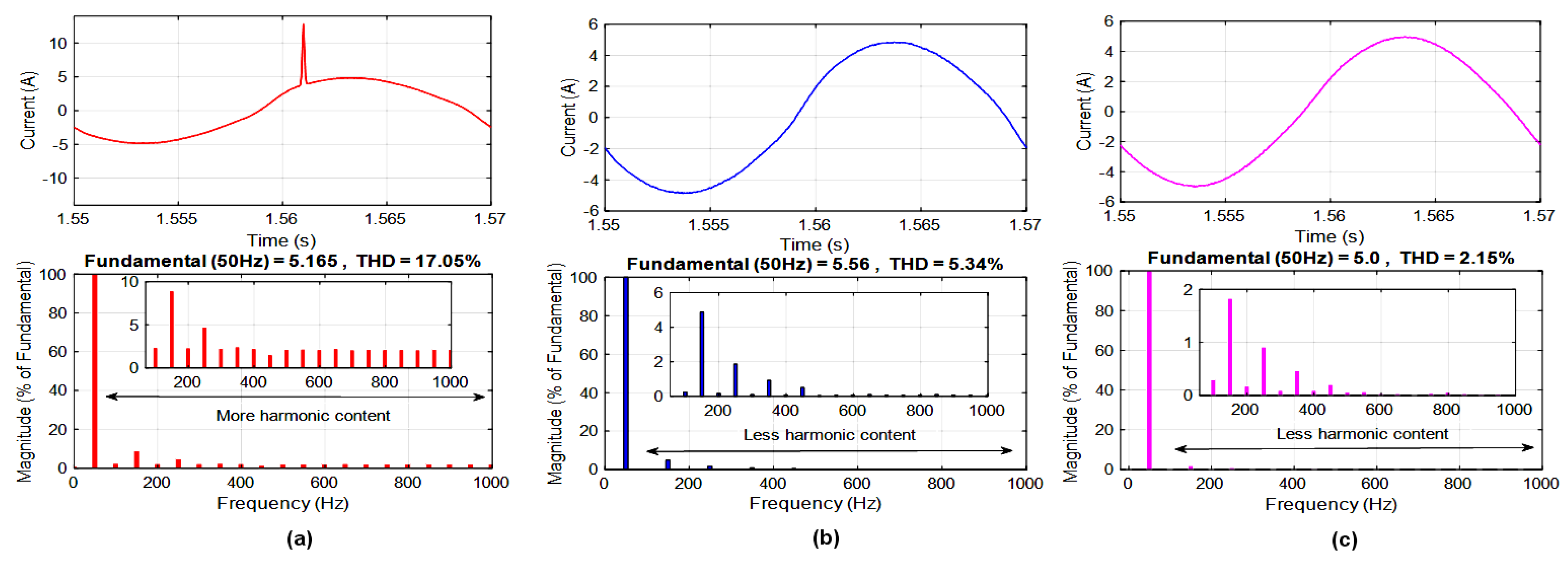

Disclaimer/Publisher’s Note: The statements, opinions and data contained in all publications are solely those of the individual author(s) and contributor(s) and not of MDPI and/or the editor(s). MDPI and/or the editor(s) disclaim responsibility for any injury to people or property resulting from any ideas, methods, instructions or products referred to in the content. |
© 2026 by the authors. Published by MDPI on behalf of the World Electric Vehicle Association. Licensee MDPI, Basel, Switzerland. This article is an open access article distributed under the terms and conditions of the Creative Commons Attribution (CC BY) license.