1. Introduction
Transition to electric-powered vehicles (EVs) is perceived as one of the promising options for achieving global climate goals and solving localized environmental protection problems of large cities [
1,
2]. According to the IPCC 6th Assessment Report, electric vehicles have the greatest potential to decarbonize the land transport [
3]. The Paris Declaration on Electro-Mobility and Climate Change and Call to Action adopted in 2015 suggests that limiting the global temperature increase to below 2 °C requires at least 20% of all road vehicles to be electric by 2030 [
4]. Furthermore, the Net Zero Emissions scenario of the International Energy Agency (IEA), which corresponds to limiting the global temperature rise to 1.5 °C by 2050, requires plug-in hybrids (PHEVs), battery electric vehicles (BEVs) and fuel cell electric vehicles (FCEVs) to account for 100% of sales by 2035 [
1,
5,
6].
Inland transport is the second largest greenhouse gas emitter after the energy industry, causing 20.7% of global CO
2 emissions from fossil fuels [
7]. In particular, private cars and vans account for more than 25% of global oil consumption and around 10% of global energy-related CO
2 emissions in 2022 [
8]. Furthermore, internal combustion engine vehicles (ICEVs) are usually associated with the environmental problems, such as air pollution and smog, which are particularly important for developing countries with rapidly growing economies [
9,
10,
11]. One of the most significant negative effects of using ICEVs is traffic-related air pollution, which is linked to a range of heart and lung diseases and even neurological disorders [
12,
13,
14,
15]. The environmental benefits of switching from internal combustion engine vehicles to electric engines are evident: emissions from transportation are moved far away from urban centers or disappear altogether. Thus, the electrification of transport could also induce strong health benefits to city dwellers. According to the IEA, using EVs instead of ICEVs could help avoid 1.8–2.5 Gt of CO
2-equivalent emissions worldwide in 2035 [
1]. In Russia, almost half of the urban population suffers from high levels of air pollution [
16]. This is especially evident in industrial cities in the Ural regions, Siberia, and the Far East, as well as in large, highly urbanized centers like Moscow, Yekaterinburg, Krasnoyarsk, Omsk, and Chelyabinsk [
17,
18,
19]. The negative consequences are evident in increased mortality rates from lung cancer in polluted cities [
20]. About a quarter of all harmful emissions into the atmosphere in Russia come from automobile exhaust [
11]. This highlights the potential for improving air quality in urban areas through the transition to electric transportation.
As a result, the need to meet national and global climate targets, growing environmental concerns and ongoing competition for low-carbon technologies are pushing nations to create incentives for the electrification of transport [
21,
22]. The level of EV adoption in different countries is highly dependent on the composition of government incentives for consumers to purchase an electric car [
23,
24,
25,
26]. European countries show the fastest pace of transition: the share of electric vehicle sales is highest in Norway (95%), Sweden (60%), the Netherlands (30%), Germany, France and the UK (25%) [
1,
5,
27]. China occupies a special position as both the largest producer, accounting for 65% of global EV sales in 2023, and the largest market with 60% of global new electric car registrations [
28,
29,
30]. Together, China (60%), Europe (25%) and the United States (10%) account for 95% of all electric vehicles sold worldwide [
1]. Developing countries including oil-producers are also declaring their intention to increase the share of electric vehicles [
31,
32,
33,
34,
35].
The EV market in Russia is growing rapidly in recent years, but it is still barely noticeable, like in most developing countries [
9,
31,
33,
36]. At the beginning of 2025, there were 59,600 EVs in Russia, representing about 0.12% of the total Russia’s car fleet [
37]. About 6500 charging stations have been installed in order to charge these EVs. Moscow, where the charging infrastructure is most advanced (12.7% of the total number of charging stations), accounts for almost one in four EVs [
38]. The regions of Moscow Oblast’ (7.5% of all EVs and 11.7% of all charging stations), Krasnodar Krai (6% of all EVs and 6% of all charging stations) and Saint Petersburg (5% of all EVs and 6% of all charging stations) follow, and these regions also have the highest number of conventional vehicles in Russia. The Siberian and Far Eastern regions of Russia account for 13.5% and 12.5% of all EVs, respectively [
38]. Of these, the Sakhalin Oblast, with 2.6% of all charging stations in Russia, the Krasnoyarsk Krai, with 2.5%, and the Novosibirsk Oblast, with 2.2%, are the best provided with charging infrastructure. Moreover, about 1/3 of all stations in Russia support fast charging.
In 2024, over 17,800 EVs were purchased in Russia, accounting for 1.1% of all new car sales [
37]. This represents a 1.3-fold increase compared to 2023 and a 6-fold increase from 2022. One of the key reasons for this rapid growth is that car manufacturers from countries that have imposed sanctions against Russia have left the market. Domestic and Chinese manufacturers, including electric and hybrid vehicle makers, have met the increased demand for new cars. Also, as charging stations have been built in major Russian cities, electric vehicle ownership has become more appealing.
The growth of EVs in Russia is seen as an important part of the country’s efforts to reduce carbon emissions [
39,
40,
41,
42]. If 25% of ICEVs are replaced by electric vehicles, greenhouse gas emissions savings in Russia could potentially amount to 25–28 million tons of CO
2, or 11–12% of Russia’s CO
2 transport emissions, depending on the structure of electricity generation sources [
43]. The Concept for the Development of the Production and Use of Electric Vehicles in the Russian Federation up to 2030 (Russia’s EV Concept) aims to reduce the anthropogenic pressure on ecosystems and increase the competitiveness of the Russian automotive industry by stimulating the production of electric vehicles and localization of their components [
44]. The plan is to produce 217,000 EVs and install 44,000 slow charging stations and 29,000 fast charging stations by 2030. Another measure to support domestic production and stimulate consumption is the state subsidy for purchasing on credit Russian-built electric cars until 2026 [
45]. The government reimburses the bank 35% of the cost of an EV after the buyer signs for the loan agreement. The subsidy is limited to 925,000 Russian rubles (
$10,000).
Despite the rapid growth in sales of electric cars in Russia, demand for them is still limited. A survey of 3000 car owners in Russia found that only 32.4% of them are ready to buy an electric car [
46]. There are several reasons for this. One is that Russia has the same barriers to electric vehicle adoption as other countries. These include a lack of EV infrastructure and government support, as well as customer concerns about the performance of EVs compared to ICEVs [
47,
48]. The costs of electricity and vehicle maintenance can also be a barrier to the growth of electric vehicle sales. However, this is not a major concern for Russia, as the cost of electricity remains relatively low by global standards. Depending on the region of residence, the price per kilowatt-hour for households ranges from around
$0.025 to
$0.15 [
49]. However, as power grids become more outdated, tariffs are gradually increasing. Maintaining BEVs also seems to be cheaper than maintaining ICEVs, as there is no need to regularly change oil and filters [
50,
51]. In addition to these common barriers, Russia has specific challenges for electrification of transport. Among them are the remoteness of Russian settlements from each other, which requires a longer range for an electric car, the harsh climatic conditions, reflected in hot summers and cold winters, and the abundance of fossil fuels [
42,
52].
As a result, the leaders in the EV adoption in Russia are the largest cities with a population of over 1 million, whose residents are more inclined to try out new technologies, have access to the rapidly developing charging infrastructure and have a lower average daily mileage compared to residents of more remote areas. The most notable example is Moscow, which aims to have 320,000 EVs by 2030, representing 7% of the overall fleet, according to city’s transportation strategy [
53]. Therefore, a crucial aspect in developing a state policy to enhance support for electric transportation is considering the potential limitations of EV adoption in the largest cities of Russia. In this paper, we address one of the major infrastructure challenges related to the proliferation of electric vehicles: the sufficiency of the electric infrastructure in cities. Although Russia is a major global producer and exporter of energy and electricity [
54,
55,
56], the continued rapid growth of the EV fleet could lead to an additional sharp increase in the load on existing electricity grids. The total capacity of power plants across all Russian energy systems (269.1 gigawatt) is significantly higher than the peak power consumption (168.3 gigawatt), leaving ample reserves. At the same time, the amount of electricity generated and consumed remains at a similar level, reaching 1.18 trillion kilowatt-hour (kWh) and 1.174 trillion kWh in 2024, respectively [
57]. There is a risk of electricity shortages in a number of regions, particularly in southern Russia, Siberia, and the Far East, due to the rapid increase in electricity consumption and the limited power grid infrastructure [
58]. This issue is particularly significant in major metropolitan areas, where the population, urban electricity consumption, and number of electric vehicles are experiencing rapid growth.
Currently, there is a lack of literature that analyzes the potential change in urban electricity consumption if electric vehicles in Russian cities become more widespread. In this paper, we aim to address this gap by achieving the following objectives:
To estimate the additional household electricity consumption resulting from several scenarios of electric vehicle proliferation in the 16 largest Russian cities, considering the technical specifications of the EV fleet and the heterogenous climate conditions of the study areas.
To develop scenarios for the intra-daily load on cities’ power grids based on different patterns of electric vehicle charging.
To estimate the amount of investment needed to develop the electric infrastructure based on scenarios of increasing numbers of electric vehicles and their charging patterns throughout the day.
The obtained estimates contribute to a better understanding of the potential challenges associated with the rapid growth of EVs in Russia and can be useful for decision makers to develop effective strategies for changing urban infrastructure to accommodate the electric transport proliferation.
The remainder of this study is organized as follows.
Section 2.1 provides a literature review on the global urban electrical infrastructure challenges arising from the proliferation of electric vehicles.
Section 2.2 examines the current body of academic literature on the perspectives and constraints of EV adoption in Russia, with a specific focus on its impact on the power grid.
Section 3 presents the electricity consumption model for Russian cities and describes the data sources.
Section 4 presents the main results of the study.
Section 5 discusses the novelty of this study in relation to the existing literature, as well as the limitations of the conducted research. The main findings and their potential implications are summarized in
Section 6.
3. Methods and Data
Electric cars are particularly well-suited for inner-city travel [
95], as their range is primarily constrained by battery capacity. Long-distance travel necessitates access to charging infrastructure, which can be challenging to obtain. The charging time of an electric vehicle can vary depending on factors such as the nominal battery capacity, grid output power, battery input power, state of charge, temperature and other parameters. The charging cycle time for an electric vehicle ranging from 15 to 45 min [
96], which is significantly longer than the typical pump time at a gas station. Recent research indicates that frequent fast charging may lead to battery degradation [
97,
98,
99,
100]. Therefore, we also consider the slow-charge option. The unique characteristics associated with EV ownership have led to a tendency for EV purchases to occur predominantly in urban areas and metropolitan regions, as opposed to rural areas [
101].
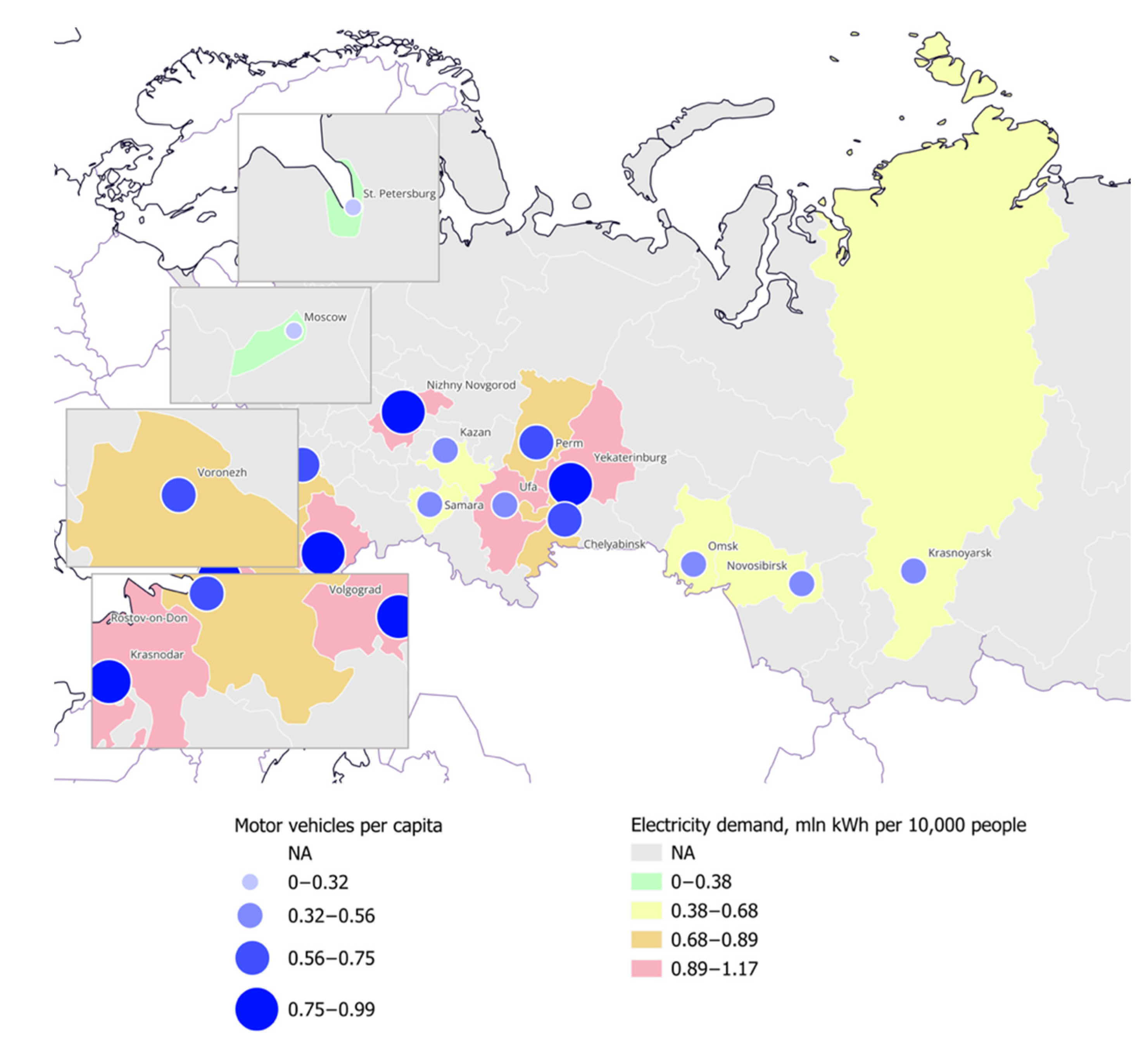
The infrastructure of major Russian cities is undergoing rapid development, creating opportunities for the proliferation of electric vehicles. In recent years, numerous new charging stations have emerged, indicating a significant increase in available infrastructure. Conversely, small and medium-sized cities have limited opportunities for the development of such infrastructure. Consequently, our study focuses on assessing the electricity consumption of EVs in 16 largest cities in Russia with populations exceeding one million. These cities also function as the administrative centers of the respective 16 Russian regions.
The annual electricity consumption of EVs in urban areas is influenced by numerous pivotal factors. We propose an electricity consumption model for macro-level analysis, considering the EV fleet structure and size in 16 Russian cities, the technical specifications of the specific EV models, average monthly mileage, and seasonal variations in air temperature. The model also accounts for electricity losses during battery charging.
Our analysis encompasses 39 primary models of BEVs and PHEVs available in the Russian market, distinguishing them based on their prevalence in various Russian cities and their technical characteristics. The most prevalent electric and plug-in electric vehicles in Russia are outlined in
Table 1.
The scarcity and patchiness of data concerning the total car fleet in Russian cities as well as the share of specific models, poses a significant challenge in conducting reliable analyses. To address this gap in data, an estimation approach is employed that utilizes data on the car fleet in corresponding Russian regions, as reported by the Unified Interagency Information and Statistical System [
103] and Russia’s largest open database of car sale advertisements [
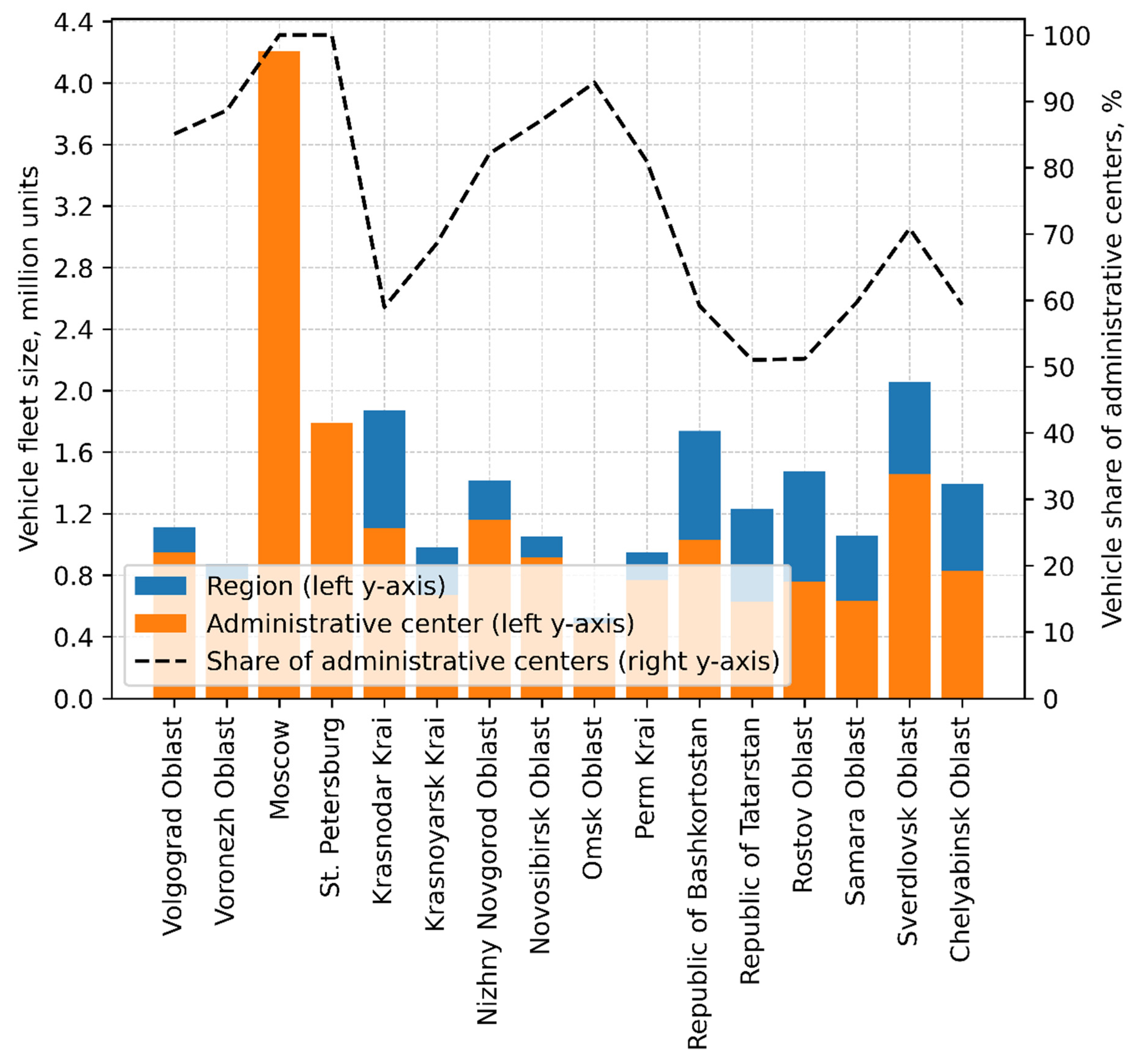
102]. We hypothesize that the concentration of cars in a city is highly correlated with the number of auto sales offers. Therefore, we estimate the city’s vehicle fleet
N by multiplying the regional car fleet with the proportion of offers to sell a car in the regional administrative center compared to the total number of such advertisements in the whole region:
where
and
are the city’s and regional car fleet (units), respectively, while the
and
represent the number of car sale advertisements (units) in the region and its administrative center, respectively. The estimation results are shown in
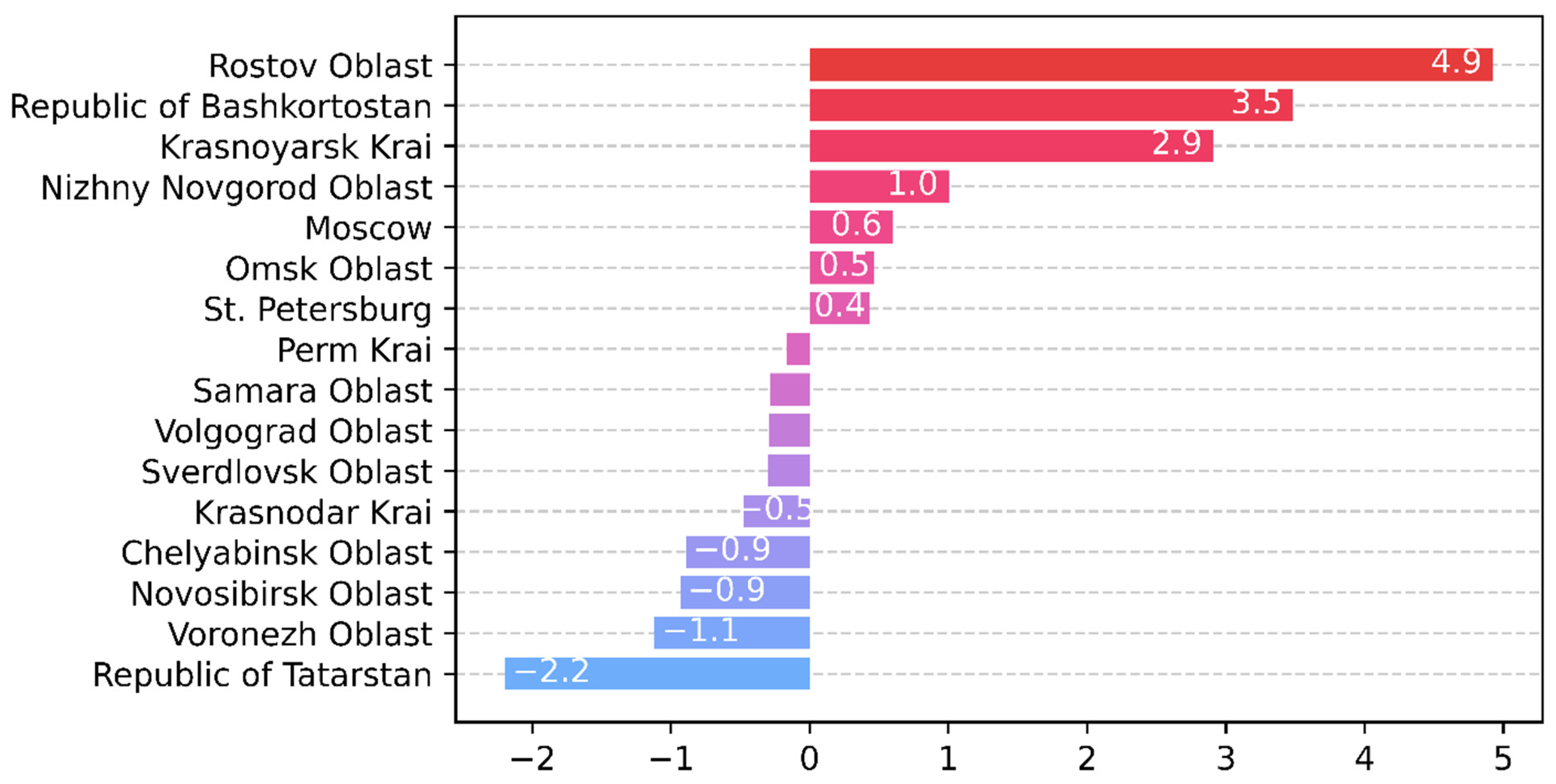
Figure 1.
It is evident that the estimate is considerably elevated in comparison to the calculation of the number of cars in the region as a proportion of the city’s population. This methodological approach is commonly employed by analytical agencies operating within the Russian automotive market, and it typically yields a result that corresponds to 300–350 cars for every 1000 city residents [
104].
To calculate the number of electric vehicles of a particular model, we estimate the proportion of advertisements for a specific EV model among all car advertisements in a given city. Hence the number of BEVs or PHEVs of a particular model
i,
(units) is calculated as follows:
where
is the share of the
i-th BEV or PHEV model in a city’s fleet (%) and
is the city’s fleet size including all types of passenger cars (units).
To calculate the monthly electricity demand, it is necessary to obtain data regarding mileage. According to [
105], the average annual mileage in 2022 was approximately 18.7 thousand kilometers. To estimate the variation in mileage across months, we utilize data on the monthly average gasoline consumption by cars from the Federal State Statistics Service of Russia [
103], under the assumption that there is a high correlation between these two variables. Following the [
106] it is assumed that in a large city with a population of over one million people, the patterns of EV usage are similar to those of ICEV driving. Equation (3) provides an estimate of the monthly mileage:
where
j is estimation for mileage in month
j (kilometers, km),
is the annual mileage (km),
is the share of the gasoline consumption during month
j in total annual consumption (
Table A1). Each EV model has certain nominal battery capacity
(kWh) and full range on one charge
(km). The product of
and
(Equation (2)) denotes the electricity consumption (kWh) required to charge all cars of model
i. Hence, total amount of electricity (kWh) needed to charge all cars of the model
i (units) to drive the average mileage
(km) during the month
j is calculated as follows:
In addition to Equation (3), we propose several adjusting coefficients for accounting weather conditions, electricity losses and differences between BEVs and PHEVs. First of all, extremely low and high temperatures can have a negative impact on the condition of the battery and, consequently, on the driving range of the electric vehicle [
107,
108,
109]. In addition, prolonged exposure to extreme temperatures can negatively affect the battery lifespan which reduces the benefits of owning an EV. The reduction in the range of an electric vehicle and the degradation of the battery lead to the need for more frequent EV charging, which in turn increases electricity consumption in cities. The laboratory tests of several EV models, including the Ford Focus, Jetta TDI, Honda Insight, Sonata HEV, Toyota Prius, Chevrolet Volt, Nissan Leaf have shown that energy consumption is strongly dependent on the use of the air conditioning and car heating systems at high (above 35 °C) and low (below −6.67 °C) ambient air temperatures, respectively [
110]. The primary power consumption was observed during the winter season, when temperatures dipped below −6.67 °C.
To calculate the average number of days with ambient air temperature within a specified range, we derived temperature data from 2018 to 2022, provided by the Federal Service for Hydrometeorology and Environmental Monitoring of Russia [
111] (see
Appendix B for details). The average daily temperature in the 16 studied Russian cities does not exceed 35 °C, although at certain hours the temperature might be higher than this threshold. Furthermore, we use open data from the technology company Geotab [
112], which demonstrates the impact of temperature and speed on the full range of an EV with a 65-kWh battery. This analysis is based on a dataset comprising 350,000 trips, including 180,000 h of driving 500 electric sedans. The Geotab data clearly indicates that the effect of temperature on range is similar across different EV makes and models, with the low temperature having a greater impact than the high temperature [
113]. By combining an estimate of the average speed of cars in Russian cities of 30 km/h [
114,
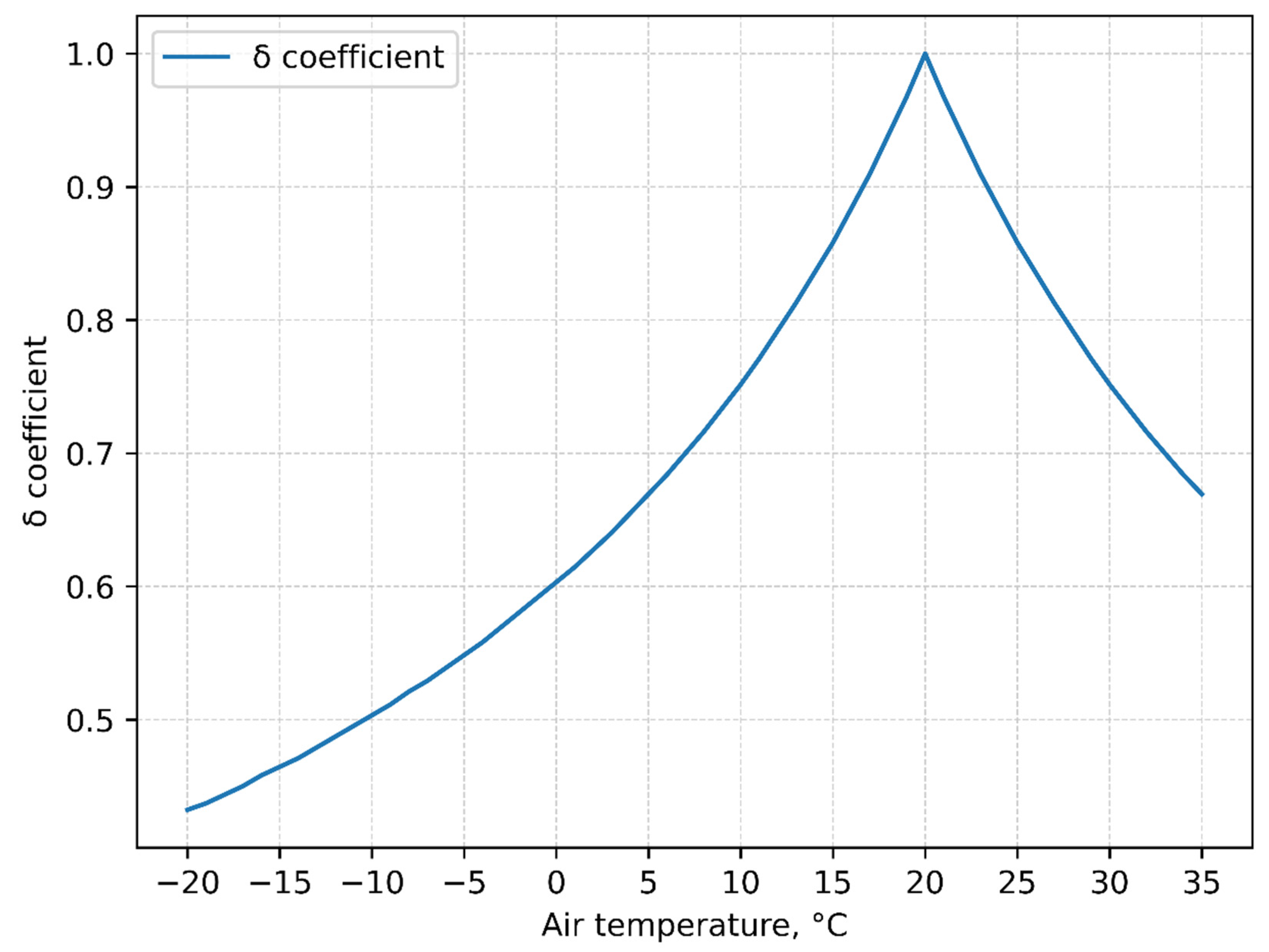
115] with Geotab data on the effect of temperature on the EV range, we obtained a driving range reduction coefficient
δ (
Figure 2).
Another adjusting coefficient is needed to account for the specific characteristics of electricity usage by PHEVs. A study based on fuel consumption and engine spacing data, found that PHEV electric mileage could be 25–65% lower than assumed on fuel economy labels placed on car windows that provide information on how much fuel or electricity it takes to drive 100 miles [
116,
117]. This suggests that PHEV owners, on average, may use 45% less electricity than the specifications of their vehicles would indicate. Thus, the coefficient
pi mitigates the necessity of charging for hybrid vehicles and reduces electric consumption in areas where drivers are more likely to utilize a gasoline engine rather than an electric one.
Finally, it is posited that a portion of energy is lost due to chemical reactions that release thermal energy as a by-product during EV charging [
118]. The length of the charging cable and the input power also have a direct impact on energy losses [
119]. According to the U.S. Environmental Protection Agency (US EPA), approximately 10% of the electricity is dissipated as heat when the EV is charging [
120]. This loss is represented by the constant
l in the model. Hence, the electricity consumption model for a specific city is as follows:
where
is an additional electricity consumption in a city from all BEV and PHEV models i∈ (1…k) for all months j∈ (1…m), kWh;
is nominal battery capacity of the electric vehicle i, kWh;
is total number of the electric vehicle model i, units;
is average monthly mileage for the month j, km;
is full range of the electric vehicle model i, km;
is full range reducing coefficient, depending on average temperature t in the month j;
is charging cycle frequency reduction coefficient, equal to 1 for all BEV models and 0.55 for PHEVs;
is a constant equal to 1.1, assuming that each EV requires 10% more electricity to fully charge due to unavoidable losses.
5. Discussion
Following the existing literature [
26,
41,
42,
87,
90], this paper discusses various scenarios regarding the replacement of internal combustion engine vehicles with electric ones. Earlier studies have shown a potential dual nature of the effects of the widespread use of EVs in Russia [
42,
87,
90]. The positive environmental benefits for residents of the largest cities are accompanied by the need for significant investment in charging infrastructure and energy systems, as well as difficulties in disposing of used batteries. This paper contributes to the existing body of knowledge by introducing an electricity consumption model for Russian cities that accounts for the technical characteristics of EVs spread in Russia, average mileage, charging losses, and climatic conditions. Although this model has been tested on data from Russian cities, it could also be useful for predicting energy consumption of EVs in other countries with different climate conditions.
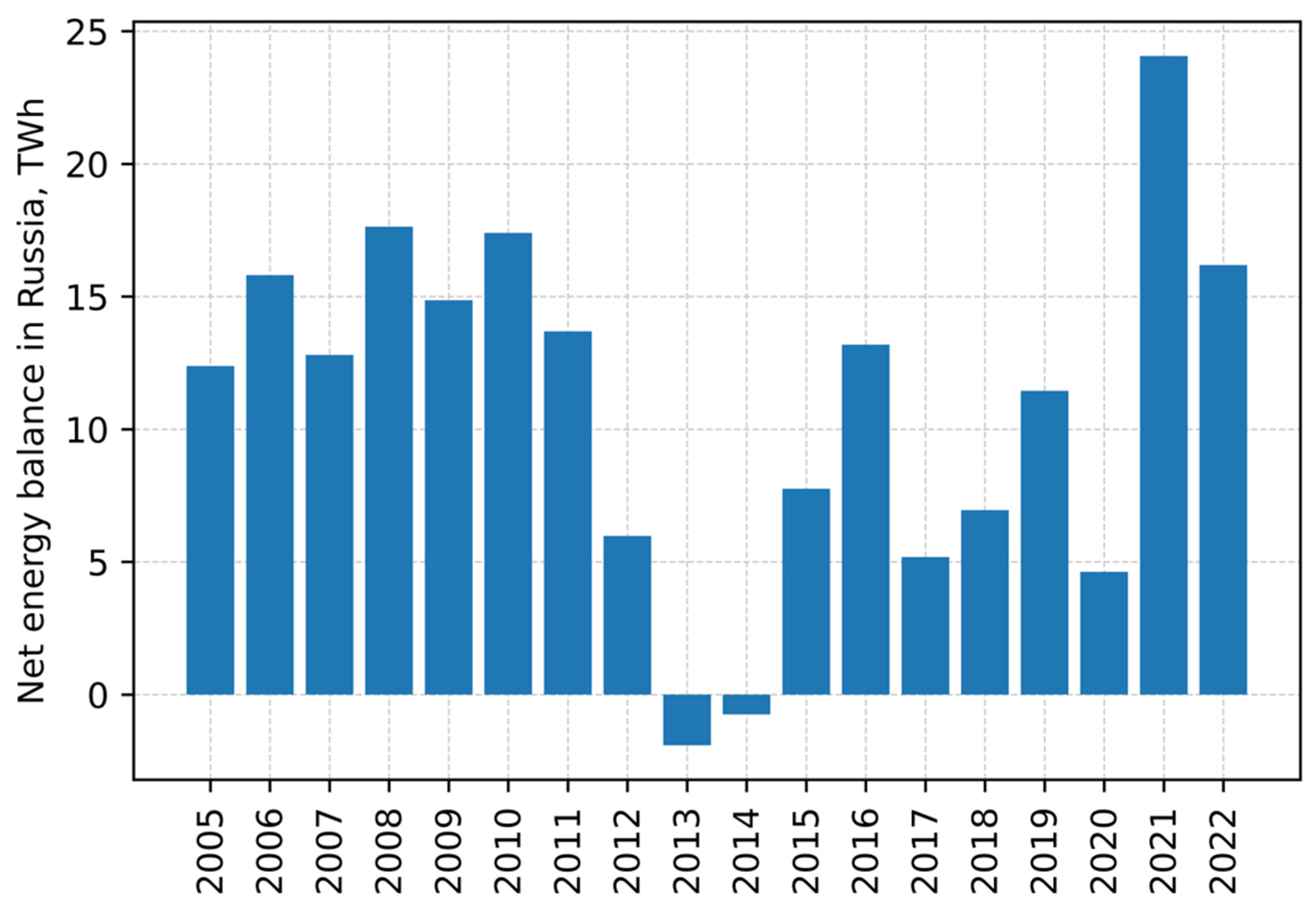
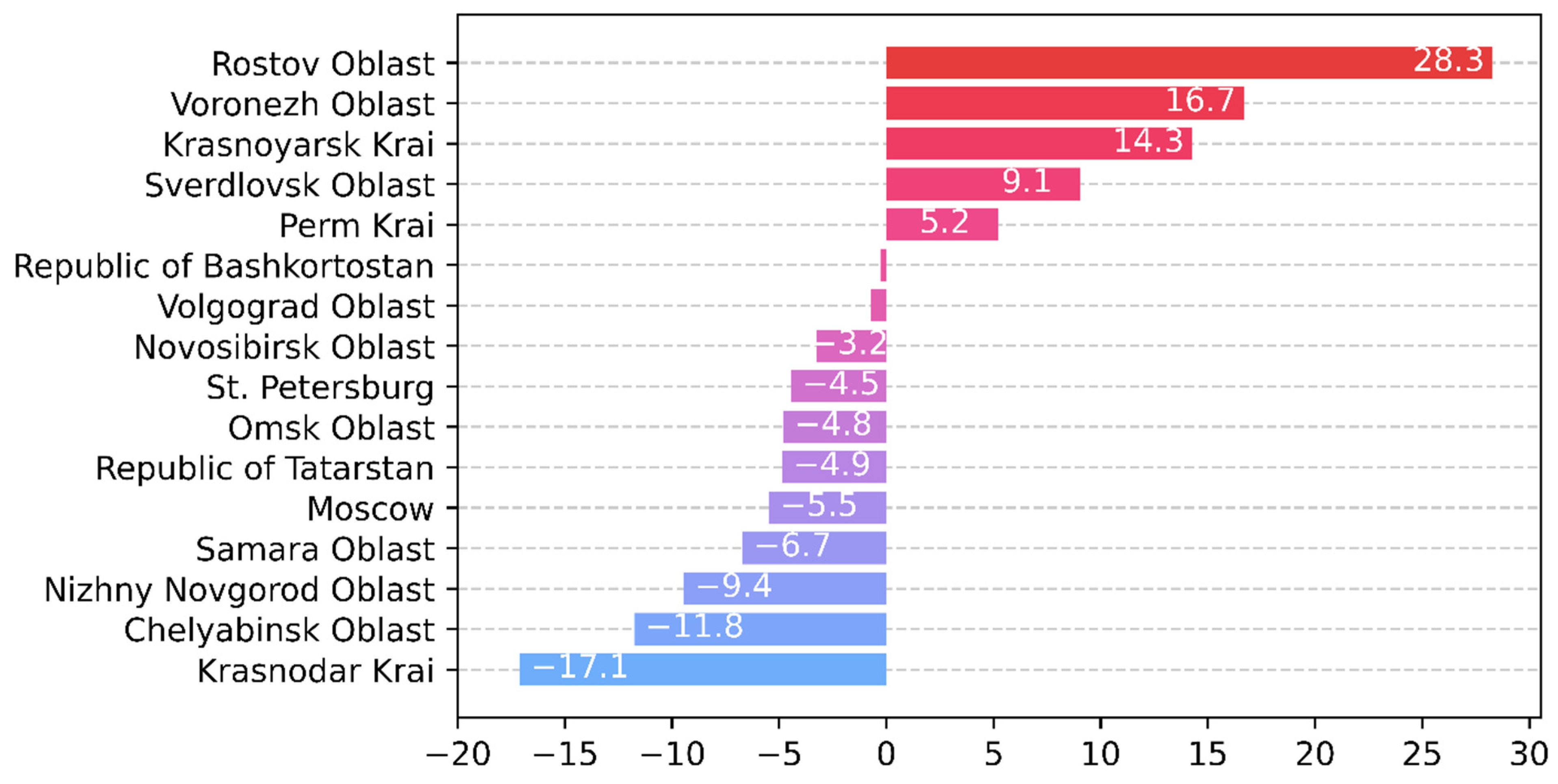
The results obtained demonstrate that the current state of the power grid is not sufficient for the potential wide-scale adoption of electric vehicles. 11 out of 16 regions have an energy deficit that is compensated for by neighboring territories. Despite this, the overall level of energy production in Russia remains high and there is a significant reserve of capacity. As a result, distribution-level constraints are likely to become the main challenge for future development.
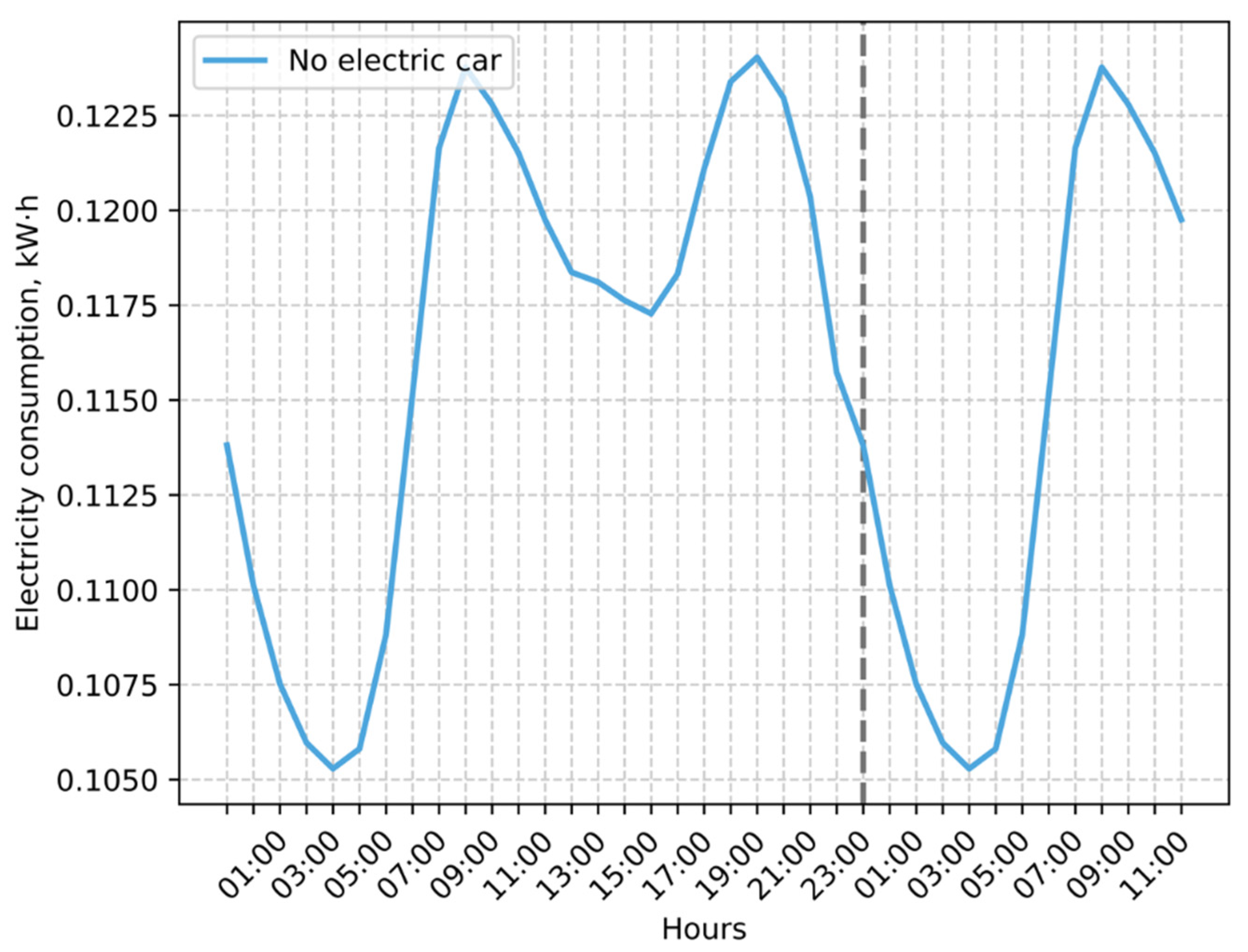
The findings suggest that, in certain scenarios related to car charging, even a moderate EV share of 15% in a city’s fleet could nearly double the current electricity consumption of urban households. Additionally, forecasts indicate a high probability of significant peak loads occurring between 8 p.m. and 11 a.m., creating risks of power outages. However, this paper is a pioneering effort to estimate the impact of EV adoption on urban electricity infrastructure in Russia, and it has several limitations that could be addressed in future research.
This study focuses only on passenger BEVs and PHEVs while commercial EVs were not included in the analysis. Currently, data on the commercial electric vehicle fleet in Russia is not available. However, their impact on cities’ power grids may also be significant. Given the general skepticism about switching to electric vehicles among the majority of the population, cargo transportation, taxi, and public transport may become important drivers for the further development of electric transport in Russia. The financial capacity of potential buyers, including state-owned companies, may also have a significant impact on the adoption of electric vehicles in Russia.
The model does not account for differences in the average daily mileage of vehicles. These differences may be due to various factors, such as individual driver patterns, distance to points of arrival, day of the week, season, and other variables that can vary depending on the specific study area. In addition, this study assumes that the charging behavior of EV owners in Russia is similar to those in other countries and follows business cycles. However, the charging behavior can be influenced by the availability of private parking spaces with charging options near a person’s home, the difference in access to public chargers in commercial and residential areas, etc. Depending on these factors, the distribution of peak loads in urban areas may vary significantly. Furthermore, this paper uses the uniform distribution for the Monte Carlo simulation of the EV’s state of charge level. A more accurate assessment of the SOC undoubtedly requires a detailed analysis of data on traffic patterns within each Russian city. Therefore, travel heterogeneity might affect the simulation outcomes, and this provides fertile ground for future research.
The scenarios presented in this paper are based on a conditional large Russian city that has experienced rapid growth in the number of electric vehicles. This approach allowed us to clearly illustrate the challenges associated with increased pressure on the city’s energy infrastructure using some assumptions and simplifications due to a lack of publicly available data on the electrical grid of Russian cities. For instance, the grid stress was estimated only through electricity consumption growth without explicitly modeling voltage violations or thermal overloads. Even with a small increase in total consumption, there may be local problems in the bottlenecks of the electrical infrastructure. These issues can only be fully understood through a detailed analysis of the distribution network in a particular Russian city. The complexity and variability of the issue necessitate further investigation to more accurately take into account these factors, along with a quantitative validation against observed grid data.
The spatial distribution of the EVs in certain areas of the city (for example, with most developed charging infrastructure) could potentially increase the impact on the electricity grid. Further modeling based on this effect would require detailed maps of power grids, transformers, and charging infrastructure in cities. This could be a promising direction for obtaining more accurate estimates for particular cities in Russia.
Investment estimates in
Table 4 are provided for a conditional large Russian city. Naturally, depending on the specific region, the current status of the power grid, and the volume of energy generation, the amount of investment required will vary significantly. The financial resources of cities are also uneven. Moscow, being the capital city, has a significant advantage over other municipalities. Additionally, the territories of Russia differ significantly in terms of energy generation methods, such as hydroelectric, nuclear, and coal-fired power plants. These differences also affect the costs of modernizing or constructing these generating facilities. The breakdown of investments based on the established grid reinforcement cost models, using detailed data on generation facilities and the state of infrastructure in Russian cities, should be the focus of future research.
Another area for further research could be related to incorporating time into the model, taking into account the technology learning effects, improvements in charging efficiency, evolving battery capacity, changing consumer preferences and developing public charging infrastructure.
The described study limitations may reduce the applicability of the results for a particular city, as they do not account for the city layout, availability and current state of infrastructure in certain areas or traffic patterns. However, in general, the obtained findings show that, on average, the infrastructure of Russia’s largest cities is not yet prepared for the rapid increase in the number of electric vehicles. This requires the search for ways to reduce their impact on the electricity grid.
Despite the risks to the energy infrastructure, electric vehicles also have the potential to help alleviate some of the challenges associated with supplying electricity to the grid. The potential of vehicle-to-grid technology [
141], which assumes that EVs act as energy storage devices during periods of low consumption, making up the shortfall during peak hours, has been extensively discussed in the literature. This is particularly relevant in the context of the ongoing transition to renewable energy sources, which are characterized by intermittent generation, necessitating the development of energy storage solutions. However, the utilization of EVs for power grid optimization can result in the premature degradation of their batteries [
142,
143]. Moreover, for Russia with its limited wind and solar power generation, this issue is not expected to be a significant concern in the medium term. Controlled charging holds greater promise in addressing grid congestion during periods of high demand for electric vehicle charging. Such systems may include increased charging rates during peak hours [
144], as well as advanced technologies for centralized control and optimization of electric vehicle charging [
145,
146].
6. Conclusions
Climate policy goals and the competition for low-carbon technologies are driving the rapid adoption of electric vehicles worldwide, especially in Europe, the United States, and China. Russia also sees the introduction of electric vehicles as an essential part of its low-carbon development strategy and a way to alleviate the environmental pressure in major cities. However, this pursuit of technological advancement and achieving carbon neutrality is accompanied by substantial infrastructure challenges. These challenges are just starting to be faced by countries that are actively stimulating the electric vehicle market. Therefore, states that are not at the forefront of EV adoption have a unique opportunity to learn from the pioneering experiences. This paper examines the potential impact of the rapid increase in the number of electric vehicles in the 16 most populous Russian cities on urban electrical infrastructure. The main findings can be summarized as follows.
A model for estimating the additional electricity consumption resulting from several scenarios of EV adoption in Russian cities is proposed. Replacing 15% of the current vehicle fleet with EVs would add to the household electricity consumption in 16 Russia’s largest cities of 33–769 million kWh per year, depending on the size and composition of the EV fleet, as well as city’s geographical location and climate.
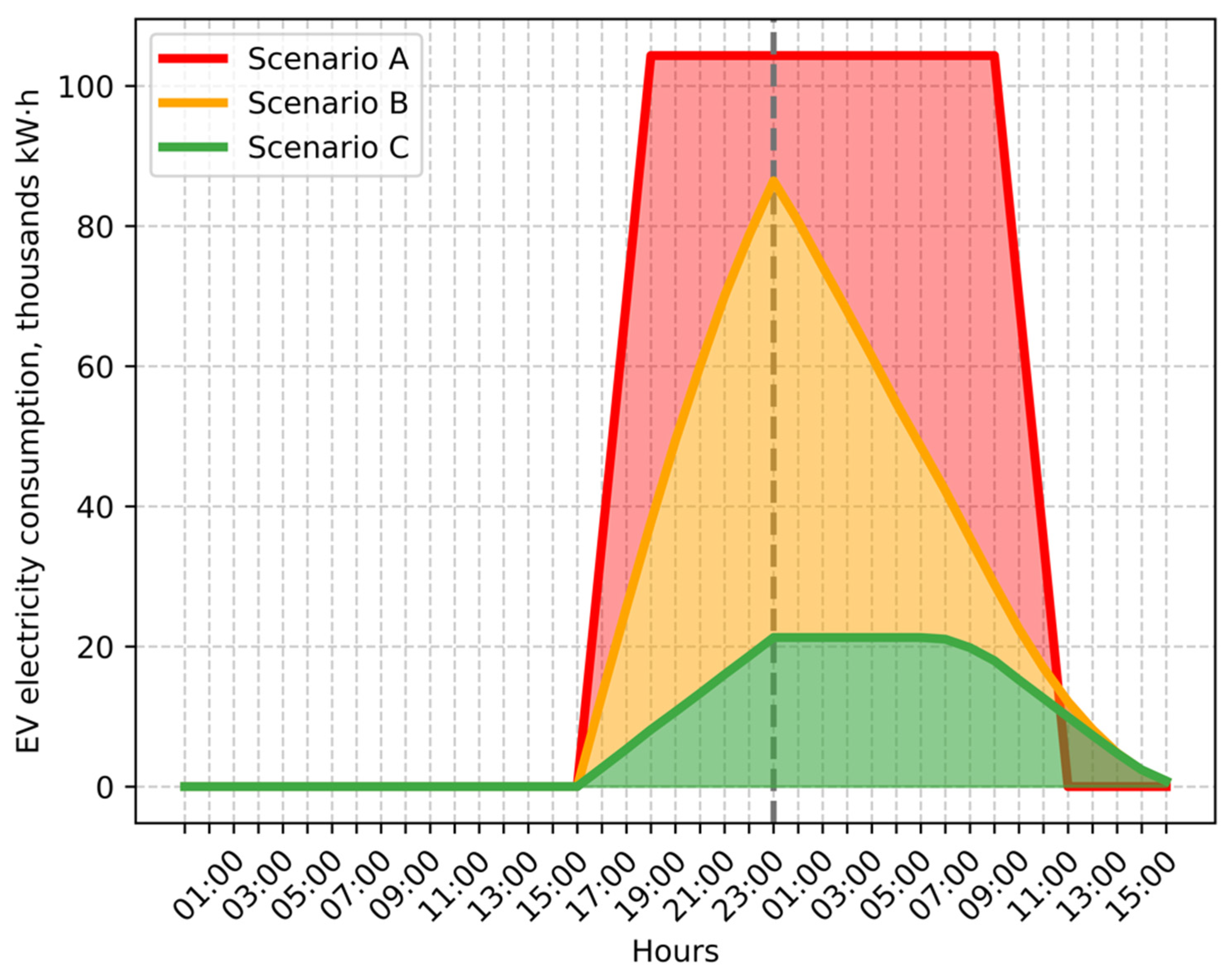
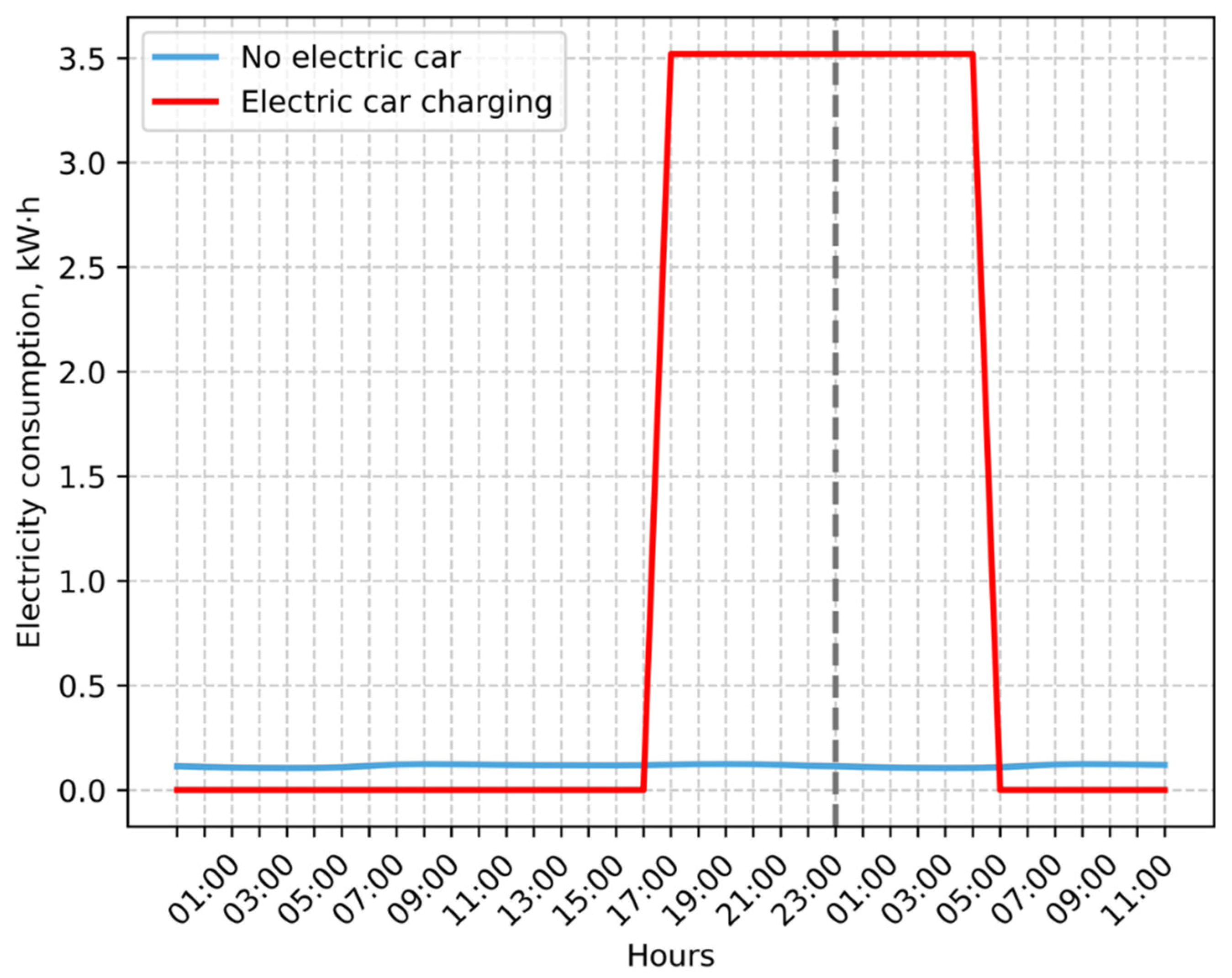
To analyze the peak loads on the power grid during the day three scenarios for EV charging have been developed. The maximum scenario assumes that all EVs in the city are charging at the same time, leading to an increase of 1.6 million kWh in daily electricity consumption due to the additional 5% of EVs in the overall car fleet. The minimum scenario represents state control over charging patterns, resulting in a daily increase of 0.3 million kWh in electricity consumption due to the additional 5% of EVs.
The limitations of the current power grid infrastructure in Russia’s largest cities pose significant challenges to the feasibility of rapidly increasing the urban EV fleet. Even under minimal load conditions, a 25% share of electric vehicles in the urban fleet could lead to an increase in household electricity consumption by almost 50% compared to the current level.
The estimated additional costs for infrastructure development are significant and will be a burden for most of Russia’s largest cities. An additional 1 million kwh of electricity used by EVs per day would require 12.7 billion rubles ($160.7 million) in additional infrastructure investments for an average city under study.
Altogether, the obtained results indicate that Russia’s major urban areas are currently poorly equipped to handle the significant increase in electric vehicle adoption. The replacement of a modest proportion of the existing car fleet with EVs would result in a substantial surge in household electricity consumption. Furthermore, the electricity consumption in the maximum grid load scenario (A) is five times higher than in the minimum scenario (C) emphasize. These findings indicate that the current plans for urban infrastructure development in Russia should be revised to include estimates of additional electricity consumption from EVs and consideration of controlled charging options at the local level.
A cost–benefit analysis of the decision to invest in electrification of transport should be conducted prior to state planning of the development of automotive transport in Russia. Currently, the strategic documents in Russia, such as the Low-Carbon Development Strategy [
147] or the Transport Strategy [
148], promote the growth of electric vehicles in the country, without considering the potential consequences. Our findings clearly indicate that significant investments in infrastructure are essential to implement a strategy for the active replacement of internal combustion engine vehicles with EVs in Russia. This is especially true in southern Russia, Yenisey Siberia, and the Far East, where electricity consumption is increasing and a shortage of energy capacity has been predicted.
Therefore, the importance of conducting preliminary research before launching the active promotion of electric transportation cannot be overstated. A more pragmatic approach involves identifying specific areas where electric vehicles can be introduced, such as public transportation, taxi, and cargo transportation. The potential economic impact of the further EV adoption should be carefully measured using multiple quantified benefit metrics, such as the development of domestic technologies for EV manufacturing, the exploration of lithium deposits, avoided emissions and urban health effects. The results of this cost–benefit analysis should be included in key strategic documents and considered when developing public policy related to electric transportation.