
Article

Integrating Electric Vehicles into Power System Operation Production Cost Models

by
Jose David Alvarez Guerrero
1,*,
Bikash Bhattarai
2,
Rajendra Shrestha
2,
Thomas L. Acker
2 and
Rafael Castro
3
1
School of Earth and Sustainability, Northern Arizona University, Flagstaff, AZ 86011, USA
2
Department of Mechanical Engineering, Northern Arizona University, Flagstaff, AZ 86011, USA
3
Newton Energy Group, Boston, MA 02116, USA
*
Author to whom correspondence should be addressed.
World Electr. Veh. J. 2021, 12(4), 263; https://doi.org/10.3390/wevj12040263
Submission received: 9 September 2021 / Revised: 8 December 2021 / Accepted: 10 December 2021 / Published: 15 December 2021
(This article belongs to the Special Issue Electric Vehicles Integration in Smart Grids)

Abstract

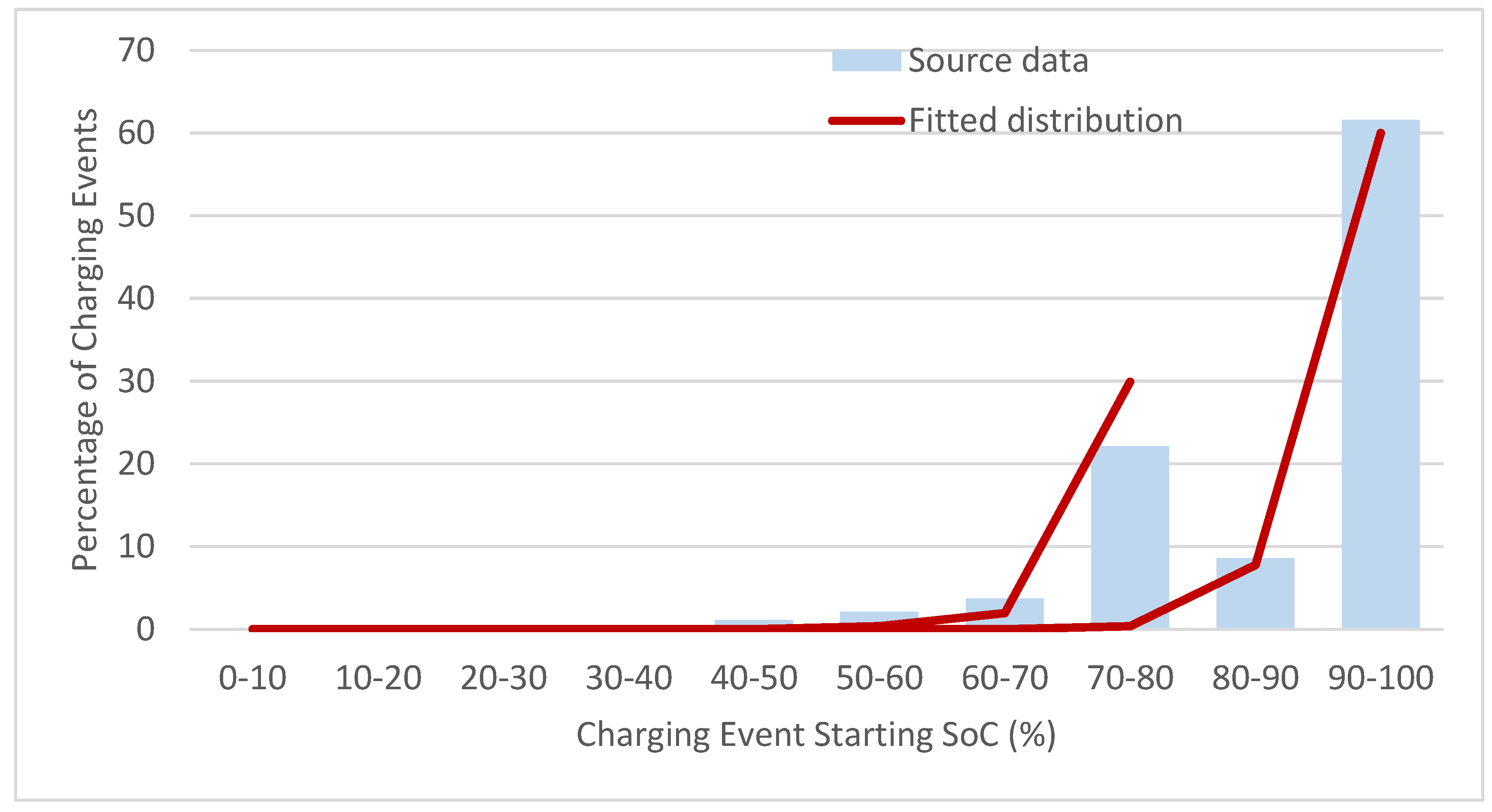
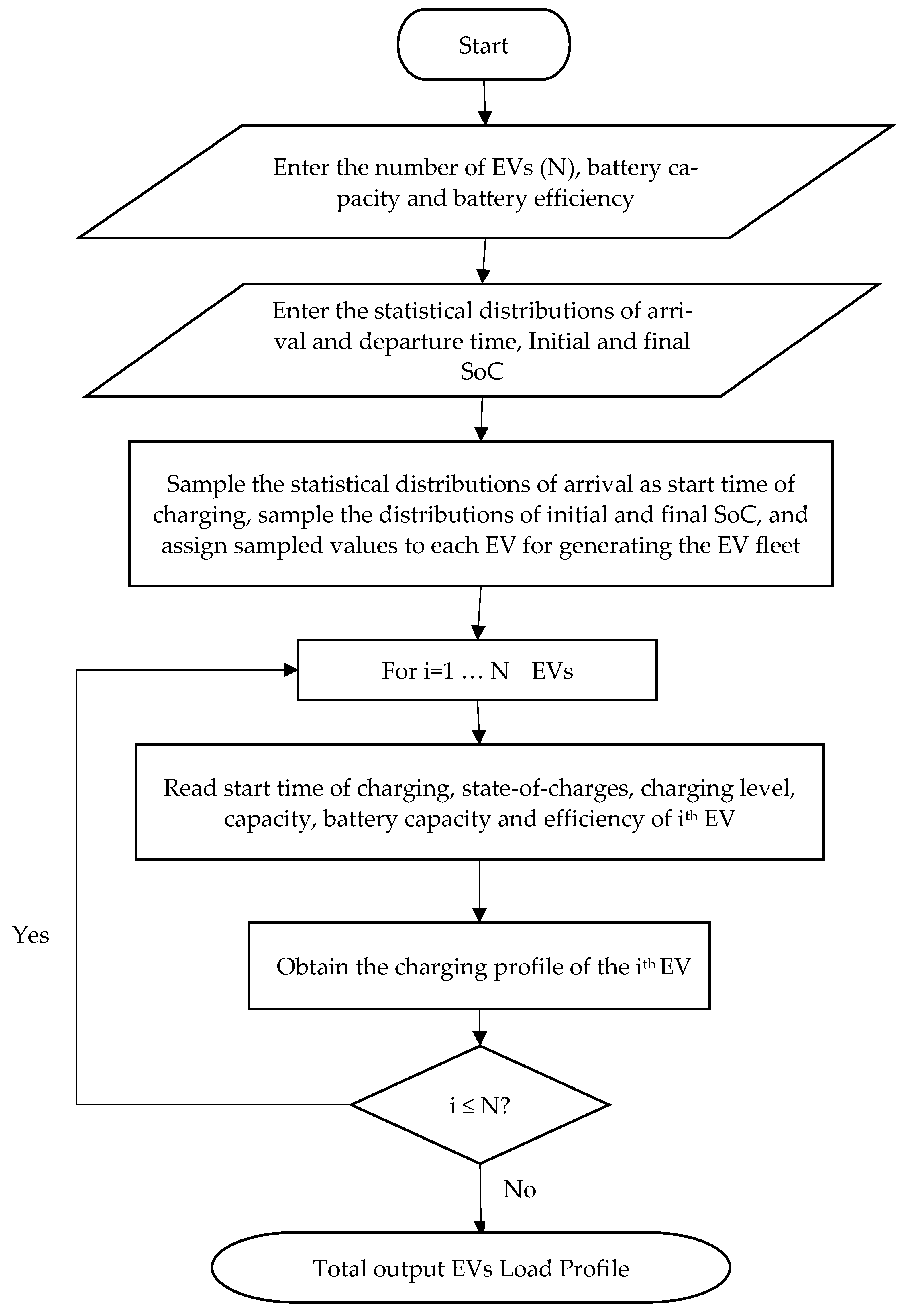
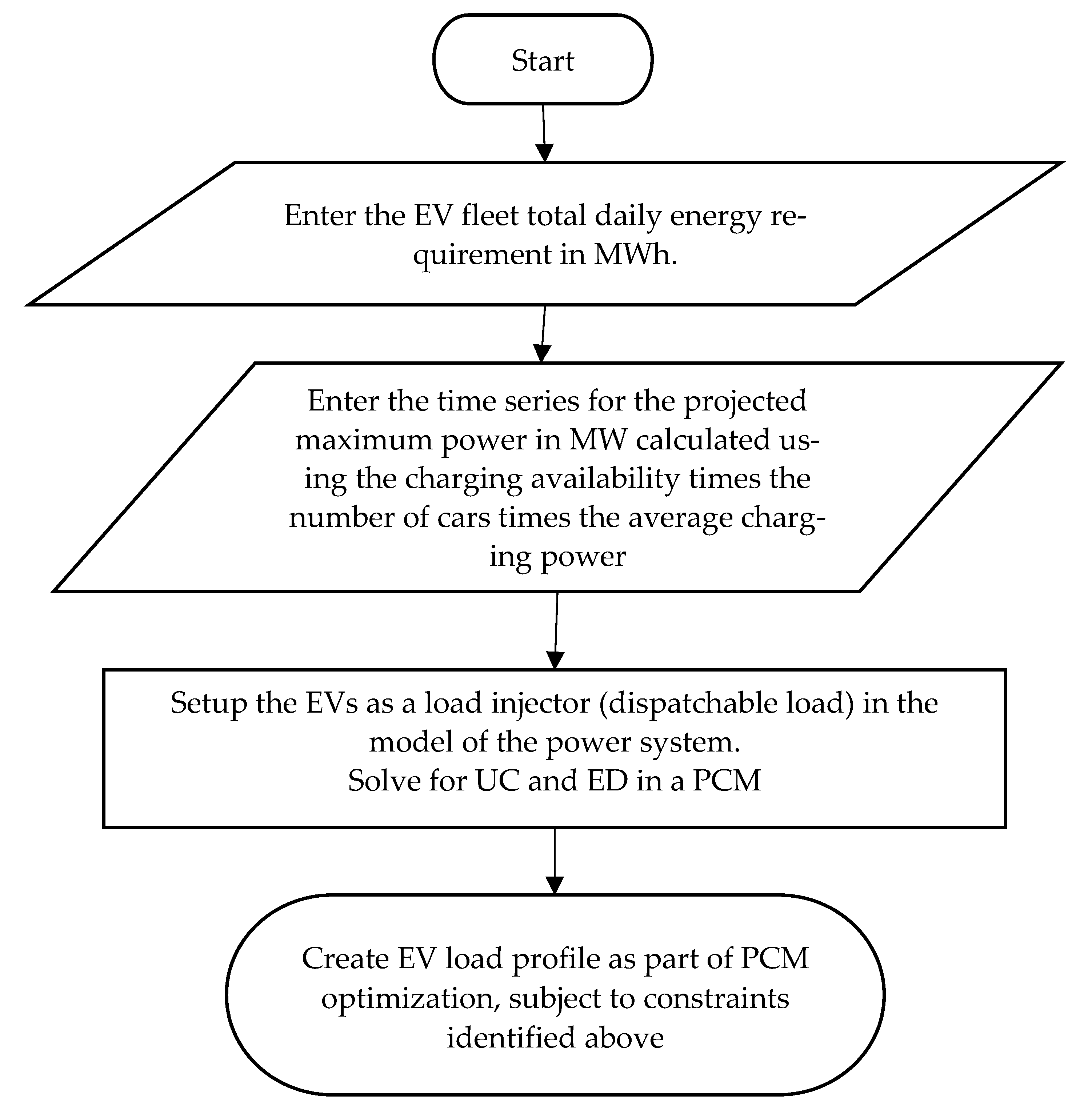
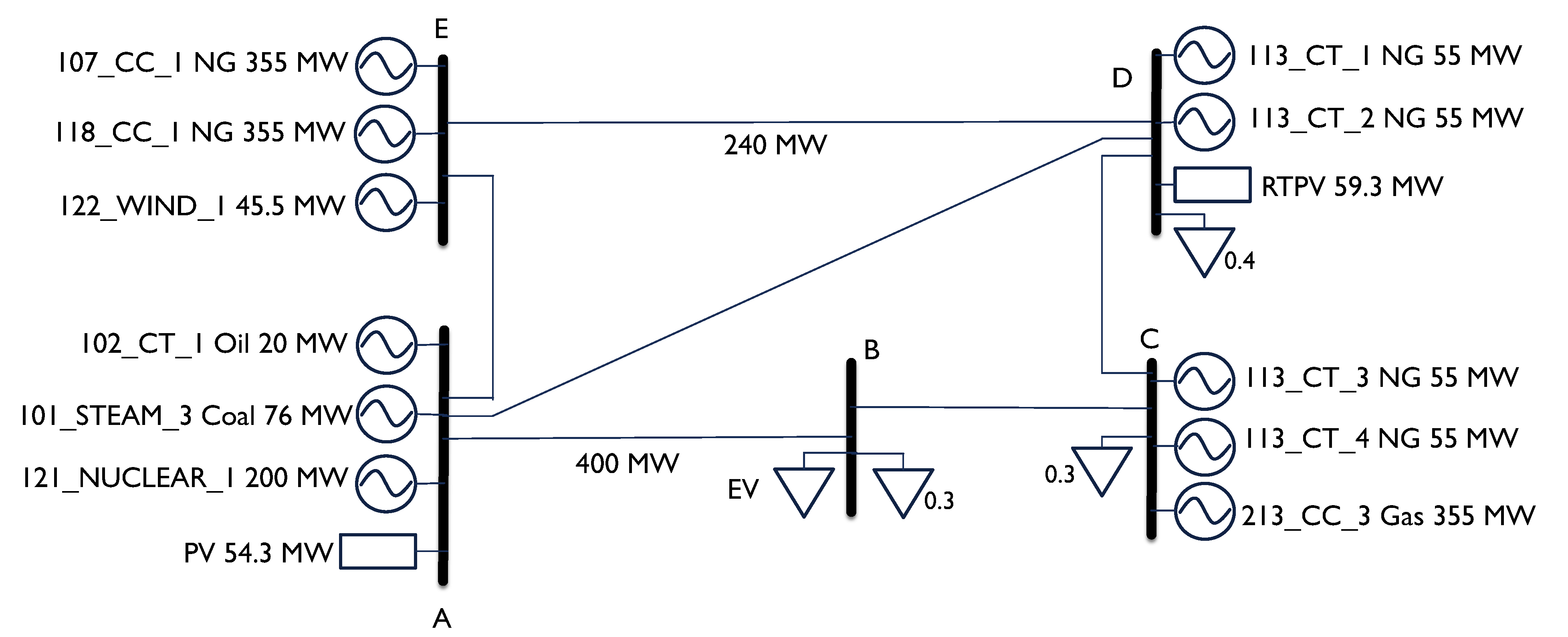
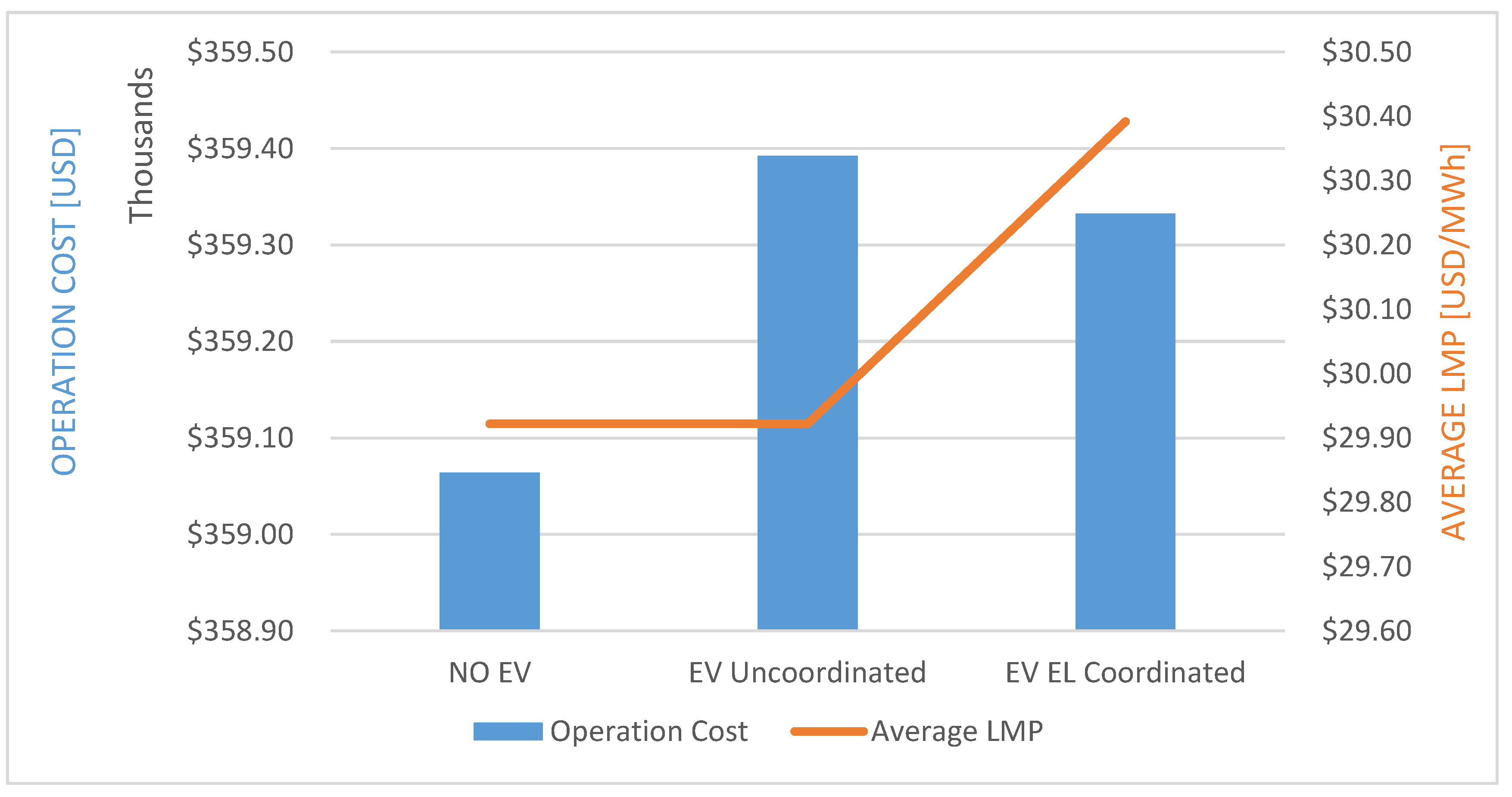
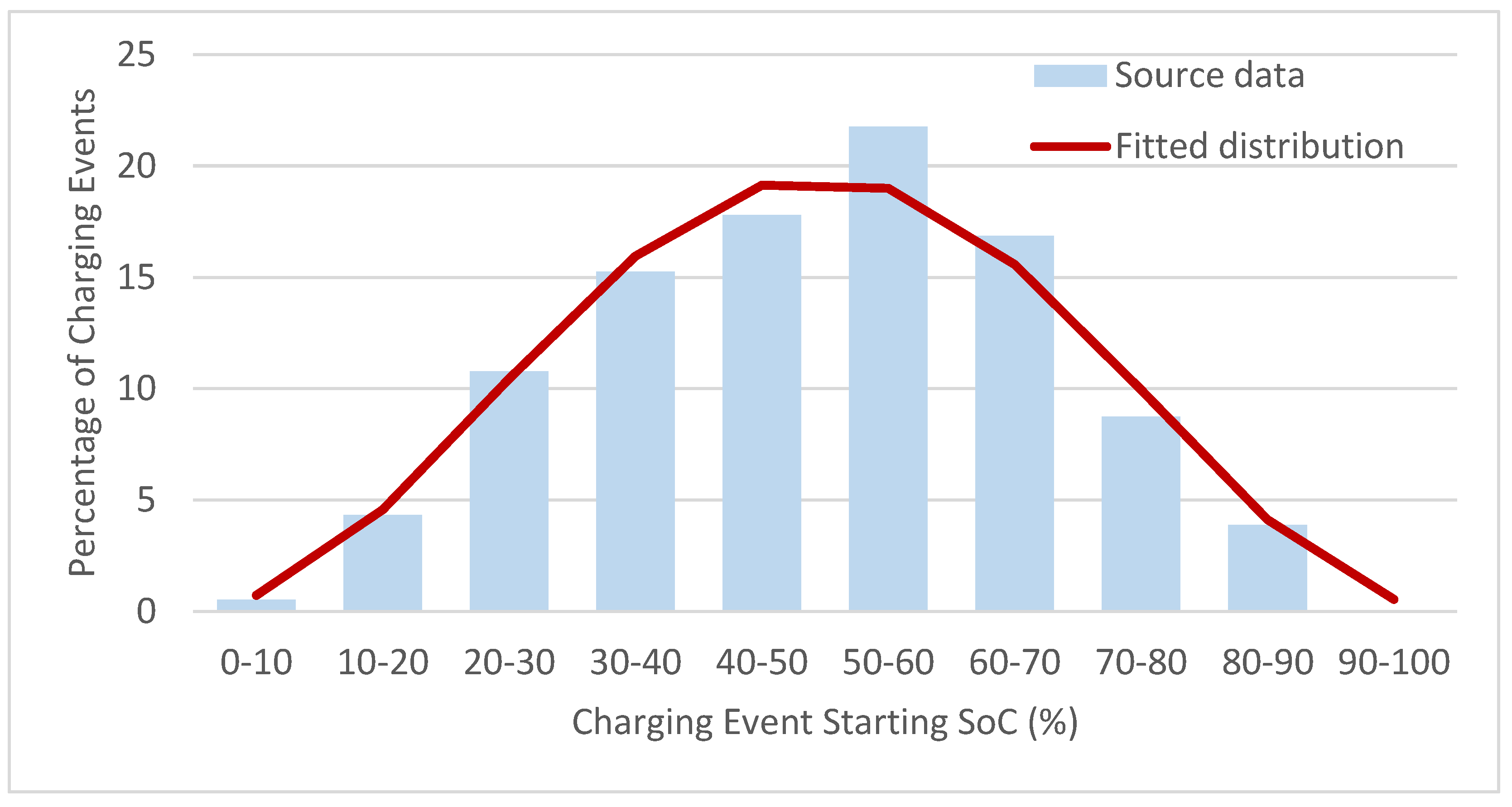
The electrification of the transportation sector will increase the demand for electric power, potentially impacting the peak load and power system operations. A change such as this will be multifaceted. A power system production cost model (PCM) is a useful tool with which to analyze one of these facets, the operation of the power system. A PCM is a computer simulation that mimics power system operation, i.e., unit commitment, economic dispatch, reserves, etc. To understand how electric vehicles (EVs) will affect power system operation, it is necessary to create models that describe how EVs interact with power system operations that are suitable for use in a PCM. In this work, EV charging data from the EV Project, reported by the Idaho National Laboratory, were used to create scalable, statistical models of EV charging load profiles suitable for incorporation into a PCM. Models of EV loads were created for uncoordinated and coordinated charging. Uncoordinated charging load represents the load resulting from EV owners that charge at times of their choosing. To create an uncoordinated charging load profile, the parameters of importance are the number of vehicles, charger type, battery capacity, availability for charging, and battery beginning and ending states of charge. Coordinated charging is where EVs are charged via an “aggregator” that interacts with a power system operator to schedule EV charging at times that either minimize system operating costs, decrease EV charging costs, or both, while meeting the daily EV charging requirements subject to the EV owners’ charging constraints. Beta distributions were found to be the most appropriate distribution for statistically modeling the initial and final state of charge (SoC) of vehicles in an EV fleet. A Monte Carlo technique was implemented by sampling the charging parameters of importance to create an uncoordinated charging load time series. Coordinated charging was modeled as a controllable load within the PCM to represent the influence of the EV fleet on the system’s electricity price. The charging models were integrated as EV loads in a simple 5-bus system to demonstrate their usefulness. Polaris Systems Optimization’s PCM power system optimizer (PSO) was employed to show the effect of the EVs on one day of operation in the 5-bus power system, yielding interesting and valid results and showing the effectiveness of the charging models.
Keywords: EV load profile; uncoordinated charging; coordinated charging; power system operation EV load profile; uncoordinated charging; coordinated charging; power system operation