1. Introduction
The sharing economy has been widely recognized for a long time for its potential to support sustainability through more efficient resource usage, such as shared housing or shared transport. However, its actual environmental, economic and social impact remains debated. Meanwhile, the integration of artificial intelligence (AI) tools, especially generative models, introduces new dynamics into these ecosystems. Despite the growing attention devoted to both the sharing economy and artificial intelligence, these phenomena are often examined separately in the literature, and their combined implications for sustainability remain insufficiently explored. Although several studies discuss AI’s theoretical potential to support sustainability in the sharing economy, there is a lack of empirical studies systematically examining how AI influences sustainability outcomes across different sharing economy sectors such as transportation, accommodation, or freelance platforms. This research gap highlights the need for a more integrated analysis that considers both the opportunities and the ethical implications of AI adoption in platform-based ecosystems. Due to this fact, the research question can be formulated as follows:
How can generative AI enhance the sustainability of sharing economy platforms and what is the ethical cost?
The sharing economy (SE) has emerged over the past decade as a transformative model of consumption and production, enabling peer-to-peer access to goods and services by using digital platforms. Promoted as a pathway to sustainability, SE promises more efficient resource utilization, reduction in environmental impact, and the democratization of economic opportunities [
1,
2]. For example, digital platforms such as Airbnb, Uber, BlaBlaCar and TaskRabbit exemplify how digital platforms can simplify shared use of underutilized assets, potentially lowering carbon footprints and fostering community engagement. However, the real-world sustainability outcomes of the SE are mixed and complex. On the one hand, some research studies highlight environmental benefits such as reduced car ownership and better space utilization [
3]; on the other hand, other studies raise concerns about increased consumption, regulatory challenges, and gaps between social groups [
4,
5]. Moreover, the rapid advancement of AI, particularly generative AI models, is increasingly transforming the operational logic of digital platforms. Generative AI with its ability to create human-like text, translate languages, automate communication, etc., offers new opportunities to improve platform efficiency, personalize experiences of users, and reduce operational costs. Nevertheless, it also raises ethical questions related to algorithmic bias, transparency, privacy, and the potential weakening of interpersonal trust. These elements are considered as fundamental to the social structure of the SE [
6,
7].
The main aim of this article is to explore the integration of sustainability and generative AI within the SE by focusing on selected platforms. Specifically, the study examines two well-established sharing economy platforms, Airbnb and BlaBlaCar, which represent the accommodation and mobility sectors, respectively. These platforms were selected due to their global scale, extensive use of digital technologies, and increasing integration of AI-driven tools in their operations. Furthermore, to extend the analysis beyond consumer-oriented services, the paper also considers industrial sharing platforms that enable the sharing of manufacturing capacities. This broader perspective allows the study to compare AI-driven sustainability implications across different layers of the platform economy. The paper discusses how AI technologies can contribute to environmental, social, and economic sustainability goals while simultaneously introducing new ethical challenges.
Section 6 provides an answer to the research question, and the conclusion summarizes the main recommendations and outlines directions for future research.
This study contributes to the existing literature in three main ways.
First, it integrates three research domains—artificial intelligence, the sharing economy, and sustainability into a unified analytical perspective—addressing a gap where these areas are often examined separately.
Second, the study extends the analysis beyond consumer-oriented platforms by incorporating industrial sharing models, thereby broadening the understanding of AI-driven sustainability across both service and manufacturing contexts.
Third, the paper develops a structured perspective on the dual role of AI in digital platforms by identifying both sustainability-enhancing effects and associated ethical trade-offs, particularly in relation to transparency, bias, and platform governance.
The remainder of the paper is structured as follows.
Section 2 presents the conceptual background of sustainability in the sharing economy and the role of generative AI in platform-based models.
Section 3 describes the research design and analyzes selected platform cases.
Section 5 examines the ethical challenges associated with AI integration.
Section 6 discusses the main findings and theoretical implications, and
Section 7 concludes the paper with recommendations and directions for future research.
2. Conceptual Background
The provided section is focused on the theoretical foundation for understanding the integration of sustainability, the SE, and the role of AI. This section is divided into two main subsections, namely, sustainability in the sharing economy and generative AI in platform-based models.
Section 2.1 explores how sustainability principles are embedded in the SE model and how they are being challenged. Then, the second subsection examines the emergence of generative AI in platform-based business models, highlighting its transformative impact on operational structures, decision-making, and user interactions.
2.1. Sustainability in the Sharing Economy
Sustainability within the SE framework involves multiple dimensions, including environmental, social, and economic aspects. The environmental aspect is that the SE is often recognized for its potential to reduce waste and resource consumption by maximizing the use of existing assets, for example, vehicles, homes, and tools, thus lowering overall carbon footprints [
3,
8]. Social sustainability involves building trust between users, promoting inclusivity, and creating economic opportunities that empower individuals beyond traditional employment models [
1,
9,
10]. The economic aspect is that sustainable platforms must ensure long-term viability while distributing value equitably among stakeholders as platform owners, service providers, and consumers [
11,
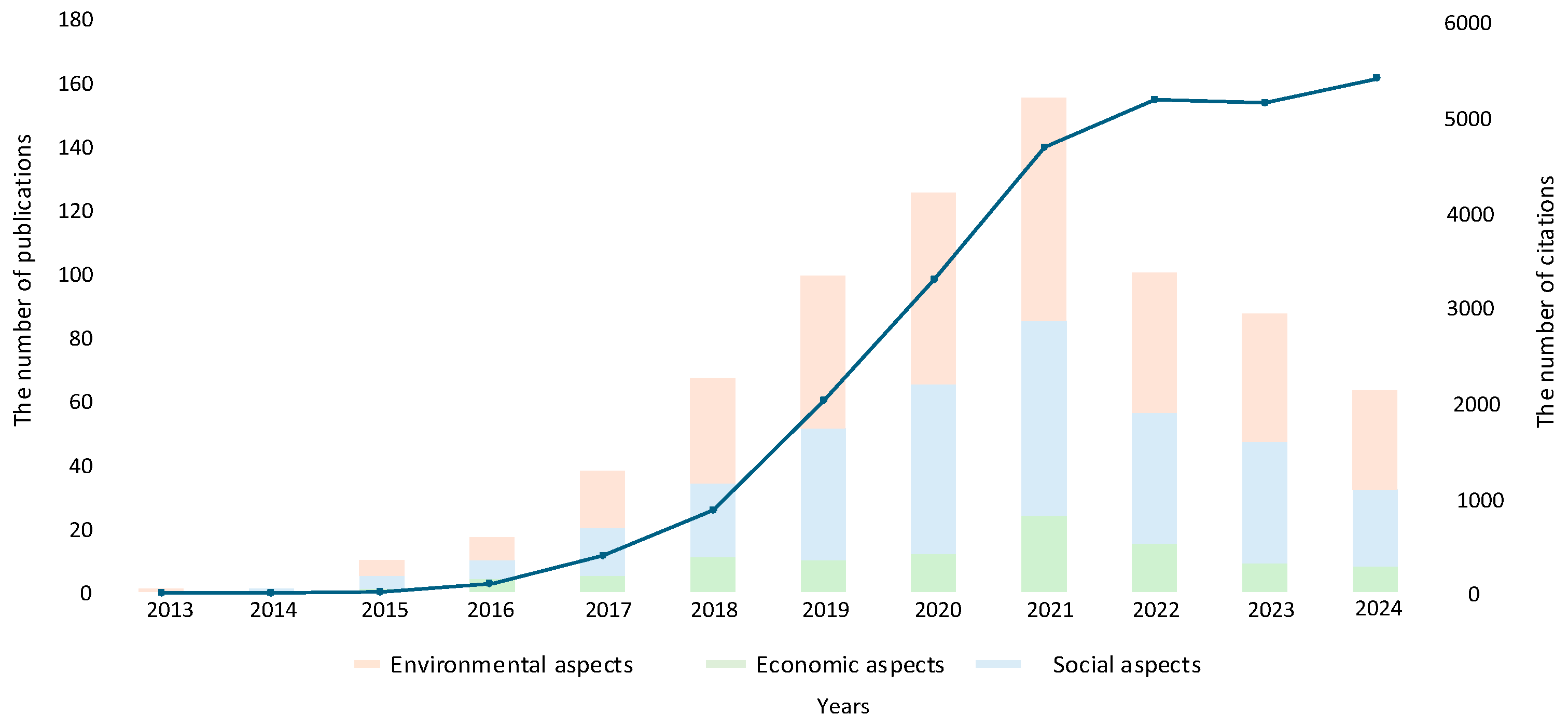
12]. When analyzing all of these three aspects based on the Web of Science database using search conditions, the keywords “sustainability” and “sharing economy” were searched in the Topic field; the publication and citation trend are illustrated in
Figure 1.
Based on this analysis, it is possible to identify several insights. General growth was identified between years 2013 and 2021, where the number of publications increased from 1 to 153. In relation to the number of citations between these years, this number increased from 0 citations in 2013 to 4656 citations in year 2021, and continued increasing after reaching 5370 in 2024, even with fewer publications, showing stronger impact per article. When providing thematic analysis for environmental, social and economic aspects, there are minimal works in years 2013–2015. Incremental growth of publications across all three aspects was recorded between years 2016 and 2020. The peak (70 publications—social aspects, 61 publications—economic aspects, and 24 publications—environmental aspects) was identified in the year 2021. Then, in years 2022 to 2024, the number of publications decreased, but the number of citations continued rising, which shows that 2021 articles are being highly cited. Finally, based on that, several findings could be highlighted:
- -
The high-impact trajectory initiated in 2021 is continued by bringing in a new element known as generative AI, which was not yet dominant in the 2021 wave;
- -
All three aspects of sustainability align with the trends in that peak year;
- -
There is a contribution to the next phase of the conversation from understanding the current state of platforms to shaping their ethical and sustainable evolution by using AI.
Despite these ideals, the actual sustainability outcomes of SE-related models are still challenged. Existing studies highlight that increased accessibility can sometimes lead to greater consumption, whereas regulatory gaps and uneven economic gains may contribute to greater difference [
5,
13]. Therefore, a nuanced understanding of sustainability that integrates environmental, social, and economic aspects into its consideration is crucial when assessing SE-based platforms.
2.2. Generative AI in Platform-Based Models
Generative AI, particularly large language models, have become increasingly incorporated within digital platforms, transforming operational and user engagement processes. These AI tools enable the automation of customer service by conversational agents, the generation of marketing content including listing descriptions, real-time translation of user reviews and communications, and personalized user experiences tailored by analyzing interaction patterns [
14]. Beyond enhancing efficiency, generative AI significantly influences governance and power relations on platforms. The deployment of AI shapes decision-making processes around content moderation, pricing algorithms, and user matching, raising questions about algorithmic fairness and transparency [
6,
15]. Furthermore, the extensive data requirements to train generative AI invoke important ethical considerations concerning privacy, consent, and data ownership within SE ecosystems [
7].
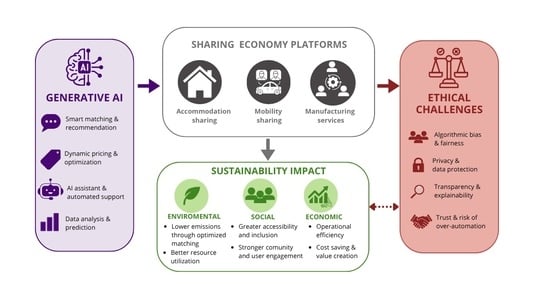
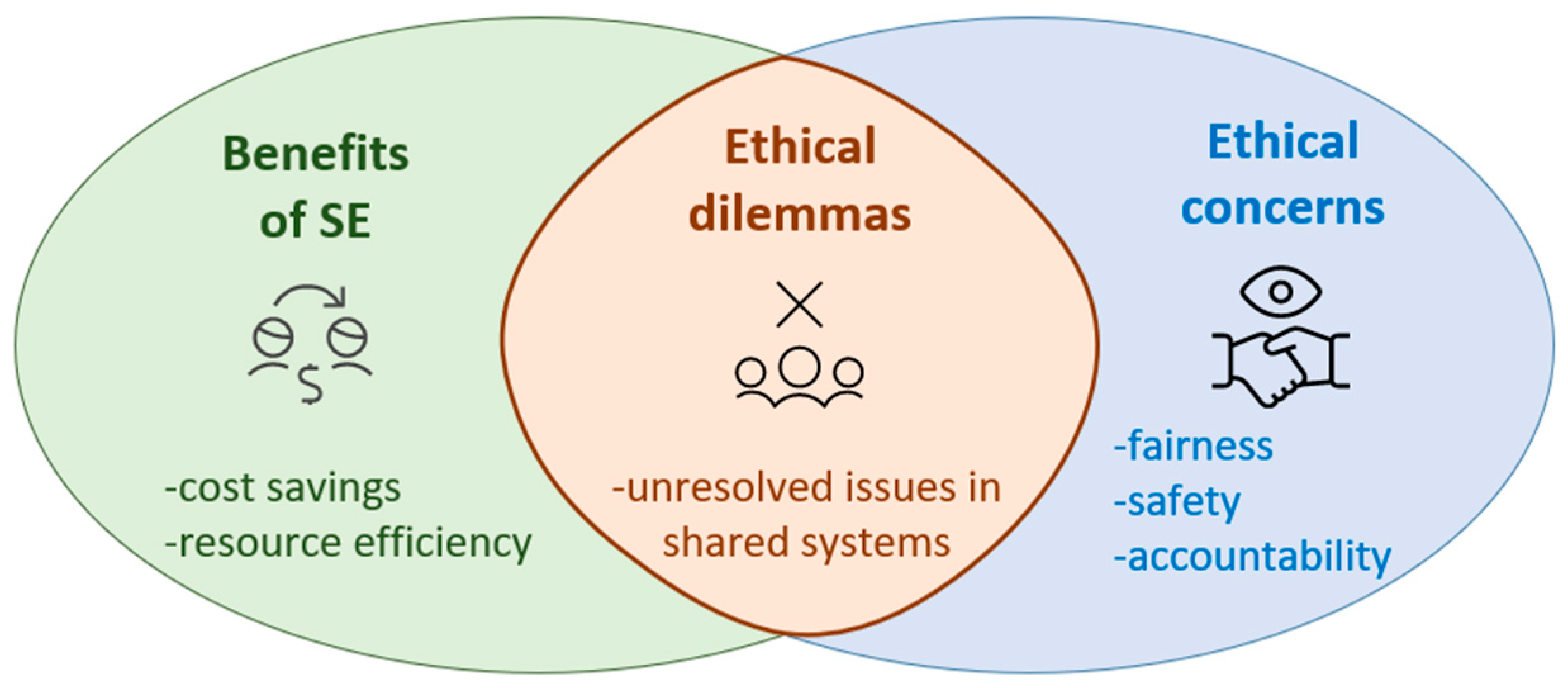
The SE, while offering benefits like cost savings and resource efficiency, also raises ethical concerns regarding fairness, safety, and accountability. These concerns stem from the complex relationships between consumers, providers, and platforms, where unethical behavior can arise. As illustrated in
Figure 2, the SE stands at an ethical crossroads, where the advantages of shared systems intersect with unresolved ethical dilemmas.
This intersection highlights the tension between economic and environmental efficiency on one side, and the need for fairness, accountability, and safety on the other. It is within this overlapping space that many of the ethical challenges of the SE become visible, requiring thoughtful governance and design of platform systems.
Thus, integrating generative AI into SE platforms introduces opportunities to improve sustainability and challenges related to ethical governance and social equity. The next section will analyze the two selected SE platforms from the environmental, economic and social point of view in relation to sustainability.
Recent research has also highlighted several critical perspectives on the sustainability implications of digital platforms. Some scholars argue that the sharing economy may reproduce forms of platform capitalism, where platform operators accumulate economic power and control over digital infrastructures and user data. Moreover, studies discussing the rebound effect suggest that increased efficiency and convenience provided by digital platforms may unintentionally stimulate additional consumption, potentially offsetting environmental benefits. Finally, the growing use of artificial intelligence within platform ecosystems has raised concerns regarding algorithmic governance, particularly in relation to transparency, accountability, and power asymmetries between platform operators and users. These critical perspectives highlight that the sustainability outcomes of AI-enabled platforms remain contested and require careful evaluation.
Building on the conceptual background presented above, the following section describes the research methodology used to analyze the role of AI in selected SE platforms.
3. Research Methodology
This study adopts a conceptual and exploratory research design aimed at examining the role of generative AI in shaping sustainability outcomes within SE platforms. The objective is not to test predefined hypotheses but rather to explore emerging relationships between artificial intelligence technologies, platform-based business models, and sustainability implications across different sectors of the platform economy.
The research design combines two complementary approaches:
- -
A structured literature review;
- -
A comparative qualitative case study analysis of selected sharing economy platforms.
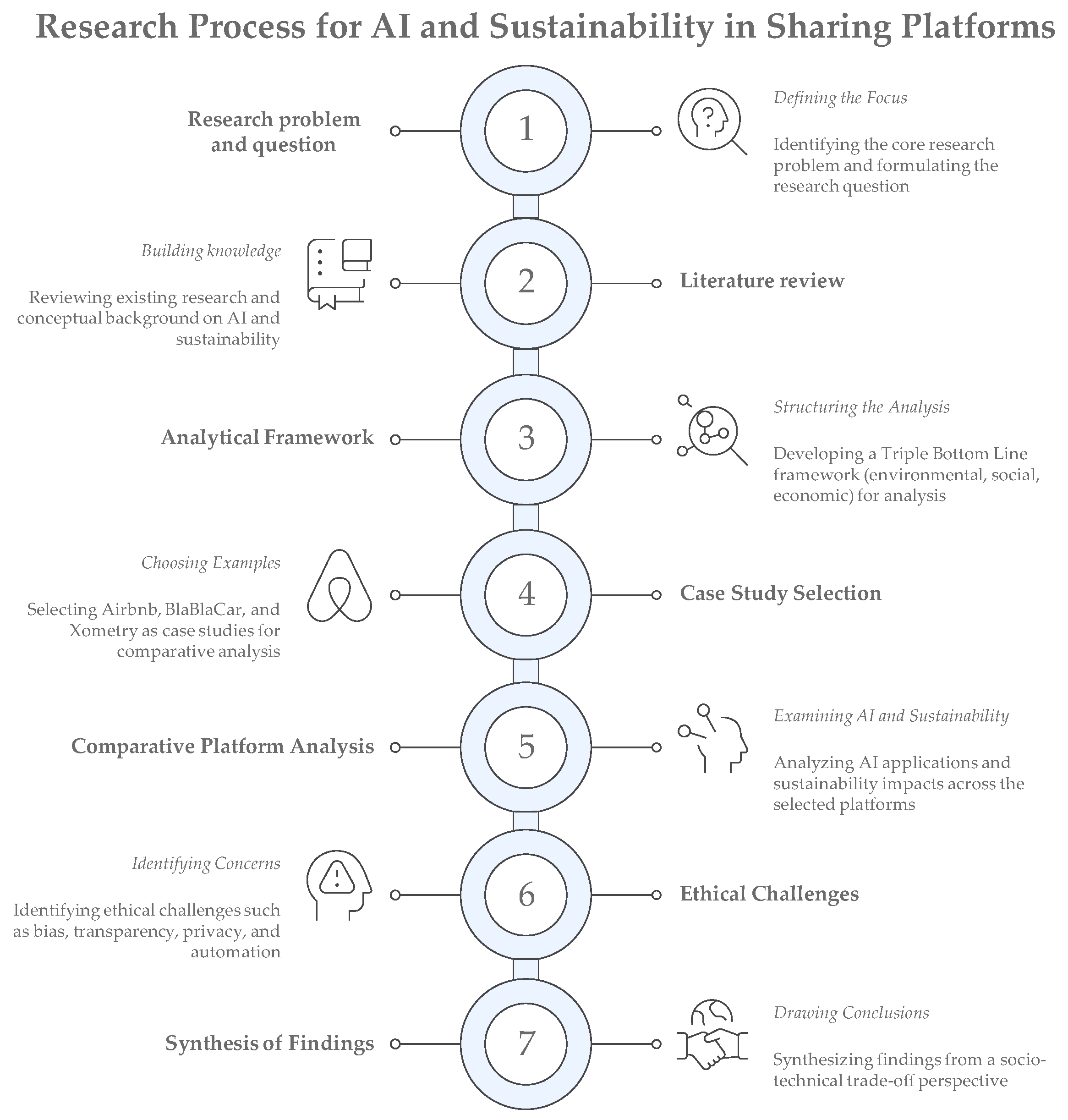
This combined approach allows the study to synthesize existing knowledge while also examining practical examples of AI implementation in digital platform ecosystems. The overall methodological framework of the study is illustrated in
Figure 3.
3.1. Literature Review and Data Sources
The literature review was conducted using an academic database, which provided broad coverage of peer-reviewed publications in the fields of digital economy, sustainability, and artificial intelligence. The search focused primarily on studies published between 2015 and 2024, reflecting the period during which platform-based business models and AI technologies experienced rapid development. The literature search employed combinations of the following keywords: “sharing economy” and “sustainability”.
Only studies that addressed the intersection of platform-based business models, AI technologies, and sustainability implications were included in the review. In addition to the academic literature, secondary data sources such as platform documentation, industry reports, and publicly available information about the analyzed platforms were also used in order to contextualize the case studies.
3.2. Case Study Selection
To explore the practical implications of AI adoption in the SE, the study employs a comparative case study approach focusing on three representative digital platforms operating in different sectors of the platform economy:
- -
Airbnb (San Francisco, CA, USA)—representing peer-to-peer accommodation platforms;
- -
BlaBlaCar (Paris, France)—representing shared mobility platforms;
- -
Xometry (North Bethesda, MD, USA)—representing industrial sharing platforms operating within manufacturing and production networks.
The selection of these platforms was guided by three criteria.
The platforms represent globally recognized and widely studied examples of SE platforms with large user bases and established digital infrastructures.
The selected platforms show evidence of integrating AI technologies in their operations, including recommendation systems, demand prediction, dynamic pricing mechanisms, and automated communication tools.
The platforms represent different sectors of the platform economy, which enables comparison between consumer-oriented sharing models (accommodation and mobility) and emerging industrial sharing platforms.
This selection allows the study to examine how AI-driven platform mechanisms influence sustainability outcomes across different types of digital ecosystems.
3.3. Analytical Framework
The analysis is guided by the triple bottom line (TBL) sustainability framework, which evaluates sustainability impacts across three interconnected dimensions: environmental sustainability, social sustainability, and economic sustainability.
This framework is widely used in sustainability research and allows a structured assessment of how platform-based business models influence resource efficiency, economic opportunities, and social interactions. Within this framework, the study analyzes how AI-driven mechanisms implemented within digital platforms affect:
- -
Resource utilization and efficiency;
- -
Accessibility of services;
- -
Operational performance of platforms;
- -
User interactions and trust within digital ecosystems.
In addition to sustainability impacts, the analysis also considers ethical implications associated with AI adoption, particularly in relation to algorithmic bias, transparency, data governance, and privacy concerns.
3.4. Analytical Procedure
The platform analysis follows a qualitative comparative approach. For each platform, AI applications and their implications were examined in relation to the three sustainability dimensions defined by the TBL framework. The analysis involved identifying key AI-enabled mechanisms within each platform, such as recommendation algorithms, demand forecasting systems, automated customer interaction tools, and data-driven decision-making processes.
The observed impacts were then categorized into potential sustainability benefits (such as improved resource utilization, accessibility of services, and operational efficiency), and ethical risks (for example algorithmic bias, reduced transparency, and privacy concerns). These categorizations were based on evidence reported in the prior literature as well as documented platform practices.
To improve analytical transparency and reduce subjectivity in the comparative evaluation process, the sustainability impacts and ethical risks were categorized according to the analytical criteria presented in
Table 1.
Finally, the results of individual platform analyses were compared in order to identify common patterns, sector-specific differences, and broader implications for the sustainability of AI-enabled SE platforms.
4. Platforms Analysis
This section applies the analytical framework described in
Section 3 to selected platform case studies. Each platform is examined with regard to the role of AI-enabled mechanisms and their implications for environmental, social, and economic sustainability dimensions, as well as associated ethical risks. The analysis follows the TBL framework introduced in
Section 3 and evaluates how AI-enabled mechanisms influence environmental efficiency, social interactions, and economic outcomes within platform ecosystems.
Rather than testing predefined hypotheses or employing large-scale quantitative datasets, the article seeks to synthesize the existing literature, analyze representative platform cases, and identify key sustainability opportunities and ethical challenges associated with AI integration.
The selection of platforms was guided by three criteria:
- (i)
Global relevance and scale;
- (ii)
Active or emerging integration of AI-driven systems;
- (iii)
Representativeness of distinct sharing economy sectors.
For this purpose, Airbnb as one of the biggest SE platforms and BlaBlaCar as a popular long-distance carpooling platform were selected as case studies. The usage of AI in Airbnb’s and BlaBlaCar’s operations and a description of its implications for sustainability from environmental, social and economic viewpoints will be identified in next subsections.
4.1. Airbnb Platform Analysis
4.1.1. Airbnb’s Operations and AI
Airbnb, considered as one of the largest SE platforms, has incorporated AI technologies into its operational framework to support the experience of the user and business efficiency. Traditional AI applications, which Airbnb use, are focused especially on:
- -
Dynamic pricing—this platform uses machine learning algorithms to dynamically adjust rental prices based on multiple factors, such as demand fluctuations, seasonality, local events, and prices offered by competitors. It helps hosts to maximize occupancy and revenue while potentially smoothing demand peaks and reducing resource wastage associated with vacant properties [
16];
- -
Fraud detection and trust assurance—AI models analyze behavioral patterns, transactional data, and user-generated content to detect suspicious activities, the possible existence of fake profiles, and policy violations, which is crucial for maintaining platform integrity and trust [
17];
- -
Matching hosts and guests—AI models leverage recommendation algorithms which consider preferences, previous reviews, geographic location and distance from selected points, and price sensitivity. Airbnb’s AI improves the relevance of search results and increase the satisfaction of the user [
18].
The recent entry of generative AI exemplified by systems like OpenAI’s GPT series has introduced new transformative possibilities beyond these traditional applications, which in itself include the following:
- -
Generation of automated content—generative AI tools can assist hosts by creating compelling and optimized search engine optimization by listing descriptions based on brief prompts or property details. This application reduces barriers for hosts who are unfamiliar with marketing or writing, and can lead to better visibility and increase booking rates [
19];
- -
Virtual assistants powered by AI—virtual customer service agents can provide 24/7 support to guests and hosts, answering frequently asked questions, managing booking requests, and resolving common issues, which supports responsiveness and user satisfaction while reducing operational costs for Airbnb [
20];
- -
Multilingual translation in real time—AI tools enable seamless communication across language barriers through instant translation of messages and reviews, broadening Airbnb’s accessibility to global users and supporting inclusivity [
21];
- -
Personalized user experience—this platform analyzes user behavior and preferences to tailor recommendations, promotional offers, and user interfaces, potentially increasing engagement by using generative AI models.
4.1.2. Sustainability Implications
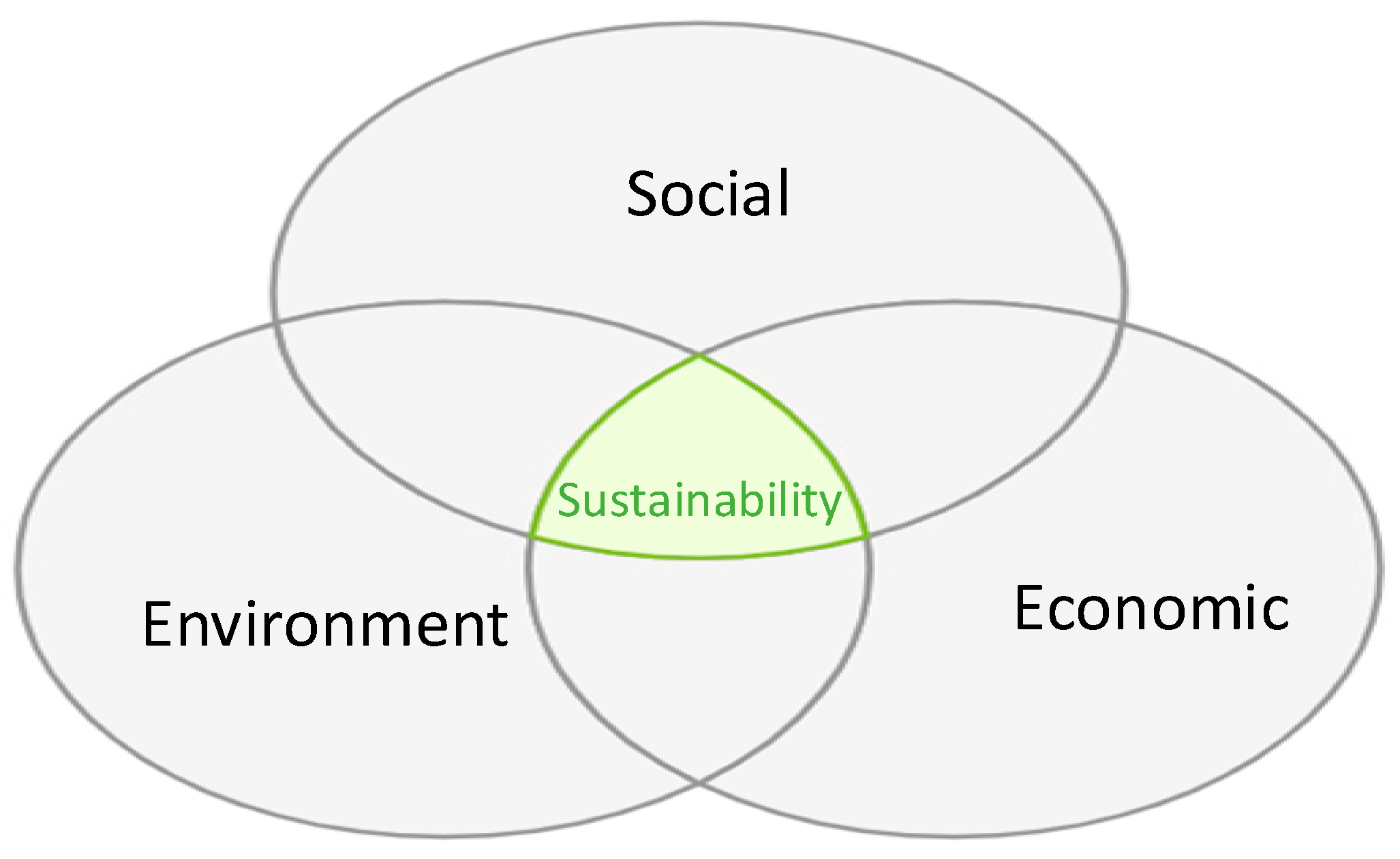
The integration of modern AI technologies, especially generative AI, into the mentioned platform has multifaceted implications for sustainability across environmental, social, and economic aspects. The relationship between these three sustainability aspects, also known as sustainability pillars, is shown in
Figure 4.
Subsequently, all of these aspects are analyzed from a sustainability perspective. The categorization of sustainability impacts as positive or negative is derived from the comparative analysis of platform practices and supported by findings reported in the prior literature.
Sustainability from an environmental viewpoint—by price optimization and occupancy rates, AI can reduce the incidence of empty listings, thus improving resource utilization and potentially lowering the overall environmental impact of the platform. Higher occupancy means more efficient use of housing stock, reducing the need for new construction and minimizing carbon emissions per stay [
18]. Additionally, AI-driven recommendations can promote eco-friendly listings (for example, those that are certified for green building standards or employing sustainable practices) encouraging guests to make environmentally rational choices. However, critics argue that increased convenience and affordability through AI optimization might cause additional travel demand, potentially offsetting environmental gains a phenomenon known as the rebound effect [
3]. Thus, AI’s environmental impact depends on how it is designed and regulated within the platform.
Sustainability from a social viewpoint—AI-based language tools and virtual assistants significantly improve platform accessibility for non-native speakers, breaking down linguistic and technical barriers [
23]. This inclusivity supports Airbnb’s social sustainability goals by democratizing economic opportunities for a diverse global user base. However, increased automation of communication between guest and host could decrease the personal interactions that build trust, community, and a sense of belonging to the SE ideology [
1]. In this case, AI can depersonalize experiences, potentially weakening social connections and satisfaction of user. Moreover, AI algorithms may unintentionally perpetuate biases present in training data, affecting how certain hosts or guests are treated or ranked, which could escalate existing social disparities [
24,
25]. To conclude this aspect, ensuring objectivity and transparency in AI governance is, for this reason, critical.
Sustainability from an economic viewpoint—the usage of generative AI can empower hosts by the automation of time-consuming tasks such as writing descriptions, responding to inquiries, frequently asked questions, and managing pricing strategies. This efficiency allows hosts to focus on improving service quality, potentially increasing earnings and economic resilience [
26,
27]. This increased dependence on AI tools and automated management of the platform may reduce hosts’ autonomy and individuality. Standardized AI-generated content risks homogenizing listings, and diminishing hosts’ unique opinions. Furthermore, such dependence can increase platform power over hosts, raising concerns about monopolistic control and the precariousness of gig work in the SE.
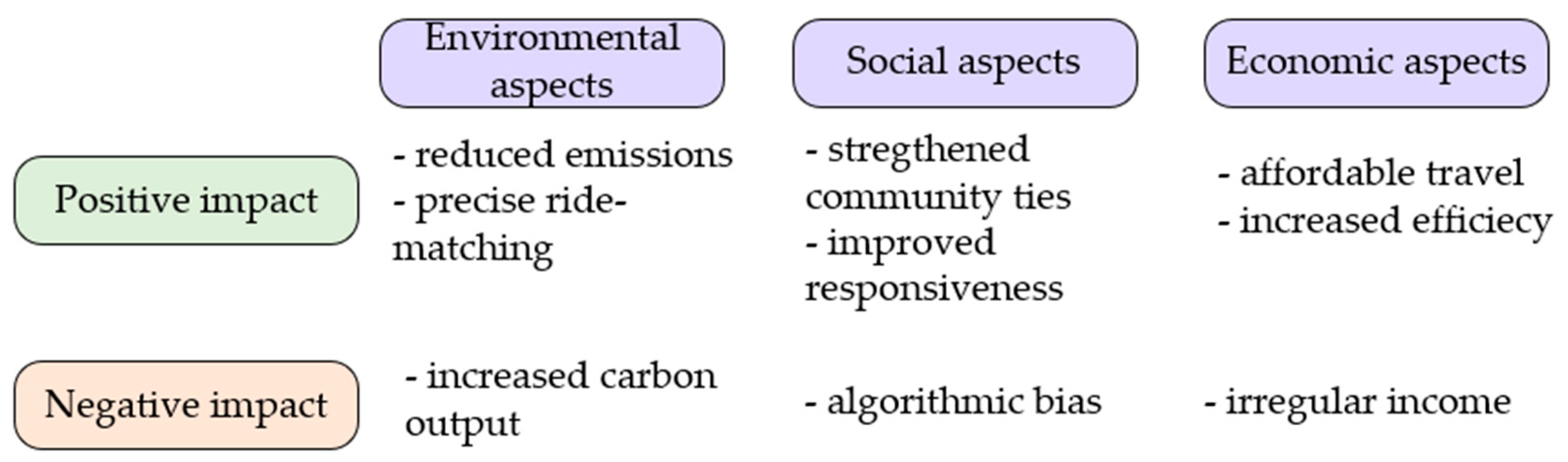
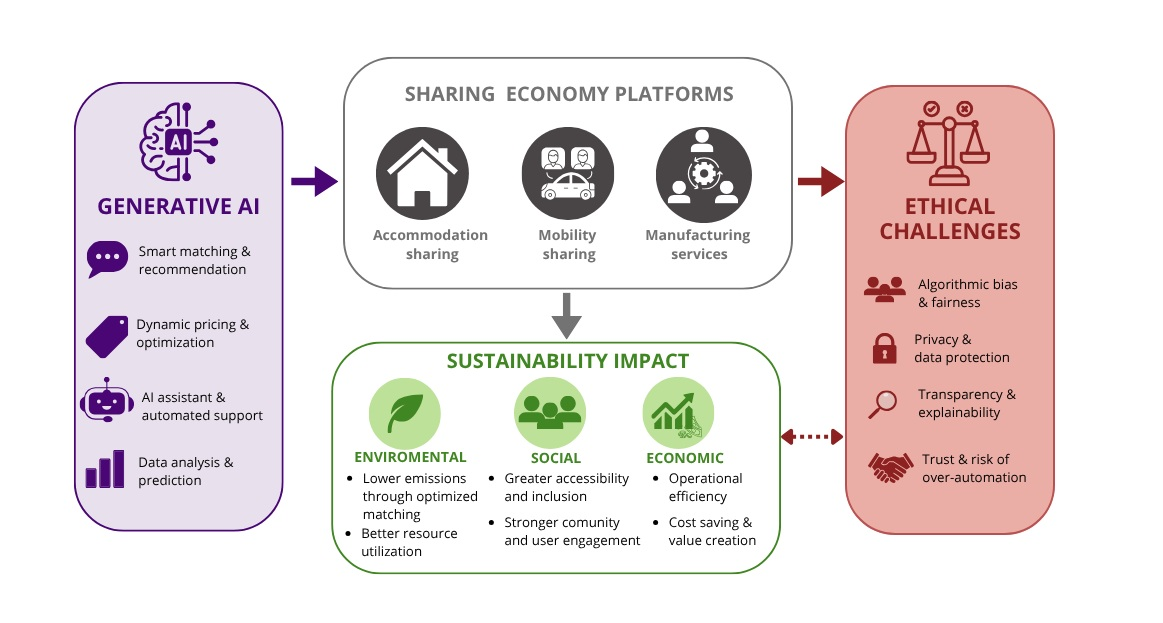
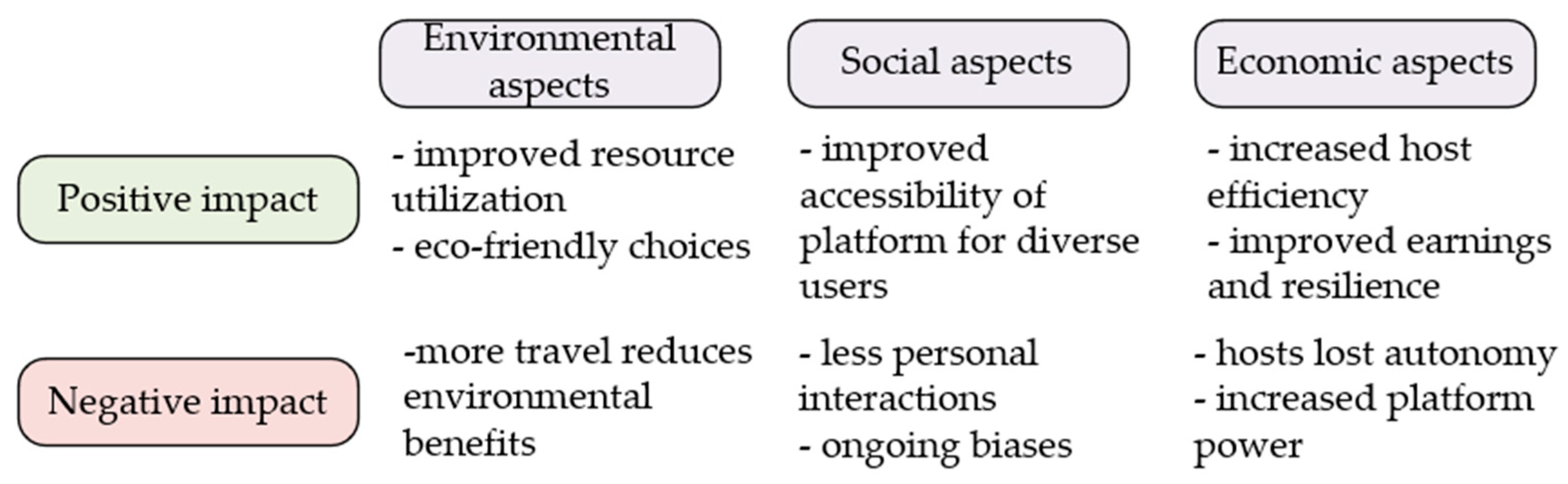
A summarization of the sustainability impacts of AI integration in the platform economy identified through the comparative platform analysis is illustrated in
Figure 5.
The diagram synthesizes the key sustainability implications derived from the analysis of AI applications within the examined platform ecosystem. It highlights the positive and negative impacts of integrating AI technologies on sustainability covering environmental, social and economic aspects.
4.2. BlaBlaCar Platform Analysis
4.2.1. BlaBlaCar’s Operations and AI
BlaBlaCar is known as popular sharing platform which connects drivers with empty seats to other passengers who are traveling the same route with the aim to minimize costs and reduce the number of vehicles on the road. As was mentioned previously, this platform also uses AI technologies. The implications of traditional AI, which this platform uses, are focused especially on:
- -
Smart matching algorithm—user preferences, travel routes, timing, and past behavior are analyzed using AI tools to optimally match drivers and passengers, improving ride efficiency and their satisfaction [
28];
- -
Dynamic pricing—machine learning predicts demand patterns for popular routes and adjusts pricing suggestions accordingly to balance supply and demand;
- -
Trust and safety management—AI-driven reputation system processing helps to evaluate user reviews and identify suspicious behaviors [
29];
- -
Optimized communication—chatbots and AI tools assist users in booking management, to answer queries, and to provide updates.
More recently, generative AI technologies have expanded the capabilities of ride-sharing platforms beyond conventional AI-driven functionalities by enabling advanced communication, content generation, and trust-management features, including the following:
- -
Automated communication with the customer—AI tools can power more human-like chatbots that handle complex queries or offer travel suggestions, which improve user engagement, but on the other side, increase concerns about misinformation and impersonation between human and machine;
- -
Dynamic generation of content—AI is in this case used for automatic generation of personalized ride descriptions, safety tips, etc., which may streamline processes, but reduce human responsibility [
30];
- -
Trust system manipulation—such AI tools could be misused by users to fabricate re-views or craft misleading content, which can challenge the community-based trust mechanisms;
- -
Cultural and ethical risks—language models may produce inappropriate suggestions if they are not carefully monitored, which can complicate cross-cultural communication.
4.2.2. Sustainability Implications
The AI-enhanced operations of BlaBlaCar impact sustainability in environmental, social, and economic dimensions, each carrying not only opportunities, but also related risks.
Sustainability from an environmental viewpoint—BlaBlaCar contributes in a positive way by increasing car occupancy rates, which helps to reduce the total number of vehicles on the road. This leads to lower greenhouse gas emissions, decreased consumption of fuel, and reduced traffic. The AI tool enhances these benefits by enabling more precise ride-matching, optimization of travel route, and predictive demand, which minimizes unnecessary travel. However, in the case when AI will be used to promote ride frequency, these environmental advantages could be offset by increased usage and carbon output.
Sustainability from a social viewpoint—the platform supports shared mobility and encourages interpersonal interaction, and it can strengthen community ties and promote access to transportation, particularly in areas with limited public transit. AI also improves responsiveness and safety by analyzing user behavior, reviews, and communication. There are worries about potential bias in algorithm-based user verification and the weakening of interpersonal trust due to excessive automation and lack of transparency in decision-making systems. To preserve the platform’s social credibility and trustworthiness, it is essential that AI-driven processes are fair and transparent to users.
Sustainability from an economic viewpoint—this car sharing platform offers travel alternatives for passengers and supplementary income for drivers by earning from unused vehicle capacity. AI-driven pricing tools and demand forecasting increase platform efficiency and economic scalability. Dynamic pricing and algorithmic control may introduce unstable income and reduce predictability for users, affecting potentially deepening socio-economic differences. Sustainable economic value therefore depends not only on optimization, but also on maintaining neutrality and transparency within AI-driven systems.
Summarization of the sustainability impacts of AI integration in the platform economy identified through the comparative analysis of the BlaBlaCar platform is shown in
Figure 6.
The diagram synthesizes the key sustainability implications derived from the analysis of AI applications within the BlaBlaCar platform ecosystem. It highlights the positive and negative impacts of integrating AI technologies on sustainability covering environmental, social and economic aspects.
The integration of generative AI into the Airbnb and BlaBlaCar environment presents a compelling example of how technology can be employed to advance sustainability objectives within the SE. AI offers promising pathways toward environmental, social, and economic sustainability by improving operational efficiency, accessibility, and resource utilization. However, these benefits come with ethical trade-offs that require careful administration, transparency, and continuous evaluation to ensure that AI supports rather than weakens the foundational values of the SE. Then, the following chapter will be focused on the exploration of ethical concerns in detail, and the examination of the challenges and responsibilities when integrating AI tools.
4.3. Industrial Sharing Platforms and AI Integration
While previous case studies focused on consumer-oriented platforms, extending the analysis to industrial sharing enables a broader assessment of how AI reshapes sustainability across different economic layers. This extension allows the study to examine whether the sustainability dynamics identified in consumer-oriented platforms are also observable within industrial platform ecosystems. As previous case studies addressed the sharing economy in the service-based sector, attention is now directed to the manufacturing domain. According to Duan [
31], the SE should not be viewed solely through consumer-oriented applications such as ride-sharing or accommodation platforms, but rather as a broader paradigm that also encompasses asset-sharing and the utilization of idle capacities across various industries. In this context, the implementation of a sharing mechanism integrated with AI technologies into the industrial sector may become a cornerstone of sustainable industry. Therefore, this subsection is dedicated to sharing platforms that connect manufacturers, optimize resource utilization, and support the transition toward a circular economy.
In the industrial sector, the term shearing economy can be applied through platforms that offer shared use of production assets, tools, and logistic services, such as machine time sharing, industrial cloud marketspace, spare part sharing and so on [
32]. The authors [
32] defined the term “shared factory” as a new production unit within the framework of social manufacturing. One of the most recent publications [
33], takes this idea even further and defines the concept of “Shared Manufacturing”. This model promotes greater efficiency and cost reduction by enabling companies to share manufacturing resources and production capacities. Another publication by Benoit et al. [
34] examines the sharing economy from a B2B perspective, noting that most industrial platforms operate within this framework.
The paradigm of service-based economy in manufacturing has shown potential; however, the effectiveness of industrial sharing models depends more and more on adopting advanced technologies. In particular, artificial intelligence has emerged in recent years as a transformative phenomenon across all industries; thus, its adoption within the sharing economy has become almost inevitable. AI-powered analytics and decision-making tools can optimize resource sharing, forecast capacity needs, and support more sustainable production cycles [
35,
36].
To illustrate the usability of the sharing economy supported by artificial intelligence in the industrial sector, one representative example can be found in digital manufacturing platforms such as Xometry. These platforms operate on a B2B principle, enabling the sharing of manufacturing capacities. They connect manufacturers that possess idle or underutilized production resources, such as CNC machining centers, injection molding facilities, or additive manufacturing equipment, with companies seeking these types of manufacturing services. Platforms of this type embody the concept of a shared factory by enabling access to distributed production capabilities [
36].
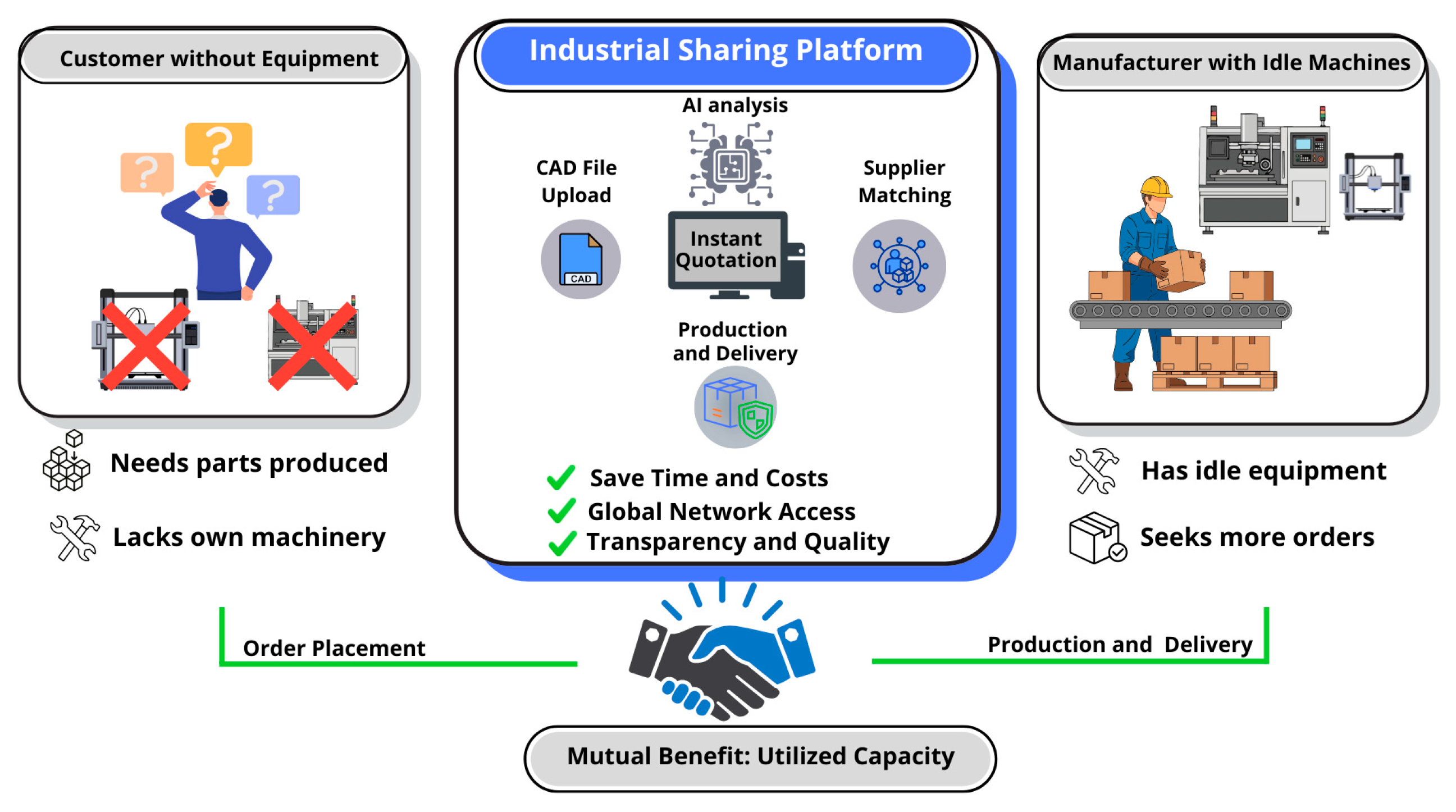
The operational processes of such platforms are based on AI-driven tools that automate and optimize decision-making across the manufacturing value chain. These mechanisms illustrate how AI can transform traditional manufacturing supply chains into more flexible and resource-efficient platform ecosystems. AI algorithms analyze digital design files, material requirements, tolerances, production volumes, and delivery constraints in order to generate instant quotations, recommend suitable manufacturing partners, and predict lead times [
35]. From a resource utilization perspective, AI supports more efficient allocation of production tasks by matching demand with available capacities, thereby reducing machine downtime and increasing overall system efficiency [
31,
36]. For a clearer illustration of this concept,
Figure 7 presents the interaction between a customer without proprietary manufacturing equipment, an AI-driven industrial sharing platform, and a manufacturer with idle production capacities.
Sustainability Implications
In terms of how artificial intelligence can boost sustainability in the manufacturing sector, as demonstrated in the previous case studies, its impacts can be analyzed from environmental, social, and economic perspectives. Improvements across these dimensions can be achieved through the shared use of manufacturing resources enabled by digital platforms such as Xometry.
Sustainability from an environmental viewpoint—Artificial intelligence facilitates industrial sharing platforms by improving resource efficiency through the maximization of idle or underutilized manufacturing equipment. By distributing production loads across manufacturers with available capacities, the need for investments in new machinery is reduced, leading to lower material and energy consumption per unit of output. Furthermore, decentralized production networks supported by digital platforms contribute to shorter supply chains and reduced transportation-related emissions. Additional environmental benefits arise from AI-supported production planning and predictive maintenance, which minimize overproduction, reduce waste, and extend the lifespan of manufacturing equipment.
Sustainability from a social viewpoint—AI-supported industrial sharing platforms enhance inclusivity within the manufacturing sector. Their adoption enables small and medium-sized enterprises to access advanced manufacturing technologies without substantial capital investments, while also increasing their visibility within global manufacturing networks. Transparency enabled by AI-driven matching and pricing mechanisms can strengthen trust and collaboration among platform participants. However, these benefits also involve risks, including algorithmic bias, unequal access to digital infrastructure, and reduced human oversight in decision-making processes.
Sustainability from an economic viewpoint—The sharing of industrial capacities enabled by artificial intelligence improves operational and cost efficiency for both sides of the supply chain. Customers benefit from lower production costs and more agile manufacturing processes, leading to faster time-to-market. At the same time, manufacturers can monetize idle capacities and stabilize revenue streams. AI-supported capacity forecasting and demand matching further contribute to more predictable and resilient production planning. Nevertheless, increasing dependence on digital platforms and algorithmic governance may shift bargaining power toward platform operators, emphasizing the need for transparent governance frameworks and fair data management practices.
In conclusion, AI-enabled industrial sharing platforms demonstrate strong potential to support sustainable manufacturing across all three dimensions. However, the success of such collaborative models depends on responsible AI deployment, transparent platform governance, and alignment with broader industrial and circular economy policies.
To synthesize the key similarities and differences identified across the analyzed platforms,
Table 2 summarizes the main AI applications and sustainability risks identified during the comparative analysis of the selected platforms.
The comparative analysis of the selected platforms reveals several important findings regarding the role of artificial intelligence in shaping sustainability outcomes within platform ecosystems. The comparative overview highlights that, while AI enhances efficiency and resource utilization across all examined platforms, it simultaneously introduces distinct sustainability risks that vary according to platform type, governance structure, and degree of algorithmic control. These findings highlight the importance of balancing technological innovation with responsible governance in order to ensure that AI-driven platform models contribute to sustainable development rather than reinforcing existing inequalities.
5. Ethical Challenges
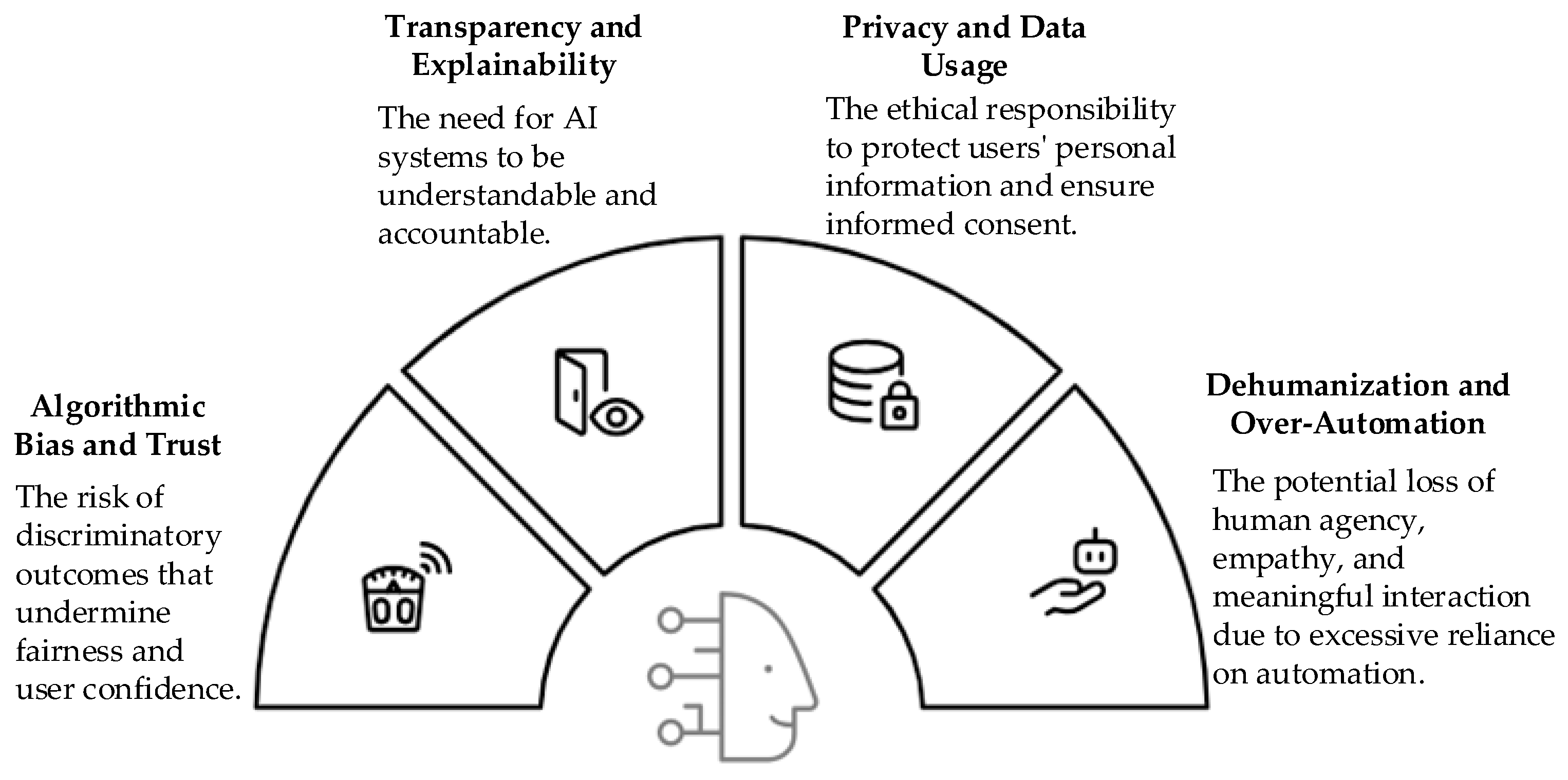
As AI becomes increasingly integrated into SE, it brings not only benefits and opportunities, but also a range of ethical challenges such as algorithmic bias and trust, transparency and explainability, privacy and data usage, dehumanization and over-automation. The ethical challenges illustrated in
Figure 8 were identified through the comparative analysis of the selected platform cases and supported by findings reported in the prior literature.
These issues are increasingly discussed within the broader Environmental, Social, and Governance (ESG) framework, which emphasizes responsible data governance, algorithmic transparency, and ethical deployment of artificial intelligence within digital platform ecosystems.
This section provides a detailed description of each of these challenges. SE platforms already face several systematic challenges related to sustainability, trust and operational transparency. The integration of generative AI tools further complicates these challenges [
37]. When discussing the first concern regarding algorithmic bias and trust, generative AI systems rely heavily on large datasets for training, which often contain inherent biases reflective of historical, social, or cultural prejudices [
15]. When these biased datasets feed AI algorithms within SE platforms, they may continue and intensify stereotypes. For example, certain listings may be systematically promoted or demoted based on biases in user ratings or profile information, influencing visibility and booking rates [
38]. AI-driven guest screening could unfairly disadvantage certain user profiles, undermining trust between users who perceive discrimination [
39]. Such biases threaten the foundational social sustainability of sharing platforms by eroding mutual trust.
Transparency and explainability are central ethical concerns in the use of AI in the SE. Users rarely know how algorithms work or how decisions (e.g., pricing, ranking) are made. Generative AI introduces additional opacity. Transparency remains a significant challenge in AI-driven decision-making on sharing platforms. Users often remain unaware of the precise mechanics behind dynamic pricing, listing rankings, and content moderation algorithms [
40]. The introduction of generative AI compounds this opacity, as complex language models operate as “black boxes” whose internal decision processes are difficult to interpret even by developers [
41]. This lack of explainability creates an information asymmetry where users cannot fully understand automated decisions affecting their economic outcomes (platform visibility). Without greater transparency, platforms risk excluding users and reducing trust in the system.
One of the concerns is privacy and data usage, which raises critical challenges about how user information is collected, stored, and shared within SE platforms. As training AI requires large amounts of data, the question is: Who owns this data? How is consent obtained? Generative AI requires vast amounts of data to function effectively, often drawing on personal, behavioral, and contextual user information. This raises pressing questions about data ownership, consent, and ethical usage. Users on platforms may be unaware of the extent to which their data (messaging content, transaction histories, behavioral patterns) is used to train AI models [
7]. The collection and processing of such data must comply with legal frameworks like the general data protection regulation (GDPR) and emerging regulatory initiatives such as the European Artificial Intelligence Act, which aim to ensure transparency, accountability, and responsible governance of AI-driven systems. Ensuring informed consent, data minimization, and protection against misuse remain critical to upholding user privacy and trust in AI-augmented SE services.
The final challenge relates to dehumanization and over-automation; the overuse of AI (e.g., fully automated messages) can minimize the interpersonal element that was a key value proposition of the early SE. A core appeal of the SE, especially in accommodation sharing, is the personal interaction and trust built between hosts and guests [
1]. Over-reliance on AI-driven automation as fully automated host messaging or virtual assistants handling all guest communication risks dehumanizing these interactions [
42]. While automation improves efficiency, it can reduce the authenticity and relational qualities that differentiate peer-to-peer sharing from traditional commercial transactions. This dehumanization may erode the sense of community and reduce user satisfaction, eventually undermining the social sustainability and unique value proposition of SE platforms.
Addressing these ethical challenges requires the implementation of transparent governance mechanisms, including explainable AI models, stronger data governance frameworks, and clearer accountability structures for platform operators. In addition, improving digital literacy among platform users and strengthening regulatory oversight can help ensure that AI deployment aligns with broader sustainability and societal objectives.
6. Discussion
The findings of this study suggest that the integration of generative AI into sharing economy platforms should not be interpreted as a purely technological enhancement, but rather as a socio-technical transformation characterized by inherent trade-offs. Across all analyzed platforms, AI simultaneously generates sustainability benefits and ethical risks, indicating that its impact is fundamentally dual in nature. This observation is consistent with previous research highlighting the socio-technical nature of digital platform ecosystems, where technological innovation interacts with social structures, governance mechanisms, and economic incentives.
The case study of Airbnb and BlaBlaCar illustrates that the integration of generative AI into SE platforms holds significant potential to increase sustainability across multiple dimensions. AI tools improve operational efficiency by optimizing resource utilization, automating routine tasks, and facilitating personalized user experiences. Moreover, AI expands accessibility by breaking down language barriers and lowering technical entry points for diverse user groups, thus promoting inclusivity and social sustainability.
The analysis of industrial sharing platforms further extends these findings beyond service-based sharing economy models into the manufacturing sector. The industrial case study demonstrates that AI-enabled sharing platforms can similarly enhance sustainability by enabling the shared use of manufacturing capacities, optimizing production planning, and improving the utilization of idle industrial resources. Unlike consumer-oriented platforms, industrial sharing primarily operates in a B2B context, where AI-driven matching, pricing, and capacity forecasting play a central role in improving efficiency and supporting circular economy principles. This highlights that the sustainability potential of AI-enhanced sharing models is not limited to services but can also be realized in production-oriented environments. From a theoretical perspective, these findings contribute to the literature on digital platform ecosystems by demonstrating that AI-driven sustainability outcomes depend not only on technological capabilities but also on governance structures and socio-technical interactions between platform actors.
This duality can be conceptualized as a trade-off between sustainability gains and ethical challenges across environmental, social, and economic dimensions. While AI enhances efficiency, accessibility, and resource optimization, it also introduces risks related to bias, transparency, data governance, and platform dependency. Based on these findings, a conceptual perspective is proposed in which AI-driven sustainability outcomes depend on balancing these opposing forces through appropriate governance mechanisms. This trade-off perspective reflects broader debates in the literature on platform governance and algorithmic decision-making, where efficiency gains generated by digital technologies are often accompanied by new forms of social and ethical risks. These findings also resonate with discussions on platform capitalism, suggesting that, while AI-driven platforms may enhance efficiency and sustainability, they may simultaneously reinforce power asymmetries and algorithmic control within digital ecosystems. Recent governance-oriented studies emphasize that AI-enabled platform ecosystems increasingly require multidimensional governance approaches that combine technological innovation with transparency, accountability, and sustainability objectives [
43,
44]. In this context, governance and regulatory mechanisms such as the GDPR, the AI Act, and platform transparency requirements play an essential role in balancing operational efficiency with ethical oversight and social responsibility within digital platform ecosystems.
To better conceptualize the relationship between AI-driven sustainability benefits and associated ethical risks, a socio-technical trade-off framework is proposed in
Figure 9.
The framework illustrates how AI-enabled platform mechanisms may simultaneously generate sustainability outcomes and ethical/governance challenges, while governance and regulatory mechanisms attempt to balance innovation with accountability and responsible platform governance.
However, these mentioned technological advancements come with critical ethical considerations that must be addressed through robust governance frameworks. First, it is imperative to ensure that AI systems do not marginalize vulnerable or underrepresented users. Algorithmic biases inserted within training data can accidentally discriminate against certain demographics, increasing the divide between social groups and undermining the platform’s commitment to impartial participation. Therefore, continuous bias auditing and inclusive data practices are essential to uphold fairness. Second, maintaining user agency is vital in an AI-augmented SE. While automation can increase convenience, excessive reliance on AI-generated content and decisions risks minimizing individual autonomy and the authenticity of peer-to-peer interactions. Users (hosts and guests or driver and passengers) should retain control over how AI tools influence their engagement and representation on the platform. Finally, transparency and explainability in AI operations are foundational to building and sustaining user trust. Platforms must provide clear, accessible information about how AI models impact pricing, ranking, and communication processes. Transparent AI governance not only empowers users to make informed decisions but also facilitates accountability and ethical alignment. From a practical perspective, platform operators should implement transparent AI governance mechanisms, including explainable algorithms, bias auditing procedures, and clearer data governance policies in order to ensure that technological innovation remains aligned with sustainability objectives.
Thus, while generative AI presents promising opportunities to advance sustainability in SE platforms, its responsible deployment hinges on integrating the ethical principles that prioritize fairness, agency, and transparency. Future research and practice should focus on developing multidisciplinary strategies that align technological innovation with social and environmental stewardship. In direct answer to research question “How can generative AI enhance the sustainability of sharing economy platforms and what is the ethical cost?”, generative AI can significantly enhance the sustainability of SE platforms, particularly by improved efficiency, inclusion, and scalability. However, these advantages are not neutral, as they come at an ethical cost related to transparency, fairness, autonomy, data governance, and the potential erosion of community and collaborative values. In addition, regulatory initiatives such as the European Artificial Intelligence Act and evolving platform governance policies may play a crucial role in shaping how AI-driven platforms balance innovation with societal responsibility.
In conclusion, the sustainability of AI-enhanced platforms must be understood as a socio-technical challenge, not just a technological one. True sustainability therefore requires not only environmental and economic benefits, but also responsible governance, ethical oversight, and inclusive stakeholder engagement in the management of AI-enabled platform ecosystems.
7. Conclusions
The findings of this study demonstrate that the integration of generative AI into sharing economy platforms represents a two-sided phenomenon offering significant sustainability opportunities alongside substantial ethical challenges. On one side, AI can drive greater efficiency, optimize resource utilization, and enhance accessibility to contribute to more sustainable platform operations environmentally, socially, and economically. On the other side, AI introduces complex ethical dilemmas related to bias, transparency, privacy, and the decreasing level of human-centered interactions. To navigate these challenges effectively, platform designers and policymakers must prioritize ethical regulation frameworks that balance innovation with responsibility. In particular, emerging regulatory initiatives such as the European Artificial Intelligence Act and evolving platform governance frameworks may play an important role in shaping responsible AI deployment within digital platform ecosystems. These findings apply not only to service-based sharing economy platforms, but also to industrial sharing platforms in the manufacturing sector, where AI enables the shared use of production capacities and supports more sustainable industrial operations. Summarized key recommendations can include:
- -
Implementation of AI transparency regulations, where clear guidelines and standards should be established to ensure that AI decision-making processes (e.g., pricing algorithms, content generation, and user matching) are explainable and auditable. This transparency empowers users to understand and trust platform operations, promoting fairness and accountability;
- -
Supporting digital literacy for hosts and users or drivers and passengers, it means educational initiatives should be developed to enhance users’ understanding of AI tools, their capabilities, and limitations. Empowering users with digital skills enables them to leverage AI effectively while maintaining control over their interactions and data;
- -
Encouraging AI use for empowerment, not replacement, AI could be served as a tool to augment human agency rather than substitute it. Platforms must design AI features that assist users, preserving the interpersonal and community aspects that support the SE’s unique value proposition.
In addition to these general recommendations, platform-specific governance implications can also be identified. In accommodation platforms such as Airbnb, governance efforts should focus on explainable ranking and recommendation systems to improve transparency and reduce algorithmic bias. In mobility platforms such as BlaBlaCar, transparent ride-matching and pricing mechanisms are essential for maintaining user trust and fairness. In industrial sharing platforms such as Xometry, fair AI-supported supplier allocation and transparent capacity-matching mechanisms remain critical for preventing platform power asymmetries and ensuring equitable access to manufacturing opportunities.
This study has certain limitations that should be acknowledged. The analysis relies primarily on secondary data and the existing literature rather than primary empirical data such as surveys or interviews with platform users. In addition, the case study approach focuses on a limited number of representative platforms, which may not fully reflect the diversity of AI applications across the broader sharing economy ecosystem. Nevertheless, the selected cases provide valuable insights into emerging patterns of AI integration and their sustainability implications. Future research could further expand these findings through additional empirical investigations and a broader range of platform contexts.
Future research should explore the long-term behavioral, economic, and social transformations triggered by AI-powered platform interactions. In particular, empirical studies based on user surveys, platform datasets, or experimental research could provide deeper insights into how AI-driven mechanisms influence sustainability outcomes and user trust within platform ecosystems. It remains crucial to investigate whether these tools truly contribute to sustainable development or primarily optimize profitability at the expense of user well-being and equity. Such insights will guide the responsible evolution of AI within the sharing economy, ensuring that technological innovation supports sustainable and socially responsible growth.