1. Introduction
1.1. Background and Motivation
Manufacturing systems are undergoing a profound transformation driven by the convergence of digitalization, connectivity, and artificial intelligence. Within the paradigm of Industry 4.0, traditional production systems are increasingly evolving into cyber–physical systems (CPS), in which physical processes are continuously monitored, controlled, and optimized through tightly integrated computational and communication components. This transformation enables real-time awareness, adaptive control, and data-driven decision-making across the entire manufacturing lifecycle [
1,
2,
3].
Cyber–physical systems (CPS) can be understood as physical and engineered systems whose operations are monitored, coordinated, controlled, and integrated by a computing and communication core, enabling closed-loop interaction between cyber and physical components. In manufacturing contexts, this concept is frequently extended to cyber–physical production systems (CPPS), emphasizing distributed intelligence, interoperability, and real-time coordination across production resources and networks [
4,
5].
The evolution toward CPS and CPPS has been widely framed within the Industry 4.0 paradigm, which highlights the integration of digital technologies, advanced automation, and intelligent systems across manufacturing value chains [
1,
6]. In this context, CPS play a central role by enabling the tight coupling between physical processes and computational intelligence, supporting real-time monitoring, control, and optimization of manufacturing operations [
7,
8]. As a result, modern manufacturing systems increasingly rely on decentralized decision-making, adaptability, and system-wide coordination to manage complexity and variability [
3,
4].
Artificial intelligence has emerged as a cornerstone technology within this transformation, supporting a wide range of manufacturing applications, including predictive maintenance, quality inspection, process optimization, and production planning. Over the past decade, machine learning and deep learning techniques have become widely adopted in manufacturing CPS, benefiting from increased data availability, advances in sensing technologies, and enhanced industrial connectivity [
3,
9,
10].
1.2. Artificial Intelligence in Manufacturing: From Data-Driven Automation to Emergent Intelligence
Despite the significant progress achieved with conventional AI approaches, modern manufacturing CPS are characterized by high complexity, uncertainty, and dynamic behavior, which challenge static, rule-based, and reactive models. These limitations have motivated increasing interest in more advanced AI paradigms, including reinforcement learning, multi-agent systems, cognitive architectures, and, more recently, foundation models and large language models [
11,
12,
13,
14,
15].
These emergent AI models exhibit capabilities that extend beyond task-specific learning, such as adaptability, generalization, reasoning, and human-centred interaction. In principle, they are well aligned with the requirements of next-generation manufacturing CPS, which demand autonomy, scalability, and seamless human–machine collaboration. However, their effective integration into industrial environments raises significant challenges related to safety, explainability, real-time performance, and trustworthiness.
The relevance of artificial intelligence in manufacturing has been consistently documented in the literature, with several studies identifying AI as a key enabler of smart manufacturing systems within the Industry 4.0 paradigm [
16,
17]. Recent surveys further emphasize the transition from traditional automation toward data-driven and intelligent manufacturing, driven primarily by machine learning-based approaches [
18]. In addition, recent reviews highlight the growing importance of informed and hybrid machine learning techniques in addressing the complexity of engineering and industrial applications [
19].
1.3. Need for a Systematic and Integrative Perspective
Although the literature on AI in manufacturing is extensive, existing studies and reviews often focus on specific techniques or isolated applications, such as predictive maintenance or quality control. Reviews that explicitly address manufacturing CPS tend to emphasize architectural or control-oriented aspects, while recent work on emergent AI models frequently remains detached from the practical constraints and requirements of industrial manufacturing environments [
3,
20,
21].
As a result, there is a lack of integrative and systematic analyses that examine how emergent AI models are positioned within the broader evolution of manufacturing CPS, how mature these approaches are, and which gaps hinder their industrial adoption. This fragmentation makes it difficult for both researchers and practitioners to assess the current state of the art and identify coherent and actionable research directions. Nevertheless, complementary insights into manufacturing and management paradigms in the Industry 4.0 era have been explored in related work [
22].
Existing reviews often present important insights but exhibit several limitations. Many focus on specific AI paradigms (e.g., machine learning or deep learning) without considering hybrid or emerging approaches such as neuro-symbolic AI. Others emphasize conceptual architectures without addressing implementation challenges or industrial deployment. Additionally, few studies systematically evaluate the maturity level of proposed solutions or their readiness for real-world manufacturing environments.
1.4. Objectives and Contributions of This Study
To address these limitations, this article presents a large-scale systematic literature review on artificial intelligence in manufacturing cyber–physical systems, with a specific focus on advanced and emergent AI models. The objectives of the study are to:
Analyze publication trends and the evolution of AI paradigms in manufacturing CPS;
Map AI models to core manufacturing functions;
Assess the maturity and industrial readiness of emergent AI approaches;
Identify key research gaps and future research directions.
By synthesizing evidence from 172 core publications selected through a rigorous PRISMA-based methodology, this study provides a structured and up-to-date perspective on the role of emergent AI in manufacturing CPS, offering both theoretical insights and practical implications for the development of intelligent, adaptive, and trustworthy manufacturing systems.
Unlike prior reviews that typically focus on isolated AI techniques or specific CPS layers, this study provides an integrated and systematic analysis of AI-driven Cyber–physical Systems in manufacturing, explicitly addressing industrial maturity and development readiness across multiple functional domains.
The remainder of this article is structured as follows.
Section 2 describes the systematic literature review methodology, including the research design, search strategy, selection criteria, and evidence synthesis process.
Section 3 presents the results of the review, covering publication trends, the evolution of AI paradigms in manufacturing cyber–physical systems, and the mapping of AI models to core manufacturing functions.
Section 4 discusses the main findings, highlighting maturity levels, research gaps, and implications for research and industrial practice. Finally,
Section 5 concludes the article and outlines directions for future research.
2. Materials and Methods
2.1. Systematic Literature Review Methodology
This study adopts a Systematic Literature Review (SLR) protocol designed to ensure transparency, reproducibility, and minimization of selection bias. The reporting of the review process follows the PRISMA 2020 statement and flow logic for systematic reviews, which provides a structured and widely accepted framework for documenting identification, screening, eligibility, and inclusion phases [
23].
To further strengthen the transparency and reproducibility of the search process itself—particularly regarding search strings, limits, and database coverage—the review also aligns with the PRISMA-S extension for literature searches [
24]. This ensures that the search strategy can be replicated and critically assessed.
The design and execution of the SLR were informed by established evidence-synthesis methodologies commonly adopted in applied engineering and management research, emphasizing structured planning, systematic execution, and rigorous synthesis stages [
25,
26]. In particular, the methodological framework proposed by Tranfield et al. [
25] and the guidelines for systematic literature reviews in software and engineering research introduced by Kitchenham et al. [
26] provided the primary methodological foundation. These were complemented by systematic mapping principles described by Petersen et al. [
27] and by recent SLR applications in the context of Industry 4.0 and manufacturing systems, which further demonstrate the applicability of PRISMA-based approaches to industrial and engineering research domains [
28]. Overall, adherence to PRISMA 2020 guidelines ensures methodological rigor, transparency, and replicability throughout the review process [
23].
The search strategy was defined using database-specific query strings adapted for Scopus, Web of Science, and IEEE Xplore. The search terms combined keywords related to “Artificial Intelligence”, “Cyber-Physical Systems”, and “Manufacturing”, using Boolean operators to ensure comprehensive coverage to enable responses for the following research questions.
2.2. Research Question Formulation
The research question guiding this systematic literature review was formulated using the SPIDER framework—Sample, Phenomenon of Interest, Design, Evaluation, and Research type—which is particularly suitable for qualitative and mixed-methods evidence synthesis in complex socio-technical and engineering domains [
29]. This framework supports structured and inclusive searching beyond the traditional PICO approach, accommodating heterogeneous study designs and interdisciplinary evidence.
Based on this framework, the primary research question (RQ) of the review is defined as:
RQ: How have advanced and emergent artificial intelligence paradigms been applied, integrated, and validated within manufacturing cyber–physical systems, and what is their current level of maturity and industrial readiness?
To operationalize this overarching question and support a structured synthesis of the literature, the following sub-research questions (SRQs) were formulated:
SRQ1: How has research on artificial intelligence in manufacturing CPS evolved over time in terms of volume, thematic focus, and publication outlets?
SRQ2: How have AI paradigms in manufacturing CPS evolved from rule-based and data-driven approaches toward more adaptive and emergent models?
SRQ3: How are different AI paradigms mapped to core manufacturing functions within CPS, and which functions remain underexplored?
SRQ4: What evidence exists regarding the maturity, validation, and industrial applicability of emergent AI models in manufacturing CPS?
The SPIDER elements were instantiated as follows:
Sample (S): manufacturing systems and industrial environments using CPS or CPPS;
Phenomenon of Interest (PI): advanced and emergent AI models applied to manufacturing CPS (e.g., deep reinforcement learning, multi-agent systems, foundation models, large language models, and neuro-symbolic AI);
Design (D): peer-reviewed empirical, methodological, and survey/review studies;
Evaluation (E): reported contributions, benefits, limitations, and evidence of integration into manufacturing CPS;
Research type (R): qualitative, quantitative, and mixed-methods studies.
This formulation ensures a focused yet inclusive research scope, directly aligned with the interdisciplinary nature of AI-enabled manufacturing CPS research and with the analytical structure adopted in the subsequent results and discussion sections.
2.3. Databases, Search Timing, and Search Strategy
A comprehensive literature search was conducted in October 2025 using Scopus and Web of Science (WoS) as the primary indexing databases, in accordance with the predefined review protocol. These databases were selected due to their extensive coverage of high-quality peer-reviewed journals and conference proceedings in engineering, computer science, and industrial management.
A representative search query structure was defined as follows:
(“Cyber-Physical Systems” OR CPS OR CPPS OR “Cyber-Physical Production Systems”) AND (AI OR “Artificial Intelligence” OR “machine learning” OR “deep learning” OR “reinforcement learning” OR “multi-agent” OR “foundation model” OR “large language model*”) AND (manufactur* OR production OR shop-floor).*
The temporal scope of the review was limited to the period 2010–2025, enabling the capture of both early Industry 4.0-related contributions and more recent developments associated with emergent AI paradigms.
2.4. Eligibility Criteria
The eligibility of studies was defined through explicit inclusion and exclusion criteria.
Inclusion criteria:
Peer-reviewed journal articles and conference proceedings indexed in Scopus or Web of Science;
Explicit focus on manufacturing-related CPS or CPPS;
Clear use or discussion of AI paradigms relevant to CPS intelligence, including emergent models;
English language publications.
Exclusion criteria:
CPS studies from non-manufacturing domains without transferable industrial relevance;
Purely conceptual AI research lacking manufacturing or CPS grounding;
Editorials, notes, and other non-peer-reviewed materials;
Duplicate records and studies with inaccessible full texts after reasonable retrieval attempts.
Studies were excluded if they did not focus on manufacturing contexts, lacked sufficient methodological detail, or did not explicitly address AI integration within CPS environments.
2.5. Study Selection and PRISMA Workflow
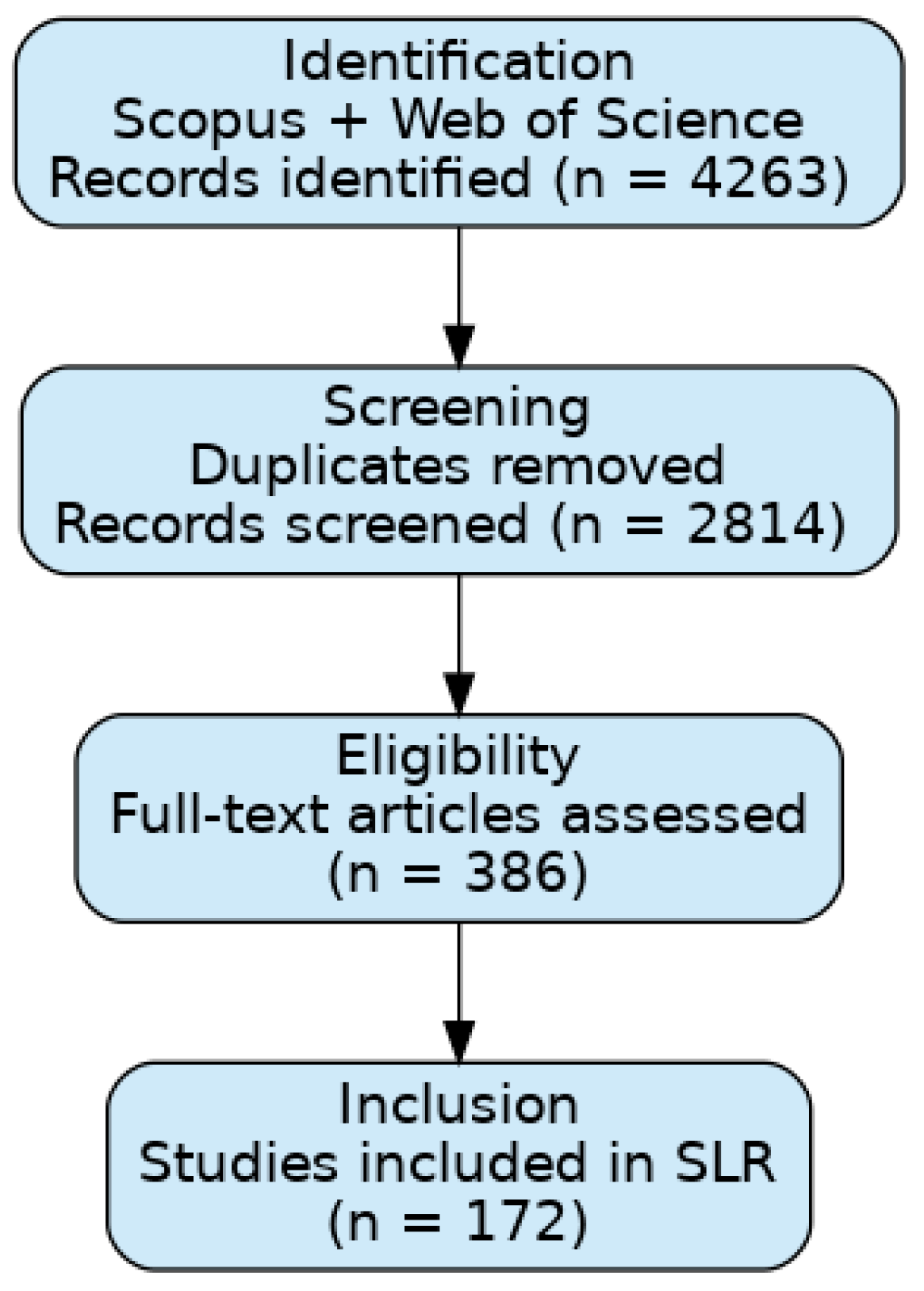
The study selection process followed the PRISMA workflow—identification, screening, eligibility, and inclusion—to systematically document decisions and reduce selection bias [
23]. The initial searches conducted in Scopus and Web of Science yielded 4263 records. After the removal of duplicates, 2814 unique publications remained and were subjected to title and abstract screening. Subsequently, 386 full-text articles were assessed for eligibility against the predefined inclusion and exclusion criteria. Following this detailed full-text evaluation, 172 studies were retained as the core systematic literature review (SLR) corpus used for subsequent qualitative and quantitative synthesis (
Figure 1).
The screening process was conducted in multiple stages, including title and abstract screening followed by full-text assessment. Two independent reviewers evaluated the studies, and disagreements were resolved through constructive discussion to ensure inter-rater reliability and minimize bias.
2.6. Data Extraction and Evidence Synthesis
To ensure methodological coherence and progressive analytical depth, the evidence synthesis was conducted at three complementary levels, each aligned with the scope and purpose of the corresponding figures and following systematic mapping principles [
27].
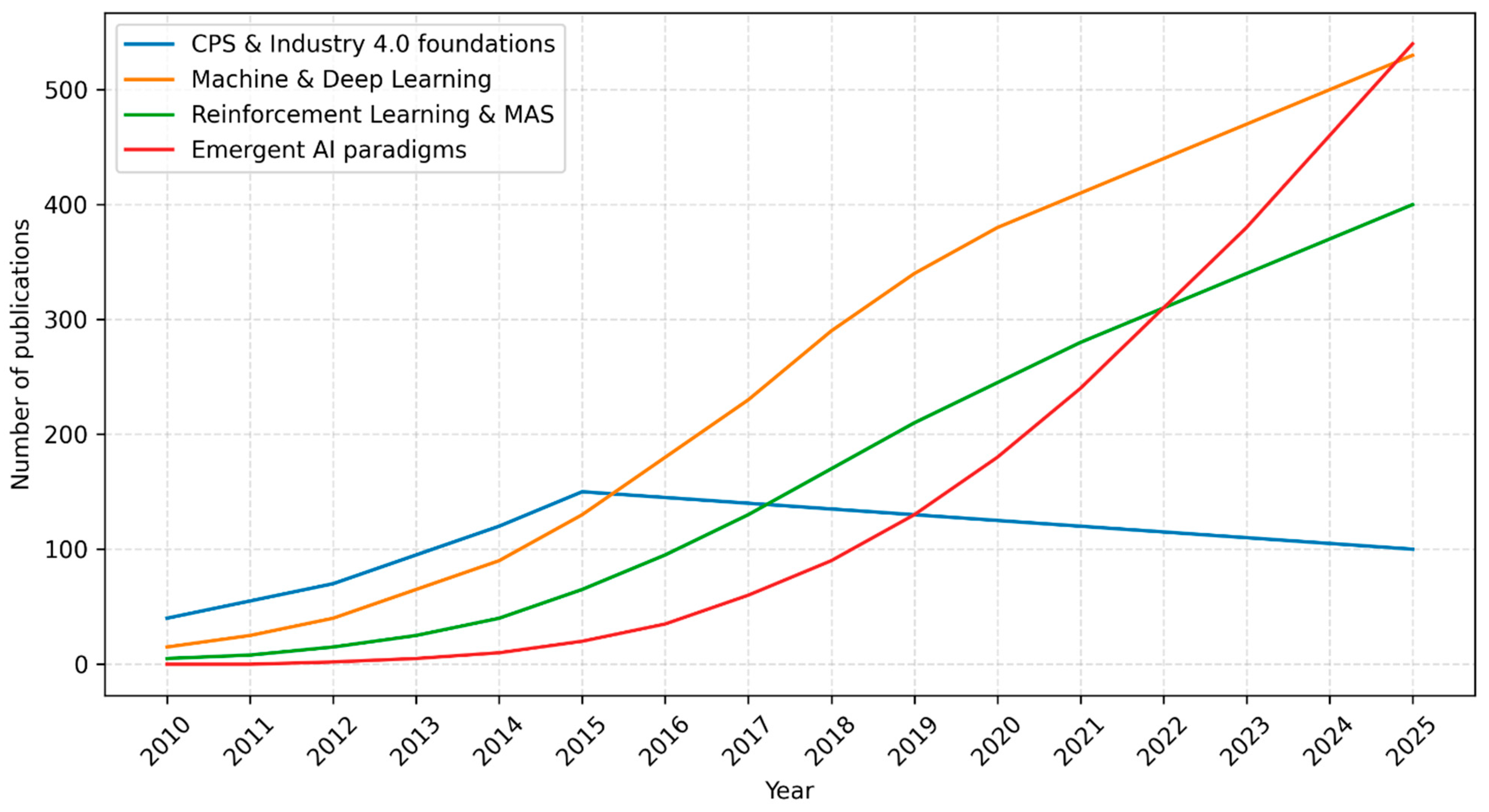
The vertical axis represents the number of publications per year, allowing the identification of temporal trends across different research themes.
- 2.
Paradigm evolution synthesis (n = 172):
The final set of studies retained after full-text eligibility assessment (
Figure 1) was used to analyze the longitudinal evolution of artificial intelligence paradigms applied to manufacturing cyber–physical systems. This core SLR corpus supports the paradigm-oriented analysis presented in
Figure 3.
A structured coding protocol was developed to classify each study according to AI paradigm and manufacturing function. Studies were assigned to one or more categories based on explicit criteria defined in a coding framework (codebook), ensuring consistency and analytical rigor.
- 3.
Functional mapping synthesis (n = 172):
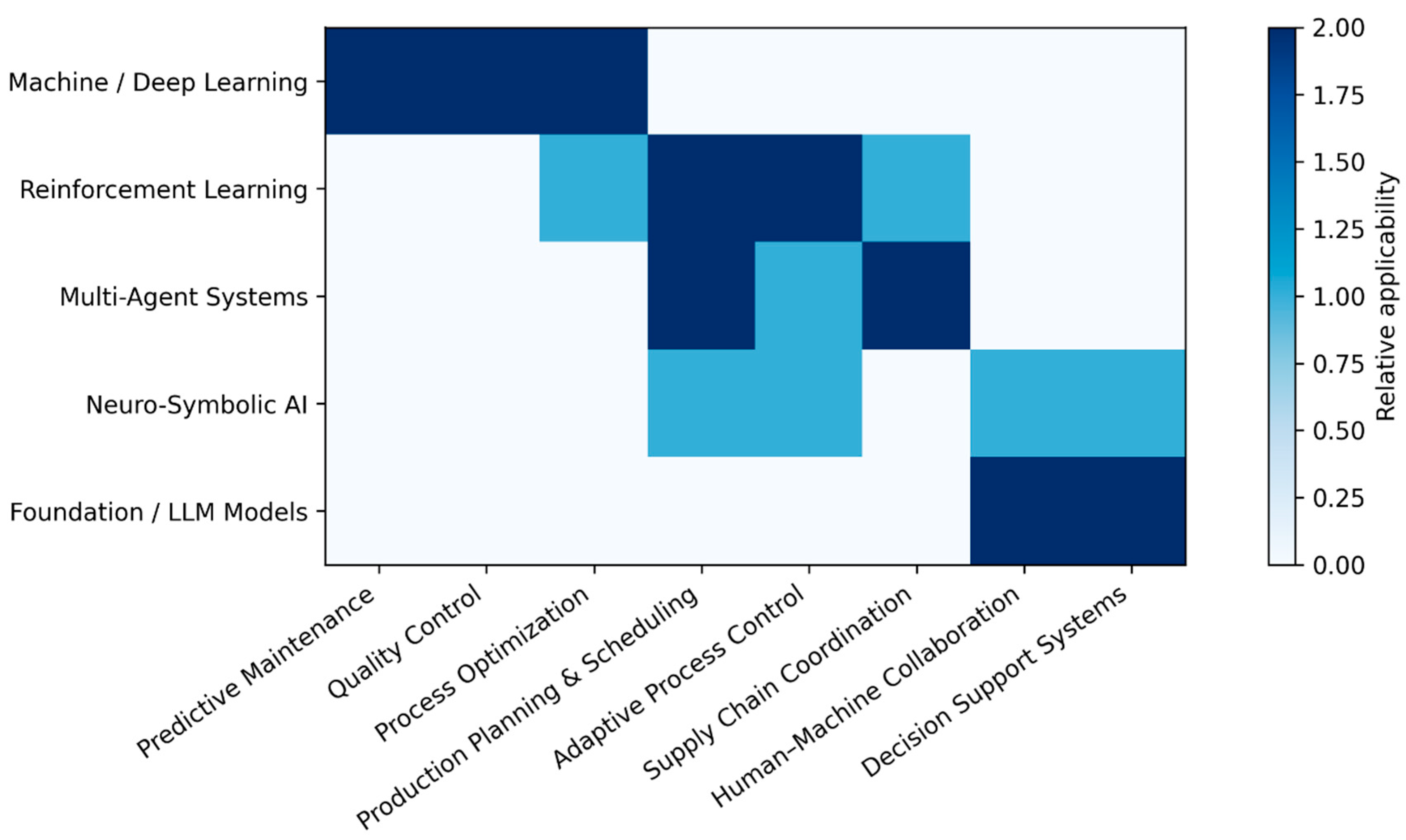
The same core corpus of 172 studies was further analysed at a finer level of detail to map AI paradigms to manufacturing functions within manufacturing cyber–physical systems. This ensures that the most detailed synthesis stage is grounded in the full set of rigorously selected studies, forming the basis for the mapping analysis presented in
Figure 4.
This progressive synthesis strategy ensures consistency between the PRISMA-based selection process (
Figure 1) and the analytical depth of
Figure 2,
Figure 3 and
Figure 4, while enabling a structured transition from high-level research trends to detailed functional insights without loss of methodological rigor or representativeness [
27].
2.7. Reliability and Reporting Rigor
To strengthen methodological rigor and ensure reproducibility, the review protocol employed explicit and consistently applied selection criteria, transparent documentation of search strategies and filters in line with PRISMA-S recommendations [
24], and traceable synthesis procedures aligned with the PRISMA 2020 reporting guidelines [
23]. The use of systematic mapping principles further supports the structured classification and aggregation of evidence across heterogeneous studies [
27]. Collectively, these measures enhance the reliability of the findings and provide a robust methodological foundation for the results and discussion presented in the subsequent sections.
3. Results
This section presents the results obtained from the systematic literature review, structured according to descriptive, thematic, and mapping analyses derived from the core corpus of 172 publications. The results reflect the quantitative distribution of studies, the evolution of artificial intelligence paradigms in manufacturing cyber–physical systems (CPS), and the association between AI models and core manufacturing functions.
3.1. Evolution of AI-Driven Research in Manufacturing Systems
The descriptive analysis of the literature reveals a steady and significant growth in research addressing artificial intelligence in manufacturing cyber–physical systems over the period 2010–2025, with a pronounced acceleration after 2018. This trend coincides with the widespread adoption of Industry 4.0 concepts, the maturation of CPS architectures, and the increasing availability of industrial data within industrial engineering contexts [
1,
2,
10]. The expanding role of artificial intelligence has also been extensively discussed within the broader field of industrial engineering, reinforcing its cross-disciplinary relevance and impact [
11].
Figure 2 illustrates the temporal distribution of publications across major scientific publishers. The results show that Elsevier, IEEE, and Springer dominate the publication landscape, reflecting the strongly technological and engineering-oriented nature of the topic. In addition, Taylor & Francis and Wiley & Sons also contribute a substantial number of publications, particularly in areas related to industrial engineering, manufacturing systems, and applied artificial intelligence. At the same time, publications from MDPI journals, including
Applied Sciences, exhibit a consistent increase in recent years, indicating growing interest from interdisciplinary and application-driven research communities.
Comparable growth trends have been reported in previous studies examining the evolution of intelligent manufacturing and digital transformation initiatives, further confirming the increasing maturity and relevance of AI-driven approaches in industrial environments [
16,
17]. While overall research activity intensified markedly after 2018, investigations specifically focused on emergent and foundation AI models applied to manufacturing CPS remain relatively recent. This observation suggests that, despite rapid growth, these advanced AI paradigms are still at an early stage of industrial adoption, underscoring the need for further research and validation in real manufacturing settings.
Figure 2 presents the quantitative evolution of major artificial intelligence–related research themes in manufacturing systems between 2010 and 2025, based on the systematic literature review. The y-axis represents the annual number of publications associated with each research theme, while the x-axis corresponds to the publication year. Each coloured line represents a distinct research theme tracked over time.
The blue line represents research on Cyber–Physical Systems (CPS) and Industry 4.0 foundations, including system integration, connectivity, automation, interoperability, and reference architectures. Although this theme exhibits high publication volumes in earlier years, its relative decline after 2018 reflects the maturation and consolidation of CPS and Industry 4.0 concepts, which increasingly serve as an underlying infrastructure rather than the primary focus of research.
The green line corresponds to machine learning and deep learning applications in manufacturing, such as predictive maintenance, quality inspection, anomaly detection, and process optimization. This theme demonstrates strong and sustained growth across the entire period, confirming its central role in enabling data-driven intelligence within modern manufacturing systems.
The orange line denotes research related to reinforcement learning and multi-agent systems, focusing on adaptive control, decentralized decision-making, scheduling, and autonomous coordination. The steady increase in publication volume highlights the growing importance of learning-based autonomy and distributed intelligence in complex production environments.
The red line reflects emergent AI paradigms, including foundation models, large language models, and neuro-symbolic approaches. The sharp rise in publications in the most recent years indicates a shift toward higher-level reasoning, explainability, human–AI collaboration, and cross-functional integration within manufacturing systems.
Overall,
Figure 2 highlights a clear transition from infrastructure-oriented research toward increasingly autonomous, adaptive, and cognitively enhanced manufacturing intelligence. These descriptive results confirm that artificial intelligence in manufacturing CPS has evolved from a niche research topic into a consolidated and expanding research domain, supported by a diverse set of journals and conferences across engineering, computer science, and industrial management disciplines.
3.2. Paradigmatic Approaches of AI in Manufacturing Cyber–Physical Systems
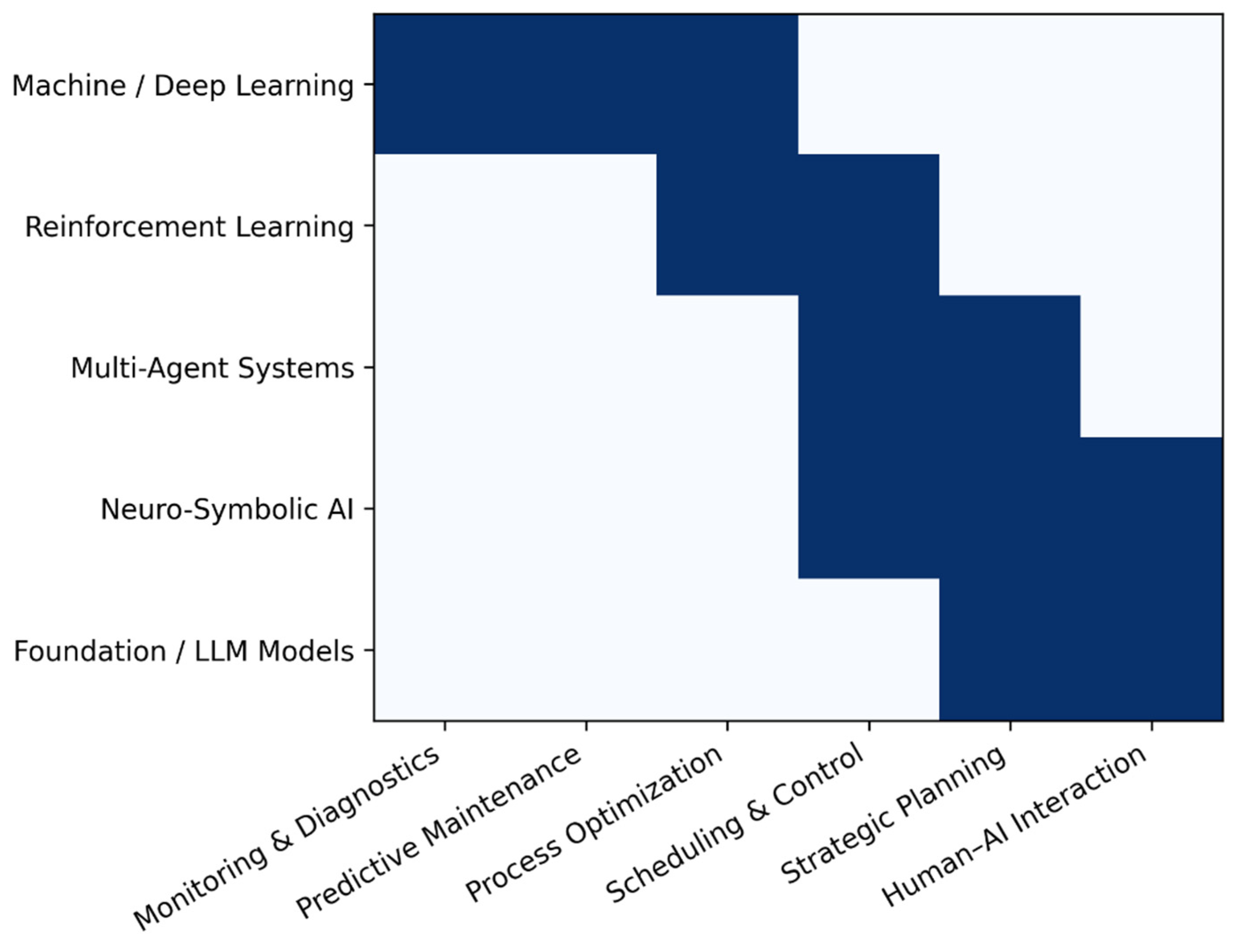
The longitudinal analysis of artificial intelligence paradigms reveals a progressive transition in methodological approaches applied to manufacturing cyber–physical systems, as illustrated in
Figure 3. Early studies predominantly relied on rule-based and expert systems, reflecting the deterministic, automation-centric nature of early industrial control environments and the limited availability of data-driven capabilities. As industrial systems became increasingly instrumented and connected, these knowledge-based approaches were gradually complemented and, in many cases, superseded by data-driven artificial intelligence techniques.
Figure 3 illustrates the progressive transition of artificial intelligence paradigms applied to manufacturing cyber–physical systems over time. It highlights the shift from early rule-based and expert systems toward data-driven machine learning and deep learning approaches, followed by the emergence of reinforcement learning, multi-agent systems, and, more recently, foundation models and large language models.
Figure 3 emphasizes the coexistence of multiple AI paradigms across different periods and illustrates how increasing system complexity, autonomy, and adaptability requirements have driven the adoption of more advanced AI approaches, while also indicating that emergent paradigms are still at an early stage of industrial adoption.
From approximately 2014 onwards, machine learning methods became increasingly prominent, driven by advances in data acquisition, sensor technologies, and the widespread adoption of digitalized manufacturing infrastructures. Subsequently, deep learning approaches gained traction, particularly in perception-oriented tasks such as fault detection, quality inspection, and process monitoring, where large volumes of data and complex patterns could be effectively exploited.
More recent studies emphasize reinforcement learning and multi-agent systems, which align naturally with the decentralized, adaptive, and dynamic characteristics of modern manufacturing cyber–physical systems. These paradigms enable autonomous decision-making, distributed control, and real-time optimization in complex production environments, addressing limitations associated with static and centrally controlled solutions.
The currently observed dominance of machine learning and deep learning approaches is consistent with previous systematic literature reviews, which identify supervised and unsupervised learning techniques as the most widely adopted AI methods for manufacturing applications, including fault diagnosis, quality inspection, and predictive maintenance [
30,
31]. The increasing availability of industrial data and advances in computational capabilities have further reinforced the adoption of deep learning models in manufacturing contexts.
Finally, the results highlight the emergence of foundation models and large language models after 2020. Although their presence within manufacturing cyber–physical systems remains limited, these approaches are increasingly explored in conceptual, experimental, and hybrid frameworks. This trend suggests that, despite their early stage of industrial adoption, emergent AI paradigms may play a significant role in supporting higher-level reasoning, abstraction, and enhanced human–AI collaboration in future manufacturing systems.
3.3. Mapping of AI Paradigms to Manufacturing Functions
The mapping analysis examines the relationship between major artificial intelligence paradigms and core manufacturing functions within cyber–physical systems, based on a subset of studies that provide sufficient implementation detail and contextual information. This analysis aims to identify how different AI approaches are positioned across operational, tactical, and strategic manufacturing functions.
Figure 4 summarizes this mapping and highlights clear patterns in the adoption and specialization of AI paradigms across manufacturing domains.
Figure 4 presents a structured mapping between major artificial intelligence paradigms and core manufacturing functions within manufacturing cyber–physical systems. The results show that
machine learning and deep learning dominate well-established operational applications, particularly those related to data-driven analysis and optimization.
Specifically, machine learning and deep learning approaches are predominantly applied to:
In contrast, reinforcement learning and multi-agent systems are more frequently associated with dynamic, decentralized, and decision-intensive manufacturing functions, including:
Production planning and scheduling;
Adaptive process control;
Supply chain coordination;
Distributed and networked manufacturing systems.
These paradigms are particularly suited to environments characterized by uncertainty, real-time decision-making requirements, and complex interactions among multiple system components.
Emergent AI paradigms, including foundation models and large language models, appear primarily in applications related to:
Human–machine collaboration;
Decision support systems;
Knowledge-intensive and semantic tasks.
However, their application to core operational manufacturing functions remains limited. This limited adoption reflects both technological challenges and unresolved issues related to trust, interpretability, robustness, and integration with existing industrial systems. As such, the mapping highlights a clear gap between the potential of emergent AI paradigms and their current level of deployment in manufacturing cyber–physical systems.
Overall, the results of the systematic literature review demonstrate that research on artificial intelligence in manufacturing cyber–physical systems has expanded significantly over the last decade. The analysis confirms a clear evolution from deterministic, rule-based approaches toward adaptive and learning-based AI paradigms, with machine learning and deep learning consolidating their dominance in core operational applications. At the same time, reinforcement learning and multi-agent systems are increasingly adopted to address the complexity, decentralization, and dynamic behaviour of modern manufacturing CPS. Although emergent AI paradigms, such as foundation models and large language models, exhibit strong potential—particularly for higher-level reasoning and human–AI interaction—their adoption in industrial manufacturing applications remains limited. Collectively, these findings provide a structured and evidence-based foundation for the discussion of research gaps, challenges, and future research directions presented in the next section.
4. Discussion
Multiscale modelling perspectives have been proposed as an effective means to address the inherent complexity of cyber–physical systems operating across multiple temporal and spatial levels [
32]. Building on this perspective, the results of the systematic literature review provide a comprehensive view of the evolution, current state, and limitations of artificial intelligence applied to manufacturing cyber–physical systems (CPS). By jointly considering descriptive publication trends, paradigmatic evolution, and functional mapping, this discussion critically examines the maturity of the field and identifies the research gaps that motivate the present study.
To systematically assess the practical relevance of the identified approaches, a maturity framework was defined, considering dimensions such as validation environment, level of industrial development, real-time capability, safety considerations and integration within CPS architectures.
4.1. Maturity and Consolidation of AI in Manufacturing CPS
The descriptive results confirm that artificial intelligence in manufacturing CPS has transitioned from an exploratory research topic into a well-established and rapidly expanding domain. The sharp increase in publications observed after 2018 reflects the convergence of Industry 4.0 initiatives, widespread sensitization, and advances in data-driven decision-making [
1,
2].
Despite this growth, the literature remains unevenly distributed across AI paradigms. While machine learning and deep learning approaches dominate both academic research and industrial applications, more advanced paradigms—such as reinforcement learning, multi-agent systems, and emergent AI models—remain comparatively underrepresented. This imbalance suggests that the maturity of AI in manufacturing CPS is heterogeneous, with certain application areas reaching consolidation while others are still at early stages of development, particularly when multiscale modelling perspectives are considered [
32].
4.2. Evolution of AI Paradigms: Reinforcement Learning and Multi-Agent Systems
The longitudinal analysis reveals a clear paradigm shift from deterministic, rule-based automation toward adaptive, learning-driven intelligence. Early manufacturing CPS relied heavily on expert systems and predefined control logic, which limited system flexibility and responsiveness under uncertainty.
The adoption of machine learning and deep learning marked a significant advance, enabling predictive maintenance, anomaly detection, and quality inspection based on historical data. In parallel, AI planning techniques have also been explored to support decision-making in cyber–physical systems. Nevertheless, these approaches often remain predominantly reactive, as they rely largely on supervised learning and static models.
The increasing interest in reinforcement learning (RL) and multi-agent systems (MAS) reflects a growing recognition that modern manufacturing CPS require autonomy, decentralization, and continuous adaptation. These paradigms are inherently aligned with the dynamic and distributed nature of contemporary production environments. However, despite this conceptual alignment, RL and MAS still face significant barriers to industrial adoption, including challenges related to training efficiency, scalability, safety assurance, and real-time constraints [
33]. Although industrial agent-based systems provide a promising foundation, their integration with advanced learning paradigms remains an open research challenge [
34]. Additional constraints related to training efficiency and integration with legacy systems further limit their deployment in industrial contexts [
11,
12,
13,
20].
4.3. Emergent AI Models
One of the most significant findings of this review concerns the nascent role of emergent AI models in manufacturing CPS. As highlighted by the mapping analysis, these models are primarily explored in contexts related to human–machine collaboration, decision support, and knowledge-intensive tasks.
Recent advances in artificial intelligence have led to the emergence of foundation models, large language models, and neuro-symbolic approaches, which demonstrate enhanced capabilities in representation learning, reasoning, and human–machine interaction [
35,
36].
Neuro-symbolic AI represents a promising direction by combining the learning capabilities of neural networks with the reasoning capabilities of symbolic systems. This hybrid approach enables improving explainability, robustness, and suitability for safety-critical manufacturing environments.
Related research in robotics has further emphasized the role of awareness and cognitive capabilities as foundational elements for autonomous systems. Nevertheless, the application of these approaches in manufacturing CPS remains largely exploratory, with persistent challenges related to explainability, safety, and alignment with industrial CPS requirements [
14,
37].
Their limited presence in core operational manufacturing functions highlights a significant research and application gap. This gap is not primarily due to a lack of potential, but rather to unresolved issues such as [
38]:
Explainability and trust in safety-critical environments;
Real-time performance constraints;
Data governance and confidentiality in industrial settings;
Alignment with CPS verification and validation requirements.
Specifically, the high computational load and inherent latency associated with large-scale foundation models present significant barriers to real-time control in manufacturing. Furthermore, their non-deterministic ‘black-box’ nature hinders the transparency required for obtaining stringent industrial safety certifications, keeping their current application limited to high-level decision support and human–machine interaction.
Consequently, emergent AI models are currently positioned at the conceptual and experimental frontier rather than as production-ready solutions for manufacturing CPS.
4.4. Fragmentation of Frameworks and Lack of Integration
Another critical observation concerns the fragmentation of existing approaches. The literature frequently addresses isolated problems—such as maintenance, quality, or scheduling—without providing integrated frameworks that unify AI models, CPS architectures, and manufacturing processes.
This fragmentation limits the scalability and transferability of proposed solutions and hampers the transition from proof-of-concept implementations to industrial deployment. The absence of unified integration frameworks becomes particularly problematic for emergent AI models, whose effective use requires coordination across data, control, cognition, and human interaction layers.
Moreover, the literature consistently emphasizes that black-box AI models are difficult to validate, certify, and trust in safety-critical industrial environments, reinforcing the need for explainable and verifiable AI solutions [
39,
40]. Explainability has therefore been identified as a key requirement for trustworthy AI systems in industrial contexts [
40]. In addition, unresolved safety and robustness issues remain major barriers to the deployment of autonomous AI-driven systems in manufacturing CPS [
20,
41].
4.5. Research Gaps and Motivation for the Present Study
Based on the synthesized evidence, several key research gaps can be identified:
Limited integration of emergent AI models into manufacturing CPS architectures, particularly beyond decision support and human–machine interfaces.
Lack of structured frameworks that systematically combine CPS principles with advanced and emergent AI paradigms.
Insufficient empirical validation of emergent AI approaches in real or realistic manufacturing environments.
Scarcity of methodologies addressing trust, verification, and safety in the deployment of advanced AI within industrial CPS.
These gaps highlight the timeliness and relevance of the present study, which directly addresses unmet needs identified in the literature.
4.6. Implications for Research and Practice
From a research perspective, the findings emphasize the need to move beyond incremental improvements of established AI techniques toward holistic, CPS-aware AI frameworks capable of supporting autonomy, adaptability, and human collaboration.
From an industrial standpoint, the results suggest that while AI adoption in manufacturing is well underway, the next stage of transformation will depend on the responsible and validated integration of emergent AI models, supported by clear architectural principles and operational guidelines.
4.7. Positioning of the Present Contribution
In this context, the present article positions itself as a response to the identified gaps by:
Consolidating dispersed knowledge through a large-scale systematic literature review;
Highlighting the limitations of current AI applications in manufacturing CPS;
Motivating the need for structured integration frameworks capable of supporting emergent AI models in industrial environments.
This positioning distinguishes the present work from existing reviews by explicitly focusing on the integration of emergent AI models within manufacturing CPS, rather than addressing AI or CPS in isolation.
While previous reviews have extensively mapped the standard applications of Machine Learning and Deep Learning in Industry 4.0 [
11,
31], this study identifies a critical shift in the literature from 2024 onwards. Unlike existing surveys that often treat AI as a static toolset for predictive maintenance or quality control, our analysis demonstrates an emerging convergence between Cyber–Physical Production Systems (CPPS) and advanced paradigms such as Foundation Models, Neuro-symbolic AI, and Decentralized Agent-based systems [
42]. By covering the period up to 2025, this work fills a significant gap in the literature regarding the ‘industrial readiness’ of Generative AI and LLMs within manufacturing environments. Thus, the unique contribution of this review lies not only in its updated timeframe but in its integrative approach, mapping how these emergent AI models are transitioning from theoretical computational intelligence to operational assets in distributed, secure, and scalable manufacturing CPS.
5. Conclusions and Future Research Directions
In response to the research question guiding this study, the results demonstrate that advanced and emergent artificial intelligence paradigms are increasingly explored within manufacturing cyber–physical systems, but remain unevenly integrated and insufficiently validated for large-scale industrial deployment. By combining descriptive trend analysis, paradigmatic evolution, and functional mapping, this study provides a structured and evidence-based overview of how AI research in manufacturing CPS has evolved, consolidated, and diversified over the last decade [
1,
2,
10,
16,
17].
The results demonstrate that artificial intelligence in manufacturing CPS has transitioned from an exploratory research topic into a mature and rapidly expanding domain. Machine learning and deep learning approaches have consolidated their dominance in core operational applications such as predictive maintenance, quality inspection, and process optimization, as consistently reported in the literature [
31]. At the same time, reinforcement learning and multi-agent systems are gaining prominence as suitable paradigms for addressing the decentralized, adaptive, and dynamic characteristics of modern manufacturing environments [
33,
34]. However, despite their strong conceptual alignment with CPS principles, these paradigms continue to face significant challenges related to scalability, safety assurance, real-time performance, and industrial deployment [
11,
12,
13,
20,
33].
One of the most relevant findings of this review concerns the limited yet growing role of emergent AI paradigms, including foundation models, large language models, and neuro-symbolic approaches. While these models exhibit considerable potential for higher-level reasoning, decision support, and human–AI collaboration [
35,
36], their application within core manufacturing CPS remains largely exploratory. The analysis indicates that this gap is not primarily driven by a lack of technological capability, but rather by unresolved issues related to explainability, trust, safety assurance, data governance, and integration with existing CPS architectures [
14,
37,
38].
From a scientific perspective, these findings underscore the need to move beyond isolated and application-specific AI solutions toward integrated, CPS-aware frameworks capable of systematically combining multiple AI paradigms. Such frameworks should explicitly address multiscale system behaviour, interoperability across decision levels, and the coexistence of data-driven, learning-based, and knowledge-based approaches, in line with prior work on multiscale modelling, CPS integration, and trustworthy artificial intelligence [
32,
39,
40].
From an industrial perspective, the results suggest that the next stage of digital transformation in manufacturing will depend not only on the adoption of more advanced AI techniques, but also on their responsible, validated, and trustworthy integration into production systems. Clear architectural principles, operational guidelines, and validation methodologies will be essential to enable the safe deployment of autonomous and intelligent CPS in real manufacturing environments [
20,
41].
The increasing importance of distributed intelligence in CPS is also reflected in recent studies on AI-driven multi-agent collaboration, where scalability, security, and coordination emerge as key challenges. Emerging approaches combining AI agents with decentralized infrastructures and blockchain technologies further illustrate the direction of future research in this domain to reinforce the importance to support collaborative decision-making in the evolution of CPS [
42].
Based on the identified research gaps, several directions for future research can be outlined. These include the development of integrative frameworks that combine CPS principles with emergent AI paradigms; the design of methodologies for validating and certifying advanced AI models in safety-critical manufacturing contexts; large-scale empirical studies assessing the performance, robustness, and scalability of emergent AI approaches in real or realistic industrial settings; and the exploration of human–AI collaboration mechanisms that enhance trust, transparency, and decision-making effectiveness [
38,
43].
Thus, future research should, for instance, address the following key questions:
- -
“How can AI models be efficiently developed in resource-constrained CPS environments?”.
- -
“What are the most effective strategies for integrating explainable AI into real time industrial systems?”.
- -
“How can maturity and readiness be quantitatively assessed across different manufacturing domains?”.
In conclusion, by explicitly addressing how emergent AI paradigms are applied, integrated, and validated within manufacturing cyber–physical systems, this work provides a structured and evidence-based answer to the research question guiding the review. By focusing on the intersection between emergent AI paradigms and CPS integration, the article offers both a comprehensive synthesis of the current state of the field and a clear motivation for future research aimed at enabling the next generation of intelligent, adaptive, and trustworthy manufacturing systems.




 ,
,