Systematic Review

Enhancing Network Intrusion Detection with Quantum Machine Learning: A Comprehensive Survey of Methods, Metrics, and Applications


1
Department of Electrical Engineering, University of Sharjah, Sharjah P.O. Box 27272, United Arab Emirates
2
Department of Computer Engineering, University of Sharjah, Sharjah P.O. Box 27272, United Arab Emirates
*
Author to whom correspondence should be addressed.
Future Internet 2026, 18(5), 234; https://doi.org/10.3390/fi18050234
Submission received: 16 March 2026 / Revised: 22 April 2026 / Accepted: 23 April 2026 / Published: 27 April 2026
(This article belongs to the Special Issue Cybersecurity in the Age of AI, IoT, and Edge Computing)

Abstract

Quantum computing introduces new computational capabilities that can support advanced cybersecurity solutions when combined with machine learning. In recent years, quantum machine learning (QML) has emerged as a promising approach for enhancing network intrusion detection systems (IDS), particularly for analyzing complex and high-dimensional network traffic. This paper presents a systematic survey of QML techniques applied to network intrusion detection. The survey reviews peer-reviewed studies published up to January 2026 that employ quantum, hybrid quantum–classical, and quantum-inspired learning models for IDS. The selected studies are analyzed with respect to the algorithms used, intrusion detection datasets, and evaluation metrics reported. The analysis shows that most current approaches rely on simulated quantum environments and legacy datasets, while evaluation practices remain inconsistent across studies. These findings highlight the early developmental stage of QML-based IDS and the need for standardized evaluation protocols and more realistic experimental settings. Finally, open challenges and future research directions are identified to support the development of reliable, scalable, and practically deployable QML-based intrusion detection systems.

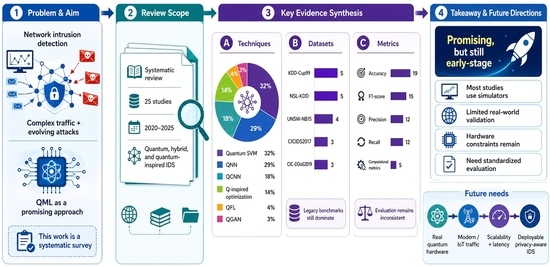
Graphical Abstract

1. Introduction

The rapid growth of digital technologies and networked systems has led to an unprecedented increase in the volume, variety, and velocity of data exchanged across computer networks [1]. While this transformation has enabled advanced services and global connectivity, it has also significantly expanded the attack surface available to cyber adversaries [2]. As a result, modern networks face increasingly sophisticated threats, including zero-day attacks, distributed denial-of-service (DDoS) attacks, ransomware, and advanced persistent threats, making network security a critical and ongoing challenge for organizations across all sectors [3,4].
Intrusion detection systems (IDS) play a fundamental role in addressing these challenges by continuously monitoring network traffic and system activities to identify malicious behavior [5]. Unlike preventive security mechanisms such as firewalls and encryption, IDS are designed to detect both known and unknown attacks, serving as an essential second line of defense. IDS are typically classified into network-based intrusion detection systems (NIDS), which analyze network traffic and host-based intrusion detection systems (HIDS), which monitor individual systems through logs, file integrity, and application behavior [6]. However, despite their widespread adoption, traditional IDS approaches face significant limitations in handling the scale, complexity, and evolving nature of modern cyber threats [7].
To overcome these challenges, the use of machine learning (ML) and deep learning (DL) has been incorporated widely into the IDS to enhance the accuracy and adaptability of detection [8]. ML-based IDS can identify complex patterns in network data and automatically distinguish malicious traffic from normal behavior [9]. The challenges faced by the conventional ML and DL algorithms in processing the large and high-dimensional network traffic data are the time required to train the model, computational complexity, data class imbalance, as well as the decreased efficacy of the technique against the evolving attacks [10]. With the ever-growing nature of the network environment, it is required to move towards novel computational models that can deal with these limitations.
Quantum computing has emerged as a promising technology with the potential to address some limitations of classical computing [11]. Unlike classical systems that use binary bits, quantum computers operate with qubits that can exist in superposition and become entangled, enabling new ways of processing information and potential computational advantages for certain tasks [12,13]. Although current quantum hardware operates in the noisy intermediate-scale quantum (NISQ) era and is still limited by noise and hardware constraints, recent progress has demonstrated its applicability to real-world problems.
Quantum machine learning (QML) integrates quantum computing with classical machine learning to develop models that can potentially improve learning efficiency and handle complex data representations [14]. In cybersecurity, QML has gained increasing attention as a potential approach for enhancing intrusion detection systems [15]. Existing studies explore techniques such as quantum-enhanced classifiers, quantum neural networks, quantum kernels, and hybrid quantum–classical models for intrusion detection and anomaly detection tasks [16]. However, despite this growing interest, the literature remains fragmented, with variations in algorithms, datasets, and evaluation approaches. In addition, existing surveys mainly focus on general QML applications, with limited attention to intrusion detection, and often do not fully cover recent developments after 2022, highlighting the need for a more comprehensive and up-to-date review [17].
Motivated by these observations, this paper presents a comprehensive and up-to-date survey of quantum machine learning techniques applied to network intrusion detection systems. This survey systematically reviews and analyzes 25 peer-reviewed studies published up to December 2025, focusing on the types of QML algorithms employed, the datasets used for evaluation, and the metrics applied to validate performance. By organizing and synthesizing the existing literature, this work aims to provide a clear understanding of current research trends, highlight key challenges, and identify open research directions for future investigation in quantum-enhanced intrusion detection. The main contributions of this survey are summarized as follows:
  • This survey systematically reviews recent quantum, hybrid quantum–classical, and quantum-inspired machine learning approaches applied to network intrusion detection, providing a structured overview of algorithms and design choices reported in the literature.
  • It analyzes and compares the datasets and evaluation metrics used in existing QML-based IDS studies, offering insight into current benchmarking practices and highlighting variability across experimental setups.
  • The paper examines key technical and practical limitations identified in prior work, including quantum hardware constraints, data encoding strategies, reliance on simulation environments, and inconsistencies in evaluation methodologies.
  • The study identifies research gaps and outlines directions for future work. This will support the development of more reliable and practically applicable QML-based IDS.
The rest of this article is structured as follows. A review of the related literature is presented in Section 2, followed by the research methodology in Section 3. The results are reported and discussed in Section 4, followed by the limitations of this study in Section 5. Finally, the conclusion is presented in Section 6.

2. Related Work

Several survey studies have investigated using quantum computing power alongside classical machine learning, exploring the applications and algorithms. The early surveys are mainly focused on theoretical basic concepts of QML, and how the properties of quantum computing enhanced the models in terms of computational efficiency and scalability. The studies cover a wide range of applications and domains where QML dominated on classical approaches such as pattern recognition and image classification [18,19,20]. This demonstrates that QML is attracting researchers in various fields to utilize its capabilities.
Another detailed survey systematically classifies the QML algorithms [21]. It highlights the key challenges that limit utilizing QML in large scale environments. Some of these challenges include quantum noise, qubit availability, and scalability constraints with current NISQ hardware. These limitations are important to consider especially when exploring real-world applications that include quantum computing. In addition to that, the authors in [22] provide a closer look at specific quantum algorithms such as quantum neural networks and quantum support vector machines. Their study covers the mathematical basics of these algorithms and investigates the potential advantages and limitations, along with a comparison to classical machine learning algorithms in terms of improvements and scalability.
Another important research direction in the QML literature concerns quantum data encoding, which enables classical data to be represented as quantum states for processing on quantum computers. The study in [23] provides a detailed analysis of commonly used encoding strategies, such as angle encoding, amplitude encoding, and basis encoding. It discusses the strengths and weaknesses of each method in terms of qubit requirements, circuit depth, and information representation capacity. Effective encoding is particularly important for high-dimensional data, as inefficient encoding strategies can significantly reduce the benefits offered by quantum computation.
Despite the growing number of surveys on quantum machine learning, only a limited subset of studies specifically address the application of QML techniques to IDS. A systematic review conducted in [24] examines research published between 2017 and 2022 and identifies only five studies that apply QML algorithms to IDS. This limited coverage reflects the early stage of research in this application area during that period. Since 2022, however, there has been a noticeable increase in research activity, driven by advances in quantum software frameworks, improved access to quantum simulators, and growing interest in applying quantum-enhanced learning to cybersecurity problems. Recent studies aim to reduce training time, improve detection accuracy, and better handle the high dimensionality of network traffic data.
A systematic mapping review published in 2023 further explores the use of quantum algorithms for intrusion detection [25]. While this work provides useful insights into emerging research trends, its scope is constrained by the rapid pace of developments in the field. Consequently, several recent and relevant studies published after its review period are not included, resulting in an incomplete view of the current research landscape.
More recently, a comprehensive survey [26] investigates the integration of federated learning with intrusion detection systems, with particular emphasis on deep learning and quantum machine learning approaches. This study provides an extensive analysis of federated learning architectures, deployment strategies, communication protocols, and privacy-preserving mechanisms for network intrusion detection. It also introduces the concept of quantum federated learning and discusses quantum feature encoding and quantum learning algorithms within distributed IDS environments. While this work offers valuable insights into privacy-aware and distributed intrusion detection, its primary focus lies on federated learning frameworks rather than standalone quantum machine learning techniques for IDS. Table 1 provides a structured comparison of the existing surveys and related studies, highlighting their focus, coverage of intrusion detection systems, review period, and reported limitations.
Hence, the existing surveys either focus broadly on quantum machine learning without addressing intrusion detection in depth or emphasize federated and distributed learning frameworks where quantum machine learning is treated as a secondary component. This highlights the need for a focused and up-to-date survey that systematically examines quantum machine learning techniques specifically applied to intrusion detection systems, capturing recent advancements and providing a unified view of algorithms, datasets, and evaluation practices.

3. Methodology

In this survey, we adopt a systematic literature review (SLR) methodology based on the guidelines proposed by Kitchenham and Charters [27]. In addition, the review is reported in accordance with the PRISMA 2020 guidelines to improve transparency, reproducibility, and clarity in the study selection and reporting process. This review was not registered. A formal review protocol was not publicly registered. The SLR process consists of three main phases: planning, conducting, and reporting, where each phase includes a set of clearly defined and interrelated steps. This methodology ensures transparency, repeatability, and methodological rigor in survey-based research.
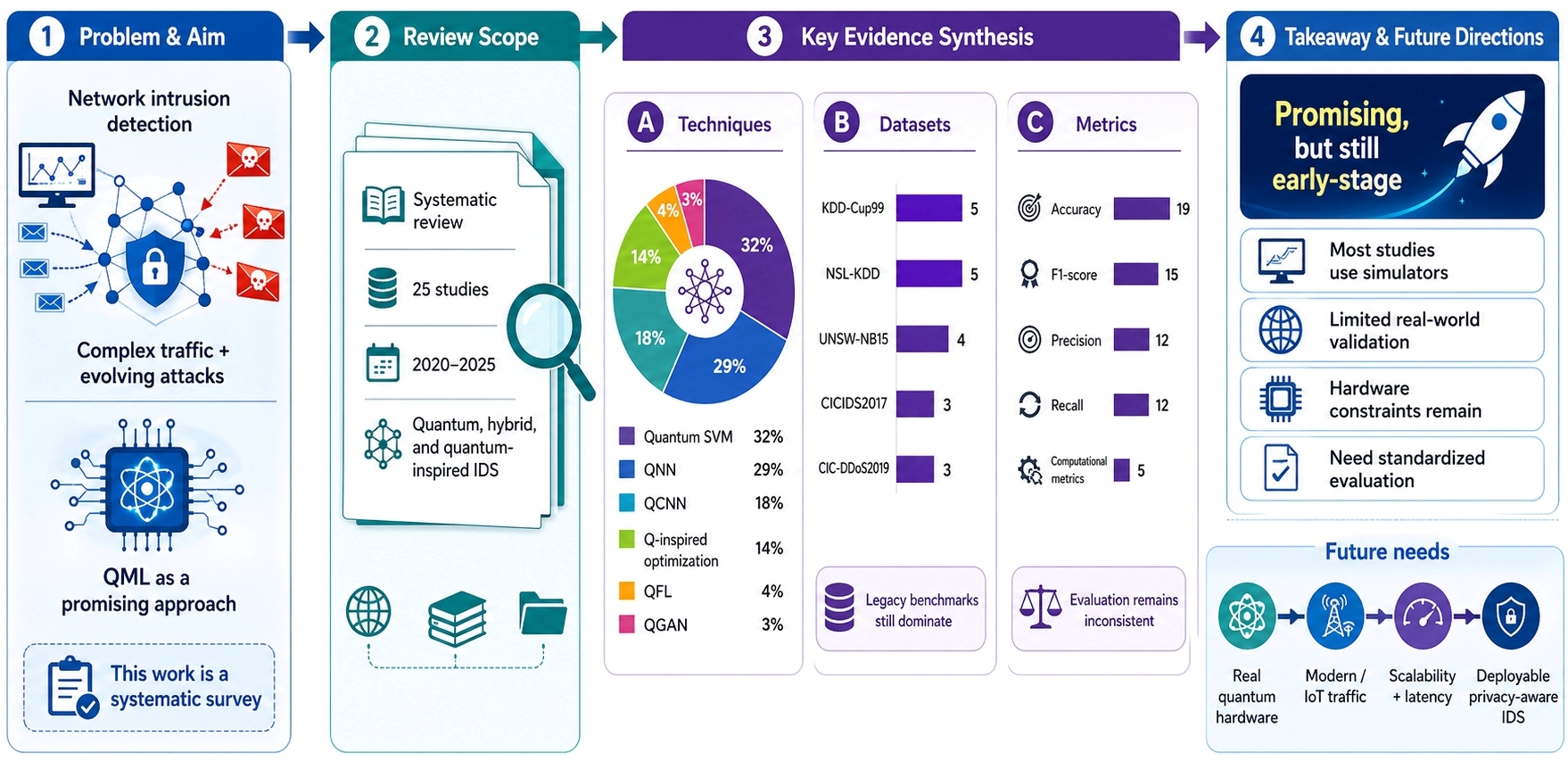
During the planning phase, a structured review protocol is defined to guide the entire review process. The protocol consists of six main stages: (i) defining the research questions, (ii) designing the search strategy, (iii) identifying the study selection procedures, (iv) specifying the quality assessment criteria, (v) defining the data extraction strategy, and (vi) determining the data synthesis approach. The research questions align with the objectives of this survey and focus on the application of quantum machine learning techniques to intrusion detection systems. The overall review protocol stages are illustrated in Figure 1.
In the conducting phase, the search strategy is applied to retrieve relevant and high-quality studies from selected digital libraries. Search terms and Boolean operators are defined based on the research questions to ensure comprehensive coverage of the literature. Study selection criteria, including inclusion and exclusion rules, are then applied to filter irrelevant or low-quality studies. In addition, backward reference searching is performed to identify further relevant articles that may not appear in the initial search results. The quality assessment phase evaluates the methodological soundness of the selected studies. This step ensures that only studies with clear objectives, well-defined experimental settings, and appropriate evaluation metrics are included. A structured data extraction strategy is then applied to collect relevant information from each selected study, including the quantum machine learning techniques, datasets, and validation metrics used.
Finally, in the reporting phase, the extracted data are systematically synthesized using narrative and tabular analysis methods to address the research questions and identify research trends, challenges, and gaps. As emphasized by Kitchenham and Charters, the review protocol plays a critical role in any SLR. To reduce researcher bias and maintain consistency, regular discussions take place among the authors throughout all stages of the review process. The following subsections describe each stage of the adopted review protocol in detail.

3.1. Research Questions

To summarize and provide evidence of QML techniques in IDS applications, the following research questions (RQs) are defined:
  • RQ1: What quantum machine learning techniques have been used in IDS?
    The purpose of this question is to identify and classify QML algorithms that have been applied to IDS. This includes both fully quantum and hybrid quantum–classical learning approaches.
  • RQ2: What datasets have been used to evaluate quantum machine learning-based intrusion detection systems?
    This question seeks to establish the datasets utilized in the literature in the validation of QML-based IDS models.
  • RQ3: What evaluation metrics have been used to validate quantum machine learning-based intrusion detection approaches?
    The aim of this question is to analyze the validation parameters presented in the existing literature. The analysis entails determining the most commonly used parameters, which include accuracy, precision, recall, and F1-measure, while pointing out the disparities presented in the literature.
  • RQ4: What are the main strengths and limitations of quantum machine learning techniques applied to intrusion detection systems?
    This particular question mainly deals with assessing the identified strengths and weaknesses of QML-based IDS methods. This includes aspects such as model capability, data encoding issues, and quantum hardware constraints.

3.2. Search Strategy

The search strategy consists of three main parts as follows.

3.2.1. Search Terms

A systematic procedure is followed with the adopted SLR methodology to construct the search terms. The procedure consists of the following steps:
  • The main search terms are obtained directly from the defined research questions.
  • Alternative terms, synonyms, abbreviations, and common jargon related to the main terms are identified to extend the search scope.
  • Key QML techniques commonly reported in the literature are identified and included to ensure coverage of relevant approaches.
  • Boolean operators (AND, OR) and quotation marks are used to refine the search results and capture specific phrases.
To ensure comprehensive coverage of relevant studies, a unified Boolean search string was constructed based on the identified keywords and their synonyms. The final search string used across the selected digital libraries is as follows:
(“quantum machine learning” OR “quantum computing” OR “quantum-inspired” OR “quantum neural network” OR “QNN” OR “quantum support vector machine” OR “QSVM” OR “variational quantum circuit” OR “VQC” OR “quantum convolutional neural network” OR “QCNN” OR “quantum generative adversarial network” OR “QGAN”)
AND
(“intrusion detection” OR “intrusion detection system” OR “IDS” OR “network security” OR “cybersecurity” OR “anomaly detection”)
This search string was applied to titles, abstracts, and keywords across the selected databases.

3.2.2. Survey Resources

Several digital libraries are utilized to guarantee high-quality and peer-reviewed publications. Sources include IEEE Xplore, ScienceDirect, the ACM Digital Library, SpringerLink, and Web of Science. The search features the work published in journal articles and high-quality conference papers related to quantum computing, machine learning, and cybersecurity. It also utilizes search terms against article metadata, such as titles, abstracts, and keywords, to make sure that relevant studies are comprehensively retrieved. As a way of maintaining relevance and consistency with the objectives of this survey, the search is limited to publications from the emergence of quantum machine learning applications in cybersecurity until January 2026.

3.2.3. Search Phases

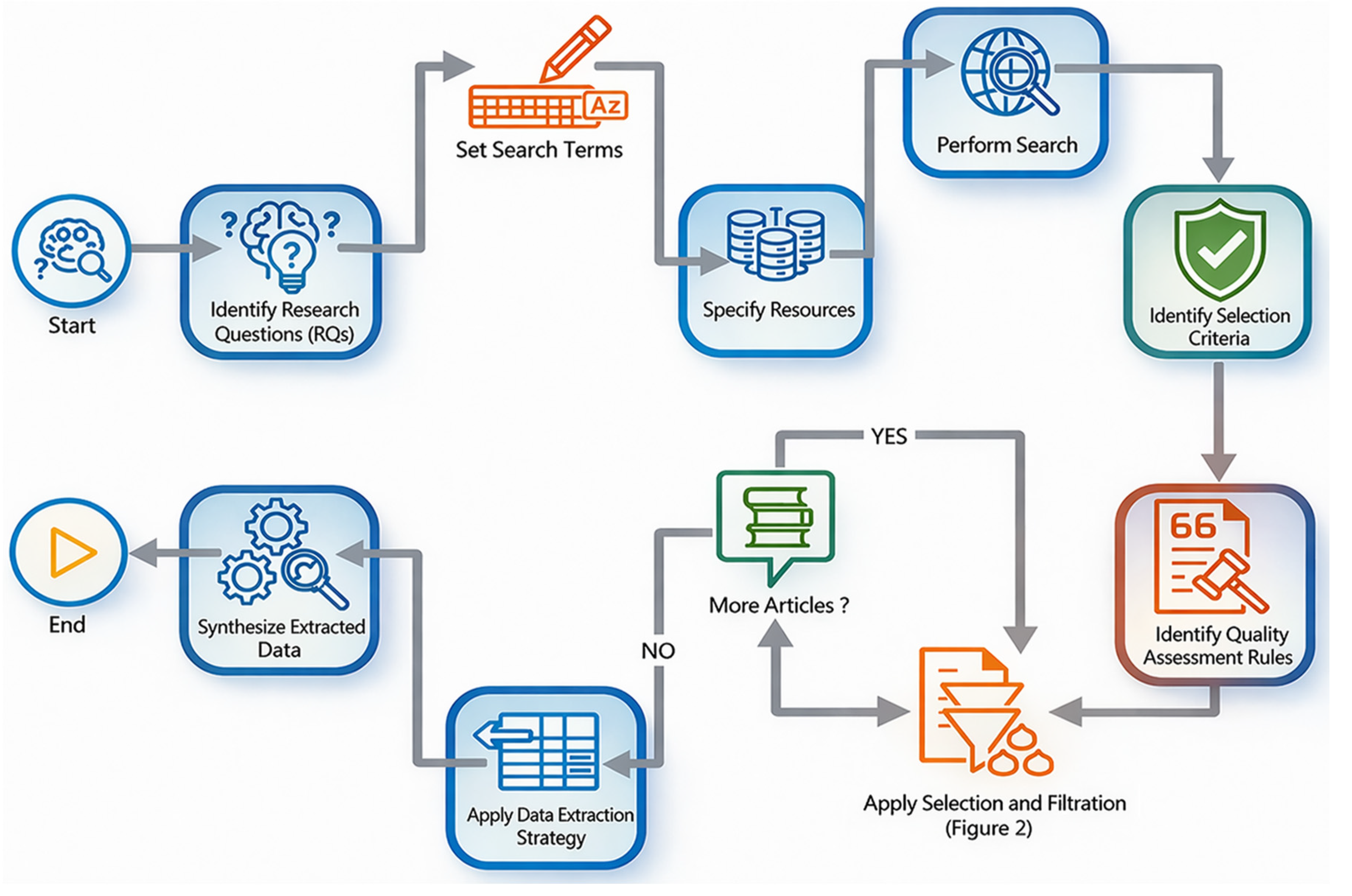
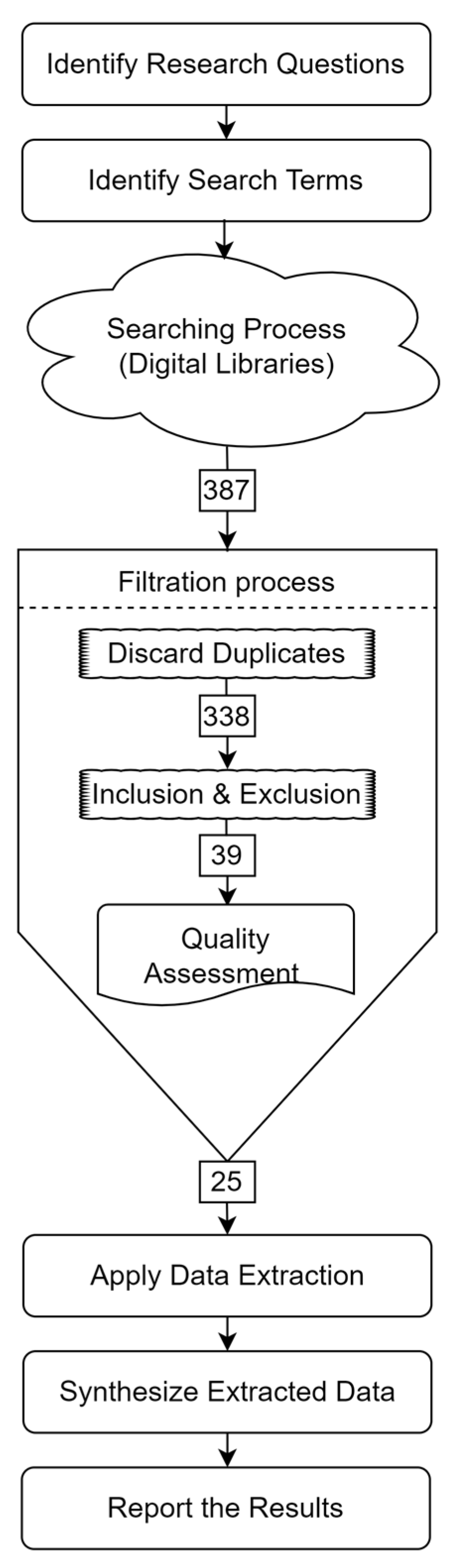
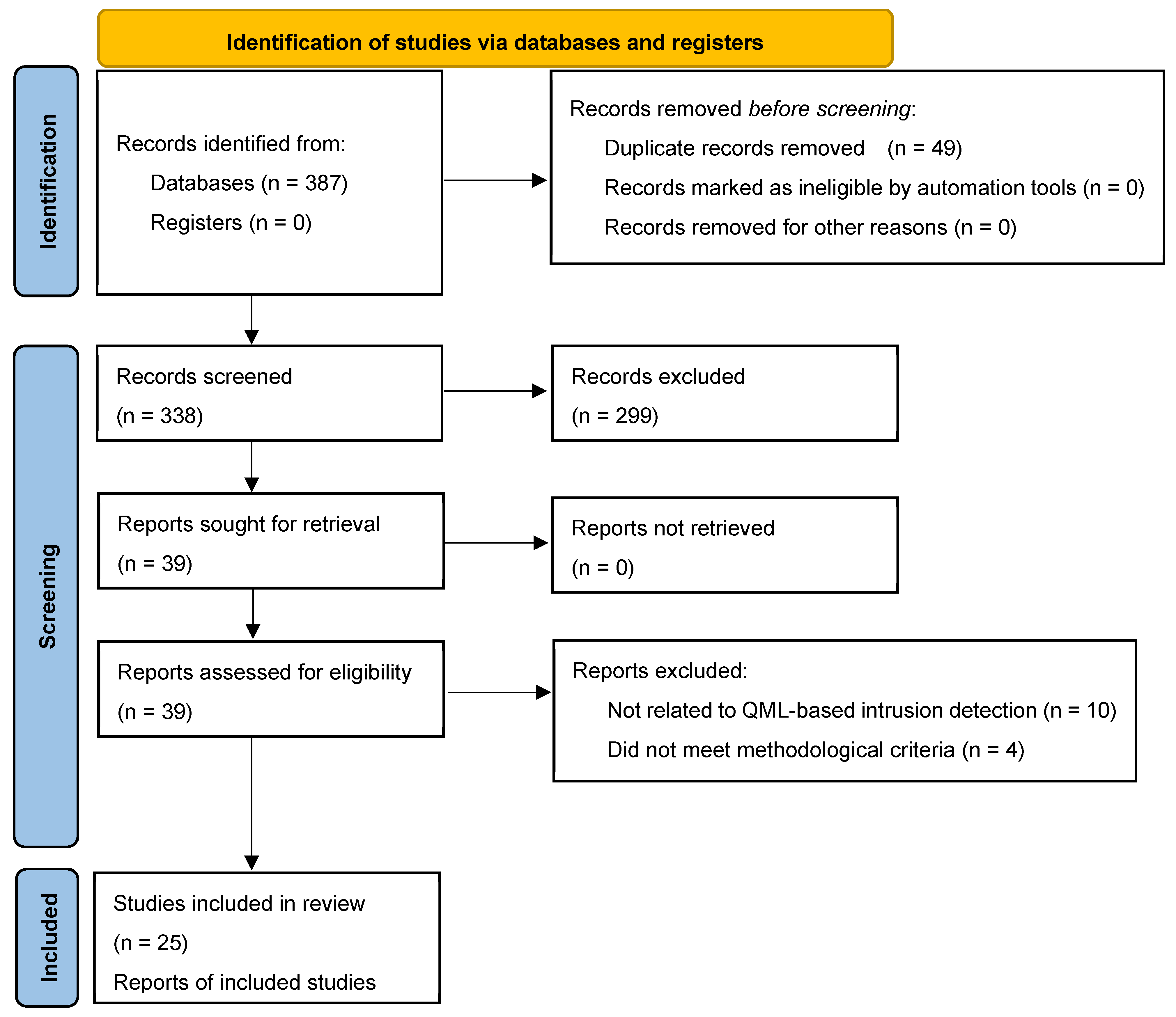
The defined search terms are applied across the selected digital libraries to retrieve candidate studies. In addition to the primary search, backward reference searching is performed by examining the reference lists of selected articles to identify further relevant studies. All retrieved publications are managed and shared among the authors using a collaborative document platform. Based on the defined inclusion and exclusion criteria explained in the next section, 39 studies are selected for further analysis. The distribution of articles across different search and selection phases is summarized later in this paper.

3.3. Study Selection

The selection of studies involves a multiple-step filtering process to identify relevant and high-quality articles which address the research questions defined. Initial searches in the literature yield 387 candidate articles in the selected electronic libraries. Since many articles fail to contribute sufficient details related to quantum machine learning-based intrusion detection systems, more filters are used, as shown in Figure 2.
The selection and screening process is carried out independently by the authors, followed by periodic discussions to reconcile differences and arrive at a common point. The study selection process includes the following steps:
  • Duplicate removal: Duplicate articles retrieved from different authors or digital libraries are identified and removed.
  • Relevance filtering: Inclusion and exclusion criteria are applied to eliminate irrelevant studies.
  • Quality assessment: Quality assessment rules are applied to retain only studies that adequately address the research questions.
  • Reference screening: Additional relevant studies are identified from the reference lists of the selected articles, and the quality assessment step is repeated for these studies.
The inclusion criteria applied in this survey are as follows:
  • The study applies quantum machine learning techniques to intrusion detection systems or network anomaly detection.
  • The study uses quantum, hybrid quantum–classical learning, or quantum-inspired models.
  • The study provides experimental evaluation using intrusion detection datasets.
  • The study is published in a peer-reviewed journal or conference.
  • When multiple versions of the same study exist, only the most recent version is considered.
  • The study is published up to January 2026.
The exclusion criteria are defined as follows:
  • Studies that apply quantum machine learning to applications other than intrusion detection.
  • Studies that discuss quantum computing conceptually without experimental validation.
  • Studies that use only classical ML techniques.
  • Non-peer-reviewed articles, technical reports, and non-English publications.
This leaves a total of 25 articles after applying all the selection and filtering steps that could form the final set of primary studies for this survey. The selection procedure is illustrated using the PRISMA flow diagram, as shown in Figure 3. These selected articles form the basis for the analysis and discussion presented in Table 2.

3.4. Quality Assessment Rules (QARs)

QARs are applied to the selected studies as a way of assessing their suitability with respect to the pre-defined research questions. Through this assessment, only methodologically sound studies that are relevant to the research questions at hand are included in the final analysis. Seven quality assessment criteria are defined. Each criterion is scored according to the clarity and completeness provided in the study. Scores are defined as follows: 1 for totally addressed, 0.5 for partially addressed, and 0 for not addressed. The overall quality score of each study is calculated as the sum of scores obtained across all criteria. Those studies that reach a total score of 4 and above are considered acceptable and are retained for further analysis, while those scoring below this threshold are excluded. The following are the criteria used for assessing quality in this survey:
  • QAR1: Are the research objectives clearly stated?
  • QAR2: Is the intrusion detection problem clearly defined and motivated?
  • QAR3: Are the quantum machine learning techniques clearly described?
  • QAR4: Is the experimental design or system architecture adequately explained?
  • QAR5: Are the datasets used in the study clearly specified and appropriate for intrusion detection?
  • QAR6: Are the evaluation metrics clearly defined and properly reported?
  • QAR7: Does the study include comparison or discussion of results in relation to other methods or baselines?

3.5. Data Extraction Strategy

In this stage, the selected studies are examined to extract the information required to answer the defined research questions. For each study, key publication and methodological details are systematically collected, including the publication year, authors, article source, article title, and article type. In addition, information related to the application domain is extracted to ensure relevance to intrusion detection systems.
To support the analysis of the research questions, each study is reviewed to identify the quantum machine learning techniques used, the datasets employed for evaluation, and the validation metrics reported. The extracted information also indicates which of the defined research questions are addressed by each study, allowing transparent mapping between the selected literature and the research objectives. The data extraction process is performed by two authors, where one author extracts the required information and the other verifies its accuracy. In cases of disagreement, discussions are conducted among all authors to resolve discrepancies and ensure consistency.
Extraction may present many difficulties, and one of them is that different researchers use different terms or abbreviations to refer to the same quantum machine learning techniques. Furthermore, some papers lack methodological details or mention standard methods without clearly indicating them. These problems are solved using the method of standardization of terminology and, in addition, by interpreting the ambiguous descriptions through thorough contextual analysis.

3.6. Synthesis of Extracted Data

To synthesize the data extracted from the selected studies, a combination of narrative and tabular synthesis methods is employed. These methods allow the aggregation of evidence in a structured manner to address each research question. No data conversion was required; extracted information was synthesized directly in narrative and tabular form. For RQ1 and RQ2, which focus on identifying quantum machine learning techniques and datasets used in intrusion detection systems, a narrative synthesis approach is applied. The extracted information is organized and summarized in tabular form to highlight patterns, trends, and frequently used techniques and datasets.
For RQ3, which concerns the evaluation metrics used to validate QML-based intrusion detection approaches, the extracted quantitative information is synthesized descriptively. Due to variations in experimental setups and reporting styles across studies, the synthesis focuses on identifying commonly used metrics rather than performing direct numerical comparisons.
For RQ4, which examines the strengths and limitations of QML techniques applied to intrusion detection systems, a qualitative synthesis is conducted. Since similar strengths and limitations are often described using different terminology across studies, these findings are unified and grouped based on shared meaning. This approach enables a coherent interpretation of qualitative insights reported in the literature.

4. Results and Discussion

This section presents and interprets the results obtained from the systematic literature review. The results are organized based on the identified research question (RQ1–RQ4). In this work, 25 primary studies that are published within the period 2020–2025 have been identified and analyzed systematically based on the criteria for inclusion, exclusion, and quality. The studies that are identified involve the use of the quantum machine learning approach for intrusion detection systems and involve the use of both benchmarking and customized data sets.

4.1. Quantum Machine Learning Techniques for Intrusion Detection (RQ1)

A brief introduction to the primary methods of QML is important to understanding the role that they can play within IDS systems. Quantum support vector machines (QSVM) extend the concepts of support vector machines by using quantum kernels to map the data to higher dimensional spaces, a process that has been shown to improve classification of network traffic data. Quantum neural networks (QNN) utilize quantum circuits to learn the relationships within the data, making them well-suited for the complex data that typically exists in network traffic. Variational quantum classifiers (VQC) and other models that utilize quantum–classical models utilize quantum circuits to represent the data, but use classical methods to tune the parameters that are created by the quantum circuits. This model has been developed to improve the performance of IDS systems while accounting for current quantum hardware limitations. Quantum convolutional neural networks (QCNN) are similar to classical neural networks in that they extract features from the data, but often with improved efficiency in high-dimensional spaces. Finally, quantum generative adversarial networks (QGAN) are often used to generate the data that is used by IDS systems, as well as to detect anomalies in the network traffic by learning the normal distribution of that network traffic. Each of these methods are essential components of the majority of current QML approaches to intrusion detection and are built according to the existing limitations of quantum hardware.
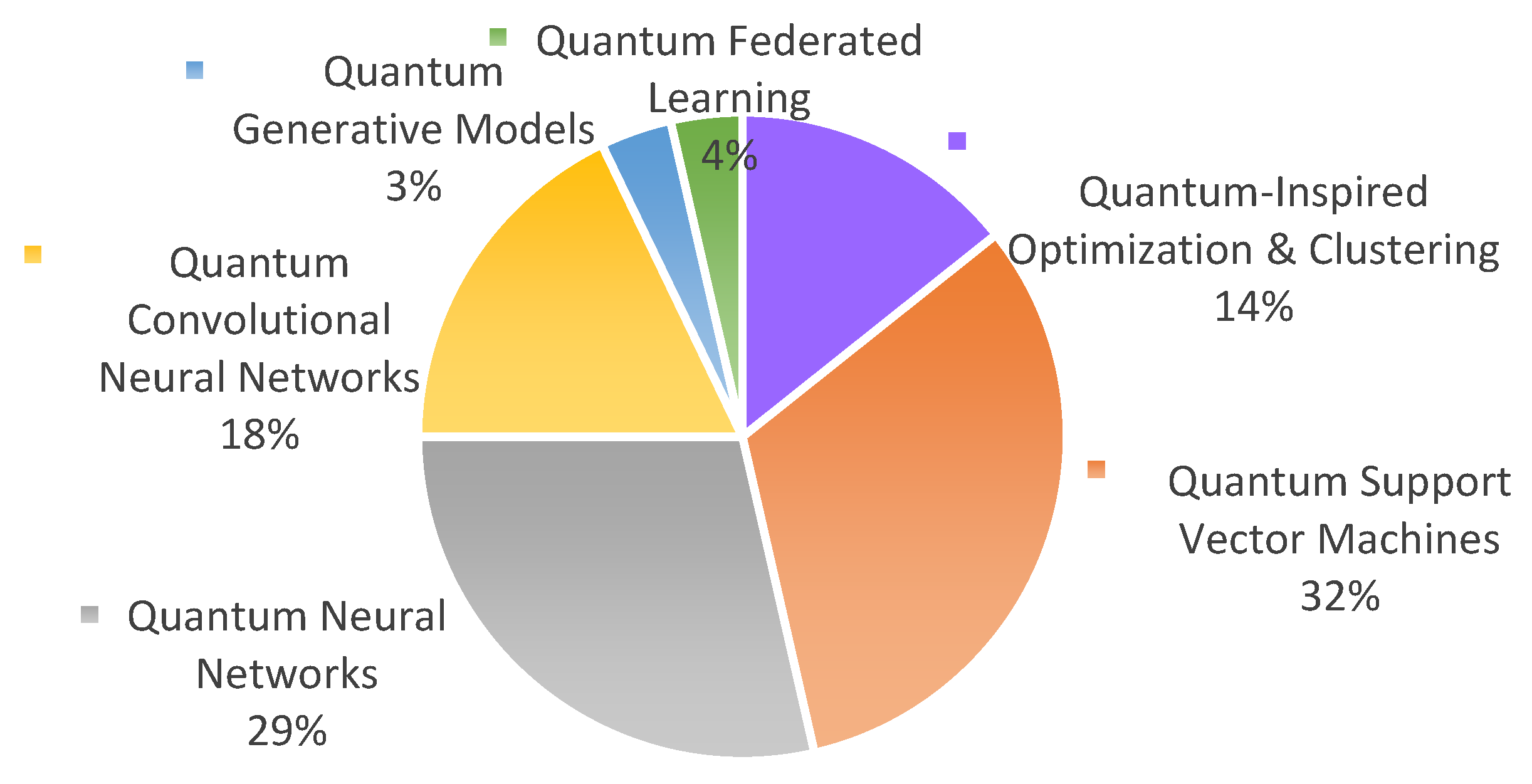
The following results highlight the diverse set of quantum and hybrid quantum–classical methods that represent the exploratory nature of this research field. The initial literature review contributions include those in the area of quantum-inspired optimization and clustering methods, including the application of the quantum-inspired immune clonal algorithm in combination with estimation of distribution algorithms and quantum-inspired hybrid k-means clustering methods. These methods aim to address the feature selection process, clustering quality, and convergence properties for traditional intrusion detection problems like the KDD Cup 99 dataset. The pie chart for the usage of various methods is presented in Figure 4.
From 2021 onward, there is a clear shift toward quantum classification and deep learning-based models. Several studies employ quantum support vector machines (QSVM), often combined with hybrid quantum–classical neural networks, to enhance classification performance on modern intrusion detection datasets. Quantum neural network-based architectures, including variational quantum neural networks, quantum convolutional neural networks, and parameterized quantum circuits, are increasingly explored to capture complex patterns in network traffic data.
More recent studies introduce advanced hybrid and generative models, such as quantum generative adversarial networks and quantum federated learning frameworks. These models aim to address challenges related to data imbalance, distributed learning, and scalability in intrusion detection environments. In addition, variational quantum classifiers and quantum kernel methods are increasingly adopted due to their compatibility with NISQ devices.
Table 3 summarizes the results, indicating that hybrid quantum classical approaches dominate the literature, as they balance the expressive power of quantum models with the stability and scalability of classical learning techniques. This trend reflects current hardware limitations and highlights the practical orientation of recent research toward deployable quantum-enhanced intrusion detection systems.
Table 4 provides a detailed technical comparison of the reviewed QML-based intrusion detection models, focusing on encoding strategies, feature map design, qubit configurations, and execution platforms. The analysis shows that most studies rely on simple encoding techniques such as angle and amplitude encoding, while only a limited number explicitly report feature map configurations. In addition, a significant portion of the literature does not clearly specify circuit depth or qubit requirements, which limits reproducibility. Furthermore, the results confirm that the majority of studies are implemented using quantum simulators rather than real quantum hardware, highlighting the early development stage of QML-based IDS. These findings provide deeper insight into the practical implementation characteristics of existing approaches and address the lack of detailed technical analysis identified in prior work.
Beyond the observed technical variations, the reviewed studies reveal a broader gap between theoretical development and practical deployment. In particular, many approaches are evaluated under controlled experimental conditions without clear consideration of real-world IDS requirements, such as continuous data streams, high feature dimensionality, and dynamic attack patterns. This limits the applicability of current QML models in operational environments. Moreover, there is a lack of standardized evaluation settings across studies, making it difficult to perform fair comparisons or draw consistent conclusions about performance. The limited integration of quantum models with existing cybersecurity infrastructures further highlights the need for more application-driven research. Addressing these challenges will be essential for transitioning QML-based intrusion detection systems from experimental prototypes to practical solutions.

4.2. Datasets Used for Evaluation (RQ2)

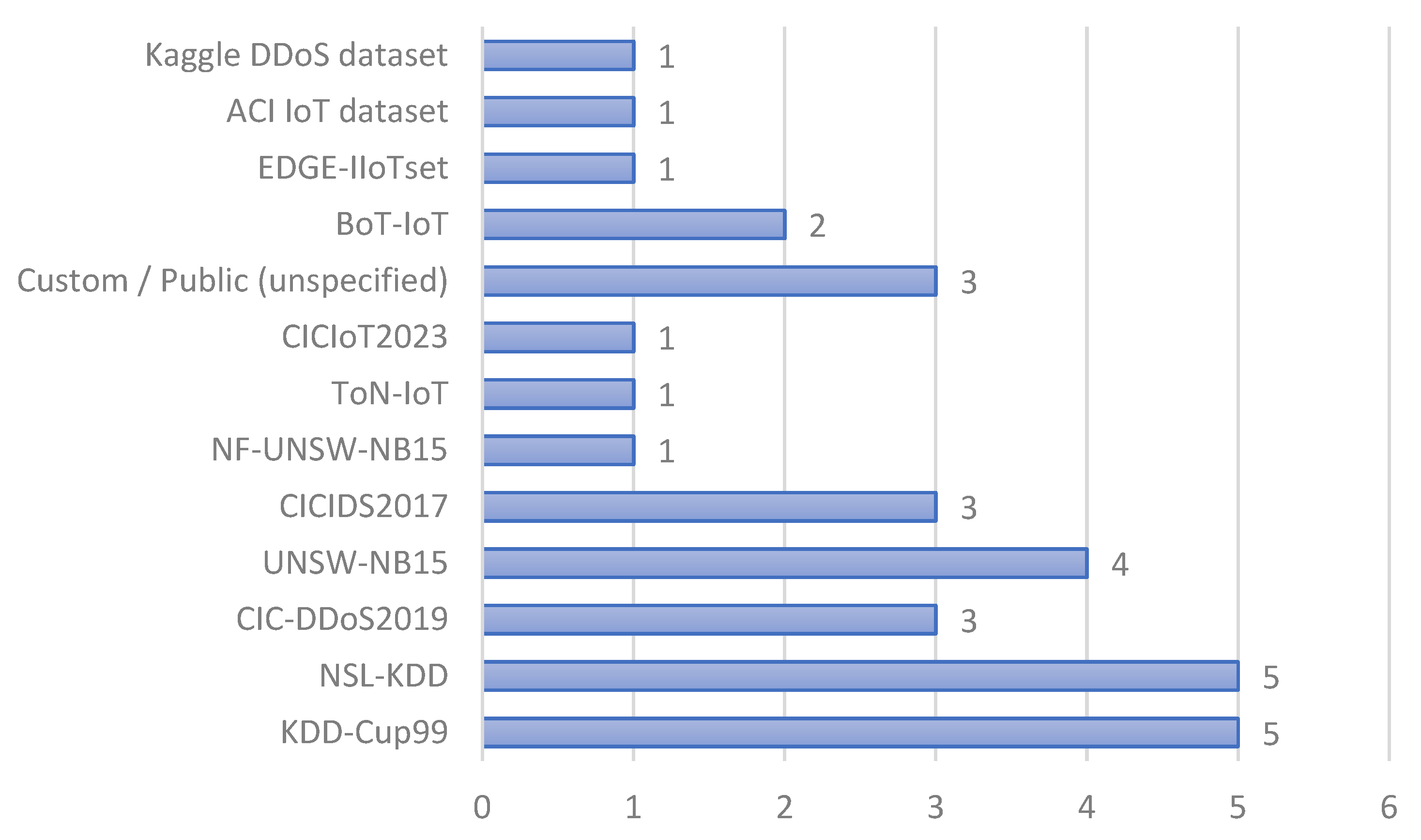
This subsection answers RQ2, which identifies the datasets used to evaluate quantum machine learning-based intrusion detection approaches in the selected studies. Overall, the reviewed papers rely mainly on public benchmark IDS datasets, with a smaller number using newer IoT/modern datasets or custom/private datasets. Figure 5 shows the distribution of datasets.

4.2.1. Most Frequently Used Datasets

The results show that both the KDD-Cup99 and NSL-KDD datasets are the most commonly used, each appearing in five studies This reflects their continued popularity in IDS research due to their availability and long-standing use. However, it also indicates that a significant portion of QML-based IDS research still relies on older benchmark datasets [52], with NSL-KDD often preferred as an improved version of KDD-Cup99 to enable fair comparison with existing IDS baselines while reducing redundancy.

4.2.2. Modern Intrusion Detection Datasets

Some research has used more contemporary datasets to more accurately depict current traffic patterns and attacks. CIC-DDoS2019 has been used in three research studies in the current literature because of interest in DDoS evaluation research that quantifies or focuses on modern network conditions. CICIDS2017 has been used in three research studies in the current literature because of its relevant incorporation of multiple attack methodologies in the modern benchmark dataset.

4.2.3. Datasets Related to UNSW and IoT Environments

The dataset UNSW-NB15 is used in four studies and appears either alone or alongside other datasets, indicating its importance as a representative benchmark for modern network intrusion scenarios. More specialized datasets also appear, such as NF-UNSW-NB15 and ToN-IoT, which reflect a growing interest in evaluating QML-based IDS in IoT-oriented or enriched network telemetry settings. Furthermore, recent studies have started to adopt newer and more domain-specific datasets, including CICIoT2023, EDGE-IIoTset, and ACI IoT, indicating an increasing shift toward IoT-focused intrusion detection research.

4.2.4. Custom and Non-Specified Datasets

Few studies employ data that is not a standard benchmark. In one case, the research models have been considered using their own dataset in the study [14], whereas in the other case, the authors refer to publicly available network security datasets without pointing towards a specific standard dataset for network security [36,47]. Such datasets, rather than being helpful for the purpose of evaluation, can increase difficulties in the reproducibility of the study.
In summary from the distribution of the dataset, there appears to be a heavy emphasis on traditional benchmarks (KDD-Cup99 and NSL-KDD) and a rising use of new datasets (CICIDS2017, CIC-DDoS2019, UNSW-NB15, and IoT-related). This, therefore, suggests that QML-IDS, as a field, appears to be developing towards incorporating a more real scenario in assessments, although issues of standardization still arise. Table 5 lists various articles that have used different datasets.

4.3. Evaluation Metrics Used in QML-Based IDS (RQ3)

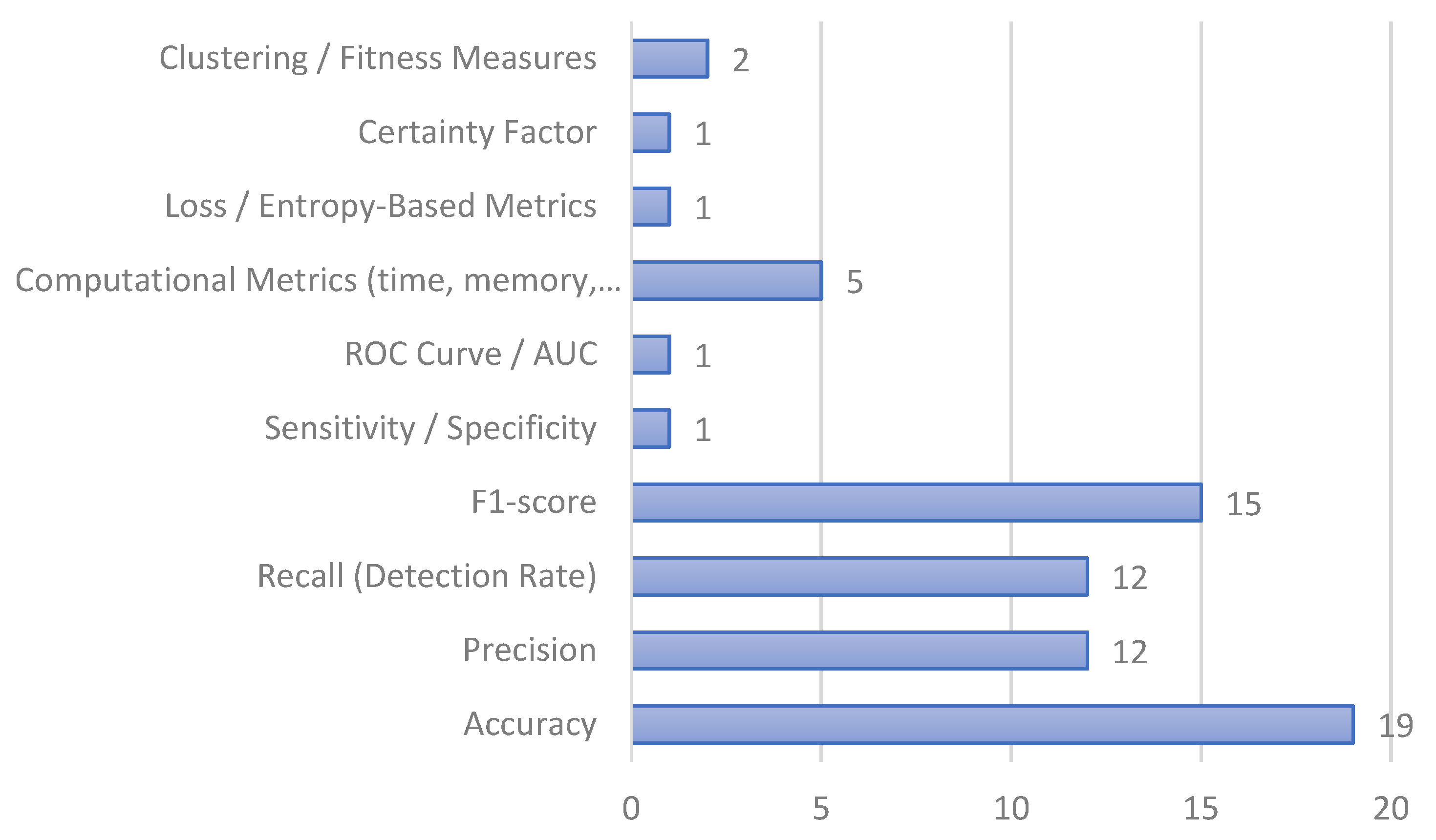
This subsection addresses RQ3, which examines the evaluation metrics used to validate quantum machine learning-based intrusion detection systems in the selected studies. The results show that most studies rely on classification performance metrics, with limited consideration of computational and system-level measures. The distribution of evaluation metrics is illustrated in Figure 6.

4.3.1. Commonly Used Classification Metrics

The analysis indicates that accuracy is the most frequently reported metric, appearing in the majority of the reviewed studies. Accuracy is widely used due to its simplicity and its ability to provide an overall measure of classification correctness. However, relying solely on accuracy may be insufficient in intrusion detection scenarios where datasets are often imbalanced.
In addition to accuracy, precision, recall, and F1-score are commonly reported across the literature. These metrics are particularly important for intrusion detection tasks, as they provide deeper insight into false positives, false negatives, and overall detection effectiveness. Several studies report these metrics together to offer a more balanced evaluation of model performance, especially when dealing with skewed class distributions.

4.3.2. Detection and Sensitivity Related Measures

A category of research also takes into account other factors such as detection rate, sensitivity, and specificity. These factors help to further evaluate the capability of QML-based models to identify malicious traffic with a low false alarm rate. The inclusion of these factors also indicates an increased awareness of the challenges revolving around the assessment of models through a single factor within the area of IDS research [53].

4.3.3. Computational and Resource-Related Metrics

Only a few papers report computational metrics, for instance, the training time, computation speed, memory, and computation cost. It seems especially important in quantum and quantum–classical hybrid approaches in view of the existing hardware constraints and difficulties with use in NISQ systems. The comparatively low frequency in the reporting of these data points indicates that researchers still have not explored efficiency and scalability issues in existing research on QML-IDS systems yet.

4.3.4. Information-Theoretic and Loss-Based Metrics

A small number of studies utilize loss functions, entropy-related methods, or distribution-related metrics in assessing the model behavior, especially in generative/probabilistic quantum learning methods. Although useful in understanding model convergence and learning behavior, these methods are not yet universally applied in the literature.
The analysis of results reveals that the statistical evaluation methods in the field of QML-based intrusion detection studies are dominated by the conventional evaluation measures, which include accuracy, precision, recall, and F1-measures in most of the studies. Conversely, the computational efficiency, scalability, and evaluation measures specific to the quantum context appear less in the literature. This suggests that there is a requirement for comprehensive evaluation measures inclusive of computational measures in future studies. Table 6 provides a structured summary of the evaluation metrics used across the reviewed studies.

4.4. Main Strengths and Limitations of QML-IDS (RQ4)

This research question analyzes the main strengths and limitations reported in the reviewed studies that apply quantum and quantum-inspired machine learning techniques to intrusion detection systems. RQ4 aims to synthesize qualitative insights reported by the authors regarding model behavior, performance characteristics, computational aspects, and practical feasibility. Due to the diversity of approaches and experimental settings, the reviewed studies often describe similar strengths and weaknesses using different terminology. To avoid repetition and ensure clarity, these observations are grouped into common categories based on shared characteristics rather than discussed on a paper-by-paper basis. This grouping approach allows a clearer understanding of recurring patterns in the literature and facilitates comparison across studies.
Overall, the reviewed studies report several notable strengths of quantum and quantum-inspired IDS approaches. These include strong detection performance in specific scenarios, improved efficiency when handling high-dimensional or complex data, and the ability to simplify model architectures while maintaining competitive accuracy. In addition, some studies highlight benefits related to privacy preservation and security enhancement when quantum learning is combined with federated learning frameworks.
At the same time, the literature consistently acknowledges important limitations. The most frequently reported challenges are related to current NISQ hardware constraints, such as limited qubit availability, noise, and lack of effective error correction. Other commonly reported issues include sensitivity to preprocessing and parameter tuning, limited scalability in practical deployments, and reliance on simulators or controlled experimental environments. These limitations indicate that, while promising, QML-based IDS solutions are not yet fully mature for real-world adoption.
From a hardware perspective, the reviewed studies show a strong dependence on simulated quantum environments, with only a very limited number of implementations executed on real quantum devices. This reflects the current constraints of NISQ hardware, particularly the limited number of available qubits and restricted circuit depth. These limitations are especially critical for intrusion detection tasks, which typically involve high-dimensional feature spaces and large datasets such as CICIDS2017 and UNSW-NB15. As a result, many studies reduce feature dimensions or simplify datasets to fit hardware constraints, which may affect model generalizability. In addition, noise and decoherence remain key challenges in quantum computations, yet only a small number of studies explicitly consider their impact or apply error mitigation techniques. These observations highlight that current QML-based IDS approaches are still constrained by hardware limitations and require further advancements to support realistic, large-scale deployment.
To clearly present these findings, Table 7 groups the reported strengths and weaknesses into thematic categories, following a structure similar to classical IDS comparative studies. Each category summarizes the key advantages and challenges identified across multiple studies, with the corresponding article IDs provided for traceability. This structured presentation enables a concise yet comprehensive view of the current state of QML-based intrusion detection research and highlights areas that require further investigation.

4.5. Research Gap

Although the reviewed studies demonstrate the growing potential of quantum and quantum-inspired machine learning techniques for intrusion detection systems, the analysis reveals several important research gaps that remain insufficiently addressed. First, there is a lack of clear separation between quantum-inspired, hybrid quantum–classical, and fully quantum approaches in many studies. Several works label their methods as quantum machine learning while relying mainly on classical optimization techniques or quantum-inspired heuristics. This lack of clarity makes it difficult to accurately assess the true contribution of quantum computing to intrusion detection performance and often leads to overstated claims of quantum advantage. Second, experimental validation is highly inconsistent across the literature. Most studies rely on simulations or classical emulators of quantum circuits, while only a very limited number report experiments on real NISQ hardware. As a result, the reported performance gains may not reflect realistic deployment conditions, and the impact of noise, decoherence, and hardware constraints remains underexplored.
Third, the analysis shows a strong dependence on outdated or limited datasets, particularly KDD-Cup99 and NSL-KDD. While these datasets allow comparison with earlier IDS research, they do not accurately represent modern network traffic, encrypted communications, or emerging attack patterns. The limited use of recent, large-scale, and IoT-oriented datasets restricts the generalizability of existing findings. Fourth, evaluation practices lack standardization. In most cases, the metrics employed involve accuracy, precision, recall, and F1-measure. However, these overlook critical IDS-related and quantum-related aspects such as the rate of false alarms, latency, computational complexity, scalability, and robustness against noisy channels. This hinders effective comparisons between the different methods and invalidates claims with regard to their efficiencies.
Lastly, a certain disparity exists with respect to system-level-related investigations. In other words, the overwhelming body of current knowledge regards algorithm development and classification accuracy, with scant regard to real-time functionality, incorporation with the existing security framework, interpretability, and long-term viability. This suggests that research in QML-related IDS development has remained largely in the exploratory phase and has not attained full functionality.

4.6. Future Directions

Future research on quantum machine learning-based intrusion detection systems should focus on strengthening practical relevance and experimental reliability. Researchers should clearly report the role of quantum computation in each proposed model, including data encoding methods, circuit depth, qubit usage, and whether experiments are performed on simulators or real quantum hardware.
To comprehend the impacts of noise, decoherence, and hardware limitations better, it is essential to exert more control in the assessment of the models on intermediate-scale quantum devices that produce noisy results. The adoption of modern and realistic datasets, such as IoT and encrypted network traffic, should be promoted to enhance the generalization and applicability of the models. Furthermore, future research should embrace more elaborate evaluation protocols that provide not only detection accuracy but also false alarm rates, latency, computational cost, and scalability. Moreover, the researchers should direct their efforts towards the development of system-level architectures that would enable real-time detection, distributed or federated learning, privacy preservation, and seamless integration with existing security infrastructures. Implementing these directions will facilitate the transition of quantum machine learning from experimental studies to the deployment of intrusion detection systems.

5. Limitations of This Review

Even though the survey covers all the necessary areas and is very contemporary as far as quantum machine learning applications in intrusion detection systems are concerned, there are still some limitations that the present study has to comply with. The first limitation has to do with the survey being restricted to only those peer-reviewed articles that are journal or conference publications and that are available up to January 2026. The good side of this is that the studies reviewed will all be of high quality and reliability but at the same time, it could very well happen that the survey misses out on some technical reports, preprints or industrial implementations that might not be formally published yet and thus have very little to offer as far as practical insights are concerned.
The second limitation has to do with the analysis being based solely on the information found within the selected articles. It needs to be pointed out that some of the studies provide very little in the way of methodological details or experimental descriptions and their discussions of limitations are also not very generous. For this reason, the synthesis put forward in this survey is a reflection of the depth and logic of reporting that is found in the original works and may not take into account the actual design choices or constraints that were behind the studies.
The third limitation is the fact that because of the wide variations in experimental setups such as differences in datasets, evaluation metrics, and quantum simulation environments direct quantitative comparisons between studies are often not possible. Thus, this survey mainly depends on qualitative synthesis rather than numerical benchmarking, which in its turn may lead to a limitation of the accuracy of cross-study comparisons.
Lastly, quantum machine learning is such a fast-developing area that soon after the review period new algorithms, hardware improvements and datasets may appear. As a result, the findings and trends that were pointed out in this survey may change together with the field.

6. Conclusions

This survey reviewed journal articles and Tier-1 conference papers that applied quantum and quantum-inspired machine learning techniques to network intrusion detection systems. A total of 25 primary studies, published between 2020 and 2025, were selected and analyzed to answer the defined research questions (RQ1–RQ4). The main conclusions of this survey are summarized as follows:
  • RQ1: The reviewed studies show that hybrid quantum–classical approaches dominate the literature, with quantum neural networks, quantum support vector machines, and quantum-inspired optimization techniques being the most frequently explored methods for intrusion detection.
  • RQ2: Public benchmark datasets such as KDD-Cup99, NSL-KDD, CICIDS2017, CIC-DDoS2019, and UNSW-NB15 are the most commonly used for evaluation. Although more recent and IoT-related datasets have started to appear, traditional benchmarks are still widely relied upon.
  • RQ3: Accuracy, precision, recall, and F1-score are the most frequently used evaluation metrics in QML-based intrusion detection studies. In contrast, computational efficiency, scalability, and quantum-specific performance measures are reported less consistently across the literature.
  • RQ4: Quantum machine learning techniques demonstrate promising strengths, including competitive detection performance, improved efficiency in specific scenarios, and the ability to handle complex or high-dimensional network data. However, their effectiveness is currently limited by hardware constraints, sensitivity to configuration choices, and limited real-world validation.
Based on the findings of this survey, an immediate recommendation is that future research should place greater emphasis on practical validation, including experiments on real quantum hardware and realistic network environments. In addition, a thorough examination of the reviewed literature reveals that many studies lack standardized evaluation frameworks, making direct comparison across approaches difficult.
Similar to challenges observed in other emerging research domains, this survey found that statistical rigor and reproducibility are not consistently addressed. While some studies report comparative results, few provide in-depth statistical analysis or robustness testing. Future work should therefore incorporate more rigorous validation practices to strengthen the reliability of reported results. Furthermore, the review indicates that most existing studies focus on algorithmic development, with limited attention to system-level integration, deployment constraints, and long-term operational behavior. This highlights a gap where future research can contribute by investigating real-time intrusion detection, distributed deployment, and privacy-aware quantum learning frameworks.
Although quantum machine learning for intrusion detection is still at an early stage, the reviewed studies confirm its strong potential as a complementary approach to classical IDS techniques. Continued advances in quantum hardware, hybrid learning architectures, standardized evaluation practices, and application-driven research are expected to play a critical role in shaping the next generation of intrusion detection systems.

Author Contributions

Conceptualization, A.B.N., A.K. and A.B.; methodology, A.K. and A.B.; formal analysis, A.K. and A.B.; investigation, A.K. and A.B.; writing—original draft preparation, A.K.; writing—review and editing, A.B.N., A.K. and A.B.; visualization, A.K.; supervision, A.B.N. and A.B.; project administration, A.B.N. All authors have read and agreed to the published version of the manuscript.

Funding

This research received no external funding.

Data Availability Statement

This study is based on previously published research articles. No new datasets were generated or analyzed during the current study. All referenced data are available in the cited publications.

Conflicts of Interest

The authors declare no conflicts of interest.

Abbreviations

The following abbreviations are used in this manuscript:
DDoSDistributed denial-of-service
DLDeep learning
EDAEstimation of distribution algorithm
FR-QCNNFull-Rotation Quantum Convolutional Neural Network
HIDSHost-based intrusion detection system
IDSIntrusion detection system
IoTInternet of Things
MLMachine learning
NIDSNetwork-based intrusion detection system
NISQNoisy intermediate-scale quantum
QALO-KQuantum-inspired ant lion optimized k-means
QARQuality assessment rule
QCNNQuantum convolutional neural network
QFLQuantum federated learning
QGANQuantum generative adversarial network
QMLQuantum machine learning
QNNQuantum neural network
QPSOQuantum particle swarm optimization
QSVCQuantum support vector classifier
QSVMQuantum support vector machine
SLRSystematic literature review
VQCNNVariational Quantum Convolutional Neural Network
VQNNVariational quantum neural network

References

  1. Sanjalawe, Y.; Fraihat, S.; Al-E’Mari, S.; Abualhaj, M.; Makhadmeh, S.; Alzubi, E. A Review of 6G and AI Convergence: Enhancing Communication Networks with Artificial Intelligence. IEEE Open J. Commun. Soc. 2025, 6, 2308–2355. [Google Scholar] [CrossRef]
  2. Mallick, M.A.I.; Nath, R. Navigating the Cyber Security Landscape: A Comprehensive Review of Cyber-Attacks, Emerging Trends, and Recent Developments. World Sci. News 2024, 190, 1–69. [Google Scholar]
  3. Zhou, K.-Q. Zero-Day Vulnerabilities: Unveiling the Threat Landscape in Network Security. Mesopotamian J. Cybersecur. 2022, 2022, 57–64. [Google Scholar] [CrossRef]
  4. Kaushik, A.; Al-Raweshidy, H. A Novel Intrusion Detection System for Internet of Things Devices and Data. Wirel. Netw. 2024, 30, 285–294. [Google Scholar] [CrossRef]
  5. Eid, A.M.; Soudan, B.; Nassif, A.B.; Injadat, M.N. Enhancing Intrusion Detection in IIoT: Optimized CNN Model with Multi-Class SMOTE Balancing. Neural Comput. Appl. 2024, 36, 14643–14659. [Google Scholar] [CrossRef]
  6. Injadat, M.; Moubayed, A.; Nassif, A.B.; Shami, A. Multi-Stage Optimized Machine Learning Framework for Network Intrusion Detection. IEEE Trans. Netw. Serv. Manag. 2021, 18, 1803–1816. [Google Scholar] [CrossRef]
  7. Kotha, N.R. Intrusion Detection Systems (IDS): Advancements, Challenges, and Future Directions. Int. Sci. J. Contemp. Res. Eng. Sci. Manag. 2017, 2, 21–40. [Google Scholar]
  8. Kaissar, A.; Nassif, A.B.; Injadat, M. A Survey on Network Intrusion Detection Using Convolutional Neural Network. In Proceedings of the ITM Web of Conferences; EDP Sciences: Les Ulis, France, 2022; Volume 43, p. 1003. [Google Scholar]
  9. Zhu, S.; Yu, T.; Xu, T.; Chen, H.; Dustdar, S.; Gigan, S.; Gunduz, D.; Hossain, E.; Jin, Y.; Lin, F. Intelligent Computing: The Latest Advances, Challenges, and Future. Intell. Comput. 2023, 2, 6. [Google Scholar] [CrossRef]
  10. Kaissar, A.; Nassif, A.B.; Soudan, B.; Injadat, M. Enhancing CNN-Based Network Intrusion Detection through Hyperparameter Optimization. Intell. Syst. Appl. 2025, 26, 200528. [Google Scholar] [CrossRef]
  11. Schuld, M.; Sinayskiy, I.; Petruccione, F. An Introduction to Quantum Machine Learning. Contemp. Phys. 2015, 56, 172–185. [Google Scholar] [CrossRef]
  12. Nalayini, C.M.; Soumya, T.R.; Lalitha, S.D.; Tamijetchelvy, R. A Novel Adaptive Transformer Based Quantum Intrusion Detection System for Software Defined Networks. Sci. Rep. 2025, 15, 36505. [Google Scholar] [CrossRef] [PubMed]
  13. Nadim, M.; Hassan, M.; Mandal, A.K.; Roy, C.K. Quantum vs. Classical Machine Learning Algorithms for Software Defect Prediction: Challenges and Opportunities. In Proceedings of the 2025 IEEE/ACM International Workshop on Quantum Software Engineering (Q-SE); IEEE: Piscataway, NJ, USA, 2025; pp. 35–42. [Google Scholar]
  14. Kalinin, M.; Krundyshev, V. Security Intrusion Detection Using Quantum Machine Learning Techniques. J. Comput. Virol. Hacking Tech. 2023, 19, 125–136. [Google Scholar] [CrossRef]
  15. Sridevi, S.; Indira, B.; Geetha, S.; Balachandran, S.; Kar, G.; Kharbanda, S. Unified Hybrid Quantum Classical Neural Network Framework for Detecting Distributed Denial of Service and Android Mobile Malware Attacks. EPJ Quantum Technol. 2025, 12, 77. [Google Scholar] [CrossRef]
  16. Di Monda, D.; Montieri, A.; Persico, V.; Voria, P.; De Ieso, M.; Pescapè, A. Few-Shot Class-Incremental Learning for Network Intrusion Detection Systems. IEEE Open J. Commun. Soc. 2024, 5, 6736–6757. [Google Scholar] [CrossRef]
  17. Lamichhane, P.; Rawat, D.B. Quantum Machine Learning: Recent Advances, Challenges, and Perspectives. IEEE Access 2025, 13, 94057–94105. [Google Scholar] [CrossRef]
  18. Kuppusamy, P.; Kumar, N.Y.; Dontireddy, J.; Iwendi, C. Quantum Computing and Quantum Machine Learning Classification—A Survey. In Proceedings of the 2022 IEEE 4th International Conference on Cybernetics, Cognition and Machine Learning Applications (ICCCMLA); IEEE: Piscataway, NJ, USA, 2022; pp. 200–204. [Google Scholar]
  19. Zhu, Y.; Bouridane, A.; Celebi, M.E.; Konar, D.; Angelov, P.; Ni, Q.; Jiang, R. Quantum Face Recognition with Multigate Quantum Convolutional Neural Network. IEEE Trans. Artif. Intell. 2024, 5, 6330–6341. [Google Scholar] [CrossRef]
  20. Kharsa, R.; Bouridane, A.; Amira, A. Advances in Quantum Machine Learning and Deep Learning for Image Classification: A Survey. Neurocomputing 2023, 560, 126843. [Google Scholar] [CrossRef]
  21. Lu, W.; Lu, Y.; Li, J.; Sigov, A.; Ratkin, L.; Ivanov, L.A. Quantum Machine Learning: Classifications, Challenges, and Solutions. J. Ind. Inf. Integr. 2024, 42, 100736. [Google Scholar] [CrossRef]
  22. Chen, L.; Li, T.; Chen, Y.; Chen, X.; Wozniak, M.; Xiong, N.; Liang, W. Design and Analysis of Quantum Machine Learning: A Survey. Connect. Sci. 2024, 36, 2312121. [Google Scholar] [CrossRef]
  23. Kadi, A.; Selamnia, A.; Houda, Z.A.E.; Moudoud, H.; Brik, B.; Khoukhi, L. An In-Depth Comparative Study of Quantum-Classical Encoding Methods for Network Intrusion Detection. IEEE Open J. Commun. Soc. 2025, 6, 1129–1148. [Google Scholar] [CrossRef]
  24. Nicesio, O.K.; Leal, A.G.; Gava, V.L. Quantum Machine Learning for Network Intrusion Detection Systems, a Systematic Literature Review. In Proceedings of the 2023 IEEE 2nd International Conference on AI in Cybersecurity; ICAIC: Winnipeg, MB, Canada, 2023. [Google Scholar]
  25. Faker, O.; Cagiltay, N.E. Quantum Machine Learning in Intrusion Detection Systems: A Systematic Mapping Study. In Proceedings of the International Conference on WorldS4; Springer: Berlin/Heidelberg, Germany, 2023; pp. 99–113. [Google Scholar]
  26. Chaudhary, D.; Rajasegarar, S.; Pokhrel, S.R. Towards Adapting Federated & Quantum Machine Learning for Network Intrusion Detection: A Survey. arXiv 2025, arXiv:2509.21389. [Google Scholar] [CrossRef]
  27. Brereton, P.; Kitchenham, B.A.; Budgen, D.; Turner, M.; Khalil, M. Lessons from Applying the Systematic Literature Review Process within the Software Engineering Domain. J. Syst. Softw. 2007, 80, 571–583. [Google Scholar] [CrossRef]
  28. Gouveia, A.; Correia, M. Towards Quantum-Enhanced Machine Learning for Network Intrusion Detection. In Proceedings of the 2020 IEEE 19th International Symposium on Network Computing and Applications (NCA), Cambridge, MA, USA, 24–27 November 2020; pp. 1–8. [Google Scholar]
  29. Chen, J.; Qi, X.; Chen, L.; Chen, F.; Cheng, G. Quantum-Inspired Ant Lion Optimized Hybrid k-Means for Cluster Analysis and Intrusion Detection. Knowl.-Based Syst. 2020, 203, 106167. [Google Scholar] [CrossRef]
  30. Payares, E.D.; Martinez-Santos, J.C. Quantum Machine Learning for Intrusion Detection of Distributed Denial of Service Attacks: A Comparative Overview. In Proceedings of the SPIE—The International Society for Optical Engineering, Online, 6–11 March 2021; Volume 11699. [Google Scholar]
  31. Chao, S.; Yang, G.; Nie, M.; Liu, Y.; Zhang, M. Full-Rotation Quantum Convolutional Neural Network for Abnormal Intrusion Detection System. In Proceedings of the 2022 5th International Conference on Artificial Intelligence and Pattern Recognition; Association for Computing Machinery: New York, NY, USA, 2022; pp. 852–859. [Google Scholar]
  32. Malibari, A.A.; Alotaibi, S.S.; Alshahrani, R.; Dhahbi, S.; Alabdan, R.; Al-wesabi, F.N.; Hilal, A.M. A Novel Metaheuristics with Deep Learning Enabled Intrusion Detection System for Secured Smart Environment. Sustain. Energy Technol. Assess. 2022, 52, 102312. [Google Scholar] [CrossRef]
  33. Gong, C.; Guan, W.; Gani, A.; Qi, H. Network Attack Detection Scheme Based on Variational Quantum Neural Network. J. Supercomput. 2022, 78, 16876–16897. [Google Scholar] [CrossRef]
  34. Kadry, H.; Farouk, A.; Zanaty, E.A.; Reyad, O. Intrusion Detection Model Using Optimized Quantum Neural Network and Elliptical Curve Cryptography for Data Security. Alex. Eng. J. 2023, 71, 491–500. [Google Scholar] [CrossRef]
  35. Rahman, M.A.; Shahriar, H.; Clincy, V.; Hossain, M.F.; Rahman, M. A Quantum Generative Adversarial Network-Based Intrusion Detection System. In Proceedings of the International Computer Software and Applications Conference, Kuantan, Malaysia, 23–25 February 2023; pp. 1810–1815. [Google Scholar]
  36. Kim, T.H.; Madhavi, S. Quantum Intrusion Detection System Using Outlier Analysis. Sci. Rep. 2024, 14, 27114. [Google Scholar] [CrossRef]
  37. Küçükkara, M.Y.; Atban, F.; Bayılmış, C. Quantum-Neural Network Model for Platform Independent Ddos Attack Classification in Cyber Security. Adv. Quantum Technol. 2024, 7, 2400084. [Google Scholar] [CrossRef]
  38. Qi, H.; Wang, J.; Cui, Y. VQCNN: Variational Quantum Convolutional Neural Networks Based on Quantum Filters and Fully Connected Layers. Comput. J. 2024, 67, 2970–2983. [Google Scholar] [CrossRef]
  39. Abreu, D.; Rothenberg, C.E.; Abelem, A. QML-IDS: Quantum Machine Learning Intrusion Detection System. In Proceedings of the IEEE Symposium on Computers and Communications, Paris, France, 26–29 June 2024. [Google Scholar]
  40. Said, D.; Bagaa, M.; Oukaira, A.; Lakhssassi, A. Quantum Entropy and Reinforcement Learning for Distributed Denial of Service Attack Detection in Smart Grid. IEEE Access 2024, 12, 129858–129869. [Google Scholar] [CrossRef]
  41. Kukliansky, A.; Orescanin, M.; Bollmann, C.; Huffmire, T. Network Anomaly Detection Using Quantum Neural Networks on Noisy Quantum Computers. IEEE Trans. Quantum Eng. 2024, 5, 3100611. [Google Scholar] [CrossRef]
  42. Abou El Houda, Z.; Moudoud, H.; Brik, B.; Adil, M. A Privacy-Preserving Framework for Efficient Network Intrusion Detection in Consumer Network Using Quantum Federated Learning. IEEE Trans. Consum. Electron. 2024, 70, 7121–7128. [Google Scholar] [CrossRef]
  43. Elsedimy, E.I.; Elhadidy, H.; Abohashish, S.M.M. A Novel Intrusion Detection System Based on a Hybrid Quantum Support Vector Machine and Improved Grey Wolf Optimizer. Clust. Comput. 2024, 27, 9917–9935. [Google Scholar] [CrossRef]
  44. Kumar, R.; Swarnkar, M. QuIDS: A Quantum Support Vector Machine-Based Intrusion Detection System for IoT Networks. J. Netw. Comput. Appl. 2025, 234, 104072. [Google Scholar] [CrossRef]
  45. Amara, M.; Amara, M.; Mnasri, S.; Val, T. QCNN-ID: A Quantum-Classical Hybrid Model for IoT Intrusion Detection. Procedia Comput. Sci. 2025, 270, 2196–2204. [Google Scholar] [CrossRef]
  46. Sarvade, V.P.; Kulkarni, S.A.; Raj, C. V A Hybrid Classical-Quantum Neural Network Model for DDoS Attack Detection in Software-Defined Vehicular Networks. Information 2025, 16, 722. [Google Scholar] [CrossRef]
  47. Abreu, D.; Moura, D.; Esteve Rothenberg, C.; Abelém, A. QuantumNetSec: Quantum Machine Learning for Network Security. Int. J. Netw. Manag. 2025, 35, e70018. [Google Scholar] [CrossRef]
  48. Cirillo, F.; Esposito, C. Intrusion Detection System Based on Quantum Generative Adversarial Network. Int. Conf. Agents Artif. Intell. 2025, 1, 830–838. [Google Scholar] [CrossRef]
  49. Kavitha, S.S.; Dhanush Sagar, M.D.; Deepak, S. Internet of Things Network Intrusion Detection System Using Quantum and Classical Machine Learning. IET Quantum Commun. 2025, 6, e70020. [Google Scholar] [CrossRef]
  50. Cirillo, F.; Esposito, C. Quantum Machine Learning for Intrusion Detection on Noisy Quantum Computers. In Proceedings of the 2025 IEEE International Conference on Quantum Computing and Engineering (QCE), Albuquerque, NM, USA, 30 August–5 September 2025; Volume 1, pp. 1665–1675. [Google Scholar] [CrossRef]
  51. Kumar, R.; Varghese, V.; Vidhya, S.; Vigneshkumar, P.; Santhoshkumar, S.P.; Vikram, D. Quantum Machine Learning-Based Anomaly Detection for Cybersecurity Systems. In Proceedings of the 2025 International Conference on Next Generation Computing Systems (ICNGCS), Coimbatore, India, 21–22 August 2025; pp. 1–6. [Google Scholar] [CrossRef]
  52. Bala, R.; Nagpal, R. A Review on Kdd Cup99 and Nsl Nsl-Kdd Dataset. Int. J. Adv. Res. Comput. Sci. 2019, 10, 64. [Google Scholar] [CrossRef]
  53. Alluhaibi, R. Quantum Machine Learning for Advanced Threat Detection in Cybersecurity. Int. J. Saf. Secur. Eng. 2024, 14, 875–883. [Google Scholar] [CrossRef]
Figure 1. Systematic literature review protocol for QML-based IDS. Selection and Filtration process see Figure 2.
Futureinternet 18 00234 g001
Figure 2. Study selection and screening process for the SLR.
Futureinternet 18 00234 g002
Figure 3. PRISMA flow diagram.
Futureinternet 18 00234 g003
Figure 4. Distribution of QML techniques in IDS studies.
Futureinternet 18 00234 g004
Figure 5. Distribution of datasets used in QML-based IDS.
Futureinternet 18 00234 g005
Figure 6. Distribution of evaluation metrics for QML-IDS.
Futureinternet 18 00234 g006
Table 1. Comparative analysis of existing surveys and studies on QML and IDS.
Ref.Survey FocusIDS-SpecificReview PeriodMain Limitations
[17]Comprehensive survey of QML, covering applications in cybersecurity, finance, healthcare, and drug discovery.It includes cybersecurity as one application area, but the survey is broader than IDS.Not explicitly stated. The paper says it conducted a comprehensive literature search and selected studies from digital libraries, but it does not define a fixed review period in the excerpt provided.The paper identifies major QML limitations including quantum noise, limited qubit scalability, and costly qRAM implementations.
[18]Review of quantum computing mechanisms and QML algorithms applied to image classification, with performance comparison of various QML algorithms.The focus is image classification, not IDS.Not explicitly stated.The paper states that classical ML algorithms and hardware systems cannot process large data to meet real-time problems; it also presents observations for future experimental extension based on existing limitations.
[20]Survey of QML and QDL for image classification, with taxonomy, limitations, gaps, challenges, and recommendations.It is focused on image classification.Not explicitly stated.The paper highlights that quantum computers are still in the NISQ era, with a limited number of noisy qubits, which challenges complex quantum classifiers and advanced datasets.
[21]Survey focused on classifying QML algorithms and examining challenges and potential solutions in QML.It is a general QML survey.The bibliographic analytics section states a search time scope of 2002–2024.The paper states persistent challenges including preservation of quantum coherence, mitigation of environmental constraints, advancing quantum computer development, and the lack of a comprehensive theoretical framework; it also notes that much research remains exploratory and experimental.
[22]Survey of QML basic concepts, algorithms, applications, and challenges; it discusses QSVM, QNN, quantum k-nearest neighbor, quantum PCA, and quantum k-means, and includes cybersecurity as one application area.Cybersecurity is included as an application, but the survey is not IDS-specific.Not explicitly stated.The paper summarizes QML challenges as algorithm design, hardware limitations, data encoding, quantum landscapes, noise, and decoherence.
[24]Systematic literature review of QML applications for network intrusion detection systems.It focuses on IDS.2017–2022.The review identifies only a small number of studies in the area during that period; it also notes current quantum hardware limitations, including that real-world problems would require far more qubits than were available in existing demonstrations.
[25]Systematic mapping review of QML in IDS, focusing on integration characteristics, efficiency improvements, challenges, and future opportunities.It focuses on IDS.The paper states that defining publication years is part of the search strategy, but the exact review period is not explicitly provided.The paper states that its objective is to highlight gaps or limitations in the domain; however, a concise explicit summary of its own main limitations is not visible in the provided excerpts.
[26]Survey of integrating federated learning with NIDS, with particular emphasis on deep learning and quantum machine learning, including QFL.Its focus is federated intrusion detection rather than standalone QML-based IDS.Not explicitly stated.The paper states challenges related to computational and communication efficiency, current quantum hardware limitations such as noise, qubit count, and coherence times, and the need for quantum-safe privacy-preserving methods.
Table 2. Selected articles.
IndexPaper TitleYearRef.
1Towards Quantum-Enhanced Machine Learning for Network Intrusion Detection2020[28]
2Quantum-Inspired Ant Lion Optimized Hybrid k-Means for Cluster Analysis and Intrusion Detection2020[29]
3Quantum Machine Learning for Intrusion Detection of Distributed Denial of Service Attacks: A Comparative Overview2021[30]
4Full-Rotation Quantum Convolutional Neural Network for Abnormal Intrusion Detection System2022[31]
5A Novel Metaheuristics with Deep Learning Enabled Intrusion Detection System for Secured Smart Environment2022[32]
6Network Attack Detection Scheme Based on Variational Quantum Neural Network2022[33]
7Security Intrusion Detection Using Quantum Machine Learning Techniques2023[14]
8Intrusion Detection Model Using Optimized Quantum Neural Network and Elliptical Curve Cryptography for Data Security2023[34]
9A Quantum Generative Adversarial Network-Based Intrusion Detection System2023[35]
10Quantum intrusion detection system using outlier analysis2024[36]
11Quantum-Neural Network Model for Platform Independent DDoS Attack Classification in Cyber Security2024[37]
12VQCNN: Variational Quantum Convolutional Neural Networks Based on Quantum Filters and Fully Connected Layers2024[38]
13QML-IDS: Quantum Machine Learning Intrusion Detection System2024[39]
14Quantum Entropy and Reinforcement Learning for Distributed Denial of Service Attack Detection in Smart Grid2024[40]
15Network Anomaly Detection Using Quantum Neural Networks on Noisy Quantum Computers2024[41]
16A Privacy-Preserving Framework for Efficient Network Intrusion Detection in Consumer Network Using Quantum Federated Learning2024[42]
17A novel intrusion detection system based on a hybrid quantum support vector machine and improved Grey Wolf optimizer2024[43]
18QuIDS: A Quantum Support Vector machine-based Intrusion Detection System for IoT networks2025[44]
19QCNN-ID: A Quantum-Classical Hybrid Model for IoT Intrusion Detection2025[45]
20A Hybrid Classical-Quantum Neural Network Model for DDoS Attack Detection in Software-Defined Vehicular Networks2025[46]
21QuantumNetSec: Quantum Machine Learning for Network Security2025[47]
22Intrusion Detection System Based on Quantum Generative Adversarial Network2025[48]
23Internet of Things Network Intrusion Detection System Using Quantum and Classical Machine Learning2025[49]
24Quantum Machine Learning for Intrusion Detection on Noisy Quantum Computers2025[50]
25Quantum Machine Learning-Based Anomaly Detection for Cybersecurity Systems2025[51]
Table 3. QML techniques used for IDS (RQ1).
QML Technique CategoryRepresentative TechniquesRef.
Quantum-Inspired Optimization & ClusteringQVICA with EDA, QALO-K, QPSO, Quantum k-means[29,32,51]
Quantum Support Vector MachinesQSVM, Pegasos-QSVC, QSVC, Hybrid QSVM (Autoencoder + Quantum Kernel), QSVM-IGWO[14,28,30,39,43,44,47,49,50]
Quantum Neural NetworksQNN, VQNN, Hybrid Quantum–Classical NN, C-QNN, QNN-based Outlier Detection[30,33,34,36,37,41,46]
Quantum Convolutional Neural NetworksFR-QCNN, QCNN, VQCNN, Hybrid QCNN[14,31,38,39,45]
Quantum Generative ModelsqGAN[35]
Quantum Federated LearningQFL[42]
Abbreviations: QNN: quantum neural network; QCNN: quantum convolutional neural network; VQNN: variational quantum neural network; QGAN: quantum generative adversarial network; QFL: quantum federated learning; QPSO: quantum particle swarm optimization; QALO-K: quantum-inspired ant lion optimized k-means; QSVC: quantum support vector classifier; QVICA: quantum-inspired virus immune co-evolutionary algorithm; EDA: estimation of distribution algorithm; QSVM: quantum support vector machine; Pegasos-QSVC: Pegasos-based quantum support vector classifier; QSVM-IGWO: quantum support vector machine with improved grey wolf optimizer; C-QNN: classical–quantum neural network; FR-QCNN: fully resource-efficient quantum convolutional neural network; VQCNN: variational quantum convolutional neural network.
Table 4. Comparative analysis of implementation-level details in QML-based IDS.
Ref.Encoding StrategyQubits & DepthPlatform/ExecutionTraining TimeScalability
[28]Autoencoder-based latent-space/PDF encoding, then classical data converted to quantum data for QSVMQubit count NR; circuit depth evaluated at 2, 3, 4, 5IBM QX/IBM Quantum Experience, simulation; Qiskit simulation mentionedNRAutoencoders stated to handle high-dimensional and large datasets
[29]Quantum encoding and quantum revolving gates mentioned in the optimization stage; exact encoding NRN/ANR; simulation results reportedFaster convergence claimed; no numeric time reportedStrong global search ability claimed qualitatively
[30]Preprocessing includes encoding; ensemble uses angle embedding and normalization ranges are reportedEnsemble uses 4 qubits; depth NRQiskitAqua for QSVM; PennyLane and PennyLane-Cirq plugin simulator for the other modelsResource consumption compared; no raw training time shownNo explicit scalability analysis shown
[31]Amplitude codingSpecific qubit count NR; number of convolution layers can be set arbitrarilyNRLower time complexity claimed; no numeric time reportedLower space/time complexity claimed qualitatively
[32]No quantum-state encoding reported; uses Z-score normalization and IAOA feature selectionN/ANR; experimental simulation reportedNRNo formal scalability analysis shown
[33]Variational encoding and amplitude encoding discussed; experiment uses Rz-based feature encoding after H gates5 qubits, depth 8TensorFlow, TensorFlow Quantum, IBM quantum cloud platform; simulator/classical platform and IBM quantum platform mentionedBest result at depth 8 reported with 661 sQubit limitation on IBM cloud implied
[14]Custom encoding transforms network stream bits into qubitsExact qubits/depth NRIBM Circuit Composer for QSVM; Qiskit and TFQ discussed; execution type unclear in shown textReported as twice as fast as conventional MLExplicitly targets big data inputs
[34]Min–max normalization; WOA feature selection; QNN input encoded into qubit statesQubits NR; layers not specified numericallyNRNRReduced computing overhead claimed qualitatively
[35]Dataset loaded into quantum state; generator uses uniform input, Hadamards, Y-rotations, controlled-Z entanglementExact qubit count and depth discussed symbolically, not numerically fixedQiskit; PyTorch also mentioned in evaluation contextTraining over 50 and 100 epochs; no wall-clock timeMore qubits increase representation resolution; no formal scalability study
[36]Angle embedding; entanglement with CNOT gatesQubit number NR; depth NRNRNRNo explicit scalability analysis
[37]Encoding not explicitly detailedQubit limitation noted; exact number NRQiskit; local machines or quantum simulatorsNRExplicit limitation due to number of qubits
[38]Input encoded into quantum states via parametric circuitsQubits limited by NISQ; exact number NRNISQ-based hybrid frameworkLong training for some compared models discussed, no exact valueNISQ constraints emphasized
[39]Feature map encoding into quantum statesQubits NR; circuit configurations evaluatedImplemented on NISQ systemsNRAddresses NISQ limitations explicitly
[40]No explicit quantum state encoding describedNRMATLAB, Python, Qiskit; simulationFaster convergence claimed; no numeric timeDesigned for dynamic environments
[41]One qubit per feature with single rotation gate encodingExact qubit count NR in shown textIonQ Aria-1 quantum computer; real hardwareNRFocuses on minimizing quantum resource use
[42]Encoding not explicitly describedNRQuantum + FL frameworkNRExplicitly addresses scalability and privacy in large datasets
[43]Encoding not explicitly describedNRNRNRDesigned for large datasets and improved performance
[44]Features normalized to [0, 1] and encoded into quantum states; best configuration uses ZZFeatureMap with 10 reps4 qubits; best feature map with 10 repetitionsIBM state vector simulator; Qiskit 0.41.0, COBYLA; simulationNRRequires very little training data; no formal metric
[45]z-score normalization, PCA to 8 components, then quantum scaling to [0, π]8 qubits after PCA; depth NRQuantum simulation; platform NRHigher training time per epoch than CNN, qualitative onlyScalability constraints and training overhead stated
[46]Feature map/state preparation encodes information into quantum stateQubit number NR; limited available qubits discussedPennyLane; local machines or simulatorsSimulation described as slow; no numeric timeLimited qubits, memory overloads, slow simulation noted
[47]Specific encoding strategy NR in shown textQubit number NR; constrained by NISQ complexityIBM Qiskit, different NISQ backends; exact real/sim split NRNRTailored for NISQ devices, adaptable across backends
[48]Uses a mapping function to transform generator outputs into dataset-aligned samplesNRNRNRDescribed as scalable, but no formal scalability experiment in shown text
[49]Preprocessing includes correlation filtering and PCA to support quantum state encodingNRIBM Quantum labs; simulationNo exact numeric time reportedIntended for huge data and improved efficiency
[50]Evaluates multiple feature maps; VQC explores Two-Local, Pauli Two-Design, Real Amplitudes, EfficientSU2Experiments from 2 to 10 qubits, 1 to 3 repetitions; noisy simulations use up to 7 qubitsNoiseless simulator then IBM noisy simulators/fake backendsNo wall-clock time; Pegasos described as reducing computational costPerformance improves until about 6–7 qubits, then stabilizes
[51]Explicitly uses angle encoding and amplitude encodingQubit number NR; depth NRQiskit, Qiskit Aer, Qiskit ML, Scikit-learn; fully simulated on classical hardware using QASM_simulatorNo numeric time; claims quicker convergence with fewer epochsLimited by finite usable qubits and NISQ noise; future work mentions larger feature embeddings for >10–20 features
Note: NR indicates that the information is not reported in the corresponding study, while N/A indicates that the item is not applicable.
Table 5. Datasets used in QML-based IDS (RQ2).
DatasetRef.
KDD-Cup99[29,31,33,34,38]
NSL-KDD[28,33,35,42,48]
CIC-DDoS2019[30,37,40]
UNSW-NB15[28,38,39,49]
CICIDS2017[32,39,51]
NF-UNSW-NB15[41]
ToN-IoT[50]
CICIoT2023[39]
BoT-IoT[43,45]
EDGE-IIoTset + ACI IoT dataset[44]
Kaggle DDoS[46]
Custom/Public (unspecified)[14,36,47]
Table 6. Evaluation metrics used for QML-based IDS (RQ3).
Evaluation MetricIDS PurposeRef.
AccuracyMeasures overall correctness of intrusion classification[14,28,30,31,32,34,36,37,38,40,42,43,45,46,47,48,49,50,51]
PrecisionMeasures proportion of correctly identified attacks among detected attacks[30,32,34,37,38,39,40,43,44,45,47,51]
Recall (Detection Rate)Measures ability to correctly detect actual intrusions[30,32,34,37,38,39,40,43,44,45,47,51]
F1-scoreBalances precision and recall for imbalanced IDS datasets[30,32,34,37,39,40,41,42,43,44,45,47,48,50,51]
Sensitivity/SpecificityEvaluates true positive and true negative detection capability[34]
Computational Metrics (time, memory, overhead)Assesses efficiency and resource usage of IDS models[14,30,34,42,45]
Loss/Entropy-Based MetricsEvaluates learning behavior and convergence (mainly generative models)[35]
Certainty FactorMeasures confidence of intrusion decision[41]
Clustering/Fitness MeasuresEvaluates clustering quality and feature relevance[29]
ROC Curve/AUCEvaluates the model’s ability to distinguish between normal and malicious traffic across different classification thresholds[43]
Table 7. Categorized strengths and limitations reported in QML-IDS studies (RQ4).
CategoryStrengthsRef.LimitationsRef.
Detection PerformanceAchieves high or competitive detection accuracy and F1-score for specific attack types when properly configured.[14,36,37,41,43,44,46,50]Performance gains are not consistent across all attack classes or scenarios.[39,50]
Handling High-Dimensional DataCapable of processing high-dimensional or complex network traffic without severe performance degradation.[14,28,47]Performance is sensitive to feature encoding and preprocessing choices.[50]
Computational EfficiencyFaster convergence, reduced training time, or improved efficiency compared to classical counterparts in some scenarios.[30,40,45,47,51]Increased computational overhead during optimization or integration with classical components.[32,34,46]
Model ComplexityEnables simpler architectures or reduced memory footprint while maintaining comparable detection performance.[37]Requires careful parameter tuning, suboptimal configurations lead to degraded performance.[50]
ScalabilityDemonstrates potential to scale better than classical ML for large traffic volumes or dynamic environments.[14,35,40]Scalability is limited in practice due to current quantum hardware constraints.[41,47]
Noise and RobustnessSome resilience to noise when hybrid or optimized quantum models are used.[41,47]Performance degradation under noisy quantum hardware and limited error correction.[41,50]
Security & PrivacyImproves data confidentiality and privacy when combined with encryption or federated learning frameworks.[34,42]Real-world deployment raises privacy and trust concerns when using cloud-based quantum platforms.[42]
Clustering & Anomaly DetectionEffective in identifying anomalous patterns and rare attack behaviors.[35,36,51]Risk of convergence to local optima in clustering-based or generative approaches.[35,51]
Deployment ReadinessDemonstrates feasibility through simulations and controlled experiments.[28,30,37,46]Heavy reliance on simulators, limited validation on real quantum hardware.[41,47]
GeneralizationShows strong performance on evaluated datasets and controlled environments.[14]Limited evidence of generalization to unseen or real-time operational networks.[39,50]
Disclaimer/Publisher’s Note: The statements, opinions and data contained in all publications are solely those of the individual author(s) and contributor(s) and not of MDPI and/or the editor(s). MDPI and/or the editor(s) disclaim responsibility for any injury to people or property resulting from any ideas, methods, instructions or products referred to in the content.