Article

AutoBoost-IoT: A Hybrid Model for Intrusion Detection in IoT Networks

1
RITM Laboratory, CED Engineering Sciences, ENSEM, Hassan II University, Casablanca 20000, Morocco
2
Department of Electrical and Computer Engineering, The University of North Carolina at Charlotte, Charlotte, NC 28223, USA
3
Artificial Intelligence Research (AIR) Center, University of North Dakota, Grand Forks, ND 58202, USA
*
Authors to whom correspondence should be addressed.
Future Internet 2026, 18(5), 229; https://doi.org/10.3390/fi18050229
Submission received: 28 March 2026 / Revised: 16 April 2026 / Accepted: 21 April 2026 / Published: 23 April 2026
(This article belongs to the Special Issue IoT Networks Security)

Abstract

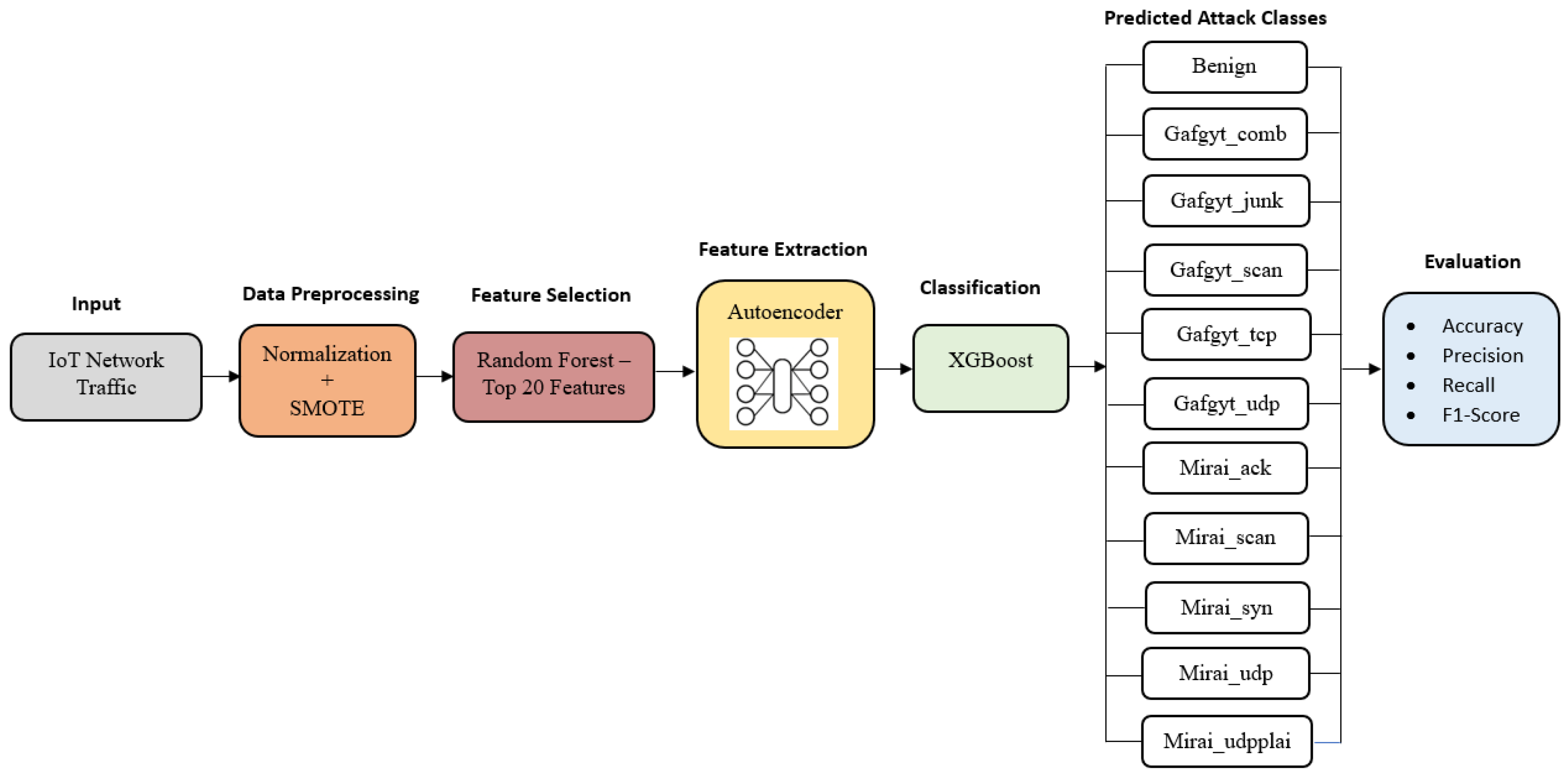
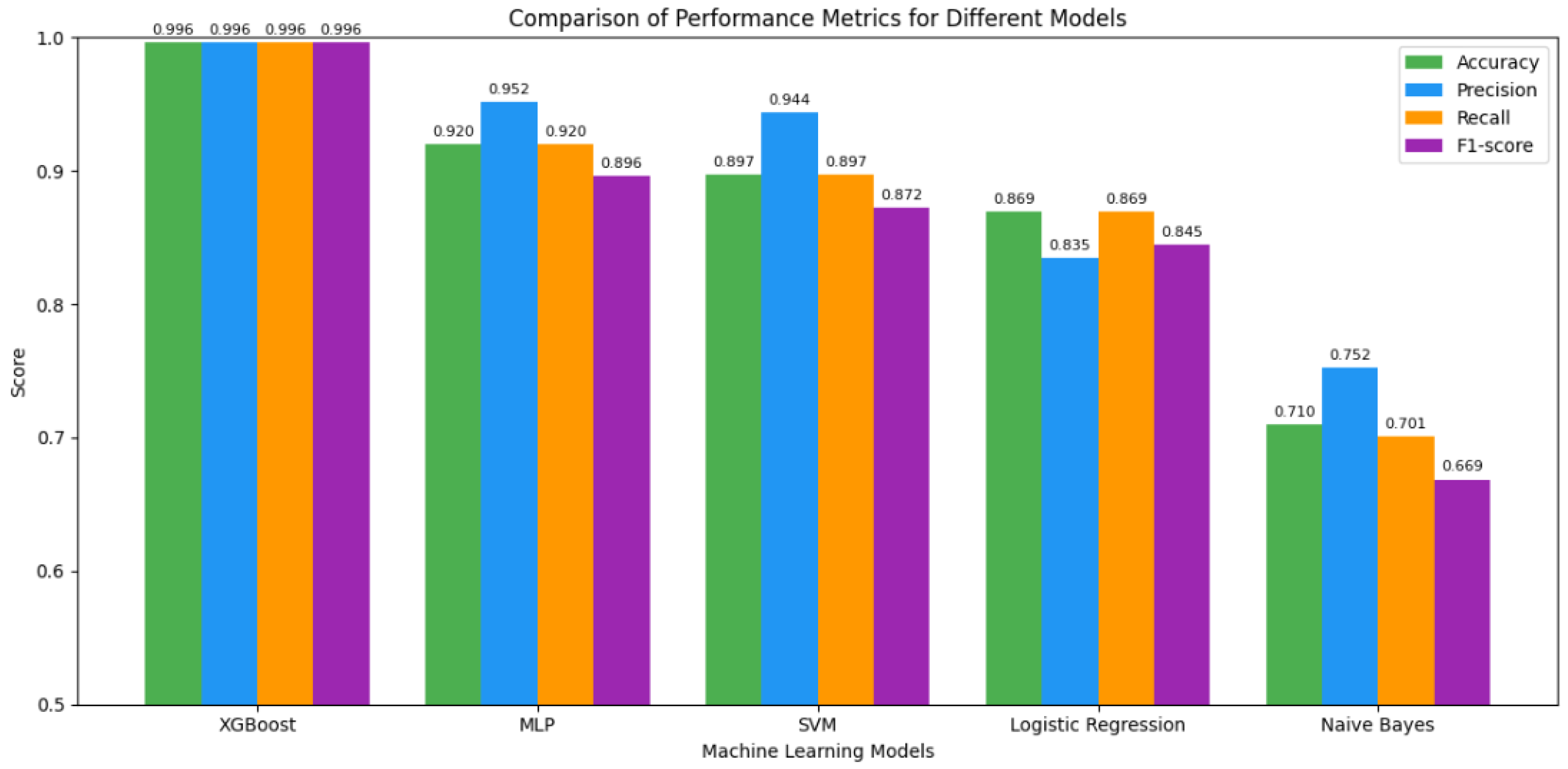
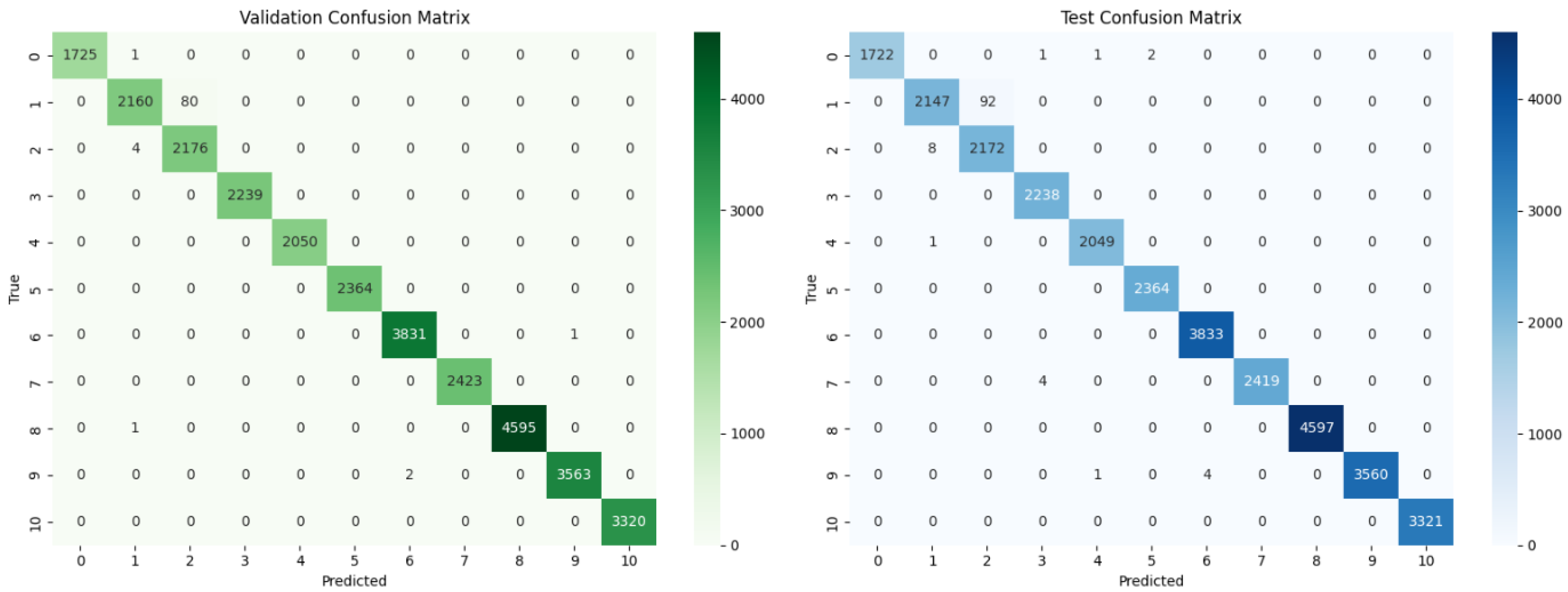
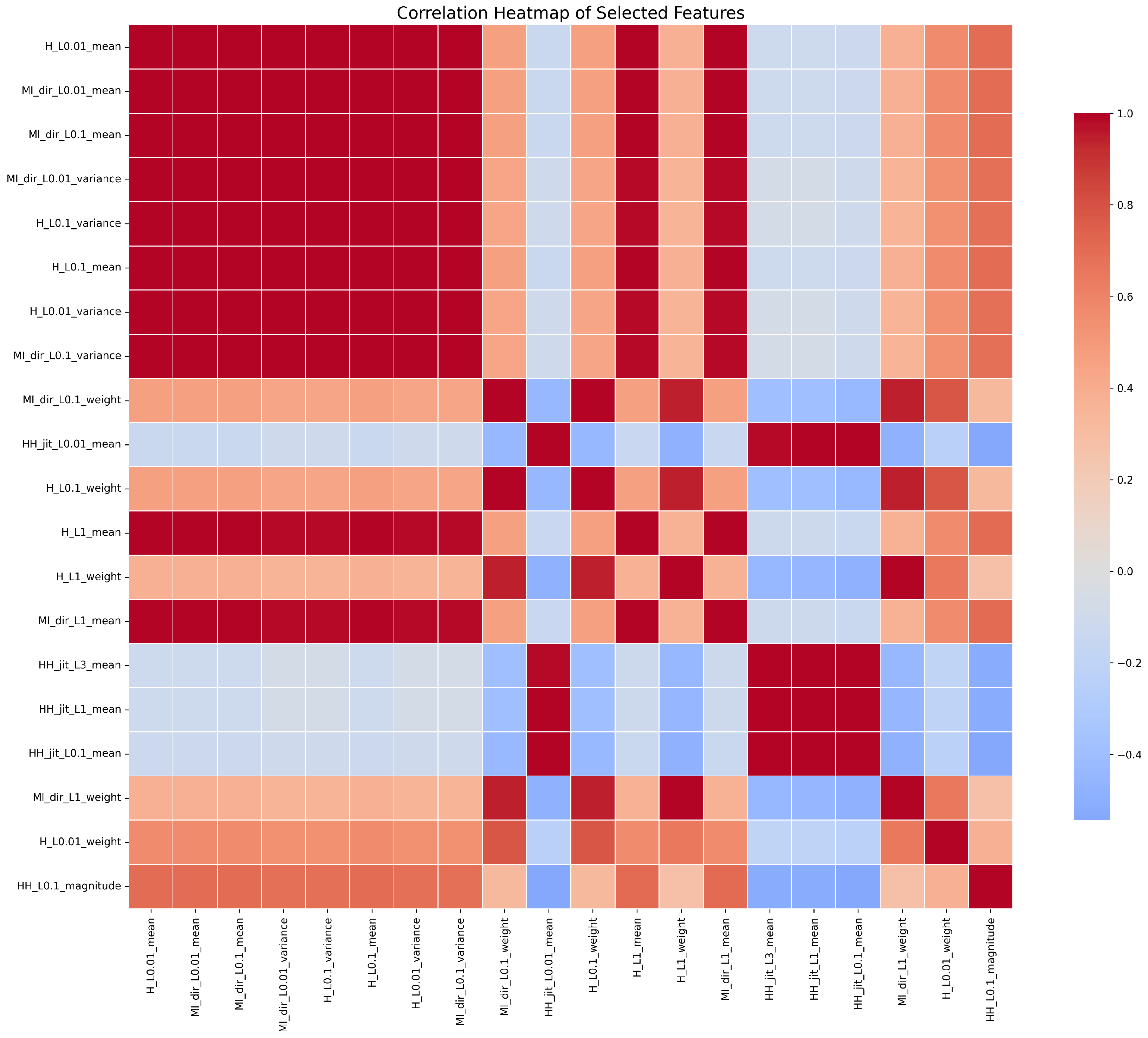
The rapid growth of IoT ecosystem has significantly increased the potential threats and attack vectors in the recent times, thereby requiring intrusion detection mechanisms that are highly accurate and scalable in nature. This paper presents a hybrid intrusion detection system that involves the usage of both supervised and unsupervised machine learning methods to detect different kinds of attacks present in the IoT network. In the first step, Random Forest-based feature extraction is adopted to determine the most important features from the highly dimensional network traffic data. After this, the extracted features are compressed using the Deep AutoEncoder model into latent features that are fed into multiple classifiers to classify the traffic into various IoT attack classes and normal traffic class. Specifically, the classifiers used in the process include XGBoost, SVM, Logistic Regression, Naive Bayes and Multilayer Perceptron models. Multiple IoT benchmark datasets, such as N-BaIoT and CICIoT2023, are used to evaluate the performance of the proposed hybrid intrusion detection system. It was found that the XGBoost classifier performed better than others, obtaining an accuracy rate of 99.63% and 98.94% on the N-BaIoT and CICIoT2023 datasets, respectively. The above-discussed results show the high potential of the proposed architecture for generalization in various IoT environments. From the results, one can see that it is highly effective to integrate deep learning for extracting features from data and using boosting techniques for classification to develop an efficient IDS system.
Keywords: IoT security; artificial intelligence; internet of things; cybersecurity IoT security; artificial intelligence; internet of things; cybersecurity