
Interference-Resilient Concurrent Sensing in Dense Environments: A Review of OFDM and OTFS Waveforms for JRC


Abstract
1. Introduction
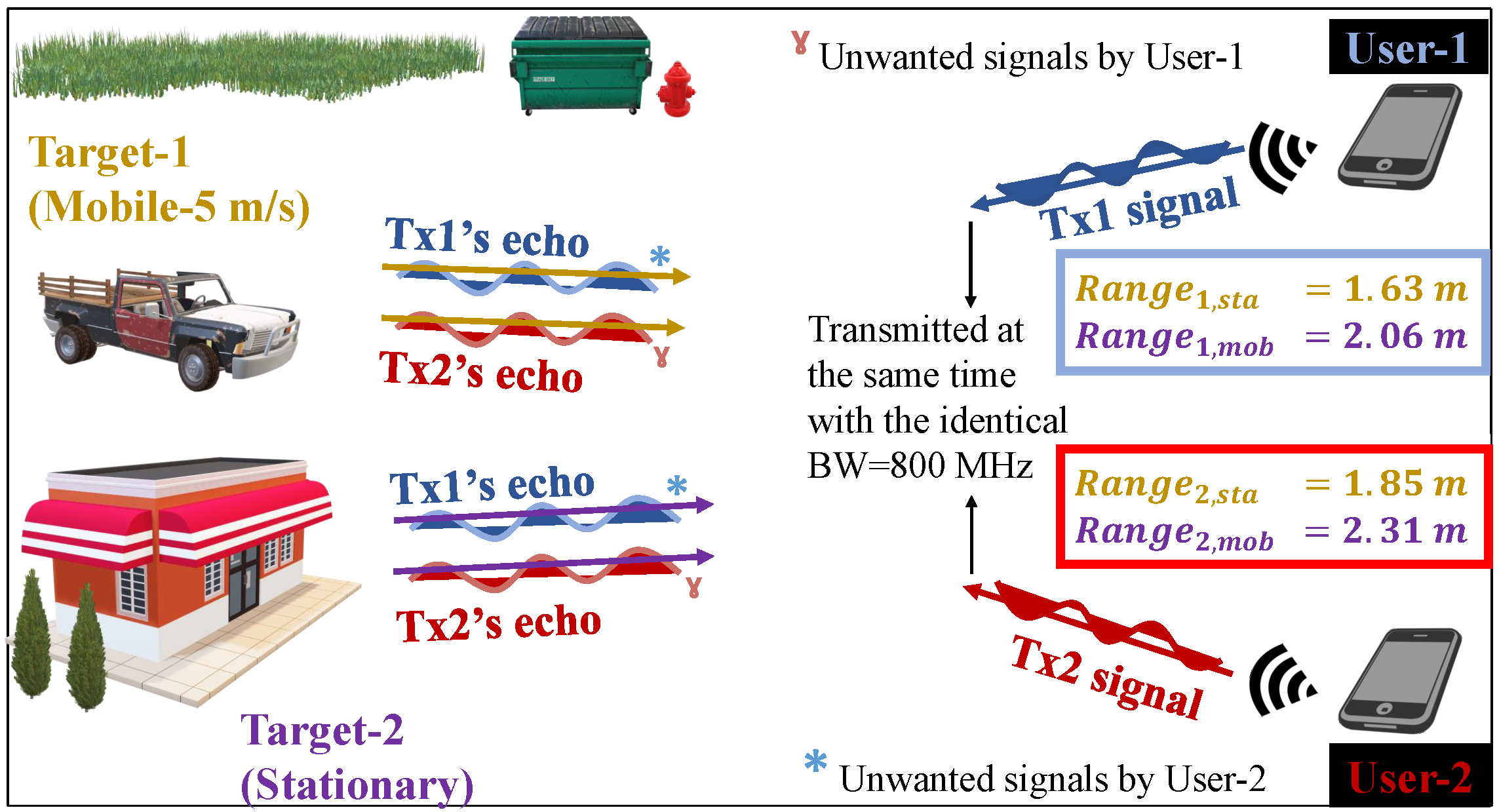
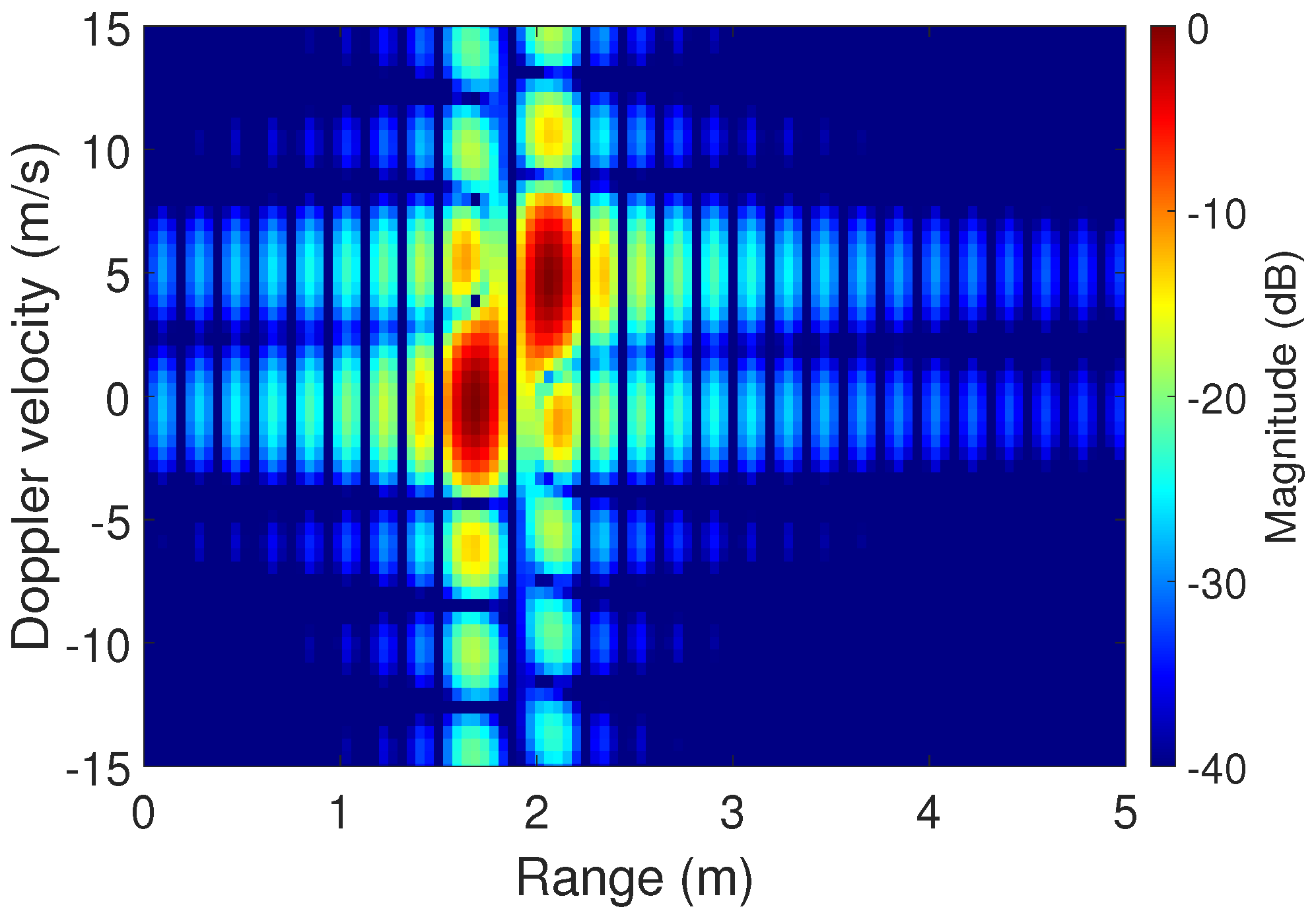
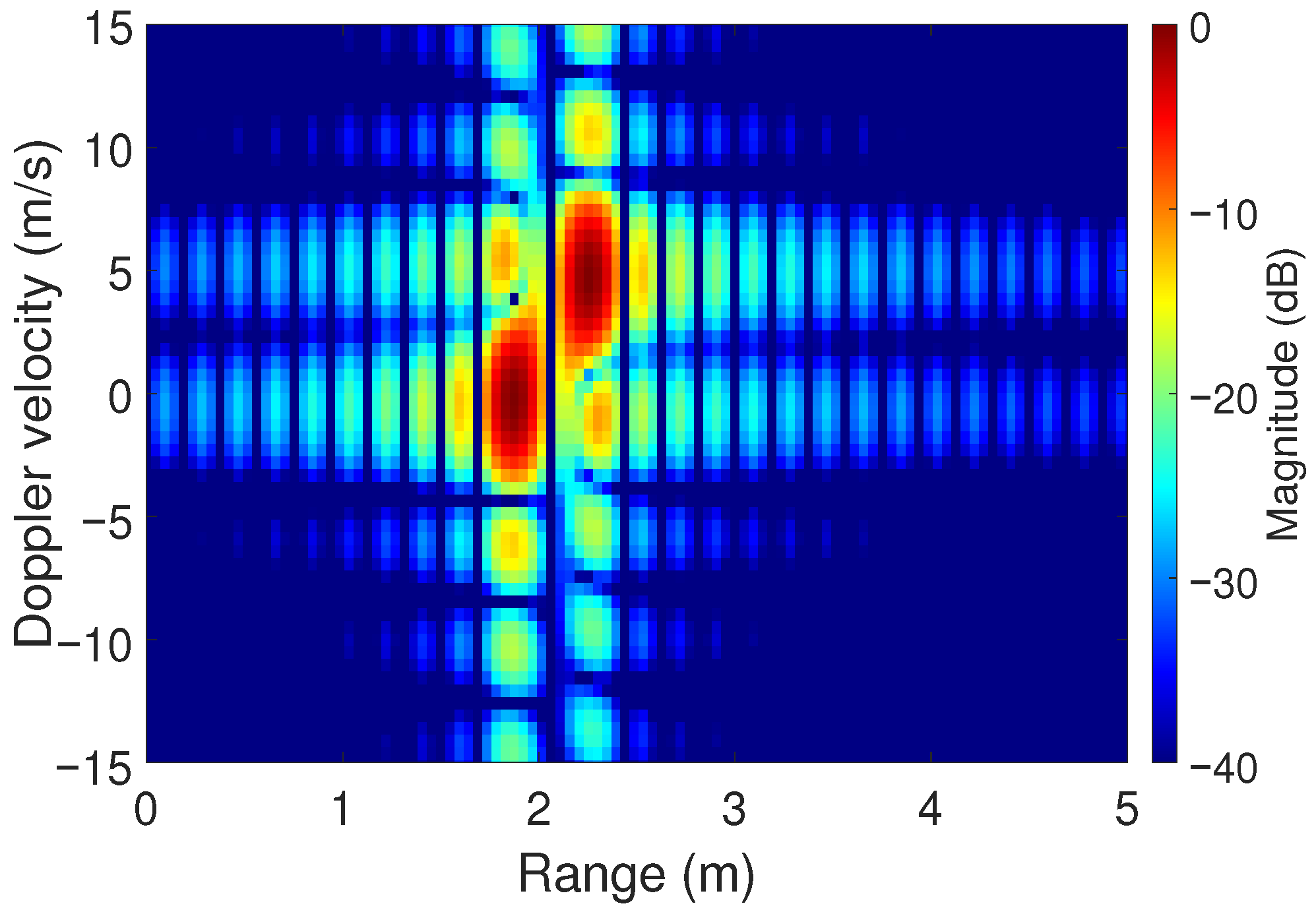
- A novel sensing paradigm is introduced in which multiple users operate at slightly offset carrier frequencies while occupying identical bandwidths and transmitting simultaneously, without employing TDMA or FDMA. Using cross-correlation and MF, accurate range and Doppler velocity estimation is achieved despite strong spectral overlap.
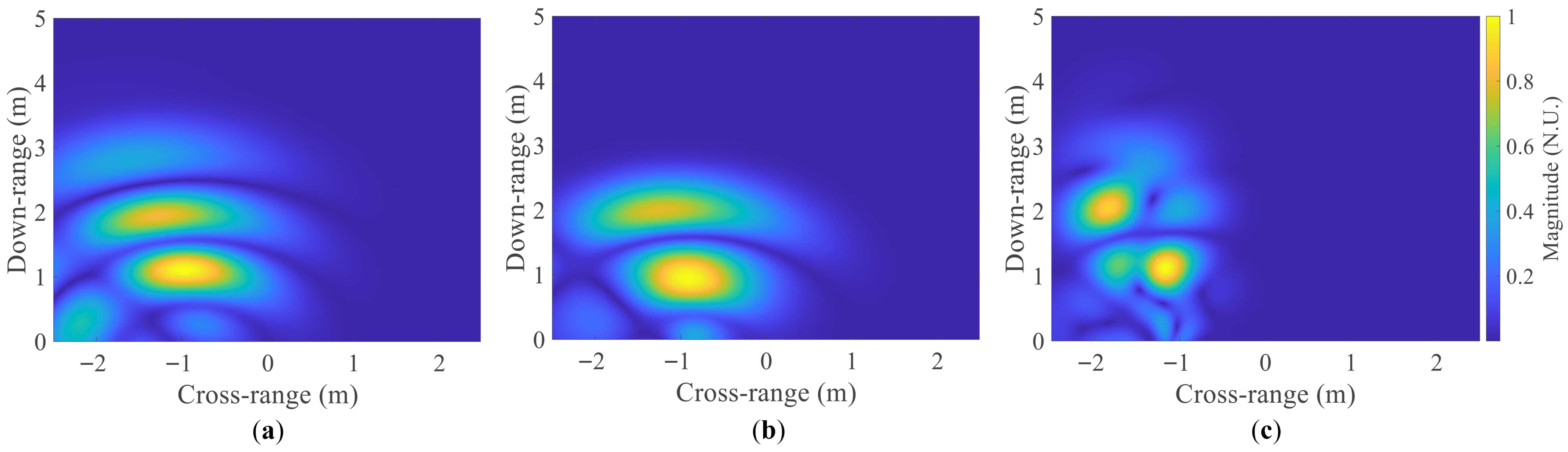
- The sensing performance of both OFDM and OTFS waveform schemes are meticulously observed by exploiting the given method above. The results demonstrate that OTFS can achieve comparable range, Doppler, and imaging performance under the same opportunistic sensing framework.
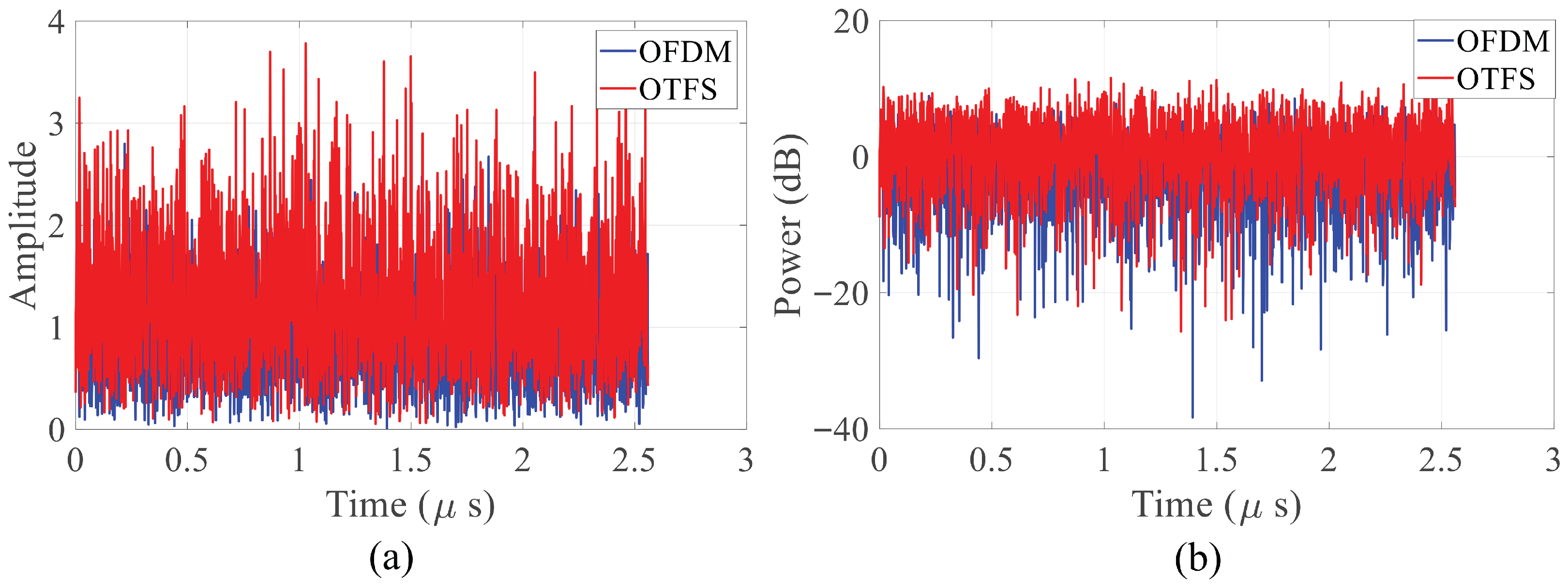
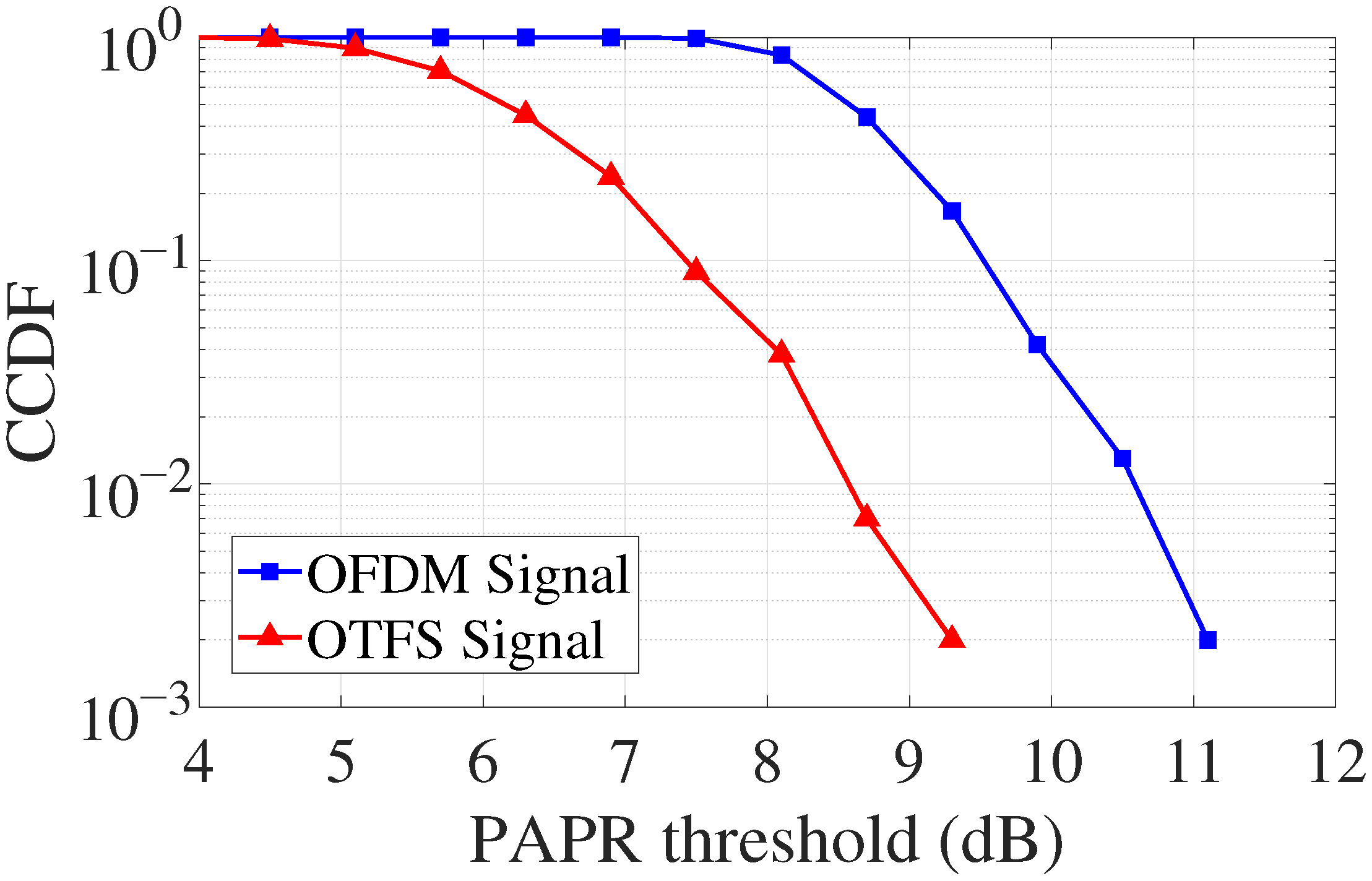
- The characteristics of a time domain OTFS signal are additionally investigated resulting in a lower peak-to-average power ratio (PAPR) while accomplishing sensing using the proposed method. Therefore, this work gains more significance in terms of OFDM’s well-known PAPR issue.
- The behavior of OTFS under such interference-intensive, non-orthogonal sensing scenarios remains insufficiently explored, which is critical for the prospect of an alternative waveform usage in sensing enhancement.
2. Related Works in the Literature
3. Multi-User Range and Doppler Sensing with Identical Resource Allocation
3.1. Multiple Users Transmitting OFDM and Allocated to Shared Resources
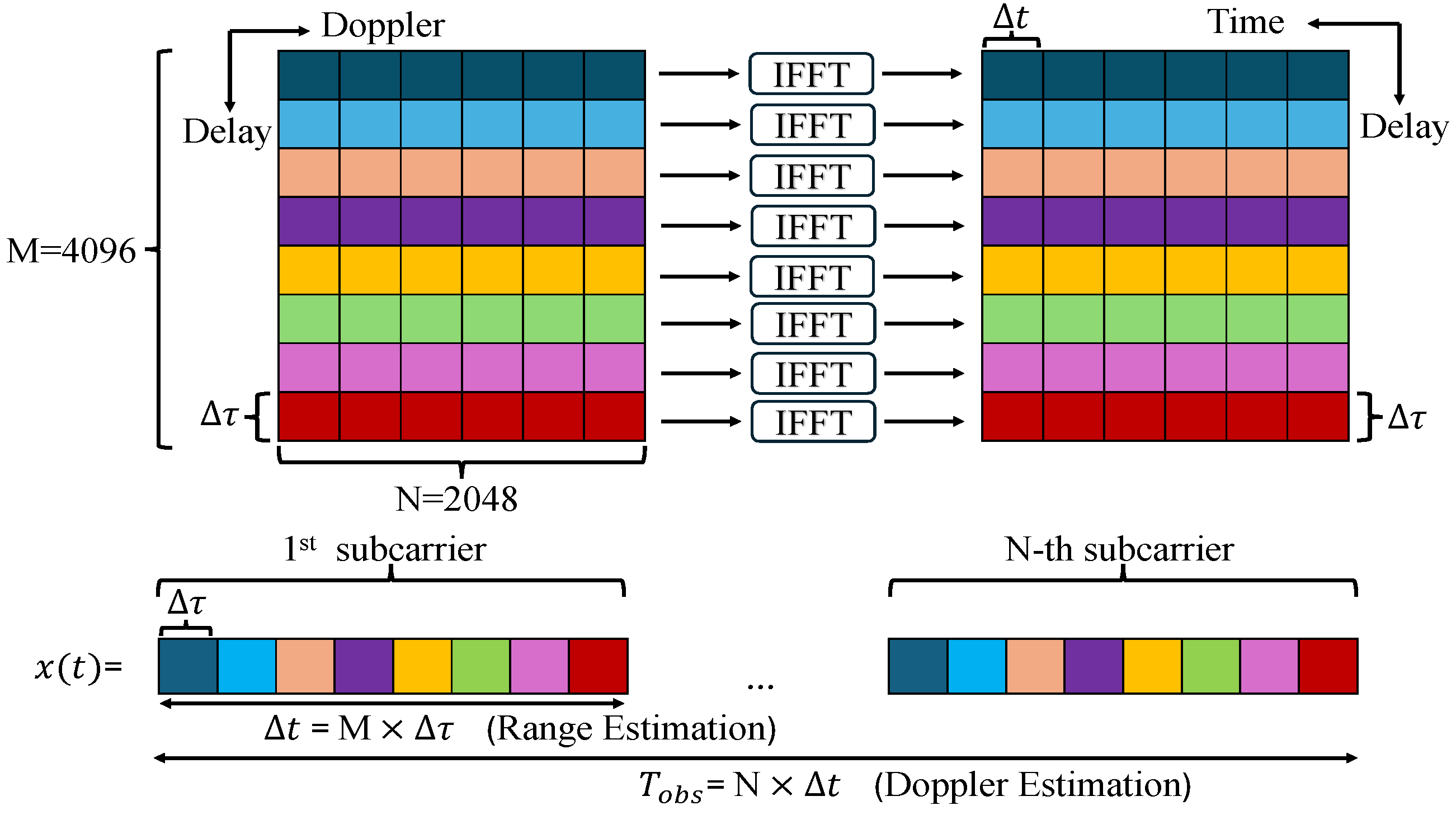
3.2. OTFS Multi-User Range-Doppler Sensing with Identical Bandwidth and Time
3.3. Simulation Results
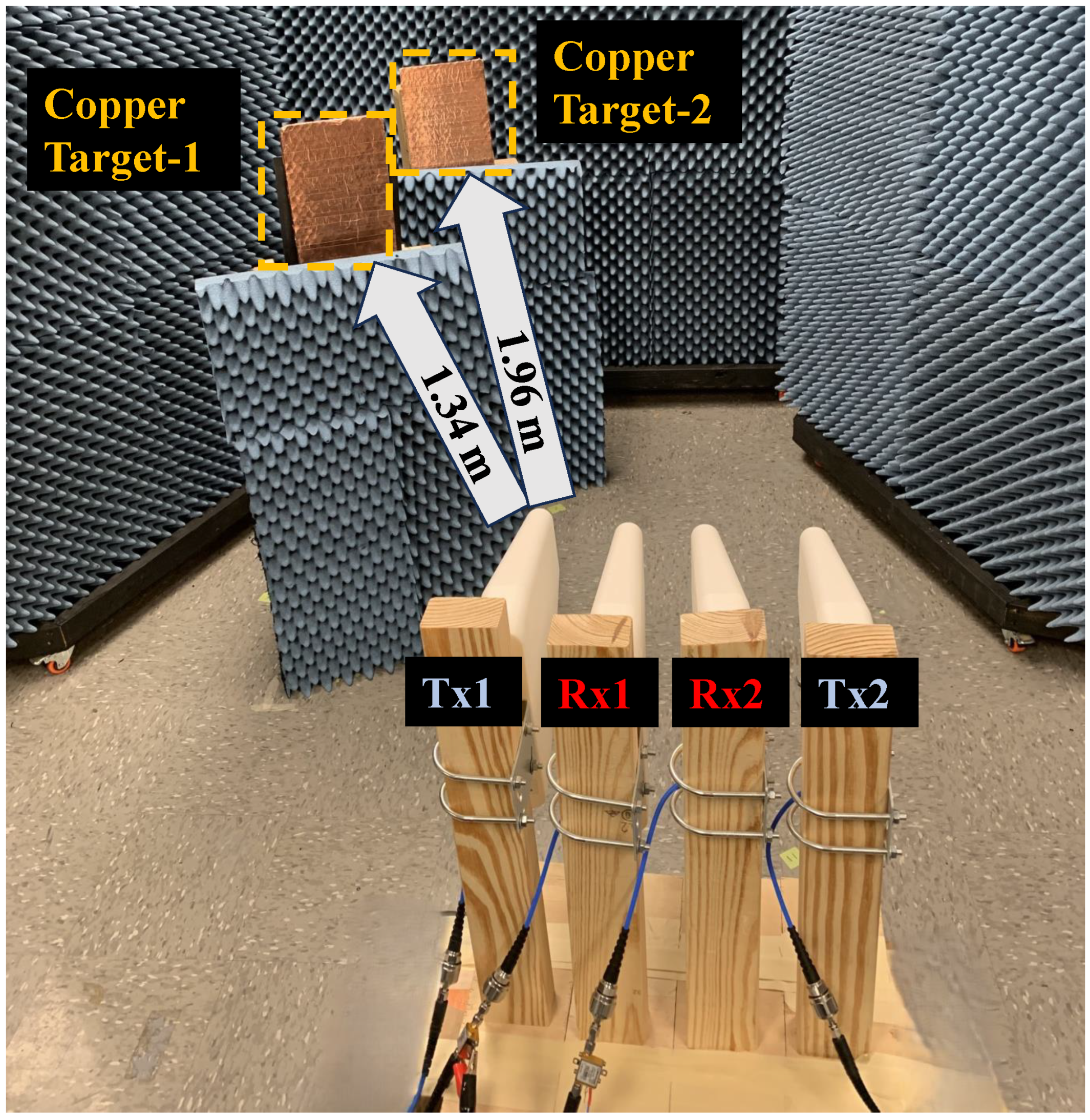
3.4. Experimental Validation of OFDM Transmission
4. Imaging Using Multiple Antennas Operating with Shared Time and Frequency Resources
4.1. Interference Management Using OFDM Signals
4.1.1. Independent OFDM Transmissions and Frequency Offsets
4.1.2. Suppression of Mutual Interference Through Matched Filtering
4.1.3. Implications for OFDM-Based MIMO Imaging
4.2. Cross-Antenna Interference-Free Imaging with OTFS
5. Evaluation of Results
5.1. Multi-User Range–Doppler Sensing Performance
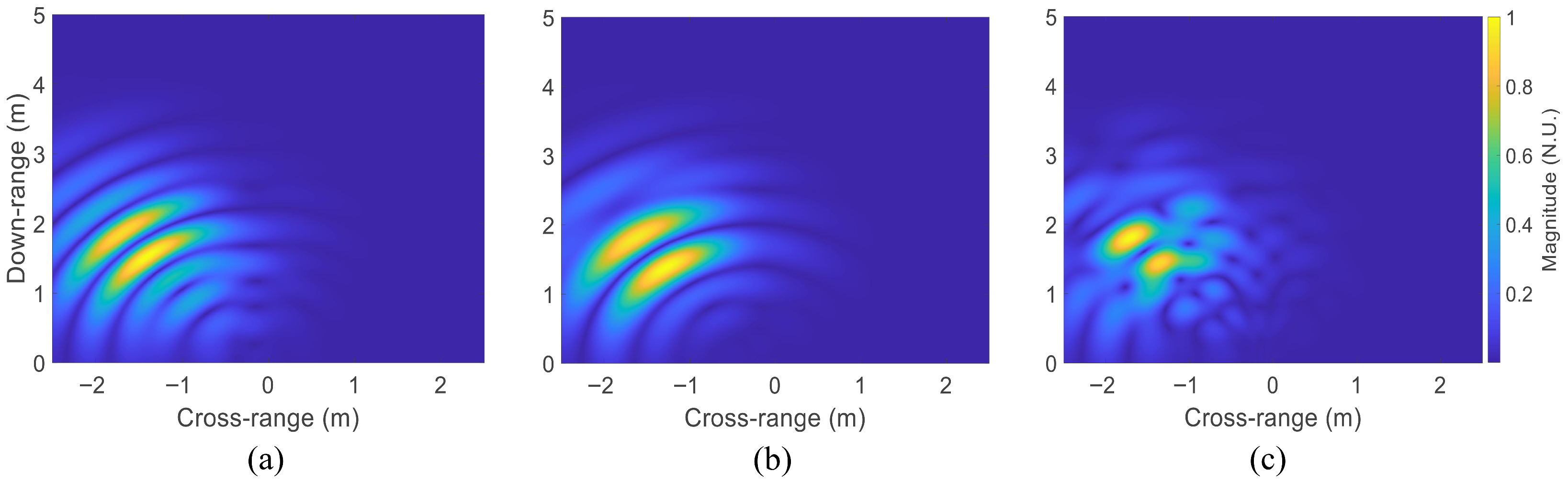
5.2. Imaging Performance and Extension to OTFS
5.3. Implications for 5G and Future ISAC Systems
6. Conclusions
Author Contributions
Funding
Data Availability Statement
Conflicts of Interest
References
- Nemati, M.; Kim, Y.H.; Choi, J. Toward joint radar, communication, computation, localization, and sensing in IoT. IEEE Access 2022, 10, 11772–11788. [Google Scholar] [CrossRef]
- Cao, Y.; Yu, Q. A joint beamforming design and integrated CPM-LFM signal for dual-functional radar-communication systems. arXiv 2021, arXiv:2112.09825. [Google Scholar]
- Mahipathi, A.C.; Pardhasaradhi, B.; Purushottama, T.; Srihari, P.; D’Souza, J.; Cenkeramaddi, L.R. A Survey on Waveform Design for Radar-Communication Convergence. IEEE Access 2024, 12, 75442–75461. [Google Scholar] [CrossRef]
- Juwono, F.H.; Reine, R. Future OFDM-based communication systems towards 6G and beyond: Machine learning approaches. Green Intell. Syst. Appl. 2021, 1, 19–25. [Google Scholar] [CrossRef]
- Zhuang, Y.; El-Sheimy, N. Tightly-Coupled Integration of WiFi and MEMS Sensors on Handheld Devices for Indoor Pedestrian Navigation. IEEE Sens. J. 2016, 16, 224–234. [Google Scholar] [CrossRef]
- Mudumbai, R.; Brown Iii, D.R.; Madhow, U.; Poor, H.V. Distributed transmit beamforming: Challenges and recent progress. IEEE Commun. Mag. 2009, 47, 102–110. [Google Scholar] [CrossRef]
- Cidronali, A.; Collodi, G.; Maddio, S.; Passafiume, M.; Pelosi, G. 2-D DoA Anchor Suitable for Indoor Positioning Systems Based on Space and Frequency Diversity for Legacy WLAN. IEEE Microw. Wirel. Components Lett. 2018, 28, 627–629. [Google Scholar] [CrossRef]
- Feng, Z.; Fang, Z.; Wei, Z.; Chen, X.; Quan, Z.; Ji, D. Joint radar and communication: A survey. China Commun. 2020, 17, 1–27. [Google Scholar] [CrossRef]
- Mestoui, J.; El Ghzaoui, M. Theoretical analysis and performance comparison of multi-carrier waveforms for 5G wireless applications. Int. J. Integr. Eng. 2021, 13, 202–219. [Google Scholar] [CrossRef]
- Yazgan, M. Comprehensive Sensing Analysis of OFDM Waveform for Future JRC and Radar Systems. Ph.D. Thesis, University of South Florida, Tampa, FL, USA, 2025. [Google Scholar]
- Wei, Z.; Yuan, W.; Li, S.; Yuan, J.; Bharatula, G.; Hadani, R.; Hanzo, L. Orthogonal time-frequency space modulation: A promising next-generation waveform. IEEE Wirel. Commun. 2021, 28, 136–144. [Google Scholar] [CrossRef]
- Darghouthi, A.; Khlifi, A.; Chibani, B.; Shaiek, H. OTFS vs. OFDM Waveforms Switching Use based on Mobile Speed Estimation. Wirel. Pers. Commun. 2024, 139, 1499–1513. [Google Scholar] [CrossRef]
- Ali, D.M.; Yatiya, Z.; Abbosh, Y.M. OTFS waveform effectiveness in 6G communication networks. Int. J. Micro Opt. Technol. 2023, 18. [Google Scholar]
- Yuan, W.; Wei, Z.; Li, S.; Schober, R.; Caire, G. Orthogonal time frequency space modulation—Part III: ISAC and potential applications. IEEE Commun. Lett. 2022, 27, 14–18. [Google Scholar] [CrossRef]
- Hadani, R.; Rakib, S.; Tsatsanis, M.; Monk, A.; Goldsmith, A.J.; Molisch, A.F.; Calderbank, R. Orthogonal time frequency space modulation. In 2017 IEEE Wireless Communications and Networking Conference (WCNC); IEEE: New York, NY, USA, 2017; pp. 1–6. [Google Scholar]
- Yazgan, M.; Arslan, H.; Vakalis, S. Highly Efficient MIMO-OFDM Imaging Using Shared Transmission Bandwidth. In 2025 IEEE Wireless and Microwave Technology Conference (WAMICON); IEEE: New York, NY, USA, 2025; pp. 1–4. [Google Scholar]
- Hakobyan, G.; Yang, B. A novel intercarrier-interference free signal processing scheme for OFDM radar. IEEE Trans. Veh. Technol. 2017, 67, 5158–5167. [Google Scholar] [CrossRef]
- Franken, G.; Nikookar, H.; Van Genderen, P. Doppler tolerance of OFDM-coded radar signals. In 2006 European Radar Conference; IEEE: New York, NY, USA, 2006; pp. 108–111. [Google Scholar]
- Keskin, M.F.; Wymeersch, H.; Koivunen, V. MIMO-OFDM joint radar-communications: Is ICI friend or foe? IEEE J. Sel. Top. Signal Process. 2021, 15, 1393–1408. [Google Scholar] [CrossRef]
- Sturm, C.; Sit, Y.L.; Braun, M.; Zwick, T. Spectrally interleaved multi-carrier signals for radar network applications and multi-input multi-output radar. IET Radar Sonar Navig. 2013, 7, 261–269. [Google Scholar] [CrossRef]
- Hakobyan, G.; Yang, B. A novel OFDM-MIMO radar with non-equidistant subcarrier interleaving and compressed sensing. In 2016 17th International Radar Symposium (IRS); IEEE: New York, NY, USA, 2016; pp. 1–5. [Google Scholar]
- Vakalis, S.; Mghabghab, S.; Nanzer, J.A. Fourier Domain Millimeter-Wave Imaging Using Noncooperative 5G Communications Signals. IEEE Trans. Antennas Propag. 2022, 70, 8872–8882. [Google Scholar] [CrossRef]
- Huang, D.; Nandakumar, R.; Gollakota, S. Feasibility and limits of Wi-Fi imaging. In Proceedings of the 12th ACM Conference on Embedded Network Sensor Systems, Memphis, TN, USA, 3–6 November 2014; pp. 266–279. [Google Scholar]
- Jin, G.; Deng, Y.; Wang, W.; Zhang, Y.; Liang, D.; Wang, R. A novel spaceborne MIMO-SAR imaging scheme based on improved OFDM waveforms. IEEE Geosci. Remote Sens. Lett. 2020, 18, 2122–2126. [Google Scholar] [CrossRef]
- Sit, Y.L.; Nguyen, T.T.; Sturm, C.; Zwick, T. 2D radar imaging with velocity estimation using a MIMO OFDM-based radar for automotive applications. In 2013 European Radar Conference; IEEE: New York, NY, USA, 2013; pp. 145–148. [Google Scholar]
- Sit, Y.L.; Nguyen, T.T.; Zwick, T. 3D Radar imaging with a MIMO OFDM-based radar. In 2013 Asia-Pacific Microwave Conference Proceedings (APMC); IEEE: New York, NY, USA, 2013; pp. 68–70. [Google Scholar]
- Hwang, S.; Seo, J.; Park, J.; Kim, H.; Jeong, B.J. Compressive sensing-based Radar imaging and subcarrier allocation for joint MIMO OFDM Radar and communication system. Sensors 2021, 21, 2382. [Google Scholar] [CrossRef]
- Sakhnini, A.; Bourdoux, A.; Pollin, S. Range-Doppler Division Multiple Access for Joint Radar and Communication. In ICC 2023—IEEE International Conference on Communications; IEEE: New York, NY, USA, 2023; pp. 3534–3539. [Google Scholar]
- Yu, Z.; Hu, X.; Liu, C.; Peng, M.; Zhong, C. Location sensing and beamforming design for IRS-enabled multi-user ISAC systems. IEEE Trans. Signal Process. 2022, 70, 5178–5193. [Google Scholar] [CrossRef]
- Zhu, M.; Li, L.; Xia, S.; Chang, T.H. Information and sensing beamforming optimization for multi-user multi-target MIMO ISAC systems. EURASIP J. Adv. Signal Process. 2023, 2023, 15. [Google Scholar] [CrossRef]
- Ding, C.; Hong, H.; Zou, Y.; Chu, H.; Zhu, X.; Fioranelli, F.; Le Kernec, J.; Li, C. Continuous human motion recognition with a dynamic range-Doppler trajectory method based on FMCW radar. IEEE Trans. Geosci. Remote Sens. 2019, 57, 6821–6831. [Google Scholar] [CrossRef]
- Yazgan, M.; Arslan, H.; Vakalis, S. Non-Cooperative Multi-User Range and Doppler Sensing Using OFDM Signals. IEEE Wirel. Commun. Lett. 2025, 14, 1613–1617. [Google Scholar] [CrossRef]
- Narayanan, R.M. Through-wall radar imaging using UWB noise waveforms. J. Frankl. Inst. 2008, 345, 659–678. [Google Scholar] [CrossRef]
- Ignatious, H.A.; El-Sayed, H.; Khan, M. An overview of sensors in Autonomous Vehicles. Procedia Comput. Sci. 2022, 198, 736–741. [Google Scholar] [CrossRef]
- Matinmikko-Blue, M.; Yrjölä, S.; Seppänen, V.; Ahokangas, P.; Hämmäinen, H.; Latva-Aho, M. Analysis of spectrum valuation elements for local 5G networks: Case study of 3.5-GHz band. IEEE Trans. Cogn. Commun. Netw. 2019, 5, 741–753. [Google Scholar] [CrossRef]
- Hanzo, L.; Akhtman, Y.; Wang, L.; Jiang, M. MIMO-OFDM for LTE, WiFi and WiMAX: Coherent Versus Non-Coherent and Cooperative Turbo Transceivers; John Wiley & Sons: Hoboken, NJ, USA, 2010; Volume 9. [Google Scholar]
- Das, S.S.; Prasad, R. Orthogonal Time Frequency Space Modulation: OTFS a Waveform for 6G; River Publishers: Gistrup, Denmark, 2022. [Google Scholar]
- Zegrar, S.E.; Arslan, H. A novel cyclic prefix configuration for enhanced reliability and spectral efficiency in OTFS systems. IEEE Wirel. Commun. Lett. 2023, 12, 888–892. [Google Scholar] [CrossRef]
- Yazgan, M.; Arslan, H.; Vakalis, S. Impact of PAPR Reduction Techniques on the OFDM Correlation Performance for Sensing. In 2025 IEEE International Symposium on Antennas and Propagation and North American Radio Science Meeting (AP-S/CNC-USNC-URSI); IEEE: New York, NY, USA, 2025; pp. 804–807. [Google Scholar]
- Chadha, A.; Satam, N.; Ballal, B. Orthogonal frequency division multiplexing and its applications. arXiv 2013, arXiv:1309.7334. [Google Scholar] [CrossRef]
- Mohammed, S.K.; Hadani, R.; Chockalingam, A. OTFS Modulation: Theory and Applications; John Wiley & Sons: Hoboken, NJ, USA, 2024. [Google Scholar]
- Stoica, P.; Li, J.; Xie, Y. On Probing Signal Design For MIMO Radar. IEEE Trans. Signal Process. 2007, 55, 4151–4161. [Google Scholar] [CrossRef]
- Li, J.; Stoica, P. MIMO Radar with Colocated Antennas. IEEE Signal Process. Mag. 2007, 24, 106–114. [Google Scholar] [CrossRef]
- Chiani, M.; Win, M.Z.; Shin, H. MIMO networks: The effects of interference. IEEE Trans. Inf. Theory 2009, 56, 336–349. [Google Scholar] [CrossRef]
- Yang, H.; Qamar, F.; Kazmi, S.H.A.; Jafri, S.T.A.; Ariffin, K.A.Z.; Nguyen, Q.N. Interference Mitigation in B5G Network Architecture for MIMO and CDMA: State of the Art, Issues, and Future Research Directions. Information 2024, 15, 771. [Google Scholar] [CrossRef]
- Atzori, L.; Iera, A.; Morabito, G. The internet of things: A survey. Comput. Netw. 2010, 54, 2787–2805. [Google Scholar] [CrossRef]
- Larsson, E.G.; Edfors, O.; Tufvesson, F.; Marzetta, T.L. Massive MIMO for next generation wireless systems. IEEE Commun. Mag. 2014, 52, 186–195. [Google Scholar] [CrossRef]
- Yazgan, M.; Arslan, H.; Vakalis, S. MIMO-OFDM Imaging Using Shared Time and Bandwidth. IEEE Open J. Commun. Soc. 2025, 6, 4885–4893. [Google Scholar] [CrossRef]



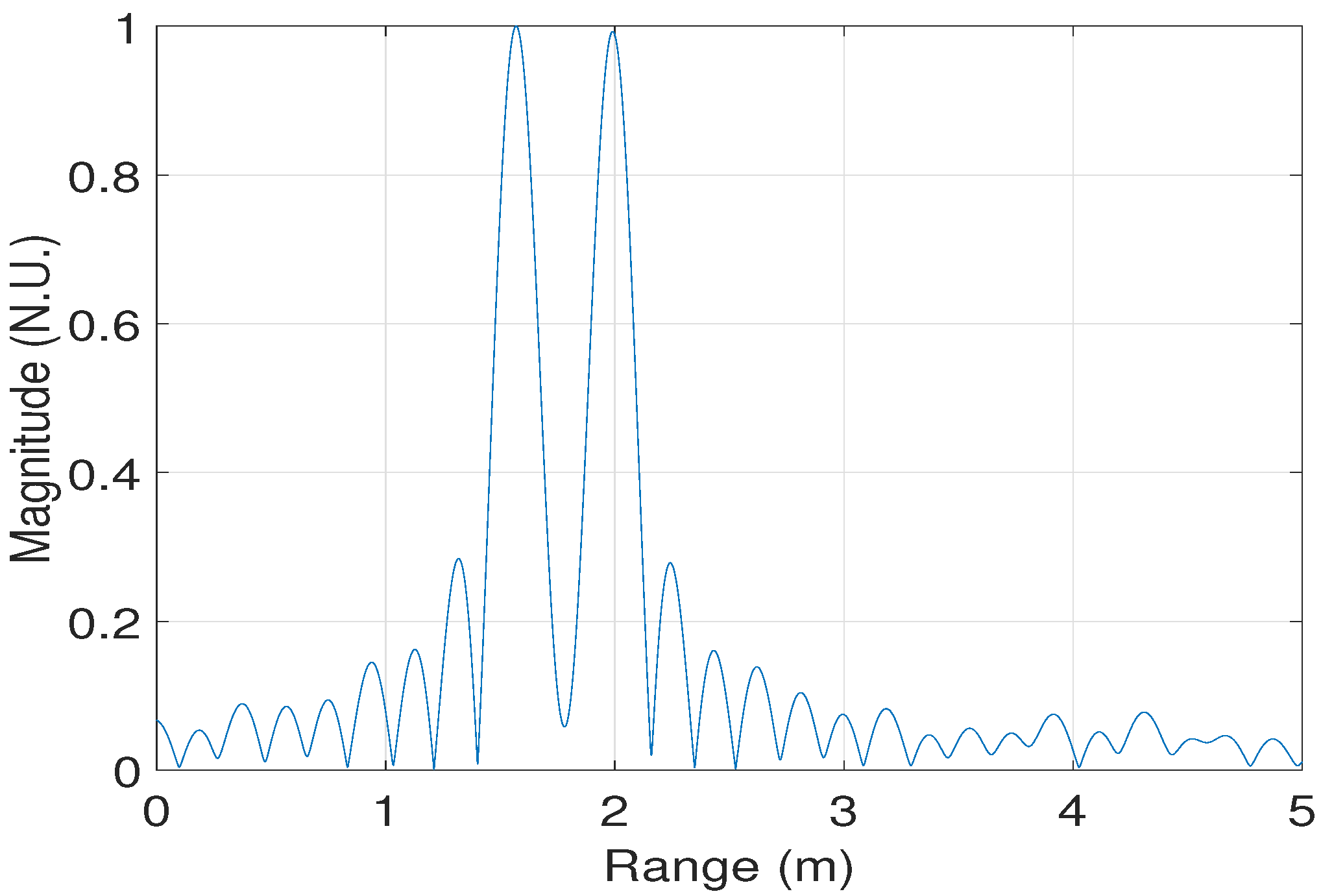

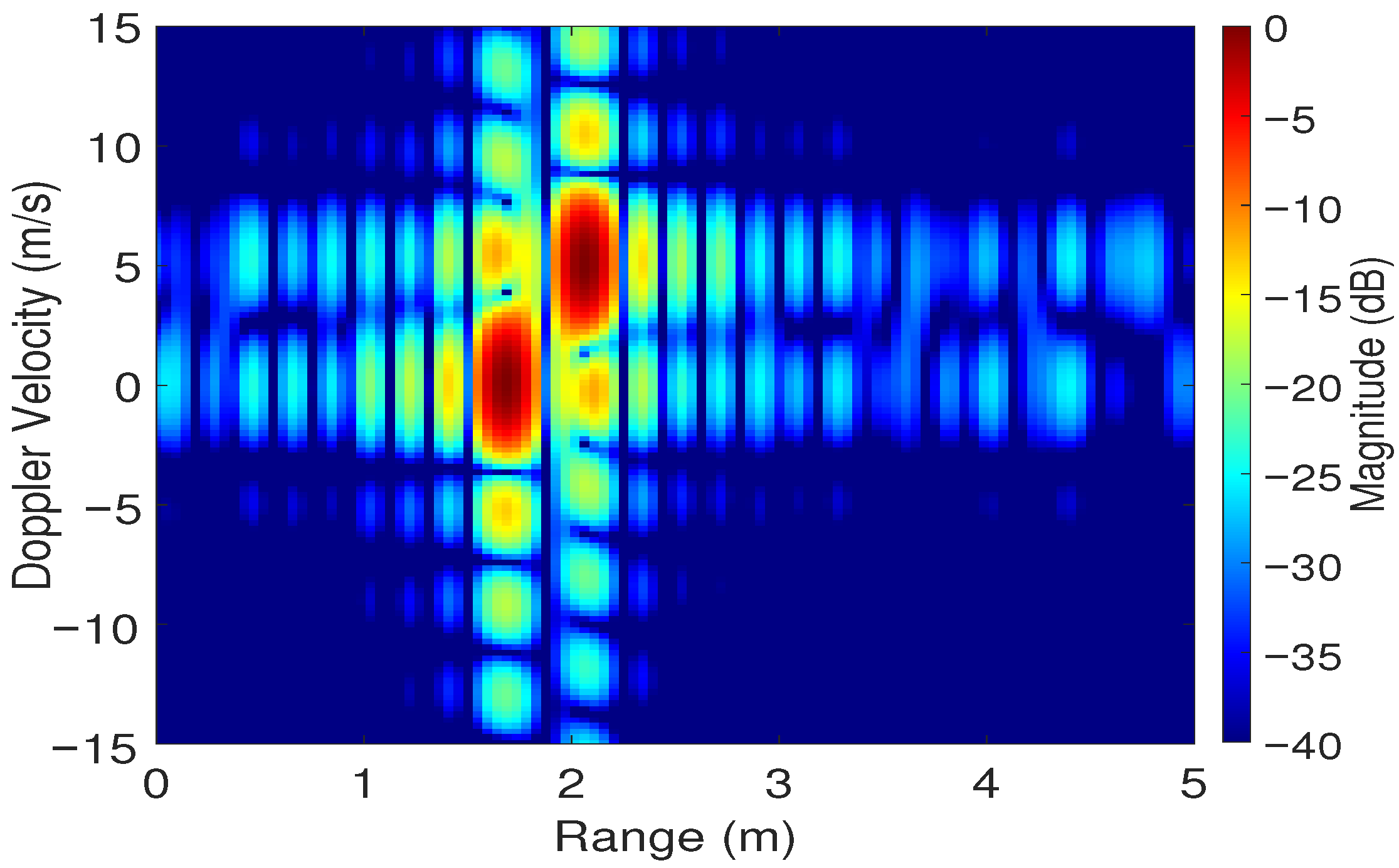
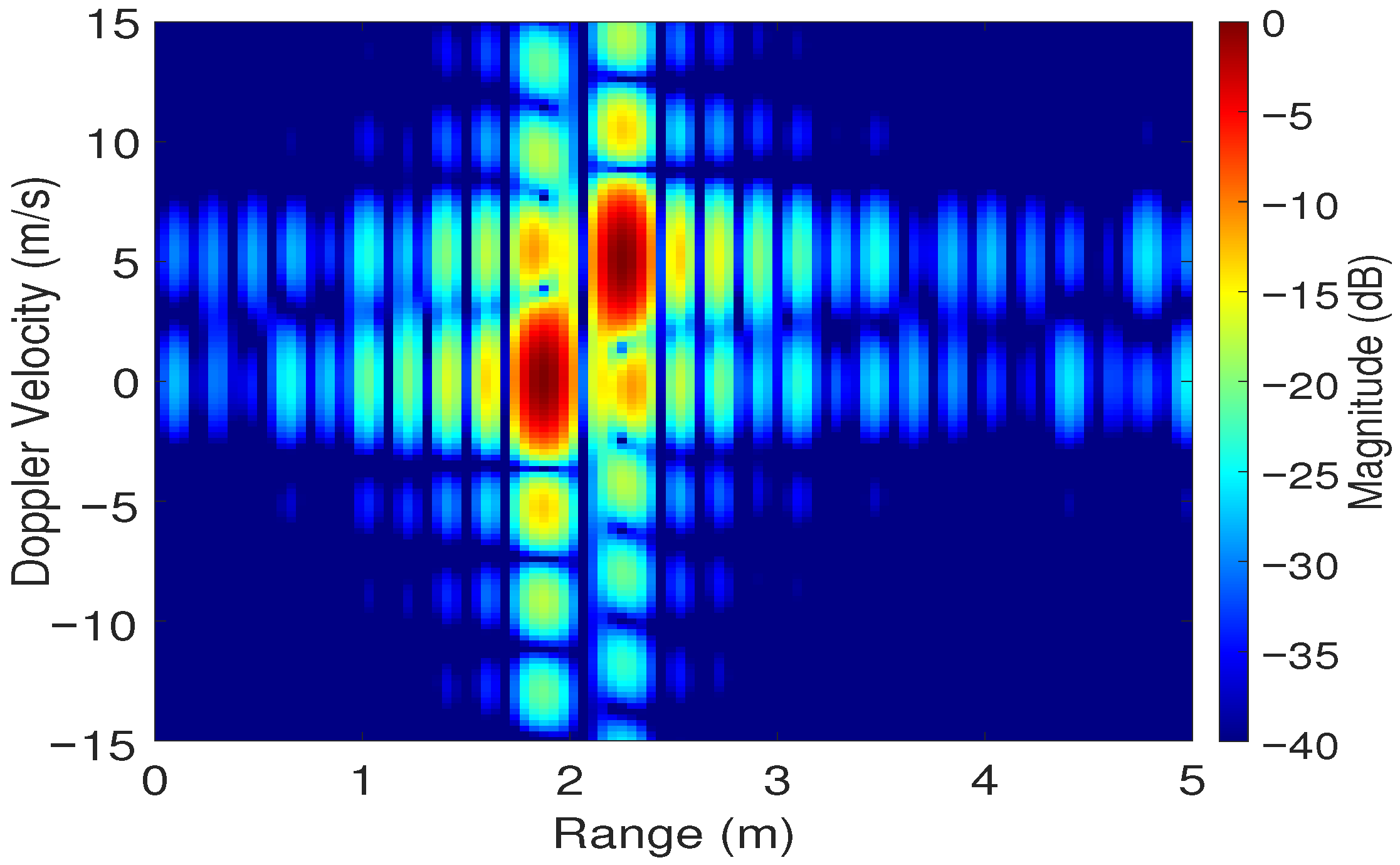


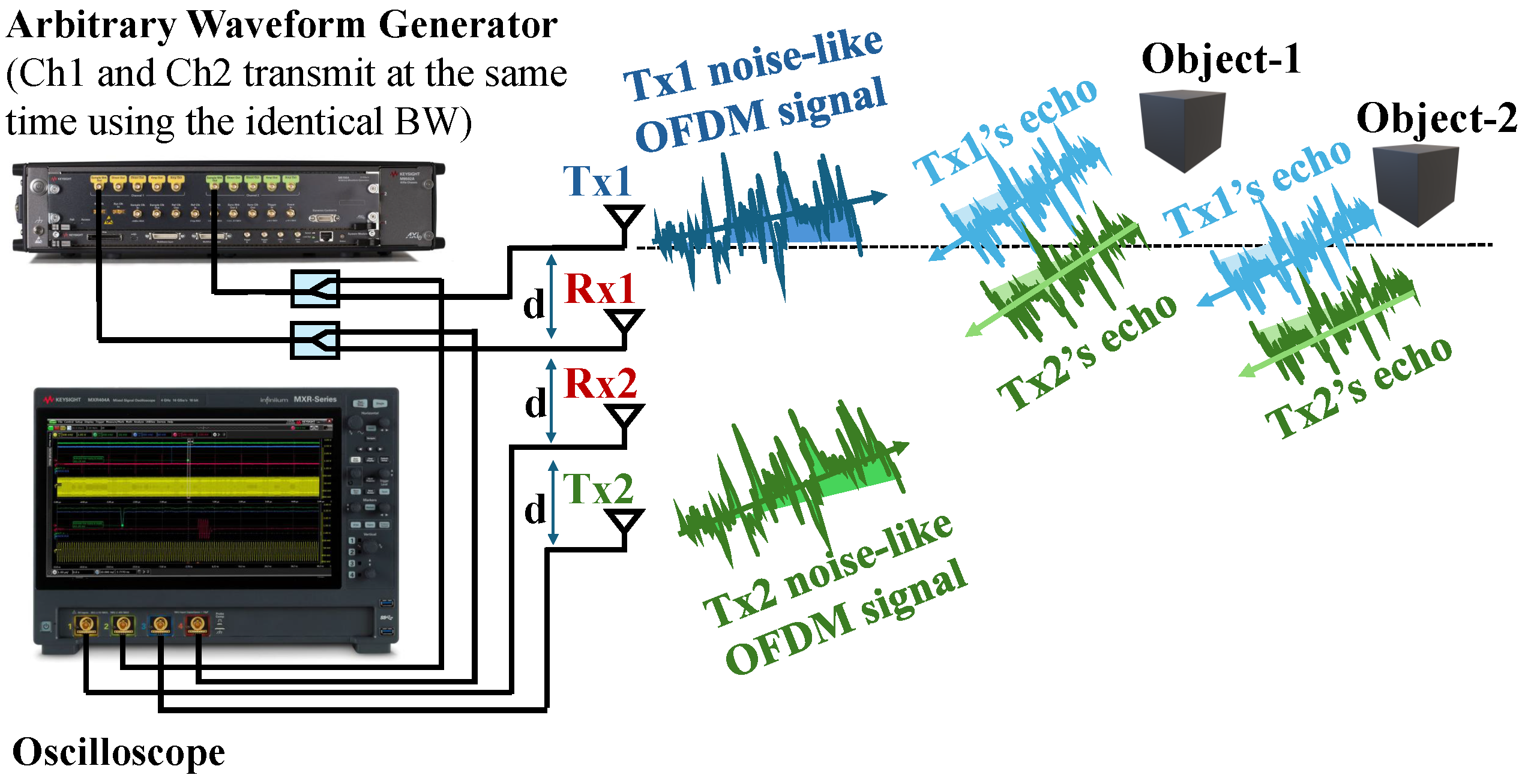



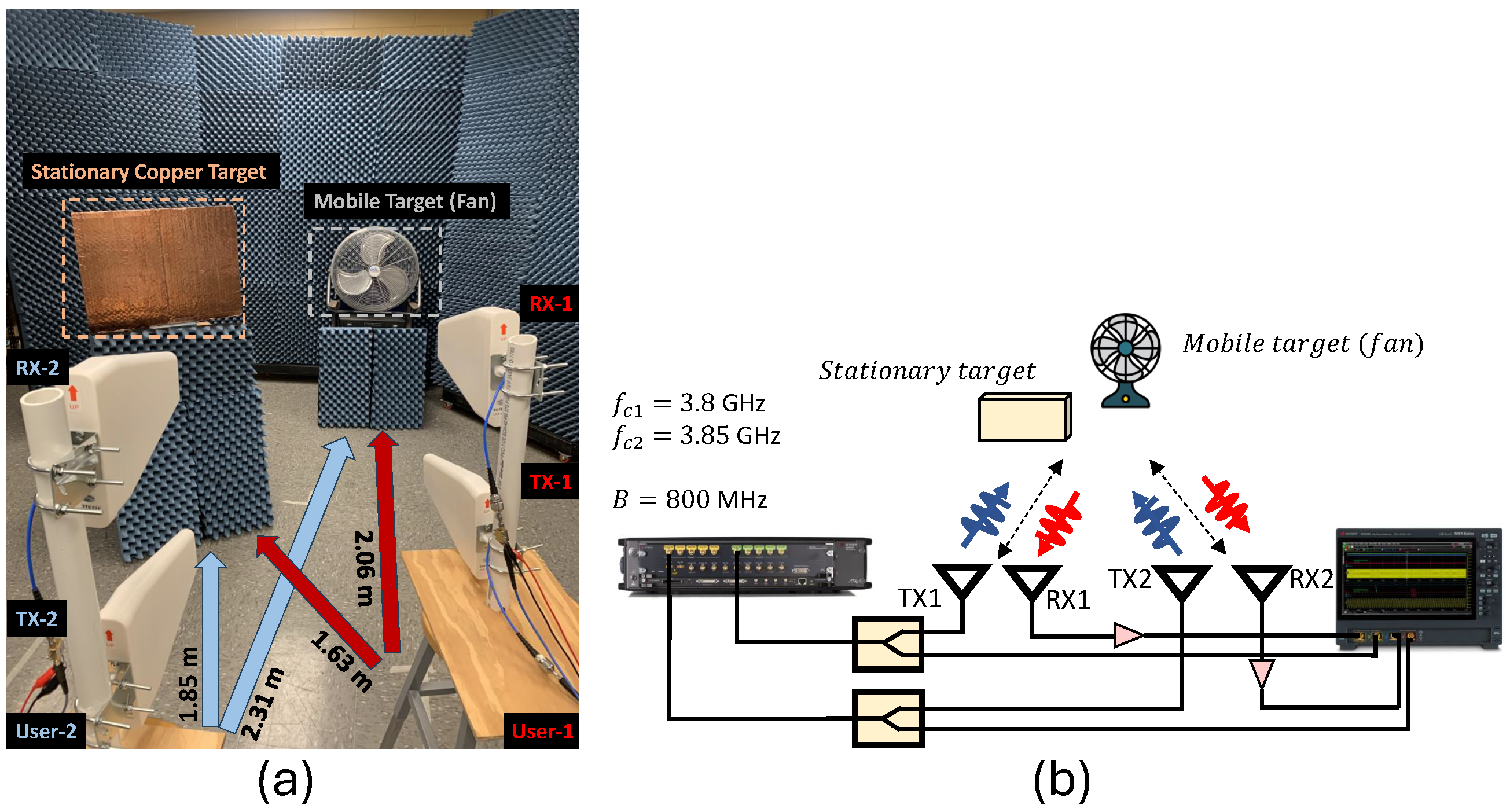
| Parameter | User-1 | User-2 | Reason |
|---|---|---|---|
| Carrier frequency | 3.8 GHz | 3.85 GHz | Closely aligning with current 5G standards and emerging sufficient Doppler frequency change. |
| Bandwidth | 800 MHz | 800 MHz | Providing shared frequency bands. |
| Beamwidth | 60° azimuth | 60° azimuth | Identical for all Tx and Rx antennas to enable common standards and directionality. |
| Subcarrier number | 64 | 64 | Occupying the same time resources due to identical symbol duration and simultaneous transmission. |
| Sensing method | MF | MF | Provided by a power splitter in the measurements. Two users operate in a mono-static radar manner to increase the SNR without extra complexity. |
Disclaimer/Publisher’s Note: The statements, opinions and data contained in all publications are solely those of the individual author(s) and contributor(s) and not of MDPI and/or the editor(s). MDPI and/or the editor(s) disclaim responsibility for any injury to people or property resulting from any ideas, methods, instructions or products referred to in the content. |
© 2026 by the authors. Licensee MDPI, Basel, Switzerland. This article is an open access article distributed under the terms and conditions of the Creative Commons Attribution (CC BY) license.
Share and Cite
Yazgan, M.; Karahan, B.; Arslan, H.; Vakalis, S. Interference-Resilient Concurrent Sensing in Dense Environments: A Review of OFDM and OTFS Waveforms for JRC. Future Internet 2026, 18, 97. https://doi.org/10.3390/fi18020097
Yazgan M, Karahan B, Arslan H, Vakalis S. Interference-Resilient Concurrent Sensing in Dense Environments: A Review of OFDM and OTFS Waveforms for JRC. Future Internet. 2026; 18(2):97. https://doi.org/10.3390/fi18020097
Chicago/Turabian StyleYazgan, Mehmet, Buldan Karahan, Hüseyin Arslan, and Stavros Vakalis. 2026. "Interference-Resilient Concurrent Sensing in Dense Environments: A Review of OFDM and OTFS Waveforms for JRC" Future Internet 18, no. 2: 97. https://doi.org/10.3390/fi18020097
APA StyleYazgan, M., Karahan, B., Arslan, H., & Vakalis, S. (2026). Interference-Resilient Concurrent Sensing in Dense Environments: A Review of OFDM and OTFS Waveforms for JRC. Future Internet, 18(2), 97. https://doi.org/10.3390/fi18020097