1. Introduction
Orienteering is a competitive sport that merges athletic ability with crucial navigation skills, usually taking place in complex natural and often dense outdoor environments. It requires participants to traverse unfamiliar terrain using only a map and compass, making rapid decisions under physical and cognitive pressure. Beyond its athletic dimension, the discipline emphasizes spatial reasoning, environmental awareness, and strategic route selection. As competitors progress through sequential control points, they must constantly balance speed with accuracy, adapting to variable landscape features and unpredictable conditions. This unique integration of endurance, precision, and real-time problem-solving has contributed to its growing recognition in both recreational and scientific communities.
Existing commercial solutions, such as SPORTident [
1] and EMIT [
2], utilize an event-oriented, offline-first paradigm. While this ensures low system complexity and accurate local timestamping, it relies on local data storage at checkpoints, with retrieval occurring only post-race. This inherent delay in data availability prevents real-time progress verification, irregularity detection, or immediate validation of checkpoint interactions.
A critical vulnerability of these systems is the lack of identity authentication. Current solutions assume an implicit link between the athlete and the event based solely on the possession of an electronic chip. Because the system does not explicitly verify or enforce this association during the race, it is susceptible to operational errors and fraudulent behaviors, such as chip swapping. Consequently, without real-time monitoring or robust authentication mechanisms, data integrity and athlete identity cannot be guaranteed during the competition. All validation and anomaly detection are deferred to post-race inspections, leaving the system unable to support active, real-time race oversight.
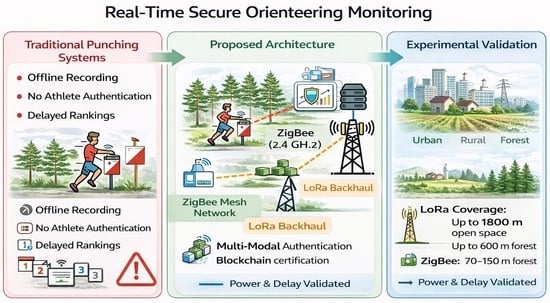
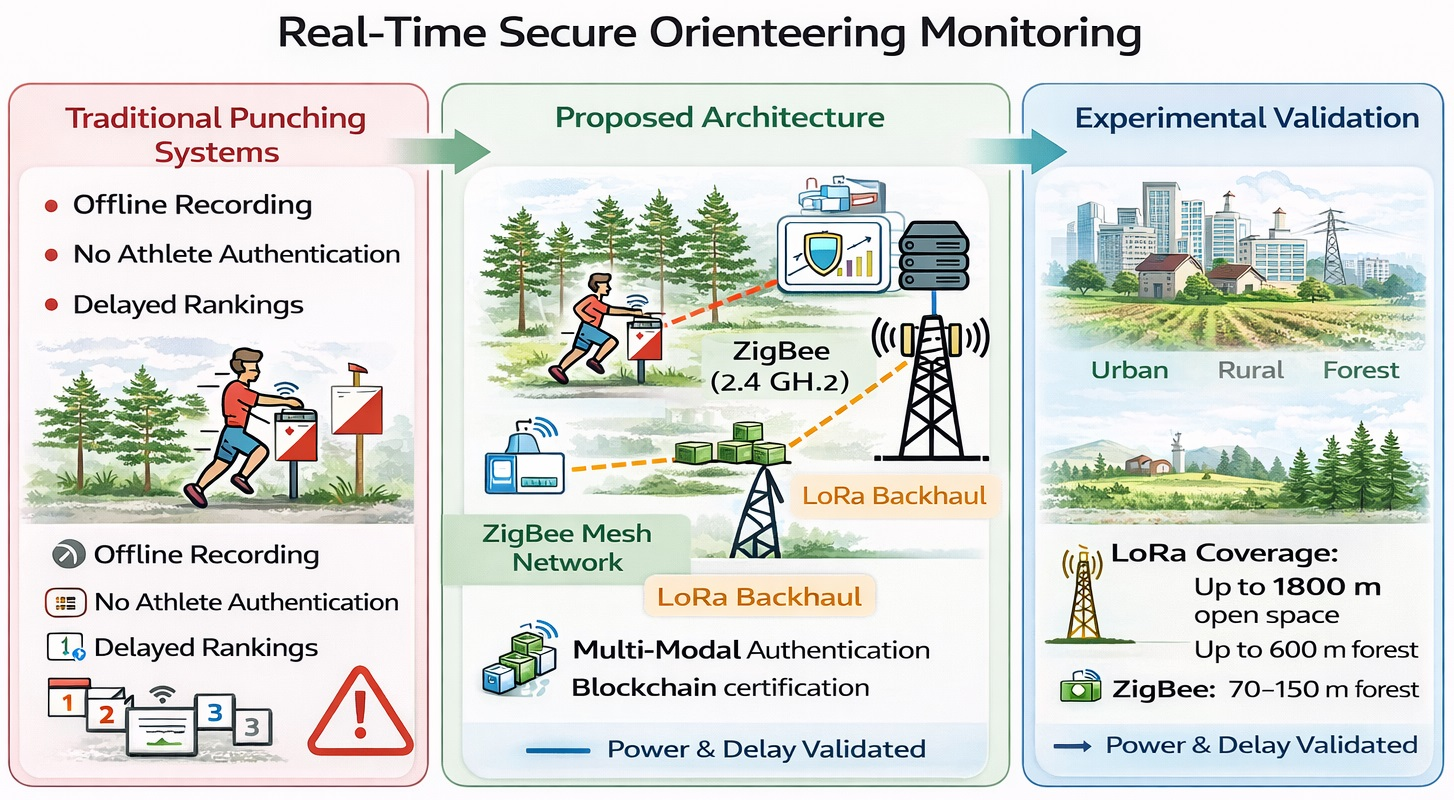
To overcome these issues and leverage the growing trend of Internet of Things (IoT) technologies in sports, this paper presents the design and validation of an innovative Wireless Sensor Network (WSN) for communication and collection of the athletes’ data during the competition. The proposed system architecture guarantees the automatic transmission of athlete data and the visualization of real-time results through a robust hybrid network architecture integrating blockchain components. This architecture utilizes a combination of local ZigBee mesh for reliable connectivity of the punching stations [
3,
4] and LoRa (Long Range) technology [
5,
6] for extending distance communications across complex terrains. Moreover, we provide a multimodal authentication for the athlete when he reaches the punching station and a private blockchain for immutable certification of each athlete’s passage.
WSNs naturally provide the technological enabler of this transition from end-of-race data retrieval to continuous event-driven monitoring. By distributing multiple low-power sensing and communication nodes throughout the competition area, a WSN can transform each punching station from a stand-alone recorder to an active network endpoint, capable of reporting control passages as they take place. In this context, the network has to meet more stringent requirements than in conventional environmental monitoring deployments: it has to ensure the timely delivery of short, critical messages, i.e., passage events, tolerate intermittent links and topology changes caused by terrain and foliage, and operate for extended periods with limited energy and computational resources. Moreover, the outdoor nature of orienteering introduces strong variability of radio propagation, with multipath, shadowing and attenuation determined by vegetation and irregular morphology, which may rapidly degrade link quality and make single-hop or purely star-based architectures unreliable. For these reasons, robust multi-hop connectivity and adaptive routing become essential to preserve coverage and continuity of service, especially when controls are placed in remote areas where wired infrastructure and cellular networks are unavailable or undesirable.
To mitigate these constraints, WSN design choices have to explicitly balance the issues of reliability, scalability, and energy efficiency. Low-power, short-range technologies can provide self-healing mesh features, with redundant paths between nearby punching stations that allow them to mitigate local obstructions. Their limited range, however, may be insufficient to cover kilometers of complex terrain up to the event control center. On the other hand, long-range, low-power links are able to extend connectivity over wide areas, normally at the cost of lower throughput and stricter duty-cycle constraints, which require careful traffic engineering and data aggregation strategies. A suitable architectural pattern for real-time orienteering monitoring is, therefore, represented by a hierarchical WSN approach, wherein local short-range mesh segments provide resilient intra-area connectivity and higher-tier, long-range links forward aggregated events toward the central infrastructure. A hybrid WSN is adopted in this work to enable the continuous data collection of punching stations, reduce latency with respect to both intermediate standing computations and final result calculation, and provide an operational baseline on top of which additional security mechanisms can be integrated in a coherent fashion.
In order to guarantee unambiguous authentication and recognition of each athlete at each punching station, a multi-factor, multimodal biometric system is also adopted. It requires a registration (or enrollment) phase to acquire athlete biometric data (e.g., fingerprint and voice). The athlete is equipped with a device (e.g., a wristband) for personal data capture. When he reaches the punching station, the authentication system performs quality checks on his biometric data, verifying that they exceed minimum reliability thresholds (quality score, expected false match rate), preventing false alarms, spoofing, and cheating behaviors. After the athlete has been successfully recognized on the bracelet, the punching station then enriches this information by adding its own station identifier, time stamp and other useful data.
The system adopts a private Ethereum-based blockchain [
7,
8] to ensure data immutability and permanent certification via smart contracts [
9], eliminating the need for intermediaries. This architecture is built on four pillars: decentralization, which reduces monopoly risks and censorship; transparency, providing shared access to prevent fraud; security, utilizing advanced encryption to make data tamper-proof; and efficiency, which streamlines processes to reduce operating costs and increase transaction speed. Specifically, the blockchain stores crucial information, including the athlete’s identifier (ID), the punching station ID, and the precise timing of the passage. By requiring the checkpoint to sign the interaction with its private key, the system guarantees the authenticity and data integrity of the registered events, ensuring that the information cannot be altered retroactively. A private configuration was selected to meet the requirements of limited hardware resources and restricted access to data verification.
The main contributions of this paper can be summarized as follows:
We propose a hybrid WSN architecture for outdoor orienteering competitions, combining short-range ZigBee connectivity and long-range LoRa links to enable reliable, near real-time collection of checkpoint events without existing communication systems. Unlike available solutions based on offline data collection, the proposed system enables a real time monitoring of the competition.
We address the lack of athlete authentication processes in traditional orienteering systems through the integration of an authentication scheme ensuring verification is conducted locally at each punching location and then provided to race organizers.
We incorporate a private blockchain infrastructure that ensures immutable, verifiable, and tamper-resistant certification of athlete passages, thus guaranteeing data integrity and traceability.
The proposed architecture is experimentally evaluated through a real-world measurement campaign, focusing on assessing wireless coverage and communication reliability in heterogeneous outdoor scenarios, which are typical of orienteering environments. The feasibility is also investigated in terms of WSN performance, delay analysis and power consumption evaluation.
The paper is organized as follows. In
Section 2 we review the literature related to the WSN.
Section 3 details the system architecture, presenting the three main functionalities: the dedicated WSN for communication, the subsystem for multimodal athlete authentication, and the blockchain network designed to ensure the immutability of collected data.
Section 4 describes the Materials and Methods, covering the implementation of the WSN nodes, including the punching station and the aggregation station, as well as the authentication enrollment phase.
Section 5 reports the results obtained through the measurement campaign, evaluating the WSN performance in terms of wireless coverage across three representative environments: forested and urban areas and rural/no obstacle propagation conditions. This section also investigates the WSN feasibility by analyzing the data rate performance, the transmission delay and the power consumption. Finally,
Section 6 provides the conclusions and final discussions.
2. Related Works
WSNs represent a fundamental technology for connecting the physical world with digital systems, allowing for real-time monitoring of environmental phenomena and human activities in a distributed way. Several surveys highlighted the versatility of WSNs in different application sectors, ranging from environmental and agricultural monitoring, passing through military surveillance, home automation, up to healthcare, without forgetting the challenges related to sensors’ scarce energy and computational resources and security of communications [
10,
11]. In general, a WSN consists of a multitude of low-power sensor nodes that co-operatively collect data from an area and transmit them to a mediator or gateway for being processed. Intrinsic constraints characterizing these networks (such as scarcity of energy, reduced bandwidth, and dynamic topologies) demand ad hoc protocols and innovative solutions for guaranteeing reliability and continuity in the provided services [
11]. Very recent works propose an overview about the basics and the future trends of WSNs, underlining that the evolution of WSNs will be increasingly related to the IoT and to the introduction of advanced mechanisms for data management and security [
11].
Other research efforts focused on performance aspects, demonstrating, for instance, how throughput, latency, and reliability vary in low-power WSNs under realistic channel conditions and when energy is scarce, to become essential in the selection of short-range technologies in the case of distributed sensing [
12]. This performance evaluation represents an important piece in choosing the MAC/PHY parameters for planning WSN deployments in complex physical environments.
In outdoor and environmental monitoring contexts, WSNs have found wide use due to their ability to cover large areas at low cost. Already more than a decade ago, WSN-based systems have been proposed to detect environmental parameters such as weather conditions, air quality, forest fires, and other physical quantities in the territory [
13,
14]. These pioneering works demonstrated the feasibility of distributed sensor networks powered by batteries or solar energy to gather environmental data in near real time, although with limited computational capabilities and often without Internet connectivity for immediate data availability. Next, improving the scalability and security of such systems has become the focus of research attention. In the literature, there are several surveys and studies analyzing WSN protocols optimized for environmental monitoring, and the related security challenges. For example, the need to protect the integrity of sensor data and the authentication of nodes in unattended scenarios is repeatedly emphasized [
15]. Hybrid architectures have also emerged, which integrate WSNs with complementary technologies, such as Unmanned Aerial Vehicle (UAV) or drones and crowd sensing approaches, aiming at extending the spatial coverage and amount of data collected, therefore opening the way to large-scale environmental monitoring with heterogeneous networks [
16]. These combined solutions aim at overcoming the limits of traditional WSNs alone, for example, by mitigating connectivity problems in remote or hard-to-wire areas and improving the system resilience facing failures of single sensor nodes.
Parallel to the environmental domain, a growing line of research has explored the adoption of WSNs in sports fields and in the monitoring of outdoor physical activities. However, commercial electronic punching systems widely used in orienteering competitions are typically not discussed in the WSN literature, as they operate under a fundamentally different, offline-first paradigm. In sportive contexts, the objective is to exploit wearable or field-distributed sensor networks in order to acquire data about athletic performance, athlete conditions, or event progress in real time. As an example, Bonaiuto et al. propose a multi-protocol WSN for elite sports applications that is composed of a central node and various peripheral nodes worn by athletes or positioned in the competition area, capable of acquiring biomechanical and environmental parameters relevant during performance [
17]. Wang et al. develop a monitoring method based on WSNs for traditional national sports events, underlining how a sensor network can provide real-time feedback about athletes’ motor activity during outdoor competitions [
18]. Another recent example is given by embedding sensors in “smart” equipment used during physical activity: Pierleoni et al. present a WSN embedded in special Nordic Walking poles, able to monitor the user’s exercise and assess the correctness of the training performed [
19]. The adoption of WSNs in these scenarios makes it possible to directly gather performance metrics on the field (e.g., speed, times, accelerations, posture) and transmit them to analysis systems to provide coaches and athletes with immediate and objective information. Beyond monitoring itself, some works propose complete platforms for intelligent management of sports events: Zhu et al. describe an Intelligent Sports Management system that exploits a distributed WSN to gather unified data coming from different sports disciplines and to support analysis functions based on machine-learning algorithms, with the two-fold purpose of preventing injuries and optimizing athletic preparation [
20]. Furthermore, experimental studies show that WSN reliability in sport scenarios strongly depends on physical deployment conditions: Ndżı et al. present systematic measurements of signal propagation on sports grounds and roads, demonstrating substantial fluctuations in link stability and range due to ground reflections, obstacles, and human motion [
21]. These findings highlight the need for adaptive communication strategies when WSNs are applied in open-field competitive environments.
Besides application development, the literature has explored specific areas concerning the adoption of WSNs in outdoor and sporting scenarios, such as those related to radio-signal propagation and wireless communication reliability in non-conventional settings. In fact, in sports environments, sensor nodes may be deployed either in very large open spaces, such as marathon competitions, or in congested areas, such as crowded stadiums: conditions that significantly affect radio performance. Ndżı et al. perform a systematic analysis of the problems of electromagnetic propagation of low data-rate WSNs in sports fields and roads, highlighting how obstacles, vegetation, terrain, and even the human body of athletes may attenuate or reflect the signal, with unpredictable variations in the link range and stability [
21]. These results suggest that adequate margins and adaptive mechanisms should be considered in network design to guarantee continuous coverage during sport events, particularly in applications requiring high levels of dependability, such as official timing. Sport timing itself is another area where the adoption of WSNs has proved effective: Lee et al. present a lightweight system for lap-time measurement in alpine skiing based on a line of sensor nodes placed along the course communicating through a Time-Division Multiple Access (TDMA) protocol to record skiers’ passes with high temporal precision [
22]. Each athlete wears a small transmitter node that, when passed close to detection nodes placed along the route, enables automatic identification and timing of performance. Similar solutions show that WSNs can replace or complement traditional systems, such as RFID transponders or manual timing, offering greater flexibility and coverage over extended courses without wired infrastructure.
Despite the noticeable progress described above, some important open challenges still remain regarding user authentication and secure traceability of events in distributed scenarios. In an outdoor sports competition with multiple sensorized checkpoints, for instance, it is pivotal to ensure that every signal collected (e.g., a checkpoint crossing) effectively pertains to the right athlete and is not falsifiable or fraudulently replicable. However, a number of WSN systems developed so far neglect robust authentication mechanisms for the actors involved. All too frequently, sensors and wearable devices are assumed to operate in a trusted environment, without any cryptographic protocol aimed at verifying the identity of the node or user generating the data [
15]. In this respect, further insights are given by Zhang and Mao, proposing a multi-factor authentication protocol for WSN-assisted physical exercise, showing how lightweight identity verification mechanisms (biometrics + passwords + ZigBee-based communication) can be integrated into sensor networks in order to reinforce user authentication and prevent impersonation attacks [
23]. Furthermore, recent studies point out that attacks on IoT/WSN infrastructures, such as Distributed Denial of Service (DDoS) or spoofing, may seriously degrade network availability and sensor-node energy and therefore require novel detection and mitigation mechanisms. For example, Yaras and Dener present a hybrid deep learning Intrusion Detection System (IDS) using a Long Short-Term Memory Networks Convolutional Neural Network (CNN-LSTM), which can detect malicious traffic patterns with accuracy as high as 99.995% in large-scale IoT datasets, demonstrating the need to embed security intelligence into WSN-based systems [
24]. This may potentially leave room for vulnerabilities: for example, a malicious actor might intercept or spoof the signals of a sensor node, tampering with the correctness of detections. On the tracking side, current solutions in the sports domain normally limit themselves to statically associating a unique ID to each sensor worn by the athlete, such as, for example, the ski-timing system proposed in [
22], while failing to provide a proper distributed verification scheme able to ensure that the position/time data actually originate from the expected athlete and are gathered in a trustworthy way. This problem becomes more serious in wide-scale scenarios, such as city marathons or mountain trail running, where dozens or hundreds of nodes and participants interact, as the lack of cross-authentication and secure logs makes it challenging to prevent attempts of checkpoint spoofing or athlete substitution along the course. The authors in [
25] proposed a wireless biometric fingerprint attendance system, which identifies a user by scanning his fingerprint through a reader and comparing it with a repository. Unfortunately, this requires a constant connectivity with database, and security and privacy are reduced during the transmission.
An emerging line of research to address these issues refers to blockchain technology as a means to certify physical events detected by sensors in an immutable and distributed manner. Blockchain, thanks to its decentralization, transparency, and tamper-resistance properties, has been proposed as a solution to ensure that critical information like, e.g., athlete pass-times, or completion of a given trial, is stored on a secure public ledger, hardly modifiable after the fact. In the sports sector, recent blockchain applications have mainly concerned ticket management and the creation of collectible digital assets like fan tokens or Non-Fungible Tokens (NFTs) [
11], while other works have recently explored blockchain-enhanced security models for IoT and WSN infrastructures, discussing how distributed ledger technology can enforce data integrity and provide trust guarantees in decentralized sensing environments [
26]. These ideas are for now mainly explored at a conceptual level, or in pilot projects, and do not yet appear to be integrated on a large scale into the WSN-based sports systems described in the existing literature.
Recent works have investigated the integration of blockchain technology with WSN and IoT infrastructures in application domains other than sports. Xie et al. proposed SHARP, a blockchain-based WSN framework for real-time student health monitoring and personalized learning, in which physiological data collected by wearable sensors are recorded on a blockchain to ensure data integrity and privacy in educational environments [
27]. Although the system demonstrates the feasibility of near real-time data collection combined with blockchain technology, its focus remains on continuous monitoring rather than on event-level validation with real-time visualization, as required in the considered case study. A comprehensive survey of security issues affecting IoT-based WSNs is presented by Nguyen et al., who classify attacks, vulnerabilities, and corresponding mitigation strategies [
28]. Their analysis highlights that data integrity, authentication, and trust management remain open challenges in large-scale sensor networks and identifies blockchain as a promising technology to address these issues. However, the survey does not consider application-specific requirements such as real-time event certification, user-level authentication, or operation in rural and infrastructure-less environments, which are typical of outdoor sports competitions. Another example is presented by Ghorbel et al., who design a blockchain-based supply chain monitoring system for olive fields using WSNs [
29]. In this work, sensor data are collected through ZigBee-based WSNs and stored on a permissioned blockchain to ensure traceability and non-repudiation along the supply chain. Although the proposed architecture successfully combines low-power WSNs, edge devices, and blockchain nodes, it is tailored to static monitoring scenarios with limited mobility and non-stringent latency requirements, and it does not address the problem of authenticating human operators or certifying time-critical physical events.
In other words, related works underline shared limitations and an unresolved gap: current WSN solutions for sports and environmental monitoring tend to operate in isolated or semi-offline mode, focusing more on data gathering for subsequent analyses rather than automating on-the-spot verifications during the course of the event. Very often, a distributed authentication infrastructure is also lacking, so sensor-recorded data are accepted trustingly without cryptographic guarantees on the identity of who or what generated them [
15].
Moreover, some intrinsic WSN limits remain: energy consumption limits the operational duration and forces trade-offs on sampling frequency and transmission power [
10], whereas unstable radio wave propagation in outdoor scenarios brings about possible losses and the need for redundancy to cover the entire area of interest [
21]. In addition, the throughput limitations and performance degradation in low-power WSN links reported in the literature confirm that robust communication in dynamic outdoor environments representative of many sports competitions is challenging [
12]. None of the analyzed works merges all the mentioned aspects into a single integrated system, as clearly summarized in
Table 1. This represents the main motivation beyond the research presented in this paper: filling this gap with a novel approach, which integrates WSNs, robust authentication mechanisms, and blockchain technology, aimed at enabling reliable tracking and secure certification of physical events in distributed contexts, such as outdoor sports competitions.
3. System Architecture
The architecture of the system designed to support the orienteering competition is based on three main functionalities, which are detailed below:
The WSN dedicated to communication;
The subsystem responsible for multi-factor and multimodal athlete authentication;
The blockchain network, which ensures the immutability of the data collected by the WSN.
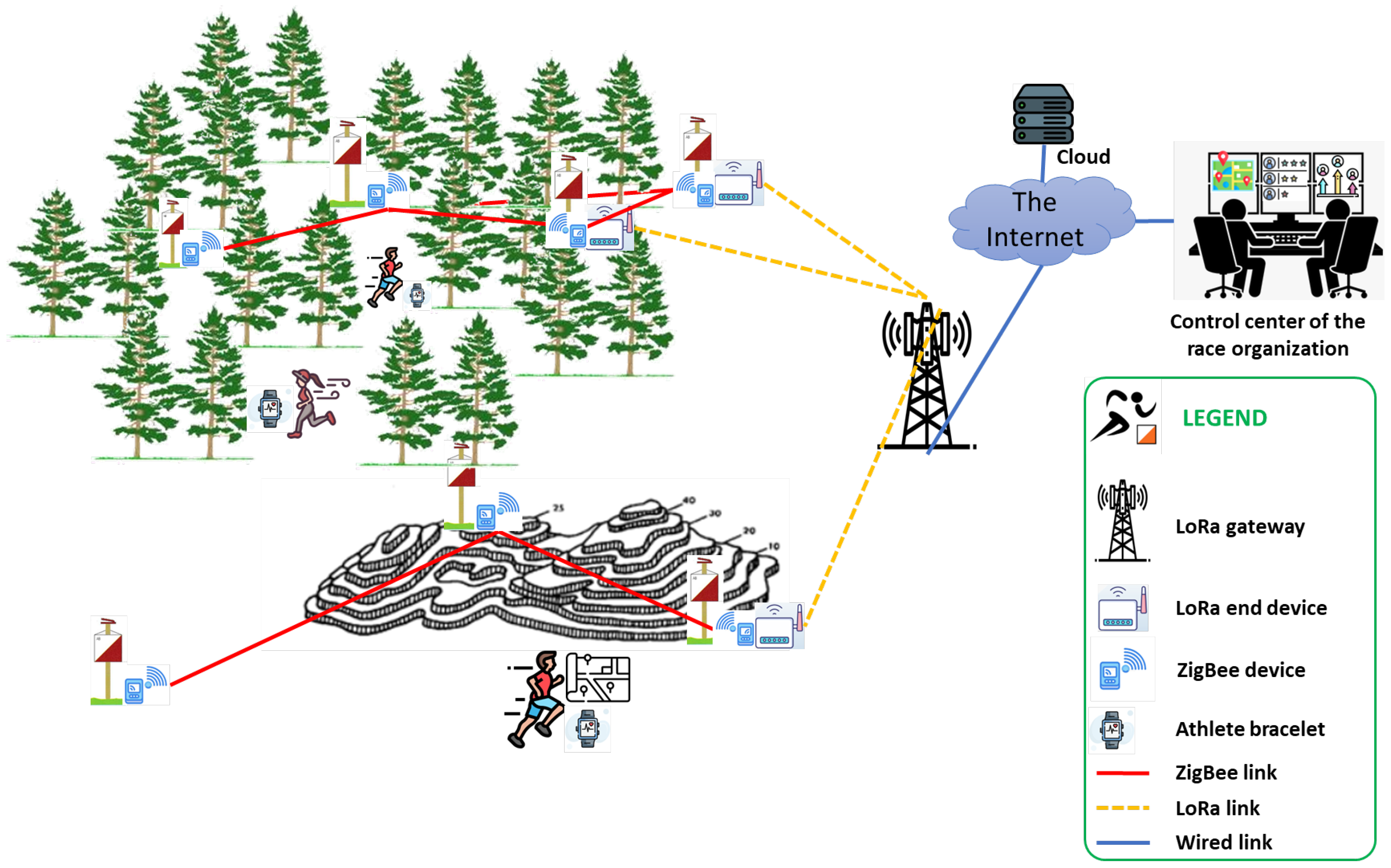
Figure 1 reports a schematic view of the orienteering competition.
The punching stations can be deployed according to the map defined by the race organizers, including areas that are difficult to reach or that lack cellular coverage. Each athlete is equipped with a wristband (i.e., a bracelet) that detects proximity to the punching station and provides unique authentication. In addition, the LoRa endpoints also implement blockchain functions, allowing the data recorded by the connected punching stations to be written to the blockchain in an immutable manner. The operation of each subsystem is detailed in the following sections.
3.1. LoRa/ZigBee Network
The main requirements of the monitoring network concern real-time performance and high reliability, even in highly heterogeneous environments. For this reason, the architecture proposed in this paper adopts a hybrid WSN, designed to provide an effective trade-off between coverage in harsh or irregular scenarios and long-distance communication, while preserving the robustness of data transmission. Two complementary technologies are therefore considered, each addressing one of the two key aspects of data transmission: (1) robustness and reliability, and (2) coverage in remote areas. For the former, we selected ZigBee [
3,
30], as it allows the individual sensor nodes to establish mesh-type connections, thus eliminating the need to transmit data to a single local star center. This enables the network to dynamically adapt both to propagation conditions, once the punching stations have been positioned at their designated locations, and to variability in data traffic (e.g., congestion) or temporal pathloss fading fluctuations. The main drawback of ZigBee is its limited coverage range. To compensate for this limitation, a second level of the monitoring sensor network is introduced, connecting the individual ZigBee nodes attached to the punching stations and aggregating them into clusters. Each local cluster forwards the collected data to an aggregator, which is equipped with a LoRa transceiver, enabling long-distance communication with the central control point of the orienteering event. Punching stations cannot be equipped with LoRa since they can be located in hidden places and no coverage may occur.
Figure 2 shows the conceptual diagram of the communication and monitoring architecture. The two levels of the sensor network are clearly visible: the first level, where nodes rely on ZigBee and establish mesh communications, and the second level, where the local aggregators use LoRa technology [
31] to transmit data to the event’s central management system.
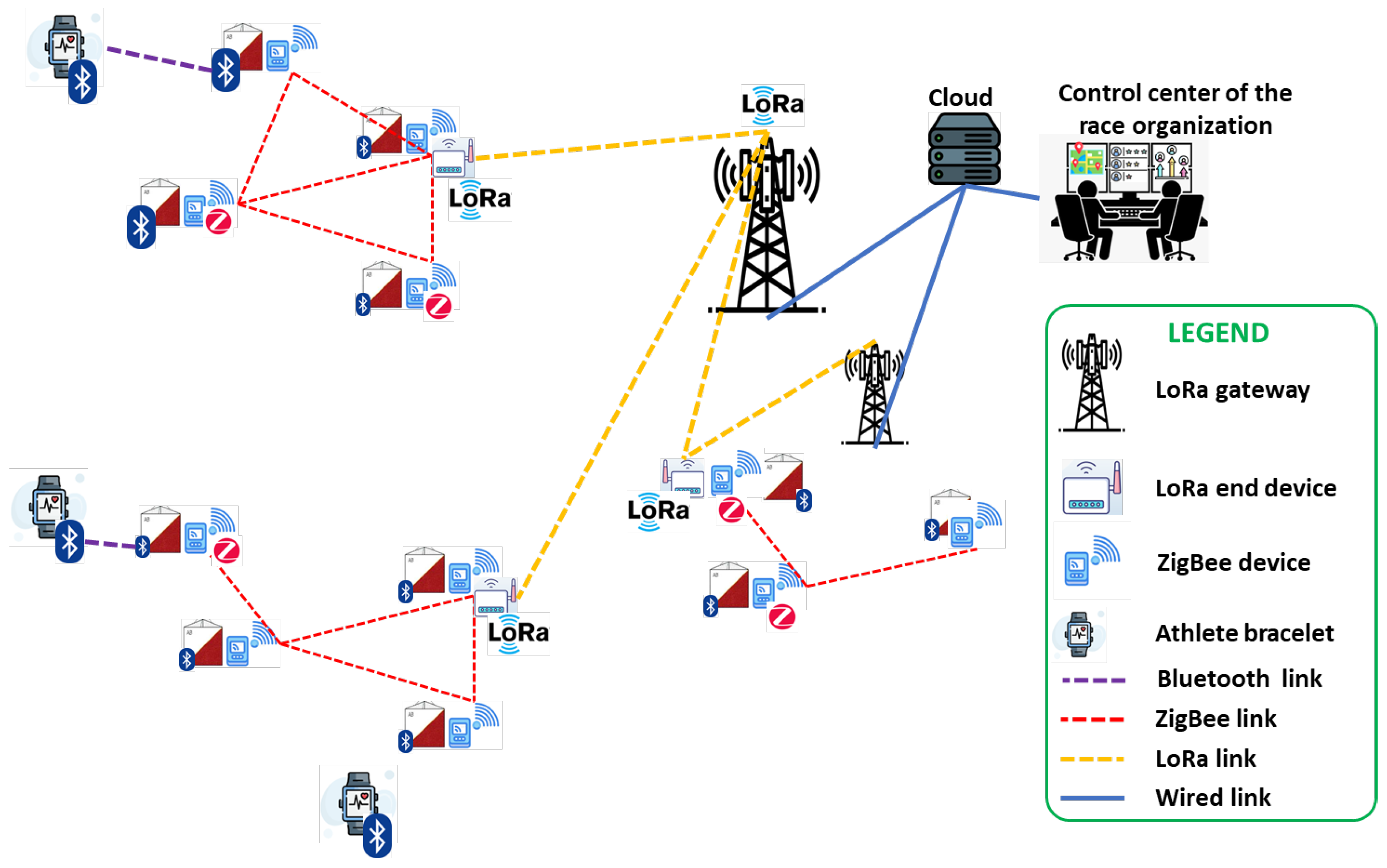
Punching stations can be grouped into clusters based on their position (i.e., electromagnetic visibility). In this way, they can transmit data on the athletes’ passage to their designated LoRa endpoint, also through mesh connections rather than relying exclusively on a star topology. The various LoRa endpoints act as local concentrators for the data generated within each cluster. Moreover, they implement blockchain-node functionalities, allowing the recorded data to be stored immutably.
Communication from the endpoints uses LoRa links towards the available LoRa gateways deployed in the competition area or installed ad hoc by the organizers. It is worth noting that the presence of multiple LoRa gateways enhances communication redundancy. The data transmitted over the LoRa network is forwarded to the cloud and made available to the end user (i.e., the control center of the competition organization that monitors the race). The LoRa application running in the cloud or in the organization’s control center also removes any duplicate message that may arrive when multiple LoRa endpoints are simultaneously connected to more than one gateway.
3.2. Multimodal Authentication
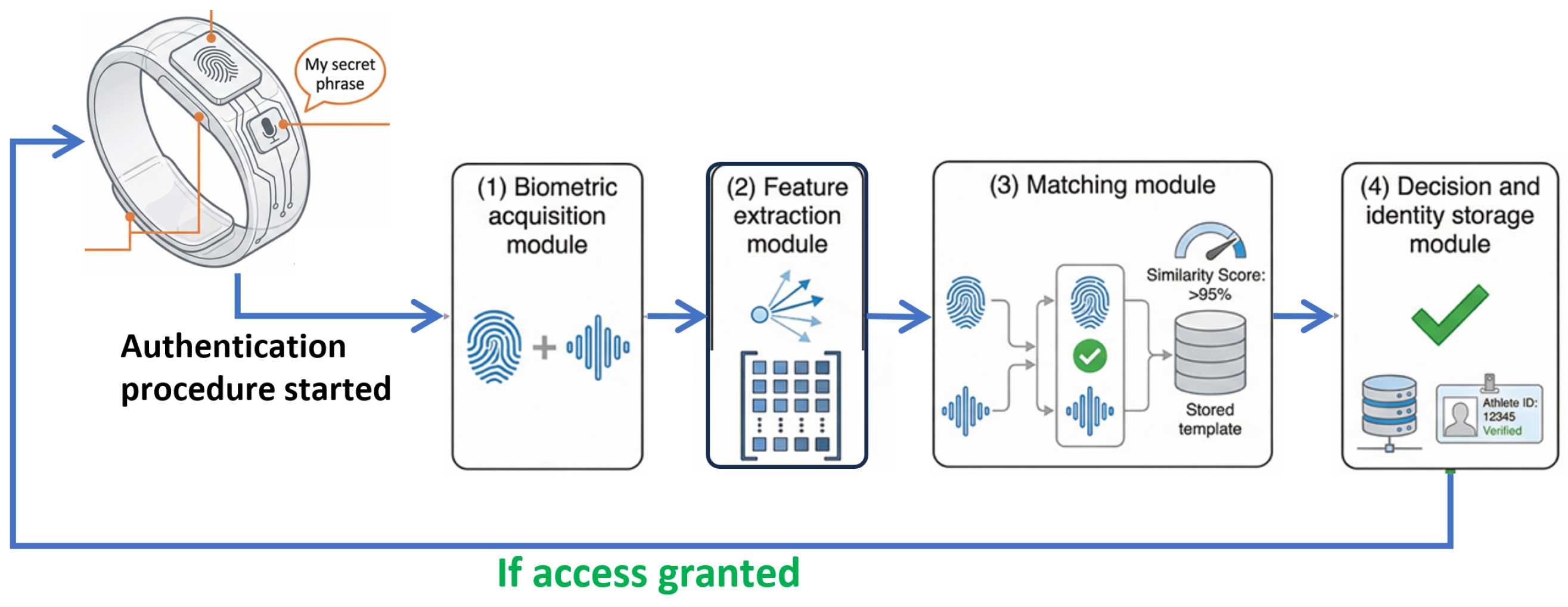
The proposed system must guarantee unambiguous authentication and recognition of each athlete at every punching station. For this reason, a multi-factor, multimodal biometric architecture is adopted, in line with classical biometric recognition models. The solution is organized into four fundamental modules (see
Figure 3).
The biometric acquisition module includes the acquisition devices (sensing unit or scanners) responsible for capturing the athlete’s raw biometric data. The feature extraction module processes these signals and derives a set of salient and unique characteristics that form the reference biometric template. The matching module compares the template stored during enrollment with the samples acquired during the race, computing for each comparison a similarity score with respect to a predefined threshold. The decision module determines whether the score exceeds the acceptance threshold, thereby validating the athlete’s identity, while the identity storage and management module maintains, for each subject, the reference templates, the subsequent samples deemed valid, and the associated biographical information, so as to support traceability and auditing of the entire authentication process.
In the proposed model reported in
Figure 3, the biometric system operates in verification mode, with the goal of attesting the user’s authenticity by comparing the biometric traits acquired in real time with the reference template stored in the storage module during the enrollment (registration) phase. The verification procedure consists of two steps: first, a similarity score is computed between the acquired sample and the template; second, this value is compared against a predefined threshold, accepting the recognition as genuine only if the score exceeds the threshold, or otherwise classifying it as non-authentic.
The proposed biometric architecture employs a multimodal approach, fusing multiple biometric traits (e.g., fingerprint or voice) to produce a more robust and secure authentication verdict than monomodal systems. In this work, a wristband is adopted and serves as a portable biometric node (token), integrating a capacitive fingerprint sensor and a short-range microphone for voice recognition, but further techniques can be considered, as in [
32]. The authentication process follows a specific workflow: 1. Acquisition: The user provides a fingerprint and a spoken keyword directly to the wearable; 2. Processing: An embedded microcontroller extracts features from both raw signals and compares them against pre-enrolled templates. 3. Decision Fusion: The system integrates scores from both modules to generate a single, joint authentication decision. By delivering a pre-verified identity to the punching station, the wristband mitigates impersonation risks and ensures that every race event is robustly and non-repudiably linked to the legitimate athlete.
The system integrates a secret passphrase provided after voice recognition, creating a robust security framework based on three classical factors: 1. “Who you are”: biometrics (fingerprint and voice); 2. “What you have”: the physical wristband (token); 3. “What you know”: The secret password. Even if the knowledge element (i.e., the password) and the physical token (i.e., the wristband) are in the same technological domain, the combination of the voice and the fingerprint ensures high security. In fact, an attacker would simultaneously need the physical wristband, the ability to spoof both biometrics, and knowledge of the passphrase.
A well-designed multimodal system achieves higher performance compared to monomodal ones by optimizing the balance between two metrics. The False Acceptance Rate (FAR) decreases significantly as an impostor must successfully spoof multiple modalities simultaneously, while the False Rejection Rate (FRR) can be lowered using score-level fusion (e.g., weighted averaging), where a high-quality trait compensates for a temporary low-quality acquisition. Although FAR and FRR remain linked by the global decision threshold, multi-biometrics provide a wider operating margin. Careful calibration of the fusion rules allows the system to reach a “working point” where both error rates are lower than those of any single-trait system.
3.3. Blockchain
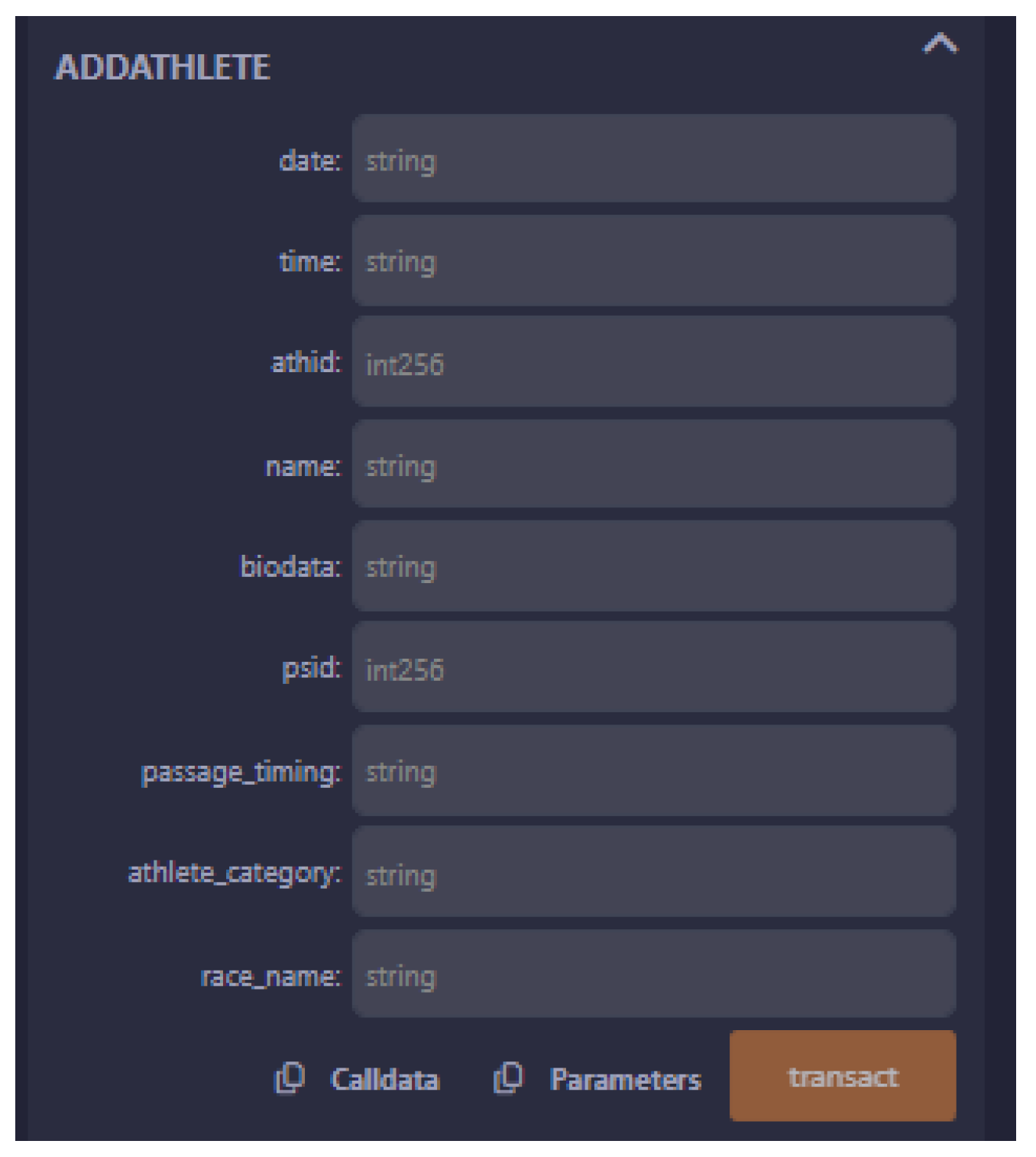
By exploiting the potential of smart contracts, the blockchain acquires the ability to record data not only related to transactions and currency transfers between users. In fact, it is possible, for example, to save information related to property transfers and purchases of various types of product, tokenize real-world assets, and much more. In the proposed system, we use this technology to save the data of athletes who reach a punching station. Each checkpoint located in the LoRa endpoints will have a program that interacts with a smart contract to save the following data (at least): the athlete’s ID, performed athlete authentication through biometric data, the punching station ID, timing of athlete passage, athlete category, and race name. The checkpoint software signs the interaction with the smart contract with its private key, certifying the data entered.
In
Figure 4 we developed a smart contract with Remix IDE using Solidity language. If the network topology allows for it, a blockchain light node can be inserted at the nodes of the LoRa network. Blockchains can be classified into different types [
33], including public (permissionless), private (permissioned), and consortium (public permissioned) blockchains, each with distinctive characteristics in terms of access, decentralization, and use. A private blockchain is a network that is not visible to everyone and can only be accessed with authorization. This blockchain is characterized by the presence of an organization that controls permissions related to access, reading and writing data, and mining blocks. Such networks can be created using, for example, Multichain [
34] Enterprise Blockchain or Ethereum Private Network (using Hyperledger Besu [
35] or Geth [
36]). For the development of our project, we used a private blockchain because node management requires limited hardware and software resources [
37,
38]. Furthermore, it does not need to be publicly accessible; it is sufficient for authorized persons to be able to access and verify/retrieve the relevant data.
4. Materials and Methods: WSN Node Implementation
4.1. Multimodal Authentication
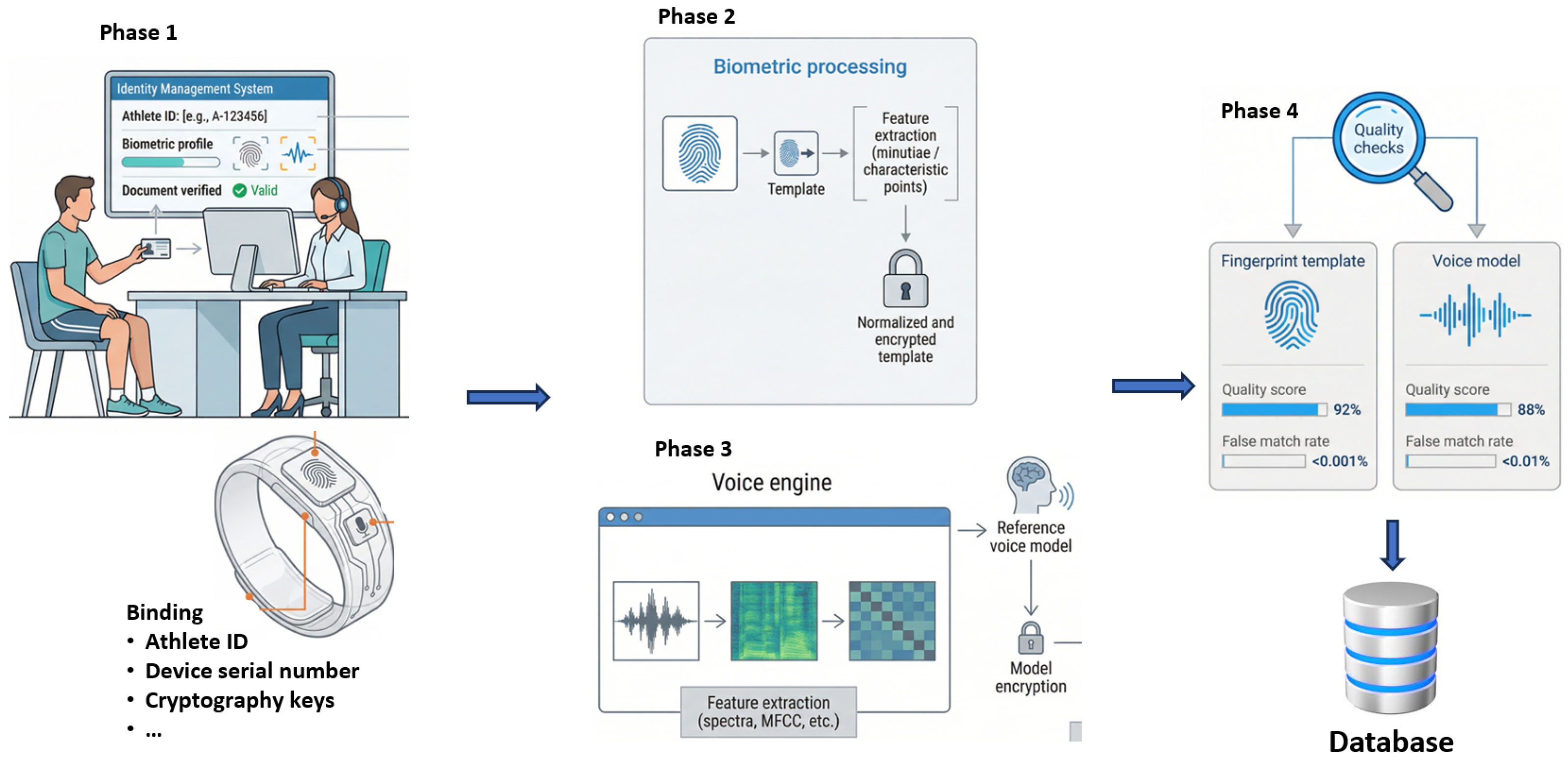
The authentication process (
Figure 5) begins with a preliminary enrollment, which is a controlled registration procedure tailored for multimodal identity management.
Phase 1: Preparation and binding. During race registration, the athlete’s identity is verified via a valid document and assigned a unique athlete ID. The assigned biometric wristband is then cryptographically linked to the athlete’s profile by registering its hardware serial number and encryption keys, ensuring a secure binding between the identity and the physical token.
Phase 2: Digital fingerprint acquisition. Multiple fingerprint samples of the athlete are acquired on the wristband to ensure stability by the competition organizer. The system extracts a biometric template (minutiae), which is immediately encrypted and normalized. To ensure privacy, raw images are never stored, as only the encrypted templates are saved in the central database and linked to the athlete’s ID and to the wristband serial number. The device performs local multimodal verification (fingerprint + voice + passphrase) every time the athlete activates it before punching. If the matching score exceeds the threshold, the wristband generates a signed authentication token containing the Athlete ID and liveness data, which are to be sent to the punching station. This design transforms the wristband from a mute identifier into an active biometric node. Even if the device is stolen or shared with a teammate, it remains useless for impersonation, as it requires successful local biometric verification to function.
Phase 3: Voice and passphrase acquisition. The athlete defines a passphrase in the athlete’s native language and provides multiple samples in front of the microphone of the wristband to account for any fatigue and intonation condition. The voice engine extracts features like Mel-Frequency Cepstral Coefficients (MFCCs) to generate an encrypted reference model.
Phase 4: Quality validation. Following the acquisition, the system performs quality checks against reliability thresholds (e.g., quality score and False Match Rate). Once validated, a signed multimodal biometric profile is synchronized with the central database and edge nodes. To ensure privacy, raw biometric data (images or audio) are never stored. The system saves only abstract or encrypted templates so that these data can be used solely for matching during authentication and not for reconstructing the original trait. It is advisable to use AES-256 (Advanced Encryption Standard) in Galois/Counter Mode (GCM) or Counter with CBC-MAC (CCM) to provide both confidentiality and integrity, with unique keys managed through a Key Management System (KMS) for granularity. To enhance the privacy, AES can be combined with cancellable biometrics (non-invertible transformations), thus ensuring the original traits cannot be reconstructed even if keys are compromised.
In the event of a failed recognition at the punching station, the system distinguishes between biometric and technical failures. If one factor (e.g., voice) is valid but another (e.g., fingerprint) fails (i.e., partial biometric failure), the athlete is granted limited retries within a short time window. If issues persist, the passage is flagged for jury review. If all factors fail (i.e., total biometric failure), authentication is automatically rejected and the athlete must undergo manual verification at a help point. In case of technical failure, connectivity or battery issues trigger contingency procedures (e.g., backup devices or paper punching cards). All events are logged with timestamps and attempt counts for post-race auditing and FRR assessment.
Once recognized, communication occurs on two tiers. On the short link between bracelet and punching station, a minimal message containing the Athlete ID, device ID, an optional race identifier to prevent improper reuse, the recognition result and a few security parameters such as sequence number, nonce and message authentication code. On the long link, between the punching station and the backend, the station enriches the record with its Station ID, control type (e.g., start, intermediate, finish), and a synchronized timestamp as from GPS. It also transmits technical metadata (battery levels, signal quality, and firmware versions) to support real-time diagnostics and final result computation.
4.2. Punching Station
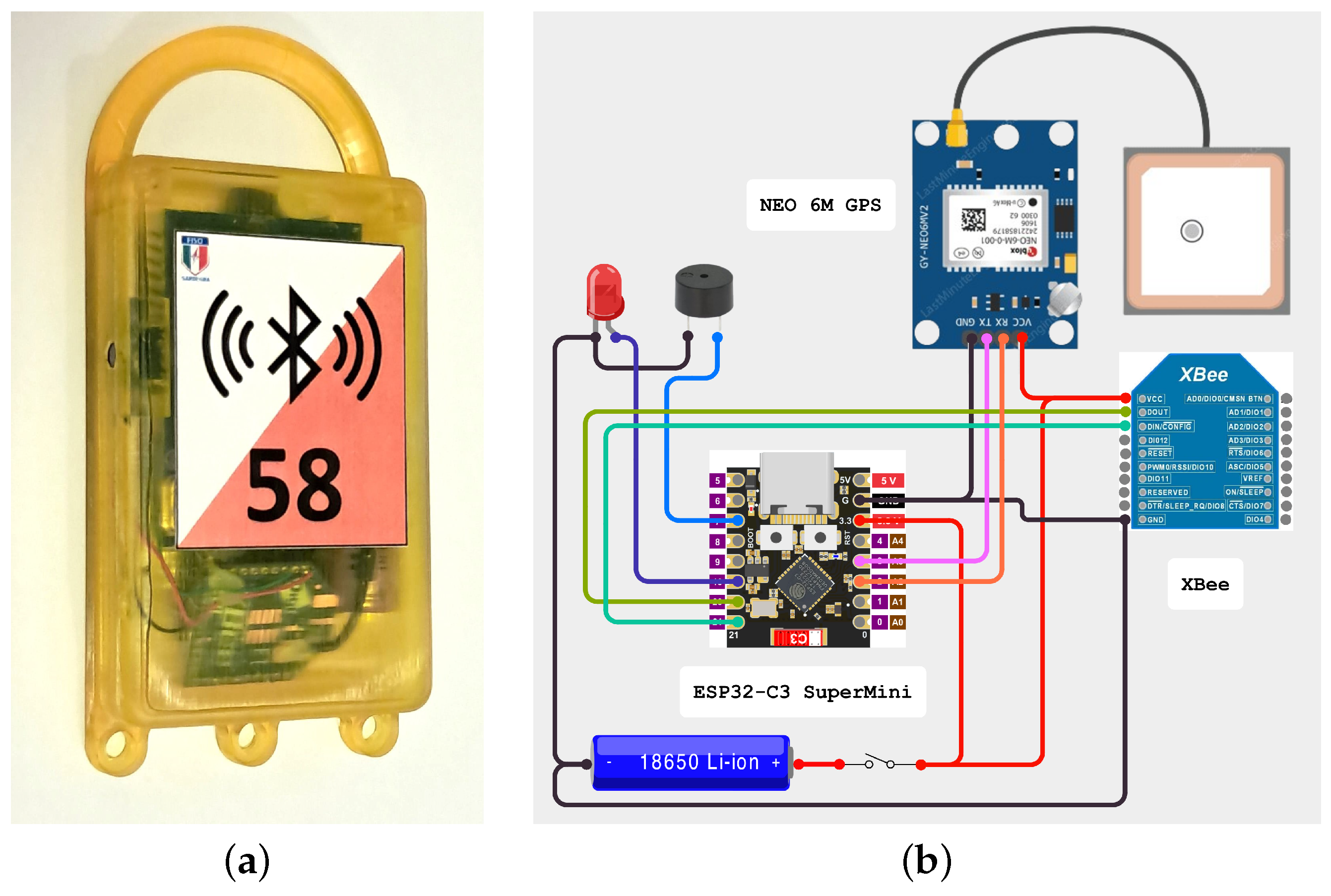
In this section, we reported the punching stations hardware (see
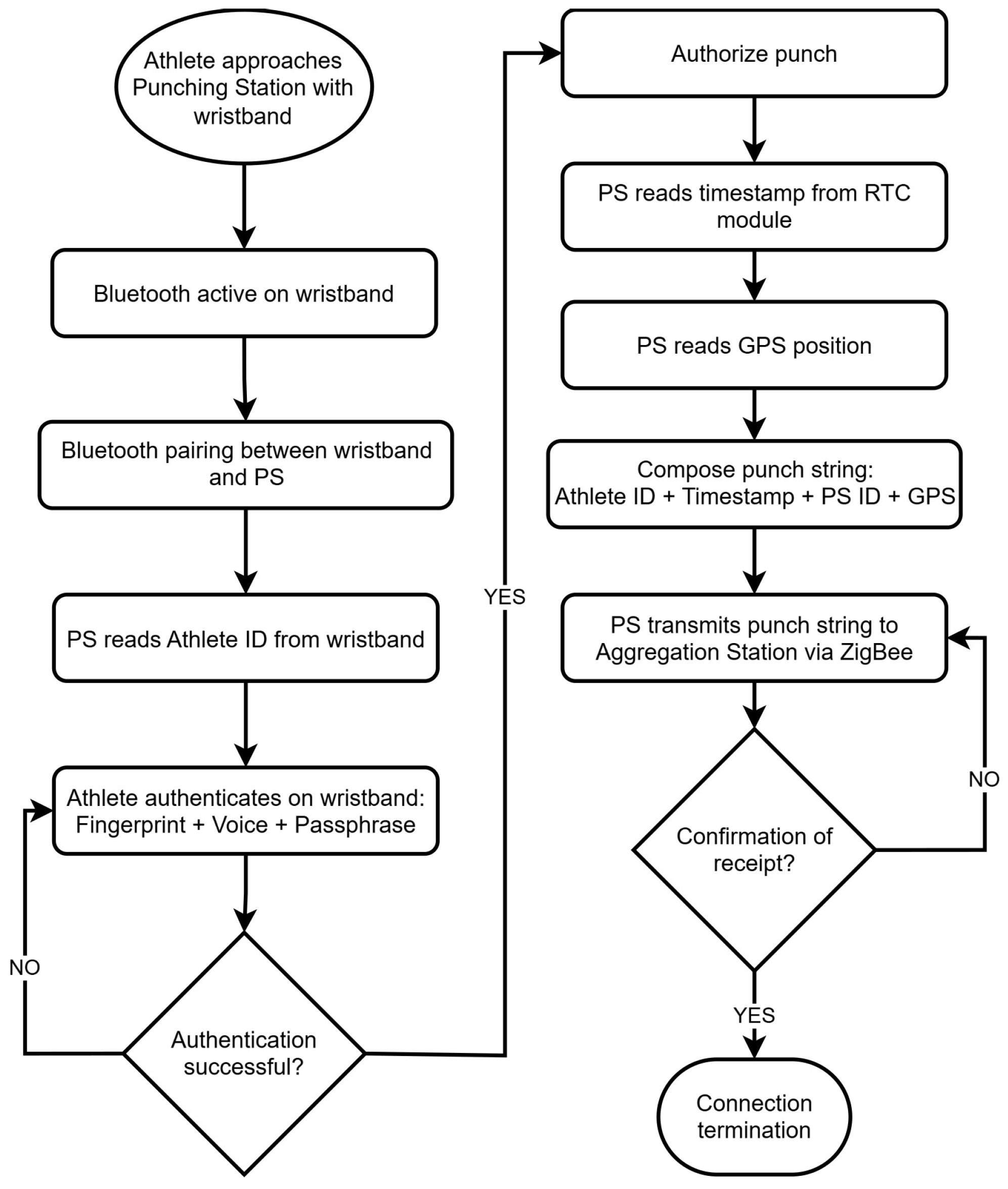
Figure 6) and a high-level description of the procedure that allows the athlete to interact with it (see
Figure 7). Each punching station is equipped with an Arduino-compatible microcontroller module, such as ESP32-C3 SuperMini, which supports Bluetooth BLE, WiFi connectivity and Real-Time Clock (RTC) module for maintaining the timestamp, connected to a GPS module for station location, and a Digi XBee S2C in ZigBee 2.4 GHz Router configuration.
When the athlete approaches the punching station, his device (i.e., the wristband) is activated for authentication based on proximity detection. In the considered use case, BLE used for the communication between the wristband and the punching station is configured in advertising mode rather than in connection mode. Therefore, no association is established between the two devices. The BLE module embedded in the wristband normally operates in a low-power sleep mode, while the BLE module of the punching station continuously emits a beacon and performs BLE scanning. When the athlete moves close to the punching station, the wristband detects a received signal strength exceeding a predefined threshold, ensuring that the athlete is located within a few meters of the station (less than 5 m). This event enables the athlete to perform the authentication procedure directly on their personal device using biometric modalities (fingerprint and voice), according to the multimodal procedure illustrated in
Figure 3. Once authentication is successfully completed, the BLE module of the wristband transmits the outcome of the authentication process, which includes the athlete ID and a nonce of approximately 30 bytes. The transmission duration is below 1 ms when considering the standard BLE advertising channels 37, 38, and 39. Each wristband performs a limited number of advertising transmissions (e.g., 10) with a randomized interval between 0 and 10 ms in order to mitigate message collisions when multiple athletes are simultaneously present in the proximity of the same punching station. The entire communication process is completed within approximately 100 ms, and any duplicate messages are discarded by the punching station. Thanks to the randomized transmission intervals and the frequency diversity provided by the three BLE advertising channels, the probability of packet collisions is significantly reduced. After a valid advertising packet is successfully received, the punching station constructs a minimal data packet (e.g., athlete ID, device serial number, punching station ID, GPS coordinates, timestamp, etc.), without including the full set of athlete personal data. This message is then transmitted to one of the aggregation stations (i.e., LoRa endpoints) via the ZigBee network. To prevent any potential issues, the wristband locally stores its activities, along with the corresponding GPS coordinates, enabling the race organization to perform post-race verification and identify any athlete passages not captured by the punching stations.
The transmission is performed by identifying a reachable aggregation station through scanning nearby aggregation stations or neighboring punching stations, enabling multi-hop communication when necessary [
39]. Finally, a confirmation of receipt is returned by the aggregation station, and the connection is subsequently terminated.
4.3. Aggregation Station
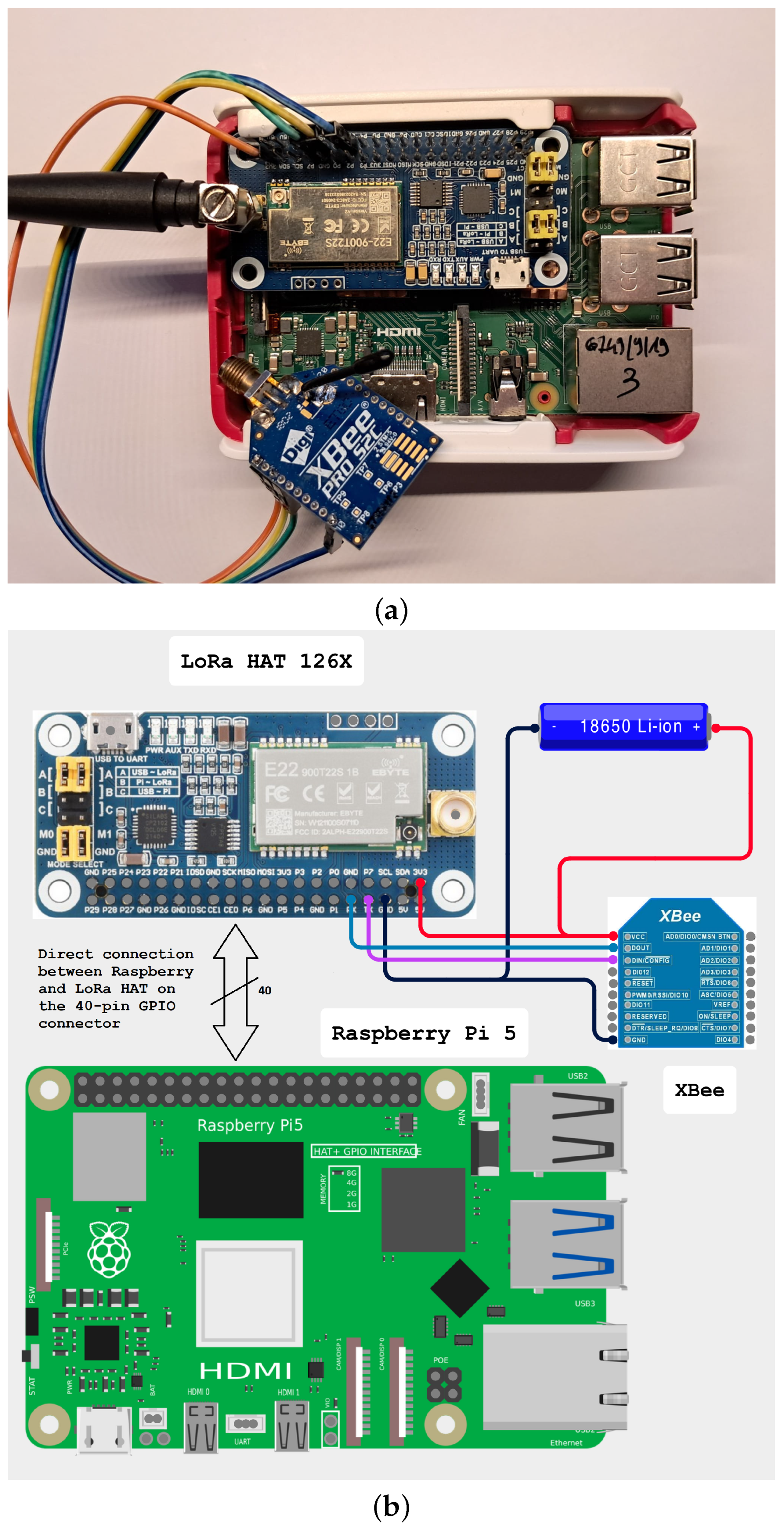
In this section, we describe the hardware used to implement the aggregation station and the procedure for transmitting messages to the organization’s cloud via a LoRa gateway. The aggregation stations act as endpoints where all competition data collected by the punching stations are aggregated and subsequently forwarded to the organization’s control center. Each aggregation station is equipped with a ZigBee module, specifically a Digi XBee-PRO S2C operating at 2.4 GHz and configured as a coordinator to communicate with the punching stations. In addition, it includes a Raspberry Pi [
40] and a Waveshare SX126X LoRa HAT operating at 868 MHz, which enables communication with the nearest LoRa gateway. The aggregation station runs the Raspberry Pi OS operating system, with Python installed to support data processing and communication tasks. See the
Figure 8.
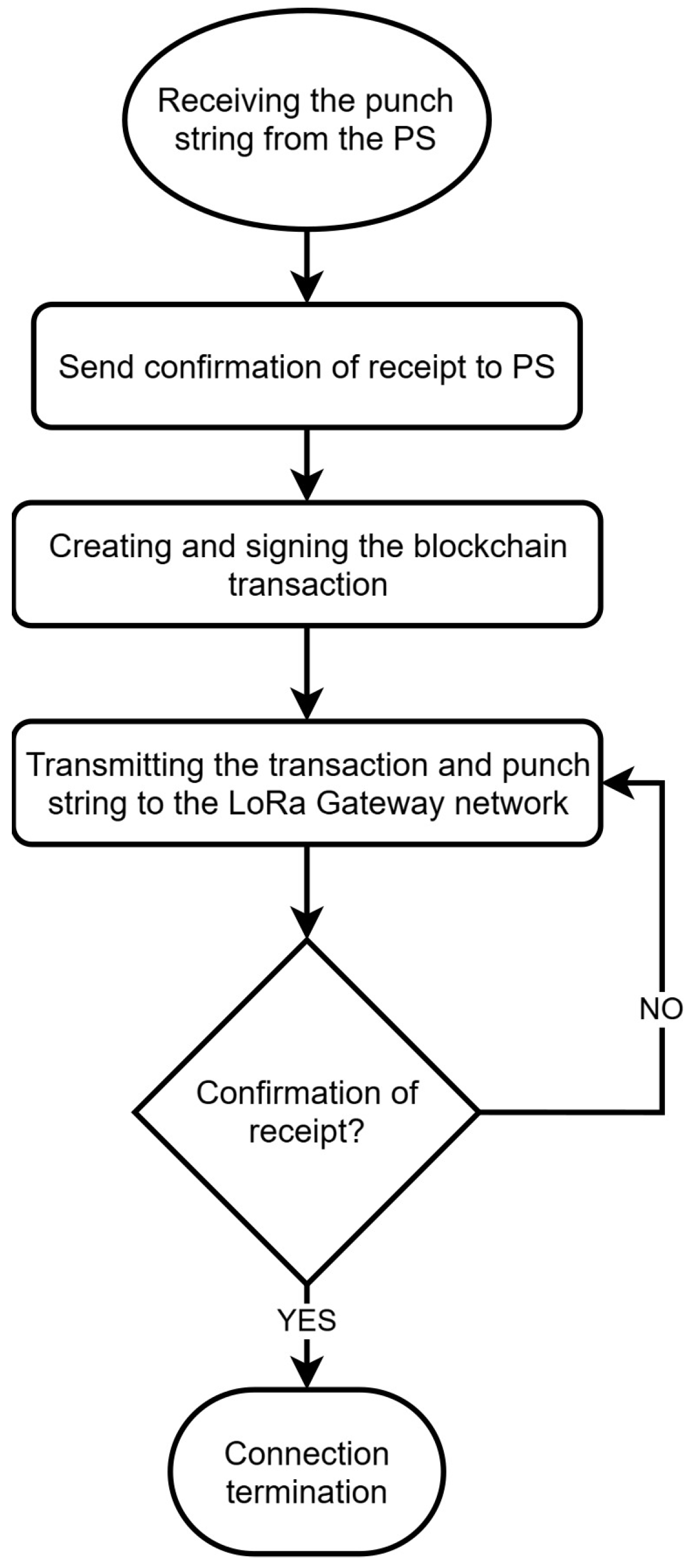
The sending procedure reported in
Figure 9 begins with the reception of message from the ZigBee network. At this point, the local node’s blockchain transaction is created and signed as in
Section 4.5. The punching and transaction strings are transmitted to the competition application server located in the cloud via the LoRa gateway. The receipt is confirmed to the aggregation station along with the transaction hash from the blockchain, and the connection is closed. Finally, receipt is confirmed to the punching station, then closing the other connection.
The aggregation station uses a proprietary Python-based application designed specifically to handle coordination between ZigBee-based punching station systems, the blockchain system, and the LoRa-based uplink to the competition control center. The software does not aim to implement any underlying communication protocols but relies on using underlying ZigBee and LoRa drivers and stack implementations provided with each of these hardware modules to implement its own proprietary application-level logic.
Algorithm 1 summarizes the main software logic implemented at the aggregation station.
| Algorithm 1 Aggregation station event handling and LoRa forwarding logic |
- 1:
Initialize ZigBee interface - 2:
Initialize LoRa interface - 3:
Initialize blockchain node - 4:
Initialize FIFO event queue Q - 5:
Initialize blockchain batch buffer - 6:
Initialize blockchain batching interval - 7:
Initialize last blockchain commit timestamp Now - 8:
while system is running do - 9:
if a punching packet is received from the ZigBee network then - 10:
ReceiveZigBee - 11:
SendZigBeeACK() - 12:
Enqueue() - 13:
Append() - 14:
end if - 15:
if Q is not empty and LoRa link is available then - 16:
Pick(Q) - 17:
repeat - 18:
SendLoRa() - 19:
WaitForLoRaAck() - 20:
until - 21:
Dequeue(Q) - 22:
end if - 23:
if (Now − and B is not empty then - 24:
CopyAndClear(B) - 25:
CreateBlockchainBatchTransaction() - 26:
SignBlockchainTransaction() - 27:
SendBlockchainTransaction() - 28:
Now - 29:
else if (Now − then - 30:
Now - 31:
end if - 32:
end while
|
Before concluding this section, it is worth noting the rationale for selecting the above hardware. The selection of the hardware components for the sensor network is not based on a detailed comparative analysis, since the main goal of this work is to provide a proof of concept. Therefore, the primary requirements focused on the use of stable and widely adopted transceiver components for both LoRa and ZigBee technologies, in order to ensure robustness, availability of mature and reliable drivers, ease of procurement on the market, affordable costs, and sufficient processing capabilities to support the developed software. Moreover, power consumption was required to be compatible with the duration of an orienteering race lasting several hours.
Table 2 summarizes these aspects.
Concerning alternative solutions for the punching stations, platforms such as ESP32 exhibit similar performance and functional behavior. However, for long-range communication between aggregation stations and the remote server, alternative technologies such as LTE or NB-IoT were intentionally avoided. This choice allows the system to remain independent of mobile network operators, thus eliminating the need for SIM subscriptions and avoiding potential coverage limitations of cellular technologies in remote or scarcely served areas.
4.4. LoRa Gateway
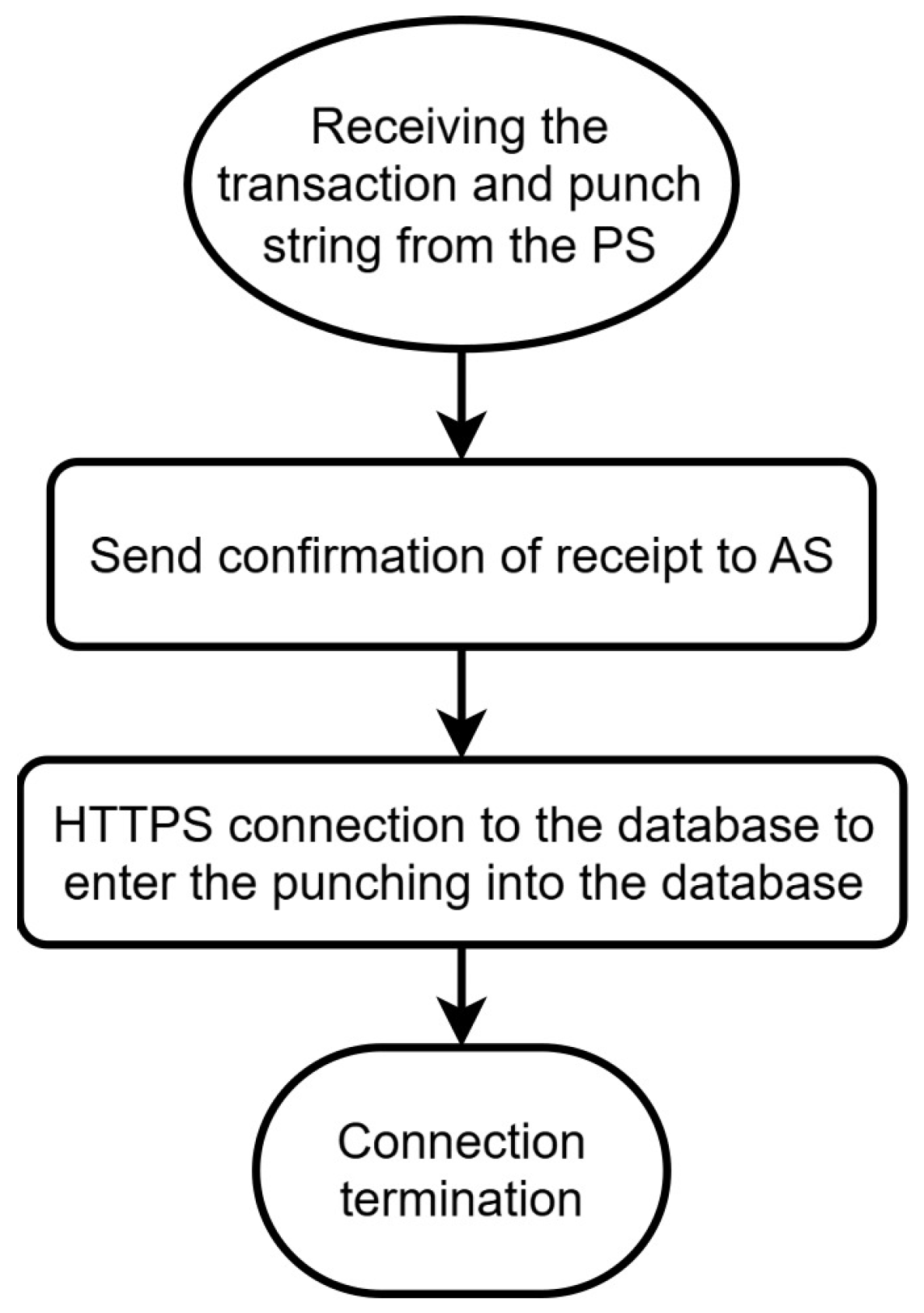
The LoRa gateway consists of a Raspberry Pi connected to a Waveshare SX126X LoRa HAT module at 868 MHz in receive mode.
Its main function is to forward the message generated by the punching station, containing the authenticated athlete’s passage data (including the athlete ID, punching station ID, timestamp, and GPS coordinates), which is received from the aggregation station via LoRa.
Figure 10 shows a high-level overview of the procedure. Initially, the LoRa gateway waits to receive the message. Next, an HTTPS connection to the cloud database is established in order to store the punching record, and a confirmation of receipt is sent back to the aggregation station. The connection can be established via cellular, Wi-Fi, or wired link. The blockchain transaction string is also received from the aggregation station. Finally, the successful receipt of the transaction is acknowledged, and the connection is closed.
4.5. Blockchain
The aggregation station is in charge of interacting with the smart contracts. Using its hardware features, it is possible to install both the Python/Java software for interacting with the blockchain and a lightweight local blockchain node. In fact, tests conducted in the laboratory show that it is possible to install both a Python 3.13 interpreter and a Java Virtual Machine on the Raspberry Pi OS operating system, depending on the blockchain with which to interact [
37,
38].
The application software performs the following main operations: 1. collects the data to be written on the blockchain; 2. prepares the transaction by establishing a connection (via libraries such as Web3 [
41] or Ethers.js [
42]) to the blockchain network node, using Remote Procedure Call (RPC) protocol [
43]; 3. creates the raw transaction by calling the smart contract function that allows the data (as described in
Section 3.3) to be saved; 4. signs the transaction with the private key of the Lora checkpoint that executes the transaction; 5. sends and monitors the operation to check for errors; 6. receives the transaction receipt.
The blockchain was implemented as described below. We configured the blockchain so that a node generates a block every 30 s, inserting all the athletes’ passages received during this time interval. If no data has been detected, the node does not generate any block in the blockchain. According to this interval, possible collisions in block generation on the blockchain are expected to be less than 2% since block generation takes less than 500 ms (including transmission between nodes). This timing makes the system resilient to situations where nodes may be geographically distant and have connection latencies. To ensure data immutability and security, we simulated the use of a Hyperledger Besu blockchain with IBFT 2.0 [
44,
45] consensus protocol. The IBFT 2.0 protocol ensures that once a block is finalized, no rollback is possible. In our case, we considered three blockchain nodes located at the aggregation stations, one node in the cloud, and one node on the PC running the race organization dashboard.
The IBFT 2.0 consensus algorithm was configured with the ‘min-gas-price’ parameter set to 0, as we are on a private network and do not need to charge for transactions. However, we analyzed gas consumption as a metric of computational efficiency and a determinant of scalability. The results show that each transaction requires less than 100,000 gas units (approximately). Therefore, given the gas limit of 30,000,000 units per block (default value, but expandable if necessary), we have estimated that each node is capable of handling up to 300 transactions per block. In case the number of transactions exceeds this threshold, they are inserted in the next block. Further consensus algorithms such as crackle [
46] can be implemented in order to improve the blockchain performance.
5. Results
In order to evaluate the performance of the proposed WSN, we established an extensive measurement campaign to assess the two radio technologies in terms of coverage.
5.1. Measurement Campaign
To validate the effectiveness of the designed system, an experimental campaign was conducted in August and December 2025 at several sites of facilities certified as competition venues by the Italian Orienteering Federation (Federazione Italiana Sport Orientamento, FISO), strategically selected to represent the diverse environmental challenges that the system will face in typical operational implementations of orienteering competitions.
The first experimental scenario is located in a complex natural environment, characterized by dense vegetation, extensive forest coverage, hilly morphology with sandy substrate, and significant topographic obstructions. This deliberately critical environmental configuration was chosen to test the system’s capabilities in ensuring communication continuity in the presence of severe signal attenuation. Analysis of the results enabled assessment of the system’s resilience, the effectiveness of electromagnetic propagation through dense vegetation, and performance in extended-distance communications, with particular focus on energy optimization in scenarios characterized by scattering, multipath, and shadowing phenomena.
The second test environment is represented by a moderate-to-high urbanized city context, distinguished by intense electromagnetic interference due to existing technological infrastructure and high levels of vehicular traffic congestion. This scenario allowed for verification of the system’s operational reliability in electromagnetically “noisy” and structurally complex environments.
The third validation scenario consists of a rural area without significant obstacles, characterized by favorable electromagnetic conditions and minimal interference. This controlled environment was used to determine the maximum performance of the system in covering large distances under ideal configuration, providing reference parameters for energy efficiency and communication stability in the absence of degrading factors.
5.2. Coverage Performance
In this section, we reported the performance of the proposed system in terms of maximum distance, i.e., the radio coverage that helps to design the orienteering competition. To this purpose, we identify the maximal range of the considered technologies in a rural environment. After setting the receiver threshold, we considered radio propagation in wooded/forest and urban environments in order to evaluate the coverage.
5.2.1. Rural Environment
To evaluate coverage performance, we assessed the Packet Delivery Ratio (PDR), which is defined as the ratio between the number of received packets and the number of transmitted packets. The formula is as follows:
Therefore, coverage was defined as the maximum distance over which the device is able to achieve a PDR threshold
of 90%.
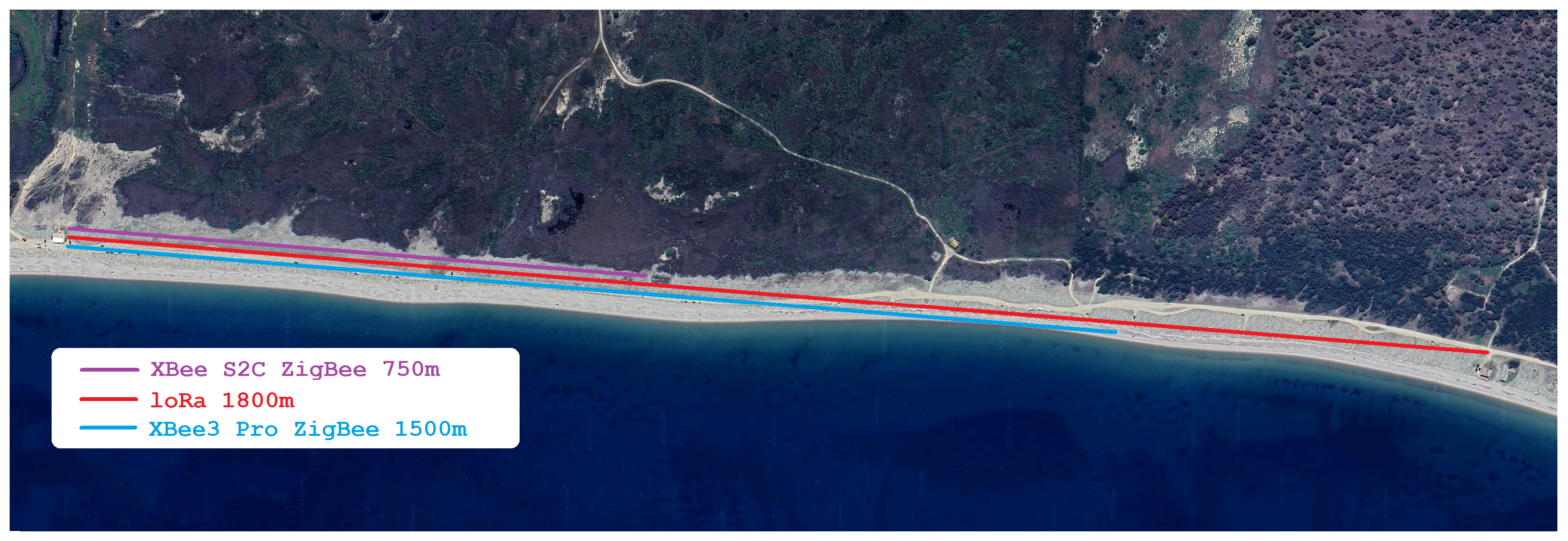
To this end, measurements have been conducted in a rural area (namely, in open space), along the beach, in the absence of electromagnetic obstacles, without vegetation or the presence of sandy hills and with ideal weather conditions (i.e., sunny with a temperature of around 20 degrees and 80% humidity), as reported in
Figure 11. Both transmitter and receiver devices have been positioned at 1.5 m above the ground.
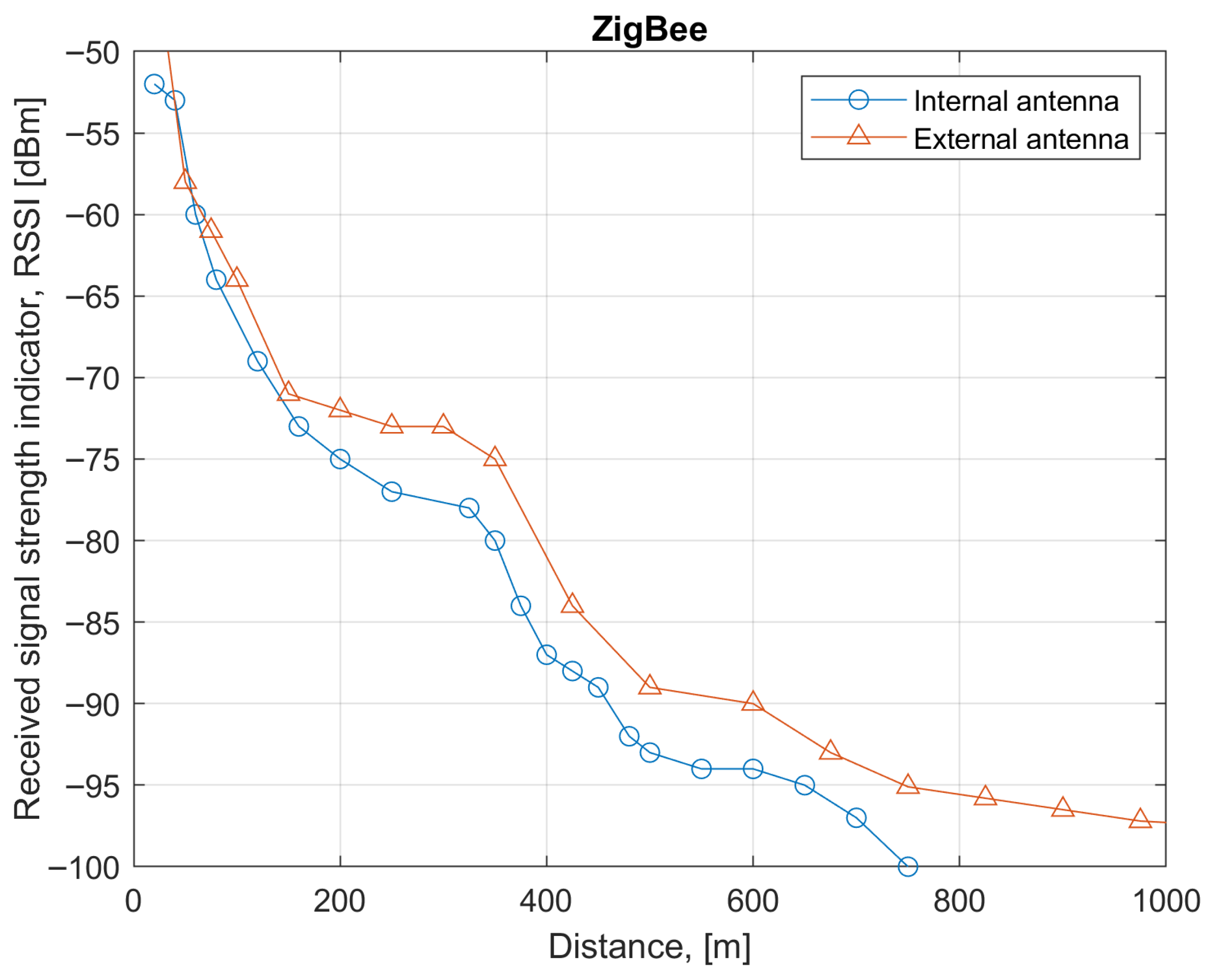
Figure 12 reports the ZigBee Received Signal Strength Indicator (RSSI) as a function of the distance from the transmitter in an open-space environment. We considered the following transceiver parameters: transmitted power
= 63 mW (or 18 dBm), the noise figure
= 7 dB, transmitting frequency 2.4 GHz, and a bandwidth
= 2 MHz. We considered two cases: 1. internal antennas with a wire whip, where both transmit and receive antenna gain
=
= 1.5 dBi; and 2. external antennas (or dipoles) with a gain of 2.8 dB. Note that during the measurement phase we averaged the RSSI value for a few minutes in order to stabilize it.
As expected, devices with an external antenna perform better than those with internal antennas, but in orienteering sport, the use of external antennas is not recommended because punching stations must be compact. From the measurements, we detected a PDR of 90% at an RSSI of −97 dBm, which thus indicates the threshold value for which the ZigBee technology experiences a valid reception for our collecting system. In this case, the maximum coverage distance for ZigBee is 750 m (and 1020 m for the external antenna case).
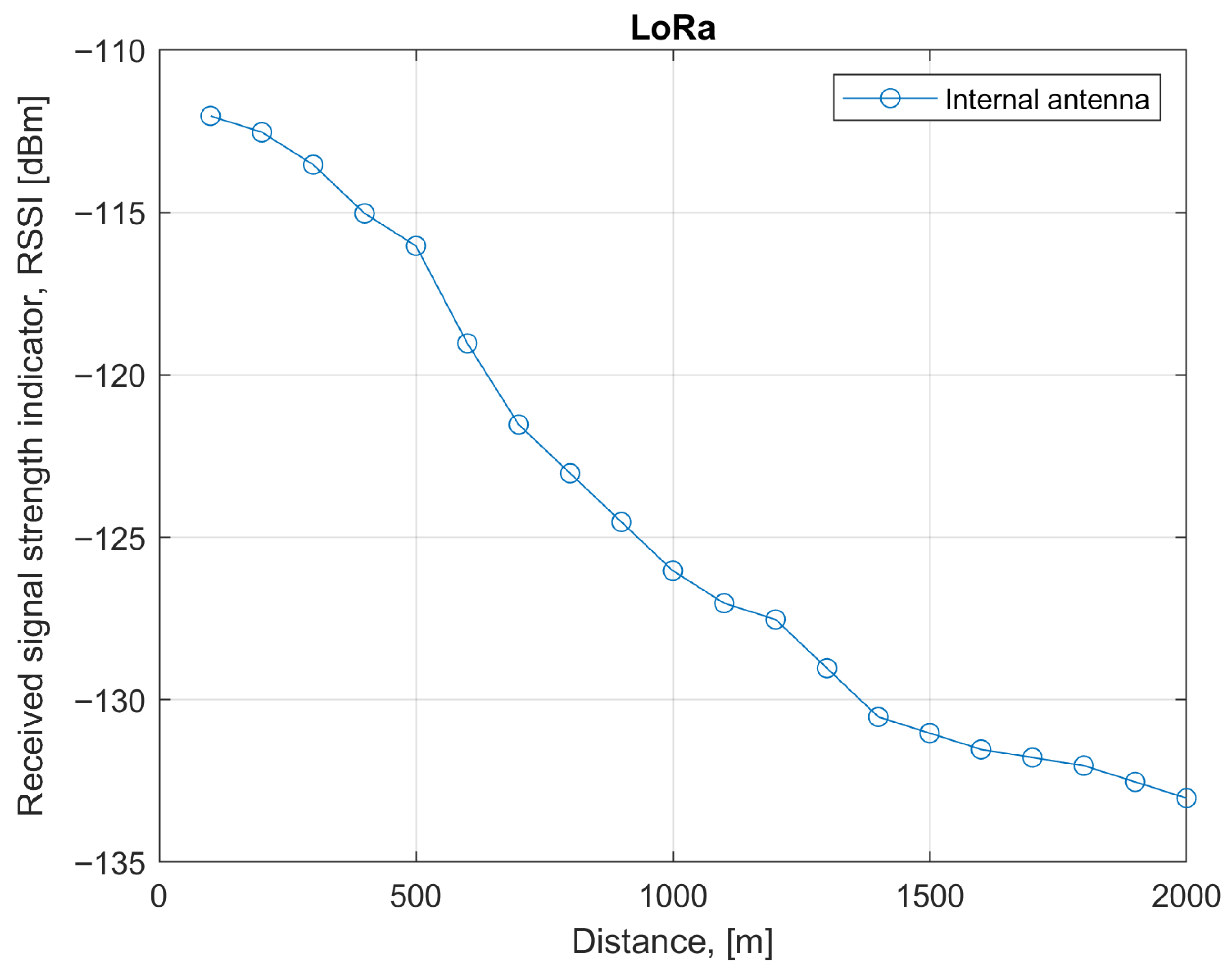
Similar considerations have been made for LoRa technology. We conducted a direct communication between two end devices positioned at 1.5 m. In
Figure 13, the RSSI for LoRa technology is reported as a function of the distance. The LoRa settings are: transmitted power
= 158 mW (or 22 dBm), both transmit and receive antenna gain
=
= 2.0 dBi (wire whip), Spreading Factor
= 12, transmitting frequency at 868 MHz with a bandwidth
of 125 kHz, and noise figure
= 5 dB. Even in this case, we averaged the RSSI value for a few minutes in order to stabilize it, during the measurement phase.
A PDR of 90% has been detected at an RSSI of -133 dBm, guaranteeing a maximum coverage distance for LoRa of about 2 km. This value can be considered conservative, as it is possible to rely on external gateways if they are present in the area of interest. These gateways are equipped with higher-gain and higher-altitude antennas, which improves radio signal reception. It is worth noting that most of the configuration choices are dictated by the specific requirements of the sporting context, such as the antenna height being kept close to the ground. Similar considerations were applied to the LoRa and ZigBee configurations. Concerning the PDR threshold, we tested several values (10%, 50%, and 90%), but the coverage range varied only slightly (i.e., the maximum distance remained largely consistent, likely due to the limited antenna height).
5.2.2. ZigBee
In this section we analyze the results in terms of maximal distance of the coverage measurement campaign for ZigBee technology. As described above, we considered two main environments: (1) wooded/forest and (2) urban.
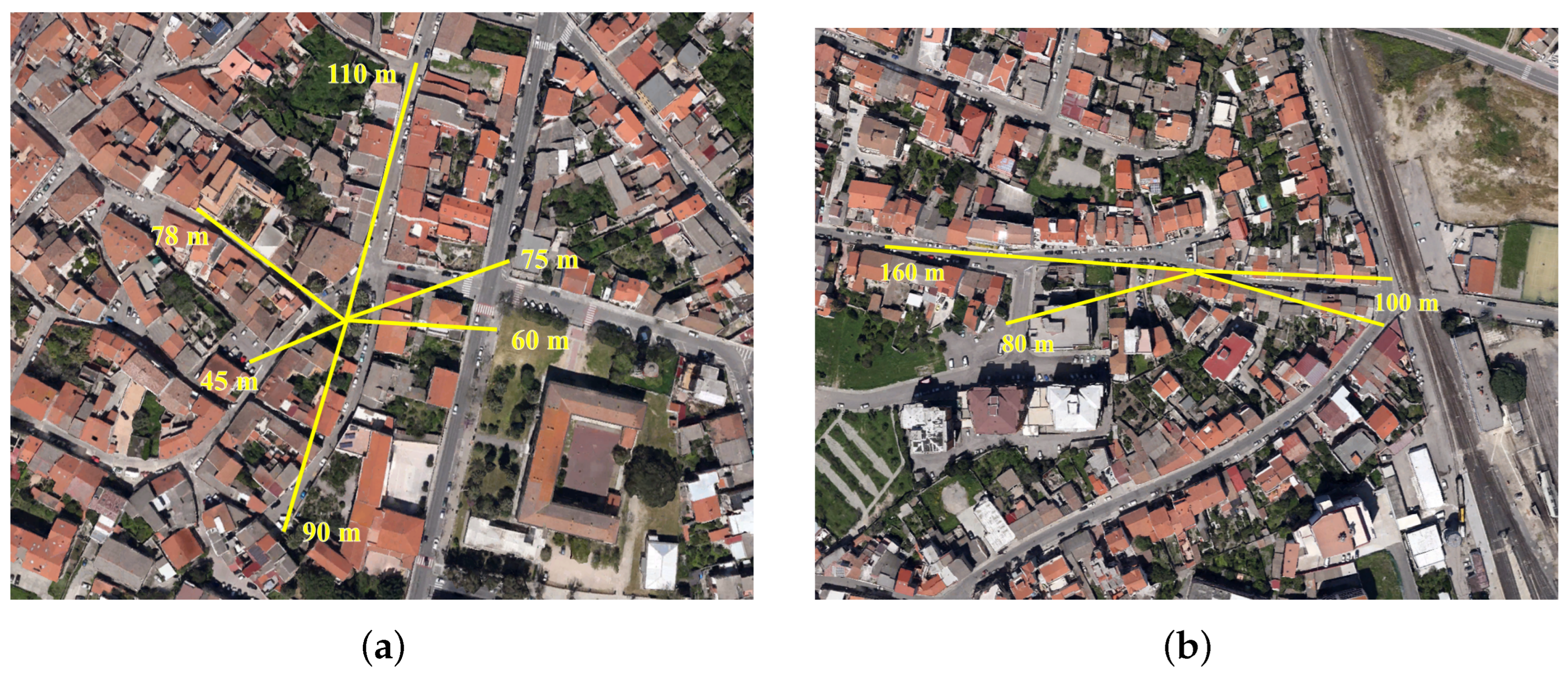
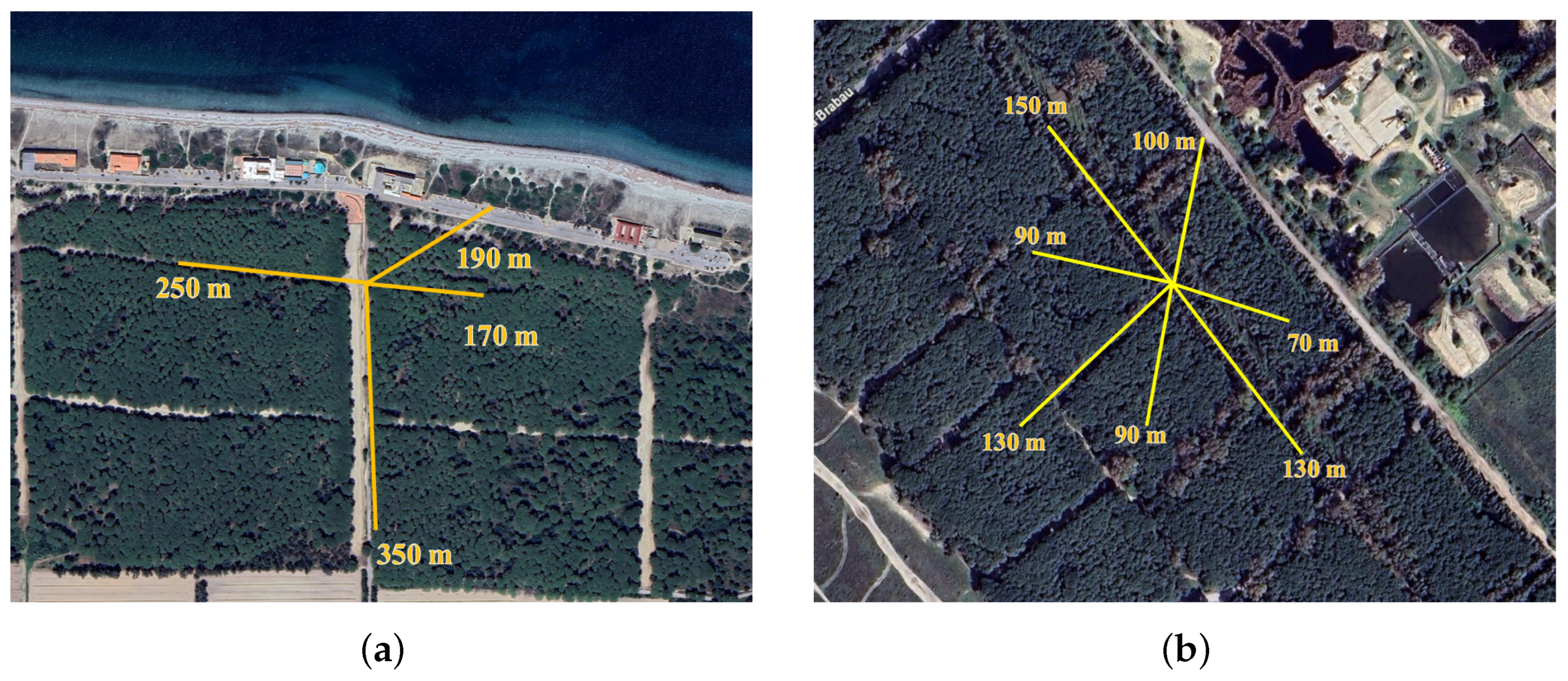
Figure 14 shows the distances considered in the measurement campaign for ZigBee devices in wooded environments. In this scenario, there are scattered trees and moderate or sparse vegetation (a), and nearby trees and moderate or dense vegetation (b).
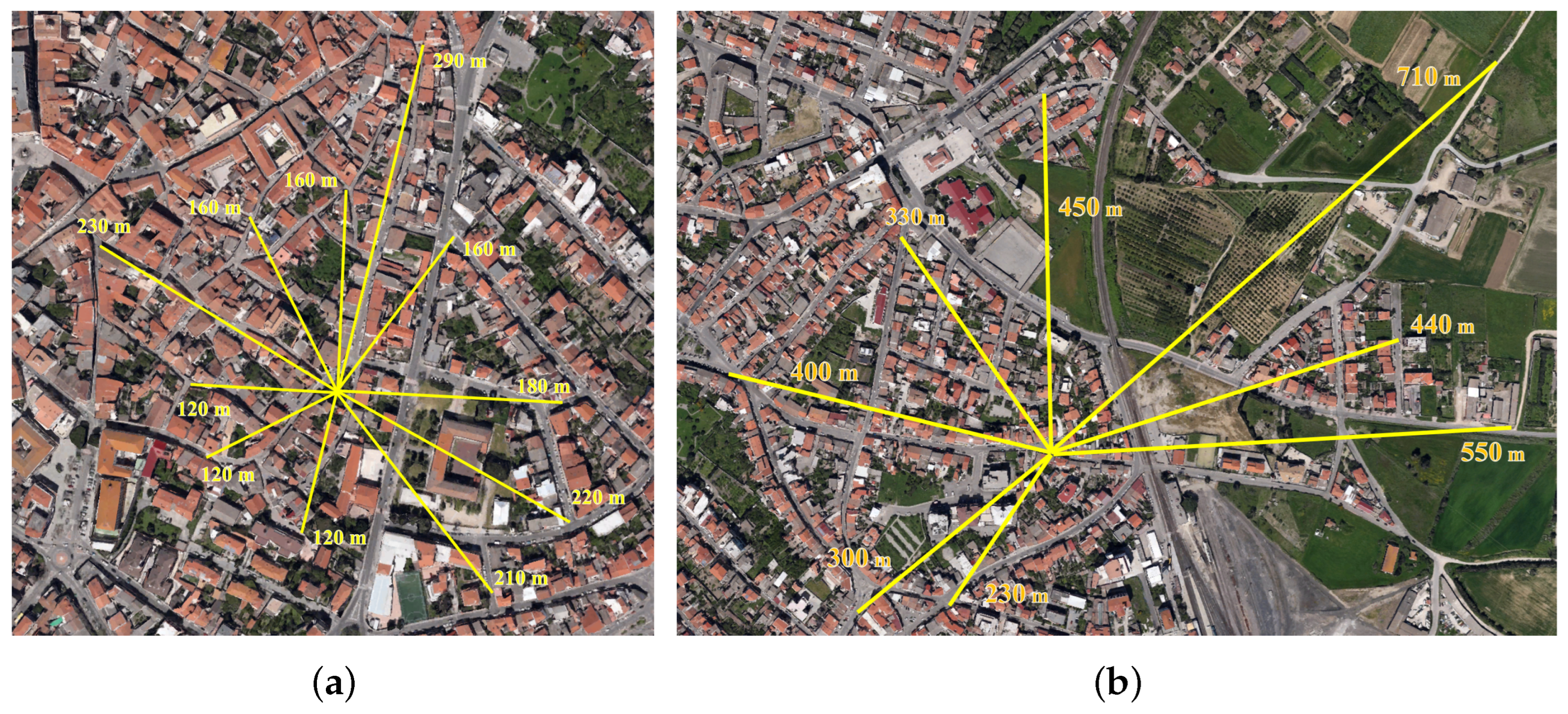
Figure 15 shows the distances considered in the measurement campaign for ZigBee devices in urban environments. We considered different types of buildings, from two-story houses to seven-story buildings. In this scenario there are several components that attenuate the signal, from parked or moving cars to different types of buildings and trees, which make transmission particularly variable.
Table 3 summarizes the performance of the ZigBee device (XBee-PRO S2C as in
Section 4.2), positioned 1.5 m above the ground, in various propagation environments, reporting the maximum distances at which a reliable connection has been observed (i.e., PDR ≥ 90%). We also reported qualitative notes on obstacles. In wooded/forest environments, reported ranges between approximately 70 and 350 m, with RSSI values between −90 and −94 dBm, show that the connection can be maintained for several hundred meters even in dense pine forests and sparse vegetation. As expected, the presence of tree rows and vegetation clearly limits the range compared to open areas, indicating that leaf absorption represents a significant attenuation factor for this technology.
In urban environments, the measured distances are shorter than in rural environments, and RSSI values remain in the range between −94 and −97 dBm, confirming that buildings and houses produce strong shadowing and multipath. The scenarios labeled “building coverage” or “direct line of sight between buildings” illustrate two opposing conditions: with direct line of sight (LoS), the system can achieve slightly greater distances with a similar RSSI, while when the connection is obstructed by building facades, the usable range is reduced. Residential areas with houses still cause significant attenuation, but appear slightly less impactful than multi-story blocks of buildings.
The entry regarding the rural environment shows the greatest range, approximately 520 m, with an RSSI of approximately −94 dBm in open areas. This confirms that, for the XBee-PRO S2C ZigBee, clear line of sight conditions allow for significantly greater communication ranges than those achievable in forested or urban scenarios, although the received power is still close to the radio’s sensitivity limit. In general,
Table 3 shows that the XBee system remains operational at similar RSSI levels in all environments, but the maximum achievable distance is highly dependent on the density and type of obstacles, with open rural areas offering the most favorable conditions and dense forests or densely built areas imposing the most stringent constraints on coverage.
5.2.3. LoRa
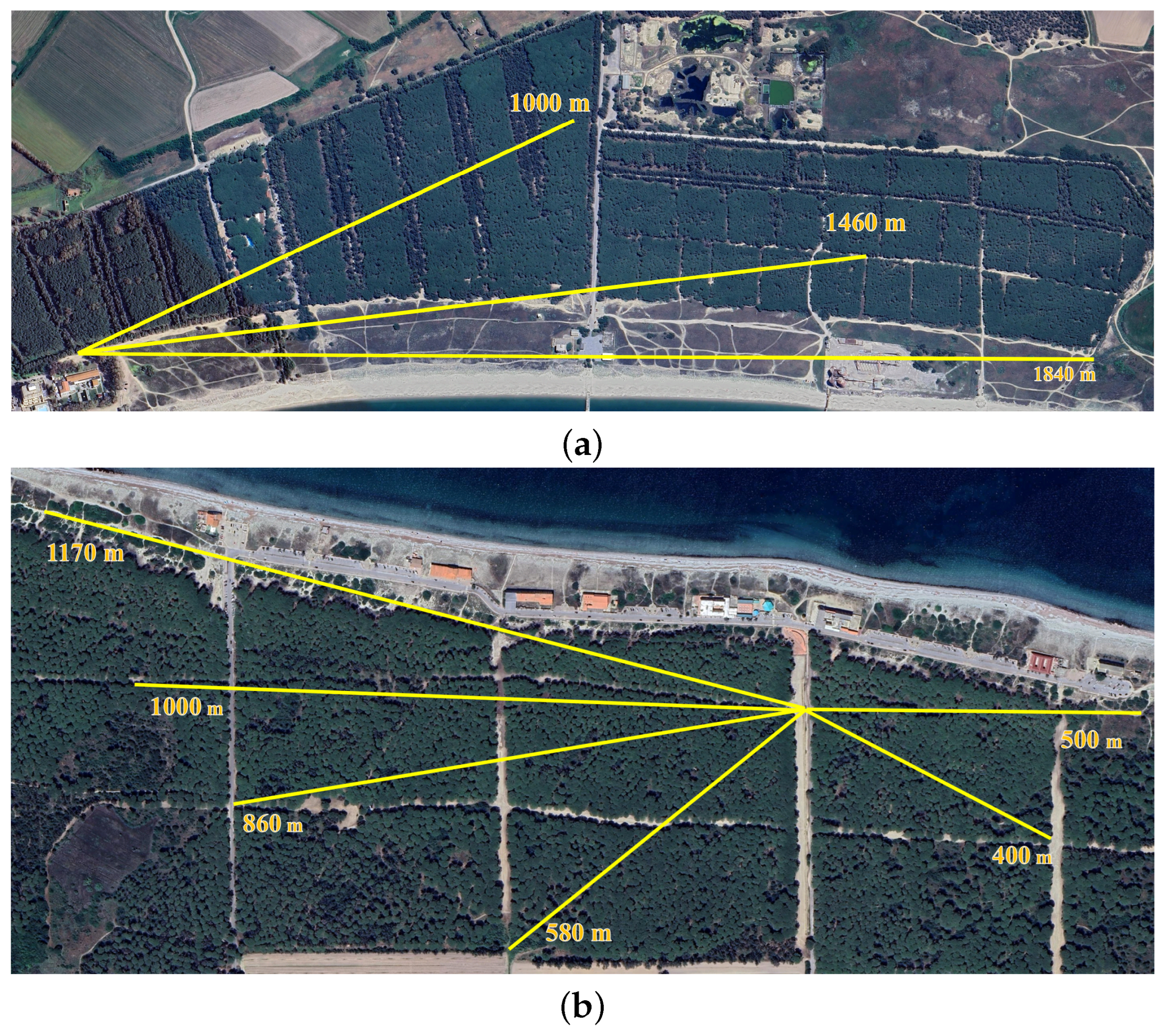
Figure 16 shows the transmission distances achieved by LoRa devices in wooded environments. In this scenario, there are scattered trees and moderate or sparse vegetation (a), and nearby trees and moderate or dense vegetation (b).
Figure 17 shows the transmission distances achieved by LoRa devices in an urban and suburban environment.
Table 4 summarizes the performance of the LoRa devices, positioned 1.5 m above the ground, clearly showing how the propagation conditions significantly influence the achievable range and quality of the LoRa connection. In wooded and forested environments, the same range produces different signal qualities depending on vegetation density and terrain profile: dense vegetation and hilly terrain leads to more negative RSSI, while moderate vegetation or semi-open areas yield slightly better values at comparable ranges. This shows that foliage and uneven terrain are significant sources of attenuation, and while communication is still possible near the sensitivity limit, the connection margin is significantly reduced in these situations.
In urban environments, maximum ranges are shorter than in open rural areas, yet signal quality is already significantly degraded, especially in scenarios with multi-story buildings and road canyons. The combination of heavy shading and multipath produces very negative RSSI values, indicating that dense urban morphology is more limiting than distance alone. When the notes describe more open residential areas with low-lying houses, the data become slightly less critical, confirming that urban areas with fewer obstacles and lower levels are more favorable, although still worse than rural conditions.
The rural environment represents the most favorable case in the table. In the almost complete absence of obstacles, the system achieves the maximum recorded range while maintaining RSSI values that, although close to the sensitivity threshold, remain compatible with a stable LoRa link. This shows that, in ideal or near-line-of-sight conditions, the hardware configuration used is capable of covering significantly greater ranges than forested or urban environments.
Overall, the table supports the idea that the true practical limit of the system is not theoretical radio sensitivity, but the combination of obstacles and ambient noise, which pushes the RSSI toward strongly negative values. In terms of system design for your application, this means that dense forested areas and the urban core are the critical sections where additional repeaters or alternative routing strategies may be needed, while open rural segments are unlikely to limit network coverage.
5.3. Data Rate Analysis
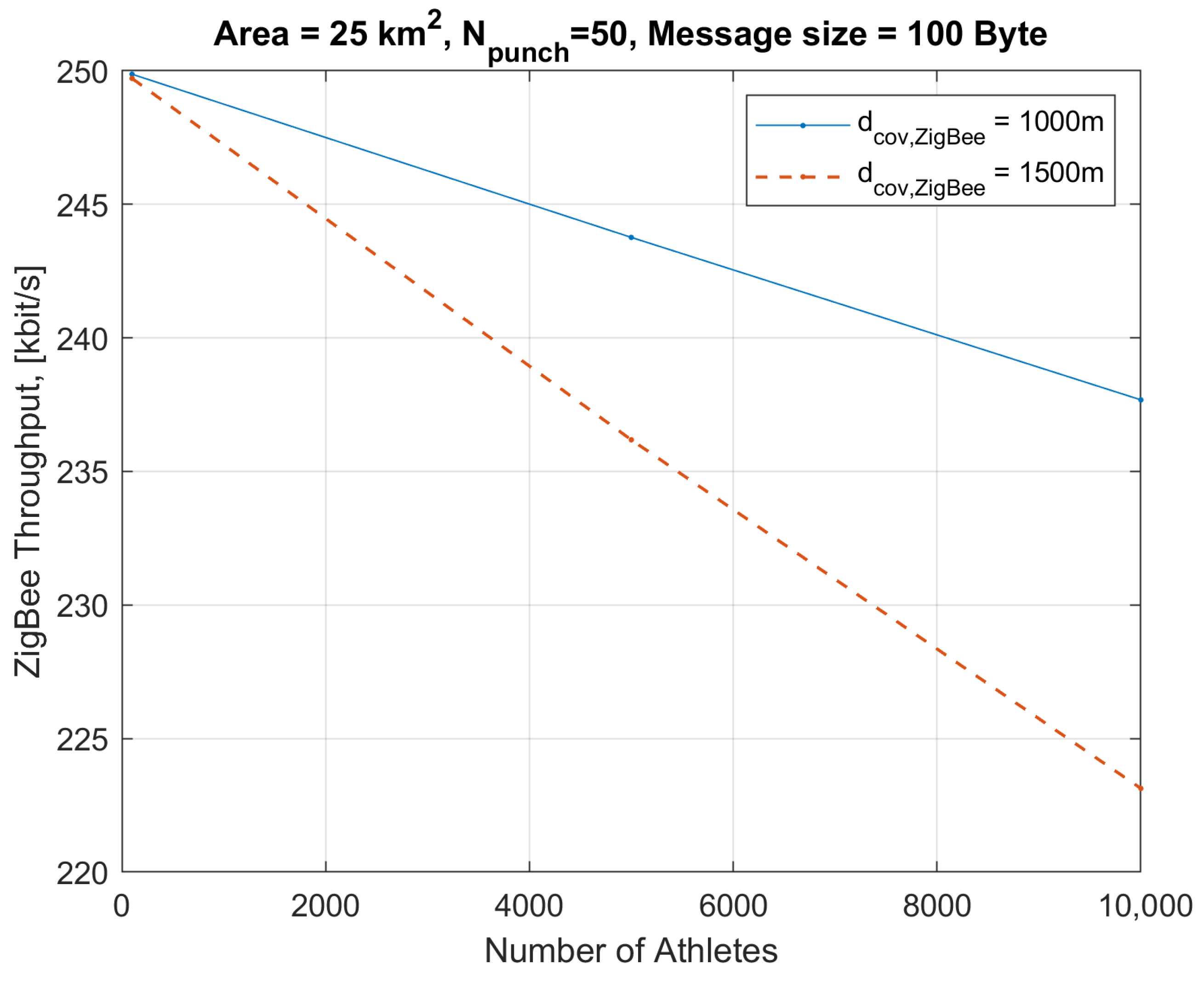
In order to have an estimate of possible degradation of the ZigBee-based WSN in terms of throughput, we evaluate how the network throughput is affected by the number of athletes and the radio coverage range. Note that it is not the scope of this paper to make an exact performance evaluation, as many studies have analyzed this aspect in the current literature. For this reason, in this baseline analysis we considered the parameters and assumptions in
Table 5 to have an order of the possible throughput degradation in this specific use case.
For the evaluation we considered an ALOHA transmission strategy, which is conservative with respect to the typical CSMA/CA of ZigBee. ALOHA, for example, does not consider any sensing of the channel before transmitting. Moreover, we evaluate the possible collisions by considering the total number of athletes in the competition near a punching station, using an
. This factor accounts for the fact that athletes are not randomly scattered but are concentrated along specific paths or trails. When athletes pass within 10 m of a station, they are authenticated according to the procedure described in
Section 4.1. Each athlete generates a 100-byte message per checkpoint. The message size is a rough estimate that considers the overhead of the Zig Bee protocol (e.g., 6 bytes for preamble and PHY, 11 bytes for MAC and CRC, 8 bytes for NTW, 8 bytes for APP) and about 50 bytes for the orienteering application. Finally, we evaluate the collision probability by considering “visibility probability”, which represents the likelihood that multiple nodes are within the same ZigBee radio coverage area, thus competing for the same wireless channel, the time on air for a single packet based on the theoretical maximal ZigBee data rate of 250 kbit/s.
In
Figure 18 it is reported how the ZigBee throughput degrades as the number of athletes increases, considering the assumptions in
Table 5, giving us a rough estimate of data are lost due to packets colliding when multiple nodes transmit at the same time for two different ZigBee coverage scenarios (1000m and 1500m). The results show that even in high-density scenarios, collisions are rare (lower than 10%), and the impact on network throughput is negligible.
5.4. Latency Analysis
This section analyzes the end-to-end latency of the proposed system for orienteering competition, from the moment an athlete approaches a punching station to the visualization of the corresponding passage event on the organization dashboard. The analysis considers realistic operating conditions for outdoor orienteering competitions, including moderate network load, limited ZigBee mesh depth (i.e., limited number of hops), and typical LoRaWAN configurations. The overall end-to-end latency can be expressed as the sum of the individual latency contributions introduced by each subsystem:
where each term represents the delay associated with a specific phase of the system operation as defined as follows.
is the Proximity Detection delay and is related to the BLE advertising and scanning [
47]. The punching station continuously operates in BLE scan mode, while the wristband remains in a low-power sleep state. When the athlete approaches the punching station, the wristband detects a received signal strength exceeding a predefined threshold corresponding to a distance below 5 m. The latency of this phase is mainly determined by the BLE advertising interval and scanning window and typically ranges between 50 and 100 ms, corresponding to a beacon transmission frequency of 10–20 Hz.
is the delay of the authentication procedure. After proximity detection, the athlete performs a multimodal authentication procedure directly on the wristband using fingerprint and voice biometrics. This phase is entirely local and independent of the communication network. Measurements on embedded wearable platforms indicate a latency between 2.0 and 2.4 s, including biometric acquisition and local machine learning inference. As a result, this component represents the dominant contribution to the overall end-to-end latency.
is related to the BLE advertising transmission of the wristband after the authentication is completed. The payload, which includes the athlete identifier and a nonce, is approximately 50 bytes. As detailed in
Section 5.3 a valid packet is typically received by the punching station within 50–100 ms.
is the delay due to the punching station processing for the received message validation, reading of the local real-time clock and GPS information, and construction of the athlete passage record. It typically takes between 10 and 20 ms.
is the delay introduced by the ZigBee WSN operating in mesh topology. The ZigBee per-hop latency
is the sum of the air transmission time of the packet
= 100 byte/250 kbit/s = 3.2 ms and the stochastic back off
, where
is a random value between 0 and
x, BE is the back off exponent between 3 and 5 and the unit back off period
is fixed to 320
s according to the IEEE 802.15.4 slotted CSMA/CA mechanism [
30]. Thus, the resulting ZigBee latency
, which ranges between 10 ms and 75 ms for
= 2 or 5 [
48,
49]. At the aggregation station, the message is transmitted to the organization cloud using LoRaWAN. The latency of this segment
ranges between 150 and 400 ms based on the selected SF, which affects the time-on-air. Finally, cloud ingestion, database storage, and dashboard update introduce an additional delay
between 50 and 150 ms [
50].
Table 6 summarizes the latency contributions of each subsystem.
The total latency is weakly affected by the communication infrastructure and is mainly dominated by the local authentication process, due to the small packet size and the low transmission frequency of punching events. Since the athlete passage timestamp is generated locally at the punching station, communication latency does not affect the correctness of race timing or ranking.
The term ‘real-time’ is typically used in reference to the interaction of a telecommunications system relative to the timing of the action as perceived by the human body. In the proposed system, it is appropriate to speak of real-time because communication is dominated by authentication operations (couple of seconds) rather than the delay introduced by the WSN (hundreds of ms).
5.5. Power Consumption Analysis
In order to investigate the practical feasibility of the proposed system, we provide the power consumption analysis in this section for the punching station and for the aggregation station. The power consumption of the punching station is analyzed by distinguishing between a baseline idle component, an activity-dependent component associated with athlete punching actions and the GPS periodic synchronization. This approach allows for the evaluation of the system scalability with respect to the number of athletes and the duration of the competition.
In idle conditions, the punching station operates in a low-power configuration, where the microcontroller remains in sleep or light-sleep mode, the BLE interface periodically scans for proximity detection, and the ZigBee transceiver is duty-cycled in reception mode. This configuration ensures continuous availability while minimizing energy consumption. The resulting average idle power consumption is dominated by the wireless interfaces and is approximately constant over time. Each punching action triggers a short active phase that includes BLE reception of the authentication result from the athlete’s wristband, local processing for message composition, and ZigBee transmission of the punching record to the aggregation station on the WSN. Due to the short duration of these operations, the energy required for a single punching action is limited. Periodically, the punching station acquires the GPS signal for time synchronization and for detecting any movement by fraudulent athletes. The total energy consumption of the punching station during a race duration (
) can therefore be expressed as
where
is the average idle power,
is the number of punching actions in the race,
is the energy required for a single punching event and
is the number of GPS acquisition, which requires
energy for tracking and acquisition when activated. Considering a practical case, we have
equal to about 16.8 mW due to the power consumption of the micro control unit in sleep mode, the BLE in scan mode and ZigBee in receiving mode, at 3.3 V [
51]. The
consists of the BLE energy for receiving the authentication, the processing to construct the message and the ZigBee transmission, which is about to 6.2 mJ at 3.3 V [
51,
52]. For GPS we considered u-blox NEO-6M with about 40 mA for acquisition taking 30 s at 3.3 V, resulting a
= 3.96 J [
53]. It yields for a race duration
= 6 h,
= 12 (i.e., 2 per hour and
= 200/h, which is over estimated based on the World Orienteering Championships (WOC) [
54],
= 418 J. If we have a nominal battery of 2400 mAh (or three AA batteries), it lasts about 367 h or more than 15 days. Then, the punching station energy consumption is primarily determined by the race duration rather than by the traffic load, making the system robust and easily scalable.
The aggregation station performs data collection from multiple punching stations, forwards the aggregated messages to the LoRa gateway, and operates as a blockchain validator node. Consequently, its energy consumption is dominated by the processing platform rather than by the wireless transmissions. It is implemented on a Raspberry Pi-5 operating in headless mode, equipped with a ZigBee transceiver and the LoRa module SX1262 LoRa. In idle, the Raspberry Pi remains powered and ready to process incoming messages, while each received punching message generates a short processing phase, followed by a LoRa transmission toward the gateway, whose consumed energy depends on the selected LoRa spreading factor. In addition, the aggregation station periodically generates and validates blockchain blocks using Hyperledger Besu with IBFT 2.0 consensus. Block creation occurs every 30 s and introduces a transient increase in CPU load. The total energy consumption of the aggregation station can be expressed as:
where
is the idle power of the aggregation station,
is the energy required to process and transmit a single punching message by the aggregation station receiving data from
punching station, and
is the energy associated with the creation of a blockchain block, while
is the number of blocks generated in the
time interval.
Considering a practical case, we have
equal to about 3.9 W due to the power consumption of the Raspberry Pi-5 in sleep mode [
55], the ZigBee module in receiving mode [
52] and the LoRa SX1262 module in standby [
56]. The
consists of the ZigBee energy for receiving data from the served punching stations, the processing of the Raspberry to construct the message and the LoRa module transmission, which is about 28.1 mJ for SF = 7 and 480 mJ for SF = 12 due to its higher transmission time interval.
is about 1.2 J, taking 200 ms for the block generation. It yields
= 85.4 kJ for SF = 7 and
= 88.15 kJ for SF = 12, assuming
= 5. In this case, it is requred a nominal battery at least of 10,000 mAh (i.e., a power bank), in order to have a duration of the aggregation station of 7.5 h (and about 7 h and 15 min for SF = 12) for the race, although a battery with a higher capacity would be preferable.
6. Conclusions and Discussions
In this paper, the design, development and experimental verification of the hybrid WSN architecture designed for real-time observation and security verification in orienteering competitions are described. The designed model differs from previous systems in that it combines short-range communication using the ZigBee mesh network, long-range communication using the LoRa communication technology, and the private blockchain network designed to overcome the limitations in the normal electronic punching systems, which work offline/semi-offline and provide neither real-time observation nor warranty for the authenticity and integrity of data. In addition, it provides a dedicated procedure for athlete authentication.
The experiment shows that the new architecture provides a reliable, scalable, and cost-effective solution for outdoor distributed monitoring in competitive sports. Real-world tests show that the hybrid type of communication facilitates stable data transfer in rural, forest, and urban terrains characteristic of regular orienteering races. In open rural terrains, ranges of up to around 1.8 km were achieved in LoRa wireless links while ensuring that the data delivery ratio was above the required level of reliability, thus validating the use of this type of technology in backhaul communications. In forested terrains, which experience higher levels of attenuation and destructive interference, stable wireless data transfer was ensured within ranges of several hundred meters, while mesh network connectivity ranging from 70 to 150 m was ensured among punching stations in Zigbee meshes.
These results are in agreement with, and further confirm, observations discussed in previous studies on wireless sensor network performance in outdoor and sports-related scenarios. As mentioned in previous research, the effects of foliage, buildings, and terrain morphology have been shown to have a great influence on low-power wireless communication; this is especially true in non-line-of-sight scenarios, with great variation and range loss often associated with connectivity issues. As attested to in this measurement campaign, the hierarchical multi-hop architecture of the WSN presented here shows the efficacy of this approach in compensating for environmental effects through the combination of local redundancy with a long-range aggregate connection approach, as opposed to existing WSN solutions for sports-related scenarios that are known to lack flexibility and are prone to connectivity issues due to single-hop/star topologies used for control points setup.
Moreover, the paper integrates multimodal authentication and blockchain-enabled certification into the proposed WSN solution. Each passage event, which comprises a validated identity, precise timestamp, and station ID, is cryptographically signed and recorded on a blockchain ledger. This architecture addresses a critical gap in current outdoor products available on the market and other related works in the literature: the lack of distributed authentication and traceability for complex sports events. In particular, real-time data enables instant race visualization, rapid result compilation, and enhanced situational awareness. The use of low-power hardware and efficient protocols ensures the system meets the battery constraints of multi-hour and multi-day races in remote areas.
Future research will focus on three areas. First, exploring alternative consensus algorithms to refine the balance between security and computational complexity. Second, optimizing cluster management and communication strategies for highly dynamic environments with fluctuating athlete numbers. Third, conducting full-scale field testing to validate long-term reliability and usability with a larger participant base.
In any case, although the proposed system has been applied to an orienteering competition, the suggested general approach and system architecture should be applicable to other distributed sensor solutions that demand reliable proof verification for events that take place outdoors, as it refers to trail running activities, bike races, and environmental sensor campaigns. Finally, for the feasibility we investigate the performance of the proposed system. The results of the data rate show that even in high-density scenarios, collisions are rare (lower than 10%), and the impact on network throughput is negligible. The delay from the authentication of the athlete at the passage at a certain checkpoint to the visualization in the organizers dashboard is dominated by the athlete authentication while the monitoring data of the competition arrives in near real time. The power consumption analysis gives hints in dimensioning the batteries of the whole system.




 ,
,