Overcoming Drug Loading and Dosage Volume Challenges of Adsorption-Solidified SNEDDS by pH-Modulation Strategy: Atorvastatin Calcium and Glibenclamide as Model Drugs



Abstract
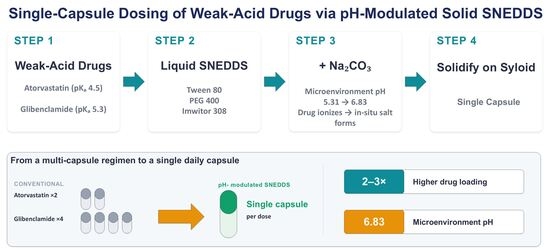
1. Introduction
2. Materials and Methods
2.1. Materials
2.2. UPLC Method for Atorvastatin Calcium and Glibenclamide Analysis
2.3. Solubility
2.4. Emulsification Study
2.5. Preparation of SNEDDS Formulation
2.6. Droplet Size Analysis of the Aqueous Dispersion of SNEDDS
2.7. pH Measaurement
2.8. SEM
2.9. FTIR
2.10. PXRD
2.11. In Vitro Dissolution Study
2.12. Use of Generative AI
3. Results and Discussion
3.1. UPLC Quantification of Atorvastatin Calcium and Glibenclamide
3.2. Drug Soluability in Oils
3.3. Emulsification of Surfactants
3.4. Physicochemical Characterization of Liquid SNEDDS Formulations
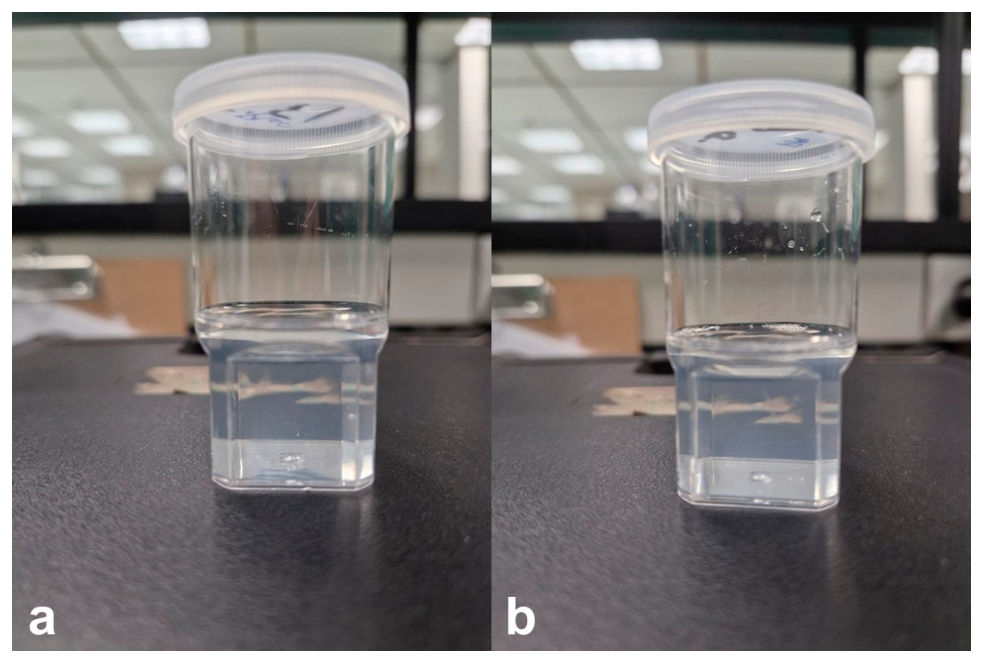
3.4.1. Physical Appearance and Droplet Size of the Aqueous Dispersion of SNEDDS
3.4.2. pH Measurement
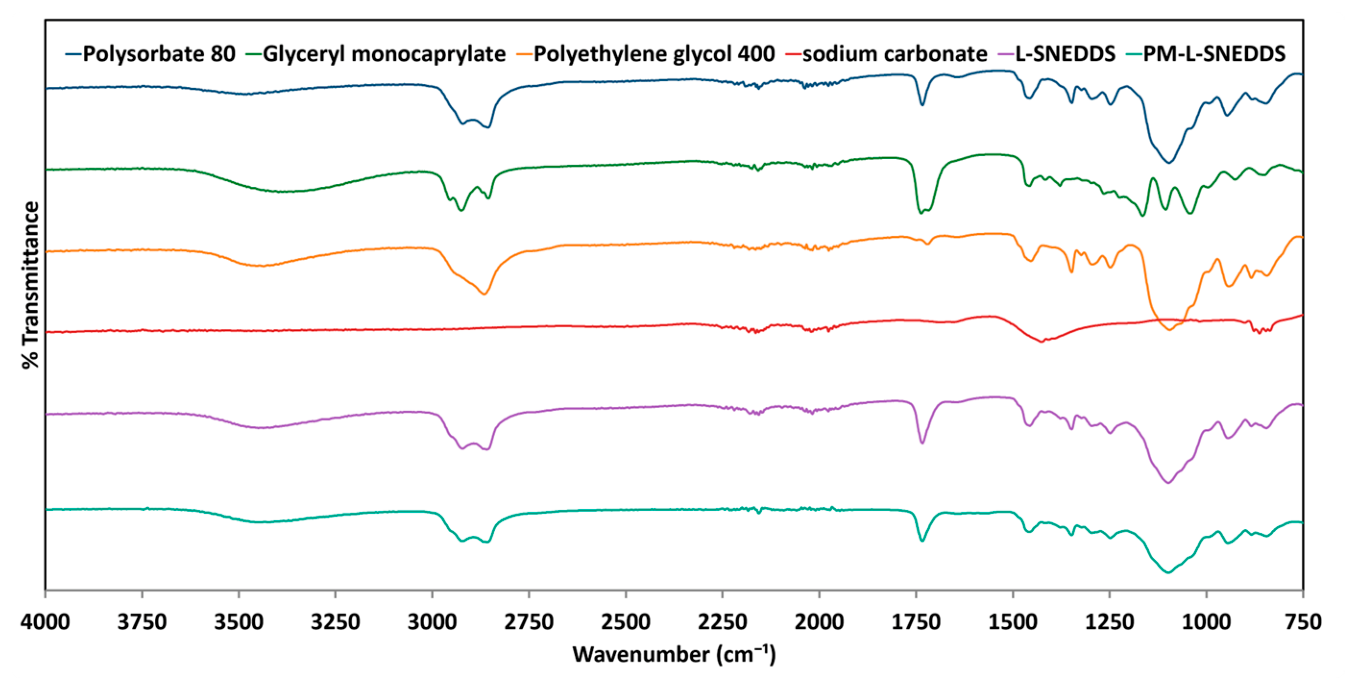
3.4.3. FTIR
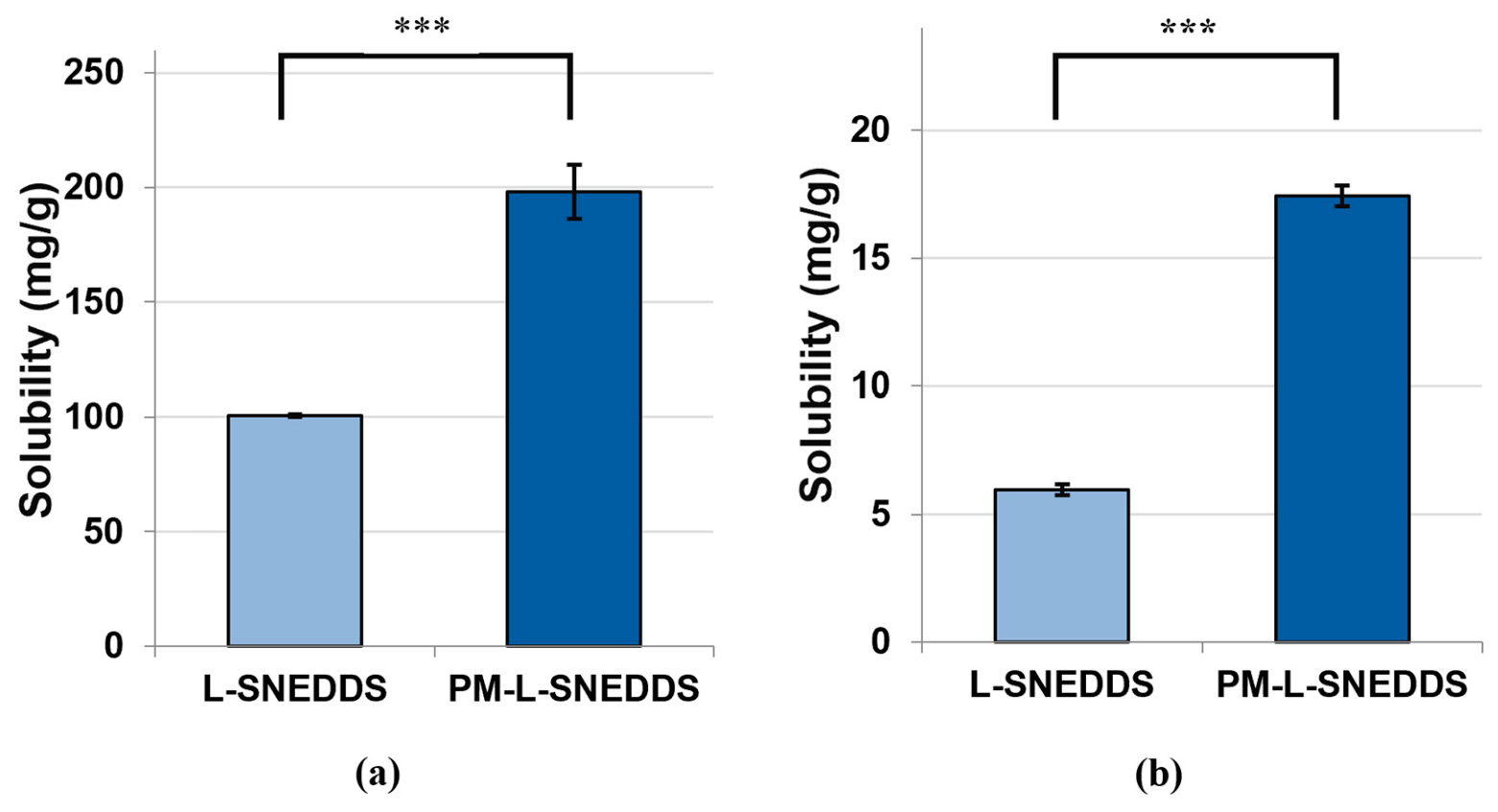
3.5. Drug Loading Capacity
3.6. Impact of pH-Modulating Agent on Dissolution Profile
3.7. Physicochemical Characterization of Solid SNEDDS Formulations
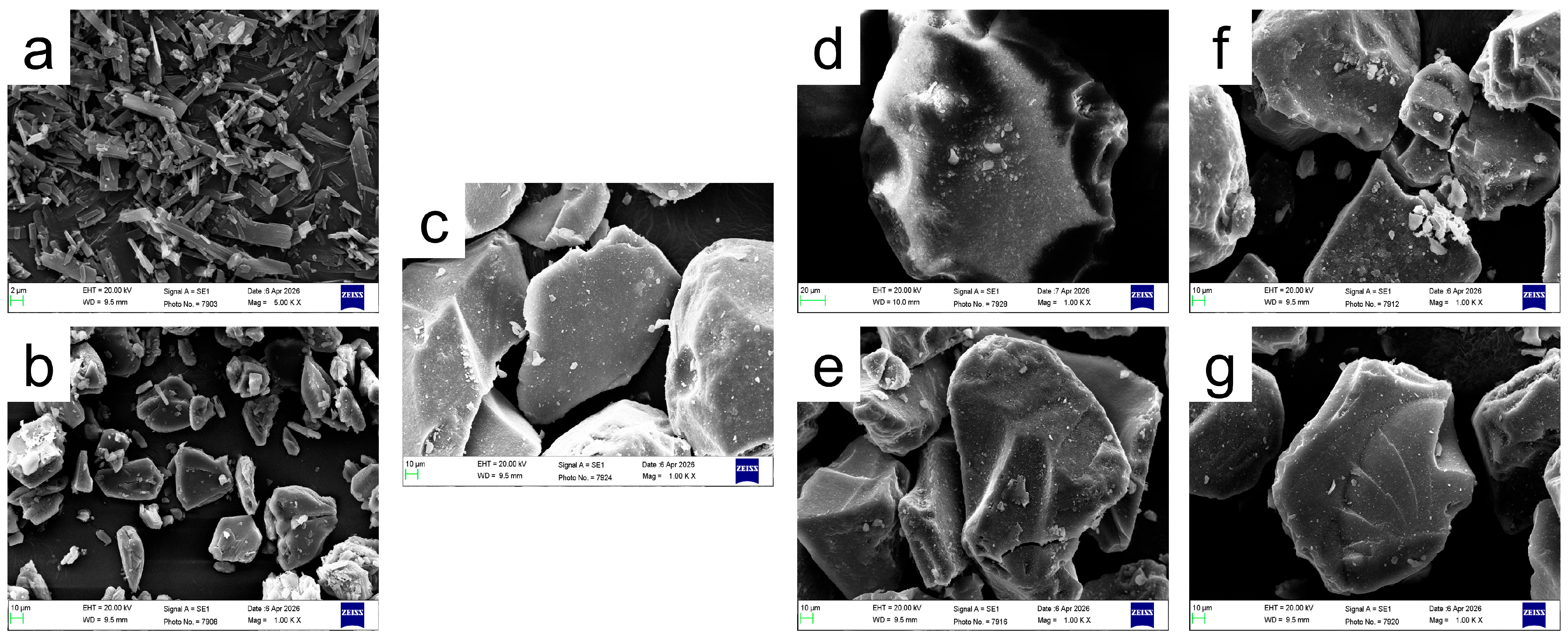
3.7.1. SEM
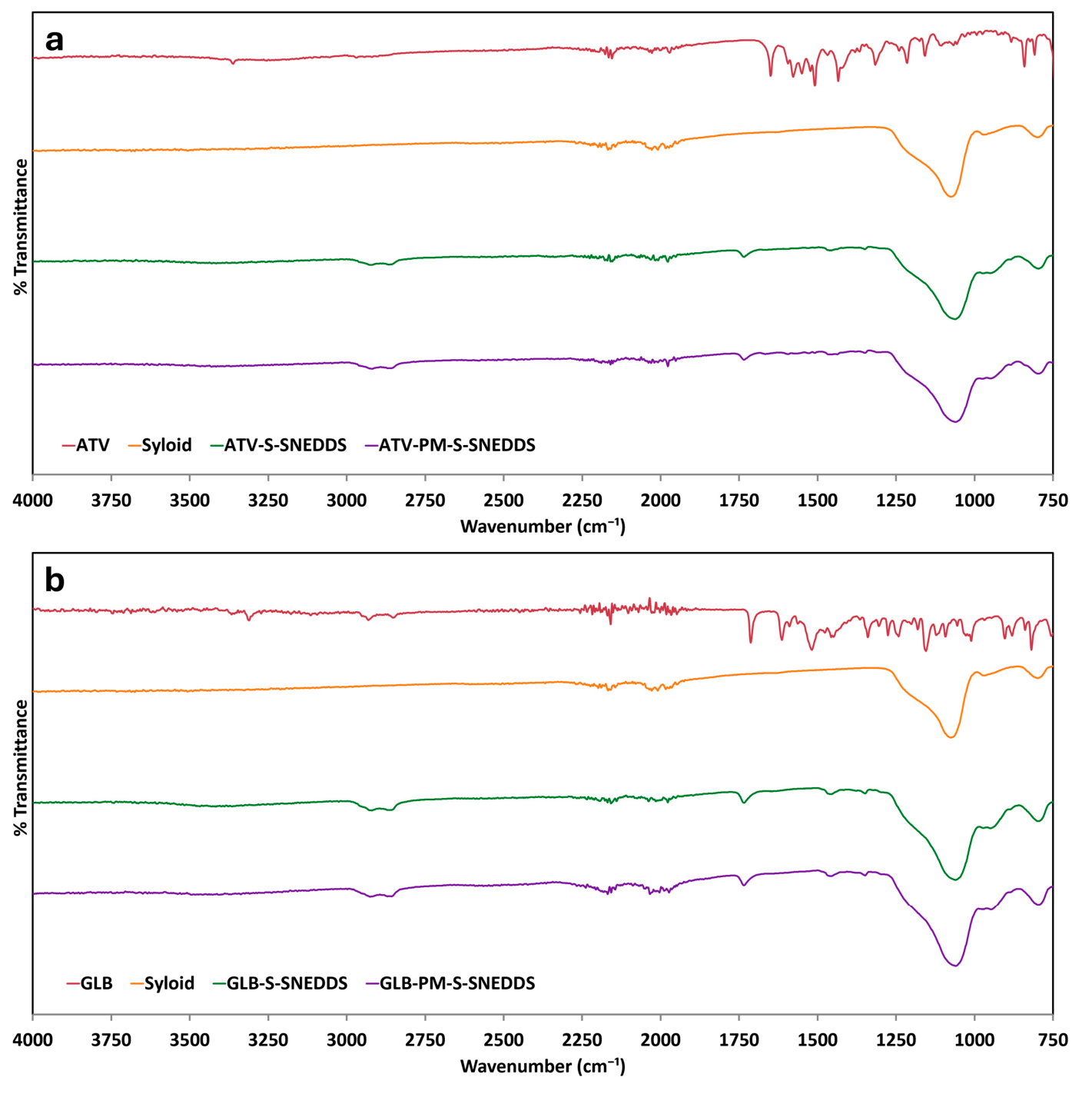
3.7.2. FTIR
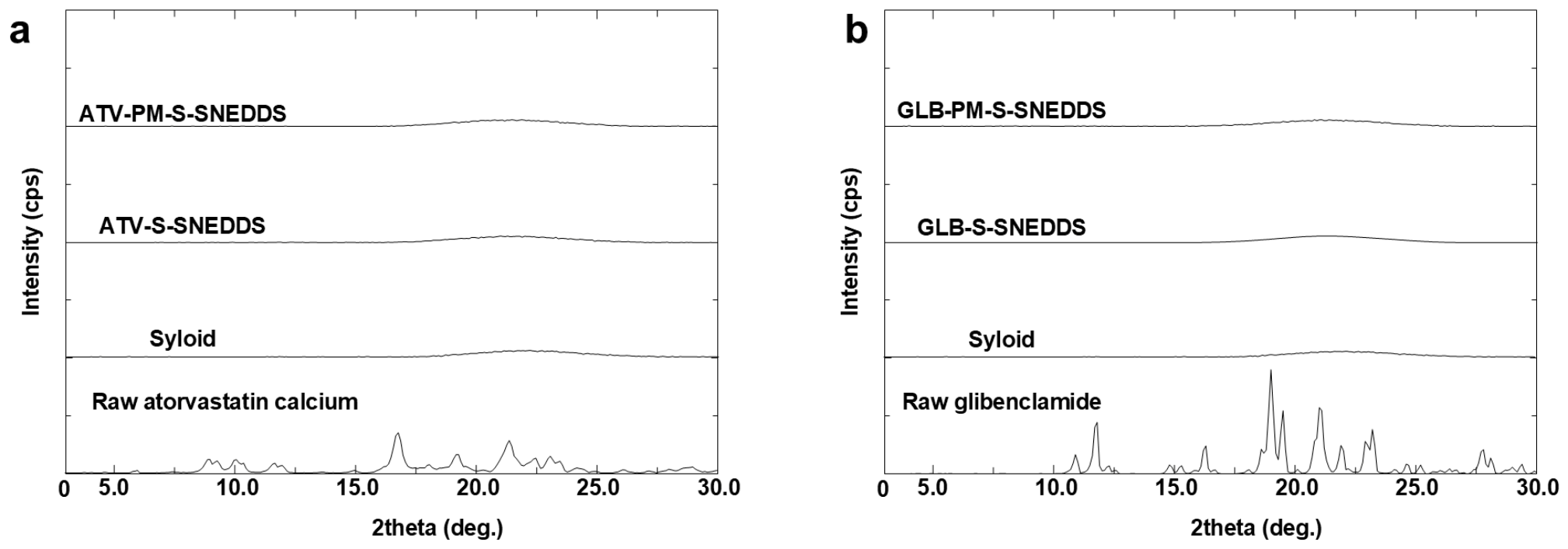
3.7.3. PXRD
3.8. Impact of Solidification on Dissolution Profile
4. Conclusions
Author Contributions
Funding
Institutional Review Board Statement
Informed Consent Statement
Data Availability Statement
Acknowledgments
Conflicts of Interest
References
- Buya, A.B.; Beloqui, A.; Memvanga, P.B.; Préat, V. Self-nano-emulsifying drug-delivery systems: From the development to the current applications and challenges in oral drug delivery. Pharmaceutics 2020, 12, 1194. [Google Scholar] [CrossRef] [PubMed]
- Ameta, R.K.; Soni, K.; Bhattarai, A. Recent advances in improving the bioavailability of hydrophobic/lipophilic drugs and their delivery via self-emulsifying formulations. Colloids Interfaces 2023, 7, 16. [Google Scholar] [CrossRef]
- Jindal, A.; Kumar Sharma, P.; Kumar, A. Self-nanoemulsifying drug delivery system (SNEDDS) as nano-carrier framework for permeability modulating approaches of BCS class III drug. J. Drug Target. 2025, 33, 1067–1087. [Google Scholar] [CrossRef] [PubMed]
- Bansal, T.; Mustafa, G.; Khan, Z.I.; Ahmad, F.J.; Khar, R.K.; Talegaonkar, S. Solid self-nanoemulsifying delivery systems as a platform technology for formulation of poorly soluble drugs. Crit. Rev. Ther. Drug Carr. Syst. 2008, 25, 63–116. [Google Scholar] [CrossRef] [PubMed]
- Baek, K.; Jin, S.G. Solidification Materials and Technology for Solid Self-Emulsifying Drug Delivery Systems. Pharmaceuticals 2025, 18, 1550. [Google Scholar] [CrossRef] [PubMed]
- Tawfeek, H.M.; Roberts, M.; El Hamd, M.A.; Abdellatif, A.A.; Younis, M.A. Glibenclamide mini-tablets with an enhanced pharmacokinetic and pharmacodynamic performance. AAPS PharmSciTech 2018, 19, 2948–2960. [Google Scholar] [CrossRef] [PubMed]
- Rehman, F.U.; Shah, K.U.; Shah, S.U.; Khan, I.U.; Khan, G.M.; Khan, A. From nanoemulsions to self-nanoemulsions, with recent advances in self-nanoemulsifying drug delivery systems (SNEDDS). Expert Opin. Drug Deliv. 2017, 14, 1325–1340. [Google Scholar] [PubMed]
- Krstić, M.; Ražić, S.; Đekić Lj, D.V.; Momčilović, M.; Vasiljević, D.; Ibrić, S. Application of a mixture experimental design in the optimization of the formulation of solid self-emulsifying drug delivery systems containing carbamazepine. Lat. Am. J. Pharm. 2015, 34, 885–894. [Google Scholar]
- Tashish, A.Y.; Shahba, A.A.-W.; Alanazi, F.K.; Kazi, M. Adsorbent precoating by lyophilization: A novel green solvent technique to enhance cinnarizine release from solid self-nanoemulsifying drug delivery systems (S-SNEDDS). Pharmaceutics 2022, 15, 134. [Google Scholar] [CrossRef] [PubMed]
- Schmied, F.-P.; Bernhardt, A.; Klein, S. Preparation of solid self-nanoemulsifying drug delivery systems (S-SNEDDS) by co-extrusion of liquid SNEDDS and polymeric carriers—A new and promising formulation approach to improve the solubility of poorly water-soluble drugs. Pharmaceuticals 2022, 15, 1135. [Google Scholar] [CrossRef] [PubMed]
- Kumar, M.; Chawla, P.A.; Faruk, A.; Chawla, V. Design and evaluation of solid self-nanoemulsifying drug delivery systems of cyclosporine developed with a superior adsorbent base. RSC Pharm. 2025, 2, 318–332. [Google Scholar] [CrossRef]
- Priani, S.E.; Nurhaliza, A.; Chaerunisaa, A.Y.; Wilar, G.; Sopyan, I. Solidification of SNEDDS Using Mesoporous Carriers (2020–2025): A Review of Design, Biopharmaceutical Enhancement, and Therapeutic Impact. Drug Des. Dev. Ther. 2025, 19, 11989–12017. [Google Scholar] [CrossRef] [PubMed]
- Schmied, F.-P.; Bernhardt, A.; Baudron, V.; Beine, B.; Klein, S. Development and characterization of celecoxib solid self-nanoemulsifying drug delivery systems (S-SNEDDS) prepared using novel cellulose-based microparticles as adsorptive carriers. AAPS PharmSciTech 2022, 23, 213. [Google Scholar] [CrossRef] [PubMed]
- Gumaste, S.G.; Dalrymple, D.M.; Serajuddin, A.T. Development of solid SEDDS, V: Compaction and drug release properties of tablets prepared by adsorbing lipid-based formulations onto Neusilin® US2. Pharm. Res. 2013, 30, 3186. [Google Scholar] [CrossRef] [PubMed]
- Wu, F.; Ma, Q.; Tian, G.; Chen, K.; Yang, R.; Shen, J. Formulation and Evaluation of Solid Self-Nanoemulsifying Drug Delivery System of Cannabidiol for Enhanced Solubility and Bioavailability. Pharmaceutics 2025, 17, 340. [Google Scholar] [CrossRef] [PubMed]
- Beg, S.; Katare, O.; Saini, S.; Garg, B.; Khurana, R.K.; Singh, B. Solid self-nanoemulsifying systems of olmesartan medoxomil: Formulation development, micromeritic characterization, in vitro and in vivo evaluation. Powder Technol. 2016, 294, 93–104. [Google Scholar] [CrossRef]
- Wyttenbach, N.; Niederquell, A.; Ectors, P.; Kuentz, M. Study and computational modeling of fatty acid effects on drug solubility in lipid-based systems. J. Pharm. Sci. 2022, 111, 1728–1738. [Google Scholar] [CrossRef] [PubMed]
- Kalepu, S.; Nekkanti, V. Insoluble drug delivery strategies: Review of recent advances and business prospects. Acta Pharm. Sin. B 2015, 5, 442–453. [Google Scholar] [CrossRef] [PubMed]
- Rodde, M.S.; Divase, G.T.; Devkar, T.B.; Tekade, A.R. Solubility and bioavailability enhancement of poorly aqueous soluble atorvastatin: In vitro, ex vivo, and in vivo studies. BioMed Res. Int. 2014, 2014, 463895. [Google Scholar] [CrossRef] [PubMed]
- Bari, A.; Chella, N.; Sanka, K.; Shastri, N.R.; Diwan, P.V. Improved anti-diabetic activity of glibenclamide using oral self nano emulsifying powder. J. Microencapsul. 2015, 32, 54–60. [Google Scholar] [PubMed]
- Hashem, F.M.; Al-Sawahli, M.M.; Nasr, M.; Ahmed, O.A. Custom fractional factorial designs to develop atorvastatin self-nanoemulsifying and nanosuspension delivery systems–enhancement of oral bioavailability. Drug Des. Dev. Ther. 2015, 9, 3141–3152. [Google Scholar] [CrossRef] [PubMed]
- Kassem, A.M.; Ibrahim, H.M.; Samy, A.M. Development and optimisation of atorvastatin calcium loaded self-nanoemulsifying drug delivery system (SNEDDS) for enhancing oral bioavailability: In vitro and in vivo evaluation. J. Microencapsul. 2017, 34, 319–333. [Google Scholar] [CrossRef] [PubMed]
- Hodge, R.L.; Kaduk, J.A.; Gindhart, A.M.; Blanton, T.N. Crystal structure of atorvastatin calcium trihydrate Form I (Lipitor®), (C33H34FN2O5)2Ca(H2O)3. Powder Diffr. 2020, 35, 136–143. [Google Scholar] [CrossRef]
- Al-Kazemi, R.; Al-Basarah, Y.; Nada, A. Dissolution enhancement of atorvastatin calcium by cocrystallization. Adv. Pharm. Bull. 2019, 9, 559. [Google Scholar] [CrossRef] [PubMed]
- Filho, S.F.S.; Pereira, A.C.; Sarraguça, J.M.; Sarraguça, M.C.; Lopes, J.; Filho, P.d.F.F.; dos Santos, A.O.; Ribeiro, P.R.d.S. Synthesis of a glibenclamide cocrystal: Full spectroscopic and thermal characterization. J. Pharm. Sci. 2018, 107, 1597–1604. [Google Scholar] [CrossRef] [PubMed]
- Prajapati, H.N.; Dalrymple, D.M.; Serajuddin, A.T. A comparative evaluation of mono-, di-and triglyceride of medium chain fatty acids by lipid/surfactant/water phase diagram, solubility determination and dispersion testing for application in pharmaceutical dosage form development. Pharm. Res. 2012, 29, 285–305. [Google Scholar] [CrossRef] [PubMed]
- Persson, L.C.; Porter, C.J.; Charman, W.N.; Bergström, C.A. Computational prediction of drug solubility in lipid based formulation excipients. Pharm. Res. 2013, 30, 3225–3237. [Google Scholar] [CrossRef] [PubMed]
- Brinkmann, J.; Huxoll, F.; Luebbert, C.; Sadowski, G. Solubility of pharmaceutical ingredients in triglycerides. Eur. J. Pharm. Biopharm. 2019, 145, 113–120. [Google Scholar] [CrossRef] [PubMed]
- Lee, Y.-C.; Dalton, C.; Regler, B.; Harris, D. Drug solubility in fatty acids as a formulation design approach for lipid-based formulations: A technical note. Drug Dev. Ind. Pharm. 2018, 44, 1551–1556. [Google Scholar] [CrossRef] [PubMed]
- Rane, S.S.; Cao, Y.; Anderson, B.D. Quantitative solubility relationships and the effect of water uptake in triglyceride/monoglyceride microemulsions. Pharm. Res. 2008, 25, 1158–1174. [Google Scholar] [CrossRef] [PubMed]
- Shahba, A.A.-W.; Mohsin, K.; Alanazi, F.K. Novel self-nanoemulsifying drug delivery systems (SNEDDS) for oral delivery of cinnarizine: Design, optimization, and in-vitro assessment. AAPS PharmSciTech 2012, 13, 967–977. [Google Scholar] [CrossRef] [PubMed]
- Pouton, C.W. Lipid formulations for oral administration of drugs: Non-emulsifying, self-emulsifying and ‘self-microemulsifying’drug delivery systems. Eur. J. Pharm. Sci. 2000, 11, S93–S98. [Google Scholar] [CrossRef] [PubMed]
- Christensen, N.P.A.; Rantanen, J.; Cornett, C.; Taylor, L.S. Disproportionation of the calcium salt of atorvastatin in the presence of acidic excipients. Eur. J. Pharm. Biopharm. 2012, 82, 410–416. [Google Scholar] [CrossRef] [PubMed]
- Gianotto, E.A.d.S.; Arantes, R.P.; Lara-Filho, M.J.; Casimiro Filho, A.C.S.; Fregonezi-Nery, M.M. Dissolution test for glibenclamide tablets. Quim. Nova 2007, 30, 1218–1221. [Google Scholar] [CrossRef]
- Sahbaz, Y.; Nguyen, T.-H.; Ford, L.; McEvoy, C.L.; Williams, H.D.; Scammells, P.J.; Porter, C.J.H. Ionic liquid forms of weakly acidic drugs in oral lipid formulations: Preparation, characterization, in vitro digestion, and in vivo absorption studies. Mol. Pharm. 2017, 14, 3669–3683. [Google Scholar] [CrossRef] [PubMed]
- Pisay, M.; Bhaskar, K.V.; Mehta, C.H.; Nayak, U.Y.; Koteshwara, K.B.; Mutalik, S. Drug-carrier miscibility in solid dispersions of glibenclamide and a novel approach to enhance its solubility using an effervescent agent. AAPS PharmSciTech 2022, 23, 284. [Google Scholar] [CrossRef] [PubMed]
- Li, Z.; Jiang, X.; Liu, H.; Yao, Z.; Liu, A.; Ming, L. Evaluation of hydrophilic and hydrophobic silica particles on the release kinetics of essential oil Pickering emulsions. ACS Omega 2022, 7, 8651–8664. [Google Scholar] [CrossRef] [PubMed]
- Alghananim, A.; Özalp, Y.; Mesut, B.; Serakinci, N.; Özsoy, Y.; Güngör, S. A solid ultra fine self-nanoemulsifying drug delivery system (S-SNEDDS) of deferasirox for improved solubility: Optimization, characterization, and in vitro cytotoxicity studies. Pharmaceuticals 2020, 13, 162. [Google Scholar] [CrossRef] [PubMed]
- Kalamkar, R.; Wadher, S. Formulation and pharmacokinetic evaluation of phosal based zaltoprofen solid self-nanoemulsifying drug delivery system. Pharm. Nanotechnol. 2019, 7, 328–338. [Google Scholar] [CrossRef] [PubMed]
- Dening, T.J.; Zemlyanov, D.; Taylor, L.S. Application of an adsorption isotherm to explain incomplete drug release from ordered mesoporous silica materials under supersaturating conditions. J. Control. Release 2019, 307, 186–199. [Google Scholar] [CrossRef] [PubMed]
- McCarthy, C.A.; Ahern, R.J.; Devine, K.J.; Crean, A.M. Role of drug adsorption onto the silica surface in drug release from mesoporous silica systems. Mol. Pharm. 2018, 15, 141–149. [Google Scholar] [CrossRef] [PubMed]


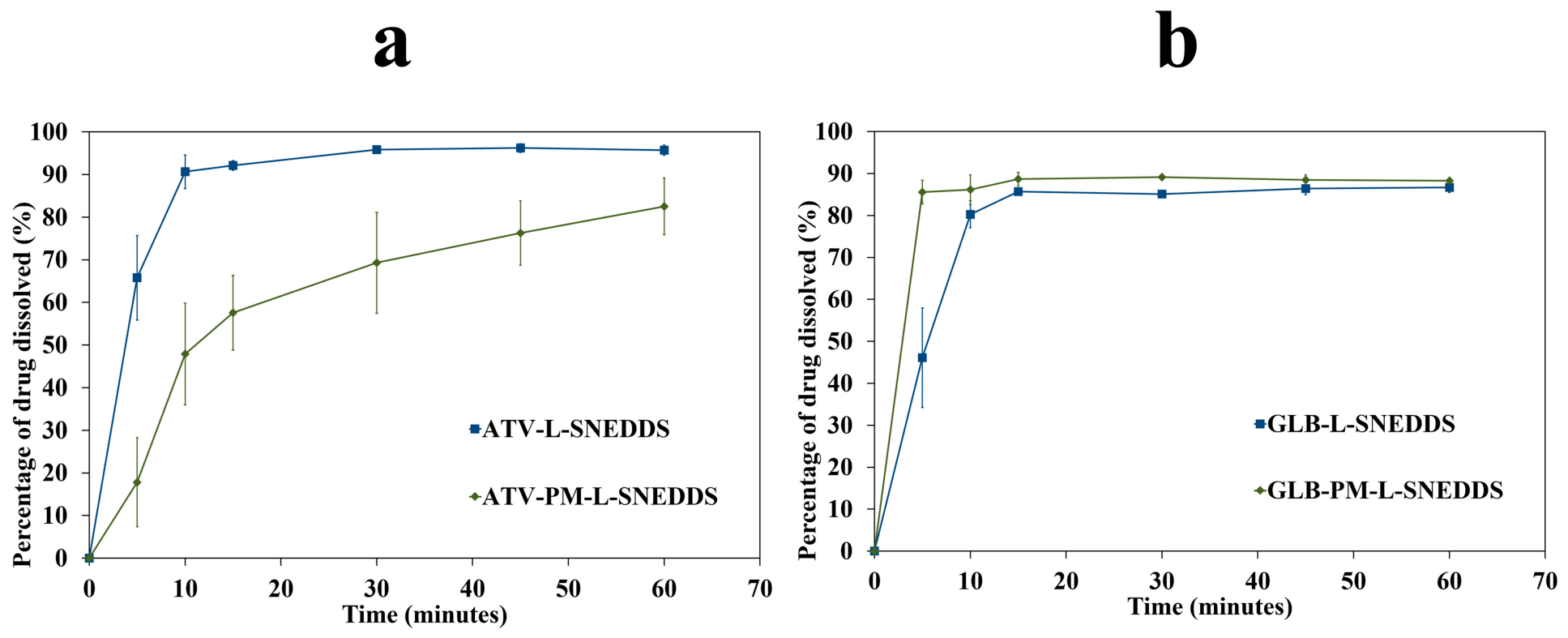


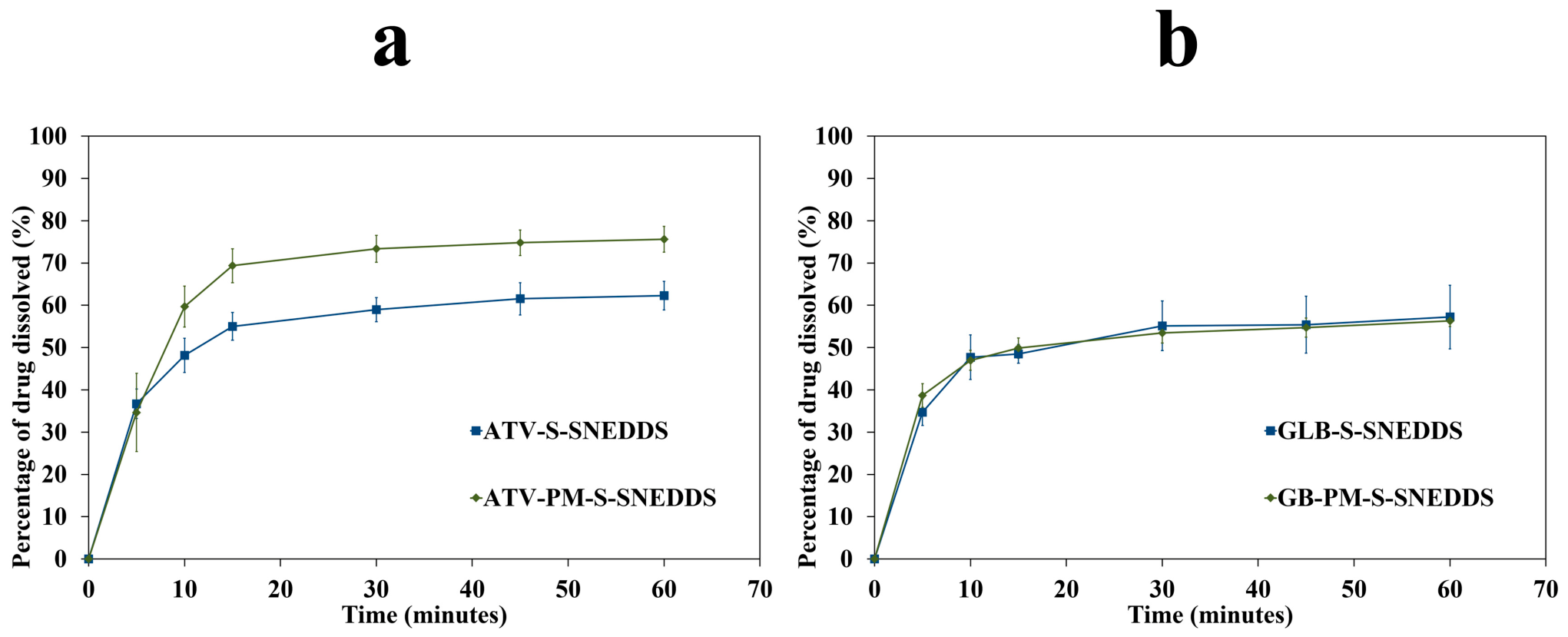



| Parameter | Glibenclamide | Atorvastatin Calcium |
|---|---|---|
| Mobile Phase | Acetonitrile: 0.1% Formic acid (46.9:53.1, v/v) | 0.1% Formic acid: 10 mM Ammonium formate: Acetonitrile (10:45:45, v/v/v) |
| Flow Rate (mL/min) | 0.3 | 0.4 |
| Column Temperature (°C) | 38.8 | 30.0 |
| Detection Wavelength (nm) | 228 | 245 |
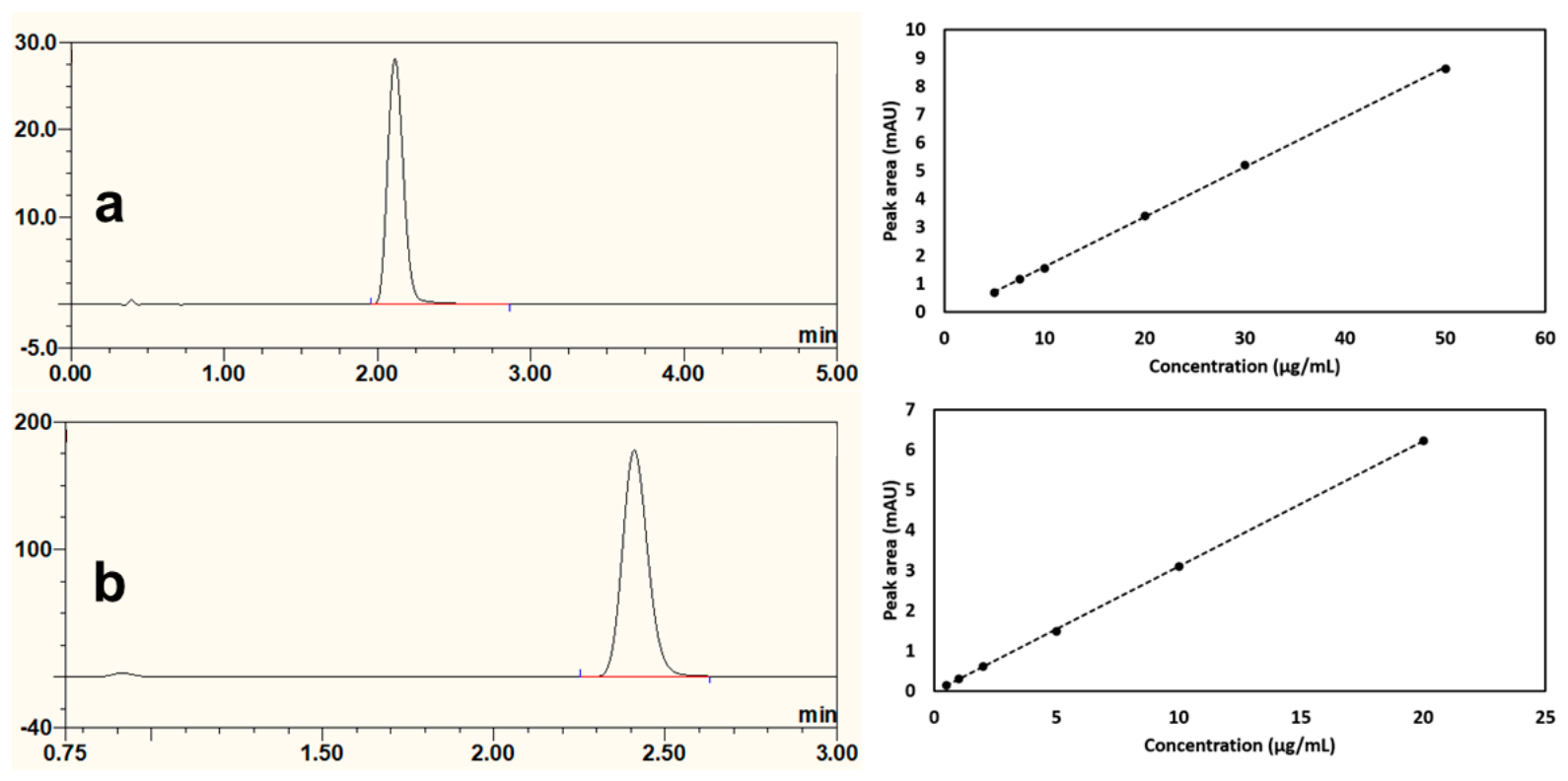
| Calibration Range (µg/mL) | 0.5–20.0 | 5.0–50.0 |
| Surfactant | Transmittance (%) |
|---|---|
| Polysorbate 85 | 50.87 ± 0.31 |
| Polysorbate 80 | 82.83 ± 0.45 |
| Polysorbate 60 | 79.60 ± 0.10 |
| Sorbitan monolaurate | NA |
| sorbitan monooleate | NA |
Disclaimer/Publisher’s Note: The statements, opinions and data contained in all publications are solely those of the individual author(s) and contributor(s) and not of MDPI and/or the editor(s). MDPI and/or the editor(s) disclaim responsibility for any injury to people or property resulting from any ideas, methods, instructions or products referred to in the content. |
© 2026 by the authors. Licensee MDPI, Basel, Switzerland. This article is an open access article distributed under the terms and conditions of the Creative Commons Attribution (CC BY) license.
Share and Cite
Sherif, A.Y.; Altamimi, M.A. Overcoming Drug Loading and Dosage Volume Challenges of Adsorption-Solidified SNEDDS by pH-Modulation Strategy: Atorvastatin Calcium and Glibenclamide as Model Drugs. Pharmaceutics 2026, 18, 942. https://doi.org/10.3390/pharmaceutics18080942
Sherif AY, Altamimi MA. Overcoming Drug Loading and Dosage Volume Challenges of Adsorption-Solidified SNEDDS by pH-Modulation Strategy: Atorvastatin Calcium and Glibenclamide as Model Drugs. Pharmaceutics. 2026; 18(8):942. https://doi.org/10.3390/pharmaceutics18080942
Chicago/Turabian StyleSherif, Abdelrahman Y., and Mohammad A. Altamimi. 2026. "Overcoming Drug Loading and Dosage Volume Challenges of Adsorption-Solidified SNEDDS by pH-Modulation Strategy: Atorvastatin Calcium and Glibenclamide as Model Drugs" Pharmaceutics 18, no. 8: 942. https://doi.org/10.3390/pharmaceutics18080942
APA StyleSherif, A. Y., & Altamimi, M. A. (2026). Overcoming Drug Loading and Dosage Volume Challenges of Adsorption-Solidified SNEDDS by pH-Modulation Strategy: Atorvastatin Calcium and Glibenclamide as Model Drugs. Pharmaceutics, 18(8), 942. https://doi.org/10.3390/pharmaceutics18080942