1. Introduction
Poor aqueous solubility remains one of the major limitations in the development of formulations for Biopharmaceutics Classification System (BCS) Class II drugs, where dissolution frequently controls oral absorption and bioavailability [
1,
2]. Cyclodextrins (CDs) are widely used pharmaceutical excipients that improve the apparent solubility and dissolution behavior of poorly soluble drugs through inclusion complex formation with hydrophobic regions of drug molecules while maintaining compatibility with aqueous media [
3,
4,
5]. Their pharmaceutical use includes solubilization, stabilization, enhancement of drug delivery, and modification of release properties [
3,
4,
5]. Phase-solubility analysis introduced by Higuchi and Connors remains the classical approach for evaluating drug–cyclodextrin interactions under saturated conditions [
6], while complementary solid-state techniques are commonly used to characterize inclusion complexes [
7].
Additional improvement of drug solubility is frequently achieved by introducing auxiliary agents such as amino acids, hydroxy acids, or hydrophilic polymers into cyclodextrin-based systems [
4,
5]. Among these additives, L-arginine has attracted considerable attention because it may simultaneously increase dissolved drug concentrations and reduce precipitation tendency in aqueous media [
8,
9,
10,
11]. L-arginine was selected because it is a pharmaceutically relevant basic amino acid that has been used as an auxiliary component in cyclodextrin-based solubilization studies [
8,
9,
10,
11]. Its guanidinium group remains protonated over a broad pH range [
12,
13] and may participate in electrostatic interactions, ion-pair formation, and hydrogen bonding with ionized acidic drugs and cyclodextrin-associated species [
8,
9,
10,
11,
14]. In addition, the available literature provides equilibrium and phase-solubility data for L-arginine-containing systems, which makes it suitable for quantitative modeling. Other amino acids or excipients may also enhance cyclodextrin complexation, but their use in the present framework would require their own association constants under comparable conditions. Experimental studies involving repaglinide, sulfadiazine, cefixime, and meloxicam have shown that ternary systems containing cyclodextrins and L-arginine may provide substantially higher apparent solubility than the corresponding binary drug–cyclodextrin systems [
8,
9,
10,
11]. These effects are commonly associated with improved complexation efficiency and stabilization of dissolved drug species.
Increased apparent solubility does not necessarily guarantee maintenance of stable dissolved drug concentrations after dilution or changes in pH. Under gastrointestinal conditions, precipitation may occur when the formulation enters unfavorable solubilization regions. Formulation performance therefore depends on equilibrium solubility together with ionization equilibria, complex formation, and solid–liquid phase distribution. For ionizable drugs, pH strongly affects the relative abundance of neutral and charged species and directly influences both binary inclusion and multicomponent association processes.
Ternary cyclodextrin systems have been extensively investigated experimentally, and interpretation of their behavior remains difficult because several coupled processes may contribute simultaneously to the observed enhancement of apparent solubility. Increased dissolved drug concentrations may originate from pH-induced ionization, binary inclusion complexation, multicomponent association, or combinations of these effects. Optimization of ternary formulations therefore still relies largely on empirical screening.
Recent studies have emphasized the importance of pH-dependent solubility, supersaturation behavior, precipitation processes, and multicomponent stabilization effects in cyclodextrin-containing pharmaceutical formulations [
15,
16,
17]. These studies illustrate the growing interest in predictive approaches capable of relating coupled physicochemical interactions to formulation performance under complex conditions. Recent thermodynamic analyses of heterogeneous multicomponent systems also showed that apparent synergistic enhancement may arise from coupled equilibria involving simultaneous protonation, association, and phase partitioning processes [
18,
19,
20]. Such observations indicate the importance of distinguishing pH-driven enhancement from stabilization associated with multicomponent interactions during interpretation of complex formulation systems.
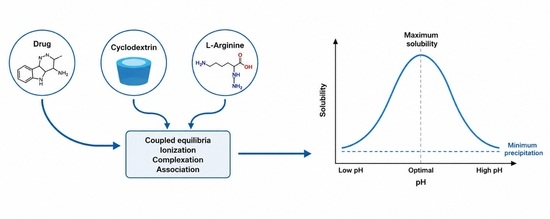
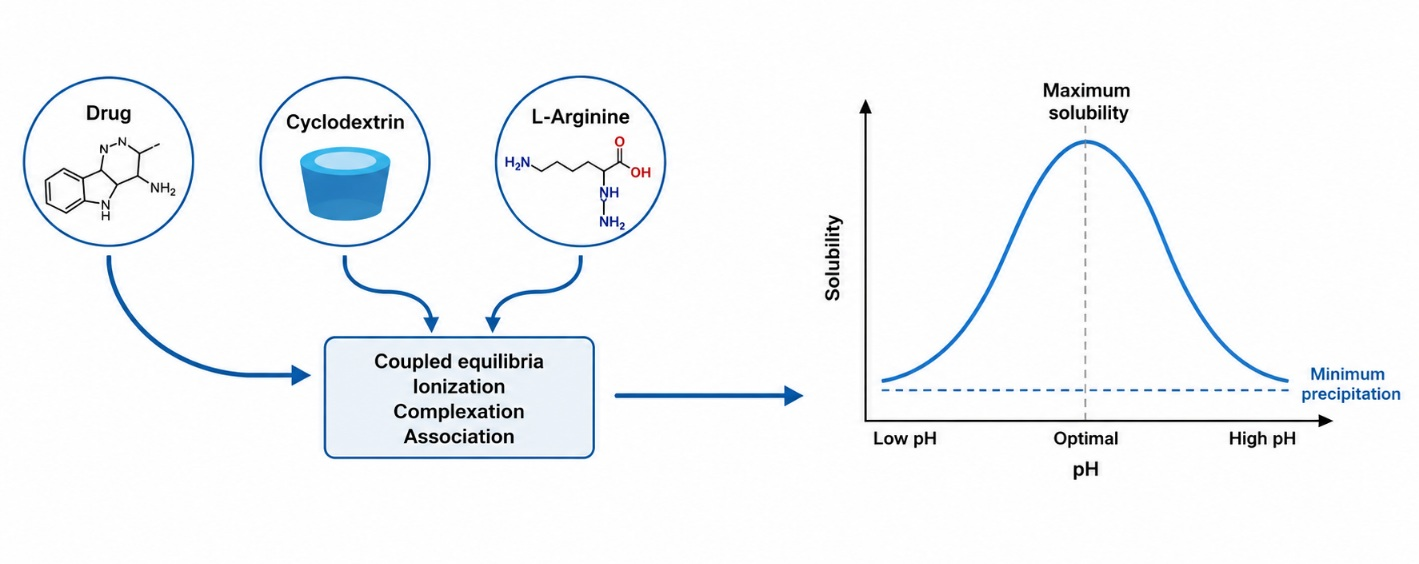
The developed model combines acid–base equilibria, binary inclusion complexation, ternary association, and explicit solid–liquid phase partitioning within a unified mass-balance treatment. In addition to apparent solubility, the analysis introduces formulation-relevant descriptors related to precipitation degree and multicomponent enhancement. The approach is evaluated using literature experimental data for repaglinide, sulfadiazine, cefixime, and meloxicam, representing structurally distinct poorly soluble drugs known to form ternary cyclodextrin systems. The objective of the study is to provide a predictive equilibrium-based approach capable of identifying formulation-relevant pH domains associated with enhanced solubility and reduced precipitation. The present study applies equilibrium analysis to predict pH-dependent solubility enhancement and precipitation behavior in drug–cyclodextrin–L-arginine systems. The proposed approach may assist preliminary identification of formulation-relevant pH regions and excipient compositions prior to experimental optimization.
2. Materials and Methods
2.1. Model Systems and Physicochemical Equilibria
The analyzed systems consisted of a poorly soluble ionizable drug (HD), cyclodextrin (CD), and L-arginine (HA) used as an auxiliary solubilizing component. Under saturated conditions, the total drug content was distributed between dissolved species and a residual solid phase. Drug ionization was described through conventional acid–base equilibria accounting for the coexistence of neutral and ionized forms as a function of pH. L-arginine was treated as a polyprotic component whose protonation state changes with pH and influences participation in ternary interactions.
Binary drug–cyclodextrin complex formation was represented as a reversible equilibrium process. Additional solubility enhancement in ternary systems was described through drug–cyclodextrin–arginine association equilibria involving protonated arginine species. These coupled equilibria determine the availability of dissolved species participating in multicomponent stabilization.
The coupled equilibrium equations were solved numerically to obtain pH-dependent species distributions, apparent solubility profiles, and precipitation behavior under specified formulation conditions. The equilibrium constants used in the calculations were taken from experimental literature sources summarized in
Table 1. The calculations used the equilibrium constants as reported in the original literature sources. No additional ionic-strength correction was applied because the necessary activity-coefficient parameters were not available consistently for all systems. Therefore, the predictions should be interpreted for conditions close to those under which the constants were determined.
For the RPG–HPβCD–L-arginine system, the source study used HPβCD with an average molecular weight of approximately 1377 and a hydroxypropyl substitution degree of 0.66. The calculated profiles for this system refer to this HPβCD material and to the experimental conditions reported in that study. Direct transfer of these calculations to HPβCD products with different substitution degrees would require the corresponding association constants.
The stereochemical form of each drug was taken as reported in the experimental source from which the equilibrium constants were obtained. Enantiomer-specific constants were not introduced. Predictions for other stereoisomers or racemic compositions would require independently measured constants under comparable conditions.
Because the investigated systems were analyzed under saturation conditions, the formulation explicitly included both dissolved species and the undissolved drug phase. Apparent solubility was therefore expressed as the total dissolved drug concentration at equilibrium, including free drug, ionized species, binary drug–cyclodextrin complexes, and ternary associations.
2.2. Solubility and Precipitation Calculations
The total concentration of each component was expressed through mass-balance equations including all relevant dissolved species and, for the drug, the residual solid phase. Apparent solubility
was calculated as the sum of all dissolved drug forms at equilibrium:
Cyclodextrin was assumed to remain fully dissolved under the investigated conditions, and its analytical concentration was distributed between free and complexed forms. The CD–H2A+ association term was included in the cyclodextrin and L-arginine mass balances, as the corresponding association constant was available. A separate CD–HA term was not used in the calculations, since an independent constant measured under comparable conditions was not available for the analyzed systems. This interaction may affect complexation at moderate pH and can be added to the model once suitable constants are reported.
Similarly, the total concentration of L-arginine included all protonation states and ternary-associated species.
This treatment accounts simultaneously for the effects of pH, ionization, complex formation, and solid–liquid partitioning on formulation behavior. Consequently, changes in pH or component concentrations influence species distribution, complex stability, and the fraction of drug remaining in the solid phase.
The dependence of apparent solubility on pH and formulation composition was obtained from the coupled equilibrium calculations.
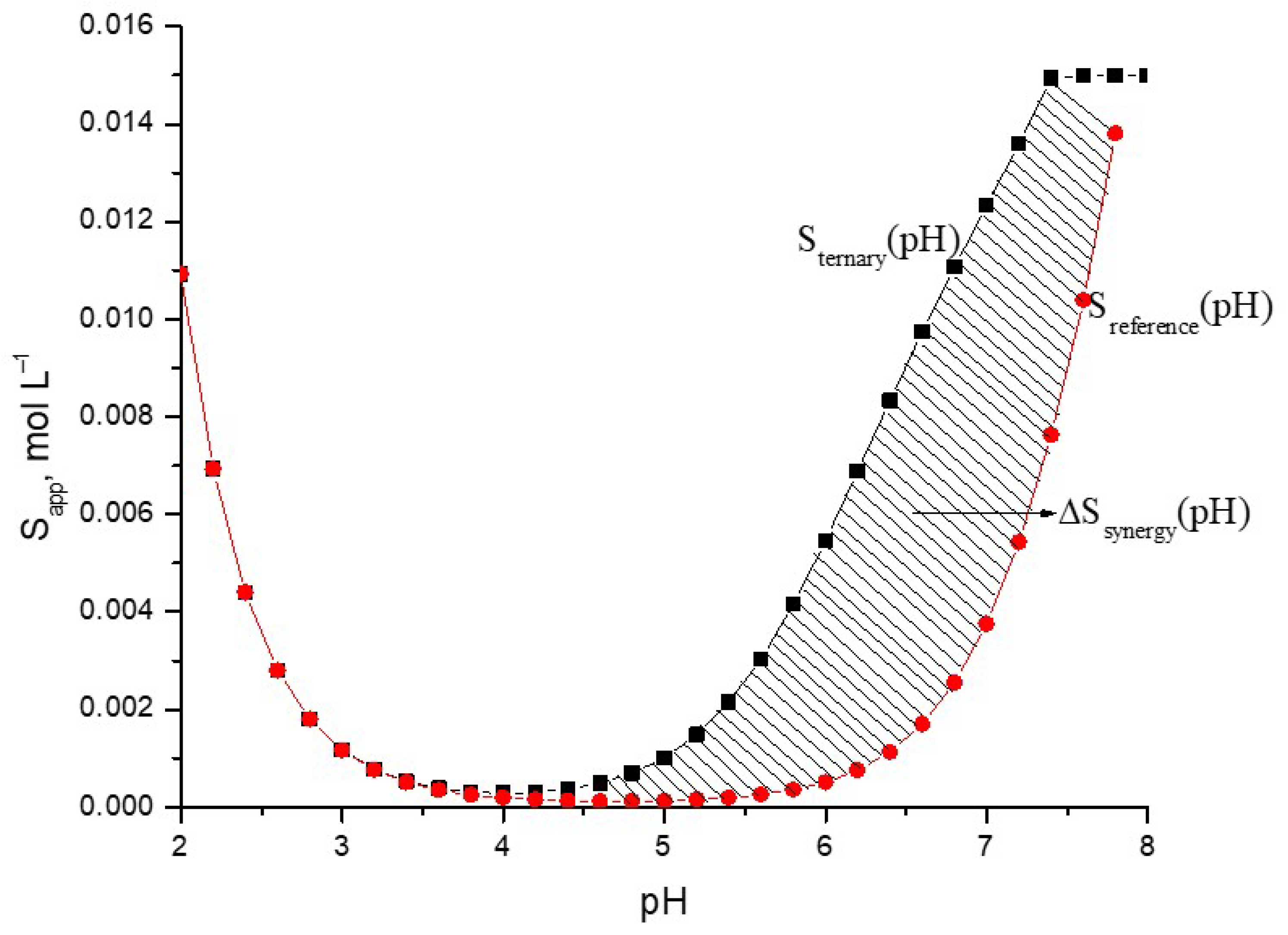
Figure 1 illustrates the calculated apparent solubility profile for the repaglinide–HPβCD–L-arginine system and identifies the pH region where ternary interactions most effectively increase dissolved drug concentration.
2.3. Formulation-Relevant Descriptors
To interpret the calculated equilibria in terms relevant for pharmaceutical formulations, three complementary descriptors were introduced: the degree of precipitation, the synergistic coefficient, and the absolute solubility enhancement.
The degree of precipitation,
, was defined as the fraction of total drug remaining in the solid phase at equilibrium:
where
represents the total analytical drug concentration. Lower
values correspond to more efficient solubilization.
The synergistic coefficient,
, was defined as:
where
represents the apparent solubility in the drug–cyclodextrin–L-arginine system and
corresponds to the apparent solubility in the corresponding binary drug–cyclodextrin system under identical conditions. Values of
above unity indicate additional solubility enhancement associated with ternary interactions.
An additional descriptor of non-additive solubilization was introduced as:
where
corresponds to the apparent solubility calculated under identical conditions in the absence of ternary association. This parameter isolates the direct contribution of multicomponent interactions to solubility enhancement. The detailed derivation of these descriptors from the coupled equilibrium equations is provided in
Appendix A (
Appendix A.4,
Appendix A.5 and
Appendix A.6).
These descriptors provide complementary information about dissolved drug fraction, precipitation tendency, and multicomponent enhancement. The physical significance of
is illustrated in
Figure 1, which separates the contributions of pH-dependent ionization and ternary interactions to the overall solubility enhancement.
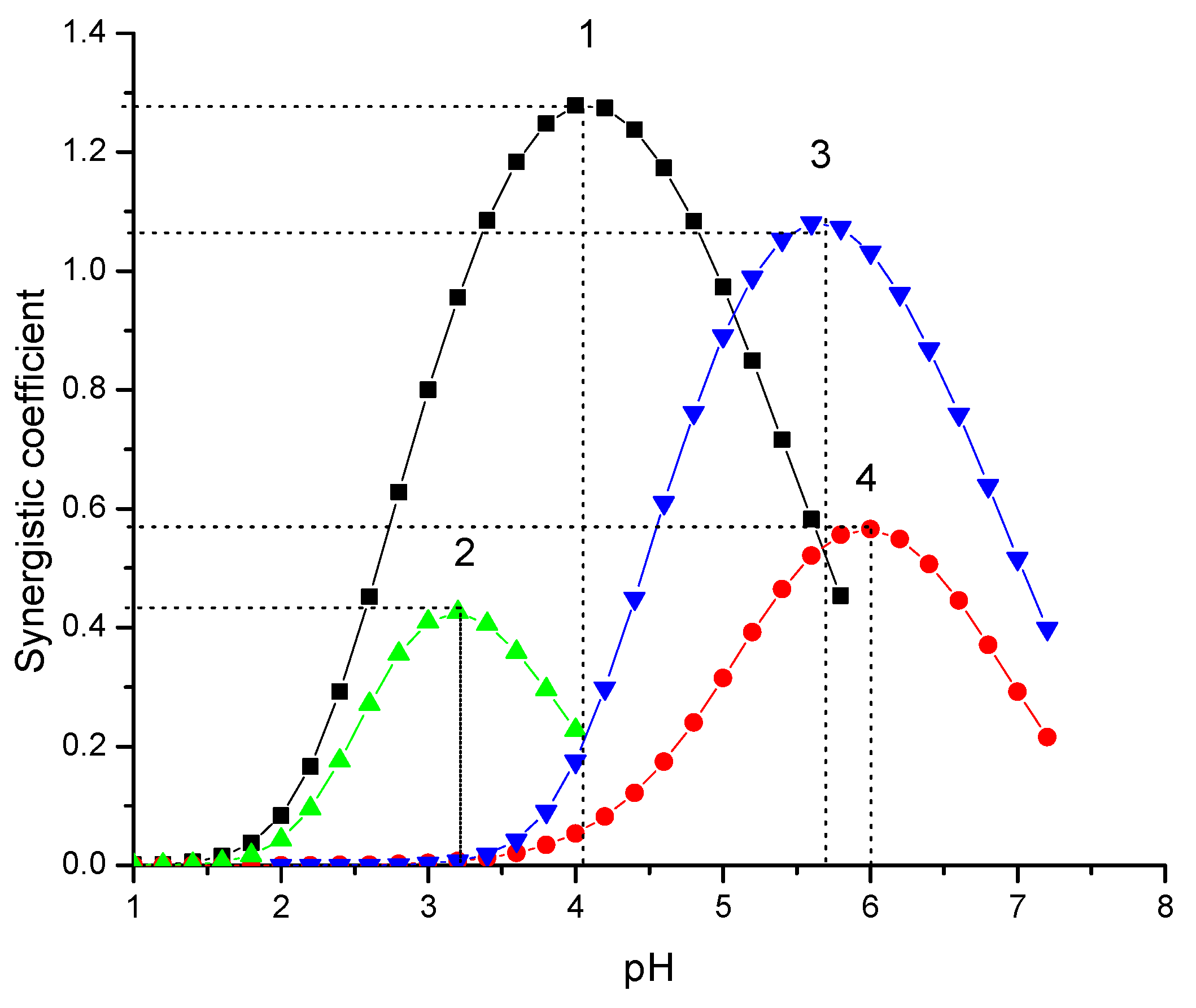
Figure 2 shows the pH dependence of the synergistic coefficient for the investigated ternary systems and identifies formulation-relevant pH regions where additional solubility enhancement becomes significant.
The model was developed using standard assumptions of equilibrium solubility analysis, including saturation conditions, attainment of equilibrium, and dilute-solution behavior in the presence of a residual solid phase. The implications of these assumptions for predictive reliability and formulation analysis are discussed below.
2.4. Quantitative Validation Metrics
To provide a quantitative assessment of the agreement between calculated and published apparent solubilities, the relative error, mean relative error, mean absolute error, and root mean square error were calculated. For each point, the relative error was defined as:
where
and
are the calculated and experimental apparent solubilities, respectively.
The mean relative error was calculated as:
The mean absolute error was calculated as:
The root mean square error was calculated as:
These metrics were used to evaluate numerical agreement between the model and published phase-solubility data under comparable equilibrium conditions. When the stability constants were derived from the same phase-solubility dataset, the comparison was interpreted as a quantitative consistency check and not as fully independent external validation.
3. Results and Discussion
3.1. pH-Dependent Solubility Profiles
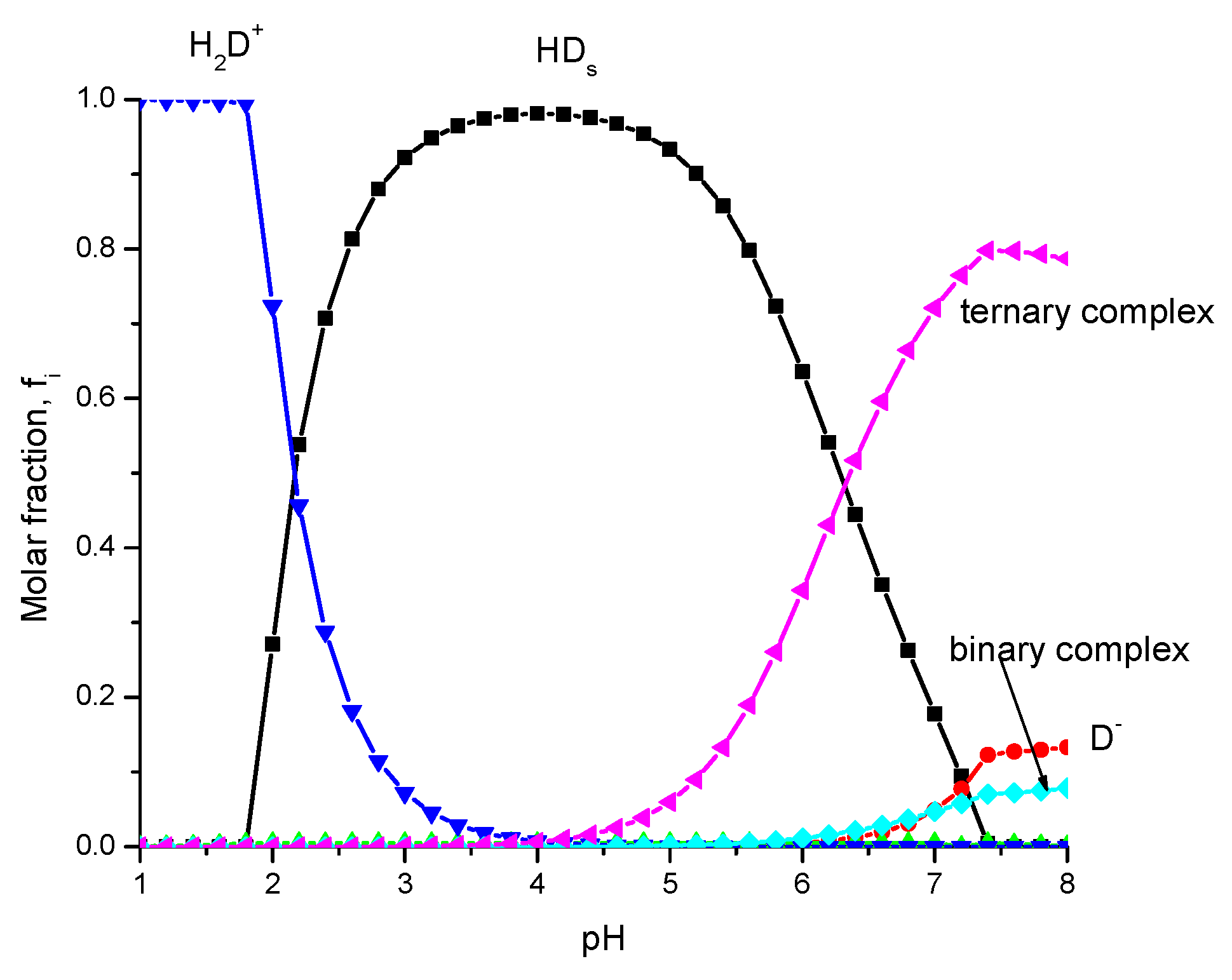
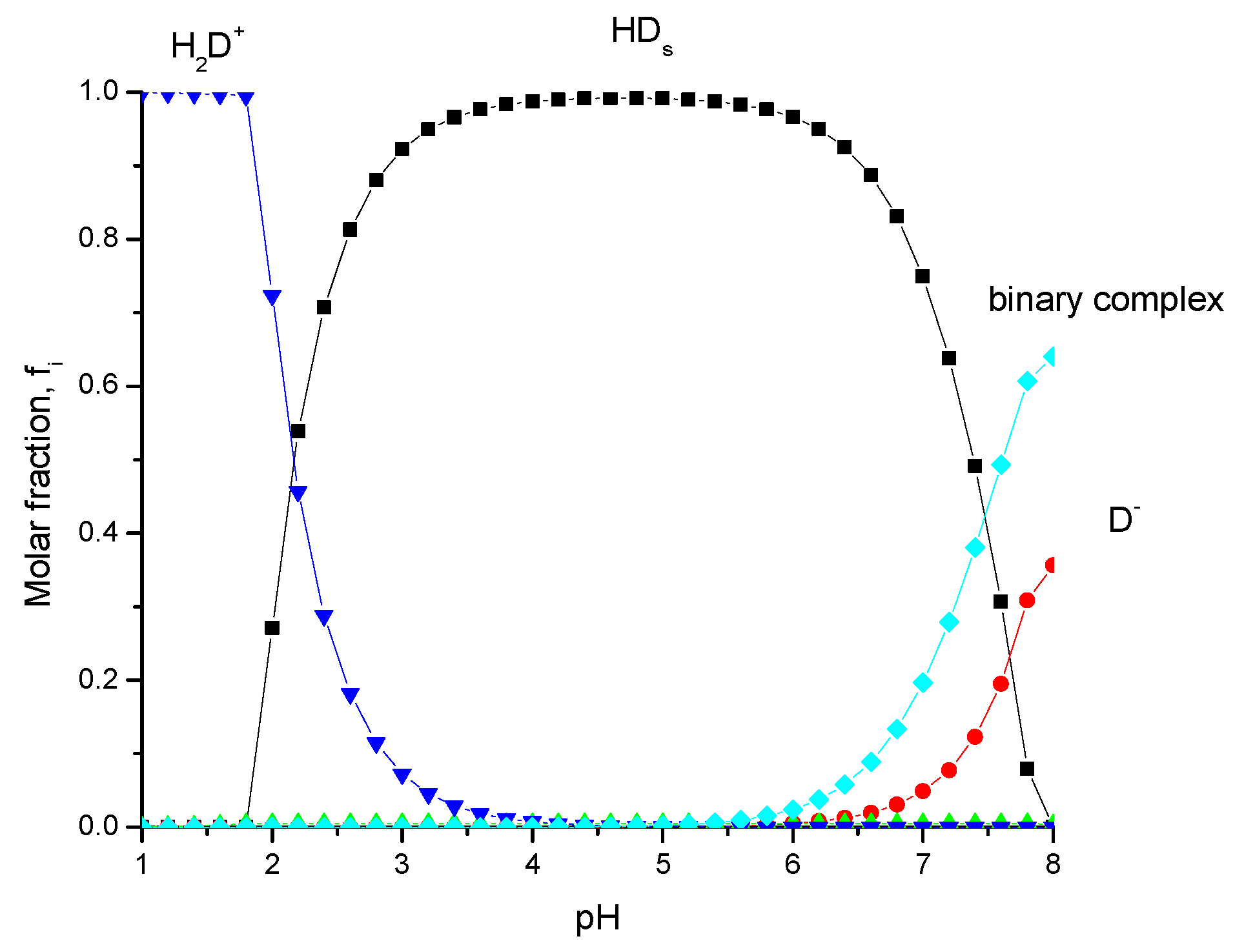
The calculated solubility profiles showed a strong dependence of dissolved drug concentration on pH for all investigated ternary systems. The corresponding redistribution of dissolved and solid species across the pH range is presented in
Figure A1 and
Figure A2 (
Appendix C). Representative behavior for the repaglinide–HPβCD–L-arginine system is presented in
Figure 1. The profiles demonstrate that the effect of cyclodextrin and L-arginine on apparent solubility is limited to specific pH regions where ionization and multicomponent interactions favor stabilization of dissolved drug species.
At acidic pH, the dissolved fraction remained relatively low because a substantial part of the drug persisted in the solid phase. Under these conditions, the contribution of ternary association to apparent solubility was limited. With increasing pH, the concentration of dissolved species increased sharply, reflecting changes in drug ionization and increasing participation of cyclodextrin and protonated arginine species in multicomponent equilibria. The resulting increase in apparent solubility was accompanied by a corresponding decrease in the residual solid fraction.
The calculations indicate that maximum solubility enhancement occurs within a relatively narrow pH interval. In this region, ionization equilibria and ternary interactions act simultaneously to stabilize dissolved drug species. Outside this interval, the dissolved concentration decreased because the equilibrium composition no longer favored formation of the dominant solubilizing species. Similar behavior was observed for sulfadiazine, cefixime, and meloxicam systems, although the position and width of the favorable pH region differed among the investigated drugs.
For systems where comparable experimental data were available, the calculated profiles reproduced the main solubility trends. For cefixime and meloxicam, the results should be interpreted as model-based predictions requiring further experimental confirmation [
8,
9,
10,
11]. In particular, the model reproduced the experimentally observed shift toward higher dissolved drug concentrations under conditions where ternary interactions become significant. The agreement between theoretical and experimental behavior supports the applicability of the equilibrium approach for analysis of multicomponent formulation systems.
Figure 1 also illustrates that the apparent solubility enhancement cannot be attributed solely to pH-induced ionization. In several pH regions, the increase in dissolved drug concentration exceeded the values expected from ionization effects alone, indicating an additional contribution associated with multicomponent interactions involving cyclodextrin and arginine species. This behavior became particularly pronounced near the pH region where the concentration of protonated arginine species remained sufficiently high to participate in ternary association processes.
The equilibrium redistribution of dissolved and solid species with pH is illustrated in
Figure A1 and
Figure A2 (
Appendix C), which show the progressive replacement of the solid phase by binary and ternary dissolved complexes.
From a formulation perspective, the calculated profiles identify pH regions where dissolved drug concentrations can be maximized while minimizing the residual solid fraction. These results demonstrate the importance of simultaneous optimization of pH and excipient composition in cyclodextrin-based ternary formulations.
3.2. Influence of Cyclodextrin and L-Arginine on Apparent Solubility
Cyclodextrin increased apparent solubility in all investigated systems through formation of inclusion complexes with dissolved drug species. Addition of L-arginine produced a further increase in dissolved drug concentration, particularly within pH regions where ionized drug species and protonated arginine forms coexisted in solution.
The extent of solubility enhancement depended strongly on pH. At low pH values, the contribution of ternary association remained limited because the concentration of ionized drug species was low. Increasing pH shifted the equilibrium distribution toward species capable of participating more effectively in binary and ternary interactions, leading to higher apparent solubility.
The influence of L-arginine became most pronounced within restricted pH intervals corresponding to favorable overlap between drug ionization and arginine protonation. Outside these regions, the contribution of ternary stabilization decreased and the calculated profiles gradually approached the behavior of the corresponding binary drug–cyclodextrin systems.
The calculated values are compared with the available experimental solubility data in
Table 2.
Table 2 provides a concise comparison with the literature data available under specified conditions. It is not intended as a full validation of all calculated profiles. A point-by-point quantitative check was possible only for the RPG–HPβCD–L-arginine phase-solubility dataset reported by Vakani et al. [
8]. This analysis is given in
Section 3.4 and
Table A3 (
Appendix B), where six concentration points reconstructed from the reported experimental regression are compared with the calculated values across the HPβCD concentration range used in the source study.
For repaglinide, the calculated apparent solubility at pH 5.8 was close to the experimentally reported ternary-system solubility, although the pH value was not reported in the original solubility study. A similar level of agreement was obtained for sulfadiazine at alkaline pH. For cefixime and meloxicam, the calculated apparent solubilities at the pH values corresponding to complete dissolution predicted by the model were added to
Table 2. These values indicate the predicted upper dissolved drug concentration under the imposed total drug concentration of 0.015 mol L
−1. The strongest relative ternary contribution, expressed by the synergistic coefficient, occurred at somewhat lower pH values; however, at these points a residual solid fraction was still present. Therefore, the values reported in
Table 2 were selected according to the combined criterion of high apparent solubility and minimal residual solid fraction. The quantitative validation metrics for the RPG–HPβCD–L-arginine phase-solubility comparison are reported in
Section 3.4.
Figure 2 shows the pH dependence of the synergistic coefficient for the investigated drugs. The profiles reveal distinct pH regions where ternary association contributes most effectively to solubility enhancement. Repaglinide and sulfadiazine exhibit broader regions of positive enhancement extending toward near-neutral pH, whereas cefixime and meloxicam display narrower acidic domains. The position of these maxima reflects the combined influence of drug ionization, cyclodextrin complexation, and arginine speciation.
The obtained results show that the influence of cyclodextrin and L-arginine cannot be considered separately because both components affect the same coupled equilibrium system. Changes in pH simultaneously modify ionization state, complex stability, and distribution between dissolved and solid phases. From a formulation perspective, these relationships are important for identifying pH regions where dissolved drug concentration can be increased while minimizing precipitation.
3.3. Precipitation Behavior and Residual Solid Fraction
The calculated precipitation profiles showed that a considerable fraction of the drug remained in the solid phase outside favorable solubilization regions.
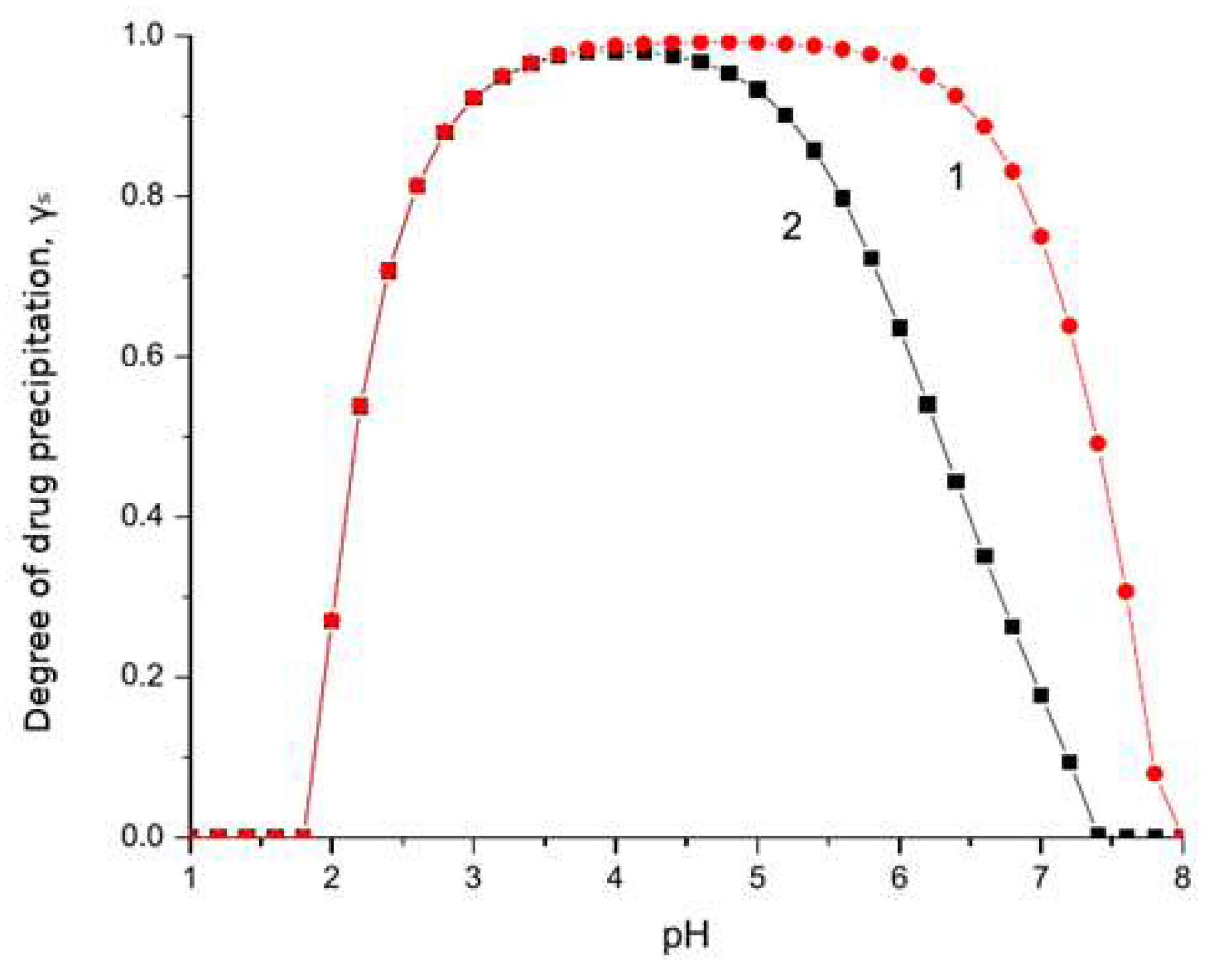
Figure 3 presents the pH dependence of the residual solid fraction for binary and ternary repaglinide systems. In the presence of L-arginine, the amount of undissolved drug decreased over the pH interval where ternary interactions contributed to stabilization of dissolved species.
At acidic pH, the dissolved drug concentration remained low and most of the drug persisted in the solid phase. Increasing pH shifted the equilibrium toward dissolved forms and progressively reduced the residual solid fraction. The transition occurred over a broader pH interval in the ternary systems than in the corresponding binary systems, indicating improved stabilization of dissolved drug species in the presence of L-arginine.
The decrease in precipitation coincided with the pH region where the synergistic coefficient reached its highest values (
Figure 2). Under these conditions, ternary association increased the fraction of dissolved species and reduced the amount of residual solid drug more effectively than binary cyclodextrin complexation alone.
Differences among the investigated drugs were also evident. Repaglinide and sulfadiazine retained relatively broad pH regions where the dissolved fraction remained high, whereas cefixime and meloxicam exhibited narrower domains of effective stabilization. Outside these intervals, the fraction of undissolved drug increased rapidly because the equilibrium composition no longer favored stabilization of dissolved species.
For RPG and SDZ, the calculated trends were consistent with the available experimental observations summarized in
Table 2. For CEF and MLX, the calculated profiles are presented as predictive outputs requiring further experimental confirmation. The calculations reproduced the experimentally observed relationship between increased apparent solubility and reduced precipitation in ternary cyclodextrin systems. These results indicate that precipitation suppression and solubility enhancement originate from the same coupled equilibrium processes controlling distribution between dissolved and solid phases.
From a formulation standpoint, the calculated precipitation profiles are relevant for predicting changes that may occur after dilution or transfer into media with different pH values. A formulation showing high apparent solubility under one set of conditions may undergo rapid precipitation after pH change. The calculated profiles therefore help identify pH regions where dissolved drug concentrations remain high while the residual solid fraction stays low.
3.4. Quantitative Comparison with Published Phase-Solubility Data
A quantitative comparison was performed for the RPG–HPβCD–L-arginine system using the phase-solubility data reported by Vakani et al. [
8]. This dataset was selected because it represents an equilibrium phase-solubility experiment performed at defined HPβCD concentrations. In contrast, saturation solubility values obtained for physical mixtures, kneaded products, or co-evaporated products also reflect solid-state preparation effects and were therefore used only for qualitative comparison.
The experimental apparent solubilities were reconstructed from the regression equation reported for the ternary RPG–HPβCD–L-arginine system [
8]:
where
is the analytical concentration of HPβCD in mM. The comparison was performed at
= 0, 3, 6, 9, 12, and 15 mM. The calculated slope was obtained from the phase-solubility expression:
using
= 4407.01 M
−1 and
= 7.73 × 10⁻⁵ mol L
−1. This gave
= 0.2540998, which is practically identical to the published experimental slope of 0.2541.
The detailed point-by-point comparison between the reconstructed experimental values and the calculated values is provided in
Table A3 (
Appendix B). The calculated values reproduced the published phase-solubility data for the repaglinide–HPβCD–L-arginine system [
8], with MRE = 2.77 × 10
−5%, MAE = 1.73 × 10
−9 mol L
−1, and RMSE = 2.09 × 10
−9 mol L
−1. These very small deviations arise because the comparison uses the regression equation and stability constant reported for the same phase-solubility dataset. The purpose of this analysis is to verify numerical consistency of the mass-balance implementation, while broader predictive performance must be assessed with independent datasets. Therefore, this comparison should be interpreted as a quantitative consistency check and not as fully independent external validation. Broader validation will require additional datasets measured under comparable pH, ionic strength, and excipient concentration conditions.
3.5. Comparison with Literature Data and Predictive Applications
The quantitative comparison presented above confirms that the equilibrium model reproduces the published phase-solubility behavior of the RPG–HPβCD–L-arginine system [
8] when the same stability constant and concentration range are used. This result supports the internal consistency of the mass-balance treatment and confirms that the model correctly translates the reported association constant into pH-dependent apparent solubility profiles.
For additional comparison, the calculated apparent solubility of the RPG–HPβCD–L-arginine system at pH 5.8 was 0.042 mol L
−1, which is close to the reported experimental value near pH 6.0 of approximately 0.040 mol L
−1 [
8]. A similar level of agreement was obtained for sulfadiazine under alkaline conditions, where the calculated value of 0.048 mol L
−1 was close to the reported experimental solubility of 0.052 mol L
−1 [
9]. These comparisons indicate that the coupled equilibrium approach captures the principal physicochemical factors controlling solubility enhancement in the validated systems.
For cefixime [
10,
26] and meloxicam [
11,
27,
28], directly comparable experimental apparent-solubility datasets under the same cyclodextrin–L-arginine conditions were not available. These systems were therefore treated as predictive applications of the equilibrium framework. The calculated profiles indicate that both systems exhibit narrower pH domains in which ternary stabilization is effective. Outside these domains, the residual solid fraction remains substantial despite the presence of cyclodextrin and L-arginine.
The model also reproduced the restriction of enhanced solubilization to defined pH intervals. In the investigated systems, ternary stabilization became more pronounced only within regions where favorable overlap existed between drug ionization and arginine protonation. Outside these intervals, the calculated dissolved fraction decreased and the residual solid fraction increased. This behavior shows that pH adjustment alone cannot fully explain the observed enhancement of apparent solubility. The largest increases occurred when ionization, cyclodextrin complexation, and ternary association contributed simultaneously to stabilization of dissolved drug species.
3.6. Mechanistic Basis of Ternary Complexation
The calculated increase in apparent solubility in the ternary systems is related to the simultaneous presence of ionized drug species, cyclodextrin, and protonated L-arginine species in solution. In the present model, ternary association was described mainly through complexes involving the anionic drug form, cyclodextrin, and H
2A
+ as the relevant protonated form of L-arginine. This choice follows the equilibrium constants reported in the literature sources used for the calculations. At moderate pH, other arginine protonation states may also be present. Their quantitative contribution can be included only when the corresponding independent association constants are available. In the present calculations, the dominant ternary term was restricted to the species supported by the literature constants used in
Table 1.
The role of L-arginine can be explained by several physicochemical interactions. The protonated guanidinium group of arginine may interact with ionized acidic drug species through electrostatic attraction and ion-pair formation. Hydrogen bonding may also occur between polar groups of the drug, arginine, and the hydroxyl groups located at the outer surface of cyclodextrin. At the same time, the hydrophobic region of the drug molecule can be included in the cyclodextrin cavity, while the charged or polar groups remain exposed to the aqueous phase. Thus, cyclodextrin inclusion and arginine association can jointly stabilize dissolved drug-containing species.
This interpretation is consistent with experimental reports showing that L-arginine increases apparent stability constants, complexation efficiency, and apparent solubility in ternary cyclodextrin systems. However, the present model does not provide direct structural proof of a unique ternary complex geometry. Direct molecular-level confirmation would require additional evidence from techniques such as 2D NMR, ROESY/NOESY, FTIR under comparable conditions, or molecular dynamics simulations. The present treatment describes the equilibrium consequences of ternary association using available constants.
Higher-order complexes, including 2:1 cyclodextrin–drug species, may occur for large molecules such as repaglinide, especially at high cyclodextrin concentrations or when phase-solubility diagrams deviate from AL-type behavior. They were not included in the present calculations because the analyzed literature dataset reported AL-type behavior and 1:1 stoichiometry for the relevant RPG–HPβCD systems. Introducing 2:1 species without reliable constants would add additional terms not supported by the available data. The same mass-balance framework can be extended to include 2:1 or other higher-order species when reliable equilibrium constants are available.
3.7. Practical Formulation Implications
From a formulation perspective, the calculated profiles provide a basis for identifying pH regions where solubility enhancement and precipitation suppression occur simultaneously. These regions are important because a formulation optimized under one set of conditions may lose dissolved drug after dilution or transfer into a medium with a different pH. This situation is especially relevant for oral formulations, where the drug may experience rapid transitions between acidic gastric conditions and near-neutral or weakly alkaline intestinal environments.
For oral delivery, the pH dependence of these systems is especially important. A formulation may first be exposed to acidic gastric fluid and then to near-neutral intestinal fluid. During this transition, the ionization state of the drug and the protonation state of L-arginine change at the same time. As a result, a formulation that maintains a high dissolved drug concentration in one pH region may become vulnerable to precipitation after transfer to another pH region. The calculated solubility and residual solid profiles identify these vulnerable pH intervals and can help select formulation conditions with a lower risk of precipitation after pH transition.
The present results suggest that cyclodextrin and L-arginine should not be optimized independently. Their combined effect depends on the pH-dependent availability of the ionized drug form, free cyclodextrin, and protonated arginine species participating in ternary association. Therefore, the most favorable formulation region is not necessarily the pH at which the free drug alone is most soluble. It is the pH interval where drug ionization, inclusion complexation, and ternary stabilization act together.
The model can be used as a preliminary screening tool to select formulation pH, cyclodextrin concentration, and L-arginine concentration before experimental optimization. Conditions predicted to give high apparent solubility together with a low residual solid fraction should be prioritized experimentally. In contrast, pH regions where the calculated ternary complex fraction decreases and the residual solid fraction increases should be avoided when precipitation suppression is required.
These recommendations should be applied within the applicability domain of the model. Final formulation selection still requires experimental confirmation under the intended dosage-form conditions, especially when ionic strength, buffer composition, excipient concentration, or solid-state form differs from the conditions used to derive the equilibrium constants.
3.8. Applicability Domain and Limitations
The proposed model is applicable to saturated drug–cyclodextrin–L-arginine systems where apparent solubility is controlled by acid–base equilibria, inclusion complexation, ternary association, and distribution between dissolved species and a residual solid drug phase. Its use requires reliable equilibrium constants for drug ionization, cyclodextrin complexation, arginine protonation, and the dominant ternary association reactions. Nanoparticle or colloidal association of cyclodextrin complexes was not included as a separate equilibrium in the present calculations. The model describes molecular speciation, including acid–base equilibria, binary inclusion complexation, cyclodextrin–arginine association, ternary association, and distribution between dissolved species and the residual solid drug phase. Aggregation would require additional parameters, including aggregation constants, aggregate-size distributions, and their dependence on pH, ionic strength, cyclodextrin concentration, and drug loading. For systems where pH-dependent cyclodextrin aggregates or nanoparticles make a substantial contribution to apparent solubility, additional experimental characterization and an extended aggregation model would be required.
The present validation is strongest for the RPG–HPβCD–L-arginine system, where published phase-solubility data were available over a defined cyclodextrin concentration range [
8]. Additional comparison was possible for sulfadiazine [
9]. For cefixime [
10,
26] and meloxicam [
11,
27,
28], directly comparable apparent-solubility datasets under the same cyclodextrin–L-arginine conditions were not available. These systems should therefore be regarded as predictive applications of the same equilibrium framework, not as independently validated cases.
The current examples mainly concern poorly soluble ionizable drugs with acidic or amphoteric behavior. Extension to weakly basic, neutral, or other amphoteric drugs is possible, but it requires the corresponding ionization constants, cyclodextrin binding constants, and ternary association constants. The mathematical form of the model can accommodate weak bases, but reliable numerical prediction depends on the availability and quality of the relevant constants.
The calculations refer to L-arginine because the equilibrium constants used in the model were reported for L-arginine-containing systems. Replacement by D-arginine or racemic arginine would require independent association constants, since cyclodextrin cavities and several drug molecules are chiral environments. The stereochemical form of the drug was taken as reported in the original experimental sources. No separate enantiomer-specific constants were introduced.
The model assumes equilibrium conditions and dilute-solution behavior. It does not describe nucleation, crystal growth, precipitation kinetics, metastable supersaturation, or changes in solid-state form during preparation. Ionic strength and buffer composition may also influence protonation and association constants. Therefore, predictions made outside the experimental conditions used to derive the constants should be interpreted with caution.
Within these limits, the model can be used as a screening tool for identifying pH regions and excipient compositions where solubility enhancement and precipitation suppression are expected to occur together. Final formulation selection still requires experimental confirmation under the intended dosage-form conditions.
4. Conclusions
The present study demonstrates that pH-dependent solubility enhancement in drug–cyclodextrin–L-arginine systems is controlled by coupled equilibria involving ionization, binary inclusion complexation, ternary association, and distribution between dissolved and solid phases. The profiles revealed that enhanced apparent solubility and reduced precipitation occur only within limited pH regions where these processes act simultaneously.
Quantitative comparison with published phase-solubility data confirmed the numerical consistency of the model for the RPG–HPβCD–L-arginine system. The additional systems illustrate predictive applications of the same equilibrium framework, but supplementary experimental validation is required under directly comparable formulation conditions.
The data suggest that the effect of L-arginine depends strongly on pH and becomes most pronounced within regions where protonated arginine species coexist with drug forms capable of participating in multicomponent association. Outside these regions, the systems gradually approach the behavior of the corresponding binary drug–cyclodextrin formulations.
The calculations also showed that apparent solubility enhancement cannot be explained solely by pH-induced ionization. Additional stabilization arises from ternary interactions involving cyclodextrin complexes and protonated arginine species. The extent of this effect varies among different drugs according to their acid–base properties and complex stability.
From a formulation perspective, the approach provides a useful basis for identifying pH regions associated with increased dissolved drug concentration and reduced precipitation tendency. It may support preliminary optimization of formulation pH and excipient composition while reducing the extent of empirical screening during the development of cyclodextrin-containing formulations. The reliability of predictions outside the investigated conditions will depend on the availability of equilibrium constants measured under comparable pH, ionic strength, buffer composition, and excipient concentration conditions.