Leciplex Nanocarriers: An Optimized Platform for Thymol Delivery in Acne Management

 ,
,  , ,
, , 
Abstract
1. Introduction
2. Materials and Methods
2.1. Materials
2.2. Formulation of Thymol-Encapsulated Leciplex
2.3. I-Optimal Design
2.4. Characterization of Thymol-Leciplex Nanovesicles
2.4.1. Particle Size, Size Distribution, and Zeta Potential
2.4.2. Entrapment Efficiency (EE%)
2.4.3. Transmission Electron Microscopy (TEM)
2.5. Optimization of the THY-LPX Nanovesicles
2.6. Formulation of THY-LPX Gel
2.7. Characterization of THY-LPX Gel
2.7.1. Physical Appearance and pH
2.7.2. Rheology
2.7.3. In Vitro Release
2.7.4. Ex Vivo Skin Permeation
2.7.5. Differential Scanning Colorimetry (DSC)
2.7.6. Fourier Transform Infrared (FT-IR)
2.8. Stability Study
2.9. In Vitro Microbiological Study
2.9.1. Antimicrobial Susceptibility Test and Bacterial Strains
Strains and Growth Conditions
Agar Diffusion Method
Evaluation of the Minimal Inhibitory and Bactericidal Concentrations for THY and THY-LPX Gel
2.9.2. The Minimal Biofilm Inhibitory Concentration (MBIC) Test for THY and THY-LPX Gel
2.9.3. Biofilm Visualization
Scanning Electron Microscopy (SEM)
Antibiofilm Activity for THY and THY-LPX Gel Using Confocal Laser Scanning Microscopy (CLSM)
2.10. In Vivo Study
2.10.1. Study Design
2.10.2. Anti-Inflammatory Potential and Ear Thickness
2.10.3. Histopathological Inspections
2.11. Statistical Analysis
3. Results and Discussion
3.1. Model Fit Statistical Analysis
3.1.1. Effect of Variables on PS
3.1.2. Effect of Variables on ZP
3.1.3. Effect of Variables on Entrapment Efficiency (EE%)
3.2. Selection and Validation of the Optimized TYH-LPX Nanovesicles
3.3. Evaluation of the Optimized THY-LPX Nanovesicles
Transmission Electron Microscopy (TEM)
3.4. Characterization of THY-LPX Gel
3.4.1. Physical Appearance and pH
3.4.2. Rheology
3.4.3. In Vitro Release
3.4.4. Ex Vivo Skin Permeation Study
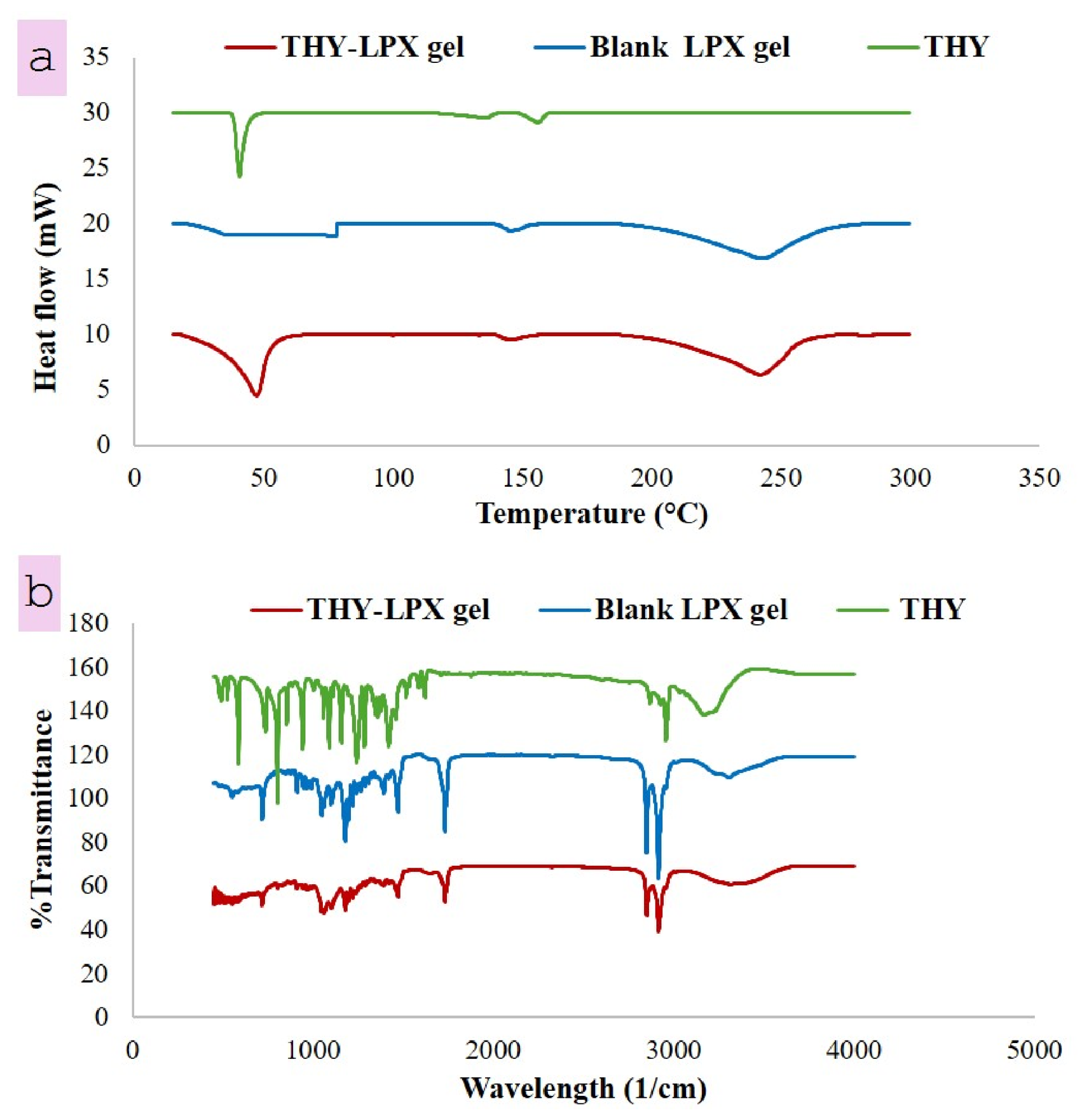
3.4.5. Differential Scanning Calorimetry (DSC)
3.4.6. Fourier Transform Infrared (FT-IR)
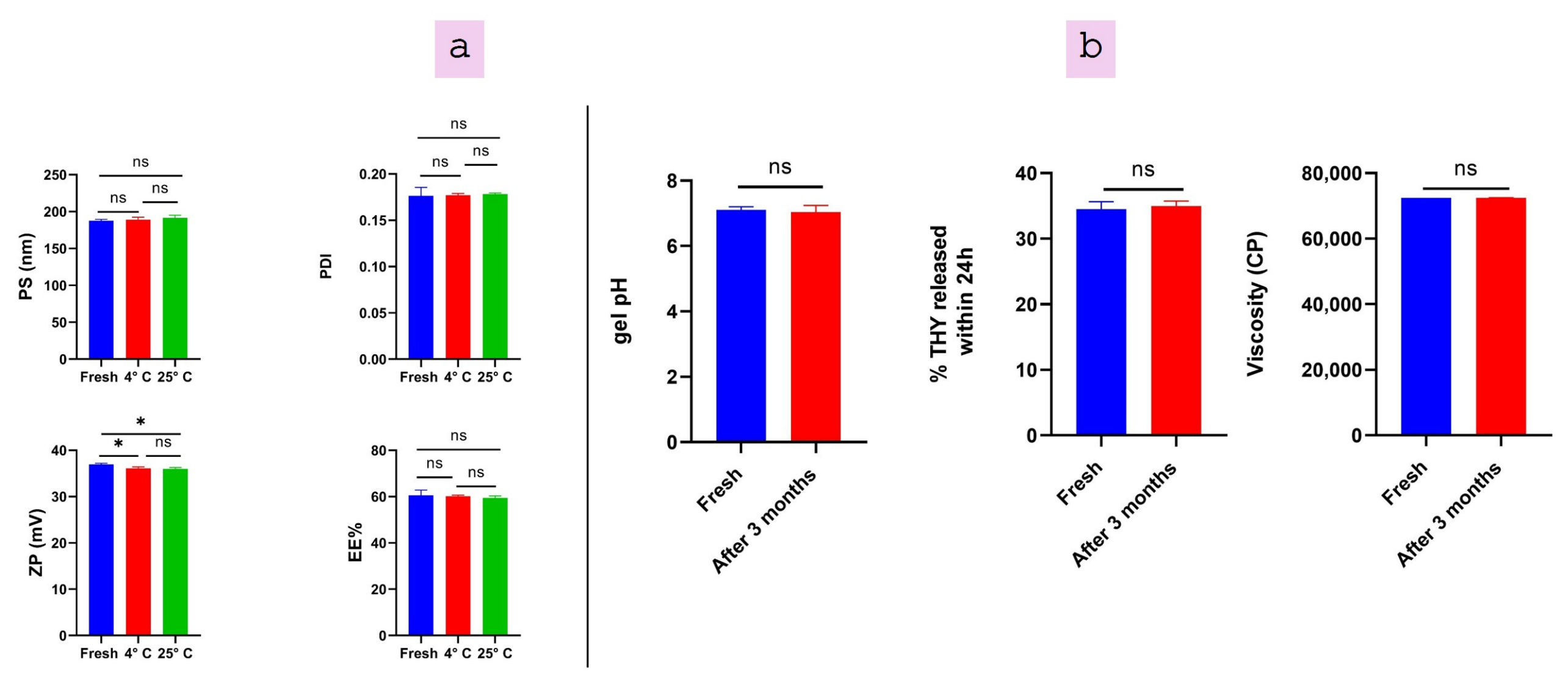
3.4.7. Stability Study
3.5. Microbiological Studies
3.5.1. Evaluation of Antibacterial Activity
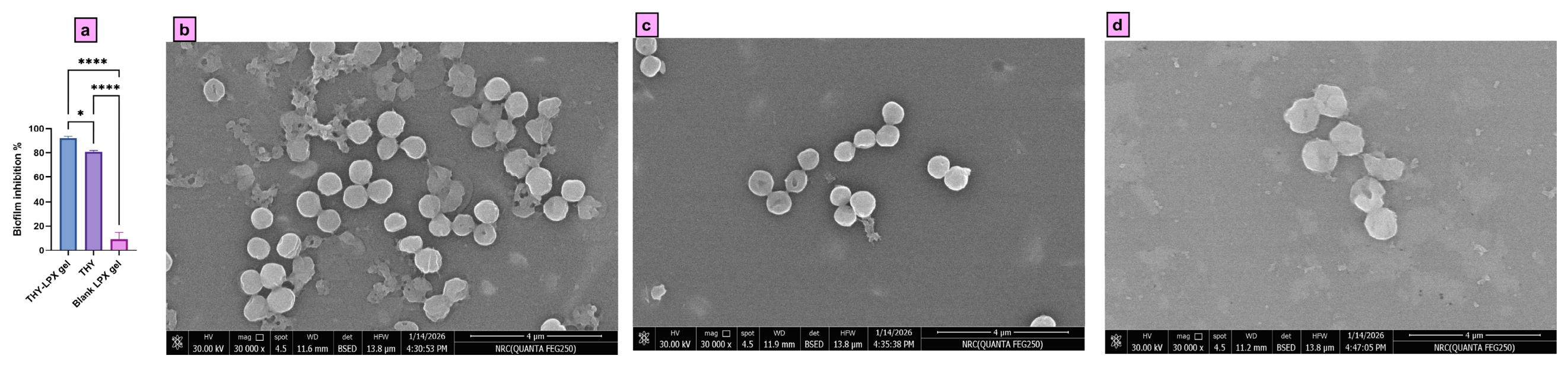
3.5.2. Inhibition of S. aureus Biofilm Formation
3.5.3. Evaluation of Biofilm Structure Using SEM
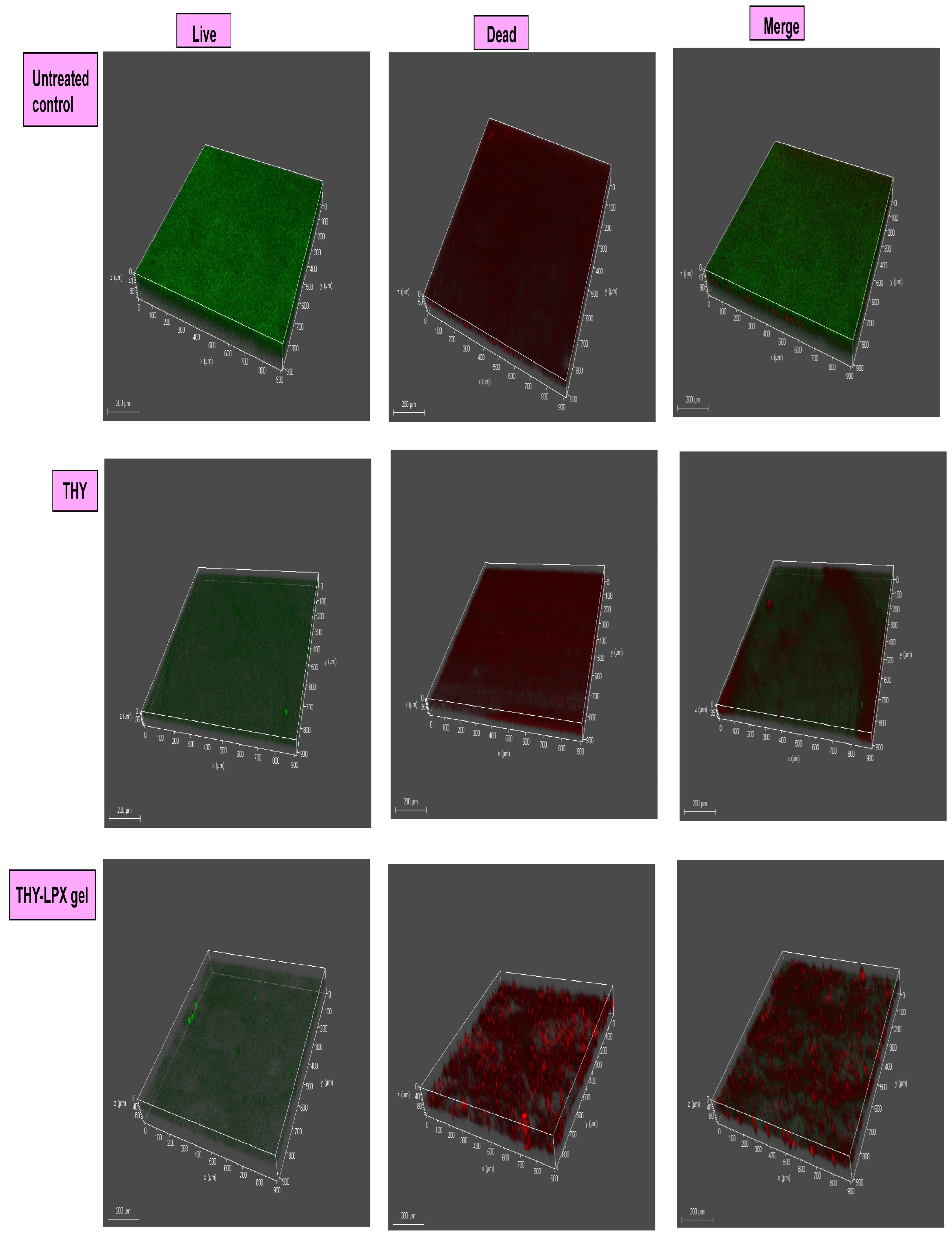
3.5.4. Live/Dead Assessment Using CLSM
3.6. In Vivo Study
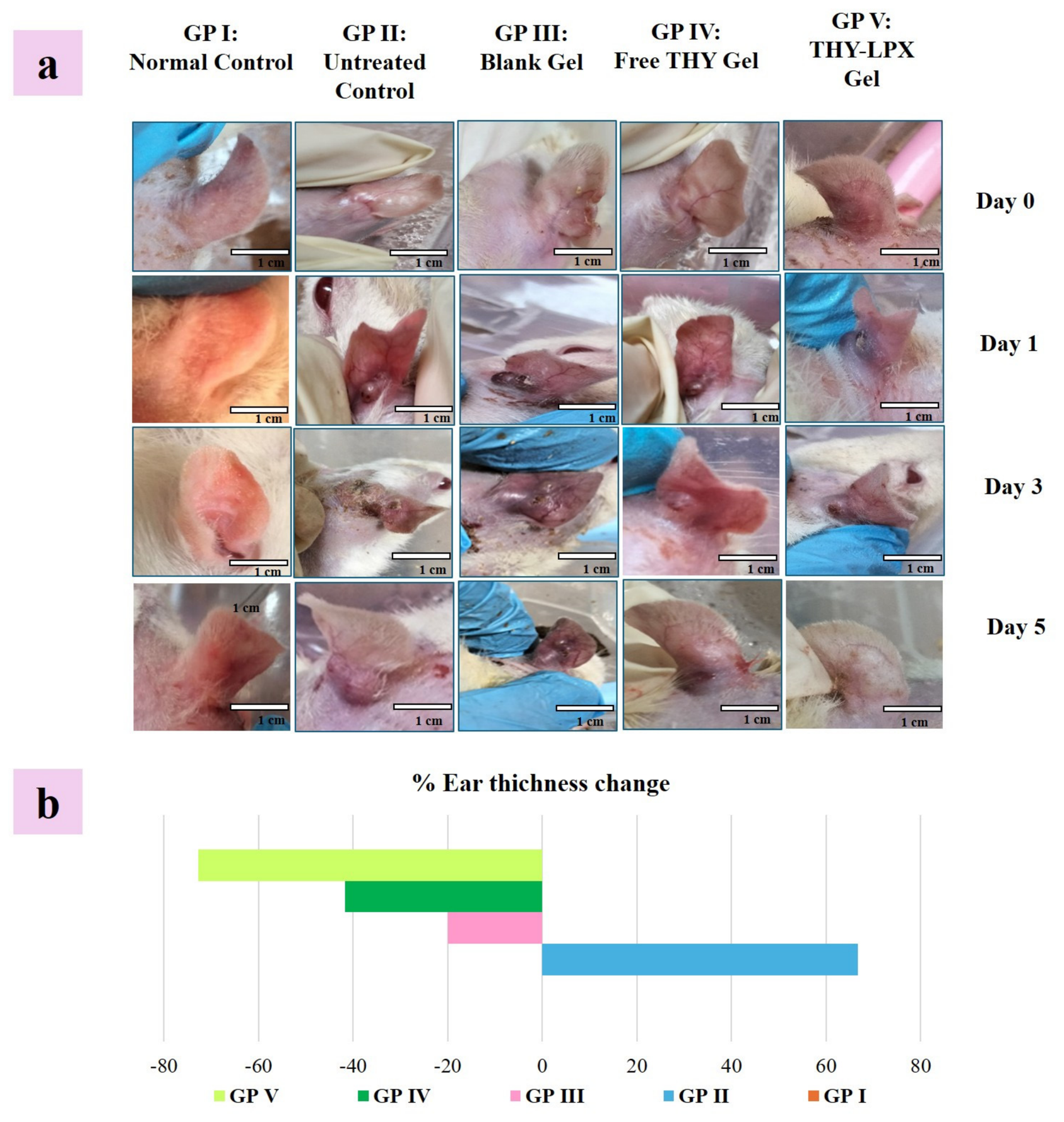
3.6.1. Anti-Inflammatory Potential and Ear Thickness
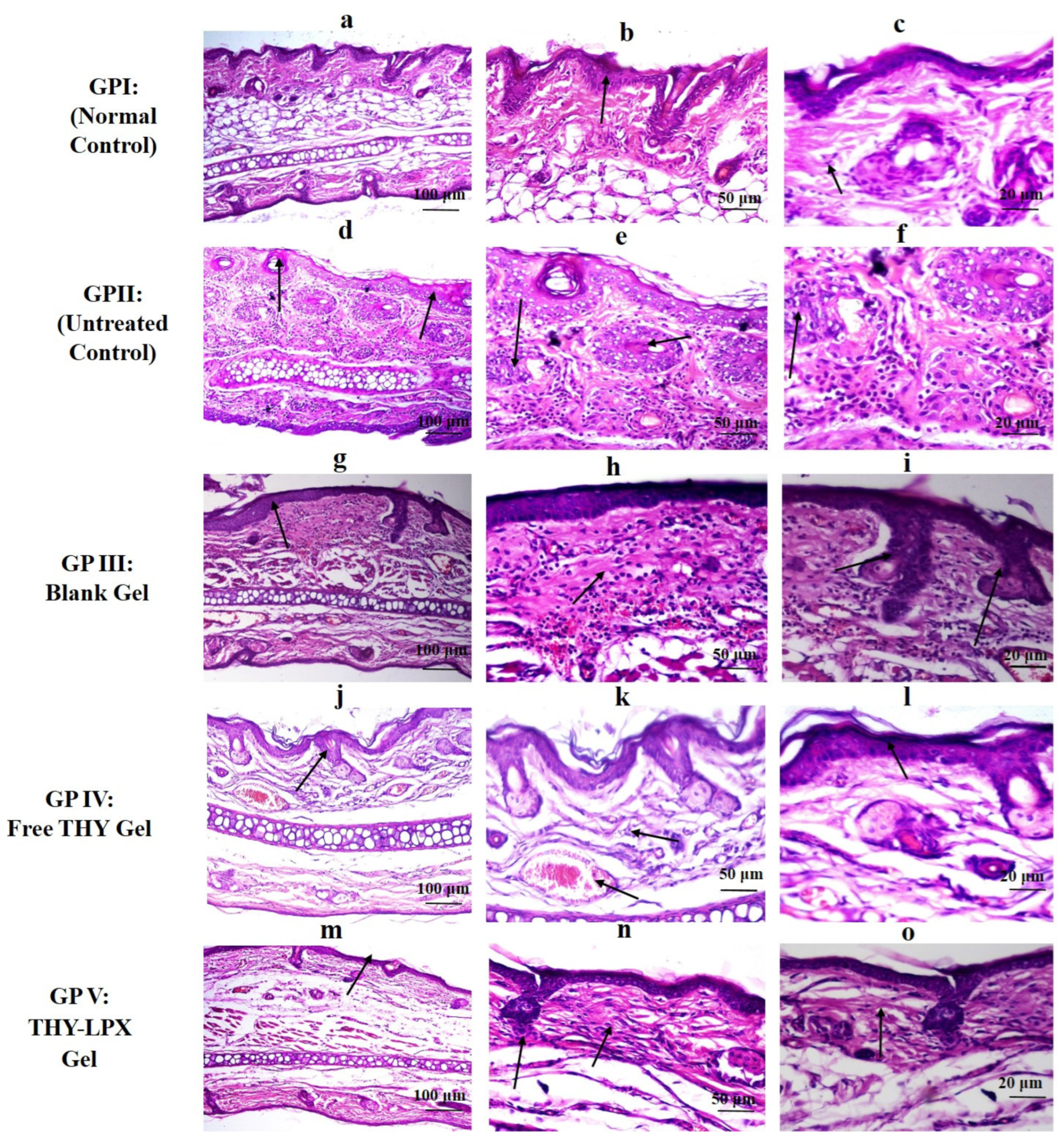
3.6.2. Histopathological Examination
4. Conclusions
Supplementary Materials
Author Contributions
Funding
Institutional Review Board Statement
Data Availability Statement
Conflicts of Interest
References
- Vasam, M.; Korutla, S.; Bohara, R.A. Acne vulgaris: A review of the pathophysiology, treatment, and recent nanotechnology based advances. Biochem. Biophys. Rep. 2023, 36, 101578. [Google Scholar] [CrossRef] [Scilit] [PubMed]
- Leung, A.K.; Barankin, B.; Lam, J.M.; Leong, K.F.; Hon, K.L. Dermatology: How to manage acne vulgaris. Drugs Context 2021, 10, 1–18. [Google Scholar] [CrossRef] [Scilit] [PubMed]
- Martín, C.; Ordiales, H.; Vázquez, F.; Pevida, M.; Rodríguez, D.; Merayo, J.; Vázquez, F.; García, B.; Quirós, L.M. Bacteria associated with acne use glycosaminoglycans as cell adhesion receptors and promote changes in the expression of the genes involved in their biosynthesis. BMC Microbiol. 2022, 22, 65. [Google Scholar] [CrossRef] [Scilit] [PubMed]
- Dréno, B.; Dagnelie, M.A.; Khammari, A.; Corvec, S. The Skin Microbiome: A New Actor in Inflammatory Acne. Am. J. Clin. Dermatol. 2020, 21, 18–24. [Google Scholar] [CrossRef] [Scilit] [PubMed]
- Dreno, B.; Martin, R.; Moyal, D.; Henley, J.B.; Khammari, A.; Seité, S. Skin microbiome and acne vulgaris: Staphylococcus, a new actor in acne. Exp. Dermatol. 2017, 26, 798–803. [Google Scholar] [CrossRef] [Scilit] [PubMed]
- Zhou, N.; Sun, Y.; Ren, X.; Wang, Y.; Gao, X.; Li, L.; Ma, Y.; Hao, Y.; Wang, Y. Intradermal injection of Cutibacterium acnes and staphylococcus: A pustular acne-like murine model. J. Cosmet. Dermatol. 2024, 23, 2478–2489. [Google Scholar] [PubMed]
- Li, X.; Jin, J. The Mechanism and Research Progress of Skin Microbiota in Pathogenesis of Acne. Dermatol. Res. Pract. 2025, 2025, 9910076. [Google Scholar] [CrossRef] [Scilit] [PubMed]
- Desbois, A.P.; Lawlor, K.C. Antibacterial activity of long-chain polyunsaturated fatty acids against Propionibacterium acnes and Staphylococcus aureus. Mar. Drugs 2013, 11, 4544–4557. [Google Scholar] [CrossRef] [Scilit] [PubMed]
- Folle, C.; Marqués, A.M.; Díaz-Garrido, N.; Espina, M.; Sánchez-López, E.; Badia, J.; Baldoma, L.; Calpena, A.C.; García, M.L. Thymol-loaded PLGA nanoparticles: An efficient approach for acne treatment. J. Nanobiotechnol. 2021, 19, 359. [Google Scholar] [CrossRef] [Scilit]
- Kachur, K.; Suntres, Z. The antibacterial properties of phenolic isomers, carvacrol and thymol. Crit. Rev. Food Sci. Nutr. 2020, 60, 3042–3053. [Google Scholar] [PubMed]
- Valliammai, A.; Selvaraj, A.; Yuvashree, U.; Aravindraja, C.; Karutha Pandian, S. sarA-Dependent Antibiofilm Activity of Thymol Enhances the Antibacterial Efficacy of Rifampicin Against Staphylococcus aureus. Front. Microbiol. 2020, 11, 1744. [Google Scholar] [CrossRef] [Scilit] [PubMed]
- Fathy, H.M.; Ahmed, M.N.; Goda, H.A.; Moselhy, M.A. Thyme essential oil potentials as a bactericidal and biofilm-preventive agent against prevalent bacterial pathogens. Sci. Rep. 2025, 15, 31644. [Google Scholar] [CrossRef] [Scilit] [PubMed]
- Gan, C.; Langa, E.; Valenzuela, A.; Ballestero, D.; Pino-Otín, M.R. Synergistic activity of thymol with commercial antibiotics against critical and high WHO priority pathogenic bacteria. Plants 2023, 12, 1868. [Google Scholar] [CrossRef] [Scilit] [PubMed]
- Tripathi, D.; Singh, R.; Kumar, P.; Kush, P.; Fatima, G.N. Exploring the Potential of Transdermal Nanobilosomal Gel for Magnified Anti-Inflammatory Efficacy of Thymol for Managing Rheumatoid Arthritis. Gels 2026, 12, 156. [Google Scholar] [CrossRef] [Scilit] [PubMed]
- Mohsen, A.M.; Nagy, Y.I.; Shehabeldine, A.M.; Okba, M.M. Thymol-Loaded Eudragit RS30D cationic nanoparticles-based hydrogels for topical application in wounds: In vitro and in vivo evaluation. Pharmaceutics 2022, 15, 19. [Google Scholar] [PubMed]
- Folle, C.; Sánchez-López, E.; Mallandrich, M.; Díaz-Garrido, N.; Suñer-Carbó, J.; Halbaut, L.; Carvajal-Vidal, P.; Marqués, A.M.; Espina, M.; Badia, J.; et al. Semi-solid functionalized nanostructured lipid carriers loading thymol for skin disorders. Int. J. Pharm. 2024, 651, 123732. [Google Scholar] [CrossRef] [Scilit] [PubMed]
- Folle, C.; Marqués, A.M.; Mallandrich, M.; Suñer-Carbó, J.; Halbaut, L.; Sánchez-López, E.; López-Machado, A.L.; Díaz-Garrido, N.; Badia, J.; Baldoma, L.; et al. Colloidal hydrogel systems of thymol-loaded PLGA nanoparticles designed for acne treatment. Colloids Surf. B Biointerfaces 2024, 234, 113678. [Google Scholar] [CrossRef] [Scilit]
- Folle, C.; Marqués, A.M.; Díaz-Garrido, N.; Carvajal-Vidal, P.; Sánchez López, E.; Suñer-Carbó, J.; Halbaut, L.; Mallandrich, M.; Espina, M.; Badia, J. Gel-dispersed nanostructured lipid carriers loading thymol designed for dermal pathologies. Int. J. Nanomed. 2024, 19, 1225–1248. [Google Scholar] [CrossRef] [Scilit]
- Pérez Gaudio, D.; Giantin, M.; Pauletto, M.; Dacasto, M. Pharmaco-toxicological aspects of thymol in veterinary medicine. A systematic review. Front. Vet. Sci. 2025, 12, 1562641. [Google Scholar] [CrossRef] [Scilit] [PubMed]
- Rojas-Armas, J.; Arroyo-Acevedo, J.; Ortiz-Sánchez, M.; Palomino-Pacheco, M.; Castro-Luna, A.; Ramos-Cevallos, N.; Justil-Guerrero, H.; Hilario-Vargas, J.; Herrera-Calderón, O. Acute and Repeated 28-Day Oral Dose Toxicity Studies of Thymus vulgaris L. Essential Oil in Rats. Toxicol. Res. 2019, 35, 225–232. [Google Scholar] [CrossRef] [Scilit] [PubMed]
- Salama, A.; Badran, M.; Elmowafy, M.; Soliman, G.M. Spironolactone-Loaded LeciPlexes as Potential Topical Delivery Systems for Female Acne: In Vitro Appraisal and Ex Vivo Skin Permeability Studies. Pharmaceutics 2019, 12, 25. [Google Scholar] [CrossRef] [Scilit]
- Shah, S.M.; Ashtikar, M.; Jain, A.S.; Makhija, D.T.; Nikam, Y.; Gude, R.P.; Steiniger, F.; Jagtap, A.A.; Nagarsenker, M.S.; Fahr, A. LeciPlex, invasomes, and liposomes: A skin penetration study. Int. J. Pharm. 2015, 490, 391–403. [Google Scholar] [CrossRef] [Scilit] [PubMed]
- Ahsan, A.; Thomas, N.; Barnes, T.J.; Subramaniam, S.; Loh, T.C.; Joyce, P.; Prestidge, C.A. Lipid Nanocarriers-Enabled Delivery of Antibiotics and Antimicrobial Adjuvants to Overcome Bacterial Biofilms. Pharmaceutics 2024, 16, 396. [Google Scholar] [CrossRef] [Scilit] [PubMed]
- Ahsan, A.; Barnes, T.J.; Thomas, N.; Subramaniam, S.; Prestidge, C.A. Lipid-based nanocarriers for enhanced gentamicin delivery: A comparative study of liquid crystal nanoparticles and liposomes against Escherichia coli biofilms. Drug Deliv. Transl. Res. 2025, 15, 4004–4025. [Google Scholar] [CrossRef] [Scilit] [PubMed]
- Paul, P.; Hakkimane, S.S. Nanoparticle-based approaches for wound healing: A comprehensive review of nanomaterials enhancing tissue regeneration. Discov. Nano 2025, 20, 201. [Google Scholar] [CrossRef] [Scilit] [PubMed]
- Hajibonabi, A.; Yekani, M.; Sharifi, S.; Nahad, J.S.; Dizaj, S.M.; Memar, M.Y. Antimicrobial activity of nanoformulations of carvacrol and thymol: New trend and applications. OpenNano 2023, 13, 100170. [Google Scholar] [CrossRef] [Scilit]
- Elsalhy, S.; Refai, H.; Osman, D.A.; Sayed, N.E.; Khalifa, M.K.A. Optimization of intranasal trifluoperazine/SPION-leciplex thermosensitive organogel for depression therapy: Pharmacodynamic and pharmacokinetic comparison of magnet placement effects on brain versus nose. Eur. J. Pharm. Biopharm. 2025, 217, 114909. [Google Scholar] [CrossRef] [Scilit] [PubMed]
- Date, A.A.; Srivastava, D.; Nagarsenker, M.S.; Mulherkar, R.; Panicker, L.; Aswal, V.; Hassan, P.A.; Steiniger, F.; Thamm, J.; Fahr, A. Lecithin-based novel cationic nanocarriers (LeciPlex) I: Fabrication, characterization and evaluation. Nanomedicine 2011, 6, 1309–1325. [Google Scholar] [CrossRef] [Scilit] [PubMed]
- Katawale, S.; Tank, S.; Dhaygude, H.; Holm, R.; Shah, S.; Shinde, U.; Shidhaye, S.; Aswal, V.; Kumar, S.; Nagarsenker, M. Impact of formulation parameters on self-assembled liposomes (LeciPlex® III): A detailed investigation. Int. J. Pharm. 2024, 657, 124147. [Google Scholar] [CrossRef] [Scilit] [PubMed]
- Kapoor, D.U.; Gaur, M.; Parihar, A.; Prajapati, B.G.; Singh, S.; Patel, R.J. Phosphatidylcholine (PCL) fortified nano-phytopharmaceuticals for improvement of therapeutic efficacy. Excli J. 2023, 22, 880–903. [Google Scholar] [CrossRef] [Scilit] [PubMed]
- Kothawade, S.; Pandit, A.; Bagul, U.; Badhe, P. Ocular cationic nanocarrier-based delivery of posaconazole. Ann. Pharm. Françaises 2025. [Google Scholar] [CrossRef] [Scilit] [PubMed]
- Bae, C.-S.; Ahn, T. Cationic lipid-based nanoparticles for therapeutic delivery in cancer treatment: Physicochemical characteristics, therapeutic cargos, and clinical potential. Appl. Microsc. 2026, 56, 9. [Google Scholar] [CrossRef] [Scilit] [PubMed]
- Alsofany, J.M.; Khater, S.E. Repurposing of Nano-Engineered Piroxicam as an Approach for Cutaneous Wound Healing. J. Pharm. Sci. 2024, 113, 2723–2733. [Google Scholar] [CrossRef] [Scilit] [PubMed]
- Teaima, M.H.; Alsofany, J.M.; El-Nabarawi, M.A. Clove oil endorsed transdermal flux of dronedarone hydrochloride loaded bilosomal nanogel: Factorial design, in vitro evaluation and ex vivo permeation. AAPS PharmSciTech 2022, 23, 182. [Google Scholar] [CrossRef] [Scilit] [PubMed]
- Alsofany, J.M.; Hamza, M.Y.; Abdelbary, A.A. Fabrication of Nanosuspension Directly Loaded Fast-Dissolving Films for Enhanced Oral Bioavailability of Olmesartan Medoxomil: In Vitro Characterization and Pharmacokinetic Evaluation in Healthy Human Volunteers. AAPS PharmSciTech 2018, 19, 2118–2132. [Google Scholar] [CrossRef] [Scilit] [PubMed]
- Saeed, H.Y.; Orabi, S.H.; Mousa, A.A.; Alsofany, J.M.; Korany, R.; Mansour, D.A. Coenzyme Q10 and Its Nanosuspension Form Protect Against Cyclophosphamide-Induced Pulmonary Toxicity in Rats Through Antioxidant Activity and Regulation of NF-κβ and IL-1β Pathways. Egypt. J. Vet. Sci. 2026, 1–17. [Google Scholar]
- Wang, H.; Tang, C.; Zhang, H.; Guo, L.; Zou, C.; Zhang, S.; Liu, J.; Huang, Q.; Liu, Y.; Zhou, W. A biocompatible tea polyphenol nanoplatform for efficient cytosolic delivery of protein therapeutics. J. Control. Release 2025, 388, 114347. [Google Scholar] [CrossRef] [Scilit] [PubMed]
- Alsofany, J.M.; Hassanin, S.O.; Kodous, A.S.; Aufy, M.; Mahmoud, M.O.; Adel, I.M.; El-Nabarawi, M.A.; Abdelhakeem, E. From Fungistatic to Cytotoxic: Nano-Engineered Griseofulvin Triggers Redox-Mediated Apoptosis in Colon Cancer. Eur. J. Pharm. Sci. 2026, 218, 107447. [Google Scholar] [CrossRef] [Scilit] [PubMed]
- Khater, S.E.; El-Shiekh, R.A.; Abdel-Sattar, E.; Alsofany, J.M. Pioglitazone/Curcumin co-loaded TPGS-functionalized nanocarriers: An auspicious repurposed therapeutic advance targeting lung and breast carcinoma. Int. J. Pharm. 2025, 682, 125991. [Google Scholar] [CrossRef] [Scilit] [PubMed]
- Amiri, S.; Sepahvand, S.; Radi, M.; Abedi, E. A comparative study between the performance of thymol-nanoemulsion and thymol-loaded nanostructured lipid carriers on the textural, microbial, and sensory characteristics of sausage. Curr. Res. Food Sci. 2024, 8, 100704. [Google Scholar] [PubMed]
- Derringer, G.; Suich, R. Simultaneous Optimization of Several Response Variables. J. Qual. Technol. 1980, 12, 214–219. [Google Scholar] [CrossRef] [Scilit]
- Elsalhy, S.; Tantawy, N.; Hanafy, M.S.; Ramzy, M.; Saleh, A.M.; Gamil, N.M.; Atawia, R.T.; Alkharashi, L.A.; El Naggar, E.E. Sertraline-loaded targeted nanocarrier for breast cancer treatment: In vitro and in vivo assessment. J. Drug Deliv. Sci. Technol. 2026, 121, 108342. [Google Scholar] [CrossRef] [Scilit]
- Tantawy, N.; Elsalhy, S.; Alsofany, J.M.; Saleh, A.M.; Alshehri, S.M.; Alqarni, S.S.; El-Sayed, E.K.; Ahmed, A.A.; Elnaggar, E.E. Ondansetron-loaded magnetically targeted nanocarriers for anxiety: Optimization, in vitro characterization, and in vivo evaluation in rats. Eur. J. Pharm. Biopharm. 2026, 223, 115071. [Google Scholar] [CrossRef] [Scilit] [PubMed]
- Saeed, H.Y.; Orabi, S.H.; Mansour, D.A.; Korany, R.M.; Alsofany, J.M.; Mousa, A.A. Ameliorating effects of Coenzyme Q10 and Its Nanosuspension Against Cyclophosphamide-Induced Hepatoxicity in Rats. Biochem. Biophys. Res. Commun. 2026, 828, 154137. [Google Scholar] [CrossRef] [Scilit] [PubMed]
- Hua, X.; Yang, Q.; Zhang, W.; Dong, Z.; Yu, S.; Schwarz, S.; Liu, S. Antibacterial activity and mechanism of action of aspidinol against multi-drug-resistant methicillin-resistant Staphylococcus aureus. Front. Pharmacol. 2018, 9, 619. [Google Scholar] [PubMed]
- Almasi, L.; Radi, M.; Amiri, S.; Torri, L. Fully dilutable Thymus vulgaris essential oil: Acetic or propionic acid microemulsions are potent fruit disinfecting solutions. Food Chem. 2021, 343, 128411. [Google Scholar] [CrossRef] [Scilit] [PubMed]
- Balouiri, M.; Sadiki, M.; Ibnsouda, S.K. Methods for in vitro evaluating antimicrobial activity: A review. J. Pharm. Anal. 2016, 6, 71–79. [Google Scholar] [CrossRef] [Scilit] [PubMed]
- Wayne, C.P.A.; Clinical and Laboratory Standards Institute. Performance standards for antimicrobial susceptibility testing. Inf. Suppl. 2011, 31, 100–121. [Google Scholar]
- Parvekar, P.; Palaskar, J.; Metgud, S.; Maria, R.; Dutta, S. The minimum inhibitory concentration (MIC) and minimum bactericidal concentration (MBC) of silver nanoparticles against Staphylococcus aureus. Biomater. Investig. Dent. 2020, 7, 105–109. [Google Scholar] [CrossRef] [Scilit] [PubMed]
- Christensen, G.D.; Simpson, W.A.; Younger, J.; Baddour, L.; Barrett, F.; Melton, D.; Beachey, E. Adherence of coagulase-negative staphylococci to plastic tissue culture plates: A quantitative model for the adherence of staphylococci to medical devices. J. Clin. Microbiol. 1985, 22, 996–1006. [Google Scholar] [CrossRef] [Scilit] [PubMed]
- Lade, H.; Park, J.H.; Chung, S.H.; Kim, I.H.; Kim, J.-M.; Joo, H.-S.; Kim, J.-S. Biofilm formation by Staphylococcus aureus clinical isolates is differentially affected by glucose and sodium chloride supplemented culture media. J. Clin. Med. 2019, 8, 1853. [Google Scholar] [CrossRef] [Scilit] [PubMed]
- Sugimoto, S.; Sato, F.; Miyakawa, R.; Chiba, A.; Onodera, S.; Hori, S.; Mizunoe, Y. Broad impact of extracellular DNA on biofilm formation by clinically isolated Methicillin-resistant and-sensitive strains of Staphylococcus aureus. Sci. Rep. 2018, 8, 2254. [Google Scholar] [PubMed]
- Lade, H.; Chung, S.H.; Lee, Y.; Kumbhar, B.V.; Joo, H.-S.; Kim, Y.-G.; Yang, Y.-H.; Kim, J.-S. Thymol Reduces agr-Mediated Virulence Factor Phenol-Soluble Modulin Production in Staphylococcus aureus. BioMed Res. Int. 2022, 2022, 8221622. [Google Scholar] [PubMed]
- Shi, L.-W.; Zhuang, Q.-Q.; Wang, T.-Q.; Jiang, X.-D.; Liu, Y.; Deng, J.-W.; Sun, H.-H.; Li, Y.; Li, H.-H.; Liu, T.-B. Synthetic antibacterial quaternary phosphorus salts promote methicillin-resistant Staphylococcus aureus-infected wound healing. Int. J. Nanomed. 2023, 18, 1145–1158. [Google Scholar]
- Gomes, L.C.; Mergulhão, F.J. SEM analysis of surface impact on biofilm antibiotic treatment. Scanning 2017, 2017, 2960194. [Google Scholar] [CrossRef] [Scilit] [PubMed]
- Qian, Y.; Hu, X.; Wang, J.; Li, Y.; Liu, Y.; Xie, L. Polyzwitterionic micelles with antimicrobial-conjugation for eradication of drug-resistant bacterial biofilms. Colloids Surf. B Biointerfaces 2023, 231, 113542. [Google Scholar] [PubMed]
- Kanwar, I.L.; Haider, T.; Kumari, A.; Dubey, S.; Jain, P.; Soni, V. Models for acne: A comprehensive study. Drug Discov. Ther. 2018, 12, 329–340. [Google Scholar] [CrossRef] [Scilit] [PubMed]
- Białecka, A.; Mak, M.; Biedroń, R.; Bobek, M.; Kasprowicz, A.; Marcinkiewicz, J. Different pro-inflammatory and immunogenic potentials of Propionibacterium acnes and Staphylococcus epidermidis: Implications for chronic inflammatory acne. Arch. Immunol. Ther. Exp. 2005, 53, 79–85. [Google Scholar]
- Rottboell, L.; De Foenss, S.; Thomsen, K.; Christiansen, H.; Andersen, S.M.; Dam, T.N.; Rosada, C.; Stenderup, K. Exploring valrubicin’s effect on Propionibacterium acnes-induced skin inflammation in vitro and in vivo. Dermatol. Rep. 2015, 7, 6246. [Google Scholar]
- Nazeam, J.A.; Ragab, G.M.; El-Gazar, A.A.; El-Mancy, S.S.; Jamil, L.; Fayez, S.M. Topical nano clove/thyme gel against genetically identified clinical skin isolates: In vivo targeting behavioral alteration and IGF-1/pFOXO-1/PPAR γ cues. Molecules 2021, 26, 5608. [Google Scholar] [PubMed]
- Bassiony, H.; El-Ghor, A.A.; Salaheldin, T.A.; Sabet, S.; Mohamed, M.M. Tissue distribution, histopathological and genotoxic effects of magnetite nanoparticles on ehrlich solid carcinoma. Biol. Trace Elem. Res. 2022, 200, 5145–5158. [Google Scholar] [CrossRef] [Scilit] [PubMed]
- Watanabe, T.; Hamada, K.; Tategaki, A.; Kishida, H.; Tanaka, H.; Kitano, M.; Miyamoto, T. Oral administration of lactic acid bacteria isolated from traditional South Asian fermented milkDahi’inhibits the development of atopic dermatitis in NC/Nga mice. J. Nutr. Sci. Vitaminol. 2009, 55, 271–278. [Google Scholar] [PubMed]
- Abdelhakeem, E.; Hashem, M.M.; Farag, M.A.; Alsofany, J.M. Unlocking the wound healing potential of Anastatica hierochuntica L. (Kaff Maryam) Extract’s nanosuspension: UPLC-MS/MS metabolic profiling, formulation development and statistical optimization. J. Drug Deliv. Sci. Technol. 2024, 101, 106295. [Google Scholar] [CrossRef] [Scilit]
- Zakaria, M.Y.; Georghiou, P.E.; Banoub, J.H.; Beshay, B.Y. Inclusion of a phytomedicinal flavonoid in biocompatible surface-modified chylomicron mimic nanovesicles with improved oral bioavailability and virucidal activity: Molecular modeling and pharmacodynamic studies. Pharmaceutics 2022, 14, 905. [Google Scholar] [CrossRef] [Scilit] [PubMed]
- Silva, A.M.; Martins-Gomes, C.; Coutinho, T.E.; Fangueiro, J.F.; Sanchez-Lopez, E.; Pashirova, T.N.; Andreani, T.; Souto, E.B. Soft Cationic Nanoparticles for Drug Delivery: Production and Cytotoxicity of Solid Lipid Nanoparticles (SLNs). Appl. Sci. 2019, 9, 4438. [Google Scholar] [CrossRef] [Scilit]
- Li, Y.; Guo, Y.; Bao, M.; Gao, X. Investigation of interfacial and structural properties of CTAB at the oil/water interface using dissipative particle dynamics simulations. J. Colloid Interface Sci. 2011, 361, 573–580. [Google Scholar] [CrossRef] [Scilit] [PubMed]
- Proverbio, Z.E.; Bardavid, S.; Arancibia, E.L.; Schulz, P.C. Hydrophile–lipophile balance and solubility parameter of cationic surfactants. Colloids Surf. A Physicochem. Eng. Asp. 2003, 214, 167–171. [Google Scholar] [CrossRef] [Scilit]
- Ng, N.; Rogers, M.A. Surfactants. In Encyclopedia of Food Chemistry; Melton, L., Shahidi, F., Varelis, P., Eds.; Academic Press: Oxford, UK, 2019; pp. 276–282. [Google Scholar]
- Asasutjarit, R.; Lorenzen, S.-I.; Sirivichayakul, S.; Ruxrungtham, K.; Ruktanonchai, U.; Ritthidej, G.C. Effect of solid lipid nanoparticles formulation compositions on their size, zeta potential and potential for in vitro pHIS-HIV-hugag transfection. Pharm. Res. 2007, 24, 1098–1107. [Google Scholar] [CrossRef] [Scilit] [PubMed]
- Wang, H.; Zhang, X.; Liu, Y.; Liu, J. Stabilization of liposomes by perfluorinated compounds. ACS Omega 2018, 3, 15353–15360. [Google Scholar] [CrossRef] [Scilit] [PubMed]
- Wang, E.; Qi, Z.; Cao, Y.; Li, R.; Wu, J.; Tang, R.; Gao, Y.; Du, R.; Liu, M. Gels as Promising Delivery Systems: Physicochemical Property Characterization and Recent Applications. Pharmaceutics 2025, 17, 249. [Google Scholar] [CrossRef] [Scilit] [PubMed]
- El-Kamel, A. In vitro and in vivo evaluation of Pluronic F127-based ocular delivery system for timolol maleate. Int. J. Pharm. 2002, 241, 47–55. [Google Scholar] [CrossRef] [Scilit] [PubMed]
- Managuli, R.S.; Raut, S.Y.; Reddy, M.S.; Mutalik, S. Targeting the intestinal lymphatic system: A versatile path for enhanced oral bioavailability of drugs. Expert Opin. Drug Deliv. 2018, 15, 787–804. [Google Scholar] [CrossRef] [Scilit] [PubMed]
- Askarizadeh, M.; Esfandiari, N.; Honarvar, B.; Sajadian, S.A.; Azdarpour, A. Kinetic modeling to explain the release of medicine from drug delivery systems. ChemBioEng Rev. 2023, 10, 1006–1049. [Google Scholar] [CrossRef] [Scilit]
- Danyuo, Y.; Ani, C.J.; Salifu, A.A.; Obayemi, J.D.; Dozie-Nwachukwu, S.; Obanawu, V.O.; Akpan, U.M.; Odusanya, O.S.; Abade-Abugre, M.; McBagonluri, F.; et al. Anomalous Release Kinetics of Prodigiosin from Poly-N-Isopropyl-Acrylamid based Hydrogels for The Treatment of Triple Negative Breast Cancer. Sci. Rep. 2019, 9, 3862. [Google Scholar] [CrossRef] [Scilit] [PubMed]
- Musakhanian, J.; Osborne, D.W.; Rodier, J.-D. Skin Penetration and Permeation Properties of Transcutol® in Complex Formulations. AAPS PharmSciTech 2024, 25, 201. [Google Scholar] [CrossRef] [Scilit] [PubMed]
- Hmingthansanga, V.; Singh, N.; Banerjee, S.; Manickam, S.; Velayutham, R.; Natesan, S. Improved Topical Drug Delivery: Role of Permeation Enhancers and Advanced Approaches. Pharmaceutics 2022, 14, 2818. [Google Scholar] [CrossRef] [Scilit] [PubMed]
- Hassan, D.H.; Abdelmonem, R.; Abdellatif, M.M. Formulation and characterization of carvedilol leciplex for glaucoma treatment: In-vitro, ex-vivo and in-vivo study. Pharmaceutics 2018, 10, 197. [Google Scholar] [PubMed]
- Date, A.A.; Patravale, V.B. Microemulsions: Applications in transdermal and dermal delivery. Crit. Rev.™ Ther. Drug Carr. Syst. 2007, 24, 547–596. [Google Scholar] [CrossRef] [Scilit]
- Aziza, F.N.; Sulaiman, T.N.S.; Primasari, F.S.; Syazwina, Z.; Suwardjo, W.P. Optimization of HPMC and Carbopol 940 as the Gelling Agents for the Physical Properties and Stability of Anti-Acne Gel from Binahong Leaf (Anredera cordifolia (Ten.) Steenis) Extract. Indones. J. Pharm./Maj. Farm. Indones. 2025, 36, 479. [Google Scholar]
- Firmansyah, F.; Budiman, A.; Muchtaridi, M.; Chabib, L.; Syaputri, F.N.; Afandi, F.; Elamin, K.M.; Mohammed, A.F.A.; Wathoni, N. Film-Forming Gels for Topical Drug Delivery: A Systematic Review of the Effects of Formulation on Film Performance, Drug Release, and Skin Permeation. Drug Des. Devel Ther. 2026, 20, 591505. [Google Scholar] [CrossRef] [Scilit] [PubMed]
- Zamani, Z.; Alipour, D.; Moghimi, H.R.; Mortazavi, S.A.; Saffary, M. Development and Evaluation of Thymol Microparticles Using Cellulose Derivatives as Controlled Release Dosage form. Iran. J. Pharm. Res. 2015, 14, 1031–1040. [Google Scholar] [PubMed]
- Bhujbal, S.V.; Mitra, B.; Jain, U.; Gong, Y.; Agrawal, A.; Karki, S.; Taylor, L.S.; Kumar, S.; Zhou, Q. Pharmaceutical amorphous solid dispersion: A review of manufacturing strategies. Acta Pharm. Sin. B 2021, 11, 2505–2536. [Google Scholar] [CrossRef] [Scilit] [PubMed]
- Giotopoulou, I.; Stamatis, H.; Barkoula, N.-M. Encapsulation of Thymol in Ethyl Cellulose-Based Microspheres and Evaluation of Its Sustained Release for Food Applications. Polymers 2024, 16, 3396. [Google Scholar] [CrossRef] [Scilit] [PubMed]
- Dai, F.; Zhuang, Q.; Huang, G.; Deng, H.; Zhang, X. Infrared Spectrum Characteristics and Quantification of OH Groups in Coal. ACS Omega 2023, 8, 17064–17076. [Google Scholar] [CrossRef] [Scilit] [PubMed]
- Šebek, J.; Knaanie, R.; Albee, B.; Potma, E.O.; Gerber, R.B. Spectroscopy of the C–H Stretching Vibrational Band in Selected Organic Molecules. J. Phys. Chem. A 2013, 117, 7442–7452. [Google Scholar] [CrossRef] [Scilit] [PubMed]
- Smith, B. Infrared Spectroscopy of Polymers, IX: Pendant Ester Polymers and Polycarbonates. Spectroscopy 2022, 37, 16–19, 31. [Google Scholar] [CrossRef] [Scilit]
- Midekessa, G.; Godakumara, K.; Ord, J.; Viil, J.; Lättekivi, F.; Dissanayake, K.; Kopanchuk, S.; Rinken, A.; Andronowska, A.; Bhattacharjee, S.; et al. Zeta Potential of Extracellular Vesicles: Toward Understanding the Attributes that Determine Colloidal Stability. ACS Omega 2020, 5, 16701–16710. [Google Scholar] [CrossRef] [Scilit] [PubMed]
- Bernardos, A.; Bozik, M.; Alvarez, S.; Saskova, M.; Perez-Esteve, E.; Kloucek, P.; Lhotka, M.; Frankova, A.; Martinez-Manez, R. The efficacy of essential oil components loaded into montmorillonite against Aspergillus niger and Staphylococcus aureus. Flavour Fragr. J. 2019, 34, 151–162. [Google Scholar] [CrossRef] [Scilit]
- Song, L.; Li, W.; Hu, Z.; Lv, Y.; Liu, J.; Cheng, F.; Xu, C. Development and optimization of thymol-loaded nanoemulsions for enhanced antimicrobial activity against methicillin-resistant Staphylococcus aureus. Sci. Rep. 2025, 15, 44992. [Google Scholar] [PubMed]
- Mustaffa, M.F.; Mohd Ghazali, N.S.M.; Khalid, S.H.; Abdul Hamid, K. Nanoformulations in Acne Therapy: Translational Opportunities and Barriers for Next-Generation Topical Treatments. AAPS PharmSciTech 2026, 27, 143. [Google Scholar] [CrossRef] [Scilit] [PubMed]
- Wang, X.; Liu, M.; Yu, C.; Li, J.; Zhou, X. Biofilm formation: Mechanistic insights and therapeutic targets. Mol. Biomed. 2023, 4, 49. [Google Scholar] [CrossRef] [Scilit] [PubMed]
- Yuan, Z.; Dai, Y.; Ouyang, P.; Rehman, T.; Hussain, S.; Zhang, T.; Yin, Z.; Fu, H.; Lin, J.; He, C. Thymol inhibits biofilm formation, eliminates pre-existing biofilms, and enhances clearance of methicillin-resistant Staphylococcus aureus (MRSA) in a mouse peritoneal implant infection model. Microorganisms 2020, 8, 99. [Google Scholar] [PubMed]
- Shin, J.; Naskar, A.; Ko, D.; Kim, S.; Kim, K.-s. Bioconjugated thymol-zinc oxide nanocomposite as a selective and biocompatible antibacterial agent against staphylococcus species. Int. J. Mol. Sci. 2022, 23, 6770. [Google Scholar] [CrossRef] [Scilit] [PubMed]
- Figueiredo, A.M.S.; Ferreira, F.A.; Beltrame, C.O.; Côrtes, M.F. The role of biofilms in persistent infections and factors involved in ica-independent biofilm development and gene regulation in Staphylococcus aureus. Crit. Rev. Microbiol. 2017, 43, 602–620. [Google Scholar] [PubMed]
- Avci, P.; Sadasivam, M.; Gupta, A.; De Melo, W.C.; Huang, Y.Y.; Yin, R.; Chandran, R.; Kumar, R.; Otufowora, A.; Nyame, T.; et al. Animal models of skin disease for drug discovery. Expert Opin. Drug Discov. 2013, 8, 331–355. [Google Scholar] [CrossRef] [Scilit] [PubMed]
- Wang, Q.; Timberlake, M.A.; Prall, K.; Dwivedi, Y. The recent progress in animal models of depression. Prog. Neuro-Psychopharmacol. Biol. Psychiatry 2017, 77, 99–109. [Google Scholar] [CrossRef] [Scilit] [PubMed]
- Noto, F.K.; Adjan-Steffey, V.; Tong, M.; Ravichandran, K.; Zhang, W.; Arey, A.; McClain, C.B.; Ostertag, E.; Mazhar, S.; Sangodkar, J.; et al. Sprague Dawley Rag2-Null Rats Created from Engineered Spermatogonial Stem Cells Are Immunodeficient and Permissive to Human Xenografts. Mol. Cancer Ther. 2018, 17, 2481–2489. [Google Scholar] [CrossRef] [Scilit] [PubMed]
- Nituporna, B.; Jutirani, D. A comprehensive survey on models used for acnegenesi. Int. J. Dermatol. 2024, 10, 005–012. [Google Scholar] [CrossRef] [Scilit]
- Chen, L.; Jin, Q.; Xia, T.; Zhang, X.; Cai, R.; Wu, X.; Song, Y.H.; Zhang, G.Z. A Rat Model of Compound Acne. J. Vis. Exp. 2024, 213, e65859. [Google Scholar] [CrossRef] [Scilit] [PubMed]
- Taylor, T.A.; Tobin, E.H.; Unakal, C.G. Staphylococcus aureus infection. In Statpearls [Internet]; StatPearls Publishing: Treasure Island, FL, USA, 2025. [Google Scholar]
- Lichota, A.; Gwozdzinski, K.; Kowalczyk, E.; Kowalczyk, M.; Sienkiewicz, M. Contribution of staphylococcal virulence factors in the pathogenesis of thrombosis. Microbiol. Res. 2024, 283, 127703. [Google Scholar] [CrossRef] [Scilit] [PubMed]
- Kistowska, M.; Gehrke, S.; Jankovic, D.; Kerl, K.; Fettelschoss, A.; Feldmeyer, L.; Fenini, G.; Kolios, A.; Navarini, A.; Ganceviciene, R.; et al. IL-1β Drives Inflammatory Responses to Propionibacterium acnes In Vitro and In Vivo. J. Investig. Dermatol. 2014, 134, 677–685. [Google Scholar] [CrossRef] [Scilit] [PubMed]
- Qi, W.; Wang, R.; Khasawneh, S.M.S.; Hui, F.; Liu, Y. Levels of several inflammatory cytokines in acne patients before and after isotretinoin therapy: A randomized, controlled clinical trial. J. Dermatol. Treat. 2025, 36, 2540594. [Google Scholar] [CrossRef] [Scilit] [PubMed]
- Gago, C.; Serralheiro, A.; Miguel, M.D.G. Anti-Inflammatory Activity of Thymol and Thymol-Rich Essential Oils: Mechanisms, Applications, and Recent Findings. Molecules 2025, 30, 2450. [Google Scholar] [CrossRef] [Scilit] [PubMed]
- Zhao, C.; Sun, L.; Zhang, Y.; Shu, X.; Hu, Y.; Chen, D.; Zhang, Z.; Xia, S.; Yang, H.; Bao, X.; et al. Thymol improves ischemic brain injury by inhibiting microglia-mediated neuroinflammation. Brain Res. Bull. 2024, 215, 111029. [Google Scholar] [CrossRef] [Scilit] [PubMed]
- Lacey, K.A.; Geoghegan, J.A.; McLoughlin, R.M. The Role of Staphylococcus aureus Virulence Factors in Skin Infection and Their Potential as Vaccine Antigens. Pathogens 2016, 5, 22. [Google Scholar] [CrossRef] [Scilit] [PubMed]
- Kusumoto, K.-i.; Ishikawa, T. Didodecyldimethylammonium bromide (DDAB) induces caspase-mediated apoptosis in human leukemia HL-60 cells. J. Control. Release 2010, 147, 246–252. [Google Scholar] [CrossRef] [Scilit] [PubMed]
- Ferk, F.; Mišík, M.; Hoelzl, C.; Uhl, M.; Fuerhacker, M.; Grillitsch, B.; Parzefall, W.; Nersesyan, A.; Mičieta, K.; Grummt, T. Benzalkonium chloride (BAC) and dimethyldioctadecyl-ammonium bromide (DDAB), two common quaternary ammonium compounds, cause genotoxic effects in mammalian and plant cells at environmentally relevant concentrations. Mutagenesis 2007, 22, 363–370. [Google Scholar] [CrossRef] [Scilit] [PubMed]







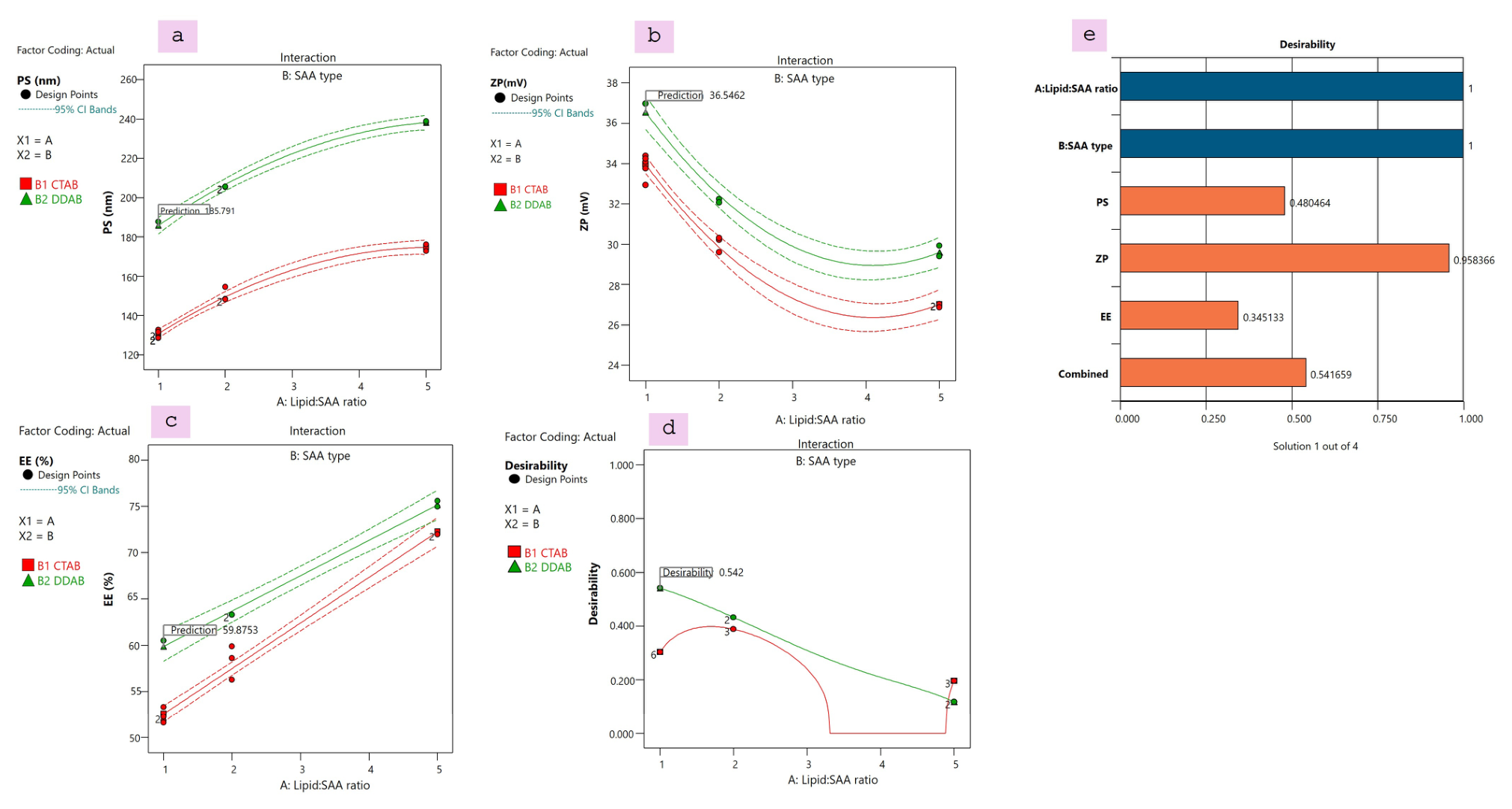
| Independent Variables | Constraints | ||
| X1: Lipid:SAA ratio | 1:1 | 2:1 | 5:1 |
| X2: SAA type | CTAB | DDAB | |
| Responses | Optimization Target | ||
| Y1: PS | Minimize | ||
| Y2: ZP | Maximize (absolute values) | ||
| Y3: % EE | Maximize | ||
| Statistical Summary | Y1: VS (nm) | Y2: ZP (mV) | Y3: EE% |
| Minimum | 128.4 | 26.8667 | 51.5956 |
| Maximum | 238.867 | 36.9667 | 75.5855 |
| Model | Quadratic | Quadratic | 2FI |
| Model p-value | <0.0001 | <0.0001 | <0.0001 |
| Model F-Value | 946.25 | 123.46 | 328.74 |
| Adequate precision | 78.6064 | 34.5018 | 42.1525 |
| R2 | 0.9974 | 0.9802 | 0.9890 |
| Adjusted R2 | 0.9963 | 0.9722 | 0.9860 |
| Predicted R2 | 0.9937 | 0.9545 | 0.9840 |
| Significant variables | X1, X2 | X1, X2 | X1, X2 |
| Predicted values | 185.79 | 36.55 | 59.88 |
| Observed value | 187.70 | 36.97 | 60.51 |
| % Bias | 1.02 | 1.14 | 1.04 |
| Runs | Variables | Responses (Mean ± SD) | PDI | |||
|---|---|---|---|---|---|---|
| X1: Lipid:SAA | X2: SAA Type | PS (nm) | ZP (mV) | EE% | ||
| 1 | 2:1 | CTAB | 154.533 ± 3.98 | +30.3033 ± 0.78 | 59.8753 ± 1.70 | 0.189 ± 0.177 |
| 2 | 1:1 | CTAB | 131.54 ± 7.23 | +34.3767 ± 0.82 | 52.2325 ± 0.64 | 0.172 ± 0.18 |
| 9 | 1:1 | DDAB | 187.7 ± 1.87 | +36.9667 ± 0.21 | 60.5122 ± 2.29 | 0.186 ± 0.18 |
| 10 | 5:1 | CTAB | 172.7 ± 2.34 | +27.0333 ± 0.42 | 71.9764 ± 1.10 | 0.183 ± 0.180 |
| 17 | 2:1 | CTAB | 148.3 ± 3.84 | +30.2033 ± 0.4 | 56.2662 ± 0.37 | 0.184 ± 0.17 |
| 8 | 2:1 | DDAB | 205.5 ± 2.35 | +32.0667 ± 0.57 | 63.2721 ± 0.37 | 0.172 ± 0.18 |
| 11 | 1:1 | CTAB | 130.673 ± 9.67 | +34.0767 ± 1.7 | 51.8079 ± 0.97 | 0.185 ± 0.18 |
| 4 | 2:1 | CTAB | 148.2 ± 6 | +29.6 ± 0.75 | 58.6015 ± 1.10 | 0.175 ± 0.17 |
| 12 | 2:1 | DDAB | 205.3 ± 4.75 | +32.2333 ± 0.38 | 63.2721 ± 0.74 | 0.182 ± 0.18 |
| 14 | 5:1 | CTAB | 176.1 ± 4.53 | +26.8667 ± 0.814 | 71.9764 ± 0.64 | 0.183 ± 0.18 |
| 6 | 5:1 | DDAB | 238.133 ± 2.5 | +29.9333 ± 1.33 | 74.9486 ± 0.97 | 0.175 ± 0.18 |
| 13 | 1:1 | CTAB | 128.5 ± 6.1 | +34.25 ± 1.78 | 52.2325 ± 0.64 | 0.175 ± 0.18 |
| 7 | 5:1 | DDAB | 238.867 ± 2.1 | +29.4 ± 0.61 | 75.5855 ± 0.97 | 0.179 ± 0.97 |
| 16 | 1:1 | CTAB | 128.4 ± 8.11 | +33.7567 ± 1.51 | 53.294 ± 0.97 | 0.177 ± 0.18 |
| 15 | 1:1 | CTAB | 132.533 ± 11.6 | +32.9333 ± 1.42 | 51.5956 ± 1.27 | 0.174 ± 0.172 |
| 3 | 2:1 | CTAB | 154.533 ± 3.98 | +30.3033 ± 0.78 | 59.8753 ± 1.7 | 0.189 ± 1.7 |
| 5 | 1:1 | CTAB | 131.54 ± 7.23 | +34.3767 ± 0.82 | 52.2325 ± 0.64 | 0.172 ± 0.18 |
| Inhibition Zone (mm) | MIC µg·mL−1 | MBC µg·mL−1 | |
|---|---|---|---|
| THY | 32 ±1 | 312.5 | 625 |
| THY-LPX gel | 40.7 ±1.15 | 156.25 | 156.25 |
| Ampicillin (positive control) | 26.3 ± 1.53 | 1 | 1 |
| Blank LPX gel | No effect | No effect | No effect |
Disclaimer/Publisher’s Note: The statements, opinions and data contained in all publications are solely those of the individual author(s) and contributor(s) and not of MDPI and/or the editor(s). MDPI and/or the editor(s) disclaim responsibility for any injury to people or property resulting from any ideas, methods, instructions or products referred to in the content. |
© 2026 by the authors. Licensee MDPI, Basel, Switzerland. This article is an open access article distributed under the terms and conditions of the Creative Commons Attribution (CC BY) license.
Share and Cite
Elsalhy, S.; Tantawy, N.; El Naggar, E.E.; Gawad, W.E.; Badr, A.M.; Atawia, R.T.; Mahmoud Alsofany, J. Leciplex Nanocarriers: An Optimized Platform for Thymol Delivery in Acne Management. Pharmaceutics 2026, 18, 795. https://doi.org/10.3390/pharmaceutics18070795
Elsalhy S, Tantawy N, El Naggar EE, Gawad WE, Badr AM, Atawia RT, Mahmoud Alsofany J. Leciplex Nanocarriers: An Optimized Platform for Thymol Delivery in Acne Management. Pharmaceutics. 2026; 18(7):795. https://doi.org/10.3390/pharmaceutics18070795
Chicago/Turabian StyleElsalhy, Soha, Norhan Tantawy, Eman E. El Naggar, Wesam E. Gawad, Amira M. Badr, Reem T. Atawia, and Jihad Mahmoud Alsofany. 2026. "Leciplex Nanocarriers: An Optimized Platform for Thymol Delivery in Acne Management" Pharmaceutics 18, no. 7: 795. https://doi.org/10.3390/pharmaceutics18070795
APA StyleElsalhy, S., Tantawy, N., El Naggar, E. E., Gawad, W. E., Badr, A. M., Atawia, R. T., & Mahmoud Alsofany, J. (2026). Leciplex Nanocarriers: An Optimized Platform for Thymol Delivery in Acne Management. Pharmaceutics, 18(7), 795. https://doi.org/10.3390/pharmaceutics18070795