1. Introduction
Age-related macular degeneration (AMD) is a neurodegenerative disease and represents the third leading cause of blindness globally, following cataracts and glaucoma [
1]. Wet AMD (wAMD), characterized by neovascularization and hemorrhage in the retina and choroid, accounts for only 10–15% of AMD cases but is responsible for 90% of associated blindness [
2,
3]. The pathological progression of wAMD involves multiple interrelated factors, including angiogenesis, immune and inflammatory responses, oxidative stress, mitochondrial and lipid metabolism dysfunction, and cellular senescence, which collectively drive disease progression [
4]. The core pathological mechanism of wAMD involves retinal hypoxia or chronic inflammation, leading to overexpression of vascular endothelial growth factor A (VEGF-A) and induction of abnormal choroidal neovascularization (CNV). Current first-line treatment for wAMD consists of intravitreal injections of monoclonal anti-VEGF antibodies. However, these therapeutics exhibit short half-lives, necessitating frequent injections that increase risks of complications such as ocular infection, elevated intraocular pressure, and potential irreversible damage, including retinal detachment [
3]. Owing to the presence of multiple anatomical barriers in the posterior segment—including the sclera, choroid, retinal pigment epithelium (RPE), Bruch’s membrane, and the blood–retinal barrier—drug delivery to the retina is severely constrained [
5]. Consequently, intravitreal injection remains the primary administration route for retinal diseases. Thus, enhancing drug sustained-release capability and developing long-acting, targeted intravitreal formulations represent urgent challenges.
Curcumin (Cur), a compound extracted from the rhizome of
Curcuma longa L., serves as the primary active component of turmeric [
6]. It demonstrates diverse biological activities, including anti-inflammatory, antioxidant, anti-angiogenic, and neuroprotective effects. Recently, Cur has attracted significant attention in ophthalmology [
7] and has emerged as a promising candidate for ophthalmic therapy [
8,
9,
10]. However, its clinical application is limited by poor water solubility, rapid degradation under physiological conditions, low oral bioavailability, and photosensitivity [
10,
11]. Consequently, various novel curcumin nanoparticles have been developed for ophthalmic use, including polymer nanoparticles, liposomes [
12], nanoemulsions, nanogels [
13], cyclodextrin inclusion complexes [
14], polymeric micelles [
15], and biomimetic nanocarriers [
16]. Their therapeutic efficacy has been validated in multiple ophthalmic disease models [
17]. The potential of curcumin in treating AMD involves several mechanisms: its antioxidant activity may protect RPE cells from oxidative stress, delaying dry AMD progression; its anti-inflammatory activity may inhibit aberrant complement system activation and inflammasome-mediated RPE damage; and its anti-angiogenic activity may suppress VEGF and platelet-derived growth factor (PDGF) expression, thereby reducing CNV formation [
18].
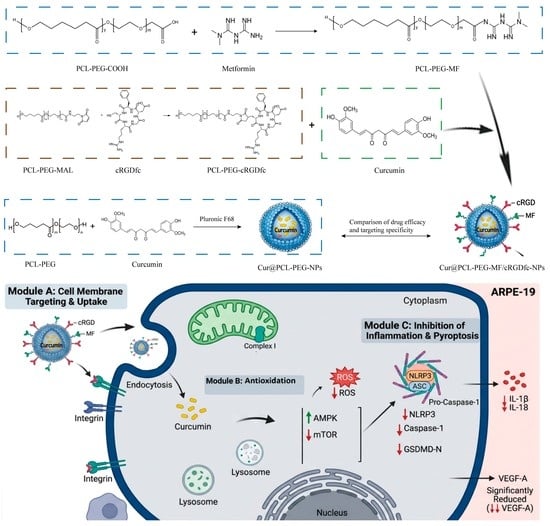
Efficient retinal drug delivery critically depends on the selection and modification of appropriate carriers. Nanocarrier encapsulation can isolate curcumin from the external environment, preventing degradation during storage and in vivo transport, thereby enhancing bioavailability. Polycaprolactone (PCL), a linear polyester synthesized via ε-caprolactone ring-opening polymerization, exhibits excellent encapsulation capacity for hydrophobic drugs and superior biocompatibility. PCL degrades slowly in vivo, making it suitable for long-acting, sustained-release, or implantable formulations. Its degradation generates minimal acidic byproducts, reducing inflammatory responses, which is advantageous for prolonged retinal drug release. PCL can form a diblock copolymer, PCL-PEG, with polyethylene glycol (PEG). This copolymer undergoes molecular self-assembly to form nanoparticles with sustained-release properties, constructing a nanoscale drug delivery platform [
19]. The PCL-PEG diblock copolymer demonstrates high biocompatibility in the RPE region. Its biodegradation products exhibit lower acidity, potentially mitigating inflammation-related retinal cell death. Typically, the PEG terminus is capped with hydroxyl (–OH) or methyl (–OCH
3) groups to regulate water solubility and biocompatibility. The PCL terminus usually features a hydroxyl (–OH) group; however, in this diblock copolymer, it can be further functionalized with NHS ester (–CO–NHS), maleimide (–MAL), or carboxyl (–COOH) groups for conjugation with peptides, proteins, sugars, or antibodies to enable active targeting. Metformin (MF) and cRGDfc are two key modifiers selected for carrier functionalization. Studies indicate that MF targets mitochondrial complex I [
20,
21], modulates the AMPK/mTOR pathway, and inhibits cellular pyroptosis [
22]. Pathological alterations in mitochondrial respiratory chain complex I represent an underlying mechanism in wAMD [
23]. As an AMPK/mTOR pathway modulator, MF influences the AMP/ATP ratio [
24]. Additionally, its antioxidant and anti-angiogenic properties may contribute to inhibiting AMD progression. Brown et al. conducted a phase II clinical trial (NCT02684578) on geographic atrophy to evaluate MF’s safety and efficacy for ocular diseases [
25]. Since AMD often involves retinal and choroidal neovascularization, and the integrin receptor αvβ3 is overexpressed on RPE cells [
26], the RGD peptide—a short peptide containing the arginine–glycine–aspartic acid sequence abundant in vivo [
27,
28]—specifically binds αvβ integrins. Notably, a cyclic RGD peptide named cRGDfc exhibits high affinity for αvβ3 integrin, showing promise for retinal targeting [
29].
2. Materials and Methods
2.1. Reagents and Chemicals
PCL-PEG, PCL-PEG-COOH, PCL-PEG-MAL, and cRGDfc were synthesized by Xi’an Ruixi Biological Technology Co., Ltd. (Xi’an, China). MF was purchased from Shanghai Aladdin Biochemical Technology Co., Ltd. (Shanghai, China). EDC·HCl, triethylamine, and DMF were obtained from Sigma-Aldrich. Tetrahydrofuran (THF) and curcumin (Cur) were purchased from Shanghai Yuan Ye Biotechnology Co., Ltd. (Shanghai, China). Pluronic F68 was acquired from Shanghai Macklin Biochemical Co., Ltd. (Shanghai, China) Polysorbate 80 was obtained from Tianjin Belsun Biotechnology Co., Ltd. (Tianjin, China). DMEM/F12 basic culture medium and fetal bovine serum were purchased from Wuhan Procell Life Science & Technology Co., Ltd. (Wuhan, China). PBS, penicillin-streptomycin mixture (P/S), 0.25% trypsin, and DMEM basic culture medium were obtained from Gibco Life Sciences. The 3% hydrogen peroxide (H2O2) was purchased from Beijing Huabo Station Bioanalytical Technology Co., Ltd. (Beijing, China). Matrigel was acquired from Xiamen Mogengel (Xiamen, China). CCK-8 detection solution was purchased from Biorigin (Beijing) Inc. (Beijng, China). The TUNEL detection kit, reactive oxygen species (ROS) detection kit, and lactate dehydrogenase (LDH) detection kit were obtained from Shanghai Beyotime Biotechnology Co., Ltd. (Shanghai, China). GAPDH Rabbit mAb (A19056) was purchased from ABclonal. VEGF-A Monoclonal antibody (66828-1-Ig), IL-18 Polyclonal antibody (10663-1-AP), mTOR Monoclonal antibody (66888-1-Ig), AMPK Alpha 1 Monoclonal antibody (66536-1-Ig), Phospho-AMPK Alpha (Thr172) Recombinant monoclonal antibody (80209-6-RR), Caspase-1/P20 Polyclonal antibody (22915-1-AP), NLRP3 Polyclonal antibody (30109-1-AP), and IL-1β Polyclonal antibody (16806-1-AP) were purchased from Abcam plc.
2.2. Synthesis of Carrier Materials and Preparation of Nanoparticles
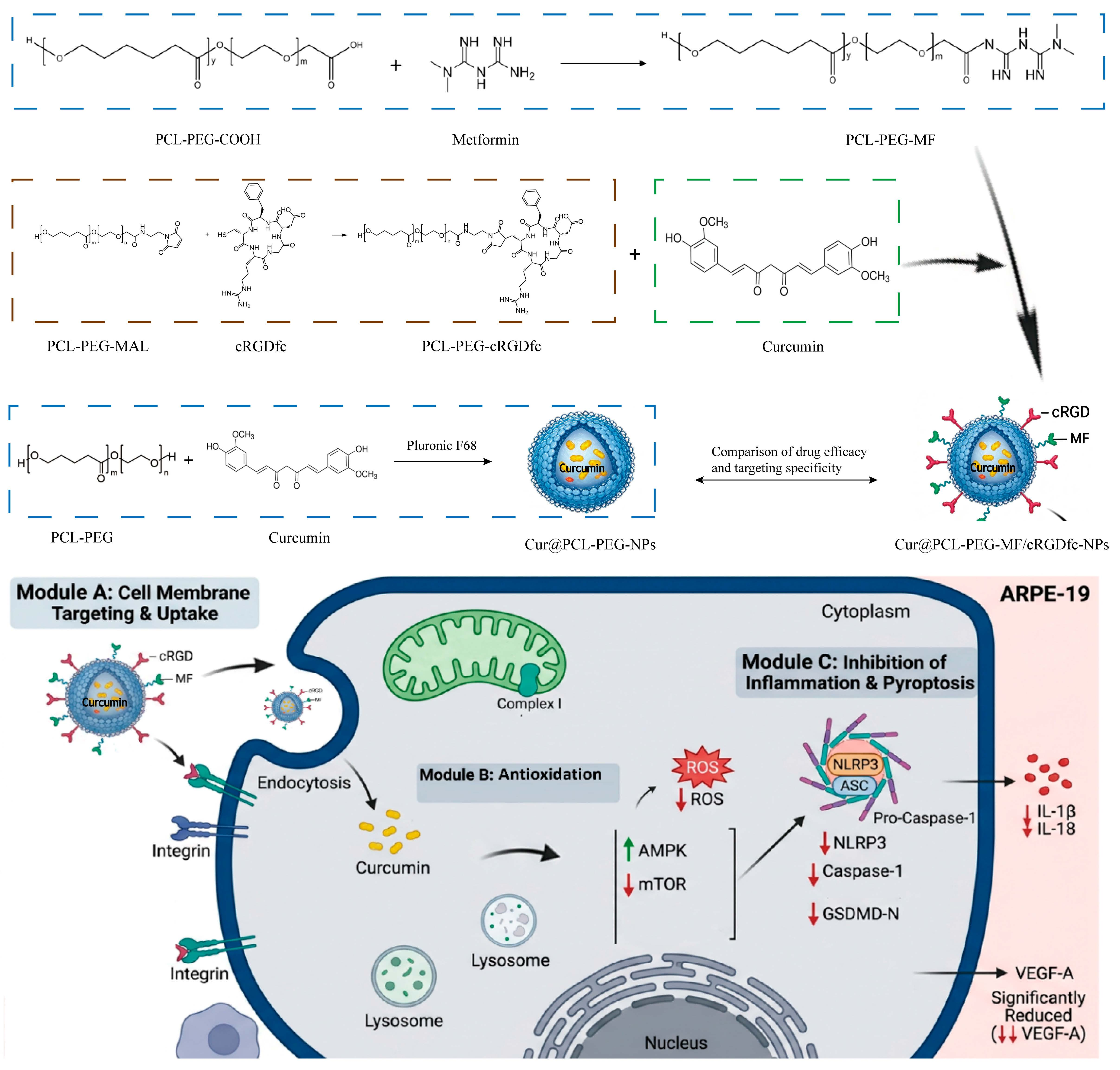
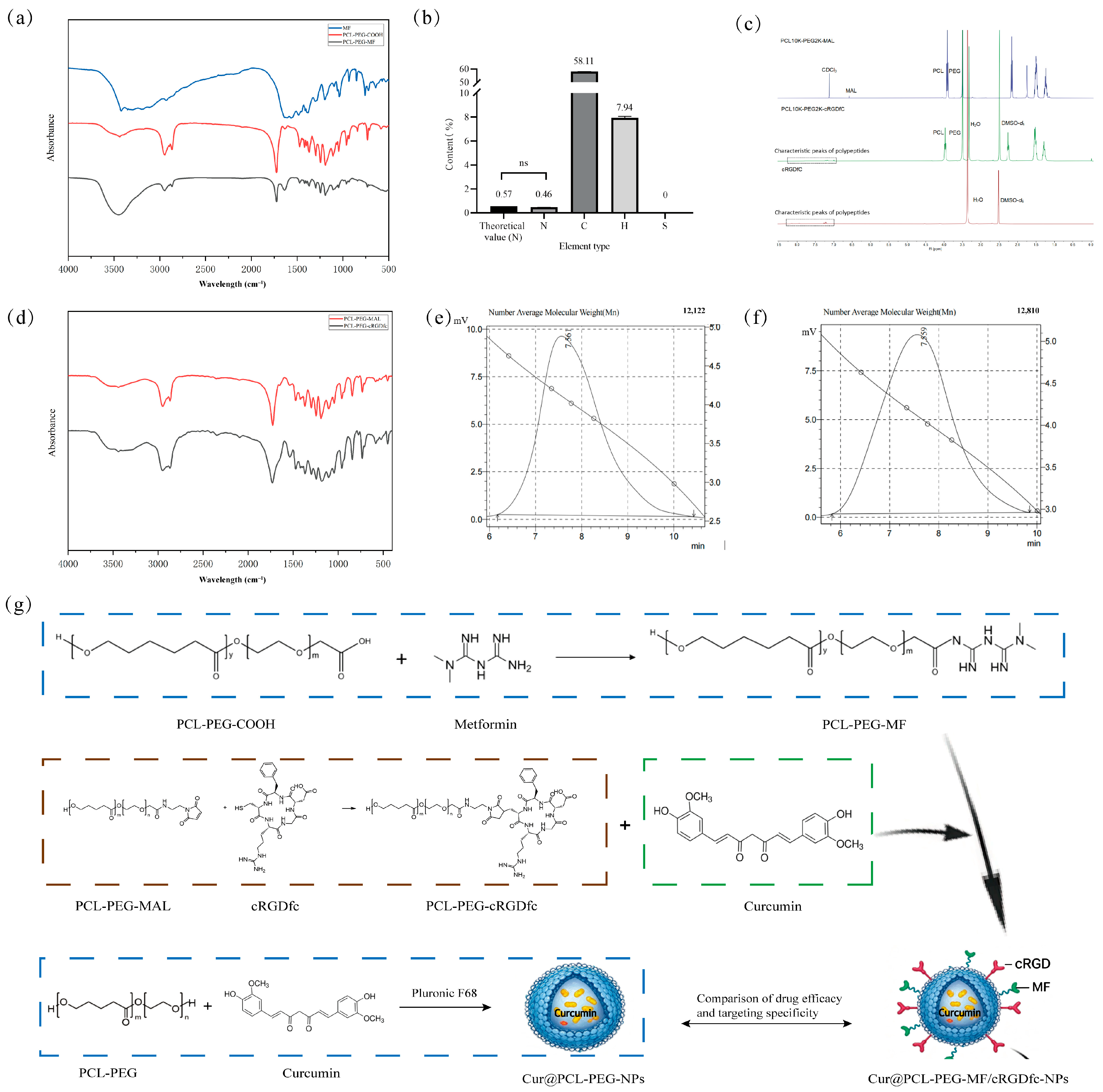
PCL-PEG-MF was synthesized by dissolving 25 mg PCL-PEG-COOH and 25 mg MF in 10 mL of DMSO. Subsequently, 120 mg EDC·HCl and 90 μL triethylamine were added dropwise under ice-bath conditions. The mixture was stirred at room temperature for 48 h. Dialysis was performed using a dialysis bag (MWCO 2000) against PBS for 48 h, with the dialysate changed every 6 h. The suspension was collected and lyophilized to obtain PCL-PEG-MF as a white, odorless powder.
PCL-PEG-cRGDfc was prepared by dissolving 100 mg PCL-PEG-MAL in 3 mL of DMF. The cRGDfc peptide was added and allowed to dissolve completely. The reaction proceeded at room temperature for 12 h. The solution was dialyzed against deionized water for 24 h using a dialysis bag, with the dialysate changed every 6 h. The product was collected, lyophilized, and obtained as a white, odorless powder.
Cur@PCL-PEG was prepared by dissolving 20.0 mg curcumin in 5 mL of an organic solvent mixture (dichloromethane:ethyl acetate, 4:1 v/v). The mixture was vortexed until complete dissolution to prepare a stock solution. Then, 1 mL of the stock solution was used to dissolve 50.0 mg PCL-PEG copolymer. After vortexing, this solution served as the organic phase. Next, 2 mL of 1.5% (w/v) Pluronic F68 aqueous solution was added to the organic phase. The mixture was stirred at room temperature (1500 rpm) for 1 h. Emulsification was performed under an ice-water bath using an ultrasonic probe sonicator (600 W, 5 s pulse on/5 s off, 2 min total) until a uniform milky primary emulsion (O/W) formed. Then, 4 mL of 0.5% (w/v) Pluronic F68 solution was added to the primary emulsion. The mixture was stirred at room temperature (1500 rpm) for 6 h to evaporate organic solvents and solidify nanoparticles. The solution was transferred to centrifuge tubes and centrifuged at 4 °C (15,000 rpm) for 30 min. The supernatant was discarded. The nanoparticle pellet was resuspended in pure water, vortexed, and centrifuged under identical conditions. This washing procedure was repeated twice. Finally, the pellet was dispersed in 3 mL pure water to obtain a Cur@PCL-PEG suspension, which was stored at 4 °C in the dark.
Cur@PCL-PEG-MF/cRGDfc was prepared by dissolving 51.9 mg curcumin in 10 mL of an organic solvent mixture (dichloromethane:ethyl acetate, 4:1 v/v) to form a curcumin-containing solution. Then, 1 mL of this solution was removed. Subsequently, 40.0 mg PCL-PEG-MF copolymer and 10.0 mg PCL-PEG-cRGDfc copolymer were added to the remaining solution, and the mixture was vortexed to form the oil phase. Next, 1.85 mL of 1.5% (w/v) Pluronic F68 aqueous solution was added to the oil phase. Following a similar emulsification and solidification process as described above (stirring at room temperature, ice-water bath sonication, and solvent evaporation), Cur@PCL-PEG-MF/cRGDfc nanoparticles were obtained.
2.3. Characterization of Carrier Materials and Nanoparticles
Organic elemental analysis was performed using an elemental analyzer (Elementar, Langenselbold, Germany) to quantify element contents in PCL-PEG-MF, verifying MF conjugation efficiency. Samples were combusted at high temperature to convert elements into gaseous products, which were quantitatively detected by chromatography. The instrument was set to CHNS synchronous analysis mode. High-purity helium (≥99.999%) served as the carrier gas, and high-purity oxygen (≥99.995%) as the auxiliary gas. The combustion tube temperature was 1150 °C, and the reduction tube temperature was 850 °C. Dry samples were analyzed in triplicate.
Gel permeation chromatography (GPC) analysis was conducted by dissolving PCL-PEG-MAL and PCL-PEG-cRGDfc samples in THF to prepare 2 mg·mL−1 solutions. Samples were filtered through a 0.22 μm organic membrane before injection. GPC (Waters, Milford, MA, USA) conditions were mobile phase THF, flow rate 1.0 mL·min−1, column temperature 35 °C, injection volume 50 μL, and run time 15 min. Samples were injected sequentially, and chromatograms were recorded.
1H NMR analysis was performed by precisely weighing cRGDfc, PCL-PEG-MAL, and PCL-PEG-cRGDfc samples. These were dissolved in DMSO. 1H NMR spectra were acquired using an NMR spectrometer (Bruker, Mannheim, Germany) to verify successful PCL-PEG-cRGDfc conjugation.
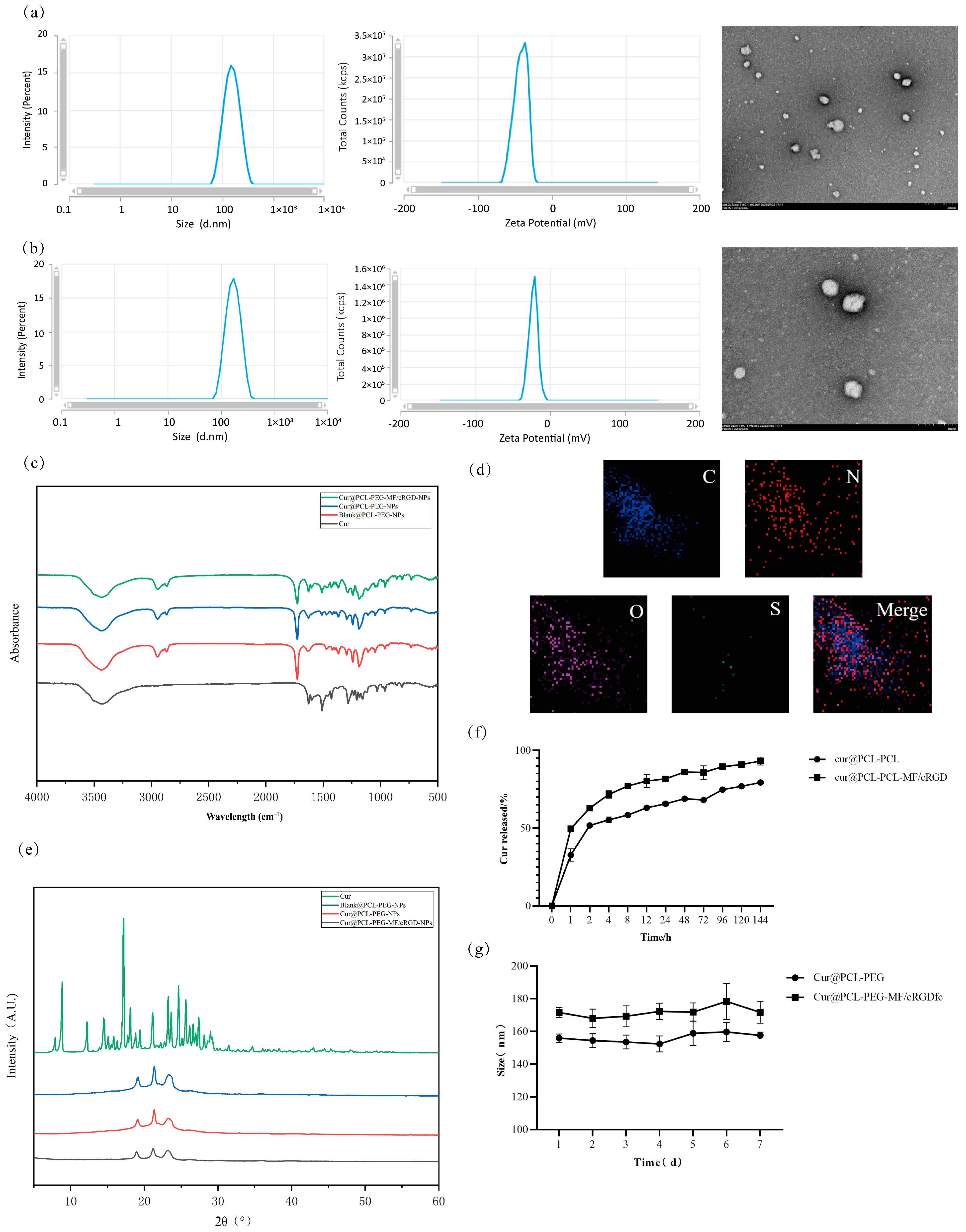
Fourier-transform infrared (FTIR) spectroscopic analysis was conducted on Cur@PCL-PEG-MF/cRGDfc, PCL-PEG-cRGDfc, Cur, Blank@PCL-PEG, and Cur@PCL-PEG samples. Each sample was mixed with dry spectral-grade KBr powder (~1:100 mass ratio), homogenized finely, and pressed into transparent or semi-transparent pellets. Pellets were placed in the sample chamber of an FTIR spectrometer (Thermo, Waltham, MA, USA). Parameters were wavenumber range 4000–400 cm−1, resolution 4 cm−1, and 32 scans.
Energy-dispersive X-ray spectroscopy (EDS) analysis was performed by diluting Cur@PCL-PEG-MF/cRGDfc with deionized water and sonicating (100 W, 3–5 min) to ensure uniform dispersion. A 5–10 μL aliquot of the diluted solution was dropped onto a copper grid coated with an ultrathin carbon film. After standing for 2–3 min for nanoparticle adsorption, excess liquid was blotted with filter paper. The grid was air-dried at room temperature for 10–15 min. The grid was fixed on a sample holder and placed in the TEM sample chamber. Morphology was observed, and elemental surface distribution analysis was performed using an EDS spectrometer (JEOL, Tokyo, Japan) to determine C, N, O, and S distribution.
X-ray diffraction (XRD) analysis was conducted on powdered samples (Cur, Blank@PCL-PEG, Cur@PCL-PEG, Cur@PCL-PEG-MF/cRGDfc) passed through a 300-mesh sieve and evenly loaded into an X-ray diffractometer (Bruker, Germany). Conditions were Cu-Kα radiation, diffraction angle (2θ) range 3–60°, scan speed 3°·min−1, tube voltage 40 kV, and tube current 40 mA. All tests were performed at room temperature.
The particle size, polydispersity index (PDI), and zeta potential of nanoparticles were measured using a laser particle analyzer (Malvern, Malvern, UK). Morphology was observed by transmission electron microscopy (TEM, JEOL, Japan). Briefly, nanoparticle suspensions were appropriately diluted and sonicated (100 W, 3–5 min) for uniform dispersion. For particle size and zeta potential measurements, a 1 mL sample was placed in the analyzer with the following parameters: dispersant pure water, temperature 25 °C, and equilibration time 120 s. Each sample was measured in triplicate. For TEM, a 10 μL sample solution was applied to a copper grid coated with an ultrathin carbon film. Then, 2.0% (w/v) phosphotungstic acid (PTA) solution was added for negative staining. The grid was examined by TEM to observe nanoparticle morphology and capture images.
2.4. Encapsulation Efficiency (EE) and Drug Loading (DL)
Curcumin content was quantified by high-performance liquid chromatography (HPLC) under the following conditions: Diamonsil Plus C18 column (250 mm × 4.6 mm, 5 μm); mobile phase acetonitrile–4% glacial acetic acid solution (48:52); flow rate 1.0 mL·min−1; detection wavelength 430 nm; column temperature 30 °C; and injection volume 10 μL.
The Cur@PCL-PEG suspension was centrifuged at 15,000 r·min
−1 for 30 min. The precipitate was washed twice with pure water. All supernatants and washing solutions were combined and diluted to volume with methanol. The solution was mixed well and filtered through a 0.45 μm membrane. The filtrate was analyzed as the test sample. The curcumin peak area was recorded and substituted into Equations (1) and (2) to calculate EE and DL.
2.5. Stability
The prepared Cur@PCL-PEG and Cur@PCL-PEG-MF/cRGDfc solutions were stored at 4 °C. Three replicates per formulation were prepared. Particle size was monitored daily for 7 days using a laser particle size analyzer to assess stability.
2.6. In Vitro Release of Nanoparticles
In vitro release was evaluated using the shaker method [
30]. Briefly, triplicate samples of Cur@PCL-PEG and Cur@PCL-PEG-MF/cRGDfc (each containing 2.0 mg curcumin) were placed in 25 mL PBS (pH 7.4) release medium containing 1% polysorbate-80. The addition of 1% polysorbate-80 significantly improved the solubility of curcumin in the release medium. Combined with the sufficient medium volume and regular replenishment of fresh medium at each sampling, sink conditions were maintained throughout the experiment. Samples were incubated in a 37 °C shaking incubator at 100 r·min
−1 in the dark. At predetermined time points (1, 2, 4, 8, 12, 24, 48, 72, 96, 120, 144 h), 1.0 mL of the release medium was sampled. The sampled medium was mixed well and immediately replaced with an equal volume of fresh medium to maintain sink conditions. Samples were centrifuged at 10,000 r·min
−1 for 10 min. The supernatant was aspirated, filtered through a 0.45 μm membrane, and analyzed by HPLC to determine curcumin content. Cumulative release rates were calculated, and release curves were plotted.
2.7. Cell Culture and Treatment
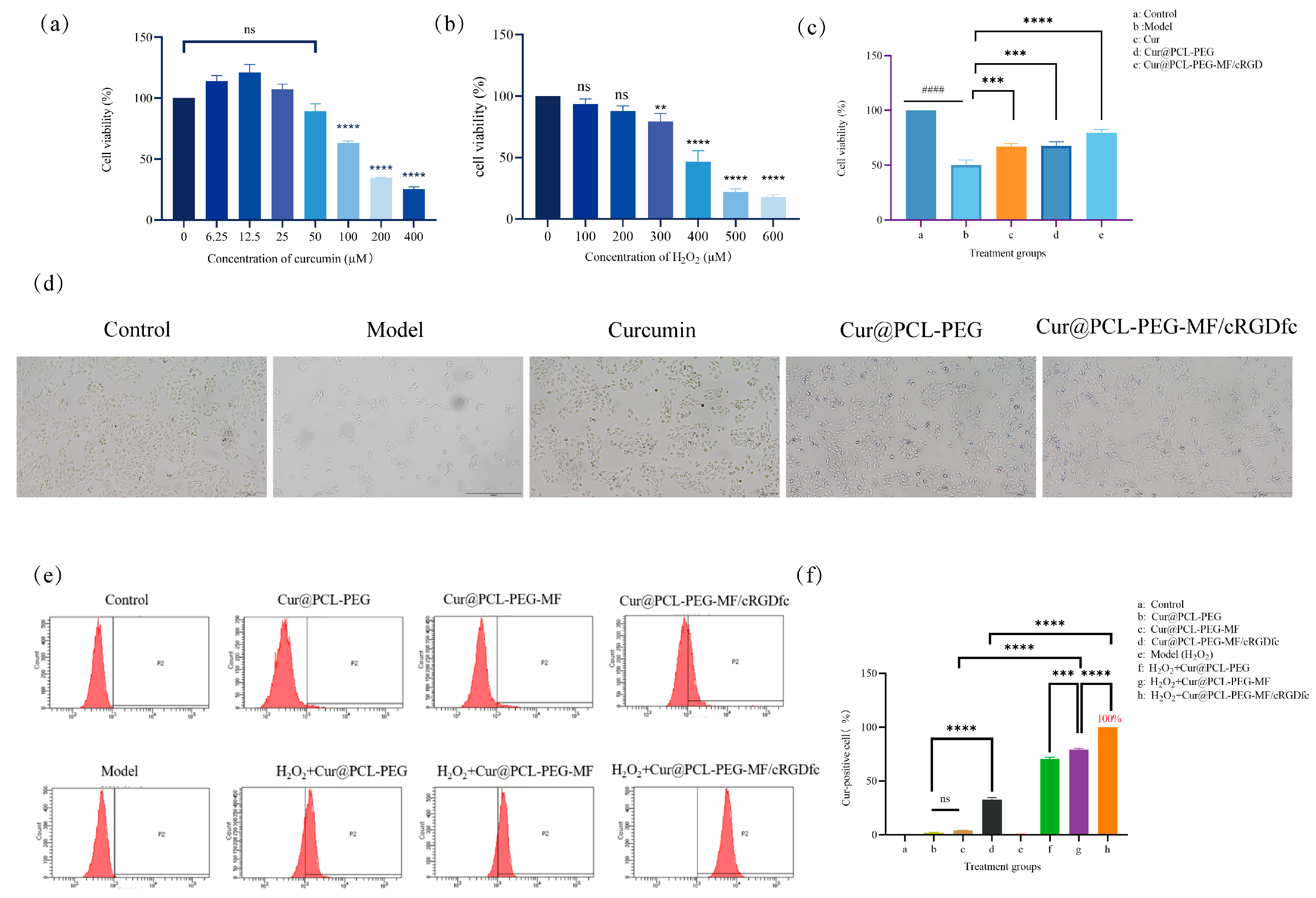
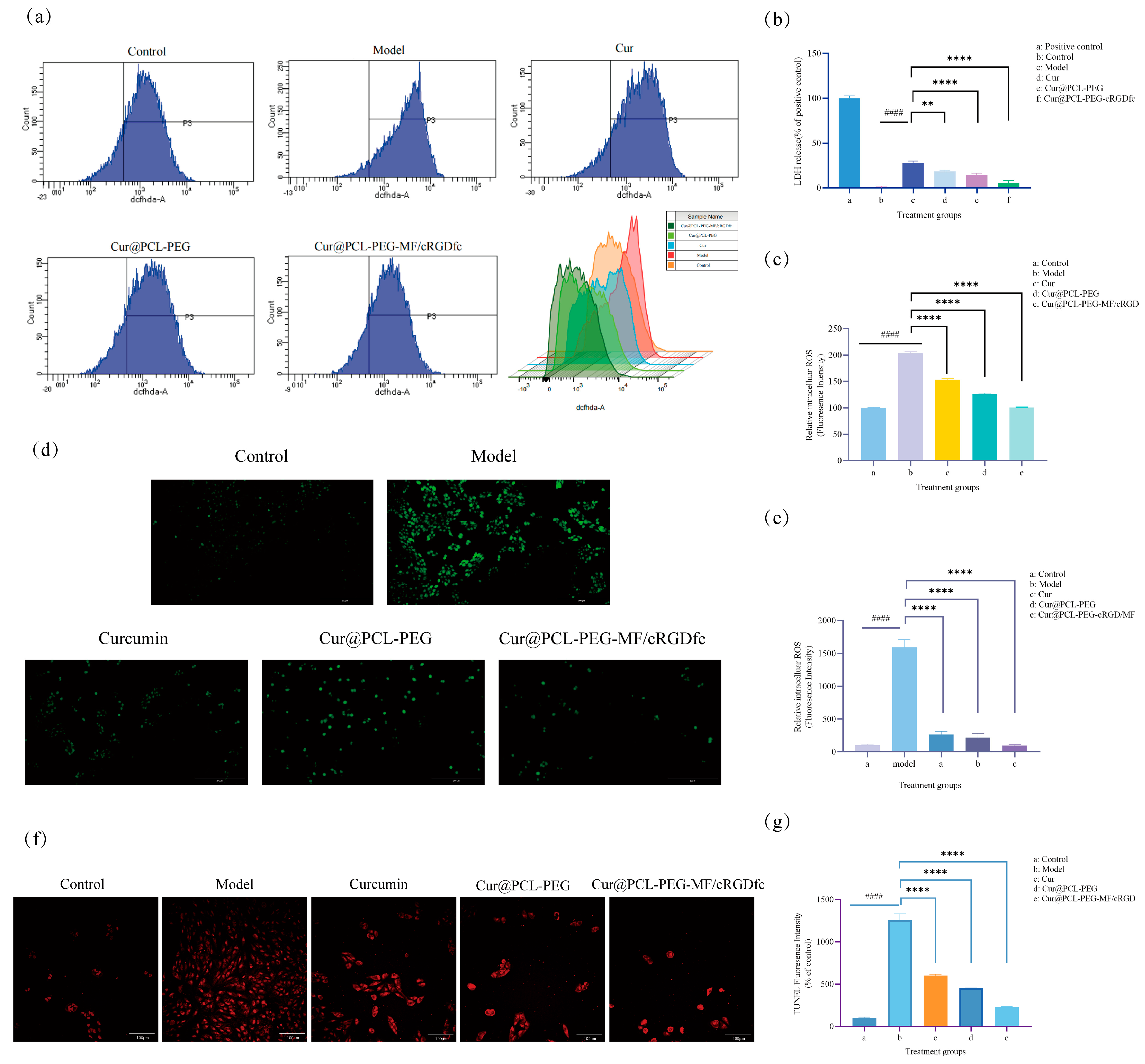
The STR-authenticated ARPE-19 cells (Cat. No. CL-0026) and PUMC-HUVEC-T1 cells (Cat. No. CL-0675) were both purchased from Procell Life Science & Technology Co., Ltd. (Wuhan, China). All cells were cultured under standard sterile conditions. ARPE-19 cells were cultured in DMEM/F12 supplemented with 10% FBS and 1% P/S at 37 °C in a humidified 5% CO2 atmosphere. HUVEC-T1 cells were cultured in DMEM with 10% FBS, 1% P/S, and 1% non-essential amino acids (NEAAs) under the same conditions. Cells at 80–90% confluence were passaged for experiments. Groups were the Normal group (no intervention); Model group (culture medium containing 3% H2O2); and Drug intervention groups (media containing specified concentrations of Cur@PCL-PEG, Cur@PCL-PEG, and Cur@PCL-PEG-MF/cRGDfc, respectively). After treatment, cell viability assays and other experiments were conducted to evaluate treatment effects.
2.8. Cell Viability Assay and Morphology Examination
For drug effects on cell damage and protection, cells were seeded in 96-well plates at 5 × 10³ cells/well. Viability was assessed using the Cell Counting Kit-8 (CCK-8). Cells were incubated in serum-free medium containing 10% CCK-8 for 1–2 h, and absorbance was measured at 450 nm using a microplate reader (BioTek, Miami, FL, USA). Cell viability (%) was calculated as [(OD_experimental − OD_blank)/(OD_normal − OD_blank)] × 100%. After 24 h stimulation with drug solutions in serum-free medium, the safe concentration of curcumin and its nanoformulations for ARPE-19, the damaging concentration of H2O2 for ARPE-19, and the cytotoxic effects on HUVEC cells were determined. For protection studies, cells were pretreated with different concentrations for 24 h. After discarding the drug-containing medium, cells were stimulated with H2O2 for 3 h. Cell morphology was observed using a fluorescence microscope (Olympus, Tokyo, Japan).
2.9. Lactate Dehydrogenase (LDH) Release Assay
Using the aforementioned cell grouping, after 24 h intervention with the corresponding reagents, cells were stimulated with 400 μM H2O2 for 3 h to establish an oxidative stress model. The cell culture supernatant was collected, and optical density (OD) was measured at 490 nm according to the LDH kit instructions. LDH release was compared. Experiments were independently repeated three times.
2.10. ROS Measurement
Using the same cell grouping and treatment methods, the DCFH-DA probe was diluted as per the ROS detection kit instructions. Cells were incubated at 37 °C for 20 min. ROS levels were observed using a fluorescence inverted microscope (Olympus, Japan) or quantitatively analyzed by flow cytometry (BD, Franklin Lakes, NJ, USA) after cell collection.
2.11. Cellular Uptake
A nanoparticle-containing medium was added to both normal cultured cells and H2O2-induced oxidative stress model cells. After 4 h incubation, cells were harvested and analyzed by flow cytometry (BD, Franklin Lakes, NJ, USA) to assess nanoparticle uptake.
2.12. Cell Scratch Assay
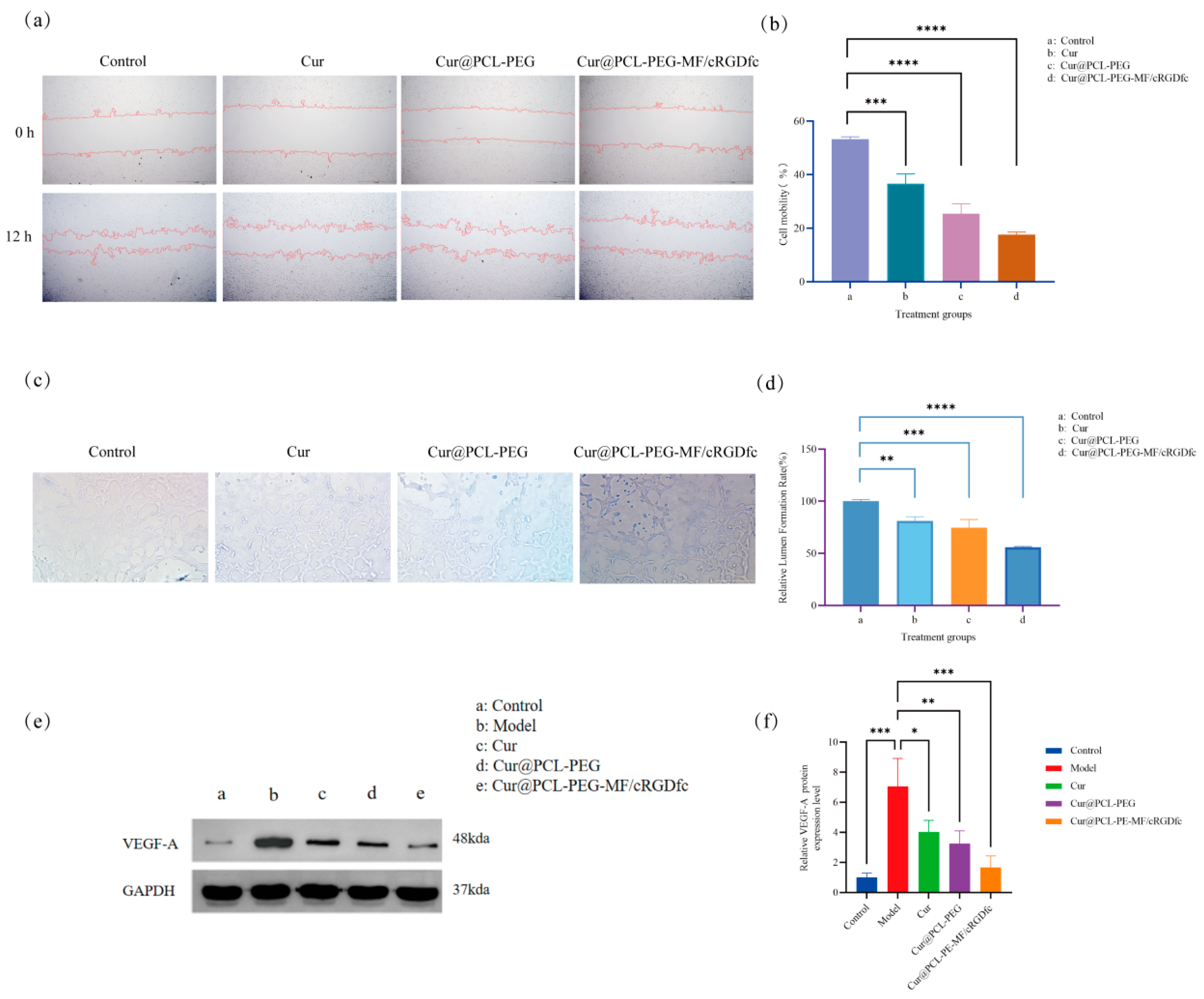
HUVEC cells in the logarithmic growth phase were uniformly seeded into 6-well plates. Vertical scratches parallel to plate reference lines were made using a 200 μL pipette tip. Plates were washed thrice with PBS to remove detached cells, then replaced with serum-free medium. Images were captured using a fluorescence inverted microscope (4× objective). The drug-containing medium was added according to grouping, and images were taken 12 h post-scratch. The scratch area was quantified using ImageJ (v1.53a, National Institutes of Health, Bethesda, MD, USA) software. The cell migration rate (%) was calculated as (Initial scratch area − Scratch area at time t)/Initial scratch area × 100%.
2.13. Extracellular Tube Formation Assay
Matrigel was used as a three-dimensional culture matrix. A 20 μL aliquot of Matrigel was added to each well of a 24-well plate. The plate was incubated at 37 °C for 60 min for gel solidification. For each group, 250 μL of cell suspension (1.5 × 10⁵ cells/well) and 250 μL of the drug-containing medium (Cur, Cur@PCL-PEG, or Cur@PCL-PEG-MF/cRGDfc groups) were added per well. Triplicates were prepared per group. The plate was incubated at 37 °C, 5% CO2. Images were captured using a fluorescence inverted microscope, and total tube length was quantified.
2.14. TUNEL Staining
A high-content cell imaging analysis system (BD, USA) was used to evaluate the effects of different curcumin formulations on DNA fragmentation in ARPE-19 cells under oxidative stress. The same cell grouping was adopted. Staining was performed according to the TUNEL kit instructions. Images were observed and collected using the high-content cell imaging analyzer.
2.15. Transcriptomics Analysis
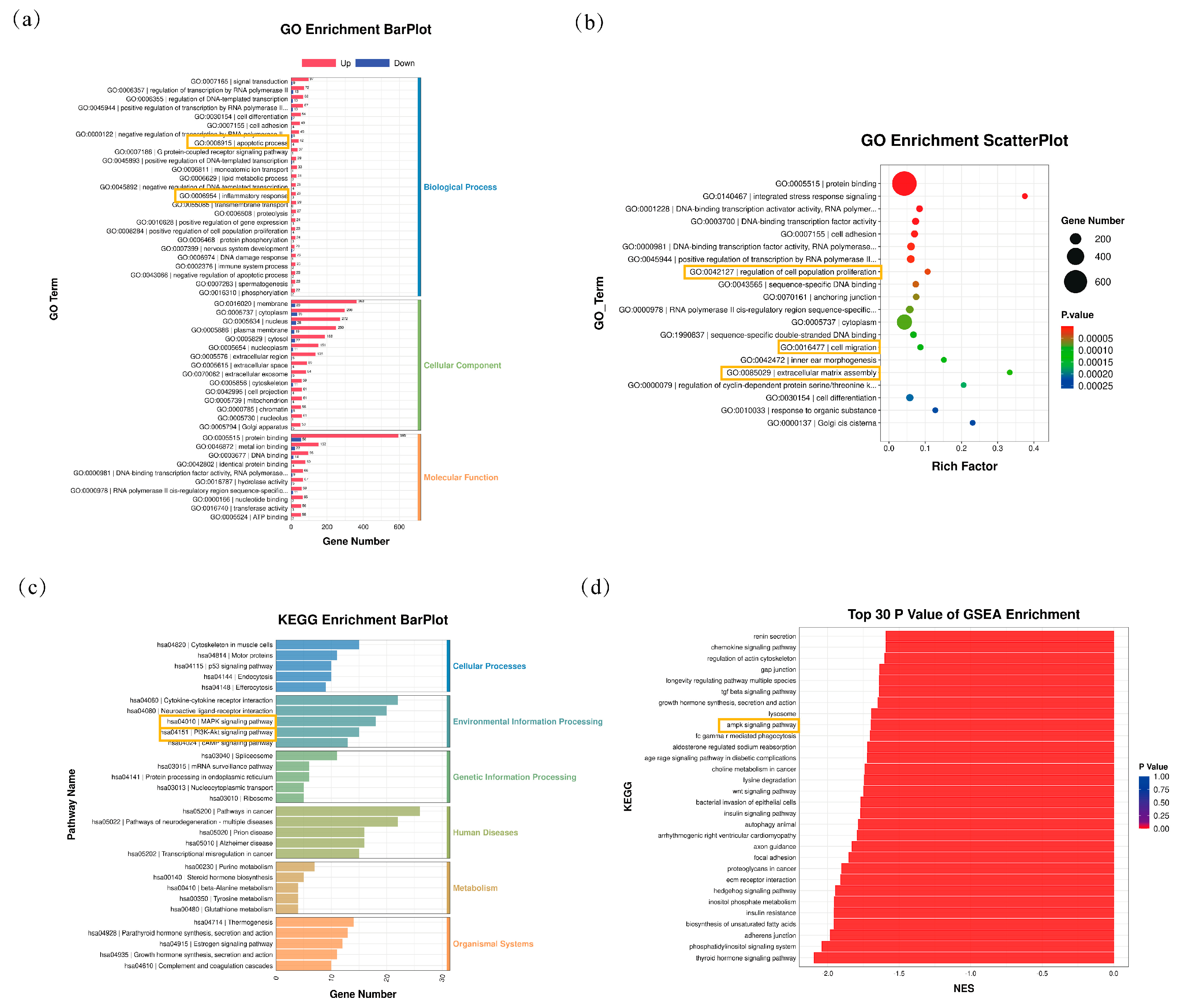
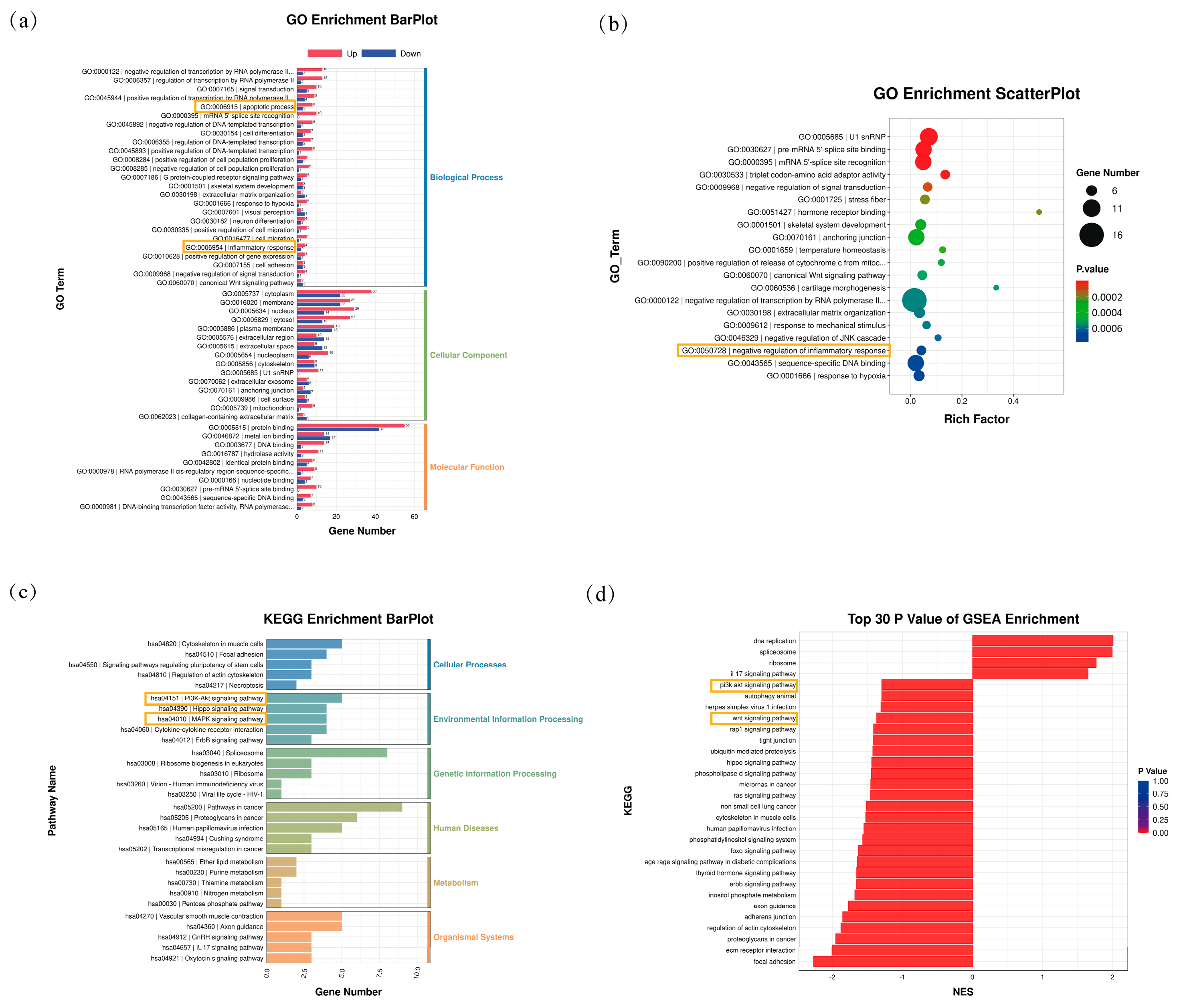
Using the same cell grouping and treatment, total RNA was extracted from each group using TRIzol reagent. RNA concentration and purity were detected using the NanoDrop ND-1000 (Thermo Fisher Scientific, Waltham, MA, USA), and integrity was assessed by the Bioanalyzer 2100 (Agilent Technologies, Santa Clara, CA, USA). Samples with a concentration > 50 ng·μL−1, RNA integrity number (RIN) > 7.0, and total amount > 1 μg were selected. mRNA was enriched using oligo(dT) magnetic beads, and libraries were constructed. After quality control, paired-end sequencing was performed on the Illumina NovaSeq 6000 platform. Raw data were quality-controlled to obtain high-quality sequences. Genome alignment, gene expression quantification, gene set enrichment analysis, differential gene expression analysis, and enrichment analysis were conducted.
2.16. Western Blot
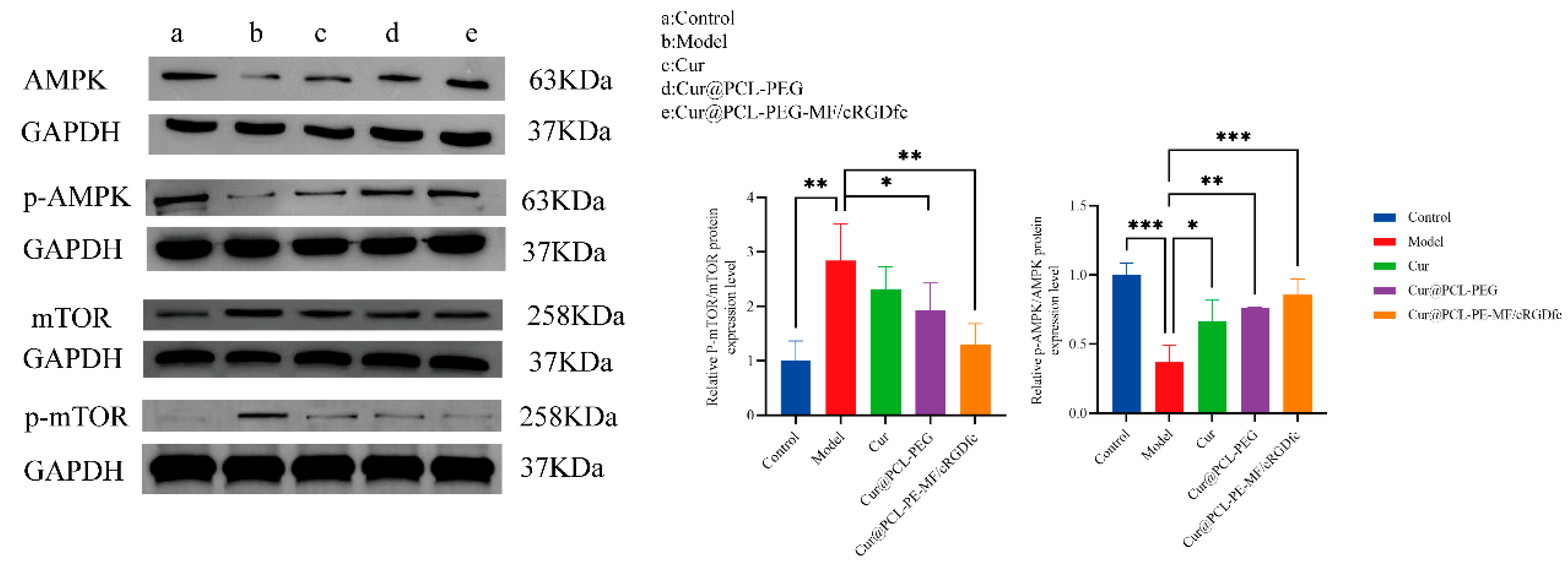
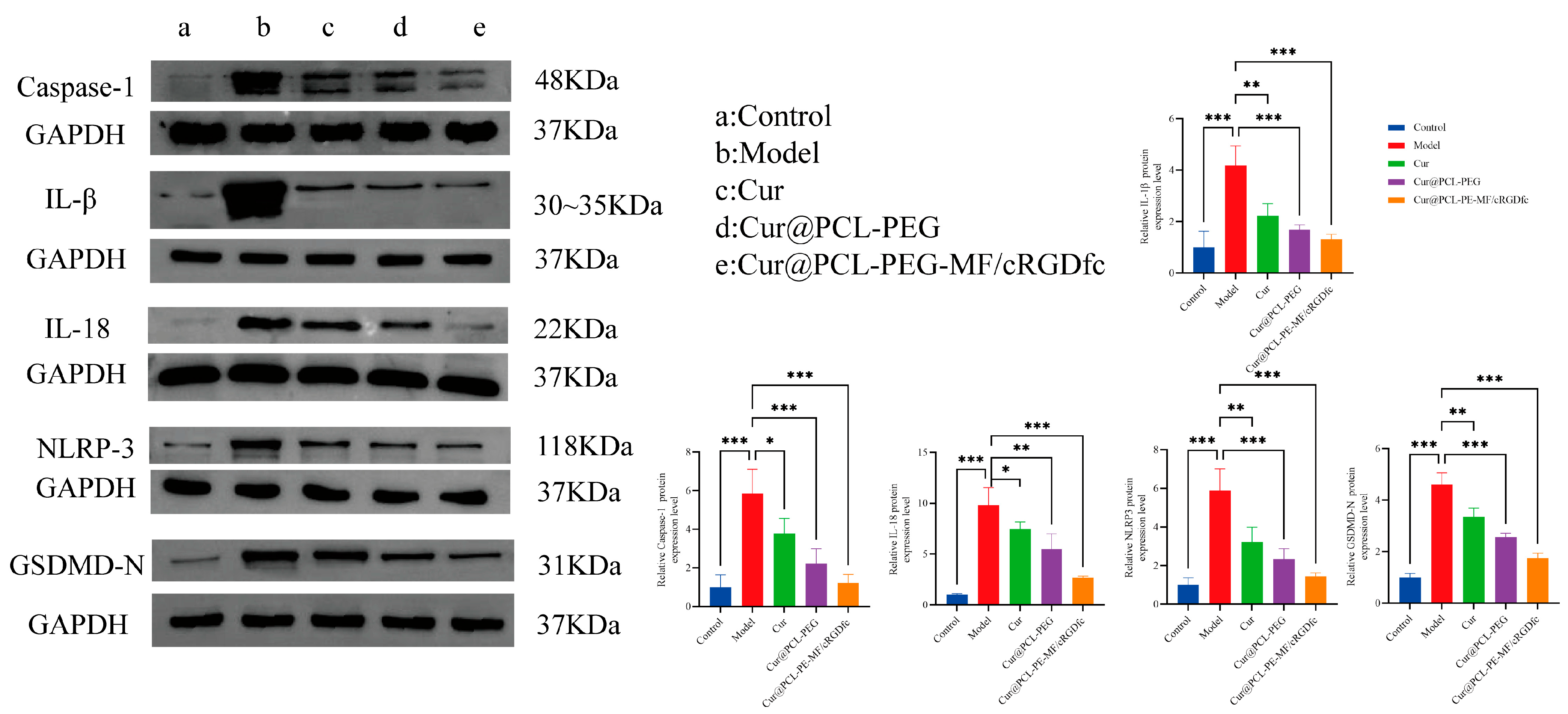
Using the same cell grouping and treatment, the culture medium was discarded, and pre-cooled RIPA lysis buffer (containing 1% protease inhibitor and 1% phosphatase inhibitor) was added to the cells. The cells were lysed on ice for 30 min. Samples were centrifuged at 12,000 r·min−1, 4 °C, for 10 min. The supernatant was collected as total protein. The protein concentration was determined by BCA assay. Loading buffer was added, and the protein amount was adjusted to 25 μg/10 μL per group. Samples were heated at 95 °C for 10 min, followed by electrophoresis and membrane transfer. Antibodies were incubated according to manufacturer-specified dilution ratios.
2.17. Data Analysis
Statistical analyses were performed using GraphPad Prism 9.5 (GraphPad Software, Boston, MA, USA). Data are presented as mean ± standard deviation (SD) from at least three independent experiments. One-way analysis of variance (ANOVA) was used for multiple-group comparisons, followed by Tukey’s multiple comparisons test for pairwise comparisons. Statistical significance was defined as p < 0.05. Image analysis was conducted using ImageJ 1.53a software (National Institutes of Health, Bethesda, MD, USA) with the Angio Analyzer plugin.
4. Discussion
In drug delivery carrier construction, we synthesized PCL-PEG-MF and PCL-PEG-cRGDfc, respectively. Their self-assembled nanoparticles under specific conditions effectively encapsulate poorly soluble components like curcumin, forming structures enabling sustained in vivo release. For PCL-PEG-MF modification, we employed the classic carbodiimide (EDC)-mediated condensation reaction, offering mild conditions, high efficiency, and strong specificity. This strategy specifically activates carrier terminal carboxyl groups, forming stable amide bonds with drug molecule amino groups. FTIR provided direct evidence for successful chemical bond formation. Compared to the blank carrier PCL-PEG-COOH spectrum, the PCL-PEG-MF spectrum showed characteristic amide bond absorption peaks, clearly indicating MF covalent bonding to the polymer backbone. Quantitative assessment via organic elemental analysis showed a measured nitrogen content consistent with theoretical stoichiometric calculation, confirming FTIR conclusions and verifying coupling reaction efficiency, ensuring expected stoichiometric drug loading. For PCL-PEG-cRGDfc synthesis, we utilized the highly efficient maleimide-thiol coupling reaction, widely applied in bioconjugation for fast reaction rate, high yield, and compatibility with aqueous/organic phases and particularly suitable for cysteine-containing peptide modification. 1H NMR characterization showed the PCL-PEG-cRGDfc spectrum exhibited broad peaks in the 7.0–8.5 ppm chemical shift range, attributed to cRGDfc cyclic peptide amide bond protons, absent in the PCL-PEG-MAL carrier spectrum, confirming successful cRGDfc connection. GPC analysis showed a molecular weight increase, indicating successful cRGDfc conjugation. FTIR results further confirmed cRGDfc modification success. Through two distinct yet equally efficient chemical coupling strategies, we precisely modified MF and cRGDfc on the PCL-PEG copolymer. cRGDfx targeting moiety specifically recognizes overexpressed integrin receptor αvβ3 on retinal pigment epithelial cells, achieving retinal region nanoparticle enrichment. MF targeting moiety enhances internalized nanoparticle affinity with mitochondrial complex I, regulating mitochondrial dysfunction and consequently modulating the AMPK/mTOR pathway.
Notably, previous studies have validated the feasibility of cRGD-targeted nanoplatforms for AMD therapy using classic retinal cell and animal models, which strongly supports the rationality of our targeting design. A prior study reported cRGD-functionalized nanoparticles for AMD treatment and verified their retinal protective effects based on ARPE-19 cells and rabbit CNV models, providing fundamental evidence for integrin-targeted retinal drug delivery [
34]. Different from the single-targeted nanocarrier in that work, our system innovatively integrates dual cRGDfc-retinal targeting and MF-mitochondrial targeting, which can simultaneously improve retinal accumulation and intracellular mitochondrial regulation, thereby offering multi-level protection against oxidative stress-induced RPE injury, which may support multi-modal therapeutic intervention in AMD. In addition, a 2024 study focused on curcumin-metformin co-delivery nanoparticles and confirmed the synergistic therapeutic potential of these two bioactive molecules [
35]. Compared with the previously reported co-delivery systems, our PCL-PEG-based dual-modified nanoparticles possess superior structural stability and sustained-release performance, which can prolong the retention time of curcumin and MF in retinal tissues and further optimize the synergistic protective effects against oxidative stress-induced RPE injury, which may contribute to improved anti-AMD therapeutic outcomes.
In evaluating curcumin and its targeted nano-formulations for AMD treatment, we adopted an in vitro assessment approach, primarily due to AMD pathological complexity and retinal anatomical challenges [
36], which make direct in vivo studies difficult for precise mechanism and efficacy analysis. Following in vitro pharmacodynamic evaluation, we will pursue in vivo experiments or organoid models. We selected the H
2O
2-induced retinal injury model because oxidative stress plays a key role in AMD pathogenesis, and H
2O
2 as a common oxidative stress inducer effectively simulates the oxidative damage environment RPE cells experience in AMD, facilitating curcumin-targeted nanoparticle antioxidative stress potential assessment. We selected ARPE-19 and HUVEC as in vitro models because wAMD lesions primarily localize in the retina, and ARPE-19 cells derived from adult retinal pigment epithelium are commonly used in wAMD-related experiments, reflecting drug effects on the retina [
37,
38]. HUVECs simulate vascular endothelial cell behavior, evaluating drug anti-angiogenic effects crucial for choroidal neovascularization study in wet AMD. These cell models represent key AMD pathogenesis aspects—oxidative stress damage and neovascularization—providing a scientific basis for evaluating curcumin-targeted nanoparticle multifaceted pharmacological activities. To explore the potential mechanisms underlying curcumin-mediated protection against AMD-related injury, we first performed RNA-seq analysis on cells treated with free curcumin. This transcriptomic screening identified the AMPK/mTOR and NLRP3 pathways as significantly modulated signaling cascades, guiding our subsequent mechanistic validation. It should be noted that the RNA-seq experiment was conducted only on the free curcumin group, and the pathway identification is based on these data. Subsequent Western blot validation, however, included both the free curcumin group and the Cur@PCL-PEG-MF/cRGDfc nanoformulation group, confirming that both formulations regulated these two key pathways in a consistent manner. Thus, the pathway conclusions are supported by transcriptomic screening with free curcumin and cross-formulation validation using Western blot analysis.
While in vitro models cannot fully replicate the complex in vivo microenvironment, cell–cell interactions, and drug metabolism processes, the current experiments yield promising results demonstrating curcumin-targeted nanoparticles’ potential against age-related macular degeneration (AMD) at a cellular level. These findings establish a foundation for subsequent in vivo experiments verifying nanoparticle efficacy and safety in animal models, which are essential for clinical translation. Furthermore, thorough investigation of curcumin nanoparticles’ long-term toxicity, biodistribution, and pharmacokinetic characteristics represents a crucial step toward clinical application. Comprehensive understanding enables formulation optimization, ensuring high efficacy and limited side effects. Importantly, recent clinical and preclinical safety research on metformin application in advanced AMD provides essential guidance for our subsequent in vivo safety evaluation. A recent study pointed out that metformin may induce retinal fibrosis and exacerbate pathological progression in late-stage nAMD, reminding us of the potential stage-dependent safety risks of metformin-based therapy [
39]. Although our current in vitro results demonstrated that MF-modified nanoparticles could effectively repair mitochondrial dysfunction and alleviate oxidative damage without adverse effects, the pro-fibrotic risk of metformin in advanced AMD cannot be ignored. Therefore, our follow-up in vivo experiments will focus on detecting retinal fibrosis-related indicators, especially in advanced AMD models, to systematically verify the biosafety of our curcumin/MF co-loaded targeted nanoparticles and avoid potential adverse reactions. The present study does not include experiments to evaluate the individual contributions of MF or cRGDfc alone to pharmacodynamics, mechanisms, or the separate roles of targeting versus cell penetration; these aspects will be explored in future work.



 ,
,