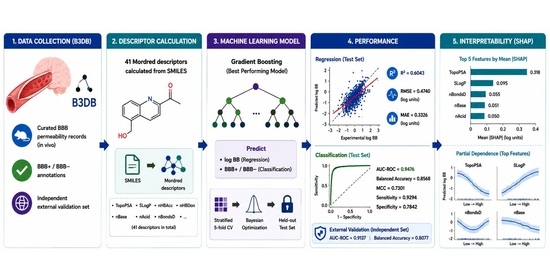
Predicting Blood–Brain Barrier Permeability from Experimental Data: An Interpretable and Externally Validated Machine Learning Framework
 ,
,  ,
,  , and
, and
Abstract
1. Introduction
2. Materials and Methods
2.1. Dataset: B3DB Experimental BBB Permeability Database
2.2. Molecular Descriptor Calculation
2.3. Dataset Partitioning and Preprocessing
2.4. Machine Learning Algorithms and Hyperparameter Optimization
2.5. Model Performance Metrics
2.6. SHAP Interpretability and Partial Dependence Analysis
3. Results
3.1. B3DB Dataset Characteristics
3.2. Comparative Performance of Nine Machine Learning Algorithms
3.3. Gradient Boosting Model Performance
3.4. SHAP Feature Importance Analysis
3.5. Partial Dependence Analysis
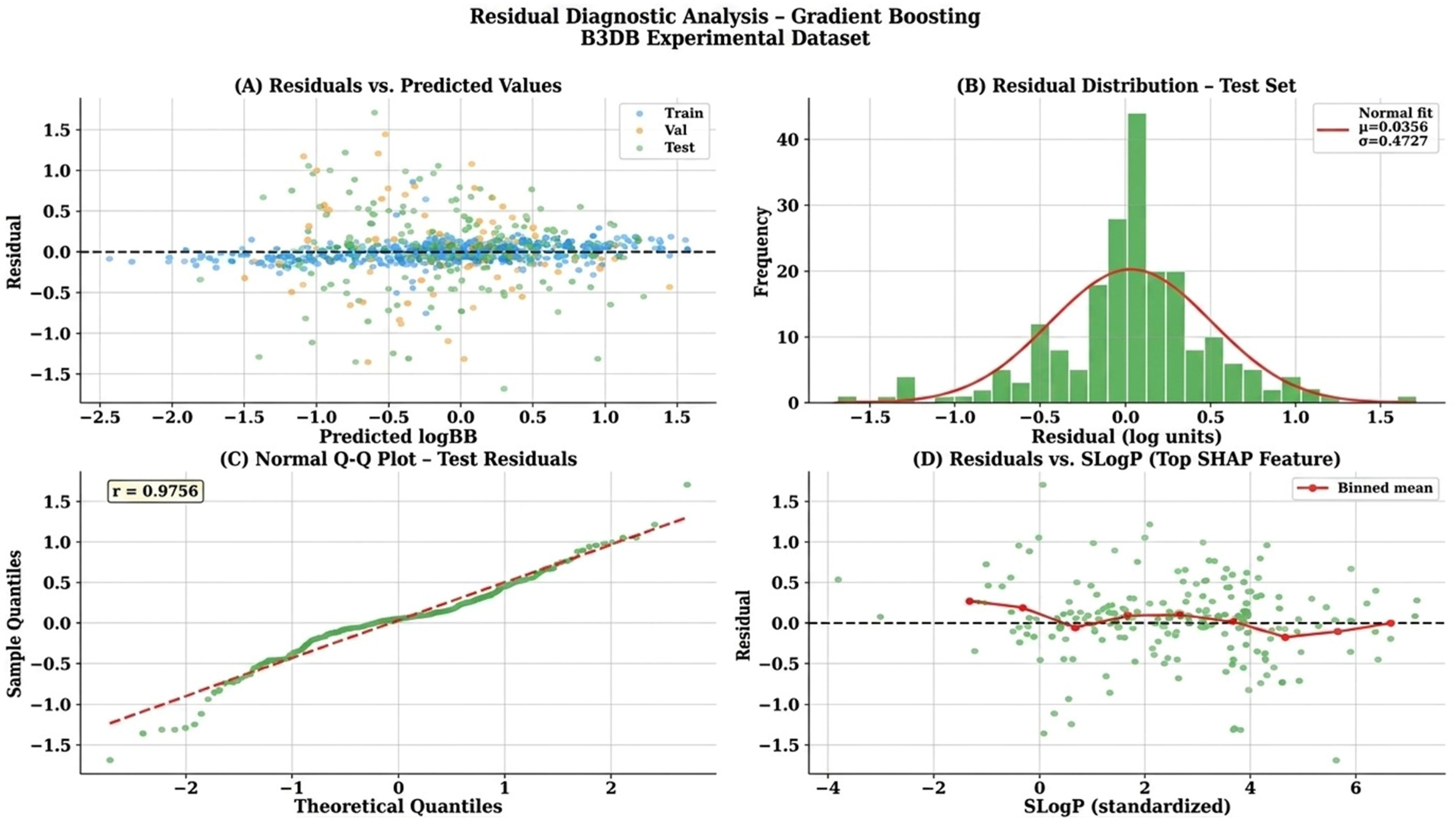
3.6. Residual Diagnostic Analysis
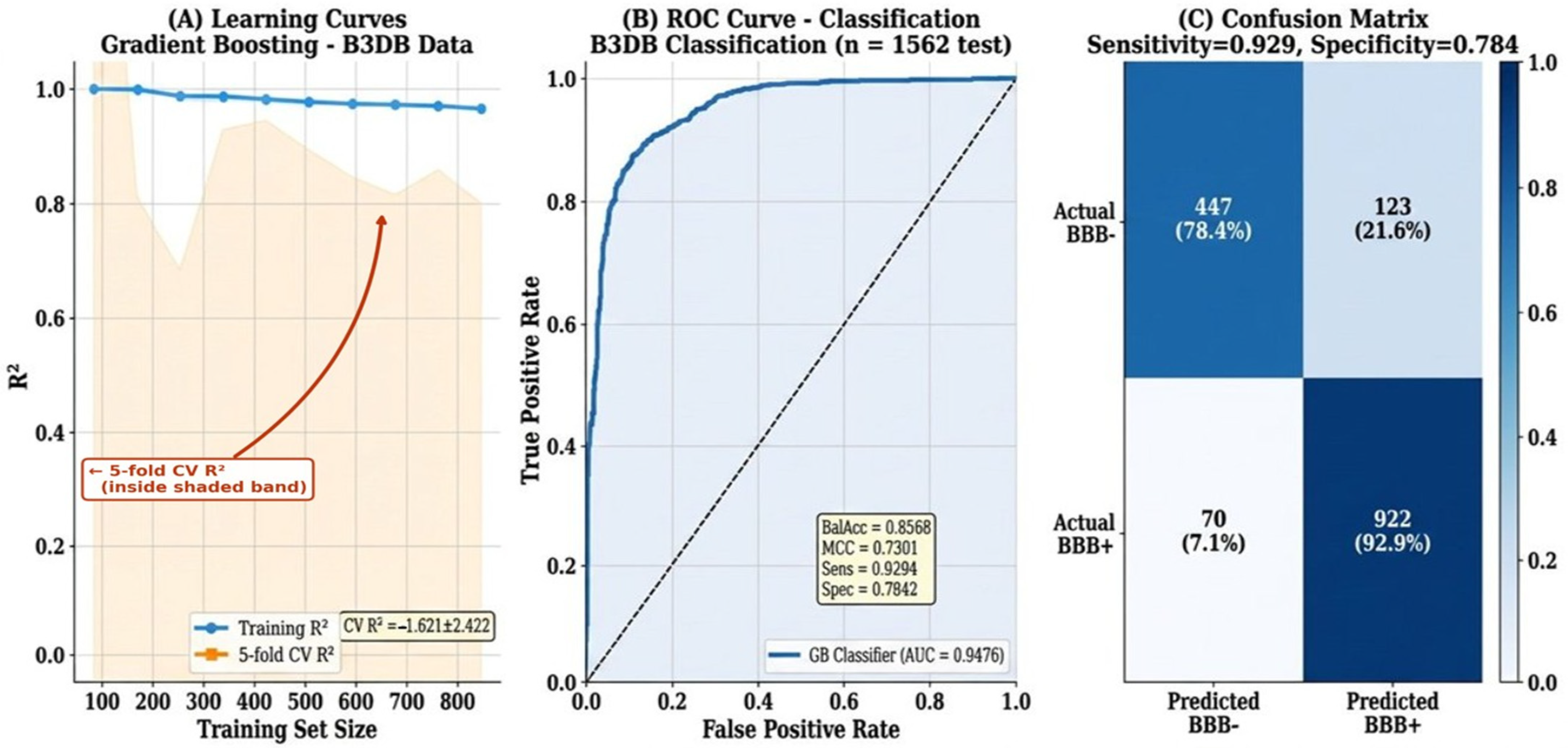
3.7. Classification Performance, Learning Curves, and Confusion Matrix
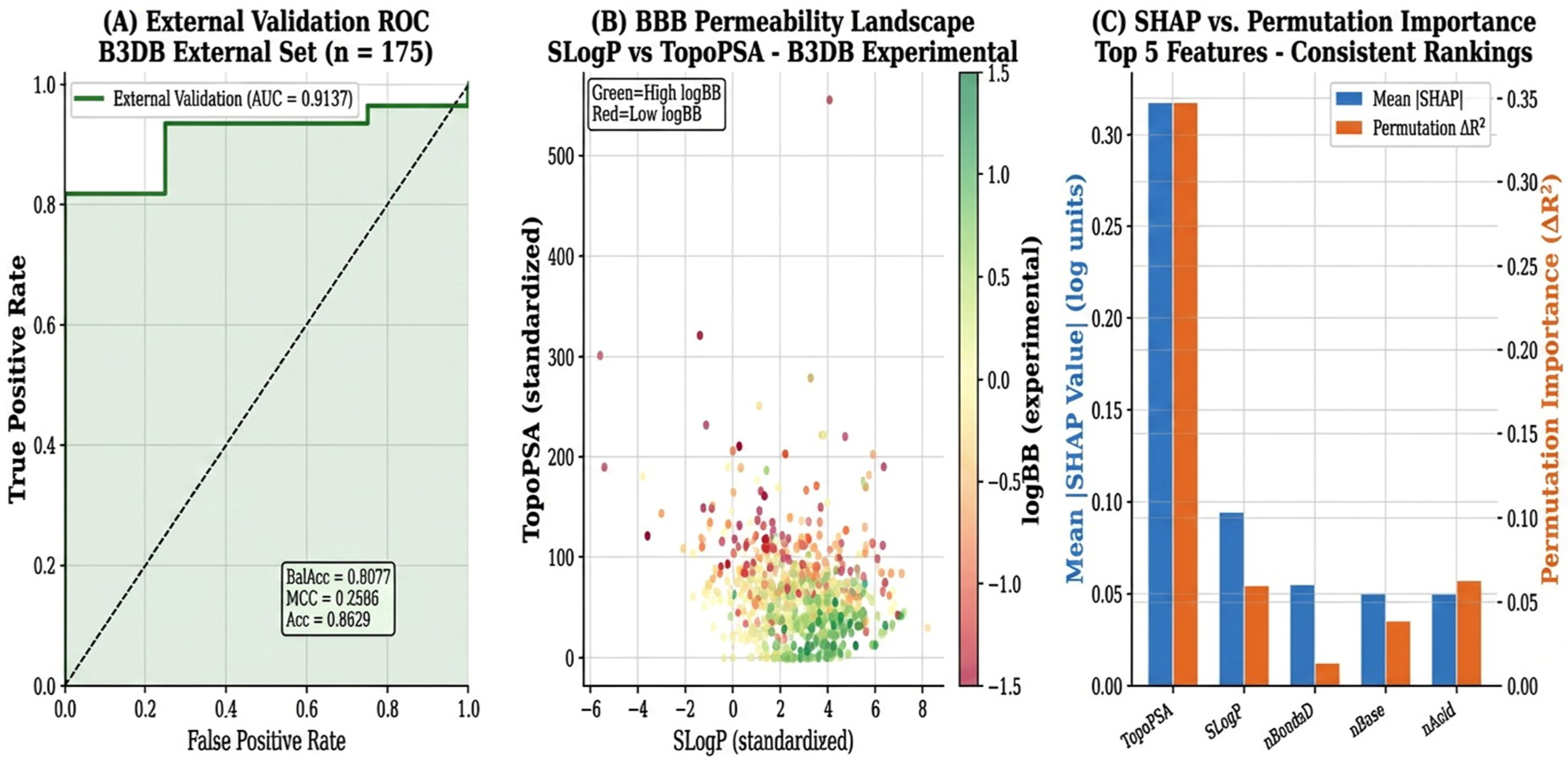
3.8. External Validation and BBB Permeability Design Space
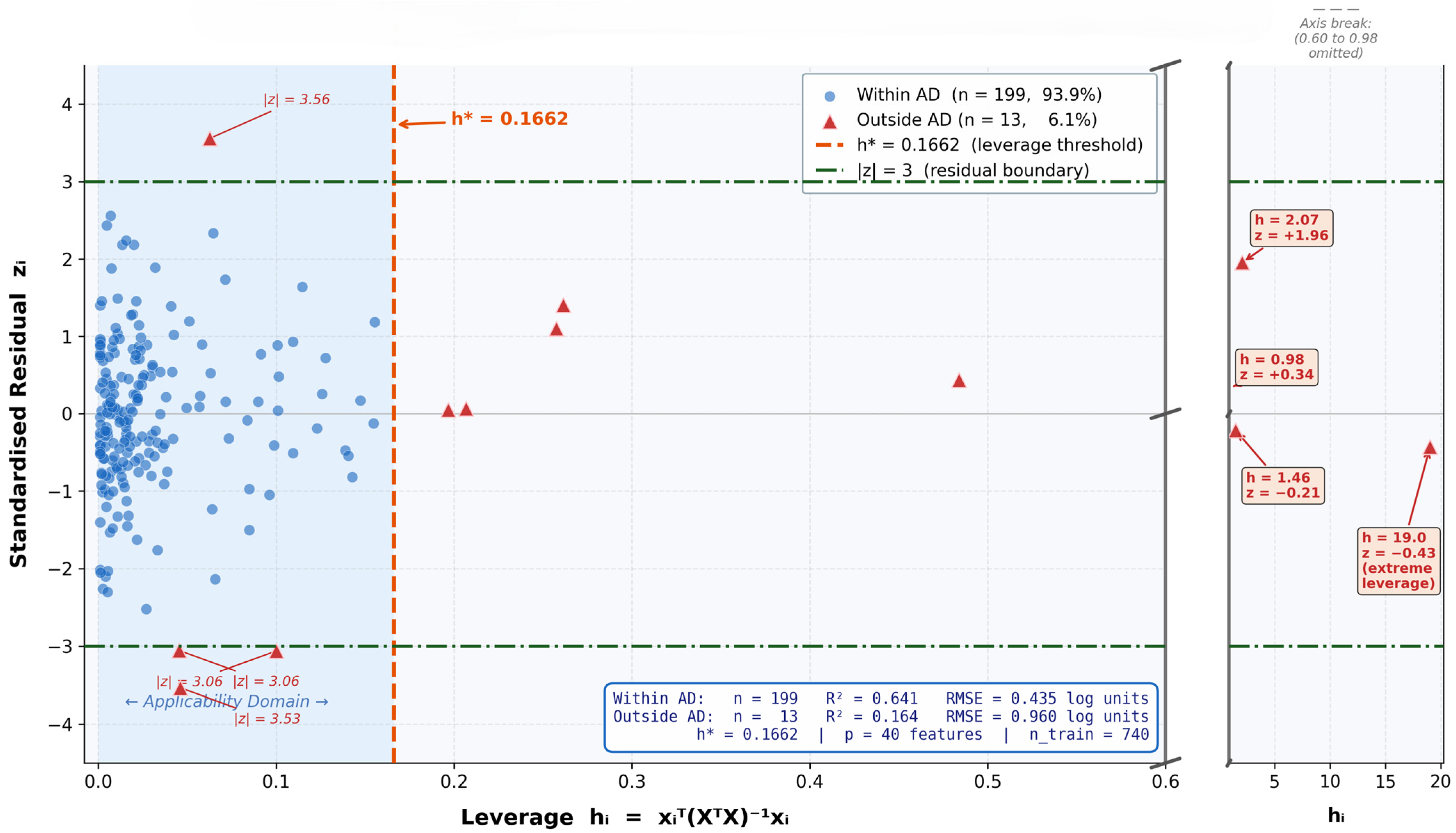
3.9. Applicability Domain Analysis
4. Discussion
4.1. Contextualization in Relation to Published Benchmarks
4.2. SHAP Insights: Data-Driven Confirmation of Physicochemical Principles
4.3. Limitations and Future Work
5. Conclusions
Supplementary Materials
Author Contributions
Funding
Data Availability Statement
Conflicts of Interest
References
- Abbott, N.J.; Patabendige, A.A.K.; Dolman, D.E.M.; Yusof, S.R.; Begley, D.J. Structure and function of the blood–brain barrier. Neurobiol. Dis. 2010, 37, 13–25. [Google Scholar] [CrossRef] [Scilit]
- Daneman, R.; Prat, A. The blood–brain barrier. Cold Spring Harb. Perspect. Biol. 2015, 7, a020412. [Google Scholar] [CrossRef] [Scilit]
- De Martini, L.B.; Valori, C.F.; Morrone, M.; Brambilla, L.; Rossi, D. Intranasal vs. Device-Assisted Drug Delivery: Advantages and Limitations for the Delivery of Biopharmaceuticals to the CNS. Pharmaceutics 2026, 18, 484. [Google Scholar] [CrossRef] [Scilit]
- Zlokovic, B.V. The Blood-Brain Barrier in Health and Chronic Neurodegenerative Disorders. Neuron 2008, 57, 178–201. [Google Scholar] [CrossRef] [Scilit]
- Pardridge, W.M. Drug transport across the blood-brain barrier. J. Cereb. Blood Flow Metab. 2012, 32, 1959–1972. [Google Scholar] [CrossRef] [Scilit]
- Pardridge, W.M. The Blood-Brain Barrier: Bottleneck in Brain Drug Development. NeuroRX 2005, 2, 3–14. [Google Scholar] [CrossRef]
- Steinmetz, J.D.; Seeher, K.M.; Schiess, N.; Nichols, E.; Cao, B.; Servili, C.; Cavallera, V.; Cousin, E.; Hagins, H.; Moberg, M.E.; et al. Global, regional, and national burden of disorders affecting the nervous system, 1990–2021: A systematic analysis for the Global Burden of Disease Study 2021. Lancet Neurol. 2024, 23, 344–381, Correction in Lancet Neurol. 2024, 23, e9. https://doi.org/10.1016/S1474-4422(24)00114-5. [Google Scholar] [CrossRef] [Scilit]
- Hay, M.; Thomas, D.W.; Craighead, J.L.; Economides, C.; Rosenthal, J. Clinical development success rates for investigational drugs. Nat. Biotechnol. 2014, 32, 40–51. [Google Scholar] [CrossRef] [Scilit]
- Wager, T.T.; Hou, X.; Verhoest, P.R.; Villalobos, A. Moving beyond Rules: The Development of a Central Nervous System Multiparameter Optimization (CNS MPO) Approach To Enable Alignment of Druglike Properties. ACS Chem. Neurosci. 2010, 1, 435–449. [Google Scholar] [CrossRef] [Scilit]
- Kesselheim, A.S.; Hwang, T.J.; Franklin, J.M. Two decades of new drug development for central nervous system disorders. Nat. Rev. Drug Discov. 2015, 14, 815–816. [Google Scholar] [CrossRef] [Scilit]
- Hammarlund-Udenaes, M.; Fridén, M.; Syvänen, S.; Gupta, A. On The Rate and Extent of Drug Delivery to the Brain. Pharm. Res. 2008, 25, 1737–1750. [Google Scholar] [CrossRef] [Scilit]
- Summerfield, S.G.; Lucas, A.J.; Porter, R.A.; Jeffrey, P.; Gunn, R.N.; Read, K.R.; Stevens, A.J.; Metcalf, A.C.; Osuna, M.C.; Kilford, P.J.; et al. Toward an improved prediction of human in vivo brain penetration. Xenobiotica 2008, 38, 1518–1535. [Google Scholar] [CrossRef] [Scilit]
- Wang, X.; Wang, J.; Zhao, X.; Xie, L.; Yang, R.; Sun, C.; Tu, J.; Sun, H. Drug-Dependent Enhancement of Blood–Brain Barrier Permeation by Polysorbate 80 Minor Components. Pharmaceutics 2025, 17, 1572. [Google Scholar] [CrossRef] [Scilit]
- Chen, H.; Winiwarter, S.; Fridén, M.; Antonsson, M.; Engkvist, O. In silico prediction of unbound brain-to-plasma concentration ratio using machine learning algorithms. J. Mol. Graph. Model. 2011, 29, 985–995. [Google Scholar] [CrossRef] [Scilit]
- Lipinski, C.A.; Lombardo, F.; Dominy, B.W.; Feeney, P.J. Experimental and computational approaches to estimate solubility and permeability in drug discovery and development settings. Adv. Drug Deliv. Rev. 1997, 23, 3–25. [Google Scholar] [CrossRef] [Scilit]
- Wager, T.T.; Hou, X.; Verhoest, P.R.; Villalobos, A. Central Nervous System Multiparameter Optimization Desirability: Application in Drug Discovery. ACS Chem. Neurosci. 2016, 7, 767–775. [Google Scholar] [CrossRef] [Scilit]
- Martins, I.F.; Teixeira, A.L.; Pinheiro, L.; Falcao, A.O. A Bayesian Approach to in Silico Blood-Brain Barrier Penetration Modeling. J. Chem. Inf. Model. 2012, 52, 686–1697. [Google Scholar] [CrossRef] [Scilit]
- Adenot, M.; Lahana, R. Blood-Brain Barrier Permeation Models: Discriminating between Potential CNS and Non-CNS Drugs Including P-Glycoprotein Substrates. J. Chem. Inf. Comput. Sci. 2004, 44, 239–248. [Google Scholar] [CrossRef] [Scilit]
- Jiang, D.; Wu, Z.; Hsieh, C.-Y.; Chen, G.; Liao, B.; Wang, Z.; Shen, C.; Cao, D.; Wu, J.; Hou, T. Could graph neural networks learn better molecular representation for drug discovery? A comparison study of descriptor-based and graph-based models. J. Cheminform. 2021, 13, 12. [Google Scholar] [CrossRef] [Scilit]
- Deng, J.; Yang, Z.; Ojima, I.; Samaras, D.; Wang, F. Artificial intelligence in drug discovery: Applications and techniques. Brief. Bioinform. 2022, 23, bbab430. [Google Scholar] [CrossRef] [Scilit]
- Meng, F.; Xi, Y.; Huang, J.; Ayers, P.W. A curated diverse molecular database of blood-brain barrier permeability with chemical descriptors. Sci. Data 2021, 8, 289. [Google Scholar] [CrossRef] [Scilit]
- Moriwaki, H.; Tian, Y.-S.; Kawashita, N.; Takagi, T. Mordred: A molecular descriptor calculator. J. Cheminform. 2018, 10, 4. [Google Scholar] [CrossRef] [Scilit]
- Landrum, G. RDKit: Open-Source Cheminformatics. 2022. Available online: https://www.rdkit.org (accessed on 8 March 2026).
- Hastie, T.; Tibshirani, R.; Friedman, J. The Elements of Statistical Learning: Data Mining, Inference, and Prediction, 2nd ed.; Springer: New York, NY, USA, 2009; Available online: https://books.google.co.kr/books?id=tVIjmNS3Ob8C (accessed on 10 March 2026).
- Géron, A. Hands-On Machine Learning with Scikit-Learn, Keras, and TensorFlow: Concepts, Tools, and Techniques to Build Intelligent Systems; O’Reilly Media, Inc.: Sebastopol, CA, USA, 2019; Available online: https://books.google.co.kr/books?id=HHetDwAAQBAJ (accessed on 8 March 2026).
- Pedregosa, F.; Varoquaux, G.; Gramfort, A.; Michel, V.; Thirion, B.; Grisel, O.; Blondel, M.; Prettenhofer, P.; Weiss, R.; Dubourg, V.; et al. Scikit-learn: Machine Learning in Python. J. Mach. Learn. Res. 2011, 12, 2825–2830. [Google Scholar]
- Lundberg, S.M.; Lee, S.-I. A Unified Approach to Interpreting Model Predictions. In 31st Conference on Neural Information Processing Systems; Guyon, I., Von Luxburg, U., Bengio, S., Wallach, H., Fergus, R., Vishwanathan, S., Garnett, R., Eds.; Curran Associates, Inc.: Red Hook, NY, USA, 2017; Available online: https://proceedings.neurips.cc/paper_files/paper/2017/file/8a20a8621978632d76c43dfd28b67767-Paper.pdf (accessed on 2 March 2026).
- Fan, N.; Chen, J.; Wang, J.; Chen, Z.-S.; Yang, Y. Bridging data and drug development: Machine learning approaches for next-generation ADMET prediction. Drug Discov. Today 2025, 30, 104487. [Google Scholar] [CrossRef] [Scilit]
- Radchenko, E.V.; Dyabina, A.S.; Palyulin, V.A. Towards Deep Neural Network Models for the Prediction of the Blood–Brain Barrier Permeability for Diverse Organic Compounds. Molecules 2020, 25, 5901. [Google Scholar] [CrossRef] [Scilit]
- Ertl, P.; Rohde, B.; Selzer, P. Fast Calculation of Molecular Polar Surface Area as a Sum of Fragment-Based Contributions and Its Application to the Prediction of Drug Transport Properties. J. Med. Chem. 2000, 43, 3714–3717. [Google Scholar] [CrossRef] [Scilit]
- Hitchcock, S.A.; Pennington, L.D. Structure−Brain Exposure Relationships. J. Med. Chem. 2006, 49, 7559–7583. [Google Scholar] [CrossRef] [Scilit]
- Young, R.C.; Mitchell, R.C.; Brown, T.H.; Ganellin, C.R.; Griffiths, R.; Jones, M.; Rana, K.K.; Saunders, D.; Smith, I.R. Development of a new physicochemical model for brain penetration and its application to the design of centrally acting H2 receptor histamine antagonists. J. Med. Chem. 1988, 31, 656–671. [Google Scholar] [CrossRef] [Scilit]
- Van de Waterbeemd, H.; Camenisch, G.; Folkers, G.; Chretien, J.R.; Raevsky, O.A. Estimation of Blood-Brain Barrier Crossing of Drugs Using Molecular Size and Shape, and H-Bonding Descriptors. J. Drug Target. 1998, 6, 151–165. [Google Scholar] [CrossRef] [Scilit]
- Niculescu-Mizil, A.; Caruana, R. Predicting good probabilities with supervised learning. In Proceedings of the 22nd International Conference on Machine Learning; Association for Computing Machinery: New York, NY, USA, 2005; pp. 625–632. [Google Scholar] [CrossRef] [Scilit]
- OECD. Guidance Document on the Validation of (Quantitative) Structure-Activity Relationship [(Q)SAR] Models; OECD Series on Testing and Assessment No. 69.; OECD Publishing: Paris, France, 2007. [Google Scholar] [CrossRef] [Scilit]
- Shaker, B.; Yu, M.-S.; Song, J.S.; Ahn, S.; Ryu, J.Y.; Oh, K.-S.; Na, D. LightBBB: Computational prediction model of blood–brain-barrier penetration based on LightGBM. Bioinformatics 2021, 37, 1135–1139. [Google Scholar] [CrossRef] [Scilit]
- Liu, L.; Zhang, L.; Feng, H.; Li, S.; Liu, M.; Zhao, J.; Liu, H. Prediction of the Blood–Brain Barrier (BBB) Permeability of Chemicals Based on Machine-Learning and Ensemble Methods. Chem. Res. Toxicol. 2021, 34, 1456–1467. [Google Scholar] [CrossRef] [Scilit]

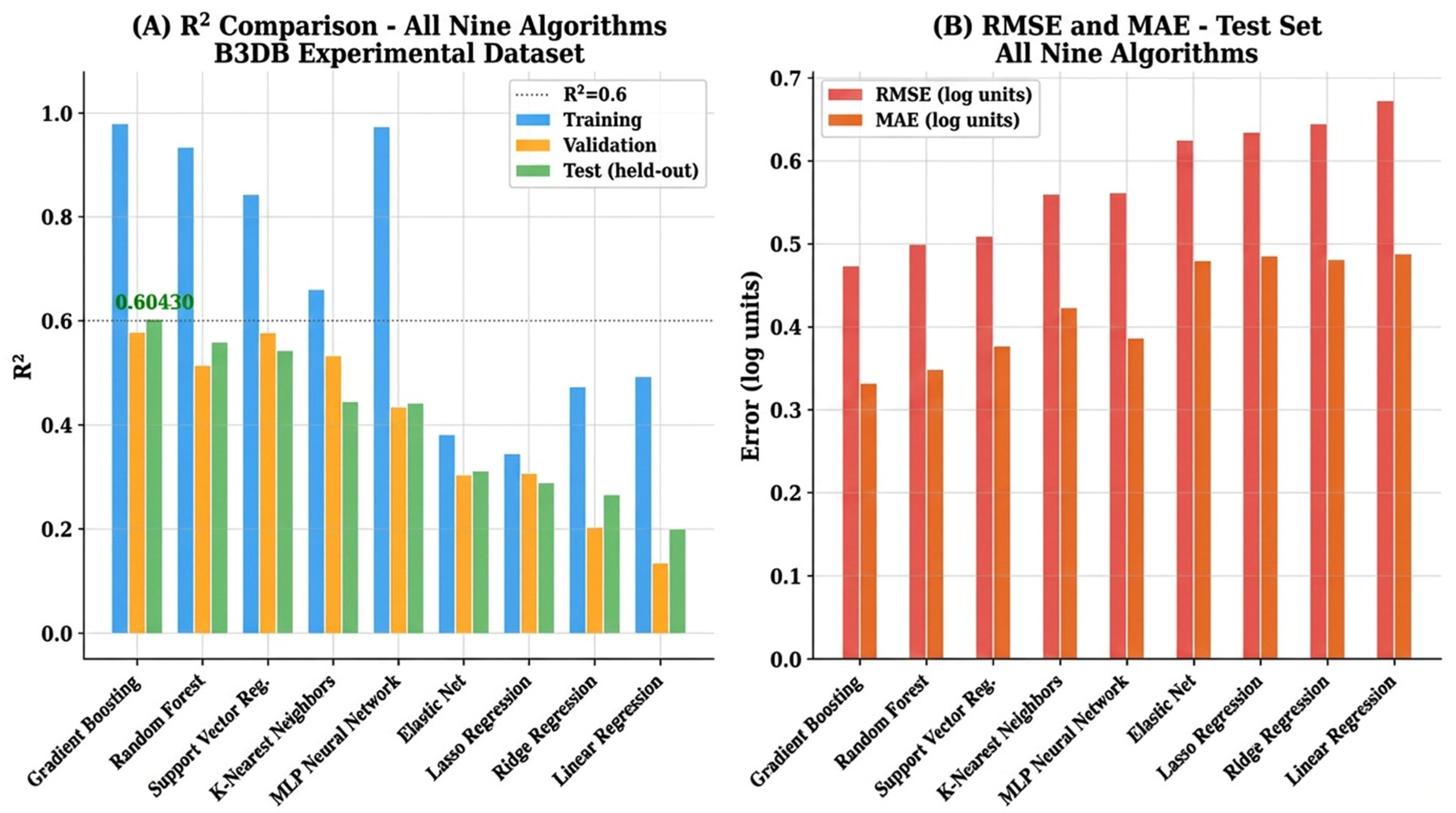



| Algorithm | Train R2 | CV R2 | Test R2 | RMSE (Log Units) | MAE (Log Units) |
|---|---|---|---|---|---|
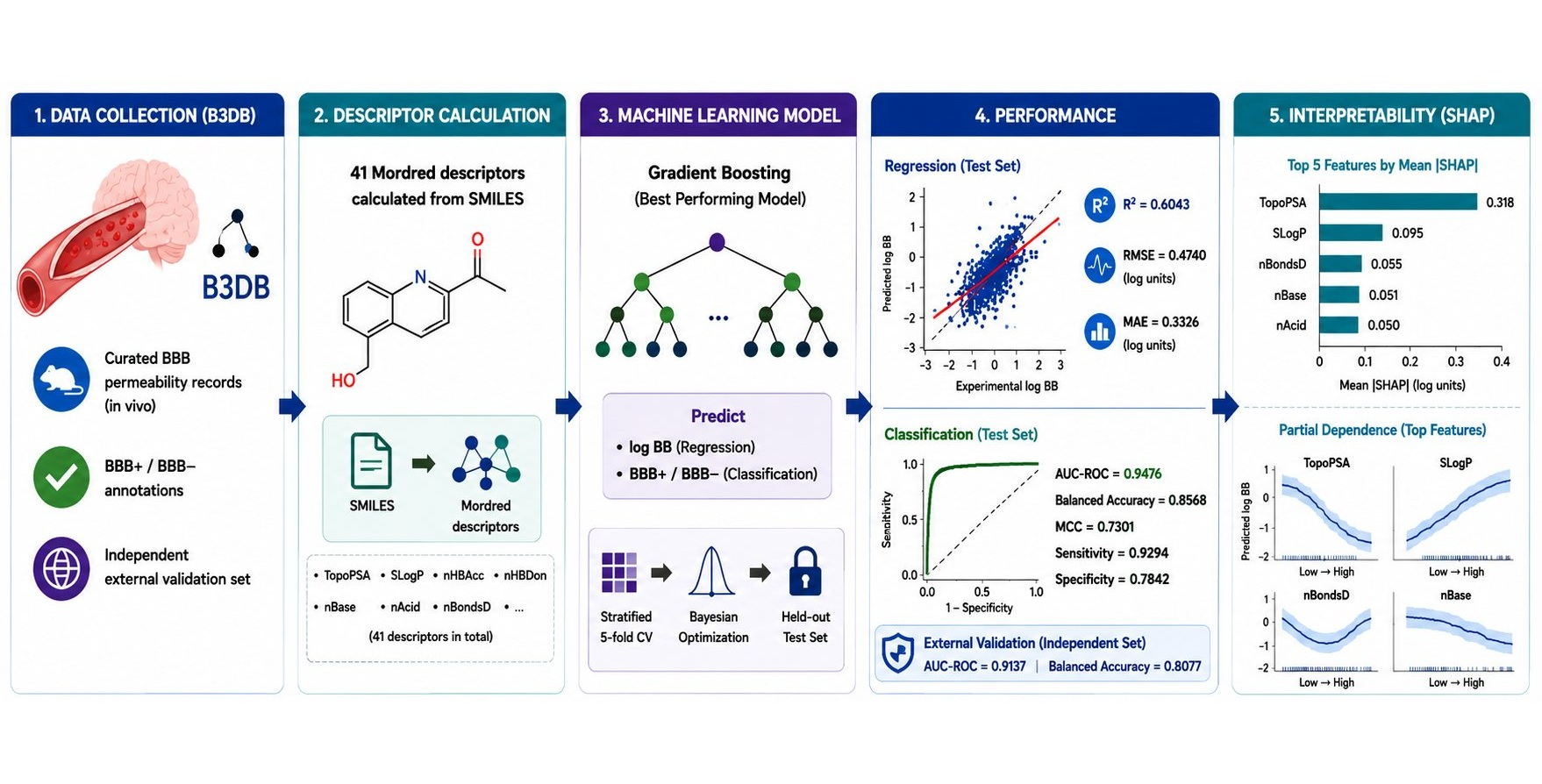
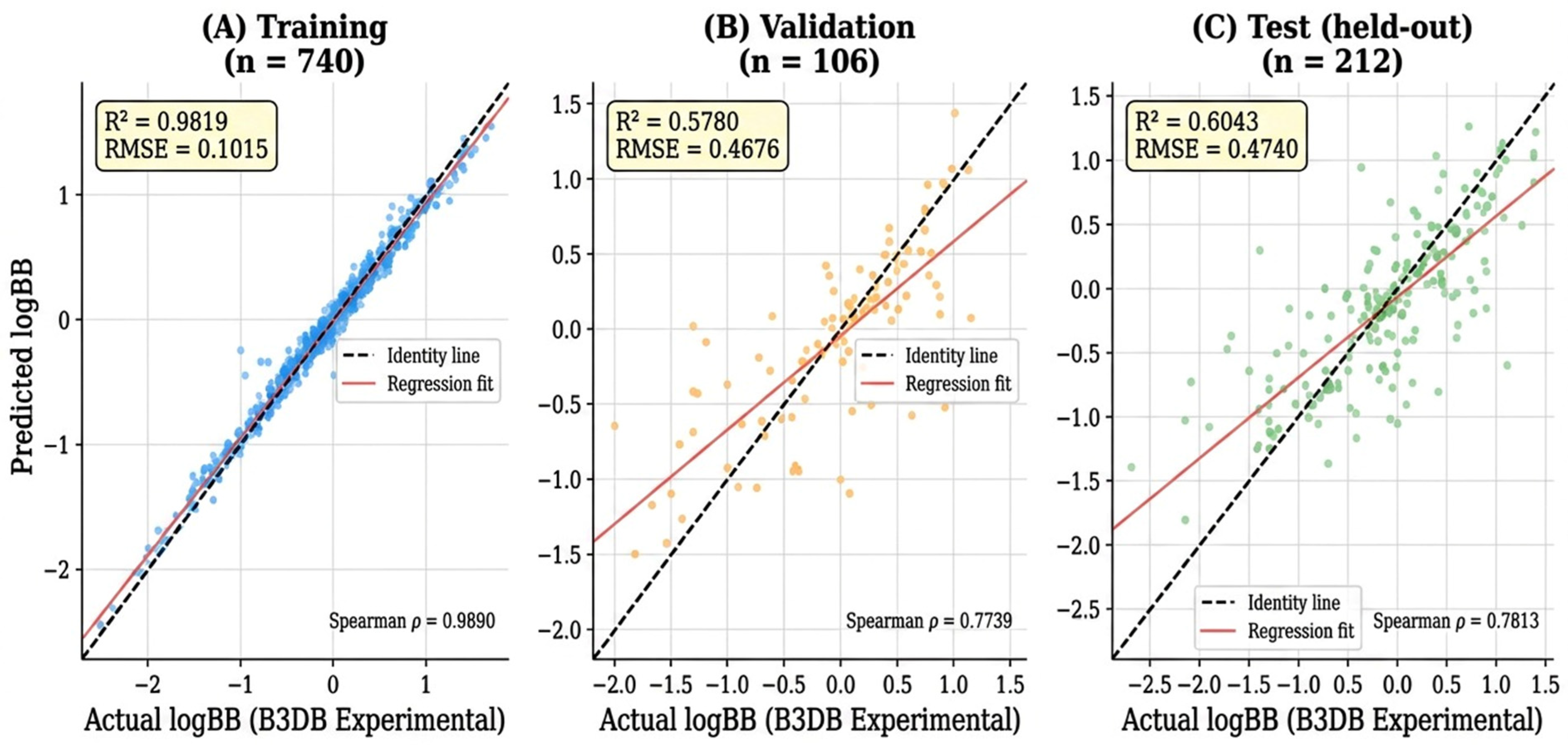
| Gradient Boosting ★ | 0.9819 | 0.6116 ± 0.049 | 0.6043 | 0.4740 | 0.3326 |
| Random Forest | 0.9357 | 0.5840 ± 0.052 | 0.5593 | 0.5002 | 0.3492 |
| Support Vector Reg. | 0.8441 | 0.5612 ± 0.048 | 0.5423 | 0.5098 | 0.3775 |
| MLP Neural Network | 0.9749 | 0.4810 ± 0.071 | 0.4427 | 0.5626 | 0.3874 |
| K-Nearest Neighbours | 0.6607 | 0.5241 ± 0.063 | 0.4458 | 0.5610 | 0.4226 |
| Elastic Net | 0.3831 | 0.3214 ± 0.038 | 0.3115 | 0.6253 | 0.4803 |
| Lasso Regression | 0.3454 | 0.3086 ± 0.041 | 0.2896 | 0.6352 | 0.4864 |
| Ridge Regression | 0.4739 | 0.2872 ± 0.039 | 0.2669 | 0.6452 | 0.4818 |
| Linear Regression | 0.4929 | 0.2641 ± 0.044 | 0.2016 | 0.6733 | 0.4883 |
| Rank | Feature | Mean |SHAP| (Log Units) | Perm. ΔR2 | Direction | Mechanistic Basis |
|---|---|---|---|---|---|
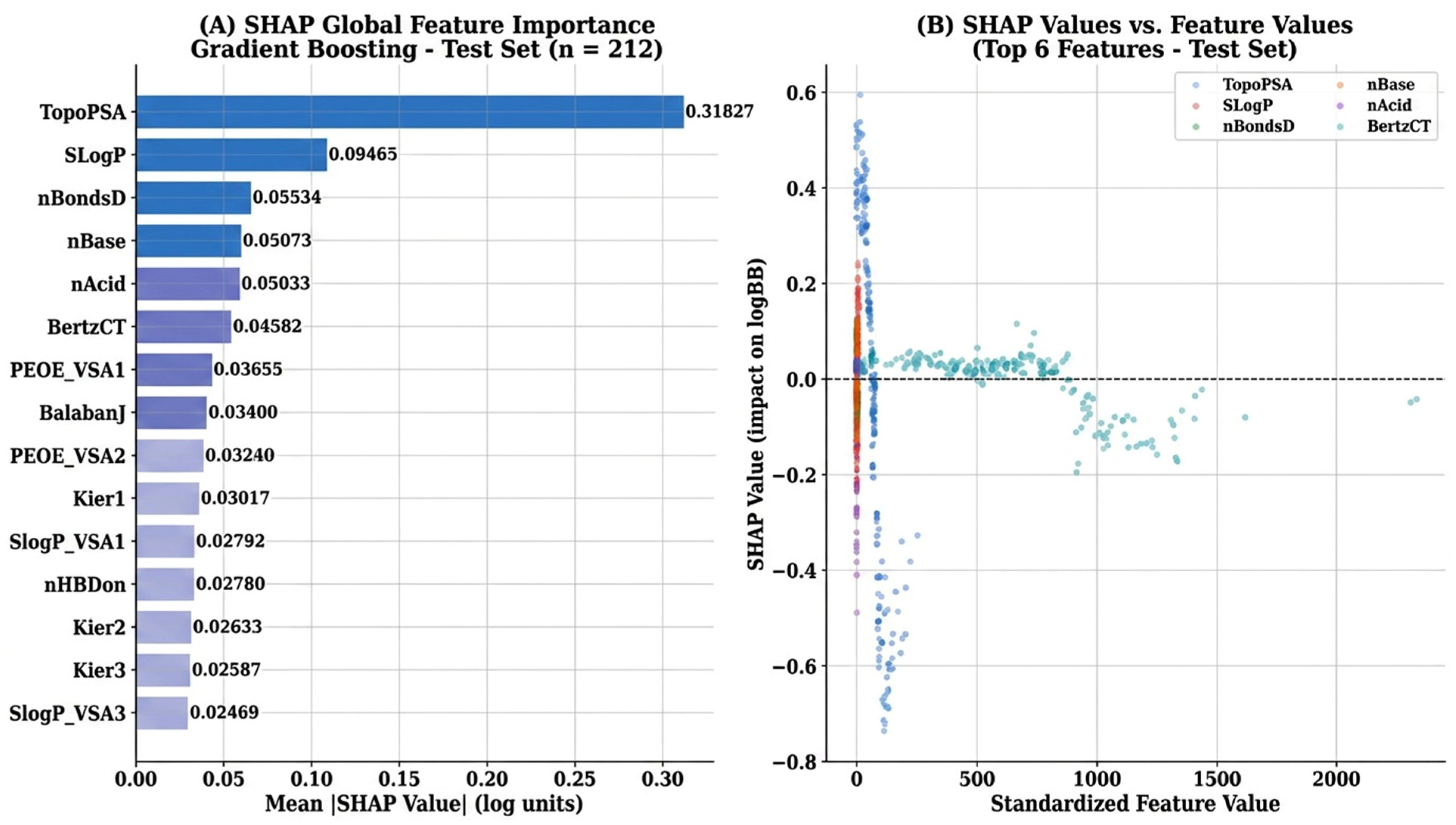
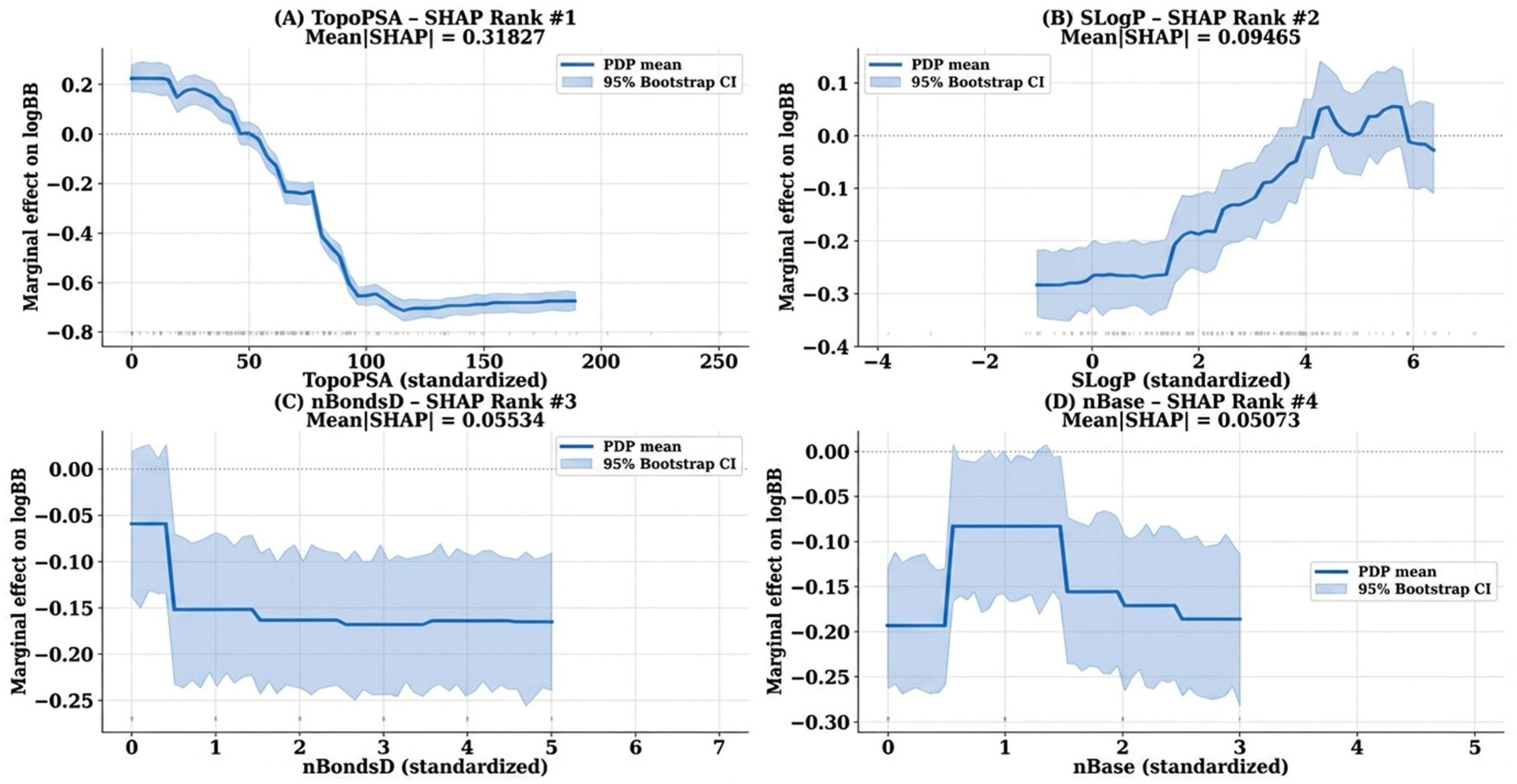
| 1 | TopoPSA (polar surface area) | 0.3183 | −0.171 | Negative | Desolvation energy penalty for polar functional groups entering lipid bilayer; PSA > 90 Å2 strongly restricts passive transcellular diffusion [30] |
| 2 | SLogP (Wildman–Crippen log P) | 0.0946 | −0.049 | Positive | Higher lipophilicity increases partitioning into lipid endothelial membranes; primary thermodynamic driver of passive CNS penetration [15,31] |
| 3 | nBondsD (double-bond count) | 0.0553 | −0.031 | Variable | Degree of unsaturation modulates molecular planarity and π-electron interactions with lipid bilayer head groups; nonlinear effect [32] |
| 4 | nBase (basic group count) | 0.0507 | −0.028 | Variable | Basic nitrogen functions are partially protonated at pH 7.4; the neutral fraction governs passive diffusion, while protonated fraction is membrane-excluded [33] |
| 5 | nAcid (acidic group count) | 0.0503 | −0.026 | Negative | Carboxylic and sulfonic acid groups are >99% ionised at pH 7.4, creating charged species that are essentially membrane-impermeant [33] |
| 6 | BertzCT (molecular complexity) | 0.0458 | −0.024 | Negative | Higher structural complexity correlates with greater polarity, more hydrogen-bond functions, and reduced membrane permeability [32] |
| 7 | PEOE_VSA1 | 0.0365 | −0.019 | Positive | Low-charge electrostatic surface area component reflecting electron-density distribution on accessible surface [22] |
| 8 | BalabanJ (Balaban index) | 0.0340 | −0.017 | Variable | Molecular branching and connectivity topology affects 3D geometry of membrane approach and diffusion rate [32] |
| 9 | PEOE_VSA2 | 0.0324 | −0.016 | Variable | Second electrostatic VSA bin; encodes partial charge distribution contributing to aqueous solvation energy [22] |
| 10 | Kier1 (first-order shape index) | 0.0302 | −0.014 | Variable | First Kier α-modified shape index encodes molecular graph topology related to accessible surface for membrane interaction [15] |
| Evaluation Set | n | AUC-ROC | BalAcc | MCC | Sensitivity | Specificity |
|---|---|---|---|---|---|---|
| Classification test set (internal) | 1562 | 0.9476 | 0.8568 | 0.7301 | 0.9294 | 0.7842 |
| External validation set (B3DB independent) | 175 | 0.9137 | 0.8077 | 0.259 † | 0.8655 | 0.7500 |
| Study | Dataset | Algorithm | Validation | Regression | Classification |
|---|---|---|---|---|---|
| Meng et al. 2021 [21] | B3DB (same) | RF, XGBoost, SVM | Held-out+ext. | R2 = 0.45−0.62 | AUC = 0.841−0.863 |
| Present study | B3DB (same) | Gradient Boosting | Held-out+ext. 10-seed | R2 = 0.54 ± 0.07 | AUC = 0.9476 int. 0.9137 ext. |
| Shaker 2021 [34] | Martins dataset | LightGBM | 5-fold CV | — | AUC = 0.897−0.930 |
| Liu 2021 [35] | Multiple exper. | RF/XGBoost ensemble | 5-fold CV | — | AUC = 0.957 |
| Radchenko 2020 [29] | Curated logBB | Deep NN | LOO-CV | Q2 = 0.815 | — |
| Fan 2025 [28] | Multiple ADMET | GB, RF, GNN | Varies | — | AUC 0.91−0.96 |
Disclaimer/Publisher’s Note: The statements, opinions and data contained in all publications are solely those of the individual author(s) and contributor(s) and not of MDPI and/or the editor(s). MDPI and/or the editor(s) disclaim responsibility for any injury to people or property resulting from any ideas, methods, instructions or products referred to in the content. |
© 2026 by the authors. Licensee MDPI, Basel, Switzerland. This article is an open access article distributed under the terms and conditions of the Creative Commons Attribution (CC BY) license.
Share and Cite
Tiwari, S.; Mądra-Gackowska, K.; Gackowski, M.; Park, N.; Szeleszczuk, Ł. Predicting Blood–Brain Barrier Permeability from Experimental Data: An Interpretable and Externally Validated Machine Learning Framework. Pharmaceutics 2026, 18, 670. https://doi.org/10.3390/pharmaceutics18060670
Tiwari S, Mądra-Gackowska K, Gackowski M, Park N, Szeleszczuk Ł. Predicting Blood–Brain Barrier Permeability from Experimental Data: An Interpretable and Externally Validated Machine Learning Framework. Pharmaceutics. 2026; 18(6):670. https://doi.org/10.3390/pharmaceutics18060670
Chicago/Turabian StyleTiwari, Saurabh, Katarzyna Mądra-Gackowska, Marcin Gackowski, Nokeun Park, and Łukasz Szeleszczuk. 2026. "Predicting Blood–Brain Barrier Permeability from Experimental Data: An Interpretable and Externally Validated Machine Learning Framework" Pharmaceutics 18, no. 6: 670. https://doi.org/10.3390/pharmaceutics18060670
APA StyleTiwari, S., Mądra-Gackowska, K., Gackowski, M., Park, N., & Szeleszczuk, Ł. (2026). Predicting Blood–Brain Barrier Permeability from Experimental Data: An Interpretable and Externally Validated Machine Learning Framework. Pharmaceutics, 18(6), 670. https://doi.org/10.3390/pharmaceutics18060670