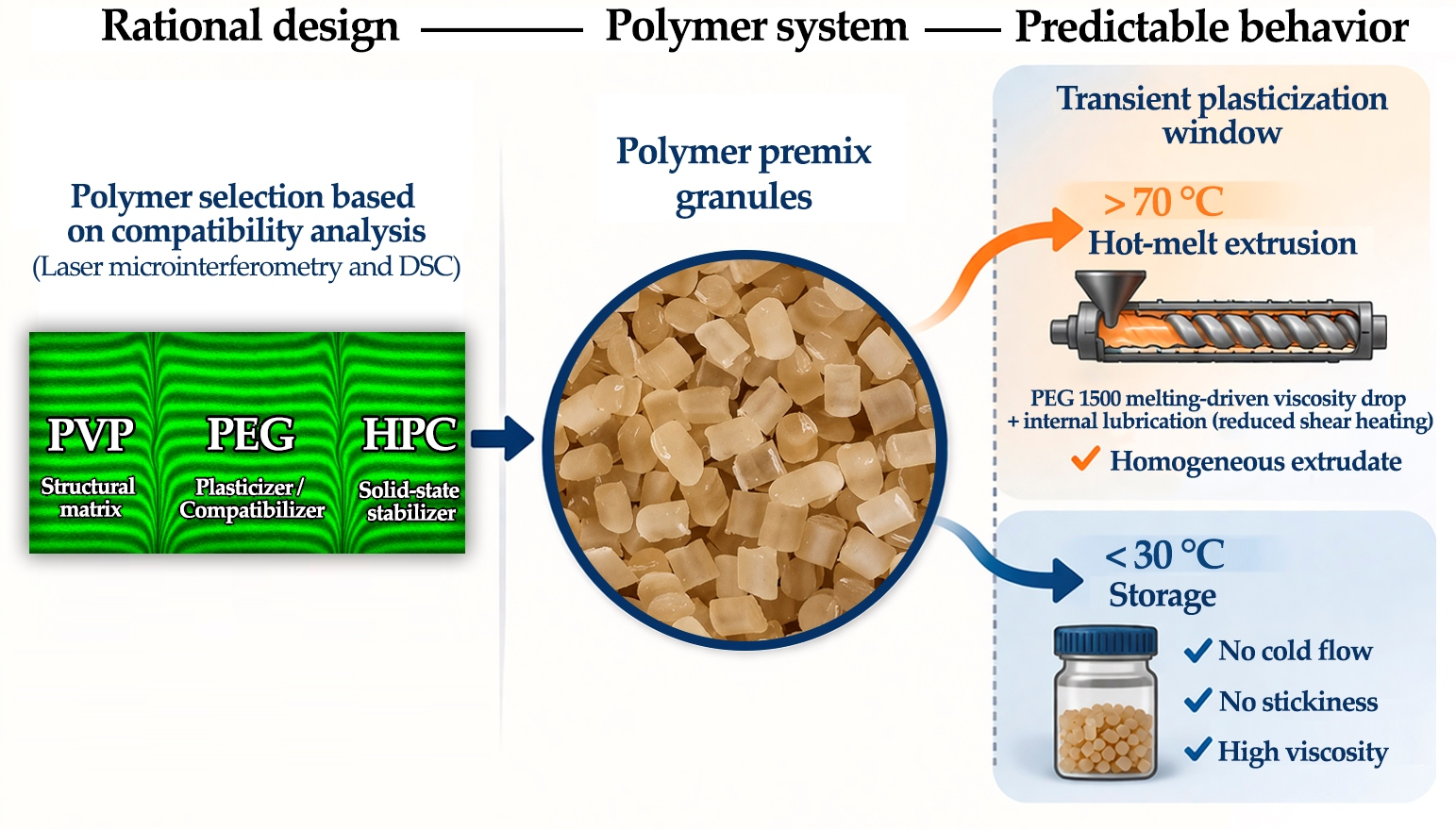
Rational Design of Multicomponent Polymeric Systems Based on a Transient Plasticization Window for Hot-Melt Extrusion

Abstract
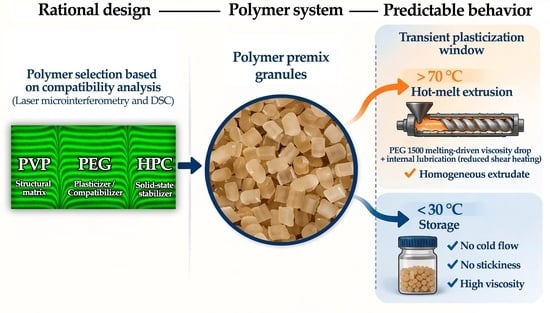
1. Introduction
2. Materials and Methods
2.1. Materials
2.2. Experimental Methods
2.2.1. Laser Microinterferometry
2.2.2. Differential Scanning Calorimetry
2.2.3. Preparation of Polymeric Systems by Hot-Melt Extrusion
2.2.4. Storage Conditions
2.2.5. Rheological Analysis
2.2.6. Visual Appearance Assessment
2.2.7. Particle Size Distribution (Sieve Analysis)
2.2.8. Loss on Drying
2.2.9. Disintegration in Aqueous Medium
3. Results and Discussion
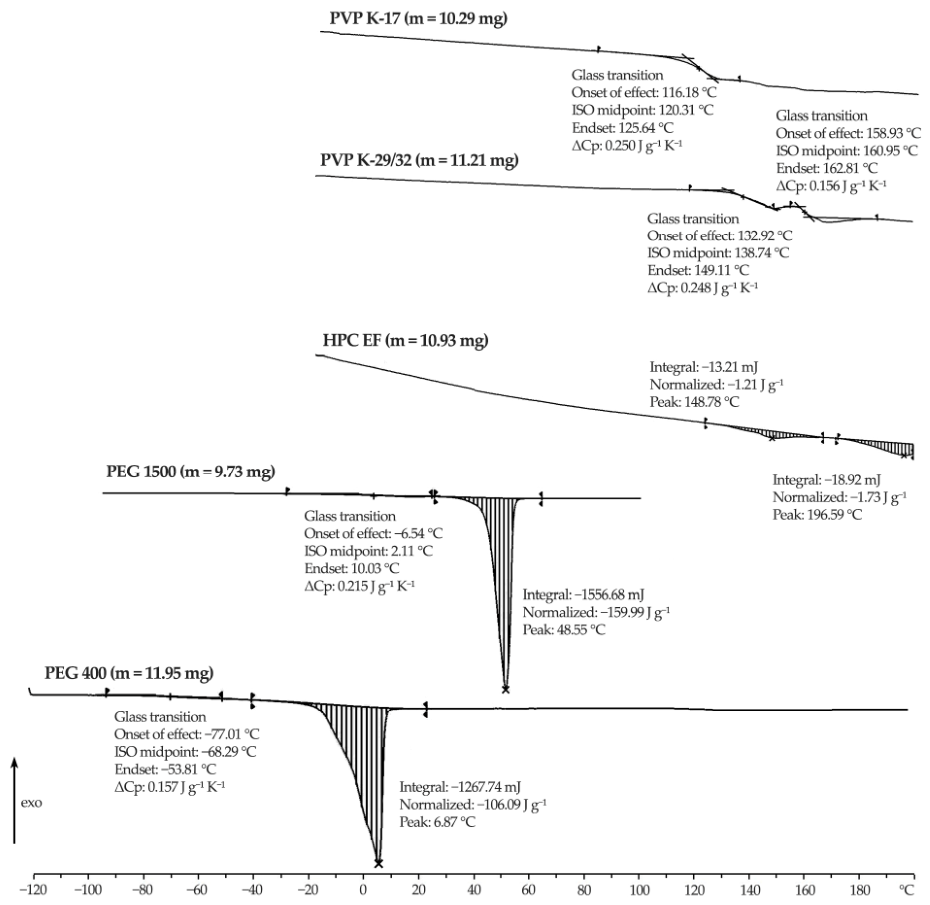
3.1. Thermal Analysis of Initial Components
3.2. Compatibility Analysis of Initial Components by Laser Microinterferometry
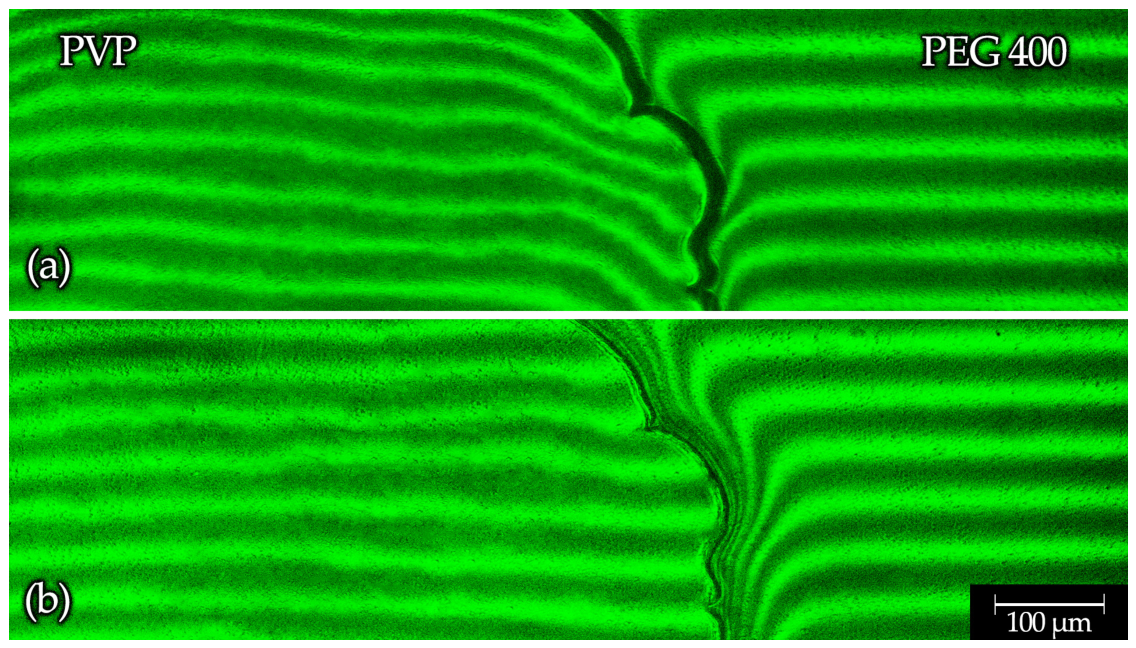
3.2.1. PVP K-17–PEG 400 System
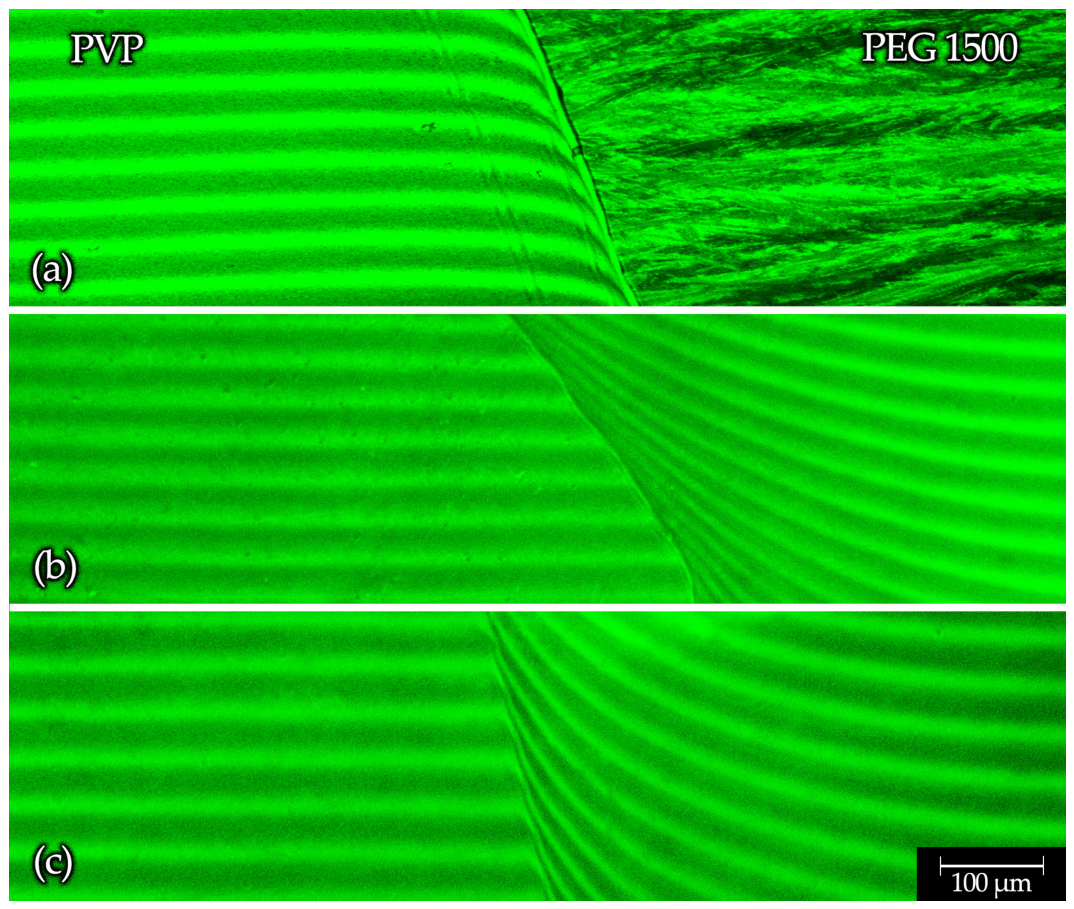
3.2.2. PVP K-17–PEG 1500 System
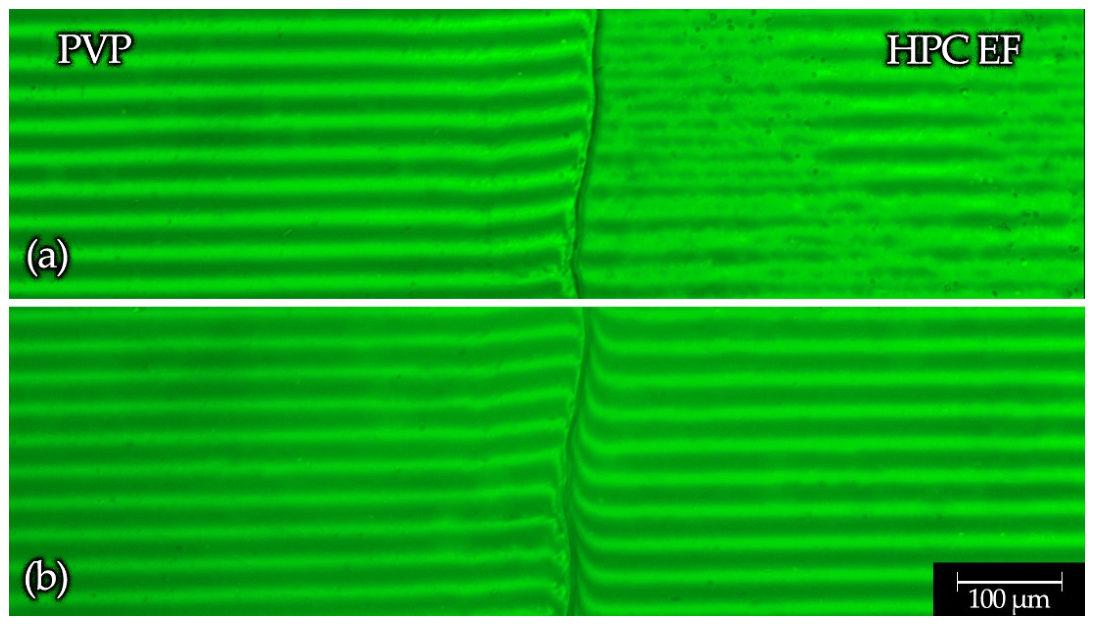
3.2.3. PVP K-17–HPC EF System
3.2.4. HPC EF–PEG 400 and HPC EF–PEG 1500 Systems
3.2.5. Summary of Key Findings and Implications for the Design of Multicomponent Polymeric Systems
3.3. Preparation of Polymeric Systems by Hot-Melt Extrusion
3.3.1. General Approach to Composition Design
3.3.2. Preparation of Three-Component Polymeric Systems by Hot-Melt Extrusion
3.3.3. Preparation of Four-Component Polymeric Systems by Hot-Melt Extrusion
3.4. Differential Scanning Calorimetry
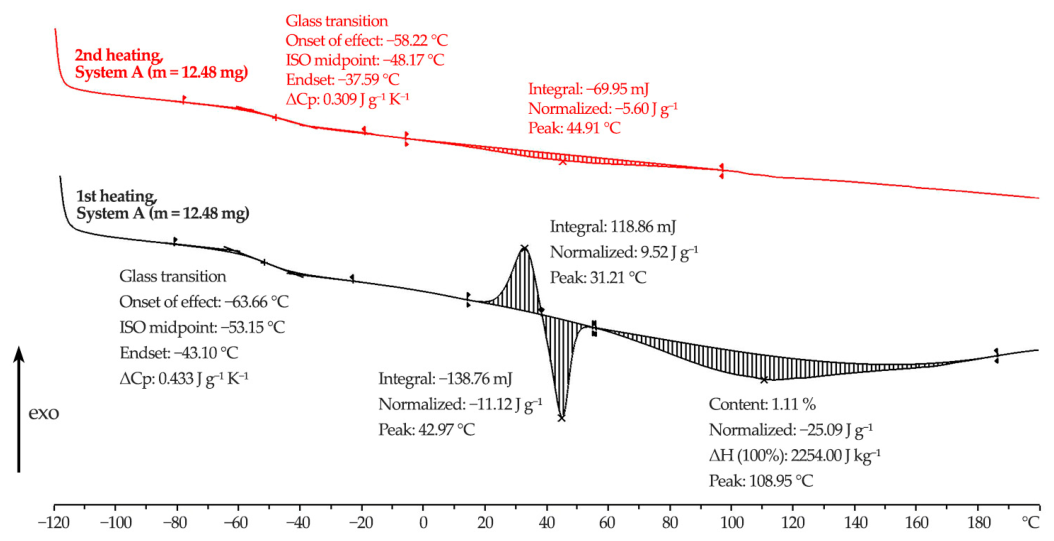
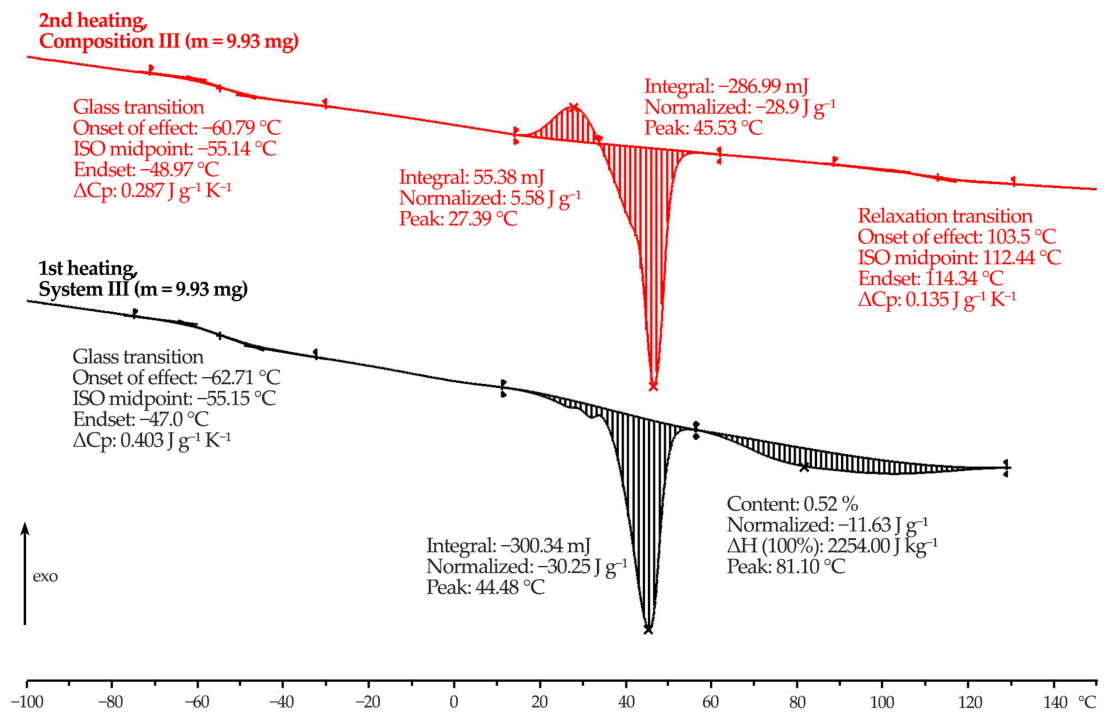
3.4.1. Three-Component Polymeric Systems
3.4.2. Four-Component Polymeric Systems
3.5. Rheological Analysis of the Developed Polymeric Systems
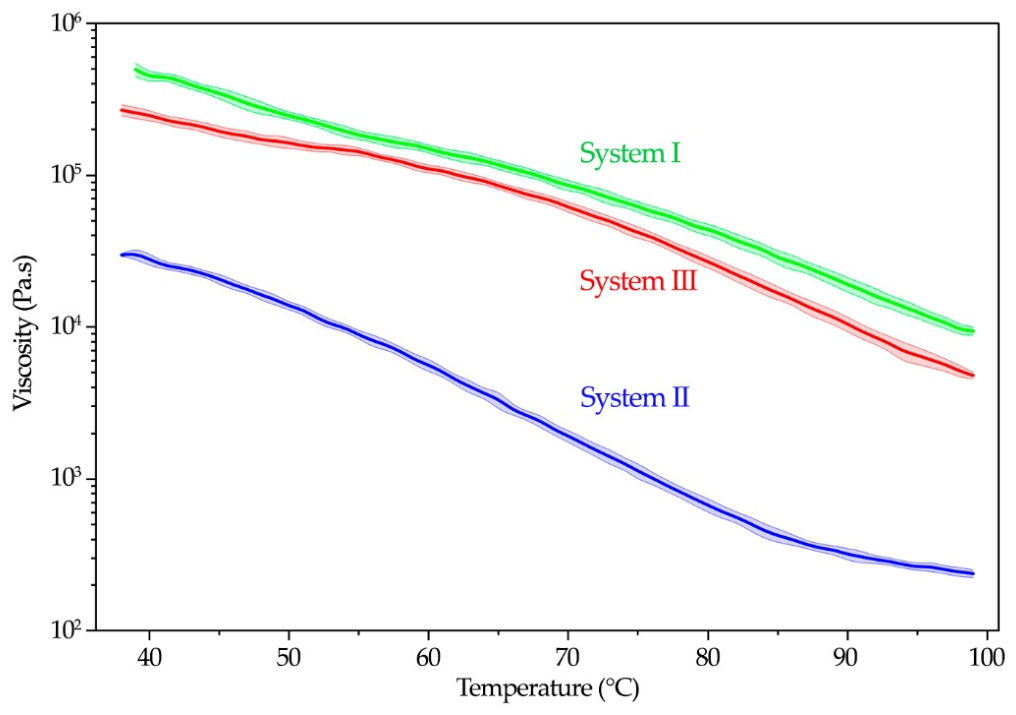
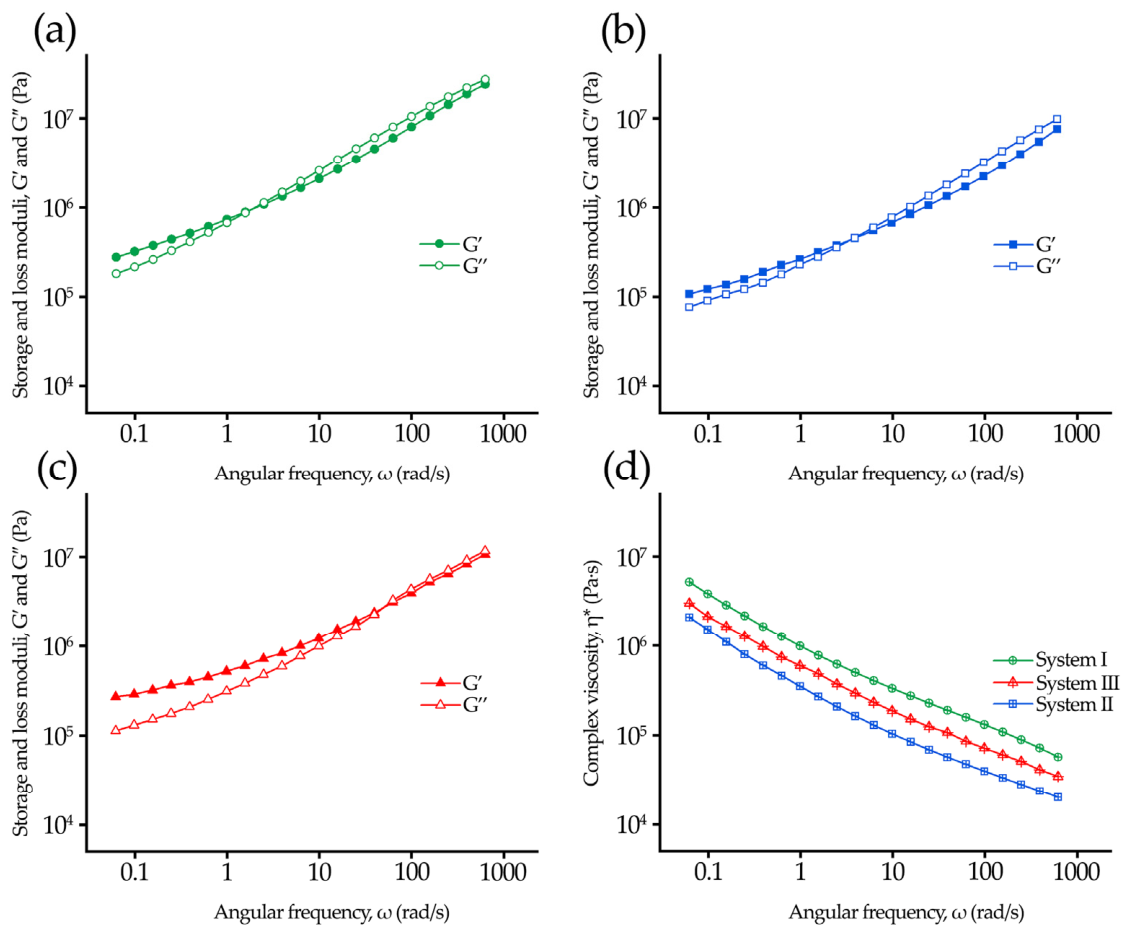
3.5.1. Three-Component Polymeric Systems
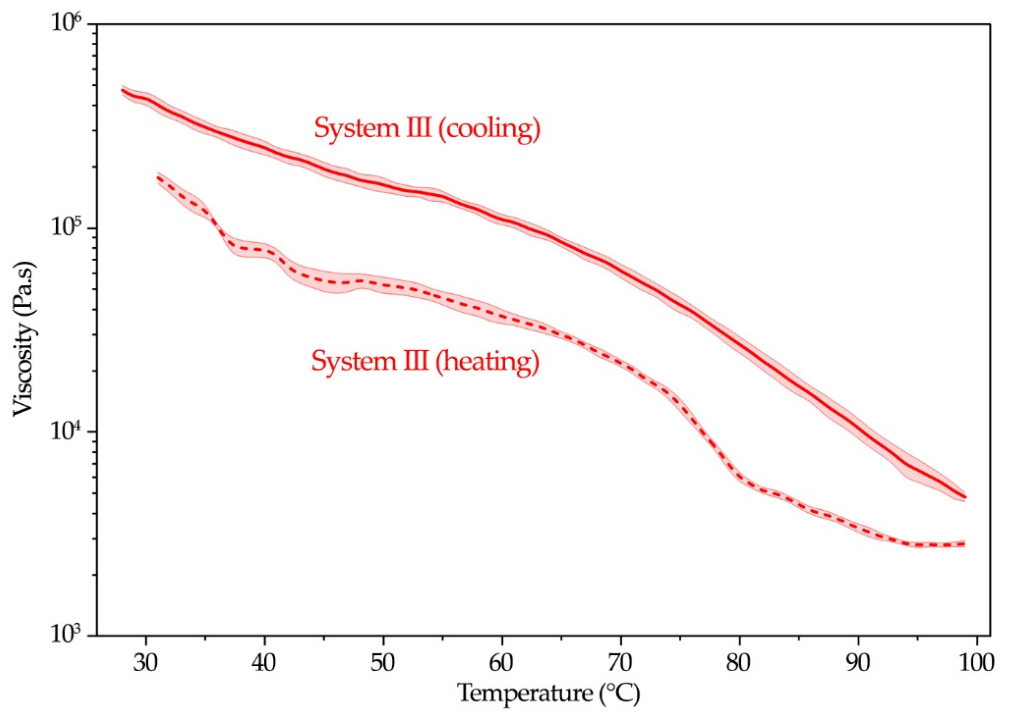
3.5.2. Four-Component Polymeric Systems
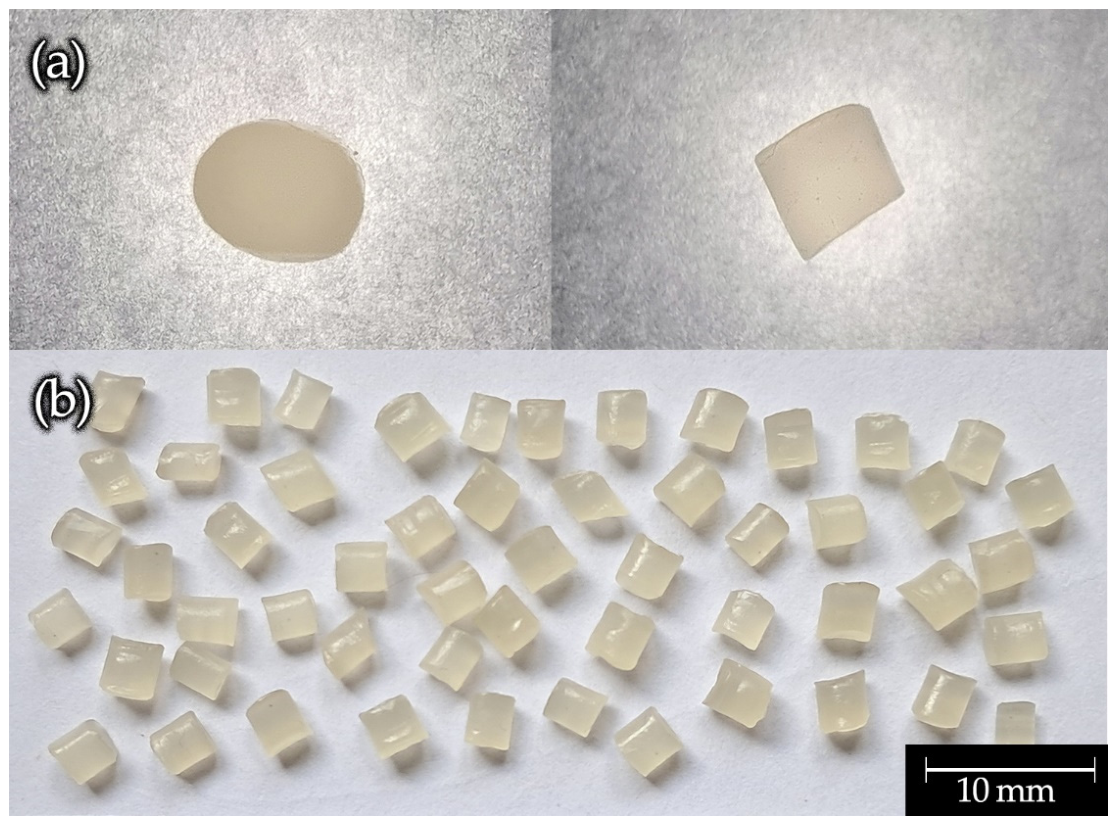
3.6. Morphological and Functional Characteristics of System III Granules
4. Conclusions
5. Limitations and Practical Considerations
Author Contributions
Funding
Institutional Review Board Statement
Informed Consent Statement
Data Availability Statement
Acknowledgments
Conflicts of Interest
Abbreviations
| API | Active Pharmaceutical Ingredient |
| DSC | Differential Scanning Calorimetry |
| EP | European Pharmacopoeia |
| HME | Hot-Melt Extrusion |
| HPC | Hydroxypropylcellulose |
| HPMCAS | Hypromellose Acetate Succinate |
| PEG | Polyethylene Glycol |
| PVP | Polyvinylpyrrolidone |
| TAPI | Thermolabile Active Pharmaceutical Ingredient |
| Tg | Glass Transition Temperature |
| USP | United States Pharmacopeia |
References
- Patil, H.; Vemula, S.K.; Narala, S.; Lakkala, P.; Munnangi, S.R.; Narala, N.; Jara, M.O.; Williams, R.O., III; Terefe, H.; Repka, M.A. Hot-Melt Extrusion: From Theory to Application in Pharmaceutical Formulation—Where Are We Now? AAPS PharmSciTech 2024, 25, 37. [Google Scholar] [CrossRef] [Scilit]
- Patil, H.; Tiwari, R.V.; Repka, M.A. Hot-Melt Extrusion: From Theory to Application in Pharmaceutical Formulation. AAPS PharmSciTech 2016, 17, 20–42. [Google Scholar] [CrossRef] [Scilit] [PubMed]
- Shadambikar, G.; Kipping, T.; Di-Gallo, N.; Elia, A.-G.; Knüttel, A.-N.; Treffer, D.; Repka, M.A. Vacuum Compression Molding as a Screening Tool to Investigate Carrier Suitability for Hot-Melt Extrusion Formulations. Pharmaceutics 2020, 12, 1019. [Google Scholar] [CrossRef] [Scilit] [PubMed]
- Maniruzzaman, M. Pharmaceutical Applications of Hot-Melt Extrusion: Continuous Manufacturing, Twin-Screw Granulations, and 3D Printing. Pharmaceutics 2019, 11, 218. [Google Scholar] [CrossRef] [Scilit]
- Pharmaceutical Excipients for Hot-Melt Extrusion. Available online: https://www.pharmtech.com/view/pharmaceutical-excipients-hot-melt-extrusion (accessed on 4 March 2026).
- Hoffmann, L.; Breitkreutz, J.; Quodbach, J. Hot-Melt Extrusion of the Thermo-Sensitive Peptidomimetic Drug Enalapril Maleate. Pharmaceutics 2022, 14, 2091. [Google Scholar] [CrossRef] [Scilit] [PubMed]
- Surasarang, S.H.; Keen, J.M.; Huang, S.; Zhang, F.; McGinity, J.W.; Williams, R.O., III. Hot Melt Extrusion versus Spray Drying: Hot Melt Extrusion Degrades Albendazole. Drug Dev. Ind. Pharm. 2017, 43, 797–811. [Google Scholar] [CrossRef] [Scilit]
- Huang, S.; O’Donnell, K.P.; Keen, J.M.; Rickard, M.A.; McGinity, J.W.; Williams, R.O., III. Processing Thermally Labile Drugs by Hot-Melt Extrusion: The Lesson with Gliclazide. Eur. J. Pharm. Biopharm. 2017, 119, 56–67. [Google Scholar] [CrossRef] [Scilit]
- Zupan, N.; Yous, I.; Danede, F.; Verin, J.; Kouach, M.; Foulon, C.; Dudognon, E.; Muschert, S.F. Impact of Hot-Melt Extrusion on Glibenclamide’s Physical and Chemical States and Dissolution Behavior: Case Studies with Three Polymer Blend Matrices. Pharmaceutics 2024, 16, 1071. [Google Scholar] [CrossRef] [Scilit]
- Haser, A.; Abbe, A.; Huang, S.; Wen, H.; Taylor, L.S.; McGinity, J.W.; Williams, R.O., III. An Approach for Chemical Stability during Melt Extrusion of a Drug Substance with a High Melting Point. Int. J. Pharm. 2017, 524, 55–64. [Google Scholar] [CrossRef] [Scilit]
- Lagan, C.; Huckle, J.E.; Katz, J.M.; Sadiq, Y.; Rana, K.; Huwyler, J.; Wyttenbach, N. Solvent-Assisted Hot Melt Extrusion of a Thermally Labile, High Melting Point Compound. AAPS PharmSciTech 2021, 22, 235. [Google Scholar] [CrossRef] [Scilit]
- Pereira, G.G.; Figueiredo, S.; Fernandes, A.I.; Pinto, J.F. Polymer Selection for Hot-Melt Extrusion Coupled to Fused Deposition Modelling in Pharmaceutics. Pharmaceutics 2020, 12, 795. [Google Scholar] [CrossRef] [Scilit]
- Alshahrani, S.M.; Lu, W.; Park, J.B.; Morott, J.T.; Alsulays, B.B.; Majumdar, S.; Langley, N.; Kolter, K.; Gryczke, A.; Repka, M.A. Stability-Enhanced Hot-Melt Extruded Amorphous Solid Dispersions via Combinations of Soluplus® and HPMCAS-HF. AAPS PharmSciTech 2015, 16, 824–834. [Google Scholar] [CrossRef] [Scilit]
- Shin-Etsu Chemical Co., Ltd. Composition for Hot Melt Extrusion and Method for Producing a Hot Melt Extruded Product. EP Patent EP3006049B1, 28 February 2018. [Google Scholar]
- Makka, K.A.; Ashokbhai, P.; Zhang, F.; Repka, M.A.; McGinity, J.W.; Williams, R.O., III. Premix Technologies for Drug Delivery: Manufacturing, Applications, and Opportunities in Regulatory Filing. Drug Discov. Today 2024, 29, 104011. [Google Scholar] [CrossRef] [Scilit]
- Thakkar, R.; Pillai, A.R.; Zhang, F.; Repka, M.A. Systematic Screening of Pharmaceutical Polymers for Hot Melt Extrusion Processing: A Comprehensive Review. Int. J. Pharm. 2020, 576, 118989. [Google Scholar] [CrossRef] [Scilit]
- Bochmann, E.S.; Üstüner, E.E.; Gryczke, A.; Wagner, K.G. Predicting melt rheology for hot-melt extrusion by means of a simple Tg-measurement. Eur. J. Pharm. Biopharm. 2017, 119, 47–55. [Google Scholar] [CrossRef] [Scilit]
- Censi, R.; Gigliobianco, M.R.; Casadidio, C.; Di Martino, P. Hot Melt Extrusion: Highlighting Physicochemical Factors to Be Investigated While Designing and Optimizing a Hot Melt Extrusion Process. Pharmaceutics 2018, 10, 89. [Google Scholar] [CrossRef] [Scilit] [PubMed]
- Badruddoza, A.Z.M.; Moseson, D.E.; Lee, H.-G.; Esteghamatian, A.; Thipsay, P. Role of rheology in formulation and process design of hot melt extruded amorphous solid dispersions. Int. J. Pharm. 2024, 664, 124651. [Google Scholar] [CrossRef] [Scilit] [PubMed]
- Hess, F.; Kipping, T.; Weitschies, W.; Krause, J. Understanding the Interaction of Thermal, Rheological, and Mechanical Parameters Critical for the Processability of Polyvinyl Alco-hol-Based Systems during Hot Melt Extrusion. Pharmaceutics 2024, 16, 472. [Google Scholar] [CrossRef] [Scilit]
- Makarova, V.; Mandrik, M.; Antonov, S. Laser Microinterferometry for API Solubility and Phase Equilibria: Darunavir as a Case Example. Pharmaceutics 2025, 17, 875. [Google Scholar] [CrossRef] [Scilit] [PubMed]
- Makarova, V.; Kulichikhin, V. Application of Interferometry to Analysis of Polymer–Polymer and Polymer–Solvent Interactions. In Interferometry—Research and Applications in Science and Technology; InTech: Rijeka, Croatia, 2012; pp. 393–436. [Google Scholar]
- Rials, T.G.; Glasser, W.G. Thermal and Dynamic Mechanical Properties of Hydroxypropyl Cellulose Films. J. Appl. Polym. Sci. 1988, 36, 749–758. [Google Scholar] [CrossRef] [Scilit]
- Yi, S.; Wang, J.; Lu, Y.; Ma, R.; Gao, Q.; Liu, S.; Xiong, S. Novel Hot Melt Extruded Matrices of Hydroxypropyl Cellulose and Amorphous Felodipine-Plasticized Hydroxypropyl Methylcellulose as Controlled Release Systems. AAPS PharmSciTech 2019, 20, 219. [Google Scholar] [CrossRef] [Scilit] [PubMed]
- Feldstein, M.M.; Lebedeva, T.L.; Shandryuk, G.A.; Igonin, V.E.; Avdeev, N.N.; Kulichikhin, V.G. Stoichiometry of Poly(N-vinylpyrrolidone)–Poly(ethylene glycol) Complex. Polym. Sci. Ser. A 1999, 41, 867–875. [Google Scholar]
- Feldstein, M.M.; Lebedeva, T.L.; Shandryuk, G.A.; Kotomin, S.V.; Kuptsov, S.A.; Igonin, V.E.; Grokhovskaya, T.E.; Kulichikhin, V.G. Complex Formation in Poly(vinylpyrrolidone)–Poly(ethylene glycol) Blends. Polym. Sci. Ser. A 1999, 41, 854–866. [Google Scholar]
- Cesteros, L.C.; Quintana, J.R.; Fernández, J.A.; Katime, I.A. Miscibility of Poly(ethylene oxide) with Poly(N-vinylpyrrolidone): DMTA and DTA Studies. J. Polym. Sci. B Polym. Phys. 1989, 27, 2567–2576. [Google Scholar] [CrossRef] [Scilit]
- Hydroxypropyl Cellulose (CAS 9004-64-2). Available online: https://www.chemicalbook.com/ChemicalProductProperty_EN_CB0241870.htm (accessed on 5 March 2026).
- Polyvinylpyrrolidone (CAS 9003-39-8). Available online: https://www.chemicalbook.com/ChemicalProductProperty_EN_CB4209342.htm (accessed on 5 March 2026).
- Shimamura, K.; White, J.L.; Fellers, J.F. Hydroxypropylcellulose, a Thermotropic Liquid Crystal; PATRA Report No. 158; University of Tennessee: Knoxville, TN, USA, 1980; p. 19. [Google Scholar]
- Fehrenbach, W.; Stieb, A.; Meier, G. Liquid Crystals: A Bibliography for 1980. Mol. Cryst. Liq. Cryst. 1985, 123, 1–214. [Google Scholar] [CrossRef] [Scilit]
- Wang, F.; Fischer, C. Investigation of the Decomposition Gases of the Pharmaceutical Excipient PVP Using Evolved Gas Analysis Coupled to Thermal Analysis. Available online: https://analyzing-testing.netzsch.com/en/application-literature/investigation-of-the-decomposition-gases-of-the-pharmaceutical-excipient-pvp-using-evolved-gas-analysis-coupled-to-thermal-analysis (accessed on 5 March 2026).
- Yu, M.; Wang, Q.; Zhang, M.; Deng, Q.; Chen, D. Facile Fabrication of Raspberry-Like Composite Microspheres for the Construction of Superhydrophobic Films and Applications in Highly Efficient Oil–Water Separation. RSC Adv. 2017, 7, 39471–39479. [Google Scholar] [CrossRef] [Scilit]
- Kulichikhin, V.G.; Makarova, V.V.; Skvortsov, I.Y.; Shandryuk, G.A. Phase Equilibria in Solutions of Cellulose Derivatives and Rheological Properties of Solutions in Different Phase States. Polym. Sci. Ser. A 2010, 52, 2001–2013. [Google Scholar] [CrossRef] [Scilit]
- Makarova, V.V. Mass Transfer in PolymerPolymer Systems near Phase Boundaries. Ph.D. Thesis, A.V. Topchiev Institute of Petrochemical Synthesis, Russian Academy of Sciences, Moscow, Russia, 2007. [Google Scholar]
- Gottschalk, T.; Özbay, C.; Feuerbach, T.; Thommes, M. Predicting Throughput and Melt Temperature in Pharmaceutical Hot Melt Extrusion. Pharmaceutics 2022, 14, 1757. [Google Scholar] [CrossRef] [Scilit]
- Alsulays, B.B.; Park, J.B.; Alshehri, S.M.; Morott, J.T.; Alshahrani, S.M.; Tiwari, R.V.; Alshetaili, A.S.; Majumdar, S.; Langley, N.; Kolter, K.; et al. Influence of molecular weight of carriers and processing parameters on the extrudability, drug release, and stability of fenofibrate formulations processed by hot-melt extrusion. J. Drug Deliv. Sci. Technol. 2015, 29, 189–198. [Google Scholar] [CrossRef] [Scilit]
- Desai, D.; Sandhu, H.; Shah, N.; Malick, W.; Zia, H.; Phuapradit, W.; Vaka, S.R.K. Selection of Solid-State Plasticizers as Processing Aids for Hot-Melt Extrusion. J. Pharm. Sci. 2018, 107, 372–379. [Google Scholar] [CrossRef] [Scilit]
- Yu, L. Amorphous pharmaceutical solids: Preparation, characterization and stabilization. Adv. Drug Deliv. Rev. 2001, 48, 27–42. [Google Scholar] [CrossRef] [Scilit]
- Papadimitriou, S.A.; Barmpalexis, P.; Karavas, E.; Bikiaris, D.N. Optimizing the ability of PVP/PEG mixtures to be used as appropriate carriers for the preparation of drug solid dispersions by melt mixing technique using artificial neural networks: I. Eur. J. Pharm. Biopharm. 2012, 82, 175–186. [Google Scholar] [CrossRef] [Scilit] [PubMed]
- Baghel, S.; Cathcart, H.; O’Reilly, N.J. Polymeric amorphous solid dispersions: A review of amorphization, crystallization, stabilization, solid-state characterization, and aqueous solubilization of Biopharmaceutical Classification System Class II drugs. J. Pharm. Sci. 2016, 105, 2527–2544. [Google Scholar] [CrossRef] [Scilit] [PubMed]
- Szakonyi, G.; Zelkó, R. The effect of water on the solid state characteristics of pharmaceutical excipients: Molecular mechanisms, measurement techniques, and quality aspects of final dosage form. Int. J. Pharm. Investig. 2012, 2, 18–25. [Google Scholar] [CrossRef] [Scilit]
- Briatico-Vangosa, F.; Melocchi, A.; Uboldi, M.; Gazzaniga, A.; Zema, L.; Maroni, A. Effect of Polyethylene Glycol Content and Molar Mass on Injection Molding of Hydroxypropyl Methylcellulose Acetate Succinate-Based Gastroresistant Capsular Devices for Oral Drug Delivery. Polymers 2019, 11, 517. [Google Scholar] [CrossRef] [Scilit]
- Aho, J.; Boetker, J.P.; Baldursdottir, S.; Rantanen, J. Rheology as a tool for evaluation of melt processability of innovative dosage forms. Int. J. Pharm. 2015, 494, 623–642. [Google Scholar] [CrossRef] [Scilit] [PubMed]
- Malkin, A.Y.; Isayev, A.I. Rheology: Concepts, Methods, and Applications, 4th ed.; ChemTec Publishing: Toronto, ON, Canada, 2022. [Google Scholar]
- Wang, Y.; Ewoldt, R.H. Thixotropy, antithixotropy, and viscoelasticity in hysteresis. J. Rheol. 2023, 67, 1199–1219. [Google Scholar] [CrossRef] [Scilit]








| System | Components (wt.%) | ||||
|---|---|---|---|---|---|
| PVP K-17 | PVP K-29/32 | PEG 400 | PEG 1500 | HPC EF | |
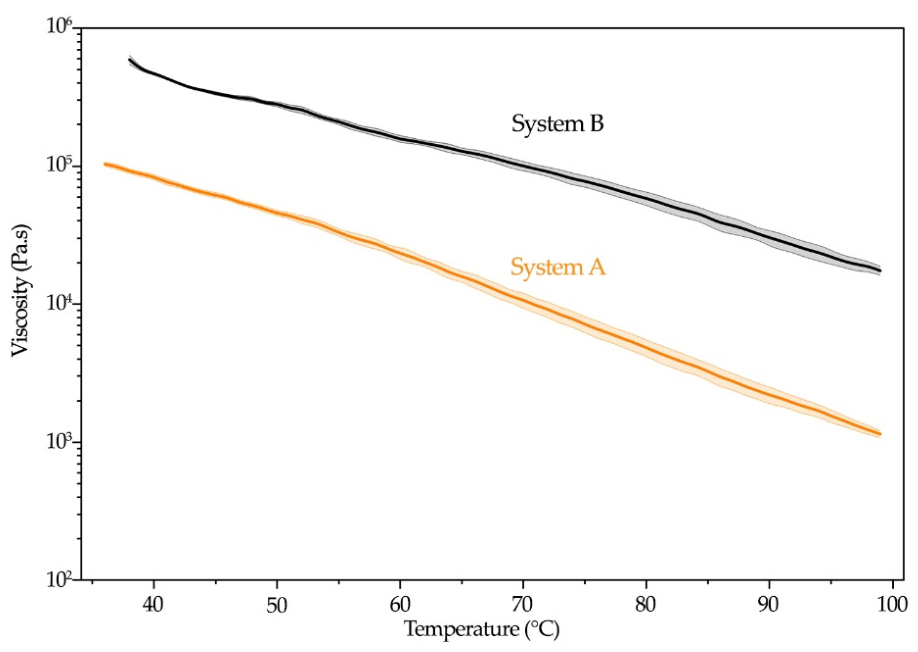
| A | 70 | - | 20 | 10 | - |
| B | - | 70 | 20 | 10 | - |
| I | - | 40 | 20 | 10 | 30 |
| II | - | 39 | 22 | 11 | 28 |
| III | - | 32 | 22 | 19 | 27 |
| System | A | B | I | I (Subsequent Extrusion of Granules) | II | II (Subsequent Extrusion of Granules) | III | III (Subsequent Extrusion of Granules) | |
|---|---|---|---|---|---|---|---|---|---|
| Maximum barrel temperature (°C) | 65 | 70 | 70 | 120 | 70 | 120 | 70 | 120 | 70 |
| Die temperature (°C) | 65 | 65 | 65 | 110 | 70 | 110 | 70 | 110 | 70 |
| Maximum recorded melt temperature (measured), °C | 70 | 74 | 73 | 128 | 76 | 127 | 71 | 121 | 72 |
| Screw speed (rpm) | 40 | 40 | 25 | 40 | 25 | 40 | 25 | 40 | 25 |
| Torque (% of maximum) | 27 | 60 | 85 | 15 | 54 | <10 | <10 | <10 | 16 |
| Melt pressure (bar) | <10 | <10 | Up to 40 | <10 | Up to 30 | <10 | <10 | <10 | <10 |
| Observations | Homogeneous extrudate | Homogeneous extrudate | Incomplete homogenization (agglomerates) | Homogeneous extrudate | Homogeneous extrudate | Homogeneous extrudate (low-viscosity melt) | Homogeneous extrudate | Homogeneous extrudate (low-viscosity melt) | Homogeneous extrudate |
| System | G′−G″ at ω = 0.1 rad/s (kPa) | G″−G′ at ω = 100 rad/s (MPa) | η* at ω = 0.1 rad/s (MPa·s) | η* at ω = 100 rad/s (kPa·s) |
|---|---|---|---|---|
| I | 105.4 ± 5.1 | 2.451 ± 0.175 | 3.887 ± 0.034 | 132.7 ± 6.0 |
| II | 31.3 ± 1.6 | 1.002 ± 0.084 | 1.542 ± 0.017 | 40.1 ± 2.4 |
| III | 155.0 ± 7.0 | 0.410 ± 0.028 | 2.159 ± 0.033 | 72.5 ± 4.0 |
Disclaimer/Publisher’s Note: The statements, opinions and data contained in all publications are solely those of the individual author(s) and contributor(s) and not of MDPI and/or the editor(s). MDPI and/or the editor(s) disclaim responsibility for any injury to people or property resulting from any ideas, methods, instructions or products referred to in the content. |
© 2026 by the authors. Licensee MDPI, Basel, Switzerland. This article is an open access article distributed under the terms and conditions of the Creative Commons Attribution (CC BY) license.
Share and Cite
Mandrik, M.; Makarova, V.; Korol, L.; Krasnyuk, I.; Antonov, S. Rational Design of Multicomponent Polymeric Systems Based on a Transient Plasticization Window for Hot-Melt Extrusion. Pharmaceutics 2026, 18, 667. https://doi.org/10.3390/pharmaceutics18060667
Mandrik M, Makarova V, Korol L, Krasnyuk I, Antonov S. Rational Design of Multicomponent Polymeric Systems Based on a Transient Plasticization Window for Hot-Melt Extrusion. Pharmaceutics. 2026; 18(6):667. https://doi.org/10.3390/pharmaceutics18060667
Chicago/Turabian StyleMandrik, Mark, Veronika Makarova, Ludmila Korol, Ivan Krasnyuk, and Sergey Antonov. 2026. "Rational Design of Multicomponent Polymeric Systems Based on a Transient Plasticization Window for Hot-Melt Extrusion" Pharmaceutics 18, no. 6: 667. https://doi.org/10.3390/pharmaceutics18060667
APA StyleMandrik, M., Makarova, V., Korol, L., Krasnyuk, I., & Antonov, S. (2026). Rational Design of Multicomponent Polymeric Systems Based on a Transient Plasticization Window for Hot-Melt Extrusion. Pharmaceutics, 18(6), 667. https://doi.org/10.3390/pharmaceutics18060667