Carbon Dots in Nanomedicine: Advanced Fabrication, Biomedical Applications, and Future Clinical Perspectives




Abstract
1. Introduction
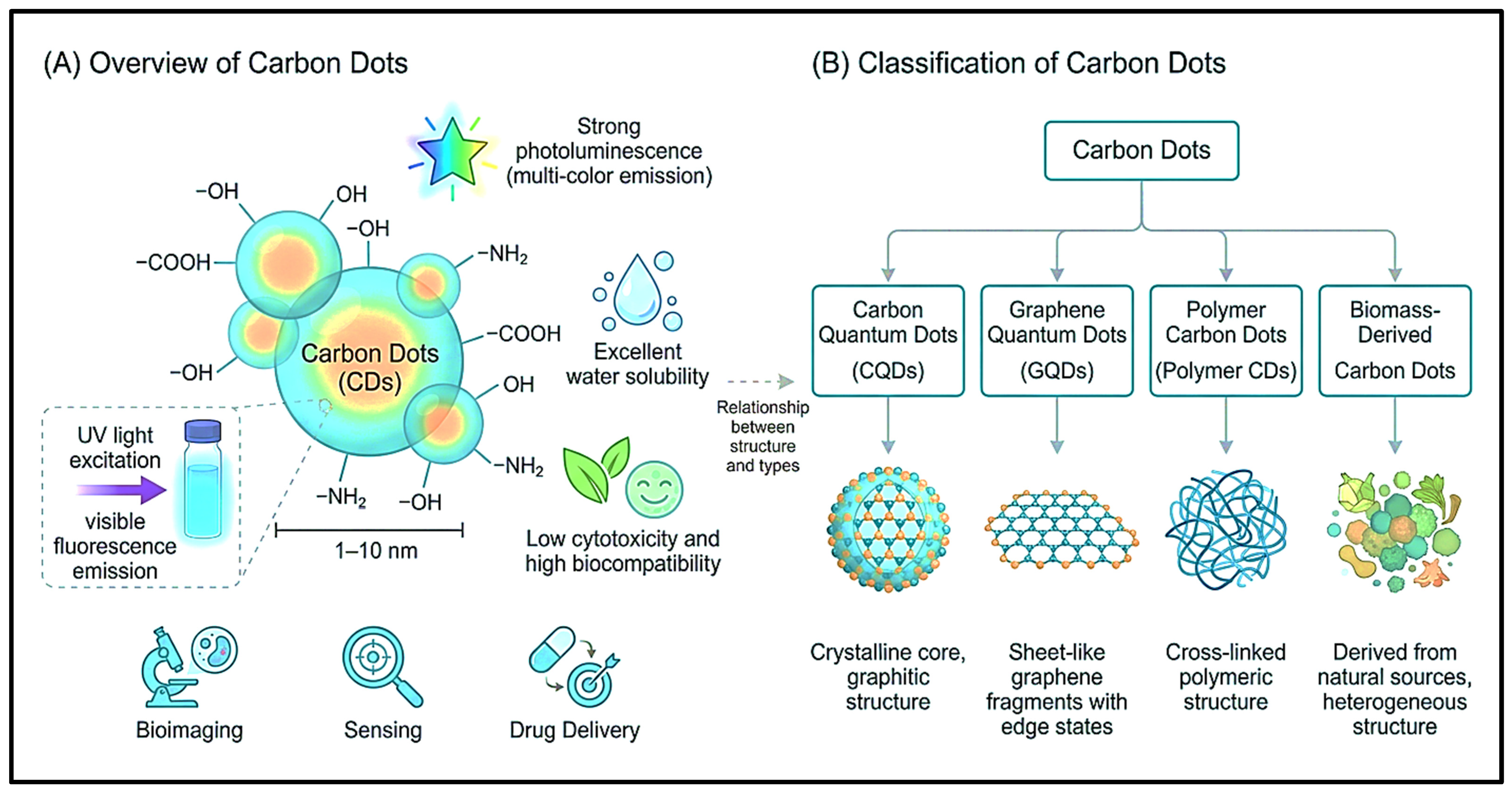
2. Classification and Physicochemical Properties of Carbon Dots
2.1. Physicochemical Properties
2.2. Structural Architecture and Core Crystallinity
2.3. Surface Chemistry and Functional Group Analysis
2.4. Photoluminescence Mechanisms and Quantum Yield
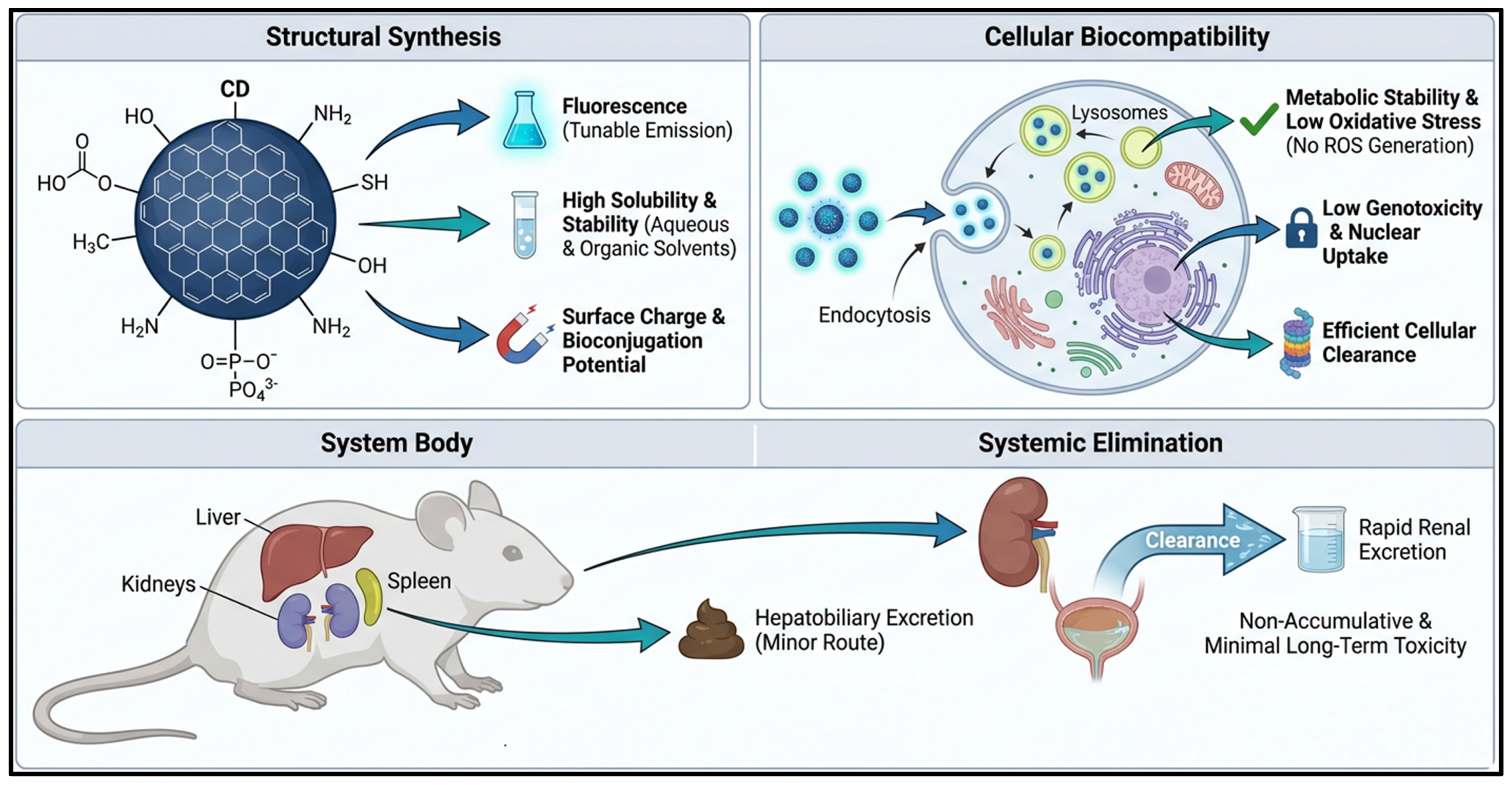
2.5. Renal Clearance, Colloidal Stability, and Drug Loading
2.6. Structural Classification and Characterization Summary
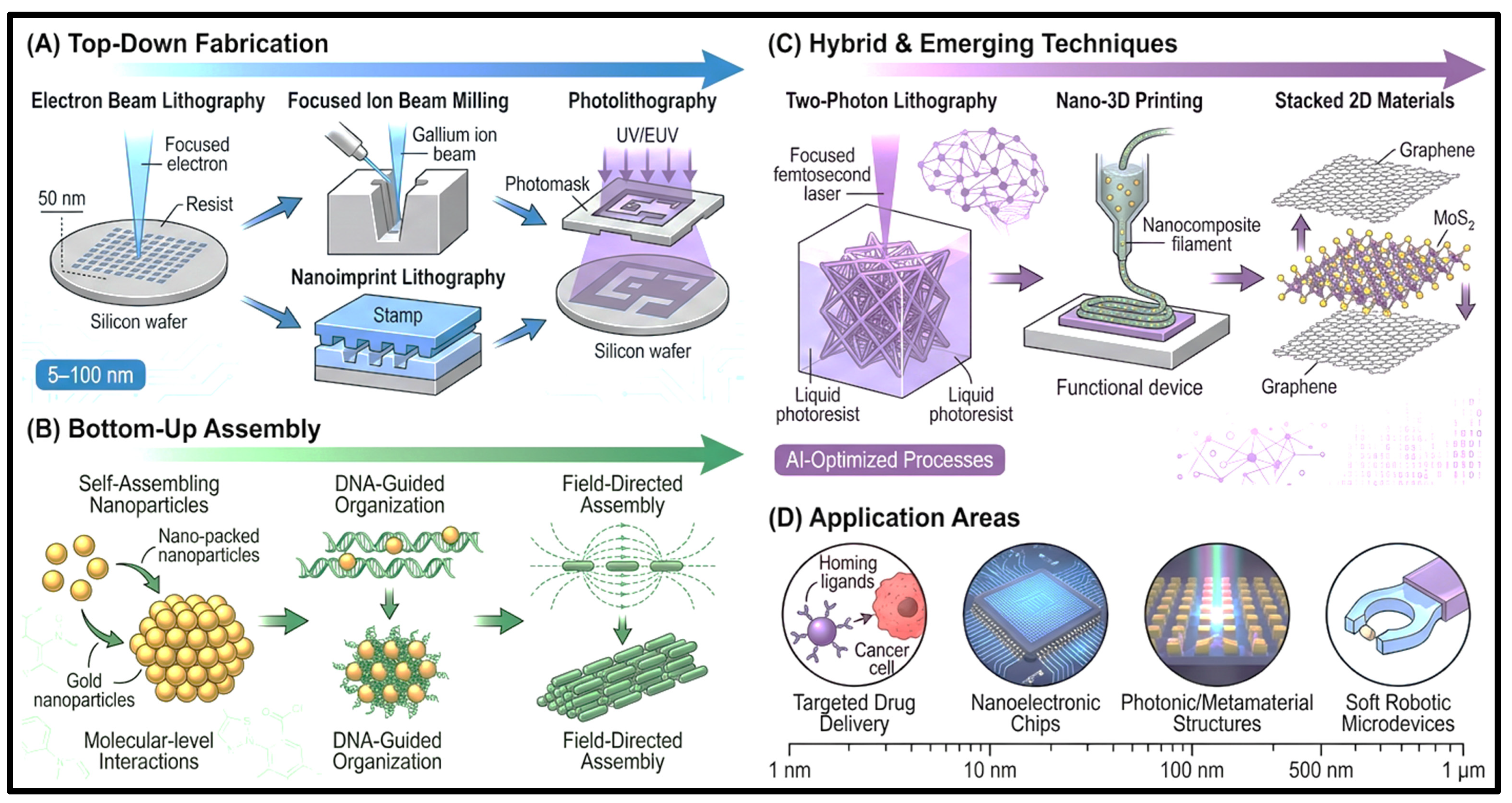
3. Carbon Dot Fabrication: Top-Down, Bottom-Up, and Emerging Hybrid Strategies
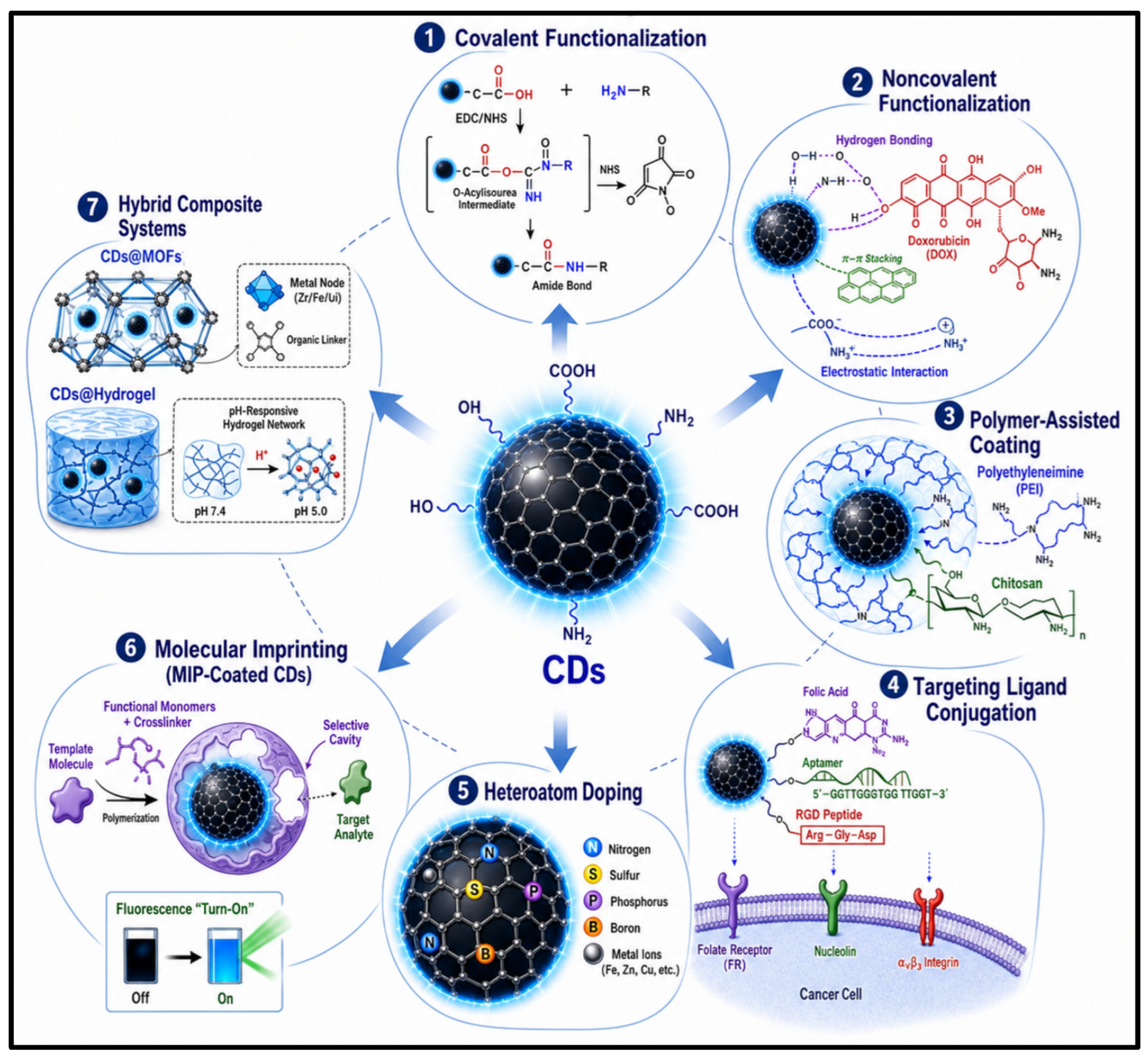
3.1. Surface Functionalization Strategies of Carbon Dots for Biomedical Applications
3.2. Precursor-to-Property Engineering of Carbon Dots for Biomedical Translation
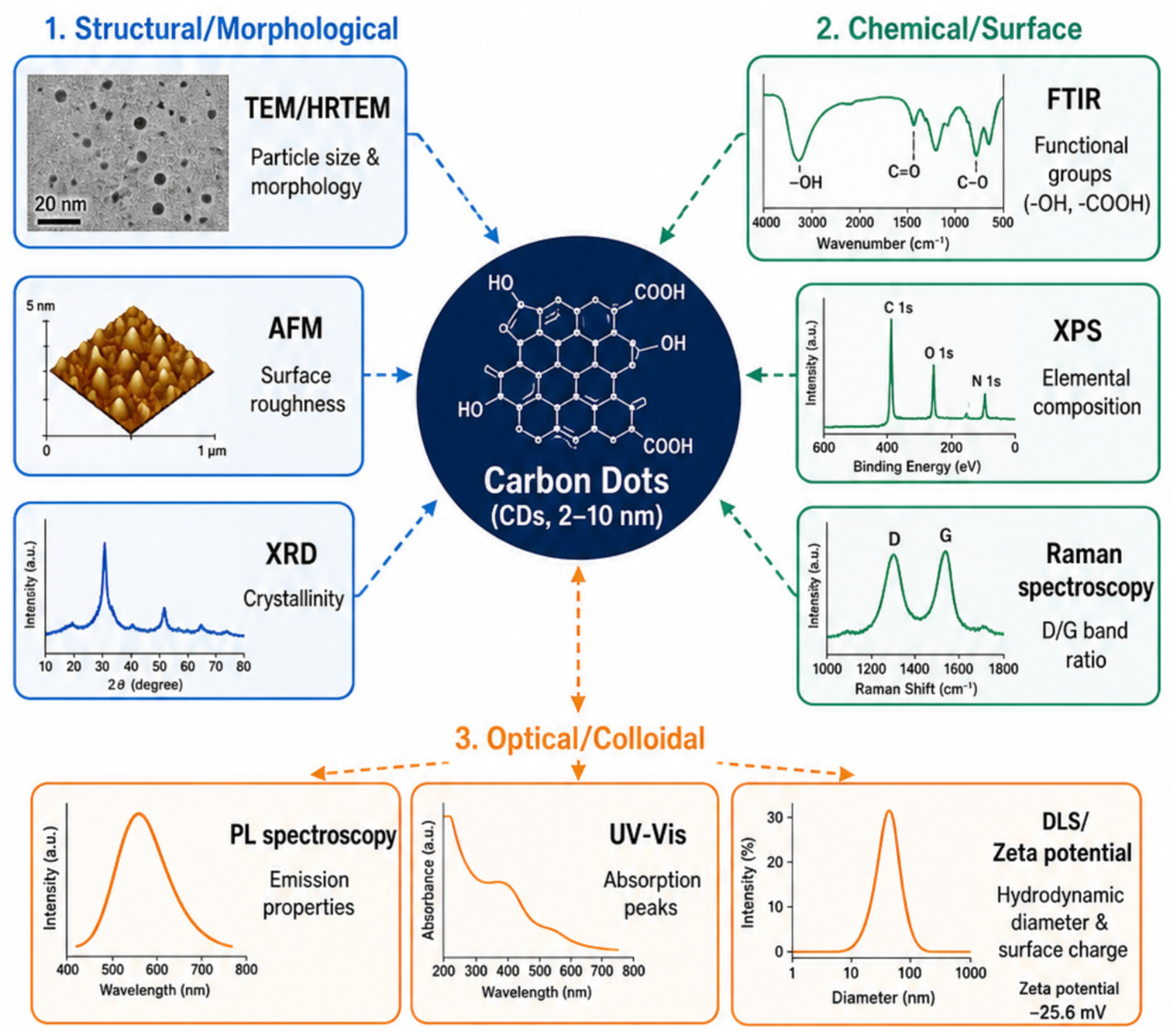
4. Advanced Characterization Techniques for Carbon Dots
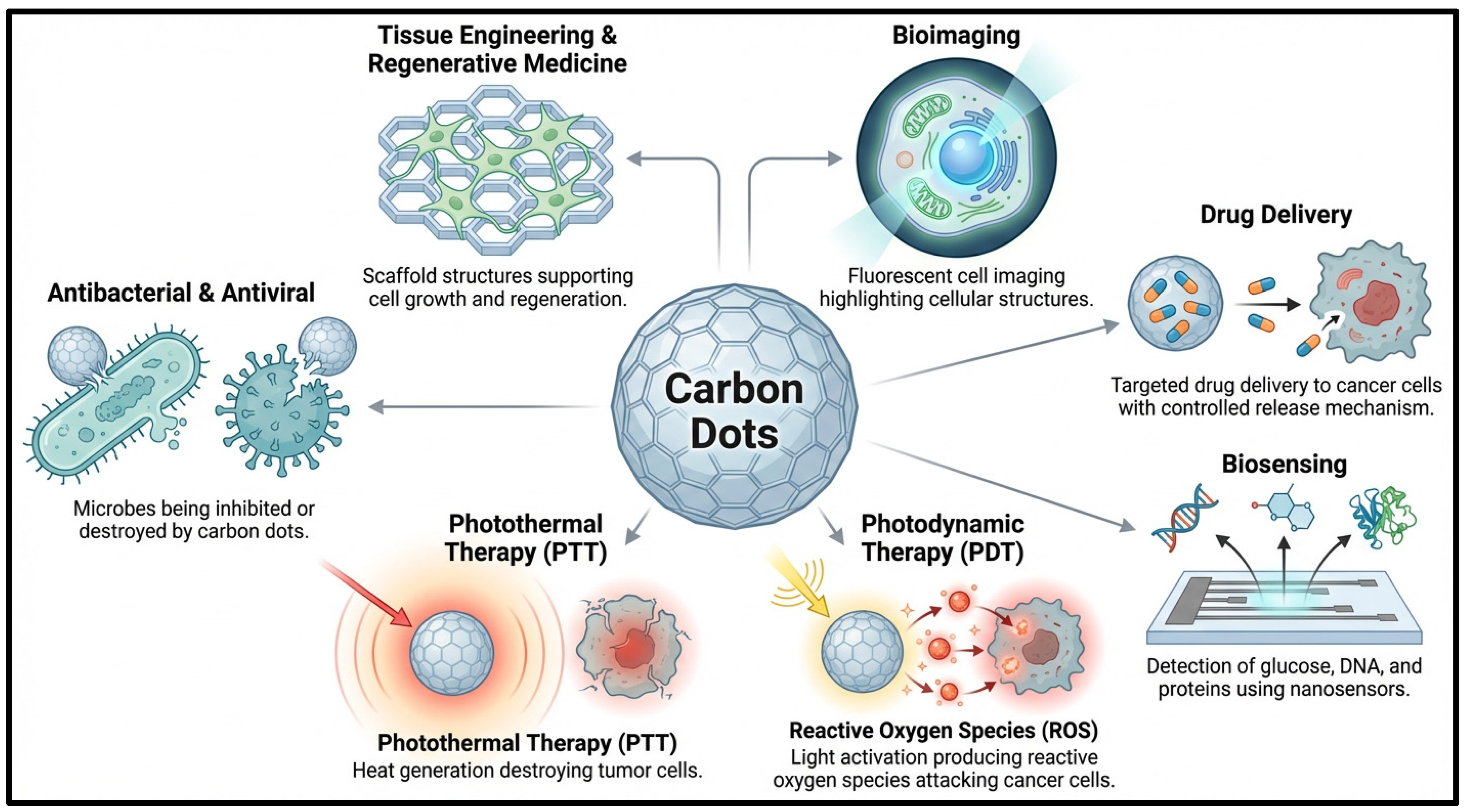
5. Biomedical Applications of Carbon Dots: Diagnostic and Therapeutic Platforms
5.1. Surface Modification, Targeted Delivery, and Biocompatibility–Toxicity Considerations
5.2. Comparative Analysis of Doping Versus Surface Functionalization Effects on CQDs
5.3. Doping and Surface Functionalization Effect on CQDs
5.4. Role of Sulfur and Nitrogen Codoping to Alter Carbon Dot Photoluminescence
6. Evaluation of Toxicity, Biocompatibility, and Safety of Carbon Dots (CDs)
6.1. General Toxicity Profile and Biocompatibility of Carbon Dots
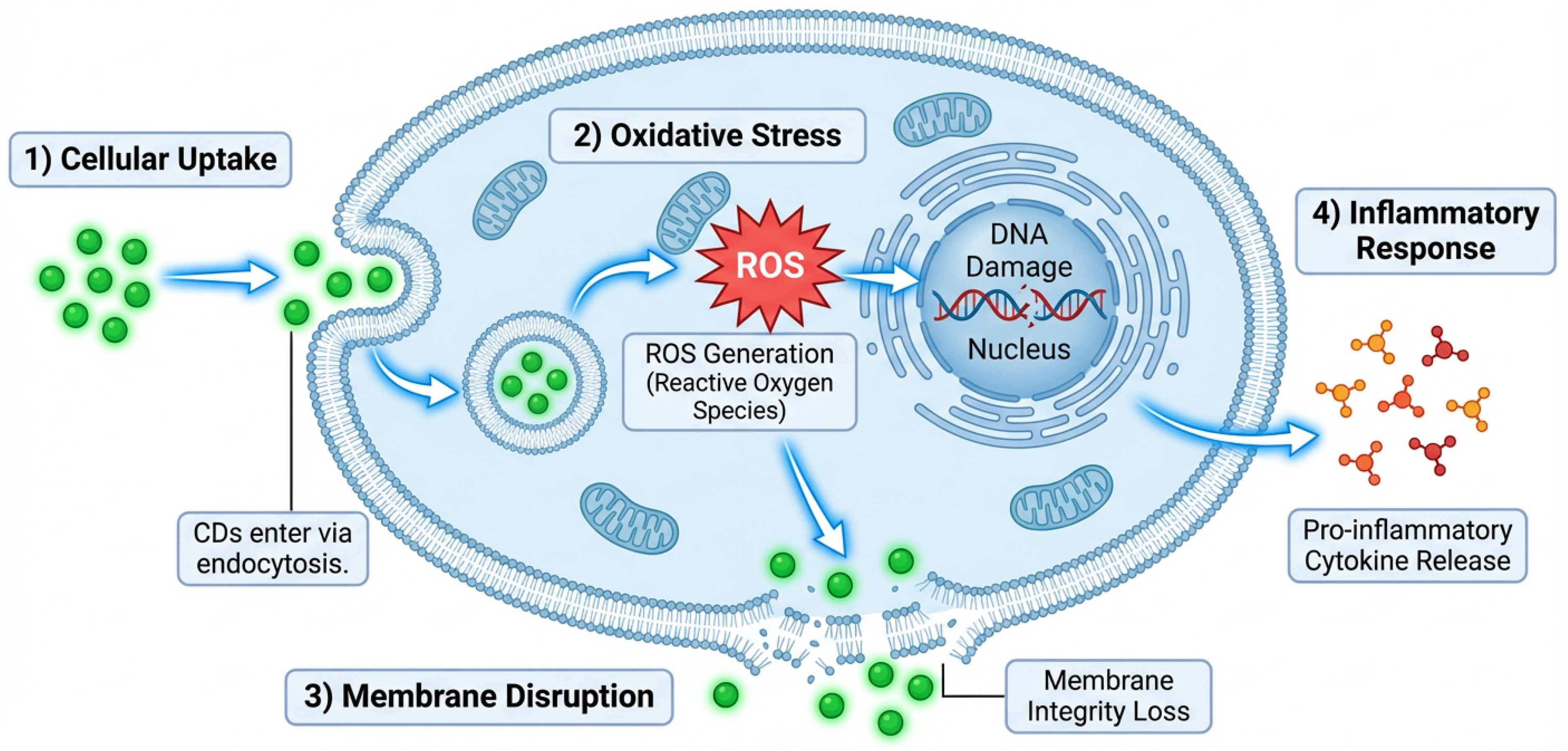
6.2. Mechanisms of Toxicity and Cellular Interactions
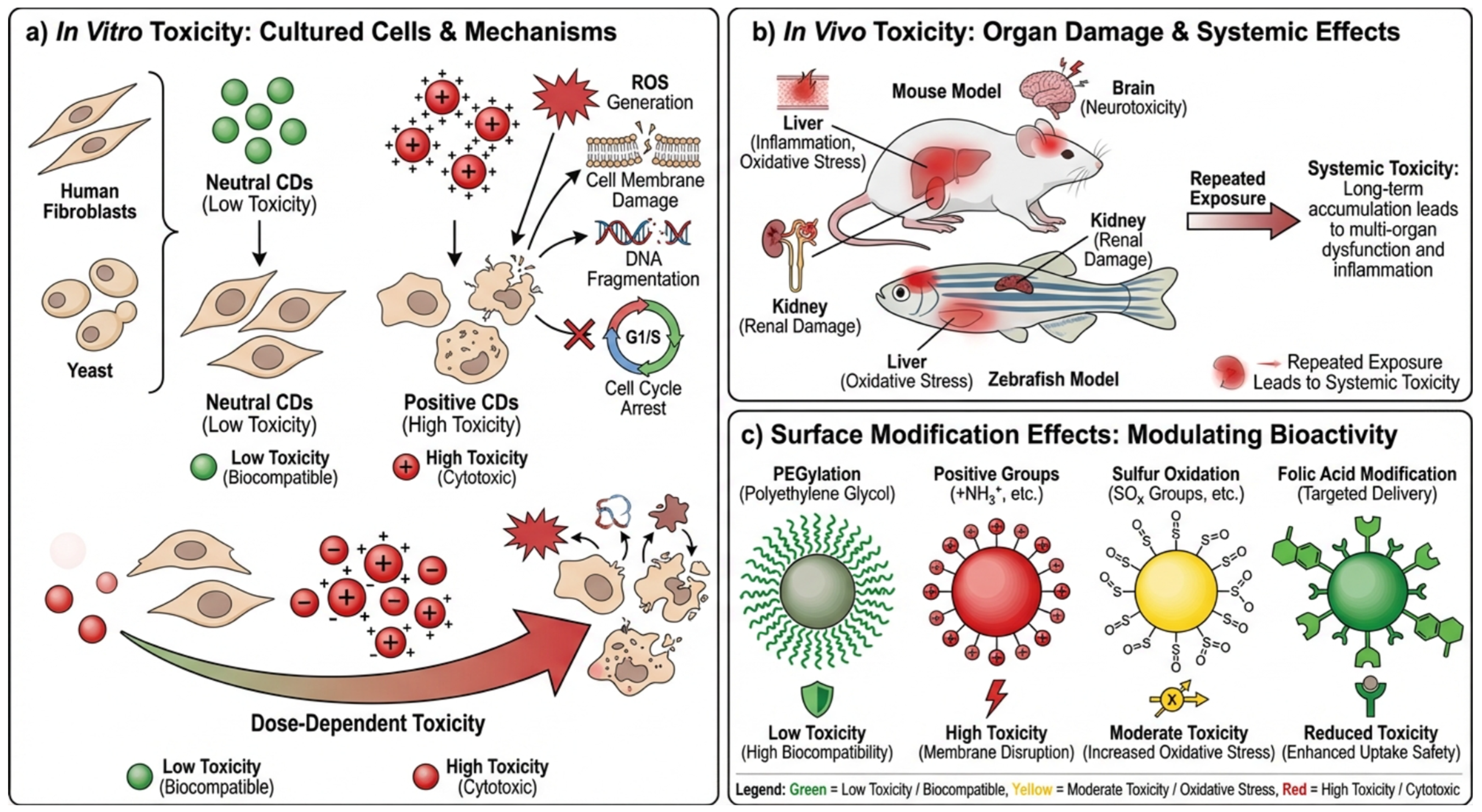
6.3. In Vitro and in Vivo Toxicological Studies and Surface Modification Effects
7. Challenges and Limitations
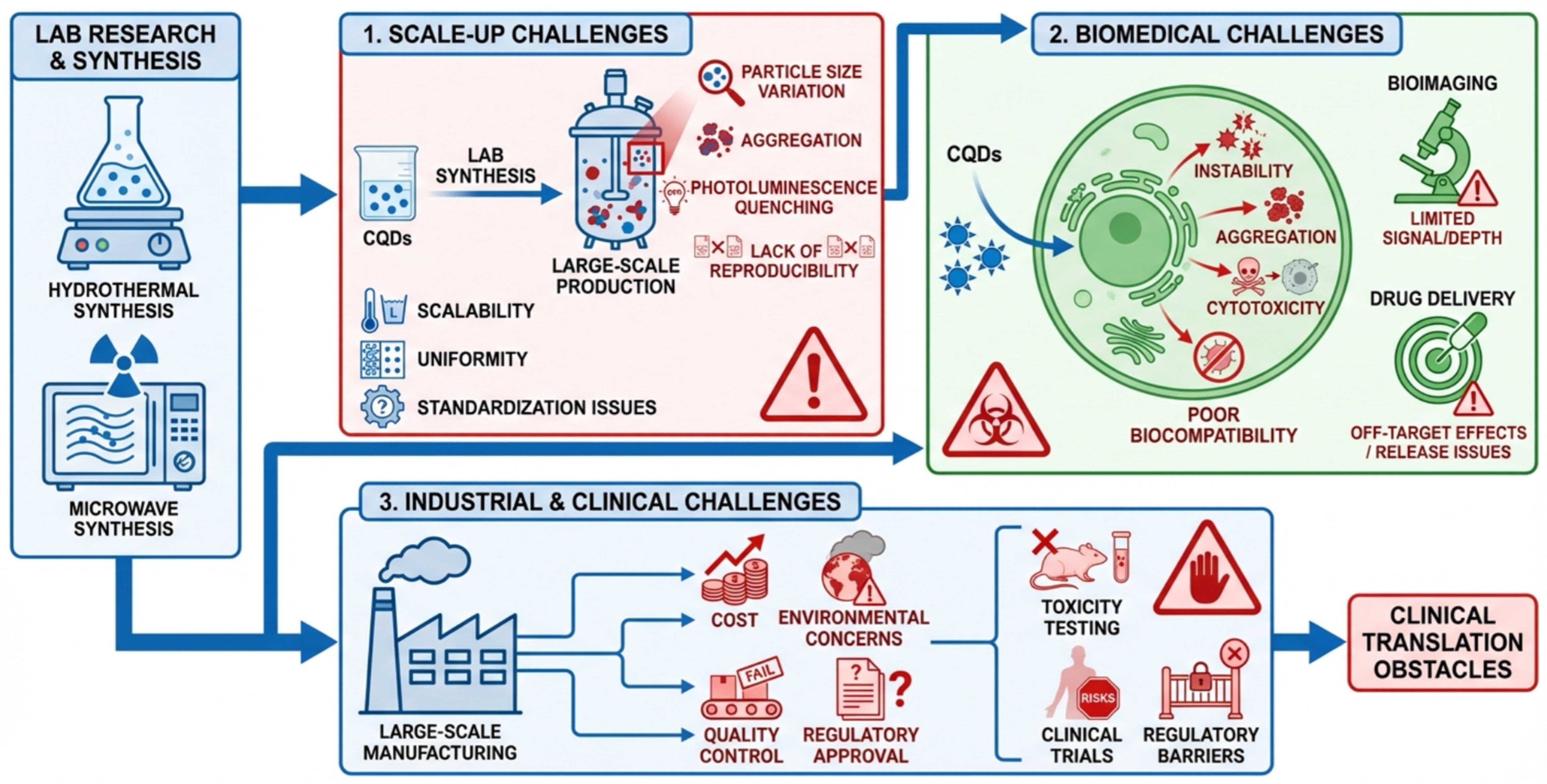
Scale-Up, Manufacturing, and Clinical Translation Challenges of CQDs
8. Future Clinical Perspectives
9. Conclusions
Author Contributions
Funding
Informed Consent Statement
Data Availability Statement
Conflicts of Interest
References
- Haleem, A.; Javaid, M.; Singh, R.P.; Rab, S.; Suman, R. Applications of nanotechnology in medical field: A brief review. Glob. Health J. 2023, 7, 70–77. [Google Scholar] [CrossRef]
- Malik, S.; Muhammad, K.; Waheed, Y. Emerging applications of nanotechnology in healthcare and medicine. Molecules 2023, 28, 6624. [Google Scholar] [CrossRef]
- Joseph, T.M.; Kar Mahapatra, D.; Esmaeili, A.; Piszczyk, Ł.; Hasanin, M.S.; Kattali, M.; Haponiuk, J.; Thomas, S. Nanoparticles: Taking a unique position in medicine. Nanomaterials 2023, 13, 574. [Google Scholar] [CrossRef]
- Sher, E.K.; Alebić, M.; Boras, M.M.; Boškailo, E.; Farhat, E.K.; Karahmet, A.; Pavlović, B.; Sher, F.; Lekić, L. Nanotechnology in medicine revolutionizing drug delivery for cancer and viral infection treatments. Int. J. Pharm. 2024, 660, 124345. [Google Scholar] [CrossRef]
- Jia, Y.; Jiang, Y.; He, Y.; Zhang, W.; Zou, J.; Magar, K.T.; Boucetta, H.; Teng, C.; He, W. Approved nanomedicine against diseases. Pharmaceutics 2023, 15, 774. [Google Scholar] [CrossRef] [PubMed]
- Singh, A.; Amiji, M.M. Application of nanotechnology in medical diagnosis and imaging. Curr. Opin. Biotechnol. 2022, 74, 241–246. [Google Scholar] [CrossRef] [PubMed]
- Sim, S.; Wong, N.K. Nanotechnology and its use in imaging and drug delivery. Biomed. Rep. 2021, 14, 42. [Google Scholar] [CrossRef] [PubMed]
- Sindhwani, S.; Chan, W.C. Nanotechnology for modern medicine: Next step towards clinical translation. J. Intern. Med. 2021, 290, 486–498. [Google Scholar] [CrossRef]
- Ramos, A.P.; Cruz, M.A.; Tovani, C.B.; Ciancaglini, P. Biomedical applications of nanotechnology. Biophys. Rev. 2017, 9, 79–89. [Google Scholar] [CrossRef] [PubMed]
- Emerich, D.F.; Thanos, C.G. Nanotechnology and medicine. Expert Opin. Biol. Ther. 2003, 3, 655–663. [Google Scholar] [CrossRef] [PubMed]
- Aslam, R.; Wang, Q.; Wang, R.; Yan, Z. Synthesis methodology of carbon dots: Modern trends and enhancements. In Nano-Hybrid Smart Coatings: Advancements in Industrial Efficiency and Corrosion Resistance; ACS Publications: Washington, DC, USA, 2024; pp. 95–120. [Google Scholar]
- Yan, F.; Jiang, Y.; Sun, X.; Bai, Z.; Zhang, Y.; Zhou, X. Surface modification and chemical functionalization of carbon dots: A review. Microchim. Acta 2018, 185, 424. [Google Scholar] [CrossRef]
- Mirghaffari, M.; Sedehi, H.R.; Mahboubizadeh, S.; Mirghaffari, S. Carbon Quantum Dots as Next-Generation Nanocarriers for Targeted Ocular Drug Delivery: Innovations and Therapeutic Potential-a Review. Prog. Chem. Biochem. Res. 2025, 8, 208–233. [Google Scholar]
- Hui, S. Carbon dots (CDs): Basics, recent potential biomedical applications, challenges, and future perspectives. J. Nanoparticle Res. 2023, 25, 68. [Google Scholar] [CrossRef]
- Yang, W.; Li, X.; Li, Y.; Zhu, R.; Pang, H. Applications of metal–organic-framework-derived carbon materials. Adv. Mater. 2019, 31, 1804740. [Google Scholar] [CrossRef]
- Chai, L.; Li, R.; Sun, Y.; Zhou, K.; Pan, J. MOF-derived carbon-based materials for energy-related applications. Adv. Mater. 2025, 37, 2413658. [Google Scholar] [CrossRef] [PubMed]
- Shahzadi, S.; Akhtar, M.; Arshad, M.; Ijaz, M.H.; Janjua, M.R.S.A. A review on synthesis of MOF-derived carbon composites: Innovations in electrochemical, environmental and electrocatalytic technologies. RSC Adv. 2024, 14, 27575–27607. [Google Scholar] [CrossRef] [PubMed]
- Sarker, M.; Shin, S.; Jhung, S.H. Adsorptive removal of nitroimidazole antibiotics from water using porous carbons derived from melamine-loaded MAF-6. J. Hazard. Mater. 2019, 378, 120761. [Google Scholar] [CrossRef]
- Pechnikova, N.A.; Domvri, K.; Porpodis, K.; Istomina, M.S.; Iaremenko, A.V.; Yaremenko, A.V. Carbon quantum dots in biomedical applications: Advances, challenges, and future prospects. Aggregate 2025, 6, e707. [Google Scholar] [CrossRef]
- Maan, J.S.; Santhosh, M.K.; Lee, S.J.X.; Leow, N.Z.Y.; Adli, A.S.B.M.; Tai, C.J.Q.; Lim, J.H.; Muniandy, Y.; Mai, C.-W.; Tan, T.L. Carbon Quantum Dots as Versatile Nanosystems for Biomedical Innovation: Mechanisms, Applications, and Translational Prospects. Br. J. Biomed. Sci. 2026, 83, 15960. [Google Scholar] [CrossRef]
- Hou, Y.; Zhu, C.; Shen, Z.; Xu, Y.; Zhou, S.; Zhou, X. Carbon Nanomaterials in Biomedicine: Opportunities and Toxicological Concerns. Int. J. Nanomed. 2025, 20, 14707–14730. [Google Scholar] [CrossRef]
- Al Saidi, A.K.; Ul-Islam, M.; Ahmad, M.W.; Al-Shannaq, R.; Shehzad, A. Carbon dots for fluorescence bioimaging: Advances in synthesis, optical properties, and multimodal applications. Results Chem. 2026, 21, 103089. [Google Scholar] [CrossRef]
- Kumar, M.; Bhatt, M.; Das, B. Carbon nanodots as theranostics agents in cancer: Advances in design, targeting, and real-time monitoring. RSC Adv. 2026, 16, 9905–9922. [Google Scholar] [CrossRef]
- Bao, X.; Yuan, Y.; Chen, J.; Zhang, B.; Li, D.; Zhou, D.; Jing, P.; Xu, G.; Wang, Y.; Holá, K. In vivo theranostics with near-infrared-emitting carbon dots—Highly efficient photothermal therapy based on passive targeting after intravenous administration. Light Sci. Appl. 2018, 7, 91. [Google Scholar] [CrossRef]
- Kharlamova, M.V.; Kramberger, C. Cytotoxicity of carbon nanotubes, graphene, fullerenes, and dots. Nanomaterials 2023, 13, 1458. [Google Scholar] [CrossRef] [PubMed]
- Lesani, P.; Zare, I.; Khetarpaul, M.; Lu, Z.; Ghaee, A.; Zreiqat, H. Red to near-infrared carbon dots: Synthesis, cellular interactions, drug loading, and therapeutic applications. Adv. Drug Deliv. Rev. 2025, 228, 115742. [Google Scholar] [CrossRef]
- Tavan, M.; Yousefian, Z.; Bakhtiar, Z.; Rahmandoust, M.; Mirjalili, M.H. Carbon quantum dots: Multifunctional fluorescent nanomaterials for sustainable advances in biomedicine and agriculture. Ind. Crops Prod. 2025, 231, 121207. [Google Scholar] [CrossRef]
- Bartkowski, M.; Zhou, Y.; Nabil Amin Mustafa, M.; Eustace, A.J.; Giordani, S. CARBON DOTS: Bioimaging and anticancer drug delivery. Chem.-A Eur. J. 2024, 30, e202303982. [Google Scholar] [CrossRef] [PubMed]
- Shen, C.-L.; Liu, H.-R.; Lou, Q.; Wang, F.; Liu, K.-K.; Dong, L.; Shan, C.-X. Recent progress of carbon dots in targeted bioimaging and cancer therapy. Theranostics 2022, 12, 2860. [Google Scholar] [CrossRef] [PubMed]
- Sezer, E.; Ulucan Karnak, F.; Akgöl, S. Green carbon dots in the era of AI: Sustainable synthesis, intelligent drug delivery, advanced diagnostics, and bioimaging. Turk. J. Biol. 2025, 49, 498–533. [Google Scholar] [CrossRef]
- Bartkowski, M.; Calzaferri, F.; Giordani, S. Toward clinical translation of carbon nanomaterials in anticancer drug delivery: The need for standardisation. Beilstein J. Nanotechnol. 2025, 16, 2092–2104. [Google Scholar] [CrossRef]
- Loh, K.P.; Ho, D.; Chiu, G.N.C.; Leong, D.T.; Pastorin, G.; Chow, E.K.H. Clinical applications of carbon nanomaterials in diagnostics and therapy. Adv. Mater. 2018, 30, 1802368. [Google Scholar] [CrossRef]
- Ayams, J.N.; Okunlola, F.O.; Chimbekujwo, K.I.; Taiwo, D.I.; Oyewole, O.A.; Adetunji, C.O.; Adetuyi, B.O.; Chinazaekpele, C.C.; Adetuyi, T.G.; Okunlola, A.R. Domain specific semantic categories in biomedical applications. In Mining Biomedical Text, Images and Visual Features for Information Retrieval; Academic Press: Cambridge, MA, USA, 2025; pp. 607–634. [Google Scholar]
- Kong, J.; Wei, Y.; Zhou, F.; Shi, L.; Zhao, S.; Wan, M.; Zhang, X. Carbon quantum dots: Properties, preparation, and applications. Molecules 2024, 29, 2002. [Google Scholar] [CrossRef] [PubMed]
- Morbiato, L.; Cardo, L.; Sturabotti, E.; Gobbo, P.; Filippini, G.; Prato, M. Structure matters: Tailored graphitization of carbon dots enhances photocatalytic performance. ACS Nano 2025, 19, 4887–4900. [Google Scholar] [CrossRef] [PubMed]
- Abbas, K.; Usama; Qin, W.; Zhu, H.; Li, Y.; Li, Z.; Imran, M.; Bi, H. Exploring carbon dot as a fluorescent nanoprobe for imaging of plant cells under salt/heat-induced stress conditions. Chem. Biomed. Imaging 2025, 3, 534–546. [Google Scholar] [CrossRef]
- Ozyurt, D.; Al Kobaisi, M.; Hocking, R.K.; Fox, B. Properties, synthesis, and applications of carbon dots: A review. Carbon Trends 2023, 12, 100276. [Google Scholar] [CrossRef]
- Zaca-Moran, O.; Díaz-Monge, F.; Rodríguez-Juárez, A.; Gómez-Muñoz, C.; Zaca-Moran, P.; Secundino-Sánchez, O.; Díaz-Reyes, J. Synthesis and characterization of fluorescent carbon dots obtained from citrus x sinensis by an eco-friendly method. Results Chem. 2024, 11, 101788. [Google Scholar] [CrossRef]
- Turgut, E.; Çoban, Ö.; Sarıtaş, S.; Tüzemen, S.; Yıldırım, M.; Gür, E. Oxygen partial pressure effects on the RF sputtered p-type NiO hydrogen gas sensors. Appl. Surf. Sci. 2018, 435, 880–885. [Google Scholar] [CrossRef]
- Venkatesh, Y.; Wadepalli, S.; Bangal, P.R.; Naidu, P.V.S.; Rao, P.A. Facile One-Pot Microwave-Assisted Synthesis and Ultrafast Spectroscopic Characterization of Nitrogen–Sulfur-Codoped Carbon Quantum Dots. Luminescence 2025, 40, e70108. [Google Scholar] [CrossRef]
- Tepliakov, N.V.; Kundelev, E.V.; Khavlyuk, P.D.; Xiong, Y.; Leonov, M.Y.; Zhu, W.; Baranov, A.V.; Fedorov, A.V.; Rogach, A.L.; Rukhlenko, I.D. sp2–sp3-Hybridized atomic domains determine optical features of carbon dots. ACS Nano 2019, 13, 10737–10744. [Google Scholar] [CrossRef]
- Ding, H.; Li, X.-H.; Chen, X.-B.; Wei, J.-S.; Li, X.-B.; Xiong, H.-M. Surface states of carbon dots and their influences on luminescence. J. Appl. Phys. 2020, 127, 231101. [Google Scholar] [CrossRef]
- Zhu, D.; Wu, H.W.; Fong, W.K.; Tabor, R.F.; Zhang, J. The Ratio of sp2 and sp3 Hybridized Carbon Determines the Performance of Carbon-based Catalysts in H2O2 Electrosynthesis from O2. Angew. Chem. Int. Ed. 2025, 64, e202500145. [Google Scholar] [CrossRef] [PubMed]
- Dimitriev, O.; Kysil, D.; Zaderko, A.; Isaieva, O.; Vasin, A.; Piryatinski, Y.; Fahlman, M.; Nazarov, A. Photoluminescence quantum yield of carbon dots: Emission due to multiple centers versus excitonic emission. Nanoscale Adv. 2024, 6, 2185–2197. [Google Scholar] [CrossRef] [PubMed]
- Ding, H.; Yu, S.-B.; Wei, J.-S.; Xiong, H.-M. Full-color light-emitting carbon dots with a surface-state-controlled luminescence mechanism. ACS Nano 2016, 10, 484–491. [Google Scholar] [CrossRef]
- Zhang, P.; Zheng, Y.; Ren, L.; Li, S.; Feng, M.; Zhang, Q.; Qi, R.; Qin, Z.; Zhang, J.; Jiang, L. The enhanced photoluminescence properties of carbon dots derived from glucose: The effect of natural oxidation. Nanomaterials 2024, 14, 970. [Google Scholar] [CrossRef]
- Sen, B.; Sarma, H. Carbon quantum dots as multifunctional nanomaterials for sustainable optoelectronic biosensing and green photonics. Commun. Mater. 2026, 7, 47. [Google Scholar] [CrossRef]
- Hoque, N.; Saikia, B.K. Coal-Derived Carbon Materials: Pathways to Graphene, Carbon Nanotubes, Carbon Quantum Dots, and Nanodiamond for Energy and Environmental Solutions. ACS Omega 2025, 10, 53673–53701. [Google Scholar] [CrossRef]
- Yan, F.; Sun, Z.; Zhang, H.; Sun, X.; Jiang, Y.; Bai, Z. The fluorescence mechanism of carbon dots, and methods for tuning their emission color: A review. Microchim. Acta 2019, 186, 583. [Google Scholar] [CrossRef] [PubMed]
- Azmi, F.; Xu, X.; Duong, H.; Ye, P.; Chen, T.; Li, H.; Chen, J.; Ardekani, S.M.; Dehghani, A.; Zheng, G. Renal clearable sucrose carbon dots for doxorubicin delivery to treat renal carcinoma. Nanoscale Adv. 2025, 7, 2751–2760. [Google Scholar] [CrossRef]
- Fu, W.; Huang, Z.; Li, W.; Xu, L.; Yang, M.; Ma, Y.; Liu, H.; Qian, H.; Wang, W. Copper–luteolin nanocomplexes for mediating multifaceted regulation of oxidative stress, intestinal barrier, and gut microbiota in inflammatory bowel disease. Bioact. Mater. 2025, 46, 118–133. [Google Scholar] [CrossRef]
- Järvinen, J. L-Type Amino Acid Transporter (LAT1) and Glucose Transporter (GLUT1): Efficient Drug Carriers for Improved and Targeted Solid Tumor Drug Delivery. Doctoral Dissertation, University of Eastern Finland, Kuopio, Finland, 2024. [Google Scholar]
- Bhattacharya, T.; Preetam, S.; Mukherjee, S.; Kar, S.; Roy, D.S.; Singh, H.; Ghose, A.; Das, T.; Mohapatra, G. Anticancer activity of quantum size carbon dots: Opportunities and challenges. Discov. Nano 2024, 19, 122. [Google Scholar] [CrossRef]
- Ju, J.; Liu, Z.; Gao, X.; Sun, W.; Fu, W.; Wang, Y. Quantum Dots for Biomedical Biosensing, NIR-II Bioimaging, and Phototherapy: Materials Design, Signal Transduction, and Translational Barriers. Adv. Sci. 2026, 13, e75491. [Google Scholar] [CrossRef]
- Gao, Y.; Sun, T.; Wu, T.; Xu, J.; Zhu, Y.; Hu, J.; Yang, H.; Xu, H.; Kan, Y.; Zhao, L. Microwave-assisted hydrothermal synthesis of nitrogen-rich biomass carbon dots (CDs): B, N co-doped with enhanced luminescence and dual mode afterglow emitting properties. Carbon 2025, 244, 120670. [Google Scholar] [CrossRef]
- De Medeiros, T.V.; Manioudakis, J.; Noun, F.; Macairan, J.-R.; Victoria, F.; Naccache, R. Microwave-assisted synthesis of carbon dots and their applications. J. Mater. Chem. C 2019, 7, 7175–7195. [Google Scholar] [CrossRef]
- Modi, P.D.; Mehta, V.N.; Prajapati, V.S.; Patel, S.; Rohit, J.V. Bottom-up approaches for the preparation of carbon dots. In Carbon Dots in Analytical Chemistry; Elsevier: Amsterdam, The Netherlands, 2023; pp. 15–29. [Google Scholar]
- Wen, B.; Yang, J.; Hu, C.; Cai, J.; Zhou, J. Top-down fabrication of ordered nanophotonic structures for biomedical applications. Adv. Mater. Interfaces 2024, 11, 2300856. [Google Scholar] [CrossRef]
- Karki, D.; Thapa, Y.N.; Rajchal, B.; Adhikari, R. Recent advances in the synthesis of tailored carbon quantum dots and their biomedical applications. ACS Appl. Bio Mater. 2025, 8, 8401–8420. [Google Scholar] [CrossRef]
- Sethulekshmi, A.; Aparna, A.; Parvathi, P.; Pathak, R.; Punetha, V.D.; Selvaraj, M.; Saritha, A. Advances in doped carbon quantum dots: Synthesis, mechanisms, and applications in sensing technologies. Chem. Eng. J. 2025, 514, 163262. [Google Scholar] [CrossRef]
- Pirsaheb, M.; Mohammadi, S.; Salimi, A.; Payandeh, M. Functionalized fluorescent carbon nanostructures for targeted imaging of cancer cells: A review. Microchim. Acta 2019, 186, 231. [Google Scholar] [CrossRef]
- Shabani, A.; Roohi, H. Tuning the structural and electronic properties of GaN nanosheets through metal (M) co-doping (M=Cr, Mn, Fe, Co, Ni, Cu and Zn) to enhance the adsorption and sensing of CO gas. Mol. Phys. 2026, 124, e2492846. [Google Scholar] [CrossRef]
- Kajani, A.A.; Pouresmaeili, A.; Mehrgardi, M.A.; Javanmard, S.H. Heteroatom-doped magneto-fluorescent carbon dots, a potent agent for multimodal imaging. Sci. Rep. 2024, 14, 29111. [Google Scholar] [CrossRef] [PubMed]
- Keçili, R.; Hussain, C.G.; Hussain, C.M. Molecularly imprinted polymer (MIP)-coated green carbon dots-based sensing platforms. In Green Imprinted Materials; Elsevier: Amsterdam, The Netherlands, 2024; pp. 435–452. [Google Scholar]
- Cai, J.; Hu, H.; Li, J.; Liao, J.; Gong, X. A color-changing carbon dots/hydrogel composite for human motion sensing and sweat pH detection. Nano Res. 2025, 18, 94907180. [Google Scholar] [CrossRef]
- Chang, L. N, S-Doped Carbon Quantum Dots/TiO2 Nanocomposites for Visible-Light-Driven Photocatalytic Degradation of Water Pollutants. Master’s Thesis, Memorial University of Newfoundland, St. John’s, NL, Canada, 2022. [Google Scholar]
- Nguyen, K.G.; Baragau, I.-A.; Gromicova, R.; Nicolaev, A.; Thomson, S.A.; Rennie, A.; Power, N.P.; Sajjad, M.T.; Kellici, S. Investigating the effect of N-doping on carbon quantum dots structure, optical properties and metal ion screening. Sci. Rep. 2022, 12, 13806. [Google Scholar] [CrossRef]
- Liu, S.; Liu, W.; Chen, X.; Lai, Y.; Zhang, T. Hydrothermal synthesis of nitrogen-doped carbon dots for selective Fe3+ detection. J. Fluoresc. 2025, 35, 9435–9446. [Google Scholar] [CrossRef]
- Qi, H.; Qiu, L.; Zhang, X.; Yi, T.; Jing, J.; Sami, R.; Alanazi, S.F.; Alqahtani, Z.; Aljabri, M.D.; Rahman, M.M. Novel N-doped carbon dots derived from citric acid and urea: Fluorescent sensing for determination of metronidazole and cytotoxicity studies. RSC Adv. 2023, 13, 2663–2671. [Google Scholar] [CrossRef]
- Kasif, M.; Alarifi, A.; Afzal, M.; Thirugnanasambandam, A. N, S-codoped carbon dots for antioxidants and their nanovehicle potential as molecular cargoes. RSC Adv. 2024, 14, 32041–32052. [Google Scholar] [CrossRef] [PubMed]
- Varadharajan, S.; Vasanthan, K.S.; Mathur, V.; Hariperumal, N.; Mazumder, N. Green synthesis and multifaceted applications: Challenges and innovations in carbon dot nanocomposites. Discov. Nano 2024, 19, 205. [Google Scholar] [CrossRef]
- Meng, W.; Bai, X.; Wang, B.; Liu, Z.; Lu, S.; Yang, B. Biomass-derived carbon dots and their applications. Energy Environ. Mater. 2019, 2, 172–192. [Google Scholar] [CrossRef]
- Rocco, D.; Moldoveanu, V.G.; Feroci, M.; Bortolami, M.; Vetica, F. Electrochemical synthesis of carbon quantum dots. ChemElectroChem 2023, 10, e202201104. [Google Scholar] [CrossRef] [PubMed]
- Gaurav, A.; Sinha, D.; Prasad, R.K.; Singh, D.K. Single step synthesis of size-controlled carbon quantum dots using electrochemical etching of graphite. arXiv 2020, arXiv:2011.03217. [Google Scholar] [CrossRef]
- Sun, X.; Mao, M.; Zheng, Z.; Wang, J.; Wu, Z.; Li, X.; Lin, Z.; Liu, W. Solar irradiation accelerates the oxidation of Cr (III) by δ-manganese dioxide. J. Hazard. Mater. 2023, 443, 130150. [Google Scholar] [CrossRef] [PubMed]
- Jorns, M.; Strickland, S.; Mullins, M.; Pappas, D. Improved citric acid-derived carbon dots synthesis through microwave-based heating in a hydrothermal pressure vessel. RSC Adv. 2022, 12, 32401–32414. [Google Scholar]
- Rooj, B.; Mandal, U. A review on characterization of carbon quantum dots. Vietnam J. Chem. 2023, 61, 693–718. [Google Scholar] [CrossRef]
- Wamsley, M.; Zou, S.; Zhang, D. Advancing evidence-based data interpretation in UV–Vis and fluorescence analysis for nanomaterials: An analytical chemistry perspective. Anal. Chem. 2023, 95, 17426–17437. [Google Scholar] [CrossRef]
- Abdi-Jalebi, M.; Dar, M.I.; Sadhanala, A.; Johansson, E.M.; Pazoki, M. Optical absorption and photoluminescence spectroscopy. In Characterization Techniques for Perovskite Solar Cell Materials; Elsevier: Amsterdam, The Netherlands, 2020; pp. 49–79. [Google Scholar]
- Arroyave, J.; Ambrusi, R.E.; Robein, Y.; Pronsato, M.E.; Brizuela, G.; Di Nezio, M.S.; Centurión, M.E. Carbon dots structural characterization by solution-state NMR and UV–visible spectroscopy and DFT modeling. Appl. Surf. Sci. 2021, 564, 150195. [Google Scholar] [CrossRef]
- Siddique, I. Exploring functional groups and molecular structures: A comprehensive analysis using FTIR spectroscopy. Chem. Res. J. 2024, 9, 70–76. [Google Scholar] [CrossRef]
- González-González, R.B.; González, L.T.; Madou, M.; Leyva-Porras, C.; Martinez-Chapa, S.O.; Mendoza, A. Synthesis, purification, and characterization of carbon dots from non-activated and activated pyrolytic carbon black. Nanomaterials 2022, 12, 298. [Google Scholar] [CrossRef] [PubMed]
- Wang, B.; Waterhouse, G.I.; Yang, B.; Lu, S. Advances in shell and core engineering of carbonized polymer dots for enhanced applications. Acc. Chem. Res. 2024, 57, 2928–2939. [Google Scholar] [CrossRef]
- de Andres, F.; Rios, A. Carbon dots–separative techniques: Tools-objective towards green analytical nanometrology focused on bioanalysis. Microchem. J. 2021, 161, 105773. [Google Scholar] [CrossRef]
- Ullal, N.; Mehta, R.; Sunil, D. Separation and purification of fluorescent carbon dots–an unmet challenge. Analyst 2024, 149, 1680–1700. [Google Scholar] [CrossRef] [PubMed]
- Shi, W.; Li, J.; Pu, J.; Cheng, G.; Liu, Y.; Xiao, S.; Cao, J. Epigynum auritum-derived near-infrared carbon dots for bioimaging and antimicrobial applications. Molecules 2025, 30, 422. [Google Scholar] [CrossRef]
- Fawaz, W.; Hasian, J.; Alghoraibi, I. Synthesis and physicochemical characterization of carbon quantum dots produced from folic acid. Sci. Rep. 2023, 13, 18641. [Google Scholar] [CrossRef]
- Kundu, A.; Lee, J.; Park, B.; Ray, C.; Sankar, K.V.; Kim, W.S.; Lee, S.H.; Cho, I.-J.; Jun, S.C. Facile approach to synthesize highly fluorescent multicolor emissive carbon dots via surface functionalization for cellular imaging. J. Colloid Interface Sci. 2018, 513, 505–514. [Google Scholar] [CrossRef]
- Suganthi Ar, B.; Jt, A.; Anjalin Francis, M.; G, S.; Usha R, J.; K, H. Green Synthesis of Carbon Dots: Advancements, Characterization, and Emerging Biological Applications. J. Fluoresc. 2025, 35, 12241–12252. [Google Scholar] [CrossRef]
- Chen, B.B.; Liu, M.L.; Li, C.M.; Huang, C.Z. Fluorescent carbon dots functionalization. Adv. Colloid Interface Sci. 2019, 270, 165–190. [Google Scholar] [CrossRef]
- Pal, T.; Mohiyuddin, S.; Packirisamy, G. Facile and green synthesis of multicolor fluorescence carbon dots from curcumin: In vitro and in vivo bioimaging and other applications. ACS Omega 2018, 3, 831–843. [Google Scholar] [CrossRef]
- Zuo, P.; Lu, X.; Sun, Z.; Guo, Y.; He, H. A review on syntheses, properties, characterization and bioanalytical applications of fluorescent carbon dots. Microchim. Acta 2016, 183, 519–542. [Google Scholar] [CrossRef]
- Priyadharshini, A.; Velu, K.S.; Napoleon, A.A.; Roy, P.; Ahmad, N.; Palanisamy, S.; You, S.; Mohandoss, S.; Kim, S.-C. N, P, S-doped carbon dots as photoluminescent probe for highly sensitive detection of Cu2+ and Fe3+ ions: Applications in cancer cell imaging and real samples. J. Photochem. Photobiol. A Chem. 2025, 462, 116267. [Google Scholar] [CrossRef]
- Chakradhar, S.P.; Krushna, B.R.; Sharma, S.; George, A.; Salwe, K.J.; Kar, B.; Banu, A.; Kumar, K.G.; Manjunatha, K.; Wu, S.Y. Coal derived carbon dots: A versatile tool for Fe3+ sensing, drug detection and nano seed priming. J. Mol. Struct. 2025, 1330, 141518. [Google Scholar] [CrossRef]
- Lin, H.; Huang, J.; Ding, L. Preparation of Carbon Dots with High-Fluorescence Quantum Yield and Their Application in Dopamine Fluorescence Probe and Cellular Imaging. J. Nanomater. 2019, 2019, 5037243. [Google Scholar] [CrossRef]
- Huang, G.; Chen, X.; Wang, C.; Zheng, H.; Huang, Z.; Chen, D.; Xie, H. Photoluminescent carbon dots derived from sugarcane molasses: Synthesis, properties, and applications. RSC Adv. 2017, 7, 47840–47847. [Google Scholar] [CrossRef]
- Liu, M.; Xu, Y.; Niu, F.; Gooding, J.J.; Liu, J. Carbon quantum dots directly generated from electrochemical oxidation of graphite electrodes in alkaline alcohols and the applications for specific ferric ion detection and cell imaging. Analyst 2016, 141, 2657–2664. [Google Scholar] [CrossRef] [PubMed]
- Abadi, B.; Askarian, F.; Mohamadi, N.; Behnam, B. Fluorescent carbon dots from cumin seeds: Preparation, characterization and in vitro biocompatibility test for cell imaging application. J. Clust. Sci. 2024, 35, 1521–1531. [Google Scholar] [CrossRef]
- Rezk, A.; Elnimr, M.; Atlam, A.; Mosaad, M.; Ghali, M. Aloe vera derived carbon dots as multifunctional fluorescent probe for temperature, pH, and ferric ion sensing. Sci. Rep. 2026, 16, 2600. [Google Scholar] [CrossRef]
- Jiang, L.; Ding, H.; Xu, M.; Hu, X.; Li, S.; Zhang, M.; Zhang, Q.; Wang, Q.; Lu, S.; Tian, Y. UV–Vis–NIR full-range responsive carbon dots with large multiphoton absorption cross sections and deep-red fluorescence at nucleoli and in vivo. Small 2020, 16, 2000680. [Google Scholar] [CrossRef]
- Sharma, S.; Chowdhury, P. Tunable dual photoluminescence from synthesized urea-based carbon quantum dots: A DFT based simulation on structural insights. Opt. Mater. 2024, 153, 115617. [Google Scholar] [CrossRef]
- Ge, G.; Li, L.; Wang, D.; Chen, M.; Zeng, Z.; Xiong, W.; Wu, X.; Guo, C. Carbon dots: Synthesis, properties and biomedical applications. J. Mater. Chem. B 2021, 9, 6553–6575. [Google Scholar] [CrossRef]
- Wang, B.; Cai, H.; Waterhouse, G.I.; Qu, X.; Yang, B.; Lu, S. Carbon dots in bioimaging, biosensing and therapeutics: A comprehensive review. Small Sci. 2022, 2, 2200012. [Google Scholar] [CrossRef]
- Qureshi, Z.A.; Dabash, H.; Ponnamma, D.; Abbas, M. Carbon dots as versatile nanomaterials in sensing and imaging: Efficiency and beyond. Heliyon 2024, 10, e31634. [Google Scholar] [CrossRef]
- Chen, J.; Wang, Y.; Wang, L.; Liu, M.; Fang, L.; Chu, P.; Gao, C.; Chen, D.; Ren, D.; Zhang, J. Multi-applications of carbon dots and polydopamine-coated carbon dots for Fe3+ detection, bioimaging, dopamine assay and photothermal therapy. Discov. Nano 2023, 18, 30. [Google Scholar] [CrossRef]
- Ci, Q.; Wang, Y.; Wu, B.; Coy, E.; Li, J.J.; Jiang, D.; Zhang, P.; Wang, G. Fe-doped carbon dots as NIR-II fluorescence probe for in vivo gastric imaging and pH detection. Adv. Sci. 2023, 10, 2206271. [Google Scholar] [CrossRef]
- Zhu, S.; Meng, Q.; Wang, L.; Zhang, J.; Song, Y.; Jin, H.; Zhang, K.; Sun, H.; Wang, H.; Yang, B. Highly photoluminescent carbon dots for multicolor patterning, sensors, and bioimaging. Angew. Chem. Int. Ed. 2013, 52, 4045–4049. [Google Scholar] [CrossRef]
- Miao, X.; Yan, X.; Qu, D.; Li, D.; Tao, F.F.; Sun, Z. Red emissive sulfur, nitrogen codoped carbon dots and their application in ion detection and theraonostics. ACS Appl. Mater. Interfaces 2017, 9, 18549–18556. [Google Scholar] [CrossRef]
- Du, J.; Xu, N.; Fan, J.; Sun, W.; Peng, X. Carbon dots for in vivo bioimaging and theranostics. Small 2019, 15, 1805087. [Google Scholar] [CrossRef]
- Sun, X.; He, J.; Yang, S.; Zheng, M.; Wang, Y.; Ma, S.; Zheng, H. Green synthesis of carbon dots originated from Lycii Fructus for effective fluorescent sensing of ferric ion and multicolor cell imaging. J. Photochem. Photobiol. B Biol. 2017, 175, 219–225. [Google Scholar] [CrossRef]
- Bandi, R.; Gangapuram, B.R.; Dadigala, R.; Eslavath, R.; Singh, S.S.; Guttena, V. Facile and green synthesis of fluorescent carbon dots from onion waste and their potential applications as sensor and multicolour imaging agents. RSC Adv. 2016, 6, 28633–28639. [Google Scholar] [CrossRef]
- Zhang, M.; Su, R.; Zhong, J.; Fei, L.; Cai, W.; Guan, Q.; Li, W.; Li, N.; Chen, Y.; Cai, L. Red/orange dual-emissive carbon dots for pH sensing and cell imaging. Nano Res. 2019, 12, 815–821. [Google Scholar] [CrossRef]
- Ghosh, T.; Nandi, S.; Bhattacharyya, S.K.; Ghosh, S.K.; Mandal, M.; Banerji, P.; Das, N.C. Nitrogen and sulphur doped carbon dot: An excellent biocompatible candidate for in-vitro cancer cell imaging and beyond. Environ. Res. 2023, 217, 114922. [Google Scholar] [CrossRef]
- Koutsogiannis, P.; Thomou, E.; Stamatis, H.; Gournis, D.; Rudolf, P. Advances in fluorescent carbon dots for biomedical applications. Adv. Phys. X 2020, 5, 1758592. [Google Scholar] [CrossRef]
- Das, A.; Roy, M.; Saha, M. Recent advances in biomedical applications of carbon and graphene quantum dots: A review. Biotechnol. Bioeng. 2024, 121, 1469–1485. [Google Scholar] [CrossRef]
- Kaurav, H.; Verma, D.; Bansal, A.; Kapoor, D.N.; Sheth, S. Progress in drug delivery and diagnostic applications of carbon dots: A systematic review. Front. Chem. 2023, 11, 1227843. [Google Scholar] [CrossRef]
- Ghaffarkhah, A.; Hosseini, E.; Kamkar, M.; Sehat, A.A.; Dordanihaghighi, S.; Allahbakhsh, A.; van der Kuur, C.; Arjmand, M. Synthesis, applications, and prospects of graphene quantum dots: A comprehensive review. Small 2022, 18, 2102683. [Google Scholar] [CrossRef]
- Zheng, S.; Tian, Y.; Ouyang, J.; Shen, Y.; Wang, X.; Luan, J. Carbon nanomaterials for drug delivery and tissue engineering. Front. Chem. 2022, 10, 990362. [Google Scholar] [CrossRef]
- Tomah, A.A.; Zhang, Z.; Alamer, I.S.A.; Khattak, A.A.; Ahmed, T.; Hu, M.; Wang, D.; Xu, L.; Li, B.; Wang, Y. The potential of Trichoderma-mediated nanotechnology application in sustainable development scopes. Nanomaterials 2023, 13, 2475. [Google Scholar] [CrossRef] [PubMed]
- Merkes, J.M.; Ostlender, T.; Wang, F.; Kiessling, F.; Sun, H.; Banala, S. Tuning the optical properties of BODIPY dyes by N-rich heterocycle conjugation using a combined synthesis and computational approach. New J. Chem. 2021, 45, 19641–19645. [Google Scholar] [CrossRef]
- Pundi, A.; Chang, C.-J. Recent advances in synthesis, modification, characterization, and applications of carbon dots. Polymers 2022, 14, 2153. [Google Scholar] [CrossRef]
- Brito, T.P.; Llanos, L.; Singh, D.P. Carbon dots and metal–organic frameworks based nanohybrids for improved biosensing and biomedical applications. Nanoscale Adv. 2026, 8, 1450–1489. [Google Scholar] [CrossRef]
- Wu, M.X.; Yang, Y.W. Metal–organic framework (MOF)-based drug/cargo delivery and cancer therapy. Adv. Mater. 2017, 29, 1606134. [Google Scholar] [CrossRef]
- Boakye-Yiadom, K.O.; Kesse, S.; Opoku-Damoah, Y.; Filli, M.S.; Aquib, M.; Joelle, M.M.B.; Farooq, M.A.; Mavlyanova, R.; Raza, F.; Bavi, R. Carbon dots: Applications in bioimaging and theranostics. Int. J. Pharm. 2019, 564, 308–317. [Google Scholar] [CrossRef] [PubMed]
- Das, S.; Mondal, S.; Ghosh, D. Carbon quantum dots in bioimaging and biomedicines. Front. Bioeng. Biotechnol. 2024, 11, 1333752. [Google Scholar] [CrossRef]
- Lu, W.; Guo, Y.; Zhang, J.; Yue, Y.; Fan, L.; Li, F.; Dong, C.; Shuang, S. A high catalytic activity nanozyme based on cobalt-doped carbon dots for biosensor and anticancer cell effect. ACS Appl. Mater. Interfaces 2022, 14, 57206–57214. [Google Scholar] [CrossRef]
- Ding, X.; Niu, Y.; Zhang, G.; Xu, Y.; Li, J. Electrochemistry in carbon-based quantum dots. Chem.-Asian J. 2020, 15, 1214–1224. [Google Scholar] [CrossRef] [PubMed]
- Ansari, L.; Hallaj, S.; Hallaj, T.; Amjadi, M. Doped-carbon dots: Recent advances in their biosensing, bioimaging and therapy applications. Colloids Surf. B Biointerfaces 2021, 203, 111743. [Google Scholar] [CrossRef] [PubMed]
- Kayani, K.F.; Ghafoor, D.; Mohammed, S.J.; Shatery, O.B. Carbon dots: Synthesis, sensing mechanisms, and potential applications as promising materials for glucose sensors. Nanoscale Adv. 2025, 7, 42–59. [Google Scholar] [CrossRef]
- Ji, C.; Zhou, Y.; Leblanc, R.M.; Peng, Z. Recent developments of carbon dots in biosensing: A review. ACS Sens. 2020, 5, 2724–2741. [Google Scholar] [CrossRef]
- Haiyang, L.; Guantong, L.; Nan, Z.; Zhanye, Y.; Xinge, J.; Bing, Z.; Tian, Y. Ag-carbon dots with peroxidase-like activity for colorimetric and SERS dual mode detection of glucose and glutathione. Talanta 2024, 273, 125898. [Google Scholar] [CrossRef]
- Singh, H.; Razzaghi, M.; Ghorbanpoor, H.; Ebrahimi, A.; Avci, H.; Akbari, M.; Hassan, S. Carbon dots in drug delivery and therapeutic applications. Adv. Drug Deliv. Rev. 2025, 224, 115644. [Google Scholar] [CrossRef]
- Bhattacharya, T.; Shin, G.H.; Kim, J.T. Carbon dots: Opportunities and challenges in cancer therapy. Pharmaceutics 2023, 15, 1019. [Google Scholar] [CrossRef]
- Wang, H.; Ai, L.; Song, Z.; Nie, M.; Xiao, J.; Li, G.; Lu, S. Surface modification functionalized carbon dots. Chem.-A Eur. J. 2023, 29, e202302383. [Google Scholar] [CrossRef]
- Wang, Q.; Pang, E.; Tan, Q.; Zhao, S.; Yi, J.; Zeng, J.; Lan, M. Regulating photochemical properties of carbon dots for theranostic applications. Wiley Interdiscip. Rev. Nanomed. Nanobiotechnol. 2023, 15, e1862. [Google Scholar] [CrossRef]
- Yang, H.-L.; Bai, L.-F.; Geng, Z.-R.; Chen, H.; Xu, L.-T.; Xie, Y.-C.; Wang, D.-J.; Gu, H.-W.; Wang, X.-M. Carbon quantum dots: Preparation, optical properties, and biomedical applications. Mater. Today Adv. 2023, 18, 100376. [Google Scholar] [CrossRef]
- Wang, J.; Fu, Y.; Gu, Z.; Pan, H.; Zhou, P.; Gan, Q.; Yuan, Y.; Liu, C. Multifunctional carbon dots for biomedical applications: Diagnosis, therapy, and theranostic. Small 2024, 20, 2303773. [Google Scholar] [CrossRef] [PubMed]
- Molaei, M.J. Carbon quantum dots and their biomedical and therapeutic applications: A review. RSC Adv. 2019, 9, 6460–6481. [Google Scholar] [CrossRef]
- Singh, P.; Bhankar, V.; Kumar, S.; Kumar, K. Biomass-derived carbon dots as significant biological tools in the medicinal field: A review. Adv. Colloid Interface Sci. 2024, 328, 103182. [Google Scholar] [CrossRef]
- Nocito, G.; Calabrese, G.; Forte, S.; Petralia, S.; Puglisi, C.; Campolo, M.; Esposito, E.; Conoci, S. Carbon dots as promising tools for cancer diagnosis and therapy. Cancers 2021, 13, 1991. [Google Scholar] [CrossRef]
- Wang, X. Carbon Nanomaterials for Catalytic Cancer Therapy. Doctoral Dissertation, UNSW Sydney, Sydney, NSW, Australia, 2024. [Google Scholar]
- Li, L.M.; Xie, Y.P.; Qin, Y.R.; Chu, H.P.; Xie, H.; Zang, D.J.; Liu, T. Tumor microenvironment-responsive drug self-delivery systems to treat cancer and overcome MDR. Rare Met. 2025, 44, 1–33. [Google Scholar] [CrossRef]
- González, M.; Romero, M.P. Surface-Modified carbon Dots for cancer therapy: Integrating diagnostic and therapeutic applications. Int. J. Nanomed. 2025, 20, 7715–7741. [Google Scholar] [CrossRef] [PubMed]
- Algarra, M.; Soto, J.; Pino-Gonzalez, M.S.; Gonzalez-Munoz, E.; Ducic, T. Multifunctionalized carbon dots as an active nanocarrier for drug delivery to the glioblastoma cell line. Acs Omega 2024, 9, 13818–13830. [Google Scholar] [CrossRef] [PubMed]
- Yu, H.; Tang, K.; Cai, Z.; Lin, X.; Huang, Y.; Yu, T.; Zhang, Q.; Wang, Q.; Wu, L.; Yang, L. Carbon dots-based nanozyme for drug-resistant lung cancer therapy by encapsulated doxorubicin/siRNA cocktail. Int. J. Nanomed. 2023, 18, 933–948. [Google Scholar]
- Jana, P.; Dev, A. Carbon quantum dots: A promising nanocarrier for bioimaging and drug delivery in cancer. Mater. Today Commun. 2022, 32, 104068. [Google Scholar] [CrossRef]
- Guzmán-Sastoque, P.; Rodríguez, C.F.; Monsalve, M.C.; Castellanos, S.; Manrique-Moreno, A.; Reyes, L.H.; Cruz, J.C. Nanotheranostics revolutionizing gene therapy: Emerging applications in gene delivery enhancement. J. Nanotheranostics 2025, 6, 10. [Google Scholar] [CrossRef]
- Lama, S.; Merlin-Zhang, O.; Yang, C. In vitro and in vivo models for evaluating the oral toxicity of nanomedicines. Nanomaterials 2020, 10, 2177. [Google Scholar] [CrossRef]
- Kuznietsova, H.; Géloën, A.; Dziubenko, N.; Zaderko, A.; Alekseev, S.; Lysenko, V.; Skryshevsky, V. In vitro and in vivo toxicity of carbon dots with different chemical compositions. Discov. Nano 2023, 18, 111. [Google Scholar] [CrossRef]
- Fu, C.; Qin, X.; Zhang, J.; Zhang, T.; Song, Y.; Yang, J.; Wu, G.; Luo, D.; Jiang, N.; Bikker, F.J. In vitro and in vivo toxicological evaluation of carbon quantum dots originating from Spinacia oleracea. Heliyon 2023, 9, e13422. [Google Scholar] [CrossRef]
- Genchi, G.; Sinicropi, M.S.; Lauria, G.; Carocci, A.; Catalano, A. The effects of cadmium toxicity. Int. J. Environ. Res. Public Health 2020, 17, 3782. [Google Scholar] [CrossRef]
- Truskewycz, A.; Yin, H.; Halberg, N.; Lai, D.T.; Ball, A.S.; Truong, V.K.; Rybicka, A.M.; Cole, I. Carbon dot therapeutic platforms: Administration, distribution, metabolism, excretion, toxicity, and therapeutic potential. Small 2022, 18, 2106342. [Google Scholar] [CrossRef] [PubMed]
- Wareing, T.C.; Gentile, P.; Phan, A.N. Biomass-based carbon dots: Current development and future perspectives. ACS Nano 2021, 15, 15471–15501. [Google Scholar] [CrossRef] [PubMed]
- Vibhute, A.; Patil, T.; Gambhir, R.; Tiwari, A.P. Fluorescent carbon quantum dots: Synthesis methods, functionalization and biomedical applications. Appl. Surf. Sci. Adv. 2022, 11, 100311. [Google Scholar] [CrossRef]
- Redondo-Fernandez, G.; Canga, J.C.; Soldado, A.; Encinar, J.R.; Costa-Fernandez, J.M. Functionalized heteroatom-doped carbon dots for biomedical applications: A review. Anal. Chim. Acta 2023, 1284, 341874. [Google Scholar] [CrossRef]
- Al-Hetty, H.R.A.K.; Jalil, A.T.; Al-Tamimi, J.H.Z.; Shakier, H.G.; Kandeel, M.; Saleh, M.M.; Naderifar, M. Engineering and surface modification of carbon quantum dots for cancer bioimaging. Inorg. Chem. Commun. 2023, 149, 110433. [Google Scholar] [CrossRef]
- Alaghmandfard, A.; Sedighi, O.; Rezaei, N.T.; Abedini, A.A.; Khachatourian, A.M.; Toprak, M.S.; Seifalian, A. Recent advances in the modification of carbon-based quantum dots for biomedical applications. Mater. Sci. Eng. C 2021, 120, 111756. [Google Scholar] [CrossRef]
- Rasheed, P.A.; Ankitha, M.; Pillai, V.K.; Alwarappan, S. Graphene quantum dots for biosensing and bioimaging. RSC Adv. 2024, 14, 16001–16023. [Google Scholar] [CrossRef] [PubMed]
- John, V.L.; Nair, Y.; Vinod, T. Doping and surface modification of carbon quantum dots for enhanced functionalities and related applications. Part. Part. Syst. Charact. 2021, 38, 2100170. [Google Scholar] [CrossRef]
- Arul, V.; Suresh, R.; Chandrasekaran, P.; Radhakrishnan, K. Optical and biomedical features of green carbon quantum dots. In Green Carbon Quantum Dots: Environmental Applications; Springer: Berlin/Heidelberg, Germany, 2024; pp. 85–116. [Google Scholar]
- Coroaba, A.; Ignat, M.; Carp, O.-E.; Stan, C.S.; Filipiuc, S.I.; Uritu, C.M.; Simionescu, N.; Marangoci, N.-L.; Pinteala, M.; Ania, C.O. Antioxidant activity and in vitro fluorescence imaging application of N-, O-functionalized carbon dots. Sci. Rep. 2025, 15, 25834. [Google Scholar] [CrossRef]
- Karami, M.H.; Abdouss, M.; Kalaee, M.; Jazani, O.M.; Zamanian, A. Functionalized carbon quantum dots for nanobioimaging: A comprehensive review. Bionanoscience 2025, 15, 67. [Google Scholar] [CrossRef]
- Dsouza, S.D.; Buerkle, M.; Brunet, P.; Maddi, C.; Padmanaban, D.B.; Morelli, A.; Payam, A.F.; Maguire, P.; Mariotti, D.; Svrcek, V. The importance of surface states in N-doped carbon quantum dots. Carbon 2021, 183, 1–11. [Google Scholar] [CrossRef]
- Zhou, J.; Zhou, H.; Tang, J.; Deng, S.; Yan, F.; Li, W.; Qu, M. Carbon dots doped with heteroatoms for fluorescent bioimaging: A review. Microchim. Acta 2017, 184, 343–368. [Google Scholar] [CrossRef]
- Li, L.; Dong, T. Photoluminescence tuning in carbon dots: Surface passivation or/and functionalization, heteroatom doping. J. Mater. Chem. C 2018, 6, 7944–7970. [Google Scholar] [CrossRef]
- Latiza, R.J.P.; Olay, J.; Eguico, C.; Yan, R.J.; Rubi, R.V. Surface matters: Passivation in carbon dot synthesis—A critical review. J. Mater. Sci. 2025, 60, 5006–5018. [Google Scholar] [CrossRef]
- Anilkumar, P.; Wang, X.; Cao, L.; Sahu, S.; Liu, J.-H.; Wang, P.; Korch, K.; Tackett, K.N., II; Parenzan, A.; Sun, Y.-P. Toward quantitatively fluorescent carbon-based “quantum” dots. Nanoscale 2011, 3, 2023–2027. [Google Scholar] [CrossRef] [PubMed]
- You, W.; Zou, W.; Jiang, S.; Zhang, J.; Ge, Y.; Lu, G.; Bahnemann, D.W.; Pan, J.H. Fluorescent carbon quantum dots with controllable physicochemical properties fantastic for emerging applications: A review. Carbon Neutralization 2024, 3, 245–284. [Google Scholar] [CrossRef]
- Liang, S.; Wang, M.; Gao, W.; Zhao, X. Effects of elemental doping, acid treatment, and passivation on the fluorescence intensity and emission behavior of yellow fluorescence carbon dots. Opt. Mater. 2022, 128, 112471. [Google Scholar] [CrossRef]
- Sathyan, B.; Cyriac, J. Functionalization and Surface Modification of Nanomaterials for Electronic and Optoelectronic Device Applications. In Functionalized Nanomaterials for Electronic and Optoelectronic Devices: Design, Fabrications and Applications; Wiley: Hoboken, NJ, USA, 2025; pp. 65–99. [Google Scholar]
- Tepakidareekul, M.; Uematsu, T.; Kuwabata, S. Synthesis of multicolor-emitting nitrogen–sulfur co-doped carbon dots and their photochemical studies for sensing applications. RSC Adv. 2022, 12, 20054–20061. [Google Scholar] [CrossRef]
- Magdy, G.; Ebrahim, S.; Belal, F.; El-Domany, R.A.; Abdel-Megied, A.M. Sulfur and nitrogen co-doped carbon quantum dots as fluorescent probes for the determination of some pharmaceutically-important nitro compounds. Sci. Rep. 2023, 13, 5502. [Google Scholar] [CrossRef]
- Zhou, H.; Ren, Y.; Li, Z.; He, W.; Li, Z. Selective detection of Fe3+ by nitrogen–sulfur-doped carbon dots using thiourea and citric acid. Coatings 2022, 12, 1042. [Google Scholar] [CrossRef]
- Li, H.; Su, D.; Gao, H.; Yan, X.; Kong, D.; Jin, R.; Liu, X.; Wang, C.; Lu, G. Design of red emissive carbon dots: Robust performance for analytical applications in pesticide monitoring. Anal. Chem. 2020, 92, 3198–3205. [Google Scholar] [CrossRef]
- Shabbir, H.; Chen, Y.; Sun, J.; Kotańska, M.; Nicosia, N.; Csapó, E.; Wojnicki, M. Understanding the Toxicity of Carbon Dots: The Role of Synthesis Variability, Surface Chemistry, and Biological Context. Int. J. Mol. Sci. 2026, 27, 3782. [Google Scholar] [CrossRef]
- Havrdova, M.; Hola, K.; Skopalik, J.; Tomankova, K.; Petr, M.; Cepe, K.; Polakova, K.; Tucek, J.; Bourlinos, A.B.; Zboril, R. Toxicity of carbon dots–Effect of surface functionalization on the cell viability, reactive oxygen species generation and cell cycle. Carbon 2016, 99, 238–248. [Google Scholar] [CrossRef]
- Zhang, S.; Pei, X.; Xue, Y.; Xiong, J.; Wang, J. Bio-safety assessment of carbon quantum dots, N-doped and folic acid modified carbon quantum dots: A systemic comparison. Chin. Chem. Lett. 2020, 31, 1654–1659. [Google Scholar] [CrossRef]
- Yao, Y.; Zhou, W.; Cai, K.; Wen, J.; Zhang, X. Advances in the study of the biological activity of polysaccharide-based carbon dots: A review. Int. J. Biol. Macromol. 2024, 281, 135774. [Google Scholar] [CrossRef]
- Gessner, I. Optimizing nanoparticle design and surface modification toward clinical translation. MRS Bull. 2021, 46, 643–649. [Google Scholar] [CrossRef]
- Shreffler, J.W.; Pullan, J.E.; Dailey, K.M.; Mallik, S.; Brooks, A.E. Overcoming hurdles in nanoparticle clinical translation: The influence of experimental design and surface modification. Int. J. Mol. Sci. 2019, 20, 6056. [Google Scholar] [CrossRef]
- Qiang, S.; Zhang, L.; Li, Z.; Liang, J.; Li, P.; Song, J.; Guo, K.; Wang, Z.; Fan, Q. New insights into the cellular toxicity of carbon quantum dots to Escherichia coli. Antioxidants 2022, 11, 2475. [Google Scholar] [CrossRef]
- Liu, Y.-Y.; Yu, N.-Y.; Fang, W.-D.; Tan, Q.-G.; Ji, R.; Yang, L.-Y.; Wei, S.; Zhang, X.-W.; Miao, A.-J. Photodegradation of carbon dots cause cytotoxicity. Nat. Commun. 2021, 12, 812. [Google Scholar] [CrossRef]
- Havrdová, M.; Urbančič, I.; Bartoň Tománková, K.; Malina, L.; Štrancar, J.; Bourlinos, A.B. Self-targeting of carbon dots into the cell nucleus: Diverse mechanisms of toxicity in NIH/3T3 and L929 cells. Int. J. Mol. Sci. 2021, 22, 5608. [Google Scholar] [CrossRef]
- Zhang, L.C.; Chen, L.Q.; Zhan, L.; Huang, C.Z.; Huang, J. Amino-functionalized carbon dots disrupt lipid metabolism to impair zebrafish embryogenesis. J. Hazard. Mater. 2025, 496, 139497. [Google Scholar] [CrossRef]
- Bagheri, Z.; Ehtesabi, H.; Hallaji, Z.; Latifi, H.; Behroodi, E. Investigation the cytotoxicity and photo-induced toxicity of carbon dot on yeast cell. Ecotoxicol. Environ. Saf. 2018, 161, 245–250. [Google Scholar] [CrossRef]
- Kumar, A.; Siddiqi, N.J.; Alrashood, S.T.; Khan, H.A.; Dubey, A.; Sharma, B. Protective effect of eugenol on hepatic inflammation and oxidative stress induced by cadmium in male rats. Biomed. Pharmacother. 2021, 139, 111588. [Google Scholar] [CrossRef]
- Paduraru, E.; Iacob, D.; Rarinca, V.; Plavan, G.; Ureche, D.; Jijie, R.; Nicoara, M. Zebrafish as a potential model for neurodegenerative diseases: A focus on toxic metals implications. Int. J. Mol. Sci. 2023, 24, 3428. [Google Scholar] [CrossRef]
- Chen, Y.; Su, Y.-C.; Roffler, S.R. Polyethylene glycol immunogenicity in nanomedicine. Nat. Rev. Bioeng. 2025, 3, 742–760. [Google Scholar] [CrossRef]
- Raina, N.; Singh, A.K.; Islam, A. Biological implications of polyethylene glycol and PEGylation: Therapeutic approaches based on biophysical studies and protein structure-based drug design tools. In Innovations and Implementations of Computer Aided Drug Discovery Strategies in Rational Drug Design; Springer: Berlin/Heidelberg, Germany, 2021; pp. 273–294. [Google Scholar]
- Pansari, P.; Sahu, S.; Alam, A.; Gupta, P.K.; Mishra, M.; Durga, G. Rational design and in vivo toxicity assessment of multichannel fluorescent carbon dots derived from Withania coagulans in Drosophila melanogaster. Microchim. Acta 2025, 192, 585. [Google Scholar] [CrossRef]
- Weiss, M.; Fan, J.; Claudel, M.; Lebeau, L.; Pons, F.; Ronzani, C. Combined in vitro and in vivo approaches to propose a putative adverse outcome pathway for acute lung inflammation induced by nanoparticles: A study on carbon dots. Nanomaterials 2021, 11, 180. [Google Scholar] [CrossRef]
- Krewski, D.; Andersen, M.E.; Tyshenko, M.G.; Krishnan, K.; Hartung, T.; Boekelheide, K.; Wambaugh, J.F.; Jones, D.; Whelan, M.; Thomas, R. Toxicity testing in the 21st century: Progress in the past decade and future perspectives. Arch. Toxicol. 2020, 94, 1–58. [Google Scholar] [CrossRef]
- El-Shabasy, R.M.; Farouk Elsadek, M.; Mohamed Ahmed, B.; Fawzy Farahat, M.; Mosleh, K.N.; Taher, M.M. Recent developments in carbon quantum dots: Properties, fabrication techniques, and bio-applications. Processes 2021, 9, 388. [Google Scholar] [CrossRef]
- Abdellatif, A.A.; Younis, M.A.; Alsharidah, M.; Al Rugaie, O.; Tawfeek, H.M. Biomedical applications of quantum dots: Overview, challenges, and clinical potential. Int. J. Nanomed. 2022, 17, 1951–1970. [Google Scholar] [CrossRef] [PubMed]
- Kadyan, P.; Malik, R.; Bhatia, S.; Al Harrasi, A.; Mohan, S.; Yadav, M.; Dalal, S.; Ramniwas, S.; Kumar Kataria, S.; Arasu, T. Comprehensive review on synthesis, applications, and challenges of graphene quantum dots (GQDs). J. Nanomater. 2023, 2023, 2832964. [Google Scholar] [CrossRef]
- Jing, H.H.; Adnan, M.; Patel, M.; Sasidharan, S. Reproducibility roadblocks and standardization in carbon dot synthesis: A critical review of current practices, challenges, and future directions. Microchim. Acta 2025, 192, 835. [Google Scholar] [CrossRef]
- Dua, S.; Kumar, P.; Pani, B.; Kaur, A.; Khanna, M.; Bhatt, G. Stability of carbon quantum dots: A critical review. RSC Adv. 2023, 13, 13845–13861. [Google Scholar] [CrossRef]
- Alsuraifi, A.; Mouzan, M.M.; Algzaare, A.; Aqeel, Z.; Al-Essa, U.I.; Mohammed, N.A.R.; Ayad, A. Quantum dots: Catalysts for a new era of precision medicine and biomedical innovation. J. Fluoresc. 2025, 36, 257–320. [Google Scholar] [CrossRef]
- Beshahwored, S.S. Carbon quantum dots (CQDs) in forensic investigations: A review of current applications and future perspectives. RSC Adv. 2025, 15, 34718–34732. [Google Scholar] [CrossRef]
- Guo, Z.; Chakraborty, S.; Monikh, F.A.; Varsou, D.D.; Chetwynd, A.J.; Afantitis, A.; Lynch, I.; Zhang, P. Surface functionalization of graphene-based materials: Biological behavior, toxicology, and safe-by-design aspects. Adv. Biol. 2021, 5, 2100637. [Google Scholar] [CrossRef]
- Zhianmanesh, M.; Gilmour, A.; Bilek, M.M.; Akhavan, B. Plasma surface functionalization: A comprehensive review of advances in the quest for bioinstructive materials and interfaces. Appl. Phys. Rev. 2023, 10, 021301. [Google Scholar] [CrossRef]
- Huang, Z.; Ren, L. Large scale synthesis of carbon dots and their applications: A review. Molecules 2025, 30, 774. [Google Scholar] [CrossRef] [PubMed]
- Supajaruwong, S.; Porahong, S.; Wibowo, A.; Yu, Y.-S.; Khan, M.J.; Pongchaikul, P.; Posoknistakul, P.; Laosiripojana, N.; Wu, K.C.-W.; Sakdaronnarong, C. Scaling-up of carbon dots hydrothermal synthesis from sugars in a continuous flow microreactor system for biomedical application as in vitro antimicrobial drug nanocarrier. Sci. Technol. Adv. Mater. 2023, 24, 2260298. [Google Scholar] [CrossRef]
- Zhang, S.; Li, J.; Xu, P.; Li, Y.; Zhang, Y.; Wu, S. Modulating carbon dots from aggregation-caused quenching to aggregation-induced emission and applying them in sensing, imaging and anti-counterfeiting. Talanta 2025, 282, 126983. [Google Scholar] [CrossRef]
- Ren, H.; Qi, F.; Feng, X.; Liu, J.; Zhao, Y. Facile synthesis of fluorescent carbon quantum dots with high product yield using a solid-phase strategy. Molecules 2024, 29, 5317. [Google Scholar] [CrossRef] [PubMed]
- Magalhães, C.M.; Ribeiro, E.; Fernandes, S.; Esteves da Silva, J.; Vale, N.; Pinto da Silva, L. Safety evaluation of carbon dots in UM-UC-5 and A549 cells for biomedical applications. Cancers 2024, 16, 3332. [Google Scholar] [CrossRef] [PubMed]
- Chahal, S.; Macairan, J.-R.; Bui, H.-N.N.; Smith, A.; Larsson, H.C.; Naccache, R.; Tufenkji, N. A comparison of carbon dot and CdTe quantum dot toxicity in Drosophila melanogaster. Environ. Sci. Adv. 2024, 3, 912–924. [Google Scholar] [CrossRef]





| Synthesis Route | Representative Example | Precursors/Conditions | Core Mechanistic Step | QY/Optical Outcome | Key Advantage | Key Limitation | Citations |
|---|---|---|---|---|---|---|---|
| Hydrothermal (N-doping) | Citric acid + urea or ethylenediamine, 160–200 °C, 4–12 h | Citric acid (C source); urea/EDA (N source); water solvent | Carbonization + N-passivation introduces pyridinic/pyrrolic surface states; suppresses non-radiative decay | QY: 26.6–35.08%; blue emission (~440–445 nm); excitation-independent | High PL stability; strong water dispersibility; simple one-pot route | Long reaction time; batch-to-batch variation with temperature fluctuation | [68,69] |
| Hydrothermal (S, N codoping) | Citric acid + thiourea or cysteine, 160–200 °C | Citric acid (C source); thiourea/cysteine (N and S source) | N/S synergy creates new emissive surface states; C–S and C=S bonds modulate charge distribution and radiative recombination | QY: up to 73% (cysteine); blue-green emission; reduced excitation dependence | Superior QY; improved charge transfer; negligible cytotoxicity | Sulfur source choice critically affects emission color and QY; complex surface chemistry | [70] |
| Green/Biomass synthesis | Garlic, milk, rice straw, onion waste; hydrothermal or pyrolysis | Heterogeneous natural precursors containing C, N, O, S | Thermal decomposition of complex biomolecules; self-passivation from inherent heteroatoms | Variable QY (typically 5–20%); tunable emission depending on precursor | Sustainable, low-cost, reduced toxicity, renewable carbon sources | Precursor heterogeneity causes poor batch reproducibility, inconsistent optical properties, and difficult scale-up | [71,72] |
| Electrochemical oxidation | Graphite rod/carbon fiber electrode oxidation in aqueous electrolyte | Graphite/carbon electrode; NaOH, NaH2PO4, or H2SO4 electrolyte | Top-down electrochemical exfoliation generates surface-oxidized CDs rich in –OH, –COOH, and C=O groups | QY: typically, low to moderate (2–15 nm particle size); broad emission | Room-temperature synthesis; no organic solvents; controllable via applied potential | Broad size distribution; low QY without further passivation; limited scalability | [73,74] |
| Microwave-assisted synthesis | Citric acid + o-phenylenediamine or amino precursors; 3–10 min, household/lab microwave | Citric acid (C source); amine precursor; water or ethylene glycol | Rapid, uniform dielectric heating accelerates carbonization and surface functionalization | QY: 29–94.4%; blue emission; ~75% reduction in reaction time vs. hydrothermal | Fast, scalable, higher particle yield in a shorter time | Overheating increases inter-layer spacing heterogeneity; it is difficult to control uniformly; there is a risk of incomplete carbonization | [75,76] |
| Precursor/Synthesis | Size/Morphology | Key Characterization Findings | Techniques Used | Optical Properties | Surface Chemistry | Structure (XRD) | Biomedical/Medical Relevance | Citations |
|---|---|---|---|---|---|---|---|---|
| Epigynum auritum (hydrothermal) | 3–8 nm, spherical | Strong NIR emission, high tissue penetration, low toxicity | UV–Vis, Fluorescence, TEM, XPS | NIR fluorescence | –OH, –COOH | Amorphous | Deep-tissue bioimaging, antimicrobial (ROS generation) | [86] |
| Folic acid CDs | 2–6 nm | Tunable photoluminescence, high photostability | UV–Vis, FL, FTIR, XRD | Blue–green emission | –NH2, –COOH | Graphitic domains | Cancer targeting via folate receptors, imaging | [87] |
| Functionalized CDs | ~5 nm | Multicolor emission controlled by surface states | Fluorescence, TEM, FTIR | Excitation-dependent emission | Functional groups | Semi-crystalline | Cellular imaging, biosensing | [88] |
| Review | 2–10 nm | Surface defects dominate fluorescence | FTIR, XPS, UV–Vis | Tunable emission | Variable groups | Amorphous | Drug delivery, sensing | [77] |
| Green CDs | 3–7 nm | Eco-friendly synthesis, stable fluorescence | UV–Vis, FL, XRD | Stable emission | Oxygen-rich | Amorphous | Biocompatible nanomedicine | [89] |
| Resveratrol CDs | ~4 nm | Improved solubility, enhanced bioactivity | FTIR, TEM, FL | Strong emission | Phenolic groups | Amorphous | Wound healing (enhanced bioavailability) | [90] |
| Curcumin CDs | 2–5 nm | Antioxidant activity + multicolor fluorescence | UV–Vis, FL, TEM | Multicolor emission | Phenolic groups | Amorphous | Cancer detection, ROS scavenging | [91] |
| Review | 2–10 nm | High quantum yield, photostability | UV–Vis, FL | Strong fluorescence | Functionalized surface | Mixed | Anticancer imaging | [92] |
| N, P, S-doped CDs | 3–6 nm | High selectivity for metal ions | XPS, FL, TEM | Strong fluorescence | Heteroatom doping | Graphitic | Cancer imaging, biosensing | [93] |
| Coal CDs | 5–10 nm | High structural stability | XRD, TEM, UV–Vis | Moderate fluorescence | Carbon-rich | Graphitic/amorphous | Drug detection, biosensing | [94] |
| Citric acid + cysteine | 2–4 nm | High QY (>50%) fluorescence | UV–Vis, FL | Bright emission | –SH, –NH2 | Amorphous | Dopamine sensing, imaging | [95] |
| Molasses CDs | ~6 nm | Low-cost synthesis, stable fluorescence | UV–Vis, FL | Blue emission | –OH groups | Amorphous | Bioimaging | [96] |
| Electrochemical CDs | 3–5 nm | Uniform size, stable optical properties | TEM, XPS, UV–Vis | Stable fluorescence | Oxygen groups | Graphitic | Cell imaging, Fe3+ sensing | [97] |
| Cumin CDs | 4–7 nm | High biocompatibility, stable emission | FTIR, FL, TEM | Strong fluorescence | –COOH, –OH | Amorphous | Drug delivery, imaging | [98] |
| Aloe vera CDs | ~5 nm | pH and temperature sensitivity | UV–Vis, FL, FTIR | Responsive emission | Oxygen groups | Amorphous | Biosensing, diagnostics | [99] |
| N, F-doped CDs | ~3 nm | Multiphoton absorption, deep-red emission | UV–Vis-NIR, FL, TEM | Deep-red/NIR emission | F, N doping | Graphitic | Deep-tissue imaging | [100] |
| Urea CDs | 4–8 nm | Dual photoluminescence behavior | FL, XRD | Dual emission | N-rich surface | Amorphous | Imaging probes | [101] |
| Review | 2–10 nm | High solubility, low toxicity | Multi-techniques | Strong fluorescence | Hydrophilic groups | Mixed | Drug delivery, cancer therapy | [102] |
| Review | — | Optical stability and fluorescence | UV–Vis, FL | Stable emission | Functionalized | — | Theranostics | [103] |
| Review | — | Surface tunability critical | FTIR, XPS | Tunable emission | Engineered surfaces | — | Imaging, sensing | [104] |
| PDA-coated CDs | ~10 nm | Photothermal conversion ability | TEM, XPS, UV–Vis | Combined optical + thermal | PDA coating | — | Cancer photothermal therapy | [105] |
| Fe-doped CDs | 3–6 nm | pH-sensitive fluorescence | FL, XPS | High QY emission | Fe doping | Graphitic | Gastric imaging | [106] |
| CDs | 2–6 nm | Very high QY (~80%) | UV–Vis, FL | Strong fluorescence | Passivated surface | Amorphous | Diagnostics, imaging | [107] |
| S, N-doped CDs | ~5 nm | Red-shifted emission | FL, TEM | Red emission | S, N groups | Graphitic | Tumor imaging | [108] |
| Review | — | High photostability | Multi-techniques | Stable fluorescence | Functional groups | — | In vivo theranostics | [109] |
| Lycii Fructus CDs | ~4 nm | Green synthesis, stable emission | UV–Vis, FL, TEM | Multicolor | Oxygen groups | Amorphous | Cell imaging | [110] |
| Onion waste CDs | 3–6 nm | Eco-friendly, high stability | UV–Vis, FL | Strong fluorescence | –COOH groups | Amorphous | Biosensing, imaging | [111] |
| N, S CDs | ~5 nm | pH-sensitive fluorescence | FL, XPS | QY ~35% | Functional groups | Amorphous | Cell imaging, sensors | [112] |
| N, S CDs | ~4 nm | Low toxicity, stable emission | FL, TEM | Strong fluorescence | Doped surface | Amorphous | Cancer imaging | [113] |
| Review | — | High fluorescence + stability | UV–Vis, FL | Tunable | Functional groups | — | Drug delivery, imaging | [114] |
| (A) | |||||||||
| Material | Main Biomedical Strength | Typical Biomedical Use | Key Advantages | Limitations Compared with CDs | Citations | ||||
| CDs/CQDs)0-D, <10 nm | Intrinsic fluorescence, ultrasmall size, water dispersibility, tunable surface chemistry | Bioimaging, biosensing, drug/gene delivery, PDT, PTT, organelle tracking | Low cytotoxicity, Easy functionalization, Optical tracking, Biocompatible, Scalable green synthesis | Low red/NIR QY in many systems. Batch-to-batch variability: Emission mechanism debated | [19,115,116] | ||||
| Graphene quantum dots (GQDs)0-D, graphene-derived | Graphene-like lattice, pronounced edge-state emission, high π-conjugation | Fluorescence imaging, electrochemical sensing, phototherapy and drug delivery | High surface area, Strong π–π stacking, High conductivity | Possible oxidative stress/ROS Synthesis complexity, less tunable optical emission than CQDs | [115,117] | ||||
| Graphene oxide (GO)2-D nanosheet | Large 2-D surface with abundant drug-loading sites via π–π stacking and covalent bonding | Drug/gene delivery, photothermal therapy, antibacterial coatings, tissue scaffolds | High drug loading, pH-responsive release, NIR photothermal conversion | Larger size limits cell penetration. Long-term retention/toxicity concerns: Cytotoxic at high concentrations | [21,118,119] | ||||
| Carbon nanotubes (CNTs), 1-D, single-walled carbon nanotubes (SWCNTs)/multi-walled carbon nanotubes (MWCNTs) | High aspect ratio, strong NIR absorption, efficient cellular penetration, gene vector potential | Photothermal therapy (PTT), drug/gene delivery, biosensors, tissue engineering scaffolds | Strong NIR absorbance, high drug capacity (lumen filling), Raman-trackable in vivo | Biopersistence and inflammatory concerns. Biotoxicity/immunotoxicity: Difficult to purify and disperse | [21,118,120] | ||||
| Activated/porous carbon3-D, high-surface structure | Extremely high surface area and adsorption capacity; effective toxin removal platforms | Haemoperfusion, toxin removal, drug adsorption and adsorbent biosensor support | Excellent adsorption capacity, low-cost, scalable production | Weak intrinsic fluorescence, Poor imaging ability, Broad size distribution | [118,121] | ||||
| MOF-derived carbons/CD@MOF hybrids, Porous nano-composite | Extraordinary porosity, tunable pore chemistry, strong drug encapsulation and catalytic activity | Drug loading & controlled release, biosensing, photocatalysis, cancer theranostics | High pore volume Structural tunability Optical + adsorptive synergy (CD@MOF) | Less intrinsic bioimaging than pure CDs. Stability in physiological media. Complex synthesis; scale-up challenging | [122,123] | ||||
| Metal oxide nanoparticles (e.g., Fe3O4, TiO2, ZnO)0-D inorganic | Magnetic, catalytic, and photothermal properties enabling multimodal therapy and imaging | MRI contrast, magnetic hyperthermia, ROS/photodynamic therapy, targeted drug delivery | Strong magnetic response (Fe3O4), High ROS generation, Well-established MRI contrast | Metal ion leaching/toxicity, Potential systemic accumulation, Lower biocompatibility than CDs | [21,115] | ||||
| Polymer/biomaterial nanoparticles poly(lactic-co-glycolic acid) (PLGA), chitosan)Organic polymer matrix | Biodegradability, clinical translation familiarity, sustained and stimuli-responsive drug release | Drug delivery, tissue engineering, gene therapy, vaccine adjuvants | Good biocompatibility, clinically established (PLGA), Tunable release kinetics | Require external fluorescent labels, Limited intrinsic optical functionality, Batch stability challenges | [116] | ||||
| (B) | |||||||||
| Application Domain | Specific Application/Target | Key Mechanisms/Functional Principles | Design/Engineering Requirements | Biological Models/Systems | Major Advantages | Limitations/Challenges | Representative Findings/Notes | Citations | |
| Bioimaging (In Vitro) | Cellular & organelle imaging (HeLa, MCF-7, A549, HepG2) | Excitation-dependent photoluminescence (PL); surface-state emission; endocytosis uptake; organelle targeting | Size <10 nm; surface passivation; functional groups; targeting ligands; multicolor/NIR tuning | Cancer cell lines; primary cells | High photostability; low cytotoxicity; multiplex imaging; real-time visualization | Low quantum yield in red/NIR; batch variability | Bright intracellular fluorescence with minimal photobleaching | [102,124,125] | |
| Bioimaging (In Vivo) | Whole-body imaging; tumor tracking; organ imaging | Enhanced permeability & retention (EPR); first and second near-infrared windows (NIR-I/NIR-II) fluorescence; renal clearance | Ultra-small size (<5–8 nm); hydrophilic coatings; stable emission | Mouse, zebrafish models | Deep tissue penetration; rapid clearance; low background signal | Limited NIR-II efficiency; incomplete biodistribution data | Tumor localization and organ imaging with low toxicity | [109,126] | |
| Advanced/Multimodal Imaging | FL/MRI/computed tomography (CT)/photoacoustic (PA) imaging | π-conjugation extension; heteroatom/metal doping (Gd, Mn, Fe, Bi) | Controlled doping; colloidal stability; toxicity shielding | Animal tumor models | Multimodal diagnostics; enhanced contrast | Synthetic complexity; metal toxicity concerns | Dual-mode fluorescence–MRI/CT tumor imaging | [127,128] | |
| Optical Biosensing | Glucose, ROS, metal ions | PL quenching/enhancement (FRET, photoinduced electron transfer (PET), inner filter effect (IFE); surface recognition | Functionalized surfaces; ratiometric probes | Blood, serum, urine | High sensitivity (µM–nM); rapid response | Matrix interference; reproducibility issues | Detection of glucose, H2O2, Fe3+ in biofluids | [129,130] | |
| Biomolecular Sensing | DNA, miRNA, proteins (PSA, thrombin) | Aptamer/antibody binding; hybridization-induced PL change | Stable bioconjugation; selective probes | Clinical samples; cell lysates | High specificity; label-free detection | Interference in complex matrices | Oncogenic DNA and protein biomarker detection | [102,124] | |
| Electrochemical Biosensing | Glucose, biomarkers | Electron transfer enhancement; nanozyme activity | Doped CDs; conductive substrates | Wearable devices; fluids | Low detection limits; portable sensing | Fouling; long-term stability | Integration into wearable biosensors | [126,131] | |
| Drug Delivery (Small Molecules) | Chemotherapy (e.g., doxorubicin) | π–π stacking; electrostatic/covalent loading; pH/redox release | Size 5–20 nm; targeting ligands; controlled loading | Tumor-bearing mice; cell lines | Controlled release; improved solubility | Dose standardization issues | Enhanced tumor inhibition vs. free drug | [28,132] | |
| Targeted Drug Delivery | Tumor-specific delivery | Ligand-receptor targeting (folate, RGD, antibodies) | Surface functionalization; receptor specificity | Cancer models | Reduced off-target toxicity | Ligand instability in vivo | Folate-CDs accumulate in tumors | [29] | |
| Stimuli-Responsive Delivery | Controlled drug release | pH, redox, enzyme-triggered release; phototriggering | Smart linkers; tumor microenvironment sensitivity | Tumor models | On-demand release | Premature leakage risk | Acidic pH-triggered release | [116,132] | |
| Gene Delivery | small interfering RNA (siRNA), microRNA (miRNA), DNA | Electrostatic complexation; endosomal escape | Cationic coatings (PEI/chitosan); low toxicity | Cancer, neuronal models | Non-viral; imaging capability | Lower efficiency vs. viral vectors | Effective gene silencing | [133] | |
| Vaccine/Antiviral Delivery | Immunotherapy platforms | Antigen conjugation; immune activation | Stable antigen binding; immune tuning | Preclinical immune models | Enhanced immunogenicity | Limited clinical translation | CDs used in antiviral vaccines | [116,134] | |
| Photodynamic Therapy (PDT) | Cancer & antibacterial PDT | ROS generation (1O2, •OH, O2•−) | High ROS yield; light absorption; targeting | Tumor & infection models | Spatially controlled therapy | Limited light penetration | Tumor and bacterial ablation | [19,125] | |
| Organelle-Targeted PDT | Mitochondria/nucleus targeting | Targeted ROS generation | Organelle-specific ligands | Cancer cells | High efficiency apoptosis | Targeting precision issues | Effective at low light doses | [29] | |
| Photothermal Therapy (PTT) | Tumor ablation | NIR absorption; heat generation | High photothermal conversion; NIR tuning | Tumor models | Rapid, non-invasive therapy | Overheating risk | Tumor regression at >60 °C | [133] | |
| Combination Therapy (Theranostics) | PDT + PTT + chemo | Synergistic ROS + heat + drug action | Multifunctional design; NIR response | In vivo tumor models | Enhanced efficacy; reduced recurrence | Complex synthesis | Significant tumor inhibition | [135] | |
| Imaging-Guided Therapy | Theranostic systems | Integrated imaging + therapy | Multimodal platforms; targeting ligands | Animal models | Real-time monitoring | Regulatory challenges | Single platform diagnosis & therapy | [109,128] | |
| Antibacterial Applications | Gram+/Gram− bacteria | ROS generation; membrane disruption; PTT/PDT | Surface charge tuning; light activation | Infection models | Broad-spectrum; low resistance | Limited in vivo data | Effective bacterial killing | [83,103] | |
| Antiviral Applications | Viral inhibition | Entry/replication inhibition; ROS | Functionalized targeting | Viral models | Localized antiviral action | Limited mechanistic clarity | Potential in respiratory viruses | [116] | |
| Tissue Engineering | Scaffolds & hydrogels | Mechanical reinforcement; ROS modulation; fluorescence tracking | Polymer integration; bioactive surfaces | Fibroblast, osteoblast models | Enhanced cell growth | Unknown long-term degradation | Supports tissue regeneration | [136] | |
| Bone Regeneration | Osteogenesis | Differentiation promotion; nanozyme activity | Ca2+ binding groups; surface tuning | Bone models | Bone repair + imaging | Mechanism unclear | Increased mineralization | [137] | |
| Wound Healing | Smart dressings | ROS modulation; pH sensing | Hydrogel integration; antimicrobial design | Skin models | Real-time monitoring; antibacterial | Stability issues | Multifunctional dressings | [138] | |
| Brain/blood–brain barrier (BBB) Delivery | central nervous system (CNS) imaging & therapy | BBB penetration via size & surface | Ultra-small size; ligand engineering | Brain models | Brain targeting | Safety concerns | Effective BBB crossing | [19,138] | |
| Green/Biomass CDs | Sustainable biomedical use | Biomass-derived synthesis | Green chemistry; reproducibility control | Zebrafish, mice | Eco-friendly; low cost | Batch variability | Effective imaging & therapy | [139] | |
| General Platform Properties | Nanomedicine platform | Tunable PL (UV–NIR-II); high surface functionality | Surface engineering; doping; passivation | Broad biomedical systems | Versatile diagnostics & therapy | Lack of standardization | Widely applicable nanoplatform | [140] | |
Disclaimer/Publisher’s Note: The statements, opinions and data contained in all publications are solely those of the individual author(s) and contributor(s) and not of MDPI and/or the editor(s). MDPI and/or the editor(s) disclaim responsibility for any injury to people or property resulting from any ideas, methods, instructions or products referred to in the content. |
© 2026 by the authors. Licensee MDPI, Basel, Switzerland. This article is an open access article distributed under the terms and conditions of the Creative Commons Attribution (CC BY) license.
Share and Cite
Khan, M.S.; Zafar, I.; Ham, D.; Kang, K.S.; Park, I.-H. Carbon Dots in Nanomedicine: Advanced Fabrication, Biomedical Applications, and Future Clinical Perspectives. Pharmaceutics 2026, 18, 632. https://doi.org/10.3390/pharmaceutics18050632
Khan MS, Zafar I, Ham D, Kang KS, Park I-H. Carbon Dots in Nanomedicine: Advanced Fabrication, Biomedical Applications, and Future Clinical Perspectives. Pharmaceutics. 2026; 18(5):632. https://doi.org/10.3390/pharmaceutics18050632
Chicago/Turabian StyleKhan, Muhammad Sohail, Imran Zafar, Dayeon Ham, Ki Sung Kang, and Il-Ho Park. 2026. "Carbon Dots in Nanomedicine: Advanced Fabrication, Biomedical Applications, and Future Clinical Perspectives" Pharmaceutics 18, no. 5: 632. https://doi.org/10.3390/pharmaceutics18050632
APA StyleKhan, M. S., Zafar, I., Ham, D., Kang, K. S., & Park, I.-H. (2026). Carbon Dots in Nanomedicine: Advanced Fabrication, Biomedical Applications, and Future Clinical Perspectives. Pharmaceutics, 18(5), 632. https://doi.org/10.3390/pharmaceutics18050632