1. Introduction
Treating central nervous system (CNS) diseases remains one of the most difficult challenges in medicine, primarily due to the presence of the blood–brain barrier (BBB). This highly selective barrier, composed mainly of human brain microvascular endothelial cells (hBMECs) along with astrocytes and pericytes, strictly regulates the exchange of substances between the bloodstream and brain tissue [
1,
2]. While vital for maintaining neural homeostasis and protecting the brain from toxins and pathogens, the BBB also severely limits the entry of therapeutics. It is estimated that over 98% of small-molecule drugs and nearly all large biologics fail to cross the BBB in therapeutically meaningful amounts [
2]. As a result, many potentially effective CNS therapies reach their target sites in the brain in insignificant amounts.
Liposomes, a subset of lipid nanoparticles, are a well-established platform for delivering a range of therapeutic agents, including nucleic acids and small molecules. Their clinical success, most notably in mRNA vaccines, has demonstrated their potential as safe and versatile delivery vehicles [
3,
4]. Lipid nanoparticles offer distinct advantages such as biocompatibility, protection of sensitive cargo, and the ability to be functionalized for targeted delivery. However, despite their systemic delivery capabilities, conventional liposomes show poor accumulation in the brain, primarily due to the restrictive nature of the BBB and their lack of inherent targeting mechanisms [
5,
6]. This limitation remains a significant bottleneck in applying liposome technology to neurological diseases.
One of the most widely studied approaches for CNS targeting has been the use of transferrin, a glycoprotein that binds to the transferrin receptor, which is highly expressed on the luminal surface of brain endothelial cells. Transferrin-mediated transcytosis has become a gold-standard strategy for delivering therapeutics across the BBB due to its well-characterized mechanism and efficient transport capabilities [
2,
7,
8]. Numerous studies have demonstrated that nanoparticles or biologics conjugated with transferrin or anti-transferrin receptor antibodies exhibit significantly enhanced brain uptake [
8,
9,
10,
11,
12,
13]. Despite its success, challenges such as receptor saturation and off-target effects have prompted ongoing research into alternative or complementary targeting ligands [
7]. Nonetheless, transferrin remains a benchmark against which emerging CNS-targeting strategies are often compared.
Addressing this challenge requires the development of brain-targeted delivery strategies. One promising approach involves engineering liposomes with surface ligands that exploit endogenous transport systems at the BBB. Mannose-6-phosphate (M6P) plays a key role in cell biology as a ligand involved in intracellular trafficking, particularly in the targeting of lysosomal enzymes. The cation-independent mannose-6-phosphate receptor (CI-M6PR), which facilitates lysosomal enzyme trafficking, is expressed on several endothelial cell types, including those in the brain vasculature [
14,
15]. M6P ligand facilitates the entry of specific viruses, such as varicella-zoster virus, HIV-1, and rotavirus, into the brain. It also mediates the transport of proteins like renin, potentially via receptor-mediated transcytosis [
16,
17,
18,
19]. Functionalizing liposomes with M6P ligands may, therefore, be used as a strategy to increase the uptake and transcytosis across the BBB, offering a route for minimally disruptive, targeted delivery into the CNS.
To evaluate such strategies, physiologically relevant in vitro blood–brain barrier (BBB) models are essential. Traditional models, which often use immortalized cell lines or animal-derived endothelial cells, typically fail to recapitulate the tight junction integrity, transporter expression, and functional characteristics of the human BBB. In contrast, BBB models derived from human-induced pluripotent stem cells (hiPSCs) provide a more accurate and scalable platform for studying nanoparticle transport [
18]. hiPSC-derived human brain microvascular endothelial cells (hiPSCs-BMECs) closely mimic in vivo BBB properties, forming a tight monolayer that expresses brain vasculature-specific markers, exhibits polarized transporter localization, maintains high transendothelial electrical resistance (TEER), and possesses functional efflux systems [
19]. Moreover, these models enable patient-specific investigations, as hiPSCs can be generated from individual patients to produce hBMECs that retain the donor’s unique genetic and phenotypic characteristics. This allows researchers to model BBB properties in the context of specific genetic backgrounds or disease states, providing a platform to study variability in nanoparticle transport and therapeutic responses. They also support high-throughput screening, making them well-suited for assessing nanoparticle design and transport mechanisms [
20,
21,
22,
23].
However, early differentiation protocols, including those established by Lippmann et al. [
20] and Hernando et al. [
21], produce cells with limited endothelial fidelity. These cells often display epithelial-like properties, with high transendothelial electrical resistance (TEER) but suboptimal expression of key endothelial markers such as VE-cadherin (CDH5) and PECAM-1 (CD31). One major limitation of these classical approaches is the lack of activation of canonical Wnt/β-catenin signaling, a pathway known to be essential for BBB specification during central nervous system (CNS) development [
22,
23,
24]. In vivo, Wnt ligands secreted by neural progenitors induce BBB properties in adjacent endothelial cells, promoting tight junction formation, transporter expression, and selective permeability. The omission of this signaling cue during in vitro differentiation can lead to incomplete or aberrant specification of iPSC-BMECs [
22,
23,
24].
In this study, we incorporate activation of canonical Wnt/β-catenin signaling into classical differentiation protocols for hiPSC-derived human brain microvascular endothelial cells to establish a physiologically relevant in vitro blood–brain barrier model. This model was used to investigate the transcytosis efficiency of M6P-functionalized liposomes, which, in our previous studies, have been shown to exhibit enhanced uptake in various cell lines due to the presence of M6P on their surface [
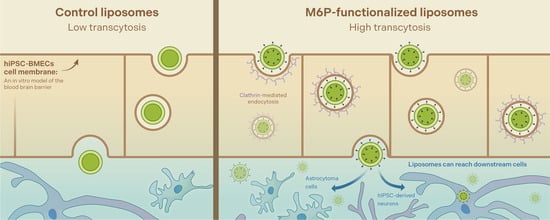
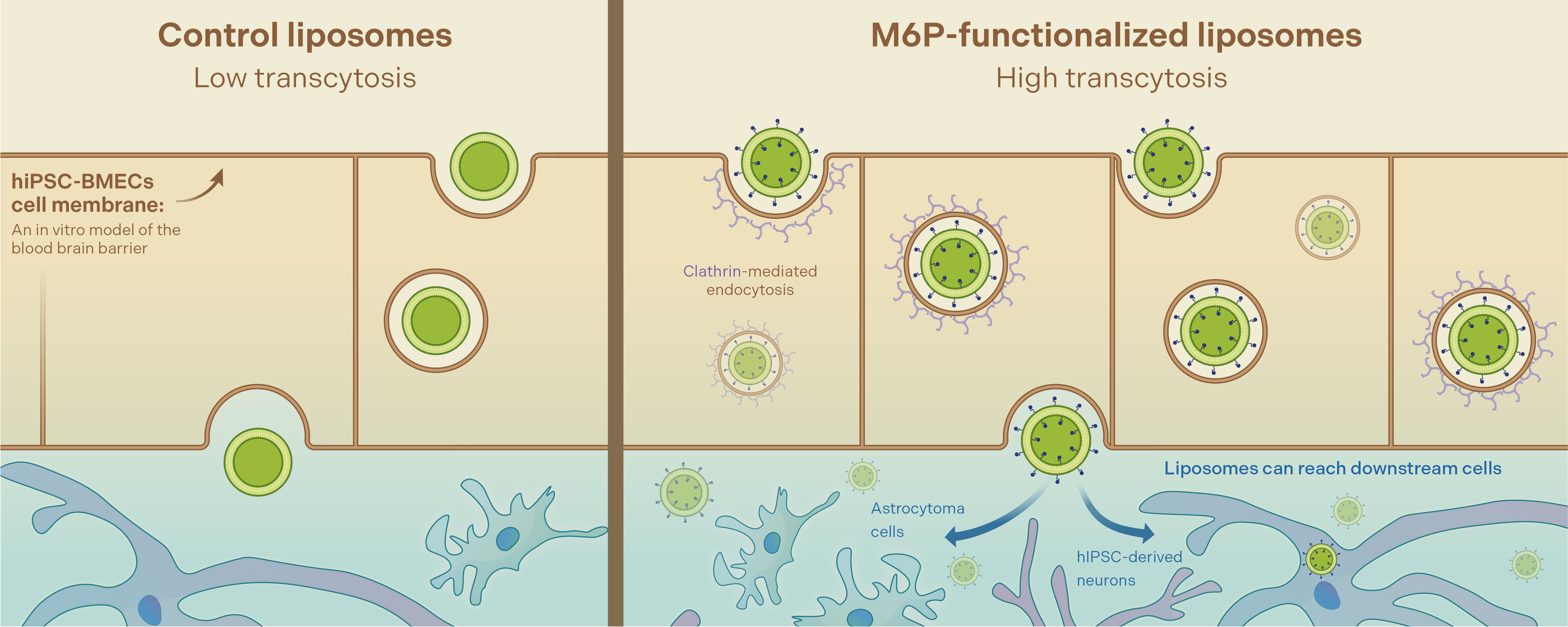
25]. Here, we demonstrate that M6P-functionalized liposomes show increased uptake in hiPSC-BMECs via a clathrin-dependent mechanism. Moreover, we observe enhanced transcytosis across hiPSC-BMECs, which is specific to the M6P ligand. Subsequent transcytosis assays demonstrated effective BBB crossing, with transport efficiency positively correlated with ligand density and reaching up to 55% of that observed with transferrin-mediated transcytosis. Following transcytosis, M6P liposomes delivered higher payloads to downstream hiPSC-derived neurons and astrocytoma cells compared to control formulations. By combining targeted nanocarrier engineering with a physiologically relevant human BBB model, our goal is to contribute to overcoming one of the most persistent challenges in neurotherapeutics: the effective transport of therapeutics across the BBB.
2. Materials and Methods
2.1. Synthesis of M6P Ligand and Control Molecules
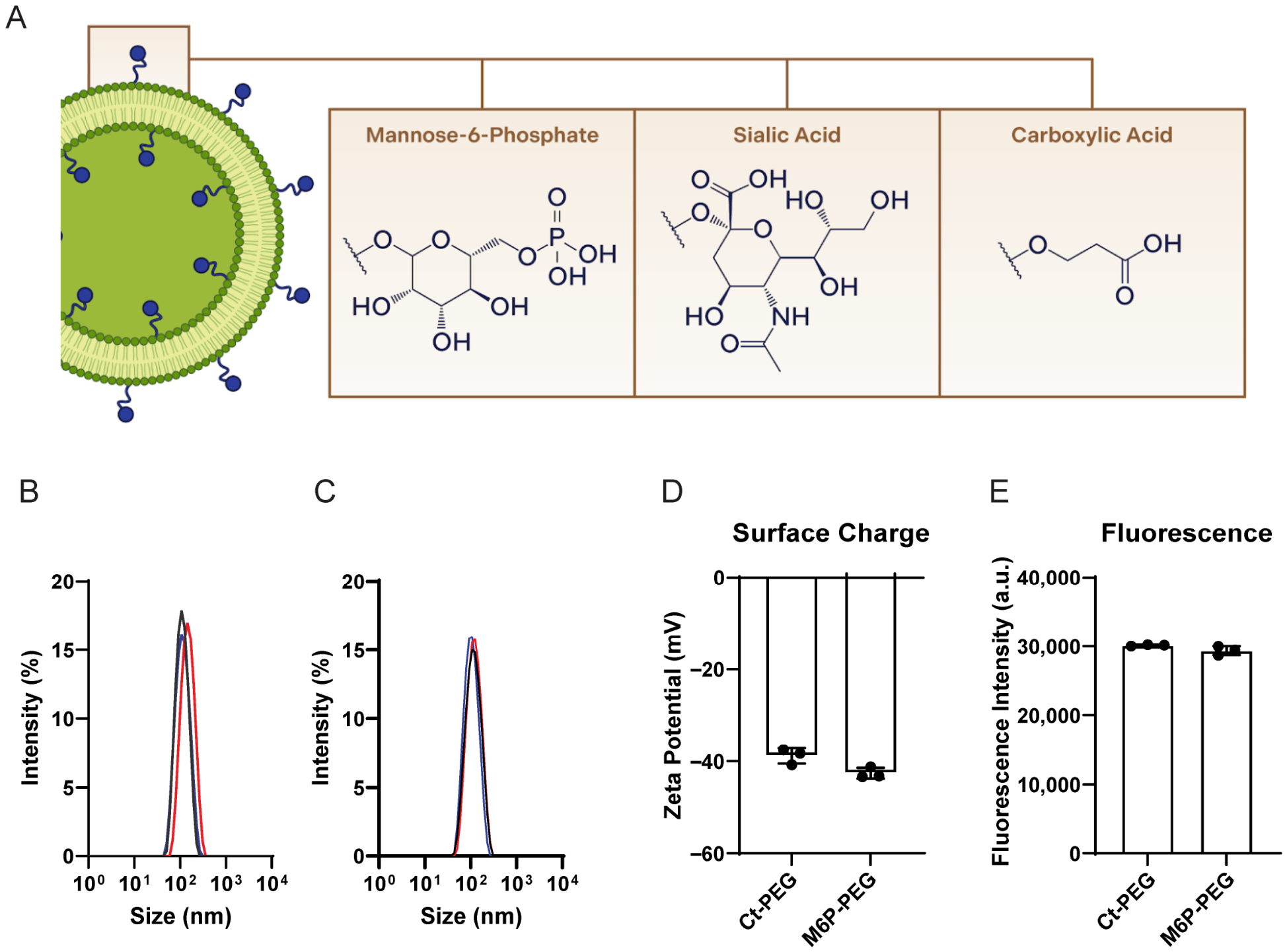
We synthesized DSPE-PEG-mannose-6-phosphate (M6PG), DSPE-PEG-sialic acid (SA), and DSPE-PEG-carboxylic acid (COOH) conjugates using a previously published protocol [
25]. The identity and purity of the prepared molecules were confirmed using the UPLC-ELSD method [
25].
2.2. Preparation of Liposomes
Liposomes were prepared using the thin-film hydration method. All developed formulations contained cholesterol (Cat. No. C8667, Sigma Aldrich, Burlington, MA, USA), unsaturated C18 phospholipid DOPC (Cat. No. 850375, Avanti Polar Lipids, Alabaster, AL, USA), and fluorescent marker DiO (Cat. No. 60011, Biotium, Fremont, CA, USA) or DiD (Cat. No. 60014, Biotium, Fremont, CA, USA). Synthesized lipid–PEG–ligand conjugates, DSPE-PEG8-M6P, DSPE-PEG8-SA, and DSPE-PEG8-COOH, and purchased ganglioside GM1 (Cat. No. 860094, Avanti Polar Lipids, Alabaster, AL, USA), were used for liposomes functionalization. DSPE-PEG8-OCH3 was used as a control (bp-22174, BroadPharm, San Diego, CA, USA). The overall concentration of the hydrophobic components in the final products was kept constant at 10 mM.
Lipid components were dissolved in methanol (Cat. No. P717.1, Carl Roth, BL, Switzerland), ethanol (Cat. No. 1HPH.1, Carl Roth, BL, Arlesheim, Switzerland), chloroform (Cat. No. 3313.1, Carl Roth, BL, Arlesheim, Switzerland), or mixtures thereof and mixed together. Organic solvent was removed using a rotary evaporator (50 °C, 150 mbar) to obtain thin lipid films, which were kept for an additional 2 h under vacuum (25 °C, 20 mbar) to remove residual solvents.
The dry films were hydrated using PBS (Cat. No. D8537, Sigma Aldrich, Burlington, MA, USA) to obtain the final lipid concentration of 10 mM. The resulting lipid suspension was then sonicated for 30 min at 35 °C at an ultrasound frequency of 37 kHz using an Elmasonic S 60 (H) sonicator (Elma Schmidbauer, Singen, Germany) and then extruded 10 times through a membrane with a pore size of 100 nm to optimize the size distribution (Cat. No. 610000, Avanti Polar Lipids, Alabaster, AL, USA).
2.3. Liposomes Characterization
The size and size distribution of prepared samples were measured using dynamic light scattering (DLS) and a Zetasizer Pro system (Malvern, Worcestershire, UK). The measurements were conducted at 25 °C, with an equilibration time of 120 s, using the backscattering detector. The attenuation factor was determined automatically (ZS Explorer, Malvern Panalytical, Worcestershire, UK). The sample was prepared by diluting the prepared liposomes in PBS (20-fold dilution). The size measurements were performed in three runs. A fluorescence filter was applied to mitigate any interference from the fluorescent dye. The scattering intensity-based size distributions are shown.
To determine the zeta potential of liposomes formulations, we used electrophoresis light scattering (ELS) and a Zetasizer Pro system (Malvern, Worcestershire, UK). The sample was prepared by diluting the original 10 mM liposomes stock with 10 mM NaCl solution (20-fold dilution). The instrument software (4.2.1 version, ZS Explorer, Malvern Panalytical, Worcestershire, UK) computed the ideal voltage and attenuation factor for each measurement. The equilibration time of 10 s was used. The measurements were conducted at 25 °C. The average zeta potential is reported.
The fluorescence of all formulations used to create each independent set of data was determined with a TECAN Infinite PRO 200 plate reader (Tecan Trading, Männedorf, Switzerland) to ensure the comparability of prepared formulations. The excitation wavelength was set according to the fluorescence marker used (488 for DiO and 640 for DiD) [
25].
2.4. hiPSCs Maintenance and hiPSC-BMECs Differentiation
The hiPSC line used in this study was ChiPSC12, and it was a gift from Dr. Amandine Grimm (Department of Biomedicine, University of Basel). hiPSCs were cultured in Matrigel-coated dishes (according to the manufacturer’s recommendations, Cat. No. 354277, Corning, New York, NY, USA) in mTeSR Plus medium (Cat. No. 100-0276, STEMCELL Technologies, Vancouver, BC, Canada) with 1% Pen/Strep (100 units/mL of penicillin and 0.1 mg/mL streptomycin (Cat. No. 300300, Sigma Aldrich, Burlington, MA, USA)). When the confluence of hiPSCs was up to 80%, cells were passaged after a 5 min incubation at 37 °C with CTS™ Versene™ solution (Cat. No. A423910, Thermo Fisher Scientific, Waltham, MA, USA). Then, using a 5 mL pipette, cells were gently dissociated and passaged as 1:3–1:8 split ratios onto Matrigel-coated six-well plates with the mTeSR Plus medium supplemented with 10 µM ROCK inhibitor Y27632 (Cat. No. 72307, STEMCELL Technologies, Vancouver, BC, Canada) for 24 h. Afterwards, the cells were kept with the mTSR Plus medium. For BMEC differentiation, we used hiPSCs up to passage 45 [
21].
For hiPSC-BMECs differentiation, we followed the protocol by Hernando et al., with slight modifications [
21]. hiPSCs were maintained in mTeSR Plus media as described above. Four days before differentiation induction (D-4), cells were washed with Dulbecco’s phosphate-buffered saline (DPBS, Cat. No. D8537, Sigma Aldrich, Burlington, MA, USA); 500 µL of TrypLE™ express enzyme (Cat. No. 12605036, Thermo Fisher Scientific, Waltham, MA, USA) was added to each well and passaged after a 5 min incubation at 37 °C. Next, cells were diluted at a ratio of 1:5 in mTeSR media, centrifuged for 5 min at 400×
g, and resuspended in mTeSR media supplemented with ROCK inhibitor Y27632 (10 µM).
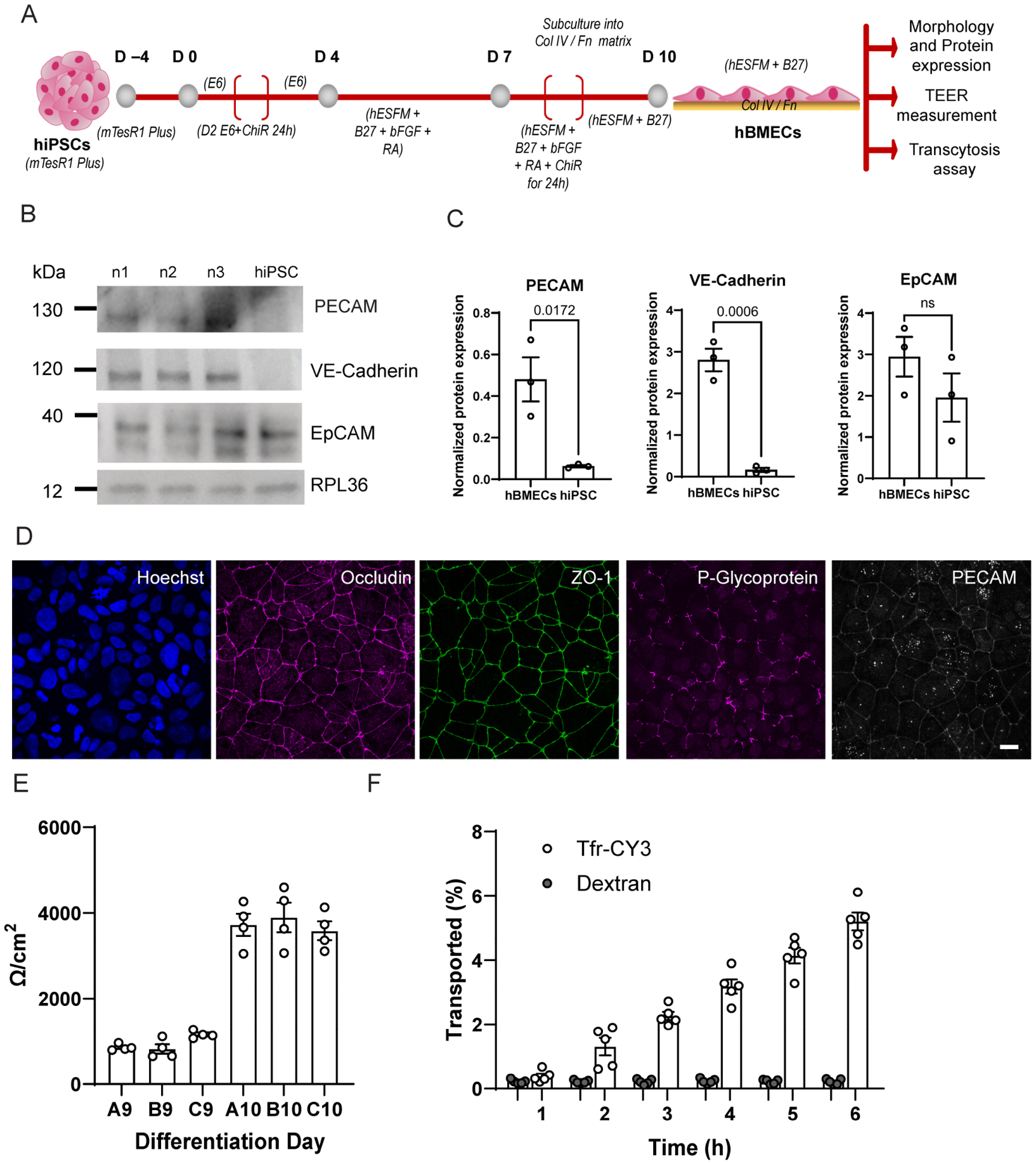
HiPSCs were seeded onto Matrigel-coated six-well plates at 3.1 K/cm2 cell density. To start the differentiation (D0), mTeSR was removed and changed to TeSR™-E6 media (Cat. No. 05946, STEMCELL Technologies, Vancouver, BC, Canada). We repeated the procedure daily for four days (D0–D3). At D2, the medium was changed to E6 medium supplemented with 6 µM ChIR to promote mesoderm induction during 24 h. Then, the medium was switched to Human Endothelial Serum-Free Medium (hESFM, Cat. No. 11111044, Thermo Fisher Scientific, Waltham, MA, USA) supplemented with 1X B27, 20 ng/mL bFGF (Cat. No. 100-18B-50UG, Thermo Fisher Scientific, Waltham, MA, USA), and 10 µM retinoic acid (RA, Cat. No. 044540.77, Thermo Fisher Scientific, Waltham, MA, USA).
Cells were maintained in this medium for two consecutive days without a medium change. After those two days, the medium was removed, and the wells were washed with DPBS and incubated with TrypLE for 10 to 15 min at 37 °C until a single-cell suspension was formed. The cells were then subcultured onto 6.5 mm Transwell® filters with a 3 µm pore size (Cat. No. 3452, Corning, New York, NY, USA), previously coated with a mixture of 400 μg/mL collagen IV (Cat. No. C5533, Sigma Aldrich, Burlington, MA, USA) and 100 μg/mL fibronectin (Cat. No. F1141, Sigma Aldrich, Burlington, MA, USA) in water; 1 × 10⁶ cells were seeded on each transwell membrane with hESFM supplemented with 1X B27, 20 ng/mL bFGF, 10 µM RA, and 6 µM ChIR for 24 h. Then, the medium was changed to hESFM media with B27 without bFGF, RA, and ChIR.
2.5. TEER Measurement
TEER was measured using STX2 chopstick electrodes and an EVOM2 voltohmmeter (World Precision Instruments, Friedberg, Germany) 48–72 h after subculturing. TEER values show the mean of independent differentiations, and all values were corrected for the resistance of an empty, coated Transwell filter. TEER was used as a monolayer tightening reference, with TEER below 3000 Ω·cm2 at 72 h post-subculture omitted for follow-up experiments.
2.6. Astrocytoma Cells
Astrocytoma cell line 1321 N1 astrocytoma (Cat. No. 86030402, Sigma Aldrich, Burlington, MA, USA) was cultured in high glucose DMEM medium supplemented with GlutaMAX™ and phenol red (Cat. No. 11594446, Thermo Fisher Scientific, Waltham, MA, USA), 10% heat-inactivated fetal bovine serum (FBS, Cat. No. 11550356, Thermo Fisher Scientific, Waltham, MA, USA), and 1% Pen/Strep.
2.7. hiPSC Differentiation to Neurons
The iPSC line used for neuronal differentiation was a gift from Dr. Eline Pecho-Vrieseling. The line was generated from healthy adult human dermal fibroblast lines from a 32-year-old female (Cat. No. C-013-5C, Invitrogen, Waltham, MA, USA) and has an inducible Ngn2 gene under a doxycycline promoter. The neuronal differentiation protocol is described in Russell et al. [
26] with smaller modifications. Briefly, hiPS cells were plated on Matrigel in a proliferation medium composed of DMEM/F12 with GlutaMAX™ (Cat. No. 10565018, Thermo Fisher Scientific, Waltham, MA, USA) supplemented with 1X B-27™ supplement (Cat. No. 100-18B-50UG, Thermo Fisher Scientific, Waltham, MA, USA) and 1x N-2 supplement (Ca. No. 17502048, Thermo Fisher Scientific, Waltham, MA, USA), 1% Pen/Strep, 10 ng/mL hEGF (Cat. No. PHG0311, Thermo Fisher Scientific, Waltham, MA, USA), 10 ng/mL hFGF (Cat. No. RFGFB50, Invitrogen, Waltham, MA, USA), and 10 µM Rock inhibitor (RI) for 1 day and 1 µg/mL doxycycline for 3 days. The progenitors were kept frozen in a Cryostor freezing medium (Ca. No. 100-1061, STEMCELL Technologies, Vancouver, BC, Canada) or replated for immediate experiments. Progenitors were thawed and seeded on top of the cover glass in a 12-well plate format. A total of 3.0 × 10
5 cells were plated in a neuronal differentiation medium composed of the Neurobasal™ medium (Cat. No. 21103049, Thermo Fisher Scientific, Waltham, MA, USA), B27, N2 supplements, 1% Pen/Strep/Glutamax supplemented with 10 ng/mL BDNF (Cat. No. 248-BD, R&D Systems, Minneapolis, MN, USA) and 10 ng/mL GDNF (Cat. No. 212-GD, R&D Systems, Minneapolis, MN, USA). Starting from day 2 of the co-culture, medium change was done every other day.
2.8. Western Blot and Immunofluorescence
hiPSC-BMECs and iPSCs were harvested, washed twice with ice-cold PBS (Cat. No. D8537, Sigma Aldrich), and lysed in a RIPA Lysis and Extraction Buffer (Cat. No. 89900, Thermo Fisher Scientific, Waltham, MA, USA) supplemented with a cOmplete™ EDTA-free protease inhibitor mixture (Cat. No. 11836170001, Sigma Aldrich, Burlington, MA, USA). Lysates were incubated on ice for 15 min and cleared via centrifugation (10,000× g) for 10 min at 4 °C. Supernatants were collected, and the protein concentration was determined using a BCA assay kit (Cat. No. 23225, Thermo Fisher Scientific, Waltham, MA, USA). Lysates were resolved using standard SDS-PAGE gels (Mini-PROTEAN TGX Stain-Free Precast Gels 4–20%, Cat. No. 4568091, Bio Rad, Hercules, CA, USA), and after blocking, blots were incubated with primary antibodies overnight at 4 °C. After washing, the blots were incubated with secondary antibodies and visualized using a SuperSignal™ Femto (Cat. No. 34095, Thermo Fisher Scientific, Waltham, MA, USA) in an Odyssey® Imager C (LI-COR, Lincoln, NE, USA). Quantification of the Western blot was done using Fiji Image J software v1.38e (NIH, Bethesda, MD, USA) and an integrated density plugin. The values were normalized to the expression of the loading control.
For immunostaining, hiPSC-BMECs on glass coverslips (24-well plate format, 0.5 × 10⁶ cells/well) were fixed for 10 min in 4% PFA (Cat. No. 1.00496, Sigma Aldrich, Burlington, MA, USA) at room temperature, permeabilized with PBS containing 1 mM MgCl2, 0.1 mM CaCl2, and 0.1% Triton™ X-100 (Cat. No. T8787, Sigma Aldrich, Burlington, MA, USA), blocked with 5% BSA (Cat. No. 10711454001, Sigma Aldrich, Burlington, MA, USA) in PBS, and labeled with primary antibodies in PBS with 5% BSA overnight at 4 °C and secondary antibodies for 45 min at room temperature. PBS washing was performed after each antibody incubation. Coverslips were mounted in ProLong™ Diamond Antifade Mountant (Cat. No. P36965, Invitrogen, Waltham, MA, USA).
Anti-GluR1, Bassoon, and MAP2 were purchased from Synaptic Systems. Anti-EpCAM, anti-VE Cadherin, anti-M6PR-CI, anti-P-Glycoprotein, anti-Tfr receptor, anti- RPL36, anti-GLUT1, Phalloidin, anti-Occludin, and anti-ZO-1 antibodies were purchased from Abcam (Cambridge, UK). All secondary antibodies were from Abcam (Cambridge, UK).
2.9. Particle Uptake Experiments
Uptake experiments were conducted in cells cultured on cover glass in 24-well plates coated with a mixture of 400 μg/mL collagen IV (Cat. No. C5533, Sigma Aldrich, Burlington, MA, USA) and 100 μg/mL fibronectin (Cat. No. F1141, Sigma Aldrich, Burlington, MA, USA) in water; 0.5 × 10⁶ cells were seeded in each well with hESFM (Cat. No. 11111044, Thermo Fisher Scientific, Waltham, MA, USA) supplemented with the B-27™ supplement (Cat. No. 17504044, Thermo Fisher Scientific, Waltham, MA, USA), 20 ng/mL bFGF (Cat. No. 100-18B-50UG, Thermo Fisher Scientific, Waltham, MA, USA), 10 μM retinoic acid (Cat. No. R2625, Sigma Aldrich, Burlington, MA, USA), and 3 μM CHIR99021 (Cat. No. 72052, STEMCELL Technologies, Vancouver, BC, Canada) for 24 h. Then, the medium was changed to hESFM (Cat. No. 11111044, Fisher Scientific, Waltham, MA, USA) with the B-27™ supplement (Cat. No. 17504044, Thermo Fisher Scientific, Waltham, MA, USA) without bFGF, retinoic acid, and CHIR99021. On the day of the experiment, liposomes were diluted in the FluoroBrite™ DMEM medium (Cat. No. A1896701, Thermo Fisher Scientific, Waltham, MA, USA) supplemented with GlutaMAX™ (Cat. No. 35050061, Thermo Fisher Scientific, Waltham, MA, USA), penicillin–streptomycin (Cat. No. 300300, Sigma Aldrich, Burlington, MA, USA), and the B-27™ supplement (Cat. No. 17504044, Thermo Fisher Scientific, Waltham, MA, USA).
Cells were incubated for the specific time point described in the experiment with the liposome formulations at 37 °C under a 5% CO2-humidified atmosphere on an orbital shaker (50 rpm). Next, the cells were washed three times with PBS to remove unbound liposomes. To visualize cells, the cell membrane was stained with CellMask (1:1000 dilution in PBS, 10 min at room temperature, Cat. No. H32721, Thermo Fisher Scientific, Waltham, MA, USA) or SPY555-actin (according to the manufacturer’s instructions, Cat. No. SC301, Spirochrome, Zürich, Switzerland). Nuclei were stained with Hoechst 33342 (Cat. No. H3570, Thermo Fisher Scientific, Waltham, MA, USA) or DAPI (Cat. No. D1306, Thermo Fisher Scientific, Waltham, MA, USA), and liposomes were directly visualized by DiO or DiD fluorescence. After live cell staining, cells were washed three times with PBS, fixed for 10 min in 4% PFA (Cat. No. 28908, Invitrogen) at room temperature, and mounted on glass slides in ProLong™ (Cat. No. P36930, Invitrogen, Waltham, MA, USA).
2.10. Image Acquisition and Analysis
Fluorescence signals were imaged with a Zeiss LSM-700 system with a Plan-Apochromat 40×/NA 1.30 oil DIC objective (Carl Zeiss, Oberkochen, Germany) and operated with ZEN 2010 software Version 6.0 (Carl Zeiss, Oberkochen, Germany). All images were acquired with identical microscope settings within individual experiments. Saturation was avoided by using image acquisition software (ZEN 2010 software (Carl Zeiss, Oberkochen, Germany) to monitor intensity values. For any image adjustment, identical settings were always applied to all cells. For quantification, values were averaged over multiple cells from at least three independent cultures and liposomes preparation.
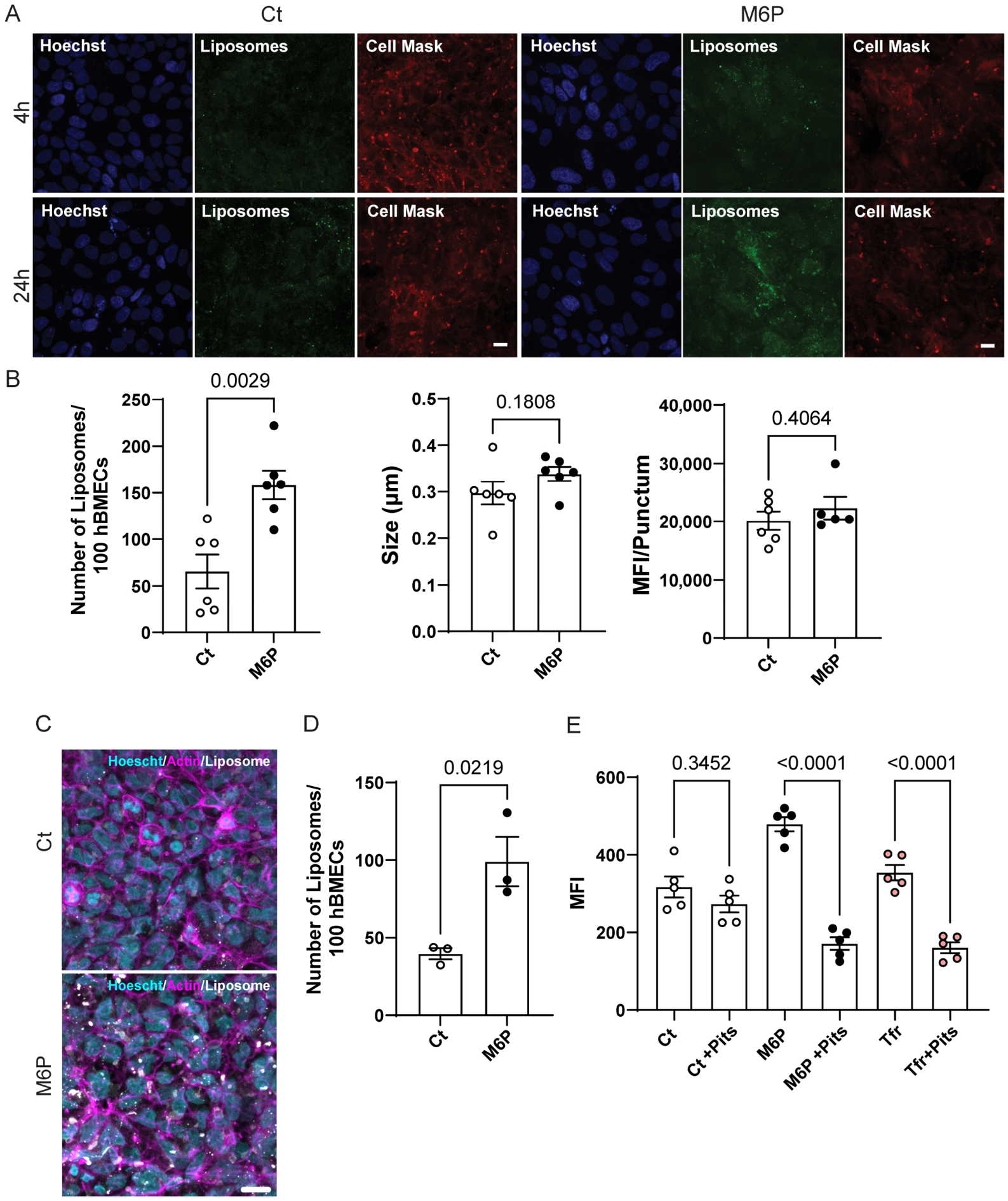
Quantification of images was done using Fiji Image J software v1.38e software (NIH, Bethesda, MD, USA). Images were subtracted from the background, and after setting an automated threshold, the “Analyze Particles” plugin was used to determine the number, size and MFI of liposomes.
2.11. Endocytosis Inhibitor and Liposomes Uptake Measured by Flow Cytometry
hiPSC-BMECs were cultured in 24-well plates coated with a mixture of 400 μg/mL collagen IV (Cat. No. C5533, Sigma Aldrich, Burlington, MA, USA) and 100 μg/mL fibronectin (Cat. No. F1141, Sigma Aldrich, Burlington, MA, USA) in water. A total of 0.5 × 10⁶ cells were seeded in each well with hESFM (Cat. No. 11111044, Fisher Scientific, Waltham, MA, USA) supplemented with the B-27™ supplement (Cat. No. 17504044, Fisher Scientific), penicillin–streptomycin (Cat. No. 300300, Sigma Aldrich, Burlington, MA, USA), 20 ng/mL bFGF (Cat. No. 100-18B-50UG, Fisher Scientific, Waltham, MA, USA), 10 μM retinoic acid (Cat. No. R2625, Sigma Aldrich, Burlington, MA, USA), and 3 μM CHIR99021 (Cat. No. 72052, STEMCELL Technologies, Vancouver, BC, Canada) for 24 h. Then, the medium was changed to hESFM (Cat. No. 11111044, Fisher Scientific, Waltham, MA, USA) with the B-27™ supplement (Cat. No. 17504044, Thermo Fisher Scientific, Waltham, MA, USA) without bFGF, retinoic acid, or CHIR99021.
On the day of the experiment, the cells were preincubated with 25 μM Pitstop 2 (Cat. No. SML1169, Sigma Aldrich, Burlington, MA, USA) for 15 min, followed by liposomes treatment for a further 2 h at a total lipid concentration of 500 μM in the continued presence of the inhibitors in the FluoroBrite™ DMEM medium (Cat. No. A1896701, Fisher Scientific, Waltham, MA, USA) supplemented with GlutaMAX™ (Cat. No. 35050061, Fisher Scientific, Waltham, MA, USA), penicillin and streptomycin (Cat. No. 300300, Sigma Aldrich, Burlington, MA, USA), and the B-27™ supplement (Cat. No. 17504044, Fisher Scientific, Waltham, MA, USA) at 37 °C under a 5% CO2-humidified atmosphere on an orbital shaker (50 rpm). Cells were then washed three times with PBS (Cat. No. D8537, Sigma Aldrich, Burlington, MA, USA) to remove unbound liposomes.
After washing, hiPSC-BMECs were incubated for 5 min in phenol red-free trypsin/EDTA solution (0.25% trypsin and 0.2% EDTA, Cat. No. 25200056, Thermo Fisher Scientific, Waltham, MA, USA). The resulting cell suspension was filtered through a 70 µm nylon mesh cell strainer (Cat. No. 352350, Corning, New York, NY, USA) to remove aggregates. Cells were stained for 5 min with propidium iodide (final concentration 1.2 µg/mL, Cat. No. P4170, Sigma Aldrich, Burlington, MA, USA). Flow cytometry was performed immediately afterward using a BD LSR Fortessa™ flow cytometer (BD Bioscience, Heidelberg, Germany).
Forward and side scattering detectors were used to discriminate between single cells, cell debris, or aggregates. The discrimination between live and dead cells was based on the intensity of the propidium iodide signal, and liposome uptake was determined by DiO fluorescence intensity. For propidium iodide, the excitation wavelength was 561 nm, and emission was detected using a 610/20 nm filter. For DiO, the wavelength of 488 nm was set for excitation, and the fluorescence was measured using a 512/25 nm filter. Mean fluorescence values from at least three parallel wells were averaged to quantify particle uptake, and the cell autofluorescence was subtracted from the fluorescence values.
2.12. Transcytosis Assay
Transcytosis assays were performed using human-induced pluripotent stem cell-derived brain microvascular endothelial cells (hiPSC-BMECs) seeded on 12-well Transwell® inserts with 3 μm pore size (Cat. No. 3402, Corning, New York, NY, USA). Cells were cultured at a density of 1 × 10⁶ cells per insert and allowed to mature until tight junctions were established. Barrier integrity was verified by transendothelial electrical resistance (TEER) measurements using an EVOM3 voltohmmeter (World Precision Instruments, Friedberg, Germany). Only monolayers exhibiting TEER values ≥ 3000 Ω·cm2 were included in downstream assays.
To further confirm the integrity of the barrier and rule out paracellular leakage, 70 kDa FITC-dextran (Cat. No. 46945, Thermo Fisher Scientific, Waltham, MA, USA) or Rhodamine-dextran (Cat. No. R9379, Sigma Aldrich, Burlington, MA, USA) was added to the apical compartment in select wells. Samples were collected from the basolateral compartment during or after 6 h incubation, and fluorescence intensity was quantified using a TECAN Infinite® PRO 200 plate reader (Tecan Trading AG, Männedorf, Switzerland). Monolayers with detectable dextran leakage above background levels were excluded from analysis.
Before initiating the transcytosis assay, monolayers were equilibrated in an experimental medium consisting of FluoroBrite™ DMEM (Cat. No. A1896701, Fisher Scientific, Waltham, MA, USA) supplemented with GlutaMAX™ (Cat. No. 35050061, Fisher Scientific, Waltham, MA, USA), penicillin–streptomycin (Cat. No. 300300, Sigma Aldrich, USA), and the B-27™ supplement (Cat. No. 17504044, Fisher Scientific, Waltham, MA, USA). The plates were maintained under a 5% CO2-humidified atmosphere on an orbital shaker (50 rpm) for 30 min.
Fluorescently labeled liposomes, formulated with DiO (Cat. No. 60011, Biotium, Fremont, CA, USA) or DiD (Cat. No. 60014, Biotium, Fremont, CA, USA), were diluted in an experimental medium to a final lipid concentration of 100 μM and added to the apical chamber. In each experimental condition, 100 μL aliquots were collected from the basolateral chamber at designated time points (as described in the figure legends) and immediately replaced with 100 μL of fresh experimental medium to maintain a constant volume.
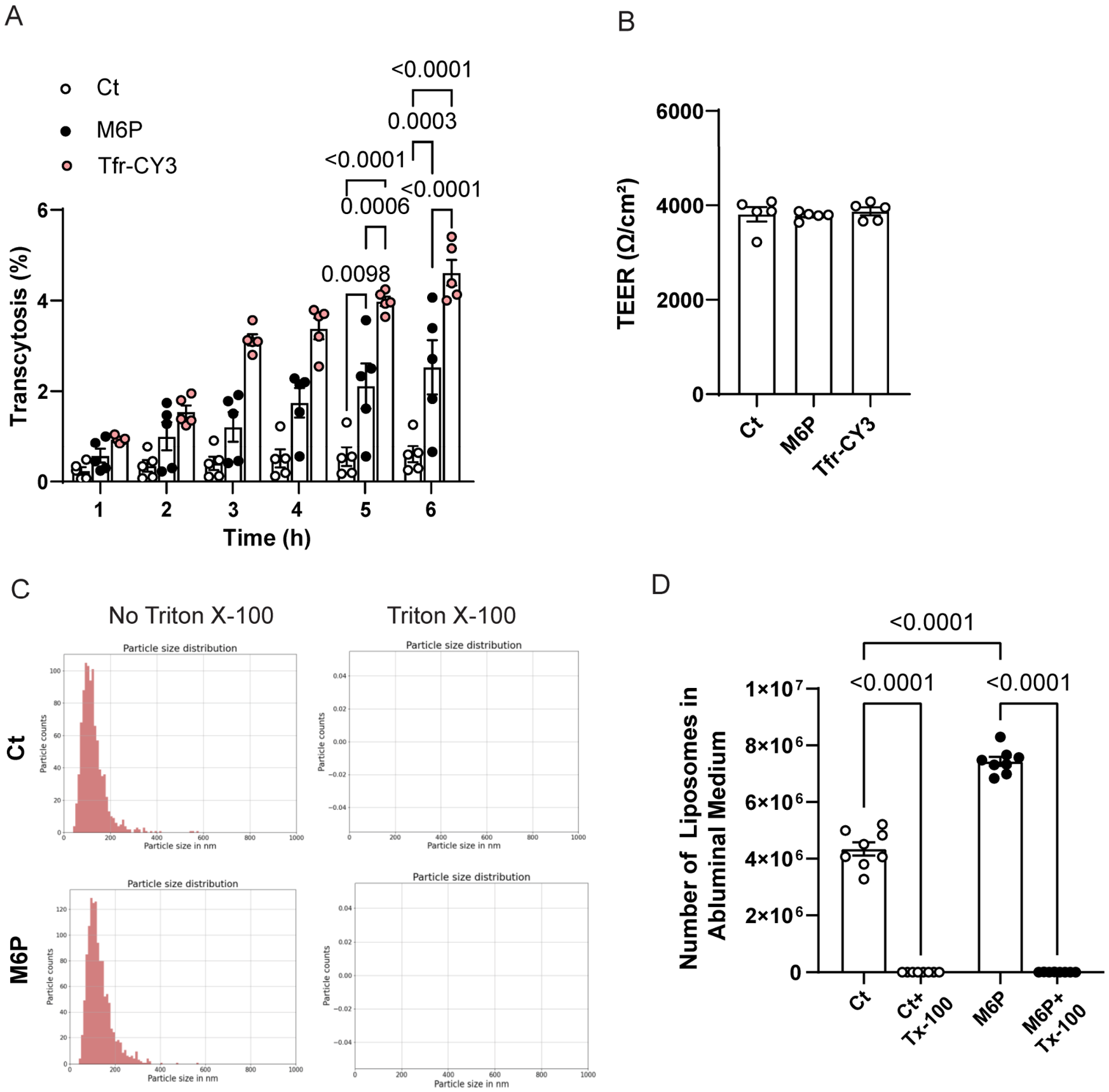
The fluorescence of transported liposomes was measured using a TECAN Infinite PRO 200 plate reader (Tecan Trading, Männedorf, Switzerland). Values were background-corrected by subtracting the fluorescence of the blank medium, and the amount of transported liposomes was calculated as a percentage of the initial input fluorescence (100%). All samples were measured in technical duplicates or triplicates. As a reference for receptor-mediated transcytosis, transferrin-Cy3 (Cat. No. T2872, Thermo Fisher Scientific, Waltham, MA, USA) was included in parallel wells and treated identically. Experiments were performed with at least three independent biological replicates and liposomes preparation unless otherwise indicated.
2.13. Nanoparticle Tracking Analysis
The integrity of liposomes was analyzed using a nanoparticle tracking analysis (NTA) system from ParticleMetrics (Inning am Ammersee, Germany). The COLOC5POSITIONS script was used, and the conditions were verified using 0.1 μm of TetraSpeck™ microspheres (Cat. No. T7279, Thermo Fisher Scientific, Waltham, MA, USA), fluorescent in dilutions 1:400 and 1:1000. Once the system was aligned, the sample channel was washed several times. At the end of the transcytosis experiment, a 5 µL aliquot was taken from the abluminal medium and diluted in H2O to a final dilution between 1:100 and 1:10,000 (Ct or M6P). Half of the volume was mixed with Triton™ X-100 (Cat. No. T8787, Sigma Aldrich, Burlington, MA, USA) to a final concentration of 0.1%, and 1 mL was injected to measure particle concentration in fluorescence and scattering mode.
2.14. Statistical Analysis
Data analysis was performed with GraphPad Prism version 8.0 (GraphPad Software, La Jolla, CA, USA). Individual data sets were tested for normality with the Shapiro–Wilk, D’Agostino and Pearson, or Kolmogorov–Smirnov test. The statistical significance of differences between groups was assessed by unpaired or paired two-tailed Student’s
t-test, Mann–Whitney test, one-way ANOVA with Tukey post hoc test. Data are presented as mean ± standard error of the mean (s.e.m.). A Table with the raw data obtained in this study is available in
Supplementary Materials.
4. Conclusions
The present study demonstrates that mannose-6-phosphate (M6P) functionalization significantly enhances the uptake and transcytosis of liposomes across a physiologically relevant in vitro blood–brain barrier (BBB) model, thereby offering a promising strategy for CNS-targeted delivery. Using hiPSC-derived human brain microvascular endothelial cells (hiPSC-BMECs), we developed a BBB model with robust barrier properties characterized by TEER values around 4000 Ω·cm
2 and low paracellular permeability to 70 kDa dextran, surpassing earlier models using immortalized or primary cells [
13,
15]. These data confirm the effectiveness of Wnt/β-catenin activation via CHIR99021 in enhancing endothelial identity and BBB functionality, aligning with previous reports [
22,
24].
Surface functionalization of liposomes with M6P significantly increased cellular uptake in hiPSC-BMECs compared to control PEGylated liposomes, confirming prior findings in other cell types where M6P enhanced liposomal uptake via the clathrin-mediated pathway [
18]. Clathrin-dependence of this uptake was substantiated by pharmacological inhibition with Pitstop 2, which markedly reduced M6P liposomes internalization but had minimal impact on control liposomes (
Figure 3E), suggesting a relevant role for clathrin-dependent endocytic process.
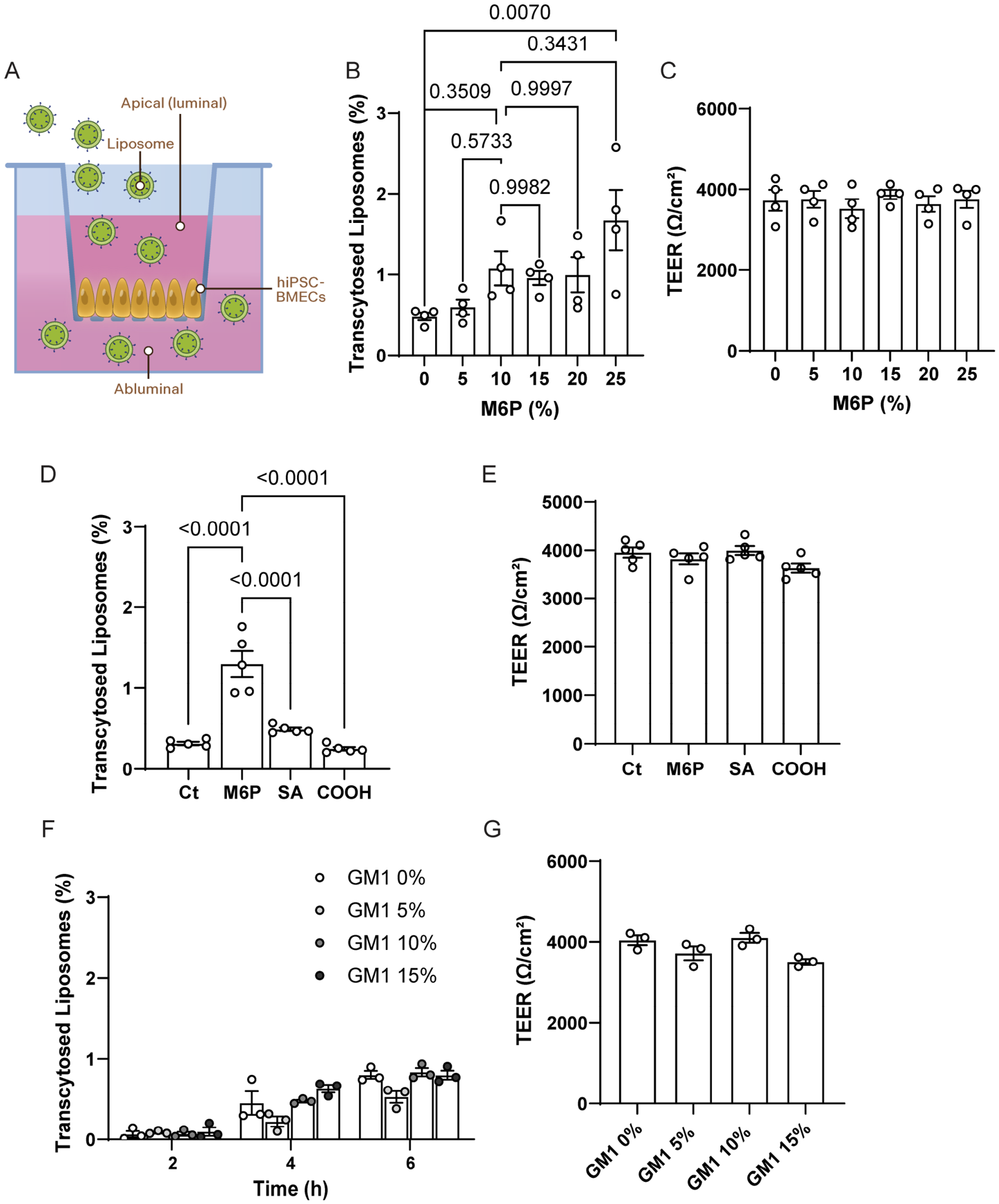
Crucially, M6P conjugation also enhanced the transcytosis of liposomes across the BBB model. Transwell assays revealed a dose-dependent increase in liposome transport with increasing M6P ligand density, plateauing at ~10 mol% surface content (
Figure 4B). This plateau suggests receptor saturation or trafficking bottlenecks, consistent with models of receptor-mediated transcytosis [
30]. Compared to control ligands (sialic acid and carboxyl group), only M6P induced significant transcytosis, reinforcing ligand-specific receptor engagement. Transcytosed liposomes maintained their structural integrity, as verified by detergent disruption and nanoparticle tracking analysis (
Figure 5C,D), indicating successful vesicular transport rather than passive diffusion or dye leakage.
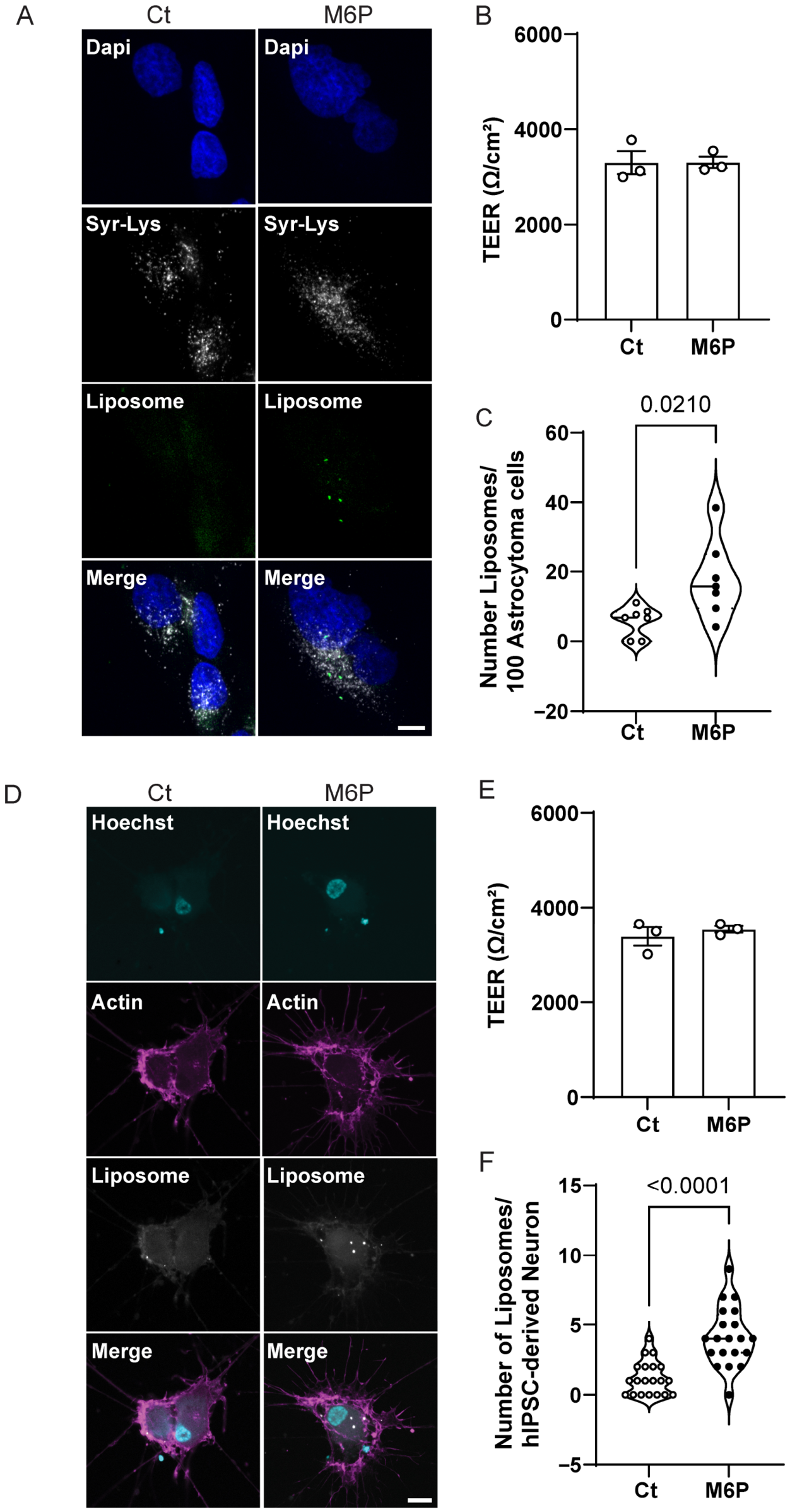
Furthermore, the M6P-mediated enhancement in transcytosis translated into increased liposomes delivery to post-endothelial target cells. Astrocytoma cells and hiPSC-derived neurons located in the abluminal compartment accumulated significantly higher levels of M6P liposomes compared to controls, with intracellular localization suggesting endosomal or lysosomal processing. Importantly, M6P liposomes achieved transcytosis efficiencies of ~55% of that of transferrin-Cy3 (
Figure 5A), a well-established ligand for receptor-mediated BBB transport [
28,
29]. This level of performance compares favorably with other ligand-targeted systems, which typically achieve 10–30% of transferrin efficiency under similar conditions [
29]. Interestingly, the comparison with ganglioside GM1-functionalized liposomes revealed only modest effects on transcytosis (
Figure 4F) despite GM1’s known role in raft-mediated endocytosis and neuronal targeting [
31,
36]. This underscores the superior specificity and efficacy of M6P as a ligand in crossing the BBB.
Our findings build upon our previous work demonstrating that M6P-functionalized liposomes exhibit enhanced cellular uptake across multiple cell types compared with structurally related control formulations [
25]. In that study, M6P-mediated uptake was shown to be ligand-specific, as neither similarly anionic liposomes nor structurally related glycans reproduced the effect. Moreover, uptake of M6P was markedly reduced by Pitstop 2 treatment, supporting the involvement of a clathrin-associated endocytic pathway. Free M6P competition experiments also partially reduced liposome internalization, suggesting participation of an M6P-sensitive receptor pathway, although not definitively establishing CI-M6PR-specific causality. Together with the current data, these observations support the conclusion that M6P-functionalization promotes ligand-dependent and clathrin-sensitive uptake and transcytosis across hiPSC-derived BMECs. Importantly, the present study extends these earlier findings by demonstrating that enhanced uptake is associated with increased transport across a physiologically relevant human BBB model and improved downstream delivery to neurons and astrocytoma cells. Although CI-M6PR represents a biologically plausible mediator based on its known role in M6P trafficking and clathrin-associated internalization, the current data do not exclude the possibility that additional glycan-sensitive uptake mechanisms contribute to the observed phenotype. Future studies employing receptor-interference approaches, including free M6P or IGF2 competition, receptor-blocking antibodies, or CI-M6PR knockdown/knockout models, will therefore be important to establish receptor-specific causality more definitively (
Table 1).
While the present study establishes M6P-functionalization as a strategy to enhance liposome uptake and transcytosis across a human in vitro BBB model, it does not yet demonstrate the delivery of a therapeutic cargo or functional rescue in downstream cells. Future studies should evaluate cargo-loaded M6P-liposomes, including small molecules, proteins/enzymes, or nucleic acids, and determine whether M6P decoration influences intracellular routing, cargo release, and bioavailability. Given the known role of M6P in lysosomal trafficking, this strategy may be particularly suitable for cargos intended for endosomal or lysosomal delivery, although it may require additional formulation optimization for cargos requiring cytosolic release. In vivo biodistribution, brain penetration, safety, and disease-model efficacy studies will be required before therapeutic relevance can be established.