1. Introduction
As a specialized form of modified-release formulation, dual-release sustained formulations can be designed for the chronological characteristics of disease and integrating the physicochemical properties of the drug substance with its absorption profile in vivo, thereby enabling synergistic interaction between immediate-release and sustained-release components to enhance therapeutic efficacy and fulfill specific clinical requirements [
1,
2].
However, due to the formulation characteristics, it precisely increases the complexity of generic development, particularly for the multiple-unit pellet system (MUPS). Conventional generic development relies primarily on trial-and-error approaches, wherein material ratios and weight gains of coating are adjusted and optimized to achieve curve fitting with the reference product in various dissolution media conditions, thereby increasing the probability of success in bioequivalence studies. This approach is associated with high trial-and-error costs and significant risks. Therefore, establishing quality-related dissolution conditions through PBPK (physiologically based pharmacokinetic) modeling and IVIVR (in vitro and in vivo relationship) analysis has become increasingly critical for guiding formulation development and mitigating risks in the generic development of dual-release sustained-release products [
3,
4,
5].
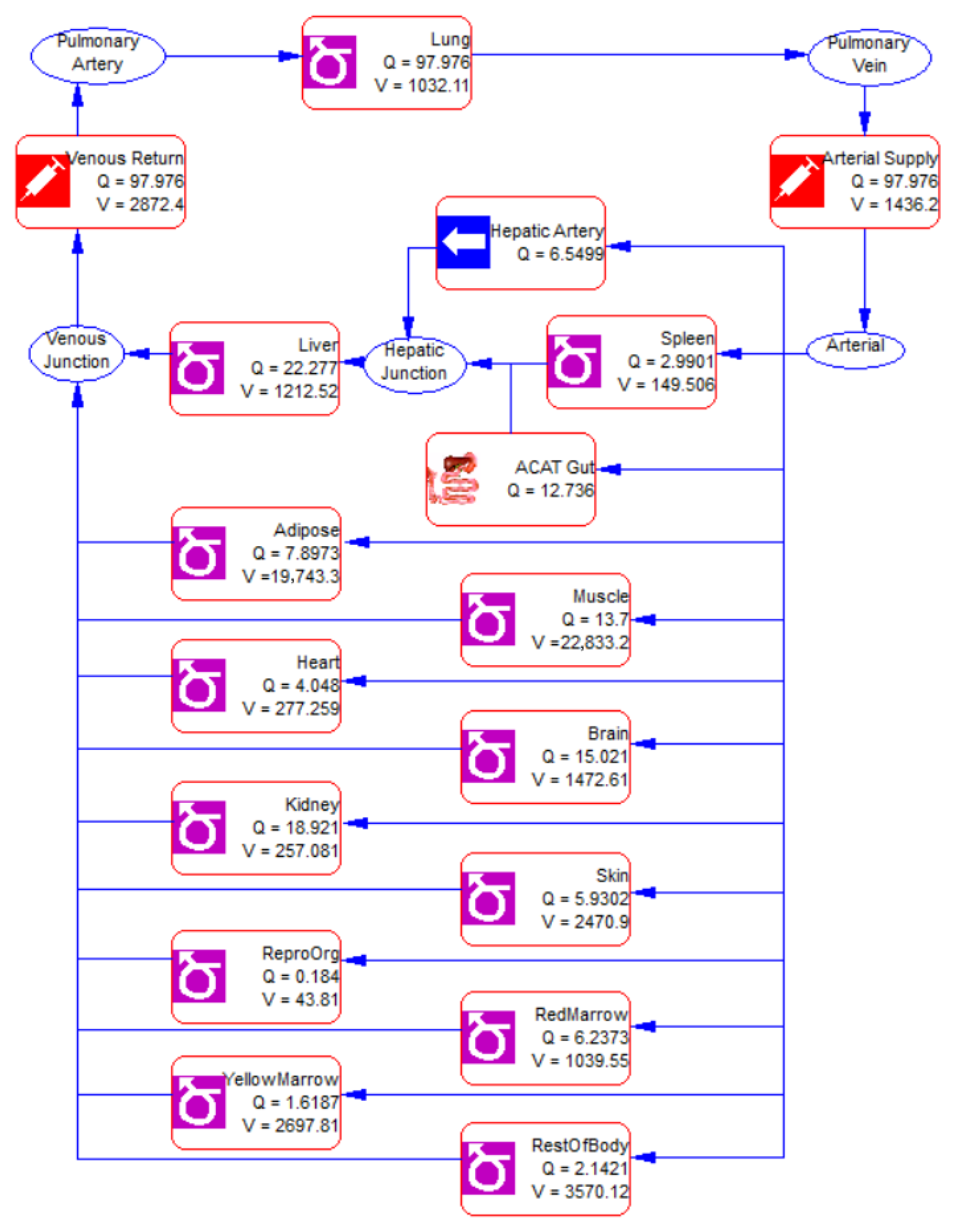
PBPK models are constructed through the integration of drug physicochemical properties, formulation characteristics, and physiological, biochemical, and anatomical parameters of the organism [
6,
7,
8]. By treating each tissue or organ as a compartment connected via blood flow [
9,
10], PBPK models simulate the kinetic processes of drug absorption, distribution, metabolism, and excretion (A.D.M.E) in biological tissues, as well as concentration–time profiles, thereby predicting drug absorption and metabolic processes in vivo [
5]. Currently, the application of PBPK models, predicting pharmacokinetic behavior in animals, humans and diverse populations (age, ethnicity, etc.) through drug–drug interactions, has been widely adopted in new drug development [
11,
12,
13] and regulatory review [
14,
15,
16,
17].
Among the various commercial pharmacokinetic software platforms available, GastroPlus
TM is a commonly used simulation and modeling platform [
18]. It can establish a PBPK model by integrating pharmacokinetic data from intravenous administration, immediate-release formulations, or enteric-coated formulations, utilizing the advanced compartmental absorption and transit (ACAT) model as the absorption model [
19]. Prediction capability for oral drug absorption can be enhanced through incorporation of multiple absorption and metabolic factors [
20,
21]. Furthermore, the software enables establishing linear or nonlinear correlations between in vitro drug release and in vivo absorption through an IVIVR based on a PBPK model [
22,
23,
24]. By calculating the fold error ratio of key pharmacokinetic parameters, in vivo pharmacokinetic processes can be predicted from in vitro dissolution data.
Difene
® (Diclofenac sodium dual-release enteric-coated capsule), a classic dual-release formulation product, comprises enteric-coated pellets and sustained-release pellets. The enteric-coated pellets minimize gastric irritation from the active ingredient while ensuring rapid drug release in the intestine, enabling rapid entry of Diclofenac sodium into the systemic circulation, whereas the sustained-release pellets maintain prolonged release of Diclofenac sodium. The combination of these two pellet types generates favorable pharmacokinetic characteristics [
25]. The product was approved in China in 2001. Currently, no generic product is approved in the domestic market of China, and no studies involving the application of PBPK models or IVIVR to guide formulation development were published in the field of generic development.
In this study, Difene® was chosen as a reference drug, and GastroPlusTM (version 9.8.3) (Simulation Plus, Inc., Research Triangle Park, NC, USA) was used as a simulation tool to establish a PBPK model and IVIVR of the reference product. Quality-related media condition was validated through IVIVR and was used for formulation screening of the generic product. Pharmacokinetic studies in beagle dogs were performed to validate the bioequivalence of the reference and the generic product, and the feasibility of using a PBPK model to guide the generic development of dual-release sustained formulation.
2. Materials and Methods
2.1. Reagents, Chemicals and Animals
The reference standard, Diclofenac sodium (100%), was purchased from the National Institutes for Food and Drug (Beijing, China). The internal standard (IS), Indometacin (98%), was purchased from Meilunbio Co., Ltd. (Dalian, China). Difene® 75 mg capsules (Temmler Ireland Ltd., Killorglin, Ireland) were purchased commercially from the Chinese market. Methanol was purchased from Fisher Chemical (Seoul, Republic of Korea), acetonitrile was purchased from Sigma-Aldrich (Schnelldorf, Germany) and formic acid was purchased from TCI Shanghai Co., Ltd. (Shanghai, China) and they were all of HPLC grade. Hydrochloric acid, sodium hydroxide, acetic acid, phosphoric acid, potassium dihydrogen phosphate and sodium chloride were purchased from Sinopharm Chemical Reagent Co., Ltd. (Beijing, China) and were all of analytical grade. Purified water was prepared by the Milli-Q® Advantage A10 purification system (Sigma-Aldrich, St. Louis, MO, USA).
Diclofenac sodium as an active pharmaceutical ingredient (API) was obtained from Xi Yue Pharma Co., Ltd. (Xi’an, China). Microcrystalline Cellulose (MCC) PH-301 was obtained from Asahi-Kasei (Tokyo, Japan). Polyvinyl Pyrrolidone (PVP) K30 was obtained from BASF (Ludwigshafen, Germany). Eudragit® L30D-55, RS PO, RL PO and Aerosil 200 were obtained from Evonik (Essen, Germany). Triethyl citrate (TEC) was obtained from Bengbu BBCA Tushan Pharmaceutical Co., Ltd. (Bengbu, China). Propylene glycol (PG) was obtained from Well Pharmaceutical Co., Ltd. (Nanjing, China). Talc was obtained from Longsheng Talc Development Co., Ltd. (Guilin, China).
The Beagle dogs were purchased from Shanghai Jiaotong University College of Agricultural and Biological Sciences Experimental Practice Field (Shanghai, China). The bioequivalent experiments were approved by the Ethics committee for the care and use of laboratory animals at the School of Pharmacy, Fudan University (approval number of the Ethics: 2023-05-YJ-WJX-141).
2.2. PBPK Modeling Approach
All data on API properties were entered in GastroPlus
TM as shown in
Table 1. The solubility of Diclofenac sodium was conducted in the condition of 37 °C and 150 rpm for 24 h using a constant temperature shaker. Human PK data after administration of intravenous (75 mg,
n = 18), oral enteric-coated tablets (100 mg,
n = 12) and Difene
® (75 mg,
n = 40) were obtained from the published literature. Observed mean plasma concentration profiles from the literature were acquired using Digit (Simulation Plus, Inc., version 1.04, USA). The type of compartmental models were simultaneously fitted using the PKPlus
TM module. The PBPK model was built using an ACAT model with a 65 kg Chinese healthy male as the virtual subject and was optimized by referring to the PK parameters of Difene
®. The built model was evaluated by comparing the predicted and observed in vivo profiles of enteric-coated tablets. The folding error (FE) ratio of PK parameters between predicted and observed values was calculated and served as the internal validation of the model. The calculation formula for FE ratio is as follows:
In the formula, Vp is the predicted value and Vo is the observed value, according to FDA, EMA and NMPA (China) guidelines of bioequivalence. The ratio range of PK parameters should be in the range of 0.80–1.25.
2.3. In Vitro Release Test of Difene®
2.3.1. Analytical Methods for Release Tests
The samples were collected from a dissolution apparatus 708DS-850DS (Agilent Technologies Inc., Santa Clara, CA, USA) and were determined with a high-performance liquid chromatography system (Agilent 1260 Infinity II). The analytical column was ZORBAX XDB-C18 (4.6 × 150 mm, 5 μm) from Agilent Technologies Inc. (USA). The mobile phase was a mixture of methanol and 4% acetic acid solution (70:30) at a flow rate of 1.0 mL/min; the oven temperature was 30 °C; the injection volume was 20 μL; and the detection wavelength was set at 281 nm.
2.3.2. Media Conditions of Release Tests
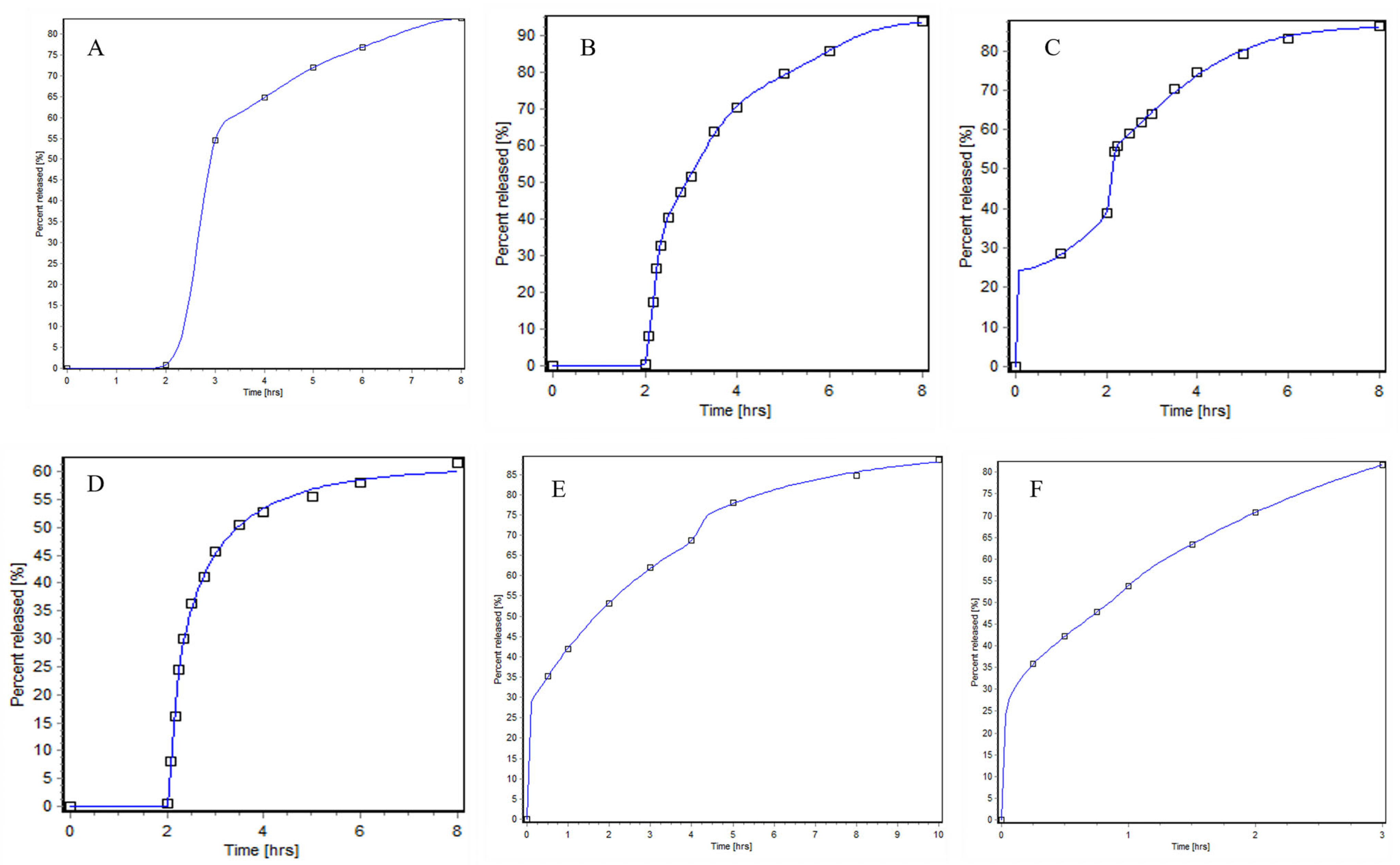
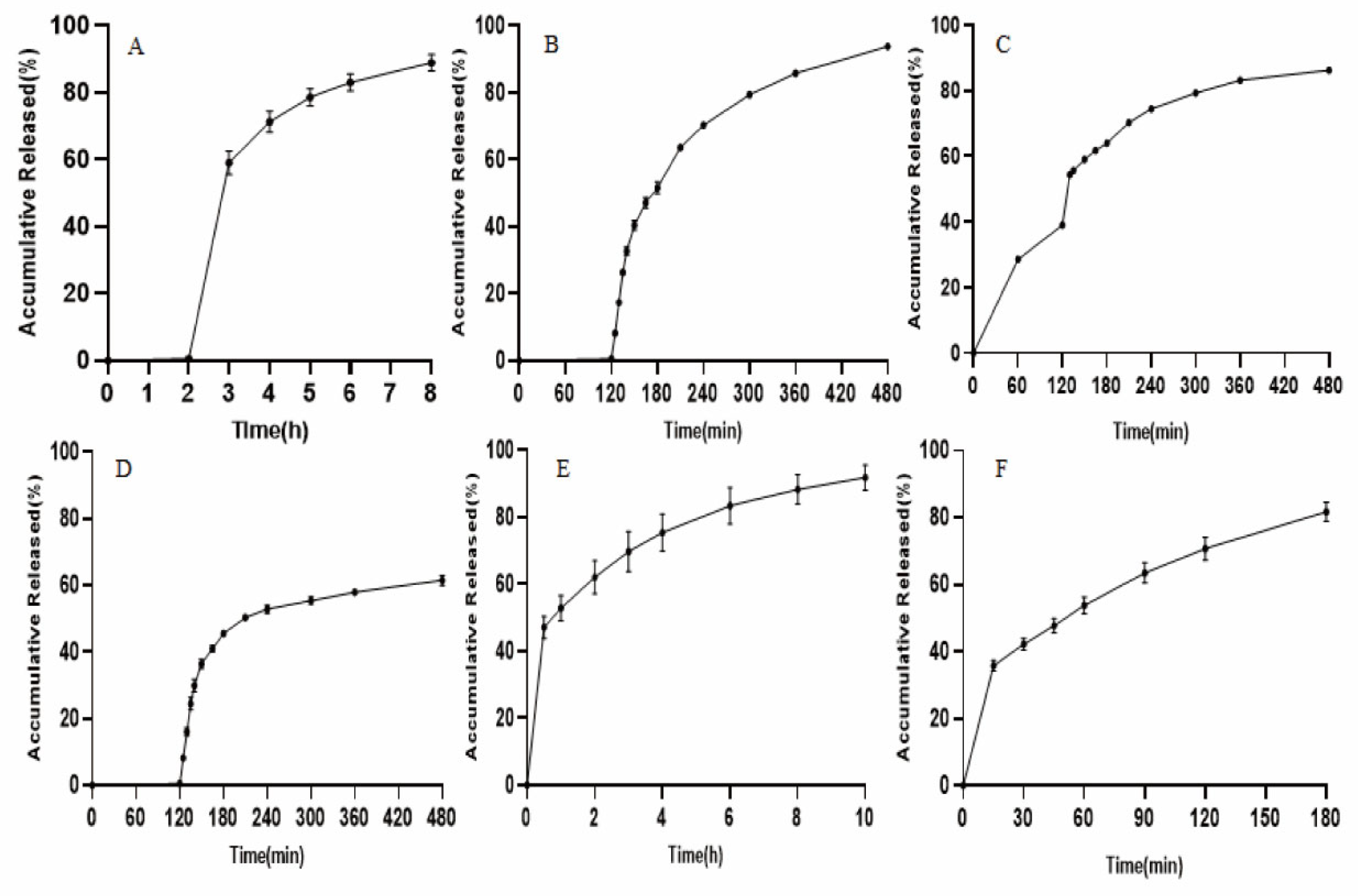
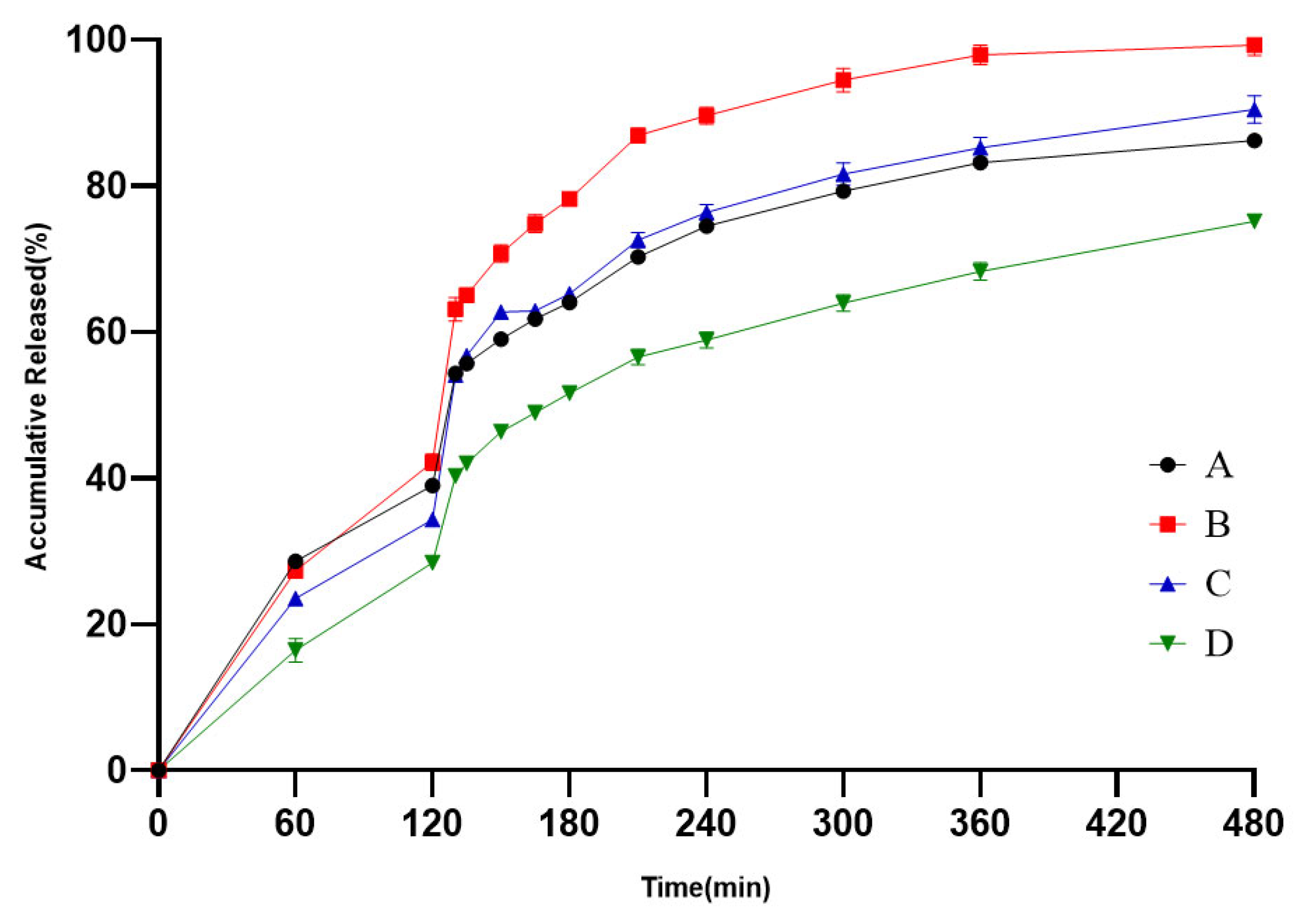
The contents of the capsule were tested using a basket apparatus (USP apparatus 1, rotational speed of 100 rpm). The volume of the vessels was 1000 mL and the temperature was maintained at 37 °C ± 0.5 °C throughout each release run. Six different media conditions were prepared and used in release tests as shown in
Table 2. Approximately 5 mL samples were withdrawn and filtered through a 0.45 μm membrane immediately. The samples were analyzed using the HPLC method described in
Section 2.3.1. All experiments were conducted in six parallel.
2.4. IVIVR of Difene® in Different Release Conditions
The release profiles of Difene
® in different media conditions were input and single, double and triple Weibull functions were fitted using the Weibull function module. The Weibull function is as follows:
where
Max is the total released dose, f is fraction,
A is time scale and
b is the shape parameters. The best fitting function was selected according to the value of correlation coefficient (R) and AIC. The optimized control release profiles and parameters were saved as in vitro data for IVIVR simulation.
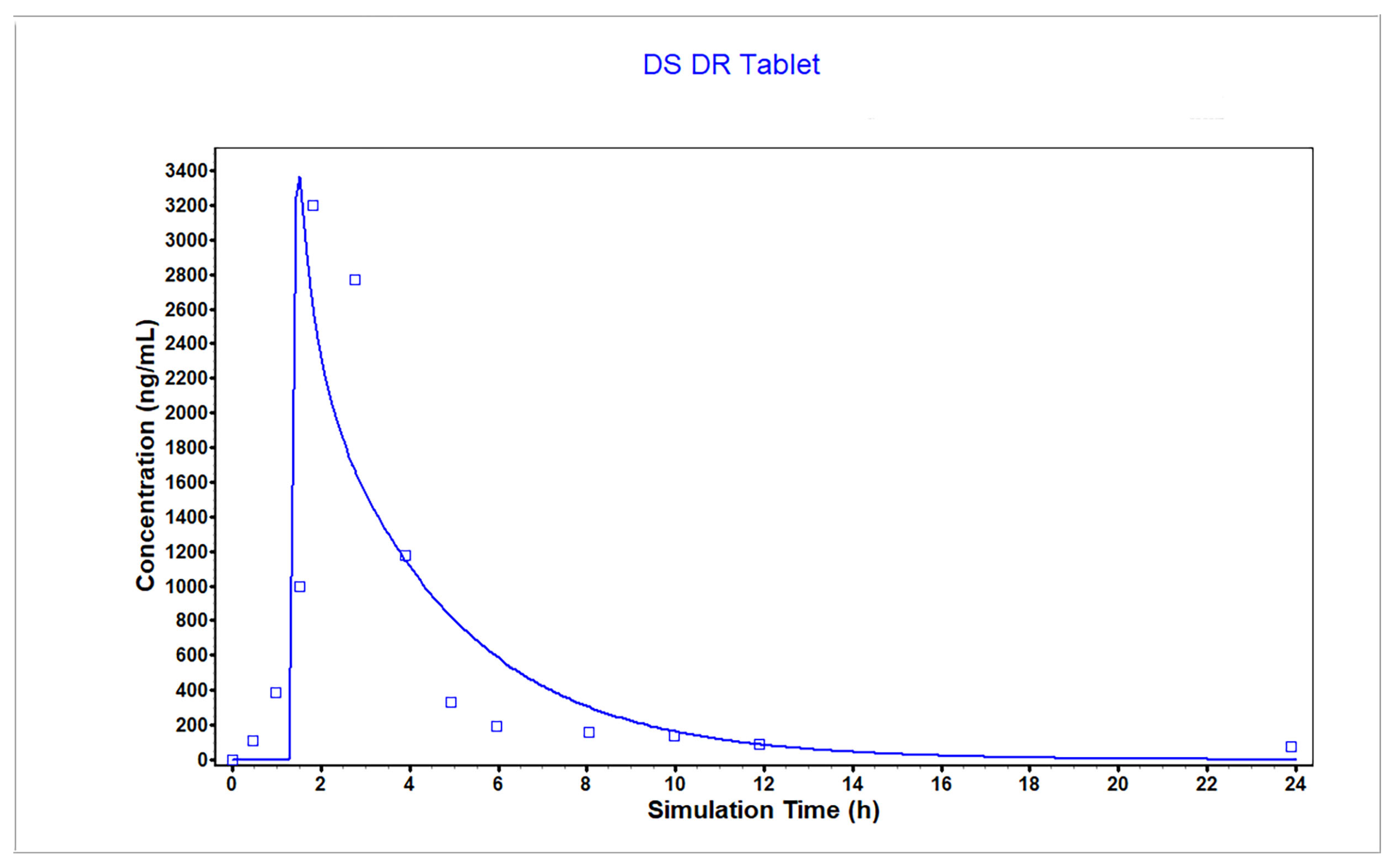
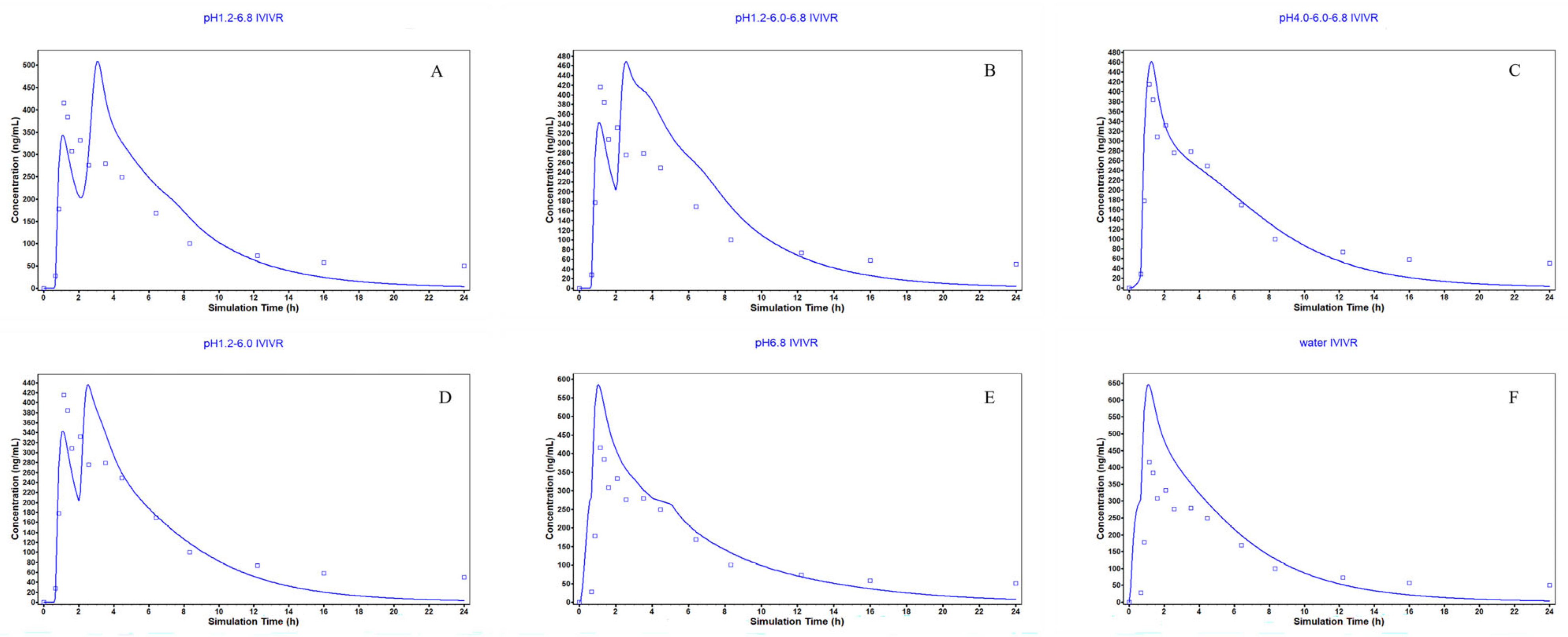
The observed mean plasma concentration profile of Difene® from the literature was acquired using Digit and was saved as in vivo data. IVIVR simulations were conducted using the built PBPK model with a 65 kg Chinese healthy male as the virtual subject. The FE ratio of PK parameters between predicted and observed values was calculated and served as the validation of IVIVR.
2.5. Preparation of Generic Capsules of Diclofenac Sodium
The generic dual-release enteric-coated capsules were prepared by coating with functional polymer materials using a fluid-bed coater equipped with a Wurster column (FLZB-1.5, Chanse Technology Inc., Changzhou, China). The drug-loaded pellets were prepared by a three-step process involving wet granulation, extrusion–spheronization and fluid-bed drying sequentially. MCC, PVP and Aerosil 200 were used as excipients in the formula of drug-loaded pellets.
The ER pellets were coated with Eudragit
® L30D-55 as the polymer. A 10%
w/
w propylene glycol based on polymer was used as a plasticizer and a 50%
w/
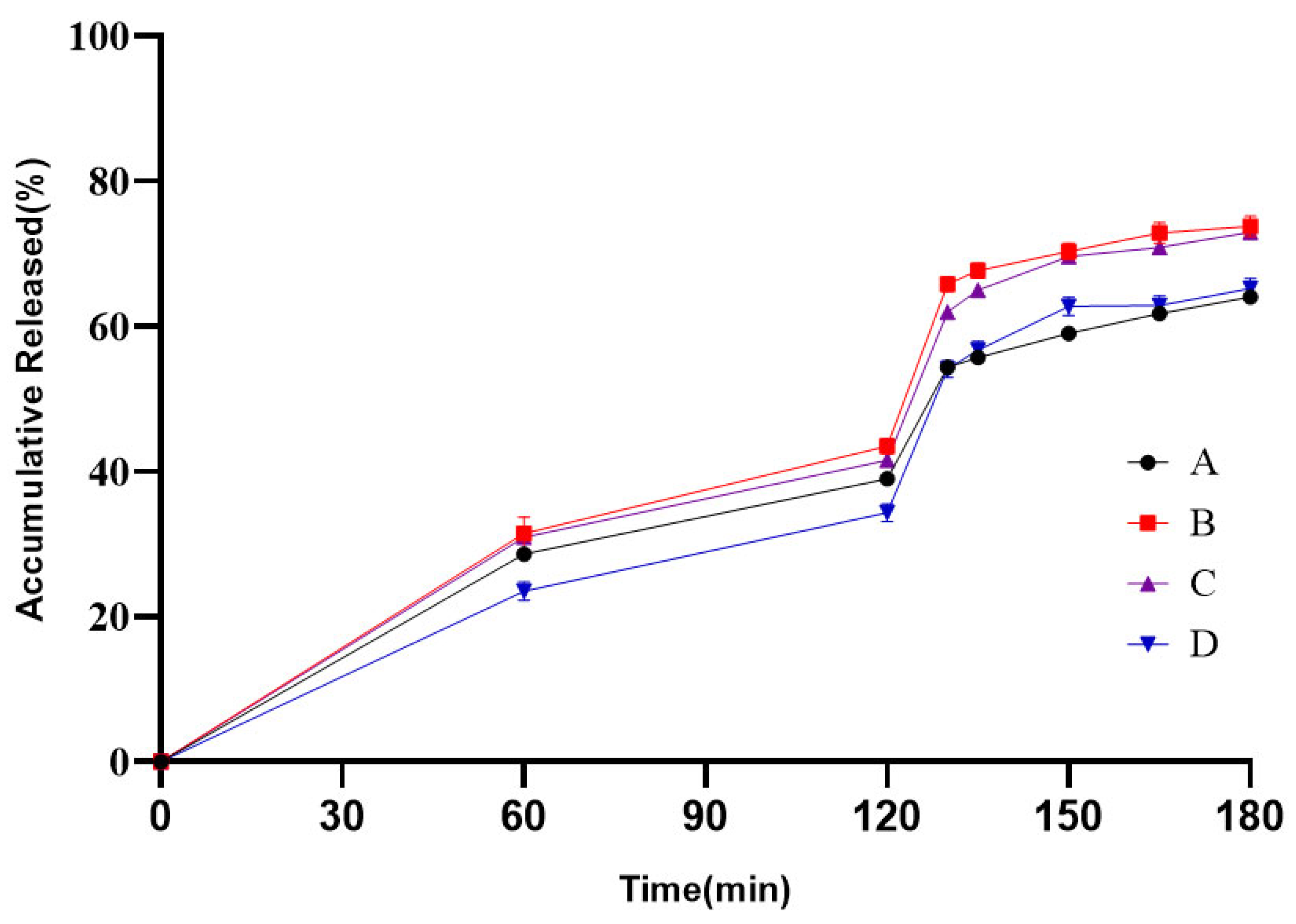
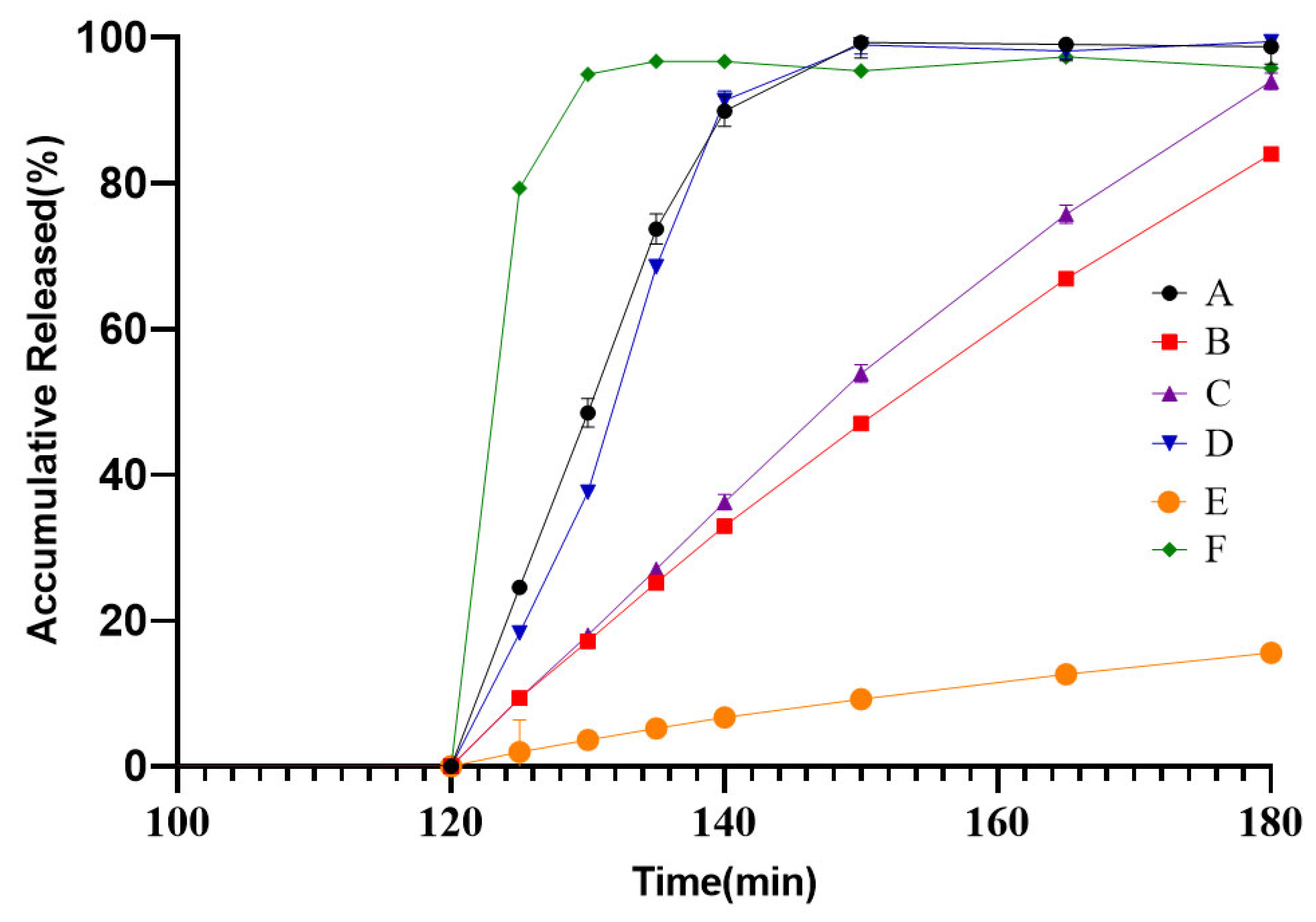
w talc based on polymer was added as an anti-tacking agent. The pH value of enteric coating dispersion was adjusted to 5.2 using 1 M sodium hydroxide. Three levels of weight gain were designed, i.e., 24%, 32% and 40%, as shown in
Table 3.
The SR pellets were coated with a combination of Eudragit
® RS PO and RL PO as the polymer. A 10%
w/
w TEC based on polymer was used as a plasticizer and a 75%
w/
w talc based on polymer was added as an anti-tacking agent. Three levels of polymer RS-RL ratios and weight gain were designed as shown in
Table 4.
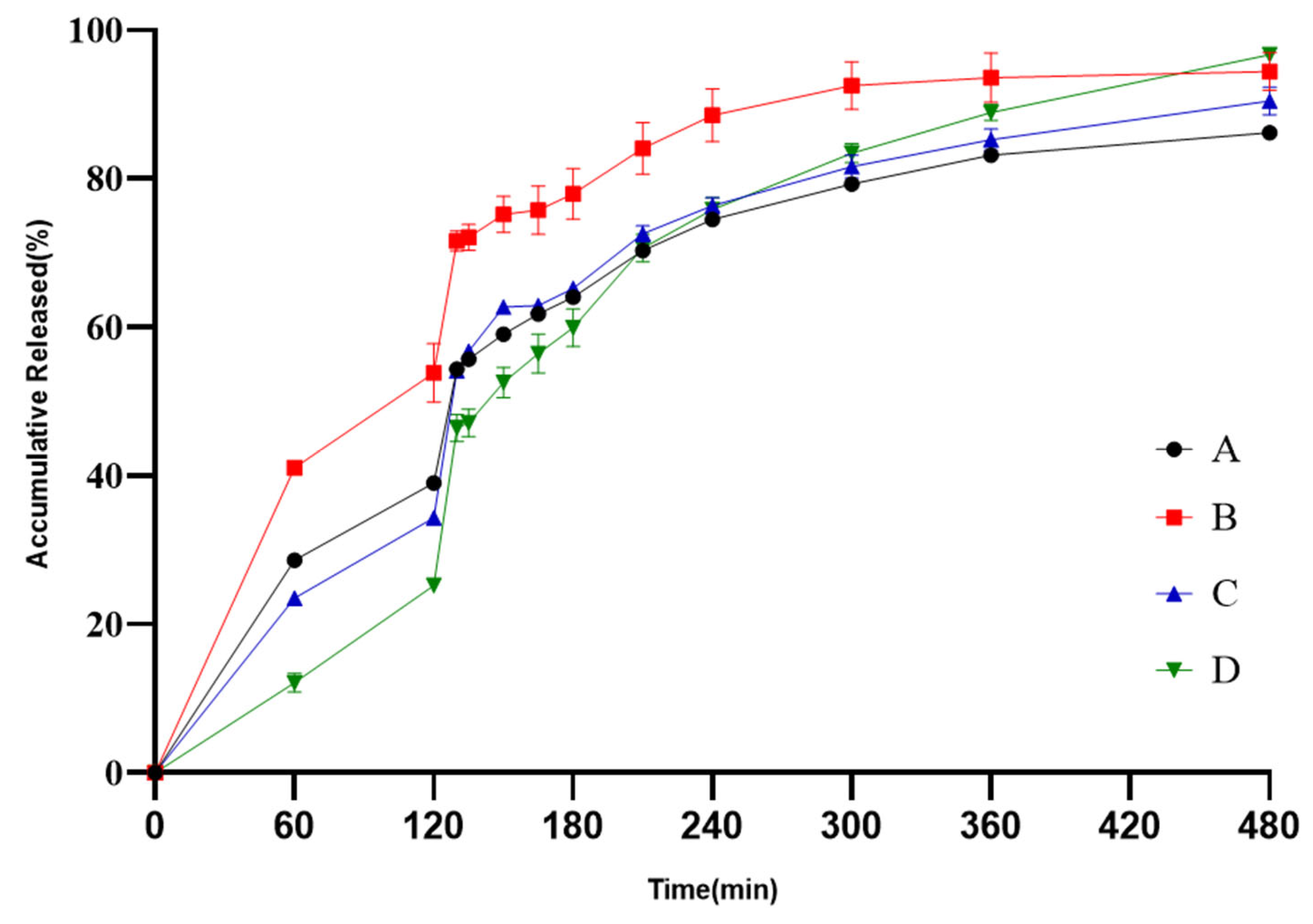
Quality-related media condition was used in release tests for formulation screening of ER and SR pellets. In addition, media condition 4 in
Table 2 was employed for acid resistance in the release test of ER pellets. F3 of SR in
Table 4 was used as an SR pellet in enteric formulation screening. F3 of ER in
Table 3 was used as an ER pellet in sustained-release formulation screening. The f2 value was calculated and assessed the similarity of release profiles of the reference and generic formulations using the standard mathematical equation as follows:
where n is the number of sample times and Rt and Tt are the mean percent dissolved at each time point for the reference and test medium, respectively.
Pellets of ER (with a label of 25 mg) and SR (with a label of 50 mg) were filled into a hard gelatin capsule shell, size “2” (Lonza Capsugel Ltd., Suzhou, China) after screening as the generic capsule for the bioequivalence experiment.
2.6. Pharmacokinetics of Bioequivalence Test in Beagle Dogs
2.6.1. LC-MS/MS Method for Determination of Diclofenac Sodium in Plasma
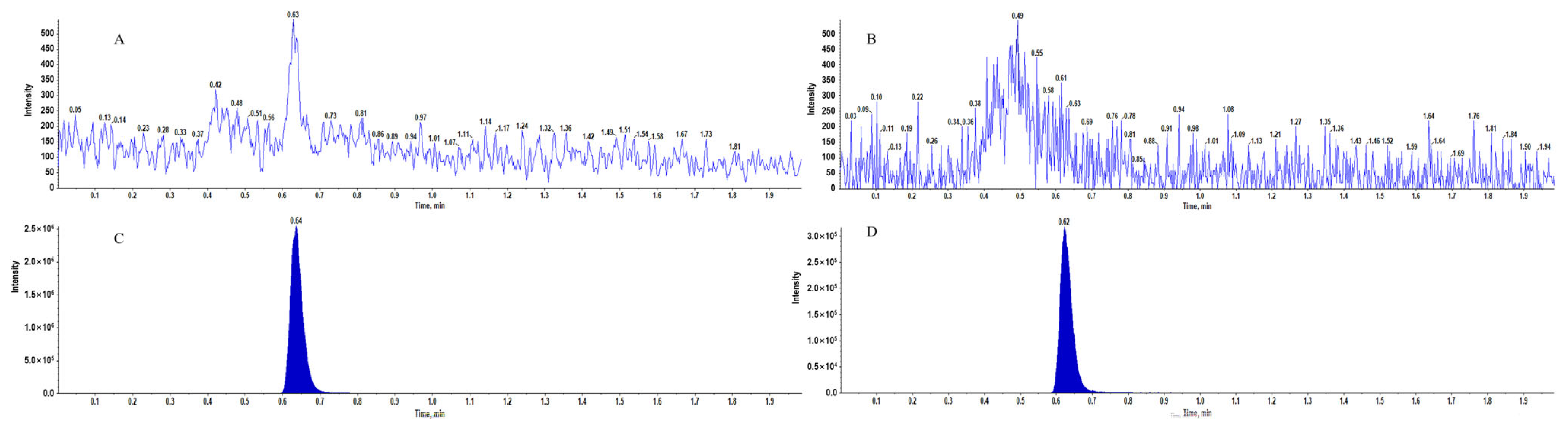
A 6500 QtrapTM LC-MS/MS system from AB SCIEX was used for plasma analysis. The analytical column was an Eclipse Plus C18 RRHD (2.1 × 50 mm, 1.8 μm) from Agilent Technologies Inc. (USA). The mobile phase was a mixture of 0.1% formic acid solution and acetonitrile (20:80) at a flow rate of 0.3 mL/min, the oven and auto-sampler temperature were 40 °C and 15 °C, respectively. The injection volume was 1 μL. The MS with electron spray ionization (ESI) source in mode of multiple reaction monitoring (MRM) was used for analysis. The temperature of the vaporizer was set at 500 °C. The pressure of CUR, GS1 and GS2 was set at 35 psi, 50 psi and 50 psi, respectively. Negative ion mode was used for Diclofenac sodium and positive ion mode was used for IS. Collision energy was −15 V for Diclofenac sodium and 28 V for IS. Quantification was performed using MRM of the transition ions m/z 294.0→250.2 and m/z 358.2→139.0 for Diclofenac sodium and IS, respectively.
2.6.2. Preparation of Standard Plasma Solutions
The stock solutions of Diclofenac sodium (80 μg/mL) and IS (160 ng/mL) were prepared by dissolving and diluting with acetonitrile. Then, a series of gradient concentrations (0.08–40 μg/mL) of standard solutions were diluted with acetonitrile. To prepare the standard plasma solution, 50 μL of standard solutions, 250 μL of IS and 100 μL of blank plasma were added and vortexed for 1 min. The mixture was centrifuged at 12,000 rpm at 4 °C for 5 min and the supernatant was transferred into LC-MS/MS for analysis and validation.
2.6.3. Pharmacokinetic Study of Bioequivalence
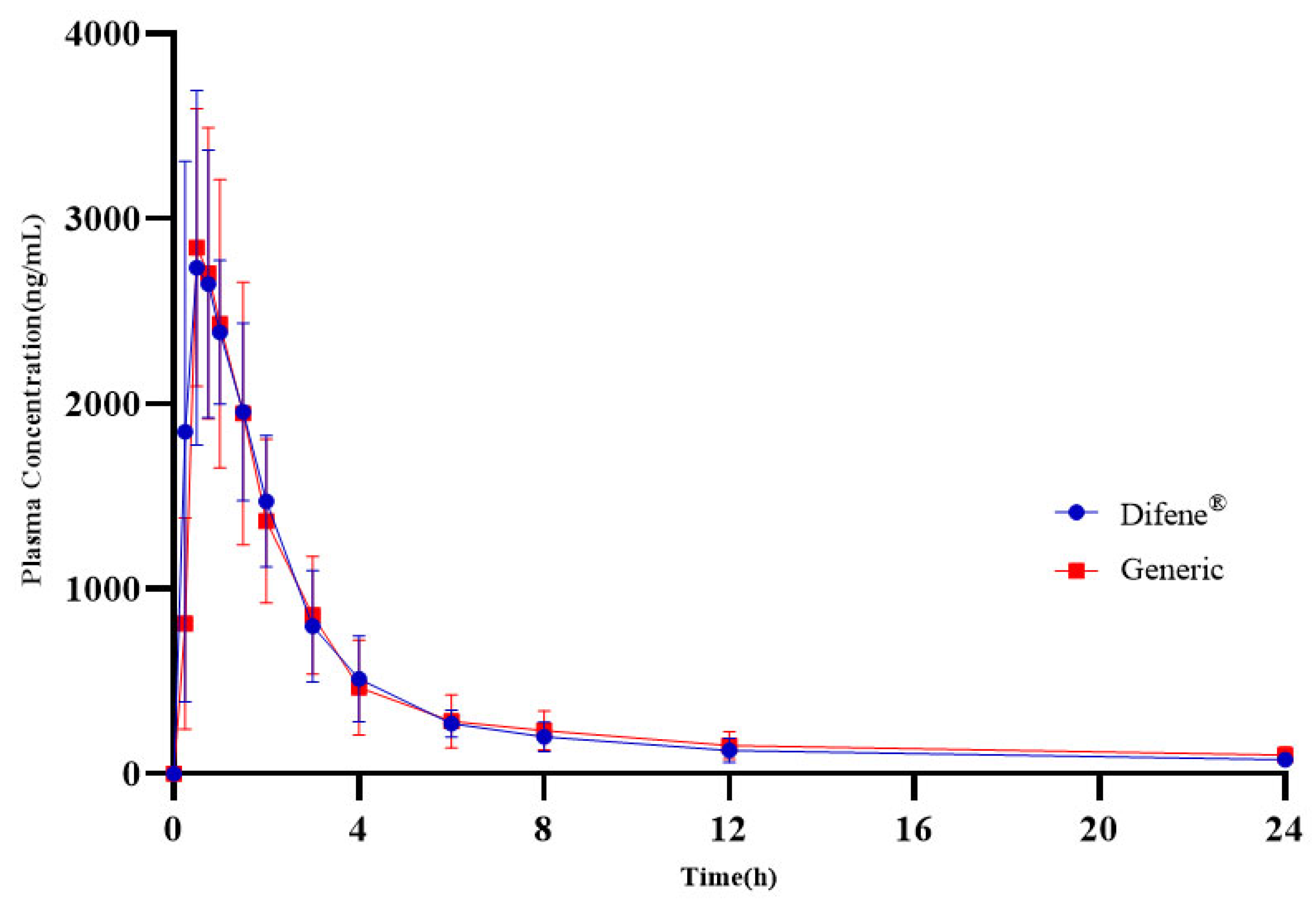
A single Difene® capsule or generic dual-release enteric-coated capsule was administered orally by the design of a randomized crossover study. Six beagle dogs were fasted for 24 h before the experiment. Foreleg venous blood samples of 2 mL were collected before and after the drug administration at 0.25, 0.5, 0.75, 1, 1.5, 2, 3, 4, 6, 8, 12 and 24 h. The blood samples were prepared by centrifugation at 5000 rpm for 10 min. The obtained plasma samples were stored at −80 °C until analysis.
2.6.4. Pharmacokinetic Data Analysis
PK profiles of the Brand Name and generic capsule were plotted. AUC0–t and AUC0–∞ were calculated by the trapezoidal rule. All the pharmacokinetic and bioequivalence parameters were calculated by DAS software (version 2.0).
4. Discussion
Dual-release sustained formulations combine the advantages of rapid drug release with prolonged maintenance of therapeutic plasma concentrations. However, the integration of two distinct release mechanisms substantially increases the complexity of generic development. The conventional trial-and-error approach requires comparison of curve fitting between generic and reference products in multiple media conditions to assess the risk of the bioequivalence study. This method, with substantial workload and poor specificity, is not suitable for generic development of complex dosage forms such as dual-release sustained formulations. Accordingly, we sought to establish a workflow wherein PBPK models and IVIVR are pre-established to identify quality-related media conditions for the reference product to improve the efficiency and the success rate of generic development for dual-release sustained products.
GastroPlus™ is a simulation platform and a modeling tool commonly used in pharmaceutical development and pharmacokinetic research. It can construct PBPK base models through incorporation of intravenous and IR or ER pharmacokinetic data, obtained from experimental or published sources. An ACAT model is usually employed as the absorption model; parameters including drug physicochemical properties, gastrointestinal pH environments, and gastric emptying times are integrated for evaluation of variations in gastrointestinal absorption of orally administered drugs and simulation of in vivo absorption and bioequivalence for generic products. In addition, the software also enables establishment of linear or nonlinear relationships between in vitro release and in vivo absorption through PBPK modeling, thereby determining quality-related media for formulation development and screening. Similar investigations [
31,
32] have been reported in the literature, providing a theoretical reference for the present study.
A traditional IVIVC (in vitro and in vivo correlation) model describes a liner mathematical relationship between in vitro dissolution properties and in vivo pharmacokinetics of formulations. According to the FDA guidelines, IVIVC can be divided into Level A, B, and C. Generally, IVIVC Level A is regarded as the widest regulatory acceptance, requiring point-to-point correlation and both internal and external validation by using different formulation release-rate profiles. In contrast to IVIVC, IVIVR is a nonlinear mathematical model which extends the concept of IVIVC [
33]. Strictly speaking, it does not fall into any IVIVC category and has no official classification now. Instead of establishing a traditional point-to-point correlation, the objective of our study is to develop a mechanistically informed in vitro–in vivo linkage using PBPK modeling. In this context, we constructed an integrated PBPK–IVIVR-based framework to support the identification of quality-related media and to guide formulation screening for dual-release sustained formulations, thereby quantitatively linking in vitro release behavior with in vivo pharmacokinetic performance.
We selected Diclofenac sodium as the model drug for the following reasons. First, Difene
® is a well-established commercial product widely used in clinical practice, and no generic product has been approved for marketing in China. Second, as a BCS Class II compound, the dissolution behavior of API directly influences the extent of its absorption in vivo, making the development of an IVIVR for the reference product particularly critical. While published studies have described the use of PBPK modeling and IVIVR for enteric-coated formulations of Diclofenac sodium to assess formulation performance and predict in vivo absorption [
34,
35], no such work has been reported specifically for the dual-release enteric-coated capsule. For this reason, we selected Difene
® as the reference product to explore a generic development strategy for dual-release sustained formulations.
In this study, published pharmacokinetic data from oral enteric-coated tablets and Difene® administered to Chinese subjects were employed for PBPK model construction, with the aim of improving its specificity to the target population. A 65 kg Chinese male was selected as the physiological model within the software to closely match the demographic characteristics of the source data. By aligning the physiological model parameters (e.g., body weight, sex, and ethnicity) with the reported study population, we aimed to minimize potential variability arising from population mismatch and to improve the internal consistency of the model.
Although use of a single “representative” virtual subject may not fully capture inter-individual variability, given that the source pharmacokinetic data were reported as mean profiles from a relatively homogeneous population, we consider this approach appropriate for the purpose of model development and IVIVR establishment. Moreover, the satisfactory agreement between predicted and observed pharmacokinetic parameters, with fold error values within 0.80–1.25, further supports that potential residual variability did not significantly impact model performance in this study.
Beside the pharmacopeia, drug physicochemical properties and physiological conditions were also taken into consideration in the design of the release media in the present study. The pH4.0–pH6.0–pH6.8 media was designed based on following considerations. First, the saturation solubility experiments demonstrated that Diclofenac sodium exhibited a pH-dependent solubility characteristic, with solubility increasing as pH rises. Selection of a lower pH value as the initial stage of media might fail to reflect the minor release from sustained-release pellets accurately. Second, while the pH value of the normal human stomach ranges from 1.35 to 3.5 [
36], the critical release and absorption processes for this formulation primarily occur after gastric emptying, in the intestinal environment. This is also supported by pharmacokinetic data from the literature, which indicate evident absorption of the reference product within the first hour. Therefore, we consider a sub-acidic condition such as pH 4.0 in the initial stage is more relevant for capturing the onset of drug release. Meanwhile, media at pH 6.0 and 6.8 are widely employed to simulate the pH environment of the human intestine. We consider this pH combination to better simulate the environmental conditions for in vivo release and absorption of this formulation. In addition, a dissolution database from FDA of similar products [
37] also provided a supporting rationale for this media design.
The results of IVIVR for the reference product demonstrated that the pH4.0–pH6.0–pH6.8 media exhibited the optimal in vitro–in vivo relationship, with FE ratios between predicted and observed values for AUC, Cmax, and Tmax all falling within acceptable ranges. This media was consequently adopted as the quality-related media for critical formulation parameters screening (e.g., coating weight gain, polymer ratio, etc.) of the generic product.
Additionally, due to the requirement of the acid resistance test for enteric-coated pellets in pharmacopeia, a pH 1.2–pH 6.0 media was employed as a secondary screening condition for ER pellets development. The optimized formulation for ER and SR pellets of the generic product were established through this approach.
To evaluate preliminary bioequivalence between the generic and reference products and formulation development framework, beagle dogs were employed as the model species and pharmacokinetic studies were conducted using a two-period crossover design. Results demonstrated that the generic product, developed with quality-related media as the primary screening criterion, exhibited no statistically significant differences from the reference product in beagle dogs for major pharmacokinetic parameters including AUC, Cmax, and Tmax, with geometric mean ratios and 90% CI for these parameters within bioequivalence acceptance criteria.
Compared with the conventional approach of generic development, this study employed a pre-established PBPK model and IVIVR investigation of the reference product to screen quality-related media conditions. This approach narrowed the scope of screening parameters, improved the specificity of the development process, and reduced the overall workload. The bioequivalence outcome of the pharmacokinetic study in beagle dogs confirmed the validity of using a PBPK model to identify quality-related media for guiding the generic development of dual-release sustained formulations. The strategy described here may serve as a reference for the generic development of other dual-release sustained products.





 and
and