Silver Nanoparticles and Neurotoxicity: Mechanistic Insights and Recent Experimental Evidence




Abstract
1. Introduction
2. AgNPs and Neurotoxicity
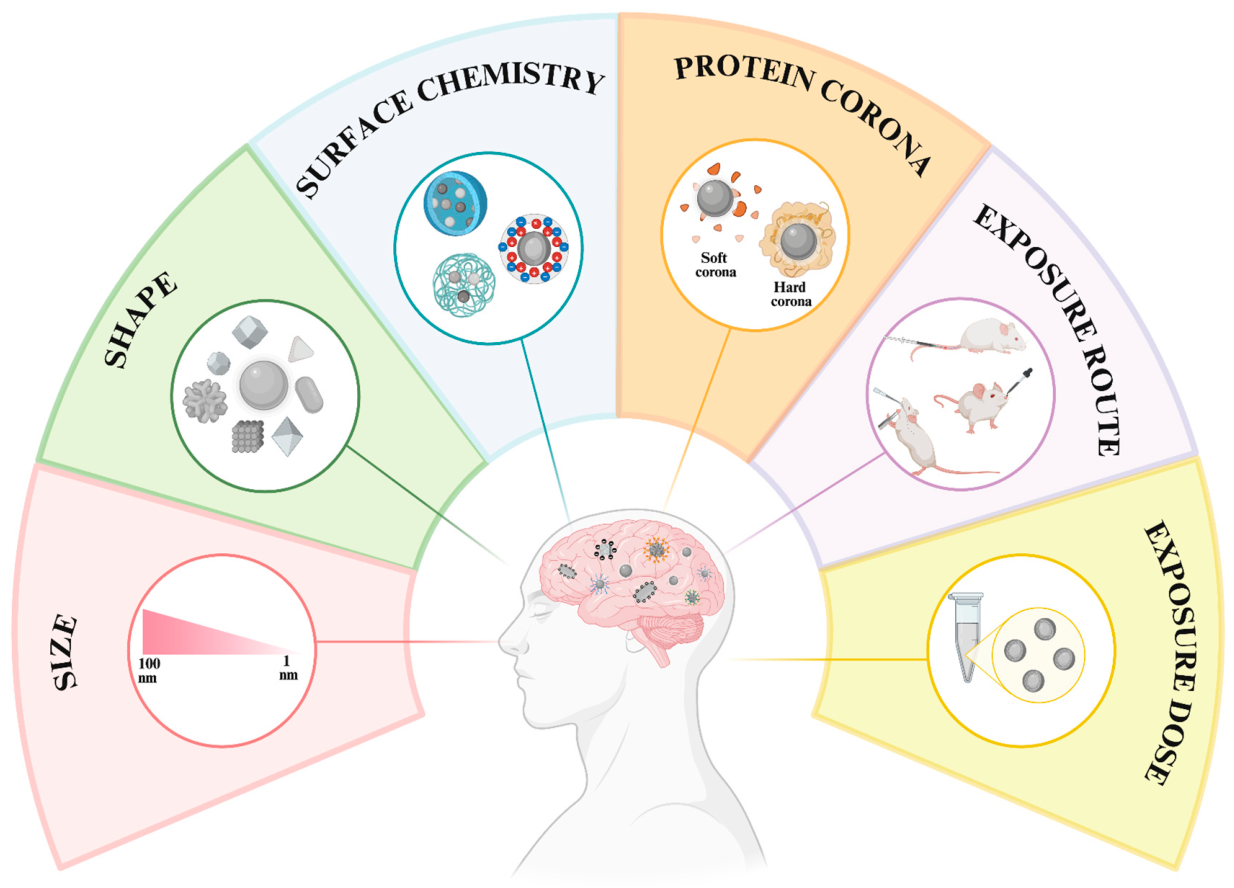
2.1. Size and Shape
2.2. Surface Chemistry
2.3. Protein Corona
2.4. Exposure Route and Dose
3. Mechanistic Pathways of AgNP Neurotoxicity
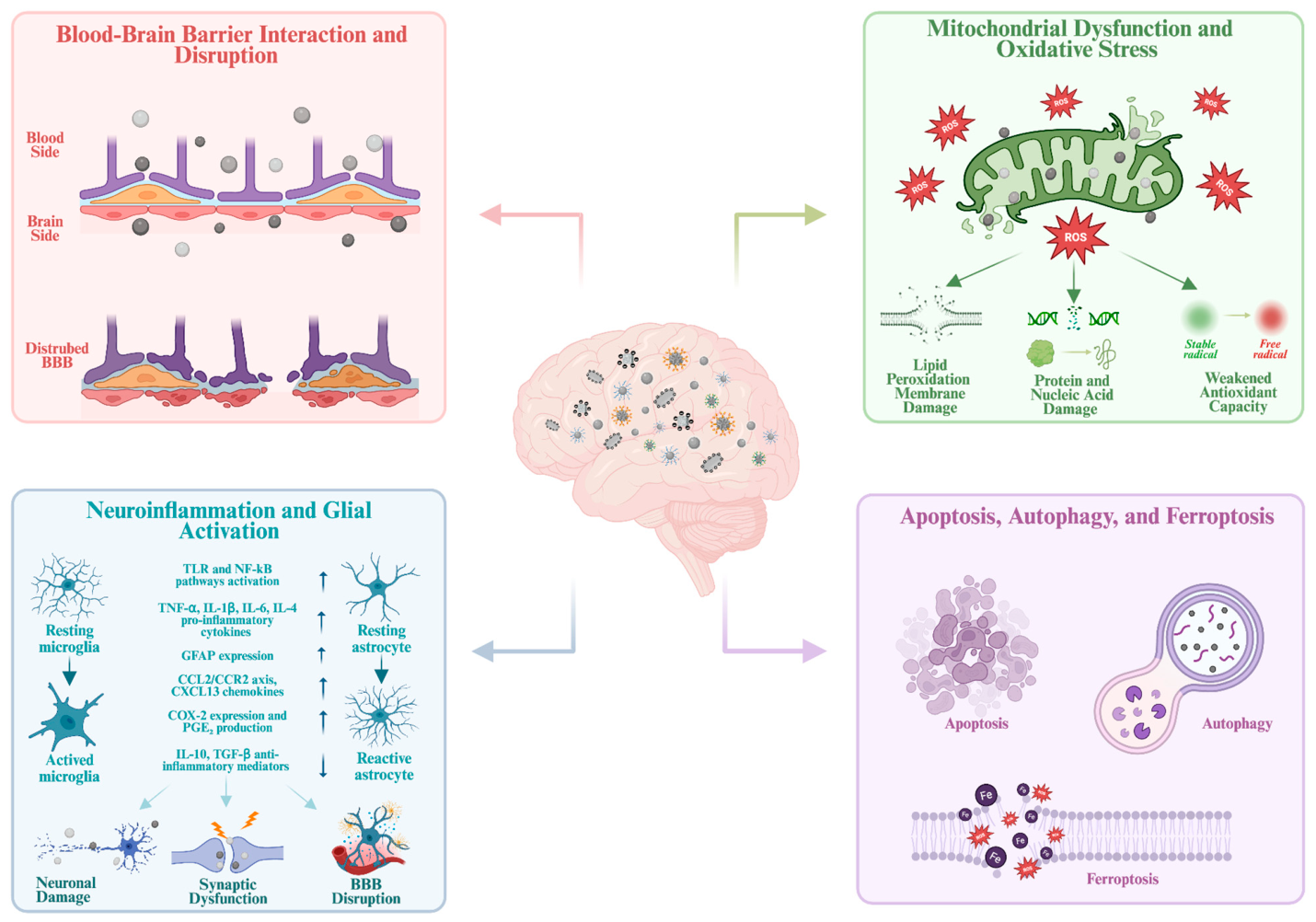
3.1. Blood–Brain Barrier Interaction and Disruption

3.2. Mitochondrial Dysfunction and Oxidative Stress
3.3. Neuroinflammation and Glial Activation
3.4. Apoptosis, Autophagy, and Ferroptosis
4. Experimental Evidence: In Vitro and In Vivo Studies
4.1. In Vitro Models
4.2. In Vivo Models
5. Conclusions and Future Perspectives
Author Contributions
Funding
Institutional Review Board Statement
Informed Consent Statement
Data Availability Statement
Acknowledgments
Conflicts of Interest
References
- Malik, S.; Muhammad, K.; Waheed, Y. Emerging Applications of Nanotechnology in Healthcare and Medicine. Molecules 2023, 28, 6624. [Google Scholar] [CrossRef]
- Malik, S.; Muhammad, K.; Waheed, Y. Nanotechnology: A Revolution in Modern Industry. Molecules 2023, 28, 661. [Google Scholar] [CrossRef]
- Baig, N.; Kammakakam, I.; Falath, W. Nanomaterials: A Review of Synthesis Methods, Properties, Recent Progress, and Challenges. Mater. Adv. 2021, 2, 1821–1871. [Google Scholar] [CrossRef]
- Khan, Y.; Sadia, H.; Ali Shah, S.Z.; Khan, M.N.; Shah, A.A.; Ullah, N.; Ullah, M.F.; Bibi, H.; Bafakeeh, O.T.; Khedher, N.B.; et al. Classification, Synthetic, and Characterization Approaches to Nanoparticles, and Their Applications in Various Fields of Nanotechnology: A Review. Catalysts 2022, 12, 1386. [Google Scholar] [CrossRef]
- Joudeh, N.; Linke, D. Nanoparticle Classification, Physicochemical Properties, Characterization, and Applications: A Comprehensive Review for Biologists. J. Nanobiotechnol. 2022, 20, 262. [Google Scholar] [CrossRef]
- Nunziata, G.; Nava, M.; Lacroce, E.; Pizzetti, F.; Rossi, F. Thermo-Responsive Polymer-Based Nanoparticles: From Chemical Design to Advanced Applications. Macromol. Rapid Commun. 2025, 46, 2401127. [Google Scholar] [CrossRef]
- Gao, Y.; Wu, Y. Recent Advances of Chitosan-Based Nanoparticles for Biomedical and Biotechnological Applications. Int. J. Biol. Macromol. 2022, 203, 379–388. [Google Scholar] [CrossRef] [PubMed]
- Middha, E.; Liu, B. Nanoparticles of Organic Electronic Materials for Biomedical Applications. ACS Nano 2020, 14, 9228–9242. [Google Scholar] [CrossRef]
- Alshammari, B.H.; Lashin, M.M.A.; Mahmood, M.A.; Al-Mubaddel, F.S.; Ilyas, N.; Rahman, N.; Sohail, M.; Khan, A.; Abdullaev, S.S.; Khan, R. Organic and Inorganic Nanomaterials: Fabrication, Properties and Applications. RSC Adv. 2023, 13, 13735–13785. [Google Scholar] [CrossRef] [PubMed]
- Ma, X.; Luan, Z.; Li, J. Inorganic Nanoparticles-Based Systems in Biomedical Applications of Stem Cells: Opportunities and Challenges. Int. J. Nanomed. 2023, 18, 143–182. [Google Scholar] [CrossRef]
- Jiang, H.; Li, L.; Li, Z.; Chu, X. Metal-Based Nanoparticles in Antibacterial Application in Biomedical Field: Current Development and Potential Mechanisms. Biomed. Microdevices 2024, 26, 12. [Google Scholar] [CrossRef] [PubMed]
- Dhaka, A.; Chand Mali, S.; Sharma, S.; Trivedi, R. A Review on Biological Synthesis of Silver Nanoparticles and Their Potential Applications. Results Chem. 2023, 6, 101108. [Google Scholar] [CrossRef]
- Magdy, G.; Aboelkassim, E.; Abd Elhaleem, S.M.; Belal, F. A Comprehensive Review on Silver Nanoparticles: Synthesis Approaches, Characterization Techniques, and Recent Pharmaceutical, Environmental, and Antimicrobial Applications. Microchem. J. 2024, 196, 109615. [Google Scholar] [CrossRef]
- Lasmi, F.; Hamitouche, H.; Laribi-Habchi, H.; Benguerba, Y.; Chafai, N. Silver Nanoparticles (AgNPs), Methods of Synthesis, Characterization, and Their Application: A Review. Plasmonics 2025, 20, 9455–9488. [Google Scholar] [CrossRef]
- Hosny, S.; Gaber, G.A.; Ragab, M.S.; Ragheb, M.A.; Anter, M.; Mohamed, L.Z. A Comprehensive Review of Silver Nanoparticles (AgNPs): Synthesis Strategies, Toxicity Concerns, Biomedical Applications, AI-Driven Advancements, Challenges, and Future Perspectives. Arab. J. Sci. Eng. 2025, 1–48. [Google Scholar] [CrossRef]
- Sati, A.; Ranade, T.N.; Mali, S.N.; Ahmad Yasin, H.K.; Pratap, A. Silver Nanoparticles (AgNPs): Comprehensive Insights into Bio/Synthesis, Key Influencing Factors, Multifaceted Applications, and Toxicity—A 2024 Update. ACS Omega 2025, 10, 7549–7582. [Google Scholar] [CrossRef] [PubMed]
- Abbas, R.; Luo, J.; Qi, X.; Naz, A.; Khan, I.A.; Liu, H.; Yu, S.; Wei, J. Silver Nanoparticles: Synthesis, Structure, Properties and Applications. Nanomaterials 2024, 14, 1425. [Google Scholar] [CrossRef]
- Istiqola, A.; Syafiuddin, A. A Review of Silver Nanoparticles in Food Packaging Technologies: Regulation, Methods, Properties, Migration, and Future Challenges. J. Chin. Chem. Soc. 2020, 67, 1942–1956. [Google Scholar] [CrossRef]
- Nemčeková, K.; Dudoňová, P.; Holka, T.; Balážová, S.; Hornychová, M.; Szebellaiová, V.; Naumowicz, M.; Gemeiner, P.; Mackuľak, T.; Gál, M.; et al. Silver Nanoparticles for Biosensing and Drug Delivery: A Mechanical Study on DNA Interaction. Biosensors 2025, 15, 331. [Google Scholar] [CrossRef]
- Ratan, Z.A.; Haidere, M.F.; Nurunnabi, M.; Shahriar, S.M.; Ahammad, A.J.S.; Shim, Y.Y.; Reaney, M.J.T.; Cho, J.Y. Green Chemistry Synthesis of Silver Nanoparticles and Their Potential Anticancer Effects. Cancers 2020, 12, 855. [Google Scholar] [CrossRef]
- Ren, Y.; Zhang, Y.; Li, X. Application of AgNPs in Biomedicine: An Overview and Current Trends. Nanotechnol. Rev. 2024, 13, 20240030. [Google Scholar] [CrossRef]
- Melo, R.M.; Albuquerque, G.M.; Monte, J.P.; Pereira, G.A.L.; Pereira, G. Recent Advances in the Application of Silver Nanoparticles for Enhancing Phototherapy Outcomes. Pharmaceuticals 2025, 18, 970. [Google Scholar] [CrossRef] [PubMed]
- Báez, D.F.; Gallardo-Toledo, E.; Oyarzún, M.P.; Araya, E.; Kogan, M.J. The Influence of Size and Chemical Composition of Silver and Gold Nanoparticles on in Vivo Toxicity with Potential Applications to Central Nervous System Diseases. Int. J. Nanomed. 2021, 16, 2187–2201. [Google Scholar] [CrossRef]
- Alon, N.; Miroshnikov, Y.; Perkas, N.; Nissan, I.; Gedanken, A.; Shefi, O. Substrates Coated with Silver Nanoparticles as a Neuronal Regenerative Material. Int. J. Nanomed. 2014, 9, 23–31. [Google Scholar] [CrossRef] [PubMed]
- De Matteis, V.; Martano, S.; Pellegrino, P.; Ingrosso, C.; Costa, D.; Mazzotta, S.; Toca-Herrera, J.L.; Rinaldi, R.; Cascione, M. Green Silver Nanoparticles: Prospective Nanotools against Neurodegenerative Cell Line Model. Ibrain 2024, 10, 123–133. [Google Scholar] [CrossRef]
- Gonzalez-Carter, D.A.; Leo, B.F.; Ruenraroengsak, P.; Chen, S.; Goode, A.E.; Theodorou, I.G.; Chung, K.F.; Carzaniga, R.; Shaffer, M.S.P.; Dexter, D.T.; et al. Silver Nanoparticles Reduce Brain Inflammation and Related Neurotoxicity through Induction of H2S-Synthesizing Enzymes. Sci. Rep. 2017, 7, 42871. [Google Scholar] [CrossRef]
- Teixeira, M.I.; Lopes, C.M.; Amaral, M.H.; Costa, P.C. Silver Nanoparticles for the Management of Neurological Diseases. In Silver Nanoparticles for Drug Delivery; Elsevier: Amsterdam, The Netherlands, 2024; pp. 209–239. [Google Scholar]
- Shinde, U.A.; Warrier, D.U.; Bhagwat, P.M.; Vasani, H.S.; Desai, H.R.; Singh, K.H. Silver Nanoparticles in Brain Tumor Targeting. In Nanocarriers for Drug-Targeting Brain Tumors; Elsevier: Amsterdam, The Netherlands, 2022; pp. 527–562. [Google Scholar]
- Costa, L.G. Overview of Neurotoxicology. Curr. Protoc. Toxicol. 2017, 74, 11.1.1–11.1.11. [Google Scholar] [CrossRef]
- Spencer, P.S.; Lein, P.J. Neurotoxicity. In Encyclopedia of Toxicology, 4th ed.; Elsevier: Amsterdam, The Netherlands, 2024; pp. 727–740. [Google Scholar] [CrossRef]
- Teleanu, D.M.; Chircov, C.; Grumezescu, A.M.; Teleanu, R.I. Neurotoxicity of Nanomaterials: An Up-to-Date Overview. Nanomaterials 2019, 9, 96. [Google Scholar] [CrossRef] [PubMed]
- Hsiao, I.; Hsieh, Y.; Chuang, C.; Wang, C.; Huang, Y. Effects of Silver Nanoparticles on the Interactions of Neuron- and Glia-like Cells: Toxicity, Uptake Mechanisms, and Lysosomal Tracking. Environ. Toxicol. 2017, 32, 1742–1753. [Google Scholar] [CrossRef]
- Safari, M.; Arbabi Bidgoli, S.; Rezayat, S.M. Differential Neurotoxic Effects of Silver Nanoparticles: A Review with Special Emphasis on Potential Biomarkers. Nanomed. J. 2016, 3, 83–94. [Google Scholar] [CrossRef]
- Haase, A.; Rott, S.; Mantion, A.; Graf, P.; Plendl, J.; Thünemann, A.F.; Meier, W.P.; Taubert, A.; Luch, A.; Reiser, G. Effects of Silver Nanoparticles on Primary Mixed Neural Cell Cultures: Uptake, Oxidative Stress and Acute Calcium Responses. Toxicol. Sci. 2012, 126, 457–468. [Google Scholar] [CrossRef]
- Sun, C.; Yin, N.; Wen, R.; Liu, W.; Jia, Y.; Hu, L.; Zhou, Q.; Jiang, G. Silver Nanoparticles Induced Neurotoxicity through Oxidative Stress in Rat Cerebral Astrocytes Is Distinct from the Effects of Silver Ions. NeuroToxicology 2016, 52, 210–221. [Google Scholar] [CrossRef]
- Zia, S.; Islam Aqib, A.; Muneer, A.; Fatima, M.; Atta, K.; Kausar, T.; Zaheer, C.-N.F.; Ahmad, I.; Saeed, M.; Shafique, A. Insights into Nanoparticles-Induced Neurotoxicity and Cope up Strategies. Front. Neurosci. 2023, 17, 1127460. [Google Scholar] [CrossRef] [PubMed]
- Suthar, J.K.; Vaidya, A.; Ravindran, S. Toxic Implications of Silver Nanoparticles on the Central Nervous System: A Systematic Literature Review. J. Appl. Toxicol. 2023, 43, 4–21. [Google Scholar] [CrossRef] [PubMed]
- Strużyńska, L.; Skalska, J. Mechanisms Underlying Neurotoxicity of Silver Nanoparticles. In Cellular and Molecular Toxicology of Nanoparticles; Saquib, Q., Faisal, M., Al-Khedhairy, A.A., Alatar, A.A., Eds.; Advances in Experimental Medicine and Biology; Springer International Publishing: Cham, Switzerland, 2018; Volume 1048, pp. 227–250. [Google Scholar]
- Strużyńska, L.; Dąbrowska-Bouta, B.; Sulkowski, G. Developmental Neurotoxicity of Silver Nanoparticles: The Current State of Knowledge and Future Directions. Nanotoxicology 2022, 16, 500–525. [Google Scholar] [CrossRef]
- Patchin, E.S.; Anderson, D.S.; Silva, R.M.; Uyeminami, D.L.; Scott, G.M.; Guo, T.; Van Winkle, L.S.; Pinkerton, K.E. Size-Dependent Deposition, Translocation, and Microglial Activation of Inhaled Silver Nanoparticles in the Rodent Nose and Brain. Environ. Health Perspect. 2016, 124, 1870–1875. [Google Scholar] [CrossRef]
- Laib, I.; Gheraissa, N.; Benaissa, A.; Benkhira, L.; Azzi, M.; Benaissa, Y.; Abdelaziz, A.G.; Tian, F.; Walsh, M.; Bechelany, M.; et al. Tailoring Innovative Silver Nanoparticles for Modern Medicine: The Importance of Size and Shape Control and Functional Modifications. Mater. Today Bio 2025, 33, 102071. [Google Scholar] [CrossRef]
- Kumarasamy, M.; Tran, N.; Patarroyo, J.; Mishra, S.; Monopoli, M.; Madarasz, E.; Puntes, V. The Effects of Silver Nanoparticle Shape on Protein Adsorption and Neural Stem Cell Viability. ChemistrySelect 2022, 7, e202201917. [Google Scholar] [CrossRef]
- Nie, P.; Zhao, Y.; Xu, H. Synthesis, Applications, Toxicity and Toxicity Mechanisms of Silver Nanoparticles: A Review. Ecotoxicol. Environ. Saf. 2023, 253, 114636. [Google Scholar] [CrossRef]
- Loveleen, L.; Singh, R.; Gupta, N.; Nimesh, S. Holding Silver Together: Unravelling the Factors behind Nanoparticle Instability and Solutions for Resilience. Next Res. 2026, 3, 101135. [Google Scholar] [CrossRef]
- Sun, H.; Jiang, C.; Wu, L.; Bai, X.; Zhai, S. Cytotoxicity-Related Bioeffects Induced by Nanoparticles: The Role of Surface Chemistry. Front. Bioeng. Biotechnol. 2019, 7, 414. [Google Scholar] [CrossRef]
- Akter, M.; Sikder, M.T.; Rahman, M.M.; Ullah, A.K.M.A.; Hossain, K.F.B.; Banik, S.; Hosokawa, T.; Saito, T.; Kurasaki, M. A Systematic Review on Silver Nanoparticles-Induced Cytotoxicity: Physicochemical Properties and Perspectives. J. Adv. Res. 2018, 9, 1–16. [Google Scholar] [CrossRef]
- Strużyńska, L. The Application, Neurotoxicity, and Related Mechanisms of Silver Nanoparticles. In Neurotoxicity of Nanomaterials and Nanomedicine; Elsevier: Amsterdam, The Netherlands, 2017; pp. 151–177. [Google Scholar]
- Barbalinardo, M.; Chiarini, F.; Teti, G.; Paganelli, F.; Mercadelli, E.; Bartoletti, A.; Migliori, A.; Piazzi, M.; Bertacchini, J.; Sena, P.; et al. Surface Charge Overrides Protein Corona Formation in Determining the Cytotoxicity, Cellular Uptake, and Biodistribution of Silver Nanoparticles. ACS Appl. Bio Mater. 2025, 8, 5032–5043. [Google Scholar] [CrossRef]
- Pongrac, I.M.; Ahmed, L.B.; Mlinarić, H.; Jurašin, D.D.; Pavičić, I.; Marjanović Čermak, A.M.; Milić, M.; Gajović, S.; Vinković Vrček, I. Surface Coating Affects Uptake of Silver Nanoparticles in Neural Stem Cells. J. Trace Elem. Med. Biol. 2018, 50, 684–692. [Google Scholar] [CrossRef] [PubMed]
- Begum, A.N.; Aguilar, J.S.; Elias, L.; Hong, Y. Silver Nanoparticles Exhibit Coating and Dose-Dependent Neurotoxicity in Glutamatergic Neurons Derived from Human Embryonic Stem Cells. NeuroToxicology 2016, 57, 45–53. [Google Scholar] [CrossRef]
- Dziendzikowska, K.; Węsierska, M.; Gromadzka-Ostrowska, J.; Wilczak, J.; Oczkowski, M.; Męczyńska-Wielgosz, S.; Kruszewski, M. Silver Nanoparticles Impair Cognitive Functions and Modify the Hippocampal Level of Neurotransmitters in a Coating-Dependent Manner. Int. J. Mol. Sci. 2021, 22, 12706. [Google Scholar] [CrossRef]
- Monopoli, M.P.; Åberg, C.; Salvati, A.; Dawson, K.A. Biomolecular Coronas Provide the Biological Identity of Nanosized Materials. Nat. Nanotechnol. 2012, 7, 779–786. [Google Scholar] [CrossRef] [PubMed]
- Durán, N.; Silveira, C.P.; Durán, M.; Martinez, D.S.T. Silver Nanoparticle Protein Corona and Toxicity: A Mini-Review. J. Nanobiotechnology 2015, 13, 55. [Google Scholar] [CrossRef]
- Rampado, R.; Crotti, S.; Caliceti, P.; Pucciarelli, S.; Agostini, M. Recent Advances in Understanding the Protein Corona of Nanoparticles and in the Formulation of “Stealthy” Nanomaterials. Front. Bioeng. Biotechnol. 2020, 8, 166. [Google Scholar] [CrossRef]
- Spagnoletti, F.N.; Kronberg, F.; Spedalieri, C.; Munarriz, E.; Giacometti, R. Protein Corona on Biogenic Silver Nanoparticles Provides Higher Stability and Protects Cells from Toxicity in Comparison to Chemical Nanoparticles. J. Environ. Manag. 2021, 297, 113434. [Google Scholar] [CrossRef] [PubMed]
- Miclăuş, T.; Beer, C.; Chevallier, J.; Scavenius, C.; Bochenkov, V.E.; Enghild, J.J.; Sutherland, D.S. Dynamic Protein Coronas Revealed as a Modulator of Silver Nanoparticle Sulphidation in Vitro. Nat. Commun. 2016, 7, 11770. [Google Scholar] [CrossRef] [PubMed]
- Barbir, R.; Goessler, W.; Ćurlin, M.; Micek, V.; Milić, M.; Vuković, B.; Milić, M.; Ljubojević, M.; Domazet Jurašin, D.; Vinković Vrček, I. Protein Corona Modulates Distribution and Toxicological Effects of Silver Nanoparticles In Vivo. Part. Part. Syst. Charact. 2019, 36, 1900174. [Google Scholar] [CrossRef]
- Ferdous, Z.; Nemmar, A. Health Impact of Silver Nanoparticles: A Review of the Biodistribution and Toxicity Following Various Routes of Exposure. Int. J. Mol. Sci. 2020, 21, 2375. [Google Scholar] [CrossRef] [PubMed]
- Li, Y.; Cummins, E. Hazard Characterization of Silver Nanoparticles for Human Exposure Routes. J. Environ. Sci. Health Part A 2020, 55, 704–725. [Google Scholar] [CrossRef]
- Huynh, H.; Upadhyay, P.; Lopez, C.H.; Miyashiro, M.K.; Van Winkle, L.S.; Thomasy, S.M.; Pinkerton, K.E. Inhalation of Silver Silicate Nanoparticles Leads to Transient and Differential Microglial Activation in the Rodent Olfactory Bulb. Toxicol. Pathol. 2022, 50, 763–775. [Google Scholar] [CrossRef]
- Liu, N.; Li, Y.; Liu, L.; Liu, X.; Yin, Y.; Qu, G.; Shi, J.; Song, M.; He, B.; Hu, L.; et al. Administration of Silver Nasal Spray Leads to Nanoparticle Accumulation in Rat Brain Tissues. Environ. Sci. Technol. 2022, 56, 403–413. [Google Scholar] [CrossRef]
- Recordati, C.; De Maglie, M.; Cella, C.; Argentiere, S.; Paltrinieri, S.; Bianchessi, S.; Losa, M.; Fiordaliso, F.; Corbelli, A.; Milite, G.; et al. Repeated Oral Administration of Low Doses of Silver in Mice: Tissue Distribution and Effects on Central Nervous System. Part. Fibre Toxicol. 2021, 18, 23. [Google Scholar] [CrossRef]
- Chenthamara, D.; Subramaniam, S.; Ramakrishnan, S.G.; Krishnaswamy, S.; Essa, M.M.; Lin, F.-H.; Qoronfleh, M.W. Therapeutic Efficacy of Nanoparticles and Routes of Administration. Biomater. Res. 2019, 23, 20. [Google Scholar] [CrossRef]
- Dan, M.; Wen, H.; Shao, A.; Xu, L. Silver Nanoparticle Exposure Induces Neurotoxicity in the Rat Hippocampus Without Increasing the Blood-Brain Barrier Permeability. J. Biomed. Nanotechnol. 2018, 14, 1330–1338. [Google Scholar] [CrossRef]
- Skalska, J.; Strużyńska, L. Toxic Effects of Silver Nanoparticles in Mammals—Does a Risk of Neurotoxicity Exist? Folia Neuropathol. 2015, 4, 281–300. [Google Scholar] [CrossRef]
- Agwa, M.M.; Fouda, M.M.G.; Abdelaal, S.E.; Abdelmonsif, D.A.; El-Shennawy, L.; Sabra, S.A. Dose-Dependent Neurotoxicity of Starch-Adorned Silver Nanoparticles: A Chronic in Vivo Study. Int. J. Biol. Macromol. 2025, 323, 147078. [Google Scholar] [CrossRef] [PubMed]
- Tareq, M.; Khadrawy, Y.A.; Rageh, M.M.; Mohammed, H.S. Dose-Dependent Biological Toxicity of Green Synthesized Silver Nanoparticles in Rat’s Brain. Sci. Rep. 2022, 12, 22642. [Google Scholar] [CrossRef]
- Wu, D.; Chen, Q.; Chen, X.; Han, F.; Chen, Z.; Wang, Y. The Blood–Brain Barrier: Structure, Regulation and Drug Delivery. Signal Transduct. Target. Ther. 2023, 8, 217. [Google Scholar] [CrossRef]
- Zha, S.; Liu, H.; Li, H.; Li, H.; Wong, K.-L.; All, A.H. Functionalized Nanomaterials Capable of Crossing the Blood–Brain Barrier. ACS Nano 2024, 18, 1820–1845. [Google Scholar] [CrossRef]
- Hersh, A.M.; Alomari, S.; Tyler, B.M. Crossing the Blood-Brain Barrier: Advances in Nanoparticle Technology for Drug Delivery in Neuro-Oncology. Int. J. Mol. Sci. 2022, 23, 4153. [Google Scholar] [CrossRef]
- Janzadeh, A.; Behroozi, Z.; Saliminia, F.; Janzadeh, N.; Arzani, H.; Tanha, K.; Hamblin, M.R.; Ramezani, F. Neurotoxicity of Silver Nanoparticles in the Animal Brain: A Systematic Review and Meta-Analysis. Forensic Toxicol. 2022, 40, 49–63. [Google Scholar] [CrossRef] [PubMed]
- Dan, M.; Xu, L.; Shao, A.; Cheng, X.; Zhang, C.; Yokel, R.; Takemura, T.; Hanagata, N.; Niwa, M.; Watanabe, D. Silver Nanoparticles Induce Tight Junction Disruption and Astrocyte Neurotoxicity in a Rat Blood–Brain Barrier Primary Triple Coculture Model. Int. J. Nanomed. 2015, 10, 6105–6119. [Google Scholar] [CrossRef]
- Tang, J.; Xiong, L.; Zhou, G.; Wang, S.; Wang, J.; Liu, L.; Li, J.; Yuan, F.; Lu, S.; Wan, Z.; et al. Silver Nanoparticles Crossing Through and Distribution in the Blood-Brain Barrier In Vitro. J. Nanosci. Nanotechnol. 2010, 10, 6313–6317. [Google Scholar] [CrossRef]
- Trickler, W.J.; Lantz, S.M.; Murdock, R.C.; Schrand, A.M.; Robinson, B.L.; Newport, G.D.; Schlager, J.J.; Oldenburg, S.J.; Paule, M.G.; Slikker, W.; et al. Silver Nanoparticle Induced Blood-Brain Barrier Inflammation and Increased Permeability in Primary Rat Brain Microvessel Endothelial Cells. Toxicol. Sci. 2010, 118, 160–170. [Google Scholar] [CrossRef] [PubMed]
- Sharma, H.S.; Ali, S.F.; Hussain, S.M.; Schlager, J.J.; Sharma, A. Influence of Engineered Nanoparticles from Metals on the Blood-Brain Barrier Permeability, Cerebral Blood Flow, Brain Edema and Neurotoxicity. An Experimental Study in the Rat and Mice Using Biochemical and Morphological Approaches. J. Nanosci. Nanotechnol. 2009, 9, 5055–5072. [Google Scholar] [CrossRef]
- Park, J.J.; Faustman, E.M. Silver Nanoparticle (AgNP), Neurotoxicity, and Putative Adverse Outcome Pathway (AOP): A Review. NeuroToxicology 2025, 108, 11–27. [Google Scholar] [CrossRef] [PubMed]
- Wei, L.; Shao, L.; Feng, X.; Chen, A.; Zhang, Y.; Wang, J. Central Nervous System Toxicity of Metallic Nanoparticles. Int. J. Nanomed. 2015, 10, 4321–4340. [Google Scholar] [CrossRef] [PubMed]
- Skalska, J.; Dąbrowska-Bouta, B.; Frontczak-Baniewicz, M.; Sulkowski, G.; Strużyńska, L. A Low Dose of Nanoparticulate Silver Induces Mitochondrial Dysfunction and Autophagy in Adult Rat Brain. Neurotox. Res. 2020, 38, 650–664. [Google Scholar] [CrossRef]
- Skalska, J.; Dąbrowska-Bouta, B.; Strużyńska, L. Oxidative Stress in Rat Brain but Not in Liver Following Oral Administration of a Low Dose of Nanoparticulate Silver. Food Chem. Toxicol. 2016, 97, 307–315. [Google Scholar] [CrossRef]
- Hussain, Z.; Thu, H.E.; Elsayed, I.; Abourehab, M.A.S.; Khan, S.; Sohail, M.; Sarfraz, R.M.; Farooq, M.A. Nano-Scaled Materials May Induce Severe Neurotoxicity upon Chronic Exposure to Brain Tissues: A Critical Appraisal and Recent Updates on Predisposing Factors, Underlying Mechanism, and Future Prospects. J. Control. Release 2020, 328, 873–894. [Google Scholar] [CrossRef] [PubMed]
- Xu, L.; Shao, A.; Zhao, Y.; Wang, Z.; Zhang, C.; Sun, Y.; Deng, J.; Chou, L.L. Neurotoxicity of Silver Nanoparticles in Rat Brain After Intragastric Exposure. J. Nanosci. Nanotechnol. 2015, 15, 4215–4223. [Google Scholar] [CrossRef]
- Yang, H.; Niu, S.; Guo, M.; Xue, Y. Molecular Mechanisms of Silver Nanoparticle-Induced Neurotoxic Injury and New Perspectives for Its Neurotoxicity Studies: A Critical Review. Environ. Pollut. 2024, 362, 124934. [Google Scholar] [CrossRef]
- Duffy, C.; Swanson, J.; Northrop, W.; Nixon, J.; Butterick, T. Microglial Immune Response to Low Concentrations of Combustion-Generated Nanoparticles: An In Vitro Model of Brain Health. Nanomaterials 2018, 8, 155. [Google Scholar] [CrossRef]
- Teixeira, M.I.; Lopes, C.M.; Amaral, M.H.; Costa, P.C. Navigating Neurotoxicity and Safety Assessment of Nanocarriers for Brain Delivery: Strategies and Insights. Acta Biomater. 2024, 189, 25–56. [Google Scholar] [CrossRef]
- Boyes, W.K.; Van Thriel, C. Neurotoxicology of Nanomaterials. Chem. Res. Toxicol. 2020, 33, 1121–1144. [Google Scholar] [CrossRef]
- Gupta, R.; Ambasta, R.K.; Kumar, P. Autophagy and Apoptosis Cascade: Which Is More Prominent in Neuronal Death? Cell. Mol. Life Sci. 2021, 78, 8001–8047. [Google Scholar] [CrossRef] [PubMed]
- Chang, X.; Wang, X.; Li, J.; Shang, M.; Niu, S.; Zhang, W.; Li, Y.; Sun, Z.; Gan, J.; Li, W.; et al. Silver Nanoparticles Induced Cytotoxicity in HT22 Cells through Autophagy and Apoptosis via PI3K/AKT/mTOR Signaling Pathway. Ecotoxicol. Environ. Saf. 2021, 208, 111696. [Google Scholar] [CrossRef]
- Akhtar, M.F.; Irshad, M.; Ali, S.; Summer, M.; Noor-ul-ain-Zulfiqar; Akhter, M.F.; Akhtar, G. Understanding the Silver Nanotoxicity: Mechanisms, Risks, and Mitigation Strategies. J. Nanoparticle Res. 2025, 27, 89. [Google Scholar] [CrossRef]
- Zheng, G.; Zhang, J.; Zhang, X.; Zhang, Z.; Liu, S.; Zhang, S.; Zhang, C. Implications of Ferroptosis in Silver Nanoparticle-Induced Cytotoxicity of Macrophages. Ecotoxicol. Environ. Saf. 2023, 259, 115057. [Google Scholar] [CrossRef] [PubMed]
- Niu, S.; Guo, M.; Yang, H.; Chang, X.; Shang, M.; Liu, C.; Cui, M.; Wu, T.; Xue, Y. Silver Nanoparticles Induce Ferroptosis via Iron Dyshomeostasis and System Xc−/GPX4 Axis Dysregulation in HT22 Cells. Environ. Toxicol. Pharmacol. 2025, 120, 104856. [Google Scholar] [CrossRef] [PubMed]
- Zhai, X.; Shan, S.; Wan, J.; Tian, H.; Wang, J.; Xin, L. Silver Nanoparticles Induce a Size-Dependent Neurotoxicity to SH-SY5Y Neuroblastoma Cells via Ferritinophagy-Mediated Oxidative Stress. Neurotox. Res. 2022, 40, 1369–1379. [Google Scholar] [CrossRef]
- Zhang, B.; Liu, N.; Liu, Q.S.; Zhang, J.; Zhou, Q.; Jiang, G. Silver Nanoparticles Induce Size-Dependent and Particle-Specific Neurotoxicity to Primary Cultures of Rat Cerebral Cortical Neurons. Ecotoxicol. Environ. Saf. 2020, 198, 110674. [Google Scholar] [CrossRef]
- Pavičić, I.; Milić, M.; Pongrac, I.M.; Brkić Ahmed, L.; Matijević Glavan, T.; Ilić, K.; Zapletal, E.; Ćurlin, M.; Mitrečić, D.; Vinković Vrček, I. Neurotoxicity of Silver Nanoparticles Stabilized with Different Coating Agents: In Vitro Response of Neuronal Precursor Cells. Food Chem. Toxicol. 2020, 136, 110935. [Google Scholar] [CrossRef]
- Chang, X.; Niu, S.; Shang, M.; Li, J.; Guo, M.; Zhang, W.; Sun, Z.; Li, Y.; Zhang, R.; Shen, X.; et al. ROS-Drp1-Mediated Mitochondria Fission Contributes to Hippocampal HT22 Cell Apoptosis Induced by Silver Nanoparticles. Redox Biol. 2023, 63, 102739. [Google Scholar] [CrossRef]
- Shang, M.; Chang, X.; Niu, S.; Li, J.; Zhang, W.; Wu, T.; Zhang, T.; Tang, M.; Xue, Y. The Key Role of Autophagy in Silver Nanoparticle-Induced BV2 Cells Inflammation and Polarization. Food Chem. Toxicol. 2021, 154, 112324. [Google Scholar] [CrossRef]
- Niu, S.; Guo, M.; Yang, H.; Chang, X.; Shang, M.; Wu, L.; Ma, Y.; Xue, Y. Ferroptosis Effects and Behavioral Changes Associated with High Accumulation and Low Elimination Percentage of Silver in Brain Following a 28-Day Nasal Instillation of Silver Nanoparticles in Mice. Food Chem. Toxicol. 2025, 202, 115567. [Google Scholar] [CrossRef] [PubMed]
- Chang, X.; Niu, S.; Shang, M.; Li, J.; Zhang, W.; Sun, Z.; Li, Y.; Wu, T.; Zhang, T.; Tang, M.; et al. Silver Nanoparticles Induced Hippocampal Neuronal Damage Involved in Mitophagy, Mitochondrial Biogenesis and Synaptic Degeneration. Food Chem. Toxicol. 2022, 166, 113227. [Google Scholar] [CrossRef]
- Dziendzikowska, K.; Wilczak, J.; Grodzicki, W.; Gromadzka-Ostrowska, J.; Węsierska, M.; Kruszewski, M. Coating-Dependent Neurotoxicity of Silver Nanoparticles—An In Vivo Study on Hippocampal Oxidative Stress and Neurosteroids. Int. J. Mol. Sci. 2022, 23, 1365. [Google Scholar] [CrossRef]
- Yan, Z.; Chen, Y.; Yang, Y.; Zhou, Y.; Su, P.; Yuan, S. Alleviation of Bovine Serum Albumin on the Neurotoxicity of Silver Nanoparticles in Zebrafish (Danio rerio) Larvae. Front. Mar. Sci. 2024, 11, 1473054. [Google Scholar] [CrossRef]
- Li, H.; Li, Q.Q.; Hong, Y. Global Gene Expression Signatures in Response to Citrate-Coated Silver Nanoparticles Exposure. Toxicology 2021, 461, 152898. [Google Scholar] [CrossRef] [PubMed]
- Yamaguchi, S.; Isaka, R.; Sakahashi, Y.; Tsujino, H.; Haga, Y.; Higashisaka, K.; Tsutsumi, Y. Silver Nanoparticles Suppress Retinoic Acid-Induced Neuronal Differentiation in Human-Derived Neuroblastoma SH-SY5Y Cells. ACS Appl. Nano Mater. 2022, 5, 19025–19034. [Google Scholar] [CrossRef]
- Skóra, B.; Szychowski, K.A. Oxidative Stress-Driven Disease-Associated Microglia (DAM)-like Polarization in Human Microglia (HMC3) Cells Exposed to Small-Size Silver Nanoparticles in a Transwell Co-Culture System with Neurons (Cholinergic Differentiated SH-SY5Y) Cells in Vitro. Arch. Toxicol. 2026, 100, 207–229. [Google Scholar] [CrossRef]
- Huang, Y.; Guo, L.; Cao, C.; Ma, R.; Huang, Y.; Zhong, K.; Gao, H.; Huang, Y.; Bu, Q. Silver Nanoparticles Exposure Induces Developmental Neurotoxicity in hiPSC-Derived Cerebral Organoids. Sci. Total Environ. 2022, 845, 157047. [Google Scholar] [CrossRef] [PubMed]
- Zhai, X.; Yan, W.; Liu, S.; Tian, L.; Zhang, Y.; Zhao, Y.; Ni, Y.; Shen, H.; Wang, J.; Wan, Z.; et al. Silver Nanoparticles Induce Iron Accumulation-Associated Cognitive Impairment via Modulating Neuronal Ferroptosis. Environ. Pollut. 2024, 346, 123555. [Google Scholar] [CrossRef]
- Shang, M.; Niu, S.; Chang, X.; Li, J.; Zhang, W.; Guo, M.; Wu, T.; Zhang, T.; Tang, M.; Xue, Y. Silver Nanoparticle-Induced Impaired Autophagic Flux and Lysosomal Dysfunction Contribute to the Microglia Inflammation Polarization. Food Chem. Toxicol. 2022, 170, 113469. [Google Scholar] [CrossRef]
- Lu, C.; Liu, Y.; Liu, Y.; Kou, G.; Chen, Y.; Wu, X.; Lv, Y.; Cai, J.; Chen, R.; Luo, J.; et al. Silver Nanoparticles Cause Neural and Vascular Disruption by Affecting Key Neuroactive Ligand-Receptor Interaction and VEGF Signaling Pathways. Int. J. Nanomed. 2023, 18, 2693–2706. [Google Scholar] [CrossRef]
- Mohamed, E.M.; Kattaia, A.A.A.; Abdul-Maksoud, R.S.; Abd El-Baset, S.A. Cellular, Molecular and Biochemical Impacts of Silver Nanoparticles on Rat Cerebellar Cortex. Cells 2020, 10, 7. [Google Scholar] [CrossRef]
- Opris, R.V.; Toma, V.; Baciu, A.M.; Moldovan, R.; Dume, B.; Berghian-Sevastre, A.; Moldovan, B.; Clichici, S.; David, L.; Filip, G.A.; et al. Neurobehavioral and Ultrastructural Changes Induced by Phytosynthesized Silver-Nanoparticle Toxicity in an In Vivo Rat Model. Nanomaterials 2021, 12, 58. [Google Scholar] [CrossRef] [PubMed]
- Attia, A.; Ramadan, H.; ElMazoudy, R.; Abdelnaser, A. Disruption of Brain Conductivity and Permittivity and Neurotransmitters Induced by Citrate-Coated Silver Nanoparticles in Male Rats. Environ. Sci. Pollut. Res. 2021, 28, 38332–38347. [Google Scholar] [CrossRef] [PubMed]
- Lyu, Z.; Ghoshdastidar, S.; Rekha, K.R.; Suresh, D.; Mao, J.; Bivens, N.; Kannan, R.; Joshi, T.; Rosenfeld, C.S.; Upendran, A. Developmental Exposure to Silver Nanoparticles Leads to Long Term Gut Dysbiosis and Neurobehavioral Alterations. Sci. Rep. 2021, 11, 6558. [Google Scholar] [CrossRef]
- Song, J.; Pu, Q.; Chen, C.; Liu, X.; Zhang, X.; Wang, Z.; Yan, J.; Wang, X.; Wang, H.; Qian, Q. Neurological Outcomes of Joint Exposure to Polystyrene Micro/Nanospheres and Silver Nanoparticles in Zebrafish. Environ. Health Perspect. 2025, 133, 057007. [Google Scholar] [CrossRef] [PubMed]
- Qian, Q.; Fan, Z.; Cheng, Y.; Yang, Z.; Feng, C.; Ge, W.; Wang, H. In-Depth Investigation into the Neurotoxic Effects of Trophic Silver Nanoparticles Exposure in Adult Zebrafish: HPA Axis Dysregulation and Liver–Brain Axis Disruption. Environ. Chem. Ecotoxicol. 2025, 7, 2591–2603. [Google Scholar] [CrossRef]


| Study Model | AgNP Properties | Exposure Condition and Route | Main Result | Link |
|---|---|---|---|---|
| In vitro (hESC-H9) | -Citrate-coated/stabilized AgNP (AgSC) -Size of 20 nm | -Exposure Route: added to culture media -Exposure Dose: 0.1 and 1.0 µg/mL -Exposure Rate: continuous exposure -Exposure Time: throughout neuronal initiation; until day 23 | Disrupted neurogenesis; impaired rosette formation and reduced neural progenitor proliferation, with an altered neuron–astrocyte balance. Altered neurodevelopmental maturation; increased astrocyte activation with morphological changes and reduced neurite outgrowth and axon extension. Transcriptome-wide perturbation; disrupted metal homeostasis and cholesterol-related biosynthesis, with enrichment of neurodevelopmental and axon-guidance signaling pathways. Apoptosis- and stress-response pathway activation; enrichment of apoptosis-related processes and redox/stress programs. Ascorbic acid partially attenuated some adverse effects, whereas AgNO3 (1 ng/mL) did not reproduce astrocyte activation or neurite outgrowth effects | [100] |
| In vitro (SH-SY5Y; RA-induced neuronal differentiation model) | -Citrate-ligand-capped AgNP (nAg10) -Spherical shape with smooth surface -Size of 10 nm | -Exposure Route: added to culture media (co-treated with RA) -Exposure Dose: RA 10 μM; nAg10 0.02, 0.1, 0.5, 2.5 μg/mL -Exposure Rate: co-treatment; continuous exposure during incubation -Exposure Time: 72 h (primary endpoints) and 6 days (neurite morphology) | Suppressed RA-induced neuronal differentiation; reduced BDNF induction and neurite outgrowth in a dose-dependent manner. Impaired dopaminergic differentiation; reduced extracellular dopamine with a trend toward decreased TH/DAT expression. ROS-associated effect profile; increased cellular ROS with NAC-mediated restoration of BDNF expression Mitochondrial involvement; increased mitochondrial ROS and reduced mitochondrial fusion program, consistent with disrupted mitochondrial dynamics during differentiation. | [101] |
| In vitro (HMC3; SH-SY5Y co-culture) | -PVP-coated AgNP -Size of 5 nm | -Exposure Route: added to culture media (mono-culture); added to apical chamber (transwell co-culture) -Exposure Dose: 1 ng/mL–100 µg/mL (mono-culture dose–response); 1 µg/mL (transwell/mechanistic set) -Exposure Rate: continuous exposure during incubation -Exposure Time: mono-culture 24/48/72 h; transwell 24 h and 72 h; selected short exposures 90 min and 3/6/24/48 h. | Time- and dose-dependent cytotoxicity with oxidative stress; reduced cell viability with increased intracellular ROS in both HMC3 microglia and differentiated SH-SY5Y neurons. Inflammatory activation with DAM-like polarization; Toll-like receptor-4/NF-κB–linked pro-inflammatory signaling accompanied by a DAM-like activation profile, most evident after prolonged exposure. Nitric oxide dysregulation; time-dependent increase in NO production in HMC3 microglia Enhanced microglial phagocytic activity after prolonged exposure. Neuronal synaptic disruption; reduced SYN1 and SNAP-25 protein levels under co-culture conditions. | [102] |
| In vitro (hiPSC-derived cerebral organoids) | -PVP-coated AgNP -Spherical shape -Size of 20 nm | -Exposure Route: added to organoid maturation medium (6-well ultra-low attachment) -Exposure Dose: 0.1 and 0.5 µg/mL -Exposure Rate: continuous exposure during incubation -Exposure Time: 7 days (day 70–77); medium change every 2 days | Concentration-dependent developmental neurotoxicity; organoid size unchanged. Opposite effects on cell proliferation and apoptosis across concentrations Impaired ciliogenesis; disrupted cilium assembly/elongation, and ciliary motility at lower exposure. High-dose differentiation deficit; reduced neuronal/astrocytic differentiation features in VZ-like regions, with SOX2 largely unchanged. High-dose cytoskeletal disruption; altered actin/microtubule organization consistent with impaired neurite/growth-cone motility, with cytoskeleton-related transcriptomic enrichment. | [103] |
| In vitro (HT-22; mouse hippocampus neuron cell line) In vivo (BALB/c mice) | -PVP-coated AgNP -Spherical shape -Size of 5 nm (primary diameter) -Particle size of about 5–20 nm (dispersed in DMEM) -Zeta potential of −20.3 to −24.5 mV (in water) | -Exposure route: Addition to culture medium (DMEM + 10% FBS) in HT-22 cells and intranasal administration in BALB/c mice -Exposure dose: 20, 40, and 60 μg/mL in HT-22 cells and 4 mg/kg in BALB/c mice -Exposure time: 24 h in HT-22 cells -Exposure rate: Twice weekly in BALB/c mice -Exposure duration: 12 weeks in BALB/c mice | Altered amyloidogenic APP processing; decreased cell viability/proliferation in HT-22 mouse hippocampal neuronal cells. Cellular AgNP uptake and ferroptosis-associated mitochondrial morphology; increased intracellular iron accumulation, disrupted iron transport system, and dose-dependent ferritinophagy with altered autophagic flux. Dose-dependent redox imbalance with impaired antioxidant defense; enhanced lipid peroxidation. Impaired learning and spatial memory in the MWM; histopathological injury in hippocampus and cortex in BALB/c mice. Activated amyloidogenic processing with increased Aβ levels; reduced synaptic plasticity in hippocampus and cortex. Disrupted brain iron homeostasis with iron accumulation; increased lipid peroxidation and reduced antioxidant defense. | [104] |
| In vitro (BV2; mouse microglia cell line) In vivo (ICR mice) | -PVP-coated AgNP -Spherical shape -Size of 23.44 ± 4.92 nm | -Exposure route: Addition to culture medium (DMEM + 10% FBS) in BV2 cells and intravenous injection in male ICR mice -Exposure dose: 5, 25, and 50 μg/mL in BV2 cells and 12 and 120 mg/kg in ICR mice -Exposure time: 24 h in BV2 cells -Exposure rate: Injections on days 1, 4, 7, and 10 in ICR mice -Exposure duration: Brain tissues collected 7 days after the last injection in ICR mice | Increased membrane damage and cytotoxicity; dose-dependent ROS overproduction and increased granularity in BV2 mouse microglia cells. Shift toward a pro-inflammatory phenotype; dose-dependent IL-1β secretion and NF-κB upregulation, and NF-κB nuclear translocation. Autophagy dysregulation; increased autophagy-related signals and altered autophagic flux with autophagosome/autolysosome accumulation. Lysosomal membrane permeabilization and lysosomal structural/functional damage. Increased neuroinflammation-related signals and microglial activation toward an M1-like phenotype in ICR mice brain tissue; no serious pathological abnormalities in cortex. Increased autophagy-related signals in brain tissue; autophagosome accumulation in the hippocampus at the higher AgNP dose. | [105] |
| In vitro (Human umbilical vein endothelial cells, HUVECs) In vivo (Zebrafish embryos/larvae; WT, Tg(flk:eGFP), Tg(Hb9:eGFP)) | -AgNP powder (CAS No. 7440–22-4) -Size combination of 10–100 nm | -Exposure route: Addition to fresh culture medium containing AgNP in HUVECs; treatment in E3 embryonic medium containing AgNP in zebrafish embryos/larvae -Exposure dose: 1, 2, and 4 mg/L in both model -Exposure time: 72 h in HUVECs (cells seeded and cultured for 12 h before exposure) -Exposure duration: 24–96 h in zebrafish embryos/larvae (endpoint-dependent), starting at 4 hpf -Exposure solution renewal: refreshed every 24 h for zebrafish treatment | Suppressed endothelial cell migration and tube formation capacity in HUVECs at the highest AgNP dose. Dose-dependent Ag uptake and accumulation in zebrafish embryos after AgNP exposure. Induced neurodevelopmental abnormalities, including a dose-dependent small-eye phenotype and disrupted motor neuron/axon development. Locomotor performance declined at the highest AgNP dose. Vascular development declined with angiogenesis malformations and abnormal vascular patterning, most evident at the highest AgNP dose. Altered transcriptomic profiles with enrichment of neuroactive ligands–receptor interaction and Vegf signaling pathways. | [106] |
| In vivo (Wistar albino rats) | -AgNPs powder (CAS-No. 7440-22-4); PVP-dispersed AgNP -Spherical or semi-spherical shape -Size of 45–120 nm; average 83 ± 37 nm (TEM) -Zeta potential of −33 mV | -Exposure route: oral gavage -Exposure dose: 10 mg/kg/day and 30 mg/kg/day -Exposure duration: 28 days -Exposure condition: dissolved in saline solution; gavage volume 10 mL/kg | Dose-dependent AgNP accumulation in cerebellar cortex; cerebellar cortical disorganization with prominent vacuolation and focal neuronal loss. Granular-layer neuronal injury; darkly stained/heterochromatic nuclei and vacuolar changes in cerebellar islands/neuropil. Neuroglial and ultrastructural injury; swollen Bergmann astrocytes, mitochondrial damage, and rER dilation in cerebellar cells. Myelin sheath disruption/splitting in cerebellar nerve fibers; BBB-related ultrastructural disruption with widened perivascular spaces and basement-membrane separation. Dose-dependent activation of apoptosis-, oxidative stress– and inflammation-related responses; increased systemic inflammatory cytokine levels (predominantly at high dose). | [107] |
| In vivo (Wistar rats) | -Cornus mas L. extract–biosynthesized AgNP (AgNP-CM); biomolecule-capped AgNP -Spherical shape -Size range of 5–30 nm; highest percentage size distribution at 20 nm -Intense SPR band at 414 nm -Zeta potential of −31 mV | -Exposure route: oral gavage -Exposure dose: 200 µg/day (0.8 mg/kg body weight) and 375 µg/day (1.5 mg/kg body weight) -Exposure rate: daily administration -Exposure condition: administered in 0.5 mL saline solution -Exposure duration: 45 days; assessments at end of exposure (T45) and 15 days post-exposure (T60) | Dose- and time-dependent increase in anxiety-like behavior; more pronounced post-exposure Neuronal ultrastructural degeneration in frontal cortex and hippocampus; nuclear alterations with ER/mitochondrial injury and autophagy-lysosome changes. BBB-associated ultrastructural disruption; irregular capillaries/endothelial alterations and astrocyte end-foot vacuolization/lysis. Dose- and time-dependent cerebral cortical histopathology; dark/apoptotic neurons with pericellular edema and myelin vacuolization. Astrogliosis with altered astrocyte morphology; increased GFAP immunoreactivity and shortened processes (post-exposure). Region- and time-dependent oxidative stress and inflammatory alterations; increased lipid peroxidation, reduced catalase activity, disturbed glutathione balance, and cytokine-level changes. | [108] |
| In vivo (CD-1 rats) | -Citrate-coated AgNP -Spherical shape with smooth and homogeneous surfaces -Average size of 26.9 nm -UV-Vis maximum absorbance wavelength (λmax) at 422 nm | -Exposure route: oral gavage -Exposure dose: 100 mg/kg bw and 1000 mg/kg bw -Exposure duration: 28 days | Dose-dependent silver accumulation in brain tissue; decreased total antioxidant capacity. Altered brain biophysical and neurochemical measures; decreased electrical conductivity/relative permittivity and reduced AChE activity, dopamine, and serotonin. Cerebral cortical injury; pyknotic neurons with gliosis and neuropil vacuolation/spongiosis (focal hemorrhage at the high dose). Marked myelinated axon degeneration; myelin reduction with splitting/separation and loss of lamellar organization. Ultrastructural neurodegeneration; rER/mitochondrial injury with nanosilver deposits and synaptic disruption. | [109] |
| In vivo (C57BL/6 mice) | -Citrate-coated AgNP (sodium citrate–stabilized) -Highly dispersed and uniformly distributed spherical shape -Size of 18 ± 1.8 nm -Zeta potential of −32 ± 1.2 mV -SPR peak at 400 nm | -Exposure route: oral gavage to dams (maternal exposure) -Exposure dose: 3 mg/kg bw -Exposure rate: daily administration -Exposure condition: 200 µL (0.4 mg/mL); AgNP suspension adjusted to pH 6.5 -Exposure duration: 2 weeks prior to breeding and throughout gestation; ended at parturition | Long-term gut microbiota dysbiosis in offspring; treatment-related separation in β-diversity/community structure and persistent taxa shifts, with no clear change in α-diversity. Altered repetitive/anxiety-like neurobehaviors; increased head-dipping, reduced rearing duration, and increased immobility tendency. Mixed/inconclusive spatial navigation/learning outcomes; trial-day-dependent effects. Reduced resident microglial cell counts in the hippocampus; no clear change in neuronal counts. Increased body fat content with a slight increase in total water content. | [110] |
| In vivo (Zebrafish embryos/larvae; AB strain; Tg(elavl3:EGFP), Tg(kdrl:mCherry), Tg(coro1a:EGFP)) | -PVP-coated AgNP -Spherical shape -Size of 5.18 nm -Zeta potential of −17.7 ± 1.8 mV -UV–vis peak absorption at 410 nm | -Exposure route: waterborne exposure -Exposure dose: AgNPs 10 µg/L; PSNPs 200 µg/L; PSMPs 200 µg/L (single exposures); AgNPs 10 µg/L + PSNPs 200 µg/L; AgNPs 10 µg/L + PSMPs 200 µg/L (co-exposures) -Exposure duration: 6 hpf–120 hpf (endpoint-dependent) -Exposure Solution Renewal: refreshed every 24 h | Coexposure potentiated AgNP-induced neurotoxicity (AN > AM; endpoint-dependent). Developmental and physiological impairment (yolk abnormalities, reduced heart rate, shortened body length), exacerbated under coexposure. Behavioral impairment; reduced spontaneous locomotion, altered light–dark activity patterns, and impaired acoustic/tactile responses, more evident under coexposure. Neurodevelopmental and neurovascular injury; disrupted neuronal development and intracranial/ocular vascular patterning, with AChE inhibition Oxidative stress with antioxidant depletion; neuroimmune activation and apoptosis-related responses. | [111] |
| In vivo (adult zebrafish; wild-type AB strain) | -PVP-coated AgNP -Spherical shape -Size of ~5 nm -Zeta potential of −11.4 mV -UV-Vis absorption peak at 403 nm | -Exposure route: trophic dietary exposure via feeding with AgNP-pre-exposed brine shrimp -Exposure dose: brine shrimp pre-exposed to 0.1 and 100 μg/L AgNPs -Exposure duration: 21 days (from 90 to 111 days post-fertilization, dpf) -Exposure rate: fed twice daily -Exposure condition: feeding amount 2.5% of body weight | Trophic transfer with silver bioaccumulation and biomagnification in zebrafish brain and liver. Organ-level toxicity; decreased brain weight with neuronal injury/loss, and increased liver weight with hepatocyte disorganization and necrotic lesions. Neurobehavioral disruption; reduced swimming performance, increased anxiety-like behavior, altered learning/memory, and reduced social/aggressive behavior. Neurochemical and stress-axis disturbance; increased neuronal apoptosis with altered dopamine/serotonin levels and HPA-axis dysregulation. Hepatic metabolic–redox–inflammatory imbalance with liver–brain axis disruption; altered lipid/redox status and inflammatory signals, increased BBB permeability, and enhanced brain Aβ load/levels. | [112] |
Disclaimer/Publisher’s Note: The statements, opinions and data contained in all publications are solely those of the individual author(s) and contributor(s) and not of MDPI and/or the editor(s). MDPI and/or the editor(s) disclaim responsibility for any injury to people or property resulting from any ideas, methods, instructions or products referred to in the content. |
© 2026 by the authors. Licensee MDPI, Basel, Switzerland. This article is an open access article distributed under the terms and conditions of the Creative Commons Attribution (CC BY) license.
Share and Cite
Kaya, M.; Akdaşçi, E.; Eker, F.; Bechelany, M.; Karav, S. Silver Nanoparticles and Neurotoxicity: Mechanistic Insights and Recent Experimental Evidence. Pharmaceutics 2026, 18, 545. https://doi.org/10.3390/pharmaceutics18050545
Kaya M, Akdaşçi E, Eker F, Bechelany M, Karav S. Silver Nanoparticles and Neurotoxicity: Mechanistic Insights and Recent Experimental Evidence. Pharmaceutics. 2026; 18(5):545. https://doi.org/10.3390/pharmaceutics18050545
Chicago/Turabian StyleKaya, Melis, Emir Akdaşçi, Furkan Eker, Mikhael Bechelany, and Sercan Karav. 2026. "Silver Nanoparticles and Neurotoxicity: Mechanistic Insights and Recent Experimental Evidence" Pharmaceutics 18, no. 5: 545. https://doi.org/10.3390/pharmaceutics18050545
APA StyleKaya, M., Akdaşçi, E., Eker, F., Bechelany, M., & Karav, S. (2026). Silver Nanoparticles and Neurotoxicity: Mechanistic Insights and Recent Experimental Evidence. Pharmaceutics, 18(5), 545. https://doi.org/10.3390/pharmaceutics18050545