Edible Plant-Derived Exosome-like Nanoparticles as Prebiotic Nanocarriers: Gut Microbiota Modulation and Functional Food Potential



Abstract
1. Introduction
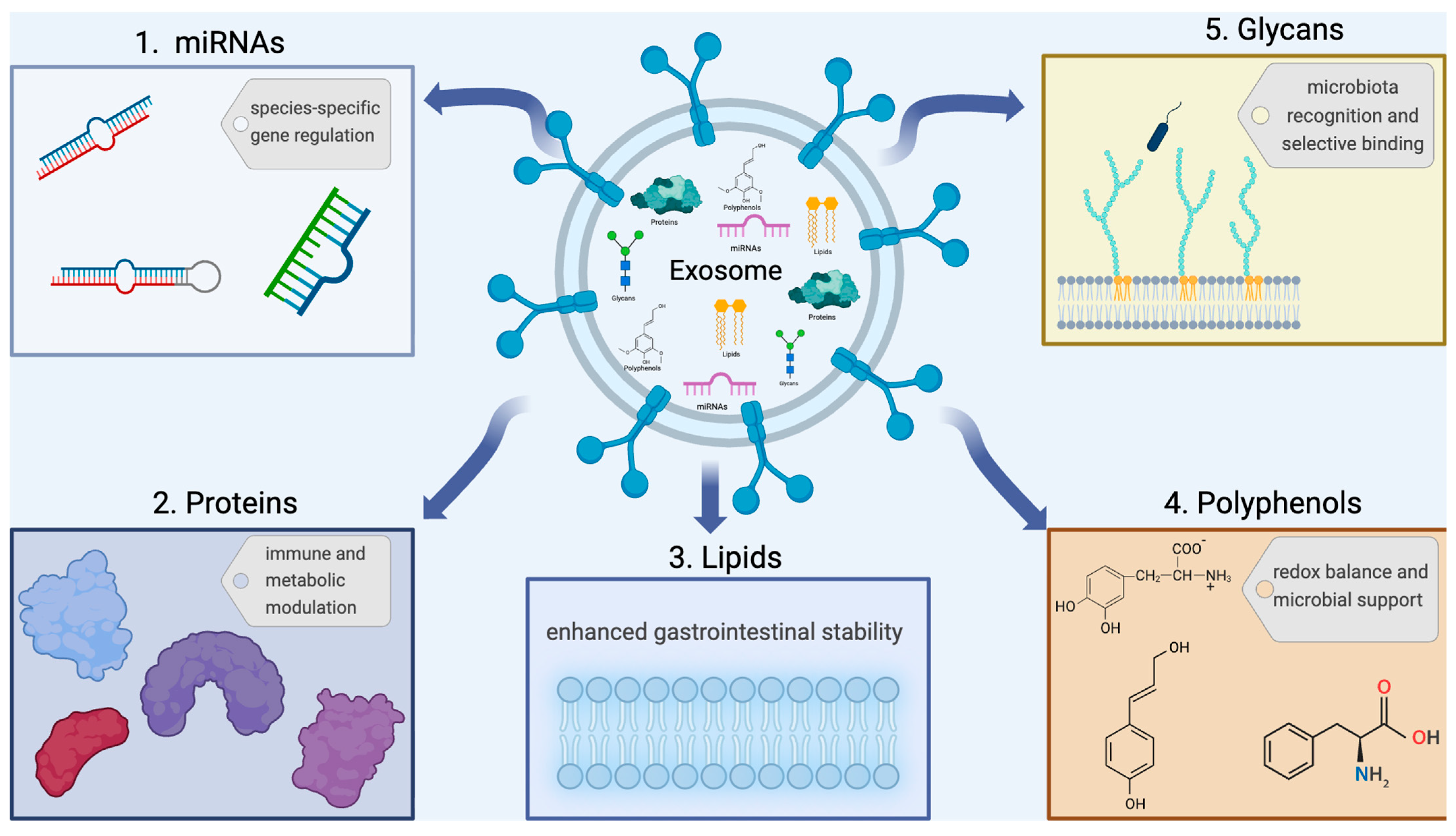
2. Structural and Molecular Composition of Edible Plant-Derived Exosome-like Nanoparticles
2.1. Bioactive Cargo Composition of Plant-Derived Exosome-like Nanoparticles
2.1.1. microRNAs
2.1.2. Proteins
2.1.3. Polyphenols
2.1.4. Lipids
2.1.5. Glycans
2.2. Major Edible Plant Sources of Exosomes
2.2.1. Ginger
2.2.2. Grape
2.2.3. Citrus
2.2.4. Broccoli
2.2.5. Turmeric
2.2.6. Aloe Vera
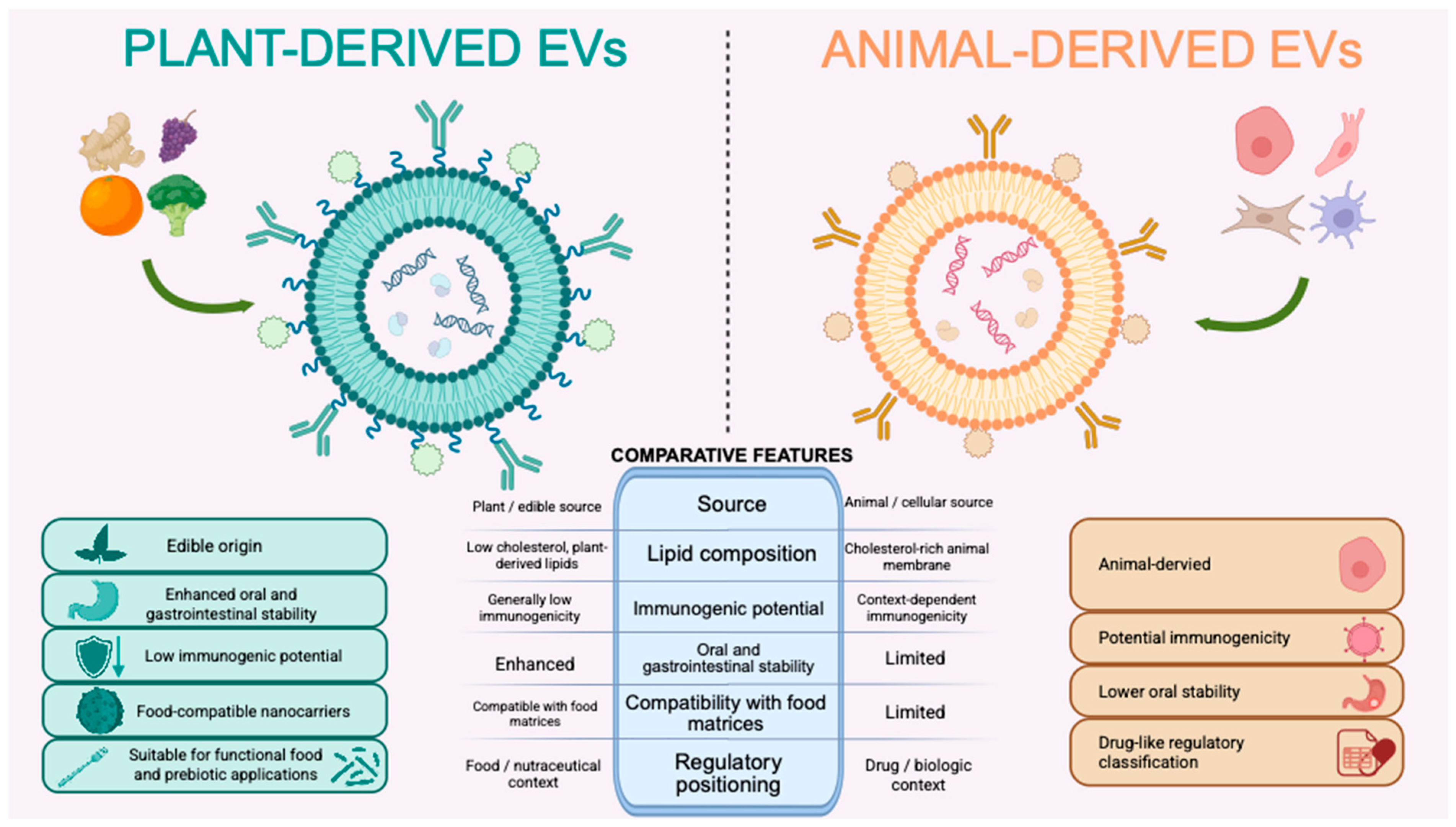
2.3. Differences Between Plant EVs and Mammalian EVs
3. Isolation, Characterization, and Stability in the Digestive System
4. Prebiotic Functions of Plant-Derived Exosome-like Nanoparticles
4.1. Crosstalk Between Plant-Derived Exosome-like Nanoparticles and Gut Microbiota
4.2. Modulation of Microbial Composition by Plant-Derived Exosome-like Nanoparticles
4.3. Roles of Exosomal miRNAs and Glycans in Microbe-Host Signaling
4.4. Short-Chain Fatty Acid Production and Mucosal Immune Modulation
4.5. Comparative Microbiota Responses to Different Plant Sources
5. Applications in Functional Foods and Synbiotic Systems
Stability During Food Processing and Storage
6. Preclinical and Clinical Applications and Translational Challenges
6.1. Mechanistic Insights, Limitations, and Translational Considerations
6.2. Translational Barriers and Current Research Gaps
7. Future Perspectives
8. Conclusions
Author Contributions
Funding
Institutional Review Board Statement
Informed Consent Statement
Data Availability Statement
Conflicts of Interest
References
- Yalçıntaş, Y.M.; Duman, H.; Bechelany, M.; BinMowyna, M.N.; Raposo, A.; Ahmad, M.F.; Al Khairat, M.; Alsharari, Z.D.; Albaridi, N.A.; Alshahrani, N.Z.; et al. Gut Microbiota-Modulating Functions of Bovine Colostrum and Bovine Milk Oligosaccharides. Food Rev. Int. 2025, 41, 2421–2436. [Google Scholar] [CrossRef]
- Duman, H.; Karav, S. Fiber and the Gut Microbiome and Its Impact on Inflammation. In Nutrition in the Control of Inflammation; Elsevier: Amsterdam, The Netherlands, 2025; pp. 51–76. [Google Scholar]
- Chen, Y.; Zhou, J.; Wang, L. Role and Mechanism of Gut Microbiota in Human Disease. Front. Cell. Infect. Microbiol. 2021, 11, 625913. [Google Scholar] [CrossRef] [PubMed]
- Gomaa, E.Z. Human Gut Microbiota/Microbiome in Health and Diseases: A Review. Antonie Van Leeuwenhoek 2020, 113, 2019–2040. [Google Scholar] [CrossRef] [PubMed]
- Golshany, H.; Helmy, S.A.; Morsy, N.F.S.; Kamal, A.; Yu, Q.; Fan, L. The Gut Microbiome across the Lifespan: How Diet Modulates Our Microbial Ecosystem from Infancy to the Elderly. Int. J. Food Sci. Nutr. 2025, 76, 95–121. [Google Scholar] [CrossRef]
- Nunez, H.; Nieto, P.A.; Mars, R.A.; Ghavami, M.; Sew Hoy, C.; Sukhum, K. Early Life Gut Microbiome and Its Impact on Childhood Health and Chronic Conditions. Gut Microbes 2025, 17, 2463567. [Google Scholar] [CrossRef]
- BharathwajChetty, B.; Kumar, A.; Deevi, P.; Abbas, M.; Alqahtani, A.; Liang, L.; Sethi, G.; Liu, L.; Kunnumakkara, A.B. Gut Microbiota and Their Influence in Brain Cancer Milieu. J. Neuroinflamm. 2025, 22, 129. [Google Scholar] [CrossRef]
- Anwer, E.K.E.; Ajagbe, M.; Sherif, M.; Musaibah, A.S.; Mahmoud, S.; ElBanbi, A.; Abdelnaser, A. Gut Microbiota Secondary Metabolites: Key Roles in GI Tract Cancers and Infectious Diseases. Biomedicines 2025, 13, 100. [Google Scholar] [CrossRef]
- Afzaal, M.; Saeed, F.; Shah, Y.A.; Hussain, M.; Rabail, R.; Socol, C.T.; Hassoun, A.; Pateiro, M.; Lorenzo, J.M.; Rusu, A.V.; et al. Human Gut Microbiota in Health and Disease: Unveiling the Relationship. Front. Microbiol. 2022, 13, 999001. [Google Scholar] [CrossRef]
- Ali, S.; Hamayun, M.; Siraj, M.; Khan, S.A.; Kim, H.-Y.; Lee, B. Recent Advances in Prebiotics: Classification, Mechanisms, and Health Applications. Future Foods 2025, 12, 100680. [Google Scholar] [CrossRef]
- Smolinska, S.; Popescu, F.-D.; Zemelka-Wiacek, M. A Review of the Influence of Prebiotics, Probiotics, Synbiotics, and Postbiotics on the Human Gut Microbiome and Intestinal Integrity. J. Clin. Med. 2025, 14, 3673. [Google Scholar] [CrossRef]
- Liu, Y.; Qiu, C.; Li, X.; McClements, D.J.; Wang, C.; Zhang, Z.; Jiao, A.; Long, J.; Zhu, K.; Wang, J.; et al. Application of Starch-Based Nanoparticles and Cyclodextrin for Prebiotics Delivery and Controlled Glucose Release in the Human Gut: A Review. Crit. Rev. Food Sci. Nutr. 2023, 63, 6126–6137. [Google Scholar] [CrossRef]
- You, S.; Ma, Y.; Yan, B.; Pei, W.; Wu, Q.; Ding, C.; Huang, C. The Promotion Mechanism of Prebiotics for Probiotics: A Review. Front. Nutr. 2022, 9, 1000517. [Google Scholar] [CrossRef] [PubMed]
- Dangi, P.; Chaudhary, N.; Chaudhary, V.; Virdi, A.S.; Kajla, P.; Khanna, P.; Jha, S.K.; Jha, N.K.; Alkhanani, M.F.; Singh, V.; et al. Nanotechnology Impacting Probiotics and Prebiotics: A Paradigm Shift in Nutraceuticals Technology. Int. J. Food Microbiol. 2023, 388, 110083. [Google Scholar] [CrossRef]
- Gurunathan, S.; Kang, M.-H.; Jeyaraj, M.; Qasim, M.; Kim, J.-H. Review of the Isolation, Characterization, Biological Function, and Multifarious Therapeutic Approaches of Exosomes. Cells 2019, 8, 307. [Google Scholar] [CrossRef]
- Mu, N.; Li, J.; Zeng, L.; You, J.; Li, R.; Qin, A.; Liu, X.; Yan, F.; Zhou, Z. Plant-Derived Exosome-Like Nanovesicles: Current Progress and Prospects. Int. J. Nanomed. 2023, 18, 4987–5009. [Google Scholar] [CrossRef] [PubMed]
- Wu, W.; Zhang, B.; Wang, W.; Bu, Q.; Li, Y.; Zhang, P.; Zeng, L. Plant-Derived Exosome-Like Nanovesicles in Chronic Wound Healing. Int. J. Nanomed. 2024, 19, 11293–11303. [Google Scholar] [CrossRef] [PubMed]
- Liu, R.; Zhang, F.; He, X.; Huang, K. Plant Derived Exosome-Like Nanoparticles and Their Therapeutic Applications in Glucolipid Metabolism Diseases. J. Agric. Food Chem. 2025, 73, 6385–6399. [Google Scholar] [CrossRef]
- Sha, A.; Luo, Y.; Xiao, W.; He, J.; Chen, X.; Xiong, Z.; Peng, L.; Zou, L.; Liu, B.; Li, Q. Plant-Derived Exosome-like Nanoparticles: A Comprehensive Overview of Their Composition, Biogenesis, Isolation, and Biological Applications. Int. J. Mol. Sci. 2024, 25, 12092. [Google Scholar] [CrossRef]
- Fan, S.-J.; Chen, J.-Y.; Tang, C.-H.; Zhao, Q.-Y.; Zhang, J.-M.; Qin, Y.-C. Edible Plant Extracellular Vesicles: An Emerging Tool for Bioactives Delivery. Front. Immunol. 2022, 13, 1028418. [Google Scholar] [CrossRef]
- Théry, C.; Witwer, K.W.; Aikawa, E.; Alcaraz, M.J.; Anderson, J.D.; Andriantsitohaina, R.; Antoniou, A.; Arab, T.; Archer, F.; Atkin-Smith, G.K.; et al. Minimal Information for Studies of Extracellular Vesicles 2018 (MISEV2018): A Position Statement of the International Society for Extracellular Vesicles and Update of the MISEV2014 Guidelines. J. Extracell. Vesicle 2018, 7, 1535750. [Google Scholar] [CrossRef]
- Welsh, J.A.; Goberdhan, D.C.I.; O’Driscoll, L.; Buzas, E.I.; Blenkiron, C.; Bussolati, B.; Cai, H.; Di Vizio, D.; Driedonks, T.A.P.; Erdbrügger, U.; et al. Minimal Information for Studies of Extracellular Vesicles (MISEV2023): From Basic to Advanced Approaches. J. Extracell. Vesicle 2024, 13, e12404. [Google Scholar] [CrossRef] [PubMed]
- Sikorska, M.; Siwek, M.; Slawinska, A.; Dunislawska, A. miRNA Profiling in the Chicken Liver under the Influence of Early Microbiota Stimulation with Probiotic, Prebiotic, and Synbiotic. Genes 2021, 12, 685. [Google Scholar] [CrossRef]
- Ayyanar, M.P.; Vijayan, M. A Review on Gut Microbiota and miRNA Crosstalk: Implications for Alzheimer’s Disease. GeroScience 2024, 47, 339–385. [Google Scholar] [CrossRef]
- Tembo, K.M.; Wang, X.; Bolideei, M.; Liu, Q.; Baboni, F.; Mehran, M.J.; Sun, F.; Wang, C.-Y. Exploring the Bioactivity of MicroRNAs Originated from Plant-Derived Exosome-like Nanoparticles (PELNs): Current Perspectives. J. Nanobiotechnol. 2025, 23, 563. [Google Scholar] [CrossRef]
- Pocsfalvi, G.; Turiák, L.; Ambrosone, A.; Del Gaudio, P.; Puska, G.; Fiume, I.; Silvestre, T.; Vékey, K. Protein Biocargo of Citrus Fruit-Derived Vesicles Reveals Heterogeneous Transport and Extracellular Vesicle Populations. J. Plant Physiol. 2018, 229, 111–121. [Google Scholar] [CrossRef]
- Sreenesh, B.; Varghese, E.; Kubatka, P.; Samuel, S.M.; Büsselberg, D. Prebiotic Potential of Dietary Polyphenols in Colorectal Cancer Immunomodulation. Foods 2025, 14, 2392. [Google Scholar] [CrossRef]
- Petersen, K.; Mansell, T.J. Unveiling the Prebiotic Potential of Polyphenols in Gut Health and Metabolism. Curr. Opin. Biotechnol. 2025, 95, 103338. [Google Scholar] [CrossRef] [PubMed]
- Ly, N.P.; Han, H.S.; Kim, M.; Park, J.H.; Choi, K.Y. Plant-Derived Nanovesicles: Current Understanding and Applications for Cancer Therapy. Bioact. Mater. 2023, 22, 365–383. [Google Scholar] [CrossRef] [PubMed]
- Dotz, V.; Wuhrer, M. Histo-Blood Group Glycans in the Context of Personalized Medicine. Biochim. Biophys. Acta (BBA)—Gen. Subj. 2016, 1860, 1596–1607. [Google Scholar] [CrossRef]
- Zhang, M.; Viennois, E.; Prasad, M.; Zhang, Y.; Wang, L.; Zhang, Z.; Han, M.K.; Xiao, B.; Xu, C.; Srinivasan, S.; et al. Edible Ginger-Derived Nanoparticles: A Novel Therapeutic Approach for the Prevention and Treatment of Inflammatory Bowel Disease and Colitis-Associated Cancer. Biomaterials 2016, 101, 321–340. [Google Scholar] [CrossRef]
- Bahri, F.; Mansoori, M.; Vafaei, S.; Fooladi, S.; Mir, Y.; Mehrabani, M.; Hozhabri, Y.; Nematollahi, M.H.; Iravani, S. A Comprehensive Review on Ginger-Derived Exosome-like Nanoparticles as Feasible Therapeutic Nano-Agents against Diseases. Mater. Adv. 2024, 5, 1846–1867. [Google Scholar] [CrossRef]
- Sharma, R.; Diwan, B.; Singh, B.P.; Kulshrestha, S. Probiotic Fermentation of Polyphenols: Potential Sources of Novel Functional Foods. Food Prod. Process. Nutr. 2022, 4, 21. [Google Scholar] [CrossRef]
- Wang, X.; Xin, C.; Zhou, Y.; Sun, T. Plant-Derived Vesicle-like Nanoparticles: The Next-Generation Drug Delivery Nanoplatforms. Pharmaceutics 2024, 16, 588. [Google Scholar] [CrossRef] [PubMed]
- Zhu, H.; He, W. Ginger: A Representative Material of Herb-Derived Exosome-like Nanoparticles. Front. Nutr. 2023, 10, 1223349. [Google Scholar] [CrossRef]
- Liu, H.; Deng, Y.; Li, J.; Lin, W.; Liu, C.; Yang, X.; Zhou, Z.; Jiang, Y. Ginger-Derived Exosome-like Nanoparticles: A Representative of Plant-Based Natural Nanostructured Drug Delivery System. Front. Bioeng. Biotechnol. 2025, 13, 1569889. [Google Scholar] [CrossRef] [PubMed]
- Zhao, B.; Lin, H.; Jiang, X.; Li, W.; Gao, Y.; Li, M.; Yu, Y.; Chen, N.; Gao, J. Exosome-like Nanoparticles Derived from Fruits, Vegetables, and Herbs: Innovative Strategies of Therapeutic and Drug Delivery. Theranostics 2024, 14, 4598–4621. [Google Scholar] [CrossRef] [PubMed]
- Pérez-Bermúdez, P.; Blesa, J.; Soriano, J.M.; Marcilla, A. Extracellular Vesicles in Food: Experimental Evidence of Their Secretion in Grape Fruits. Eur. J. Pharm. Sci. 2017, 98, 40–50. [Google Scholar] [CrossRef]
- Teng, Y.; He, J.; Zhong, Q.; Zhang, Y.; Lu, Z.; Guan, T.; Pan, Y.; Luo, X.; Feng, W.; Ou, C. Grape Exosome-like Nanoparticles: A Potential Therapeutic Strategy for Vascular Calcification. Front. Pharmacol. 2022, 13, 1025768. [Google Scholar] [CrossRef]
- Wang, M.; Chen, J.; Chen, W.; Ming, Y.; Guo, J.; Wang, Q.; Xu, S.; Kang, Y.; Huang, Y.; Jia, B. Grape-Derived Exosome-Like Nanovesicles Effectively Ameliorate Skin Photoaging by Protecting Epithelial Cells. J. Food Sci. 2025, 90, e70309. [Google Scholar] [CrossRef]
- Ju, S.; Mu, J.; Dokland, T.; Zhuang, X.; Wang, Q.; Jiang, H.; Xiang, X.; Deng, Z.-B.; Wang, B.; Zhang, L.; et al. Grape Exosome-like Nanoparticles Induce Intestinal Stem Cells and Protect Mice From DSS-Induced Colitis. Mol. Ther. 2013, 21, 1345–1357. [Google Scholar] [CrossRef]
- Shkryl, Y.; Tsydeneshieva, Z.; Menchinskaya, E.; Rusapetova, T.; Grishchenko, O.; Mironova, A.; Bulgakov, D.; Gorpenchenko, T.; Kazarin, V.; Tchernoded, G.; et al. Exosome-like Nanoparticles, High in Trans-δ-Viniferin Derivatives, Produced from Grape Cell Cultures: Preparation, Characterization, and Anticancer Properties. Biomedicines 2024, 12, 2142. [Google Scholar] [CrossRef] [PubMed]
- Baldini, N.; Torreggiani, E.; Roncuzzi, L.; Perut, F.; Zini, N.; Avnet, S. Exosome-like Nanovesicles Isolated from Citrus limon L. Exert Antioxidative Effect. Curr. Pharm. Biotechnol. 2018, 19, 877–885. [Google Scholar] [CrossRef] [PubMed]
- Yazdanpanah, S.; Romano, S.; Valentino, A.; Galderisi, U.; Peluso, G.; Calarco, A. Plant-Derived Exosomes: Carriers and Cargo of Natural Bioactive Compounds: Emerging Functions and Applications in Human Health. Nanomaterials 2025, 15, 1005. [Google Scholar] [CrossRef]
- Logozzi, M.; Di Raimo, R.; Mizzoni, D.; Fais, S. The Potentiality of Plant-Derived Nanovesicles in Human Health—A Comparison with Human Exosomes and Artificial Nanoparticles. Int. J. Mol. Sci. 2022, 23, 4919. [Google Scholar] [CrossRef]
- Yin, C.; Lao, Y.; Xie, L.; Chen, L.; Jiang, Y.; Gong, L. Citrus Exosome-Modified Exogenous dsRNA Delivery Reduces Plant Pathogen Resistance and Mycotoxin Production. Pestic. Biochem. Physiol. 2024, 205, 106151. [Google Scholar] [CrossRef]
- Rahmati, S.; Karimi, H.; Alizadeh, M.; Khazaei, A.H.; Paiva-Santos, A.C.; Rezakhani, L.; Sharifi, E. Prospects of Plant-Derived Exosome-like Nanocarriers in Oncology and Tissue Engineering. Hum. Cell 2023, 37, 121–138. [Google Scholar] [CrossRef]
- Che, K.; Wang, C.; Chen, H. Advancing Functional Foods: A Systematic Analysis of Plant-Derived Exosome-like Nanoparticles and Their Health-Promoting Properties. Front. Nutr. 2025, 12, 1544746. [Google Scholar] [CrossRef]
- Liu, Y.; Ren, C.; Zhan, R.; Cao, Y.; Ren, Y.; Zou, L.; Zhou, C.; Peng, L. Exploring the Potential of Plant-Derived Exosome-like Nanovesicle as Functional Food Components for Human Health: A Review. Foods 2024, 13, 712. [Google Scholar] [CrossRef]
- Duan, X.; Li, J.; Gao, R.; Zhou, Y.; Chen, R.; Shang, Y.; Wang, H.; Chen, J.; Xu, S. Antimicrobial Hydrogel Loaded with Broccoli Exosomes Promotes Anti-Scarring Healing of MRSA-Infected Wounds. Mater. Today Bio 2025, 35, 102276. [Google Scholar] [CrossRef]
- Del Pozo-Acebo, L.; López De Las Hazas, M.-C.; Tomé-Carneiro, J.; Del Saz-Lara, A.; Gil-Zamorano, J.; Balaguer, L.; Chapado, L.A.; Busto, R.; Visioli, F.; Dávalos, A. Therapeutic Potential of Broccoli-Derived Extracellular Vesicles as Nanocarriers of Exogenous miRNAs. Pharmacol. Res. 2022, 185, 106472. [Google Scholar] [CrossRef] [PubMed]
- Liu, C.; Yan, X.; Zhang, Y.; Yang, M.; Ma, Y.; Zhang, Y.; Xu, Q.; Tu, K.; Zhang, M. Oral Administration of Turmeric-Derived Exosome-like Nanovesicles with Anti-Inflammatory and pro-Resolving Bioactions for Murine Colitis Therapy. J. Nanobiotechnol. 2022, 20, 206. [Google Scholar] [CrossRef]
- Wei, Y.; Cai, X.; Wu, Q.; Liao, H.; Liang, S.; Fu, H.; Xiang, Q.; Zhang, S. Extraction, Isolation, and Component Analysis of Turmeric-Derived Exosome-like Nanoparticles. Bioengineering 2023, 10, 1199. [Google Scholar] [CrossRef] [PubMed]
- Gao, C.; Zhou, Y.; Chen, Z.; Li, H.; Xiao, Y.; Hao, W.; Zhu, Y.; Vong, C.T.; Farag, M.A.; Wang, Y.; et al. Turmeric-Derived Nanovesicles as Novel Nanobiologics for Targeted Therapy of Ulcerative Colitis. Theranostics 2022, 12, 5596–5614. [Google Scholar] [CrossRef]
- Wang, J.; Zhang, T.; Gu, R.; Ke, Y.; Zhang, S.; Su, X.; Pan, X.; He, Q.; Li, G.; Zhang, Z.; et al. Development and Evaluation of Reconstructed Nanovesicles from Turmeric for Multifaceted Obesity Intervention. ACS Nano 2024, 18, 23117–23135. [Google Scholar] [CrossRef]
- Xia, X.; Zhu, J.; Xu, X.; Wang, W.; Zhao, R.; Wu, K.; Huang, H.; Qian, Y.; Luo, Z.; Xu, F.; et al. Current Progress of Plant-Derived Exosome-like Nanovesicles on the Regulation of Osteoporosis and Osteoarthritis. Ann. Med. 2025, 57, 2549524. [Google Scholar] [CrossRef] [PubMed]
- Oskouie, M.N.; Aghili Moghaddam, N.S.; Butler, A.E.; Zamani, P.; Sahebkar, A. Therapeutic Use of Curcumin-encapsulated and Curcumin-primed Exosomes. J. Cell. Physiol. 2019, 234, 8182–8191. [Google Scholar] [CrossRef] [PubMed]
- Sun, Z.; Zheng, Y.; Wang, T.; Zhang, J.; Li, J.; Wu, Z.; Zhang, F.; Gao, T.; Yu, L.; Xu, X.; et al. Aloe Vera Gel and Rind-Derived Nanoparticles Mitigate Skin Photoaging via Activation of Nrf2/ARE Pathway. Int. J. Nanomed. 2025, 20, 4051–4067. [Google Scholar] [CrossRef]
- Zeng, L.; Shi, W.; Chen, K.; Wang, K.; Dai, Y.; Cheng, X.; Lu, S.; Gao, D.; Sun, W.; Zhang, X.; et al. Indocyanine Green Aggregation-Induced Hypotonic Stress to Remodel Aloe Exosome-like Vesicles for Enhanced Tumor Penetration and Phototherapy. ACS Nano 2025, 19, 15425–15443. [Google Scholar] [CrossRef]
- Miya, M.B.; Ashutosh; Maulishree; Chandra Gupta, P.; Pathak, V.; Mishra, R.; Chaturvedi, P.; Kalani, A. Therapeutic Effects of OXY- Exo in Diabetic Wound Injury. Biochem. Biophys. Res. Commun. 2024, 731, 150398. [Google Scholar] [CrossRef] [PubMed]
- Sall, I.M.; Flaviu, T.A. Plant and Mammalian-Derived Extracellular Vesicles: A New Therapeutic Approach for the Future. Front. Bioeng. Biotechnol. 2023, 11, 1215650. [Google Scholar] [CrossRef]
- Huang, D.; Chen, J.; Zhao, M.; Shen, H.; Jin, Q.; Xiao, D.; Peng, Z.; Chen, T.; Zhang, Y.; Rao, D.; et al. Plant-Derived Extracellular Vesicles: Composition, Function and Clinical Potential. J. Transl. Med. 2025, 23, 1065. [Google Scholar] [CrossRef]
- Farley, J.T.; Eldahshoury, M.K.; De Marcos Lousa, C. Unconventional Secretion of Plant Extracellular Vesicles and Their Benefits to Human Health: A Mini Review. Front. Cell Dev. Biol. 2022, 10, 883841. [Google Scholar] [CrossRef]
- Ambrosone, A.; Barbulova, A.; Cappetta, E.; Cillo, F.; De Palma, M.; Ruocco, M.; Pocsfalvi, G. Plant Extracellular Vesicles: Current Landscape and Future Directions. Plants 2023, 12, 4141. [Google Scholar] [CrossRef] [PubMed]
- Cai, Q.; Halilovic, L.; Shi, T.; Chen, A.; He, B.; Wu, H.; Jin, H. Extracellular Vesicles: Cross-Organismal RNA Trafficking in Plants, Microbes, and Mammalian Cells. Extracell. Vesicles Circ. Nucleic Acids 2023, 4, 262–282. [Google Scholar] [CrossRef]
- Sergazy, S.; Adekenov, S.; Khabarov, I.; Adekenova, K.; Maikenova, A.; Aljofan, M. Harnessing Mammalian- and Plant-Derived Exosomes for Drug Delivery: A Comparative Review. Int. J. Mol. Sci. 2025, 26, 4857. [Google Scholar] [CrossRef]
- Nueraihemaiti, N.; Dilimulati, D.; Baishan, A.; Hailati, S.; Maihemuti, N.; Aikebaier, A.; Paerhati, Y.; Zhou, W. Advances in Plant-Derived Extracellular Vesicle Extraction Methods and Pharmacological Effects. Biology 2025, 14, 377. [Google Scholar] [CrossRef]
- Mun, J.-G.; Song, D.-H.; Kee, J.-Y.; Han, Y. Recent Advances in the Isolation Strategies of Plant-Derived Exosomes and Their Therapeutic Applications. Curr. Issues Mol. Biol. 2025, 47, 144. [Google Scholar] [CrossRef] [PubMed]
- Song, Y.; Feng, N.; Yu, Q.; Li, Y.; Meng, M.; Yang, X.; Gan, Z.; Xu, T.; Tang, C.; Zhang, Y. Exosomes in Disease Therapy: Plant-Derived Exosome-Like Nanoparticles Current Status, Challenges, and Future Prospects. Int. J. Nanomed. 2025, 20, 10613–10644. [Google Scholar] [CrossRef] [PubMed]
- Kumar, M.N.; Kalarikkal, S.P.; Jayaram, Y.; Narayanan, J.; Sundaram, G.M. Protocol to Produce Plant-Based Hybrid Nanovesicles from Fresh Turmeric and Pepper Using Polyethylene Glycol. STAR Protoc. 2024, 5, 102924. [Google Scholar] [CrossRef]
- Matloob, A.; Gu, X.; Rehman Sheikh, A.; Javed, M.; Fang, Z.; Luo, Z. Plant Exosomes-like Nano-vesicles: Characterization, Functional Food Potential, and Emerging Therapeutic Applications as a Nano Medicine. Food Saf. Health 2024, 2, 429–450. [Google Scholar] [CrossRef]
- Dad, H.A.; Gu, T.-W.; Zhu, A.-Q.; Huang, L.-Q.; Peng, L.-H. Plant Exosome-like Nanovesicles: Emerging Therapeutics and Drug Delivery Nanoplatforms. Mol. Ther. 2021, 29, 13–31. [Google Scholar] [CrossRef] [PubMed]
- Han, Y.; Guo, X.; Ji, Z.; Guo, Y.; Ma, W.; Du, H.; Guo, Y.; Xiao, H. Colon Health Benefits of Plant-Derived Exosome-like Nanoparticles via Modulating Gut Microbiota and Immunity. Crit. Rev. Food Sci. Nutr. 2025, 65, 7718–7738. [Google Scholar] [CrossRef] [PubMed]
- Zhang, Z.; Yu, Y.; Zhu, G.; Zeng, L.; Xu, S.; Cheng, H.; Ouyang, Z.; Chen, J.; Pathak, J.L.; Wu, L.; et al. The Emerging Role of Plant-Derived Exosomes-Like Nanoparticles in Immune Regulation and Periodontitis Treatment. Front. Immunol. 2022, 13, 896745. [Google Scholar] [CrossRef]
- Chen, X.; He, L.; Zhang, C.; Zheng, G.; Lin, S.; Zou, Y.; Lu, Y.; Feng, Y.; Zheng, D. Exploring New Avenues of Health Protection: Plant-Derived Nanovesicles Reshape Microbial Communities. J. Nanobiotechnol. 2024, 22, 269. [Google Scholar] [CrossRef]
- Zhu, M.; Xu, H.; Liang, Y.; Xu, J.; Yue, N.; Zhang, Y.; Tian, C.; Yao, J.; Wang, L.; Nie, Y.; et al. Edible Exosome-like Nanoparticles from Portulaca Oleracea L Mitigate DSS-Induced Colitis via Facilitating Double-Positive CD4+CD8+T Cells Expansion. J. Nanobiotechnol. 2023, 21, 309. [Google Scholar] [CrossRef]
- Gong, Q.; Sun, Y.; Liu, L.; Pu, C.; Guo, Y. Oral Administration of Tea-Derived Exosome-like Nanoparticles Protects Epithelial and Immune Barrier of Intestine from Psychological Stress. Heliyon 2024, 10, e36812. [Google Scholar] [CrossRef] [PubMed]
- Zhan, M.; Cai, Y.; Zhao, C.; Chen, B.; Wang, X.; Shen, P.; Han, Y.; Song, M.; Cao, Y.; Xiao, H. Citrus Exosome-like Nanoparticles Reversed High-Fat Diet-Induced Microbiota Dysbiosis and Associated Short-Chain Fatty Acid Production. J. Agric. Food Chem. 2025, 73, 23344–23356. [Google Scholar] [CrossRef]
- Sundaram, K.; Teng, Y.; Mu, J.; Xu, Q.; Xu, F.; Sriwastva, M.K.; Zhang, L.; Park, J.W.; Zhang, X.; Yan, J.; et al. Outer Membrane Vesicles Released from Garlic Exosome-like Nanoparticles (GaELNs) Train Gut Bacteria That Reverses Type 2 Diabetes via the Gut-Brain Axis. Small 2024, 20, 2308680. [Google Scholar] [CrossRef]
- Li, D.; Tang, Q.; Yang, M.; Xu, H.; Zhu, M.; Zhang, Y.; Tian, C.; Nie, Y.; Wang, J.; Liang, Y.; et al. Plant-Derived Exosomal Nanoparticles: Potential Therapeutic for Inflammatory Bowel Disease. Nanoscale Adv. 2023, 5, 3575–3588. [Google Scholar] [CrossRef]
- Wei, C.; Zhang, M.; Cheng, J.; Tian, J.; Yang, G.; Jin, Y. Plant-Derived Exosome-like Nanoparticles—From Laboratory to Factory, a Landscape of Application, Challenges and Prospects. Crit. Rev. Food Sci. Nutr. 2025, 65, 4510–4528. [Google Scholar] [CrossRef]
- Bai, C.; Liu, J.; Zhang, X.; Li, Y.; Qin, Q.; Song, H.; Yuan, C.; Huang, Z. Research Status and Challenges of Plant-Derived Exosome-like Nanoparticles. Biomed. Pharmacother. 2024, 174, 116543. [Google Scholar] [CrossRef]
- Yi, Q.; Xu, Z.; Thakur, A.; Zhang, K.; Liang, Q.; Liu, Y.; Yan, Y. Current Understanding of Plant-Derived Exosome-like Nanoparticles in Regulating the Inflammatory Response and Immune System Microenvironment. Pharmacol. Res. 2023, 190, 106733. [Google Scholar] [CrossRef] [PubMed]
- Sarasati, A.; Syahruddin, M.H.; Nuryanti, A.; Ana, I.D.; Barlian, A.; Wijaya, C.H.; Ratnadewi, D.; Wungu, T.D.K.; Takemori, H. Plant-Derived Exosome-like Nanoparticles for Biomedical Applications and Regenerative Therapy. Biomedicines 2023, 11, 1053. [Google Scholar] [CrossRef] [PubMed]
- Zhu, Z.; Liao, L.; Gao, M.; Liu, Q. Garlic-Derived Exosome-like Nanovesicles Alleviate Dextran Sulphate Sodium-Induced Mouse Colitis via the TLR4/MyD88/NF-κB Pathway and Gut Microbiota Modulation. Food Funct. 2023, 14, 7520–7534. [Google Scholar] [CrossRef] [PubMed]
- Di Raimo, R.; Mizzoni, D.; Aloi, A.; Pietrangelo, G.; Dolo, V.; Poppa, G.; Fais, S.; Logozzi, M. Antioxidant Effect of a Plant-Derived Extracellular Vesicles’ Mix on Human Skin Fibroblasts: Induction of a Reparative Process. Antioxidants 2024, 13, 1373. [Google Scholar] [CrossRef]
- Wu, H.; Shi, M.; Meng, L.; Qiu, J.; Jiang, Y.; Qian, D.; Shen, F. Plant-Derived Extracellular Vesicles as a Novel Tumor-Targeting Delivery System for Cancer Treatment. Front. Cell Dev. Biol. 2025, 13, 1589550. [Google Scholar] [CrossRef]
- Deng, Z.; Rong, Y.; Teng, Y.; Mu, J.; Zhuang, X.; Tseng, M.; Samykutty, A.; Zhang, L.; Yan, J.; Miller, D.; et al. Broccoli-Derived Nanoparticle Inhibits Mouse Colitis by Activating Dendritic Cell AMP-Activated Protein Kinase. Mol. Ther. 2017, 25, 1641–1654. [Google Scholar] [CrossRef]
- Wang, B.; Zhuang, X.; Deng, Z.-B.; Jiang, H.; Mu, J.; Wang, Q.; Xiang, X.; Guo, H.; Zhang, L.; Dryden, G.; et al. Targeted Drug Delivery to Intestinal Macrophages by Bioactive Nanovesicles Released from Grapefruit. Mol. Ther. 2014, 22, 522–534. [Google Scholar] [CrossRef]
- Yang, S.; Li, W.; Bai, X.; Di Nunzio, G.; Fan, L.; Zhao, Y.; Ren, L.; Zhao, R.; Bian, S.; Liu, M.; et al. Ginseng-Derived Nanoparticles Alleviate Inflammatory Bowel Disease via the TLR4/MAPK and P62/Nrf2/Keap1 Pathways. J. Nanobiotechnol. 2024, 22, 48. [Google Scholar] [CrossRef]
- Yang, M.; Luo, Q.; Chen, X.; Chen, F. Bitter Melon Derived Extracellular Vesicles Enhance the Therapeutic Effects and Reduce the Drug Resistance of 5-Fluorouracil on Oral Squamous Cell Carcinoma. J. Nanobiotechnol. 2021, 19, 259. [Google Scholar] [CrossRef]
- Karamanidou, T.; Tsouknidas, A. Plant-Derived Extracellular Vesicles as Therapeutic Nanocarriers. Int. J. Mol. Sci. 2021, 23, 191. [Google Scholar] [CrossRef]
- U.S. Food and Drug Administration. Public Safety Notification on Exosome Products; U.S. Food and Drug Administration: Silver Spring, MD, USA, 2020.
- European Food Safety Authority (EFSA). Novel Food; European Food Safety Authority (EFSA): Parma, Italy, 2025.
- EFSA Panel on Nutrition, Novel Foods and Food Allergens (NDA); Turck, D.; Bohn, T.; Castenmiller, J.; de Henauw, S.; Hirsch-Ernst, K.I.; Maciuk, A.; Mangelsdorf, I.; McArdle, H.J.; Naska, A.; et al. Guidance on the Scientific Requirements for an Application for Authorisation of a Novel Food in the Context of Regulation (EU) 2015/2283. EFSA J. 2024, 22, e8961. [Google Scholar] [CrossRef] [PubMed]
- Xu, Z.; Xu, Y.; Zhang, K.; Liu, Y.; Liang, Q.; Thakur, A.; Liu, W.; Yan, Y. Plant-Derived Extracellular Vesicles (PDEVs) in Nanomedicine for Human Disease and Therapeutic Modalities. J. Nanobiotechnol. 2023, 21, 114. [Google Scholar] [CrossRef] [PubMed]
- Urzì, O.; Raimondo, S.; Alessandro, R. Extracellular Vesicles from Plants: Current Knowledge and Open Questions. Int. J. Mol. Sci. 2021, 22, 5366. [Google Scholar] [CrossRef]
- Alfieri, M.; Leone, A.; Ambrosone, A. Plant-Derived Nano and Microvesicles for Human Health and Therapeutic Potential in Nanomedicine. Pharmaceutics 2021, 13, 498. [Google Scholar] [CrossRef] [PubMed]
- Suharta, S.; Barlian, A.; Hidajah, A.C.; Notobroto, H.B.; Ana, I.D.; Indariani, S.; Wungu, T.D.K.; Wijaya, C.H. Plant-derived Exosome-like Nanoparticles: A Concise Review on Its Extraction Methods, Content, Bioactivities, and Potential as Functional Food Ingredient. J. Food Sci. 2021, 86, 2838–2850. [Google Scholar] [CrossRef]
- Arioz Tunc, H.; Calder, P.C.; Cait, A.; Dodd, G.F.; Gasaly Retamal, N.Y.I.; Guillemet, D.; James, D.; Korzeniowski, K.J.; Lubkowska, A.; Meynier, A.; et al. Impact of Non-Digestible Carbohydrates and Prebiotics on Immunity, Infections, Inflammation and Vaccine Responses: A Systematic Review of Evidence in Healthy Humans and a Discussion of Mechanistic Proposals. Crit. Rev. Food Sci. Nutr. 2026, 66, 1–74. [Google Scholar] [CrossRef]



| Method | Yield | Purity | Processing Time | Advantages | Limitations | References |
|---|---|---|---|---|---|---|
| Ultracentrifugation | High | Moderate | Long | Widely used standard method; scalable. | Co-isolation of protein aggregates and debris; requires specialized equipment. | [67,68] |
| PEG 6000 | High | Low | Short | Simple, cost-effective, suitable for large volumes. | High risk of co-precipitating contaminants. | [70] |
| SEC | Moderate | High | Moderate | High purity; preserves vesicle integrity. | Lower yield; requires column setup and optimization. | [69,70] |
| Clinical or Preclinical Applications | Population | Study Design | Dose | Duration | Results | References |
|---|---|---|---|---|---|---|
| Anti-inflammatory and barrier protection | Caco-2 human intestinal epithelial cell line | Caco-2 intestinal epithelial cells stimulated with lipopolysaccharide (LPS); barrier functions and inflammatory markers assessed by application of garlic-derived ELNs. | 1, 5, 10 µg/mL garlic-derived ELNs | 24 h | Barrier strengthened, tight-junction proteins increased, inflammatory cytokines decreased. | [85] |
| Colitis attenuation and barrier restoration | Male C57BL/6J mice | Colitis induced with dextran sodium sulfate (DSS); garlic-derived ELNs orally administered; clinical and molecular outcomes evaluated. | 20, 100, 500 mg/kg (oral) | 15 days | Colitis severity decreased, barrier proteins increased, inflammatory cytokines reduced; 100 mg/kg was most effective. | [85] |
| Colitis treatment via tissue repair and barrier strengthening | DSS colitis mice | Oral GDEN; intestinal stem cell activation and tissue regeneration assessed. | Not specified. | Not specified. | The barrier strengthened, repair increased, inflammation reduced. | [80] |
| Barrier improvement and inflammation control | DSS colitis mice | Oral GELN; epithelial and immune cell uptake examined. | Not specified. | Not specified. | Barrier integrity improved, inflammation suppressed. | [80] |
| Immune modulation to alleviate colitis | DSS and Rag1−/− mice | Sulforaphane-loaded broccoli-derived PELN; DC modulation evaluated. | Not specified. | Not specified. | Immune balance improved, inflammation markedly reduced. | [80] |
| Prevention and alleviation of colon disease | DSS colitis mice | Oral tea leaf-derived PELN; antioxidant and immune effects analyzed. | Not specified. | Not specified. | Oxidative stress reduced, barrier strengthened, inflammation lowered. | [80] |
| Clinical translation potential in humans | Refractory IBD patients | Safety and efficacy; GELN ± curcumin compared | Not specified. | Not specified. | Safety and anti-inflammatory effects under evaluation (results pending) | [80] |
| Antioxidant and anti-aging skin effects | Human dermal fibroblasts | In vitro cellular uptake and functional assays | PELN mix from grape, blood orange, tangerine, papaya, pomegranate | Up to 72 h | Efficient cellular uptake, antioxidant defense enhancement, improved mitochondrial homeostasis, anti-aging associated responses. | [86] |
| Barrier repair and tissue regeneration | Human dermal fibroblasts (monolayer) | In vitro scratch (wound-healing) assay | PELN mix | Until wound closure | Accelerated wound repair, increased collagen I, MMP-9 and vimentin expression at wound site | [86] |
| Cancer cell viability assessment | Human triple-negative breast cancer cell line (MDA-MB-231) | Cancer cells were treated with different GDEN concentrations and viability was measured using the MTT assay. | Increasing concentrations of GDENs | 24 h | Cell viability decreased significantly in a dose-dependent manner. | [42] |
| Oral mucositis prevention in chemoradiation | Head and neck cancer patients (n = 60) under chemoradiation | Randomized, open-label trial (GDENs vs. standard care for oral mucositis) | GDEN-rich powder (oral) daily | 35 days (concurrent with radiation therapy) | GDEN significantly reduced oral mucositis severity during chemoradiation without causing notable toxicity (Phase I). | [87] |
| Colitis and Colitis-Associated Cancer | Mouse colitis and colon cancer (CAC) models | Oral prophylactic and therapeutic treatment in acute and chronic colitis | ~2 mg/day of GELNs | ~10–14 days (prevention and treatment phases) | GELNs reduced colitis severity and tumor burden by enhancing intestinal barrier repair, suppressing inflammation, and limiting oxidative stress. | [31] |
| Colitis (Anti-inflammatory) | Mice with DSS-induced colitis | Oral Broccoli-derived ELN treatment, prevention and therapy in IBD model | 250 µg/mouse per dose | ~10 days pre-DSS + 7–12 days during colitis | Broccoli-derived ELNs delivered sulforaphane to activate AMPK in DCs, inducing tolerogenic immune responses and reducing colitis severity, weight loss, disease activity, and histological damage. | [88] |
| DSS Colitis | Mice with DSS-induced colitis | Oral grapefruit-derived ELN therapy during IBD | Not explicitly reported(low-dose grapefruit-derived ELNs, oral gavage) | ~7–10 days (acute colitis phase) | Grapefruit ELNs alleviated colitis by macrophage-mediated anti-inflammatory modulation. | [89] |
| Colitis (Anti-inflammatory and antioxidant) | Mice with DSS-induced IBD (plus in vitro macrophage assays) | Two-dose oral treatment (low vs. high dose) in IBD model, with mechanistic analyses | 5 mg/mL and 10 mg/mL Ginseng-derived ELNs (≈1–2 mg/mL mouse, oral) | 3 days pretreatment + 7 days DSS (10 days total) | Ginseng ELNs reduce colitis through anti-inflammatory, antioxidant, barrier-protective, and microbiota-modulating effects. | [90] |
| Oral Cancer (Anti-tumor and anti-inflammatory) | Human oral squamous carcinoma (OSCC): cell lines and xenograft mice | In vitro cytotoxicity and in vivo efficacy test, alone and combined with chemotherapy (5-FU) | Bitter melon-derived ELNs ~100 µg/mL in vitro; in vivo ~10 µg/g via i.p. (with 5-FU 20 mg/kg) | ~4 weeks (tumor growth experiment) | Bitter melon ELNs suppressed OSCC growth and enhanced 5-FU efficacy by inhibiting NLRP3-mediated chemoresistance. | [91] |
Disclaimer/Publisher’s Note: The statements, opinions and data contained in all publications are solely those of the individual author(s) and contributor(s) and not of MDPI and/or the editor(s). MDPI and/or the editor(s) disclaim responsibility for any injury to people or property resulting from any ideas, methods, instructions or products referred to in the content. |
© 2026 by the authors. Licensee MDPI, Basel, Switzerland. This article is an open access article distributed under the terms and conditions of the Creative Commons Attribution (CC BY) license.
Share and Cite
Alkan, Y.; Yalçıntaş, Y.M.; Bechelany, M.; Karav, S. Edible Plant-Derived Exosome-like Nanoparticles as Prebiotic Nanocarriers: Gut Microbiota Modulation and Functional Food Potential. Pharmaceutics 2026, 18, 520. https://doi.org/10.3390/pharmaceutics18050520
Alkan Y, Yalçıntaş YM, Bechelany M, Karav S. Edible Plant-Derived Exosome-like Nanoparticles as Prebiotic Nanocarriers: Gut Microbiota Modulation and Functional Food Potential. Pharmaceutics. 2026; 18(5):520. https://doi.org/10.3390/pharmaceutics18050520
Chicago/Turabian StyleAlkan, Yağız, Yalçın Mert Yalçıntaş, Mikhael Bechelany, and Sercan Karav. 2026. "Edible Plant-Derived Exosome-like Nanoparticles as Prebiotic Nanocarriers: Gut Microbiota Modulation and Functional Food Potential" Pharmaceutics 18, no. 5: 520. https://doi.org/10.3390/pharmaceutics18050520
APA StyleAlkan, Y., Yalçıntaş, Y. M., Bechelany, M., & Karav, S. (2026). Edible Plant-Derived Exosome-like Nanoparticles as Prebiotic Nanocarriers: Gut Microbiota Modulation and Functional Food Potential. Pharmaceutics, 18(5), 520. https://doi.org/10.3390/pharmaceutics18050520