Quality by Design-Based Scale-Up and Industrial Development of Turmeric Extract-Loaded Nanostructured Lipid Carriers
 ,
, 
Abstract
1. Introduction
2. Materials and Methods
2.1. Materials
2.2. Methods
2.2.1. Analysis of Curcumin Using High-Performance Liquid Chromatography (HPLC)
2.2.2. NLC Formulations
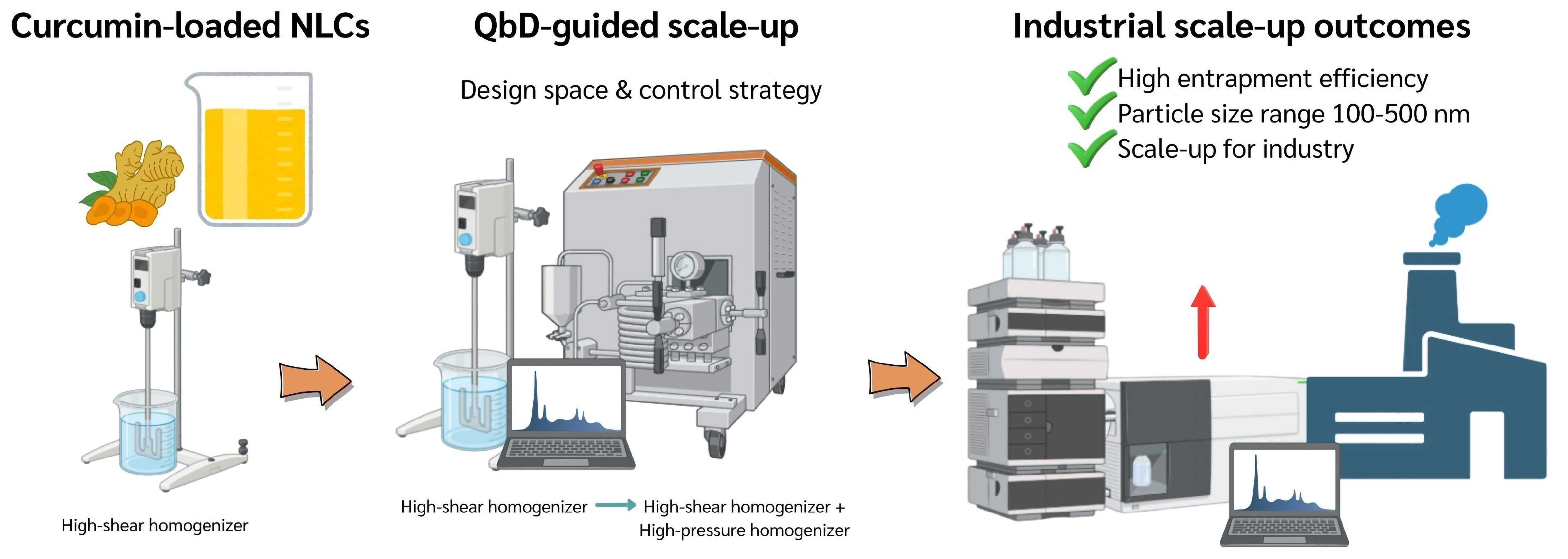
2.2.3. Design Space and Control Strategy for Preparation of Curcuminoid-Loaded NLCs
- Physiochemical properties: Uniform nanoparticles with a particle size in the range of 100 nm to 500 nm, a polydispersity index (PDI) between 0.2 and 0.6, and a zeta potential ranging from −25 mV to −40 mV.
- Entrapment efficiency: In the range of 75–100%.
- Stability: Physically and chemically stable during storage, with no phase separation or significant degradation of curcumin.
- Pre-emulsion formation: The temperature of the lipid melt and aqueous phase, stirring speed, and mixing time were varied to identify factors affecting initial droplet size and homogeneity.
- High-shear homogenization (HSH): Shear speed (rpm) and time were determined to create droplet size reduction before being subjected to high-pressure homogenization processing.
- High-pressure homogenization (HPH): Homogenization cycles and applied pressure were included to target the nanosize and uniform nanoparticles.
- Process limitations associated with the operational constraints of the equipment: The maximum achievable shear rate of the high-shear homogenizer was 20,000 rpm, and the upper operating pressure of the semi-industrial high-pressure homogenizer was 200 bar. Furthermore, the processing duration was meticulously regulated to mitigate heat accumulation, which could otherwise accelerate compound degradation.
- Cooling/solidification: The cooling rate and final temperature influence lipid crystallinity and long-term stability. The curcuminoid-loaded NLCs were cooled to room temperature.
2.2.4. Development of NLCs
2.2.5. Multivariate Analysis
2.2.6. Method Transfer for Medium-Scale NLC Production and Determination of %Entrapment Efficiency (EE) and %Loading Capacity (LC) of Curcuminoid-Loaded NLCs
2.2.7. Statistical Analysis
3. Results and Discussion
3.1. Percentages of Curcumin in Turmeric Extract by HPLC-UV
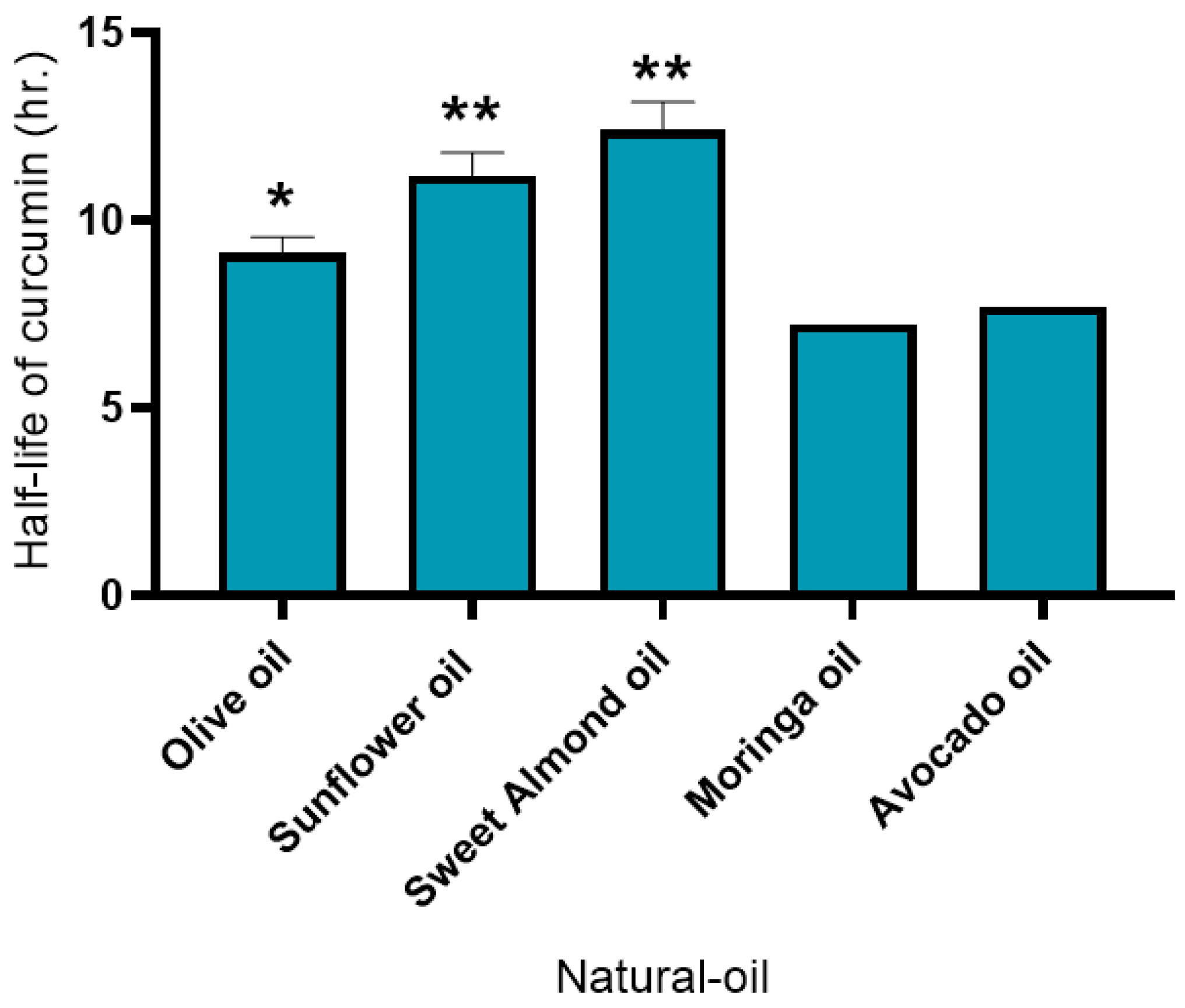
3.2. Photostability Test of Curcumin in Natural Oils
3.3. Effect of High-Shear and High-Pressure Homogenization on Curcuminoid-Loaded NLCs’ Physicochemical Properties
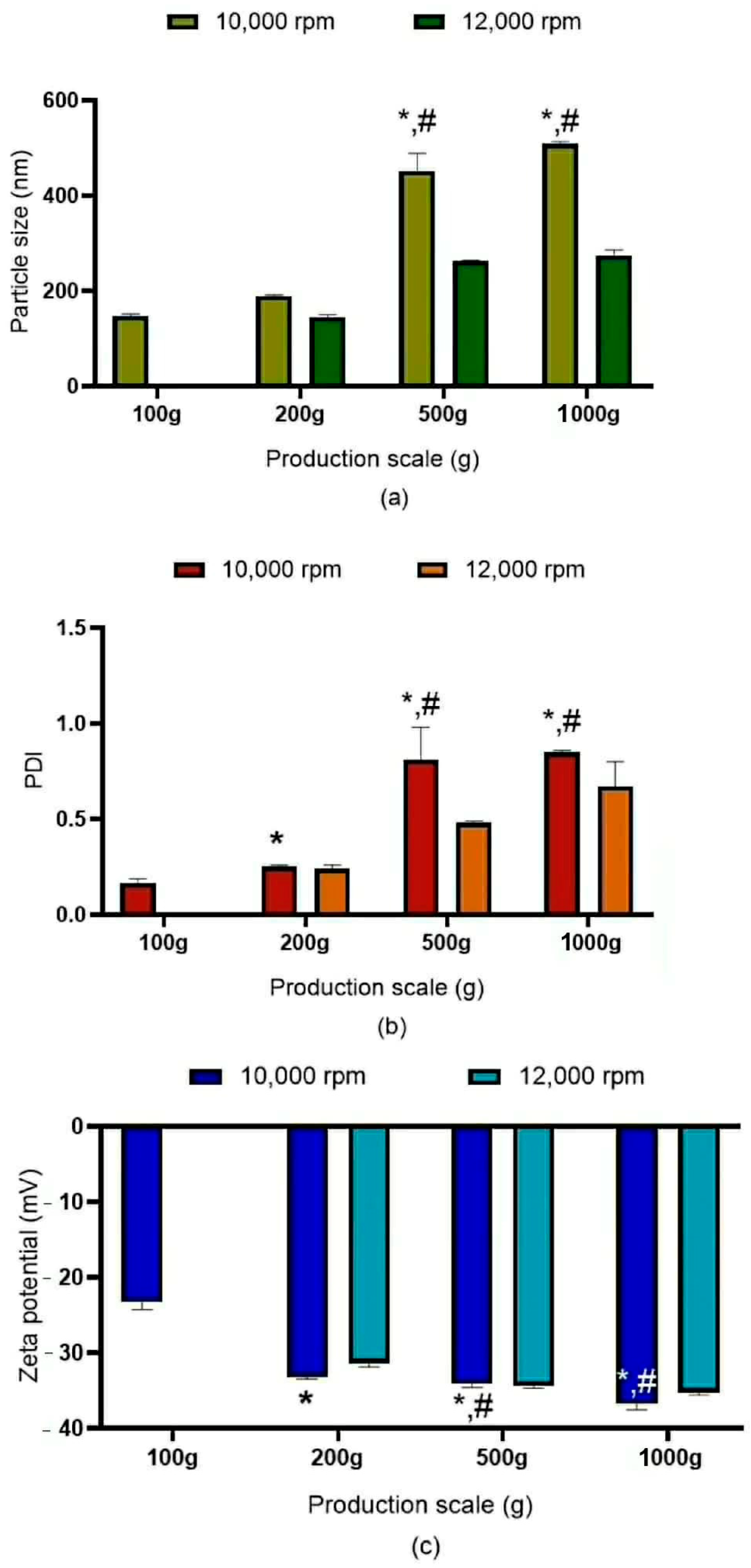
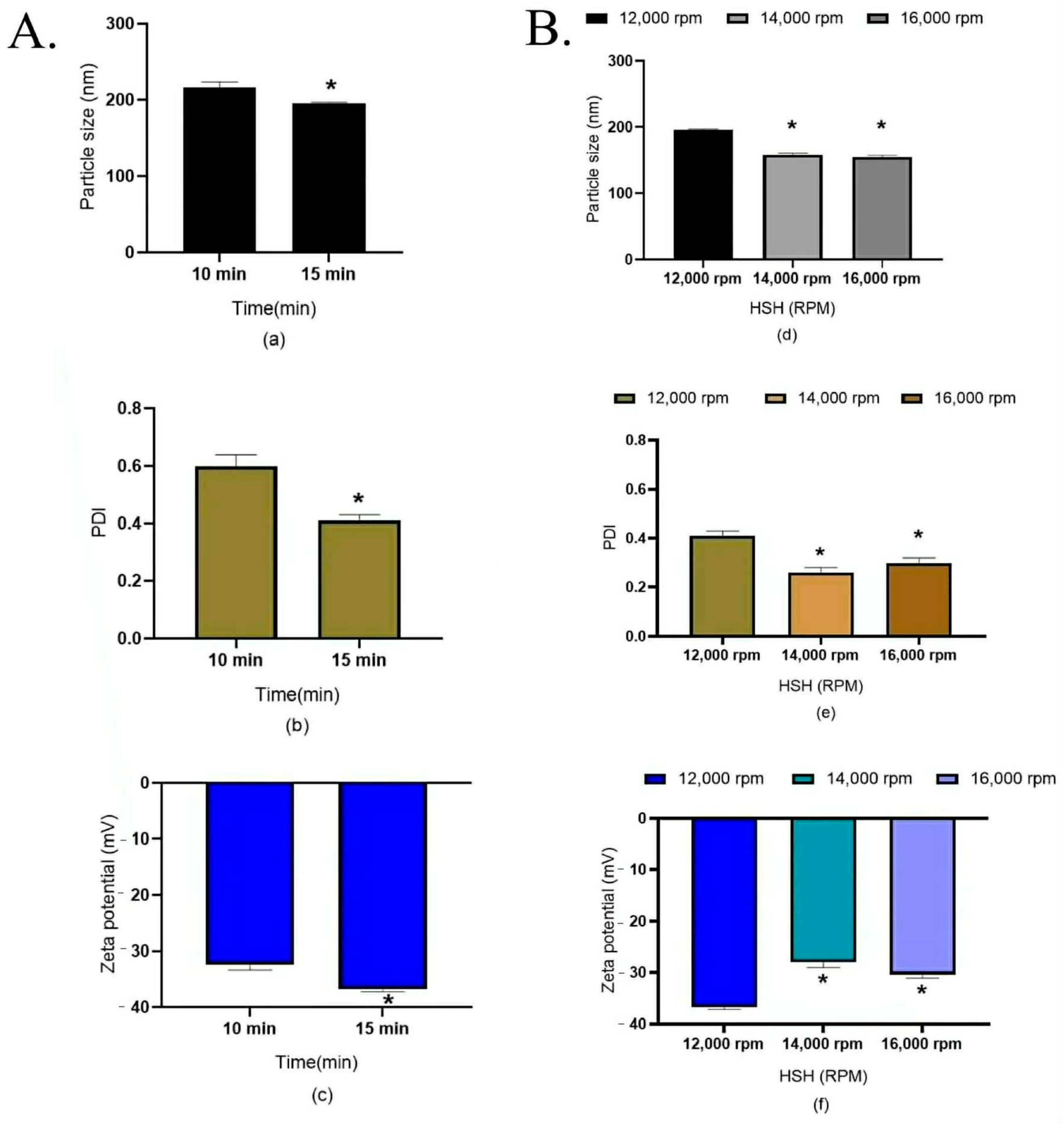
3.3.1. Effect of Shear Speed
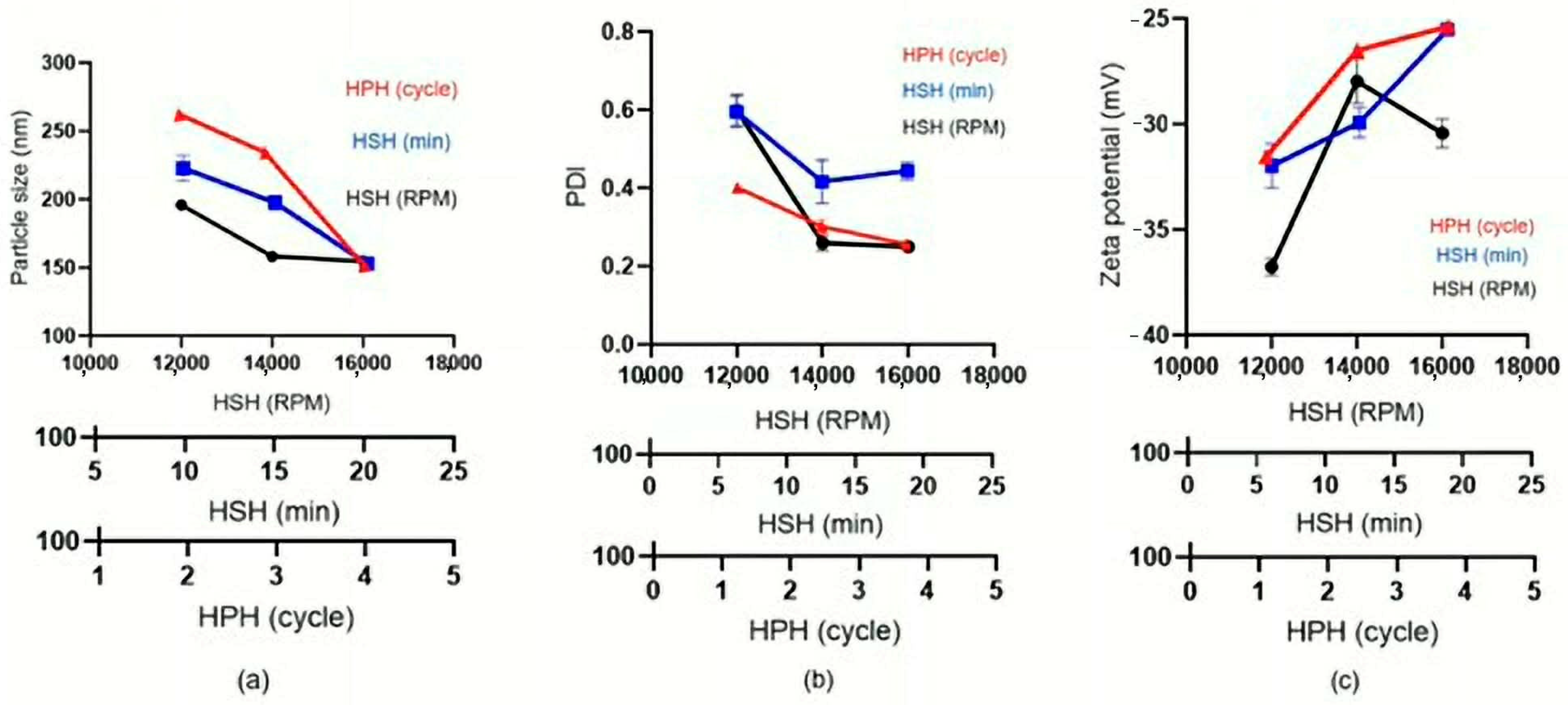
3.3.2. Multifactor Analysis of Process Conditions
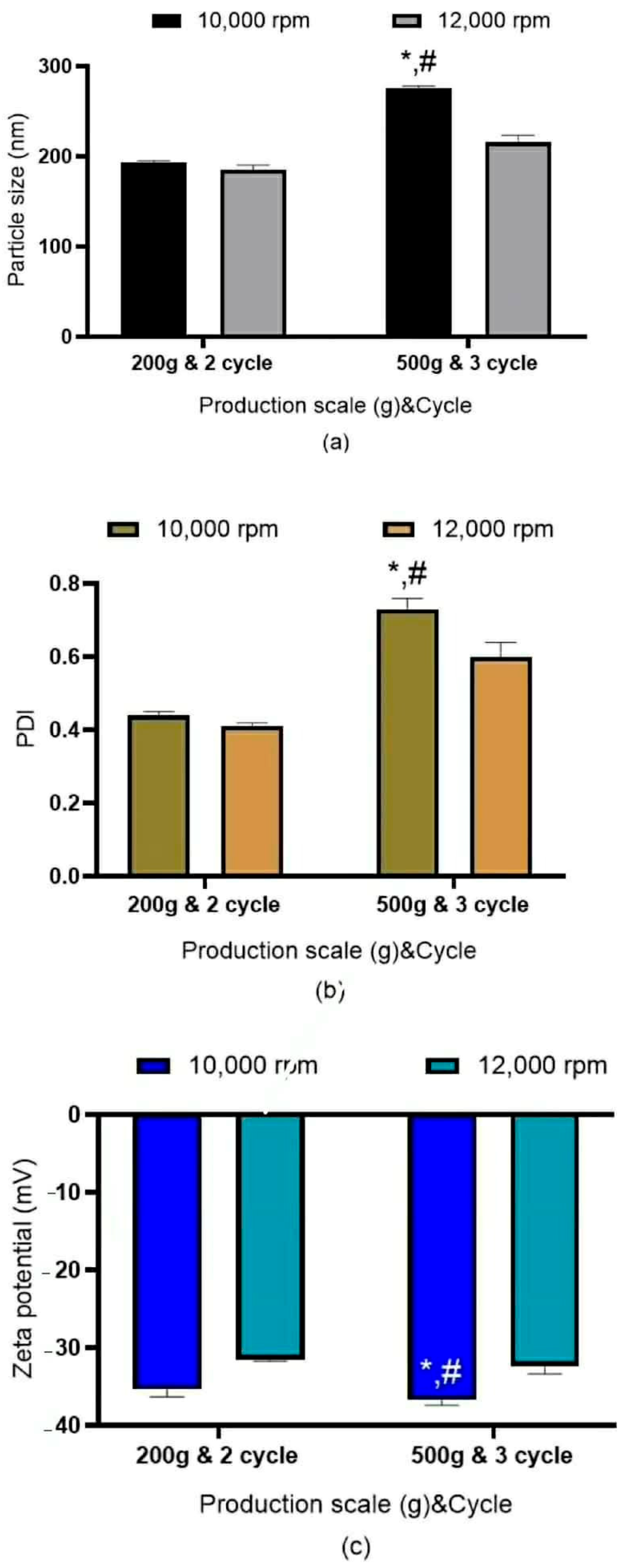
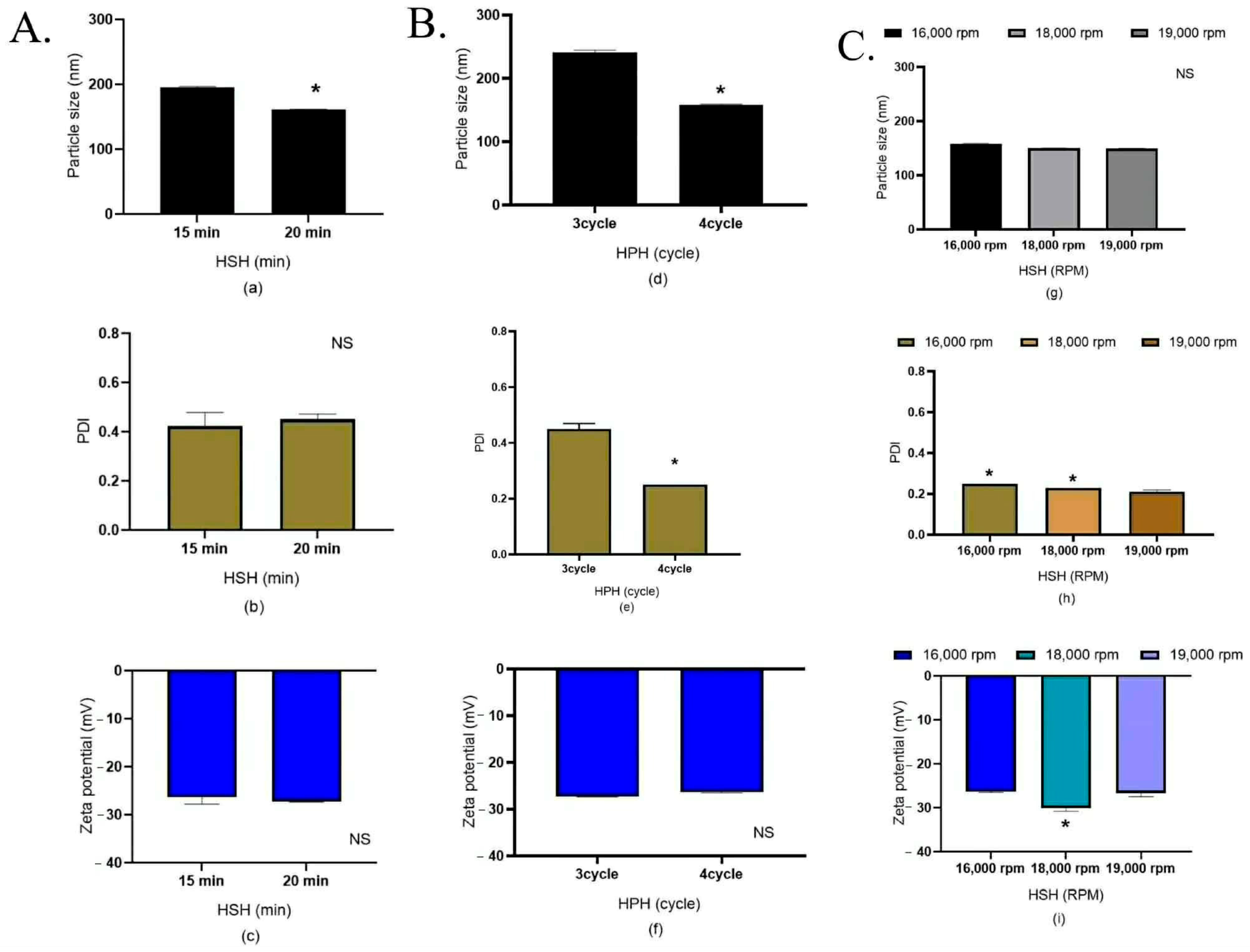
Effects of Shear Speed and Number of Homogenizing Cycles on Particle Size, PDI and Zeta Potential
Effect of HSH Homogenization Time on the 500 g NLC Production Scale
Effects of HSH Time (min) and Shear Speed (rpm) and HPH Cycles on the 1000 g NLC Production Scale
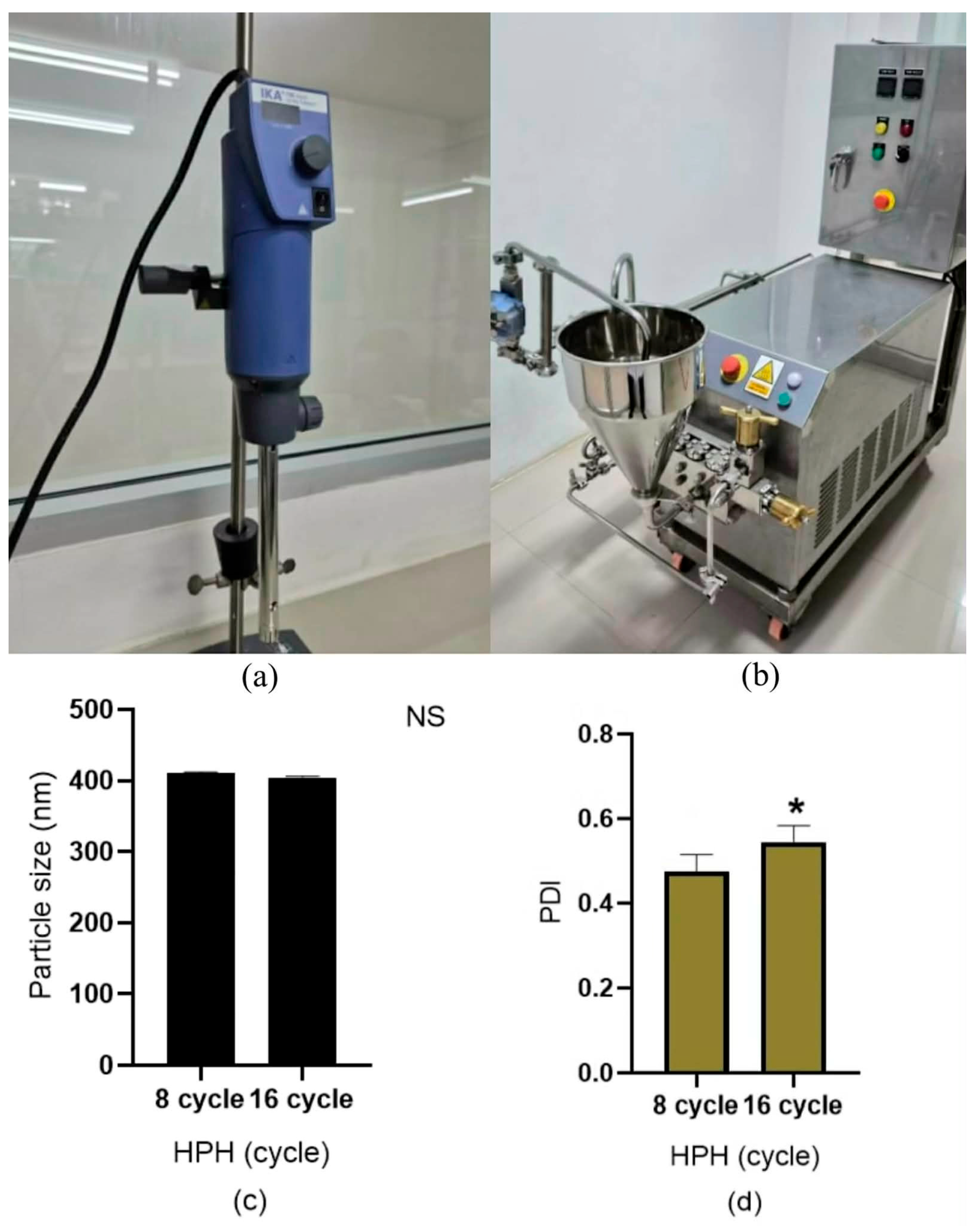
Method Transfer for a Medium-Scale NLC Production
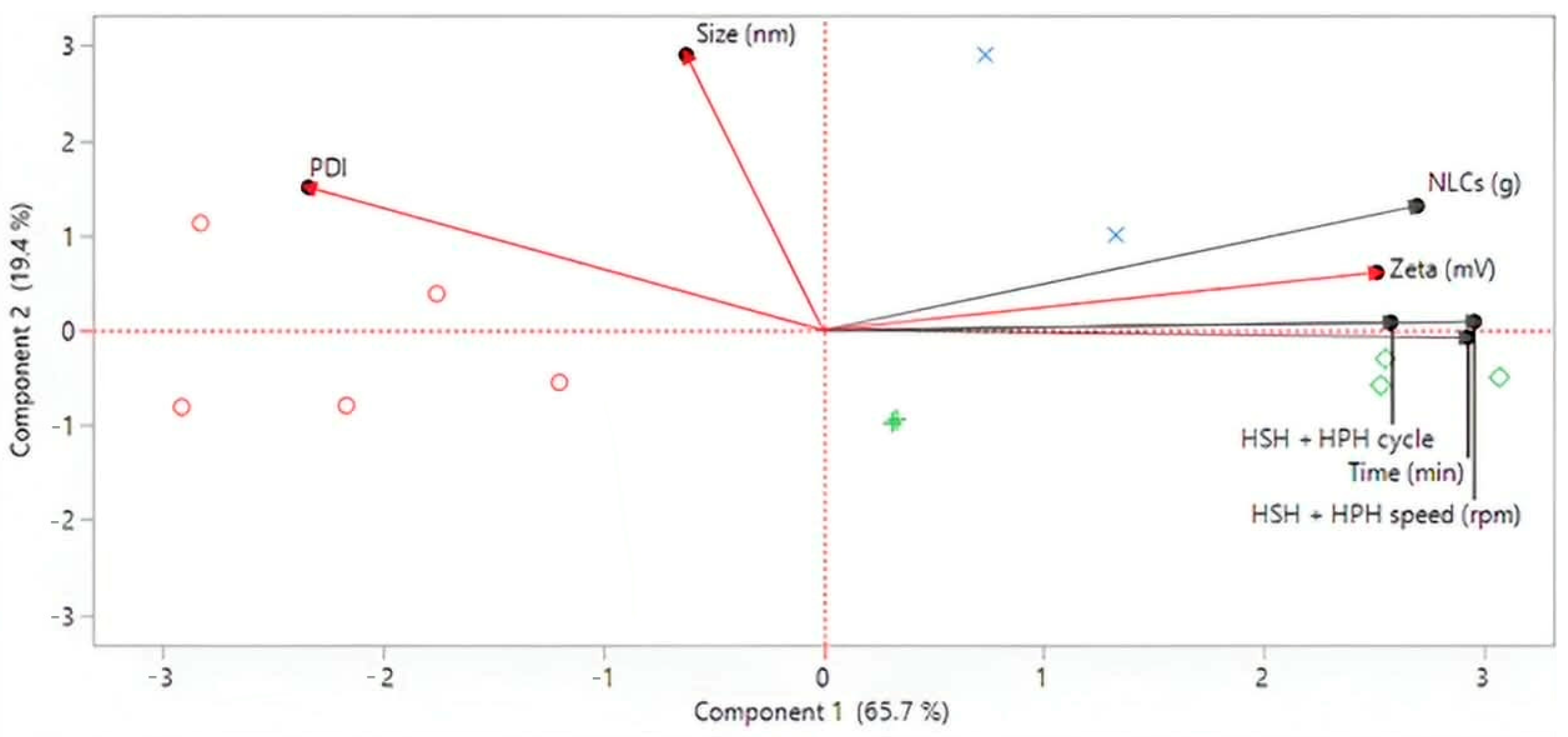
Optimization of CPPs of Scaled-Up Curcumin-Loaded NLCs
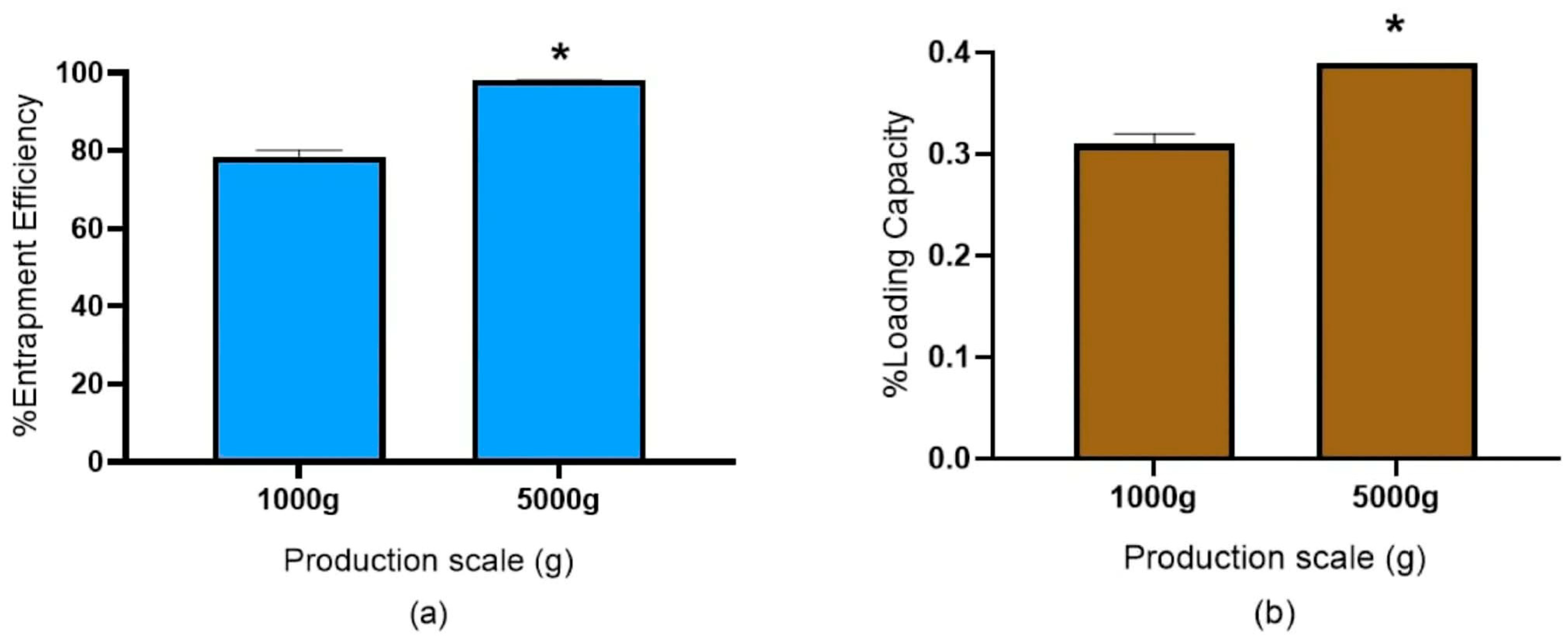
3.3.3. Entrapment Efficiency (EE) and Loading Capacity (LC) of Curcuminoid-Loaded NLCs
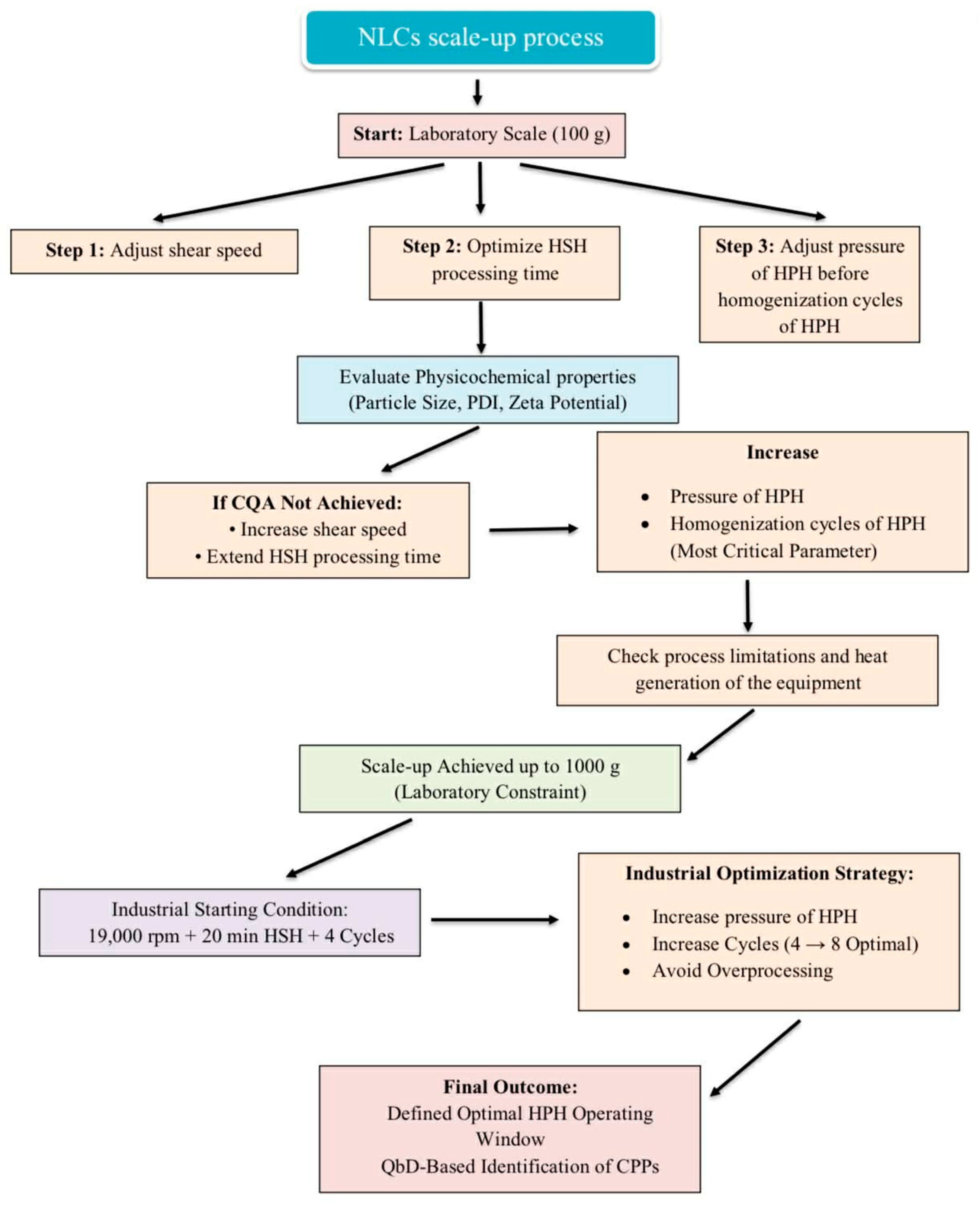
3.3.4. QbD-Driven Scale-Up Strategy for NLC Production
4. Conclusions
Author Contributions
Funding
Institutional Review Board Statement
Informed Consent Statement
Data Availability Statement
Acknowledgments
Conflicts of Interest
References
- Grego, E.A.; Siddoway, A.C.; Uz, M.; Liu, L.; Christiansen, J.C.; Ross, K.A.; Kelly, S.M.; Mallapragada, S.K.; Wannemuehler, M.J.; Narasimhan, B. Polymeric nanoparticle-based vaccine adjuvants and delivery vehicles. Curr. Top. Microbiol. Immunol. 2021, 433, 29–76. [Google Scholar]
- Mohammadi-Samani, P.; Ghasemi, S. Solid lipid nanoparticles and nanostructured lipid carriers as novel drug delivery systems: Applications, advantages and disadvantages. Res. Pharm. Sci. 2018, 13, 288–303. [Google Scholar] [CrossRef] [Scilit] [PubMed]
- Prathumwon, C.; Anuchapreeda, S.; Kiattisin, K.; Panyajai, P.; Wichayapreechar, P.; Surh, Y.-J.; Ampasavate, C. Curcumin and EGCG combined formulation in nanostructured lipid carriers for anti-aging applications. Int. J. Pharm. X 2025, 9, 100323. [Google Scholar] [CrossRef] [Scilit] [PubMed]
- Liu, J.; Huang, Y.; Kumar, A.; Tan, A.; Jin, S.; Mozhi, A.; Liang, X.-J. pH-sensitive nano-systems for drug delivery in cancer therapy. Biotechnol. Adv. 2018, 36, 190–209. [Google Scholar] [CrossRef] [Scilit] [PubMed]
- Webb, B.R.; Zhang, H.; Whittaker, M.R.; Davis, T.P. Engineering nanoparticles for clinical translation: Overcoming biological barriers. Bioeng. Transl. Med. 2020, 5, e10147. [Google Scholar]
- Shegokar, R.; Singh, K.; Müller, R.H. Production and stability of stavudine solid lipid nanoparticles—From lab to industrial scale. Int. J. Pharm. 2011, 416, 461–470. [Google Scholar] [CrossRef] [Scilit]
- Hu, C.; Wang, Q.; Xu, F.; He, Y.; Xu, J.; Xia, Y.; Xia, Q. Industrialization of lipid nanoparticles: From laboratory-scale to large-scale production line. Eur. J. Pharm. Biopharm. 2016, 109, 206–213. [Google Scholar] [CrossRef] [Scilit]
- Hwang, R.C.; Kowalski, D.L. Design of experiments for formulation development. In Solid Dosage Form 2005: A Technology Primer. Supplement to Pharmaceutical Technology; Advanstar Communications Inc.: Santa Monica, CA, USA, 2005; pp. s4–s14. [Google Scholar]
- Panahizadeh, R.; Vatankhah, M.A.; Jeddi, F.; Arabzadeh, A.; Nejati-Koshki, K.; Salimnejad, R.; Najafzadeh, N. Cytotoxicity of curcumin against CD44(+/–) prostate cancer cells: Roles of miR-383 and miR-708. Avicenna J. Phytomed. 2023, 13, 429–441. [Google Scholar]
- Li, H.; Krstin, S.; Wink, M. Modulation of multidrug resistance in cancer cells by EGCG, tannic acid and curcumin. Phytomedicine 2018, 50, 213–222. [Google Scholar] [CrossRef] [Scilit]
- Rajasekaran, S.A. Therapeutic potential of curcumin in gastrointestinal diseases. World J. Gastrointest. Pathophysiol. 2011, 2, 1–14. [Google Scholar] [CrossRef] [Scilit]
- Jandang, W.; Ampasavate, C.; Kiattisin, K. Natural stabilizers and nanostructured lipid carrier entrapment for photosensitive compounds, curcumin and capsaicin. Pharmaceutics 2024, 16, 345. [Google Scholar] [CrossRef] [Scilit]
- Yang, S.; Hu, X.; Zhu, J.; Zheng, B.; Bi, W.; Wang, X.; Wu, J.; Mi, Z.; Wu, Y. Aspects and implementation of pharmaceutical quality by design from conceptual frameworks to industrial applications. Pharmaceutics 2025, 17, 623. [Google Scholar] [CrossRef] [Scilit]
- Mahmud, M.M.; Pandey, N.; Winkles, J.A.; Woodworth, G.F.; Kim, A.J. Toward the scale-up production of polymeric nanotherapeutics for cancer clinical trials. Nano Today 2024, 56, 102123. [Google Scholar] [CrossRef] [Scilit]
- Yu, L.X.; Amidon, G.; Khan, M.A.; Hoag, S.W.; Polli, J.; Raju, G.K.; Woodcock, J. Understanding pharmaceutical quality by design. AAPS J. 2014, 16, 771–783. [Google Scholar] [CrossRef] [Scilit]
- Dhondt, J.; Bertels, J.; Kumar, A.; Van Hauwermeiren, D.; Ryckaert, A.; Van Snick, B.; Klingeleers, D.; Vervaet, C.; De Beer, T. A multivariate formulation and process development platform for direct compression. Int. J. Pharm. 2022, 623, 121962. [Google Scholar] [CrossRef] [Scilit]
- Farjadian, F.; Ghasemi, A.; Gohari, O.; Roointan, A.; Karimi, M.; Hamblin, M.R. Nanopharmaceuticals and nanomedicines currently on the market: Challenges and opportunities. Nanomedicine 2019, 14, 93–126. [Google Scholar] [CrossRef] [Scilit]
- Chogale, M.M. A comprehensive QbD strategy for nanotherapeutics development: A review. Int. J. Pharm. Sci. 2025, 3, 315–333. [Google Scholar]
- Patil, A.S.; Pethe, A.M. Quality by design (QbD): A new concept for development of quality pharmaceuticals. Int. J. Pharm. Qual. Assur. 2013, 4, 13–19. [Google Scholar]
- International Conference on Harmonisation of Technical Requirements for Registration of Pharmaceuticals for Human Use. ICH Harmonised Tripartite Guideline: Pharmaceutical Development Q8 (R2); ICH: Geneva, Switzerland, 2009. [Google Scholar]
- Boonrueang, N. Accelerated light exposure test (ALET) of active compounds in roasted coffee bean, red chili, and turmeric extracts loaded in nanoemulsion. Episirus Sci. 2019, 3, 31. [Google Scholar]
- European Medicines Agency. ICH Topic Q1B Photostability Testing of New Active Substances and Medicinal Products; EMA: Amsterdam, The Netherlands, 1998. [Google Scholar]
- Anantaworasakul, P.; Anuchapreeda, S.; Yotsawimonwat, S.; Naksuriya, O.; Lekawanvijit, S.; Tovanabutra, N.; Anantaworasakul, P.; Wattanasri, W.; Buranapreecha, N.; Ampasavate, C. Nanomaterial lipid-based carrier for non-invasive capsaicin delivery: Manufacturing scale-up and human irritation assessment. Molecules 2020, 25, 5575. [Google Scholar] [CrossRef] [Scilit]
- Musielak, E.; Feliczak-Guzik, A.; Nowak, I. Synthesis and potential applications of lipid nanoparticles in medicine. Materials 2022, 15, 682. [Google Scholar] [CrossRef] [Scilit]
- Catalysis Consultants. Combining PCA with DoE for Effective Experimental Investigation [Internet]. 2024. Available online: https://www.catalysisconsulting.co.uk/combing-pca-with-doe-for-effective-experimental-investigation.html (accessed on 4 April 2026).
- Kimball, M. Manufacturing topical formulations: Scale-up from lab to pilot production. In Handbook of Formulating Dermal Applications; Scrivener Publishing LLC: Beverly, MA, USA, 2017; pp. 167–232. [Google Scholar]
- Sultana, Y.; Khan, M.; Athar, M.; Khar, R.K.; Aqil, M. Effect of pre-treatment of almond oil on ultraviolet B-induced cutaneous photoaging in mice. J. Cosmet. Dermatol. 2006, 6, 14–19. [Google Scholar] [CrossRef] [Scilit]
- Bi, C.; Dong, L.; Wang, L.; Gao, F.; Adhikari, B. Effect of high shear homogenization on rheology, microstructure and fractal dimension of acid-induced SPI gels. J. Food Eng. 2014, 126, 48–55. [Google Scholar] [CrossRef] [Scilit]
- Dingler, A.; Gohla, S. Production of solid lipid nanoparticles (SLN): Scaling up feasibilities. J. Microencapsul. 2002, 19, 11–16. [Google Scholar] [CrossRef] [Scilit]
- Sadiah, S.A.; Djufri, M.; Cahyaningsih, U. Preparation and characteristics of nanostructured lipid carrier (NLC) loaded red ginger extract using high pressure homogenizer method. J. Pharm. Sci. Res. 2017, 9, 1889–1893. [Google Scholar]
- Khusnul, A.; Siti Ari, B.; Nurfitri, E. Effect of homogenization process on the production of Arthrospira platensis carotenoid nanocapsules encapsulated with Arabic gum and whey protein concentrate. J. Ilm. Perikan. Kelautan. 2022, 14, 12. [Google Scholar]
- Müller, R.H.; Petersen, R.D.; Hommoss, A.; Pardeike, J. Nanostructured lipid carriers (NLC) in cosmetic dermal products. Adv. Drug Deliv. Rev. 2007, 59, 522–530. [Google Scholar] [CrossRef] [Scilit] [PubMed]
- IQS Directory. High-Shear Mixer: What Is It? How Does It Work? Types of [Internet]. 2024. Available online: https://www.iqsdirectory.com/articles/mixer/high-shear-mixer.html (accessed on 8 December 2024).
- Wang, G.; Sukumar, S. Characteristics and antitumor activity of polysorbate 80 curcumin micelles preparation by cloud point cooling. J. Drug Deliv. Sci. Technol. 2020, 59, 101871. [Google Scholar] [CrossRef] [Scilit]
- Mendes, M.; Basso, J.; Sousa, J.; Pais, A.; Vitorino, C. Designing ultra-small nanostructured lipid carriers: Critical process parameters. Proceedings 2021, 78, 50. [Google Scholar]
- Cun, D.; Jensen, D.K.; Maltesen, M.J.; Bunker, M.; Whiteside, P.; Scurr, D.; Foged, C.; Nielsen, H.M. High loading efficiency and sustained release of siRNA encapsulated in PLGA nanoparticles: Quality by design optimization and characterization. Eur. J. Pharm. Biopharm. 2011, 77, 26–35. [Google Scholar] [CrossRef] [Scilit]







| Process | Parameters | Physicochemical Properties |
|---|---|---|
| Pre-emulsion by HSH | Shear speed (rpm) | Particle size, PDI, and zeta potential |
| Time (min) | ||
| Production scale | ||
| Size reduction by HPH | Shear speed (rpm) | |
| Time (min) | ||
| Homogenization cycles | ||
| Production scale |
| Run | Production Scale (g) | HSH (rpm) | HSH (min) |
|---|---|---|---|
| 1 | 200 | 10,000 | 10 |
| 2 | 12,000 | 10 | |
| 3 | 500 | 10,000 | 10 |
| 4 | 12,000 | 10 | |
| 5 | 12,000 | 15 | |
| 6 | 14,000 | 15 | |
| 7 | 16,000 | 15 | |
| 8 | 1000 | 16,000 | 15 |
| 9 | 16,000 | 20 | |
| 10 | 16,000 | 20 | |
| 11 | 18,000 | 20 | |
| 12 | 19,000 | 20 |
| Run | Production Scale (g) | HPH (Cycle) |
|---|---|---|
| 1 | 200 | 2 |
| 2 | 2 | |
| 3 | 500 | 3 |
| 4 | 3 | |
| 5 | 3 | |
| 6 | 3 | |
| 7 | 3 | |
| 8 | 1000 | 3 |
| 9 | 3 | |
| 10 | 4 | |
| 11 | 4 | |
| 12 | 4 |
Disclaimer/Publisher’s Note: The statements, opinions and data contained in all publications are solely those of the individual author(s) and contributor(s) and not of MDPI and/or the editor(s). MDPI and/or the editor(s) disclaim responsibility for any injury to people or property resulting from any ideas, methods, instructions or products referred to in the content. |
© 2026 by the authors. Licensee MDPI, Basel, Switzerland. This article is an open access article distributed under the terms and conditions of the Creative Commons Attribution (CC BY) license.
Share and Cite
Jandang, W.; Saokham, P.; Prathumwon, C.; Okonogi, S.; Ampasavate, C. Quality by Design-Based Scale-Up and Industrial Development of Turmeric Extract-Loaded Nanostructured Lipid Carriers. Pharmaceutics 2026, 18, 492. https://doi.org/10.3390/pharmaceutics18040492
Jandang W, Saokham P, Prathumwon C, Okonogi S, Ampasavate C. Quality by Design-Based Scale-Up and Industrial Development of Turmeric Extract-Loaded Nanostructured Lipid Carriers. Pharmaceutics. 2026; 18(4):492. https://doi.org/10.3390/pharmaceutics18040492
Chicago/Turabian StyleJandang, Wipanan, Phennapha Saokham, Chidchanok Prathumwon, Siriporn Okonogi, and Chadarat Ampasavate. 2026. "Quality by Design-Based Scale-Up and Industrial Development of Turmeric Extract-Loaded Nanostructured Lipid Carriers" Pharmaceutics 18, no. 4: 492. https://doi.org/10.3390/pharmaceutics18040492
APA StyleJandang, W., Saokham, P., Prathumwon, C., Okonogi, S., & Ampasavate, C. (2026). Quality by Design-Based Scale-Up and Industrial Development of Turmeric Extract-Loaded Nanostructured Lipid Carriers. Pharmaceutics, 18(4), 492. https://doi.org/10.3390/pharmaceutics18040492