Advances in Nanotechnology-Assisted Delivery of TCM-Derived Bioactive Compounds for Wound Repair
 ,
,
Abstract
1. Introduction
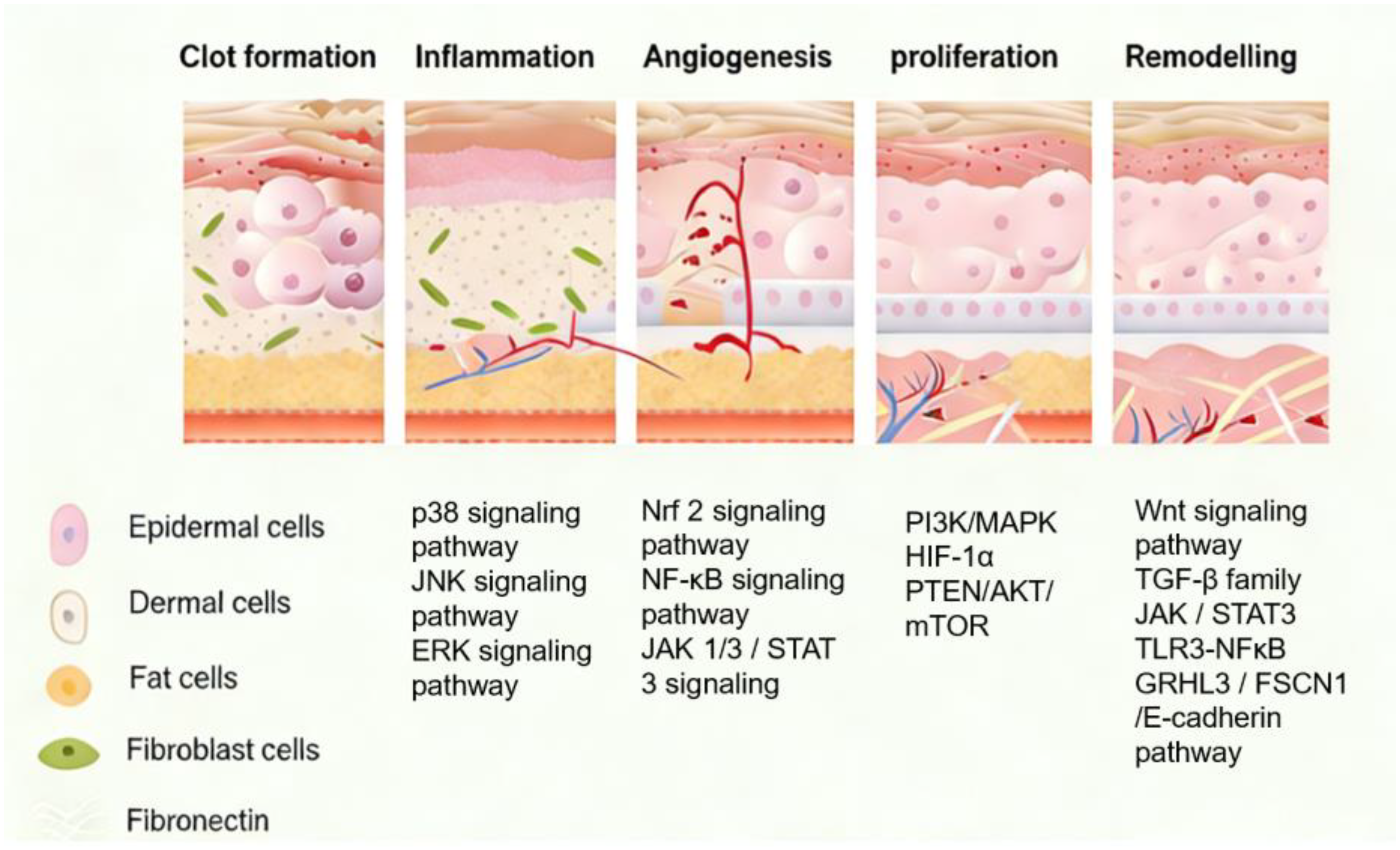
2. Mechanisms of Wound Healing Mediated by TCM-Derived Bioactive Compounds
2.1. Antibacterial and Anti-Infection Effects
2.2. Modulation of Inflammation and Immune Responses
2.3. Antioxidant Effects and ROS Scavenging
2.4. Promotion of Cell Proliferation and Collagen Synthesis
2.5. Promotion of Angiogenesis

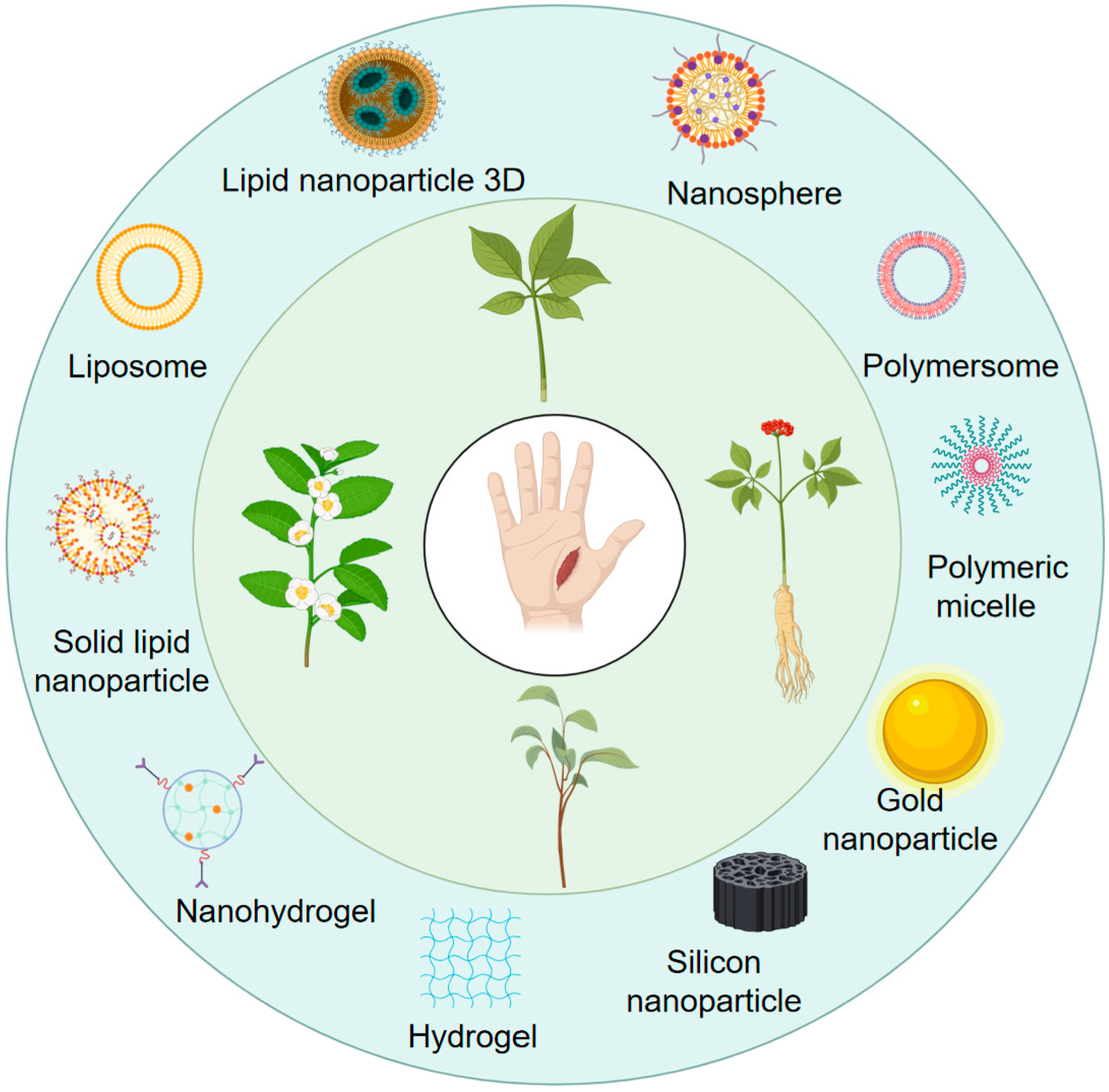
3. Nanocarrier Systems for the Delivery of TCM Active Constituents
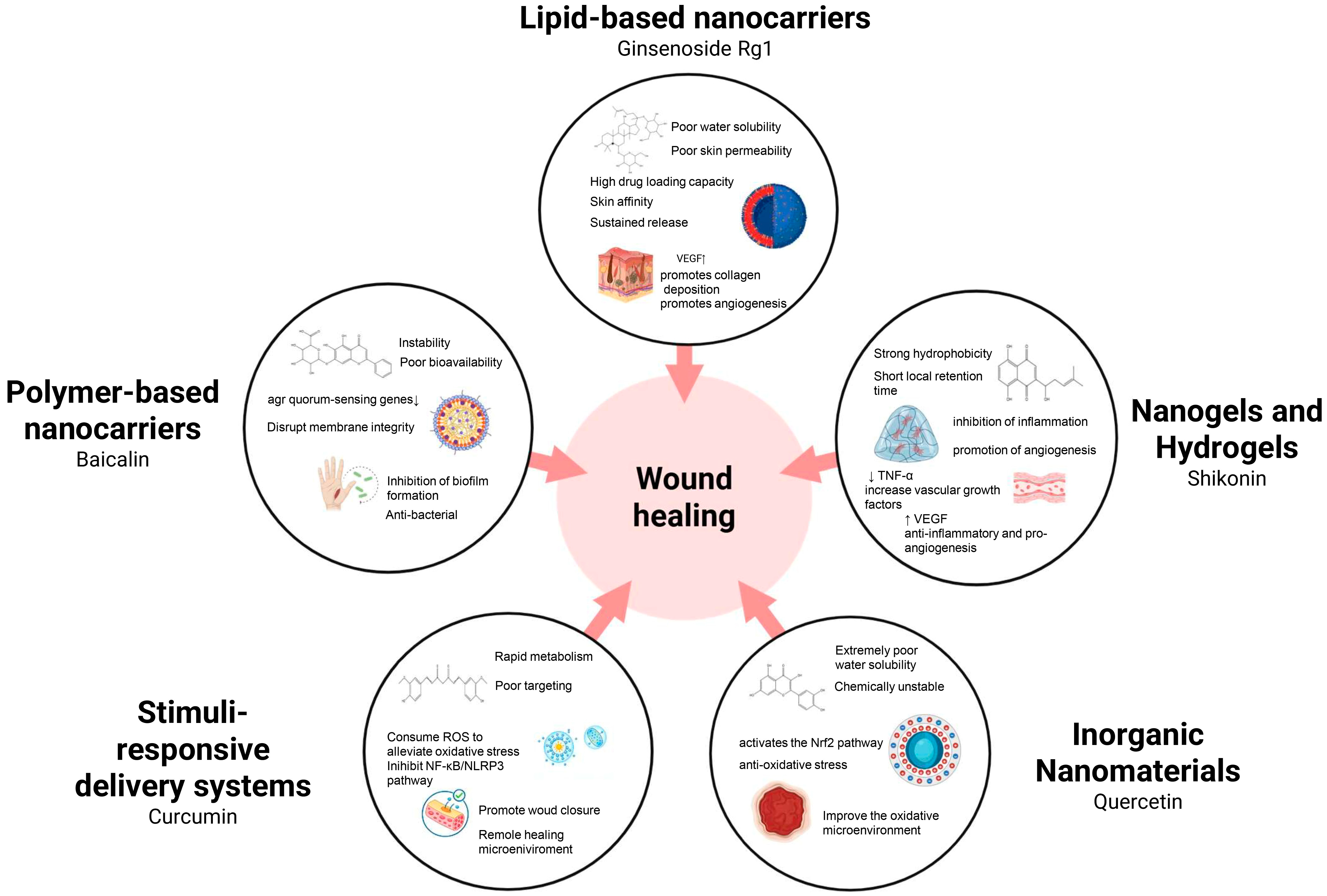
3.1. Lipid-Based Nanocarriers
3.1.1. Solid Lipid Nanoparticles
3.1.2. Nanostructured Lipid Carriers
3.2. Polymer-Based Nanocarriers
3.2.1. Poly(Lactic-co-glycolic Acid)
3.2.2. Chitosan
3.2.3. Hyaluronic Acid
3.2.4. Functional Block Copolymers
3.3. Nanogels and Hydrogels
3.3.1. Nanogels
3.3.2. Hydrogels
3.4. Inorganic Nanomaterials
3.4.1. Mesoporous Silica Nanocarriers
3.4.2. Antibacterial Metal Nanoparticles
3.4.3. Catalytic Nanozymes
3.4.4. Externally Responsive Formulations
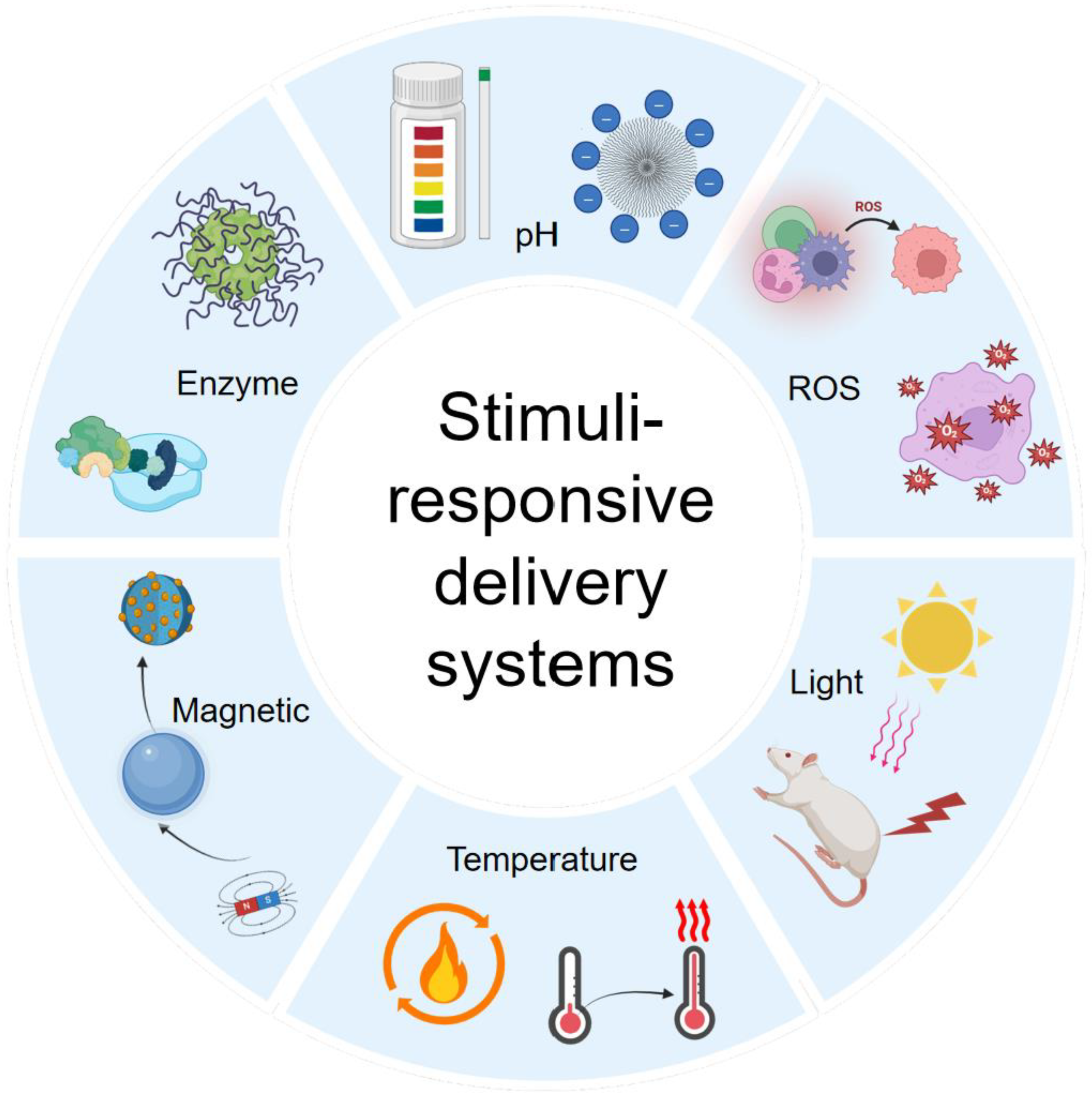
3.5. Stimuli-Responsive and Smart Delivery Systems
3.5.1. pH-Responsive Drug Delivery Systems
3.5.2. Enzyme-Responsive Drug Delivery Systems
3.5.3. Glucose-Responsive Drug Delivery Systems
3.5.4. ROS-Responsive Drug Delivery Systems
3.5.5. Thermoresponsive Drug Delivery Systems
3.5.6. Externally Stimuli-Responsive Systems
3.5.7. Multi-Responsive and Cascade-Responsive Systems
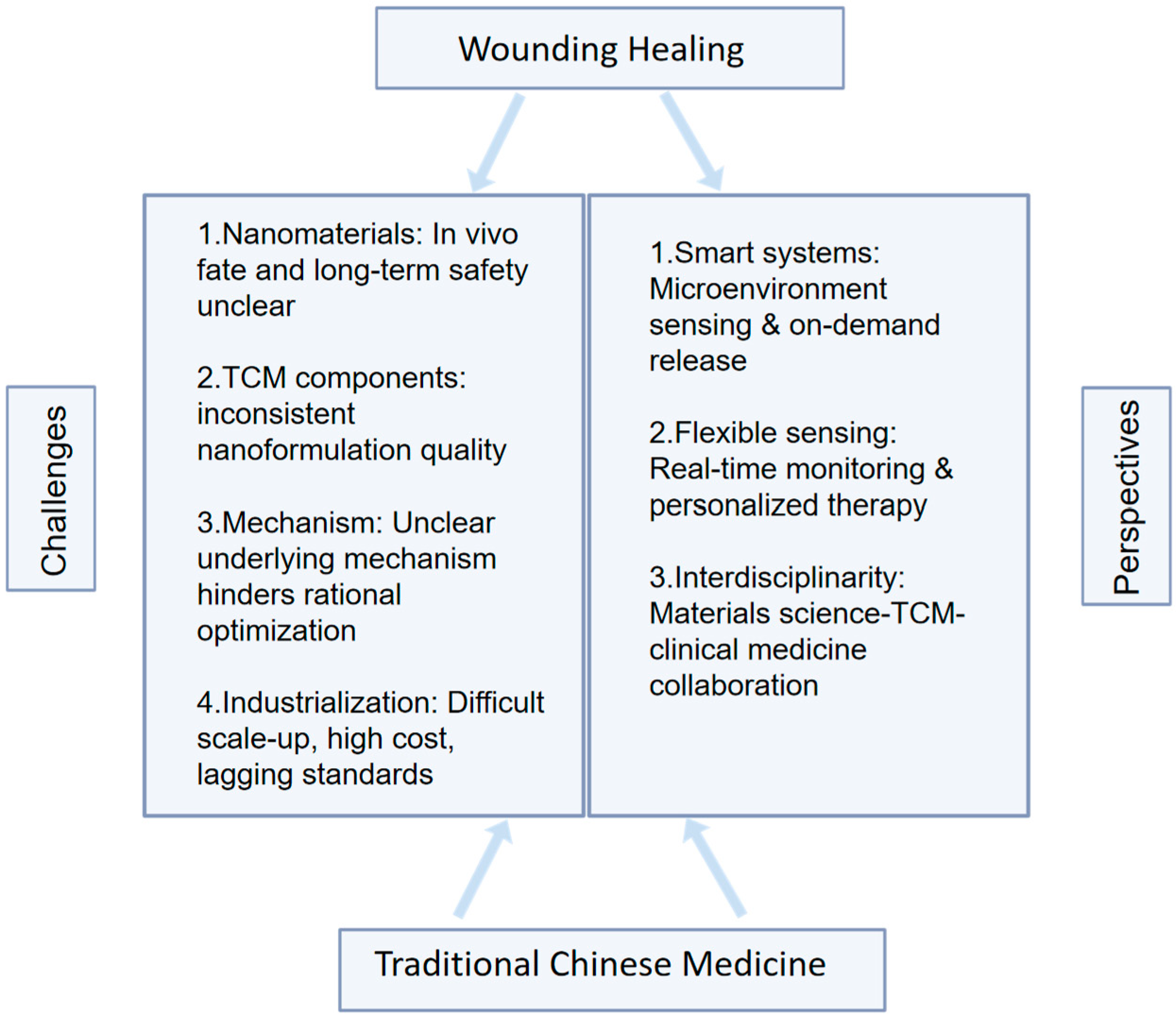
4. Challenges and Perspectives

5. Conclusions
Author Contributions
Funding
Institutional Review Board Statement
Informed Consent Statement
Data Availability Statement
Acknowledgments
Conflicts of Interest
Abbreviations
| TCM | Traditional Chinese Medicine |
| ROS | Reactive oxygen species |
| ECM | Extracellular matrix |
| PIA | Polysaccharide intercellular adhesin |
| TNF-α | Tumor necrosis factor-α |
| IL-1β | Interleukin-1β |
| IL-10 | Interleukin-10 |
| TGF-β | Transforming growth factor-β |
| Arg-1 | Arginase-1 |
| O2− | Superoxide anions |
| ·OH | Hydroxyl radicals |
| Nrf2 | Nuclear factor erythroid 2-related factor 2 |
| SOD | Superoxide dismutase |
| GPx | Glutathione peroxidase |
| AGEs | Advanced glycation end products |
| RAGE | Advanced glycation end product receptor |
| VEGF | Vascular endothelial growth factor |
| bFGF | Basic fibroblast growth factor |
| HIF-1α | Hypoxia-inducible factor-1α |
| PEG | Polyethylene glycol |
| SLNs | Solid lipid nanoparticles |
| NLCs | Nanostructured lipid carriers |
| PLGA | Poly(lactic-co-glycolic acid) |
| EGF | Epidermal growth factor |
| STPP | Sodium tripolyphosphate |
| HA | Hyaluronic acid |
| MSNs | Mesoporous silica nanoparticles |
| CeO2 | Cerium oxide |
| Fe3O4 | Magnetite |
| CAT | Catalase |
| H2O2 | Hydrogen peroxide |
| NIR | Near-infrared |
| MMPs | Matrix metalloproteinases |
| GOx | Oxidase |
| PBA | Phenylboronic acid |
| LCST | Lower critical solution temperature |
| PNIPAM | Poly(N-isopropylacrylamide) |
References
- Falanga, V.; Isseroff, R.R.; Soulika, A.M.; Romanelli, M.; Margolis, D.; Kapp, S.; Granick, M.; Harding, K. Chronic wounds. Nat. Rev. Dis. Primers 2022, 8, 50. [Google Scholar] [CrossRef]
- Frykberg, R.G.; Banks, J. Challenges in the Treatment of Chronic Wounds. Adv. Wound Care 2015, 4, 560–582. [Google Scholar] [CrossRef] [PubMed]
- Rodrigues, M.; Kosaric, N.; Bonham, C.A.; Gurtner, G.C. Wound Healing: A Cellular Perspective. Physiol. Rev. 2019, 99, 665–706. [Google Scholar] [CrossRef]
- Shen, J.; Tong, Z.; Han, B.; Zhang, Z.; Xian, Z.; Yuan, Y.; Duan, X.; Han, S.; Liu, P.; Wang, Z. Synergistic Wound Healing: Unraveling the Multi-Target Effects of Traditional Chinese Medicine and Its Biomaterials on Chronic Wound Pathways. Int. J. Nanomed. 2025, 20, 12889–12912. [Google Scholar] [CrossRef]
- Iacob, A.T.; Drăgan, M.; Ionescu, O.M.; Profire, L.; Ficai, A.; Andronescu, E.; Confederat, L.G.; Lupașcu, D. An Overview of Biopolymeric Electrospun Nanofibers Based on Polysaccharides for Wound Healing Management. Pharmaceutics 2020, 12, 983. [Google Scholar] [CrossRef]
- Paul, P.; Hakkimane, S.S. Nanoparticle-Based Approaches for Wound Healing: A Comprehensive Review of Nanomaterials Enhancing Tissue Regeneration. Discov. Nano 2025, 20, 201. [Google Scholar] [CrossRef]
- Shi, Z.; Yao, C.; Shui, Y.; Li, S.; Yan, H. Research progress on the mechanism of angiogenesis in wound repair and regeneration. Front. Physiol. 2023, 14, 1284981. [Google Scholar] [CrossRef] [PubMed]
- Mishra, B.; Patel, B.B.; Tiwari, S. Colloidal nanocarriers: A review on formulation technology, types and applications toward targeted drug delivery. Nanomedicine 2010, 6, 9–24. [Google Scholar] [CrossRef]
- Chen, K.; Li, Y.; Li, Y.; Tan, Y.; Liu, Y.; Pan, W.; Tan, G. Stimuli-responsive electrospun nanofibers for drug delivery, cancer therapy, wound dressing, and tissue engineering. J. Nanobiotechnol. 2023, 21, 237. [Google Scholar] [CrossRef]
- Sandhiya, V.; Ubaidulla, U. A Review on Herbal Drug Loaded into Pharmaceutical Carrier Techniques and Its Evaluation Process. Future J. Pharm. Sci. 2020, 6, 51. [Google Scholar] [CrossRef]
- Garg, S.S.; Dubey, R.; Sharma, S.; Vyas, A.; Gupta, J. Biological macromolecules-based nanoformulation in improving wound healing and bacterial biofilm-associated infection: A review. Int. J. Biol. Macromol. 2023, 247, 125636. [Google Scholar] [CrossRef]
- Chen, Y.; Liu, T.; Wang, K.; Hou, C.; Cai, S.; Huang, Y.; Du, Z.; Huang, H.; Kong, J.; Chen, Y. Baicalein Inhibits Staphylococcus aureus Biofilm Formation and the Quorum Sensing System In Vitro. PLoS ONE 2016, 11, e0153468. [Google Scholar] [CrossRef]
- Liu, X.; Liu, Y.; Song, M.; Zhu, K.; Shen, J. A Rhein-Based Derivative Targets Staphylococcus aureus. Antibiotics 2024, 13, 882. [Google Scholar] [CrossRef] [PubMed]
- Zeng, Q.; Fu, Y.; Yang, M.; Wang, T.; Wang, Y.; Lv, S.; Qian, W. Effect of paeonol against bacterial growth, biofilm formation and dispersal of Staphylococcus aureus and Listeria monocytogenes in vitro. Biofouling 2022, 38, 173–185. [Google Scholar] [CrossRef] [PubMed]
- Tong, Y.; Zhang, J.; Sun, N.; Wang, X.-M.; Wei, Q.; Zhang, Y.; Huang, R.; Pu, Y.; Dai, H.; Ren, B.; et al. Berberine reverses multidrug resistance in Candida albicans by hijacking the drug efflux pump Mdr1p. Sci. Bull. 2021, 66, 1895–1905. [Google Scholar] [CrossRef] [PubMed]
- Li, M.; Hou, Q.; Zhong, L.; Zhao, Y.; Fu, X. Macrophage Related Chronic Inflammation in Non-Healing Wounds. Front. Immunol. 2021, 12, 681710. [Google Scholar] [CrossRef]
- Holzer-Geissler, J.C.J.; Schwingenschuh, S.; Zacharias, M.; Einsiedler, J.; Kainz, S.; Reisenegger, P.; Holecek, C.; Hofmann, E.; Wolff-Winiski, B.; Fahrngruber, H.; et al. The Impact of Prolonged Inflammation on Wound Healing. Biomedicines 2022, 10, 856. [Google Scholar] [CrossRef]
- Almadani, Y.H.; Vorstenbosch, J.; Davison, P.G.; Murphy, A.M. Wound Healing: A Comprehensive Review. Semin. Plast. Surg. 2021, 35, 141–144. [Google Scholar] [CrossRef]
- Mosser, D.M.; Edwards, J.P. Exploring the full spectrum of macrophage activation. Nat. Rev. Immunol. 2008, 8, 958–969. [Google Scholar] [CrossRef]
- Landén, N.X.; Li, D.; Ståhle, M. Transition from inflammation to proliferation: A critical step during wound healing. Cell. Mol. Life Sci. 2016, 73, 3861–3885. [Google Scholar] [CrossRef]
- Wynn, T.A.; Vannella, K.M. Macrophages in Tissue Repair, Regeneration, and Fibrosis. Immunity 2016, 44, 450–462. [Google Scholar] [CrossRef]
- Li, L.; Gan, H.; Jin, H.; Fang, Y.; Yang, Y.; Zhang, J.; Hu, X.; Chu, L. Astragaloside IV promotes microglia/macrophages M2 polarization and enhances neurogenesis and angiogenesis through PPARγ pathway after cerebral ischemia/reperfusion injury in rats. Int. Immunopharmacol. 2021, 92, 107335. [Google Scholar] [CrossRef] [PubMed]
- Qiu, C.; Yang, L.-D.; Yu, W.; Tian, D.-D.; Gao, M.-R.; Wang, W.-J.; Li, X.-B.; Wu, Y.-M.; Wang, M. Paeonol ameliorates CFA-induced inflammatory pain by inhibiting HMGB1/TLR4/NF-κB p65 pathway. Metab. Brain Dis. 2021, 36, 273–283. [Google Scholar] [CrossRef] [PubMed]
- Wei, Y.; Wang, Y. Celastrol attenuates impairments associated with lipopolysaccharide-induced acute respiratory distress syndrome (ARDS) in rats. J. Immunotoxicol. 2017, 14, 228–234. [Google Scholar] [CrossRef] [PubMed]
- He, Y.; Yue, Y.; Zheng, X.; Zhang, K.; Chen, S.; Du, Z. Curcumin, Inflammation, and Chronic Diseases: How Are They Linked? Molecules 2015, 20, 9183–9213. [Google Scholar] [CrossRef]
- Gong, Z.; Zhou, J.; Li, H.; Gao, Y.; Xu, C.; Zhao, S.; Chen, Y.; Cai, W.; Wu, J. Curcumin suppresses NLRP3 inflammasome activation and protects against LPS-induced septic shock. Mol. Nutr. Food Res. 2015, 59, 2132–2142. [Google Scholar] [CrossRef]
- Li, C.-L.; Tan, L.-H.; Wang, Y.-F.; Luo, C.-D.; Chen, H.-B.; Lu, Q.; Li, Y.-C.; Yang, X.-B.; Chen, J.-N.; Liu, Y.-H.; et al. Comparison of anti-inflammatory effects of berberine, and its natural oxidative and reduced derivatives from Rhizoma Coptidis in vitro and in vivo. Phytomedicine 2019, 52, 272–283. [Google Scholar] [CrossRef]
- Dunnill, C.; Patton, T.; Brennan, J.; Barrett, J.; Dryden, M.; Cooke, J.; Leaper, D.; Georgopoulos, N.T. Reactive oxygen species (ROS) and wound healing: The functional role of ROS and emerging ROS-modulating technologies for augmentation of the healing process. Int. Wound J. 2017, 14, 89–96. [Google Scholar] [CrossRef]
- Procházková, D.; Boušová, I.; Wilhelmová, N. Antioxidant and prooxidant properties of flavonoids. Fitoterapia 2011, 82, 513–523. [Google Scholar] [CrossRef]
- Zhang, W.; Feng, J.; Liu, R.; Xiang, T.; Wu, X. Tanshinone IIA Regulates NRF2/NLRP3 Signal Pathway to Restrain Oxidative Stress and Inflammation in Uric Acid-Induced HK-2 Fibrotic Models. Endocr. Metab. Immune Disord. Drug Targets 2025, 25, 721–731. [Google Scholar] [CrossRef]
- Pastar, I.; Stojadinovic, O.; Yin, N.; Ramirez, H.; Nusbaum, A.; Sawaya, A.; Patel, S.; Khalid, L.; Isseroff, R.; Tomic-Canic, M. Epithelialization in Wound Healing: A Comprehensive Review. Adv. Wound Care 2014, 3, 445–464. [Google Scholar] [CrossRef]
- Yu, Z.-L.; Gao, R.-Y.; Lv, C.; Geng, X.-L.; Ren, Y.-J.; Zhang, J.; Ren, J.-Y.; Wang, H.; Ai, F.-B.; Wang, Z.-Y.; et al. Notoginsenoside R1 promotes Lgr5+ stem cell and epithelium renovation in colitis mice via activating Wnt/β-Catenin signaling. Acta Pharmacol. Sin. 2024, 45, 1451–1465. [Google Scholar] [CrossRef]
- Hou, J.; Kim, S. Possible role of ginsenoside Rb1 in skin wound healing via regulating senescent skin dermal fibroblast. Biochem. Biophys. Res. Commun. 2018, 499, 381–388. [Google Scholar] [CrossRef]
- Narisepalli, S.; Salunkhe, S.A.; Chitkara, D.; Mittal, A. Asiaticoside polymeric nanoparticles for effective diabetic wound healing through increased collagen biosynthesis: In-vitro and in-vivo evaluation. Int. J. Pharm. 2023, 631, 122508. [Google Scholar]
- Wang, B.S.; Ma, X.F.; Zhang, C.Y.; Li, Y.X.; Liu, X.Z.; Hu, C.Q. Astragaloside IV Improves Angiogenesis and Promotes Wound Healing in Diabetic Ratsvia the Activation of the SUMOylation Pathway. Biomed. Environ. Sci. 2021, 34, 124–129. [Google Scholar] [PubMed]
- Ai, S.; Tao, J.; Wang, Y.; Zhou, J.; Liu, W.; Li, X.; Wang, L.; Hou, J.; Zhao, L.; Wang, Z.; et al. Paeonol ameliorates diabetic nephropathy by promoting TFEB-mediated lysosome biogenesis and lipophagy. Phytomedicine 2025, 143, 156901. [Google Scholar] [CrossRef]
- Guo, Q.; Yang, J.; Chen, Y.; Jin, X.; Li, Z.; Wen, X.; Xia, Q.; Wang, Y. Salidroside improves angiogenesis-osteogenesis coupling by regulating the HIF-1α/VEGF signalling pathway in the bone environment. Eur. J. Pharmacol. 2020, 884, 173394. [Google Scholar] [PubMed]
- Cao, L.-H.; Lee, H.S.; Quan, Z.-S.; Lee, Y.J.; Jin, Y. Vascular Protective Effects of Xanthotoxin and Its Action Mechanism in Rat Aorta and Human Vascular Endothelial Cells. J. Vasc. Res. 2020, 57, 313–324. [Google Scholar] [CrossRef] [PubMed]
- Shi, G.; Chen, J.; Zhang, C.; Zhao, X.; Wang, J.; Chen, R.; Xu, R.; Song, D.; Zhang, X. Astragaloside IV promotes cerebral angiogenesis and neurological recovery after focal ischemic stroke in mice via activating PI3K/Akt/mTOR signaling pathway. Heliyon 2023, 9, e22800. [Google Scholar] [CrossRef]
- Chung, B.-H.; Kim, J.-D.; Kim, C.-K.; Kim, J.H.; Won, M.-H.; Lee, H.-S.; Dong, M.-S.; Ha, K.-S.; Kwon, Y.-G.; Kim, Y.-M. Icariin stimulates angiogenesis by activating the MEK/ERK- and PI3K/Akt/eNOS-dependent signal pathways in human endothelial cells. Biochem. Biophys. Res. Commun. 2008, 376, 404–408. [Google Scholar]
- Wang, C.; Dai, S.; Zhao, X.; Zhang, Y.; Gong, L.; Fu, K.; Ma, C.; Peng, C.; Li, Y. Celastrol as an emerging anticancer agent: Current status, challenges and therapeutic strategies. Biomed. Pharmacother. 2023, 163, 114882. [Google Scholar] [CrossRef]
- Li, D.; Wang, D.; Cai, J.; Guo, Q.; Jiang, L. Notoginsenoside R1 Facilitates Cell Angiogenesis by Inactivating the Notch Signaling During Wound Healing. J. Burn. Care Res. 2023, 44, 823–831. [Google Scholar] [CrossRef]
- Chen, J.; Zhang, X.; Liu, X.; Zhang, C.; Shang, W.; Xue, J.; Chen, R.; Xing, Y.; Song, D.; Xu, R. Ginsenoside Rg1 promotes cerebral angiogenesis via the PI3K/Akt/mTOR signaling pathway in ischemic mice. Eur. J. Pharmacol. 2019, 856, 172418. [Google Scholar] [CrossRef] [PubMed]
- Zhang, Q.; Li, Y.; Chen, L. Effect of berberine in treating type 2 diabetes mellitus and complications and its relevant mechanisms. China J. Chin. Mater. Med. 2015, 40, 1660–1665. [Google Scholar]
- Pizzorno, J. Thinking About Berberine. Integr. Med. 2023, 22, 6–8. [Google Scholar]
- Chen, L.Y.; Cheng, H.L.; Kuan, Y.H.; Liang, T.J.; Chao, Y.Y.; Lin, H.C. Therapeutic Potential of Luteolin on Impaired Wound Healing in Streptozotocin-Induced Rats. Biomedicines 2021, 9, 761. [Google Scholar] [CrossRef]
- Akbarzadeh, A.; Rezaei-Sadabady, R.; Davaran, S.; Joo, S.W.; Zarghami, N.; Hanifehpour, Y.; Samiei, M.; Kouhi, M.; Nejati-Koshki, K. Liposome: Classification, preparation, and applications. Nanoscale Res. Lett. 2013, 8, 102. [Google Scholar] [CrossRef]
- Ting, H.; Jian-Guo, J. Application of Nanotechnology in Traditional Chinese Medicine. Curr. Nanosci. 2012, 8, 474–484. [Google Scholar] [CrossRef]
- Elsayed, M.M.A.; Abdallah, O.Y.; Naggar, V.F.; Khalafallah, N.M. Lipid vesicles for skin delivery of drugs: Reviewing three decades of research. Int. J. Pharm. 2007, 332, 1–16. [Google Scholar] [CrossRef] [PubMed]
- Müller, R.H.; Mäder, K.; Gohla, S. Solid lipid nanoparticles (SLN) for controlled drug delivery—A review of the state of the art. Eur. J. Pharm. Biopharm. 2000, 50, 161–177. [Google Scholar] [CrossRef]
- Mehnert, W.; Mäder, K. Solid lipid nanoparticles: Production, characterization and applications. Adv. Drug Deliv. Rev. 2001, 47, 165–196. [Google Scholar] [CrossRef]
- Souto, E.B.; Müller, R.H. Investigation of the factors influencing the incorporation of clotrimazole in SLN and NLC prepared by hot high-pressure homogenization. J. Microencapsul. 2006, 23, 377–388. [Google Scholar] [CrossRef]
- Jores, K.; Mehnert, W.; Drechsler, M.; Bunjes, H.; Johann, C.; Mäder, K. Investigations on the structure of solid lipid nanoparticles (SLN) and oil-loaded solid lipid nanoparticles by photon correlation spectroscopy, field-flow fractionation and transmission electron microscopy. J. Control. Release 2004, 95, 217–227. [Google Scholar] [CrossRef] [PubMed]
- Souto, E.B.; Wissing, S.A.; Barbosa, C.M.; Müller, R.H. Development of a controlled release formulation based on SLN and NLC for topical clotrimazole delivery. Int. J. Pharm. 2004, 278, 71–77. [Google Scholar] [CrossRef]
- Schäfer-Korting, M.; Mehnert, W.; Korting, H.-C. Lipid nanoparticles for improved topical application of drugs for skin diseases. Adv. Drug Deliv. Rev. 2007, 59, 427–443. [Google Scholar] [CrossRef]
- Rainer, H.M.; Ranjita, S.; Cornelia, M.K. 20 Years of Lipid Nanoparticles (SLN & NLC): Present State of Development & Industrial Applications. Curr. Drug Discov. Technol. 2011, 8, 207–227. [Google Scholar]
- Fitriani, E.W.; Avanti, C.; Rosana, Y.; Surini, S. Nanostructured lipid carriers: A prospective dermal drug delivery system for natural active ingredients. Pharmacia 2024, 71, 1–15. [Google Scholar] [CrossRef]
- Yang, J.; Zhang, L.; Peng, X.; Zhang, S.; Sun, S.; Ding, Q.; Ding, C.; Liu, W. Polymer-Based Wound Dressings Loaded with Ginsenoside Rg3. Molecules 2023, 28, 5066. [Google Scholar] [CrossRef] [PubMed]
- Rapalli, V.K.; Kaul, V.; Waghule, T.; Gorantla, S.; Sharma, S.; Roy, A.; Dubey, S.K.; Singhvi, G. Curcumin loaded nanostructured lipid carriers for enhanced skin retained topical delivery: Optimization, scale-up, in-vitro characterization and assessment of ex-vivo skin deposition. Eur. J. Pharm. Sci. 2020, 152, 105438. [Google Scholar] [CrossRef] [PubMed]
- Danhier, F.; Ansorena, E.; Silva, J.M.; Coco, R.; Le Breton, A.; Préat, V. PLGA-based nanoparticles: An overview of biomedical applications. J. Control. Release 2012, 161, 505–522. [Google Scholar] [CrossRef]
- Jyothi, V.G.S.S.; Bulusu, R.; Rao, B.V.K.; Pranothi, M.; Banda, S.; Bolla, P.K.; Kommineni, N. Stability characterization for pharmaceutical liposome product development with focus on regulatory considerations: An update. Int. J. Pharm. 2022, 624, 122022. [Google Scholar] [CrossRef]
- Cho, E.; Yun, S.; Lee, S.; Kim, M.; Choi, J.; Choi, S.E.; Lim, K.S.; Ha, S.-J.; Yun, J.-H.; Kim, H.-O. Polymer- and Lipid-Based Nanostructures for Wound Healing with Barrier-Resolved Design. Pharmaceutics 2025, 17, 1501. [Google Scholar] [CrossRef] [PubMed]
- Khademhosseini, A.; Langer, R. A decade of progress in tissue engineering. Nat. Protoc. 2016, 11, 1775–1781. [Google Scholar] [CrossRef] [PubMed]
- Makadia, H.K.; Siegel, S.J. Poly Lactic-co-Glycolic Acid (PLGA) as Biodegradable Controlled Drug Delivery Carrier. Polymers 2011, 3, 1377–1397. [Google Scholar] [CrossRef] [PubMed]
- Portela, R.; Leal, C.R.; Almeida, P.L.; Sobral, R.G. Bacterial cellulose: A versatile biopolymer for wound dressing applications. Microb. Biotechnol. 2019, 12, 586–610. [Google Scholar] [CrossRef]
- Elmotazbellah, M.; Soliman, S.M.A.; El-Ghany, M.N.A.; Shemis, M.A.; Elzayat, E.M.; Hassan, N. Fabrication of epidermal growth factor (EGF)- and vancomycin-loaded chitosan nanoparticles to enhance wound healing. Naunyn. Schmiedebergs Arch. Pharmacol. 2025. [Google Scholar] [CrossRef]
- Agnihotri, S.A.; Mallikarjuna, N.N.; Aminabhavi, T.M. Recent advances on chitosan-based micro- and nanoparticles in drug delivery. J. Control. Release 2004, 100, 5–28. [Google Scholar] [CrossRef]
- Motta, M.A.; Semenko, U.; Goswami, U.; Zhao, Z.; Rancan, F.; Larrañaga, A.; Calderón, M. Surface functionalization of multilayer nanoparticles with hyaluronic acid or alternative polymers: Effects on cellular uptake and re-epithelialization in a human ex vivo wound model. Carbohydr. Polym. 2026, 372, 124531. [Google Scholar] [CrossRef]
- Amorim, S.; Reis, C.A.; Reis, R.L.; Pires, R.A. Extracellular Matrix Mimics Using Hyaluronan-Based Biomaterials. Trends Biotechnol. 2021, 39, 90–104. [Google Scholar] [CrossRef]
- Choi, K.Y.; Chung, H.; Min, K.H.; Yoon, H.Y.; Kim, K.; Park, J.H.; Kwon, I.C.; Jeong, S.Y. Self-assembled hyaluronic acid nanoparticles for active tumor targeting. Biomaterials 2010, 31, 106–114. [Google Scholar] [CrossRef]
- Su, Y.; Yrastorza, J.T.; Matis, M.; Cusick, J.; Zhao, S.; Wang, G.; Xie, J. Biofilms: Formation, Research Models, Potential Targets, and Methods for Prevention and Treatment. Adv. Sci. 2022, 9, 2203291. [Google Scholar] [CrossRef]
- Fulaz, S.; Vitale, S.; Quinn, L.; Casey, E. Nanoparticle–Biofilm Interactions: The Role of the EPS Matrix. Trends Microbiol. 2019, 27, 915–926. [Google Scholar] [CrossRef]
- Kabanov, A.V.; Vinogradov, S.V. Nanogels as pharmaceutical carriers: Finite networks of infinite capabilities. Angew. Chem. Int. Ed. Engl. 2009, 48, 5418–5429. [Google Scholar] [CrossRef]
- Ferreira, L.M.B.; Zucolotto, V. Chitosan-based nanomedicines: A review of the main challenges and possible solutions (including quality control and regulatory aspects). Carbohydr. Polym. Technol. Appl. 2024, 7, 100441. [Google Scholar]
- Sun, R.; Chen, Y.; Pei, Y.; Wang, W.; Zhu, Z.; Zheng, Z.; Sun, L. The drug release of PLGA-based nanoparticles and factors affecting PLGA degradation. Heliyon 2024, 10, e38165. [Google Scholar] [CrossRef] [PubMed]
- Dong, R.; Guo, B. Smart wound dressings for wound healing. Nano Today 2021, 41, 101290. [Google Scholar] [CrossRef]
- Oh, J.K.; Drumright, R.; Siegwart, D.J.; Matyjaszewski, K. The development of microgels/nanogels for drug delivery applications. Prog. Polym. Sci. 2008, 33, 448–477. [Google Scholar] [CrossRef]
- Mura, S.; Nicolas, J.; Couvreur, P. Stimuli-responsive nanocarriers for drug delivery. Nat. Mater. 2013, 12, 991–1003. [Google Scholar] [CrossRef]
- Peppas, N.A.; Hilt, J.Z.; Khademhosseini, A.; Langer, R. Hydrogels in Biology and Medicine: From Molecular Principles to Bionanotechnology. Adv. Mater. 2006, 18, 1345–1360. [Google Scholar] [CrossRef]
- Furlani, F.; Rossi, A.; Grimaudo, M.A.; Bassi, G.; Giusto, E.; Molinari, F.; Lista, F.; Montesi, M.; Panseri, S. Controlled Liposome Delivery from Chitosan-Based Thermosensitive Hydrogel for Regenerative Medicine. Int. J. Mol. Sci. 2022, 23, 894. [Google Scholar] [CrossRef]
- Bai, D.; Cheng, H.; Mei, J.; Tian, G.; Wang, Q.; Yu, S.; Gao, J.; Zhong, Y.; Xin, H.; Wang, X. Rapid formed temperature-sensitive hydrogel for the multi-effective wound healing of deep second-degree burn with shikonin based scar prevention. Biomater. Adv. 2024, 160, 213851. [Google Scholar] [CrossRef]
- Yang, Y.; Wang, J.; Huang, S.; Li, M.; Chen, J.; Pei, D.; Tang, Z.; Guo, B. Bacteria-responsive programmed self-activating antibacterial hydrogel to remodel regeneration microenvironment for infected wound healing. Natl. Sci. Rev. 2024, 11, nwae044. [Google Scholar] [CrossRef] [PubMed]
- Tang, F.; Li, L.; Chen, D. Mesoporous Silica Nanoparticles: Synthesis, Biocompatibility and Drug Delivery. Adv. Mater. 2012, 24, 1504–1534. [Google Scholar] [CrossRef] [PubMed]
- Boateng, J.; Catanzano, O. Advanced Therapeutic Dressings for Effective Wound Healing—A Review. J. Pharm. Sci. 2015, 104, 3653–3680. [Google Scholar] [CrossRef]
- Op’t Veld, R.C.; Walboomers, X.F.; Jansen, J.A.; Wagener, F.A.D.T.G. Design Considerations for Hydrogel Wound Dressings: Strategic and Molecular Advances. Tissue Eng. Part B Rev. 2020, 26, 230–248. [Google Scholar] [CrossRef]
- Liang, Y.; He, J.; Guo, B. Functional Hydrogels as Wound Dressing to Enhance Wound Healing. ACS Nano 2021, 15, 12687–12722. [Google Scholar] [CrossRef] [PubMed]
- Patra, J.K.; Das, G.; Fraceto, L.F.; Campos, E.V.R.; Rodriguez-Torres, M.D.P.; Acosta-Torres, L.S.; Diaz-Torres, L.A.; Grillo, R.; Swamy, M.K.; Sharma, S.; et al. Nano based drug delivery systems: Recent developments and future prospects. J. Nanobiotechnol. 2018, 16, 71. [Google Scholar] [CrossRef]
- He, Q.; Gao, Y.; Zhang, L.; Zhang, Z.; Gao, F.; Ji, X.; Li, Y.; Shi, J. A pH-responsive mesoporous silica nanoparticles-based multi-drug delivery system for overcoming multi-drug resistance. Biomaterials 2011, 32, 7711–7720. [Google Scholar] [CrossRef]
- Elmowafy, M.; Alruwaili, N.K.; Ahmad, N.; Kassem, A.M.; Ibrahim, M.F. Quercetin-Loaded Mesoporous Silica Nanoparticle–Based Lyophilized Tablets for Enhanced Physicochemical Features and Dissolution Rate: Formulation, Optimization, and In Vitro Evaluation. AAPS PharmSciTech 2022, 24, 6. [Google Scholar] [CrossRef]
- Heidari, R.; Assadollahi, V.; Shakib Manesh, M.H.; Mirzaei, S.A.; Elahian, F. Recent advances in mesoporous silica nanoparticles formulations and drug delivery for wound healing. Int. J. Pharm. 2024, 665, 124654. [Google Scholar] [CrossRef]
- Mohanan, D.P.; Alex, R.; Vipina Vinod, T.N.; Sreekanth , K.; Mathew, D.; Radhakrishnan , E.K. Electrospun PVA based scaffolds engineered with bimetallic Ag-ZnO nanoparticles fabricated using Chromolaena odorata for wound healing applications. Prep. Biochem. Biotechnol. 2026, 56, 494–506. [Google Scholar] [CrossRef]
- Zhang, L.; Jiang, Y.; Ding, Y.; Povey, M.; York, D. Investigation into the antibacterial behaviour of suspensions of ZnO nanoparticles (ZnO nanofluids). J. Nanopart. Res. 2007, 9, 479–489. [Google Scholar] [CrossRef]
- Xiao, D.; Huang, Y.; Fang, Z.; Liu, D.; Wang, Q.; Xu, Y.; Li, P.; Li, J. Zinc oxide nanoparticles for skin wound healing: A systematic review from the perspective of disease types. Mater. Today Bio 2025, 34, 102221. [Google Scholar] [CrossRef]
- Liu, T.; Xiao, B.; Xiang, F.; Tan, J.; Chen, Z.; Zhang, X.; Wu, C.; Mao, Z.; Luo, G.; Chen, X.; et al. Ultrasmall copper-based nanoparticles for reactive oxygen species scavenging and alleviation of inflammation related diseases. Nat. Commun. 2020, 11, 2788. [Google Scholar] [CrossRef]
- Cheng, B.; Zhou, J.; Wang, X.; He, Z.; Xu, Z.; Wang, J.; Chen, J.; Zhu, Z.; Zhao, W.; Wan, Q.; et al. Dual-responsive metal polyphenol network nanosheets for diabetic wound healing. Chem. Eng. J. 2024, 494, 153071. [Google Scholar] [CrossRef]
- Feng, K.; Wang, Z.; Guo, R.; Ma, J.; Wang, G.; Li, Q.; Wu, H.; Ma, M.; Gao, X.; Zhang, Y. Exploring the Long-term Catalytic Mechanism of Catalase-Like Nanozymes Prepared by Flow Chemistry. Adv. Funct. Mater. 2025, e25623. [Google Scholar] [CrossRef]
- Tai, Q.-D.; Tang, Y.; Xie, S.-T.; Ye, Y.-Y.; Tang, X.; Lyu, Q.; Fan, Z.-J.; Liao, Y.-H. Glucose-responsive nanozyme hydrogel for glycemic control and catalytic anti-infective therapy in diabetic wound healing. Mater. Today Bio 2025, 35, 102405. [Google Scholar] [CrossRef]
- Eghbali, A.; Pak, N.V.; Arsenin, A.V.; Volkov, V.; Vyshnevyy, A.A. Photothermal Performance of 2D Material-Based Nanoparticles for Biomedical Applications. Nanomaterials 2025, 15, 942. [Google Scholar] [CrossRef] [PubMed]
- Nam, J.; Son, S.; Ochyl, L.J.; Kuai, R.; Schwendeman, A.; Moon, J.J. Chemo-photothermal therapy combination elicits anti-tumor immunity against advanced metastatic cancer. Nat. Commun. 2018, 9, 1074. [Google Scholar] [CrossRef] [PubMed]
- Sun, J.; Song, L.; Fan, Y.; Tian, L.; Luan, S.; Niu, S.; Ren, L.; Ming, W.; Zhao, J. Synergistic Photodynamic and Photothermal Antibacterial Nanocomposite Membrane Triggered by Single NIR Light Source. ACS Appl. Mater. Interfaces 2019, 11, 26581–26589. [Google Scholar] [CrossRef] [PubMed]
- Bogadi, S.; Uddin, M.E.; Rahman, M.H.; Satyanarayana Reddy Karri, V.V.; Begum, R.; Udeabor, S.E. Wound healing in the modern era: Emerging research, biomedical advances, and transformative clinical approaches. J. Drug Deliv. Sci. Technol. 2025, 110, 107058. [Google Scholar] [CrossRef]
- Nešporová, K.; Pavlík, V.; Šafránková, B.; Vágnerová, H.; Odráška, P.; Žídek, O.; Císařová, N.; Skoroplyas, S.; Kubala, L.; Velebný, V. Effects of wound dressings containing silver on skin and immune cells. Sci. Rep. 2020, 10, 15216. [Google Scholar] [CrossRef]
- Mohammadpour, R.; Dobrovolskaia, M.A.; Cheney, D.L.; Greish, K.F.; Ghandehari, H. Subchronic and Chronic Toxicity Evaluation of Inorganic Nanoparticles for Delivery Applications. Adv. Drug Deliv. Rev. 2019, 144, 112–132. [Google Scholar] [CrossRef] [PubMed]
- Yang, G.; Phua, S.Z.F.; Bindra, A.K.; Zhao, Y. Degradability and Clearance of Inorganic Nanoparticles for Biomedical Applications. Adv. Mater. 2019, 31, 1805730. [Google Scholar] [CrossRef]
- Wang, J.; Yang, X.; Zhou, T.; Ma, H.; Yuan, X.; Yan, S.; Wang, S. Microenvironment of diabetic foot ulcers: Implications for healing and therapeutic strategies. J. Res. Med. Sci. 2025, 30, 19. [Google Scholar] [CrossRef] [PubMed]
- Saghazadeh, S.; Rinoldi, C.; Schot, M.; Kashaf, S.S.; Sharifi, F.; Jalilian, E.; Nuutila, K.; Giatsidis, G.; Mostafalu, P.; Derakhshandeh, H.; et al. Drug delivery systems and materials for wound healing applications. Adv. Drug Deliv. Rev. 2018, 127, 138–166. [Google Scholar] [CrossRef]
- Sim, P.; Strudwick, X.L.; Song, Y.; Cowin, A.J.; Garg, S. Influence of Acidic pH on Wound Healing In Vivo: A Novel Perspective for Wound Treatment. Int. J. Mol. Sci. 2022, 23, 13655. [Google Scholar] [CrossRef] [PubMed]
- Schmaljohann, D. Thermo- and pH-responsive polymers in drug delivery. Adv. Drug Deliv. Rev. 2006, 58, 1655–1670. [Google Scholar] [CrossRef]
- Lai, H.; Ding, X.; Ye, J.; Deng, J.; Cui, S. pH-responsive hyaluronic acid-based nanoparticles for targeted curcumin delivery and enhanced cancer therapy. Colloids Surf. B Biointerfaces 2021, 198, 111455. [Google Scholar] [CrossRef]
- Bhattarai, N.; Gunn, J.; Zhang, M. Chitosan-based hydrogels for controlled, localized drug delivery. Adv. Drug Deliv. Rev. 2010, 62, 83–99. [Google Scholar] [CrossRef]
- Turk, B.E.; Huang, L.L.; Piro, E.T.; Cantley, L.C. Determination of protease cleavage site motifs using mixture-based oriented peptide libraries. Nat. Biotechnol. 2001, 19, 661–667. [Google Scholar] [CrossRef]
- Purwada, A.; Shah, S.B.; Beguelin, W.; Melnick, A.M.; Singh, A. Modular Immune Organoids with Integrin Ligand Specificity Differentially Regulate Ex Vivo B Cell Activation. ACS Biomater. Sci. Eng. 2017, 3, 214–225. [Google Scholar] [CrossRef]
- Zhou, Y.; Liang, X.; Shen, Z.; Zhang, R.; Zhang, G.; Yu, B.; Li, Y.; Xu, F.-J. Glucose-responsive hydrogel with adaptive insulin release to modulate hyperglycemic microenvironment and promote wound healing. Biomaterials 2026, 326, 123641. [Google Scholar] [CrossRef]
- Liu, J.; Yi, X.; Zhang, J.; Yao, Y.; Panichayupakaranant, P.; Chen, H. Recent Advances in the Drugs and Glucose-Responsive Drug Delivery Systems for the Treatment of Diabetes: A Systematic Review. Pharmaceutics 2024, 16, 1343. [Google Scholar] [CrossRef]
- Matsumoto, A.; Ikeda, S.; Harada, A.; Kataoka, K. Glucose-Responsive Polymer Bearing a Novel Phenylborate Derivative as a Glucose-Sensing Moiety Operating at Physiological pH Conditions. Biomacromolecules 2003, 4, 1410–1416. [Google Scholar] [CrossRef]
- Shen, D.; Yu, H.; Wang, L.; Chen, X.; Feng, J.; Li, C.; Xiong, W.; Zhang, Q. Glucose-responsive hydrogel-based microneedles containing phenylborate ester bonds and N-isopropylacrylamide moieties and their transdermal drug delivery properties. Eur. Polym. J. 2021, 148, 110348. [Google Scholar]
- Bakh, N.A.; Cortinas, A.B.; Weiss, M.A.; Langer, R.S.; Anderson, D.G.; Gu, Z.; Dutta, S.; Strano, M.S. Glucose-responsive insulin by molecular and physical design. Nat. Chem. 2017, 9, 937–944. [Google Scholar] [CrossRef] [PubMed]
- Wang, M.; Xu, W.; Ding, Y.; Liu, X.; Fu, J.; Zhang, P. Nanozymes for regulation of reactive oxygen species in biomedical applications: Design, enzyme-like activity and therapeutic mechanisms. Colloids Surf. B Biointerfaces 2025, 254, 114874. [Google Scholar] [PubMed]
- Ma, C.; Qiu, H.; Chen, Y.; Mueed, A.; You, L. 3D-Bioprinting of ROS-Responsive Curcumin-Loaded Hydrogel Scaffolds via Low-Temperature Extrusion for Enhancing Diabetic Wound Healing. ACS Appl. Bio. Mater. 2026, 9, 1733–1749. [Google Scholar] [CrossRef] [PubMed]
- Song, F.; Li, S.; Sun, C.; Ji, Y.; Zhang, Y. ROS-Responsive Selenium-Containing Carriers for Coencapsulation of Photosensitizer and Hypoxia-Activated Prodrug and Their Cellular Behaviors. Macromol. Biosci. 2021, 21, e2100229. [Google Scholar] [CrossRef]
- Joorabloo, A.; Liu, T. Smart theranostics for wound monitoring and therapy. Adv. Colloid Interface Sci. 2024, 330, 103207. [Google Scholar] [CrossRef]
- Ward, M.A.; Georgiou, T.K. Thermoresponsive Polymers for Biomedical Applications. Polymers 2011, 3, 1215–1242. [Google Scholar] [CrossRef]
- Ruel-Gariépy, E.; Leroux, J.-C. In situ-forming hydrogels—Review of temperature-sensitive systems. Eur. J. Pharm. Biopharm. 2004, 58, 409–426. [Google Scholar] [CrossRef] [PubMed]
- Qin, C.; Fei, F.; Wei, Y.; Han, Y.; Hu, D.; Lin, Q. Thermo-sensitive Poloxamer based antibacterial anti-inflammatory and photothermal conductive multifunctional hydrogel as injectable, in situ curable and adjustable intraocular lens. Bioact. Mater. 2024, 41, 30–45. [Google Scholar]
- Li, Y.; Chen, W.; Kang, Y.; Zhen, X.; Zhou, Z.; Liu, C.; Chen, S.; Huang, X.; Liu, H.-J.; Koo, S.; et al. Nanosensitizer-Mediated Augmentation of Sonodynamic Therapy Efficacy and Antitumor Immunity. Nat. Commun. 2023, 14, 6973. [Google Scholar] [CrossRef]
- Liu, Y.; Bhattarai, P.; Dai, Z.; Chen, X. Photothermal therapy and photoacoustic imaging via nanotheranostics in fighting cancer. Chem. Soc. Rev. 2019, 48, 2053–2108. [Google Scholar] [CrossRef]
- Pankhurst, Q.A.; Thanh, N.T.K.; Jones, S.K.; Dobson, J. Progress in applications of magnetic nanoparticles in biomedicine. J. Phys. D Appl. Phys. 2009, 42, 224001. [Google Scholar] [CrossRef]
- Timko, B.P.; Dvir, T.; Kohane, D.S. Remotely Triggerable Drug Delivery Systems. Adv. Mater. 2010, 22, 4925–4943. [Google Scholar] [CrossRef] [PubMed]
- Yuan, Z.; Lin, C.; He, Y.; Tao, B.; Chen, M.; Zhang, J.; Liu, P.; Cai, K. Near-Infrared Light-Triggered Nitric-Oxide-Enhanced Photodynamic Therapy and Low-Temperature Photothermal Therapy for Biofilm Elimination. ACS Nano 2020, 14, 3546–3562. [Google Scholar] [CrossRef]
- Miao, H.; Wang, P.; Hu, M.; Yan, H.; Yao, J.; You, Q.; Dong, W.; Li, L. Dual pH/ROS-responsive carbon dot–based microneedles for biofilm disruption and diabetic wound regeneration. Chin. Chem. Lett. 2026, 112365. [Google Scholar] [CrossRef]
- Yu, J.; Zhang, X.; Liu, X.; Li, L.; Song, H.; Ma, Y.; Liu, L.; Luo, Y.; Wen, S.; Xia, S.; et al. Schisandra chinensis-derived bioactive constituents loaded in pH-ROS dual-responsive polysaccharide nanoparticles for atherosclerosis treatment. Phytomedicine 2025, 149, 157536. [Google Scholar] [CrossRef]
- Liu, Y.; Ge, L. Smart Biomaterials in Wound Healing: Advances, Challenges, and Future Directions in intelligent dressing design. Bioengineering 2025, 12, 1178. [Google Scholar] [CrossRef]
- Yun, M.; Langford, L.; Russell, L.; Ndiforamang, N.; Zhang, A.; Bai, W. Emerging stimuli-responsive hydrogels for enhancing chronic wound healing. RSC Appl. Polym. 2025, 4, 53–82. [Google Scholar] [CrossRef]
- Xin, H.; Al Maruf, D.S.A.; Akin-Ige, F.; Amin, S. Stimuli-responsive hydrogels for skin wound healing and regeneration. Biomater. Res. 2025, 8, 1339–1356. [Google Scholar] [CrossRef]
- Serpico, L.; Iacono, S.D.; Cammarano, A.; De Stefano, L. Recent Advances in Stimuli-Responsive Hydrogel-Based Wound Dressings. Gels 2023, 9, 451. [Google Scholar] [CrossRef] [PubMed]
- Das, T.; Das, M.; Sultana, S.; Swain, R. Stimuli-responsive nanogels in wound care (critical evaluation of pH/ROS/enzyme/glucose/temperature). Next Nanotechnol. 2025, 8, 100260. [Google Scholar] [CrossRef]
- FDA. Botanical Drug Development: Guidance for Industry; U.S. Department of Health and Human Services Food and Drug Administration Center for Drug Evaluation and Research (CDER): Silver Spring, MD, USA, 2016.
- EMA. Guideline on Quality of Herbal Medicinal Products/Traditional Herbal Medicinal Products (Revision 3); An Agency of the European Union: Brussels, Belgium, 2022.
- FDA. Considering Whether an FDA-Regulated Product Involves the Application of Nanotechnology; U.S. Food and Drug Administration: Silver Spring, MD, USA, 2018.
- ICH. Q8(R2) Pharmaceutical Development; ICH Guideline PDFICH Guideline PDF; U.S. Food and Drug Administration: Silver Spring, MD, USA, 2009.
- ICH. Q-IWG. Q8, Q9, & Q10 Questions and Answers (R4)/Points to Consider; U.S. Food and Drug Administration: Silver Spring, MD, USA, 2012.



| Compound | TCM Source | Chemical Structures |
|---|---|---|
| Baicalin | Scutellaria baicalensis |  |
| Emodin | Rheum palmatum |  |
| Berberine | Coptis chinensis |  |
| Paeonol | Paeonia suffruticosa |  |
| Ginsenoside Rg1 | Panax ginseng |  |
| Astragaloside IV | Astragalus membranaceus |  |
| Curcumin | Curcuma longa |  |
| Tanshinone IIA | Salvia miltiorrhiza |  |
| Asiaticoside | Centella asiatica |  |
| Salidroside | Rhodiola rosea |  |
| Icariin | Epimedium brevicornu |  |
| Xanthotoxin | Multiple TCM plant sources (representative: Angelica dahurica) |  |
| Quercetin | Multiple TCM plant sources (representative: Sophora japonica) |  |
| Gallic acid | Multiple TCM plant sources (representative: Rhus chinensis Mill.) | 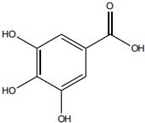 |
| Coptisine | Coptis chinensis |  |
| Celastrol | Tripterygium wilfordii |  |
| Resveratrol | Polygonum cuspidatum (common source) |  |
| Rutin | Multiple TCM plant sources (representative: Sophora japonica) |  |
| Luteolin | Multiple TCM plant sources (representative: Lonicera japonica) |  |
| Apigenin | Multiple TCM plant sources (representative: Chrysanthemum morifolium) |  |
| Ginsenoside Rb1 | Panax ginseng |  |
| Ferulic acid | Angelica sinensis (common source) |  |
| Notoginsenoside R1 | Panax notoginseng |  |
| Ginsenoside Rg3 | Panax ginseng |  |
| Shikonin | Lithospermum erythrorhizon |  |
| Panax notoginseng saponins | Panax notoginseng | Mixture (standardized extract; major components include notoginsenoside R1, ginsenoside Rg1, Rb1, etc.) |
| Compound | TCM Source | Primary Biological Mechanism | Advantages | Limitations |
|---|---|---|---|---|
| Baicalin | Scutellaria baicalensis | Inhibits bacterial quorum sensing, downregulates agr gene expression | Disrupts biofilms, enhances antibiotic penetration | Less effective against Gram-negative bacteria |
| Emodin | Rheum palmatum | Downregulates icaA/sarA genes, inhibits PIA synthesis | Targets key biofilm formation genes | Slow action, requires sustained exposure |
| Berberine | Coptis chinensis | Disrupts bacterial membrane integrity, inhibits efflux pumps | Overcomes drug resistance, synergizes with antibiotics | Poor water solubility, low bioavailability |
| Paeonol | Paeonia suffruticosa | Inhibits bacterial adhesion, disrupts extracellular polysaccharide | Concurrent anti-inflammatory effects | Poor stability |
| Ginsenoside Rg1 | Panax ginseng | Activates PI3K/Akt pathway, promotes M2 polarization | Dual immunomodulatory and pro-proliferative effects | Low oral bioavailability |
| Astragaloside IV | Astragalus membranaceus | Activates STAT6 pathway, upregulates Arg-1 and IL-10 | Potently promotes M2 polarization | Complex extraction process |
| Curcumin | Curcuma longa | Inhibits NF-κB and NLRP3 inflammasome | Multi-target anti-inflammatory, high safety | Poor photostability, rapid metabolism |
| Tanshinone IIA | Salvia miltiorrhiza | Activates Nrf2 pathway, upregulates antioxidant enzymes | Sustained antioxidant effects, enhances endogenous defense | Extremely poor water solubility |
| Asiaticoside | Centella asiatica | Upregulates TGF-β1, modulates MMP/TIMP balance | Promotes ordered collagen deposition | May inhibit cell proliferation at high concentrations |
| Salidroside | Rhodiola rosea | Upregulates VEGF/bFGF expression | Potently promotes angiogenesis | Short in vivo half-life |
| Icariin | Epimedium brevicornu | Activates Src/PI3K/Akt pathway | Dual angiogenic and osteogenic effects | Studies mostly focused on bone tissue |
| Xanthotoxin | Various TCM herbs | Stabilizes HIF-1α, activates downstream pro-angiogenic genes | Responds to hypoxic microenvironment, physiological regulation | Potential phototoxicity risk |
| Carrier Type | Structural Characteristics | Advantages | Active Ingredients | Mechanism | Therapeutic Benefit | Experimental Model | Key Quantitative Results | Ref. |
|---|---|---|---|---|---|---|---|---|
| Liposomes | Phospholipid bilayer vesicles with aqueous core and hydrophobic bilayer | High biocompatibility, mimics cell membrane, surface modifiable | Shikonin | Enhanced transdermal delivery, sustained release | Anti-inflammatory, pro-angiogenic, scar prevention | Deep second-degree burn mouse model | Wound closure rate at day 14: 92.3% vs. 68.7% (control); scar width reduced by 41.2% | [62] |
| Solid Lipid Nanoparticles (SLN) | Solid lipid core (solid at physiological temperature) | Good physical stability, controlled release | Ginsenoside Rg3 | Sustained release, improved stability | Anti-inflammatory, promotes granulation tissue formation | Full-thickness wound mouse model | Wound closure at day 14: 95.1% vs. 72.4% (control); CD31+ area increased by 62% | [59] |
| Nanostructured Lipid Carriers (NLC) | Solid + liquid lipid mixture, imperfect crystal structure | High drug loading, good stability, enhanced transdermal | Curcumin, resveratrol, ginsenoside Rg1 | High encapsulation efficiency, prolonged skin retention | Antioxidant, anti-inflammatory, promotes re-epithelialization | Ex vivo skin deposition model | Curcumin skin deposition increased by 2.3-fold vs. free curcumin; permeation flux 12.6 µg/cm2/h | [60] |
| PLGA Nanoparticles | Biodegradable synthetic polymer | FDA-approved, tunable degradation, long-term release | EGF, bFGF, baicalin | Controlled release, protection from enzymatic degradation | Promotes angiogenesis, cell proliferation, ECM synthesis | In vitro cell migration assay | EGF-loaded PLGA NPs significantly promoted fibroblast migration (scratch assay, closure rate 82% at 24 h vs. 45% control) | [62] |
| Chitosan Nanoparticles | Cationic polysaccharide, ionically crosslinked | Intrinsic antibacterial, mucoadhesive, biocompatible | Baicalin, protein-based therapeutics | pH-responsive swelling, electrostatic interaction with bacteria | Antibiofilm, enhances drug retention, promotes healing | In vitro antibacterial and cell migration assays | MIC against S. aureus 2 mg/mL; cell proliferation rate 616% over 7 days; particle size 458.39 nm | [64] |
| Hyaluronic Acid (HA) Nanoparticles | Natural polysaccharide, self-assembled or crosslinked | Targets CD44+ cells, modulates inflammation and hydration | Anti-inflammatory drugs (e.g., curcumin analogs) | Receptor-mediated targeting, immune modulation | Targeted delivery, promotes M2 macrophage polarization | Human ex vivo wound model | Cellular uptake reached 80% within 4 h; significantly increased expression of keratin 17 and CD31 (p < 0.0001), promoting re-epithelialization and angiogenesis | [66] |
| Mesoporous Silica Nanoparticles (MSN) | Highly ordered nanochannels, large surface area | Ultra-high loading, easy surface modification, responsive design | Quercetin, tanshinone IIA | pH/ROS-responsive release, high drug loading | Antioxidant, anti-inflammatory, pro-angiogenic | Diabetic wound mouse model | Wound closure rate: 85% at day 14 vs. 60% control; promoted collagen deposition and angiogenesis | [78] |
| Metal Nanoparticles (Ag, ZnO) | Metal/metal oxide core | Intrinsic antibacterial, pro-healing (Zn2+) | Gallic acid (with ZnO) | Ion release, ROS generation, membrane disruption | Synergistic antibacterial, promotes re-epithelialization | In vitro antibacterial and cytotoxicity assays | MIC 0.625 mg/mL; significant inhibition of biofilm formation; cell viability 99.07% | [80] |
| Nanozymes (CeO2, Fe3O4) | Inorganic nanoparticles with enzyme-like activity | Sustained ROS scavenging, stable microenvironment response | – (carrier + therapeutic) | SOD/catalase-mimetic activity, macrophage modulation | Reduces oxidative stress, promotes M2 polarization | Diabetic infected wound mouse model | Accelerated wound healing (closure rate approx. 82% at day 14 vs. 60% control); promoted collagen deposition and epithelial regeneration | [85] |
| Photothermal-Responsive Nanoparticles (Au, polydopamine) | Core–shell structures with photothermal conversion capacity | Remote control, spatiotemporal precision, synergistic hyperthermia | Antibiotics (e.g., in Au@MSN) | NIR-triggered drug release, photothermal biofilm disruption | Enhanced antibiofilm, synergistic chemo-photothermal therapy | Photothermal performance characterization (in vitro) | TaS2 nanoparticles exhibited excellent photothermal conversion efficiency in NIR-II region (1000–1700 nm); optimal performance with small size (<50 nm) | [87] |
| Stimulus Type | Response Mechanism | Carrier Material/Polymer |
|---|---|---|
| pH-Responsive | Protonation, charge reversal, bond cleavage (hydrazone, imine, ester) | PLGA, Chitosan |
| Enzyme-Responsive | Peptide cleavage by proteases (MMP-2/9, elastase) | Hyaluronic acid hydrogels with MMP-cleavable peptides |
| Glucose-Responsive (GOx-based) | Glucose oxidase converts glucose to gluconic acid + H2O2; triggers pH/ROS-responsive release | H2O2-sensitive nanomicelles |
| Glucose-Responsive (PBA-based) | Reversible covalent binding between PBA and glucose; alters polymer hydrophilicity/crosslinking | PBA-containing polymers, hydrogels, microneedles |
| ROS-Responsive | Oxidation of sensitive moieties (thioether, diselenide, arylboronate, thioketal); converts hydrophobic to hydrophilic or cleaves bonds | Thioether-containing polymers, arylboronate-linked prodrugs, selenium-containing amphiphiles |
| Thermoresponsive | Phase transition at LCST; polymer chains collapse at elevated temperature | PNIPAM and derivatives, Pluronic-based hydrogels |
| Externally Triggered (NIR) | Photothermal conversion; heat triggers phase transition or bond cleavage | Gold nanoshells/nanorods, black phosphorus, polydopamine, Au@mesoporous SiO2 |
| Externally Triggered (Magnetic) | Magnetic hysteresis heating or field-guided localization | Superparamagnetic iron oxide (Fe3O4) |
| Multi-Responsive (pH + ROS) | Combined pH-sensitive and ROS-sensitive linkages | Nanoparticles with dual-sensitive bonds |
| Cascade-Responsive | Sequential signal amplification (e.g., GOx generates H2O2 and acid, triggering ROS/pH response) | Integrated GOx with ROS/pH-sensitive carriers |
| TCM Compound | Nanocarrier | Experimental Model | Primary Efficacy |
|---|---|---|---|
| Ginsenoside Rg1 | NLC + CMC gel | Diabetic rat full-thickness skin defect | Promotes collagen deposition, angiogenesis, re-epithelialization |
| Ginsenoside Rg3 | SLN gel | Mouse full-thickness skin defect | Anti-inflammatory, promotes granulation tissue |
| Curcumin | NLC | Ex vivo skin permeation model | Enhanced skin retention, sustained release |
| Shikonin | Liposomes + thermosensitive chitosan hydrogel | Rat deep second-degree burn | Anti-inflammatory, pro-angiogenic, scar inhibition |
| Quercetin | Mesoporous silica nanoparticles | Diabetic wound model | Antioxidant, anti-inflammatory, pro-angiogenic |
| Baicalin | pH-responsive PLGA nanoparticles | In vitro release/bacterial infection model | Site-specific release at infection site |
| Curcumin | ROS-responsive thioether micelles | Oxidative stress model | ROS-triggered release, concurrent ROS scavenging |
Disclaimer/Publisher’s Note: The statements, opinions and data contained in all publications are solely those of the individual author(s) and contributor(s) and not of MDPI and/or the editor(s). MDPI and/or the editor(s) disclaim responsibility for any injury to people or property resulting from any ideas, methods, instructions or products referred to in the content. |
© 2026 by the authors. Licensee MDPI, Basel, Switzerland. This article is an open access article distributed under the terms and conditions of the Creative Commons Attribution (CC BY) license.
Share and Cite
Ren, L.; Zhao, Z.; Zhang, T.; Kou, M.; Ma, X.; Li, J.; Lei, M.; Qiao, H. Advances in Nanotechnology-Assisted Delivery of TCM-Derived Bioactive Compounds for Wound Repair. Pharmaceutics 2026, 18, 427. https://doi.org/10.3390/pharmaceutics18040427
Ren L, Zhao Z, Zhang T, Kou M, Ma X, Li J, Lei M, Qiao H. Advances in Nanotechnology-Assisted Delivery of TCM-Derived Bioactive Compounds for Wound Repair. Pharmaceutics. 2026; 18(4):427. https://doi.org/10.3390/pharmaceutics18040427
Chicago/Turabian StyleRen, Lu, Zefeng Zhao, Tianzihan Zhang, Meiting Kou, Xiaozhen Ma, Jiajun Li, Mengchen Lei, and Haifa Qiao. 2026. "Advances in Nanotechnology-Assisted Delivery of TCM-Derived Bioactive Compounds for Wound Repair" Pharmaceutics 18, no. 4: 427. https://doi.org/10.3390/pharmaceutics18040427
APA StyleRen, L., Zhao, Z., Zhang, T., Kou, M., Ma, X., Li, J., Lei, M., & Qiao, H. (2026). Advances in Nanotechnology-Assisted Delivery of TCM-Derived Bioactive Compounds for Wound Repair. Pharmaceutics, 18(4), 427. https://doi.org/10.3390/pharmaceutics18040427