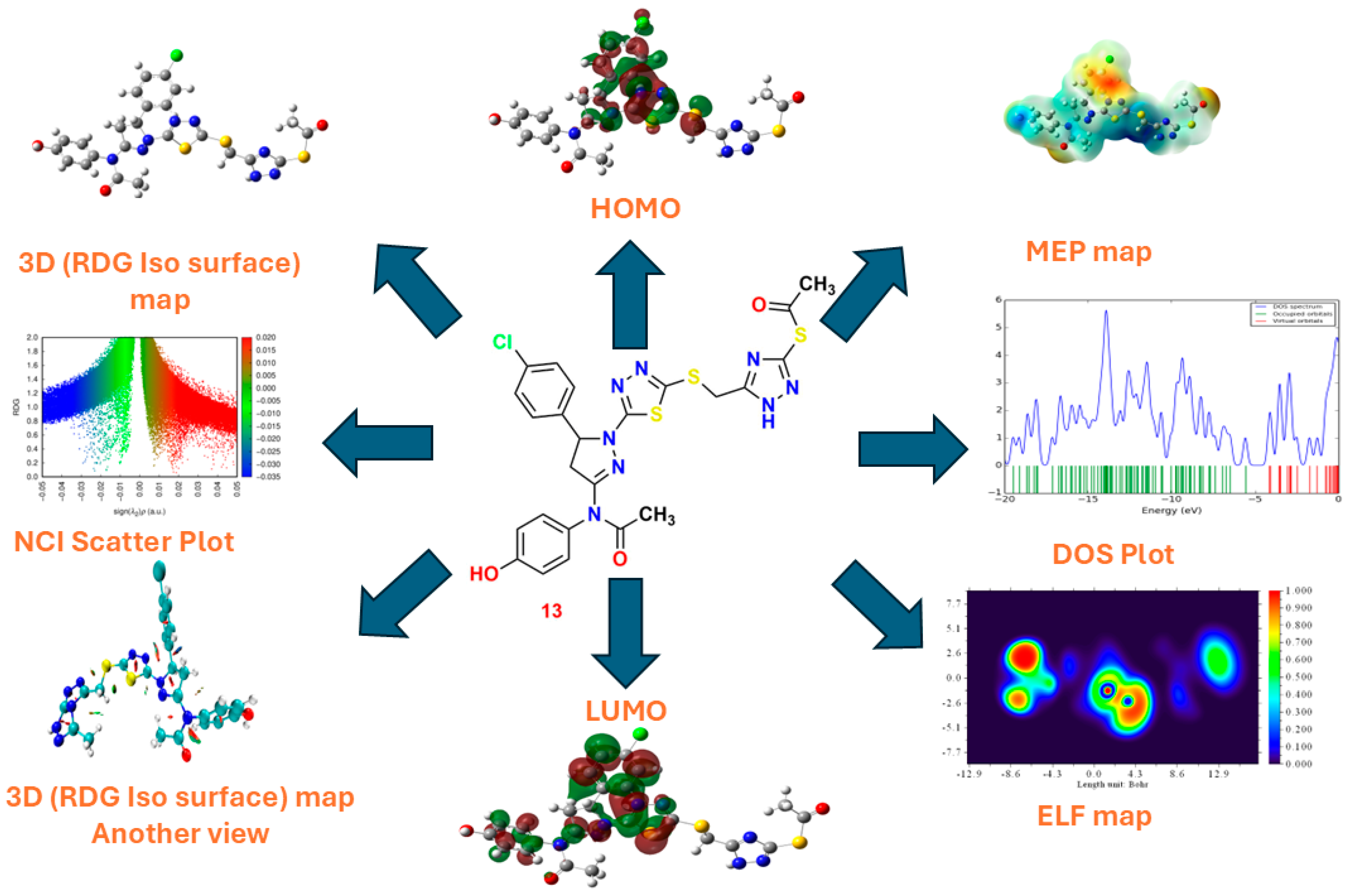
A Multi-Target Nitrogen-Fused Azole Drug Platform Derived from a Pyrazoline-Thiadiazole Moiety: In Vivo Antimicrobial Validation and Comprehensive Anticancer Investigation Supported by Computational Studies

 ,
,  , ,
, ,  , , , and
Abstract
1. Introduction
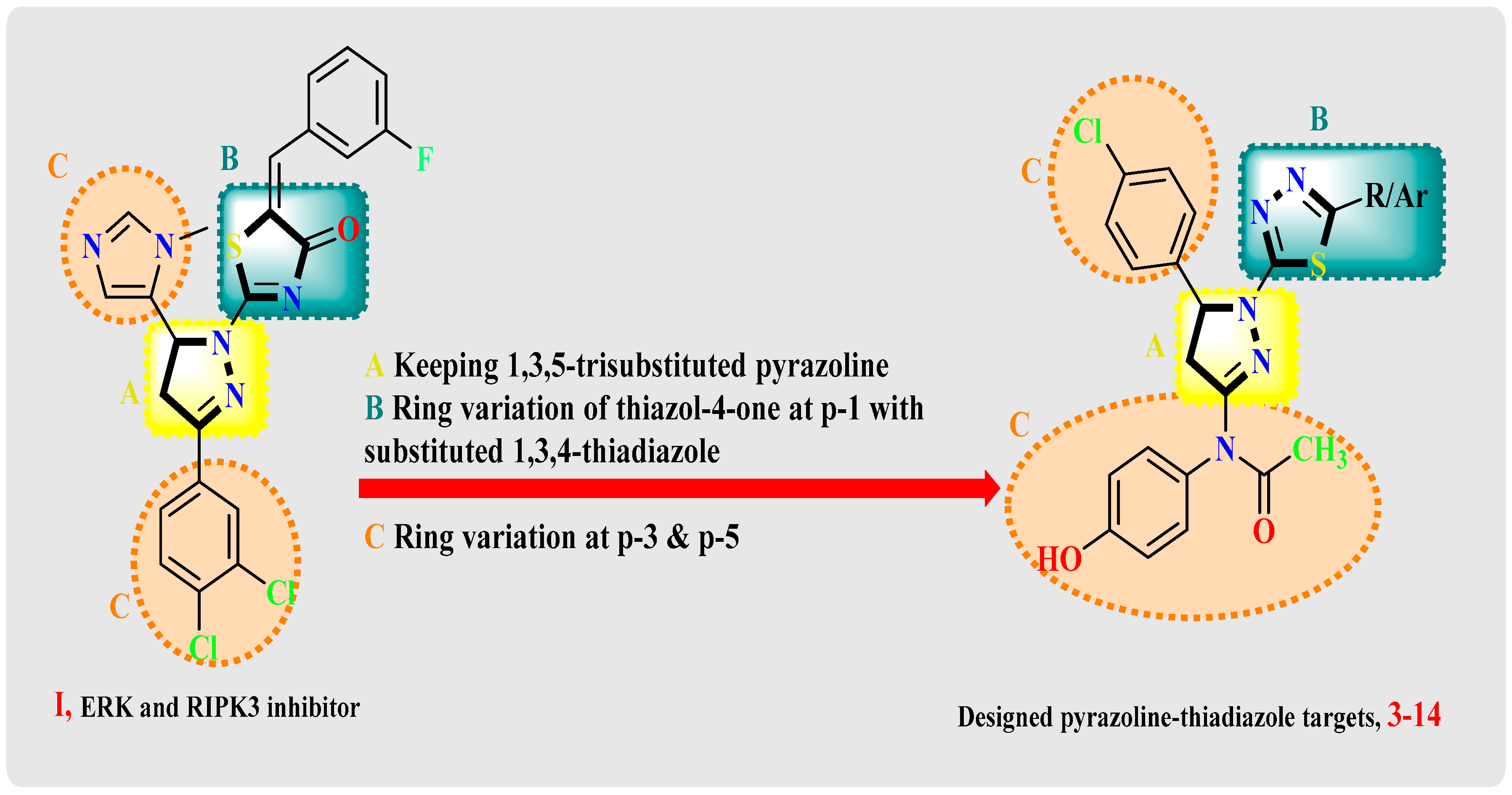
2. Results and Discussion
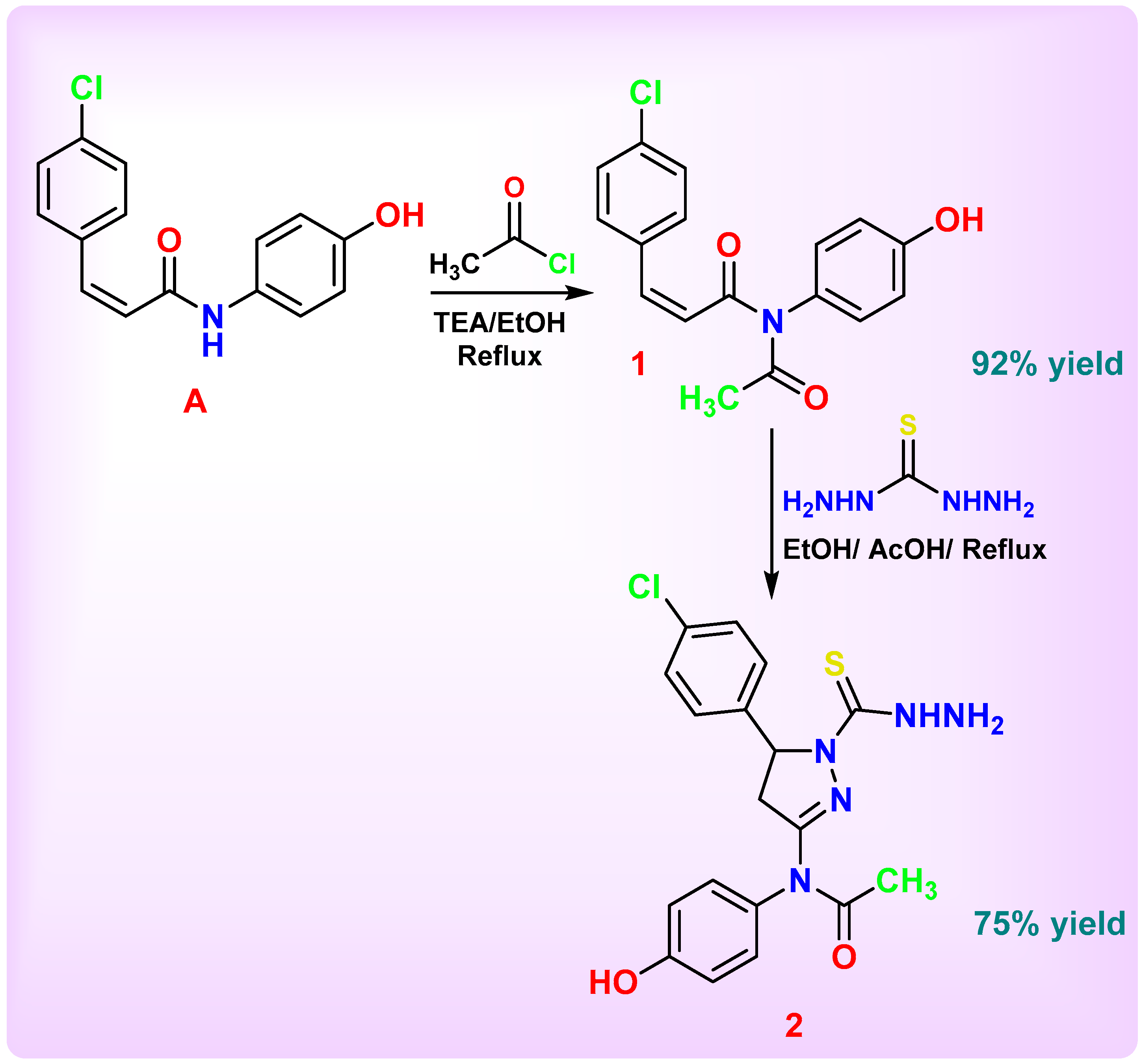
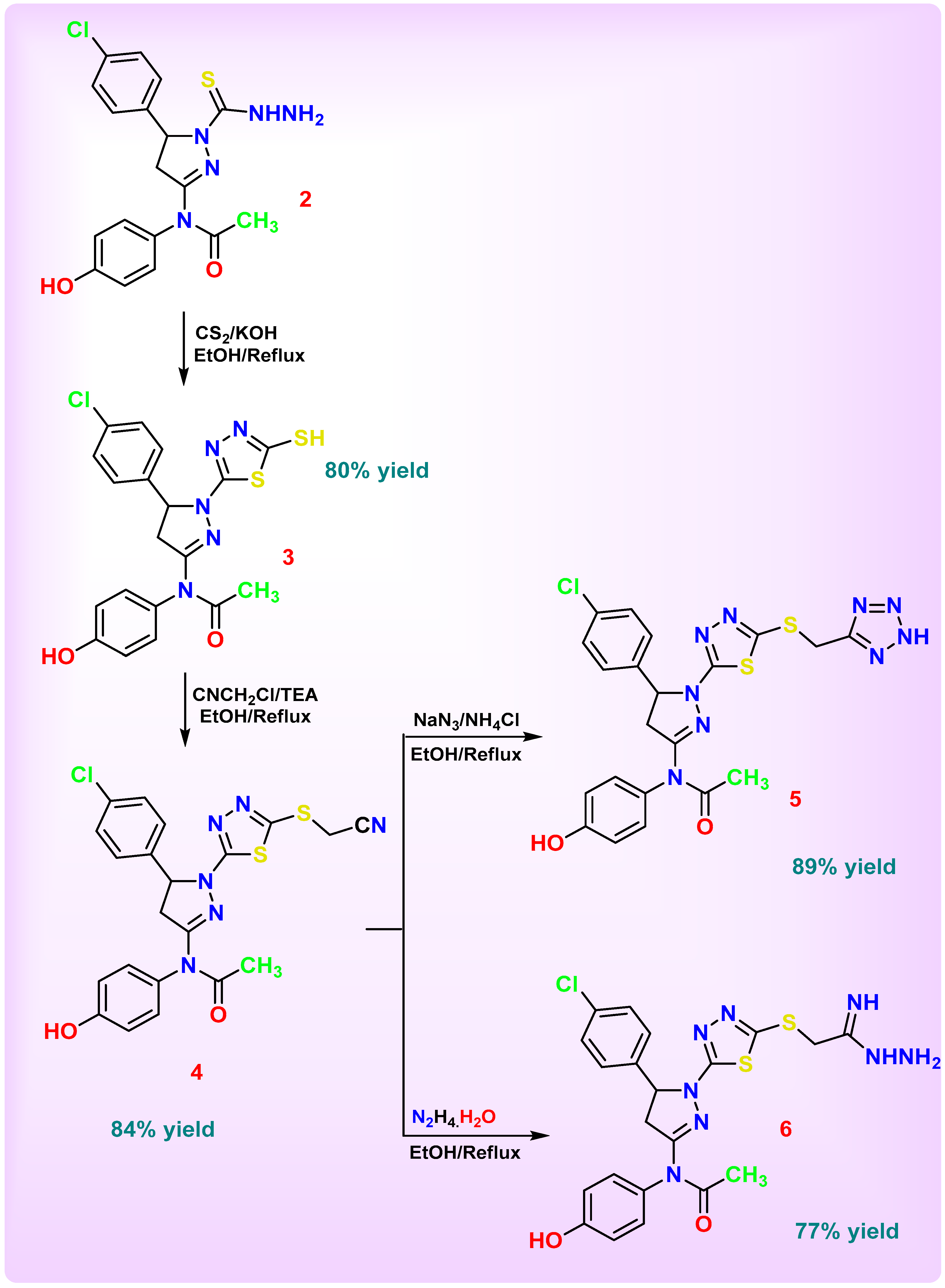
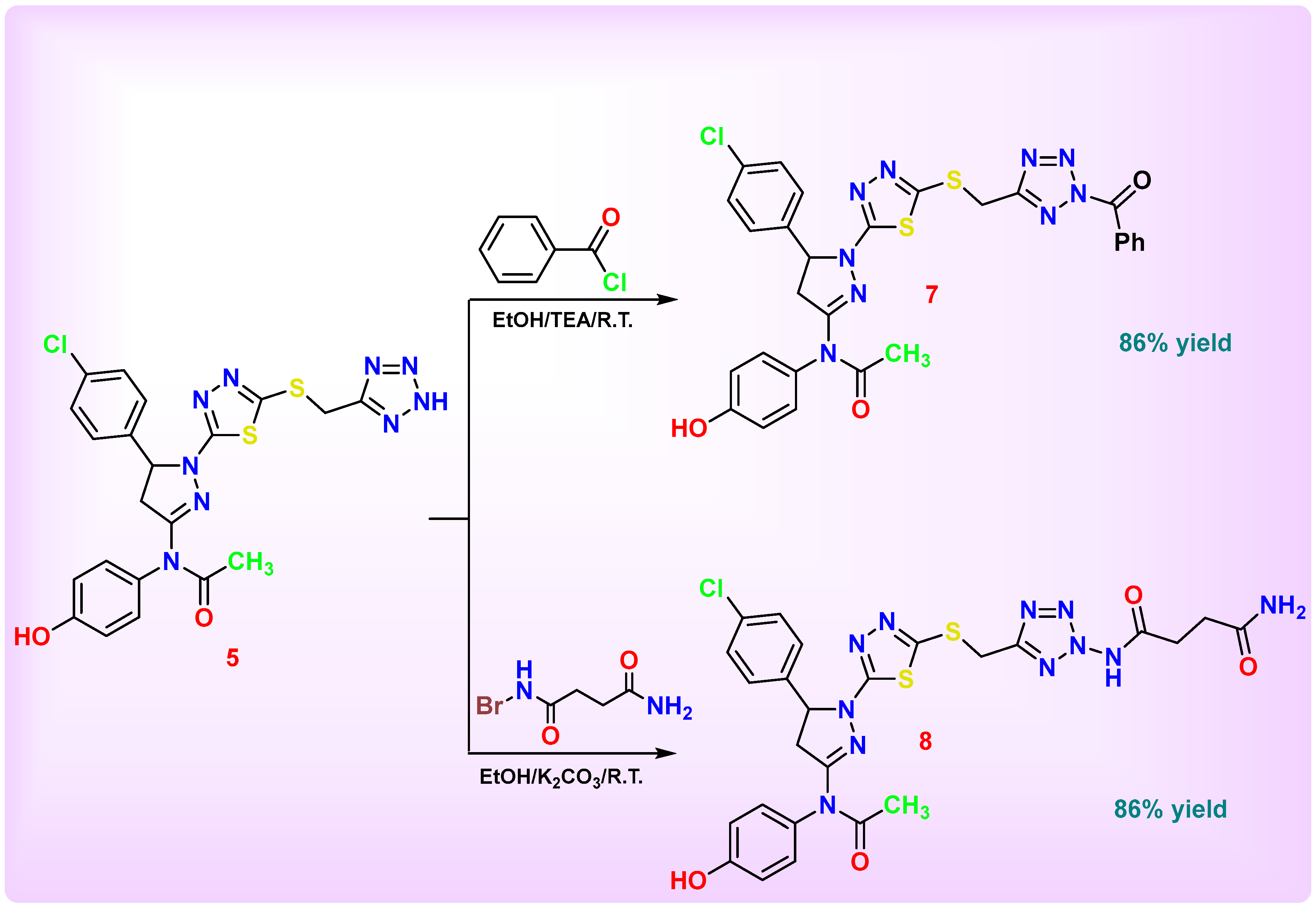
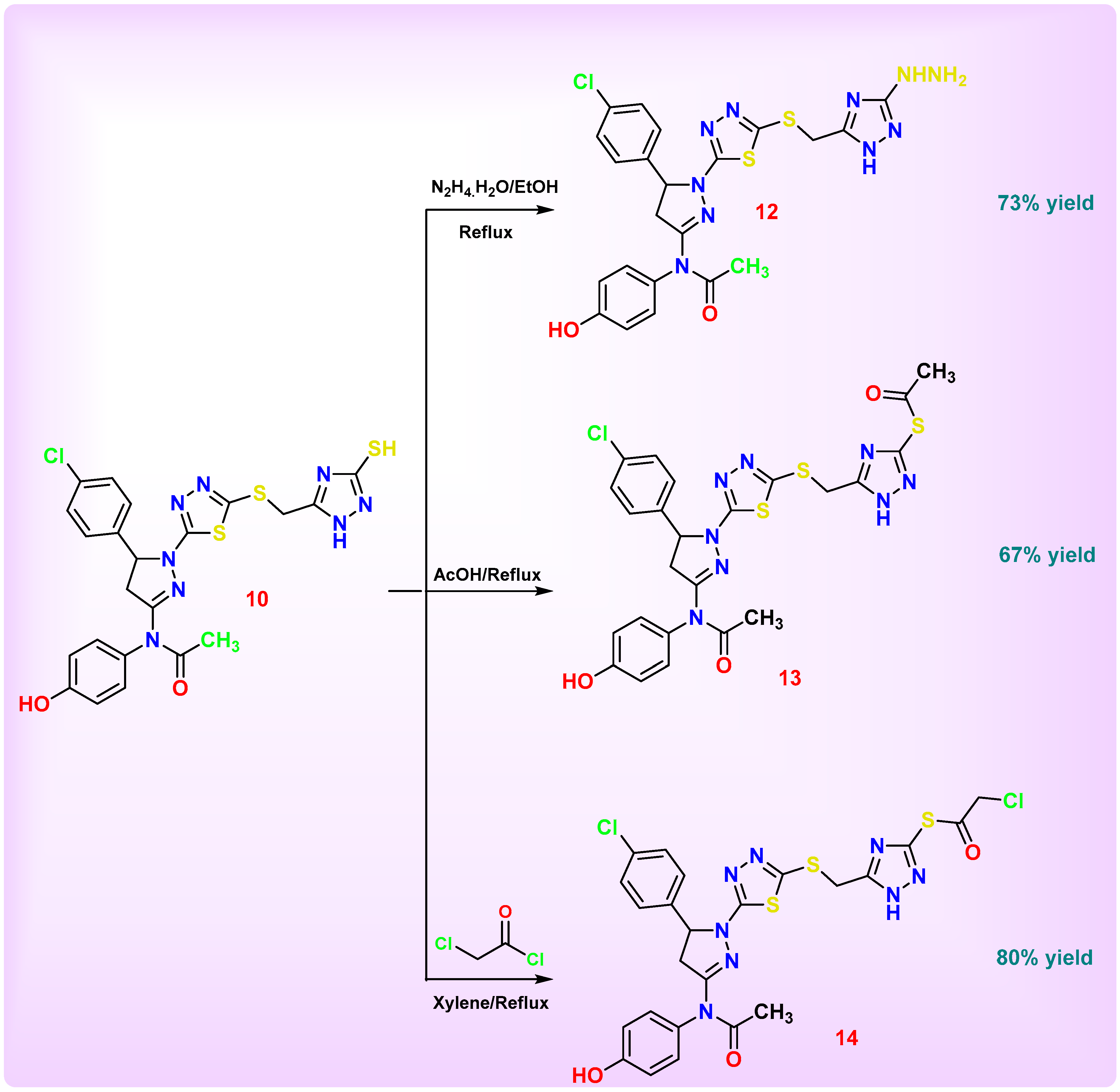
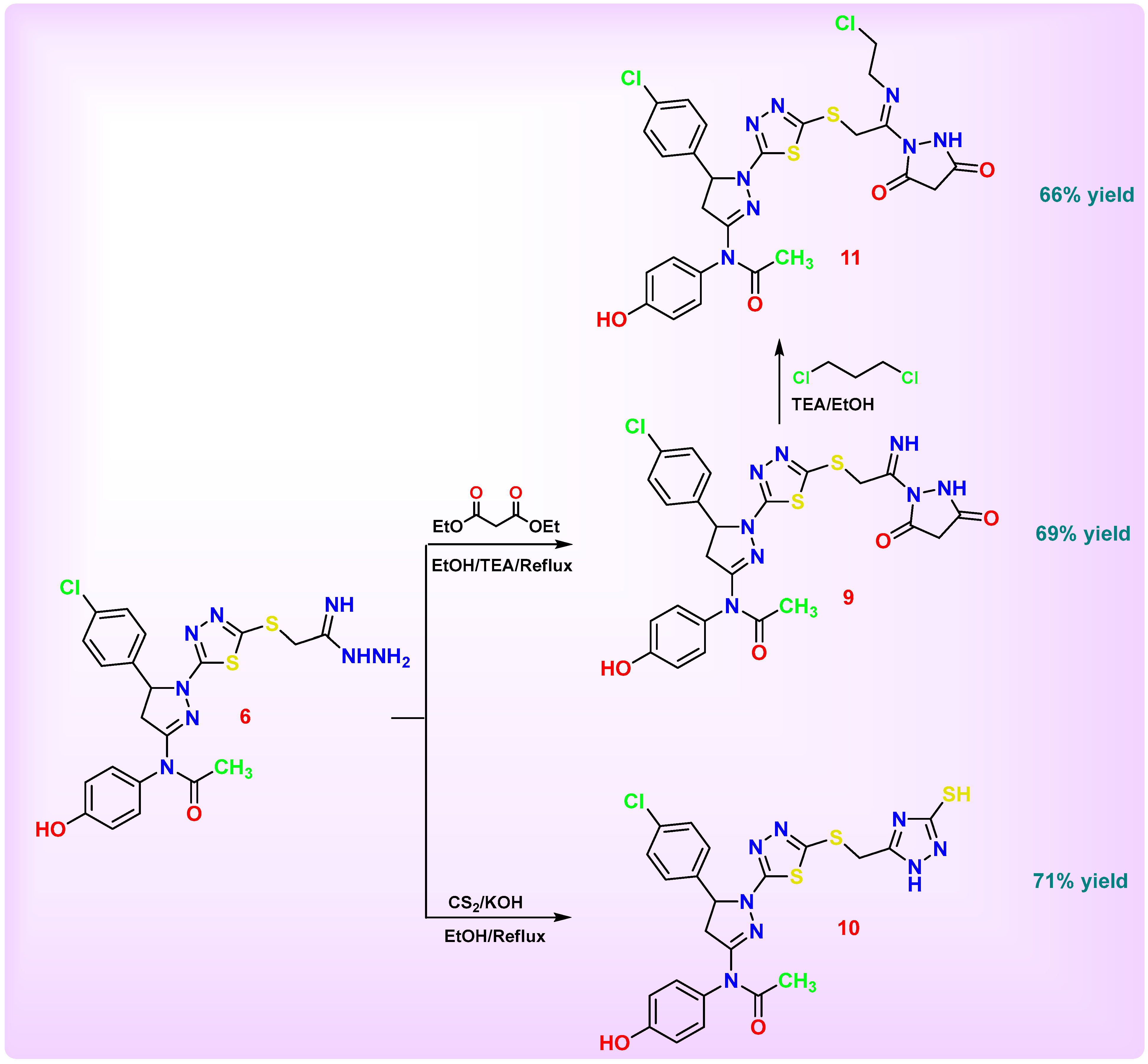
2.1. Chemistry



2.2. Biological Evaluation
2.2.1. Antiproliferative In Vitro Potency
Structure Activity Relationship (SAR) Study
2.2.2. Effect of the 2-1H-Pyrazoline-thiadiazole-Based Derivative 13 on ERK2 and RIPK3 Activation and Necroptotic Signaling
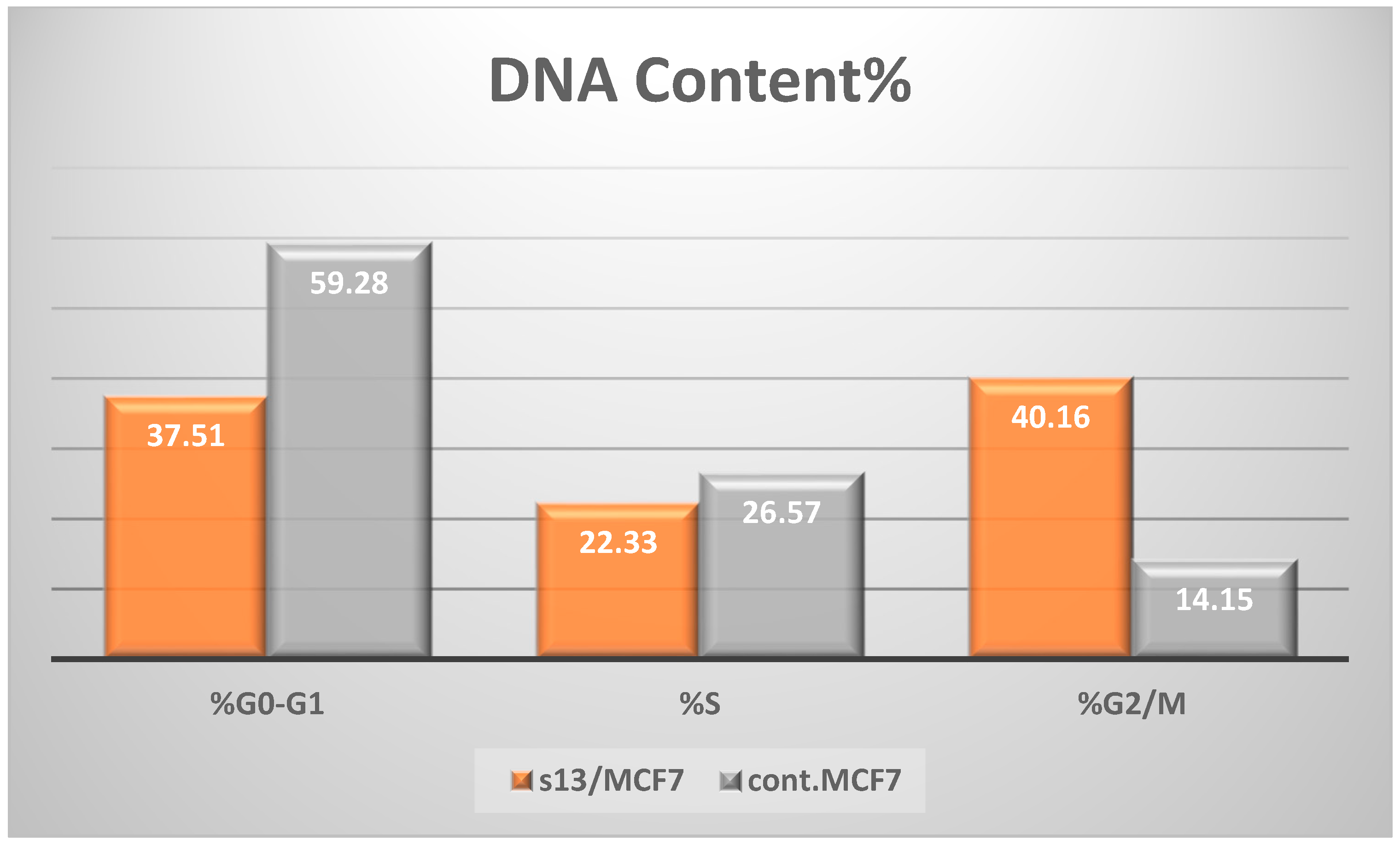
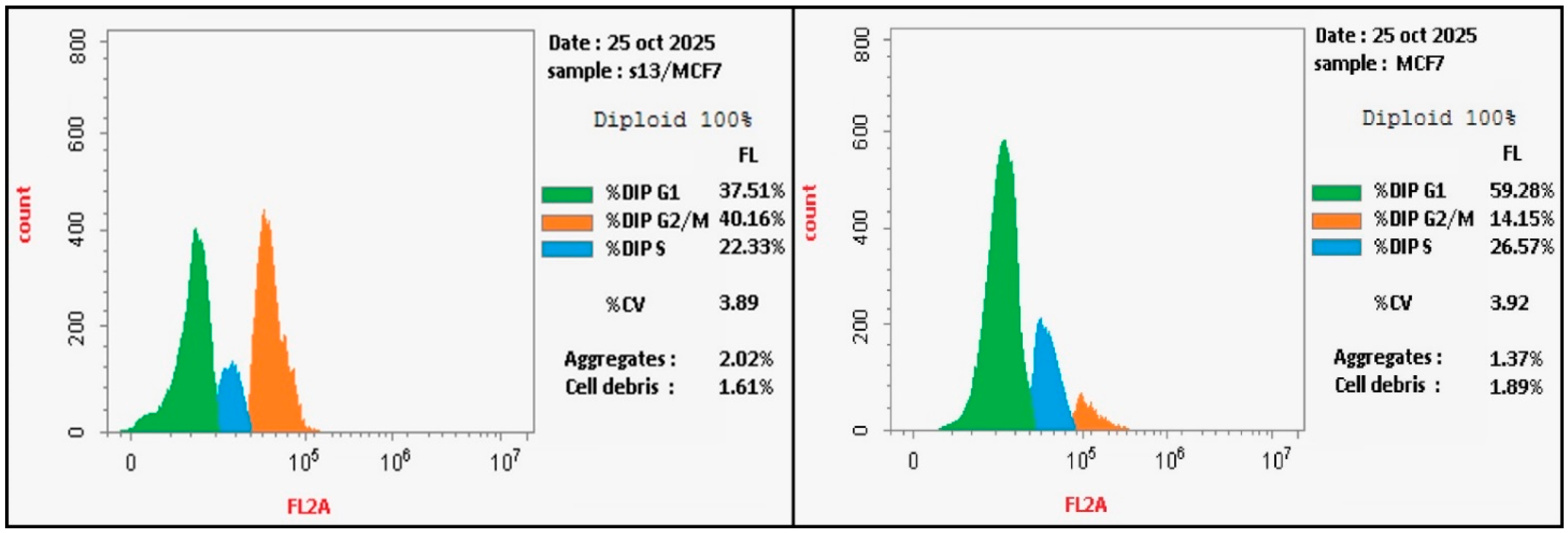
2.2.3. Cell Cycle Perturbation and G2/M Phase Arrest of the 2-1H-Pyrazoline-thiadiazole-Based Derivative 13
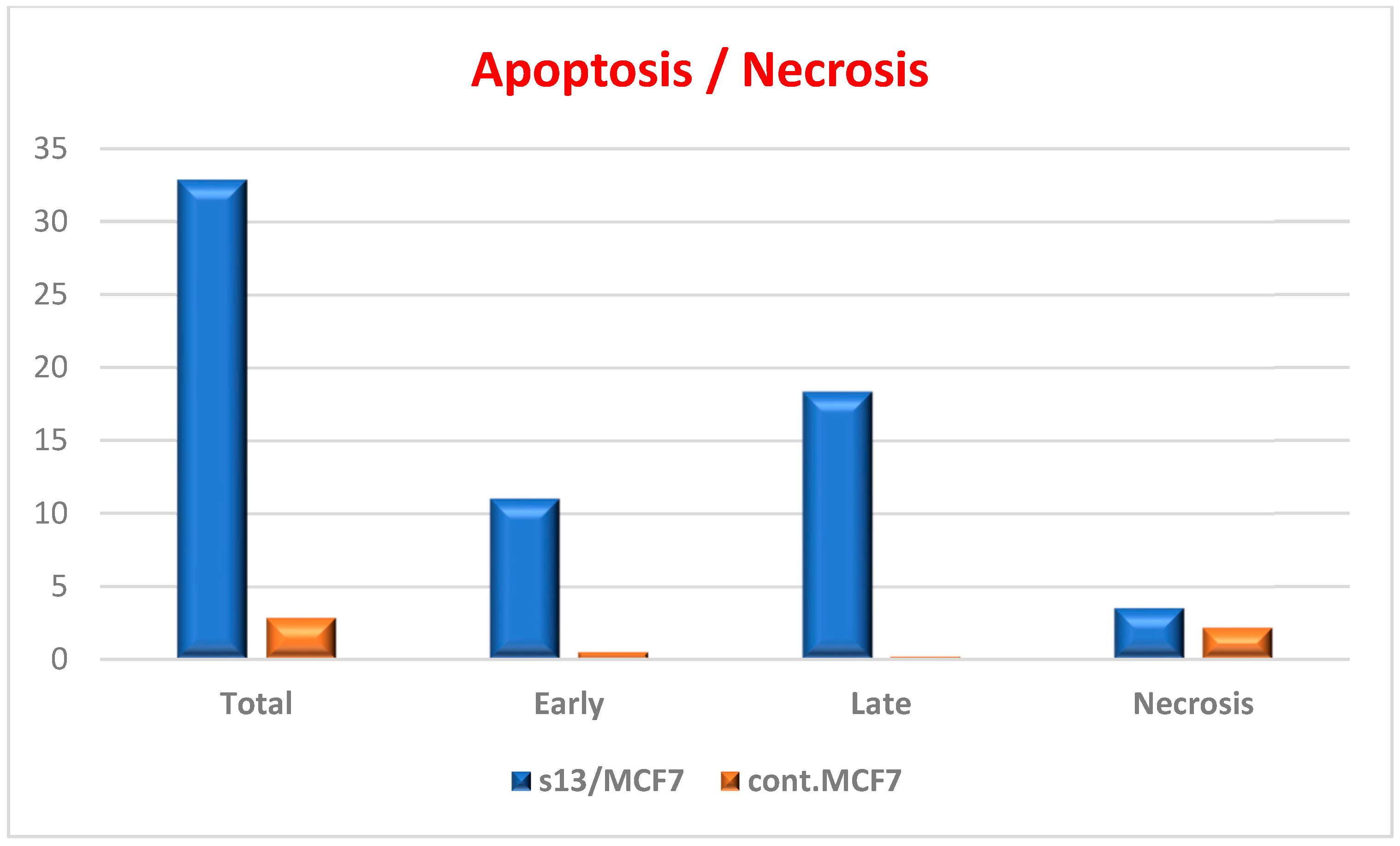
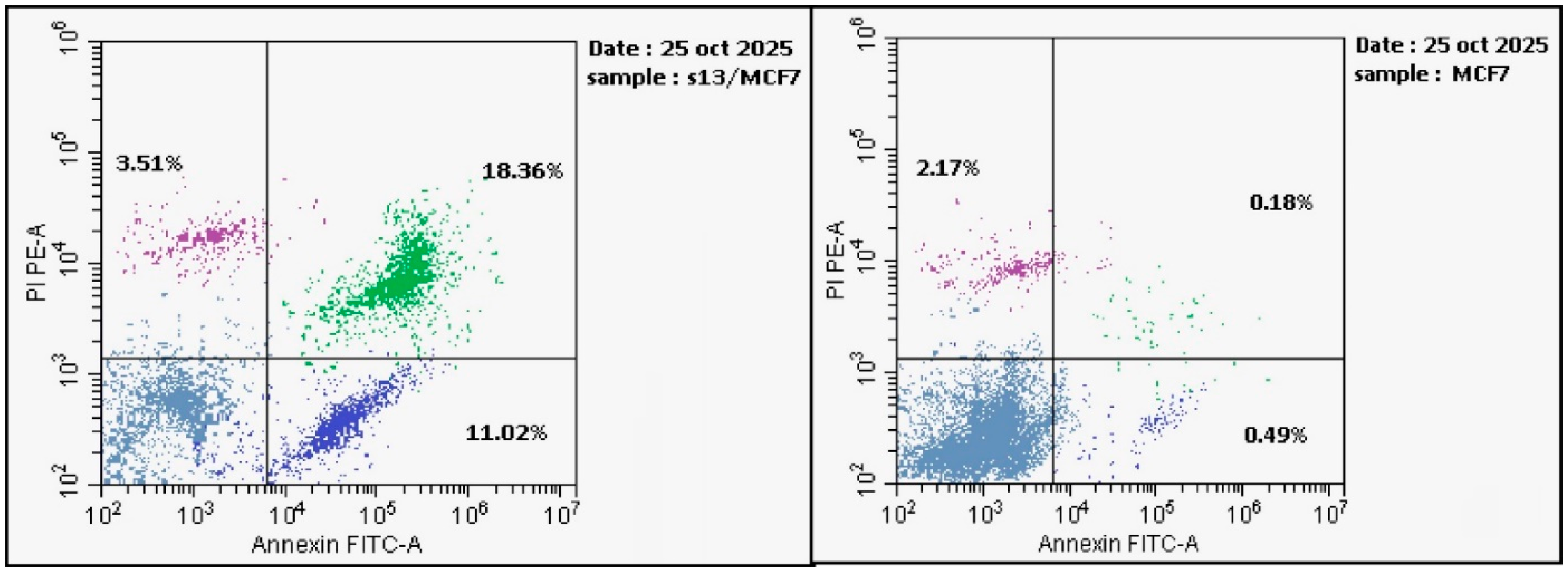
2.2.4. Induction of Apoptosis by the 2-1H-Pyrazoline-thiadiazole-Based Derivative 13
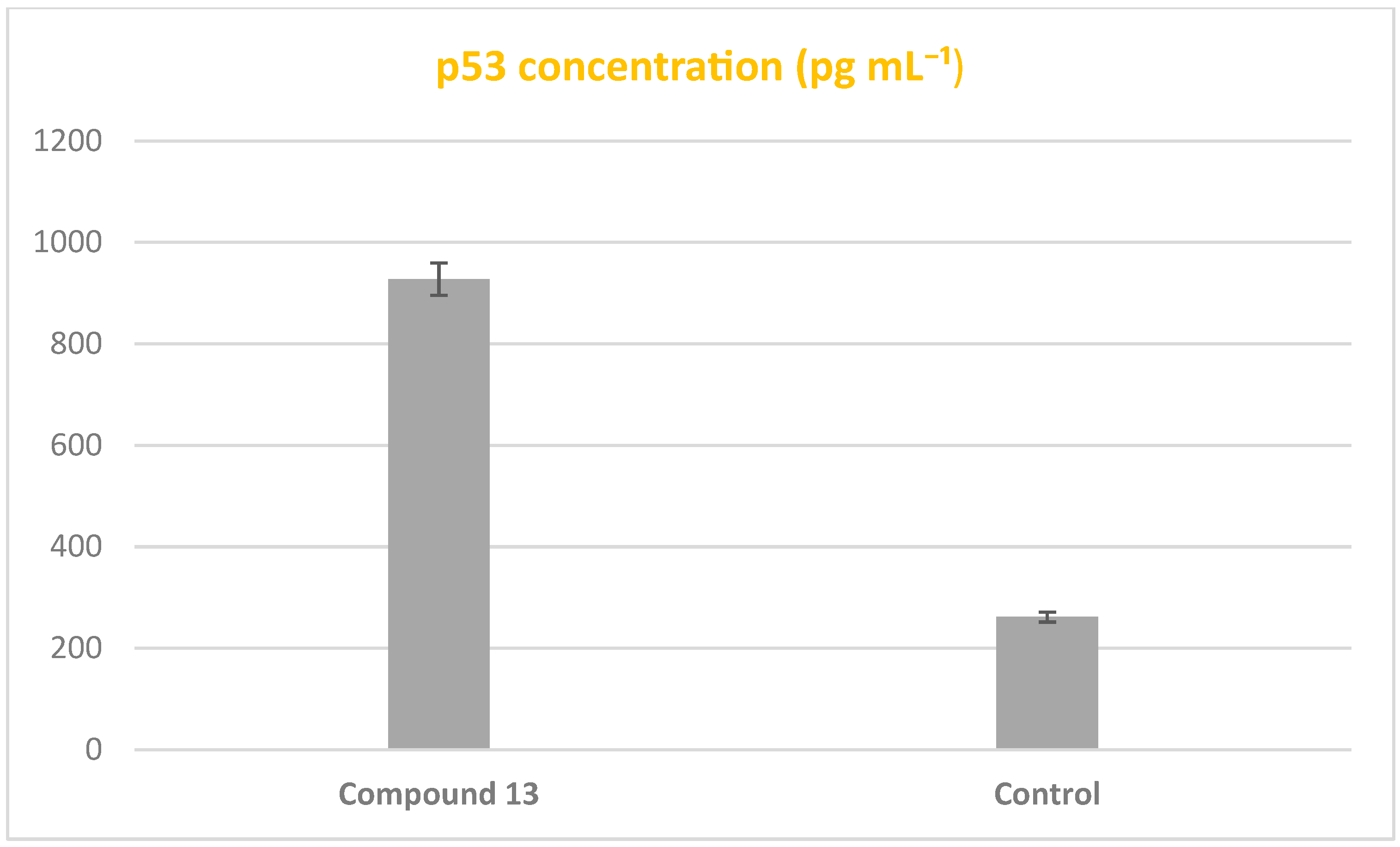
2.2.5. Induction of p53 Tumor Suppressor Protein of the 2-1H-Pyrazoline-thiadiazole-Based Derivative 13
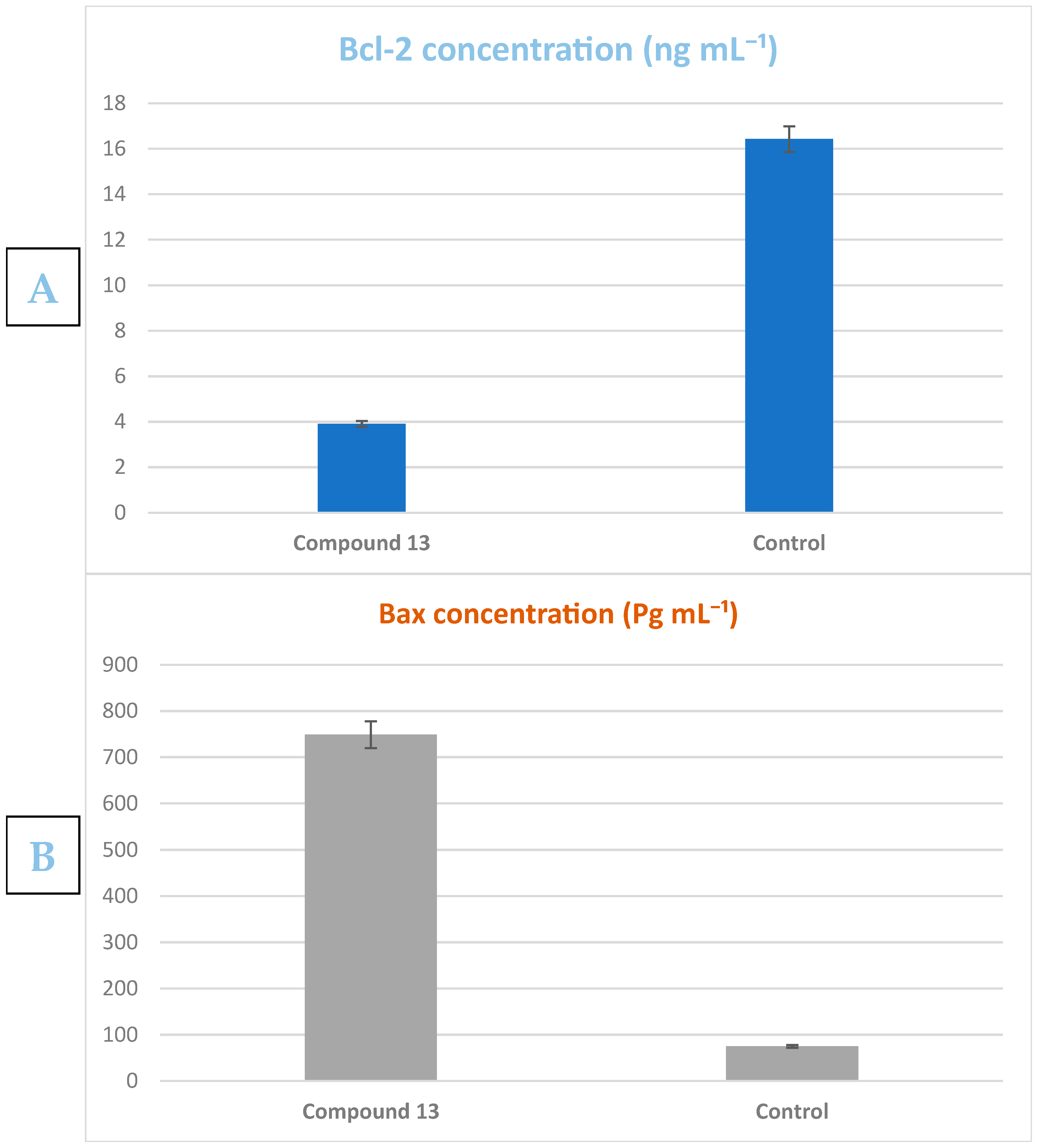
2.2.6. Modulation of Bcl-2 and BAX Expression by the 2-1H-Pyrazoline-thiadiazole-Based Derivative 13
2.2.7. Antimicrobial Efficiency
In Vitro Antibacterial Activity
Structure-Activity Relationship (SAR)
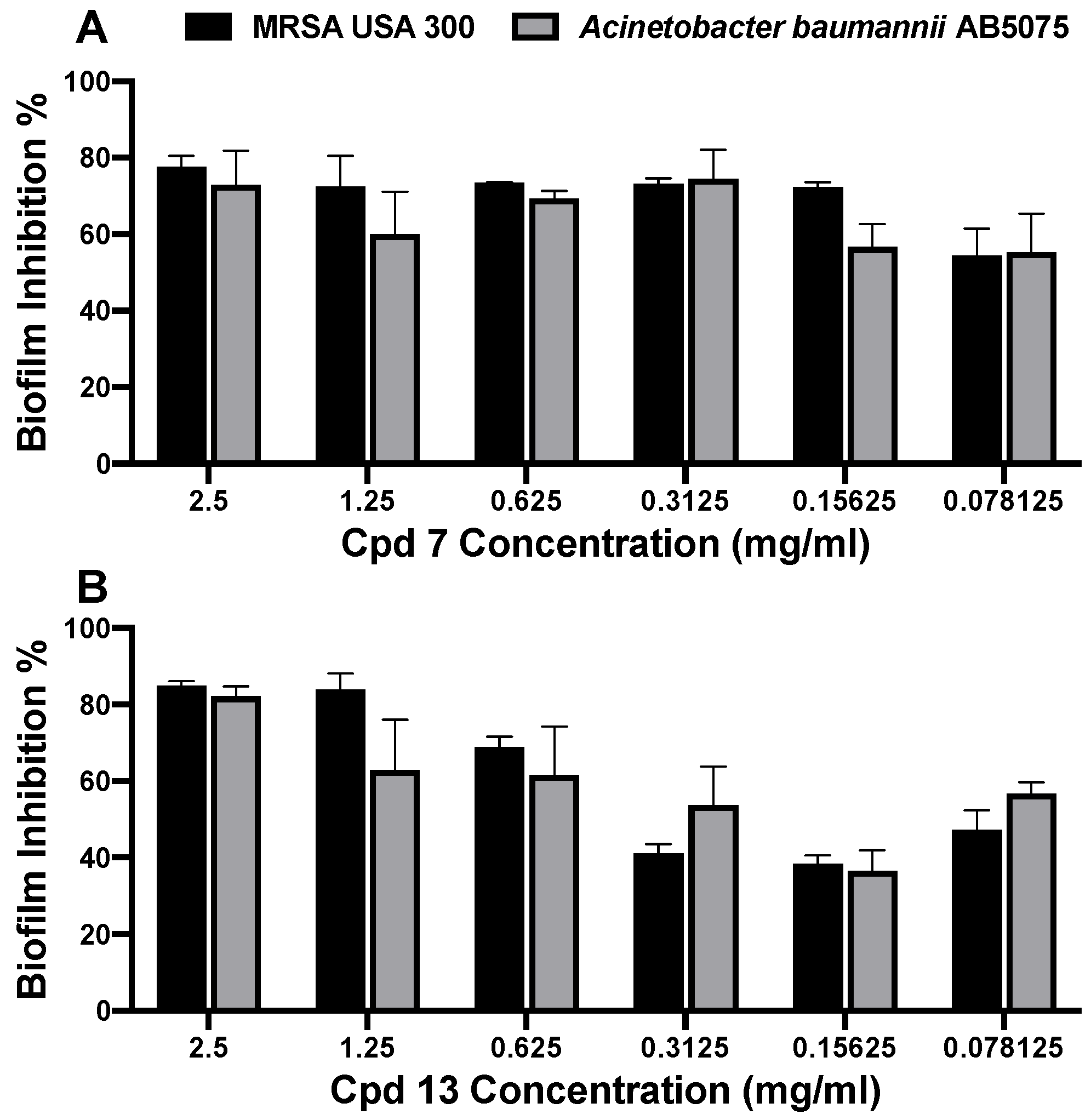
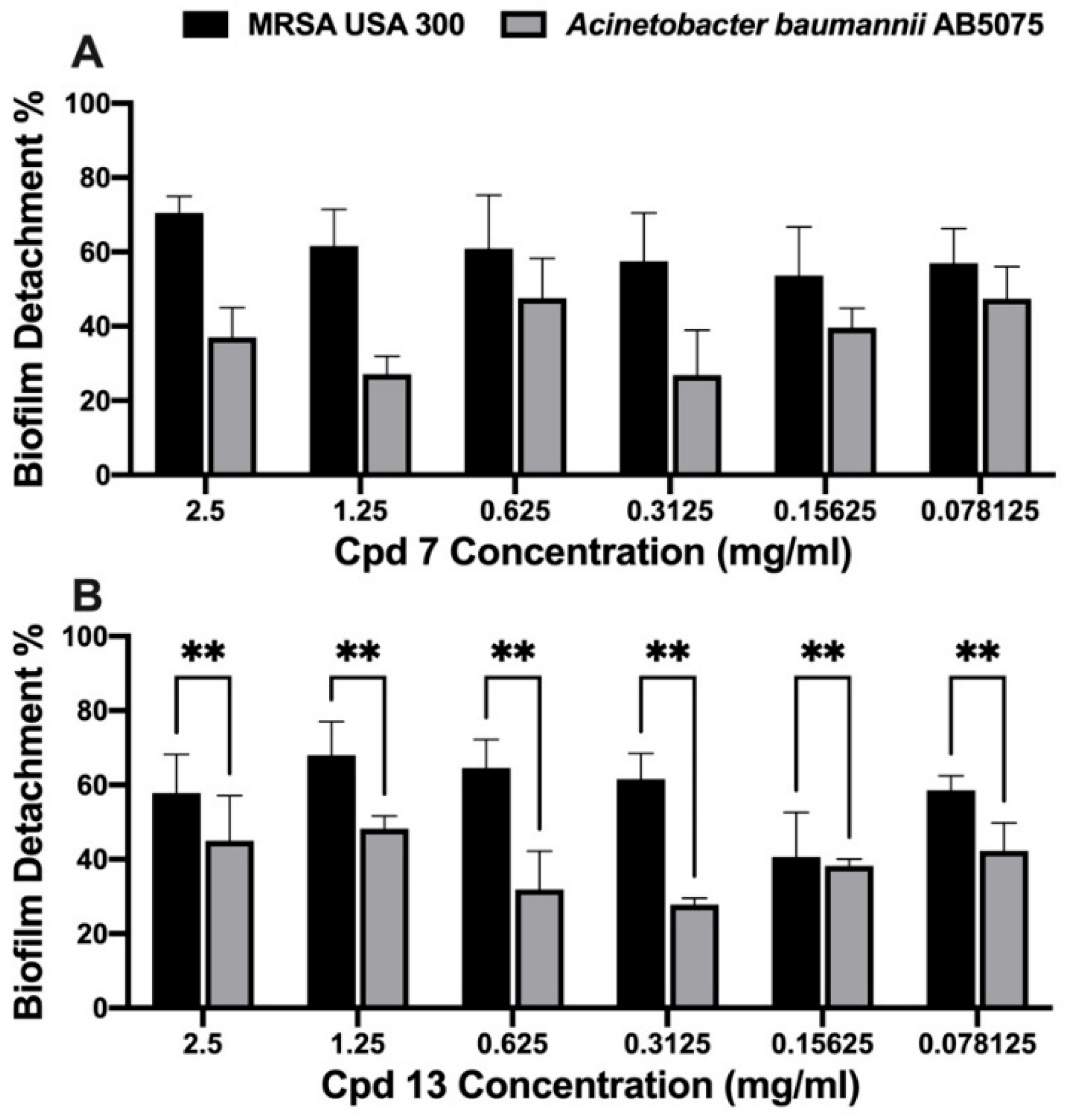
Effect of 2-1H-Pyrazoline-thiadiazole-Based Analogues 7 and 13 on MRSA USA300 and Acinetobacter baumannii AB5057 Biofilm Activity
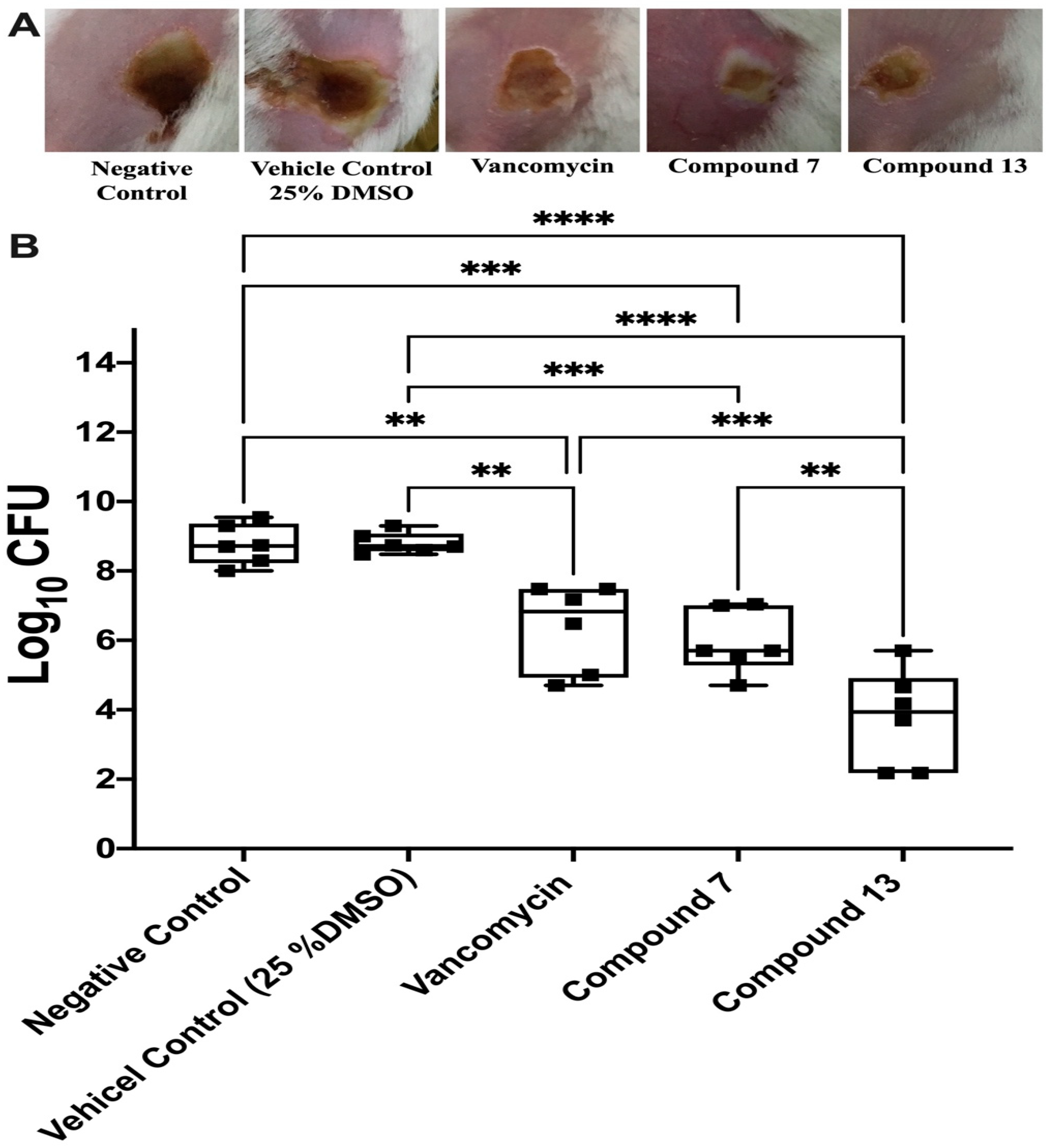
In Vivo MRSA Skin Infection Model
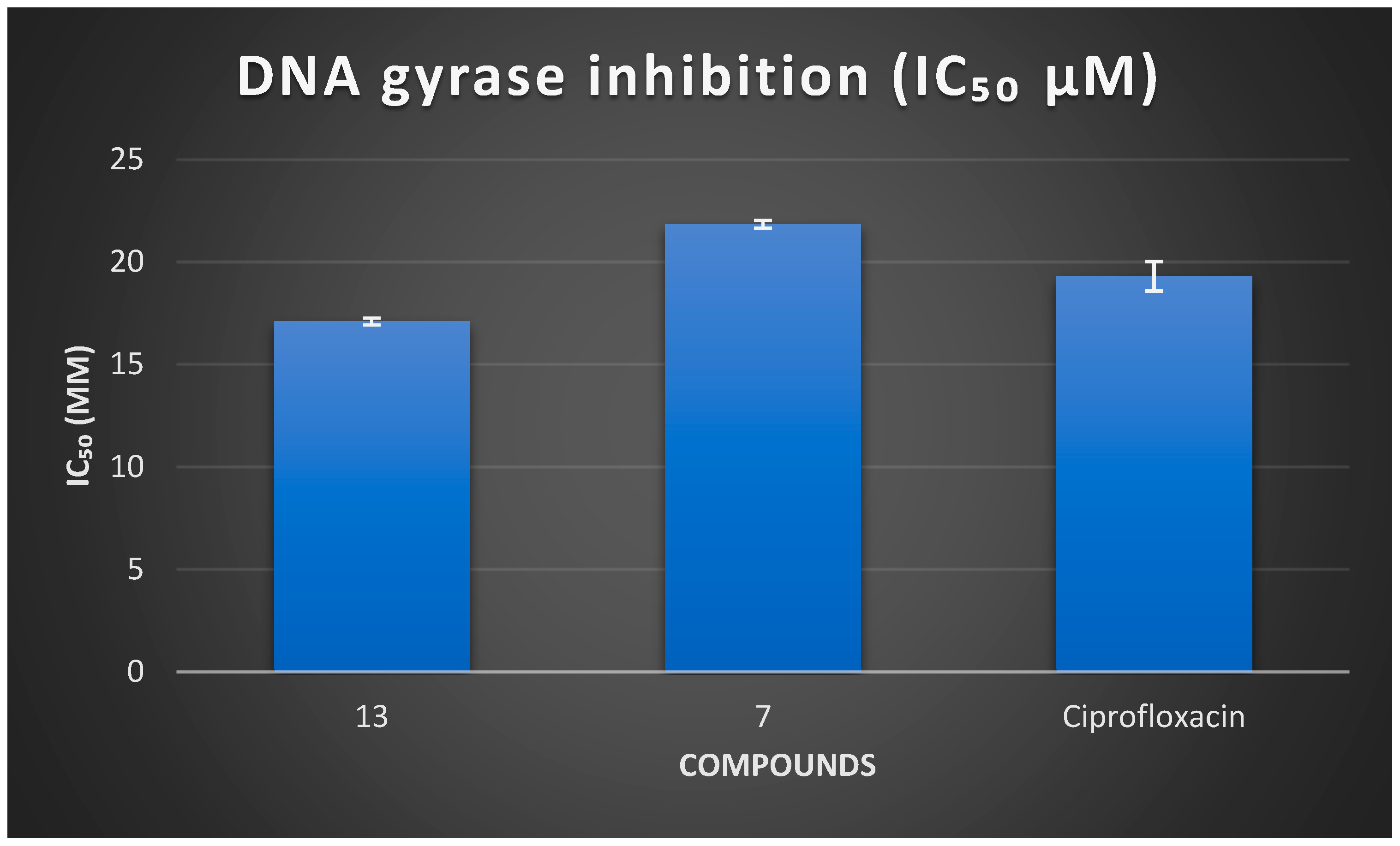
Assay Against S. aureus DNA Gyrase on 2-1H-Pyrazoline-thiadiazole-Based Analogues 13 and 7
2.3. Computational Studies
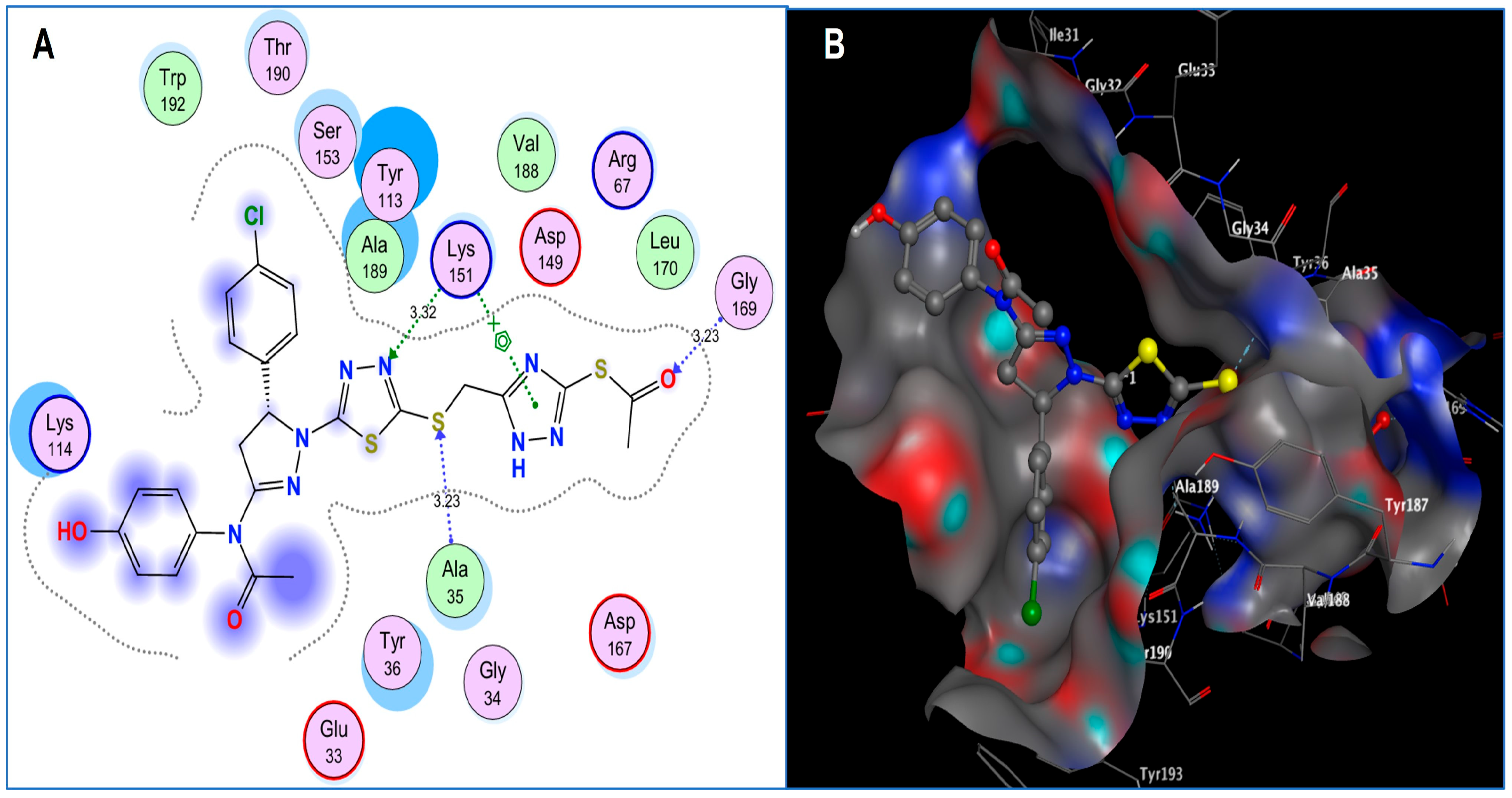
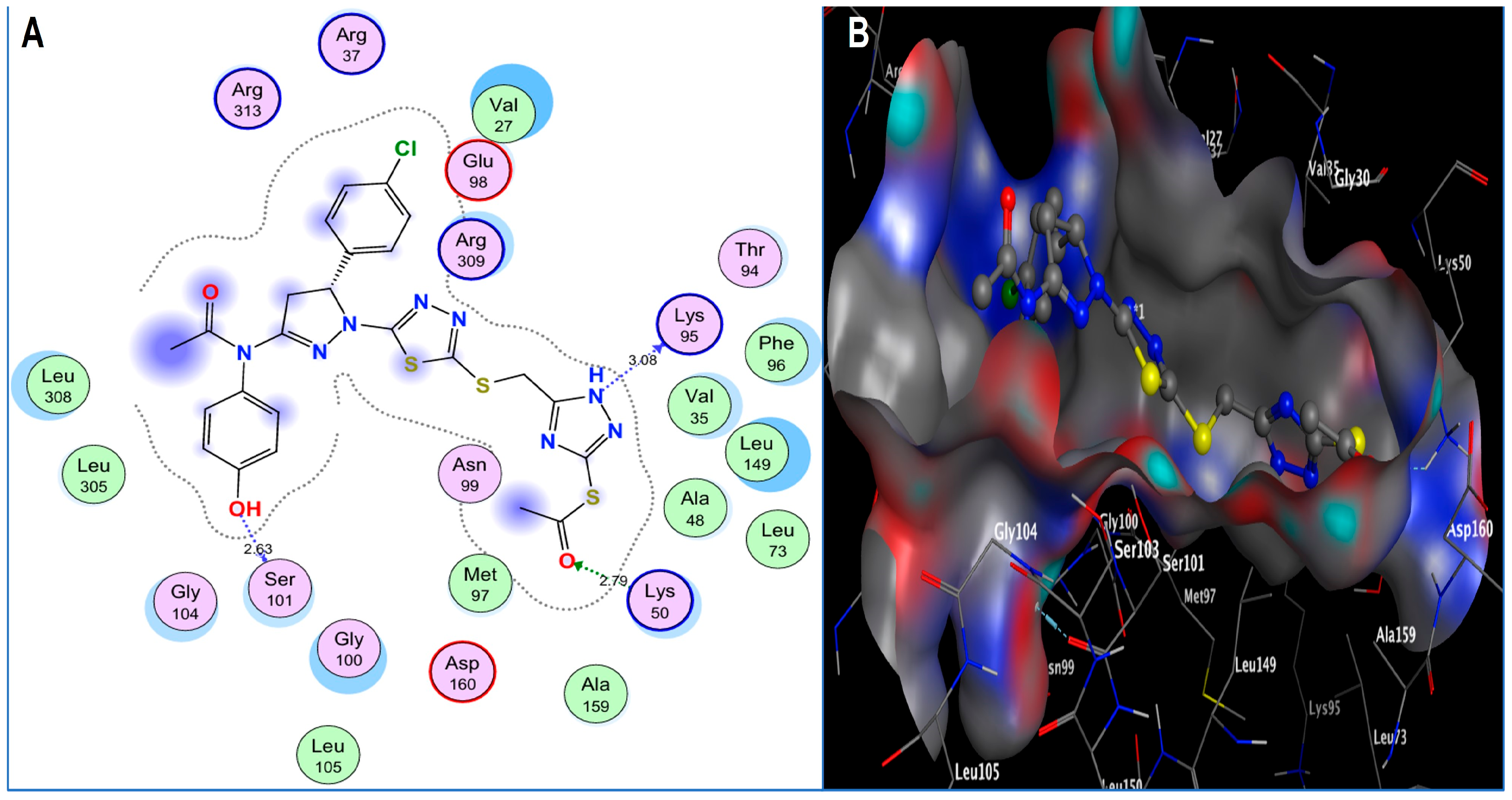
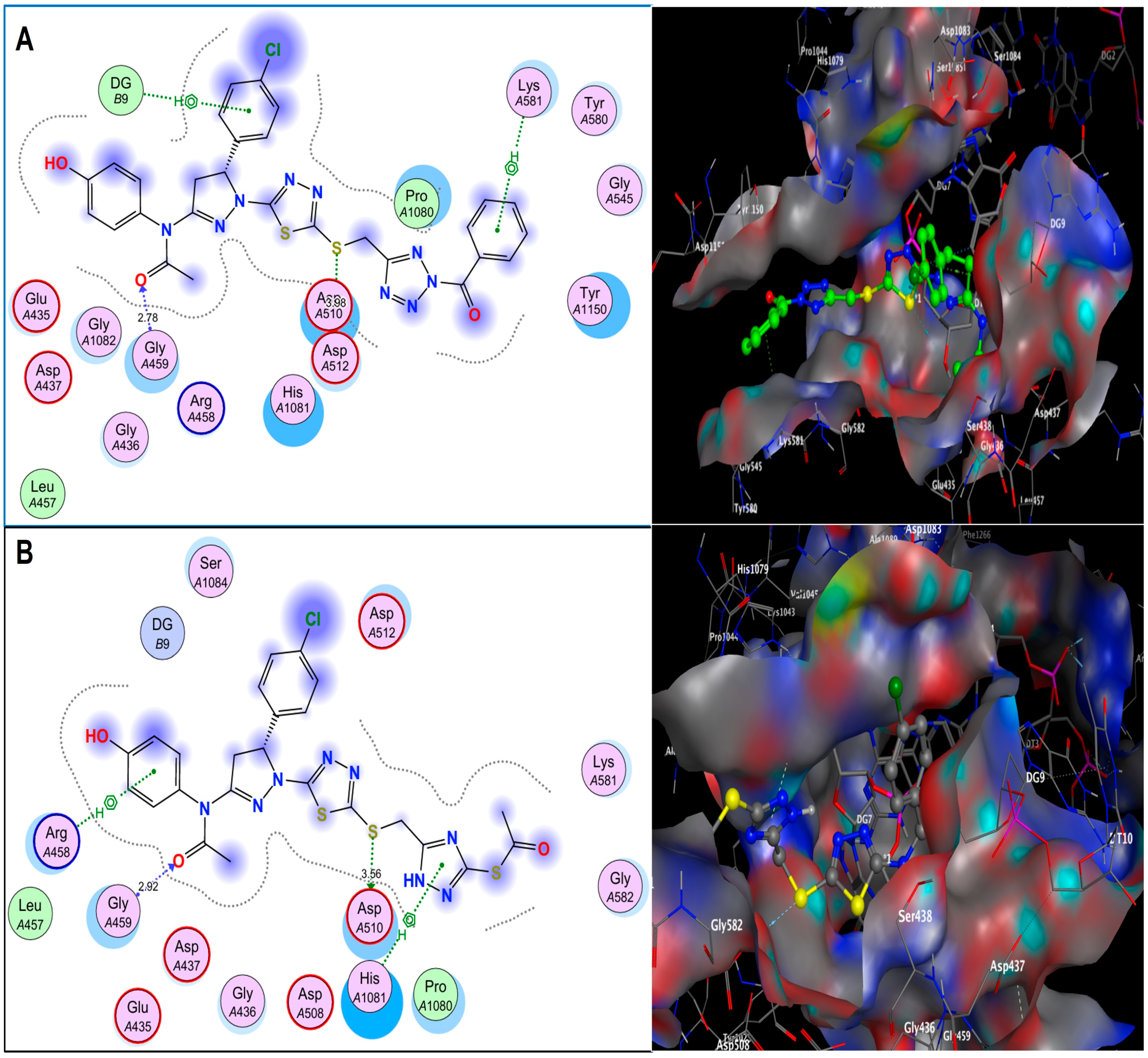
2.3.1. Molecular Docking Simulation
2.3.2. Molecular Dynamics Simulations
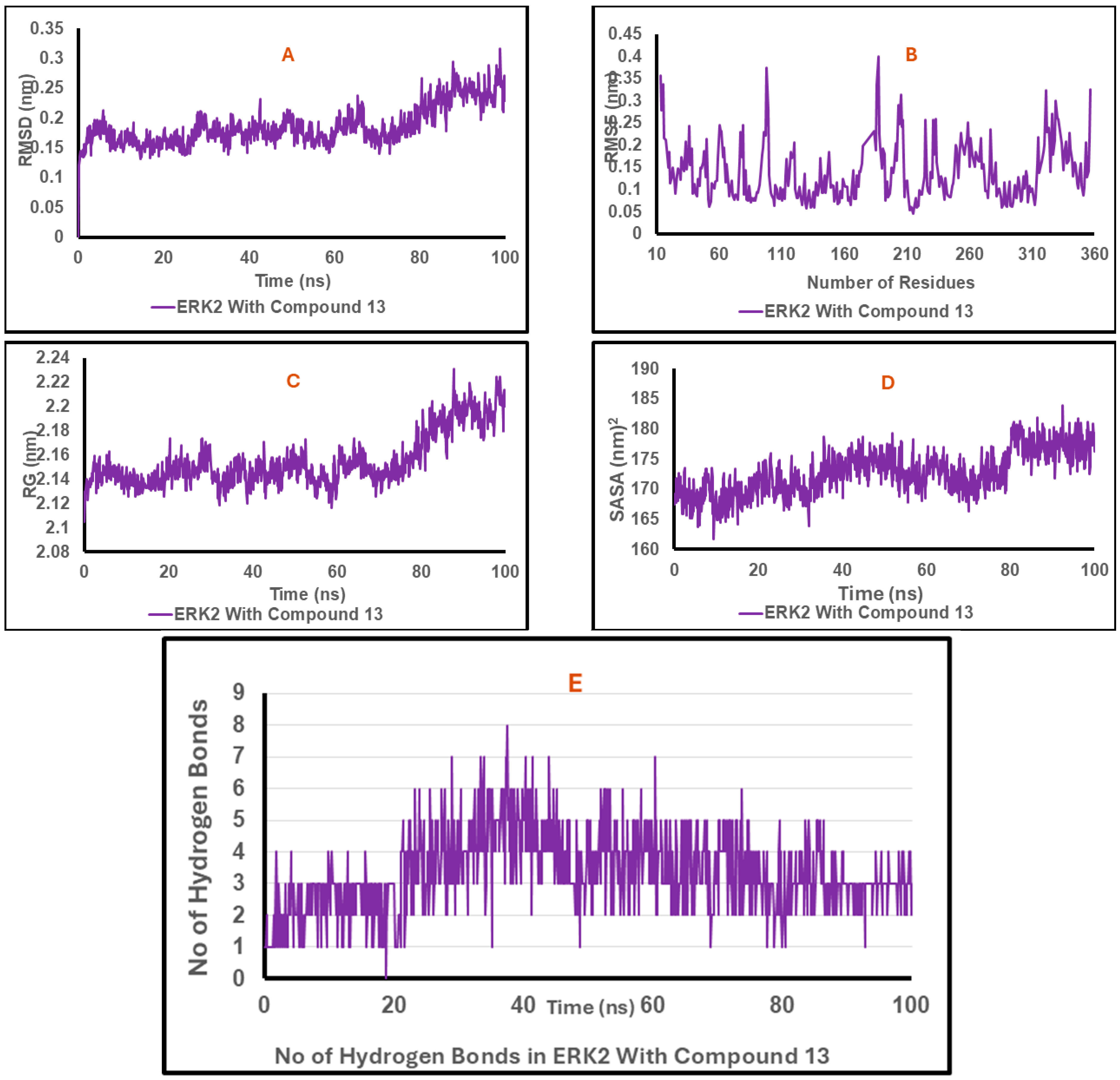
MD Simulation of the ERK2-Compound 13 Complex
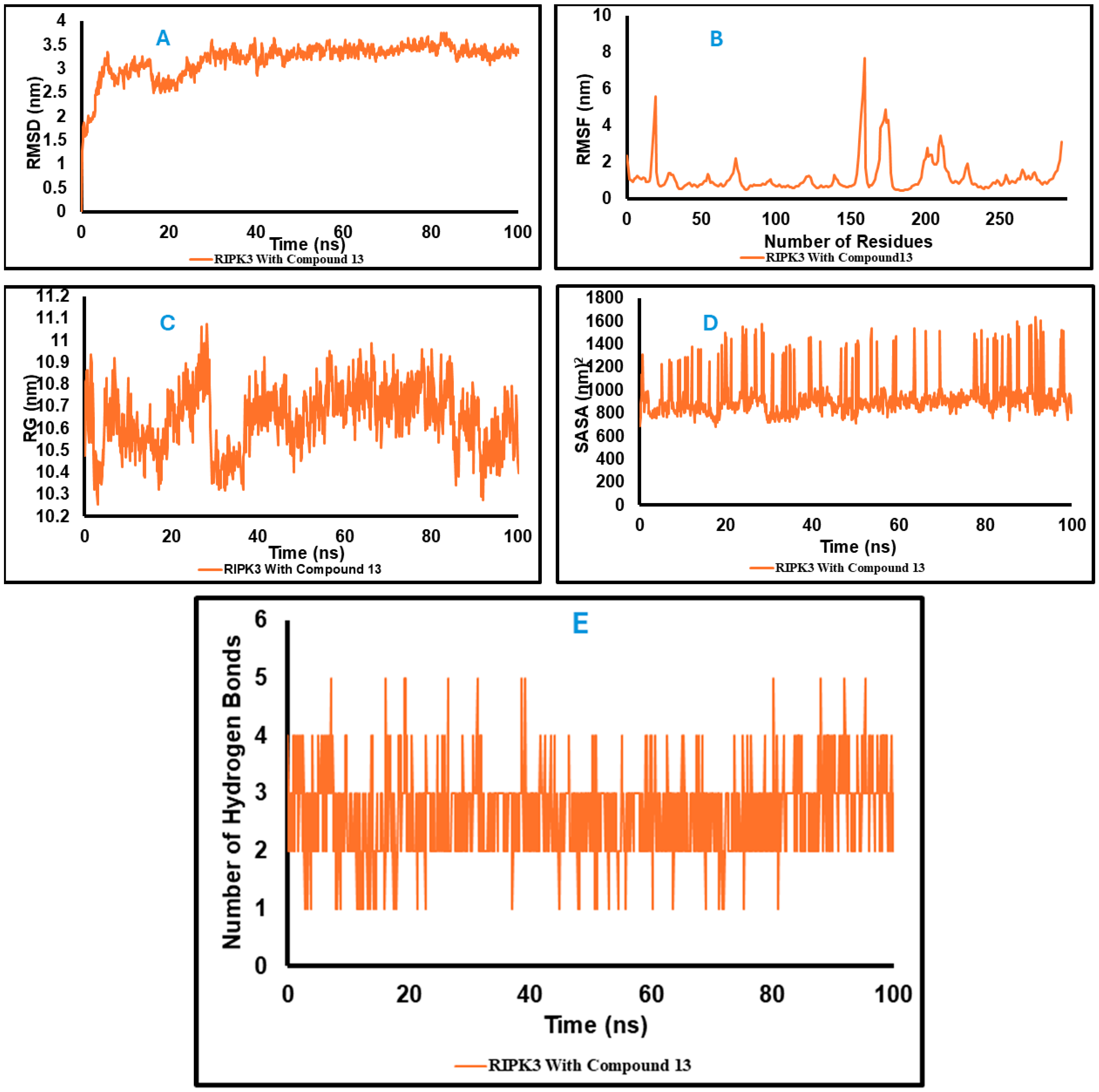
Molecular Dynamics Analysis of the RIPK3-Compound 13 Complex
Molecular Dynamics Analysis of DNA Gyrase Complexes with Compounds 13 and 7
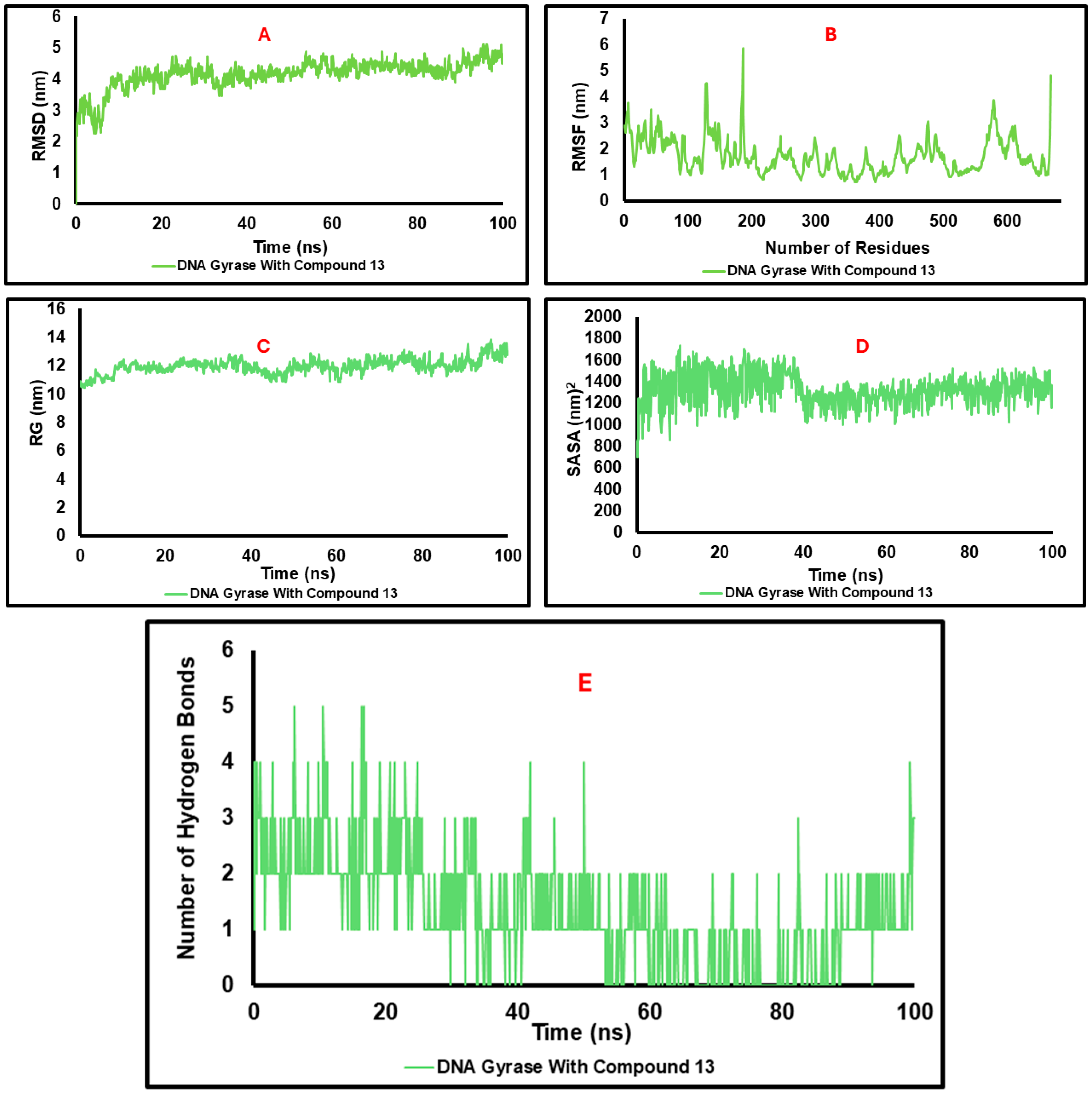
MD Simulation of the DNA Gyrase-Compound 13 Complex
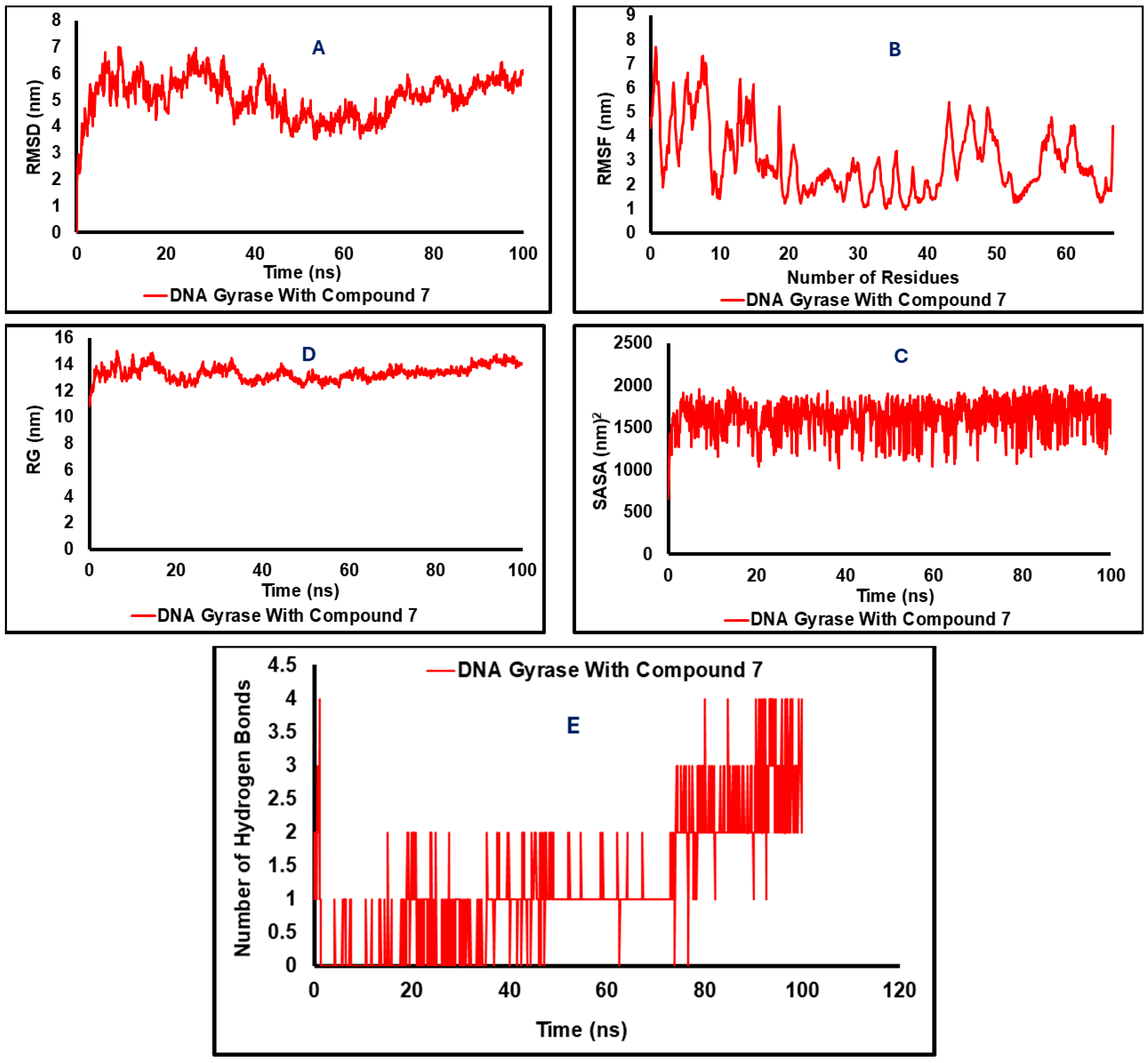
MD Simulation of the DNA Gyrase-Compound 7 Complex
2.3.3. Quantum Chemical Calculations and Electronic Analysis
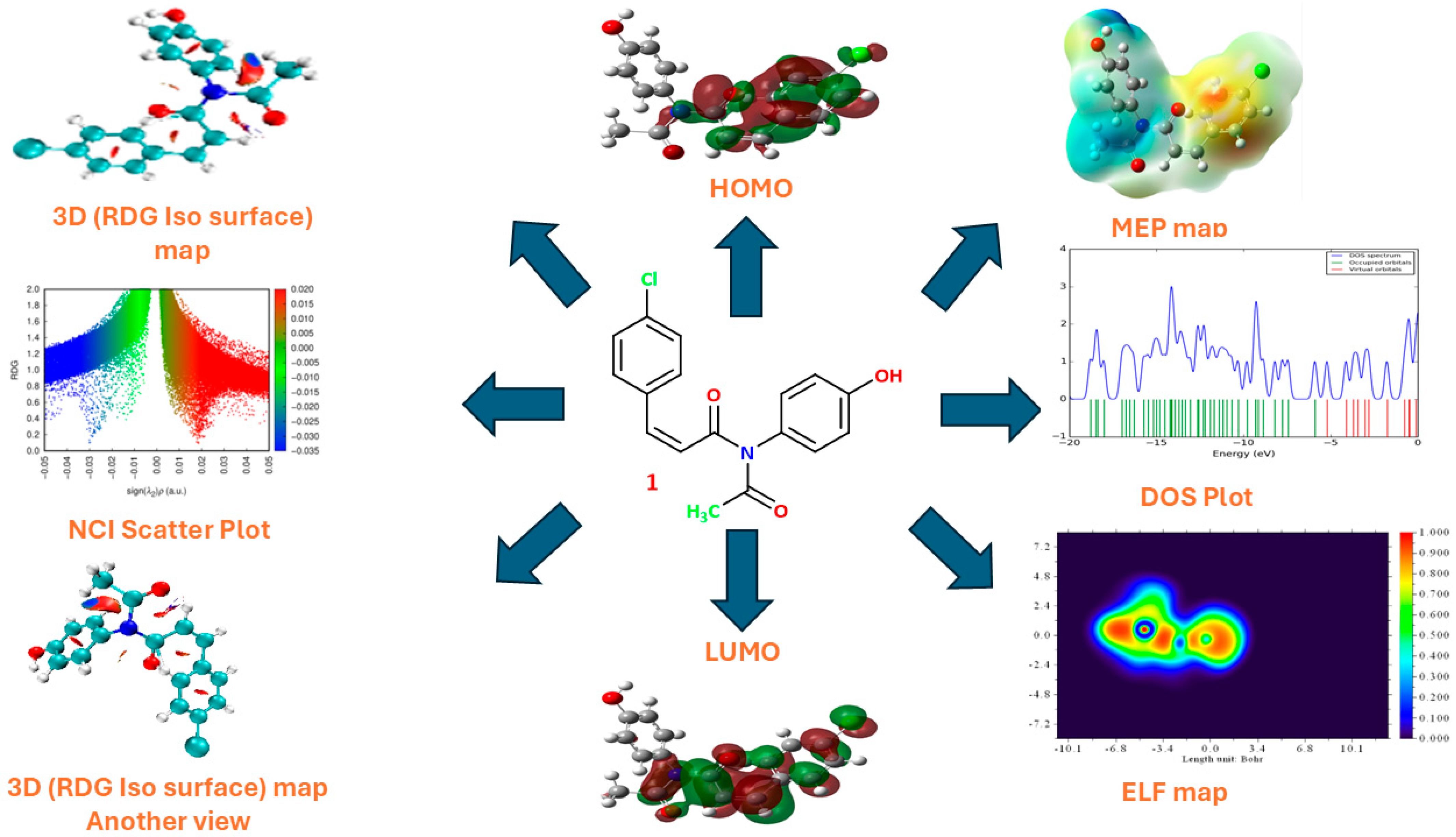
DFT Calculated Electronic and Reactivity Descriptors of Compounds 1–14
Frontier Molecular Orbital and Electronic Distribution Analysis
Non-Covalent Interaction Analysis Based on Reduced Density Gradient (NCI–RDG) Method
Quantum Rationale for the Extreme DFT Reactivity of Compound 1
Quantum Basis for the Optimized Electronic Profile and Superior Biological Activity of Compound 13
3. Experimental
3.1. Chemistry
- N-Acetyl-3-(4-chlorophenyl)-N-(4-hydroxyphenyl)acrylamide (1)
- N-[5-(4-Chlorophenyl)-1-(hydrazinecarbonothioyl)-4,5-dihydro-1H-pyrazol-3-yl)-N-(4-hydroxyphenyl]acetamide (2)
- N-[5-(4-Chlorophenyl)-1-(5-mercapto-1,3,4-thiadiazol-2-yl)-4,5-dihydro-1H-pyrazol-3-yl]-N-(4-hydroxyphenyl)acetamide (3)
- N-{{5-(4-Chlorophenyl)-1-{5-[(cyanomethyl)thio]-1,3,4-thiadiazol-2-yl}-4,5-dihydro-1H-pyrazol-3-yl}}-N-(4-hydroxyphenyl)acetamide (4)
- N-{{{1-{{5-{[(2H-Tetrazol-5-yl)methyl]thio}-1,3,4-thiadiazol-2-yl}}-5-(4-chlorophenyl)-4,5-dihydro-1H-pyrazol-3-yl}}}-N-(4-hydroxyphenyl)acetamide (5)
- N-{{5-(4-Chlorophenyl)-1-{5-[(2-hydrazinyl-2-iminoethyl)thio]-1,3,4-thiadiazol-2-yl}-4,5-dihydro-1H-pyrazol-3-yl}}-N-(4-hydroxyphenyl)acetamide (6)
- N-{{{1-{{5-{[(2-Benzoyl-2H-tetrazol-5-yl)methyl]thio}-1,3,4-thiadiazol-2-yl}}-5-(4-chlorophenyl)-4,5-dihydro-1H-pyrazol-3-yl}}}-N-(4-hydroxyphenyl)acetamide (7)
- N1-(5-(((5-(5-(4-Chlorophenyl)-3-(N-(4-hydroxyphenyl)acetamido)-4,5-dihydro-1H-pyrazol-1-yl)-1,3,4-thiadiazol-2-yl)thio)methyl)-2H-tetrazol-2-yl)succinamide (8)
- N-(5-(4-chlorophenyl)-1-(5-((2-(3,5-dioxopyrazolidin-1-yl)-2-iminoethyl)thio)-1,3,4-thiadiazol-2-yl)-4,5-dihydro-1H-pyrazol-3-yl)-N-(4-hydroxyphenyl)acetamide (9)
- N-(5-(4-Chlorophenyl)-1-(5-(((3-mercapto-1H-1,2,4-triazol-5-yl)methyl)thio)-1,3,4-thiadiazol-2-yl)-4,5-dihydro-1H-pyrazol-3-yl)-N-(4-hydroxyphenyl)acetamide (10)
- N-(1-(5-((2-((2-Chloroethyl)imino)-2-(3,5-dioxopyrazolidin-1-yl)ethyl)thio)-1,3,4-thiadiazol-2-yl)-5-(4-chlorophenyl)-4,5-dihydro-1H-pyrazol-3-yl)-N-(4-hydroxyphenyl)acetamide (11)
- N-(5-(4-Chlorophenyl)-1-(5-(((3-hydrazinyl-1H-1,2,4-triazol-5-yl)methyl)thio)-1,3,4-thiadiazol-2-yl)-4,5-dihydro-1H-pyrazol-3-yl)-N-(4-hydroxyphenyl)acetamide (12)
- S-(5-(((5-(5-(4-Chlorophenyl)-3-(N-(4-hydroxyphenyl)acetamido)-4,5-dihydro-1H-pyrazol-1-yl)-1,3,4-thiadiazol-2-yl)thio)methyl)-1H-1,2,4-triazol-3-yl) ethanethioate (13)
- S-(5-(((5-(5-(4-Chlorophenyl)-3-(N-(4-hydroxyphenyl)acetamido)-4,5-dihydro-1H-pyrazol-1-yl)-1,3,4-thiadiazol-2-yl)thio)methyl)-1H-1,2,4-triazol-3-yl) 2-chloroethanethioate (14)
3.2. Biological Activity
3.2.1. Assessment of Antiproliferative Activity
3.2.2. Effect of the 2-1H-Pyrazoline-thiadiazole-Based Derivative 13 on ERK2 and RIPK3 Activation and Necroptotic Signaling
3.2.3. Cell Cycle Perturbation and G2/M Phase Arrest of the 2-1H-Pyrazoline-thiadiazole-Based Derivative 13
3.2.4. Induction of Apoptosis by the 2-1H-Pyrazoline-thiadiazole-Based Derivative 13
3.2.5. Induction of p53 Tumor Suppressor Protein of the 2-1H-Pyrazoline-thiadiazole-Based Derivative 13
3.2.6. Modulation of Bcl-2 and BAX Expression by the 2-1H-Pyrazoline-thiadiazole-Based Derivative 13
3.2.7. Antimicrobial Efficiency
In Vitro Antibacterial Activity
Effect of 2-1H-Pyrazoline-thiadiazole-Based Analogues 7 and 13 on MRSA USA300 and Acinetobacter baumannii AB5057 Biofilm Activity
In Vivo MRSA Skin Infection Model
Assay Against S. aureus DNA Gyrase on 2-1H-Pyrazoline-thiadiazole-Based Analogues 13 and 7
3.3. Computational Studies
3.3.1. Molecular Docking Simulation
3.3.2. Molecular Dynamics Simulations
3.3.3. Quantum Chemical Calculations and Electronic Analysis
4. Conclusions
Supplementary Materials
Author Contributions
Funding
Institutional Review Board Statement
Data Availability Statement
Acknowledgments
Conflicts of Interest
References
- Kim, J.; Harper, A.; McCormack, V.; Sung, H.; Houssami, N.; Morgan, E.; Mutebi, M.; Garvey, G.; Soerjomataram, I.; Fidler-Benaoudia, M.M. Global patterns and trends in breast cancer incidence and mortality across 185 countries. Nat. Med. 2025, 31, 1154–1162. [Google Scholar] [CrossRef] [PubMed]
- Schwartz, S.M. Epidemiology of cancer. Clin. Chem. 2024, 70, 140–149. [Google Scholar] [CrossRef] [PubMed]
- Hausman, D.M. What is cancer? Perspect. Biol. Med. 2019, 62, 778–784. [Google Scholar] [CrossRef] [PubMed]
- Li, X.; Zhang, H.; Yang, H.; Song, Y.; Zhang, F.; Wang, A. Modifiable risk factors for breast cancer: Insights from systematic reviews. Public Health Nurs. 2025, 42, 1060–1071. [Google Scholar] [CrossRef] [PubMed]
- Caudeville, J. Exposure to endocrine disruptors and risk of breast cancer: A systematic review. Environ. Risques Santé 2022, 21, 80–81. [Google Scholar]
- Fiolet, T.; Srour, B.; Sellem, L.; Kesse-Guyot, E.; Allès, B.; Méjean, C.; Deschasaux, M.; Fassier, P.; Latino-Martel, P.; Beslay, M.; et al. Consumption of ultra-processed foods and cancer risk: Results from the NutriNet-Santé prospective cohort. BMJ 2018, 360, k322. [Google Scholar] [CrossRef]
- Chang, K.; Gunter, M.J.; Rauber, F.; Levy, R.B.; Huybrechts, I.; Kliemann, N.; Millett, C.; Vamos, E.P. Ultra-processed food consumption, cancer risk and cancer mortality: A large-scale prospective analysis within the UK Biobank. eClinicalMedicine 2023, 56, 101840. [Google Scholar] [CrossRef]
- Shu, L.; Zhang, X.; Zhu, Q.; Lv, X.; Si, C. Association between ultra-processed food consumption and risk of breast cancer: A systematic review and dose–response meta-analysis of observational studies. Front. Nutr. 2023, 10, 1250361. [Google Scholar] [CrossRef]
- Chen, C.J.; Wu, C.C.; Chang, C.Y.; Li, J.R.; Ou, Y.C.; Chen, W.Y.; Liao, S.L.; Wang, J.D. Metformin mitigated obesity-driven cancer aggressiveness in tumor-bearing mice. Int. J. Mol. Sci. 2022, 23, 9134. [Google Scholar] [CrossRef]
- Holohan, C.; Van Schaeybroeck, S.; Longley, D.B.; Johnston, P.G. Cancer drug resistance: An evolving paradigm. Nat. Rev. Cancer 2013, 13, 714–726. [Google Scholar] [CrossRef] [PubMed]
- Sumanasuriya, S.; De Bono, J. Treatment of advanced prostate cancer-A review. Cold Spring Harb. Perspect. Med. 2018, 8, a030635. [Google Scholar] [CrossRef] [PubMed]
- Semenas, J.; Allegrucci, C.; Boorjian, S.A.; Mongan, N.P.; Persson, J.L. Overcoming drug resistance in cancer therapy. Curr. Drug Targets 2012, 13, 1308–1323. [Google Scholar] [CrossRef]
- Iorkula, T.H.; Osayawe, O.J.-K.; Odogwu, D.A.; Ganiyu, L.O.; Faderin, E.; Awoyemi, R.F.; Akodu, B.O.; Ifijen, I.H.; Aworinde, O.R.; Agyemang, P.; et al. Advances in pyrazolo [1,5-a]pyrimidines: Synthesis and their role as protein kinase inhibitors in cancer treatment. RSC Adv. 2025, 15, 3756–3828. [Google Scholar] [CrossRef] [PubMed]
- Nitulescu, G.M.; Stancov, G.; Seremet, O.C.; Nitulescu, G.; Mihai, D.P.; Duta-Bratu, C.G.; Barbuceanu, S.F.; Olaru, O.T. The importance of the pyrazole scaffold in the design of protein kinase inhibitors as targeted anticancer therapies. Molecules 2023, 28, 5359. [Google Scholar] [CrossRef] [PubMed]
- Roskoski, R., Jr. Properties of FDA-approved small-molecule protein kinase inhibitors: A 2024 update. Pharmacol. Res. 2024, 200, 107059. [Google Scholar] [CrossRef]
- Ling, Y.; Liu, J.; Qian, J.; Meng, C.; Guo, J.; Gao, W.; Xiong, B.; Ling, C.; Zhang, Y. Recent advances in multi-target drugs targeting protein kinases and histone deacetylases in cancer therapy. Curr. Med. Chem. 2020, 27, 7264–7288. [Google Scholar] [CrossRef] [PubMed]
- Yang, J.; Nie, J.; Ma, X.; Wei, Y.; Peng, Y.; Wei, X. Targeting PI3K in cancer: Mechanisms and advances in clinical trials. Mol. Cancer 2019, 18, 26. [Google Scholar] [CrossRef]
- Hernández-Campos, A.; Velázquez-Martínez, I.; Castillo, R.; López-Vallejo, F.; Jia, P.; Yu, Y.; Giulianotti, M.A.; Medina-Franco, J.L. Docking of protein kinase B inhibitors: Implications in the structure-based optimization of a novel scaffold. Chem. Biol. Drug Des. 2010, 76, 269–276. [Google Scholar] [CrossRef]
- El-Hema, H.S.; El Fekey, H.M.; Hawata, M.A.; Hussein, M.F.; Elhendawy, A.T.; Abdel-Rahman, A.A.-H. From benzo[g]quinoline multitargeted anticancer scaffold to a potent benzo[g]pyrimido [4,5-b]quinoline lead targeting wild-type and mutant EGFR: Insights from integrated computational studies, molecular signaling modulation, and gene expression networks. J. Mol. Struct. 2026, 1359, 145461. [Google Scholar] [CrossRef]
- Manning, B.D.; Toker, A. AKT/PKB signaling: Navigating the network. Cell 2017, 169, 381–405. [Google Scholar] [CrossRef] [PubMed]
- Dhillon, A.S.; Hagan, S.; Rath, O.; Kolch, W. MAP kinase signalling pathways in cancer. Oncogene 2007, 26, 3279–3290. [Google Scholar] [CrossRef]
- Pakneshan, S.; Salajegheh, A.; Smith, R.A.; Lam, A.K.Y. Clinicopathological relevance of BRAF mutations in human cancer. Pathology 2013, 45, 346–356. [Google Scholar] [CrossRef]
- Rawlings, J.S.; Rosler, K.M.; Harrison, D.A. The JAK/STAT signaling pathway. J. Cell Sci. 2004, 117, 1281–1283. [Google Scholar] [CrossRef]
- Deng, Y.; Chan, S.S.; Chang, S. Telomere dysfunction and tumour suppression: The senescence connection. Nat. Rev. Cancer 2008, 8, 450–458. [Google Scholar] [CrossRef]
- Vališ, K.; Novák, P. Targeting ERK-Hippo interplay in cancer therapy. Int. J. Mol. Sci. 2020, 21, 3236. [Google Scholar] [CrossRef] [PubMed]
- Zhong, L.; Li, Y.; Xiong, L.; Wang, W.; Wu, M.; Yuan, T.; Yang, W.; Tian, C.; Miao, Z.; Wang, T.; et al. Small molecules in targeted cancer therapy: Advances, challenges, and future perspectives. Signal Transduct. Target. Ther. 2021, 6, 201. [Google Scholar] [CrossRef] [PubMed]
- Kohno, M.; Pouysségur, J. Targeting the ERK signaling pathway in cancer therapy. Ann. Med. 2006, 38, 200–211. [Google Scholar] [CrossRef]
- Whyte, J.; Bergin, O.; Bianchi, A.; McNally, S.; Martin, F. Mitogen-activated protein kinase signalling in experimental models of breast cancer progression and mammary gland development. Breast Cancer Res. 2009, 11, 209. [Google Scholar] [CrossRef]
- Sugiura, R.; Satoh, R.; Takasaki, T. ERK: A double-edged sword in cancer-ERK-dependent apoptosis as a potential therapeutic strategy. Cells 2021, 10, 2509. [Google Scholar] [CrossRef]
- Zhou, T.; Wang, Q.; Phan, N.; Ren, J.; Yang, H.; Feldman, C.C.; Feltenberger, J.B.; Ye, Z.; Wildman, S.A.; Tang, W.; et al. Identification of a novel class of RIP1/RIP3 dual inhibitors that impede cell death and inflammation in mouse abdominal aortic aneurysm models. Cell Death Dis. 2019, 10, 226. [Google Scholar] [CrossRef] [PubMed]
- Upton, J.W.; Kaiser, W.J.; Mocarski, E.S. DAI/ZBP1/DLM-1 complexes with RIP3 to mediate virus-induced programmed necrosis targeted by murine cytomegalovirus vIRA. Cell Host Microbe 2012, 11, 290–297. [Google Scholar] [CrossRef]
- Wang, X.; Jiang, W.; Yan, Y.; Gong, T.; Han, J.; Tian, Z.; Zhou, R. RNA viruses promote activation of the NLRP3 inflammasome through a RIP1–RIP3–DRP1 signaling pathway. Nat. Immunol. 2014, 15, 1126–1133. [Google Scholar] [CrossRef] [PubMed]
- Meng, L.; Jin, W.; Wang, X. RIP3-mediated necrotic cell death accelerates systemic inflammation and mortality. Proc. Natl. Acad. Sci. USA 2015, 112, 11007–11012. [Google Scholar] [CrossRef]
- Leng, Y.; Zhang, Y.; Li, X.; Wang, Z.; Zhuang, Q.; Lu, Y. Receptor-interacting protein kinases 1/3 as potential therapeutic targets for cardiovascular inflammatory diseases. Front. Pharmacol. 2021, 12, 762334. [Google Scholar] [CrossRef]
- Liu, Y.; Liu, T.; Lei, T.; Zhang, D.; Du, S.; Girani, L.; Qi, D.; Lin, C.; Tong, R.; Wang, Y. RIP1/RIP3-regulated necroptosis as a target for multifaceted disease therapy. Int. J. Mol. Med. 2019, 44, 771–786. [Google Scholar] [CrossRef] [PubMed]
- Mandal, P.; Berger, S.B.; Pillay, S.; Moriwaki, K.; Huang, C.; Guo, H.; Lich, J.D.; Finger, J.; Kasparcova, V.; Votta, B.; et al. RIP3 induces apoptosis independent of pronecrotic kinase activity. Mol. Cell 2014, 56, 481–495. [Google Scholar] [CrossRef] [PubMed]
- Nossier, E.S.; El-Hallouty, S.M.; Zaki, E.R. Synthesis, anticancer evaluation and molecular modeling of some substituted thiazolidinonyl and thiazolyl pyrazole derivatives. Int. J. Pharm. Pharm. Sci. 2015, 7, 353–359. [Google Scholar]
- Nossier, E.S.; Abd El-Karim, S.S.; Khalifa, N.M.; El-Sayed, A.S.; Hassan, E.S.; El-Hallouty, S.M. Kinase inhibitory activities and molecular docking of a novel series of anticancer pyrazole derivatives. Molecules 2018, 23, 3074. [Google Scholar] [CrossRef] [PubMed]
- Ismail, M.M.; Khalifa, N.M.; Fahmy, H.H.; Nossier, E.S.; Abdulla, M.M. Design, docking, and synthesis of new pyrazoline and pyranopyrazole derivatives as anti-inflammatory agents. J. Heterocycl. Chem. 2014, 51, 450–458. [Google Scholar] [CrossRef]
- Nossier, E.S.; Khalifa, N.M.; Fahmy, H.H.; Ismail, M.M.F.; El-Sahrawy, H.M.; Ali, M.M. Novel bipyrazole targeting dual CDK-2 and VEGFR-2 kinases: Synthesis, anticancer evaluation, and in silico studies. Russ. J. Bioorg. Chem. 2024, 50, 227–238. [Google Scholar] [CrossRef]
- Fahmy, H.H.; Khalifa, N.M.; Nossier, E.S.; Abdalla, M.M.; Ismail, M.M. Synthesis and anti-inflammatory evaluation of new substituted 1-(3-chlorophenyl)-3-(4-methoxyphenyl)-1H-pyrazole derivatives. Acta Pol. Pharm. Drug Res. 2012, 69, 411–421. [Google Scholar]
- Dawood, D.H.; Nossier, E.S.; Abdelhameed, M.F.; Asaad, G.F.; Abd El-Rahman, S.S. Design, synthesis, anti-inflammatory evaluation and molecular docking of novel thiophen-2-ylmethylene-based derivatives as potential TNF-α production inhibitors. Bioorg. Chem. 2022, 122, 105726. [Google Scholar] [CrossRef] [PubMed]
- Metwally, N.H.; Eldaly, S.M. Design and synthesis of new pyrazoles and chromenes as ERK2 inhibitors, apoptosis inducers and cell cycle interrupters based on a thiophene–chalcone scaffold. Chem. Select 2022, 7, e202202257. [Google Scholar]
- El-Gamal, M.I.; Choi, H.S.; Yoo, K.H.; Baek, D.; Oh, C.H. Antiproliferative diarylpyrazole derivatives as dual inhibitors of the ERK pathway and COX-2. Chem. Biol. Drug Des. 2013, 82, 336–347. [Google Scholar] [CrossRef]
- Boshta, N.M.; Temirak, A.; El-Shahid, Z.A.; Shafiq, Z.; Soliman, A.A.F. Design, synthesis, molecular docking and biological evaluation of 1,3,5-trisubstituted-1H-pyrazole derivatives as anticancer agents with cell cycle arrest and ERK and RIPK3 kinase activities. Bioorg. Chem. 2024, 143, 107058. [Google Scholar] [CrossRef]
- Martens, S.; Hofmans, S.; Declercq, W.; Augustyns, K.; Vandenabeele, P. Inhibitors targeting RIPK1/RIPK3: Old and new drugs. Trends Pharmacol. Sci. 2020, 41, 209–224. [Google Scholar] [CrossRef] [PubMed]
- Rangappa, K.S.; Lobie, P.E.; Basappa; Mohan, C.D.; Shobith, R.; Pandey, V.K.; Anusha, S.; Baburajeev, C.P. Adamantyl Tethered Thiazolyl-Pyrazolines, Methods and Applications Thereof. Indian Patent Application No. 201641024910, 26 January 2018. [Google Scholar]
- Najjar, M.; Saleh, D.; Zelic, M.; Nogusa, S.; Shah, S.; Tai, A.; Finger, J.N.; Polykratis, A.; Gough, P.J.; Bertin, J.; et al. RIPK1 and RIPK3 kinases promote cell-death–independent inflammation by Toll-like receptor 4. Immunity 2016, 45, 46–59. [Google Scholar] [CrossRef]
- Dong, X.; Liang, Q.; Pan, Y.Z.; Wang, X.; Kuo, Y.C.; Chiang, W.C.; Zhang, X.; Williams, N.S.; Rizo, J.; Levine, B.; et al. Novel Bcl-2 inhibitors selectively disrupt the autophagy-specific Bcl-2–Beclin 1 protein–protein interaction. ACS Med. Chem. Lett. 2022, 13, 1510–1516. [Google Scholar] [CrossRef]
- Temirak, A.; Soliman, A.A.F.; Shalaby, M.B.; Eshak, M.G.; Khalil, W.K.B.; Shafiq, Z.; Boshta, N.M. Targeting apoptotic pathways in cancer: Design, synthesis, and molecular docking studies of 1,3,5-trisubstituted-1H-pyrazole derivatives with Bcl-2 inhibition and DNA damage potential. RSC Adv. 2025, 15, 19204–19217. [Google Scholar] [CrossRef] [PubMed]
- Kumar, L.; Lal, K.; Kumar, A.; Paul, A.K.; Kumar, A. Pyrazoline-tethered 1,2,3-triazoles: Synthesis, antimicrobial evaluation and in silico studies. J. Mol. Struct. 2021, 1246, 131154. [Google Scholar] [CrossRef]
- Liu, J.J.; Sun, J.; Fang, Y.B.; Yang, Y.A.; Jiao, R.H.; Zhu, H.L. Synthesis and antibacterial activity of novel 4,5-dihydro-1H-pyrazole derivatives as DNA gyrase inhibitors. Org. Biomol. Chem. 2014, 12, 998–1008. [Google Scholar] [CrossRef] [PubMed]
- Mohammed, N.; Mulugeta, E.; Garg, A.; Tadesse, A. Synthesis, molecular docking studies, and evaluation of antibacterial and antioxidant activities of pyrazoline derivatives. Results Chem. 2024, 8, 101570. [Google Scholar] [CrossRef]
- Dagli, M.; Er, M.; Karakurt, T.; Onaran, A.; Alici, H.; Tahtaci, H. Synthesis, characterization, antimicrobial evaluation, and computational investigation of substituted imidazo [2,1 b][1,3,4]thiadiazole derivatives. ChemistrySelect 2020, 5, 11753–11763. [Google Scholar] [CrossRef]
- Manni, E.; Hussein, M.F.; Elkady, S.; Abdel-Rahman, A.A.-H.; Hawata, M.A.; El-Sayed, W.A.; El-Sayed, A.F.; El-Hema, H.S. From Synthesis to Mechanism: Biological Evaluation of a p-Toluidine-Based Thiazolidinone–Quinoline VEGFR-2 Candidate Supported by CADD. Int. J. Mol. Sci. 2026, 27, 3018. [Google Scholar] [CrossRef]
- Turk, S.; Karakus, S.; Maryam, A.; Oruc-Emre, E.E. Synthesis, characterization, antituberculosis activity and computational studies of novel Schiff bases of 1,3,4-thiadiazole derivatives. J. Res. Pharm. 2020, 24, 793–800. [Google Scholar] [CrossRef]
- Serban, G. Synthetic compounds with 2-amino-1,3,4-thiadiazole moiety against viral infections. Molecules 2020, 25, 942. [Google Scholar] [CrossRef]
- Cristina, A.; Leonte, D.; Vlase, L.; Bencze, L.C.; Imre, S.; Marc, G.; Apan, B.; Mogos, C.; Zaharia, V. Synthesis, characterization and biological evaluation of imidazo[2,1-b][1,3,4]thiadiazole derivatives as anti-inflammatory agents. Molecules 2018, 23, 2425. [Google Scholar] [CrossRef]
- Gür, M.; Muğlu, H.; Çavuş, M.S.; Güder, A.; Sayıner, H.S.; Kandemirli, F. Synthesis, characterization, quantum chemical calculations and evaluation of antioxidant properties of 1,3,4-thiadiazole derivatives including methoxy cinnamic acids. J. Mol. Struct. 2017, 1134, 40–50. [Google Scholar] [CrossRef]
- Weekes, C.D.; Lockhart, A.C.; LoRusso, P.M.; Murray, E.R.; Park, E.; Tagen, M.; Burris, H.A. A phase Ib study to evaluate the MEK inhibitor cobimetinib in combination with the ERK1/2 inhibitor GDC-0994 in patients with advanced solid tumors. Oncologist 2020, 25, 833–e1438. [Google Scholar] [CrossRef] [PubMed]
- Maji, A.; Begum, D.; Regula, S.; Rana, S.; Paul, A.; Shee, U.; Samanta, A.; Bhagat, R.P.; Mukhopadhyay, C.; Ghosh, B.; et al. Synthesis, XRD-SC study and antiproliferative, apoptotic and anti-angiogenic potency of 1,3,4-thiadiazole and 1,3-thiazolidine-4-one scaffold-based hybrid compounds (Part II): In vitro cell-based anticancer studies. J. Mol. Struct. 2025, 1350, 143999. [Google Scholar] [CrossRef]
- Elgammal, W.E.; Elkady, H.; Mahdy, H.A.; Elwan, A.; Husein, D.Z.; Amin, F.G.; Alsfouk, B.A.; Elkaeed, E.B.; Eissa, I.H.; Metwaly, A.M. 2,3-Dihydro-1,3,4-thiadiazoles as dual B-Raf/VEGFR-2 inhibitors: Design, synthesis, and anti-breast cancer assessment. J. Mol. Struct. 2025, 1354, 144717. [Google Scholar] [CrossRef]
- Sidiq, M.K.; Salih, T.M.; Hasan, A.H. Rational design, synthesis, and antibacterial evaluation of novel coumarin–1,3,4-thiadiazole Schiff base hybrids against multidrug-resistant bacteria: In vitro, in silico and DFT studies. J. Mol. Struct. 2025, 1349, 143828. [Google Scholar] [CrossRef]
- Thanh, N.D.; Toan, V.N.; Giang, N.T.K.; Van, H.T.K.; Hai, D.S.; Tri, N.M.; Toan, D.N. Synthesis, biological and molecular modelling of 1,3,4-thiadiazole sulfonyl thioureas with antibacterial and antifungal activity. RSC Med. Chem. 2023, 14, 2751–2767. [Google Scholar] [CrossRef]
- El-Hema, H.S.; Soliman, S.M.; El-Dougdoug, W.; Ahmed, M.H.; Abdelmajeid, A.; Nossier, E.S.; Abdel-Rahman, A.A.-H. Design, characterization, antimicrobial activity, and in silico studies of theinothiazoloquinazoline derivatives bearing thiazinone, tetrazole, and triazole moieties. ACS Omega 2025, 10, 9703–9717. [Google Scholar] [CrossRef]
- Alam, M.A. Antibacterial pyrazoles: Tackling resistant bacteria. Future Med. Chem. 2022, 14, 343–362. [Google Scholar] [CrossRef] [PubMed]
- Mansour, B.; El-Sherbeny, M.A.; Al-Omary, F.A.; Saber, S.; Ramadan, H.A.; El-Baz, A.M.; Abdel-Aziz, N.I. New pyrazole-clubbed pyrimidine or pyrazoline hybrids as anti-methicillin-resistant Staphylococcus aureus agents: Design, synthesis, in vitro and in vivo evaluation, and molecular modeling simulation. ACS Omega 2023, 8, 44250–44264. [Google Scholar] [CrossRef] [PubMed]
- Verma, R.; Verma, S.K.; Rakesh, K.P.; Girish, Y.R.; Ashrafizadeh, M.; Sharath Kumar, K.S.; Rangappa, K.S. Pyrazole-based analogs as potential antibacterial agents against methicillin-resistant Staphylococcus aureus (MRSA) and SAR elucidation. Eur. J. Med. Chem. 2021, 212, 113134. [Google Scholar] [CrossRef]
- Nowakowska, Z. A review of anti-infective and anti-inflammatory chalcones. Eur. J. Med. Chem. 2007, 42, 125–137. [Google Scholar] [CrossRef]
- Amr, A.E.G.E.; Mageid, R.E.A.; El-Naggar, M.; Naglah, A.M.; Nossier, E.S.; Elsayed, E.A. Chiral pyridine-3,5-bis-(L-phenylalaninyl-L-leucinyl) Schiff base peptides as potential anticancer agents: Design, synthesis, and molecular docking studies targeting lactate dehydrogenase-A. Molecules 2020, 25, 1096. [Google Scholar] [CrossRef] [PubMed]
- Kassem, A.F.; Omar, M.A.; Nossier, E.S.; Awad, H.M.; El-Sayed, W.A. Novel pyridine–thiazolidinone–triazole hybrid glycosides targeting EGFR and CDK-2: Design, synthesis, anticancer evaluation, and molecular docking simulation. J. Mol. Struct. 2023, 1294, 136358. [Google Scholar] [CrossRef]
- Soliman, S.M.; Abdel-Rahman, A.A.-H.; Nossier, E.S.; Hussein, M.F.; Sabry, A.; El-Hema, H.S. Design, antiproliferative potency, and in silico studies of novel 5-(methylfuran-3-yl)thio-3-phenylquinazolin-4(3H)-one derivatives as potential EGFR inhibitors. Sci. Rep. 2025, 15, 27992. [Google Scholar] [CrossRef]
- El-Hema, H.S.; Shehata, H.E.; Hawata, M.A.; Nossier, E.S.; El-Sayed, A.F.; Altwaijry, N.A.; Abdel-Rahman, A.A.-H. Innovative amino-functionalization of pyrido [2,3-d]pyrimidine scaffolds for broad therapeutic applications supported by computational analyses. Pharmaceuticals 2025, 18, 1472. [Google Scholar] [CrossRef] [PubMed]
- El-Hema, H.S.; Mady, M.F.; Adel, A.A.-H.; Nossier, E.S.; El-Sayed, A.F.; Sabry, A.; Hawata, M.A. Novel pyrimidopyridothiazine-based derivatives as potential anticancer and antibacterial agents: A step toward the design and synthesis of multi-targeted therapeutics. J. Mol. Struct. 2026, 1349, 143790. [Google Scholar] [CrossRef]
- El-Hema, H.S.; El-Shazly, H.A.; Hawata, M.A.; Yousif, N.M.; Hussein, M.F.; Said, M.A.; Abdel-Rahman, A.A.-H. Expanding the chemical and therapeutic landscape of 5H-indeno [1,2-b]pyridin-5-one derivatives: Novel anticancer activity, EGFR inhibition, and modulation of HIF VEGF and PI3K/AKT/mTOR pathways supported by computational insights. Bioorg. Chem. 2026, 170, 109476. [Google Scholar] [CrossRef]
- Alamshany, Z.M.; Algamdi, E.M.; Othman, I.M.; Anwar, M.M.; Nossier, E.S. New pyrazolopyridine- and pyrazolothiazole-based compounds as antiproliferative agents targeting c-Met kinase inhibition: Design, synthesis, biological evaluation, and computational studies. RSC Adv. 2023, 13, 12889–12905. [Google Scholar] [CrossRef] [PubMed]
- Mohi El-Deen, E.M.; Nossier, E.S.; Karam, E.A. New quinazolin-4(3H)-one derivatives incorporating hydrazone and pyrazole scaffolds as antimicrobial agents targeting DNA gyrase enzyme. Sci. Pharm. 2022, 90, 52. [Google Scholar] [CrossRef]
- Alamshany, Z.M.; Tashkandi, N.Y.; Othman, I.M.; Anwar, M.M.; Nossier, E.S. New thiophene-, thienopyridine- and thiazoline-based derivatives: Design, synthesis and biological evaluation as antiproliferative agents and multitargeting kinase inhibitors. Bioorg. Chem. 2022, 127, 105964. [Google Scholar] [CrossRef] [PubMed]
- El-Hema, H.S.; El Fekey, H.M.; Abdel-Rahman, A.A.-H.; Morsy, A.R.I.; Radwan, A.A.; Nossier, E.S.; Alshabani, L.A.; Saleh, A.; Hussein, M.F.; Hawata, M.A. Design and Multi-Level Biological Evaluation of Naphthyridine-Based Derivatives as Topoisomerase I/II-Targeted Anticancer Agents with Anti-Fowlpox Virus Activity Supported by In Silico Analysis. Int. J. Mol. Sci. 2026, 27, 2445. [Google Scholar] [CrossRef] [PubMed]
- Burdick, D.J.; Wang, S.; Heise, C.; Pan, B.; Drummond, J.; Yin, J.; Goeser, L.; Magnuson, S.; Blaney, J.; Moffat, J.; et al. Fragment-based discovery of potent ERK2 pyrrolopyrazine inhibitors. Bioorg. Med. Chem. Lett. 2015, 25, 4728–4732. [Google Scholar] [CrossRef]
- Meng, Y.; Davies, K.A.; Fitzgibbon, C.; Young, S.N.; Garnish, S.E.; Horne, C.R.; Luo, C.; Garnier, J.M.; Liang, L.Y.; Cowan, A.D.; et al. Human RIPK3 maintains MLKL in an inactive conformation prior to cell death by necroptosis. Nat. Commun. 2021, 12, 6783. [Google Scholar] [CrossRef] [PubMed]
- Alsfouk, A.A.; Othman, I.M.; Nasr, H.M.; Ishak, E.A.; Saleh, A.; Nossier, E.S. Synthesis, Characterization, Computational Studies and In Vitro Biological Effects of Novel Pyrazoles, Pyridazines, Thiazoles Containing a Quinazoline Scaffold. ChemistrySelect 2025, 10, e01583. [Google Scholar] [CrossRef]
- Denizot, F.; Lang, R. Rapid colorimetric assay for cell growth and survival: Modifications to the tetrazolium dye procedure giving improved sensitivity and reliability. J. Immunol. Methods 1986, 89, 271–277. [Google Scholar] [CrossRef]
- Scudiero, D.A.; Shoemaker, R.H.; Paull, K.D.; Monks, A.; Tierney, S.; Nofziger, T.H.; Boyd, M.R. Evaluation of a soluble tetrazolium/formazan assay for cell growth and drug sensitivity in culture. Cancer Res. 1988, 48, 4827–4833. [Google Scholar]
- Freshney, R.I. Culture of Animal Cells: A Manual of Basic Technique and Specialized Applications; John Wiley & Sons: New York, NY, USA, 2015. [Google Scholar]
- Mosmann, T. Rapid colorimetric assay for cellular growth and survival: Application to proliferation and cytotoxicity assays. J. Immunol. Methods 1983, 65, 55–63. [Google Scholar] [CrossRef] [PubMed]
- Modather, F.H.; Said, M.A.; Abuessawy, A.; Alsahli, S.A.; Al-Sirhani, A.M.; Manni, E.; El-Hema, H.S. Thienyl-based pyrimidine hybrids as multi-target anticancer agents: Design, synthesis, and integrated experimental–computational insights into CDK4 inhibition and apoptosis. J. Mol. Struct. 2026, 1361, 145685. [Google Scholar] [CrossRef]
- Favata, M.F.; Horiuchi, K.Y.; Manos, E.J.; Daulerio, A.J.; Stradley, D.A.; Feeser, W.S.; Van Dyk, D.E.; Pitts, W.J.; Earl, R.A.; Hobbs, F.; et al. Identification of a novel inhibitor of mitogen-activated protein kinase kinase. J. Biol. Chem. 1998, 273, 18623–18632. [Google Scholar] [CrossRef] [PubMed]
- Sun, L.; Wang, H.; Wang, Z.; He, S.; Chen, S.; Liao, D.; Wang, L.; Yan, J.; Liu, W.; Lei, X.; et al. Mixed lineage kinase domain-like protein mediates necrosis signaling downstream of RIP3 kinase. Cell 2012, 148, 213–227. [Google Scholar] [CrossRef]
- Wang, L.; Xu, Y.; Gao, C. Anti-cancer mechanisms of HDAC inhibitors in tamoxifen-resistant breast cancer. Iran J. Basic Med. Sci. 2024, 27(6), 775. [Google Scholar]
- Pfeffer, C.M.; Singh, A.T.K. Apoptosis as a target for anticancer therapy. Int. J. Mol. Sci. 2018, 19, 448. [Google Scholar] [CrossRef]
- Levine, A.J.; Oren, M. The first 30 years of p53: Growing ever more complex. Nat. Rev. Cancer 2009, 9, 749–758. [Google Scholar] [CrossRef]
- Vousden, K.H.; Prives, C. Blinded by the light: The growing complexity of p53. Cell 2009, 137, 413–431. [Google Scholar] [CrossRef]
- Cory, S.; Adams, J.M. The Bcl-2 family: Regulators of the cellular life-or-death switch. Nat. Rev. Cancer 2002, 2, 647–656. [Google Scholar] [CrossRef]
- Oltval, Z.N.; Milliman, C.L.; Korsmeyer, S.J. Bcl-2 heterodimerizes in vivo with Bax to accelerate programmed cell death. Cell 1993, 74, 609–619. [Google Scholar] [CrossRef] [PubMed]
- Salem, M.A.; Oren, M. Investigation of the phytochemical composition, antioxidant, antibacterial, anti-osteoarthritis, and wound healing activities of selected vegetable waste. Sci. Rep. 2023, 13, 13034. [Google Scholar] [CrossRef] [PubMed]
- Sedeek, M.S.; Prives, C. Unveiling antimicrobial and antioxidant compositional differences between Dukkah and Za’atar. Molecules 2022, 27, 6471. [Google Scholar] [CrossRef] [PubMed]
- Humphries, R.M.; Adams, J.M. CLSI best practices for evaluation of antimicrobial susceptibility tests. J. Clin. Microbiol. 2018, 56, e01934-17. [Google Scholar] [CrossRef] [PubMed]
- Ali, N.B.; El-Shiekh, R.A.; Ashour, R.M.; El-Gayed, S.H.; Abdel-Sattar, E.; Hassan, M. In vitro and in vivo antibiofilm activity of red onion scales. Molecules 2023, 28, 355. [Google Scholar] [CrossRef] [PubMed]
- Albash, R.; Abdellatif, M.; Hassan, M.; Badawi, N. Tailoring terpesomes and leciplex for ocular conveyance of moxifloxacin hydrochloride. Int. J. Nanomed. 2021, 16, 5247–5263. [Google Scholar] [CrossRef]
- Ismail, M.M.; Hassan, M.; Moawad, S.S.; Okba, M.M.; Ashour, R.M.; Fayek, N.M.; Saber, F.R. Exploring the antivirulence activity of pulverulentone A against multidrug-resistant Pseudomonas aeruginosa. Antibiotics 2021, 10, 907. [Google Scholar] [CrossRef] [PubMed]
- Elmahboub, Y.; Albash, R.; Agiba, A.M.; Hassan, M.; Mohamed, H.W.; Hassan, M.S.; Ali, R.M.; Shalabi, Y.E.; Omran, H.M.A.; Alaa-Eldin, A.A.; et al. Overcoming MRSA antibiotic resistance through losartan repurposing with carbon dot–conjugated cerosomal nanocarriers. Pharmaceutics 2025, 17, 1483. [Google Scholar] [CrossRef]
- Mouhram, N.A.; Mosallam, S.; Hassan, M.; El-Gazar, A.A.; El-Nabarawi, M.A.; Fayez, S.M. Tailoring moxifloxacin hydrochloride loaded oleic acid liposomes for MRSA-induced skin infection. Int. J. Pharm. 2025, 670, 125115. [Google Scholar] [CrossRef]
- Inspiralis Ltd. DNA Gyrase Supercoiling Assay Kit; Inspiralis Ltd.: Norwich, UK; Available online: https://www.inspiralis.com/ (accessed on 18 March 2026).
- Roskoski, R., Jr. ERK1/2 MAP kinases: Structure, function, and regulation. Pharmacol. Res. 2012, 66, 105–143. [Google Scholar] [CrossRef]
- Newton, K.; Manning, G. Necroptosis and inflammation. Annu. Rev. Biochem. 2016, 85, 743–763. [Google Scholar] [CrossRef] [PubMed]
- Bax, B.D.; Chan, P.F.; Eggleston, D.S.; Fosberry, A.; Gentry, D.R.; Gorrec, F.; Gwynn, M.N. Type IIA topoisomerase inhibition by a new class of antibacterial agents. Nature 2010, 466, 935–940. [Google Scholar] [CrossRef]
- Pronk, S.; Páll, S.; Schulz, R.; Larsson, P.; Bjelkmar, P.; Apostolov, R.; Shirts, M.R.; Smith, J.C.; Kasson, P.M.; Van Der Spoel, D.; et al. GROMACS 4.5: A high-throughput and highly parallel open-source molecular simulation toolkit. Bioinformatics 2013, 29, 845–854. [Google Scholar] [CrossRef] [PubMed]
- Huang, J.; MacKerell, A.D., Jr. CHARMM36 all-atom additive protein force field: Validation based on comparison to NMR data. J. Comput. Chem. 2013, 34, 2135–2145. [Google Scholar] [CrossRef] [PubMed]
- Lee, J.; Cheng, X.; Jo, S.; MacKerell, A.D.; Klauda, J.B.; Im, W. CHARMM-GUI input generator for NAMD, GROMACS, AMBER, OpenMM, and CHARMM/OpenMM simulations using the CHARMM36 additive force field. Biophys. J. 2016, 110, 641a. [Google Scholar] [CrossRef]
- Frisch, M.J.; Trucks, G.W.; Schlegel, H.B.; Scuseria, G.E.; Robb, M.A.; Cheeseman, J.R.; Scalmani, G.; Barone, V.; Mennucci, B.; Petersson, G.A. Gaussian 09; Revision D.01; Gaussian Inc.: Wallingford, CT, USA, 2009. [Google Scholar]
- Becke, A.D. Density-functional thermochemistry. III. The role of exact exchange. J. Chem. Phys. 1993, 98, 5648–5652. [Google Scholar] [CrossRef]
- Lee, C.; Yang, W.; Parr, R.G. Development of the Colle–Salvetti correlation-energy formula into a functional of the electron density. Phys. Rev. B 1988, 37, 785–790. [Google Scholar] [CrossRef]








| Comp. | In Vitro Cytotoxicity IC50 (µM) | |||
|---|---|---|---|---|
| WI-38 | Hela | HePG-2 | MCF-7 | |
| Doxorubicin | 6.72 ± 0.5 | 5.57 ± 0.4 | 4.50 ± 0.2 | 4.17 ± 0.2 |
| Sorafenib | 10.65 ± 0.8 | 8.04 ± 0.5 | 9.18 ± 0.6 | 7.26 ± 0.3 |
| 1 | 39.84 ± 2.4 | 9.74 ± 0.8 | 8.61 ± 0.6 | 11.62 ± 0.9 |
| 2 | 65.29 ± 3.7 | 40.91 ± 2.5 | 34.81 ± 2.2 | 28.67 ± 1.9 |
| 3 | 45.69 ± 2.7 | >100 | 80.53 ± 4.0 | 75.17 ± 3.8 |
| 4 | 55.13 ± 3.2 | 16.30 ± 1.2 | 12.71 ± 1.0 | 6.15 ± 0.4 |
| 5 | >100 | 73.10 ± 3.9 | 63.64 ± 3.5 | 53.37 ± 3.1 |
| 6 | 27.75 ± 1.8 | 61.86 ± 3.5 | 51.48 ± 2.9 | 47.38 ± 2.7 |
| 7 | 58.60 ± 3.5 | 22.35 ± 1.6 | 18.13 ± 1.4 | 15.56 ± 1.3 |
| 8 | 35.04 ± 2.3 | 91.48 ± 4.6 | 84.11 ± 4.3 | 66.23 ± 3.5 |
| 9 | 82.27 ± 4.2 | 44.30 ± 2.7 | 57.21 ± 3.3 | 32.77 ± 2.1 |
| 10 | >100 | 68.07 ± 3.7 | 76.29 ± 3.8 | 59.75 ± 3.3 |
| 11 | 17.88 ± 1.4 | 52.36 ± 3.1 | 42.15 ± 2.6 | 38.65 ± 2.4 |
| 12 | 78.55 ± 3.9 | 36.26 ± 2.3 | 21.46 ± 1.6 | 23.12 ± 1.7 |
| 13 | 41.42 ± 2.6 | 7.81 ± 0.6 | 5.06 ± 0.3 | 3.87 ± 0.2 |
| 14 | 60.58 ± 3.6 | 31.97 ± 1.9 | 29.70 ± 1.8 | 19.50 ± 1.5 |
| Compd. No. | MRSA USA300 (Gram +) | A. baumannii AB5057 (Gram −) |
|---|---|---|
| 7 | 10 mg/mL (15.325 μM) | 10 mg/mL (15.325 μM) |
| 13 | 10 mg/mL (16.6254 μM) | 10 mg/mL (16.6254 μM) |
| Compound | IC50 (µM) |
|---|---|
| 13 | 17.10 ± 0.17 |
| 7 | 21.85 ± 0.19 |
| Ciprofloxacin | 19.30 ± 0.72 |
| Cpd. | LUMO | HOMO | ΔE | A | I | X | η | S or σ | ω | ΔN max | ΔN |
|---|---|---|---|---|---|---|---|---|---|---|---|
| 1 | −0.1914 | −0.21702 | 0.02562 | 0.1914 | 0.21702 | 0.20421 | 0.01281 | 78.06401 | 3.255404 | 7.970726 | 265.2533 |
| 2 | −0.15438 | −0.24586 | 0.09148 | 0.15438 | 0.24586 | 0.20012 | 0.04574 | 21.8627 | 0.875558 | 2.187582 | 74.33188 |
| 3 | −0.15018 | −0.23986 | 0.08968 | 0.15018 | 0.23986 | 0.19502 | 0.04484 | 22.30152 | 0.848189 | 2.174621 | 75.88069 |
| 4 | −0.14888 | −0.22895 | 0.08007 | 0.14888 | 0.22895 | 0.188915 | 0.040035 | 24.97814 | 0.891442 | 2.359373 | 85.06413 |
| 5 | −0.15025 | −0.23013 | 0.07988 | 0.15025 | 0.23013 | 0.19019 | 0.03994 | 25.03756 | 0.905664 | 2.380946 | 85.2505 |
| 6 | −0.14968 | −0.19984 | 0.05016 | 0.14968 | 0.19984 | 0.17476 | 0.02508 | 39.87241 | 1.217746 | 3.484051 | 136.0694 |
| 7 | −0.17313 | −0.22975 | 0.05662 | 0.17313 | 0.22975 | 0.20144 | 0.02831 | 35.32321 | 1.433348 | 3.557753 | 120.0735 |
| 8 | −0.14998 | −0.23019 | 0.08021 | 0.14998 | 0.23019 | 0.190085 | 0.040105 | 24.93455 | 0.900943 | 2.369842 | 84.90107 |
| 9 | −0.15046 | −0.23025 | 0.07979 | 0.15046 | 0.23025 | 0.190355 | 0.039895 | 25.0658 | 0.90826 | 2.3857 | 85.34459 |
| 10 | −0.15166 | −0.19461 | 0.04295 | 0.15166 | 0.19461 | 0.173135 | 0.021475 | 46.56577 | 1.395843 | 4.031083 | 158.9491 |
| 11 | −0.15033 | −0.22997 | 0.07964 | 0.15033 | 0.22997 | 0.19015 | 0.03982 | 25.11301 | 0.908012 | 2.387619 | 85.50791 |
| 12 | −0.15161 | −0.18583 | 0.03422 | 0.15161 | 0.18583 | 0.16872 | 0.01711 | 58.44535 | 1.663731 | 4.93045 | 199.6283 |
| 13 | −0.1498 | −0.21376 | 0.06396 | 0.1498 | 0.21376 | 0.18178 | 0.03198 | 31.26954 | 1.03327 | 2.842089 | 106.6013 |
| 14 | −0.15018 | −0.22858 | 0.0784 | 0.15018 | 0.22858 | 0.18938 | 0.0392 | 25.5102 | 0.914918 | 2.415561 | 86.87015 |
Disclaimer/Publisher’s Note: The statements, opinions and data contained in all publications are solely those of the individual author(s) and contributor(s) and not of MDPI and/or the editor(s). MDPI and/or the editor(s) disclaim responsibility for any injury to people or property resulting from any ideas, methods, instructions or products referred to in the content. |
© 2026 by the authors. Licensee MDPI, Basel, Switzerland. This article is an open access article distributed under the terms and conditions of the Creative Commons Attribution (CC BY) license.
Share and Cite
El-Hema, H.S.; Abed, M.A.; Hawata, M.A.; Nossier, E.S.; Altwaijry, N.A.; Saleh, A.; Hassan, M.; Hashem, R.A.; Hussein, M.F.; Elhendawy, A.T.; et al. A Multi-Target Nitrogen-Fused Azole Drug Platform Derived from a Pyrazoline-Thiadiazole Moiety: In Vivo Antimicrobial Validation and Comprehensive Anticancer Investigation Supported by Computational Studies. Pharmaceutics 2026, 18, 424. https://doi.org/10.3390/pharmaceutics18040424
El-Hema HS, Abed MA, Hawata MA, Nossier ES, Altwaijry NA, Saleh A, Hassan M, Hashem RA, Hussein MF, Elhendawy AT, et al. A Multi-Target Nitrogen-Fused Azole Drug Platform Derived from a Pyrazoline-Thiadiazole Moiety: In Vivo Antimicrobial Validation and Comprehensive Anticancer Investigation Supported by Computational Studies. Pharmaceutics. 2026; 18(4):424. https://doi.org/10.3390/pharmaceutics18040424
Chicago/Turabian StyleEl-Hema, Hagar S., Marwa A. Abed, Mohamed A. Hawata, Eman S. Nossier, Najla A. Altwaijry, Asmaa Saleh, Mariam Hassan, Rasha A. Hashem, Modather F. Hussein, Ahmed T. Elhendawy, and et al. 2026. "A Multi-Target Nitrogen-Fused Azole Drug Platform Derived from a Pyrazoline-Thiadiazole Moiety: In Vivo Antimicrobial Validation and Comprehensive Anticancer Investigation Supported by Computational Studies" Pharmaceutics 18, no. 4: 424. https://doi.org/10.3390/pharmaceutics18040424
APA StyleEl-Hema, H. S., Abed, M. A., Hawata, M. A., Nossier, E. S., Altwaijry, N. A., Saleh, A., Hassan, M., Hashem, R. A., Hussein, M. F., Elhendawy, A. T., & Abdel-Rahman, A. A.-H. (2026). A Multi-Target Nitrogen-Fused Azole Drug Platform Derived from a Pyrazoline-Thiadiazole Moiety: In Vivo Antimicrobial Validation and Comprehensive Anticancer Investigation Supported by Computational Studies. Pharmaceutics, 18(4), 424. https://doi.org/10.3390/pharmaceutics18040424