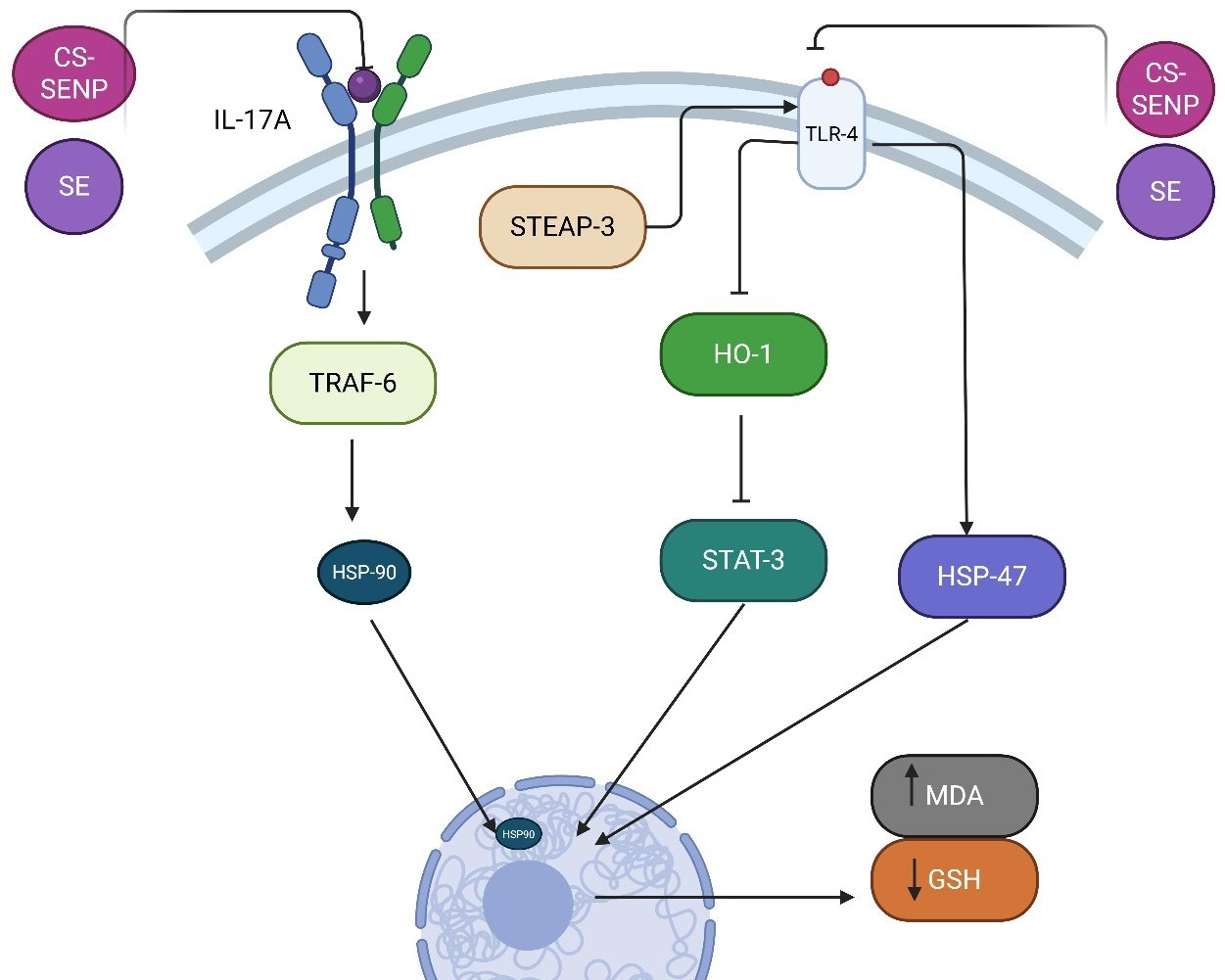
Mechanistic Modulation of Lipopolysaccharide-Induced Hepatic Injury by Chitosan-Coated Selenium Nanoparticles: Targeting the STEAP-3/TLR-4 and IL-17/TRAF-6/HSP-90 Axes

 ,
,  ,
,
Abstract
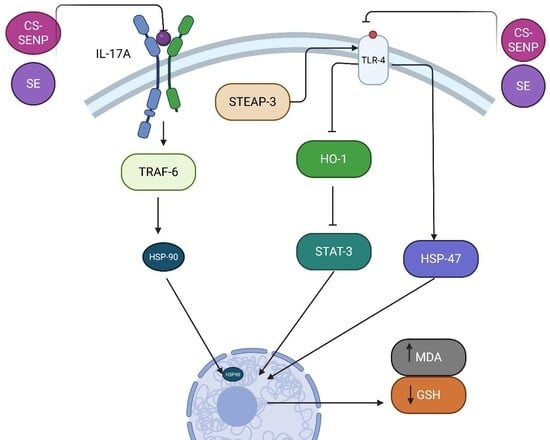
1. Introduction
2. Materials and Methods
2.1. Materials
2.2. Chitosan-Coated Selenium Nanoparticle Preparation
2.3. Particle Size, Polydispersity Index Determination, and Zeta Potential
2.4. Transmission Electron Microscopy
2.5. Fourier-Transform Infrared Spectroscopy
2.6. Experimental Design
2.7. Collection of Blood Samples and Liver Tissues
2.8. Histopathological Examination
2.9. Biochemical Analysis
2.9.1. Assessment of Oxidative Stress Markers
2.9.2. ELISA Assessment for HSP-47 and STEAP-3
2.9.3. Immunohistochemical Detection of HO-1, TLR-4, STAT-3, TRAF-6, and IL-17A
2.9.4. Immunofluorescence Staining of HSP-90
2.10. Statistical Analysis
3. Results
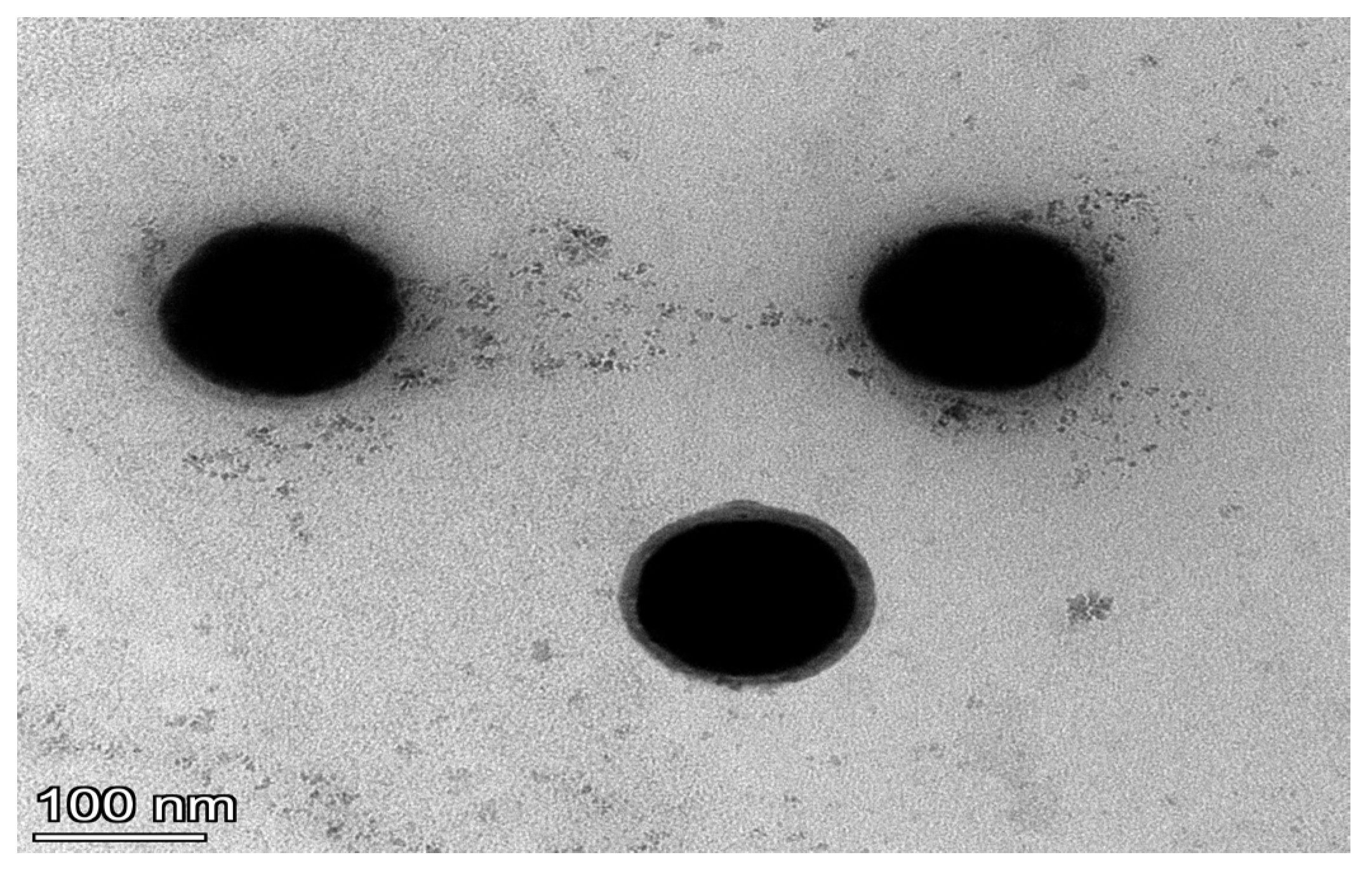
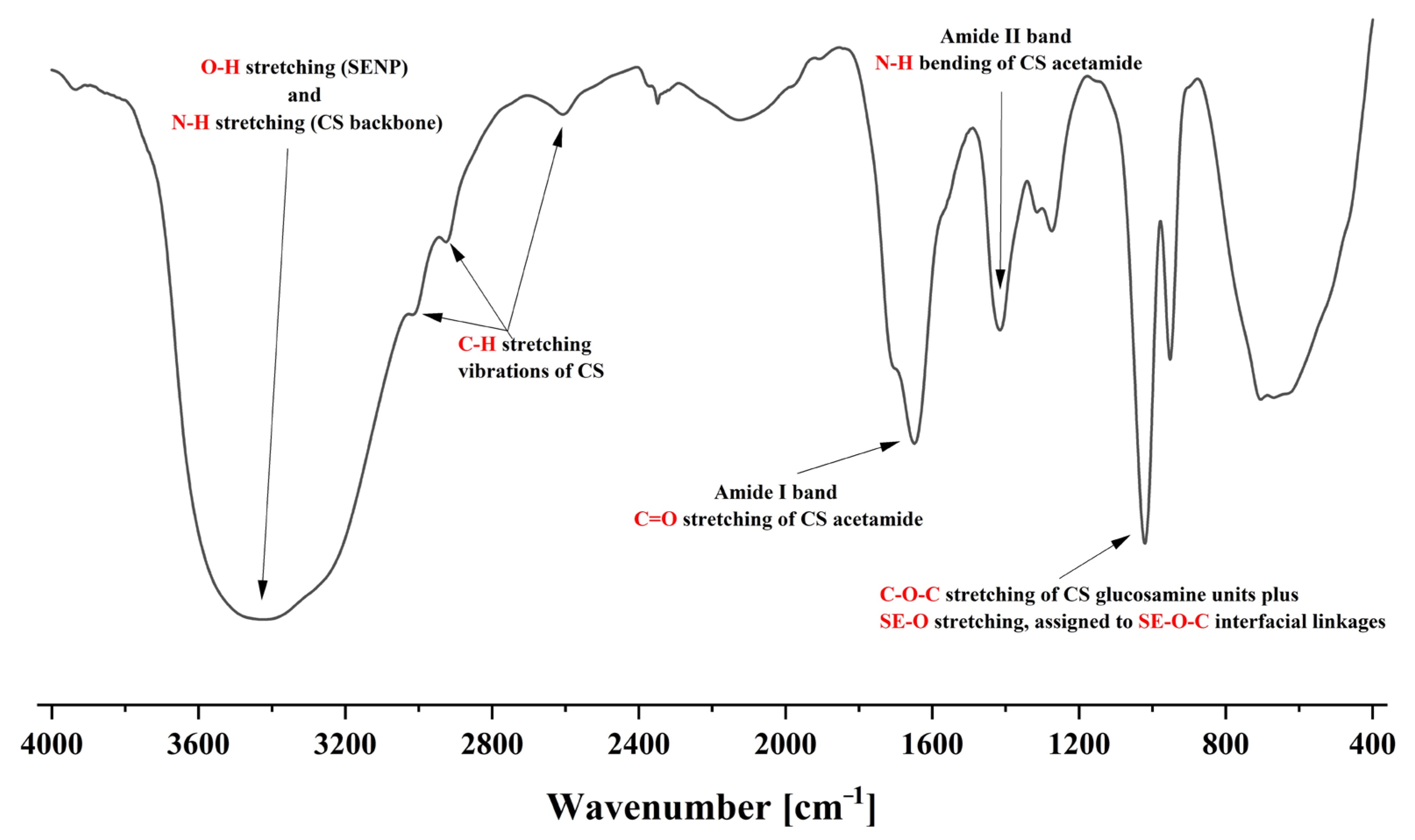
3.1. Chitosan-Coated Selenium Nanoparticle Preparation and Characterization
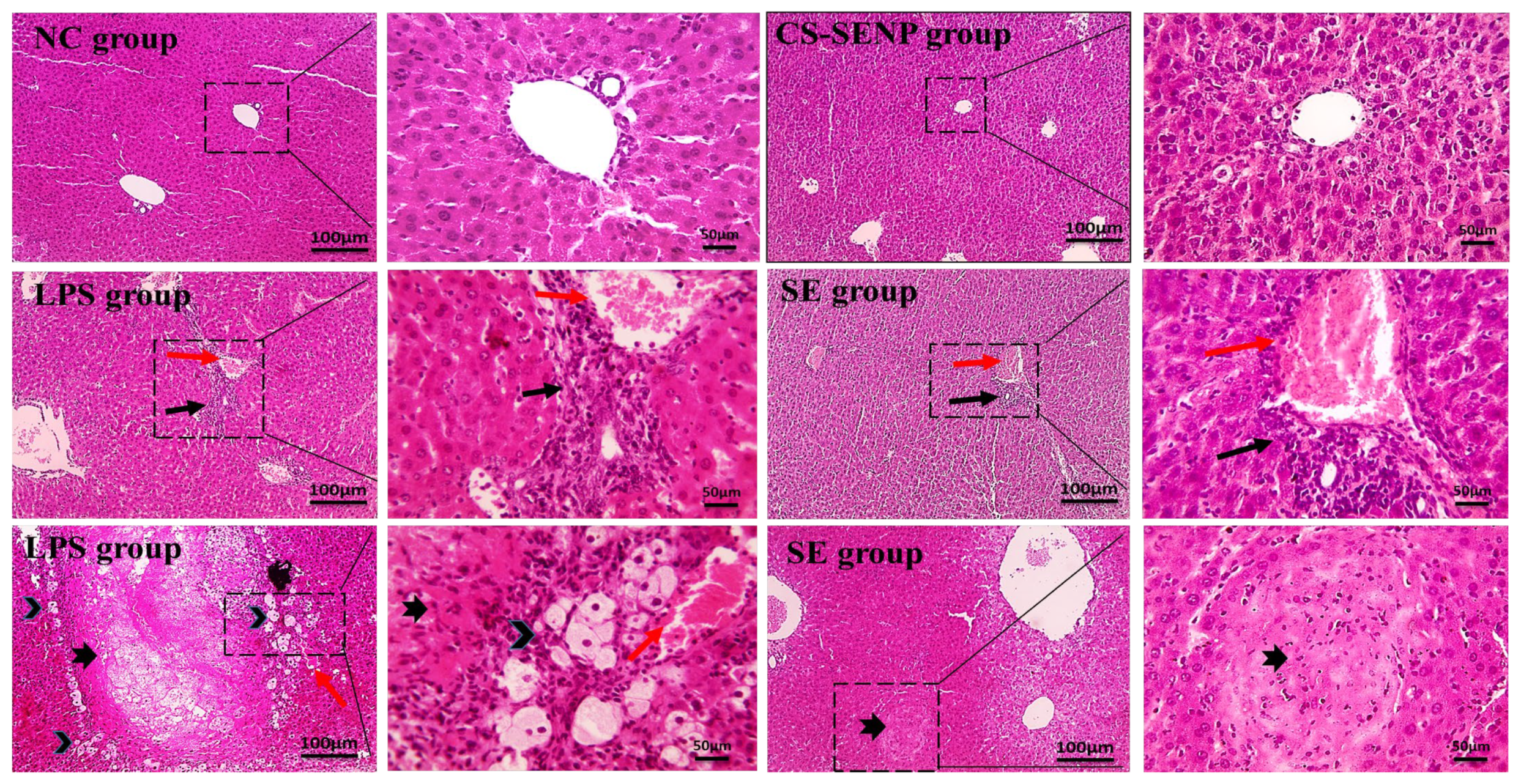
3.2. Effect of SE and CS-SENP Treatment on Histopathological Changes in the Rat’s Liver
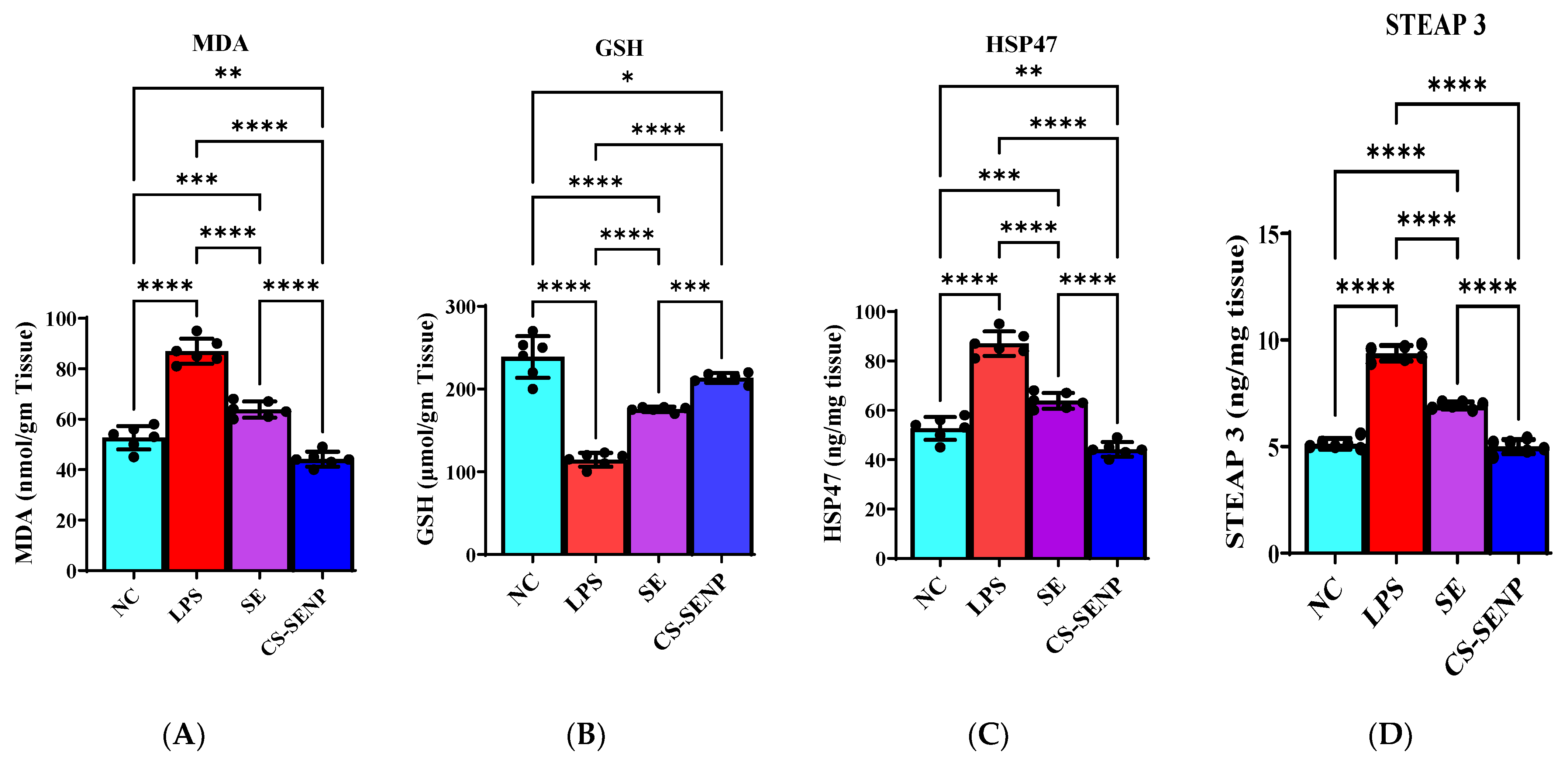
3.3. Effect of SE and CS-SENP Treatment on MDA, GSH, HSP-47, and STEAP-3 Levels
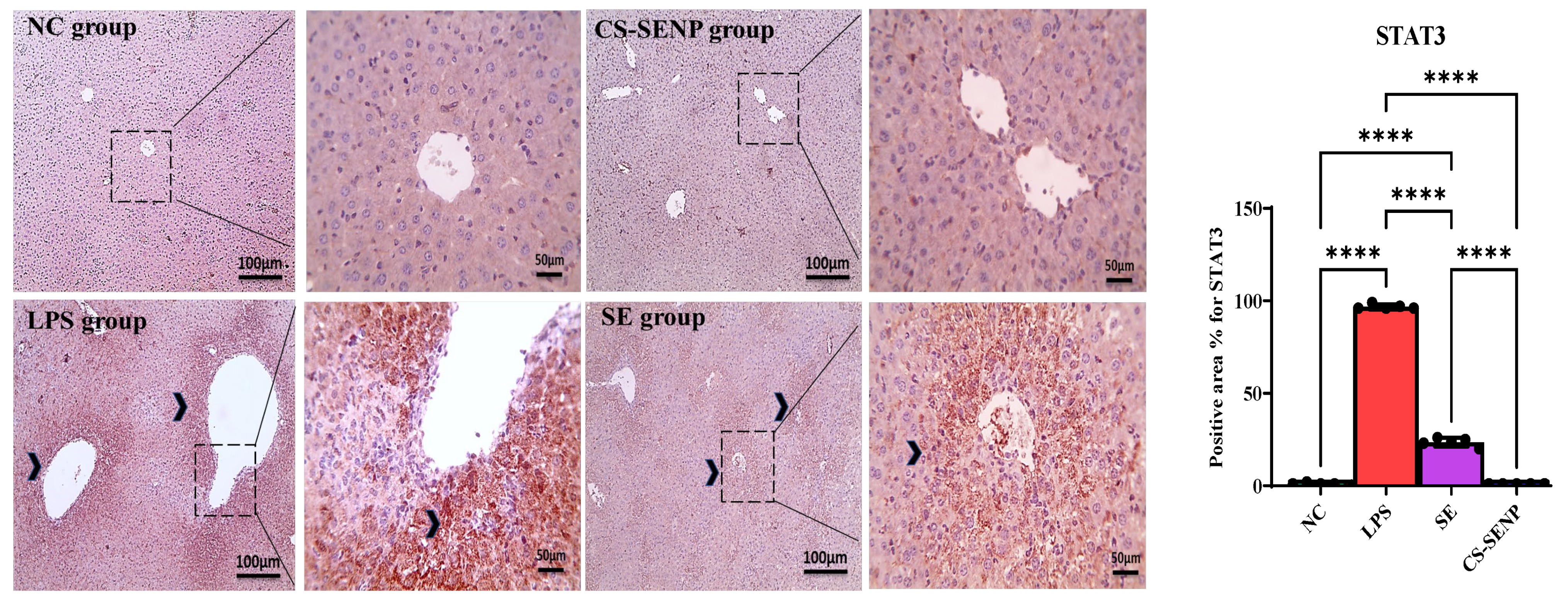
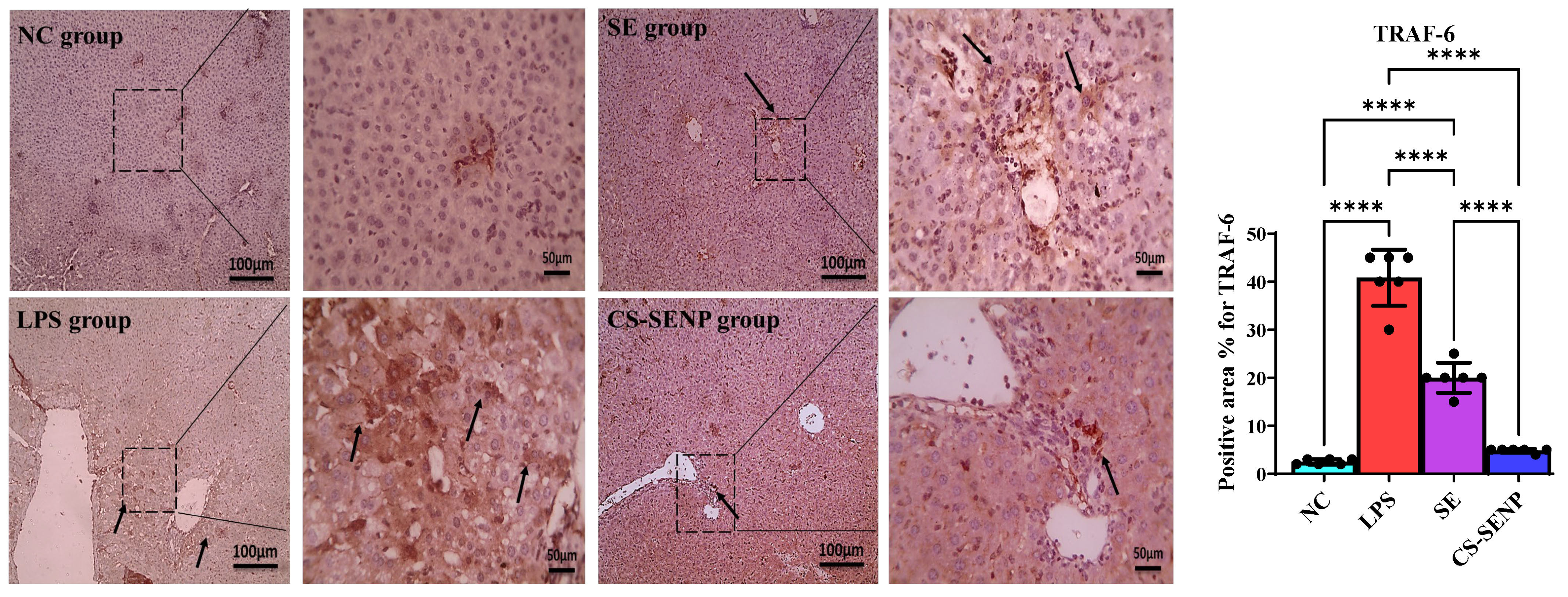
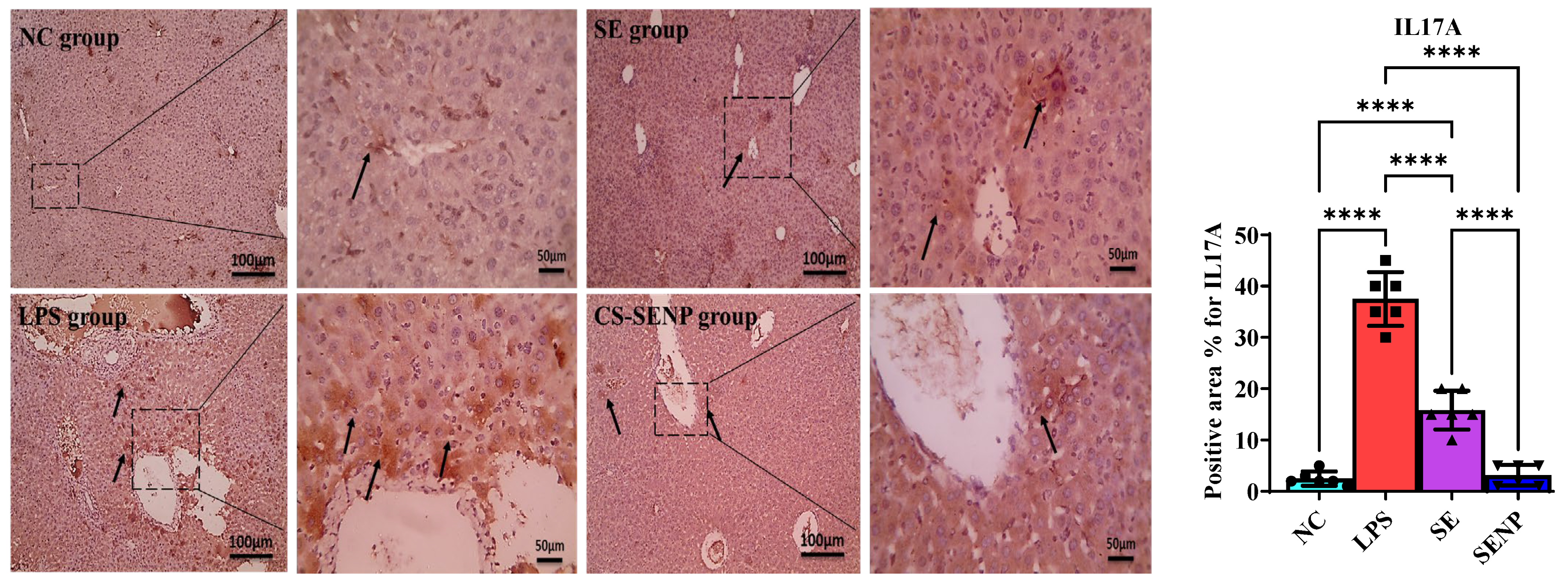
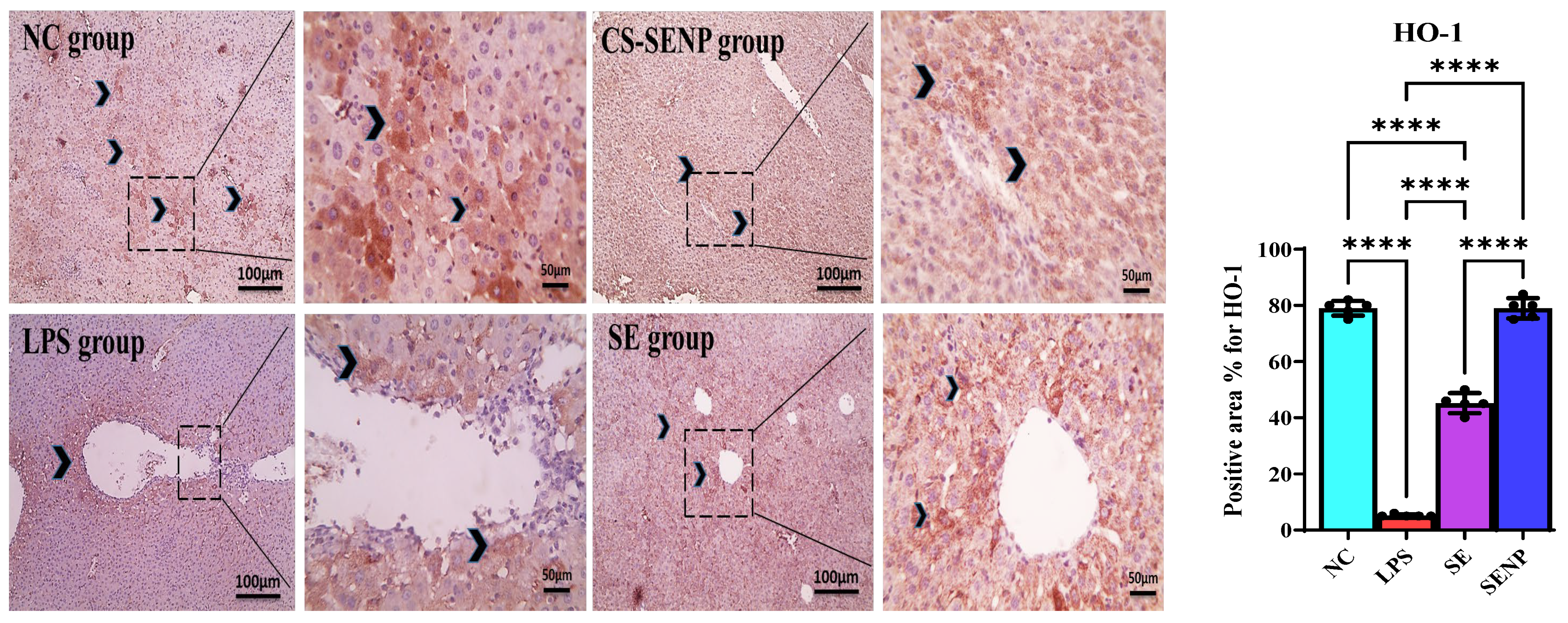
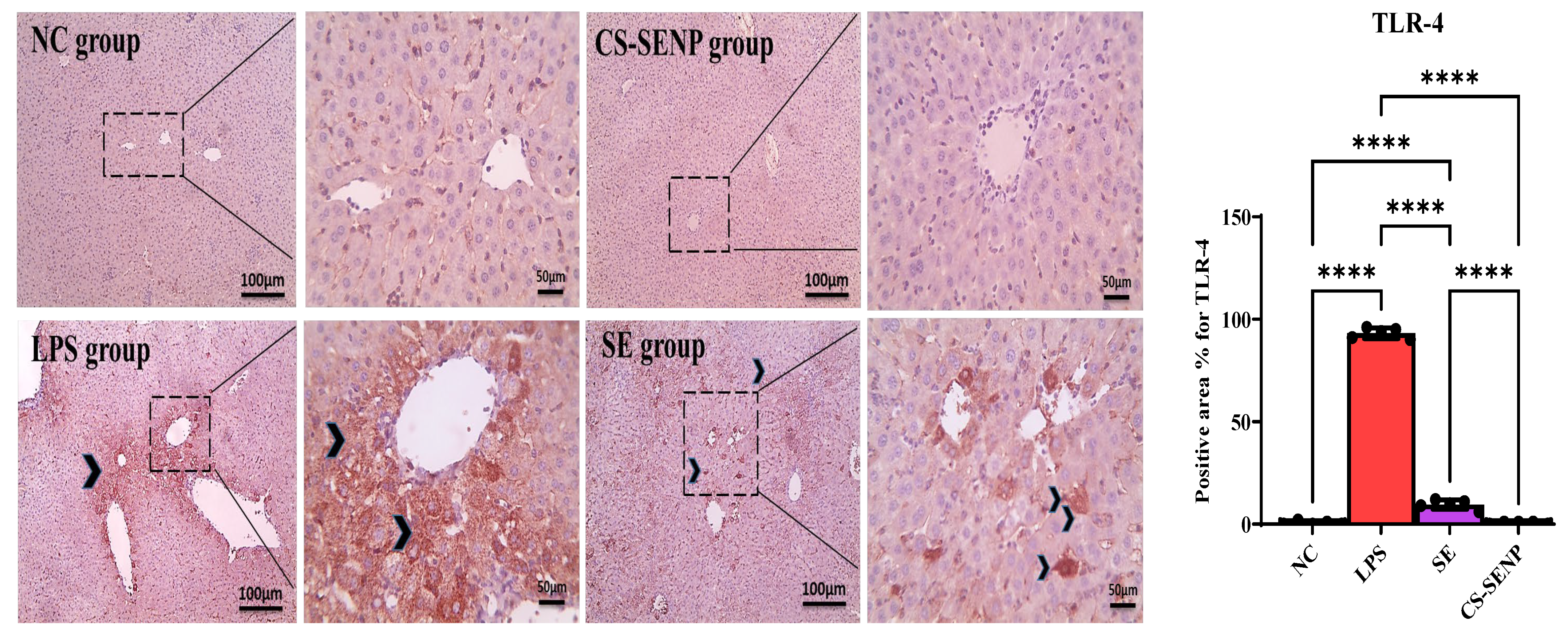
3.4. Effect of SE and CS-SENP Treatment on HO-1, TLR-4, STAT-3, TRAF-6, and IL-17A Levels
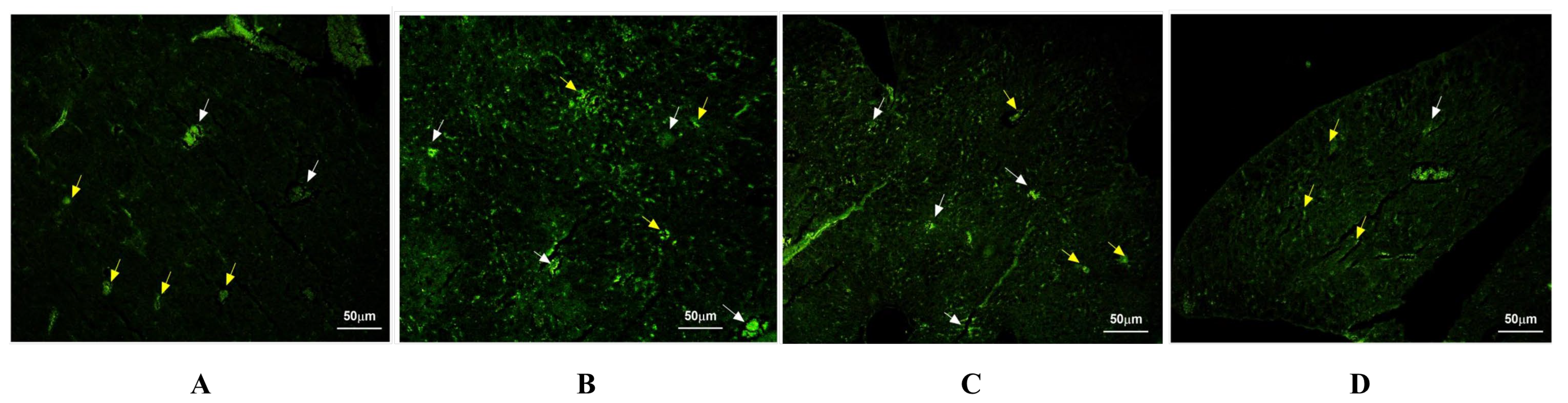
3.5. Effect of SE and CS-SENP Treatment on HSP-90
4. Discussion
Study Limitations
5. Conclusions
Author Contributions
Funding
Institutional Review Board Statement
Informed Consent Statement
Data Availability Statement
Conflicts of Interest
Abbreviations
| SE | Selenium |
| CS-SENPs | Chitosan-coated selenium nanoparticles |
| LPS | lipopolysaccharide |
| PDI | Polydispersity index |
| TEM | Transmission electron microscope |
| FTIR | Fourier transform infrared spectroscopy |
| ALI | Acute liver injury |
| HSP | Heat shock protein |
| TrxR | Thioredoxin reductase |
| GPx | Glutathione peroxidase |
| MDA | Malondialdehyde |
| IL-17 | Interleukin-17 |
References
- Huang, X.; Lian, Z.; Qi, S.; Yu, H. Inflammatory-nutritional duality of NPAR: A novel biomarker for early prediction of acute liver injury in acute myocardial infarction complicated by type 2 diabetes mellitus. Front. Pharmacol. 2025, 16, 1643871. [Google Scholar] [CrossRef] [PubMed]
- Li, J.; Zhao, Y.R.; Tian, Z. Roles of hepatic stellate cells in acute liver failure: From the perspective of inflammation and fibrosis. World J. Hepatol. 2019, 11, 412–420. [Google Scholar] [CrossRef] [PubMed]
- Abdelnabi, M.N.; Hassan, G.S.; Shoukry, N.H. Role of the type 3 cytokines IL-17 and IL-22 in modulating metabolic dysfunction-associated steatotic liver disease. Front. Immunol. 2024, 15, 1437046. [Google Scholar] [CrossRef] [PubMed]
- Li, N.; Yamamoto, G.; Fuji, H.; Kisseleva, T. Interleukin-17 in Liver Disease Pathogenesis. Semin. Liver Dis. 2021, 41, 507–515. [Google Scholar] [CrossRef] [PubMed]
- Su, Z.; Chen, J.; Zhang, J.; An, Y.; Liao, Y.; Wu, X.; Tao, C.; Wang, L.; Cai, B. Circulating IL-1β, IL-17, and IP-10 as Potential Predictors of Hepatitis B Virus Infection Prognosis. J. Immunol. Res. 2022, 2022, 5202898. [Google Scholar] [CrossRef] [PubMed]
- Dabbaghizadeh, A.; Dion, J.; Maali, Y.; Fouda, A.; Bédard, N.; Evaristo, G.; Hassan, G.S.; Tchervenkov, J.; Shoukry, N.H. Novel RORγt inverse agonists limit IL-17-mediated liver inflammation and fibrosis. J. Immunol. 2025, 214, 1321–1331. [Google Scholar] [CrossRef]
- Swaidani, S.; Liu, C.; Zhao, J.; Bulek, K.; Li, X. TRAF Regulation of IL-17 Cytokine Signaling. Front. Immunol. 2019, 10, 1293. [Google Scholar] [CrossRef]
- Wang, S.; Chen, L.; Liu, W. Matrix stiffness-dependent STEAP3 coordinated with PD-L2 identify tumor responding to sorafenib treatment in hepatocellular carcinoma. Cancer Cell Int. 2022, 22, 318. [Google Scholar] [CrossRef]
- Qi, Z.; Duan, A.; Ng, K. Selenoproteins in Health. Molecules 2023, 29, 136. [Google Scholar] [CrossRef]
- Qiao, L.; Zhang, X.; Pi, S.; Chang, J.; Dou, X.; Yan, S.; Song, X.; Chen, Y.; Zeng, X.; Zhu, L.; et al. Dietary supplementation with biogenic selenium nanoparticles alleviate oxidative stress-induced intestinal barrier dysfunction. npj Sci. Food 2022, 6, 30. [Google Scholar] [CrossRef]
- Xu, L.; Lu, Y.; Wang, N.; Feng, Y. The Role and Mechanisms of Selenium Supplementation on Fatty Liver-Associated Disorder. Antioxidants 2022, 11, 922. [Google Scholar] [CrossRef] [PubMed]
- Lembas, A.; Załęski, A.; Mikuła, T.; Jabłońska, J.; Barczak, S.; Badura, B.; Wiercińska-Drapało, A. Differences in the course of hepatocellular carcinoma depending on the DAA treatment. Prospect. Pharm. Sci. 2024, 22, 114–119. [Google Scholar] [CrossRef]
- Liang, Q.; Huang, R.; Peng, Z.; Zou, M. Impact of dietary selenium and blood concentration on liver function: A population-based study. Front. Nutr. 2024, 11, 1415288. [Google Scholar] [CrossRef] [PubMed]
- Wang, X.; Seo, Y.A.; Park, S.K. Serum selenium and non-alcoholic fatty liver disease (NAFLD) in U.S. adults: National Health and Nutrition Examination Survey (NHANES) 2011–2016. Environ. Res. 2021, 197, 111190. [Google Scholar] [CrossRef]
- Khurana, A.; Tekula, S.; Saifi, M.A.; Venkatesh, P.; Godugu, C. Therapeutic applications of selenium nanoparticles. Biomed. Pharmacother. 2019, 111, 802–812. [Google Scholar] [CrossRef]
- Rees, K.; Hartley, L.; Day, C.; Flowers, N.; Clarke, A.; Stranges, S. Selenium supplementation for the primary prevention of cardiovascular disease. Cochrane Database Syst. Rev. 2013, 2013, CD009671. [Google Scholar] [CrossRef]
- Huang, Y.; He, L.; Liu, W.; Fan, C.; Zheng, W.; Wong, Y.-S.; Chen, T. Selective cellular uptake and induction of apoptosis of cancer-targeted selenium nanoparticles. Biomaterials 2013, 34, 7106–7116. [Google Scholar] [CrossRef]
- Kudarha, R.; Colaco, V.; Gupta, A.; Kulkarni, S.; Soman, S.; Kulkarni, J.; Rana, K.; Navti, P.; Tiwari, R.; Osmani, R.; et al. Recent advancements in selenium nanoconstructs as a potential carrier in cancer therapy. Nano-Struct. Nano-Objects 2024, 40, 101399. [Google Scholar] [CrossRef]
- Hosnedlova, B.; Kepinska, M.; Skalickova, S.; Fernandez, C.; Ruttkay-Nedecky, B.; Peng, Q.; Baron, M.; Melcova, M.; Opatrilova, R.; Zidkova, J.; et al. Nano-selenium and its nanomedicine applications: A critical review. Int. J. Nanomed. 2018, 13, 2107–2128. [Google Scholar] [CrossRef]
- Huang, Q.; Wang, S.; Yang, X.; Han, X.; Liu, Y.; Khan, N.A.; Tan, Z. Effects of organic and inorganic selenium on selenium bioavailability, growth performance, antioxidant status and meat quality of a local beef cattle in China. Front. Vet. Sci. 2023, 10, 1171751. [Google Scholar] [CrossRef]
- Karthik, K.K.; Cheriyan, B.V.; Rajeshkumar, S.; Gopalakrishnan, M. A review on selenium nanoparticles and their biomedical applications. Biomed. Technol. 2024, 6, 61–74. [Google Scholar] [CrossRef]
- Chen, Y.-N.; Li, M.-Q.; Zhang, H.-J.; Xu, N.-N.; Xu, Y.-Q.; Liu, W.-X.; Chen, T.-T.; Li, N.; Wu, G.-Y.; Zhao, J.-M.; et al. Nanoparticle-based drug delivery systems: A promising approach for the treatment of liver fibrosis. Int. J. Pharm. X 2025, 10, 100411. [Google Scholar] [CrossRef] [PubMed]
- Peng, M.; Fang, F.; Wang, B. Nanoparticle technologies for liver targeting and their applications in liver diseases. Front. Bioeng. Biotechnol. 2025, 13, 1661872. [Google Scholar] [CrossRef] [PubMed]
- Bonferoni, M.C.; Gavini, E.; Rassu, G.; Maestri, M.; Giunchedi, P. Chitosan Nanoparticles for Therapy and Theranostics of Hepatocellular Carcinoma (HCC) and Liver-Targeting. Nanomaterials 2020, 10, 870. [Google Scholar] [CrossRef] [PubMed]
- Jiang, L.-Q.; Wang, T.-Y.; Wang, Y.; Wang, Z.-Y.; Bai, Y.-T. Co-disposition of chitosan nanoparticles by multi types of hepatic cells and their subsequent biological elimination: The mechanism and kinetic studies at the cellular and animal levels. Int. J. Nanomed. 2019, 14, 6035–6060. [Google Scholar] [CrossRef] [PubMed]
- Colino, C.I.; Lanao, J.M.; Gutierrez-Millan, C. Targeting of Hepatic Macrophages by Therapeutic Nanoparticles. Front. Immunol. 2020, 11, 218. [Google Scholar] [CrossRef]
- Bashir, S.M.; Ahmed Rather, G.; Patrício, A.; Haq, Z.; Sheikh, A.A.; Shah, M.Z.u.H.; Singh, H.; Khan, A.A.; Imtiyaz, S.; Ahmad, S.B.; et al. Chitosan Nanoparticles: A Versatile Platform for Biomedical Applications. Materials 2022, 15, 6521. [Google Scholar] [CrossRef]
- Srag El-Din, A.S.G.; Yehia, A.; Hamza, E.; A-Elgadir, T.M.E.; Abd El-Fattah, E.E. Selenium nanoparticle ameliorates LPS-induced acute lung injury in rats through inhibition of ferroptosis, inflammation, and HSPs. J. Drug Deliv. Sci. Technol. 2024, 95, 105626. [Google Scholar] [CrossRef]
- Gardouh, A.R.; Srag El-Din, A.S.G.; Salem, M.S.H.; Moustafa, Y.; Gad, S. Starch Nanoparticles for Enhancement of Oral Bioavailability of a Newly Synthesized Thienopyrimidine Derivative with Anti-Proliferative Activity Against Pancreatic Cancer. Drug Des. Dev. Ther. 2021, 15, 3071–3093. [Google Scholar] [CrossRef]
- El-Menshawe, S.F.; Ali, A.A.; Halawa, A.A.; Srag El-Din, A.S. A novel transdermal nanoethosomal gel of betahistine dihydrochloride for weight gain control: In-vitro and in-vivo characterization. Drug Des. Dev. Ther. 2017, 11, 3377–3388. [Google Scholar] [CrossRef]
- Elkomy, M.H.; El-Menshawe, S.F.; Ali, A.A.; Halawa, A.A.; El-Din, A. Betahistine dihydrochloride transdermal delivery via optimized thermosensitive gels: Percutaneous absorption evaluation using rat growth as a biomarker. Drug Deliv. Transl. Res. 2018, 8, 165–177. [Google Scholar] [CrossRef] [PubMed]
- Elfakharany, S.A.; Eskaros, S.S.; Azhary, N.M.E.; Abdelmonsif, D.A.; Zeitoun, T.M.; Ammar, G.A.G.; Hatem, Y.A. Neuroprotective Role of Selenium Nanoparticles Against Behavioral, Neurobiochemical and Histological Alterations in Rats Subjected to Chronic Restraint Stress. Mol. Neurobiol. 2024, 61, 10159–10181. [Google Scholar] [CrossRef] [PubMed]
- Merkord, J.; Görl, N.; Lemke, M.; Berg, A.; Weber, H.; Ramer, R.; Hennighausen, G. Influence of daily oral prophylactic selenium treatment on the dibutyltin dichloride (DBTC)-induced pancreatitis in rats. EXCLI J. 2017, 16, 89–100. [Google Scholar] [CrossRef] [PubMed]
- Faghfuri, E.; Yazdi, M.H.; Mahdavi, M.; Sepehrizadeh, Z.; Faramarzi, M.A.; Mavandadnejad, F.; Shahverdi, A.R. Dose-response relationship study of selenium nanoparticles as an immunostimulatory agent in cancer-bearing mice. Arch. Med. Res. 2015, 46, 31–37. [Google Scholar] [CrossRef] [PubMed]
- Shakibaie, M.; Shahverdi, A.R.; Faramarzi, M.A.; Hassanzadeh, G.R.; Rahimi, H.R.; Sabzevari, O. Acute and subacute toxicity of novel biogenic selenium nanoparticles in mice. Pharm. Biol. 2013, 51, 58–63. [Google Scholar] [CrossRef]
- Draper, H.H.; Hadley, M. Malondialdehyde determination as index of lipid peroxidation. Methods Enzymol. 1990, 186, 421–431. [Google Scholar] [CrossRef]
- Duplancic, R.; Kero, D. Novel approach for quantification of multiple immunofluorescent signals using histograms and 2D plot profiling of whole-section panoramic images. Sci. Rep. 2021, 11, 8619. [Google Scholar] [CrossRef] [PubMed]
- Filippov, S.K.; Khusnutdinov, R.; Murmiliuk, A.; Inam, W.; Zakharova, L.Y.; Zhang, H.; Khutoryanskiy, V.V. Dynamic light scattering and transmission electron microscopy in drug delivery: A roadmap for correct characterization of nanoparticles and interpretation of results. Mater. Horiz. 2023, 10, 5354–5370. [Google Scholar] [CrossRef]
- Salatin, S.; Yari Khosroushahi, A. Overviews on the cellular uptake mechanism of polysaccharide colloidal nanoparticles. J. Cell. Mol. Med. 2017, 21, 1668–1686. [Google Scholar] [CrossRef]
- Ming, P.; Wei, Y.; Zhu, Y.; Li, K.; Zhu, W.; Qiu, J. Dual-stabilized selenium nanoparticles with chitosan and SS31 peptide: Resolving instability for enhancing ROS elimination, suppressing inflammation, and combating bacterial infections. Colloids Surf. B Biointerfaces 2025, 253, 114749. [Google Scholar] [CrossRef]
- Al-Darwesh, M.Y.; Manai, M.; Chebbi, H.; Klein, A. Green Synthesis of Chitosan-Coated Selenium Nanoparticles for Paclitaxel Delivery. Nanomaterials 2025, 15, 1276. [Google Scholar] [CrossRef] [PubMed]
- Cao, H.; Xiao, J.; Liu, H. Enhanced oxidase-like activity of selenium nanoparticles stabilized by chitosan and application in a facile colorimetric assay for mercury (II). Biochem. Eng. J. 2019, 152, 107384. [Google Scholar] [CrossRef]
- Yu, M.; Jiang, C.; Liang, J.; Zhang, H.; Teng, X.; Kang, L. HSP27-HSP40-HSP70-HSP90 pathway participated in molecular mechanism of selenium alleviating lead-caused oxidative damage and proteotoxicity in chicken Bursa of Fabricius. Anim. Biotechnol. 2023, 34, 4403–4414. [Google Scholar] [CrossRef] [PubMed]
- Kurakula, M.; El-Helw, A.M.; Sobahi, T.R.; Abdelaal, M.Y. Chitosan based atorvastatin nanocrystals: Effect of cationic charge on particle size, formulation stability, and in-vivo efficacy. Int. J. Nanomed. 2015, 10, 321–334. [Google Scholar] [CrossRef]
- Collado-González, M.; Montalbán, M.G.; Peña-García, J.; Pérez-Sánchez, H.; Víllora, G.; Díaz Baños, F.G. Chitosan as stabilizing agent for negatively charged nanoparticles. Carbohydr. Polym. 2017, 161, 63–70. [Google Scholar] [CrossRef]
- Zhang, S.; Luo, Y.; Zeng, H.; Wang, Q.; Tian, F.; Song, J.; Cheng, W.-H. Encapsulation of selenium in chitosan nanoparticles improves selenium availability and protects cells from selenium-induced DNA damage response. J. Nutr. Biochem. 2011, 22, 1137–1142. [Google Scholar] [CrossRef]
- Yu, B.; Li, X.; Zheng, W.; Feng, Y.; Wong, Y.-S.; Chen, T. pH-responsive cancer-targeted selenium nanoparticles: A transformable drug carrier with enhanced theranostic effects. J. Mater. Chem. B 2014, 2, 5409–5418. [Google Scholar] [CrossRef]
- Estevez, H.; Garcia-Lidon, J.C.; Luque-Garcia, J.L.; Camara, C. Effects of chitosan-stabilized selenium nanoparticles on cell proliferation, apoptosis and cell cycle pattern in HepG2 cells: Comparison with other selenospecies. Colloids Surf. B Biointerfaces 2014, 122, 184–193. [Google Scholar] [CrossRef]
- Araujo, J.M.; Fortes-Silva, R.; Pola, C.C.; Yamamoto, F.Y.; Gatlin, D.M., III; Gomes, C.L. Delivery of selenium using chitosan nanoparticles: Synthesis, characterization, and antioxidant and growth effects in Nile tilapia (Orechromis niloticus). PLoS ONE 2021, 16, e0251786. [Google Scholar] [CrossRef]
- Chen, Y.; Stoll, S.; Sun, H.; Liu, X.; Liu, W.; Leng, X. Stability and surface properties of selenium nanoparticles coated with chitosan and sodium carboxymethyl cellulose. Carbohydr. Polym. 2022, 278, 118859. [Google Scholar] [CrossRef]
- Joseph, J.J.; Sangeetha, D.; Gomathi, T. Sunitinib loaded chitosan nanoparticles formulation and its evaluation. Int. J. Biol. Macromol. 2016, 82, 952–958. [Google Scholar] [CrossRef] [PubMed]
- Huang, D.; Ren, Z.; Li, X.; Jing, Q. Mechanism of Stability and Transport of Chitosan-Stabilized Nano Zero-Valent Iron in Saturated Porous Media. Int. J. Environ. Res. Public Health 2021, 18, 5115. [Google Scholar] [CrossRef] [PubMed]
- Ferro, C.; Florindo, H.F.; Santos, H.A. Selenium Nanoparticles for Biomedical Applications: From Development and Characterization to Therapeutics. Adv. Healthc. Mater. 2021, 10, 2100598. [Google Scholar] [CrossRef] [PubMed]
- Nicolle, L.; Journot, C.M.A.; Gerber-Lemaire, S. Chitosan Functionalization: Covalent and Non-Covalent Interactions and Their Characterization. Polymers 2021, 13, 4118. [Google Scholar] [CrossRef]
- Aranaz, I.; Alcántara, A.R.; Civera, M.C.; Arias, C.; Elorza, B.; Heras Caballero, A.; Acosta, N. Chitosan: An Overview of Its Properties and Applications. Polymers 2021, 13, 3256. [Google Scholar] [CrossRef]
- Cassimjee, H.; Kumar, P.; Ubanako, P.; Choonara, Y.E. Genipin-Crosslinked, Proteosaccharide Scaffolds for Potential Neural Tissue Engineering Applications. Pharmaceutics 2022, 14, 441. [Google Scholar] [CrossRef]
- Bai, K.; Hong, B.; Huang, W.; He, J. Selenium-Nanoparticles-Loaded Chitosan/Chitooligosaccharide Microparticles and Their Antioxidant Potential: A Chemical and In Vivo Investigation. Pharmaceutics 2020, 12, 43. [Google Scholar] [CrossRef]
- Seo, H.-Y.; Park, J.Y.; Lee, S.-H.; Cho, S.H.; Han, E.; Hwang, J.S.; Kim, M.K.; Jang, B.K. Clusterin inhibits lipopolysaccharide induced liver injury. Sci. Rep. 2025, 15, 5975. [Google Scholar] [CrossRef]
- Goltyaev, M.V.; Varlamova, E.G. The Role of Selenium Nanoparticles in the Treatment of Liver Pathologies of Various Natures. Int. J. Mol. Sci. 2023, 24, 10547. [Google Scholar] [CrossRef]
- Deng, X.; Ouyang, P.; Xu, W.; Yang, E.; Bao, Z.; Wu, Y.; Gong, J.; Pan, J. Research progress of nano selenium in the treatment of oxidative stress injury during hepatic ischemia-reperfusion injury. Front. Pharmacol. 2022, 13, 1103483. [Google Scholar] [CrossRef]
- Panahirad, S.; Dadpour, M.; Kulak, M.; Vita, F.; Gohari, G.; Fotopoulos, V. Selenium-coated chitosan nanoparticles (CTS-Se NPs) improve grapevine (Vitis vinifera cv. Sultana) performance grown under lead (Pb) toxicity. BMC Plant Biol. 2025, 25, 1178. [Google Scholar] [CrossRef] [PubMed]
- Shu, Y.; Yang, J.; Zhang, P.; Zhang, X.; Zhao, X.; Yan, J.; Zhang, B.; Du, J. Selenium improves behavioral performance in a rat model of autism spectrum disorder by mitigating oxidative stress and modulating the Sirt1/Keap1/Nrf2/HO-1 signaling pathway. Int. Immunopharmacol. 2025, 166, 115556. [Google Scholar] [CrossRef] [PubMed]
- Zhang, M.; Gao, J.; Kulyar, M.F.; Luo, W.; Zhang, G.; Yang, X.; Zhang, T.; Gao, H.; Peng, Y.; Zhang, J.; et al. Antioxidant and renal protective effects of Nano-selenium on adenine-induced acute renal failure in canines. Ecotoxicol. Environ. Saf. 2024, 287, 117274. [Google Scholar] [CrossRef] [PubMed]
- Dorman, R.B.; Bajt, M.L.; Farhood, A.; Mayes, J.; Jaeschke, H. Heme oxygenase-1 induction in hepatocytes and non-parenchymal cells protects against liver injury during endotoxemia. Comp. Hepatol. 2004, 3, S42. [Google Scholar] [CrossRef] [PubMed]
- Kumbhar, S.; Khan, A.; Parveen, F.; Nizamani, Z.; Siyal, F.; El-Hack, M.; Gan, F.; Liu, Y.; Hamid, M.; Nido, S.; et al. Impacts of selenium and vitamin E supplementation on mRNA of heat shock proteins, selenoproteins and antioxidants in broilers exposed to high temperature. AMB Express 2018, 8, 112. [Google Scholar] [CrossRef] [PubMed]
- Zhang, M.; Wang, M.; Wang, H.; Zhang, Y.; Li, Z.; Feng, Y.; Liu, Y.; Liu, Y.; Liao, Y.; Wang, W.; et al. Decreased Expression of Heat Shock Protein 47 Is Associated with T-2 Toxin and Low Selenium-Induced Matrix Degradation in Cartilages of Kashin-Beck Disease. Biol. Trace Elem. Res. 2021, 199, 944–954. [Google Scholar] [CrossRef]
- Kim, Y.S.; Li, Q.; Youn, H.Y.; Kim, D.Y. Oral Administration of Chitosan Attenuates Bleomycin-induced Pulmonary Fibrosis in Rats. In Vivo 2019, 33, 1455–1461. [Google Scholar] [CrossRef]
- Zhang, Z.; Gao, X.; Cao, Y.; Jiang, H.; Wang, T.; Song, X.; Guo, M.; Zhang, N. Selenium Deficiency Facilitates Inflammation Through the Regulation of TLR4 and TLR4-Related Signaling Pathways in the Mice Uterus. Inflammation 2015, 38, 1347–1356. [Google Scholar] [CrossRef]
- Youn, H.S.; Lim, H.J.; Choi, Y.J.; Lee, J.Y.; Lee, M.Y.; Ryu, J.H. Selenium suppresses the activation of transcription factor NF-kappa B and IRF3 induced by TLR3 or TLR4 agonists. Int. Immunopharmacol. 2008, 8, 495–501. [Google Scholar] [CrossRef]
- Dehghani, M.; Ramzi, M.; Moayed, V.; Rezaei, N.; Kalani, M.; Golmoghaddam, H.; Arandi, N. Selenium Supplementation Alter the Frequency of Th17 but not Th1/Th2 Lymphocytes in Diffuse Large B Cell Lymphoma Patients. Clin. Lab. 2023, 69, 68–76. [Google Scholar] [CrossRef]
- Plummer, J.D.; Johnson, J.E. Intermittent methionine restriction and selenium supplementation protect against inflammation and the development of dermatitis. J. Inflamm. 2025, 22, 24. [Google Scholar] [CrossRef]
- Wang, H.; Bi, C.; Wang, Y.; Sun, J.; Meng, X.; Li, J. Selenium ameliorates Staphylococcus aureus-induced inflammation in bovine mammary epithelial cells by inhibiting activation of TLR2, NF-κB and MAPK signaling pathways. BMC Veter Res. 2018, 14, 197. [Google Scholar] [CrossRef]
- Shah, T.; Malhi, M.; Kachiwal, A.B.; Bhutto, B.; Shah, Q.A.; Lei, Y.; Soomro, S.A.; Soomro, J.; Kalhoro, N.H.; Gui, H. Ameliorative effects of supranutritional selenium on TLR-4-NF-kB-TNF-α-mediated hepatic oxidative injury and inflammation in goats fed high concentrate diet. Food Sci. Nutr. 2022, 10, 3842–3854. [Google Scholar] [CrossRef]
- Zhang, C.; Deng, Y.; Lei, Y.; Zhao, J.; Wei, W.; Li, Y. Effects of selenium on myocardial apoptosis by modifying the activity of mitochondrial STAT3 and regulating potassium channel expression. Exp. Ther. Med. 2017, 14, 2201–2205. [Google Scholar] [CrossRef]
- Camacho-Moll, M.E.; Sampayo-Reyes, A.; Castorena-Torres, F.; Lozano-Garza, G.; Alarcón-Galván, G.; Hernández, A.; Marcos, R.; Alcocer-González, J.M.; Tamez-Guerra, R.; Bermúdez de León, M. Selenite Downregulates STAT3 Expression and Provokes Lymphocytosis in the Liver of Chronically Exposed Syrian Golden Hamsters. Molecules 2021, 26, 5614. [Google Scholar] [CrossRef]





Disclaimer/Publisher’s Note: The statements, opinions and data contained in all publications are solely those of the individual author(s) and contributor(s) and not of MDPI and/or the editor(s). MDPI and/or the editor(s) disclaim responsibility for any injury to people or property resulting from any ideas, methods, instructions or products referred to in the content. |
© 2026 by the authors. Licensee MDPI, Basel, Switzerland. This article is an open access article distributed under the terms and conditions of the Creative Commons Attribution (CC BY) license.
Share and Cite
Ramadan, A.; Hamza, E.; Elkordy, E.A.; Abd El Fattah, E.E.; Yehia, A.; El-Din, A.S.G.S. Mechanistic Modulation of Lipopolysaccharide-Induced Hepatic Injury by Chitosan-Coated Selenium Nanoparticles: Targeting the STEAP-3/TLR-4 and IL-17/TRAF-6/HSP-90 Axes. Pharmaceutics 2026, 18, 388. https://doi.org/10.3390/pharmaceutics18030388
Ramadan A, Hamza E, Elkordy EA, Abd El Fattah EE, Yehia A, El-Din ASGS. Mechanistic Modulation of Lipopolysaccharide-Induced Hepatic Injury by Chitosan-Coated Selenium Nanoparticles: Targeting the STEAP-3/TLR-4 and IL-17/TRAF-6/HSP-90 Axes. Pharmaceutics. 2026; 18(3):388. https://doi.org/10.3390/pharmaceutics18030388
Chicago/Turabian StyleRamadan, Asmaa, Eman Hamza, Eman Ali Elkordy, Eslam E. Abd El Fattah, Amr Yehia, and Ahmed S.G. Srag El-Din. 2026. "Mechanistic Modulation of Lipopolysaccharide-Induced Hepatic Injury by Chitosan-Coated Selenium Nanoparticles: Targeting the STEAP-3/TLR-4 and IL-17/TRAF-6/HSP-90 Axes" Pharmaceutics 18, no. 3: 388. https://doi.org/10.3390/pharmaceutics18030388
APA StyleRamadan, A., Hamza, E., Elkordy, E. A., Abd El Fattah, E. E., Yehia, A., & El-Din, A. S. G. S. (2026). Mechanistic Modulation of Lipopolysaccharide-Induced Hepatic Injury by Chitosan-Coated Selenium Nanoparticles: Targeting the STEAP-3/TLR-4 and IL-17/TRAF-6/HSP-90 Axes. Pharmaceutics, 18(3), 388. https://doi.org/10.3390/pharmaceutics18030388