Ultradeformable Vesicles for Wound Healing: Ethosomes, Transferosomes, and Transethosomes in Topical Drug Delivery

Abstract
1. Introduction
2. Molecular Mechanisms of Wound Healing Process
3. Stages of Wound Healing Process
3.1. Hemostasis
3.2. Inflammatory Phase
3.3. Proliferative Phase and Neovascularization
3.4. The Remodeling Phase
4. Topical Drug Delivery
4.1. Physicochemical Determinants of Passive Skin Permeation
4.2. Percutaneous Dermal Absorption
5. Topical Drugs and Strategies for Wound Healing
5.1. Anti-Inflammatory Agents
5.2. Antimicrobial Agents
5.3. Antimicrobial Peptides (AMPs)
5.4. MicroRNAs (miRNAs)
5.5. Growth Factors
5.6. Chemokines
5.7. Stem Cell-Based Therapy
5.8. Phytochemicals
5.9. Adjunctive Wound Healing Therapies
6. Nanovesicles
7. Ultradeformable Vesicles: Ethosomes, Transferosomes and Transethosomes
7.1. Ethosomes
7.1.1. Types of Ethosomes
7.1.2. Composition
7.1.3. Wound Healing Applications
7.2. Transferosomes
7.2.1. Composition
7.2.2. Wound Healing Applications
7.3. Transethosomes
7.3.1. Composition
7.3.2. Wound Healing Applications
7.4. Preparation Methods
7.4.1. Thin-Film Hydration Method
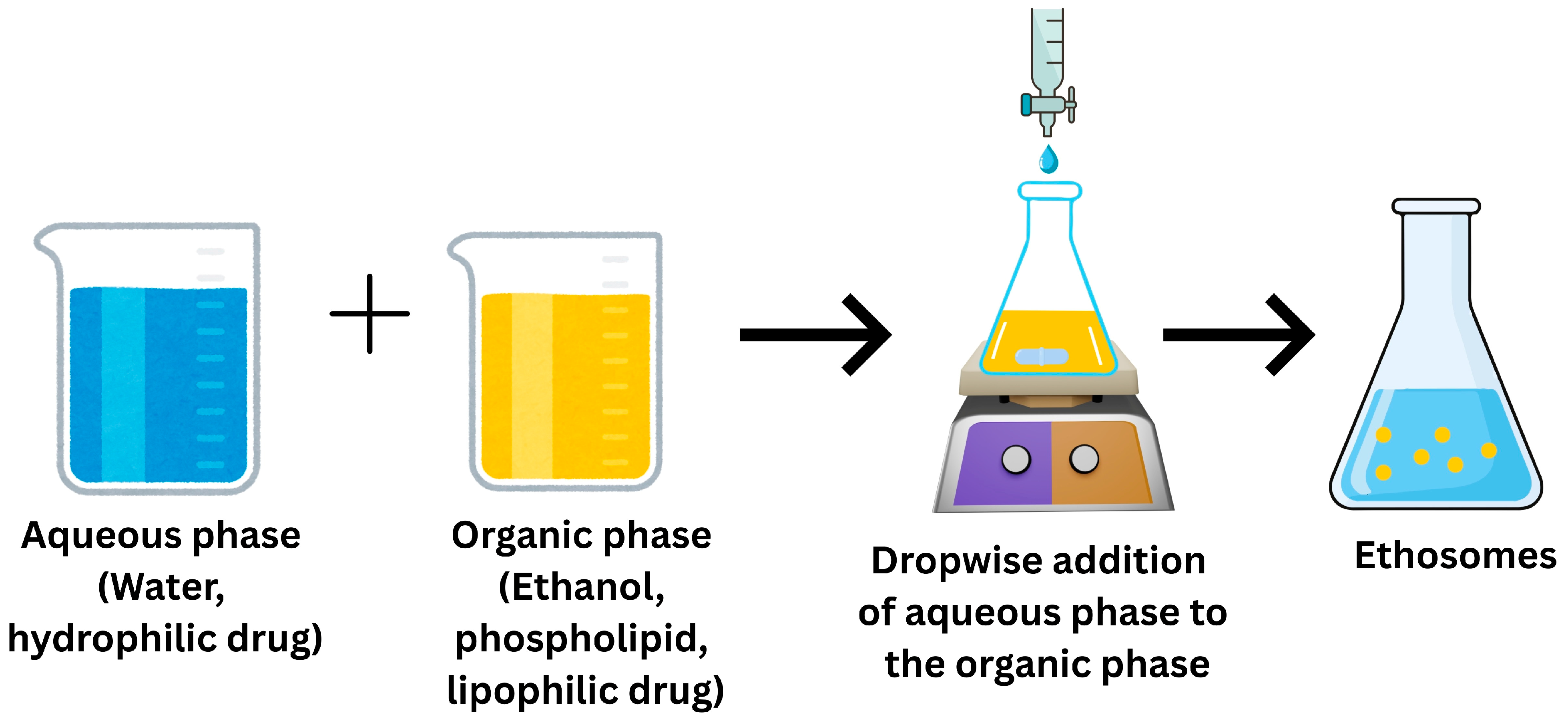
7.4.2. Cold Method
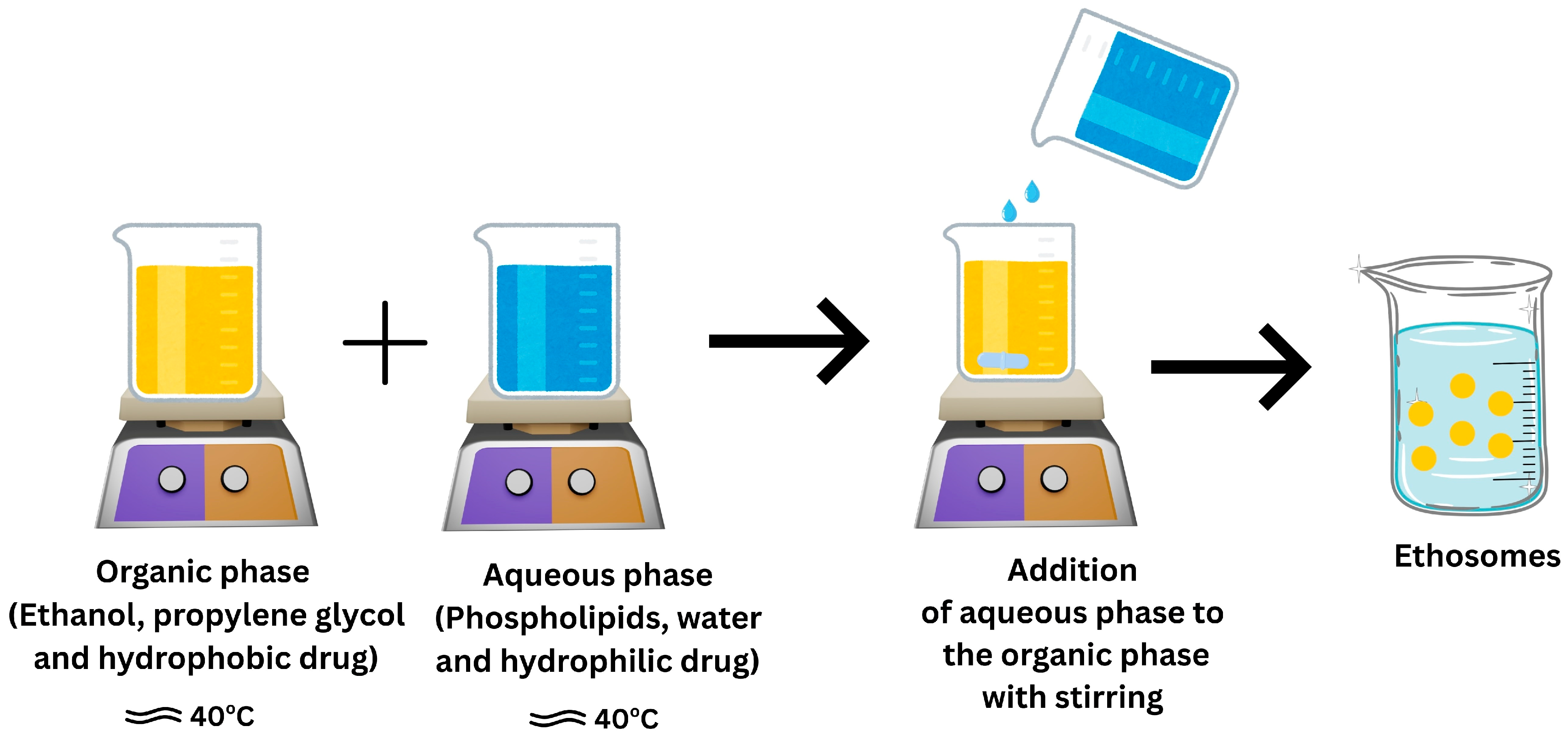
7.4.3. Hot Method
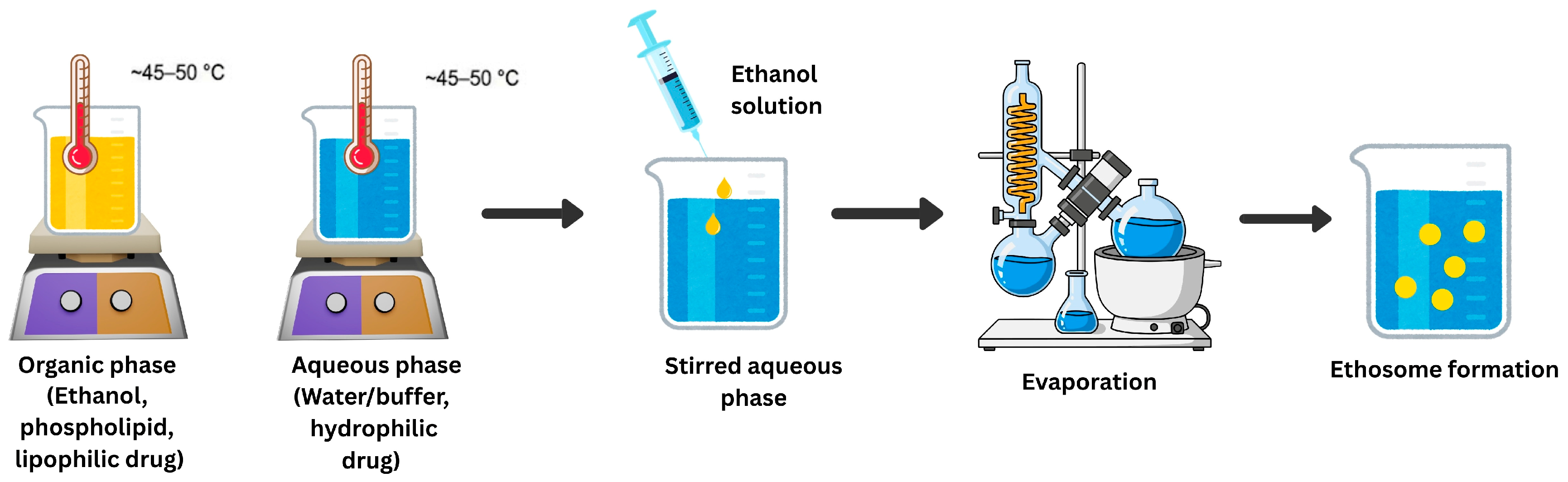
7.4.4. Ethanol Injection Method
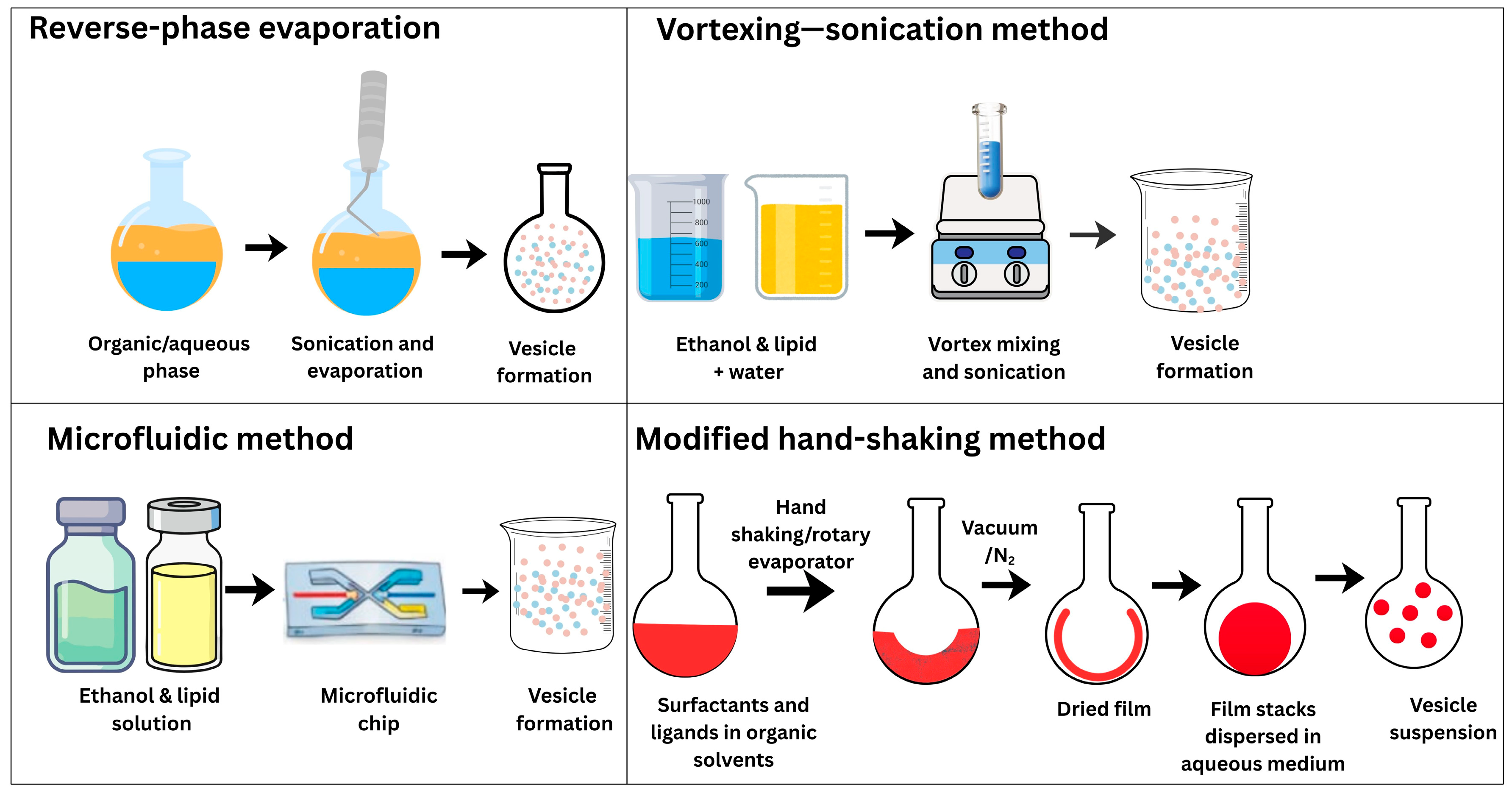
7.4.5. Miscellaneous Methods
8. Evaluations
8.1. In Vitro
8.2. In Vivo
9. Critical Perspectives
10. Translational Challenges
11. Conclusions
Author Contributions
Funding
Institutional Review Board Statement
Informed Consent Statement
Data Availability Statement
Acknowledgments
Conflicts of Interest
References
- McKnight, G.; Shah, J.; Hargest, R. Physiology of the skin. Surgery 2022, 40, 8–12. [Google Scholar] [CrossRef]
- Mohamed, S.A.; Hargest, R. Surgical anatomy of the skin. Surgery 2022, 40, 1–7. [Google Scholar] [CrossRef]
- Patterson, J.W. Weedon’s Skin Pathology E-Book; Elsevier Health Sciences: Amsterdam, The Netherlands, 2024. [Google Scholar]
- Smith, L.; Shin, J.I.; Hwang, S.Y.; Tizaoui, K.; Dragioti, E.; Jacob, L.; Kostev, K.; Lee, S.W.; Koyanagi, A. Global burden of disease study at the World Health Organization: Research methods for the most comprehensive global study of disease and underlying health policies. Life Cycle 2022, 2, e8. [Google Scholar] [CrossRef]
- Yakupu, A.; Aimaier, R.; Yuan, B.; Chen, B.; Cheng, J.; Zhao, Y.; Peng, Y.; Dong, J.; Lu, S. The burden of skin and subcutaneous diseases: Findings from the global burden of disease study 2019. Front. Public Health 2023, 11, 1145513. [Google Scholar] [CrossRef]
- Morton, L.M.; Phillips, T.J. Wound healing and treating wounds: Differential diagnosis and evaluation of chronic wounds. J. Am. Acad. Dermatol. 2016, 74, 589–605; quiz 605–586. [Google Scholar] [CrossRef] [PubMed]
- Armstrong, D.G.; Tan, T.W.; Boulton, A.J.M.; Bus, S.A. Diabetic Foot Ulcers: A Review. JAMA 2023, 330, 62–75. [Google Scholar] [CrossRef]
- Volkmann, E.R.; Andréasson, K.; Smith, V. Systemic sclerosis. Lancet 2023, 401, 304–318. [Google Scholar] [CrossRef]
- Mamun, A.A.; Shao, C.; Geng, P.; Wang, S.; Xiao, J. Recent advances in molecular mechanisms of skin wound healing and its treatments. Front. Immunol. 2024, 15, 1395479. [Google Scholar] [CrossRef] [PubMed]
- Tottoli, E.M.; Dorati, R.; Genta, I.; Chiesa, E.; Pisani, S.; Conti, B. Skin Wound Healing Process and New Emerging Technologies for Skin Wound Care and Regeneration. Pharmaceutics 2020, 12, 735. [Google Scholar] [CrossRef] [PubMed]
- Sangha, M.S.; Deroide, F.; Meys, R. Wound healing, scarring and management. Clin. Exp. Dermatol. 2024, 49, 325–336. [Google Scholar] [CrossRef]
- Ahmed, A.B.; Thatcher, S.; Khorsandi, J.; Ahmed, Z.; Lee, M.; Jaouhari, A.; Bond, B.; Merchant, A. Platelet-Rich Plasma (PRP) and Recombinant Growth Factor Therapies in Cutaneous Wound Healing: Mechanisms, Clinical Applications, and Future Directions. J. Clin. Med. 2025, 14, 8583. [Google Scholar] [CrossRef]
- Saberian, M.; Davoudi, M.; Ghafourian, A.; Moradi-Sardareh, H.; Taslim Bakhsh, F.; Afrisham, R. Biogenesis, Isolation, and Mechanistic Applications of Platelet-Rich Plasma and PRP-Derived Exosomes in Diabetic and Chronic Wound Healing: A Comprehensive Narrative Review. Regen. Eng. Transl. Med. 2025, 1–16. [Google Scholar] [CrossRef]
- Janus-Bell, E.; Mangin, P.H. The relative importance of platelet integrins in hemostasis, thrombosis and beyond. Haematologica 2023, 108, 1734–1747. [Google Scholar] [CrossRef] [PubMed]
- Nigam, A.; Manjuprasanna, V.N.; Naik, M.U.; Naik, U.P. Platelet spreading and clot retraction are regulated by 2 distinct α(IIb)β(3) outside-in signaling pathways. J. Pharmacol. Exp. Ther. 2025, 392, 100012. [Google Scholar] [CrossRef]
- Park, S.; Park, J.K. Back to basics: The coagulation pathway. Blood Res. 2024, 59, 35. [Google Scholar] [CrossRef] [PubMed]
- Noris, M.; Galbusera, M. The complement alternative pathway and hemostasis. Immunol. Rev. 2023, 313, 139–161. [Google Scholar] [CrossRef] [PubMed]
- Jara, C.P.; Wang, O.; Paulino do Prado, T.; Ismail, A.; Fabian, F.M.; Li, H.; Velloso, L.A.; Carlson, M.A.; Burgess, W.; Lei, Y.; et al. Novel fibrin-fibronectin matrix accelerates mice skin wound healing. Bioact. Mater. 2020, 5, 949–962. [Google Scholar] [CrossRef]
- Cioce, A.; Cavani, A.; Cattani, C.; Scopelliti, F. Role of the Skin Immune System in Wound Healing. Cells 2024, 13, 624. [Google Scholar] [CrossRef] [PubMed]
- Renò, F.; Pagano, C.A.; Bignotto, M.; Sabbatini, M. Neutrophil Heterogeneity in Wound Healing. Biomedicines 2025, 13, 694. [Google Scholar] [CrossRef]
- Amuso, V.M.; Haas, M.R.; Cooper, P.O.; Chatterjee, R.; Hafiz, S.; Salameh, S.; Gohel, C.; Mazumder, M.F.; Josephson, V.; Kleb, S.S.; et al. Fibroblast-Mediated Macrophage Recruitment Supports Acute Wound Healing. J. Investig. Dermatol. 2025, 145, 1781–1797.e1788. [Google Scholar] [CrossRef]
- Apte, A.; Liechty, K.W.; Zgheib, C. Immunomodulatory biomaterials on chemokine signaling in wound healing. Front. Pharmacol. 2023, 14, 1084948. [Google Scholar] [CrossRef] [PubMed]
- Yang, W.; Liu, L.; Cheng, X. Research progress on scar-free healing. Ann. Med. 2025, 57, 2575109. [Google Scholar] [CrossRef] [PubMed]
- Peng, L.; Luo, G.; He, W. Masterful macrophages: Understanding and targeting activation dysfunction in diabetic wounds. Burn. Trauma 2025, 13, tkaf003. [Google Scholar] [CrossRef]
- Sadeghi, M.; Moghaddam, A.; Amiri, A.M.; Charoghdoozi, K.; Mohammadi, M.; Dehnavi, S.; Orazizadeh, M. Improving the Wound Healing Process: Pivotal role of Mesenchymal stromal/stem Cells and Immune Cells. Stem Cell Rev. Rep. 2025, 21, 680–697. [Google Scholar] [CrossRef]
- Li, R.; Liu, K.; Huang, X.; Li, D.; Ding, J.; Liu, B.; Chen, X. Bioactive Materials Promote Wound Healing through Modulation of Cell Behaviors. Adv. Sci. 2022, 9, e2105152. [Google Scholar] [CrossRef] [PubMed]
- Wong, R.S.-Y.; Tan, T.; Pang, A.S.-R.; Srinivasan, D.K. The role of cytokines in wound healing: From mechanistic insights to therapeutic applications. Explor. Immunol. 2025, 5, 1003183. [Google Scholar] [CrossRef]
- Li, M.; Hou, Q.; Zhong, L.; Zhao, Y.; Fu, X. Macrophage Related Chronic Inflammation in Non-Healing Wounds. Front. Immunol. 2021, 12, 681710. [Google Scholar] [CrossRef] [PubMed]
- Hosty, L.; Heatherington, T.; Quondamatteo, F.; Browne, S. Extracellular matrix-inspired biomaterials for wound healing. Mol. Biol. Rep. 2024, 51, 830. [Google Scholar] [CrossRef]
- Smith, J.; Rai, V. Novel Factors Regulating Proliferation, Migration, and Differentiation of Fibroblasts, Keratinocytes, and Vascular Smooth Muscle Cells during Wound Healing. Biomedicines 2024, 12, 1939. [Google Scholar] [CrossRef] [PubMed]
- Mao, J.; Lin, Z.; Pan, Z.; Huang, Y.; Luo, Y.; Xie, H.; Yin, H.; Hu, Y. Angiogenesis in skin injury repair: Mechanisms, regulation, and therapeutic strategies. Arch. Dermatol. Res. 2025, 317, 916. [Google Scholar] [CrossRef]
- Chen, D.; Liu, X.; Wang, H.; Merks, R.M.H.; Baker, D.A. A model of Notch signalling control of angiogenesis: Evidence of a role for Notch ligand heterodimerization. PLoS Comput. Biol. 2025, 21, e1012825. [Google Scholar] [CrossRef]
- Shi, Z.; Yao, C.; Shui, Y.; Li, S.; Yan, H. Research progress on the mechanism of angiogenesis in wound repair and regeneration. Front. Physiol. 2023, 14, 1284981. [Google Scholar] [CrossRef]
- Shaabani, E.; Sharifiaghdam, M.; Faridi-Majidi, R.; De Smedt, S.C.; Braeckmans, K.; Fraire, J.C. Gene therapy to enhance angiogenesis in chronic wounds. Mol. Ther. Nucleic Acids 2022, 29, 871–899. [Google Scholar] [CrossRef]
- Spazzapan, M.; Pegoraro, S.; Agostinis, C.; Bulla, R. The role of complement component C1q in angiogenesis. Explor. Immunol. 2023, 3, 574–589. [Google Scholar] [CrossRef]
- Jin, C.; Jin, Y.; Ding, Z.; Nuch, K.S.; Han, M.; Shim, J.; Chien, P.N.; Heo, C.Y. Cellular and Molecular Mechanisms of Wound Repair: From Biology to Therapeutic Innovation. Cells 2025, 14, 1850. [Google Scholar] [CrossRef] [PubMed]
- Kanniyappan, H.; Chathurika Rathnayake, R.A.; Osamor, J.; Islam, M.; Wang, R.R. The role of collagen and collagen I/III ratio in pathological conditions: Insights into molecular mechanisms and therapeutic approaches. Front. Bioeng. Biotechnol. 2025, 13, 1679625. [Google Scholar] [CrossRef] [PubMed]
- Raja, S.R.; Sk, M.H.; Wajeed, S.; Yangdol, R.; Yadav, A.; Jindal, H.; Fatima, A.; Siddiquie, A.; Pulakat, L.; Subramanian, R.; et al. Regulation of macrophage transcriptional dynamics during acute and chronic wound repair. Inflamm. Res. 2025, 74, 164. [Google Scholar] [CrossRef] [PubMed]
- Gardeazabal, L.; Izeta, A. Elastin and collagen fibres in cutaneous wound healing. Exp. Dermatol. 2024, 33, e15052. [Google Scholar] [CrossRef]
- Jin, H.; Huang, K.; Zhou, R.; Chen, P.; Zhang, M.; Jin, Y. Recent progress of collagen-based hydrogels for wound healing: A review. Collagen Leather 2026, 8, 1. [Google Scholar] [CrossRef]
- Thevi, T.; Abas, A.L.; Rajan, M. The effects of vitamin C on wound healing—Systematic review. Indian J. Surg. 2024, 86, 23–29. [Google Scholar] [CrossRef]
- Brito, S.; Baek, M.; Bin, B.H. Skin Structure, Physiology, and Pathology in Topical and Transdermal Drug Delivery. Pharmaceutics 2024, 16, 1403. [Google Scholar] [CrossRef] [PubMed]
- Saghazadeh, S.; Rinoldi, C.; Schot, M.; Kashaf, S.S.; Sharifi, F.; Jalilian, E.; Nuutila, K.; Giatsidis, G.; Mostafalu, P.; Derakhshandeh, H.; et al. Drug delivery systems and materials for wound healing applications. Adv. Drug Deliv. Rev. 2018, 127, 138–166. [Google Scholar] [CrossRef] [PubMed]
- Lin, X.; Zhang, X.; Wang, Y.; Chen, W.; Zhu, Z.; Wang, S. Hydrogels and hydrogel-based drug delivery systems for promoting refractory wound healing: Applications and prospects. Int. J. Biol. Macromol. 2025, 285, 138098. [Google Scholar] [CrossRef]
- Jacob, S.; Nair, A.B.; Shah, J.; Sreeharsha, N.; Gupta, S.; Shinu, P. Emerging role of hydrogels in drug delivery systems, tissue engineering and wound management. Pharmaceutics 2021, 13, 357. [Google Scholar] [CrossRef]
- Nair, A.; Jacob, S.; Al-Dhubiab, B.; Attimarad, M.; Harsha, S. Basic considerations in the dermatokinetics of topical formulations. Braz. J. Pharm. Sci. 2013, 49, 423–434. [Google Scholar] [CrossRef]
- Sharma, G.; Alle, M.; Chakraborty, C.; Kim, J.C. Strategies for transdermal drug delivery against bone disorders: A preclinical and clinical update. J. Control. Release 2021, 336, 375–395. [Google Scholar] [CrossRef]
- Chen, J.; Bian, J.; Hantash, B.M.; Albakr, L.; Hibbs, D.E.; Xiang, X.; Xie, P.; Wu, C.; Kang, L. Enhanced skin retention and permeation of a novel peptide via structural modification, chemical enhancement, and microneedles. Int. J. Pharm. 2021, 606, 120868. [Google Scholar] [CrossRef]
- Hirakawa, Y.; Ueda, H.; Takata, Y.; Minamihata, K.; Wakabayashi, R.; Kamiya, N.; Goto, M. Co-amorphous formation of piroxicam-citric acid to generate supersaturation and improve skin permeation. Eur. J. Pharm. Sci. 2021, 158, 105667. [Google Scholar] [CrossRef] [PubMed]
- Supe, S.; Takudage, P. Methods for evaluating penetration of drug into the skin: A review. Skin. Res. Technol. 2021, 27, 299–308. [Google Scholar] [CrossRef]
- Pyo, S.M.; Maibach, H.I. Skin Metabolism: Relevance of Skin Enzymes for Rational Drug Design. Skin. Pharmacol. Physiol. 2019, 32, 283–294. [Google Scholar] [CrossRef]
- Sparr, E.; Björklund, S.; Pham, Q.D.; Mojumdar, E.H.; Stenqvist, B.; Gunnarsson, M.; Topgaard, D. The stratum corneum barrier—From molecular scale to macroscopic properties. Curr. Opin. Colloid Interface Sci. 2023, 67, 101725. [Google Scholar] [CrossRef]
- Scheuplein, R.J.; Blank, I.H. Permeability of the skin. Physiol. Rev. 1971, 51, 702–747. [Google Scholar] [CrossRef]
- Neubert, R.H.H. Mechanisms of penetration and diffusion of drugs and cosmetic actives across the human Stratum corneum. Eur. J. Pharm. Biopharm. 2024, 202, 114394. [Google Scholar] [CrossRef] [PubMed]
- Nitsche, J.M.; Kasting, G.B. A Framework for Incorporating Transient Solute-Keratin Binding Into Dermal Absorption Models. J. Pharm. Sci. 2022, 111, 2093–2106. [Google Scholar] [CrossRef] [PubMed]
- Schafer, N.; Balwierz, R.; Biernat, P.; Ochędzan-Siodłak, W.; Lipok, J. Natural Ingredients of Transdermal Drug Delivery Systems as Permeation Enhancers of Active Substances through the Stratum Corneum. Mol. Pharm. 2023, 20, 3278–3297. [Google Scholar] [CrossRef]
- Nair, A.; Vyas, H.; Shah, J.; Kumar, A. Effect of permeation enhancers on the iontophoretic transport of metoprolol tartrate and the drug retention in skin. Drug Deliv. 2011, 18, 19–25. [Google Scholar] [CrossRef]
- Nair, A.; Reddy, C.; Jacob, S. Delivery of a classical antihypertensive agent through the skin by chemical enhancers and iontophoresis. Ski. Res. Technol. 2009, 15, 187–194. [Google Scholar] [CrossRef]
- Bakhrushina, E.O.; Shumkova, M.M.; Avdonina, Y.V.; Ananian, A.A.; Babazadeh, M.; Pouya, G.; Grikh, V.V.; Zubareva, I.M.; Kosenkova, S.I.; Krasnyuk, I.I., Jr.; et al. Transdermal Drug Delivery Systems: Methods for Enhancing Skin Permeability and Their Evaluation. Pharmaceutics 2025, 17, 936. [Google Scholar] [CrossRef] [PubMed]
- Öhnstedt, E.; Lofton Tomenius, H.; Vågesjö, E.; Phillipson, M. The discovery and development of topical medicines for wound healing. Expert Opin. Drug Discov. 2019, 14, 485–497. [Google Scholar] [CrossRef]
- Tiwari, R.; Pathak, K. Local Drug Delivery Strategies towards Wound Healing. Pharmaceutics 2023, 15, 634. [Google Scholar] [CrossRef]
- Wu, X.; Zhu, H.; Xu, Y.; Kong, B.; Tan, Q. Chronic wounds: Pathological characteristics and their stem cell-based therapies. Eng. Regen. 2023, 4, 81–94. [Google Scholar] [CrossRef]
- Falanga, V.; Isseroff, R.R.; Soulika, A.M.; Romanelli, M.; Margolis, D.; Kapp, S.; Granick, M.; Harding, K. Chronic wounds. Nat. Rev. Dis. Primers 2022, 8, 50. [Google Scholar] [CrossRef]
- Dari, S.; Fadai, N.T.; O’Dea, R.D. Modelling the Effect of Matrix Metalloproteinases in Dermal Wound Healing. Bull. Math. Biol. 2023, 85, 96. [Google Scholar] [CrossRef]
- Kuan, C.H.; Chang, L.; Ho, C.Y.; Tsai, C.H.; Liu, Y.C.; Huang, W.Y.; Wang, Y.N.; Wang, W.H.; Wang, T.W. Immunomodulatory hydrogel orchestrates pro-regenerative response of macrophages and angiogenesis for chronic wound healing. Biomaterials 2025, 314, 122848. [Google Scholar] [CrossRef]
- Zhang, M.; Liu, Q.; Meng, H.; Duan, H.; Liu, X.; Wu, J.; Gao, F.; Wang, S.; Tan, R.; Yuan, J. Ischemia-reperfusion injury: Molecular mechanisms and therapeutic targets. Signal Transduct. Target. Ther. 2024, 9, 12. [Google Scholar] [CrossRef] [PubMed]
- Teh, H.X.; Phang, S.J.; Looi, M.L.; Kuppusamy, U.R.; Arumugam, B. Molecular pathways of NF-ĸB and NLRP3 inflammasome as potential targets in the treatment of inflammation in diabetic wounds: A review. Life Sci. 2023, 334, 122228. [Google Scholar] [CrossRef]
- Sousa, A.B.; Barbosa, J.N. The Use of Specialized Pro-Resolving Mediators in Biomaterial-Based Immunomodulation. J. Funct. Biomater. 2023, 14, 223. [Google Scholar] [CrossRef]
- Sun, Q.; Lei, Y.; Zhang, H.; Ding, X.; Yang, M.; Zhang, T.; Chen, J.; Huang, Z.; Wang, L.; Lan, J.; et al. A multifunctional nanoparticle for efferocytosis and pro-resolving-mediated endometriosis therapy. Colloids Surf. B Biointerfaces 2022, 220, 112893. [Google Scholar] [CrossRef] [PubMed]
- Jiang, X.; Liu, J.; Li, S.; Qiu, Y.; Wang, X.; He, X.; Pedersen, T.; Mustafa, K.; Xue, Y.; Mustafa, M.; et al. The effect of resolvin D1 on bone regeneration in a rat calvarial defect model. J. Tissue Eng. Regen. Med. 2022, 16, 987–997. [Google Scholar] [CrossRef]
- Drosopoulou, K.; Kosheleva, R.I.; Ofrydopoulou, A.; Tsoupras, A.; Mitropoulos, A. Topical and transdermal delivery of nonsteroidal anti-inflammatory drugs (NSAIDs) for inflammation and pain: Current trends and future directions in delivery systems. Processes 2025, 13, 907. [Google Scholar] [CrossRef]
- Garcia Garcia, J.A.; Gonzalez Chavez, A.M.; Orozco Grados, J.J. Topical Antimicrobial Agents for the Prevention of Burn-Wound Infection. What Do International Guidelines Recommend? A Systematic Review. World J. Plast. Surg. 2022, 11, 3–12. [Google Scholar] [CrossRef]
- Woo, K.; Dowsett, C.; Costa, B.; Ebohon, S.; Woodmansey, E.J.; Malone, M. Efficacy of topical cadexomer iodine treatment in chronic wounds: Systematic review and meta-analysis of comparative clinical trials. Int. Wound J. 2021, 18, 586–597. [Google Scholar] [CrossRef]
- Chowdhry, S.A.; Nieves-Malloure, Y.; Camardo, M.; Robertson, J.M.; Keys, J. Use of oxidised regenerated cellulose/collagen dressings versus standard of care over multiple wound types: A systematic review and meta-analysis. Int. Wound J. 2022, 19, 241–252. [Google Scholar] [CrossRef]
- Haidari, H.; Melguizo-Rodríguez, L.; Cowin, A.J.; Kopecki, Z. Therapeutic potential of antimicrobial peptides for treatment of wound infection. Am. J. Physiol. Cell Physiol. 2023, 324, C29–C38. [Google Scholar] [CrossRef] [PubMed]
- Gao, F.; Ahmed, A.; Cong, H.; Yu, B.; Shen, Y. Effective Strategies for Developing Potent, Broad-Spectrum Antibacterial and Wound Healing Promotion from Short-Chain Antimicrobial Peptides. ACS Appl. Mater. Interfaces 2023, 15, 32136–32147. [Google Scholar] [CrossRef]
- Gao, N.; Sun, J.; Li, X.; Yao, Y.; Hu, Y.; Zhao, J.; Shan, A.; Wang, J. Overcoming delivery challenges of antimicrobial peptides for clinical translation: From nanocarriers to molecular modifications. Drug Resist. Updat. 2025, 83, 101289. [Google Scholar] [CrossRef] [PubMed]
- Singh, S.; Sahoo, R.K.; Sahu, M.C. Understanding Recent Developments in Colistin Resistance: Mechanisms, Clinical Implications, and Future Perspectives. Antibiotics 2025, 14, 958. [Google Scholar] [CrossRef]
- Mahlapuu, M.; Sidorowicz, A.; Mikosinski, J.; Krzyżanowski, M.; Orleanski, J.; Twardowska-Saucha, K.; Nykaza, A.; Dyaczynski, M.; Belz-Lagoda, B.; Dziwiszek, G.; et al. Evaluation of LL-37 in healing of hard-to-heal venous leg ulcers: A multicentric prospective randomized placebo-controlled clinical trial. Wound Repair Regen. 2021, 29, 938–950. [Google Scholar] [CrossRef] [PubMed]
- Mansour, R.M.; Mageed, S.S.A.; Awad, F.A.; Sadek, M.M.; Adel, S.A.; Ashraf, A.; Alam-Eldein, K.M.; Ahmed, N.E.; Abdelaziz, R.Y.; Tolba, E.F.; et al. miRNAs and their multifaceted role in cutaneous wound healing. Funct. Integr. Genom. 2025, 25, 33. [Google Scholar] [CrossRef]
- Xie, J.; Wu, W.; Zheng, L.; Lin, X.; Tai, Y.; Wang, Y.; Wang, L. Roles of MicroRNA-21 in Skin Wound Healing: A Comprehensive Review. Front. Pharmacol. 2022, 13, 828627. [Google Scholar] [CrossRef] [PubMed]
- Jiang, Y.; Xu, X.; Xiao, L.; Wang, L.; Qiang, S. The Role of microRNA in the Inflammatory Response of Wound Healing. Front. Immunol. 2022, 13, 852419. [Google Scholar] [CrossRef] [PubMed]
- Vaidyanathan, L. Growth factors in wound healing—A review. Biomed. Pharmacol. J. 2021, 14, 1469–1480. [Google Scholar] [CrossRef]
- Dari, S.; O’Dea, R.D.; Fadai, N.T. Understanding the regulation of chronic wounds by tissue inhibitors of matrix metalloproteinases through mathematical modelling. J. Theor. Biol. 2025, 604, 112083. [Google Scholar] [CrossRef]
- Shin, S.H.; Koh, Y.G.; Lee, W.G.; Seok, J.; Park, K.Y. The use of epidermal growth factor in dermatological practice. Int. Wound J. 2023, 20, 2414–2423. [Google Scholar] [CrossRef]
- Ridiandries, A.; Tan, J.T.M.; Bursill, C.A. The Role of Chemokines in Wound Healing. Int. J. Mol. Sci. 2018, 19, 3217. [Google Scholar] [CrossRef] [PubMed]
- Ishida, Y.; Kuninaka, Y.; Nosaka, M.; Furuta, M.; Kimura, A.; Taruya, A.; Yamamoto, H.; Shimada, E.; Akiyama, M.; Mukaida, N.; et al. CCL2-Mediated Reversal of Impaired Skin Wound Healing in Diabetic Mice by Normalization of Neovascularization and Collagen Accumulation. J. Investig. Dermatol. 2019, 139, 2517–2527.e2515. [Google Scholar] [CrossRef] [PubMed]
- Whelan, D.S.; Caplice, N.M.; Clover, A.J.P. Mesenchymal stromal cell derived CCL2 is required for accelerated wound healing. Sci. Rep. 2020, 10, 2642. [Google Scholar] [CrossRef]
- Öhnstedt, E.; Vågesjö, E.; Fasth, A.; Lofton Tomenius, H.; Dahg, P.; Jönsson, S.; Tyagi, N.; Åström, M.; Myktybekova, Z.; Ringstad, L.; et al. Engineered bacteria to accelerate wound healing: An adaptive, randomised, double-blind, placebo-controlled, first-in-human phase 1 trial. eClinicalMedicine 2023, 60, 102014. [Google Scholar] [CrossRef]
- Lofton-Tomenius, H.; Pang, Y.; Pallin, A.; Myktybekova, Z.; Lelham, N.; Riesbeck, K.; Vågesjö, E.; Roos, S.; Phillipson, M. In Vitro Elimination of Highly Multidrug-Resistant Bacteria by the Lactic Acid Bacterial Drug Candidate ILP100. Infect. Dis. Ther. 2025, 14, 1119–1131. [Google Scholar] [CrossRef]
- Farabi, B.; Roster, K.; Hirani, R.; Tepper, K.; Atak, M.F.; Safai, B. The Efficacy of Stem Cells in Wound Healing: A Systematic Review. Int. J. Mol. Sci. 2024, 25, 3006. [Google Scholar] [CrossRef]
- Raghuram, A.C.; Yu, R.P.; Lo, A.Y.; Sung, C.J.; Bircan, M.; Thompson, H.J.; Wong, A.K. Role of stem cell therapies in treating chronic wounds: A systematic review. World J. Stem Cells 2020, 12, 659–675. [Google Scholar] [CrossRef] [PubMed]
- Tang, Y.; Su, T.; Huang, B.; Xu, Q.; Chen, Q.; Zhang, S.; Li, W. Advancements in mesenchymal stem cell therapy for chronic wounds: Challenges, innovations, and future directions. Front. Cell Dev. Biol. 2025, 13, 1730032. [Google Scholar] [CrossRef]
- Cedillo-Cortezano, M.; Martinez-Cuevas, L.R.; López, J.A.M.; Barrera López, I.L.; Escutia-Perez, S.; Petricevich, V.L. Use of Medicinal Plants in the Process of Wound Healing: A Literature Review. Pharmaceuticals 2024, 17, 303. [Google Scholar] [CrossRef]
- Nair, A.B.; Gorain, B.; Pandey, M.; Jacob, S.; Shinu, P.; Aldhubiab, B.; Almuqbil, R.M.; Elsewedy, H.S.; Morsy, M.A. Tocotrienol in the Treatment of Topical Wounds: Recent Updates. Pharmaceutics 2022, 14, 2479. [Google Scholar] [CrossRef]
- Witkowska, K.; Paczkowska-Walendowska, M.; Garbiec, E.; Cielecka-Piontek, J. Topical Application of Centella asiatica in Wound Healing: Recent Insights into Mechanisms and Clinical Efficacy. Pharmaceutics 2024, 16, 1252. [Google Scholar] [CrossRef] [PubMed]
- Kumari, A.; Raina, N.; Wahi, A.; Goh, K.W.; Sharma, P.; Nagpal, R.; Jain, A.; Ming, L.C.; Gupta, M. Wound-Healing Effects of Curcumin and Its Nanoformulations: A Comprehensive Review. Pharmaceutics 2022, 14, 2288. [Google Scholar] [CrossRef] [PubMed]
- Konain, K.; Saddique, N.; Samie, M.; Rahman, Z.U.; Farid, S.; Hameed, S.; Mirza, M.R.; Wu, W.; Woo, K.M.; Arany, P.R. Curcumin-loaded nanofibrous matrix accelerates fibroblast cell proliferation and enhances wound healing via GSK3-β inhibition. J. Compos. Sci. 2023, 7, 343. [Google Scholar] [CrossRef]
- Firuzeh, M.; Labbaf, S.; Enayati, M.H.; Dinari, M.; Mirhaj, M. Enhanced wound healing with a bilayered multifunctional quaternized chitosan-dextran-curcumin construct. Carbohydr. Polym. 2025, 352, 123195. [Google Scholar] [CrossRef] [PubMed]
- Naskar, A.; Chatterjee, K.; Roy, K.; Majie, A.; Nair, A.B.; Shinu, P.; Morsy, M.A.; Jain, N.; Pandey, M.; Gorain, B. Mechanistic Roles of Different Varieties of Honey on Wound Healing: Recent Update. J. Pharmacol. Pharmacother. 2024, 15, 5–18. [Google Scholar] [CrossRef]
- Chakraborty, T.; Gupta, S.; Nair, A.; Chauhan, S.; Saini, V. Wound healing potential of insulin-loaded nanoemulsion with Aloe vera gel in diabetic rats. J. Drug Deliv. Sci. Technol. 2021, 64, 102601. [Google Scholar] [CrossRef]
- Kumar, S.; Kalita, S.; Basumatary, I.B.; Kumar, S.; Ray, S.; Mukherjee, A. Recent advances in therapeutic and biological activities of Aloe vera. Biocatal. Agric. Biotechnol. 2024, 57, 103084. [Google Scholar] [CrossRef]
- Roshni, P.T.; Rekha, P.D. Essential oils: A potential alternative with promising active ingredients for pharmaceutical formulations in chronic wound management. Inflammopharmacology 2024, 32, 3611–3630. [Google Scholar] [CrossRef]
- Sánchez-Gálvez, J.; Martínez-Isasi, S.; Gómez-Salgado, J.; Rumbo-Prieto, J.M.; Sobrido-Prieto, M.; Sánchez-Hernández, M.; García-Martínez, M.; Fernández-García, D. Cytotoxicity and concentration of silver ions released from dressings in the treatment of infected wounds: A systematic review. Front. Public Health 2024, 12, 1331753. [Google Scholar] [CrossRef]
- Totsuka Sutto, S.E.; Rodríguez Roldan, Y.I.; Cardona Muñoz, E.G.; Garcia Cobian, T.A.; Pascoe Gonzalez, S.; Martínez Rizo, A.; Mendez Del Villar, M.; García Benavides, L. Efficacy and safety of the combination of isosorbide dinitrate spray and chitosan gel for the treatment of diabetic foot ulcers: A double-blind, randomized, clinical trial. Diabetes Vasc. Dis. Res. 2018, 15, 348–351. [Google Scholar] [CrossRef] [PubMed]
- Heo, T.H.; Jang, H.J.; Jeong, G.J.; Yoon, J.K. Hydrogel-Based Nitric Oxide Delivery Systems for Enhanced Wound Healing. Gels 2025, 11, 621. [Google Scholar] [CrossRef]
- Li, X.; Xue, X.; Xie, P. Smart Dressings and Their Applications in Chronic Wound Management. Cell Biochem. Biophys. 2024, 82, 1965–1977. [Google Scholar] [CrossRef]
- Bhardwaj, P.; Tripathi, P.; Gupta, R.; Pandey, S. Niosomes: A review on niosomal research in the last decade. J. Drug Deliv. Sci. Technol. 2020, 56, 101581. [Google Scholar] [CrossRef]
- Nair, A.B.; Kumar, S.; Dalal, P.; Nagpal, C.; Dalal, S.; Rao, R.; Sreeharsha, N.; Jacob, S. Novel Dermal Delivery Cargos of Clobetasol Propionate: An Update. Pharmaceutics 2022, 14, 383. [Google Scholar] [CrossRef]
- Jacob, S.; Nair, A.B. Nanoemulgels as Advanced Topical Drug Delivery Systems: Mechanistic Insights and Therapeutic Applications in Skin Disorders, Infections, Wound Healing, and Cancer. Pharmaceuticals 2026, 19, 247. [Google Scholar] [CrossRef] [PubMed]
- Richard, C.; Cassel, S.; Blanzat, M. Vesicular systems for dermal and transdermal drug delivery. RSC Adv. 2020, 11, 442–451. [Google Scholar] [CrossRef]
- Akl, M.A.; Eldeen, M.A.; Kassem, A.M. Beyond Skin Deep: Phospholipid-Based Nanovesicles as Game-Changers in Transdermal Drug Delivery. AAPS PharmSciTech 2024, 25, 184. [Google Scholar] [CrossRef]
- Liu, S.; Wan, G.; Jiang, T.; Yan, C.; Jiang, G.; Zhang, M.; Xiang, K.; Zhang, C.; Xiang, X.; Zhao, H.; et al. Engineered biomimetic nanovesicles-laden multifunctional hydrogel enhances targeted therapy of diabetic wound. Mater. Today Bio 2024, 29, 101330. [Google Scholar] [CrossRef] [PubMed]
- Garima; Sharma, D.; Kumar, A.; Mostafavi, E. Extracellular vesicle-based biovectors in chronic wound healing: Biogenesis and delivery approaches. Mol. Ther. Nucleic Acids 2023, 32, 822–840. [Google Scholar] [CrossRef] [PubMed]
- Gardikiotis, I.; Cojocaru, F.D.; Mihai, C.T.; Balan, V.; Dodi, G. Borrowing the Features of Biopolymers for Emerging Wound Healing Dressings: A Review. Int. J. Mol. Sci. 2022, 23, 8778. [Google Scholar] [CrossRef]
- Gobi, R.; Ravichandiran, P.; Babu, R.S.; Yoo, D.J. Biopolymer and Synthetic Polymer-Based Nanocomposites in Wound Dressing Applications: A Review. Polymers 2021, 13, 1962. [Google Scholar] [CrossRef]
- Park, J.; De, R. Next-Generation Wound Healing Materials: Role of Biopolymers and Their Composites. Polymers 2025, 17, 2244. [Google Scholar] [CrossRef]
- Su, X.; Zhang, J.; Gong, P.; Zou, H. Multifunctional Wound Dressings Based on Biopolymers for Chronic Wound Healing. ACS Appl. Polym. Mater. 2026, 8, 706–724. [Google Scholar] [CrossRef]
- Zhan, B.; Wang, J.; Li, H.; Xiao, K.; Fang, X.; Shi, Y.; Jia, Y. Ethosomes: A Promising Drug Delivery Platform for Transdermal Application. Chemistry 2024, 6, 993–1019. [Google Scholar] [CrossRef]
- Nainwal, N.; Jawla, S.; Singh, R.; Saharan, V.A. Transdermal applications of ethosomes—A detailed review. J. Liposome Res. 2019, 29, 103–113. [Google Scholar] [CrossRef]
- Alfehaid, F.S.; Nair, A.B.; Shah, H.; Aldhubiab, B.; Shah, J.; Mewada, V.; Jacob, S.; Attimarad, M. Enhanced transdermal delivery of apremilast loaded ethosomes: Optimization, characterization and in vivo evaluation. J. Drug Deliv. Sci. Technol. 2024, 91, 105211. [Google Scholar] [CrossRef]
- Touitou, E.; Godin, B.; Weiss, C. Enhanced delivery of drugs into and across the skin by ethosomal carriers. Drug Dev. Res. 2000, 50, 406–415. [Google Scholar] [CrossRef]
- Chauhan, M.; Chandra, J.; Gupta, G.; Ramaiah, R.; Hani, U.; Kesharwani, P. Harnessing phytoconstituents in ethosomes: A new frontier in skin disorder management. Int. J. Pharm. 2025, 671, 125273. [Google Scholar] [CrossRef]
- Raab, C.; Do, T.T.; Keck, C.M. Influence of Ethanol as a Preservative in Topical Formulation on the Dermal Penetration Efficacy of Active Compounds in Healthy and Barrier-Disrupted Skin. Pharmaceutics 2025, 17, 196. [Google Scholar] [CrossRef]
- Niu, J.; Yuan, M.; Li, H.; Liu, Y.; Wang, L.; Fan, Y.; Zhang, Y.; Liu, X.; Li, L.; Zhang, J.; et al. Pentapeptide modified ethosomes for enhanced skin retention and topical efficacy activity of indomethacin. Drug Deliv. 2022, 29, 1800–1810. [Google Scholar] [CrossRef] [PubMed]
- Seenivasan, R.; Halagali, P.; Nayak, D.; Tippavajhala, V.K. Transethosomes: A Comprehensive Review of Ultra-Deformable Vesicular Systems for Enhanced Transdermal Drug Delivery. AAPS PharmSciTech 2025, 26, 41. [Google Scholar] [CrossRef]
- Chauhan, N.; Vasava, P.; Khan, S.L.; Siddiqui, F.A.; Islam, F.; Chopra, H.; Emran, T.B. Ethosomes: A novel drug carrier. Ann. Med. Surg. 2022, 82, 104595. [Google Scholar] [CrossRef]
- Almuqbil, R.M.; Aldhubiab, B. Ethosome-Based Transdermal Drug Delivery: Its Structural Components, Preparation Techniques, and Therapeutic Applications Across Metabolic, Chronic, and Oncological Conditions. Pharmaceutics 2025, 17, 583. [Google Scholar] [CrossRef] [PubMed]
- Patra, P. Cutting-edge advances in transethosomes and nanoethosomes for transdermal drug delivery. Discov. Chem. 2025, 2, 148. [Google Scholar] [CrossRef]
- Paiva-Santos, A.C.; Silva, A.L.; Guerra, C.; Peixoto, D.; Pereira-Silva, M.; Zeinali, M.; Mascarenhas-Melo, F.; Castro, R.; Veiga, F. Ethosomes as Nanocarriers for the Development of Skin Delivery Formulations. Pharm. Res. 2021, 38, 947–970. [Google Scholar] [CrossRef] [PubMed]
- Abdallah, M.H.; Shahien, M.M.; El-Horany, H.E.; Ahmed, E.H. Modified Phospholipid Vesicular Gel for Transdermal Drug Delivery: The Influence of Glycerin and/or Ethanol on Their Lipid Bilayer Fluidity and Penetration Characteristics. Gels 2025, 11, 358. [Google Scholar] [CrossRef]
- Zhang, Y.T.; Shen, L.N.; Wu, Z.H.; Zhao, J.H.; Feng, N.P. Comparison of ethosomes and liposomes for skin delivery of psoralen for psoriasis therapy. Int. J. Pharm. 2014, 471, 449–452. [Google Scholar] [CrossRef]
- Yücel, Ç.; Şeker Karatoprak, G.; Değim, İ.T. Anti-aging formulation of rosmarinic acid-loaded ethosomes and liposomes. J. Microencapsul. 2019, 36, 180–191. [Google Scholar] [CrossRef] [PubMed]
- Zeng, C.; Jiang, W.; Tan, M.; Yang, X.; He, C.; Huang, W.; Xing, J. Optimization of the process variables of tilianin-loaded composite phospholipid liposomes based on response surface-central composite design and pharmacokinetic study. Eur. J. Pharm. Sci. 2016, 85, 123–131. [Google Scholar] [CrossRef] [PubMed]
- Zhang, J.P.; Wei, Y.H.; Zhou, Y.; Li, Y.Q.; Wu, X.A. Ethosomes, binary ethosomes and transfersomes of terbinafine hydrochloride: A comparative study. Arch. Pharmacal. Res. 2012, 35, 109–117. [Google Scholar] [CrossRef]
- Akhtar, N.; Verma, A.; Pathak, K. Feasibility of binary composition in development of nanoethosomal glycolic vesicles of triamcinolone acetonide using Box-behnken design: In vitro and ex vivo characterization. Artif. Cells Nanomed. Biotechnol. 2017, 45, 1123–1131. [Google Scholar] [CrossRef]
- Hamzah, M.L.; Kassab, H.J. Formulation and Characterization of Intranasal Drug Delivery of Frovatriptan-Loaded Binary Ethosomes Gel for Brain Targeting. Nanotechnol. Sci. Appl. 2024, 17, 1–19. [Google Scholar] [CrossRef]
- Porter, N.A.; Caldwell, S.E.; Mills, K.A. Mechanisms of free radical oxidation of unsaturated lipids. Lipids 1995, 30, 277–290. [Google Scholar] [CrossRef]
- McIntosh, T.J.; Simon, S.A. Roles of bilayer material properties in function and distribution of membrane proteins. Annu. Rev. Biophys. Biomol. Struct. 2006, 35, 177–198. [Google Scholar] [CrossRef] [PubMed]
- Li, Y.; Xu, F.; Li, X.; Chen, S.Y.; Huang, L.Y.; Bian, Y.Y.; Wang, J.; Shu, Y.T.; Yan, G.J.; Dong, J.; et al. Development of curcumin-loaded composite phospholipid ethosomes for enhanced skin permeability and vesicle stability. Int. J. Pharm. 2021, 592, 119936. [Google Scholar] [CrossRef]
- Ye, L.; Chen, W.; Chen, Y.; Qiu, Y.; Yi, J.; Li, X.; Lin, Q.; Guo, B. Functionalized multiwalled carbon nanotube-ethosomes for transdermal delivery of ketoprofen: Ex vivo and in vivo evaluation. J. Drug Deliv. Sci. Technol. 2022, 69, 103098. [Google Scholar] [CrossRef]
- Ma, L.; Wang, X.; Wu, J.; Zhang, D.; Zhang, L.; Song, X.; Hong, H.; He, C.; Mo, X.; Wu, S.; et al. Polyethylenimine and sodium cholate-modified ethosomes complex as multidrug carriers for the treatment of melanoma through transdermal delivery. Nanomedicine 2019, 14, 2395–2408. [Google Scholar] [CrossRef]
- Zhang, Y.; Xia, Q.; Li, Y.; He, Z.; Li, Z.; Guo, T.; Wu, Z.; Feng, N. CD44 Assists the Topical Anti-Psoriatic Efficacy of Curcumin-Loaded Hyaluronan-Modified Ethosomes: A New Strategy for Clustering Drug in Inflammatory Skin. Theranostics 2019, 9, 48–64. [Google Scholar] [CrossRef]
- Rajput, M.U.; Ali, S.W.; Kainat, W.; Madani, S.; Ding, W. Enhanced transdermal drug delivery and breast cancer spheroid penetration using hyaluronic acid-coated ethosomes. Colloids Surf. B Biointerfaces 2025, 254, 114817. [Google Scholar] [CrossRef]
- Magdy, S.; Alaaeldin, E.; Fathalla, Z.; Alaaeldin, R.; Elrehany, M.; Saber, E.A.; Abdel-Aziz, R.T.; Mansour, H.F. Metformin-loaded ethosomes with promoted anti-proliferative activity in melanoma cell line B16, and wound healing aptitude: Development, characterization and in vivo evaluation. Int. J. Pharm. 2022, 621, 121781. [Google Scholar] [CrossRef] [PubMed]
- Jacob, S.; Kather, F.S.; Morsy, M.A.; Boddu, S.H.S.; Attimarad, M.; Shah, J.; Shinu, P.; Nair, A.B. Advances in Nanocarrier Systems for Overcoming Formulation Challenges of Curcumin: Current Insights. Nanomaterials 2024, 14, 672. [Google Scholar] [CrossRef]
- Partoazar, A.; Kianvash, N.; Darvishi, M.H.; Nasoohi, S.; Rezayat, S.M.; Bahador, A. Ethosomal Curcumin Promoted Wound Healing and Reduced Bacterial Flora in Second Degree Burn in Rat. Drug Res. 2016, 66, 660–665. [Google Scholar] [CrossRef] [PubMed]
- Abbasi, M.; Heath, B. Iontophoresis and electroporation-assisted microneedles: Advancements and therapeutic potentials in transdermal drug delivery. Drug Deliv. Transl. Res. 2025, 15, 1962–1984. [Google Scholar] [CrossRef]
- Uchida, N.; Yanagi, M.; Hamada, H. Physical Enhancement? Nanocarrier? Current Progress in Transdermal Drug Delivery. Nanomaterials 2021, 11, 335. [Google Scholar] [CrossRef]
- Mombeiny, R.; Tavakol, S.; Kazemi, M.; Mehdizadeh, M.; Hasanzadeh, A.; Karimi Babaahmadi, M.; Abedi, A.; Keyhanvar, P. Anti-inflammatory ethosomal nanoformulation in combination with iontophoresis in chronic wound healing: An ex vivo study. IET Nanobiotechnol. 2021, 15, 710–718. [Google Scholar] [CrossRef] [PubMed]
- Kazemi, M.; Mombeiny, R.; Tavakol, S.; Keyhanvar, P.; Mousavizadeh, K. A combination therapy of nanoethosomal piroxicam formulation along with iontophoresis as an anti-inflammatory transdermal delivery system for wound healing. Int. Wound J. 2019, 16, 1144–1152. [Google Scholar] [CrossRef] [PubMed]
- Mony, M.P.; Harmon, K.A.; Hess, R.; Dorafshar, A.H.; Shafikhani, S.H. An Updated Review of Hypertrophic Scarring. Cells 2023, 12, 678. [Google Scholar] [CrossRef]
- Mavilakandy, A.K.; Vayalapra, S.; Minty, I.; Parekh, J.N.; Charles, W.N.; Khajuria, A. Comparing Combination Triamcinolone Acetonide and 5-Fluorouracil with Monotherapy Triamcinolone Acetonide or 5-Fluorouracil in the Treatment of Hypertrophic Scars: A Systematic Review and Meta-Analysis. Plast. Reconstr. Surg. 2024, 153, 1318–1330. [Google Scholar] [CrossRef]
- Acharya, R.; Agrawal, S.; Khadka, D.K.; Pant, A.R. Efficacy and safety of intralesional triamcinolone acetonide alone and its combination with 5-fluorouracil in keloids and hypertrophic scars: Randomized, parallel group, and double blinded trial. Ski. Health Dis. 2024, 4, e450. [Google Scholar] [CrossRef] [PubMed]
- Abdi, M.; Ghorbani, M.; Ranjkesh, M.; Khalili Fard, J.; Shokouhi, B.; Mesgari Abbasi, M.; Valizadeh, H.; Zakeri-Milani, P. Development of a FU/TA ethosome-based polymeric nanocomposite film for sustained, non-invasive hypertrophic scar therapy: From bench to clinic. Int. J. Pharm. 2026, 689, 126492. [Google Scholar] [CrossRef]
- Kumar, S.; Kumar, A.; Kumar, N.; Singh, P.; Singh, T.U.; Singh, B.R.; Gupta, P.K.; Thakur, V.K. In vivo therapeutic efficacy of Curcuma longa extract loaded ethosomes on wound healing. Vet. Res. Commun. 2022, 46, 1033–1049. [Google Scholar] [CrossRef]
- Rana, M.; Kumar, A.; Raguvaran, R.; Kumar, R.; Kumar, P.; Prajapati, S.K.; Abhishek; Gupta, M.; Shukla, R. Evaluation of antidermatophytic and wound-healing effect of garlic essential oil-loaded ethosomes formulation. J. Drug Deliv. Sci. Technol. 2025, 113, 107328. [Google Scholar] [CrossRef]
- Raghav, S.S.; Kumar, B.; Sethiya, N.K.; Singhal, M.; Alhowyan, A.; Kalam, M.A.; Malik, A. Potential of hybrid lecithin-chitosan kaempferol ethosomes for the treatment of diabetic foot ulcer: In vitro and In vivo investigation. J. Drug Deliv. Sci. Technol. 2024, 98, 105927. [Google Scholar] [CrossRef]
- Fu, X.; Shi, Y.; Wang, H.; Zhao, X.; Sun, Q.; Huang, Y.; Qi, T.; Lin, G. Ethosomal Gel for Improving Transdermal Delivery of Thymosin β-4. Int. J. Nanomed. 2019, 14, 9275–9284. [Google Scholar] [CrossRef]
- Akram, M.W.; Jamshaid, H.; Rehman, F.U.; Zaeem, M.; Khan, J.Z.; Zeb, A. Transfersomes: A Revolutionary Nanosystem for Efficient Transdermal Drug Delivery. AAPS PharmSciTech 2021, 23, 7. [Google Scholar] [CrossRef]
- Chen, M.; Shamim, M.A.; Shahid, A.; Yeung, S.; Andresen, B.T.; Wang, J.; Nekkanti, V.; Meyskens, F.L., Jr.; Kelly, K.M.; Huang, Y. Topical Delivery of Carvedilol Loaded Nano-Transfersomes for Skin Cancer Chemoprevention. Pharmaceutics 2020, 12, 1151. [Google Scholar] [CrossRef]
- Schätzlein, A.; Cevc, G. Non-uniform cellular packing of the stratum corneum and permeability barrier function of intact skin: A high-resolution confocal laser scanning microscopy study using highly deformable vesicles (Transfersomes). Br. J. Dermatol. 1998, 138, 583–592. [Google Scholar] [CrossRef] [PubMed]
- Dixena, B.; Madhariya, R.; Panday, A.; Ram, A.; Jain, A.K. Overcoming Skin Barrier with Transfersomes: Opportunities, Challenges, and Applications. Curr. Drug Deliv. 2025, 22, 160–180. [Google Scholar] [CrossRef]
- Cevc, G.; Blume, G. Lipid vesicles penetrate into intact skin owing to the transdermal osmotic gradients and hydration force. Biochim. Biophys. Acta 1992, 1104, 226–232. [Google Scholar] [CrossRef]
- Rai, S.; Pandey, V.; Rai, G. Transfersomes as versatile and flexible nano-vesicular carriers in skin cancer therapy: The state of the art. Nano Rev. Exp. 2017, 8, 1325708. [Google Scholar] [CrossRef]
- Rane, B.R.; Gujarathi, N.A. Transfersomes and protransfersome: Ultradeformable vesicular system. In Novel Approaches for Drug Delivery; IGI Global Scientific Publishing: London, UK, 2017; pp. 149–169. [Google Scholar]
- Alomrani, A.H.; Shazly, G.A.; Amara, A.A.; Badran, M.M. Itraconazole-hydroxypropyl-β-cyclodextrin loaded deformable liposomes: In vitro skin penetration studies and antifungal efficacy using Candida albicans as model. Colloids Surf. B Biointerfaces 2014, 121, 74–81. [Google Scholar] [CrossRef] [PubMed]
- Hadidi, N.; Saffari, M.; Faizi, M. Optimized Transferosomal Bovine Lactoferrin (BLF) as a Promising Novel Non-Invasive Topical Treatment for Genital Warts Caused by Human Papiluma Virus (HPV). Iran. J. Pharm. Res. IJPR 2018, 17, 12–23. [Google Scholar]
- Mishra, D.; Garg, M.; Dubey, V.; Jain, S.; Jain, N.K. Elastic liposomes mediated transdermal delivery of an anti-hypertensive agent: Propranolol hydrochloride. J. Pharm. Sci. 2007, 96, 145–155. [Google Scholar] [CrossRef]
- Van den Bergh, B.A.; Wertz, P.W.; Junginger, H.E.; Bouwstra, J.A. Elasticity of vesicles assessed by electron spin resonance, electron microscopy and extrusion measurements. Int. J. Pharm. 2001, 217, 13–24. [Google Scholar] [CrossRef]
- Chuacharoen, T.; Prasongsuk, S.; Sabliov, C.M. Effect of Surfactant Concentrations on Physicochemical Properties and Functionality of Curcumin Nanoemulsions Under Conditions Relevant to Commercial Utilization. Molecules 2019, 24, 2744. [Google Scholar] [CrossRef]
- Khatoon, N.; Chu, M.Q.; Zhou, C.H. Nanoclay-based drug delivery systems and their therapeutic potentials. J. Mater. Chem. B 2020, 8, 7335–7351. [Google Scholar] [CrossRef]
- Đorđević, S.; Gonzalez, M.M.; Conejos-Sánchez, I.; Carreira, B.; Pozzi, S.; Acúrcio, R.C.; Satchi-Fainaro, R.; Florindo, H.F.; Vicent, M.J. Current hurdles to the translation of nanomedicines from bench to the clinic. Drug Deliv. Transl. Res. 2022, 12, 500–525. [Google Scholar] [CrossRef] [PubMed]
- Jain, S.; Patel, N.; Shah, M.K.; Khatri, P.; Vora, N. Recent Advances in Lipid-Based Vesicles and Particulate Carriers for Topical and Transdermal Application. J. Pharm. Sci. 2017, 106, 423–445. [Google Scholar] [CrossRef]
- Parkash, V.; Maan, S.; Chaudhary, V.; Jogpal, V.; Mittal, G.; Jain, V. Implementation of design of experiments in development and optimization of transfersomal carrier system of tacrolimus for the dermal management of psoriasis in albino wistar rat. J. Bioequiv. Bioavailab. 2018, 10, 5. [Google Scholar] [CrossRef]
- Matharoo, N.; Mohd, H.; Michniak-Kohn, B. Transferosomes as a transdermal drug delivery system: Dermal kinetics and recent developments. Wiley Interdiscip. Rev. Nanomed. Nanobiotechnol. 2024, 16, e1918. [Google Scholar] [CrossRef]
- Kneer, W.; Rother, M.; Mazgareanu, S.; Seidel, E.J. A 12-week randomized study of topical therapy with three dosages of ketoprofen in Transfersome® gel (IDEA-033) compared with the ketoprofen-free vehicle (TDT 064), in patients with osteoarthritis of the knee. J. Pain Res. 2013, 6, 743–753. [Google Scholar] [CrossRef] [PubMed]
- Oyarzún, P.; Gallardo-Toledo, E.; Morales, J.; Arriagada, F. Transfersomes as alternative topical nanodosage forms for the treatment of skin disorders. Nanomedicine 2021, 16, 2465–2489. [Google Scholar] [CrossRef] [PubMed]
- Dawi, J.; Tumanyan, K.; Tomas, K.; Misakyan, Y.; Gargaloyan, A.; Gonzalez, E.; Hammi, M.; Tomas, S.; Venketaraman, V. Diabetic Foot Ulcers: Pathophysiology, Immune Dysregulation, and Emerging Therapeutic Strategies. Biomedicines 2025, 13, 1076. [Google Scholar] [CrossRef]
- Zhou, X.; Yu, D.; Sun, X.; Huang, W.; Xu, Y.; Li, C.; Zhang, Y. Hypoxia-inducible Factor-1α in Diabetic Foot Ulcers: Plain but Not Simple. Gene Expr. 2023, 22, 306–320. [Google Scholar] [CrossRef]
- El-Gizawy, S.A.; Nouh, A.; Saber, S.; Kira, A.Y. Deferoxamine-loaded transfersomes accelerates healing of pressure ulcers in streptozotocin-induced diabetic rats. J. Drug Deliv. Sci. Technol. 2020, 58, 101732. [Google Scholar] [CrossRef]
- Sahu, A.N.; Mohapatra, D. Nanovesicular transferosomes for the topical delivery of plant bioactives. Nanomedicine 2021, 16, 2491–2495. [Google Scholar] [CrossRef]
- Maheshwari, S.; Singh, A. Development and Evaluation of Curcumin-based Transferosomal Gel for Wound Healing. Curr. Cosmet. Sci. 2023, 2, E180923221194. [Google Scholar] [CrossRef]
- Sharma, M.; Malik, G.; Gulati, D.; Kaushik, P.; Arora, S. Formulation and evaluation of fusidic acid based transferosome for burn wound infection. Mater. Today Proc. 2022, 68, 836–841. [Google Scholar] [CrossRef]
- De Souza, J.R.R.; Feitosa, J.P.A.; Ricardo, N.M.P.S.; Trevisan, M.T.S.; de Paula, H.C.B.; Ulrich, C.M.; Owen, R.W. Spray-drying encapsulation of mangiferin using natural polymers. Food Hydrocoll. 2013, 33, 10–18. [Google Scholar] [CrossRef]
- Allaw, M.; Pleguezuelos-Villa, M.; Manca, M.L.; Caddeo, C.; Aroffu, M.; Nacher, A.; Diez-Sales, O.; Saurí, A.R.; Ferrer, E.E.; Fadda, A.M.; et al. Innovative strategies to treat skin wounds with mangiferin: Fabrication of transfersomes modified with glycols and mucin. Nanomedicine 2020, 15, 1671–1685. [Google Scholar] [CrossRef] [PubMed]
- Cacua Sánchez, M.T.; Carillo Bravo, C.A. An Effective Solution to Accelerate the Healing of Complex Ulcers Using Recombinant Human Epidermal Growth Factor (Intralesional Application): A Review. Drug Des. Dev. Ther. 2025, 19, 5615–5631. [Google Scholar] [CrossRef]
- Doustvaghe, Y.K.; Haeri, A.; Sisakht, M.M.; Amirkhani, M.A.; Vatanpour, H. Recombinant human epidermal growth factor-loaded liposomes and transferosomes for dermal delivery: Development, characterization, and cytotoxicity evaluation. Drug Dev. Res. 2024, 85, e22234. [Google Scholar] [CrossRef]
- Frech, F.S.; Hernandez, L.; Urbonas, R.; Zaken, G.A.; Dreyfuss, I.; Nouri, K. Hypertrophic Scars and Keloids: Advances in Treatment and Review of Established Therapies. Am. J. Clin. Dermatol. 2023, 24, 225–245. [Google Scholar] [CrossRef] [PubMed]
- Ogawa, R. The Most Current Algorithms for the Treatment and Prevention of Hypertrophic Scars and Keloids: A 2020 Update of the Algorithms Published 10 Years Ago. Plast. Reconstr. Surg. 2022, 149, 79e–94e. [Google Scholar] [CrossRef] [PubMed]
- Sapkota, R.; Munt, D.J.; Kincaid, A.E.; Dash, A.K. Liposomes and transferosomes in the delivery of papain for the treatment of keloids and hypertrophic scars. PLoS ONE 2023, 18, e0290224. [Google Scholar] [CrossRef]
- Shao, Y.; Han, M.; Chen, G.; Song, G. Recombinant human growth hormone promotes wound angiogenesis in burned mice through the ERK signaling pathway. Cell. Mol. Biol. 2024, 70, 243–247. [Google Scholar] [CrossRef] [PubMed]
- Li, Z.; Ma, R.; Tan, J.; Li, C.; Xiao, Y.; Qiu, X.; Jin, S.; Ouyang, P.; Zhao, Y.; Xiang, X.; et al. Hormonal interventions in skin wounds—A mini review. Mol. Med. 2024, 30, 217. [Google Scholar] [CrossRef]
- Azimi, M.; Khodabandeh, M.; Deezagi, A.; Rahimi, F. Impact of the Transfersome Delivered Human Growth Hormone on the Dermal Fibroblast Cells. Curr. Pharm. Biotechnol. 2019, 20, 1194–1202. [Google Scholar] [CrossRef] [PubMed]
- Lapmanee, S.; Bunwatcharaphansakun, P.; Phongsupa, W.; Namdee, K.; Suttisintong, K.; Asawapirom, U.; Ruktanonchai, U.; Wongchitrat, P.; Bhubhanil, S.; Maitarad, P.; et al. Transfersomal delivery of Centella asiatica promotes efficient excision wound healing in rats. Drug Deliv. 2025, 32, 2563649. [Google Scholar] [CrossRef]
- Umam, N.; Ahmad, M.; Kushwaha, P. Design and fabrication of Sesamol-loaded transfersomal gel for wound healing: Physicochemical characterization and in-vivo evaluation. Drug Dev. Ind. Pharm. 2023, 49, 159–167. [Google Scholar] [CrossRef]
- Pandey, R.; Sharma, V.C. Formulation Strategies for Transferosome-Loaded Calendula officinalis Ointment: An Experimental Wound Healing Study. Vasc. Endovasc. Rev. 2025, 8, 287–298. [Google Scholar]
- Ontong, J.C.; Singh, S.; Siriyong, T.; Voravuthikunchai, S.P. Transferosomes stabilized hydrogel incorporated rhodomyrtone-rich extract from Rhodomyrtus tomentosa leaf fortified with phosphatidylcholine for the management of skin and soft-tissue infections. Biotechnol. Lett. 2024, 46, 127–142. [Google Scholar] [CrossRef] [PubMed]
- Zanke, A.A.; Deshmukh, P.K.; Kokate, S.P.; Joge, L.P.; Sharma, T.J.; Rathod, H.K.; Girdekar, A.K.; Dhok, I.G.; Tayade, D.G.; Chakole, Y.N. Herbal Transfersomal Gel For Diabetic Wound Healing Using Azadirachta Indica, Ocimum Sanctum, And Allium Sativum. Vasc. Endovasc. Rev. 2025, 8, 1–17. [Google Scholar]
- Raj, A.; Dua, K.; Nair, R.S.; Sarath Chandran, C.; Alex, A.T. Transethosome: An ultra-deformable ethanolic vesicle for enhanced transdermal drug delivery. Chem. Phys. Lipids 2023, 255, 105315. [Google Scholar] [CrossRef]
- Bin Jardan, Y.A.; Ahad, A.; Raish, M.; Al-Jenoobi, F.I. Preparation and Characterization of Transethosome Formulation for the Enhanced Delivery of Sinapic Acid. Pharmaceutics 2023, 15, 2391. [Google Scholar] [CrossRef] [PubMed]
- Guillot, A.J.; Martínez-Navarrete, M.; Garrigues, T.M.; Melero, A. Skin drug delivery using lipid vesicles: A starting guideline for their development. J. Control. Release 2023, 355, 624–654. [Google Scholar] [CrossRef]
- Malang, S.D.; Shambhavi; Sahu, A.N. Transethosomal gel for enhancing transdermal delivery of natural therapeutics. Nanomedicine 2024, 19, 1801–1819. [Google Scholar] [CrossRef] [PubMed]
- Munir, M.; Zaman, M.; Waqar, M.A.; Hameed, H.; Riaz, T. A comprehensive review on transethosomes as a novel vesicular approach for drug delivery through transdermal route. J. Liposome Res. 2024, 34, 203–218. [Google Scholar] [CrossRef]
- Zahedipour, F.; Hosseini, S.A.; Reiner, Ž.; Tedeschi-Reiner, E.; Jamialahmadi, T.; Sahebkar, A. Therapeutic Effects of Statins: Promising Drug for Topical and Transdermal Administration. Curr. Med. Chem. 2024, 31, 3149–3166. [Google Scholar] [CrossRef]
- Abavisani, M.; Hoseinzadeh, M.; Khayami, R.; Kodori, M.; Soleimanpour, S.; Sahebkar, A. Statins, Allies against Antibiotic Resistance? Curr. Med. Chem. 2025, 32, 729–752. [Google Scholar] [CrossRef]
- Khafagy, E.S.; Motawee, A.O.; Ghorab, M.M.; Gardouh, A.R. Atorvastatin-loaded pro-nanolipospheres with ameliorated oral bioavailability and antidyslipidemic activity. Colloids Surf. B Biointerfaces 2023, 227, 113361. [Google Scholar] [CrossRef] [PubMed]
- Zaki, R.M.; Seshadri, V.D.; Mutayran, A.S.; Elsawaf, L.A.; Hamad, A.M.; Almurshedi, A.S.; Yusif, R.M.; Said, M. Wound Healing Efficacy of Rosuvastatin Transethosomal Gel, I Optimal Optimization, Histological and In Vivo Evaluation. Pharmaceutics 2022, 14, 2521. [Google Scholar] [CrossRef] [PubMed]
- Gul, S.; Ali, Z.; Siyal, F.J.; Ahmed, N.; Alamri, A.H.; Al Fatease, A.; Asiri, Z.A.; Alsharif, S.T.; ud Din, F. Repurposing of atorvastatin transethosomal gel for efficient wound healing in mouse model: Statistical optimization, in vitro and in vivo investigation. J. Drug Deliv. Sci. Technol. 2025, 114, 107434. [Google Scholar] [CrossRef]
- Rezigue, M.; Aljabali, A.A.A.; Alshaer, W. Transethosome-mediated curcumin delivery promotes superior wound healing with reduced toxicity. Pharmacia 2025, 72, 1–15. [Google Scholar] [CrossRef]
- Opatha, S.A.T.; Titapiwatanakun, V.; Chutoprapat, R. Transfersomes: A Promising Nanoencapsulation Technique for Transdermal Drug Delivery. Pharmaceutics 2020, 12, 855. [Google Scholar] [CrossRef] [PubMed]
- Chowdary, P.; Padmakumar, A.; Rengan, A.K. Exploring the potential of transethosomes in therapeutic delivery: A comprehensive review. MedComm–Biomater. Appl. 2023, 2, e59. [Google Scholar] [CrossRef]
- Sreedharan Nair, R.; Billa, N.; Morris, A.P. In vitro skin permeation and rheological evaluation of a transethosomal formulation containing curcumin-tocotrienol combinations for enhanced topical applications. J. Dispers. Sci. Technol. 2025. [Google Scholar] [CrossRef]
- Khan, M.I.; Yaqoob, S.; Madni, A.; Akhtar, M.F.; Sohail, M.F.; Saleem, A.; Tahir, N.; Khan, K.U.; Qureshi, O.S. Development and In Vitro/Ex Vivo Evaluation of Lecithin-Based Deformable Transfersomes and Transfersome-Based Gels for Combined Dermal Delivery of Meloxicam and Dexamethasone. BioMed Res. Int. 2022, 2022, 8170318. [Google Scholar] [CrossRef] [PubMed]
- Patel, U.D.; Mastiholimath, V.S. Formulation Optimization and Characterization of Bifonazole-Loaded Transethosomal Gel by 32 Factorial Design for the Treatment of Topical Fungal Infection. BioNanoScience 2025, 15, 486. [Google Scholar] [CrossRef]
- Kangra, K.; Garg, V.; Dhiman, A.; Dutt, R. Optimization, Preparation, and Cytotoxic Potential of Pyrus communis Extract Loaded Ethosomes on Skin Cancer Cell Lines. Curr. Top. Med. Chem. 2025. [Google Scholar] [CrossRef] [PubMed]
- Zafar, A.; Yasir, M.; Khalid, M. Development of Piperine-Loaded Soft Binary Ethosomal Gel to Improve Transdermal Delivery: Box-Bhekhen Design Optimization, Ex-Vivo Permeation, and Antimicrobial Evaluation. J. Clust. Sci. 2024, 35, 311–325. [Google Scholar] [CrossRef]
- Hassan, A.S.; Hofni, A.; Abourehab, M.A.S.; Abdel-Rahman, I.A.M. Ginger Extract-Loaded Transethosomes for Effective Transdermal Permeation and Anti-Inflammation in Rat Model. Int. J. Nanomed. 2023, 18, 1259–1280. [Google Scholar] [CrossRef] [PubMed]
- Estupiñan, O.R.; Garcia-Manrique, P.; Blanco-Lopez, M.D.C.; Matos, M.; Gutiérrez, G. Vitamin D3 Loaded Niosomes and Transfersomes Produced by Ethanol Injection Method: Identification of the Critical Preparation Step for Size Control. Foods 2020, 9, 1367. [Google Scholar] [CrossRef]
- El-Sonbaty, M.M.; Akl, M.A.; El-Say, K.M.; Kassem, A.A. Does the technical methodology influence the quality attributes and the potential of skin permeation of Luliconazole loaded transethosomes? J. Drug Deliv. Sci. Technol. 2022, 68, 103096. [Google Scholar] [CrossRef]
- Simrah; Hafeez, A.; Usmani, S.A.; Izhar, M.P. Transfersome, an ultra-deformable lipid-based drug nanocarrier: An updated review with therapeutic applications. Naunyn-Schmiedeberg’s Arch. Pharmacol. 2024, 397, 639–673. [Google Scholar] [CrossRef]
- Kumari, N.; Sharma, S. An Overview of Transferosomal Technology. Curr. Nanomed. 2025, 15, 18–25. [Google Scholar] [CrossRef]
- Matsuura-Sawada, Y.; Maeki, M.; Uno, S.; Wada, K.; Tokeshi, M. Controlling lamellarity and physicochemical properties of liposomes prepared using a microfluidic device. Biomater. Sci. 2023, 11, 2419–2426. [Google Scholar] [CrossRef] [PubMed]
- Xiu, X.; Ma, S.; Li, Z.; Li, Z.; Li, X.; Ruan, Y.; Li, D.; Wang, J.; Ma, F. Novel 3D integrated microfluidic device: Design, construction, and application to the preparation of liposomes for vaccine delivery. J. Drug Deliv. Sci. Technol. 2024, 91, 105191. [Google Scholar] [CrossRef]
- Zambrano, P.; Manrique-Moreno, M.; Petit, K.; Colina, J.R.; Jemiola-Rzeminska, M.; Suwalsky, M.; Strzalka, K. Differential scanning calorimetry in drug-membrane interactions. Biochem. Biophys. Res. Commun. 2024, 709, 149806. [Google Scholar] [CrossRef]
- Altaher, S.; Alshaer, W.; Al Adaileh, F.; Nsairat, H.; Alsotari, S.; Rababah, M.H.; Al Bawab, A.; Odeh, F. Effect of cucurbit[7]uril on DPPC-containing liposomes: Interactions with the lipid bilayer. Sci. Prog. 2025, 108, 368504251334687. [Google Scholar] [CrossRef]
- Natsheh, H.; Touitou, E. Phospholipid Vesicles for Dermal/Transdermal and Nasal Administration of Active Molecules: The Effect of Surfactants and Alcohols on the Fluidity of Their Lipid Bilayers and Penetration Enhancement Properties. Molecules 2020, 25, 2959. [Google Scholar] [CrossRef] [PubMed]
- Rady, M.; Gomaa, I.; Afifi, N.; Abdel-Kader, M. Dermal delivery of Fe-chlorophyllin via ultradeformable nanovesicles for photodynamic therapy in melanoma animal model. Int. J. Pharm. 2018, 548, 480–490. [Google Scholar] [CrossRef]
- Ellison, C.A.; Tankersley, K.O.; Obringer, C.M.; Carr, G.J.; Manwaring, J.; Rothe, H.; Duplan, H.; Géniès, C.; Grégoire, S.; Hewitt, N.J.; et al. Partition coefficient and diffusion coefficient determinations of 50 compounds in human intact skin, isolated skin layers and isolated stratum corneum lipids. Toxicol. In Vitro 2020, 69, 104990. [Google Scholar] [CrossRef]
- Lane, M.E. In vitro permeation testing for the evaluation of drug delivery to the skin. Eur. J. Pharm. Sci. 2024, 201, 106873. [Google Scholar] [CrossRef] [PubMed]
- Nair, A.B.; Shah, J.; Aljaeid, B.M.; Al-Dhubiab, B.E.; Jacob, S. Gellan gum-based hydrogel for the transdermal delivery of nebivolol: Optimization and evaluation. Polymers 2019, 11, 1699. [Google Scholar] [CrossRef]
- Uhm, C.; Jeong, H.; Lee, S.H.; Hwang, J.S.; Lim, K.M.; Nam, K.T. Comparison of structural characteristics and molecular markers of rabbit skin, pig skin, and reconstructed human epidermis for an ex vivo human skin model. Toxicol. Res. 2023, 39, 477–484. [Google Scholar] [CrossRef]
- Brighenti, M.S.; Montanheri, L.; Duque, M.D.; Andreo-Filho, N.; Lopes, P.S.; Garcia, M.T.J.; Mackenzie, L.; Leite-Silva, V.R. In Vitro Drug Release and Ex Vivo Dermal Drug Permeation Studies of Selected Commercial Benzoyl Peroxide Topical Formulations: Correlation Between Human and Porcine Skin Models. Mol. Pharm. 2025, 22, 1365–1372. [Google Scholar] [CrossRef]
- Haisma, E.M.; Rietveld, M.H.; de Breij, A.; van Dissel, J.T.; El Ghalbzouri, A.; Nibbering, P.H. Inflammatory and antimicrobial responses to methicillin-resistant Staphylococcus aureus in an in vitro wound infection model. PLoS ONE 2013, 8, e82800. [Google Scholar] [CrossRef]
- Agonia, A.S.; Palmeira-de-Oliveira, A.; Cardoso, C.; Augusto, C.; Pellevoisin, C.; Videau, C.; Dinis-Oliveira, R.J.; Palmeira-de-Oliveira, R. Reconstructed Human Epidermis: An Alternative Approach for In Vitro Bioequivalence Testing of Topical Products. Pharmaceutics 2022, 14, 1554. [Google Scholar] [CrossRef] [PubMed]
- Patel, M.; Patel, A.; Desai, J.; Patel, S. Cutaneous Pharmacokinetics of Topically Applied Novel Dermatological Formulations. AAPS PharmSciTech 2024, 25, 46. [Google Scholar] [CrossRef]
- Yurtsever, A.G.; Ekmekcioglu, A.; Muftuoglu, M.; Güngör, S.; Erdal, M.S. Formulation development and evaluation of fluvastatin loaded transethosomes: Characterization, stability, in vitro dermal penetration, cytotoxicity and antipsoriatic activity studies. J. Drug Deliv. Sci. Technol. 2024, 91, 105234. [Google Scholar] [CrossRef]
- Rapalli, V.K.; Singhvi, G. Dermato-pharmacokinetic: Assessment tools for topically applied dosage forms. Expert Opin. Drug Deliv. 2021, 18, 423–426. [Google Scholar] [CrossRef]
- Olsztyńska-Janus, S.; Pietruszka, A.; Kiełbowicz, Z.; Czarnecki, M.A. ATR-IR study of skin components: Lipids, proteins and water. Part I: Temperature effect. Spectrochim. Acta Part A Mol. Biomol. Spectrosc. 2018, 188, 37–49. [Google Scholar] [CrossRef] [PubMed]
- Zafar, M.; Siegel, A.P.; Avanaki, K.; Manwar, R. Skin Imaging Using Optical Coherence Tomography and Photoacoustic Imaging: A Mini-Review. Optics 2024, 5, 248–266. [Google Scholar] [CrossRef]
- Xu, J.; Song, S.; Men, S.; Wang, R.K. Long ranging swept-source optical coherence tomography-based angiography outperforms its spectral-domain counterpart in imaging human skin microcirculations. J. Biomed. Opt. 2017, 22, 116007. [Google Scholar] [CrossRef]
- Liu, M.; Drexler, W. Optical coherence tomography angiography and photoacoustic imaging in dermatology. Photochem. Photobiol. Sci. 2019, 18, 945–962. [Google Scholar] [CrossRef]
- Yang, E.; Khaled, A.; Liang, X.; de la Cerda, J.; Schuler, F.W.; Goel, S.; Pagel, M.D. Evaluations of a Cutaneous Wound Healing Model Using Oxygen Enhanced—Dynamic Contrast Enhanced Photoacoustic Imaging (OE-DCE PAI). Mol. Imaging Biol. 2024, 26, 995–1004. [Google Scholar] [CrossRef]
- Zuhayri, H.; Nikolaev, V.V.; Knyazkova, A.I.; Lepekhina, T.B.; Krivova, N.A.; Tuchin, V.V.; Kistenev, Y.V. In Vivo Quantification of the Effectiveness of Topical Low-Dose Photodynamic Therapy in Wound Healing Using Two-Photon Microscopy. Pharmaceutics 2022, 14, 287. [Google Scholar] [CrossRef] [PubMed]
- Mostaço-Guidolin, L.; Rosin, N.L.; Hackett, T.L. Imaging Collagen in Scar Tissue: Developments in Second Harmonic Generation Microscopy for Biomedical Applications. Int. J. Mol. Sci. 2017, 18, 1772. [Google Scholar] [CrossRef]
- Torrado, B.; Pannunzio, B.; Malacrida, L.; Digman, M.A. Fluorescence lifetime imaging microscopy. Nat. Rev. Methods Primers 2024, 4, 80. [Google Scholar] [CrossRef]
- Liu, H.; Liu, H.; Deng, X.; Chen, M.; Han, X.; Yan, W.; Wang, N. Raman spectroscopy combined with SHG gives a new perspective for rapid assessment of the collagen status in the healing of cutaneous wounds. Anal. Methods 2016, 8, 3503–3510. [Google Scholar] [CrossRef]
- Müller, M.; Zumbusch, A. Coherent anti-Stokes Raman scattering microscopy. ChemPhysChem 2007, 8, 2156–2170. [Google Scholar] [CrossRef]
- Saiko, G.; Lombardi, P.; Au, Y.; Queen, D.; Armstrong, D.; Harding, K. Hyperspectral imaging in wound care: A systematic review. Int. Wound J. 2020, 17, 1840–1856. [Google Scholar] [CrossRef] [PubMed]
- Banas, K.; Banas, A.M.; Pastorin, G.; Hong, N.M.; Gupta, S.; Dziedzic-Kocurek, K.; Breese, M.B.H. Sensing the Changes in Stratum Corneum Using Fourier Transform Infrared Microspectroscopy and Hyperspectral Data Processing. Sensors 2024, 24, 7054. [Google Scholar] [CrossRef]
- Dadwal, N.; Amisha; Singh, D.; Singh, A. Quality-by-Design Approach for Investigating the Efficacy of Tacrolimus and Hyaluronic Acid-Loaded Ethosomal Gel in Dermal Management of Psoriasis: In Vitro, Ex Vivo, and In Vivo Evaluation. AAPS PharmSciTech 2023, 24, 220. [Google Scholar] [CrossRef] [PubMed]
- Sarotsumpan, P.; Chiu, I.H.; Wu, P.C.; Khong, N.M.H.; Liew, C.V.; Chutoprapat, R. Development and Evaluation of Trans-Resveratrol-Loaded Transfersomes: Role of Cholesterol in Formulation Design for Dermal Delivery. Nanotechnol. Sci. Appl. 2025, 18, 359–375. [Google Scholar] [CrossRef]
- Shen, A.Z.; Taha, M.; Ghannoum, M.; Tyring, S.K. Biofilms and Chronic Wounds: Pathogenesis and Treatment Options. J. Clin. Med. 2025, 14, 7784. [Google Scholar] [CrossRef] [PubMed]
- Rodríguez, M. Nanotechnology in Drug Delivery Systems: Commercial Potential and Regulatory Issues. J. Commer. Biotechnol. 2025, 30, 52–61. [Google Scholar]
- FDA. Guidance for Industry Nonsterile Semisolid Dosage Forms Scale-Up and Postapproval Changes: Chemistry, Manufacturing, and Controls; In Vitro Release Testing and In Vivo Bioequivalence Documentation; FDA: Rockville, MD, USA, 1997. Available online: https://www.fda.gov/media/71141/download (accessed on 6 March 2026).



| Property | Ethosomes | Transferosomes | Transethosomes |
|---|---|---|---|
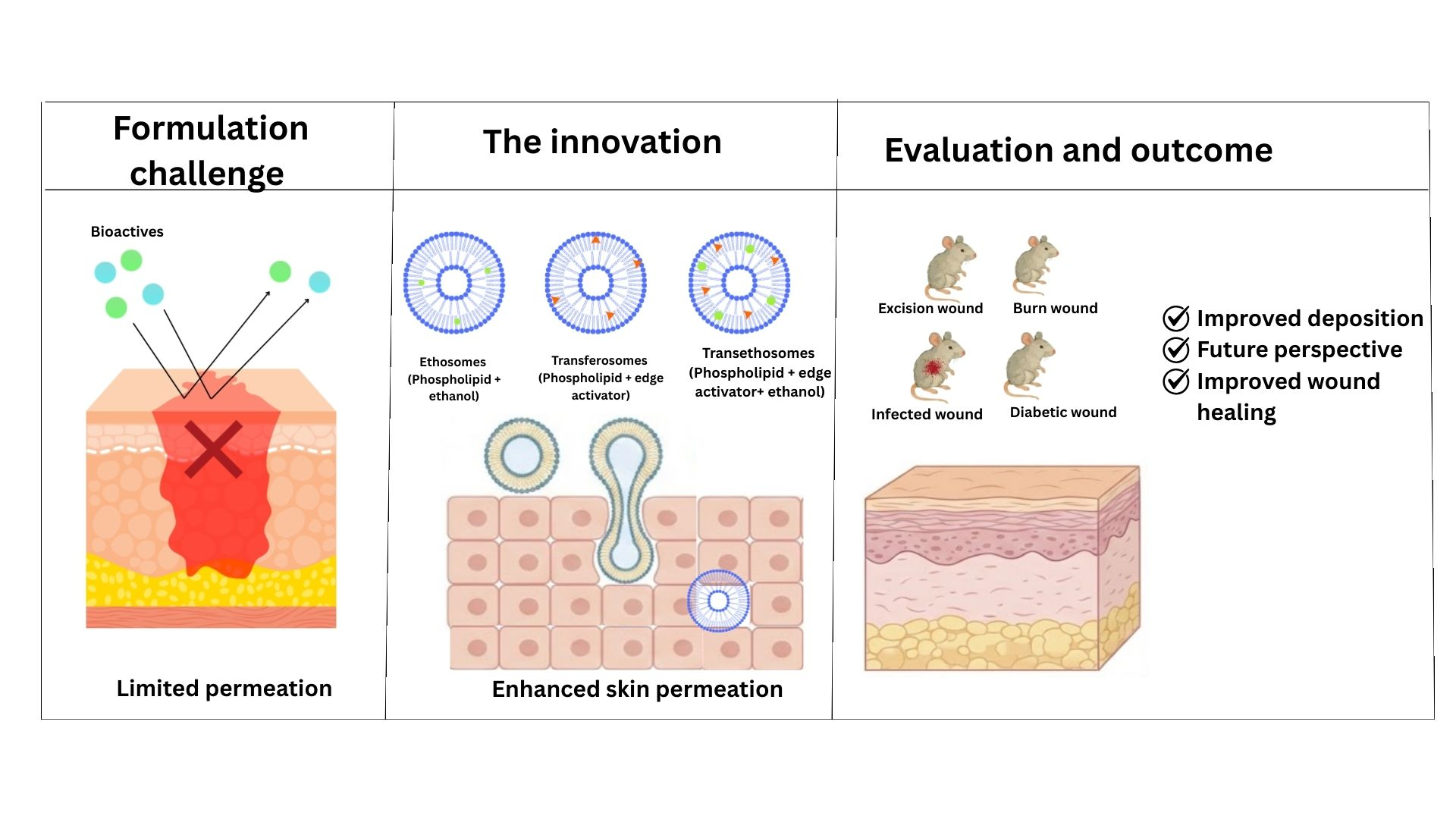
| Description | Soft phospholipid nanovesicles with a relatively high ethanol content (~20–45% v/v) for fluidization and water, often combined with propylene glycol. Designed to enhance dermal/transdermal drug delivery by increasing both skin permeability and vesicle flexibility. | Ultradeformable (elastic) lipid vesicles composed of phospholipids and an edge activator for high flexibility. Deformability enables passage through narrow skin pores without breaking, aided by the transdermal hydration/osmotic gradient. | Advanced ethosomal vesicles composed of phospholipids, ethanol, and an edge activator (surfactant) and/or other permeation enhancers. This unique combination imparts higher vesicle deformability and significantly improves skin permeation, enabling deeper drug delivery into the skin layers compared with conventional ethosomes or transferosomes. |
| Differentiation | Characterized by a high ethanol content, which plays a critical role in enhancing skin permeation. Ethanol disrupts the lipid organization of the stratum corneum and increases the ethosomes’ fluidity, leading to increased permeability, allowing them to permeate the skin more effectively than conventional liposomes. Relatively soft and flexible, they are generally less elastic than transferosomes due to the absence of edge activators in their formulation. | Contains an edge activator as the key component, without ethanol. Permeates the skin primarily through extreme membrane elasticity combined with hydration- or osmotic-driven transport via skin microchannels. Ethanol is absent or present only in low amounts, with skin permeation relying mainly on vesicle deformability by surfactant rather than lipid disruption. | Vesicular systems incorporating ethanol and an edge activator within the same vesicular system. Demonstrate higher drug entrapment efficiency. Dual composition produces synergistic enhancement of vesicle deformability and skin permeation. Often achieve higher skin deposition and transdermal drug flux than either conventional ethosomes or transferosomes for a wide range of active compounds. |
| Advantages | High skin permeation and drug deposition for many hydrophilic and lipophilic drugs. High drug loading/solubilization due to ethanol. Relatively simple, scalable preparation. | Exceptional deformability allows delivery through intact stratum corneum. Can deliver wide range of actives (including peptides/proteins) with reduced invasiveness. Often enable high skin permeation at low drug dose; suitable for controlled/targeted delivery. | Greater deformability and permeation than ethosomes due to edge activator and ethanol. Often improve delivery of larger/less permeable molecules. Can enhance both skin retention (topical) and transdermal flux depending on composition. |
| Disadvantages | High ethanol may cause irritation/dryness in sensitive skin. Volatility can affect composition if not well sealed. Some formulations show drug leakage or vesicle fusion on storage. | Edge activators may irritate skin and can destabilize membranes if used at high levels. Often less physically stable (aggregation/leakage) and sensitive to processing conditions. Need careful optimization and storage. Difficult to load hydrophobic drugs. | More complex composition (ethanol and surfactant) may increase irritation potential and require careful safety evaluation. Surfactant/ethanol can increase drug leakage. Stability depends strongly on formulation variables. High cost. |
| Method of preparation | Cold method (most common)/hot method. | Thin-film hydration (most common), reverse-phase evaporation and ethanol injection (less common). | Cold method (most common)/hot method. |
| Component Category | Vesicular System | Examples | Role in Vesicles |
|---|---|---|---|
| Phospholipids | Ethosomes, transferosomes, transethosomes | Soybean-derived phosphatidylcholine (PC) (Phospholipon® 90G, Phospholipon® 80H, Lipoid® S 100, Lipoid® S 75), semi-synthetic PC (dipalmitoyl PC, distearoyl PC), egg-derived PC (Lipoid® E 80, Lipoid® E 75), hydrogenated phospholipids (Phospholipon® 90H, Phospholipon® 80H), lecithin (soy lecithin Epikuron® 200/Epikuron® 145V) | Form vesicular bilayer, enhance drug entrapment and interaction with stratum corneum (SC) lipids, improve vesicle stability and rigidity. |
| Alcohol | Ethosomes, transethosomes | Ethanol, isopropyl alcohol, propylene glycol | Improves membrane fluidity and deformability, solubilizes drugs and enhances skin permeation. |
| Edge activators (surfactants) | Transferosomes, transethosomes | Nonionic (tween 80, tween 20, span 60, Cremophor EL), ionic bile salts (sodium cholate, sodium deoxycholate), cationic (cetyltrimethylammonium bromide, dimethyldidodecylammonium bromide) | Impart ultradeformability and elasticity to vesicles, enhancing transdermal permeation. |
| Aqueous phase | Ethosomes, transferosomes, transethosomes | Purified water, phosphate buffer | Hydration medium for vesicle formation, influences pH and stability. |
| Permeation enhancers | Ethosomes, transethosomes | Fatty acids (oleic acid), terpenes (menthol, limonene, iso-eucalyptol), glycols (propylene glycol), polar aprotic organic solvent (dimethyl sulfoxide) and dendritic polymer (polyamidoamine G3), volatile oil (eucalyptus oil, peppermint oil, turpentine oil, alcohol (ethanol), anionic surfactant (sodium lauryl sulphate), glycol ether (transcutol) | Fluidize vesicular and skin lipids and disrupt SC lipid structure, thereby facilitating enhanced skin drug permeation. |
| Membrane stabilizers (optional) | Ethosomes, transferosomes, transethosomes | Cholesterol | Enhance vesicle stability and reduce drug leakage. Excessive amounts may reduce deformability. |
| Charge-inducing agents (optional) | Ethosomes, transferosomes, transethosomes | Dicetyl phosphate, cetyltrimethylammonium bromide | Modify surface charge to improve vesicle stability and skin interaction. |
| Cryoprotectants (optional) | Ethosomes, transferosomes, Transethosomes | Trehalose, mannitol, sucrose | Protect vesicles during freeze-drying and prevent aggregation and fusion during storage. |
| Gelling agents (optional) | Ethosomes, transferosomes, transethosomes | Carbopol 934/940, hydroxypropyl methylcellulose (HPMC) | Increase viscosity and skin retention and improve patient compliance and controlled release. |
| Neutralizers/pH adjusters (optional) | Ethosomes, transferosomes, transethosomes | Triethanolamine, sodium hydroxide | Neutralize carbopol and adjust pH for skin compatibility. |
| Disease/Disorder | Drug/Phytochemical | Composition | Particle Size, Zeta Potential, Polydispersity Index, Encapsulation Efficiency | Key Functional Outcome | Wound Healing Outcome | Reference |
|---|---|---|---|---|---|---|
| Excision wound healing | Curcuma longa | Soya phosphatidyl choline, ethanol, tween 80, sodium lauryl sulphate | 34.8 to 371 nm, 23.2 ± 7.47–36.8 ± 7.47 mV, 0.5 ± 0.35–1.2 ± 0.35, 67.76 ± 7.34% | Methanolic extract exhibited greater antibacterial activity than the ethanolic and aqueous extracts. | Improved wound contraction at a dose rate of 0.5 g/cm2 and 1.0 g/cm2, reduced pain and enhanced granulation tissue formation compared with crude extract. | [156] |
| Microbial wound healing | Garlic essential oil | Soya PC, sodium lauryl sulphate and tween 80 | 91.28–871.10 nm, 0.273, −19.6 mV, 98.58% | Strong antibacterial and antifungal activity in guinea pig and mouse models. | Enhanced epithelial regeneration, collagen deposition, fibroblast proliferation and neovascularization with 0. 5% garlic oil comparable to standard, povidone–iodine. | [157] |
| Diabetic wound healing | Kaempferol | Soya lecithin, ethanol, propylene glycol, carbopol 934, cholesterol | 186.8 nm, 31.9 mV, 0.285, 96.2% | Enhanced antimicrobial activity against MRSA and improved drug delivery (≈2-fold pharmacokinetic increase). | Improved re-epithelialization, reduced ulceration and accelerated wound closure in Wistar albino diabetic rat models. | [158] |
| Burn wound healing | Curcumin | Egg lecithin, cholesterol, ethanol, carbopol | 85% | Enhanced antibacterial activity and improved formulation stability compared to free curcumin. Demonstrated efficacy against burn wound bacterial flora comparable to silver sulfadiazine cream. | Accelerated re-epithelialization (p < 0.01), neovascularization (p < 0.01), collagen synthesis p < 0.001), and granulation tissue formation (p < 0.001), with complete wound contraction by day 16. | [147] |
| Burn wound healing | Thymosin β-4 | l-alpha-PC from soybean, cholesterol, ethanol, sodium deoxycholate, carbomer 934 | 127.8 ± 3.2 nm, −25.1 ± 2.8 mV, 63.2 ± 4.5% | 1.67-fold higher cumulative drug release in vitro than that of the T-β4 gel. | Reduced wound healing time by half compared with conventional gel in second-degree burn model. | [159] |
| Disease/Disorder | Drug/Phytochemical | Composition | Particle Size, Zeta Potential, Polydispersity Index, Encapsulation Efficiency | Key Functional Outcome | Wound Healing Outcome | Reference |
|---|---|---|---|---|---|---|
| Excision wound healing | Centella asiatica | Cholesterol, sorbitan oleate, soyabean lecithin, propylene glycol, tween 80, tocopherol acetate, ammonium acryloyl dimethyltaurate/VP copolymer (aristoflex avc) | 135.22 ± 4.80 nm, −26.13 ± 0.58 mV, 0.22 ± 0.01, 68% (madecassoside) and 89% (asiaticoside) | Enhanced skin permeation vs. liposomes and niosomes due to high deformability index (1.31 ± 0.21 mg/cm2). | Increased fibroblast proliferation (91.9%) and collagen synthesis (213.3%). Reduced inflammation and improved epithelial regeneration over 21 days, with wound closure rates comparable to fibroblast growth factor. | [195] |
| Excision wound healing | Sesamol | Tween 80, span 80, carbopol 940 | 272 ± 1.04 nm, −28.65 mV, 70 ± 1.90% | Improved skin penetration and deposition. Highest deformability index value (28.6 ± 1.08) was obtained with Tween-80 vesicles. | Enhanced wound contraction and improved histological architecture after 21 days of treatment. | [196] |
| Excision wound healing | Calendula officinalis | PC, cholesterol, span 80, dimethyl sulfoxide, propylene glycol, wool fat, hard paraffin, cetostearyl alcohol, soft paraffin | 110.5 ± 5.2 nm, −32.5 ± 2.8 mV, 0.214 ± 0.03, 82.4 ± 2.1% | Sustained drug release (88.2% over 24 h) following zero-order kinetics. | Enhanced wound contraction (98.7% by day 14), supported by histopathological evidence of organized collagen deposition, reduced inflammation and complete re-epithelialization. | [197] |
| Microbial wound healing | Rhodomyrtus tomentosa | Lecithin, cholesterol | 405.3 ± 2.0 nm, −61.62 ± 0.86 mV, 0.16 ± 0.08, 81.90 ± 0.31% | Stable nanosized vesicles with antioxidant potential. Free radical scavenging assay showed high scavenging activity against DPPH and ABTS radicals. | Broad-spectrum antimicrobial activity with minimum inhibitory and minimum bactericidal concentrations at 8–256 and 64–1024 μg/mL, respectively. Significant NO inhibition. | [198] |
| Diabetic wound healing | Azadirachta indica, Ocimum sanctum and Allium sativum | Phospholipid, span 60, tween 80, carbopol 940 | 165 ± 2.5 nm, −35.0 ± 1.2 mV, 0.20, 85.6 ± 1.7% | Sustained drug release over 24 h, good physical and chemical stability. Good extrudability (4.2–5.1 g/cm2), indicating superior dispensing characteristics. | 92.3% wound contraction in diabetic rats by day 21. | [199] |
| Burn wound healing | Fusidic acid | PC S100, span 80, cholesterol, carbopol 934 | 145.16 nm, −42.7 mV, 0.269, 87.47 ± 0.119% | Sustained drug release following Fickian diffusion, with 47% and 94% drug release at 6 h and 24 h respectively. | Potential antibacterial wound healing. | [184] |
| Wound Type/Model (Examples) | Evaluation Property | Method/Instrument | Principle | Evaluation Parameter | Significance |
|---|---|---|---|---|---|
| Excision wound (full thickness circular/elliptical) | Wound closure/contraction | Digital photography + digital planimetry | Calibrated images used to compute wound area over time | Wound area (cm2), % closure, % contraction, healing rate | Primary efficacy endpoint for topical formulations in excisional wounds |
| Epithelialization | Visual scoring + histology (H&E) | Endpoint = complete epithelial cover, histology shows epithelial migration | Epithelialization period (days), epithelial gap, epidermal thickness | Indicates barrier restoration, complements contraction | |
| Mechanical strength | Tensile strength testing (tensiometer/UTM) | Measures breaking force of healed tissue (commonly incision model) | Breaking strength (N), tensile strength (MPa) | Functional outcome: stronger healed tissue = better remodeling | |
| Collagen deposition (biochemical) | Hydroxyproline assay | Hydroxyproline quantifies collagen content | Hydroxyproline (µg/mg tissue), total collagen estimates | Objective measure supporting histology, linked to tensile strength | |
| Granulation tissue quality | Histology (H&E) + morphometry | Measures granulation thickness/cellularity and tissue organization | Granulation thickness, fibroblast density and inflammatory score | Shows proliferative phase quality and wound bed maturity | |
| Skin penetration depth and spatial distribution | Confocal laser scanning microscopy using fluorescent probe-labeled vesicles/drug | Optical sectioning visualizes depthwise penetration of skin layers | Penetration depth (µm), fluorescence intensity vs. depth, distribution in epidermis/dermis | Direct evidence that ultra deformable vesicles can deliver payloads beyond SC, often used to compare vesicle systems | |
| Burn wound (partial/full thickness thermal burn) | Re-epithelialization | Histology (H&E) ± immunostaining | Tissue sections show epithelial regeneration over burn | % re-epithelialization, epidermal thickness | Core outcome in burn healing indicates restoration of skin surface |
| Collagen remodeling/scar architecture | Collagen imaging/histology (e.g., collagen fiber assessment) | Collagen organization and density assessed via imaging/staining | Collagen signal/intensity, fiber alignment, scar features | Scar quality and remodeling are critical in burns | |
| Angiogenesis/vascularization | Vessel imaging/quantification (e.g., vascular density) | Quantifies neovascularization in the burn area | Vessel density, angiogenesis markers | Angiogenesis supports granulation and repair | |
| Vesicle deformability | Extrusion method (forced through membrane) + size measurement | Ultradeformable vesicles pass through pores smaller than their diameter | Deformability index/elasticity, size before/after extrusion | Supports the squeeze-through mechanism, key differentiator for transethosomes (edge activator effect) | |
| Infected wound (infected excision/burn, mono- or polymicrobial) | Microbial burden | Total Viable Count (TVC)/Colony Forming Units (CFU) swab/tissue homogenate culture; CFU counting | Quantifies viable bacteria | CFU/g tissue, log reduction, species counts | Key endpoint distinguishing healing from antimicrobial efficacy |
| Infection status and monitoring | Clinical infection frameworks/qualitative–quantitative monitoring | Infection progresses along contamination, colonization, infection continuum | Local vs. spreading infection signs, monitoring response | Ensures correct interpretation and antimicrobial stewardship | |
| Biofilm/tissue invasion (optional, mechanistic) | Microscopy/SEM or model-specific imaging | Visualizes bacterial colonization/biofilm-like structures | Colonization patterns, biofilm indicators | Explains delayed healing and treatment failure in chronic infection | |
| Diabetic wound (STZ-induced, Db/db mice, high-fat/STZ combos) | Delayed closure (impaired healing) | Digital planimetry + time to closure | Same as excision closure but in impaired-healing context | % closure, delayed healing rate vs. control | Demonstrates performance under clinically relevant impairment |
| Inflammation and cytokine dysregulation | ELISA/RT-qPCR/Western blot | Quantifies inflammatory mediators/growth factors | IL-6, TNF-α, IL-10, growth factors, signaling proteins | Mechanistic proof: diabetic wounds are inflammation-prone and slow to resolve | |
| Oxidative stress/antioxidant status | MDA, SOD, CAT, GPx assays | Measures oxidative damage and antioxidant defenses | MDA, SOD/CAT/GPx activity | Supports mechanisms (oxidative stress contributes to impaired healing) | |
| Histopathology (granulation, collagen, epithelialization) | Histology + scoring | Tissue architecture shows delayed granulation and remodeling | Granulation thickness, collagen deposition, epithelial gap | Complements closure data, shows quality of repair |
Disclaimer/Publisher’s Note: The statements, opinions and data contained in all publications are solely those of the individual author(s) and contributor(s) and not of MDPI and/or the editor(s). MDPI and/or the editor(s) disclaim responsibility for any injury to people or property resulting from any ideas, methods, instructions or products referred to in the content. |
© 2026 by the authors. Licensee MDPI, Basel, Switzerland. This article is an open access article distributed under the terms and conditions of the Creative Commons Attribution (CC BY) license.
Share and Cite
Jacob, S.; Varkey, N.R.; Nair, A.B. Ultradeformable Vesicles for Wound Healing: Ethosomes, Transferosomes, and Transethosomes in Topical Drug Delivery. Pharmaceutics 2026, 18, 361. https://doi.org/10.3390/pharmaceutics18030361
Jacob S, Varkey NR, Nair AB. Ultradeformable Vesicles for Wound Healing: Ethosomes, Transferosomes, and Transethosomes in Topical Drug Delivery. Pharmaceutics. 2026; 18(3):361. https://doi.org/10.3390/pharmaceutics18030361
Chicago/Turabian StyleJacob, Shery, Namitha Raichel Varkey, and Anroop B. Nair. 2026. "Ultradeformable Vesicles for Wound Healing: Ethosomes, Transferosomes, and Transethosomes in Topical Drug Delivery" Pharmaceutics 18, no. 3: 361. https://doi.org/10.3390/pharmaceutics18030361
APA StyleJacob, S., Varkey, N. R., & Nair, A. B. (2026). Ultradeformable Vesicles for Wound Healing: Ethosomes, Transferosomes, and Transethosomes in Topical Drug Delivery. Pharmaceutics, 18(3), 361. https://doi.org/10.3390/pharmaceutics18030361