From Convenience to Clinical Efficacy: Selective TYK2 Inhibition in Psoriasis and the Evolving Role of Next-Generation Oral Targeted Therapies

 , , and
Abstract
1. Introduction
1.1. Systemic Nature of Psoriasis and Comorbidities
1.2. Impact of Psoriasis on Patient Quality of Life and Therapeutic Implications
1.3. Bridging the Gap: The Persisting Unmet Need for Safe and Effective Oral Therapies
1.4. Aim of the Review
2. From Conventional Systemics to Precision Therapies: The Evolution of Psoriasis Management
2.1. Conventional Systemic Therapies: Established Oral Options
2.2. Targeted Biologic Therapies: Modulating Key Cytokine Pathways
2.3. The Era of Targeted Small Molecules: The Role of Apremilast (PDE4 Inhibition)
3. Mechanism of Action and the Role of TYK2 in the Pathogenesis of Psoriasis
3.1. Key Cytokine Pathways in Psoriasis Pathogenesis and Their Involvement in JAK/STAT Signaling
3.1.1. The IL-23/Th17/IL-17 Axis in Keratinocyte Hyperproliferation and Inflammation
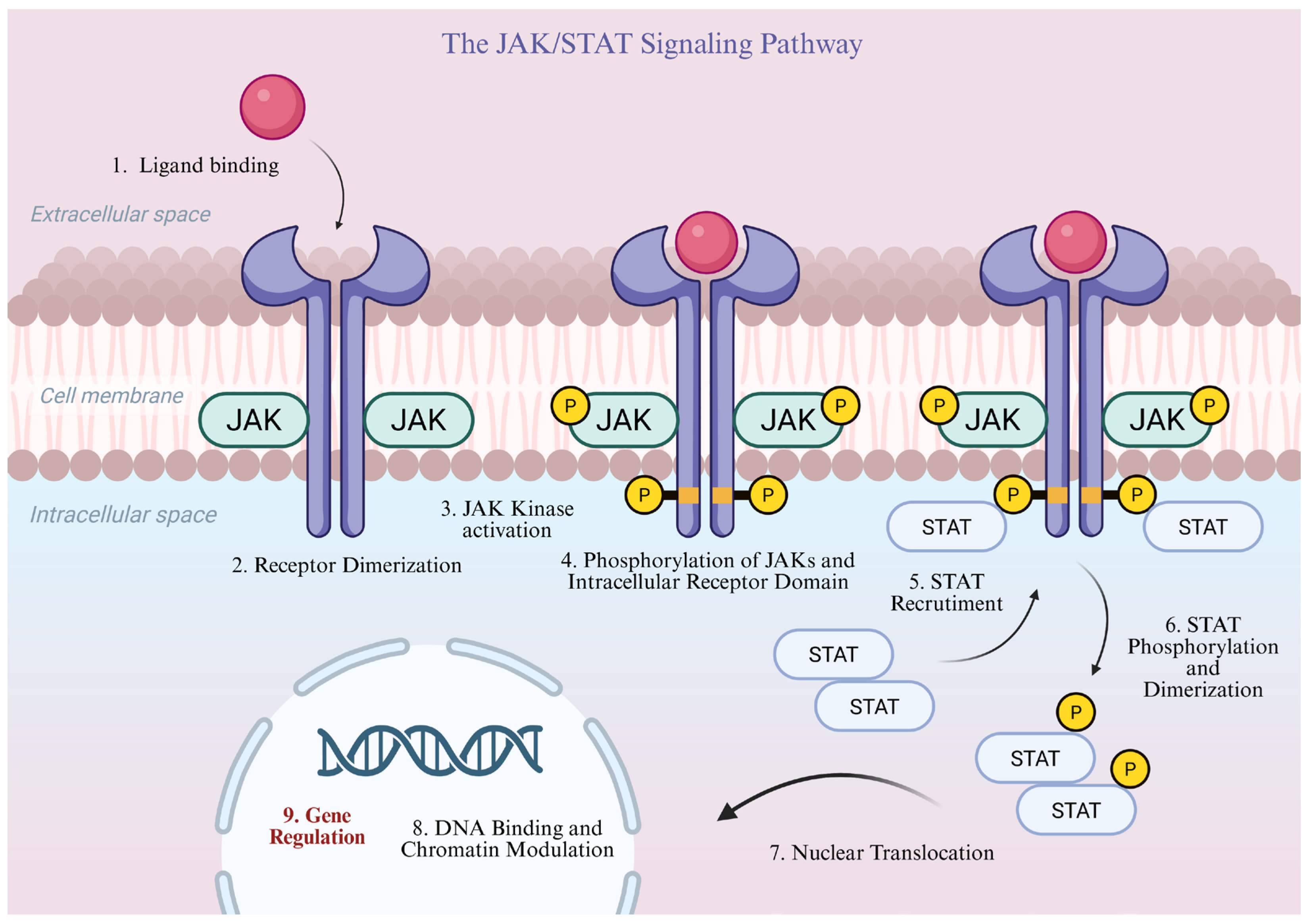
3.1.2. Structure and Function of the JAK–STAT Signaling Pathway
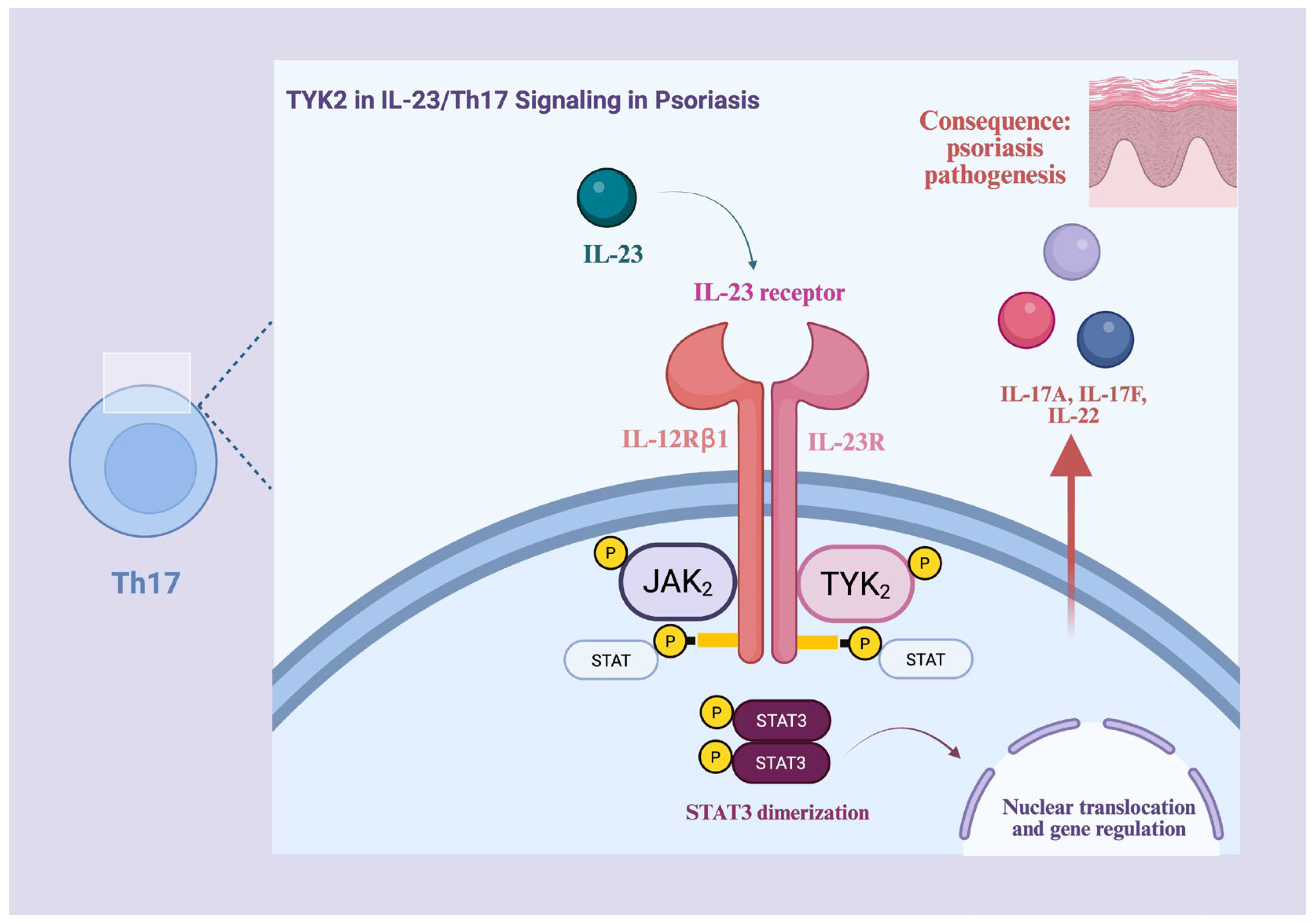
3.1.3. TYK2 Kinase in IL-23/Th17-Mediated Psoriasis Pathogenesis
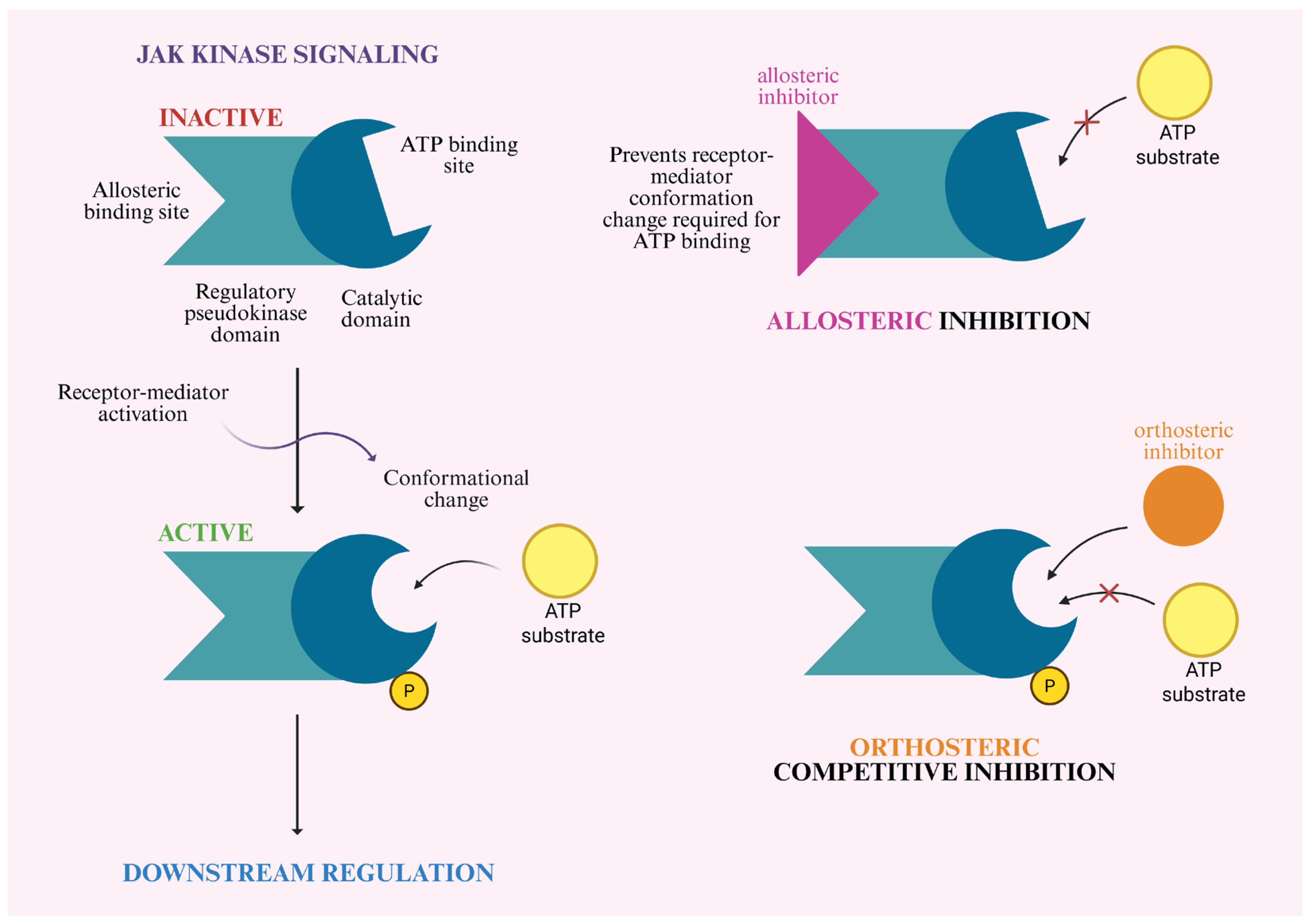
3.2. Molecular Basis of TYK2 Selectivity: Allosteric vs. Orthosteric Mechanisms
4. Advances in Safety of Targeted Therapies: Selective TYK2 vs. Nonselective JAK Inhibitors
4.1. Safety Profile of Nonselective JAK Inhibitors: Clinical and Mechanistic Insights
4.1.1. Mechanistic Basis of Toxicity in Nonselective JAK Inhibition
4.1.2. ORAL Surveillance Trial: Clinical Evidence of Safety Risks
4.1.3. Regulatory Warnings and Guideline Recommendations
4.1.4. Safety Limitations of Nonselective JAK Inhibitors: Deucravacitinib Fills the Therapeutic Gap
4.2. Safety and Tolerability of Selective TYK2 Inhibitors
4.2.1. The Impact of Selectivity on the Safety Profile
4.2.2. Comprehensive Evaluation of the Long-Term Safety of Deucravacitinib
5. Clinical Efficacy and Therapeutic Value of Next-Generation Oral Targeted Therapies
5.1. Deucravacitinib: The First-in-Class Selective TYK2 Inhibitor
5.1.1. Regulatory Status, Administration, and Dosing of Deucravacitinib
5.1.2. Clinical Efficacy of Deucravacitinib: From Phase 1 to Phase 3
5.1.3. Time to Clinical Response and Long-Term Efficacy of Deucravacitinib
5.2. Envudeucitinib: A Highly Selective TYK2 Inhibitor
5.2.1. Administration and Dosing of Envudeucitinib
5.2.2. Clinical Efficacy of Envudeucitinib: Evidence from Clinical Trials
5.2.3. Time to Clinical Response and Long-Term Efficacy of Envudeucitinib
5.3. Zasocitinib: Another Selective TYK2 Inhibitor
5.3.1. Administration and Dosing
5.3.2. Clinical Efficacy of Zasocitinib: Evidence from Clinical Trials
5.3.3. Time to Clinical Response and Long-Term Efficacy of Zasocitinib
5.4. Comparing Efficacy and Safety of TYK2 Inhibitors with Established Therapies
5.4.1. Comparison with First-Generation Targeted Oral Therapies
5.4.2. Comparison with Biologic Therapies
5.5. Oral Administration: Advantages, Convenience, and Practical Considerations
5.5.1. Patient Comfort and Preference
5.5.2. Impact on Adherence and Treatment Outcomes
5.6. Bridging the Gap: Combining High Efficacy with Oral Convenience
5.7. Potential Challenges and Limitations of TYK2 Inhibitors
6. Translational Relevance: Future Perspectives and Research Directions
6.1. Current Evidence Limitations and the Need for Real-World Data
6.2. Next-Generation TYK2 Inhibitors
6.3. Unlocking Treatment Opportunities for Diverse Patient Populations
6.4. Exploring New Therapeutic Indications
6.5. Towards Precision Medicine: Biomarkers for Predicting Treatment Response
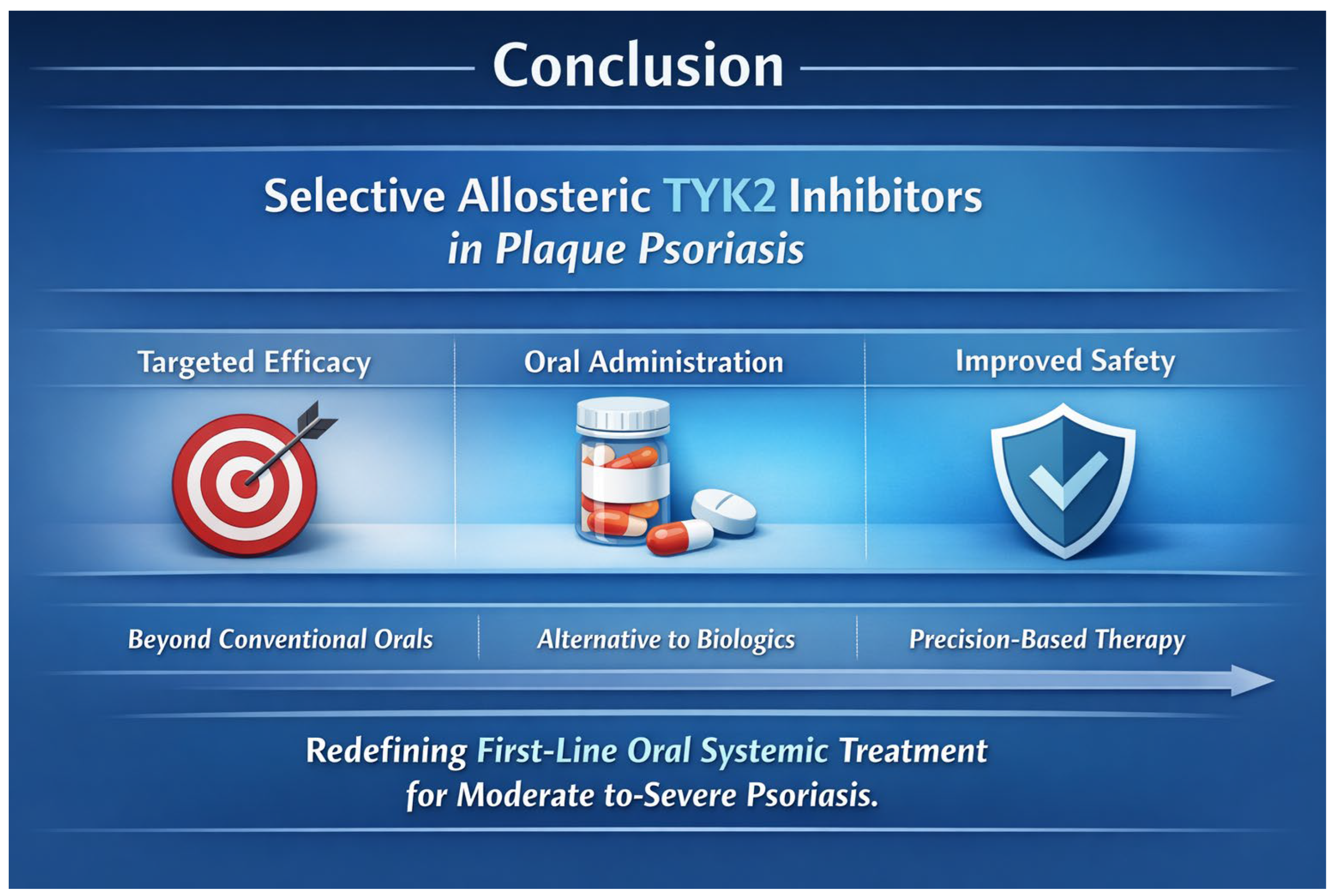
7. Conclusions
Author Contributions
Funding
Institutional Review Board Statement
Informed Consent Statement
Data Availability Statement
Acknowledgments
Conflicts of Interest
References
- Michalek, I.M.; Loring, B.; John, S.M. A Systematic Review of Worldwide Epidemiology of Psoriasis. J. Eur. Acad. Dermatol. Venereol. 2017, 31, 205–212. [Google Scholar] [CrossRef] [PubMed]
- Mehta, S.; Sathe, N.C. Plaque Psoriasis; StatPearls: St. Petersburg, FL, USA, 2025. [Google Scholar]
- Armstrong, A.W.; Read, C. Pathophysiology, Clinical Presentation, and Treatment of Psoriasis: A Review. J. Am. Med. Assoc. 2020, 323, 1945–1960. [Google Scholar] [CrossRef] [PubMed]
- Takeshita, J.; Grewal, S.; Langan, S.M.; Mehta, N.N.; Ogdie, A.; Van Voorhees, A.S.; Gelfand, J.M. Psoriasis and Comorbid Diseases: Epidemiology. J. Am. Acad. Dermatol. 2017, 76, 377–390. [Google Scholar] [CrossRef]
- Egeberg, A.; Gisondi, P.; Carrascosa, J.M.; Warren, R.B.; Mrowietz, U. The Role of the Interleukin-23/Th17 Pathway in Cardiometabolic Comorbidity Associated with Psoriasis. J. Eur. Acad. Dermatol. Venereol. 2020, 34, 1695–1706. [Google Scholar] [CrossRef]
- Mustață, M.-L.; Neagoe, C.-D.; Rădulescu, V.-M.; Dragne, I.-G.; Cîmpeanu, R.-C.; Radu, L.; Ahrițculesei, R.-V.; Forțofoiu, D.; Predoi, M.-C.; Ianoși, S.-L. Association Between Systemic Inflammation, Metabolic Syndrome and Quality of Life in Psoriasis Patients. Life 2025, 15, 212. [Google Scholar] [CrossRef] [PubMed]
- Armstrong, E.J.; Harskamp, C.T.; Armstrong, A.W. Psoriasis and Major Adverse Cardiovascular Events: A Systematic Review and Meta-Analysis of Observational Studies. J. Am. Heart Assoc. 2013, 2, e000062. [Google Scholar] [CrossRef] [PubMed]
- Svedbom, A.; Mallbris, L.; González-Cantero, Á.; Playford, M.; Wu, C.; Mehta, N.N.; Ståhle, M. Skin Inflammation, Systemic Inflammation, and Cardiovascular Disease in Psoriasis. J. Am. Med. Assoc. Dermatol. 2025, 161, 81–86. [Google Scholar] [CrossRef]
- Fang, N.; Jiang, M.; Fan, Y. Association Between Psoriasis and Subclinical Atherosclerosis: A Meta-Analysis. Medicine 2016, 95, e3576. [Google Scholar] [CrossRef]
- Prey, S.; Paul, C.; Bronsard, V.; Puzenat, E.; Gourraud, P.-A.; Aractingi, S.; Aubin, F.; Bagot, M.; Cribier, B.; Joly, P.; et al. Cardiovascular Risk Factors in Patients with Plaque Psoriasis: A Systematic Review of Epidemiological Studies. J. Eur. Acad. Dermatol. Venereol. 2010, 24, 23–30. [Google Scholar] [CrossRef]
- Armstrong, A.W.; Blauvelt, A.; Callis Duffin, K.; Huang, Y.-H.; Savage, L.J.; Guo, L.; Merola, J.F. Psoriasis. Nat. Rev. Dis. Primers 2025, 11, 45. [Google Scholar] [CrossRef]
- Armstrong, A.W.; Harskamp, C.T.; Armstrong, E.J. The Association between Psoriasis and Obesity: A Systematic Review and Meta-Analysis of Observational Studies. Nutr. Diabetes 2012, 2, e54. [Google Scholar] [CrossRef]
- Cipolla, S.; Catapano, P.; Bonamico, A.F.; De Santis, V.; Murolo, R.; Romano, F.; Volpicelli, A.; Perris, F.; Lo Schiavo, A.; Fabrazzo, M.; et al. Factors Associated with Anxiety, Depression, and Quality of Life in Patients with Psoriasis: A Cross-Sectional Study. Brain Sci. 2024, 14, 865. [Google Scholar] [CrossRef]
- Ghezzi, G.; Costanzo, A.; Borroni, R.G. Health-Related Quality of Life in Psoriasis: Literature Review. J. Clin. Med. 2024, 13, 4623. [Google Scholar] [CrossRef]
- Hudgens, S.; Howerter, A.; Keith, S.; Evans, C.; Pelletier, C. Development and Validation of a Psoriasis Treatment Acceptability Measure through Group Concept Mapping. Health Qual. Life Outcomes 2023, 21, 83. [Google Scholar] [CrossRef] [PubMed]
- Nast, A.; Smith, C.; Spuls, P.I.; Avila Valle, G.; Bata-Csörgö, Z.; Boonen, H.; De Jong, E.; Garcia-Doval, I.; Gisondi, P.; Kaur-Knudsen, D.; et al. EuroGuiDerm Guideline on the Systemic Treatment of Psoriasis Vulgaris—Part 1: Treatment and Monitoring Recommendations. J. Eur. Acad. Dermatol. Venereol. 2020, 34, 2461–2498. [Google Scholar] [CrossRef]
- Zaino, M.; Parks, E.; McNeil, J.; Feldman, S. Patients’ Preferences Regarding Modes of Systemic Psoriasis Treatment—A Qualitative Study. J. Psoriasis Psoriatic Arthritis 2024, 9, 136–142. [Google Scholar] [CrossRef]
- Feldman, S.R.; Holmen Moeller, A.; Erntoft Idemyr, S.T.; González, J.M. Relative Importance of Mode of Administration in Treatment Preferences among Plaque Psoriasis Patients in the United States. J. Health Econ. Outcomes Res. 2017, 4, 141–157. [Google Scholar] [CrossRef]
- Belinchón, I.; Rivera, R.; Blanch, C.; Comellas, M.; Lizán, L. Adherence, Satisfaction and Preferences for Treatment in Patients with Psoriasis in the European Union: A Systematic Review of the Literature. Patient Prefer. Adherence 2016, 10, 2357–2367. [Google Scholar] [CrossRef]
- Chan, S.A.; Hussain, F.; Lawson, L.G.; Ormerod, A.D. Factors Affecting Adherence to Treatment of Psoriasis: Comparing Biologic Therapy to Other Modalities. J. Dermatolog. Treat. 2013, 24, 64–69. [Google Scholar] [CrossRef] [PubMed]
- Menter, A.; Strober, B.E.; Kaplan, D.H.; Kivelevitch, D.; Prater, E.F.; Stoff, B.; Armstrong, A.W.; Connor, C.; Cordoro, K.M.; Davis, D.M.R.; et al. Joint AAD-NPF Guidelines of Care for the Management and Treatment of Psoriasis with Biologics. J. Am. Acad. Dermatol. 2019, 80, 1029–1072. [Google Scholar] [CrossRef] [PubMed]
- Coscarella, G.; Malvaso, D.; Mannino, M.; Caldarola, G.; Fossati, B.; De Simone, C.; Chiricozzi, A.; Peris, K. The Preclinical Discovery and Development of Deucravacitinib for the Treatment of Psoriasis. Expert Opin. Drug Discov. 2023, 18, 1201–1208. [Google Scholar] [CrossRef]
- Torres, T.; Puig, L. Apremilast: A Novel Oral Treatment for Psoriasis and Psoriatic Arthritis. Am. J. Clin. Dermatol. 2018, 19, 23–32. [Google Scholar] [CrossRef]
- Santoleri, F.; Musicco, F.; Fulgenzio, C.; Abrate, P.; Pestrin, L.; Pasut, E.; Modesti, G.; Giannini, R.; De Rosa, S.; Piccoli, M.; et al. Adherence, Persistence and Treatment Switching in Psoriasis. Immunotherapy 2024, 16, 611–621. [Google Scholar] [CrossRef]
- Piragine, E.; Petri, D.; Martelli, A.; Janowska, A.; Dini, V.; Romanelli, M.; Calderone, V.; Lucenteforte, E. Adherence and Persistence to Biological Drugs for Psoriasis: Systematic Review with Meta-Analysis. J. Clin. Med. 2022, 11, 1506. [Google Scholar] [CrossRef] [PubMed]
- Armstrong, A.W.; Jayade, S.; Rege, S.; Joshi, N.; Patel, V.; Kalirai, S.; Wolin, D.; Boyle, K.; Patel, D.; Seigel, L. Evaluating Treatment Choice in Patients with Moderate to Severe Psoriasis in the United States: Results from a US Patient Survey. Dermatol. Ther. 2024, 14, 421–439. [Google Scholar] [CrossRef] [PubMed]
- Florek, A.G.; Wang, C.J.; Armstrong, A.W. Treatment Preferences and Treatment Satisfaction among Psoriasis Patients: A Systematic Review. Arch. Dermatol. Res. 2018, 310, 271–319. [Google Scholar] [CrossRef] [PubMed]
- Armstrong, A.W.; Gooderham, M.; Warren, R.B.; Papp, K.A.; Strober, B.; Thaçi, D.; Morita, A.; Szepietowski, J.C.; Imafuku, S.; Colston, E.; et al. Deucravacitinib versus Placebo and Apremilast in Moderate to Severe Plaque Psoriasis: Efficacy and Safety Results from the 52-Week, Randomized, Double-Blinded, Placebo-Controlled Phase 3 POETYK PSO-1 Trial. J. Am. Acad. Dermatol. 2023, 88, 29–39. [Google Scholar] [CrossRef] [PubMed]
- Lambert, J.L.W.; Segaert, S.; Ghislain, P.D.; Hillary, T.; Nikkels, A.; Willaert, F.; Lambert, J.; Speeckaert, R. Practical Recommendations for Systemic Treatment in Psoriasis According to Age, Pregnancy, Metabolic Syndrome, Mental Health, Psoriasis Subtype and Treatment History (BETA-PSO: Belgian Evidence-Based Treatment Advice in Psoriasis; Part 1). J. Eur. Acad. Dermatol. Venereol. 2020, 34, 1654–1665. [Google Scholar] [CrossRef]
- Armstrong, A.W.; Puig, L.; Joshi, A.; Skup, M.; Williams, D.; Li, J.; Betts, K.A.; Augustin, M. Comparison of Biologics and Oral Treatments for Plaque Psoriasis: A Meta-Analysis. J. Am. Med. Assoc. Dermatol. 2020, 156, 258–269. [Google Scholar] [CrossRef]
- Schmitt, J.; Rosumeck, S.; Thomaschewski, G.; Sporbeck, B.; Haufe, E.; Nast, A. Efficacy and Safety of Systemic Treatments for Moderate-to-Severe Psoriasis: Meta-Analysis of Randomized Controlled Trials. Br. J. Dermatol. 2014, 170, 274–303. [Google Scholar] [CrossRef]
- Sbidian, E.; Chaimani, A.; Guelimi, R.; Garcia-Doval, I.; Hua, C.; Hughes, C.; Naldi, L.; Kinberger, M.; Afach, S.; Le Cleach, L. Systemic Pharmacological Treatments for Chronic Plaque Psoriasis: A Network Meta-Analysis. Cochrane Database Syst. Rev. 2023, 7, CD011535. [Google Scholar] [CrossRef]
- Amin, M.; No, D.J.; Egeberg, A.; Wu, J.J. Choosing First-Line Biologic Treatment for Moderate-to-Severe Psoriasis: What Does the Evidence Say? Am. J. Clin. Dermatol. 2018, 19, 1–13. [Google Scholar] [CrossRef]
- Mahil, S.K.; Ezejimofor, M.C.; Exton, L.S.; Manounah, L.; Burden, A.D.; Coates, L.C.; de Brito, M.; McGuire, A.; Murphy, R.; Owen, C.M.; et al. Comparing the Efficacy and Tolerability of Biologic Therapies in Psoriasis: An Updated Network Meta-Analysis. Br. J. Dermatol. 2020, 183, 638–649. [Google Scholar] [CrossRef]
- Erichsen, C.Y.; Jensen, P.; Kofoed, K. Biologic Therapies Targeting the Interleukin (IL)-23/IL-17 Immune Axis for the Treatment of Moderate-to-Severe Plaque Psoriasis: A Systematic Review and Meta-Analysis. J. Eur. Acad. Dermatol. Venereol. 2020, 34, 30–38. [Google Scholar] [CrossRef] [PubMed]
- Cui, L.; Chen, R.; Subedi, S.; Yu, Q.; Gong, Y.; Chen, Z.; Shi, Y. Efficacy and Safety of Biologics Targeting IL-17 and IL-23 in the Treatment of Moderate-to-Severe Plaque Psoriasis: A Systematic Review and Meta-Analysis of Randomized Controlled Trials. Int. Immunopharmacol. 2018, 62, 46–58. [Google Scholar] [CrossRef]
- Bilal, J.; Berlinberg, A.; Bhattacharjee, S.; Trost, J.; Riaz, I.B.; Kurtzman, D.J.B. A Systematic Review and Meta-Analysis of the Efficacy and Safety of the Interleukin (IL)-12/23 and IL-17 Inhibitors Ustekinumab, Secukinumab, Ixekizumab, Brodalumab, Guselkumab and Tildrakizumab for the Treatment of Moderate to Severe Plaque Psoriasis. J. Dermatolog. Treat. 2018, 29, 569–578. [Google Scholar] [CrossRef] [PubMed]
- Blauvelt, A.; Papp, K.A.; Merola, J.F.; Gottlieb, A.B.; Cross, N.; Madden, C.; Wang, M.; Cioffi, C.; Griffiths, C.E.M. Bimekizumab for Patients with Moderate to Severe Plaque Psoriasis: 60-Week Results from BE ABLE 2, a Randomized, Double-Blinded, Placebo-Controlled, Phase 2b Extension Study. J. Am. Acad. Dermatol. 2020, 83, 1367–1374. [Google Scholar] [CrossRef] [PubMed]
- Martin, G. Novel Therapies in Plaque Psoriasis: A Review of Tyrosine Kinase 2 Inhibitors. Dermatol. Ther. 2023, 13, 417–435. [Google Scholar] [CrossRef]
- Reich, K.; Gooderham, M.; Green, L.; Bewley, A.; Zhang, Z.; Khanskaya, I.; Day, R.M.; Goncalves, J.; Shah, K.; Piguet, V.; et al. The Efficacy and Safety of Apremilast, Etanercept and Placebo in Patients with Moderate-to-Severe Plaque Psoriasis: 52-Week Results from a Phase IIIb, Randomized, Placebo-Controlled Trial (LIBERATE). J. Eur. Acad. Dermatol. Venereol. 2017, 31, 507–517. [Google Scholar] [CrossRef]
- Papp, K.; Reich, K.; Leonardi, C.L.; Kircik, L.; Chimenti, S.; Langley, R.G.B.; Hu, C.; Stevens, R.M.; Day, R.M.; Gordon, K.B.; et al. Apremilast, an Oral Phosphodiesterase 4 (PDE4) Inhibitor, in Patients with Moderate to Severe Plaque Psoriasis: Results of a Phase III, Randomized, Controlled Trial (Efficacy and Safety Trial Evaluating the Effects of Apremilast in Psoriasis [ESTEEM] 1). J. Am. Acad. Dermatol. 2015, 73, 37–49. [Google Scholar] [CrossRef]
- Van Voorhees, A.S.; Stein Gold, L.; Lebwohl, M.; Strober, B.; Lynde, C.; Tyring, S.; Cauthen, A.; Sofen, H.; Zhang, Z.; Paris, M.; et al. Efficacy and Safety of Apremilast in Patients with Moderate to Severe Plaque Psoriasis of the Scalp: Results of a Phase 3b, Multicenter, Randomized, Placebo-Controlled, Double-Blind Study. J. Am. Acad. Dermatol. 2020, 83, 96–103. [Google Scholar] [CrossRef]
- Liu, Y.; Li, Y.; Du, H. Efficacy of Apremilast for Psoriasis: A Meta-Analysis of Randomized Controlled Studies. Postepy Dermatol. Alergol. 2023, 40, 165–170. [Google Scholar] [CrossRef]
- Strober, B.; Bagel, J.; Lebwohl, M.; Stein Gold, L.; Jackson, J.M.; Chen, R.; Goncalves, J.; Levi, E.; Callis Duffin, K. Efficacy and Safety of Apremilast in Patients With Moderate Plaque Psoriasis With Lower BSA: Week 16 Results from the UNVEIL Study. J. Drugs Dermatol. 2017, 16, 801–808. [Google Scholar]
- Rich, P.; Gooderham, M.; Bachelez, H.; Goncalves, J.; Day, R.M.; Chen, R.; Crowley, J. Apremilast, an Oral Phosphodiesterase 4 Inhibitor, in Patients with Difficult-to-Treat Nail and Scalp Psoriasis: Results of 2 Phase III Randomized, Controlled Trials (ESTEEM 1 and ESTEEM 2). J. Am. Acad. Dermatol. 2016, 74, 134–142. [Google Scholar] [CrossRef]
- Crowley, J.; Thaçi, D.; Joly, P.; Peris, K.; Papp, K.A.; Goncalves, J.; Day, R.M.; Chen, R.; Shah, K.; Ferrándiz, C.; et al. Long-Term Safety and Tolerability of Apremilast in Patients with Psoriasis: Pooled Safety Analysis for ≥156 Weeks from 2 Phase 3, Randomized, Controlled Trials (ESTEEM 1 and 2). J. Am. Acad. Dermatol. 2017, 77, 310–317.e1. [Google Scholar] [CrossRef]
- Del Alcázar, E.; Suárez-Pérez, J.A.; Armesto, S.; Rivera, R.; Herrera-Acosta, E.; Herranz, P.; Martín, I.; Montesinos, E.; Hospital, M.; Vilarrasa, E.; et al. Real-World Effectiveness and Safety of Apremilast in Psoriasis at 52 Weeks: A Retrospective, Observational, Multicentre Study by the Spanish Psoriasis Group. J. Eur. Acad. Dermatol. Venereol. 2020, 34, 2821–2829. [Google Scholar] [CrossRef] [PubMed]
- Dragotto, M.; D’Onghia, M.; Trovato, E.; Tognetti, L.; Rubegni, P.; Calabrese, L. Therapeutic Potential of Targeting the JAK/STAT Pathway in Psoriasis: Focus on TYK2 Inhibition. J. Clin. Med. 2024, 13, 91. [Google Scholar] [CrossRef]
- Gómez-García, F.; Gómez-Arias, P.J.; Montilla-López, A.; Hernández-Parada, J.; Sanz-Cabanillas, J.L.; Ruano, J.; Parra-Peralbo, E. A Scoping Review on Use of Drugs Targeting the JAK/STAT Pathway in Psoriasis. Front. Med. 2022, 9, 754116. [Google Scholar] [CrossRef] [PubMed]
- Chimalakonda, A.; Burke, J.; Cheng, L.; Catlett, I.; Tagen, M.; Zhao, Q.; Patel, A.; Shen, J.; Girgis, I.G.; Banerjee, S.; et al. Selectivity Profile of the Tyrosine Kinase 2 Inhibitor Deucravacitinib Compared with Janus Kinase 1/2/3 Inhibitors. Dermatol. Ther. 2021, 11, 1763–1776. [Google Scholar] [CrossRef]
- Rendon, A.; Schäkel, K. Psoriasis Pathogenesis and Treatment. Int. J. Mol. Sci. 2019, 20, 1475. [Google Scholar] [CrossRef] [PubMed]
- Miot, H.A.; Criado, P.R.; de Castro, C.C.S.; Ianhez, M.; Talhari, C.; Ramos, P.M. JAK-STAT Pathway Inhibitors in Dermatology. An. Bras. Dermatol. 2023, 98, 656–677. [Google Scholar] [CrossRef]
- Furtunescu, A.R.; Georgescu, S.R.; Tampa, M.; Matei, C. Inhibition of the JAK-STAT Pathway in the Treatment of Psoriasis: A Review of the Literature. Int. J. Mol. Sci. 2024, 25, 4681. [Google Scholar] [CrossRef]
- Nash, P.; Kerschbaumer, A.; Dörner, T.; Dougados, M.; Fleischmann, R.M.; Geissler, K.; McInnes, I.; Pope, J.E.; van der Heijde, D.; Stoffer-Marx, M.; et al. Points to Consider for the Treatment of Immune-Mediated Inflammatory Diseases with Janus Kinase Inhibitors: A Consensus Statement. Ann. Rheum. Dis. 2021, 80, 71–87. [Google Scholar] [CrossRef] [PubMed]
- Lin, C.M.; Cooles, F.A.; Isaacs, J.D. Basic Mechanisms of JAK Inhibition. Mediterr. J. Rheumatol. 2020, 31, 100–104. [Google Scholar] [CrossRef] [PubMed]
- Banerjee, S.; Biehl, A.; Gadina, M.; Hasni, S.; Schwartz, D.M. JAK-STAT Signaling as a Target for Inflammatory and Autoimmune Diseases: Current and Future Prospects. Drugs 2017, 77, 521–546. [Google Scholar] [CrossRef]
- Villarino, A.V.; Kanno, Y.; O’Shea, J.J. Mechanisms and Consequences of Jak-STAT Signaling in the Immune System. Nat. Immunol. 2017, 18, 374–384. [Google Scholar] [CrossRef]
- Shang, L.; Cao, J.; Zhao, S.; Zhang, J.; He, Y. TYK2 in Immune Responses and Treatment of Psoriasis. J. Inflamm. Res. 2022, 15, 5373–5385. [Google Scholar] [CrossRef]
- Armstrong, A.W.; Lebwohl, M.; Warren, R.B.; Sofen, H.; Morita, A.; Paul, C.; Papp, K.A.; Colombo, M.J.; Scotto, J.; Vaile, J.; et al. Deucravacitinib in Plaque Psoriasis: Four-Year Safety and Efficacy Results from the Phase 3 POETYK PSO-1, PSO-2 and Long-Term Extension Trials. J. Eur. Acad. Dermatol. Venereol. 2025, 39, 1336–1351. [Google Scholar] [CrossRef]
- Min, X.; Ungureanu, D.; Maxwell, S.; Hammarén, H.; Thibault, S.; Hillert, E.-K.; Ayres, M.; Greenfield, B.; Eksterowicz, J.; Gabel, C.; et al. Structural and Functional Characterization of the JH2 Pseudokinase Domain of JAK Family Tyrosine Kinase 2 (TYK2). J. Biol. Chem. 2015, 290, 27261–27270. [Google Scholar] [CrossRef] [PubMed]
- Kircik, L.; Aldredge, L.M.; DiRuggiero, D. Selective Tyrosine Kinase 2 (TYK2) Inhibition in Plaque Psoriasis. J. Drugs Dermatol. 2024, 23, 645–652. [Google Scholar] [CrossRef]
- Loo, W.J.; Turchin, I.; Prajapati, V.H.; Gooderham, M.J.; Grewal, P.; Hong, C.-H.; Sauder, M.; Vender, R.B.; Maari, C.; Papp, K.A. Clinical Implications of Targeting the JAK-STAT Pathway in Psoriatic Disease: Emphasis on the TYK2 Pathway. J. Cutan. Med. Surg. 2023, 27, 3S–24S. [Google Scholar] [CrossRef]
- Muromoto, R.; Oritani, K.; Matsuda, T. Current Understanding of the Role of Tyrosine Kinase 2 Signaling in Immune Responses. World J. Biol. Chem. 2022, 13, 1–14. [Google Scholar] [CrossRef] [PubMed]
- Gonzalez Lopez de Turiso, F.; Guckian, K. Selective TYK2 Inhibitors as Potential Therapeutic Agents: A Patent Review (2019–2021). Expert Opin. Ther. Pat. 2022, 32, 365–379. [Google Scholar] [CrossRef]
- Krueger, J.G.; McInnes, I.B.; Blauvelt, A. Tyrosine Kinase 2 and Janus Kinase—Signal Transducer and Activator of Transcription Signaling and Inhibition in Plaque Psoriasis. J. Am. Acad. Dermatol. 2022, 86, 148–157. [Google Scholar] [CrossRef]
- Estevinho, T.; Lé, A.M.; Torres, T. Deucravacitinib in the Treatment of Psoriasis. J. Dermatolog. Treat. 2023, 34, 2154122. [Google Scholar] [CrossRef]
- Armstrong, A.W.; Gooderham, M.; Lynde, C.; Maari, C.; Forman, S.; Green, L.; Laquer, V.; Zhang, X.; Franchimont, N.; Gangolli, E.A.; et al. Tyrosine Kinase 2 Inhibition With Zasocitinib (TAK-279) in Psoriasis: A Randomized Clinical Trial. J. Am. Med. Assoc. Dermatol. 2024, 160, 1066–1074. [Google Scholar] [CrossRef] [PubMed]
- Galluzzo, M.; Vellucci, L.; Marcelli, L.; Paganini, C.; Bianchi, L.; Talamonti, M. Deucravacitinib, a Selective Tyrosine Kinase 2 Inhibitor, for the Treatment of Moderate-to-Severe Plaque Psoriasis. Expert Opin. Pharmacother. 2023, 24, 981–988. [Google Scholar] [CrossRef]
- Locke, G.A.; Muckelbauer, J.; Tokarski, J.S.; Barbieri, C.M.; Belić, S.; Falk, B.; Tredup, J.; Wang, Y.-K. Identification and Characterization of TYK2 Pseudokinase Domain Stabilizers That Allosterically Inhibit TYK2 Signaling. Methods Enzymol. 2022, 667, 685–727. [Google Scholar] [CrossRef]
- Bao, Y.; Xu, R.; Guo, J. The Multiple-Action Allosteric Inhibition of TYK2 by Deucravacitinib: Insights from Computational Simulations. Comput. Biol. Chem. 2024, 113, 108224. [Google Scholar] [CrossRef]
- Wrobleski, S.T.; Moslin, R.; Lin, S.; Zhang, Y.; Spergel, S.; Kempson, J.; Tokarski, J.S.; Strnad, J.; Zupa-Fernandez, A.; Cheng, L.; et al. Highly Selective Inhibition of Tyrosine Kinase 2 (TYK2) for the Treatment of Autoimmune Diseases: Discovery of the Allosteric Inhibitor BMS-986165. J. Med. Chem. 2019, 62, 8973–8995. [Google Scholar] [CrossRef] [PubMed]
- Taylor, P.C.; Choy, E.; Baraliakos, X.; Szekanecz, Z.; Xavier, R.M.; Isaacs, J.D.; Strengholt, S.; Parmentier, J.M.; Lippe, R.; Tanaka, Y. Differential Properties of Janus Kinase Inhibitors in the Treatment of Immune-Mediated Inflammatory Diseases. Rheumatology 2024, 63, 298–308. [Google Scholar] [CrossRef] [PubMed]
- Shawky, A.M.; Almalki, F.A.; Abdalla, A.N.; Abdelazeem, A.H.; Gouda, A.M. A Comprehensive Overview of Globally Approved JAK Inhibitors. Pharmaceutics 2022, 14, 1001. [Google Scholar] [CrossRef]
- Lupardus, P.J.; Ultsch, M.; Wallweber, H.; Bir Kohli, P.; Johnson, A.R.; Eigenbrot, C. Structure of the Pseudokinase-Kinase Domains from Protein Kinase TYK2 Reveals a Mechanism for Janus Kinase (JAK) Autoinhibition. Proc. Natl. Acad. Sci. USA 2014, 111, 8025–8030. [Google Scholar] [CrossRef]
- Roskoski, R. Deucravacitinib Is an Allosteric TYK2 Protein Kinase Inhibitor FDA-Approved for the Treatment of Psoriasis. Pharmacol. Res. 2023, 189, 106642. [Google Scholar] [CrossRef] [PubMed]
- Jensen, L.T.; Attfield, K.E.; Feldmann, M.; Fugger, L. Allosteric TYK2 Inhibition: Redefining Autoimmune Disease Therapy beyond JAK1-3 Inhibitors. EBioMedicine 2023, 97, 104840. [Google Scholar] [CrossRef]
- Du, S.-S.; Fang, Y.-Q.; Zhang, W.; Rao, G.-W. Targeting TYK2 for Fighting Diseases: Recent Advance of TYK2 Inhibitors. Curr. Med. Chem. 2024, 31, 2900–2920. [Google Scholar] [CrossRef]
- Burke, J.R.; Cheng, L.; Gillooly, K.M.; Strnad, J.; Zupa-Fernandez, A.; Catlett, I.M.; Zhang, Y.; Heimrich, E.M.; McIntyre, K.W.; Cunningham, M.D.; et al. Autoimmune Pathways in Mice and Humans Are Blocked by Pharmacological Stabilization of the TYK2 Pseudokinase Domain. Sci. Transl. Med. 2019, 11, eaaw1736. [Google Scholar] [CrossRef]
- Catlett, I.M.; Gao, L.; Hu, Y.; Banerjee, S.; Krueger, J.G. Pharmacodynamic Response to Deucravacitinib, an Oral, Selective, Allosteric TYK2 Inhibitor, in a Global, Phase 2, Randomized, Double-Blind, Placebo-Controlled Psoriasis Trial. Dermatol. Ther. 2024, 14, 2827–2839. [Google Scholar] [CrossRef]
- Catlett, I.M.; Hu, Y.; Gao, L.; Banerjee, S.; Gordon, K.; Krueger, J.G. Molecular and Clinical Effects of Selective Tyrosine Kinase 2 Inhibition with Deucravacitinib in Psoriasis. J. Allergy Clin. Immunol. 2022, 149, 2010–2020.e8. [Google Scholar] [CrossRef]
- Wang, J.; Lomakin, I.B.; Batista, V.S.; Bunick, C.G. A Triple-Action Inhibitory Mechanism of Allosteric TYK2-Specific Inhibitors. J. Investig. Dermatol. 2025, 145, 3158–3173. [Google Scholar] [CrossRef] [PubMed]
- Bang, C.-H.; Park, C.-J.; Kim, Y.-S. The Expanding Therapeutic Potential of Deucravacitinib Beyond Psoriasis: A Narrative Review. J. Clin. Med. 2025, 14, 1745. [Google Scholar] [CrossRef] [PubMed]
- Lebwohl, M.; Warren, R.B.; Sofen, H.; Imafuku, S.; Paul, C.; Szepietowski, J.C.; Spelman, L.; Passeron, T.; Vritzali, E.; Napoli, A.; et al. Deucravacitinib in Plaque Psoriasis: 2-Year Safety and Efficacy Results from the Phase III POETYK Trials. Br. J. Dermatol. 2024, 190, 668–679. [Google Scholar] [CrossRef]
- Papp, K.A.; Jacobs, S.; Sofen, H.; Bukhalo, M.; Muscianisi, E.; Ma, G.; Lau, G.; Bettinger, M.; Rubio, R.G.; Hitraya, E.; et al. Safety and Efficacy of Envudeucitinib, a Highly Selective, Oral Allosteric TYK2 Inhibitor, in Patients with Moderate-to-Severe Plaque Psoriasis: Results from the 52-Week Open-Label Extension Period of the Phase 2 STRIDE Study. J. Am. Acad. Dermatol. 2025. [Google Scholar] [CrossRef]
- Bachelez, H.; van de Kerkhof, P.C.M.; Strohal, R.; Kubanov, A.; Valenzuela, F.; Lee, J.-H.; Yakusevich, V.; Chimenti, S.; Papacharalambous, J.; Proulx, J.; et al. Tofacitinib versus Etanercept or Placebo in Moderate-to-Severe Chronic Plaque Psoriasis: A Phase 3 Randomised Non-Inferiority Trial. Lancet 2015, 386, 552–561. [Google Scholar] [CrossRef]
- Papp, K.A.; Menter, M.A.; Abe, M.; Elewski, B.; Feldman, S.R.; Gottlieb, A.B.; Langley, R.; Luger, T.; Thaci, D.; Buonanno, M.; et al. Tofacitinib, an Oral Janus Kinase Inhibitor, for the Treatment of Chronic Plaque Psoriasis: Results from Two Randomized, Placebo-Controlled, Phase III Trials. Br. J. Dermatol. 2015, 173, 949–961. [Google Scholar] [CrossRef]
- Yang, V.; Kragstrup, T.W.; McMaster, C.; Reid, P.; Singh, N.; Haysen, S.R.; Robinson, P.C.; Liew, D.F.L. Managing Cardiovascular and Cancer Risk Associated with JAK Inhibitors. Drug Saf. 2023, 46, 1049–1071. [Google Scholar] [CrossRef]
- Moreau, J.; Chikhoune, L.; Poggi, C.; Stabler, S.; Letarouilly, J.-G.; Hachulla, É.; Launay, D. Safety Profile of JAK Inhibitors in Inflammatory or Autoimmune Diseases. Rev. Med. Interne 2025, 46, 386–396. [Google Scholar] [CrossRef]
- Antonioli, L.; Armuzzi, A.; Fantini, M.C.; Fornai, M. JAK Inhibitors: An Evidence-Based Choice of the Most Appropriate Molecule. Front. Pharmacol. 2024, 15, 1494901. [Google Scholar] [CrossRef]
- Tokareva, K.; Reid, P.; Yang, V.; Liew, D.; Peterson, A.C.; Baraff, A.; Giles, J.; Singh, N. JAK Inhibitors and Black Box Warnings: What Is the Future for JAK Inhibitors? Expert Rev. Clin. Immunol. 2023, 19, 1385–1397. [Google Scholar] [CrossRef] [PubMed]
- O’Shea, J.J.; Schwartz, D.M.; Villarino, A.V.; Gadina, M.; McInnes, I.B.; Laurence, A. The JAK-STAT Pathway: Impact on Human Disease and Therapeutic Intervention. Annu. Rev. Med. 2015, 66, 311–328. [Google Scholar] [CrossRef] [PubMed]
- Choy, E.H. Clinical Significance of Janus Kinase Inhibitor Selectivity. Rheumatology 2019, 58, 953–962. [Google Scholar] [CrossRef]
- Winthrop, K.L. The Emerging Safety Profile of JAK Inhibitors in Rheumatic Disease. Nat. Rev. Rheumatol. 2017, 13, 234–243. [Google Scholar] [CrossRef] [PubMed]
- Schwartz, D.M.; Kanno, Y.; Villarino, A.; Ward, M.; Gadina, M.; O’Shea, J.J. JAK Inhibition as a Therapeutic Strategy for Immune and Inflammatory Diseases. Nat. Rev. Drug Discov. 2017, 16, 843–862. [Google Scholar] [CrossRef]
- Ytterberg, S.R.; Bhatt, D.L.; Mikuls, T.R.; Koch, G.G.; Fleischmann, R.; Rivas, J.L.; Germino, R.; Menon, S.; Sun, Y.; Wang, C.; et al. Cardiovascular and Cancer Risk with Tofacitinib in Rheumatoid Arthritis. N. Engl. J. Med. 2022, 386, 316–326. [Google Scholar] [CrossRef] [PubMed]
- Charles-Schoeman, C.; Buch, M.H.; Dougados, M.; Bhatt, D.L.; Giles, J.T.; Ytterberg, S.R.; Koch, G.G.; Vranic, I.; Wu, J.; Wang, C.; et al. Risk of Major Adverse Cardiovascular Events with Tofacitinib versus Tumour Necrosis Factor Inhibitors in Patients with Rheumatoid Arthritis with or without a History of Atherosclerotic Cardiovascular Disease: A Post Hoc Analysis from ORAL Surveillance. Ann. Rheum. Dis. 2023, 82, 119–129. [Google Scholar] [CrossRef]
- Kristensen, L.E.; Danese, S.; Yndestad, A.; Wang, C.; Nagy, E.; Modesto, I.; Rivas, J.; Benda, B. Identification of Two Tofacitinib Subpopulations with Different Relative Risk versus TNF Inhibitors: An Analysis of the Open Label, Randomised Controlled Study ORAL Surveillance. Ann. Rheum. Dis. 2023, 82, 901–910. [Google Scholar] [CrossRef]
- Curtis, J.R.; Yamaoka, K.; Chen, Y.-H.; Bhatt, D.L.; Gunay, L.M.; Sugiyama, N.; Connell, C.A.; Wang, C.; Wu, J.; Menon, S.; et al. Malignancy Risk with Tofacitinib versus TNF Inhibitors in Rheumatoid Arthritis: Results from the Open-Label, Randomised Controlled ORAL Surveillance Trial. Ann. Rheum. Dis. 2023, 82, 331–343. [Google Scholar] [CrossRef]
- U.S. Food and Drug Administration. FDA Requires Warnings about Increased Risk of Serious Heart-Related Events, Cancer, Blood Clots, and Death for JAK Inhibitors That Treat Certain Chronic Inflammatory Conditions. Available online: https://www.fda.gov/drugs/drug-safety-and-availability/fda-requires-warnings-about-increased-risk-serious-heart-related-events-cancer-blood-clots-and-death (accessed on 26 November 2025).
- European Medicines Agency. EMA Confirms Measures to Minimise Risk of Serious Side Effects with Janus Kinase Inhibitors for Chronic Inflammatory Disorders. Available online: https://www.ema.europa.eu/en/news/ema-confirms-measures-minimise-risk-serious-side-effects-janus-kinase-inhibitors-chronic-inflammatory-disorders (accessed on 26 November 2025).
- Ingrassia, J.P.; Maqsood, M.H.; Gelfand, J.M.; Weber, B.N.; Bangalore, S.; Lo Sicco, K.I.; Garshick, M.S. Cardiovascular and Venous Thromboembolic Risk With JAK Inhibitors in Immune-Mediated Inflammatory Skin Diseases: A Systematic Review and Meta-Analysis. J. Am. Med. Assoc. Dermatol. 2024, 160, 28–36. [Google Scholar] [CrossRef]
- Balanescu, A.-R.; Citera, G.; Pascual-Ramos, V.; Bhatt, D.L.; Connell, C.A.; Gold, D.; Chen, A.-S.; Sawyerr, G.; Shapiro, A.B.; Pope, J.E.; et al. Infections in Patients with Rheumatoid Arthritis Receiving Tofacitinib versus Tumour Necrosis Factor Inhibitors: Results from the Open-Label, Randomised Controlled ORAL Surveillance Trial. Ann. Rheum. Dis. 2022, 81, 1491–1503. [Google Scholar] [CrossRef]
- Berekmeri, A.; Mahmood, F.; Wittmann, M.; Helliwell, P. Tofacitinib for the Treatment of Psoriasis and Psoriatic Arthritis. Expert Rev. Clin. Immunol. 2018, 14, 719–730. [Google Scholar] [CrossRef] [PubMed]
- Hoy, S.M. Deucravacitinib: First Approval. Drugs 2022, 82, 1671–1679. [Google Scholar] [CrossRef]
- Drakos, A.; Torres, T.; Vender, R. Emerging Oral Therapies for the Treatment of Psoriasis: A Review of Pipeline Agents. Pharmaceutics 2024, 16, 111. [Google Scholar] [CrossRef]
- Armstrong, A.W.; Lebwohl, M.; Warren, R.B.; Sofen, H.; Imafuku, S.; Ohtsuki, M.; Spelman, L.; Passeron, T.; Papp, K.A.; Kisa, R.M.; et al. Safety and Efficacy of Deucravacitinib in Moderate to Severe Plaque Psoriasis for Up to 3 Years: An Open-Label Extension of Randomized Clinical Trials. J. Am. Med. Assoc. Dermatol. 2025, 161, 56–66. [Google Scholar] [CrossRef]
- Strober, B.; Blauvelt, A.; Warren, R.B.; Papp, K.A.; Armstrong, A.W.; Gordon, K.B.; Morita, A.; Alexis, A.F.; Lebwohl, M.; Foley, P.; et al. Deucravacitinib in Moderate-to-Severe Plaque Psoriasis: Pooled Safety and Tolerability over 52 Weeks from Two Phase 3 Trials (POETYK PSO-1 and PSO-2). J. Eur. Acad. Dermatol. Venereol. 2024, 38, 1543–1554. [Google Scholar] [CrossRef]
- Carmona-Rocha, E.; Rusiñol, L.; Puig, L. New and Emerging Oral/Topical Small-Molecule Treatments for Psoriasis. Pharmaceutics 2024, 16, 239. [Google Scholar] [CrossRef]
- Armstrong, A.W.; Park, S.H.; Patel, V.; Hogan, M.; Wang, W.-J.; Davidson, D.; Chirikov, V. Matching-Adjusted Indirect Comparison of the Long-Term Efficacy of Deucravacitinib Versus Adalimumab for Moderate to Severe Plaque Psoriasis. Dermatol. Ther. 2023, 13, 2589–2603. [Google Scholar] [CrossRef] [PubMed]
- Myers Squibb, B. Highlights of Prescribing Information. Available online: www.fda.gov/medwatch (accessed on 30 November 2025).
- Morita, A.; Imafuku, S.; Tada, Y.; Okubo, Y.; Habiro, K.; Tsuritani, K.; Banerjee, S.; Hoyt, K.; Kisa, R.M.; Ohtsuki, M. Deucravacitinib in plaque psoriasis: Safety and efficacy through 3 years in Japanese patients in the phase 3 POETYK PSO-1, PSO-4, and LTE trials. J. Dermatol. 2025, 52, 761–772. [Google Scholar] [CrossRef] [PubMed]
- Catlett, I.M.; Aras, U.; Hansen, L.; Liu, Y.; Bei, D.; Girgis, I.G.; Murthy, B. First-in-human study of deucravacitinib: A selective, potent, allosteric small-molecule inhibitor of tyrosine kinase 2. Clin. Transl. Sci. 2023, 16, 151–164. [Google Scholar] [CrossRef]
- Papp, K.; Gordon, K.; Thaçi, D.; Morita, A.; Gooderham, M.; Foley, P.; Girgis, I.G.; Kundu, S.; Banerjee, S. Phase 2 Trial of Selective Tyrosine Kinase 2 Inhibition in Psoriasis. N. Engl. J. Med. 2018, 379, 1313–1321. [Google Scholar] [CrossRef] [PubMed]
- Thaçi, D.; Strober, B.; Gordon, K.B.; Foley, P.; Gooderham, M.; Morita, A.; Papp, K.A.; Puig, L.; Menter, M.A.; Colombo, M.J.; et al. Deucravacitinib in Moderate to Severe Psoriasis: Clinical and Quality-of-Life Outcomes in a Phase 2 Trial. Dermatol. Ther. 2022, 12, 495–510. [Google Scholar] [CrossRef]
- Gooderham, M.J.; Hong, H.C.-H.; Litvinov, I.V. Selective TYK2 Inhibition in the Treatment of Moderate to Severe Chronic Plaque Psoriasis. Skin Therapy Lett. 2022, 27, 1–5. [Google Scholar]
- Merola, J.F.; Ferris, L.K.; Sobell, J.M.; Sofen, H.; Osborne, J.; Vaile, J.; Jou, Y.-M.; Daamen, C.; Scotto, J.; Scharnitz, T.; et al. Deucravacitinib: Adverse Events of Interest Across Phase 3 Plaque Psoriasis Trials. Dermatol. Ther. 2025, 15, 453–462. [Google Scholar] [CrossRef] [PubMed]
- Strober, B.; Thaçi, D.; Sofen, H.; Kircik, L.; Gordon, K.B.; Foley, P.; Rich, P.; Paul, C.; Bagel, J.; Colston, E.; et al. Deucravacitinib versus placebo and apremilast in moderate to severe plaque psoriasis: Efficacy and safety results from the 52-week, randomized, double-blinded, phase 3 Program for Evaluation of TYK2 inhibitor psoriasis second trial. J. Am. Acad. Dermatol. 2023, 88, 40–51. [Google Scholar] [CrossRef]
- New Drug: Deucravacitinib for Plaque Psoriasis. Aust. Prescr. 2024, 47, 195–196. [CrossRef]
- Blauvelt, A.; Arenberger, P.; Sauder, M.B.; Couvillion, M.; Rubio, R.G.; Vlahakis, N.E.; Ucpinar, S.; Ma, G.; Hitraya, E.; Tilley, M.K.; et al. Highly Selective, Allosteric Inhibition of TYK2 with Oral ESK-001 in Patients with Moderate-to-Severe Plaque Psoriasis: Results from STRIDE, a 12-Week, Randomized, Double-Blinded, Placebo-Controlled, Dose-Ranging Phase 2 Study. J. Am. Acad. Dermatol. 2026, 94, 57–65. [Google Scholar] [CrossRef] [PubMed]
- Mehrotra, S.; Sano, Y.; Halkowycz, P.; Wilson, E.; Durairaj, C.; Kong, K.-F.; Xia, G.; Dunbar, F.; Spector, T.; Heap, G.A.; et al. Pharmacological Characterization of Zasocitinib (TAK-279): An Oral, Highly Selective, and Potent Allosteric TYK2 Inhibitor. J. Investig. Dermatol. 2026, 146, 214–222. [Google Scholar] [CrossRef] [PubMed]
- Carrascosa, J.-M.; Del-Alcazar, E. Apremilast for Psoriasis Treatment. G. Ital. Di Dermatol. E Venereol. 2020, 155, 421–433. [Google Scholar] [CrossRef]
- Nassim, D.; Alajmi, A.; Jfri, A.; Pehr, K. Apremilast in Dermatology: A Review of Literature. Dermatol. Ther. 2020, 33, e14261. [Google Scholar] [CrossRef]
- Patel, V.; Hetzel, A.; Park, S.H.; Hogan, M.; Wu, Y.; Fillbrunn, M.; Patterson-Lomba, O.; Swallow, E.; Bagel, J. Comparative Efficacy of Deucravacitinib and Adalimumab for Scalp Psoriasis: An Indirect Treatment Comparison. J. Drugs Dermatol. 2025, 24, 788–794. [Google Scholar] [CrossRef]
- Deng, B.; Liu, S.; Wang, Y.; Ali, B.; Kong, N.; Xie, T.; Koo, S.; Ouyang, J.; Tao, W. Oral Nanomedicine: Challenges and Opportunities. Adv. Mater. 2024, 36, 2306081. [Google Scholar] [CrossRef]
- Potestio, L.; Ruggiero, A.; Fabbrocini, G.; Martora, F.; Megna, M. Effectiveness and Safety of Deucravacitinib for the Management of Psoriasis: A Review of the Current Literature. Psoriasis Targets Ther. 2023, 13, 19–26. [Google Scholar] [CrossRef]
- Zhang, M.; Carter, C.; Olson, W.H.; Johnson, M.P.; Brennem, S.K.; Lee, S.; Farahi, K. Patient Preference for Dosing Frequency Based on Prior Biologic Experience. J. Drugs Dermatol. 2017, 16, 220–226. [Google Scholar] [PubMed]
- Reid, C.; Cordingley, L.; Warren, R.B.; Griffiths, C.E.M. Progress to Date in Advancing Stratified Medicine in Psoriasis. Am. J. Clin. Dermatol. 2020, 21, 619–626. [Google Scholar] [CrossRef] [PubMed]
- Camela, E.; Potestio, L.; Ruggiero, A.; Ocampo-Garza, S.S.; Fabbrocini, G.; Megna, M. Towards Personalized Medicine in Psoriasis: Current Progress. Psoriasis 2022, 12, 231–250. [Google Scholar] [CrossRef] [PubMed]
- Jiang, Y.; Chen, Y.; Yu, Q.; Shi, Y. Biologic and Small-Molecule Therapies for Moderate-to-Severe Psoriasis: Focus on Psoriasis Comorbidities. BioDrugs 2023, 37, 35–55. [Google Scholar] [CrossRef]
- Babaei, N.; Kim, D.; Cervantes, M.; Yang, S.; Gill, M.; Wu, J.J. A Review of Phase III and Long-Term Data for Deucravacitinib for Plaque Psoriasis. Int. J. Dermatol. 2026, 65, 238–244. [Google Scholar] [CrossRef]
- Qiu, J.; Liu, J.; Liu, W.; Lin, F.; Shi, N. The Efficacy and Safety of Tyrosine Kinase 2 Inhibitor Deucravacitinib in the Treatment of Plaque Psoriasis: A Systematic Review and Meta-Analysis of Randomized Controlled Trials. Front. Med. 2023, 10, 1264667. [Google Scholar] [CrossRef]
- Zheng, Y.; Han, Y.; Chen, J.; Huang, J.; Zhu, C.; Lin, L.; Su, H. Comparative Efficacy and Safety of JAK/TYK2 Inhibitors and Other Oral Drugs for Moderate-to-Severe Plaque Psoriasis: Systematic Review and Network Meta-Analysis. Indian J. Dermatol. Venereol. Leprol. 2024, 90, 590–598. [Google Scholar] [CrossRef]
- Zhao, K.; Xiao, S.; Zhao, Y.; Tu, C. Real-World Safety of Deucravacitinib: Insights from the Food and Drug Administration Adverse Event Reporting System. Int. J. Clin. Pharm. 2025, 47, 1215–1223. [Google Scholar] [CrossRef]
- Pedwar, R.; Tomar, A.; Bawari, S. Pharmacological Management of Psoriasis: Current Landscape and Future Perspectives. Recent Adv. Inflamm. Allergy Drug Discov. 2025, 20, 101–126. [Google Scholar] [CrossRef]
- Zhang, J.; Zhou, C.; Miao, G.; Zhang, S.; Duan, X.; Wu, L.; Zhang, G.; Dang, N.; Ding, Y.; Han, H.; et al. Novel TYK2 Inhibitor D-2570 in Moderate-to-Severe Plaque Psoriasis: A Randomized, Double-Blind, Placebo-Controlled, Phase 2 Trial. J. Am. Acad. Dermatol. 2026, 94, 143–150. [Google Scholar] [CrossRef]
- Chen, C.X.-J.; Zhang, W.; Qu, S.; Xia, F.; Zhu, Y.; Chen, B. A Novel Highly Selective Allosteric Inhibitor of Tyrosine Kinase 2 (TYK2) Can Block Inflammation- and Autoimmune-Related Pathways. Cell Commun. Signal. 2023, 21, 287. [Google Scholar] [CrossRef]
- Ramakrishna, C.; Mason, A.; Edwards, C.J. Tyrosine Kinase 2 Inhibitors in Autoimmune Diseases. Autoimmun. Rev. 2024, 23, 103649. [Google Scholar] [CrossRef]
- Morand, E.; Pike, M.; Merrill, J.T.; van Vollenhoven, R.; Werth, V.P.; Hobar, C.; Delev, N.; Shah, V.; Sharkey, B.; Wegman, T.; et al. Deucravacitinib, a Tyrosine Kinase 2 Inhibitor, in Systemic Lupus Erythematosus: A Phase II, Randomized, Double-Blind, Placebo-Controlled Trial. Arthritis Rheumatol. 2023, 75, 242–252. [Google Scholar] [CrossRef]
- Bokor, L.A.; Martyin, K.; Krebs, M.; Galajda, N.Á.; Meznerics, F.A.; Szabó, B.; Hegyi, P.; Lőrincz, K.; Kiss, N.; Bánvölgyi, A.; et al. Deucravacitinib Shows Superior Efficacy and Safety in Cutaneous Lupus Erythematosus Compared to Various Biologics and Small Molecules - A Systematic Review and Meta-Analysis. Autoimmun. Rev. 2025, 24, 103723. [Google Scholar] [CrossRef]
- Wasserer, S.; Seiringer, P.; Kurzen, N.; Jargosch, M.; Eigemann, J.; Aydin, G.; Raunegger, T.; Schmidt-Weber, C.B.; Eyerich, S.; Biedermann, T.; et al. Tyrosine Kinase 2 Inhibition Improves Clinical and Molecular Hallmarks in Subtypes of Cutaneous Lupus. Br. J. Dermatol. 2025, 193, 1192–1203. [Google Scholar] [CrossRef]
- Mease, P.J.; Deodhar, A.A.; van der Heijde, D.; Behrens, F.; Kivitz, A.J.; Neal, J.; Kim, J.; Singhal, S.; Nowak, M.; Banerjee, S. Efficacy and Safety of Selective TYK2 Inhibitor, Deucravacitinib, in a Phase II Trial in Psoriatic Arthritis. Ann. Rheum. Dis. 2022, 81, 815–822. [Google Scholar] [CrossRef] [PubMed]
- Martins, A.; Lé, A.M.; Torres, T. Deucravacitinib for the Treatment of Psoriatic Arthritis: The Evidence so Far. Drugs Context 2023, 12. [Google Scholar] [CrossRef] [PubMed]
- Kavanaugh, A.; Coates, L.C.; Mease, P.J.; Nowak, M.; Hippeli, L.; Lehman, T.; Banerjee, S.; Merola, J.F. Deucravacitinib, a Selective, TYK2 Inhibitor, in Psoriatic Arthritis: Achievement of Minimal Disease Activity Components in a Phase 2 Trial. Rheumatology 2025, 64, 2557–2564. [Google Scholar] [CrossRef] [PubMed]
- D’Haens, G.; Danese, S.; Panaccione, R.; Rubin, D.T.; Peyrin-Biroulet, L.; Matsuoka, K.; Loftus, E.V.; Kobayashi, T.; Elsharkawi, W.; Miceli, R.; et al. Deucravacitinib in Patients with Inflammatory Bowel Disease: 12-Week Efficacy and Safety Results from 3 Randomized Phase 2 Studies in Crohn’s Disease and Ulcerative Colitis. J. Crohns Colitis 2025, 19, jjaf080. [Google Scholar] [CrossRef]
- Mosca, M.; Arnaud, L.; Askanase, A.; Hobar, C.; Becker, B.; Singhal, S.; Banerjee, S.; Pomponi, S.; Choi, J.; Strand, V. Deucravacitinib, an Oral, Selective, Allosteric, Tyrosine Kinase 2 Inhibitor, in Patients with Active SLE: Efficacy on Patient-Reported Outcomes in a Phase II Randomised Trial. Lupus Sci. Med. 2025, 12, e001517. [Google Scholar] [CrossRef] [PubMed]
- Magee, C.; Jethwa, H.; FitzGerald, O.M.; Jadon, D.R. Biomarkers Predictive of Treatment Response in Psoriasis and Psoriatic Arthritis: A Systematic Review. Ther. Adv. Musculoskelet. Dis. 2021, 13, 1759720X211014010. [Google Scholar] [CrossRef] [PubMed]
- Dand, N.; Duckworth, M.; Baudry, D.; Russell, A.; Curtis, C.J.; Lee, S.H.; Evans, I.; Mason, K.J.; Alsharqi, A.; Becher, G.; et al. HLA-C*06:02 Genotype Is a Predictive Biomarker of Biologic Treatment Response in Psoriasis. J. Allergy Clin. Immunol. 2019, 143, 2120–2130. [Google Scholar] [CrossRef] [PubMed]
- Corbett, M.; Ramessur, R.; Marshall, D.; Acencio, M.L.; Ostaszewski, M.; Barbosa, I.A.; Dand, N.; Di Meglio, P.; Haddad, S.; Jensen, A.H.M.; et al. Biomarkers of Systemic Treatment Response in People with Psoriasis: A Scoping Review. Br. J. Dermatol. 2022, 187, 494–506. [Google Scholar] [CrossRef]




| Adverse Event (AE)/Category | Through Year 1 (EAIR per 100 Person-Years) | 3-Year Cumulative (EAIR per 100 Person-Years) | Clinical Interpretation |
|---|---|---|---|
| General Tolerability | |||
| AEs total | 229.2 | 144.8 | ↓ Decreased |
| Discontinuation due to AEs | 4.4 | 2.4 | ↓ Decreased |
| Most Common Adverse Events (EAIR per 100 person-years ≥ 5) | |||
| Nasopharyngitis | 26.1 | 11.4 | ↓ Decreased |
| Upper respiratory tract infection | 13.4 | 6.2 | ↓ Decreased |
| COVID-19 | 0.5 | 8.0 | ↑ Increased (Increase driven by the pandemic peak during LTE trial.) |
| Headache | 8.5 | 3.4 | ↓ Decreased |
| Arthralgia | 5.7 | 3.3 | ↓ Decreased |
| Diarrhea | 7.3 | 3.0 | ↓ Decreased |
| Adverse Events of Interest (AEIs) | |||
| Serious Infections (excl. COVID-19) | 1.7 | 0.9 | =Stable |
| Herpes zoster | 0.8 | 0.6 | =Stable |
| MACE (major adverse cardiovascular events) | 0.3 | 0.3 | =Stable |
| VTE (venous thromboembolism | 0.2 | 0.1 | =Stable |
| Malignant diseases | 1.0 | 0.9 | =Stable |
| Skin events of interest | |||
| Acne | 2.9 | 1.3 | ↓ Decreased |
| Folliculitis | 2.8 | 1.1 | ↓ Decreased |
| Treatment Group/Dose | Dosing Schedule | PASI 75 at Week 12 |
|---|---|---|
| Placebo | - | 7% |
| 3 mg | Every other day | 9% |
| 3 mg | Once daily | 39% |
| 3 mg | Twice daily | 69% |
| 6 mg | Twice daily | 67% |
| 12 mg | Once daily | 75% |
| Outcome (Week 16) | Deucravacitinib | Apremilast | Placebo |
|---|---|---|---|
| POETYK PSO-1 | |||
| PASI 75 | 58.4% | 35.1% | 12.7% |
| sPGA 0/1 | 53.6% | 32.1% | 7.2% |
| POETYK PSO-1 | |||
| PASI 75 | 53.0% | 39.8% | 9.4% |
| sPGA 0/1 | 49.5% | 33.9% | 8.6% |
| Treatment Group/Dose | Dosing Schedule | PASI 75 | sPGA 0/1 |
|---|---|---|---|
| Placebo | - | 0% | 8% |
| 10 mg | Once daily | 19% | 17% |
| 20 mg | Once daily | 33% | 39% |
| 40 mg | Once daily | 56% | 49% |
| 20 mg | Twice daily | 56% | 54% |
| 40 mg | Twice daily | 64% | 59% |
| Treatment Group/Dose | Dosing Schedule | PASI 75 | sPGA 0/1 |
|---|---|---|---|
| Placebo | - | - | - |
| 40 mg | Once daily (week 28) | 67.5% | 51.3% |
| 40 mg | Twice daily (week 52) | 77.5% | 61.3% |
| Overall, 40 mg | Twice daily (week 52) | 77.8% | 59.7% |
| Treatment Group/Dose (Once Daily) | PASI 75 at Week 12 | sPGA 0/1 at Week 12 |
|---|---|---|
| Placebo | 6% | 4% |
| 2 mg | 18% | 10% |
| 5 mg | 44% | 27% |
| 15 mg | 68% | 49% |
| 30 mg | 67% | 52% |
| POETYK PSO-1 | ||
|---|---|---|
| Deucravacitinib | Apremilast | |
| PASI 75 | ||
| Week 16 | 58.4% | 35.1% |
| Week 24 | 69.3% | 38.1% |
| PASI 90 | ||
| Week 16 | 35.5% | 19.6% |
| Week 24 | 42.2% | 22.0% |
| PASI 100 | ||
| Week 16 | 14.2% | 3.0% |
| Week 24 | 17.5% | 6.5% |
| sPGA 0/1 | ||
| Week 16 | 53.6% | 32.1% |
| Week 24 | 58.7% | 31.0% |
| sPGA 0 | ||
| Week 16 | 17.5% | 4.8% |
| Week 24 | 18.1% | 6.5% |
| DLQI 0/1 | ||
| Week 16 | 41.0% | 28.6% |
| Week 24 | 48.1% | 24.2% |
| POETYK PSO-2 | ||
| Deucravacitinib | Apremilast | |
| PASI 75 | ||
| Week 16 | 53.0% | 39.8% |
| Week 24 | 58.7% | 37.8% |
| PASI 90 | ||
| Week 16 | 27.0% | 18.1% |
| Week 24 | 32.5% | 19.7% |
| PASI 100 | ||
| Week 16 | 10.2% | 4.3% |
| Week 24 | 13.1% | 6.7% |
| sPGA 0/1 | ||
| Week 16 | 49.5% | 33.9% |
| Week 24 | 49.8% | 29.5% |
| sPGA 0 | ||
| Week 16 | 15.7% | 6.3% |
| Week 24 | 17.1% | 7.9% |
| DLQI 0/1 | ||
| Week 16 | 37.6% | 23.1% |
| Week 24 | 41.4% | 21.5% |
| Type of Adverse Event | Deucravacitinib | Apremilast | ||
|---|---|---|---|---|
| % of Patients | EAIR/100 PY | % of Patients | EAIR/100 PY | |
| Any AE | 72.9 | 217.4 | 70.9 | 281.1 |
| SAE | 4.0 | 5.7 | 2.1 | 4.0 |
| AE leading to discontinuation | 3.2 | 9.3 | 6.2 | 11.6 |
Disclaimer/Publisher’s Note: The statements, opinions and data contained in all publications are solely those of the individual author(s) and contributor(s) and not of MDPI and/or the editor(s). MDPI and/or the editor(s) disclaim responsibility for any injury to people or property resulting from any ideas, methods, instructions or products referred to in the content. |
© 2026 by the authors. Licensee MDPI, Basel, Switzerland. This article is an open access article distributed under the terms and conditions of the Creative Commons Attribution (CC BY) license.
Share and Cite
Andrzejczak, K.; Sternak, A.; Witkowski, W.; Karolewicz, B.; Ponikowska, M. From Convenience to Clinical Efficacy: Selective TYK2 Inhibition in Psoriasis and the Evolving Role of Next-Generation Oral Targeted Therapies. Pharmaceutics 2026, 18, 347. https://doi.org/10.3390/pharmaceutics18030347
Andrzejczak K, Sternak A, Witkowski W, Karolewicz B, Ponikowska M. From Convenience to Clinical Efficacy: Selective TYK2 Inhibition in Psoriasis and the Evolving Role of Next-Generation Oral Targeted Therapies. Pharmaceutics. 2026; 18(3):347. https://doi.org/10.3390/pharmaceutics18030347
Chicago/Turabian StyleAndrzejczak, Klara, Agata Sternak, Wiktor Witkowski, Bożena Karolewicz, and Małgorzata Ponikowska. 2026. "From Convenience to Clinical Efficacy: Selective TYK2 Inhibition in Psoriasis and the Evolving Role of Next-Generation Oral Targeted Therapies" Pharmaceutics 18, no. 3: 347. https://doi.org/10.3390/pharmaceutics18030347
APA StyleAndrzejczak, K., Sternak, A., Witkowski, W., Karolewicz, B., & Ponikowska, M. (2026). From Convenience to Clinical Efficacy: Selective TYK2 Inhibition in Psoriasis and the Evolving Role of Next-Generation Oral Targeted Therapies. Pharmaceutics, 18(3), 347. https://doi.org/10.3390/pharmaceutics18030347