Recent Advances in Nanoparticle-Based Drug Delivery Strategies to Cross the Blood–Brain Barrier in Targeted Treatment of Alzheimer’s Disease


Abstract
1. Introduction
2. Method of Review
3. Challenges of Delivering Drugs Across the Blood–Brain Barrier (BBB)
4. Advances in Current Treatment Options for Alzheimer’s Disease (AD)
5. Current Strategies for Brain-Targeted Drug Delivery in Alzheimer’s Disease
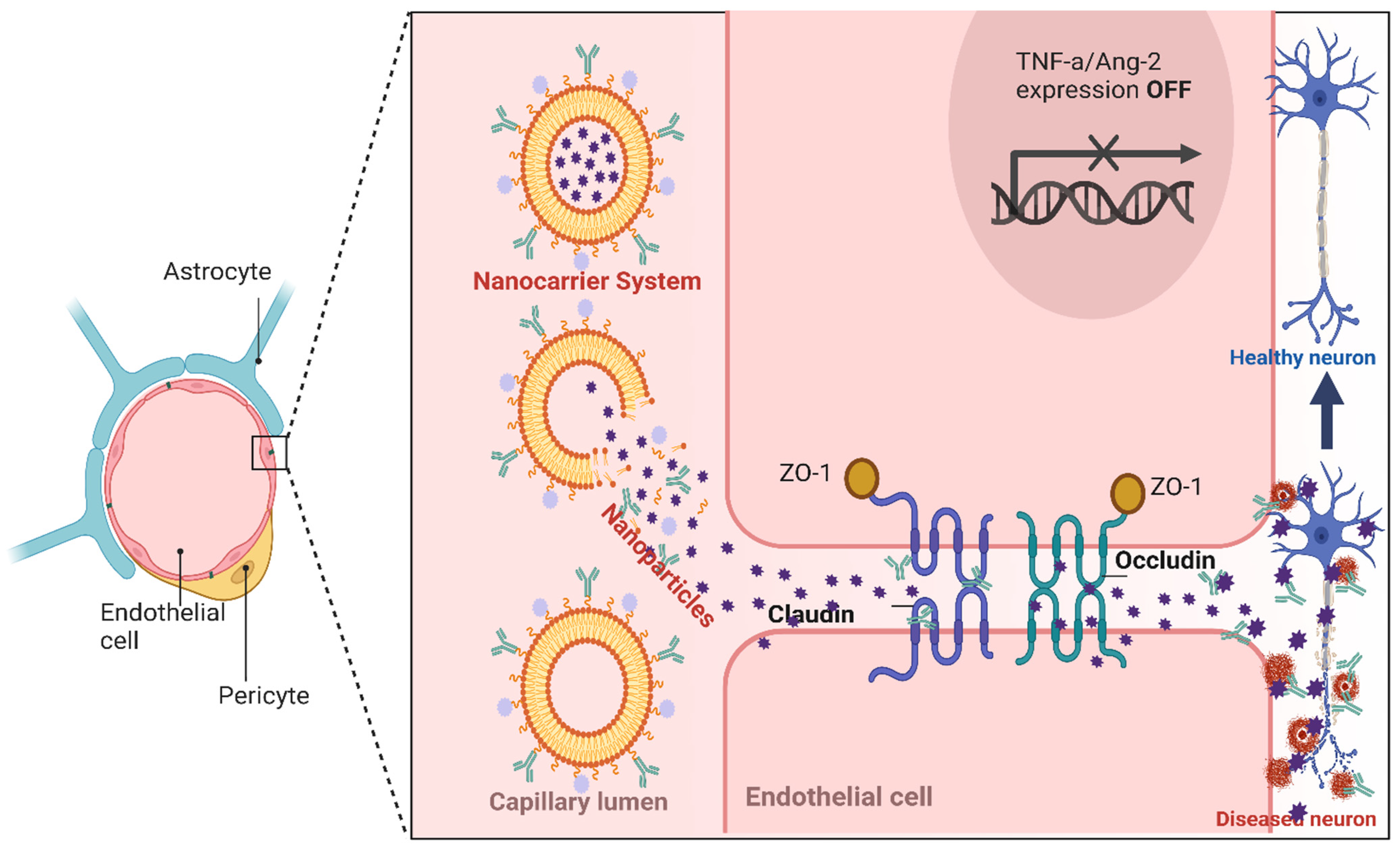
5.1. BBB Modulation to Facilitate Therapeutic Uptake in Alzheimer’s Disease
5.2. Mechanisms of Therapeutic Nanoparticle Transport Across the BBB in Alzheimer’s Disease
5.2.1. Passive Diffusion
5.2.2. Adsorptive-Mediated Transcytosis
5.2.3. Receptor-Mediated Transcytosis
5.2.4. Transporter-Mediated Transcytosis
5.2.5. Bypassing the BBB Through Intranasal Route
5.3. Nanoparticles as Brain-Targeted Therapeutic Carriers in AD
5.3.1. Polymeric Nanoparticles
5.3.2. Lipid Nanoparticles
5.3.3. Inorganic Nanoparticles
5.3.4. Carbon-Based Nanoparticles
6. General Discussion and Current Challenges
7. Conclusions and Future Perspectives
Author Contributions
Funding
Institutional Review Board Statement
Informed Consent Statement
Data Availability Statement
Conflicts of Interest
References
- Scheltens, P.; Blennow, K.; Breteler, M.M.; de Strooper, B.; Frisoni, G.B.; Salloway, S.; Van der Flier, W.M. Alzheimer’s disease. Lancet 2016, 388, 505–517. [Google Scholar] [CrossRef] [Scilit]
- Alzheimer’s Association Report. 2025 Alzheimer’s disease facts and figures. Alzheimer’s Dement. 2025, 21, e70235. [Google Scholar] [CrossRef] [Scilit]
- Lynch, C. World Alzheimer Report 2019: Attitudes to dementia, a global survey. Alzheimer’s Dement. 2020, 16, 38255–38269. [Google Scholar] [CrossRef] [Scilit]
- Long, S.; Benoist, C.; Weidner, W. on Behalf of Alzheimer’s Disease International. Physical Health Risks. In World Alzheimer Report 2023 on Reducing Dementia Risk: Never Too Early, Never Too Late; Long, S., Ed.; Alzheimer’s Disease International: London, UK, 2023. [Google Scholar]
- Spuch, C.; Ortolano, S.; Navarro, C. New insights in the amyloid-Beta interaction with mitochondria. J. Aging Res. 2012, 2012, 324968. [Google Scholar] [CrossRef] [Scilit] [PubMed]
- Lloret, A.; Badia, M.C.; Giraldo, E.; Ermak, G.; Alonso, M.D.; Pallardó, F.V.; Davies, K.J.; Viña, J. Amyloid-β toxicity and tau hyperphosphorylation are linked via RCAN1 in Alzheimer’s disease. J. Alzheimer’s Dis. 2011, 27, 701–709. [Google Scholar] [CrossRef] [Scilit] [PubMed]
- Heneka, M.T.; Carson, M.J.; El Khoury, J.; Landreth, G.E.; Brosseron, F.; Feinstein, D.L.; Jacobs, A.H.; Wyss-Coray, T.; Vitorica, J.; Ransohoff, R.M.; et al. Neuroinflammation in Alzheimer’s disease. Lancet Neurol. 2015, 14, 388–405. [Google Scholar] [CrossRef] [Scilit]
- Liu, Z.; Li, T.; Li, P.; Wei, N.; Zhao, Z.; Liang, H.; Ji, X.; Chen, W.; Xue, M.; Wei, J. The Ambiguous Relationship of Oxidative Stress, Tau Hyperphosphorylation, and Autophagy Dysfunction in Alzheimer’s Disease. Oxid. Med. Cell. Longev. 2015, 2015, 352723. [Google Scholar] [CrossRef] [Scilit]
- Muralidar, S.; Ambi, S.V.; Sekaran, S.; Thirumalai, D.; Palaniappan, B. Role of tau protein in Alzheimer’s disease: The prime pathological player. Int. J. Biol. Macromol. 2020, 163, 1599–1617. [Google Scholar] [CrossRef] [Scilit]
- Kolarova, M.; García-Sierra, F.; Bartos, A.; Ricny, J.; Ripova, D. Structure and pathology of tau protein in Alzheimer disease. Int. J. Alzheimer’s Dis. 2012, 2012, 731526. [Google Scholar] [CrossRef] [Scilit]
- Leuzy, A.; Ashton, N.J.; Mattsson-Carlgren, N.; Dodich, A.; Boccardi, M.; Corre, J.; Drzezga, A.; Nordberg, A.; Ossenkoppele, R.; Zetterberg, H.; et al. 2020 update on the clinical validity of cerebrospinal fluid amyloid, tau, and phospho-tau as biomarkers for Alzheimer’s disease in the context of a structured 5-phase development framework. Eur. J. Nucl. Med. Mol. Imaging 2021, 48, 2121–2139. [Google Scholar] [CrossRef] [Scilit]
- Dubois, B.; von Arnim, C.A.F.; Burnie, N.; Bozeat, S.; Cummings, J. Biomarkers in Alzheimer’s disease: Role in early and differential diagnosis and recognition of atypical variants. Alzheimer’s Res. Ther. 2023, 15, 175. [Google Scholar] [CrossRef] [Scilit] [PubMed]
- Borhani, N.; Ghaisari, J.; Abedi, M.; Kamali, M.; Gheisari, Y. A deep learning approach to predict inter-omics interactions in multi-layer networks. BMC Bioinform. 2022, 23, 53. [Google Scholar] [CrossRef] [Scilit] [PubMed]
- Eyigoz, E.; Mathur, S.; Santamaria, M.; Cecchi, G.; Naylor, M. Linguistic markers predict onset of Alzheimer’s disease. EClinicalMedicine 2020, 28, 100583. [Google Scholar] [CrossRef] [Scilit] [PubMed]
- Meghdadi, A.H.; Stevanović Karić, M.; McConnell, M.; Rupp, G.; Richard, C.; Hamilton, J.; Salat, D.; Berka, C. Resting state EEG biomarkers of cognitive decline associated with Alzheimer’s disease and mild cognitive impairment. PLoS ONE 2021, 16, e244180. [Google Scholar] [CrossRef] [Scilit]
- Abioye, A.O. Drug Delivery to the Brain Elsevier In Drug Discovery Approaches for the Treatment of Neurodegenerative Disorders, 2nd ed.; Adejare, A., Ed.; Academic Press: Cambridge, MA, USA; London, UK, 2025; pp. 375–405. [Google Scholar]
- Han, L.; Jiang, C. Evolution of blood–brain barrier in brain diseases and related systemic nanoscale brain-targeting drug delivery strategies. Acta Pharm. Sin. B 2021, 11, 2306–2325. [Google Scholar] [CrossRef] [Scilit]
- Archie, S.R.; Al Shoyaib, A.; Cucullo, L. Blood-Brain Barrier Dysfunction in CNS Disorders and Putative Therapeutic Targets: An Overview. Pharmaceutics 2021, 13, 1779. [Google Scholar] [CrossRef] [Scilit]
- Abbott, N.J.; Rönnbäck, L.; Hansson, E. Astrocyte–endothelial interactions at the blood–brain barrier. Nat. Rev. Neurosci. 2006, 7, 41–53. [Google Scholar] [CrossRef] [Scilit]
- De Bock, M.; Wang, N.; Decrock, E.; Bol, M.; Gadicherla, A.K.; Culot, M.; Cecchelli, R.; Bultynck, G.; Leybaert, L. Endothelial calcium dynamics, connexin channels and blood–brain barrier function. Progress. Neurobiol. 2013, 108, 1–20. [Google Scholar] [CrossRef] [Scilit]
- Redzic, Z. Molecular biology of the blood-brain and the blood-cerebrospinal fluid barriers: Similarities and differences. Fluids Barriers CNS 2011, 8, 3. [Google Scholar] [CrossRef] [Scilit]
- Hudson, N.; Campbell, M. Tight Junctions of the Neurovascular Unit. Front. Mol. Neurosci. 2021, 14, 752781. [Google Scholar] [CrossRef] [Scilit]
- Hartsock, A.; Nelson, W.J. Adherens and tight junctions: Structure, function and connections to the actin cytoskeleton. Biochim. Biophys. Acta BBA Biomembr. 2008, 1778, 660–669. [Google Scholar] [CrossRef] [Scilit]
- Pandit, R.; Chen, L.; Götz, J. The blood-brain barrier: Physiology and strategies for drug delivery. Adv. Drug Dev. Rev. 2020, 165–166, 1–14. [Google Scholar] [CrossRef] [Scilit] [PubMed]
- Kadry, H.; Noorani, B.; Cucullo, L. A blood–brain barrier overview on structure, function, impairment, and biomarkers of integrity. Fluids Barriers CNS 2020, 17, 69. [Google Scholar] [CrossRef] [Scilit] [PubMed]
- Dalkara, T.; Gursoy-Ozdemir, Y.; Yemisci, M. Brain microvascular pericytes in health and disease. Acta Neuropathol. 2011, 122, 1–9. [Google Scholar] [CrossRef] [Scilit] [PubMed]
- Achar, A.; Myers, R.; Ghosh, C. Drug Delivery Challenges in Brain Disorders across the Blood-Brain Barrier: Novel Methods and Future Considerations for Improved Therapy. Biomedicines 2021, 9, 1834. [Google Scholar] [CrossRef] [Scilit]
- de Koning, L.A.; Vazquez-Matias, D.A.; Beaino, W.; Vugts, D.J.; van Dongen, G.A.M.S.; van der Flier, W.M.; Ries, M.; van Vuurden, D.G.; Vijverberg, E.G.B.; van de Giessen, E. Drug delivery strategies to cross the blood-brain barrier in Alzheimer’s disease: A comprehensive review on three promising strategies. J. Prev. Alzheimer’s Dis. 2025, 12, 100204. [Google Scholar] [CrossRef] [Scilit]
- Pardridge, W.M. The blood-brain barrier: Bottleneck in brain drug development. NeuroRx 2005, 2, 3–14. [Google Scholar] [CrossRef]
- Terstappen, G.C.; Meyer, A.H.; Bell, R.D.; Zhang, W. Strategies for delivering therapeutics across the blood-brain barrier. Nat. Rev. Drug Discov. 2021, 20, 362–383. [Google Scholar] [CrossRef] [Scilit]
- Abbott, N.J.; Patabendige, A.A.; Dolman, D.E.; Yusof, S.R.; Begley, D.J. Structure and function of the blood-brain barrier. Neurobiol. Dis. 2010, 37, 13–25. [Google Scholar] [CrossRef] [Scilit]
- Bateman, R.J.; Smith, J.; Donohue, M.C.; Delmar, P.; Abbas, R.; Salloway, S.; Wojtowicz, J.; Blennow, K.; Bittner, T.; Black, S.E.; et al. Two Phase 3 Trials of Gantenerumab in Early Alzheimer’s Disease. N. Engl. J. Med. 2023, 389, 1862–1876. [Google Scholar] [CrossRef] [Scilit]
- Kochman, U.; Sitka, H.; Kuźniar, J.; Czaja, M.; Kozubek, P.; Beszłej, J.A.; Leszek, J. Targeted Nanoparticles for Drug Delivery Across the Blood-Brain Barrier in Early and Late Stages of Alzheimer’s Disease: A Review. Mol. Neurobiol. 2025, 63, 75. [Google Scholar] [CrossRef] [Scilit]
- Lajoie, J.M.; Shusta, E.V. Targeting receptor-mediated transport for delivery of biologics across the blood-brain barrier. Annu. Rev. Pharmacol. Toxicol. 2015, 55, 613–631. [Google Scholar] [CrossRef] [Scilit]
- Saraiva, C.; Praça, C.; Ferreira, R.; Santos, T.; Ferreira, L.; Bernardino, L. Nanoparticle-mediated brain drug delivery: Overcoming blood-brain barrier to treat neurodegenerative diseases. J. Control Release 2016, 235, 34–47. [Google Scholar] [CrossRef] [Scilit] [PubMed]
- Avgerinos, K.I.; Ferrucci, L.; Kapogiannis, D. Effects of monoclonal antibodies against amyloid-β on clinical and biomarker outcomes and adverse event risks: A systematic review and meta-analysis of phase III RCTs in Alzheimer’s disease. Ageing Res. Rev. 2021, 68, 101339. [Google Scholar] [CrossRef] [Scilit] [PubMed]
- Mehta, M.; Adem, A.; Sabbagh, M. New acetylcholinesterase inhibitors for Alzheimer’s disease. Int. J. Alzheimer’s Dis. 2012, 2012, 728983. [Google Scholar] [CrossRef] [Scilit] [PubMed]
- Winblad, B.; Grossberg, G.; Frölich, L.; Farlow, M.; Zechner, S.; Nagel, J.; Lane, R. IDEAL: A 6-month, double-blind, placebo-controlled study of the first skin patch for Alzheimer disease. Neurology 2007, 69, S14–S22. [Google Scholar] [CrossRef] [Scilit]
- Birks, J. Cholinesterase inhibitors for Alzheimer’s disease. Cochrane Database Syst. Rev. 2006, 2006, CD005593. [Google Scholar] [CrossRef] [Scilit]
- Crismon, M.L. Tacrine: First drug approved for Alzheimer’s disease. Ann. Pharmacother. 1994, 28, 744–751. [Google Scholar] [CrossRef] [Scilit]
- Sugimoto, H.; Ogura, H.; Arai, Y.; Limura, Y.; Yamanishi, Y. Research and development of donepezil hydrochloride, a new type of acetylcholinesterase inhibitor. Jpn. J. Pharmacol. 2002, 89, 7–20. [Google Scholar] [CrossRef] [Scilit]
- Przybyłowska, M.; Dzierzbicka, K.; Kowalski, S.; Chmielewska, K.; Inkielewicz-Stepniak, I. Therapeutic Potential of Multifunctional Derivatives of Cholinesterase Inhibitors. Curr. Neuropharmacol. 2021, 19, 1323–1344. [Google Scholar] [CrossRef] [Scilit]
- Singh, B.; Day, C.M.; Abdella, S.; Garg, S. Alzheimer’s disease current therapies, novel drug delivery systems and future directions for better disease management. J. Control. Release 2024, 367, 402–424. [Google Scholar] [CrossRef] [Scilit]
- Li, D.D.; Zhang, Y.H.; Zhang, W.; Zhao, P. Meta-Analysis of Randomized Controlled Trials on the Efficacy and Safety of Donepezil, Galantamine, Rivastigmine, and Memantine for the Treatment of Alzheimer’s Disease. Front. Neurosci. 2019, 13, 472. [Google Scholar] [CrossRef] [Scilit]
- Peng, Y.; Jin, H.; Xue, Y.H.; Chen, Q.; Yao, S.Y.; Du, M.Q.; Liu, S. Current and future therapeutic strategies for Alzheimer’s disease: An overview of drug development bottlenecks. Front. Aging Neurosci. 2023, 15, 1206572. [Google Scholar] [CrossRef] [Scilit] [PubMed]
- Knight, R.; Khondoker, M.; Magill, N.; Stewart, R.; Landau, S. A systematic review and meta-analysis of the effectiveness of acetylcholinesterase inhibitors and memantine in treating the cognitive symptoms of dementia. Dement. Geriatr. Cogn. Disord. 2018, 45, 131–151. [Google Scholar] [CrossRef] [Scilit] [PubMed]
- Löscher, W.; Potschka, H. Role of drug efflux transporters in the brain for drug disposition and treatment of brain diseases. Prog. Neurobiol. 2005, 76, 22–76. [Google Scholar] [CrossRef] [Scilit] [PubMed]
- Colović, M.B.; Krstić, D.Z.; Lazarević-Pašti, T.D.; Bondžić, A.M.; Vasić, V.M. Acetylcholinesterase inhibitors: Pharmacology and toxicology. Curr. Neuropharmacol. 2013, 11, 315–335. [Google Scholar] [CrossRef] [Scilit]
- Kepp, K.P.; Høilund-Carlsen, P.F.; Cristea, I.A.; Cumming, R.G.; Daly, T.; Emilsson, L.; Flacco, M.E.; Hemkens, L.G.; Janiaud, P.; Johnsen, K.B.; et al. Communicating scientific evidence: Drugs for Alzheimer’s disease as a case study. Curr. Med. Res. Opin. 2025, 41, 347–354. [Google Scholar] [CrossRef] [Scilit]
- Bianchetti, A.; de Leo, D. The EMA approves lecanemab for the treatment of Alzheimer’s disease: The lights and shadows of this decision [Editorial]. GeroPsych. J. Gerontopsychol. Geriatr. Psychiatry 2025, 38, 1–2. [Google Scholar] [CrossRef] [Scilit]
- Sims, J.R.; Zimmer, J.A.; Evans, C.D.; Lu, M.; Ardayfio, P.; Spark, J.; Wessels, A.M.; Shcherbinin, S.; Wang, H.; Monkul Nery, E.S.; et al. Donanemab in Early Symptomatic Alzheimer Disease: The TRAILBLAZER-ALZ 2 Randomized Clinical Trial. JAMA 2023, 330, 512–527. [Google Scholar] [CrossRef] [Scilit]
- Mullard, A. FDA approves third anti-amyloid antibody for Alzheimer disease. Nat. Rev. Drug Discov. 2024, 23, 571. [Google Scholar] [CrossRef] [Scilit]
- Mummery, C.J.; Börjesson-Hanson, A.; Blackburn, D.J.; Vijverberg, E.G.B.; De Deyn, P.P.; Ducharme, S.; Jonsson, M.; Schneider, A.; Rinne, J.O.; Ludolph, A.C.; et al. Tau-targeting antisense oligonucleotide MAPTRx in mild Alzheimer’s disease: A phase 1b, randomized, placebo-controlled trial. Nat. Med. 2023, 29, 1437–1447. [Google Scholar] [CrossRef] [Scilit]
- Cummings, J.; Aisen, P.S.; DuBois, B.; Frölich, L.; Jack, C.R., Jr.; Jones, R.W.; Morris, J.C.; Raskin, J.; Dowsett, S.A.; Scheltens, P. Drug development in Alzheimer’s disease: The path to 2025. Alzheimer’s Res. Ther. 2016, 8, 39. [Google Scholar] [CrossRef] [Scilit] [PubMed]
- Di Stefano, A.; Iannitelli, A.; Laserra, S.; Sozio, P. Drug delivery strategies for Alzheimer’s disease treatment. Expert. Opin. Drug Dev. 2011, 8, 581–603. [Google Scholar] [CrossRef] [Scilit] [PubMed]
- Wu, D.; Chen, Q.; Chen, X.; Han, F.; Chen, Z.; Wang, Y. The blood–brain barrier: Structure, regulation, and drug delivery. Signal Transduct. Target. Ther. 2023, 8, 217. [Google Scholar] [CrossRef] [Scilit] [PubMed]
- Prakash, R.; Carmichael, S.T. Blood–brain barrier breakdown and neovascularization processes after stroke and traumatic brain injury. Curr. Opin. Neurol. 2015, 28, 556–564. [Google Scholar] [CrossRef] [Scilit]
- Daneman, R. The blood-brain barrier in health and disease. Ann. Neurol. 2012, 72, 648–672. [Google Scholar] [CrossRef] [Scilit]
- Sweeney, M.D.; Sagare, A.P.; Zlokovic, B.V. Blood-brain barrier breakdown in Alzheimer disease and other neurodegenerative disorders. Nat. Rev. Neurol. 2018, 14, 133–150. [Google Scholar] [CrossRef] [Scilit]
- Cho, H.; Lee, H.Y.; Han, M.; Cho, J.; Ahn, S.; Lee, T.; Chang, Y.; Park, J. Localized Down-regulation of P-glycoprotein by Focused Ultrasound and Microbubbles induced Blood-Brain Barrier Disruption in Rat Brain. Sci. Rep. 2016, 6, 31201. [Google Scholar] [CrossRef] [Scilit]
- Leinenga, G.; Götz, J. Scanning ultrasound removes amyloid-β and restores memory in an Alzheimer’s disease mouse model. Sci. Transl. Med. 2015, 7, 278ra33. [Google Scholar] [CrossRef] [Scilit]
- Karakatsani, M.E.; Ji, R.; Murillo, M.F.; Kugelman, T.; Kwon, N.; Lao, Y.H.; Liu, K.; Pouliopoulos, A.N.; Honig, L.S.; Duff, K.E.; et al. Focused ultrasound mitigates pathology and improves spatial memory in Alzheimer’s mice and patients. Theranostics 2023, 13, 4102–4120. [Google Scholar] [CrossRef] [Scilit]
- Karakatsani, M.E.; Kugelman, T.; Ji, R.; Murillo, M.; Wang, S.; Niimi, Y.; Small, S.A.; Duff, K.E.; Konofagou, E.E. Unilateral Focused Ultrasound-Induced Blood-Brain Barrier Opening Reduces Phosphorylated Tau from The rTg4510 Mouse Model. Theranostics 2019, 9, 5396–5411. [Google Scholar] [CrossRef] [Scilit] [PubMed]
- Lipsman, N.; Meng, Y.; Bethune, A.J.; Huang, Y.; Lam, B.; Masellis, M.; Herrmann, N.; Heyn, C.; Aubert, I.; Boutet, A.; et al. Blood–brain barrier opening in Alzheimer’s disease using MR-guided focused ultrasound. Nat. Commun. 2018, 9, 2336. [Google Scholar] [CrossRef] [Scilit] [PubMed]
- Liu, P.; Jiang, C. Brain-targeting drug delivery systems. Wiley Interdiscip. Rev. Nanomed. Nanobiotechnol. 2022, 14, e1818. [Google Scholar] [CrossRef] [Scilit]
- Ghose, A.K.; Herbertz, T.; Hudkins, R.L.; Dorsey, B.D.; Mallamo, J.P. Knowledge-Based, Central Nervous System (CNS) Lead Selection and Lead Optimization for CNS Drug Discovery. ACS Chem. Neurosci. 2012, 3, 50–68. [Google Scholar] [CrossRef] [Scilit] [PubMed]
- Waterhouse, R.N. Determination of lipophilicity and its use as a predictor of blood-brain barrier penetration of molecular imaging agents. Mol. Imaging Biol. 2003, 5, 376–389. [Google Scholar] [CrossRef] [Scilit]
- El Zahar, N.M.; Sutton, J.M.; Bartlett, M.G. Assessment of brain-to-blood drug distribution using liquid chromatography. Biomed. Chromatogr. 2021, 35, e5123. [Google Scholar] [CrossRef] [Scilit]
- Pulgar, V.M. Transcytosis to Cross the Blood Brain Barrier, New Advancements and Challenges. Front. Neurosci. 2019, 12, 1019. [Google Scholar] [CrossRef] [Scilit]
- Armulik, A.; Genové, G.; Mäe, M.; Nisancioglu, M.H.; Wallgard, E.; Niaudet, C.; He, L.; Norlin, J.; Lindblom, P.; Strittmatter, K.; et al. Pericytes regulate the blood-brain barrier. Nature 2010, 468, 557–561. [Google Scholar] [CrossRef] [Scilit]
- Fishman, J.B.; Rubin, J.B.; Handrahan, J.V.; Connor, J.R.; Fine, R.E. Receptor-mediated transcytosis of transferrin across the blood-brain barrier. J. Neurosci. Res. 1987, 18, 299–304. [Google Scholar] [CrossRef] [Scilit]
- Jefferies, W.A.; Brandon, M.R.; Hunt, S.V.; Williams, A.F.; Gatter, K.C.; Mason, D.Y. Transferrin receptor on endothelium of brain capillaries. Nature 1984, 312, 162–163. [Google Scholar] [CrossRef] [Scilit]
- Moos, T.; Morgan, E.H. Restricted transport of anti-transferrin receptor antibody (OX26) through the blood-brain barrier in the rat. J. Neurochem. 2001, 79, 119–129. [Google Scholar] [CrossRef] [Scilit]
- Yu, Y.J.; Zhang, Y.; Kenrick, M.; Hoyte, K.; Luk, W.; Lu, Y.; Atwal, J.; Elliott, J.M.; Prabhu, S.; Watts, R.J.; et al. Boosting brain uptake of a therapeutic antibody by reducing its affinity for a transcytosis target. Sci. Transl. Med. 2011, 3, 84ra44. [Google Scholar] [CrossRef] [Scilit] [PubMed]
- Pomytkin, I.; Costa-Nunes, J.P.; Kasatkin, V.; Veniaminova, E.; Demchenko, A.; Lyundup, A.; Lesch, K.P.; Ponomarev, E.D.; Strekalova, T. Insulin receptor in the brain: Mechanisms of activation and the role in the CNS pathology and treatment. CNS Neurosci. Ther. 2018, 24, 763–774. [Google Scholar] [CrossRef] [Scilit] [PubMed]
- Dieu, L.-H.; Wu, D.; Palivan, C.G.; Balasubramanian, V.; Huwyler, J. Polymersomes conjugated to 83-14 monoclonal antibodies: Invitro targeting of brain capillary endothelial cells. Eur. J. Pharm. Biopharm. 2014, 88, 316–324. [Google Scholar] [CrossRef] [Scilit] [PubMed]
- Hultqvist, G.; Syvänen, S.; Fang, X.T.; Lannfelt, L.; Sehlin, D. Bivalent Brain Shuttle Increases Antibody Uptake by Monovalent Binding to the Transferrin Receptor. Theranostics 2017, 7, 308–318. [Google Scholar] [CrossRef] [Scilit]
- Wuensche, T.E.; Stergiou, N.; Mes, I.; Verlaan, M.; Schreurs, M.; Kooijman, E.J.M.; Janssen, B.; Windhorst, A.D.; Jensen, A.; Asuni, A.A.; et al. Advancing 89Zr-immuno-PET in neuroscience with a bispecific anti-amyloid-beta monoclonal antibody—The choice of chelator is essential. Theranostics 2022, 12, 7067–7079. [Google Scholar] [CrossRef] [Scilit]
- Niewoehner, J.; Bohrmann, B.; Collin, L.; Urich, E.; Sade, H.; Maier, P.; Rueger, P.; Stracke, J.O.; Lau, W.; Tissot, A.C.; et al. Increased brain penetration and potency of a therapeutic antibody using a monovalent molecular shuttle. Neuron 2014, 81, 49–60. [Google Scholar] [CrossRef] [Scilit]
- Syvänen, S.; Hultqvist, G.; Gustavsson, T.; Gumucio, A.; Laudon, H.; Söderberg, L.; Ingelsson, M.; Lannfelt, L.; Sehlin, D. Efficient clearance of Aβ protofibrils in AβPP-transgenic mice treated with a brain-penetrating bifunctional antibody. Alzheimer’s Res. Ther. 2018, 10, 49. [Google Scholar] [CrossRef] [Scilit]
- Gustavsson, T.; Metzendorf, N.G.; Wik, E.; Roshanbin, S.; Julku, U.; Chourlia, A.; Nilsson, P.; Andersson, K.G.; Laudon, H.; Hultqvist, G.; et al. Long-term effects of immunotherapy with a brain penetrating Aβ antibody in a mouse model of Alzheimer’s disease. Alzheimer’s Res. Ther. 2023, 15, 90. [Google Scholar] [CrossRef] [Scilit]
- Bateman, R. 16th Clinical Trials on Alzheimer’s Disease (CTAD) Symposia. In Proceedings of the 16th Clinical Trials on Alzheimer’s Disease (CTAD) Symposia, Boston, MA, USA, 24–27 October 2023; pp. 4–55. [Google Scholar]
- Sweeney, M.D.; Zhao, Z.; Montagne, A.; Nelson, A.R.; Zlokovic, B.V. Blood-Brain Barrier: From Physiology to Disease and Back. Physiol. Rev. 2019, 99, 21–78. [Google Scholar] [CrossRef] [Scilit]
- Pardridge, W.M.; Boado, R.J. Reengineering biopharmaceuticals for targeted delivery across the blood-brain barrier. Methods Enzymol. 2012, 503, 269–292. [Google Scholar] [CrossRef] [Scilit] [PubMed]
- Zaragozá, R. Transport of Amino Acids Across the Blood-Brain Barrier. Front. Physiol. 2020, 11, 973. [Google Scholar] [CrossRef] [Scilit] [PubMed]
- Maher, F.; Vannucci, S.J.; Simpson, I.A. Glucose transporter proteins in brain. FASEB J. 1994, 8, 1003–1011. [Google Scholar] [CrossRef] [Scilit] [PubMed]
- Pardridge, W.M. Drug targeting to the brain. Pharm. Res. 2007, 24, 1733–1744. [Google Scholar] [CrossRef] [Scilit]
- Banks, W.A.; Kastin, A.J. Peptide transport systems for opiates across the blood-brain barrier. Am. J. Physiol. 1990, 259, E1–E10. [Google Scholar] [CrossRef] [Scilit]
- Dhuria, S.V.; Hanson, L.R.; Frey, W.H., II. Intranasal delivery to the central nervous system: Mechanisms and experimental considerations. J. Pharm. Sci. 2010, 99, 1654–1673. [Google Scholar] [CrossRef] [Scilit]
- Ottaiano, A.C.; Freddi, T.A.L.; Lucio, L.L. The Olfactory Nerve: Anatomy and Pathology. Semin. Ultrasound CT MRI 2022, 43, 371–377. [Google Scholar] [CrossRef] [Scilit]
- Craft, S.; Raman, R.; Chow, T.W.; Rafii, M.S.; Sun, C.K.; Rissman, R.A.; Donohue, M.C.; Brewer, J.B.; Jenkins, C.; Harless, K.; et al. Safety, Efficacy, and Feasibility of Intranasal Insulin for the Treatment of Mild Cognitive Impairment and Alzheimer Disease Dementia: A Randomized Clinical Trial. JAMA Neurol. 2020, 77, 1099–1109. [Google Scholar] [CrossRef] [Scilit]
- Raghav, M.; Gupta, V.; Awasthi, R.; Singh, A.; Kulkarni, G.T. Nose-to-brain drug delivery: Challenges and progress towards brain targeting in the treatment of neurological disorders. J. Drug Dev. Sci. Technol. 2023, 86, 104756. [Google Scholar] [CrossRef] [Scilit]
- Anjum, S.; Ishaque, S.; Fatima, H.; Farooq, W.; Hano, C.; Abbasi, B.H.; Anjum, I. Emerging Applications of Nanotechnology in Healthcare Systems: Grand Challenges and Perspectives. Pharmaceuticals 2021, 14, 707. [Google Scholar] [CrossRef] [Scilit]
- Conceição, M.; Di Filippo, L.D.; Duarte, J.L.; Beserra, F.P.; Gremião, M.P.D.; Chorilli, M. Repurposing doxycycline for Alzheimer’s treatment: Challenges from a nano-based drug delivery perspective. Brain Behav. Immun. Health 2024, 42, 100894. [Google Scholar] [CrossRef] [Scilit] [PubMed]
- Singh, R.; Srinivas, S.P.; Kumawat, M.; Daima, H.K. Ligand-based surface engineering of nanomaterials: Trends, challenges, and biomedical perspectives. OpenNano 2024, 15, 100194. [Google Scholar] [CrossRef] [Scilit]
- Joseph, T.M.; Kar Mahapatra, D.; Esmaeili, A.; Piszczyk, Ł.; Hasanin, M.S.; Kattali, M.; Haponiuk, J.; Thomas, S. Nanoparticles: Taking a Unique Position in Medicine. Nanomaterials 2023, 13, 574. [Google Scholar] [CrossRef] [Scilit] [PubMed]
- Ishii, T.; Asai, T.; Oyama, D.; Fukuta, T.; Yasuda, N.; Shimizu, K.; Minamino, T.; Oku, N. Amelioration of cerebral ischemia-reperfusion injury based on liposomal drug delivery system with asialo-erythropoietin. J. Control Release 2012, 160, 81–87. [Google Scholar] [CrossRef] [Scilit]
- Chen, C.; Duan, Z.; Yuan, Y.; Li, R.; Pang, L.; Liang, J.; Xu, X.; Wang, J. Peptide-22 and Cyclic RGD Functionalized Liposomes for Glioma Targeting Drug Delivery Overcoming BBB and BBTB. ACS Appl. Mater. Interfaces 2017, 9, 5864–5873. [Google Scholar] [CrossRef] [Scilit]
- Jang, Y.J.; Kang, S.J.; Park, H.S.; Lee, D.H.; Kim, J.H.; Kim, J.E.; Kim, D.I.; Chung, C.H.; Yoon, J.K.; Bhang, S.H. Drug delivery strategies with lipid-based nanoparticles for Alzheimer’s disease treatment. J. Nanobiotechnol. 2025, 23, 99. [Google Scholar] [CrossRef] [Scilit]
- Khairnar, P.; Singh, A.; Ahirwar, K.; Shukla, R. ApoE3 Anchored Liposomal Delivery of Rivastigmine for Brain Delivery: Formulation, Characterization, and In Vivo Pharmacokinetic Evaluation. AAPS PharmSciTech 2023, 24, 223. [Google Scholar] [CrossRef] [Scilit]
- Satapathy, M.K.; Yen, T.L.; Jan, J.S.; Tang, R.D.; Wang, J.Y.; Taliyan, R.; Yang, C.H. Solid Lipid Nanoparticles (SLNs): An Advanced Drug Delivery System Targeting Brain through BBB. Pharmaceutics 2021, 13, 1183. [Google Scholar] [CrossRef] [Scilit]
- Mir Najib Ullah, S.N.; Afzal, O.; Altamimi, A.S.A.; Ather, H.; Sultana, S.; Almalki, W.H.; Bharti, P.; Sahoo, A.; Dwivedi, K.; Khan, G.; et al. Nanomedicine in the Management of Alzheimer’s Disease: State-of-the-Art. Biomedicines 2023, 11, 1752. [Google Scholar] [CrossRef] [Scilit]
- Zhang, C.; Zhao, X.; Zhang, J.; Zhang, Q.; Jin, C.; Li, D.; Chen, X.; Hai, X.; Chen, X.; Tang, X.; et al. Dual-modified brain-targeting lipid polymer micelle delivery of anti-miRNA-21 for achieving oral treatment of glioma. J. Drug Dev. Sci. Technol. 2024, 96, 105721. [Google Scholar] [CrossRef] [Scilit]
- Pahuja, R.; Seth, K.; Shukla, A.; Shukla, R.K.; Bhatnagar, P.; Chauhan, L.K.S.; Saxena, P.N.; Arun, J.; Chaudhari, B.P.; Patel, D. Trans-blood brain barrier delivery of dopamine-loaded nanoparticles reverses functional deficits in parkinsonian rats. ACS Nano 2015, 9, 4850–4871. [Google Scholar] [CrossRef] [Scilit] [PubMed]
- Bhowmik, A.; Chakravarti, S.; Ghosh, A.; Shaw, R.; Bhandary, S.; Bhattacharyya, S.; Sen, P.C.; Ghosh, M.K. Anti-SSTR2 peptide based targeted delivery of potent PLGA encapsulated 3,3′-diindolylmethane nanoparticles through blood brain barrier prevents glioma progression. Oncotarget 2017, 8, 65339–65358. [Google Scholar] [CrossRef] [Scilit] [PubMed]
- Cano, A.; Turowski, P.; Ettcheto, M.; Duskey, J.T.; Tosi, G.; Sánchez-López, E.; García, M.L.; Camins, A.; Souto, E.B.; Ruiz, A.; et al. Nanomedicine-based technologies and novel biomarkers for the diagnosis and treatment of Alzheimer’s disease: From current to future challenges. J. Nanobiotechnol. 2021, 19, 122. [Google Scholar] [CrossRef] [Scilit] [PubMed]
- Attia, M.S.; Yahya, A.; Monaem, N.A.; Sabry, S.A. Mesoporous silica nanoparticles: Their potential as drug delivery carriers and nanoscavengers in Alzheimer’s and Parkinson’s diseases. Saudi Pharm. J. 2023, 31, 417–432. [Google Scholar] [CrossRef] [Scilit]
- Zhou, H.; Yin, X.; Zhang, G.; Yang, Z.; Zhou, R. Advancing Nanomaterial-Based Strategies for Alzheimer’s Disease: A Perspective. JACS Au 2025, 5, 1519–1537. [Google Scholar] [CrossRef] [Scilit]
- Meng, D.-l.; Shang, L.; Feng, X.-h.; Huang, X.-f.; Che, X. Xanthoceraside hollow gold nanoparticles, green pharmaceutics preparation for poorly water-soluble natural anti-AD medicine. Int. J. Pharm. 2016, 506, 184–190. [Google Scholar] [CrossRef] [Scilit]
- Nady, D.S.; Bakowsky, U.; Fahmy, S.A. Recent advances in brain delivery of synthetic and natural nano therapeutics: Reviving hope for Alzheimer’s disease patients. J. Drug Dev. Sci. Technol. 2023, 89, 105047. [Google Scholar] [CrossRef] [Scilit]
- Wang, K.; Yang, R.; Li, J.; Wang, H.; Wan, L.; He, J. Nanocarrier-based targeted drug delivery for Alzheimer’s disease: Addressing neuroinflammation and enhancing clinical translation. Front. Pharmacol. 2025, 16, 1591438. [Google Scholar] [CrossRef] [Scilit]
- Singh, A.; Mhaske, A.; Shukla, R. Fabrication of TPGS-Grafted Polyamidoamine Dendrimer for Enhanced Piperine Brain Delivery and Pharmacokinetics. AAPS PharmSciTech 2022, 23, 236. [Google Scholar] [CrossRef] [Scilit]
- Igartúa, D.E.; Martinez, C.S.; Temprana, C.F.; Alonso, S.d.V.; Prieto, M. PAMAM dendrimers as a carbamazepine delivery system for neurodegenerative diseases: A biophysical and nanotoxicological characterization. Int. J. Pharm. 2018, 544, 191–202. [Google Scholar] [CrossRef] [Scilit]
- Ahlawat, J.; Guillama Barroso, G.; Masoudi Asil, S.; Alvarado, M.; Armendariz, I.; Bernal, J.; Carabaza, X.; Chavez, S.; Cruz, P.; Escalante, V.; et al. Nanocarriers as Potential Drug Delivery Candidates for Overcoming the Blood-Brain Barrier: Challenges and Possibilities. ACS Omega 2020, 5, 12583–12595. [Google Scholar] [CrossRef] [Scilit]
- Kostarelos, K.; Lacerda, L.; Pastorin, G.; Wu, W.; Wieckowski, S.; Luangsivilay, J.; Godefroy, S.; Pantarotto, D.; Briand, J.P.; Muller, S.; et al. Cellular uptake of functionalized carbon nanotubes is independent of functional group and cell type. Nat. Nanotechnol. 2007, 2, 108–113. [Google Scholar] [CrossRef] [Scilit] [PubMed]
- Guo, Q.; You, H.; Yang, X.; Lin, B.; Zhu, Z.; Lu, Z.; Li, X.; Zhao, Y.; Mao, L.; Shen, S.; et al. Functional single-walled carbon nanotubes ‘CAR’ for targeting dopamine delivery into the brain of parkinsonian mice. Nanoscale 2017, 9, 10832–10845. [Google Scholar] [CrossRef] [Scilit] [PubMed]
- Bitounis, D.; Ali-Boucetta, H.; Hong, B.H.; Min, D.H.; Kostarelos, K. Prospects and challenges of graphene in biomedical applications. Adv. Mater. 2013, 25, 2258–2268. [Google Scholar] [CrossRef] [Scilit] [PubMed]
- Musto, M.; Rauti, R.; Valdes, N.L.; Ballerini, C.; Casalis, L.; Prato, M.; Kostarelos, K.; Ballerini, L. Graphene Oxide Nanosheets and Neural System: From Synaptic Modulation to Neuroinflammation. Biophys. J. 2018, 114, 672a. [Google Scholar] [CrossRef] [Scilit]
- Boudad, H.; Legrand, P.; Lebas, G.; Cheron, M.; Duchêne, D.; Ponchel, G. Combined hydroxypropyl-beta-cyclodextrin and poly(alkylcyanoacrylate) nanoparticles intended for oral administration of saquinavir. Int. J. Pharm. 2001, 218, 113–124. [Google Scholar] [CrossRef] [Scilit]
- Dong, Y.; Ng, W.K.; Shen, S.; Kim, S.; Tan, R.B. Scalable ionic gelation synthesis of chitosan nanoparticles for drug delivery in static mixers. Carbohydr. Polym. 2013, 94, 940–945. [Google Scholar] [CrossRef] [Scilit]
- Murakami, H.; Kobayashi, M.; Takeuchi, H.; Kawashima, Y. Preparation of poly(DL-lactide-co-glycolide) nanoparticles by modified spontaneous emulsification solvent diffusion method. Int. J. Pharm. 1999, 187, 143–152. [Google Scholar] [CrossRef] [Scilit]
- Alshamsan, A. Nanoprecipitation is more efficient than emulsion solvent evaporation method to encapsulate cucurbitacin I in PLGA nanoparticles. Saudi Pharm. J. 2014, 22, 219–222. [Google Scholar] [CrossRef] [Scilit]
- Bilati, U.; Allémann, E.; Doelker, E. Development of a nanoprecipitation method intended for the entrapment of hydrophilic drugs into nanoparticles. Eur. J. Pharm. Sci. 2005, 24, 67–75. [Google Scholar] [CrossRef] [Scilit]
- Ali, M.E.; Lamprecht, A. Spray freeze drying for dry powder inhalation of nanoparticles. Eur. J. Pharm. Biopharm. 2014, 87, 510–517. [Google Scholar] [CrossRef] [Scilit] [PubMed]
- Hu, X.; Guo, Y.; Wang, L.; Hua, D.; Hong, Y.; Li, J. Coenzyme Q10 nanoparticles prepared by a supercritical fluid-based method. J. Supercrit. Fluids 2011, 57, 66–72. [Google Scholar] [CrossRef] [Scilit]
- Dong, X. Current Strategies for Brain Drug Delivery. Theranostics 2018, 8, 1481–1493. [Google Scholar] [CrossRef] [Scilit] [PubMed]
- Barbu, E.; Molnàr, E.; Tsibouklis, J.; Górecki, D.C. The potential for nanoparticle-based drug delivery to the brain: Overcoming the blood-brain barrier. Expert. Opin. Drug Dev. 2009, 6, 553–565. [Google Scholar] [CrossRef] [Scilit]
- Iqbal, I.; Saqib, F.; Mubarak, Z.; Latif, M.F.; Wahid, M.; Nasir, B.; Shahzad, H.; Sharifi-Rad, J.; Mubarak, M.S. Alzheimer’s disease and drug delivery across the blood-brain barrier: Approaches and challenges. Eur. J. Med. Res. 2024, 29, 313. [Google Scholar] [CrossRef] [Scilit]
- Zha, S.; Liu, H.; Li, H.; Li, H.; Wong, K.L.; All, A.H. Functionalized Nanomaterials Capable of Crossing the Blood-Brain Barrier. ACS Nano 2024, 18, 1820–1845. [Google Scholar] [CrossRef] [Scilit]
- Lockman, P.R.; Koziara, J.M.; Mumper, R.J.; Allen, D.D. Nanoparticle Surface Charges Alter Blood–Brain Barrier Integrity and Permeability. J. Drug Target. 2004, 12, 635–641. [Google Scholar] [CrossRef] [Scilit]
- Xiao, K.; Li, Y.; Luo, J.; Lee, J.S.; Xiao, W.; Gonik, A.M.; Agarwal, R.G.; Lam, K.S. The effect of surface charge on in vivo biodistribution of PEG-oligocholic acid based micellar nanoparticles. Biomaterials 2011, 32, 3435–3446. [Google Scholar] [CrossRef] [Scilit]
- Wang, Y.; Zhang, K.; Qin, X.; Li, T.; Qiu, J.; Yin, T.; Huang, J.; McGinty, S.; Pontrelli, G.; Ren, J.; et al. Biomimetic Nanotherapies: Red Blood Cell Based Core-Shell Structured Nanocomplexes for Atherosclerosis Management. Adv. Sci. 2019, 6, 1900172. [Google Scholar] [CrossRef] [Scilit]
- Pramoda, G.; Verma, R.K.; Kesharwani, P.; Shukla, R. Surface-functionalized nanoparticles for targeted drug delivery across the blood-brain barrier: Advances and challenges in neurodegenerative disease therapy. J. Mol. Liq. 2025, 433, 127938. [Google Scholar] [CrossRef] [Scilit]
- Wilson, B.; Samanta, M.K.; Santhi, K.; Kumar, K.P.; Paramakrishnan, N.; Suresh, B. Poly(n-butylcyanoacrylate) nanoparticles coated with polysorbate 80 for the targeted delivery of rivastigmine into the brain to treat Alzheimer’s disease. Brain Res. 2008, 1200, 159–168. [Google Scholar] [CrossRef] [Scilit]
- Joshi, S.A.; Chavhan, S.S.; Sawant, K.K. Rivastigmine-loaded PLGA and PBCA nanoparticles: Preparation, optimization, characterization, in vitro and pharmacodynamic studies. Eur. J. Pharm. Biopharm. 2010, 76, 189–199. [Google Scholar] [CrossRef] [Scilit] [PubMed]
- Fazil, M.; Md, S.; Haque, S.; Kumar, M.; Baboota, S.; Sahni, J.K.; Ali, J. Development and evaluation of rivastigmine loaded chitosan nanoparticles for brain targeting. Eur. J. Pharm. Sci. 2012, 47, 6–15. [Google Scholar] [CrossRef] [Scilit] [PubMed]
- Pozzi, D.; Colapicchioni, V.; Caracciolo, G.; Piovesana, S.; Capriotti, A.L.; Palchetti, S.; De Grossi, S.; Riccioli, A.; Amenitsch, H.; Laganà, A. Effect of polyethyleneglycol (PEG) chain length on the bio–nano-interactions between PEGylated lipid nanoparticles and biological fluids: From nanostructure to uptake in cancer cells. Nanoscale 2014, 6, 2782–2792. [Google Scholar] [CrossRef] [Scilit] [PubMed]
- Suk, J.S.; Xu, Q.; Kim, N.; Hanes, J.; Ensign, L.M. PEGylation as a strategy for improving nanoparticle-based drug and gene delivery. Adv. Drug Dev. Rev. 2016, 99, 28–51. [Google Scholar] [CrossRef] [Scilit]
- Ribovski, L.; Hamelmann, N.M.; Paulusse, J.M.J. Polymeric Nanoparticles Properties and Brain Delivery. Pharmaceutics 2021, 13, 2045. [Google Scholar] [CrossRef] [Scilit]
- Gajbhiye, K.R.; Pawar, A.; Mahadik, K.R.; Gajbhiye, V. PEGylated nanocarriers: A promising tool for targeted delivery to the brain. Colloids Surf. B Biointerfaces 2020, 187, 110770. [Google Scholar] [CrossRef] [Scilit]
- Vijayakumar, M.R.; Kosuru, R.; Vuddanda, P.R.; Singh, S.K.; Singh, S. Trans resveratrol loaded DSPE PEG 2000 coated liposomes: An evidence for prolonged systemic circulation and passive brain targeting. J. Drug Dev. Sci. Technol. 2016, 33, 125–135. [Google Scholar] [CrossRef] [Scilit]
- Partikel, K.; Korte, R.; Stein, N.C.; Mulac, D.; Herrmann, F.C.; Humpf, H.U.; Langer, K. Effect of nanoparticle size and PEGylation on the protein corona of PLGA nanoparticles. Eur. J. Pharm. Biopharm. 2019, 141, 70–80. [Google Scholar] [CrossRef] [Scilit]
- Su, G.; Jiang, H.; Xu, B.; Yu, Y.; Chen, X. Effects of Protein Corona on Active and Passive Targeting of Cyclic RGD Peptide-Functionalized PEGylation. Nanopart. Mol. Pharm. 2018, 15, 5019–5030. [Google Scholar] [CrossRef] [Scilit]
- Gao, X.; Qian, J.; Zheng, S.; Changyi, Y.; Zhang, J.; Ju, S.; Zhu, J.; Li, C. Overcoming the blood-brain barrier for delivering drugs into the brain by using adenosine receptor nanoagonist. ACS Nano 2014, 8, 3678–3689. [Google Scholar] [CrossRef] [Scilit] [PubMed]
- Mukherjee, S.; Madamsetty, V.S.; Bhattacharya, D.; Roy Chowdhury, S.; Paul, M.K.; Mukherjee, A. Recent advancements of nano medicine in neurodegenerative disorders theranostics. Adv. Funct. Mater. 2020, 30, 2003054. [Google Scholar] [CrossRef] [Scilit]
- Has, C.; Sunthar, P. A comprehensive review on recent preparation techniques of liposomes. J. Liposome Res. 2020, 30, 336–365. [Google Scholar] [CrossRef] [Scilit] [PubMed]
- Moghassemi, S.; Hadjizadeh, A. Nano-niosomes as nanoscale drug delivery systems: An illustrated review. J. Control Release 2014, 185, 22–36. [Google Scholar] [CrossRef] [Scilit]
- Das, B.; Sen, S.O.; Maji, R.; Nayak, A.K.; Sen, K.K. Transferosomal gel for transdermal delivery of risperidone: Formulation optimization and ex vivo permeation. J. Drug Dev. Sci. Technol. 2017, 38, 59–71. [Google Scholar] [CrossRef] [Scilit]
- Touitou, E.; Dayan, N.; Bergelson, L.; Godin, B.; Eliaz, M. Ethosomes—Novel vesicular carriers for enhanced delivery: Characterization and skin penetration properties. J. Control Release 2000, 65, 403–418. [Google Scholar] [CrossRef] [Scilit]
- Mishra, V.; Bansal, K.K.; Verma, A.; Yadav, N.; Thakur, S.; Sudhakar, K.; Rosenholm, J.M. Solid Lipid Nanoparticles: Emerging Colloidal Nano Drug Delivery Systems. Pharmaceutics 2018, 10, 191. [Google Scholar] [CrossRef] [Scilit]
- Musielak, E.; Feliczak-Guzik, A.; Nowak, I. Optimization of the Conditions of Solid Lipid Nanoparticles (SLN) Synthesis. Molecules 2022, 27, 2202. [Google Scholar] [CrossRef] [Scilit]
- Elmowafy, M.; Al-Sanea, M.M. Nanostructured lipid carriers (NLCs) as drug delivery platform: Advances in formulation and delivery strategies. Saudi Pharm. J. 2021, 29, 999–1012. [Google Scholar] [CrossRef] [Scilit]
- Chakraborty, B.; Patel, G.; Padhan, B.; Das, J.; Patel, M. Evolution of lipid nanoparticles as charioteers of Alzheimer’s disease therapeutics. Appl. Mater. Today 2024, 41, 102442. [Google Scholar] [CrossRef] [Scilit]
- Mufamadi, M.S.; Choonara, Y.E.; Kumar, P.; Modi, G.; Naidoo, D.; van Vuuren, S.; Ndesendo, V.M.; Toit, L.C.; Iyuke, S.E.; Pillay, V. Ligand-functionalized nanoliposomes for targeted delivery of galantamine. Int. J. Pharm. 2013, 448, 267–281. [Google Scholar] [CrossRef] [Scilit]
- Salimi, A.; Gobadian, H.; Sharif Makhmalzadeh, B. Dermal pharmacokinetics of rivastigmine-loaded liposomes: An ex vivo-in vivo correlation study. J. Liposome Res. 2021, 31, 246–254. [Google Scholar] [CrossRef] [Scilit]
- Al Asmari, A.K.; Ullah, Z.; Tariq, M.; Fatani, A. Preparation, characterization, and in vivo evaluation of intranasally administered liposomal formulation of donepezil. Drug Des. Dev. Ther. 2016, 10, 205–215. [Google Scholar] [CrossRef] [Scilit] [PubMed]
- Kazi, K.M.; Mandal, A.S.; Biswas, N.; Guha, A.; Chatterjee, S.; Behera, M.; Kuotsu, K. Niosome: A future of targeted drug delivery systems. J. Adv. Pharm. Technol. Res. 2010, 1, 374–380. [Google Scholar] [CrossRef] [Scilit] [PubMed]
- Kulkarni, P.; Rawtani, D.; Barot, T. Design, development and in-vitro/in-vivo evaluation of intranasally delivered Rivastigmine and N-Acetyl Cysteine loaded bifunctional niosomes for applications in combinative treatment of Alzheimer’s disease. Eur. J. Pharm. Biopharm. 2021, 163, 1–15. [Google Scholar] [CrossRef] [Scilit] [PubMed]
- Rai, S.; Pandey, V.; Rai, G. Transfersomes as versatile and flexible nano-vesicular carriers in skin cancer therapy: The state of the art. Nano Rev. Exp. 2017, 8, 1325708. [Google Scholar] [CrossRef] [Scilit]
- Nojoki, F.; Ebrahimi-Hosseinzadeh, B.; Hatamian-Zarmi, A.; Khodagholi, F.; Khezri, K. Design and development of chitosan-insulin-transfersomes (Transfersulin) as effective intranasal nanovesicles for the treatment of Alzheimer’s disease: In vitro, in vivo, and ex vivo evaluations. Biomed. Pharmacother. 2022, 153, 113450. [Google Scholar] [CrossRef] [Scilit]
- Fernández-García, R.; Lalatsa, A.; Statts, L.; Bolás-Fernández, F.; Ballesteros, M.P.; Serrano, D.R. Transferosomes as nanocarriers for drugs across the skin: Quality by design from lab to industrial scale. Int. J. Pharm. 2020, 573, 118817. [Google Scholar] [CrossRef] [Scilit]
- Shi, J.; Wang, Y.; Luo, G. Ligustrazine phosphate ethosomes for treatment of Alzheimer’s disease, in vitro and in animal model studies. AAPS PharmSciTech 2012, 13, 485–492. [Google Scholar] [CrossRef] [Scilit]
- Ghasemiyeh, P.; Mohammadi-Samani, S. Solid lipid nanoparticles and nanostructured lipid carriers as novel drug delivery systems: Applications, advantages and disadvantages. Res. Pharm. Sci. 2018, 13, 288–303. [Google Scholar] [CrossRef] [Scilit]
- Kakkar, V.; Kaur, I.P. Evaluating potential of curcumin loaded solid lipid nanoparticles in aluminium induced behavioural, biochemical and histopathological alterations in mice brain. Food Chem. Toxicol. 2011, 49, 2906–2913. [Google Scholar] [CrossRef] [Scilit] [PubMed]
- Han, Y.; Chu, X.; Cui, L.; Fu, S.; Gao, C.; Li, Y.; Sun, B. Neuronal mitochondria-targeted therapy for Alzheimer’s disease by systemic delivery of resveratrol using dual-modified novel biomimetic nanosystems. Drug Dev. 2020, 27, 502–518. [Google Scholar] [CrossRef] [Scilit] [PubMed]
- Shehata, M.K.; Ismail, A.A.; Kamel, M.A. Combined Donepezil with Astaxanthin via Nanostructured Lipid Carriers Effective Delivery to Brain for Alzheimer’s Disease in Rat Model. Int. J. Nanomed. 2023, 18, 4193–4227. [Google Scholar] [CrossRef] [Scilit] [PubMed]
- Zhang, W.; Taheri-Ledari, R.; Ganjali, F.; Afruzi, F.H.; Hajizadeh, Z.; Saeidirad, M.; Qazi, F.S.; Kashtiaray, A.; Sehat, S.S.; Hamblin, M.R.; et al. Nanoscale bioconjugates: A review of the structural attributes of drug-loaded nanocarrier conjugates for selective cancer therapy. Heliyon 2022, 8, e09577. [Google Scholar] [CrossRef] [Scilit]
- El-Seedi, H.R.; Omar, M.S.; Omar, A.H.; Elakshar, M.M.; Shoukhba, Y.M.; Duman, H.; Karav, S.; Rashwan, A.K.; El-Seedi, A.H.; Altaleb, H.A.; et al. Updated Review of Metal Nanoparticles Fabricated by Green Chemistry Using Natural Extracts: Biosynthesis, Mechanisms, and Applications. Bioengineering 2024, 11, 1095. [Google Scholar] [CrossRef] [Scilit]
- Puranik, N.; Yadav, D.; Song, M. Advancements in the Application of Nanomedicine in Alzheimer’s Disease: A Therapeutic Perspective. Int. J. Mol. Sci. 2023, 24, 14044. [Google Scholar] [CrossRef] [Scilit]
- Das, S.; Roy, S.; Dinda, S.C.; Bose, A.; Mahapatra, C.; Basu, B.; Prajapati, B. Carbon nanotubes in brain targeted drug delivery: A comprehensive review. Res. Chem. 2025, 15, 102206. [Google Scholar] [CrossRef] [Scilit]
- Le, H.; Abioye, A.; Nguyen, H.V.; Adejare, A. Regression Modeling of Oxygen-Functionalized Single-Walled Carbon Nanotubes in Aqueous Dispersions. ACS Omega 2025, 10, 37066–37080. [Google Scholar] [CrossRef] [Scilit]
- Le, H.; Nguyen, H.V.; Abioye, A.; Adejare, A. Formulation and Optimization of Memantine-Loaded PEGylated Single-Walled Carbon Nanotube Dispersions. AAPS PharmSciTech 2025, 26, 231. [Google Scholar] [CrossRef] [Scilit]
- Yang, Z.; Zhang, Y.; Yang, Y.; Sun, L.; Han, D.; Li, H.; Wang, C. Pharmacological and toxicological target organelles and safe use of single-walled carbon nanotubes as drug carriers in treating Alzheimer disease. Nanomedicine 2010, 6, 427–441. [Google Scholar] [CrossRef] [Scilit]
- Miller, D.S. Regulation of ABC transporters at the blood-brain barrier. Clin. Pharmacol. Ther. 2015, 97, 395–403. [Google Scholar] [CrossRef] [Scilit] [PubMed]
- Abioye, A.; Akintade, D.; Mitchell, J.; Olorode, S.; Adejare, A. Nonintuitive Immunogenicity and Plasticity of Alpha-Synuclein Conformers: A Paradigm for Smart Delivery of Neuro-Immunotherapeutics. Pharmaceutics 2024, 16, 609. [Google Scholar] [CrossRef] [Scilit] [PubMed]
- Elgammal, Y.M.; Zahran, M.A.; Abdelsalam, M.M. A new strategy for the early detection of alzheimer disease stages using multifractal geometry analysis based on K-Nearest Neighbor algorithm. Sci. Rep. 2022, 12, 22381. [Google Scholar] [CrossRef] [Scilit]
- Erten-Lyons, D.; Woltjer, R.L.; Dodge, H.; Nixon, R.; Vorobik, R.; Calvert, J.F.; Leahy, M.; Montine, T.; Kaye, J. Factors associated with resistance to dementia despite high Alzheimer disease pathology. Neurology 2009, 72, 354–360. [Google Scholar] [CrossRef] [Scilit] [PubMed]
- Sengupta, U.; Nilson, A.N.; Kayed, R. The Role of Amyloid-β Oligomers in Toxicity, Propagation, and Immunotherapy. EBioMedicine 2016, 6, 42–49. [Google Scholar] [CrossRef] [Scilit]
- Lesné, S.; Kotilinek, L.; Ashe, K.H. Plaque-bearing mice with reduced levels of oligomeric amyloid-β assemblies have intact memory function. Neuroscience 2008, 151, 745–749. [Google Scholar] [CrossRef] [Scilit]
- Gandy, S.; Simon, A.J.; Steele, J.W.; Lublin, A.L.; Lah, J.J.; Walker, L.C.; Levey, A.I.; Krafft, G.A.; Levy, E.; Checler, F.; et al. Days-to-criterion asanindicator of toxicity associated with human Alzheimer amyloid-β oligomers. Ann. Neurol. 2010, 68, 220–230. [Google Scholar] [CrossRef] [Scilit]
- Minter, M.R.; Taylor, J.M.; Crack, P.J. The contribution of neuroinflammation to amyloid toxicity in Alzheimer’s disease. J. Neurochem. 2016, 136, 457–474. [Google Scholar] [CrossRef] [Scilit]
- Alaei, M.; Koushki, K.; Taebi, K.; Yousefi Taba, M.; Keshavarz Hedayati, S.; Keshavarz Shahbaz, S. Metal nanoparticles in neuroinflammation: Impact on microglial dynamics and CNS function. RSC Adv. 2025, 15, 5426–5451. [Google Scholar] [CrossRef] [Scilit]
- Mistretta, M.; Farini, A.; Torrente, Y.; Villa, C. Multifaceted nanoparticles: Emerging mechanisms and therapies in neurodegenerative diseases. Brain 2023, 146, 2227–2240. [Google Scholar] [CrossRef] [Scilit]
- Dobrovolskaia, M.A.; Aggarwal, P.; Hall, J.B.; McNeil, S.E. Preclinical studies to understand nanoparticle interaction with the immune system and its potential effects on nanoparticle biodistribution. Mol. Pharm. 2008, 5, 487–495. [Google Scholar] [CrossRef] [Scilit]
- Priya, S.; Desai, V.M.; Singhvi, G. Surface Modification of Lipid-Based Nanocarriers: A Potential Approach to Enhance Targeted Drug Delivery. ACS Omega 2022, 8, 74–86. [Google Scholar] [CrossRef] [Scilit]



| Class of Nanoparticles | Delivery System | Therapeutic Agent | Ligand/Targeting Agent | Route of Administration | Mechanism of Drug Release | Therapeutic Outcomes | Limitation | References |
|---|---|---|---|---|---|---|---|---|
| Lipid-based nanoparticles | Liposomes [phospholipid bilayer] | Rivastigmine, donepezil, caffeic acid, galantamine, curcumin | ApoE 3, Transferrin, PEG, cell penetrating peptides | Intravenous (IV), intranasal | Passive diffusion, ligand-mediated targeting, bilayer destabilization. | Improved BBB crossing; enhanced drug stability; increased drug concentration in the brain tissue and extended circulation time; improved cognition and reduced Aβ in preclinical models. | Physical and kinetic instability like aggregation, drug leakage, poor drug-loading capacity (payload). Scale-up challenges. Lack of precise target localization, thus requiring surface functionalization. | [33,97,98,99,100] |
| Solid-lipid nanoparticles (SLNs) [solid lipid core + surfactant] | Donepezil, quercetin, erythropoetin, curcumin, quercetin, galantamine, Ferulic acid, tarenflurbil | Transferin; lactoferin; surface modification using chitosan; PEG | IV, intranasal, oral | Sustained and extended release from solid-lipid matrix, drug targeting, prolonged drug release; enhanced BBB penetration, suitable for topical use. | Increased brain uptake, reduced oxidative stress and Aβ aggregation; enhanced brain bioavailability (preclinical). | Low drug-loading capacity, solvent-related toxicity, non-uniform particle sizes. | [99,101,102] | |
| Nanostructured lipid carriers (NLCs) [solid + liquid lipid matrix] | Rivastigmine, curcumin, berberine | IV, intranasal | Controlled release via disordered lipid matrix; improved BBB penetration; enhanced bioavailability. | Increased drug bioavailability in the brain and reduced AD pathology, including neuroinflammation. | Physical instability; prone to premature drug degradation; formulation is quite complex; long-term storage challenges; requires optimization of the surface characteristics. | [102] | ||
| Polymeric micelles | Anti-miRNA-21 antisense oligonucleotide, curcumin, rapamycin | Lactoferrin, peptides | IV | Solubilization of hydrophobic drugs, controlled drug release. | Efficient BBB penetration, enhanced brain bioavailability, encapsulation and solubilization of hydrophobic drugs. Controlled delivery of anticancer drugs. | Long metabolic time; lower physical stability; premature drug release. | [103] | |
| Polymeric nanocarriers | PLGA, chitosan, and PEG-based nanoparticles | Dopamine, beberine, diindolyl-methane, tacrine, paclitaxel, β-sheet breaker peptide | Tet-1 peptide, PEG, antibodies, lactoferin | IV, intranasal | Controlled biodegradation of polymer matrix. Slow release & absorption; reduce ROS; low toxicity; extended circulation time; increased drug circulation period. | Enhanced BBB transport and drug delivery to the brain, decreased amyloid burden (preclinical). | Inflammatory response, potential cytotoxicity from degradation products, scale-up challenges. | [104,105,106] |
| Inorganic nanoparticles | Mesoporous silica nanoparticles (MSNPs) | Curcumin, multifunctional cargoes | Surface peptides, targeting sequences | IV | pH- or surface-triggered controlled release from pores; high drug-loading capacity; easily dissolved DDS; chemical modification of gold surface can minimize toxicity. | High drug-loading capacity, controlled release, targeted drug delivery potential. | Safety and macrophage clearance concerns, still in early preclinical stages. | [107,108] |
| Metallic nanoparticles (gold, iron oxide) | Imaging agents, therapeutic cagoes (xanthoceraside) | Transferrin, lactoferring | IV | Heat/trigger-enabled drug release (magnetic/photothermal). | Promising theranostic (diagnostic & therapeutic) effects in preclinical studies. | Accumulation tendency and long-term toxicity. | [109,110] | |
| Dendrimers | PANAM, PPI dendrimers | Small molecule drugs, nucleic acids, carbamazepine, piperine minocycline | Multiple functional groups (COOH, NH2) for drug-targeting, TPGS lipopolysaccaride | IV, intranasal | Surface-facilitated drug release; enzyme-triggered response. | High drug-loading (payload) capacity, enhanced BBB crossing potential, extended drug circulation time, easily dissolved DDS. Improved brain uptake. | Risk of toxicity and immunogenicity, complex fabrication techniques. Acid- and alkaline-sensitive. | [111,112,113] |
| Biomimetic or cell-derived nanoparticles | Exosomes, cell membrane-coated nanoparticles | Endogenous proteins, drug molecules | Membrane receptor mimicry | IV, intranasal | Natural fusion and receptor interaction. | High BBB penetration, low immunogenicity. | Difficult large-scale preparation. | [33] |
| Carbon-based organic nanoparticles | Carbon nanotubes (CNTs), e.g., single-walled carbon nanotubes (SWCNTs) and multi-walled carbon nanotubes (MWCNTs) | Donepezil, curcumin, β-sheet breaker peptides, siRNA | PEGylation, transferrin, antibodies, amino-functionalization, rabies virus glycoprotein (RVG) peptide | IV, intranasal (preclinical) | Adsorption and desorption, redox-responsive or pH-triggered release, endocytosis-mediated intracellular release. | Efficient BBB penetration, inhibition of Aβ aggregation, improved neuronal uptake, neuroprotective effect in preclinical studies. Promising nanocarrier for brain-targeted drug delivery; high sensitivity; significant stability. | Potential neurotoxicity, oxidative stress, long-term accumulation and biodegradability concerns. | [114,115] |
| Graphene oxide (GO) | Curcumin, quercetin, anti-Aβ peptides | PEG, lactoferrin, peptide ligands | IV, intranasal | Surface-mediated adsorption, sustained drug release, redox-responsive detachment. | Reduced amyloid fibrillation, antioxidant and anti-inflammatory effects, enhanced drug stability. Striatal targeting; high drug loading capacity; prolonged drug release; low toxicity; high biocompatibility. | Inflammatory response, hemocompatibility issues, dose-dependent cytotoxicity. In vivo studies are limited. | [116,117,118] | |
| Fullerenes (C60 derivatives) | Antioxidants, neuroprotective agents | Hydroxyl or carboxyl functionalization | IV (preclinical) | Passive diffusion and ROS-responsive drug release. | Enhanced antioxidant activity, protection against ROS-induced neuronal damage. | Poor solubility in aqueous and organic solvents. Limited targeting specificity. Functionalization required. | [117] |
Disclaimer/Publisher’s Note: The statements, opinions and data contained in all publications are solely those of the individual author(s) and contributor(s) and not of MDPI and/or the editor(s). MDPI and/or the editor(s) disclaim responsibility for any injury to people or property resulting from any ideas, methods, instructions or products referred to in the content. |
© 2026 by the authors. Licensee MDPI, Basel, Switzerland. This article is an open access article distributed under the terms and conditions of the Creative Commons Attribution (CC BY) license.
Share and Cite
Le, H.; Vu, G.T.T.; Abioye, A.; Adejare, A. Recent Advances in Nanoparticle-Based Drug Delivery Strategies to Cross the Blood–Brain Barrier in Targeted Treatment of Alzheimer’s Disease. Pharmaceutics 2026, 18, 192. https://doi.org/10.3390/pharmaceutics18020192
Le H, Vu GTT, Abioye A, Adejare A. Recent Advances in Nanoparticle-Based Drug Delivery Strategies to Cross the Blood–Brain Barrier in Targeted Treatment of Alzheimer’s Disease. Pharmaceutics. 2026; 18(2):192. https://doi.org/10.3390/pharmaceutics18020192
Chicago/Turabian StyleLe, Hoa, Giang T. T. Vu, Amos Abioye, and Adeboye Adejare. 2026. "Recent Advances in Nanoparticle-Based Drug Delivery Strategies to Cross the Blood–Brain Barrier in Targeted Treatment of Alzheimer’s Disease" Pharmaceutics 18, no. 2: 192. https://doi.org/10.3390/pharmaceutics18020192
APA StyleLe, H., Vu, G. T. T., Abioye, A., & Adejare, A. (2026). Recent Advances in Nanoparticle-Based Drug Delivery Strategies to Cross the Blood–Brain Barrier in Targeted Treatment of Alzheimer’s Disease. Pharmaceutics, 18(2), 192. https://doi.org/10.3390/pharmaceutics18020192