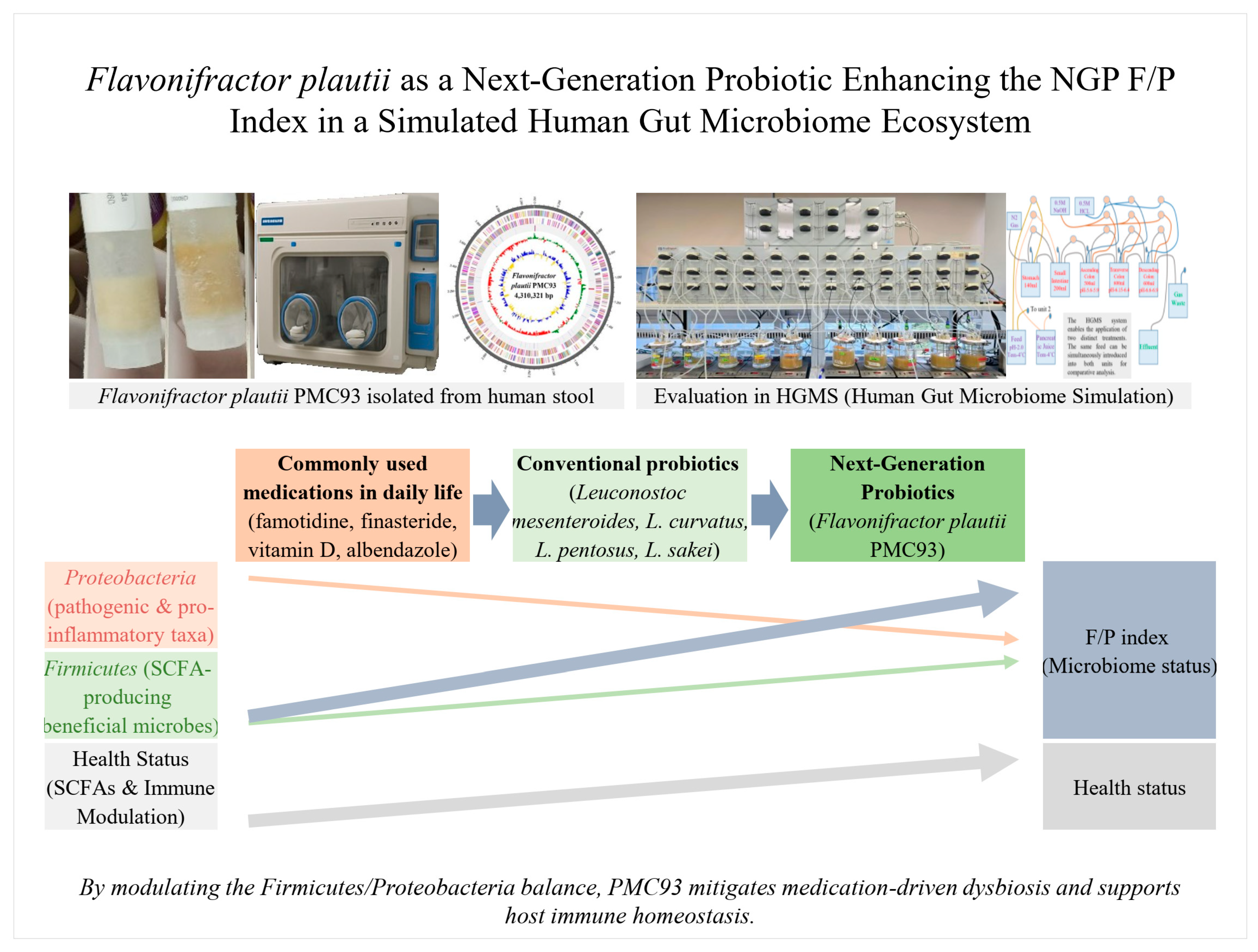

Flavonifractor plautii as a Next-Generation Probiotic Enhancing the NGP F/P Index in a Simulated Human Gut Microbiome Ecosystem

 ,
,  , ,
, ,  ,
,  ,
,  ,
,  , , ,
, , ,
Abstract
1. Introduction
2. Materials and Methods
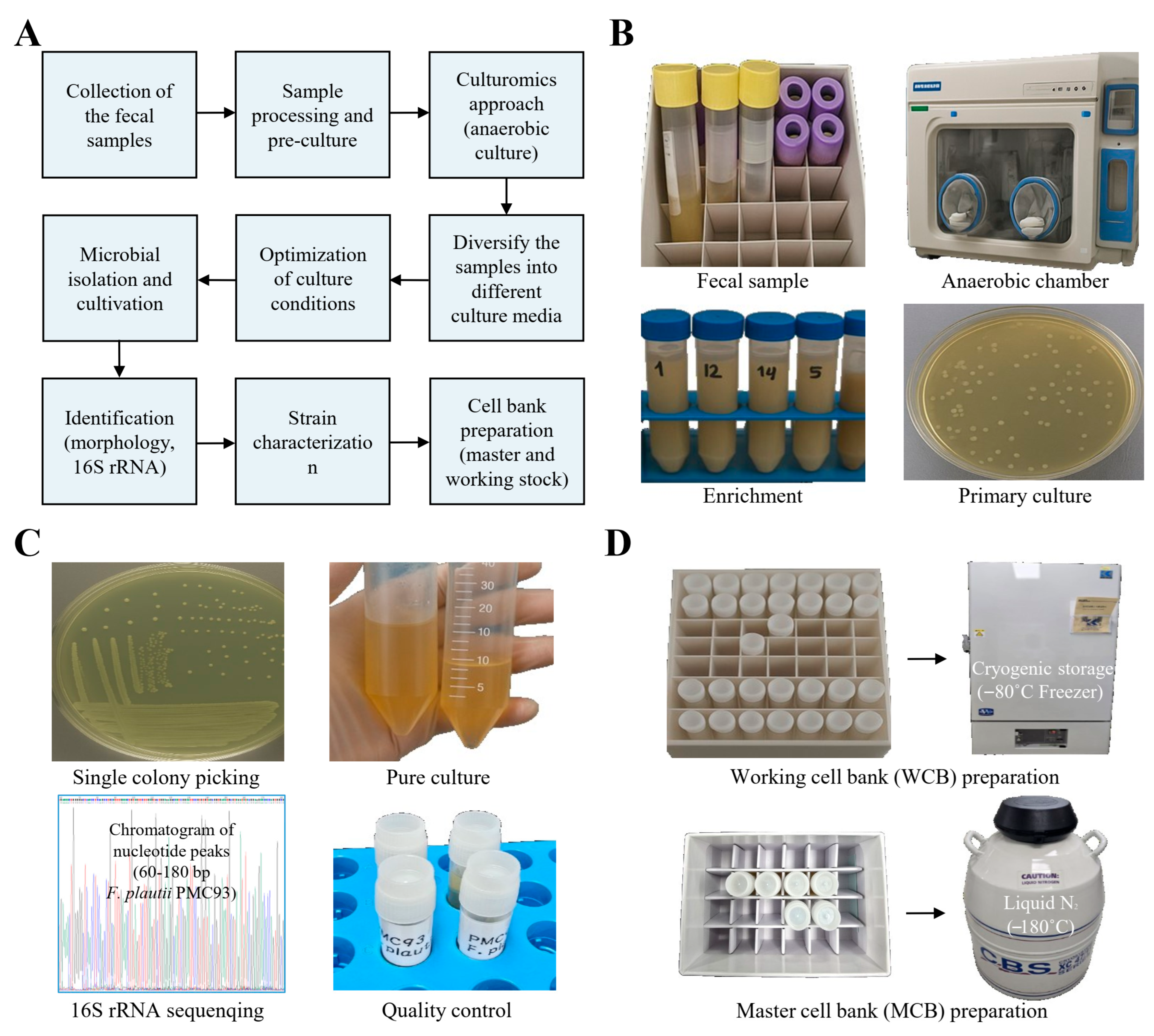
2.1. Clinical Stool-Derived Strain Isolation and Cell Bank Development
2.2. Identification of F. plautii by 16S rRNA Gene Sequencing
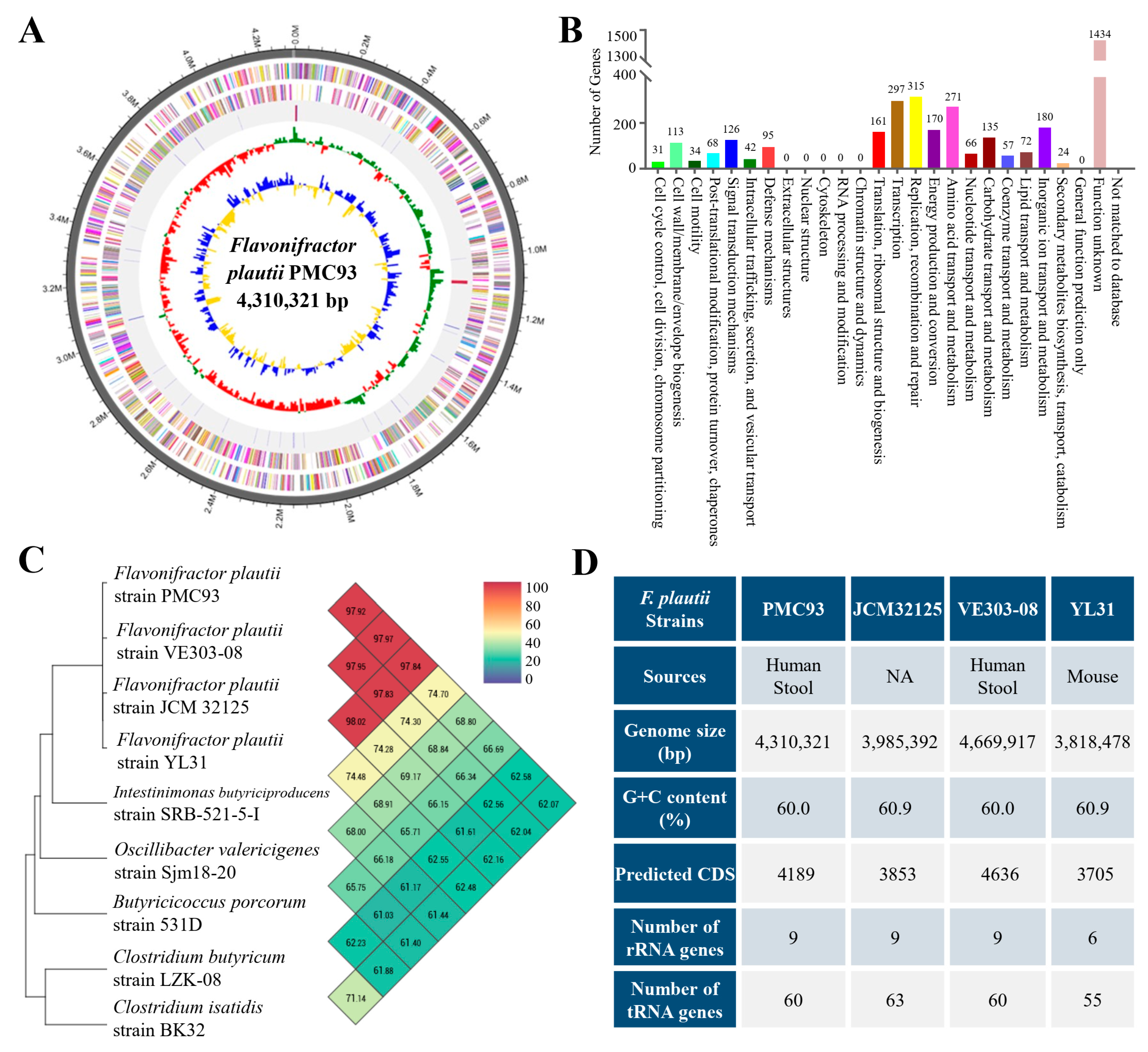
2.3. Whole-Genome Sequencing of the F. plautii PMC93
2.4. Preparation of the F. plautii PMC93
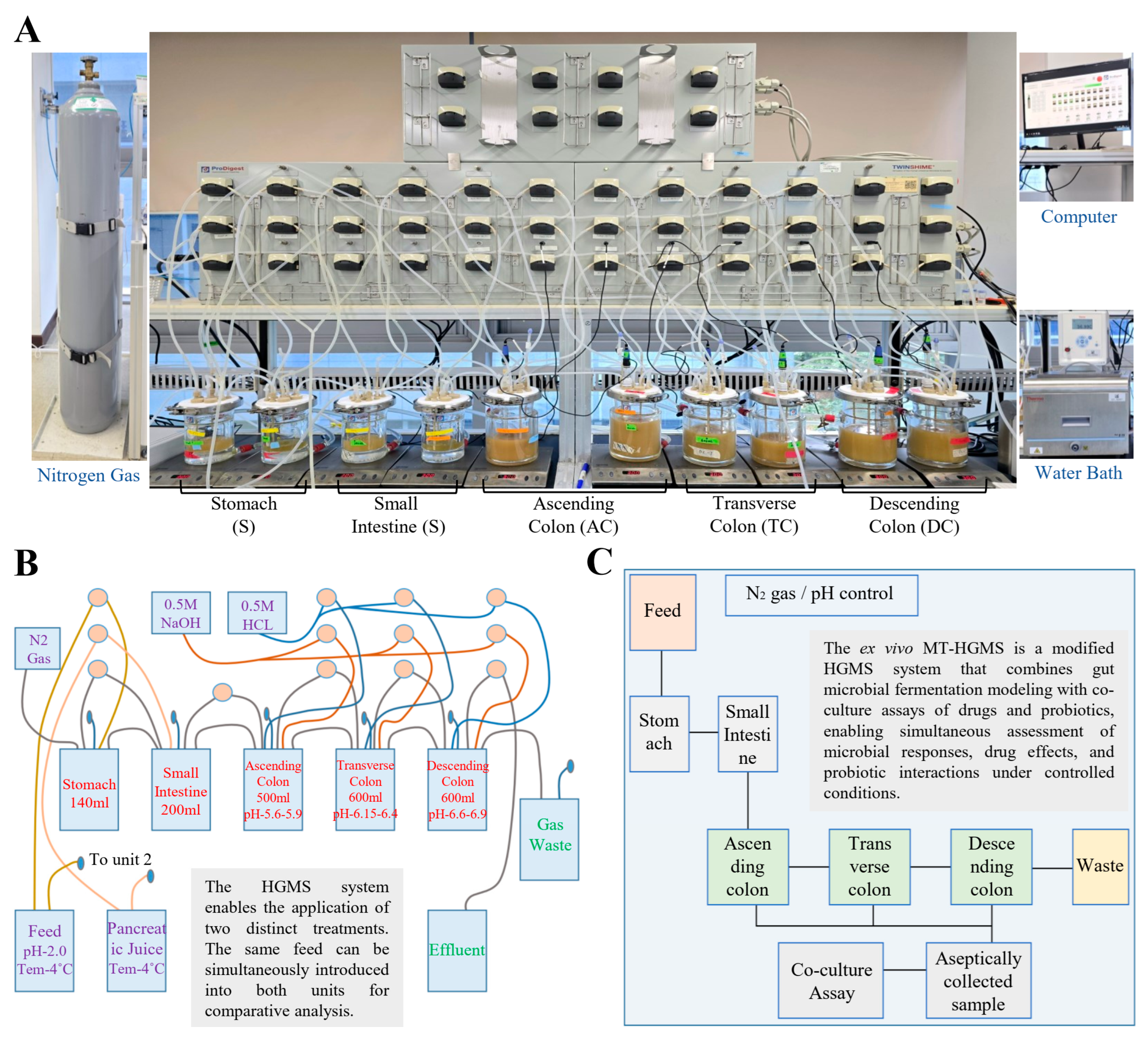
2.5. Simulation of the Human Gut Microbiome for Evaluating the Effects of F. plautii PMC93
2.6. Ex Vivo Multi-Treatment Assays for Gut Microbiome Modulation by Conventional Probiotics and Common Therapeutic Agents
2.7. 16S rRNA Gene-Based Metagenomics Analysis
2.8. Short-Chain Fatty Acid Quantification
2.9. Gene Expression Analysis of Intestinal Tissues
2.10. Acute Oral Toxicity Study of F. plautii PMC93 in Mice
3. Results
3.1. Isolation and Characterization of F. plautii PMC93 and Cell Bank Development
3.2. Whole-Genome Sequencing and Functional Insights into F. plautii PMC93
3.3. Operation of Human Gut Microbiome Simulation Systems to Evaluate the NGP Potential of F. plautii PMC93
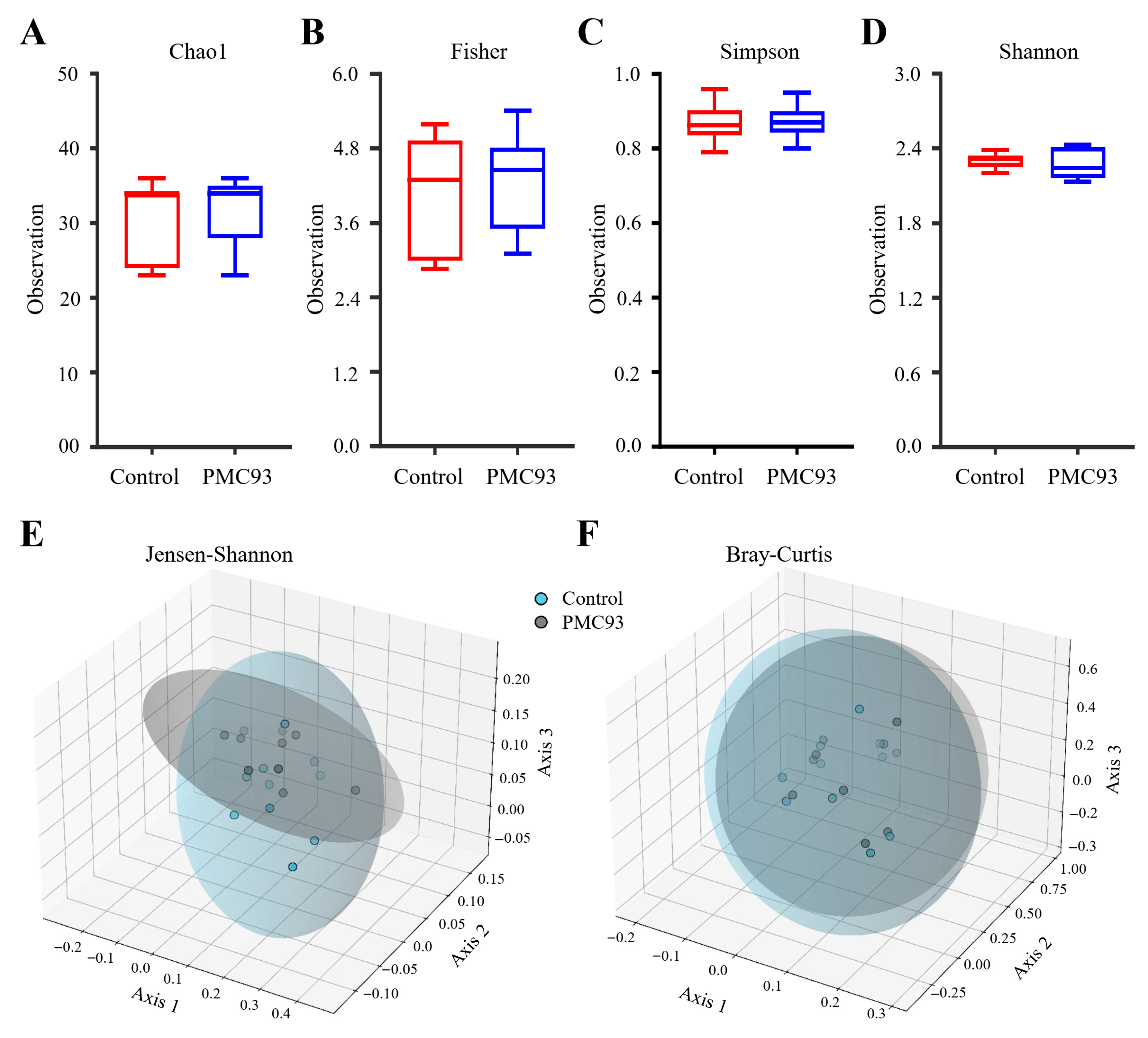
3.4. Insights into Microbial Community Structure and Diversity Using HGMS
3.5. Taxonomic Profiling and Comparative Analysis of Microbial Communities in HGMS
3.6. Comparative Microbiota-Modulating NGP Effects of F. plautii PMC93 in Ex Vivo MT-HGMS
3.7. Gut Microbiota Remodeling by Combined Therapeutic Treatments in Ex Vivo MT-HGMS
3.8. Short-Chain Fatty Acid Profiling of F. plautii PMC93 in HGMS
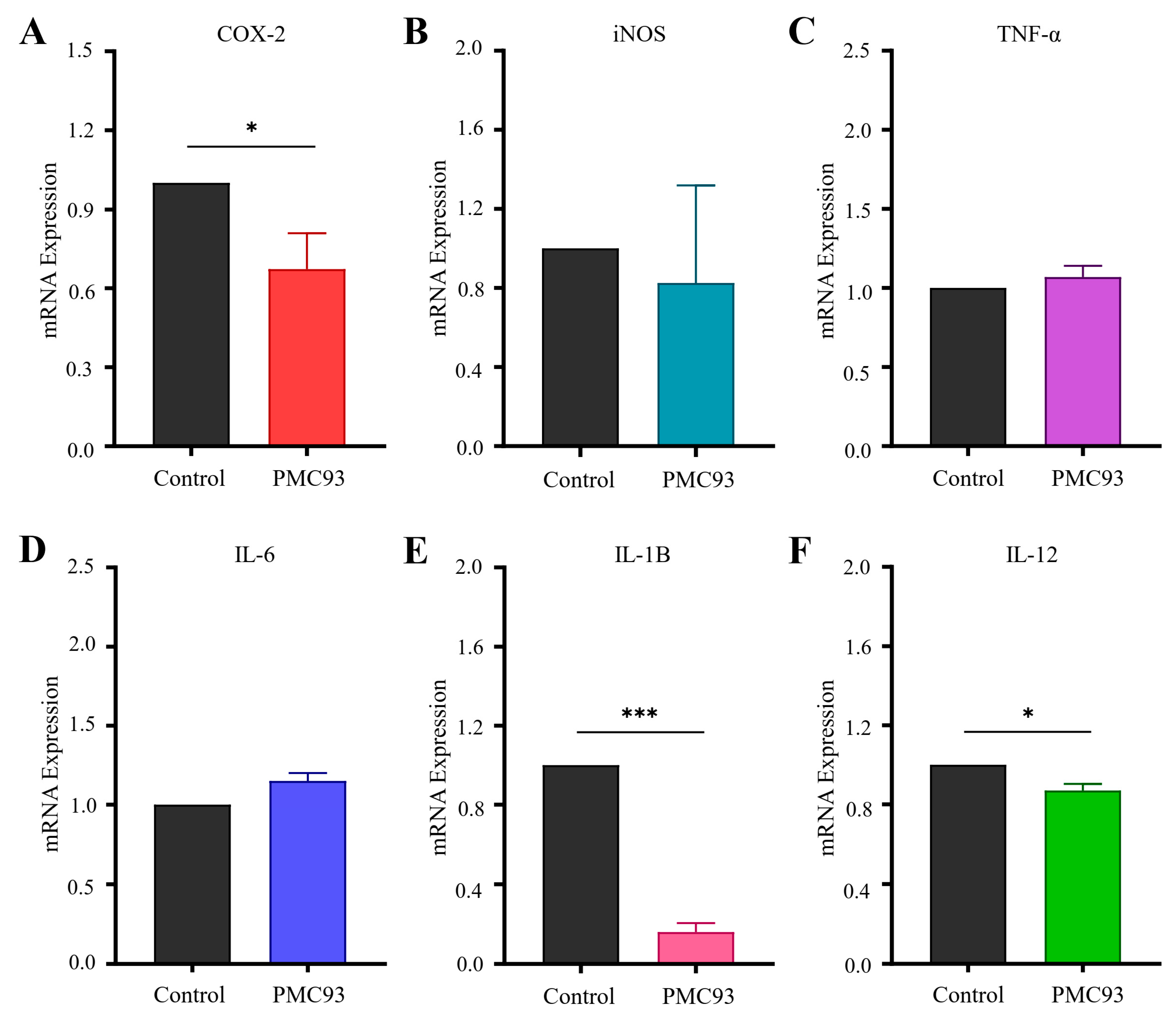
3.9. F. plautii PMC93 Mediated In Vivo Regulation of Inflammatory Gene Expression
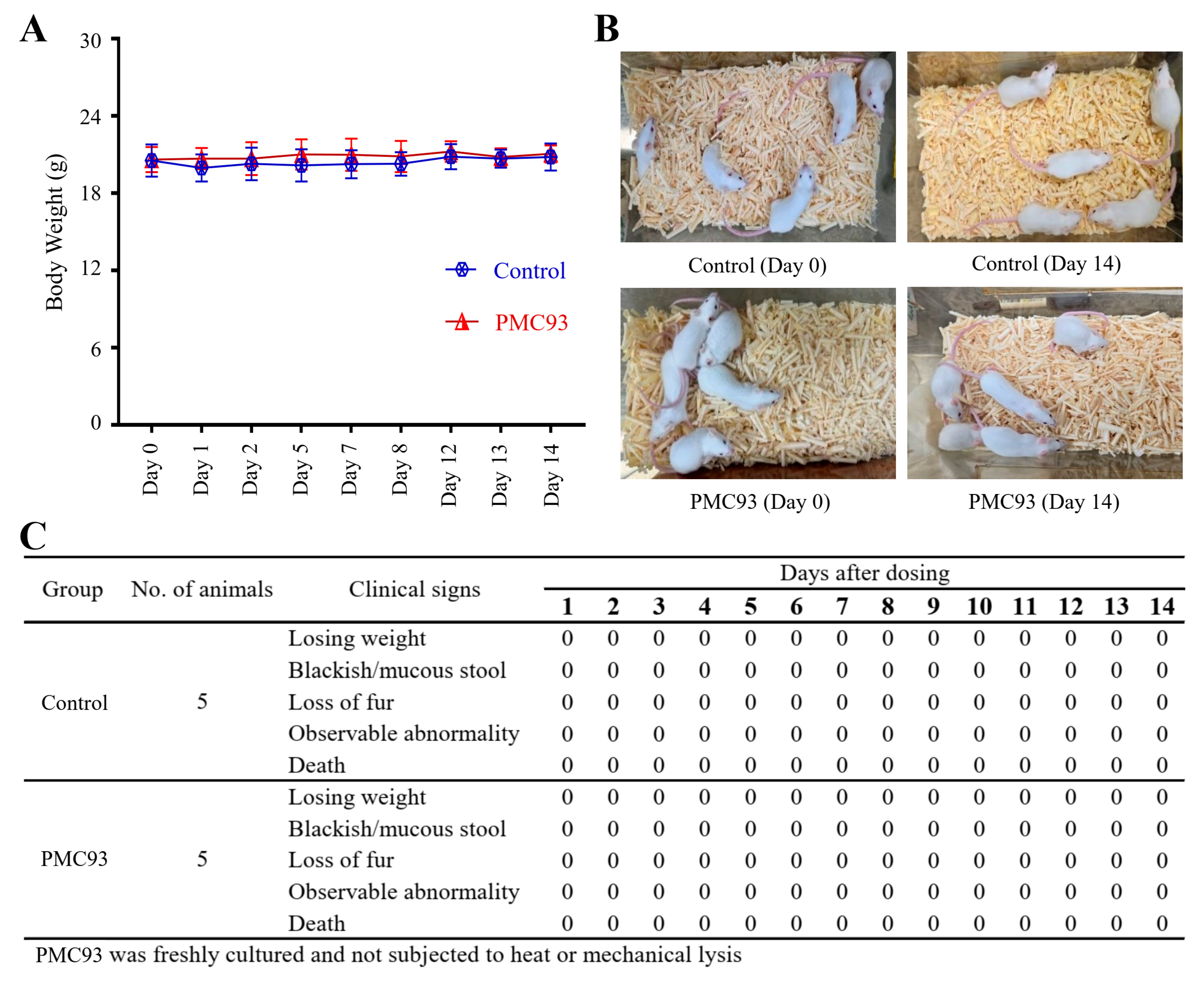
3.10. Acute Oral Toxicity Profile of F. plautii PMC93
4. Discussion
5. Conclusions
Supplementary Materials
Author Contributions
Funding
Institutional Review Board Statement
Informed Consent Statement
Data Availability Statement
Acknowledgments
Conflicts of Interest
References
- Barman, I.; Seo, H.; Kim, S.; Rahim, M.A.; Yoon, Y.; Hossain, M.S.; Shuvo, M.S.H.; Song, H.-Y. Isolation of New Strains of Lactic Acid Bacteria from the Vaginal Microbiome of Postmenopausal Women and their Probiotic Characteristics. Curr. Microbiol. 2025, 82, 76. [Google Scholar] [CrossRef] [PubMed]
- Hossain, M.S.; Seo, H.; Rahim, M.A.; Shuvo, M.S.H.; Barman, I.; Kim, H.; An, J.; Kim, S.; Song, H.-Y. Identification of Probiotic Strains with Anti-Tuberculosis Activity and Their Characterization as Potential Therapeutic Agents. J. Bacteriol. Virol. 2024, 54, 325–342. [Google Scholar] [CrossRef]
- Xiao, Y.; Zhao, J.; Zhang, H.; Zhai, Q.; Chen, W. Mining Lactobacillus and Bifidobacterium for organisms with long-term gut colonization potential. Clin. Nutr. 2020, 39, 1315–1323. [Google Scholar] [CrossRef]
- Fentie, E.G.; Lim, K.; Jeong, M.; Shin, J.H. A comprehensive review of the characterization, host interactions, and stabilization advancements on probiotics: Addressing the challenges in functional food diversification. Compr. Rev. Food Sci. Food Saf. 2024, 23, e13424. [Google Scholar] [CrossRef]
- Abouelela, M.E.; Helmy, Y.A. Next-generation probiotics as novel therapeutics for improving human health: Current trends and future perspectives. Microorganisms 2024, 12, 430. [Google Scholar] [CrossRef]
- Ng, S.C.; Hart, A.L.; Kamm, M.A.; Stagg, A.J.; Knight, S.C. Mechanisms of action of probiotics: Recent advances. Inflamm. Bowel Dis. 2009, 15, 300–310. [Google Scholar] [CrossRef]
- Wang, C.; Bai, J.; Chen, X.; Song, J.; Zhang, Y.; Wang, H.; Suo, H. Gut microbiome-based strategies for host health and disease. Crit. Rev. Food Sci. Nutr. 2024, 64, 6834–6849. [Google Scholar] [CrossRef] [PubMed]
- Loo, K.-Y.; Thong, J.Y.H.; Tan, L.T.-H.; Letchumanan, V.; Chan, K.-G.; Lee, L.-H.; Law, J.W.-F. A Current Overview of Next-Generation Probiotics and Their Prospects in Health and Disease Management. Prog. Microbes Mol. Biol. 2024, 7, a0000457. [Google Scholar] [CrossRef]
- Mo, C.; Lou, X.; Xue, J.; Shi, Z.; Zhao, Y.; Wang, F.; Chen, G. The influence of Akkermansia muciniphila on intestinal barrier function. Gut Pathog. 2024, 16, 41. [Google Scholar] [CrossRef] [PubMed]
- Luo, Y.; Lan, C.; Li, H.; Ouyang, Q.; Kong, F.; Wu, A.; Ren, Z.; Tian, G.; Cai, J.; Yu, B. Rational consideration of Akkermansia muciniphila targeting intestinal health: Advantages and challenges. NPJ Biofilms Microbiomes 2022, 8, 81. [Google Scholar] [CrossRef]
- Lenoir, M.; Martín, R.; Torres-Maravilla, E.; Chadi, S.; González-Dávila, P.; Sokol, H.; Langella, P.; Chain, F.; Bermúdez-Humarán, L.G. Butyrate mediates anti-inflammatory effects of Faecalibacterium prausnitzii in intestinal epithelial cells through Dact3. Gut Microbes 2020, 12, 1826748. [Google Scholar] [CrossRef]
- Troy, E.B.; Kasper, D.L. Beneficial effects of Bacteroides fragilis polysaccharides on the immune system. Front. Biosci. 2010, 15, 25. [Google Scholar] [CrossRef]
- Singh, T.P.; Natraj, B.H. Next-generation probiotics: A promising approach towards designing personalized medicine. Crit. Rev. Microbiol. 2021, 47, 479–498. [Google Scholar] [CrossRef]
- Mikami, A.; Ogita, T.; Namai, F.; Shigemori, S.; Sato, T.; Shimosato, T. Oral administration of Flavonifractor plautii attenuates inflammatory responses in obese adipose tissue. Mol. Biol. Rep. 2020, 47, 6717–6725. [Google Scholar] [CrossRef] [PubMed]
- Gupta, A.; Dhakan, D.B.; Maji, A.; Saxena, R.; Pk, V.P.; Mahajan, S.; Pulikkan, J.; Kurian, J.; Gomez, A.M.; Scaria, J. Association of Flavonifractor plautii, a flavonoid-degrading bacterium, with the gut microbiome of colorectal cancer patients in India. MSystems 2019, 4, 10–1128. [Google Scholar] [CrossRef] [PubMed]
- Luo, S.; Zhao, Y.; Zhu, S.; Liu, L.; Cheng, K.; Ye, B.; Han, Y.; Fan, J.; Xia, M. Flavonifractor plautii protects against elevated arterial stiffness. Circ. Res. 2023, 132, 167–181. [Google Scholar] [CrossRef] [PubMed]
- Ogita, T.; Yamamoto, Y.; Mikami, A.; Shigemori, S.; Sato, T.; Shimosato, T. Oral administration of Flavonifractor plautii strongly suppresses Th2 immune responses in mice. Front. Immunol. 2020, 11, 379. [Google Scholar] [CrossRef]
- Yang, Z.-D.; Guo, Y.-S.; Huang, J.-S.; Gao, Y.-F.; Peng, F.; Xu, R.-Y.; Su, H.-H.; Zhang, P.-J. Isomaltulose exhibits prebiotic activity, and modulates gut microbiota, the production of short chain fatty acids, and secondary bile acids in rats. Molecules 2021, 26, 2464. [Google Scholar] [CrossRef]
- Mantovani, A.; Longo, L.; Thoen, R.U.; Rampelotto, P.H.; Salinas, R.; Guerreiro, G.T.S.; Álvares-da-Silva, M.R. Firmicutes/Bacteroidetes and Firmicutes/Proteobacteria ratios are associated with worse prognosis in a cohort of Latin American patients with cirrhosis. Clinics 2024, 79, 100471. [Google Scholar] [CrossRef]
- Bertorello, S.; Cei, F.; Fink, D.; Niccolai, E.; Amedei, A. The future exploring of gut microbiome-immunity interactions: From in vivo/vitro models to in silico innovations. Microorganisms 2024, 12, 1828. [Google Scholar] [CrossRef]
- Van de Wiele, T.; Van den Abbeele, P.; Ossieur, W.; Possemiers, S.; Marzorati, M. The simulator of the human intestinal microbial ecosystem (SHIME®). In The Impact of Food Bioactives on Health: In Vitro and Ex Vivo Models; Springer: Cham, Switzerland, 2015; pp. 305–317. [Google Scholar]
- Rudzka, A.; Patloka, O.; Plecha, M.; Królikowski, T.; Oczkowski, M.; Zborowski, M.; Kolozyn-Krajewska, D.; Zielinska, D. Changes in the microbiome of a human and in the simulator of human intestinal microbial ecosystem (SHIME®) in response to a diet and probiotic supplementation. Zywn. Nauka Technol. Jakosc 2023, 30, 53–72. [Google Scholar] [CrossRef]
- Hossain, M.S.; Seo, H.; Lee, K.-A.; Kim, S.; Jo, S.; Rahim, M.A.; Tajdozian, H.; Ghorbanian, F.; Yoon, Y.; Barman, I. Microbiome therapeutic PMC72 through reverse translational research in gout. J. Microbiol. 2025, 63, e2501002. [Google Scholar] [CrossRef] [PubMed]
- Kim, S.; Rahim, M.A.; Tajdozian, H.; Barman, I.; Park, H.-A.; Yoon, Y.; Jo, S.; Lee, S.; Shuvo, M.S.H.; Bae, S.H. Clinical Potential of Novel Microbial Therapeutic LP51 Based on Xerosis-Microbiome Index. Cells 2024, 13, 2029. [Google Scholar] [CrossRef]
- Rahim, M.A.; Seo, H.; Kim, S.; Tajdozian, H.; Barman, I.; Lee, Y.; Lee, S.; Song, H.-Y. In vitro anti-tuberculosis effect of probiotic Lacticaseibacillus rhamnosus PMC203 isolated from vaginal microbiota. Sci. Rep. 2022, 12, 8290. [Google Scholar] [CrossRef]
- Seo, H.; Yoon, Y.; Kim, S.; Ghorbanian, F.; Tajdozian, H.; Jo, S.; Barman, I.; Lee, S.; Lee, Y.; Rahim, M.A. Anti-tuberculosis effect of microbiome therapeutic PMC205 in extensively drug-resistant pulmonary tuberculosis in vivo. Int. J. Antimicrob. Agents 2024, 64, 107274. [Google Scholar] [CrossRef] [PubMed]
- Tian, J.; Yang, J.; Li, L.; Ruan, L.; Wei, W.; Zheng, G.; Zhao, W.; Chen, J.; Jiang, W.; Ge, M. The complete genome sequence of a high pristinamycin-producing strain Streptomyces pristinaespiralis HCCB10218. J. Biotechnol. 2015, 214, 45–46. [Google Scholar] [CrossRef]
- Nawrocki, E.P.; Burge, S.W.; Bateman, A.; Daub, J.; Eberhardt, R.Y.; Eddy, S.R.; Floden, E.W.; Gardner, P.P.; Jones, T.A.; Tate, J. Rfam 12.0: Updates to the RNA families database. Nucleic Acids Res. 2015, 43, D130–D137. [Google Scholar] [CrossRef]
- Yoon, S.-H.; Ha, S.-m.; Lim, J.; Kwon, S.; Chun, J. A large-scale evaluation of algorithms to calculate average nucleotide identity. Antonie Van Leeuwenhoek 2017, 110, 1281–1286. [Google Scholar] [CrossRef]
- Aubin, G.G.; Bémer, P.; Kambarev, S.; Patel, N.B.; Lemenand, O.; Caillon, J.; Lawson, P.A.; Corvec, S. Propionibacterium namnetense sp. nov., isolated from a human bone infection. Int. J. Syst. Evol. Microbiol. 2016, 66, 3393–3399. [Google Scholar] [CrossRef]
- Wang, Y.; Liu, Y.; Polic, I.I.; Matheyambath, A.C.; LaPointe, G. Modulation of human gut microbiota composition and metabolites by arabinogalactan and Bifidobacterium longum subsp. longum BB536 in the Simulator of the Human Intestinal Microbial Ecosystem (SHIME®). J. Funct. Foods 2021, 87, 104820. [Google Scholar] [CrossRef]
- Zhu, W.; Zhang, X.; Wang, D.; Yao, Q.; Ma, G.-L.; Fan, X. Simulator of the human intestinal microbial ecosystem (SHIME®): Current developments, applications, and future prospects. Pharmaceuticals 2024, 17, 1639. [Google Scholar] [CrossRef]
- Kim, J.H.; Seo, H.; Kim, S.; Rahim, M.A.; Jo, S.; Barman, I.; Tajdozian, H.; Sarafraz, F.; Shuvo, M.S.H.; Song, H.-Y. Association of Intratumoral Microbiota Modulation with Prostate Cancer Progression: A Microbiome Analysis of Prostatic Tissue. Biomedicines 2025, 13, 1929. [Google Scholar] [CrossRef]
- Ul-Haq, A.; Lee, K.-A.; Seo, H.; Kim, S.; Jo, S.; Ko, K.M.; Moon, S.-J.; Kim, Y.S.; Choi, J.R.; Song, H.-Y. Characteristic alterations of gut microbiota in uncontrolled gout. J. Microbiol. 2022, 60, 1178–1190. [Google Scholar] [CrossRef]
- Ul-Haq, A.; Seo, H.; Jo, S.; Park, H.; Kim, S.; Lee, Y.; Lee, S.; Jeong, J.H.; Song, H.Y. Characterization of fecal microbiomes of osteoporotic patients in Korea. Pol. J. Microbiol. 2022, 71, 601. [Google Scholar] [CrossRef]
- Bolyen, E.; Rideout, J.R.; Dillon, M.R.; Bokulich, N.A.; Abnet, C.C.; Al-Ghalith, G.A.; Alexander, H.; Alm, E.J.; Arumugam, M.; Asnicar, F. Reproducible, interactive, scalable and extensible microbiome data science using QIIME 2. Nat. Biotechnol. 2019, 37, 852–857. [Google Scholar] [CrossRef]
- Bacci, G.; Bani, A.; Bazzicalupo, M.; Ceccherini, M.T.; Galardini, M.; Nannipieri, P.; Pietramellara, G.; Mengoni, A. Evaluation of the performances of ribosomal database project (RDP) classifier for taxonomic assignment of 16S rRNA metabarcoding sequences generated from Illumina-Solexa NGS. J. Genom. 2015, 3, 36. [Google Scholar] [CrossRef] [PubMed]
- Bardenhorst, S.K.; Vital, M.; Karch, A.; Rübsamen, N. Richness estimation in microbiome data obtained from denoising pipelines. Comput. Struct. Biotechnol. J. 2022, 20, 508–520. [Google Scholar] [CrossRef] [PubMed]
- Chen, Y.; Fu, X.; Ou, Z.; Li, J.; Lin, S.; Wu, Y.; Wang, X.; Deng, Y.; Sun, Y. Environmental determinants and demographic influences on global urban microbiomes, antimicrobial resistance and pathogenicity. NPJ Biofilms Microbiomes 2023, 9, 94. [Google Scholar] [CrossRef] [PubMed]
- Shuvo, M.S.H.; Kim, S.; Jo, S.; Rahim, M.A.; Barman, I.; Hossain, M.S.; Jeong, Y.; Jeong, H.; Kim, S.; Seo, H. Characterization of Gut Microbiota of Honey Bees in Korea. Pol. J. Microbiol. 2025. online ahead of print. [Google Scholar] [CrossRef]
- Kers, J.G.; Saccenti, E. The power of microbiome studies: Some considerations on which alpha and beta metrics to use and how to report results. Front. Microbiol. 2022, 12, 796025. [Google Scholar] [CrossRef]
- Wang, Y.; Xie, P.; She, J.; Huang, K.; Deng, A.; Fan, S. Soil bacterial communities are influenced more by forest type than soil depth or slope position. Authorea Prepr. 2022. Preprints. [Google Scholar] [CrossRef]
- Torii, T.; Kanemitsu, K.; Wada, T.; Itoh, S.; Kinugawa, K.; Hagiwara, A. Measurement of short-chain fatty acids in human faeces using high-performance liquid chromatography: Specimen stability. Ann. Clin. Biochem. 2010, 47, 447–452. [Google Scholar] [CrossRef] [PubMed]
- Rahim, M.A.; Seo, H.; Kim, S.; Barman, I.; Ghorbanian, F.; Hossain, M.S.; Shuvo, M.S.H.; Lee, S.; Song, H.-Y. Exploring the potential of Lactocaseibacillus rhamnosus PMC203 in inducing autophagy to reduce the burden of Mycobacterium tuberculosis. Med. Microbiol. Immunol. 2024, 213, 14. [Google Scholar] [CrossRef] [PubMed]
- Schmittgen, T.D.; Livak, K.J. Analyzing real-time PCR data by the comparative CT method. Nat. Protoc. 2008, 3, 1101–1108. [Google Scholar] [CrossRef]
- Tajdozian, H.; Seo, H.; Jeong, Y.; Ghorbanian, F.; Park, C.-e.; Sarafraz, F.; Rahim, M.A.; Lee, Y.; Kim, S.; Lee, S. Efficacy of lyophilized Lactobacillus sakei as a potential candidate for preventing carbapenem-resistant Klebsiella infection. Ann. Microbiol. 2024, 74, 28. [Google Scholar] [CrossRef]
- Ghorbanian, F.; Seo, H.; Sarafraz, F.; Atashi, A.; Shuvo, M.S.H.; Chae-Eun, P.; Hossain, M.S.; Tajdozian, H.; Kim, S.; Song, H.-Y. In Vivo Therapeutic Potential of Next-Generation Probiotic Akkermansia muciniphila and Butyrate Combination Therapy in Diabetes. J. Microbiol. Biotechnol. 2025, 35, e2506025. [Google Scholar] [CrossRef] [PubMed]
- Peter, S.B.; Qiao, Z.; Godspower, H.N.; Ajeje, S.B.; Xu, M.; Zhang, X.; Yang, T.; Rao, Z. Biotechnological innovations and therapeutic application of Pediococcus and lactic acid bacteria: The next-generation microorganism. Front. Bioeng. Biotechnol. 2022, 9, 802031. [Google Scholar] [CrossRef]
- Yadav, M.; Chauhan, N.S. Microbiome therapeutics: Exploring the present scenario and challenges. Gastroenterol. Rep. 2022, 10, goab046. [Google Scholar] [CrossRef]
- Martinez, R.C.R.; Bedani, R.; Saad, S.M.I. Scientific evidence for health effects attributed to the consumption of probiotics and prebiotics: An update for current perspectives and future challenges. Br. J. Nutr. 2015, 114, 1993–2015. [Google Scholar] [CrossRef]
- Sanders, M.E. Impact of probiotics on colonizing microbiota of the gut. J. Clin. Gastroenterol. 2011, 45, S115–S119. [Google Scholar] [CrossRef]
- Gareau, M.G.; Sherman, P.M.; Walker, W.A. Probiotics and the gut microbiota in intestinal health and disease. Nat. Rev. Gastroenterol. Hepatol. 2010, 7, 503–514. [Google Scholar] [CrossRef]
- Vijayaganapathi, A.; Mohanasrinivasan, V. A Review of Next-Generation Probiotics—As a Gateway to Biotherapeutics. Probiotics Antimicrob. Proteins 2025, 17, 1985–1997. [Google Scholar] [CrossRef]
- He, X.; Zhao, S.; Li, Y. Faecalibacterium prausnitzii: A next-generation probiotic in gut disease improvement. Can. J. Infect. Dis. Med. Microbiol. 2021, 2021, 6666114. [Google Scholar] [CrossRef]
- Chang, C.-J.; Lin, T.-L.; Tsai, Y.-L.; Wu, T.-R.; Lai, W.-F.; Lu, C.-C.; Lai, H.-C. Next generation probiotics in disease amelioration. J. Food Drug Anal. 2019, 27, 615–622. [Google Scholar] [CrossRef] [PubMed]
- Andrade, J.C.; Almeida, D.; Domingos, M.; Seabra, C.L.; Machado, D.; Freitas, A.C.; Gomes, A.M. Commensal obligate anaerobic bacteria and health: Production, storage, and delivery strategies. Front. Bioeng. Biotechnol. 2020, 8, 550. [Google Scholar] [CrossRef]
- Saarela, M.H. Safety aspects of next generation probiotics. Curr. Opin. Food Sci. 2019, 30, 8–13. [Google Scholar] [CrossRef]
- Gulliver, E.L.; Young, R.B.; Chonwerawong, M.; D’Adamo, G.L.; Thomason, T.; Widdop, J.T.; Rutten, E.L.; Rossetto Marcelino, V.; Bryant, R.V.; Costello, S.P. the future of microbiome-based therapeutics. Aliment. Pharmacol. Ther. 2022, 56, 192–208. [Google Scholar] [CrossRef] [PubMed]
- Ang, W.-S.; Law, J.W.-F.; Letchumanan, V.; Hong, K.W.; Wong, S.H.; Ab Mutalib, N.S.; Chan, K.-G.; Lee, L.-H.; Tan, L.T.-H. A Keystone gut bacterium Christensenella minuta—A potential biotherapeutic agent for obesity and associated metabolic diseases. Foods 2023, 12, 2485. [Google Scholar] [CrossRef]
- Rosés i Pol, C. Human Gut Microbiota Modulation Through Functional Foods. 2023. Available online: https://ddd.uab.cat/record/293325 (accessed on 6 August 2025).
- Elazzazy, A.M.; Baeshen, M.N.; Alasmi, K.M.; Alqurashi, S.I.; Desouky, S.E.; Khattab, S.M.R. Where Biology Meets Engineering: Scaling up microbial nutraceuticals to bridge nutrition, therapeutics, and global impact. Microorganisms 2025, 13, 566. [Google Scholar] [CrossRef]
- Wong, A.C.; Levy, M. New approaches to microbiome-based therapies. MSystems 2019, 4, 10–1128. [Google Scholar] [CrossRef]
- Mikami, A.; Ogita, T.; Namai, F.; Shigemori, S.; Sato, T.; Shimosato, T. Oral administration of Flavonifractor plautii, a bacteria increased with green tea consumption, promotes recovery from acute colitis in mice via suppression of IL-17. Front. Nutr. 2021, 7, 610946. [Google Scholar] [CrossRef] [PubMed]
- Ivey, K.L.; Chan, A.T.; Izard, J.; Cassidy, A.; Rogers, G.B.; Rimm, E.B. Role of dietary flavonoid compounds in driving patterns of microbial community assembly. MBio 2019, 10, 10–1128. [Google Scholar] [CrossRef]
- Li, C.; Zhang, X. Current in vitro and animal models for understanding foods: Human gut–microbiota interactions. J. Agric. Food Chem. 2022, 70, 12733–12745. [Google Scholar] [CrossRef]
- Isenring, J.; Bircher, L.; Geirnaert, A.; Lacroix, C. In vitro human gut microbiota fermentation models: Opportunities, challenges, and pitfalls. Microbiome Res. Rep. 2023, 2, 2. [Google Scholar] [CrossRef]
- Xiang, Y.; Liu, Y.; Niazi, N.K.; Bolan, N.; Zhao, L.; Zhang, S.; Xue, J.; Yao, B.; Li, Y. Biochar addition increased soil bacterial diversity and richness: Large-scale evidence of field experiments. Sci. Total Environ. 2023, 893, 164961. [Google Scholar] [CrossRef] [PubMed]
- Mendes, R.S.; Evangelista, L.R.; Thomaz, S.M.; Agostinho, A.A.; Gomes, L.C. A unified index to measure ecological diversity and species rarity. Ecography 2008, 31, 450–456. [Google Scholar] [CrossRef]
- Gupta, M.K.; Srivastava, R. Gut Microbiome Interventions: From Dysbiosis to Next-Generation Probiotics (NGPs) for Disease Management. Probiotics Antimicrob. Proteins 2025, 17, 2629–2652. [Google Scholar] [CrossRef] [PubMed]
- Fan, S.; Zhang, Z.; Zhao, Y.; Daglia, M.; Zhang, J.; Zhu, Y.; Bai, J.; Zhu, L.; Xiao, X. Recent advances in targeted manipulation of the gut microbiome by prebiotics: From taxonomic composition to metabolic function. Curr. Opin. Food Sci. 2023, 49, 100959. [Google Scholar] [CrossRef]
- Gaudioso, G.; Marzorati, G.; Faccenda, F.; Weil, T.; Lunelli, F.; Cardinaletti, G.; Marino, G.; Olivotto, I.; Parisi, G.; Tibaldi, E. Processed animal proteins from insect and poultry by-products in a fish meal-free diet for rainbow trout: Impact on intestinal microbiota and inflammatory markers. Int. J. Mol. Sci. 2021, 22, 5454. [Google Scholar] [CrossRef]
- Costa, M.C.; Bessegatto, J.A.; Alfieri, A.A.; Weese, J.S.; Filho, J.A.B.; Oba, A. Different antibiotic growth promoters induce specific changes in the cecal microbiota membership of broiler chicken. PLoS ONE 2017, 12, e0171642. [Google Scholar] [CrossRef]
- Baltazar-Díaz, T.A.; Amador-Lara, F.; Andrade-Villanueva, J.F.; González-Hernández, L.A.; Cabrera-Silva, R.I.; Sánchez-Reyes, K.; Álvarez-Zavala, M.; Valenzuela-Ramírez, A.; Del Toro-Arreola, S.; Bueno-Topete, M.R. Gut bacterial communities in HIV-infected individuals with metabolic syndrome: Effects of the therapy with integrase strand transfer inhibitor-based and protease inhibitor-based regimens. Microorganisms 2023, 11, 951. [Google Scholar] [CrossRef] [PubMed]
- Parada Venegas, D.; De la Fuente, M.K.; Landskron, G.; González, M.J.; Quera, R.; Dijkstra, G.; Harmsen, H.J.M.; Faber, K.N.; Hermoso, M.A. Short chain fatty acids (SCFAs)-mediated gut epithelial and immune regulation and its relevance for inflammatory bowel diseases. Front. Immunol. 2019, 10, 277. [Google Scholar]
- Liu, L.; Li, Q.; Yang, Y.; Guo, A. Biological function of short-chain fatty acids and its regulation on intestinal health of poultry. Front. Vet. Sci. 2021, 8, 736739. [Google Scholar] [CrossRef]
- Ratajczak, W.; Rył, A.; Mizerski, A.; Walczakiewicz, K.; Sipak, O.; Laszczyńska, M. Immunomodulatory potential of gut microbiome-derived short-chain fatty acids (SCFAs). Acta Biochim. Pol. 2019, 66, 1–12. [Google Scholar] [CrossRef]
- Shin, N.-R.; Whon, T.W.; Bae, J.-W. Proteobacteria: Microbial signature of dysbiosis in gut microbiota. Trends Biotechnol. 2015, 33, 496–503. [Google Scholar] [CrossRef]
- Rizzatti, G.; Lopetuso, L.R.; Gibiino, G.; Binda, C.; Gasbarrini, A. Proteobacteria: A common factor in human diseases. Biomed. Res. Int. 2017, 2017, 9351507. [Google Scholar] [CrossRef]
- Baldelli, V.; Scaldaferri, F.; Putignani, L.; Del Chierico, F. The role of Enterobacteriaceae in gut microbiota dysbiosis in inflammatory bowel diseases. Microorganisms 2021, 9, 697. [Google Scholar] [CrossRef]
- Mohammad, S.; Thiemermann, C. Role of metabolic endotoxemia in systemic inflammation and potential interventions. Front. Immunol. 2021, 11, 594150. [Google Scholar] [CrossRef] [PubMed]
- Huang, X.; Jiang, F.; Chen, X.; Xian, Y. Plant-Derived Polysaccharides Benefit Weaned Piglets by Regulating Intestinal Microbiota: A Review. J. Agric. Food Chem. 2024, 72, 28225–28245. [Google Scholar] [CrossRef] [PubMed]
- Ejtahed, H.-S.; Soroush, A.-R.; Siadat, S.-D.; Hoseini-Tavassol, Z.; Larijani, B.; Hasani-Ranjbar, S. Targeting obesity management through gut microbiota modulation by herbal products: A systematic review. Complement. Ther. Med. 2019, 42, 184–204. [Google Scholar] [CrossRef] [PubMed]
- Di Stefano, M.; Santonocito, S.; Polizzi, A.; Mauceri, R.; Troiano, G.; Lo Giudice, A.; Romano, A.; Mascitti, M.; Isola, G. A reciprocal link between oral, gut microbiota during periodontitis: The potential role of probiotics in reducing dysbiosis-induced inflammation. Int. J. Mol. Sci. 2023, 24, 1084. [Google Scholar] [CrossRef]
- Parthasarathy, R.; Santiago, F.; McCluskey, P.; Kaakoush, N.O.; Tedla, N.; Wakefield, D. The microbiome in HLA-B27-associated disease: Implications for acute anterior uveitis and recommendations for future studies. Trends Microbiol. 2023, 31, 142–158. [Google Scholar] [CrossRef]
- Mulcahy, L.R.; Isabella, V.M.; Lewis, K. Pseudomonas aeruginosa biofilms in disease. Microb. Ecol. 2014, 68, 1–12. [Google Scholar] [CrossRef] [PubMed]
- Zhang, X.U.; Zhao, Y.; Xu, J.; Xue, Z.; Zhang, M.; Pang, X.; Zhang, X.; Zhao, L. Modulation of gut microbiota by berberine and metformin during the treatment of high-fat diet-induced obesity in rats. Sci. Rep. 2015, 5, 14405. [Google Scholar] [CrossRef]
- Huang, H.; Jiang, J.; Wang, X.; Jiang, K.; Cao, H. Exposure to prescribed medication in early life and impacts on gut microbiota and disease development. EClinicalMedicine 2024, 68, 102428. [Google Scholar] [CrossRef]
- Petakh, P.; Kamyshna, I.; Kamyshnyi, A. Effects of metformin on the gut microbiota: A systematic review. Mol. Metab. 2023, 77, 101805. [Google Scholar] [CrossRef]
- Mann, E.R.; Lam, Y.K.; Uhlig, H.H. Short-chain fatty acids: Linking diet, the microbiome and immunity. Nat. Rev. Immunol. 2024, 24, 577–595. [Google Scholar] [CrossRef]
- Meyer, C.; Brockmueller, A.; Ruiz de Porras, V.; Shakibaei, M. Microbiota and resveratrol: How are they linked to osteoporosis? Cells 2024, 13, 1145. [Google Scholar] [CrossRef]
- Houtman, T.A.; Eckermann, H.A.; Smidt, H.; de Weerth, C. Gut microbiota and BMI throughout childhood: The role of firmicutes, bacteroidetes, and short-chain fatty acid producers. Sci. Rep. 2022, 12, 3140. [Google Scholar] [CrossRef] [PubMed]
- Bach Knudsen, K.E.; Lærke, H.N.; Hedemann, M.S.; Nielsen, T.S.; Ingerslev, A.K.; Gundelund Nielsen, D.S.; Theil, P.K.; Purup, S.; Hald, S.; Schioldan, A.G. Impact of diet-modulated butyrate production on intestinal barrier function and inflammation. Nutrients 2018, 10, 1499. [Google Scholar] [CrossRef] [PubMed]
- Chen, J.; Vitetta, L. The role of butyrate in attenuating pathobiont-induced hyperinflammation. Immune Netw. 2020, 20, e15. [Google Scholar] [CrossRef]
- Mojgani, N.; Ashique, S.; Moradi, M.; Bagheri, M.; Garg, A.; Kaushik, M.; Hussain, M.S.; Yasmin, S.; Ansari, M.Y. Gut Microbiota and Postbiotic Metabolites: Biotic Intervention for Enhancing Vaccine Responses and Personalized Medicine for Disease Prevention. Probiotics Antimicrob. Proteins 2025. Online ahead of print. [Google Scholar] [CrossRef]
- Shi, J.; Wang, Y.; Cheng, L.; Wang, J.; Raghavan, V. Gut microbiome modulation by probiotics, prebiotics, synbiotics and postbiotics: A novel strategy in food allergy prevention and treatment. Crit. Rev. Food Sci. Nutr. 2024, 64, 5984–6000. [Google Scholar] [CrossRef] [PubMed]
- Xu, S.; Lu, F.; Gao, J.; Yuan, Y. Inflammation-mediated metabolic regulation in adipose tissue. Obes. Rev. 2024, 25, e13724. [Google Scholar] [CrossRef] [PubMed]
- Wautier, J.-L.; Wautier, M.-P. Pro-and anti-inflammatory prostaglandins and cytokines in humans: A mini review. Int. J. Mol. Sci. 2023, 24, 9647. [Google Scholar] [CrossRef]
- Bögel, G.; Murányi, J.; Szokol, B.; Kukor, Z.; Móra, I.; Kardon, T.; Őrfi, L.; Hrabák, A. Production of NOS2 and inflammatory cytokines is reduced by selected protein kinase inhibitors with partial repolarization of HL-60 derived and human blood macrophages. Heliyon 2022, 8, e08670. [Google Scholar] [CrossRef] [PubMed]
- Godur, D.A.; Denton, A.J.; Eshraghi, N.; Mittal, J.; Cooper, J.; Moosa, M.; Mittal, R. Modulation of gut microbiome as a therapeutic modality for auditory disorders. Audiol. Res. 2023, 13, 741–752. [Google Scholar] [CrossRef]
- Salazar-Montes, A.; Delgado-Rizo, V.; Armendáriz-Borunda, J. Differential gene expression of pro-inflammatory and anti-inflammatory cytokines in acute and chronic liver injury. Hepatol. Res. 2000, 16, 181–194. [Google Scholar] [CrossRef]
- Newton, R.; Kuitert, L.M.E.; Bergmann, M.; Adcock, I.M.; Barnes, P.J. Evidence for involvement of NF-κB in the transcriptional control of COX-2 gene expression by IL-1β. Biochem. Biophys. Res. Commun. 1997, 237, 28–32. [Google Scholar] [CrossRef]
- Coutelier, J.-P.; Van Broeck, J.; Wolf, S.F. Interleukin-12 gene expression after viral infection in the mouse. J. Virol. 1995, 69, 1955–1958. [Google Scholar] [CrossRef]



| NCBI Reference | Organism | Length | Score | Identities | Gaps |
|---|---|---|---|---|---|
| NR_029356.1 | Flavonifractor plautii strain 265 | 1550 | 2673 bits (1447) | 1453/1456 (99%) | 0/1456 (0%) |
| NR_043142.1 | Flavonifractor plautii strain Prevot S1 | 1465 | 2634 bits (1426) | 1440/1447 (99%) | 0/1447 (0%) |
| NR_147370.1 | Pseudoflavonifractor phocaeensis strain P3064 | 1495 | 2475 bits (1340) | 1417/1456 (97%) | 0/1456 (0%) |
| NR_180619.1 | Pseudoflavonifractor gallinarum strain Cla-CZ | 1433 | 2457 bits (1330) | 1389/1418 (98%) | 1/1418 (0%) |
| NR_025670.1 | Pseudoflavonifractor capillosus ATCC 29799 | 1483 | 2457 bits (1330) | 1413/1454 (97%) | 1/1454 (0%) |
| NR_179410.1 | Clostridium phoceensis strain GD3 | 1495 | 2440 bits (1321) | 1411/1456 (97%) | 0/1456 (0%) |
| NR_173697.1 | Lawsonibacter asaccharolyticus strain 3BBH22 | 1481 | 2399 bits (1299) | 1405/1457 (96%) | 3/1457 (0%) |
| NR_179423.1 | Intestinimonas timonensis strain GD4 | 1495 | 2346 bits (1270) | 1395/1457 (96%) | 2/1457 (0%) |
| NR_179418.1 | Intestinimonas massiliensis strain GD2 | 1519 | 2266 bits (1227) | 1382/1458 (95%) | 5/1458 (0%) |
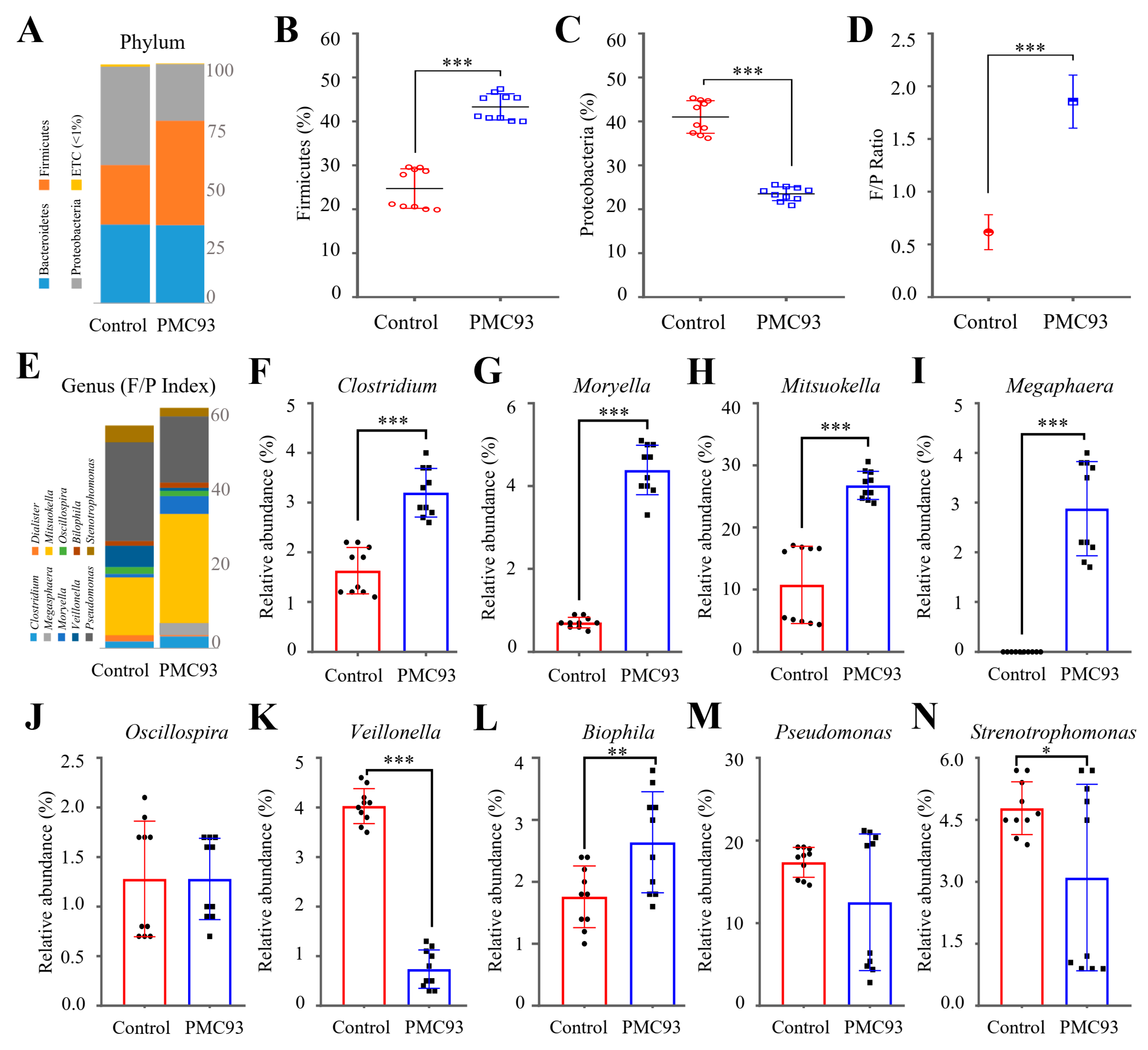
| Phylum | Control | PMC93 | Class | Control | PMC93 | Order | Control | PMC93 | Family | Control | PMC93 | Genus | Control | PMC93 |
|---|---|---|---|---|---|---|---|---|---|---|---|---|---|---|
| Bacteroidetes | 33.4 | 32.8 | Bacteroidia | 33.4 | 32.8 | Bacteroidales | 33.4 | 32.8 | Bacteroidaceae *** | 33.4 | 32.8 | Bacteroides *** | 25.7 | 18.4 |
| Porphyromonadaceae *** | 1.9 | 1 | Parabacteroides *** | 1.9 | 1 | |||||||||
| Prevotellaceae *** | 1.9 | 9.9 | Prevotella *** | 1.9 | 9.9 | |||||||||
| Firmicutes *** | 24.7 | 43.3 | Clostridia *** | 23.7 | 43.1 | Clostridiales *** | 23.7 | 43.1 | Lachnospiraceae *** | 4.2 | 9.3 | Clostridium *** | 1.6 | 3.2 |
| Moryella *** | 0.7 | 4.4 | ||||||||||||
| Veillonellaceae *** | 16.2 | 31.6 | Dialister *** | 1.2 | 0.4 | |||||||||
| Megasphaera *** | 0 | 2.9 | ||||||||||||
| Veillonella *** | 4 | 0.7 | ||||||||||||
| Mitsuokella *** | 10.8 | 26.8 | ||||||||||||
| Proteobacteria *** | 41 | 23.5 | Desulfovibrionia * | 0.9 | 1.3 | Desulfovibrionales *** | 0.9 | 1.3 | Desulfovibrionaceae *** | 0.9 | 1.3 | Bilophila * | 0.9 | 1.3 |
| Alphaproteobacteria *** | 0.5 | 2.1 | Caulobacterales *** | 0.5 | 2.1 | Caulobacteraceae *** | 0.5 | 2.1 | Nitrobacteria *** | 0.5 | 2.1 | |||
| Gammaproteobacteria *** | 39.4 | 20 | Enterobacteriales *** | 16.6 | 1.5 | Enterobacteriaceae *** | 16.6 | 1.5 |
Disclaimer/Publisher’s Note: The statements, opinions and data contained in all publications are solely those of the individual author(s) and contributor(s) and not of MDPI and/or the editor(s). MDPI and/or the editor(s) disclaim responsibility for any injury to people or property resulting from any ideas, methods, instructions or products referred to in the content. |
© 2025 by the authors. Licensee MDPI, Basel, Switzerland. This article is an open access article distributed under the terms and conditions of the Creative Commons Attribution (CC BY) license (https://creativecommons.org/licenses/by/4.0/).
Share and Cite
Shuvo, M.S.H.; Kim, S.; Jo, S.; Rahim, M.A.; Barman, I.; Hossain, M.S.; Yoon, Y.; Tajdozian, H.; Ahmed, I.; Atashi, A.; et al. Flavonifractor plautii as a Next-Generation Probiotic Enhancing the NGP F/P Index in a Simulated Human Gut Microbiome Ecosystem. Pharmaceutics 2025, 17, 1603. https://doi.org/10.3390/pharmaceutics17121603
Shuvo MSH, Kim S, Jo S, Rahim MA, Barman I, Hossain MS, Yoon Y, Tajdozian H, Ahmed I, Atashi A, et al. Flavonifractor plautii as a Next-Generation Probiotic Enhancing the NGP F/P Index in a Simulated Human Gut Microbiome Ecosystem. Pharmaceutics. 2025; 17(12):1603. https://doi.org/10.3390/pharmaceutics17121603
Chicago/Turabian StyleShuvo, Md Sarower Hossen, Sukyung Kim, Sujin Jo, Md Abdur Rahim, Indrajeet Barman, Mohammed Solayman Hossain, Youjin Yoon, Hanieh Tajdozian, Izaz Ahmed, Ali Atashi, and et al. 2025. "Flavonifractor plautii as a Next-Generation Probiotic Enhancing the NGP F/P Index in a Simulated Human Gut Microbiome Ecosystem" Pharmaceutics 17, no. 12: 1603. https://doi.org/10.3390/pharmaceutics17121603
APA StyleShuvo, M. S. H., Kim, S., Jo, S., Rahim, M. A., Barman, I., Hossain, M. S., Yoon, Y., Tajdozian, H., Ahmed, I., Atashi, A., Jeong, G., Suh, H.-S., You, J., Sung, C., Kim, M., Seo, H., & Song, H.-Y. (2025). Flavonifractor plautii as a Next-Generation Probiotic Enhancing the NGP F/P Index in a Simulated Human Gut Microbiome Ecosystem. Pharmaceutics, 17(12), 1603. https://doi.org/10.3390/pharmaceutics17121603