Review

Functionalized Polymeric Micelles for Targeted Cancer Therapy: Steps from Conceptualization to Clinical Trials


Research Institute for Medicines (iMed.ULisboa), Faculdade de Farmácia, Universidade de Lisboa (ULisboa), Avenida Professor Gama PintoGama Pinto, 1649-003 Lisboa, Portugal
*
Author to whom correspondence should be addressed.
Pharmaceutics 2024, 16(8), 1047; https://doi.org/10.3390/pharmaceutics16081047

Submission received: 8 July 2024 / Revised: 28 July 2024 / Accepted: 1 August 2024 / Published: 6 August 2024
(This article belongs to the Special Issue Supramolecular Systems for Gene and Drug Delivery, 2nd Edition)

Abstract

Cancer is still ranked among the top three causes of death in the 30- to 69-year-old age group in most countries and carries considerable societal and macroeconomic costs that differ depending on the cancer type, geography, and patient gender. Despite advances in several pharmacological approaches, the lack of stability and specificity, dose-related toxicity, and limited bioavailability of chemotherapy (standard therapy) pose major obstacles in cancer treatment, with multidrug resistance being a driving factor in chemotherapy failure. The past three decades have been the stage for intense research activity on the topic of nanomedicine, which has resulted in many nanotherapeutics with reduced toxicity, increased bioavailability, and improved pharmacokinetics and therapeutic efficacy employing smart drug delivery systems (SDDSs). Polymeric micelles (PMs) have become an auspicious DDS for medicinal compounds, being used to encapsulate hydrophobic drugs that also exhibit substantial toxicity. Through preclinical animal testing, PMs improved pharmacokinetic profiles and increased efficacy, resulting in a higher safety profile for therapeutic drugs. This review focuses on PMs that are already in clinical trials, traveling the pathways from preclinical to clinical studies until introduction to the market.
Keywords: cancer; nanomedicine; polymeric micelles; amphiphilic polymers; targeted drug delivery; stimuli-responsive micelles; clinical trials cancer; nanomedicine; polymeric micelles; amphiphilic polymers; targeted drug delivery; stimuli-responsive micelles; clinical trials
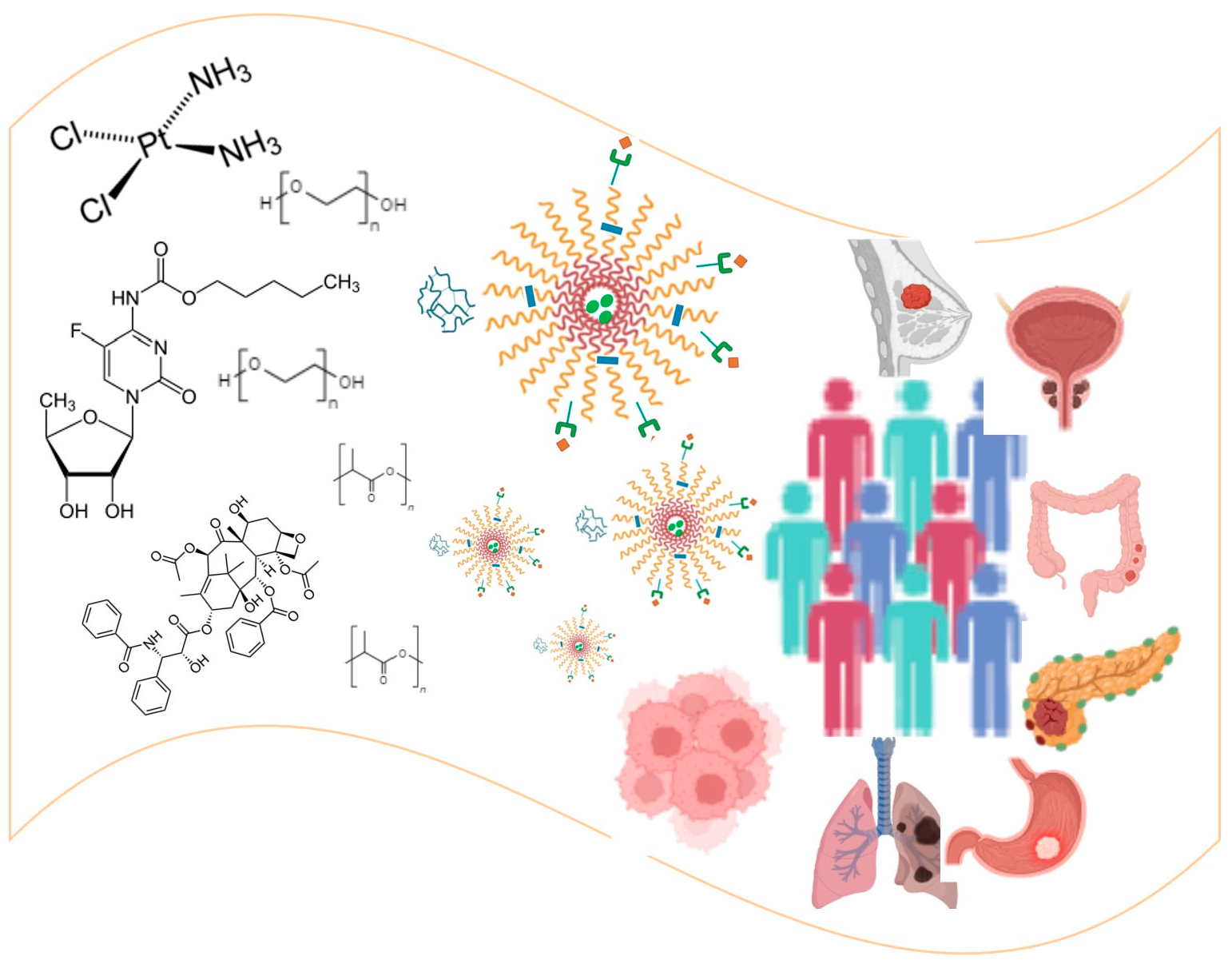
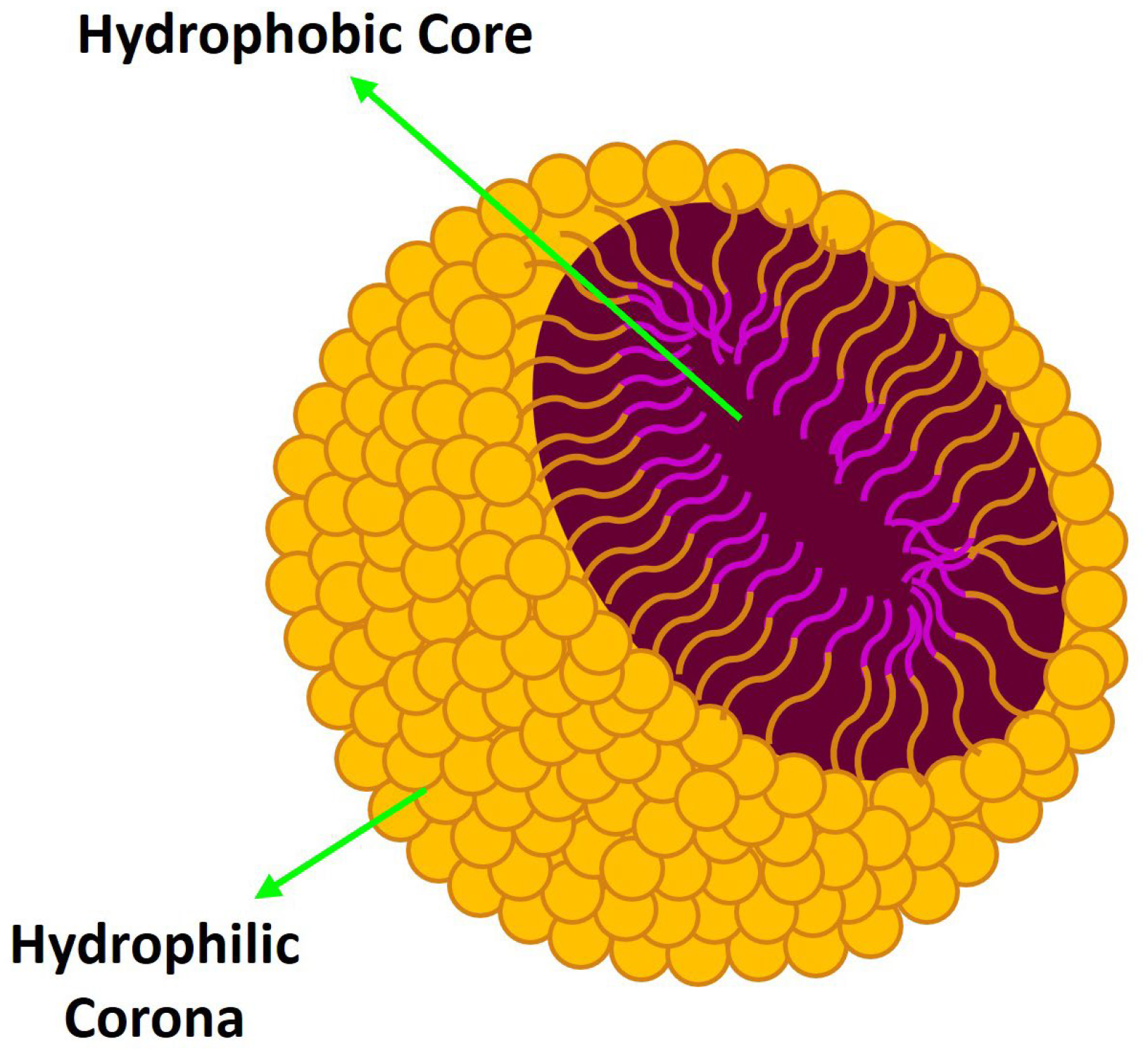
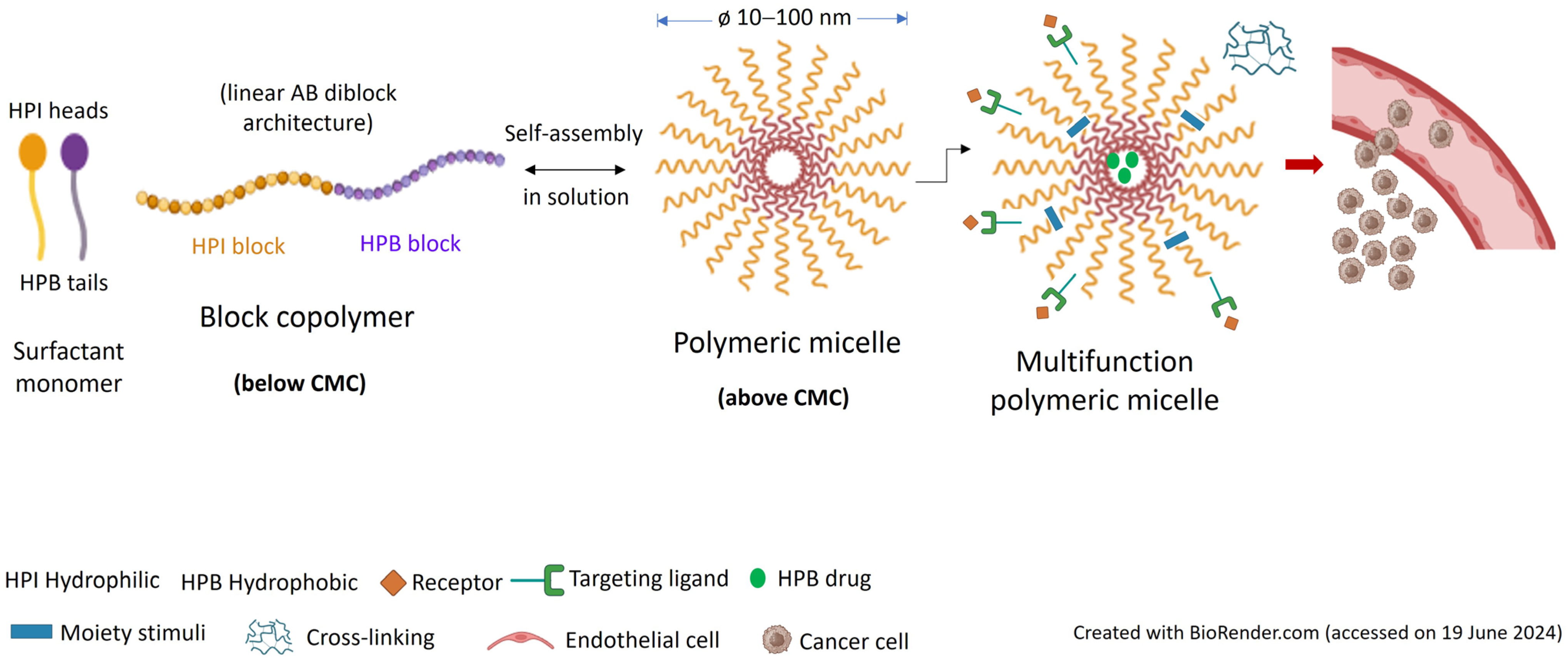
Graphical Abstract