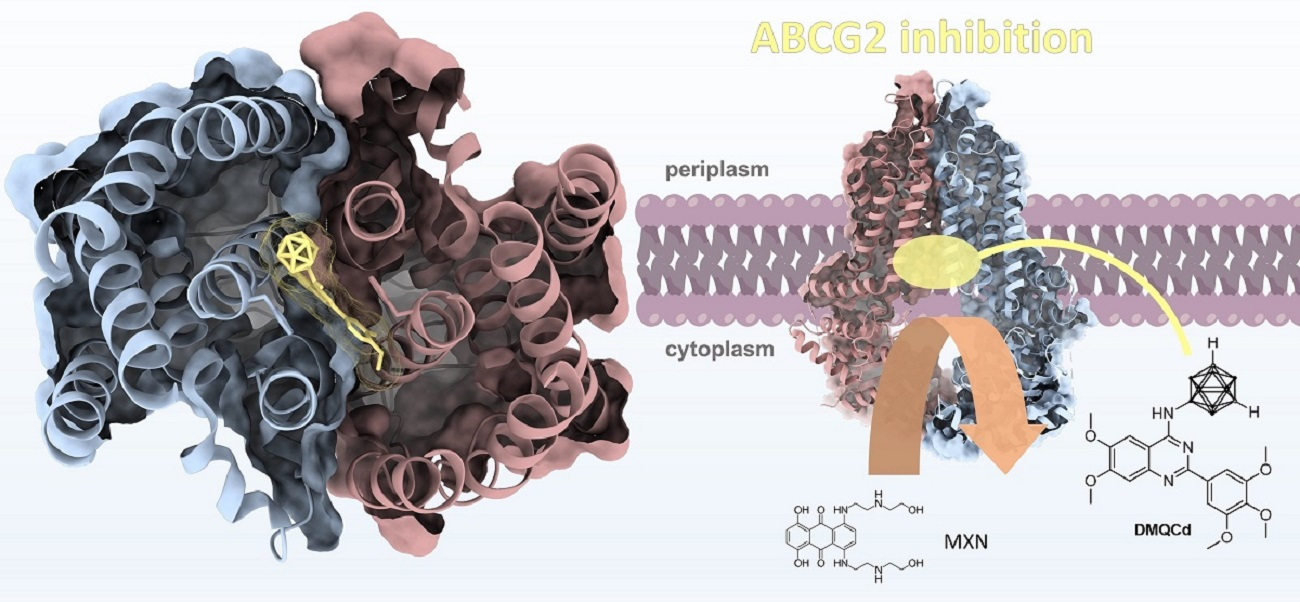
The More the Better—Investigation of Polymethoxylated N-Carboranyl Quinazolines as Novel Hybrid Breast Cancer Resistance Protein Inhibitors
 , , , , ,
Abstract
Share and Cite
Stockmann, P.; Kuhnert, L.; Leinung, W.; Lakoma, C.; Scholz, B.; Paskas, S.; Mijatović, S.; Maksimović-Ivanić, D.; Honscha, W.; Hey-Hawkins, E. The More the Better—Investigation of Polymethoxylated N-Carboranyl Quinazolines as Novel Hybrid Breast Cancer Resistance Protein Inhibitors. Pharmaceutics 2023, 15, 241. https://doi.org/10.3390/pharmaceutics15010241
Stockmann P, Kuhnert L, Leinung W, Lakoma C, Scholz B, Paskas S, Mijatović S, Maksimović-Ivanić D, Honscha W, Hey-Hawkins E. The More the Better—Investigation of Polymethoxylated N-Carboranyl Quinazolines as Novel Hybrid Breast Cancer Resistance Protein Inhibitors. Pharmaceutics. 2023; 15(1):241. https://doi.org/10.3390/pharmaceutics15010241
Chicago/Turabian StyleStockmann, Philipp, Lydia Kuhnert, Wencke Leinung, Cathleen Lakoma, Birte Scholz, Svetlana Paskas, Sanja Mijatović, Danijela Maksimović-Ivanić, Walther Honscha, and Evamarie Hey-Hawkins. 2023. "The More the Better—Investigation of Polymethoxylated N-Carboranyl Quinazolines as Novel Hybrid Breast Cancer Resistance Protein Inhibitors" Pharmaceutics 15, no. 1: 241. https://doi.org/10.3390/pharmaceutics15010241
APA StyleStockmann, P., Kuhnert, L., Leinung, W., Lakoma, C., Scholz, B., Paskas, S., Mijatović, S., Maksimović-Ivanić, D., Honscha, W., & Hey-Hawkins, E. (2023). The More the Better—Investigation of Polymethoxylated N-Carboranyl Quinazolines as Novel Hybrid Breast Cancer Resistance Protein Inhibitors. Pharmaceutics, 15(1), 241. https://doi.org/10.3390/pharmaceutics15010241