

Ulcerative Colitis and Acute Severe Ulcerative Colitis Patients Are Overlooked in Infliximab Population Pharmacokinetic Models: Results from a Comprehensive Review
 , ,
, ,  ,
,
Abstract
:1. Introduction
- pMayo comprises solely non-endoscopic measures (stool frequency, rectal bleeding and global medical assessment);
- MES instead comprises solely endoscopic findings;
- fMayo is the combination of the indices pMayo and MES [6].
- Adequate model evaluation depends on the intended purpose of the developed model. For example, a model needs a good predictive performance for successful MIPD, while this requirement might be lower if the model is only used for investigational purposes. However, a survey of published systems biology ordinary differential equation models from 2002 to 2004 judged only 28% of models to be adequately evaluated for their intended purpose, thus posing serious difficulties in judging the suitability of many published models for further use [33].
- The reproducibility of developed models is dependent on the availability of model code. In a recent review, Tiwari et al. (2021) reported that only 49% of 455 published models were directly reproducible using the code and information available in the publication [34]. Even after contacting the corresponding authors, 37% of the investigated models could not be reproduced.
2. Materials and Methods
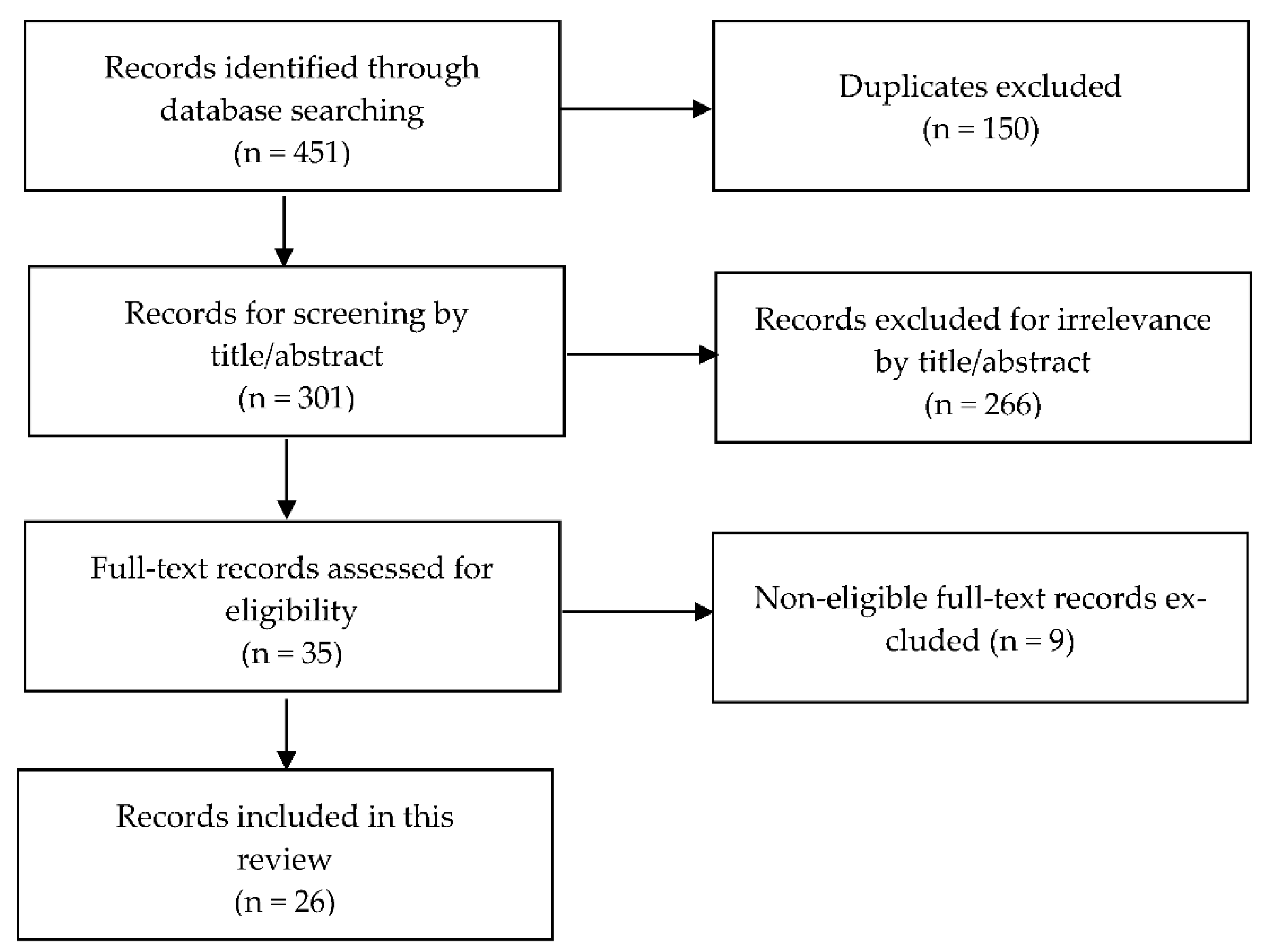
- Report on modelling activities to characterise PK of IFX;
- Modelling activities, including an IBD or UC population.
- Modelling activities without population PK approach;
- Statistical approach without population PK approach (e.g., exposure response analysis without a population PK model);
- Populations not including UC patients.
- Infliximab AND Ulcerative colitis AND {either Model, Modelling, Modeling or Pharmacokinetic};
- Infliximab AND Inflammatory bowel disease AND {either Model, Modelling, Modeling or Pharmacokinetic}.
3. Results
- Populations included in the identified model: The main goal of this section was to assess the place of UC and ASUC subpopulations in the modelling activities, as well as the quality of the data used for model development of IFX. Another focus of this section was the assessment of the type of data reported (e.g., disease activity, ADA)
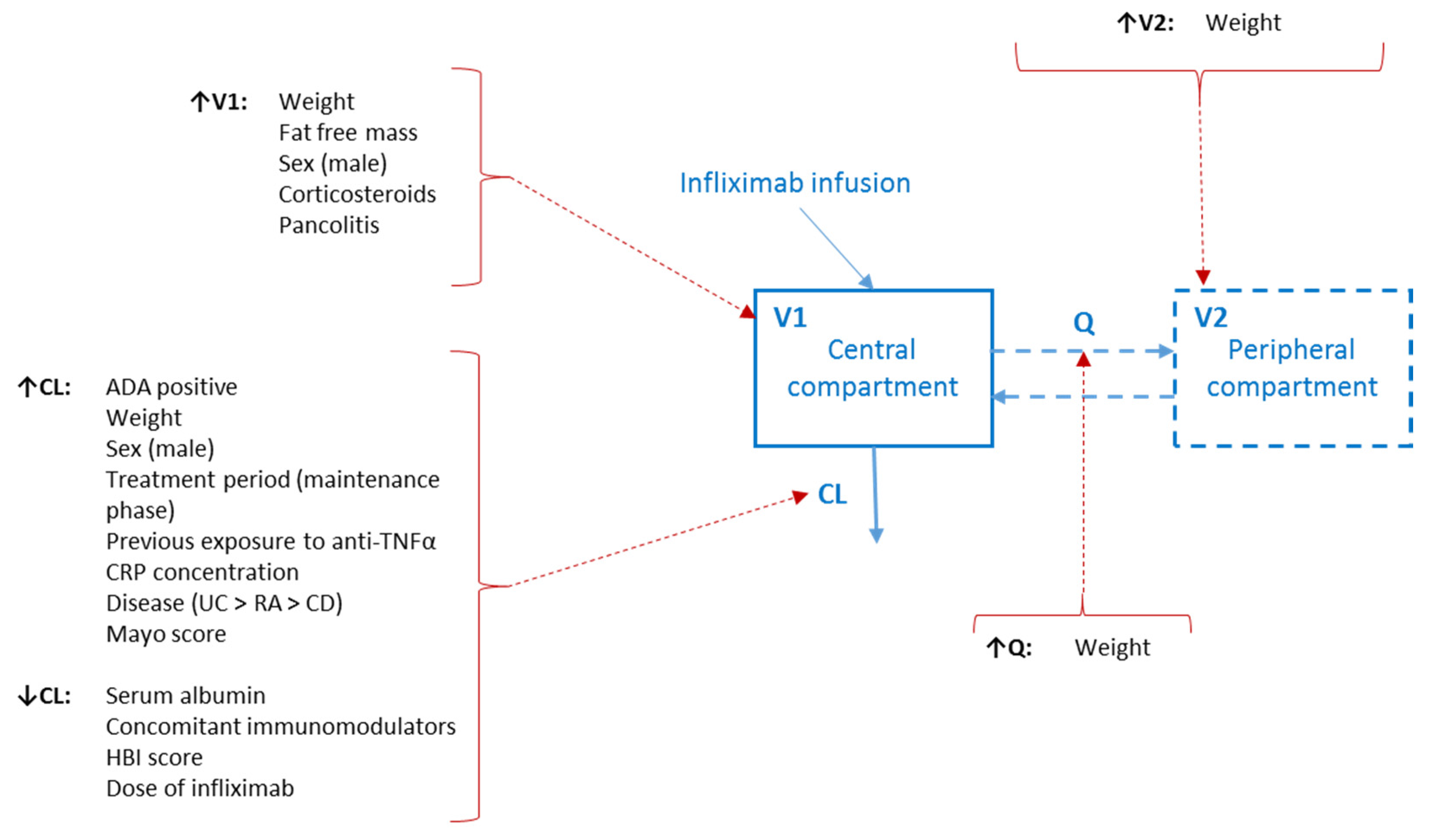
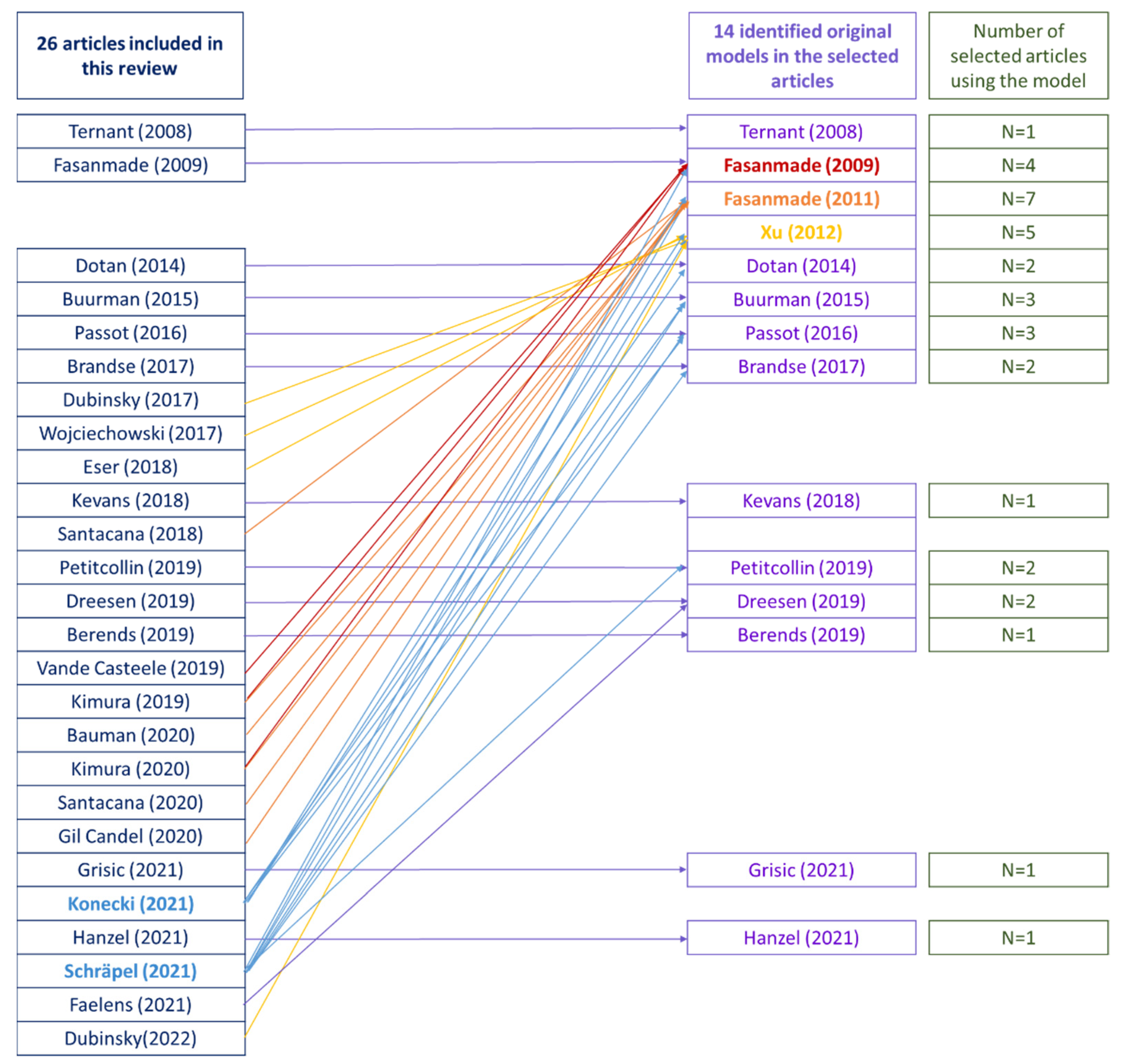
- Models of IFX: In this section, the aim was to summarise and analyse the different type of models developed for IFX as well as the place of key factors such as ADA in the different identified original models.
- Model evaluation and clinical application of developed models: This section aimed to assess the quality of model evaluation and performance of published models. As such models are often re-used by later studies and applied in a clinical setting (e.g., MIPD), good evaluation and reporting of these evaluation methods are important.
3.1. Identified Gaps in the UC Populations Included in the Models
3.2. Current Available Models for IFX in UC/IBD Patients
3.3. Model Evaluation and Current Clinical Application of Developed Models
4. Discussion and Perspectives
5. Conclusions
Supplementary Materials
Author Contributions
Funding
Institutional Review Board Statement
Informed Consent Statement
Acknowledgments
Conflicts of Interest
References
- Abraham, C.; Cho, J.H. Inflammatory Bowel Disease. Inflamm. Bowel Dis. 2009, 361, 2066–2078. [Google Scholar] [CrossRef]
- Cosnes, J.; Gower-Rousseau, C.; Seksik, P.; Cortot, A. Epidemiology and Natural History of Inflammatory Bowel Diseases. Gastroenterology 2011, 140, 1785–1794. [Google Scholar] [CrossRef]
- Nakase, H. Optimizing the Use of Current Treatments and Emerging Therapeutic Approaches to Achieve Therapeutic Success in Patients with Inflammatory Bowel Disease. Gut Liver 2020, 14, 7–19. [Google Scholar] [CrossRef] [PubMed]
- Lewis, J.D.; Chuai, S.; Nessel, L.; Lichtenstein, G.R.; Aberra, F.N.; Ellenberg, J.H. Use of the Noninvasive Components of the Mayo Score to Assess Clinical Response in Ulcerative Colitis. Inflamm. Bowel Dis. 2008, 14, 1660–1666. [Google Scholar] [CrossRef] [PubMed]
- Vuitton, L.; Peyrin-Biroulet, L.; Colombel, J.F.; Pariente, B.; Pineton de Chambrun, G.; Walsh, A.J.; Panes, J.; Travis, S.P.L.; Mary, J.Y.; Marteau, P. Defining Endoscopic Response and Remission in Ulcerative Colitis Clinical Trials: An International Consensus. Aliment. Pharmacol. Ther. 2017, 45, 801–813. [Google Scholar] [CrossRef]
- Schroeder, K.W.; Tremaine, W.J.; Ilstrup, D.M. Coated Oral 5-Aminosalicylic Acid Therapy for Mildly to Moderately Active Ulcerative Colitis. A Randomized Study. N. Engl. J. Med. 1987, 317, 1625–1629. [Google Scholar] [CrossRef] [PubMed]
- Walmsley, R.S.; Ayres, R.C.; Pounder, R.E.; Allan, R.N. A Simple Clinical Colitis Activity Index. Gut 1998, 43, 29–32. [Google Scholar] [CrossRef]
- Fumery, M.; Singh, S.; Dulai, P.S.; Gower-Rousseau, C.; Peyrin-Biroulet, L.; Sandborn, W.J. Natural History of Adult Ulcerative Colitis in Population-Based Cohorts: A Systematic Review. Clin. Gastroenterol. Hepatol. 2018, 16, 343–356. [Google Scholar] [CrossRef] [PubMed]
- Edwards, F.C.; Truelove, S.C. The Course and Prognosis of Ulcerative Colitis. Gut 1963, 4, 299–315. [Google Scholar] [CrossRef]
- Burisch, J.; Katsanos, K.H.; Christodoulou, D.K.; Barros, L.; Magro, F.; Pedersen, N.; Kjeldsen, J.; Vegh, Z.; Lakatos, P.L.; Eriksson, C.; et al. Natural Disease Course of Ulcerative Colitis During the First Five Years of Follow-up in a European Population-Based Inception Cohort-An Epi-IBD Study. J. Crohns Colitis 2019, 13, 198–208. [Google Scholar] [CrossRef]
- Yarur, A.J.; Strobel, S.G.; Deshpande, A.R.; Abreu, M.T. Predictors of Aggressive Inflammatory Bowel Disease. Gastroenterol. Hepatol. 2011, 7, 652–659. [Google Scholar]
- Justiniano, C.F.; Aquina, C.T.; Becerra, A.Z.; Xu, Z.; Boodry, C.I.; Swanger, A.A.; Monson, J.R.T.; Fleming, F.J. Postoperative Mortality After Nonelective Surgery for Inflammatory Bowel Disease Patients in the Era of Biologics. Ann. Surg. 2019, 269, 686–691. [Google Scholar] [CrossRef] [PubMed]
- Molnár, T.; Farkas, K.; Nyári, T.; Szepes, Z.; Nagy, F.; Wittmann, T. Response to First Intravenous Steroid Therapy Determines the Subsequent Risk of Colectomy in Ulcerative Colitis Patients. J. Gastrointestin Liver Dis. 2011, 20, 359–363. [Google Scholar]
- Gionchetti, P.; Rizzello, F. IBD. Sequential Rescue Therapy in Steroid-Refractory Ulcerative Colitis. Nat. Rev. Gastroenterol. Hepatol. 2014, 11, 521–523. [Google Scholar] [CrossRef] [PubMed]
- Truelove, S.C.; Witts, L.J. Cortisone in Ulcerative Colitis; Final Report on a Therapeutic Trial. Br. Med. J. 1955, 2, 1041–1048. [Google Scholar] [CrossRef] [PubMed]
- Rutgeerts, P.; Sandborn, W.J.; Feagan, B.G.; Reinisch, W.; Olson, A.; Johanns, J.; Travers, S.; Rachmilewitz, D.; Hanauer, S.B.; Lichtenstein, G.R.; et al. Infliximab for Induction and Maintenance Therapy for Ulcerative Colitis. N. Engl. J. Med. 2005, 353, 2462–2476. [Google Scholar] [CrossRef]
- Rawla, P.; Sunkara, T.; Raj, J.P. Role of Biologics and Biosimilars in Inflammatory Bowel Disease: Current Trends and Future Perspectives. J. Inflamm. Res. 2018, 11, 215–226. [Google Scholar] [CrossRef] [PubMed]
- Knight, D.M.; Trinh, H.; Le, J.; Siegel, S.; Shealy, D.; McDonough, M.; Scallon, B.; Moore, M.A.; Vilcek, J.; Daddona, P. Construction and Initial Characterization of a Mouse-Human Chimeric Anti-TNF Antibody. Mol. Immunol. 1993, 30, 1443–1453. [Google Scholar] [CrossRef]
- Hemperly, A.; vande Casteele, N. Clinical Pharmacokinetics and Pharmacodynamics of Infliximab in the Treatment of Inflammatory Bowel Disease. Clin. Pharmacokinet. 2018, 57, 929–942. [Google Scholar] [CrossRef] [PubMed]
- Lamb, C.A.; Kennedy, N.A.; Raine, T.; Hendy, P.A.; Smith, P.J.; Limdi, J.K.; Hayee, B.; Lomer, M.C.E.; Parkes, G.C.; Selinger, C.; et al. British Society of Gastroenterology Consensus Guidelines on the Management of Inflammatory Bowel Disease in Adults. Gut 2019, 68, s1–s106. [Google Scholar] [CrossRef]
- Steroid/Thiopurine Refractory UC|ECCO E-Guide. Available online: http://www.e-guide.ecco-ibd.eu/algorithm/steroid-thiopurine-refractory-uc (accessed on 5 September 2022).
- Zhao, M.; Sall Jensen, M.; Knudsen, T.; Kelsen, J.; Coskun, M.; Kjellberg, J.; Burisch, J. Trends in the Use of Biologicals and Their Treatment Outcomes among Patients with Inflammatory Bowel Diseases—A Danish Nationwide Cohort Study. Aliment. Pharmacol. Ther. 2022, 55, 541–557. [Google Scholar] [CrossRef]
- REMICADE (Infliximab) [Package Insert]; Janssen Biotech, Inc.: Horsham, PA, USA, 2013; Available online: https://www.remicade.com/ (accessed on 28 July 2022).
- Nalagatla, N.; Falloon, K.; Tran, G.; Borren, N.Z.; Avalos, D.; Luther, J.; Colizzo, F.; Garber, J.; Khalili, H.; Melia, J.; et al. Effect of Accelerated Infliximab Induction on Short- and Long-Term Outcomes of Acute Severe Ulcerative Colitis: A Retrospective Multicenter Study and Meta-Analysis. Clin. Gastroenterol. Hepatol. 2019, 17, 502–509. [Google Scholar] [CrossRef] [PubMed]
- Cheifetz, A.S.; Abreu, M.T.; Afif, W.; Cross, R.K.; Dubinsky, M.C.; Loftus, E.V.; Osterman, M.T.; Saroufim, A.; Siegel, C.A.; Yarur, A.J.; et al. A Comprehensive Literature Review and Expert Consensus Statement on Therapeutic Drug Monitoring of Biologics in Inflammatory Bowel Disease. Am. J. Gastroenterol. 2021, 116, 2014–2025. [Google Scholar] [CrossRef]
- vande Casteele, N.; Herfarth, H.; Katz, J.; Falck-Ytter, Y.; Singh, S. American Gastroenterological Association Institute Technical Review on the Role of Therapeutic Drug Monitoring in the Management of Inflammatory Bowel Diseases. Gastroenterology 2017, 153, 835–857. [Google Scholar] [CrossRef] [PubMed]
- Ben-Horin, S.; Yavzori, M.; Katz, L.; Kopylov, U.; Picard, O.; Fudim, E.; Coscas, D.; Bar-Meir, S.; Goldstein, I.; Chowers, Y. The Immunogenic Part of Infliximab Is the F(Ab’)2, but Measuring Antibodies to the Intact Infliximab Molecule Is More Clinically Useful. Gut 2011, 60, 41–48. [Google Scholar] [CrossRef] [PubMed]
- Nanda, K.S.; Cheifetz, A.S.; Moss, A.C. Impact of Antibodies to Infliximab on Clinical Outcomes and Serum Infliximab Levels in Patients with Inflammatory Bowel Disease (IBD): A Meta-Analysis. Am. J. Gastroenterol. 2013, 108, 40–47. [Google Scholar] [CrossRef]
- Qiu, Y.; Chen, B.L.; Mao, R.; Zhang, S.H.; He, Y.; Zeng, Z.R.; Ben-Horin, S.; Chen, M. hu Systematic Review with Meta-Analysis: Loss of Response and Requirement of Anti-TNFα Dose Intensification in Crohn’s Disease. J. Gastroenterol. 2017, 52, 535–554. [Google Scholar] [CrossRef]
- Kluwe, F.; Michelet, R.; Mueller-Schoell, A.; Maier, C.; Klopp-Schulze, L.; van Dyk, M.; Mikus, G.; Huisinga, W.; Kloft, C. Perspectives on Model-Informed Precision Dosing in the Digital Health Era: Challenges, Opportunities, and Recommendations. Clin. Pharmacol. Ther. 2021, 109, 29–36. [Google Scholar] [CrossRef]
- Darwich, A.S.; Ogungbenro, K.; Vinks, A.A.; Powell, J.R.; Reny, J.-L.; Marsousi, N.; Daali, Y.; Fairman, D.; Cook, J.; Lesko, L.J.; et al. Why Has Model-Informed Precision Dosing Not Yet Become Common Clinical Reality? Lessons from the Past and a Roadmap for the Future. Clin. Pharmacol. Ther. 2017, 101, 646–656. [Google Scholar] [CrossRef]
- Wicha, S.G.; Märtson, A.-G.; Nielsen, E.I.; Koch, B.C.P.; Friberg, L.E.; Alffenaar, J.-W.; Minichmayr, I.K. From Therapeutic Drug Monitoring to Model-Informed Precision Dosing for Antibiotics. Clin. Pharmacol. Ther. 2021, 109, 928–941. [Google Scholar] [CrossRef]
- Brendel, K.; Dartois, C.; Comets, E.; Lemenuel-Diot, A.; Laveille, C.; Tranchand, B.; Girard, P.; Laffont, C.M.; Mentré, F. Are Population Pharmacokinetic and/or Pharmacodynamic Models Adequately Evaluated? A Survey of the Literature from 2002 to 2004. Clin. Pharmacokinet. 2007, 46, 221–234. [Google Scholar] [CrossRef] [PubMed]
- Tiwari, K.; Kananathan, S.; Roberts, M.G.; Meyer, J.P.; Sharif Shohan, M.U.; Xavier, A.; Maire, M.; Zyoud, A.; Men, J.; Ng, S.; et al. Reproducibility in Systems Biology Modelling. Mol. Syst. Biol. 2021, 17, e9982. [Google Scholar] [CrossRef] [PubMed]
- Page, M.J.; McKenzie, J.E.; Bossuyt, P.M.; Boutron, I.; Hoffmann, T.C.; Mulrow, C.D.; Shamseer, L.; Tetzlaff, J.M.; Akl, E.A.; Brennan, S.E.; et al. The PRISMA 2020 Statement: An Updated Guideline for Reporting Systematic Reviews. BMJ 2021, 372, n71. [Google Scholar] [CrossRef] [PubMed]
- Dotan, I.; Ron, Y.; Yanai, H.; Becker, S.; Fishman, S.; Yahav, L.; Yehoyada, M.B.; Mould, D.R. Patient Factors That Increase Infliximab Clearance and Shorten Half-Life in Inflammatory Bowel Disease: A Population Pharmacokinetic Study. Inflamm. Bowel Dis. 2014, 20, 2247–2259. [Google Scholar] [CrossRef] [PubMed]
- Santacana, E.; Rodríguez-Alonso, L.; Padullés, A.; Guardiola, J.; Rodríguez-Moranta, F.; Serra, K.; Bas, J.; Morandeira, F.; Colom, H.; Padullés, N. External Evaluation of Population Pharmacokinetic Models of Infliximab in Patients with Inflammatory Bowel Disease. Ther. Drug Monit. 2018, 40, 120–129. [Google Scholar] [CrossRef]
- Petitcollin, A.; Brochard, C.; Siproudhis, L.; Tron, C.; Verdier, M.C.; Lemaitre, F.; Lucidarme, C.; Bouguen, G.; Bellissant, É. Pharmacokinetic Parameters of Infliximab Influence the Rate of Relapse After De-Escalation in Adults With Inflammatory Bowel Diseases. Clin. Pharmacol. Ther. 2019, 106, 605–615. [Google Scholar] [CrossRef]
- Santacana Juncosa, E.; Rodríguez-Alonso, L.; Padullés Zamora, A.; Guardiola, J.; Rodríguez-Moranta, F.; Serra Nilsson, K.; Bas Minguet, J.; Morandeira Rego, F.; Colom Codina, H.; Padullés Zamora, N. Bayes-Based Dosing of Infliximab in Inflammatory Bowel Diseases: Short-Term Efficacy. Br. J. Clin. Pharmacol. 2021, 87, 494–505. [Google Scholar] [CrossRef]
- Gil Candel, M.; Gascón Cánovas, J.J.; Gómez Espín, R.; Nicolás de Prado, I.; Rentero Redondo, L.; Urbieta Sanz, E.; Iniesta Navalón, C. Usefulness of Population Pharmacokinetics to Optimize the Dosage Regimen of Infliximab in Inflammatory Bowel Disease Patients. Rev. Esp. Enferm. Dig. 2020, 112, 590–597. [Google Scholar] [CrossRef]
- Hanzel, J.; Bukkems, L.H.; Gecse, K.B.; D’Haens, G.R.; Mathôt, R.A.A. Population Pharmacokinetics of Subcutaneous Infliximab CT-P13 in Crohn’s Disease and Ulcerative Colitis. Aliment. Pharmacol. Ther. 2021, 54, 1309–1319. [Google Scholar] [CrossRef]
- Dubinsky, M.C.; Mendiolaza, M.L.; Phan, B.L.; Moran, H.R.; Tse, S.S.; Mould, D.R. Dashboard-Driven Accelerated Infliximab Induction Dosing Increases Infliximab Durability and Reduces Immunogenicity. Inflamm. Bowel Dis. 2022, 28, 1375–1385. [Google Scholar] [CrossRef]
- Kimura, K.; Yoshida, A.; Katagiri, F.; Takayanagi, R.; Yamada, Y. Prediction of Treatment Failure during Infliximab Induction Therapy in Inflammatory Bowel Disease Patients Based on Pharmacokinetic and Pharmacodynamic Modeling. Eur. J. Pharm. Sci. 2020, 150, 105317. [Google Scholar] [CrossRef] [PubMed]
- Wojciechowski, J.; Upton, R.N.; Mould, D.R.; Wiese, M.D.; Foster, D.J.R. Infliximab Maintenance Dosing in Inflammatory Bowel Disease: An Example for In Silico Assessment of Adaptive Dosing Strategies. AAPS J. 2017, 19, 1136–1147. [Google Scholar] [CrossRef] [PubMed]
- Faelens, R.; Wang, Z.; Bouillon, T.; Declerck, P.; Ferrante, M.; Vermeire, S.; Dreesen, E. Model-Informed Precision Dosing during Infliximab Induction Therapy Reduces Variability in Exposure and Endoscopic Improvement between Patients with Ulcerative Colitis. Pharmaceutics 2021, 13, 1623. [Google Scholar] [CrossRef]
- vande Casteele, N.; Jeyarajah, J.; Jairath, V.; Feagan, B.G.; Sandborn, W.J. Infliximab Exposure-Response Relationship and Thresholds Associated With Endoscopic Healing in Patients With Ulcerative Colitis. Clin. Gastroenterol. Hepatol. 2019, 17, 1814–1821. [Google Scholar] [CrossRef]
- Kimura, K.; Yoshida, A.; Katagiri, F.; Takayanagi, R.; Yamada, Y. Prediction of Clinical Effects of Infliximab Administered for Inflammatory Bowel Disease Based on Pharmacokinetic and Pharmacodynamic Modeling. Biopharm. Drug Dispos. 2019, 40, 250–261. [Google Scholar] [CrossRef]
- Ternant, D.; Aubourg, A.; Magdelaine-Beuzelin, C.; Degenne, D.; Watier, H.; Picon, L.; Paintaud, G. Infliximab Pharmacokinetics in Inflammatory Bowel Disease Patients. Ther. Drug Monit. 2008, 30, 523–529. [Google Scholar] [CrossRef]
- Fasanmade, A.A.; Adedokun, O.J.; Ford, J.; Hernandez, D.; Johanns, J.; Hu, C.; Davis, H.M.; Zhou, H. Population Pharmacokinetic Analysis of Infliximab in Patients with Ulcerative Colitis. Eur. J. Clin. Pharmacol. 2009, 65, 1211–1228. [Google Scholar] [CrossRef]
- Buurman, D.J.; Maurer, J.M.; Keizer, R.J.; Kosterink, J.G.W.; Dijkstra, G. Population Pharmacokinetics of Infliximab in Patients with Inflammatory Bowel Disease: Potential Implications for Dosing in Clinical Practice. Aliment. Pharmacol. Ther. 2015, 42, 529–539. [Google Scholar] [CrossRef]
- Passot, C.; Mulleman, D.; Bejan-Angoulvant, T.; Aubourg, A.; Willot, S.; Lecomte, T.; Picon, L.; Goupille, P.; Paintaud, G.; Ternant, D. The Underlying Inflammatory Chronic Disease Influences Infliximab Pharmacokinetics. MAbs 2016, 8, 1407–1416. [Google Scholar] [CrossRef]
- Brandse, J.F.; Mould, D.; Smeekes, O.; Ashruf, Y.; Kuin, S.; Strik, A.; van den Brink, G.R.; D’Haens, G.R. A Real-Life Population Pharmacokinetic Study Reveals Factors Associated with Clearance and Immunogenicity of Infliximab in Inflammatory Bowel Disease. Inflamm. Bowel Dis. 2017, 23, 650–660. [Google Scholar] [CrossRef]
- Dubinsky, M.C.; Phan, B.L.; Singh, N.; Rabizadeh, S.; Mould, D.R. Pharmacokinetic Dashboard-Recommended Dosing Is Different than Standard of Care Dosing in Infliximab-Treated Pediatric IBD Patients. AAPS J. 2017, 19, 215–222. [Google Scholar] [CrossRef] [PubMed]
- Eser, A.; Primas, C.; Reinisch, S.; Vogelsang, H.; Novacek, G.; Mould, D.R.; Reinisch, W. Prediction of Individual Serum Infliximab Concentrations in Inflammatory Bowel Disease by a Bayesian Dashboard System. J. Clin. Pharmacol. 2018, 58, 790–802. [Google Scholar] [CrossRef]
- Kevans, D.; Murthy, S.; Mould, D.R.; Silverberg, M.S. Accelerated Clearance of Infliximab Is Associated with Treatment Failure in Patients with Corticosteroid-Refractory Acute Ulcerative Colitis. J. Crohns Colitis 2018, 12, 662–669. [Google Scholar] [CrossRef] [PubMed]
- Dreesen, E.; Faelens, R.; van Assche, G.; Ferrante, M.; Vermeire, S.; Gils, A.; Bouillon, T. Optimising Infliximab Induction Dosing for Patients with Ulcerative Colitis. Br. J. Clin. Pharmacol. 2019, 85, 782–795. [Google Scholar] [CrossRef]
- Berends, S.E.; van Steeg, T.J.; Ahsman, M.J.; Singh, S.; Brandse, J.F.; D’Haens, G.R.A.M.; Mathôt, R.A.A. Tumor Necrosis Factor-Mediated Disposition of Infliximab in Ulcerative Colitis Patients. J. Pharmacokinet. Pharmacodyn. 2019, 46, 543. [Google Scholar] [CrossRef] [PubMed]
- Bauman, L.E.; Xiong, Y.; Mizuno, T.; Minar, P.; Fukuda, T.; Dong, M.; Rosen, M.J.; Vinks, A.A. Improved Population Pharmacokinetic Model for Predicting Optimized Infliximab Exposure in Pediatric Inflammatory Bowel Disease. Inflamm. Bowel Dis. 2020, 26, 429–439. [Google Scholar] [CrossRef]
- Grisic, A.M.; Eser, A.; Huisinga, W.; Reinisch, W.; Kloft, C. Quantitative Relationship between Infliximab Exposure and Inhibition of C-Reactive Protein Synthesis to Support Inflammatory Bowel Disease Management. Br. J. Clin. Pharmacol. 2021, 87, 2374–2384. [Google Scholar] [CrossRef]
- Konecki, C.; Feliu, C.; Cazaubon, Y.; Giusti, D.; Tonye-Libyh, M.; Brixi, H.; Cadiot, G.; Biron, A.; Djerada, Z. External Evaluation of Population Pharmacokinetic Models and Bayes-Based Dosing of Infliximab. Pharmaceutics 2021, 13. [Google Scholar] [CrossRef]
- Schräpel, C.; Kovar, L.; Selzer, D.; Hofmann, U.; Tran, F.; Reinisch, W.; Schwab, M.; Lehr, T. External Model Performance Evaluation of Twelve Infliximab Population Pharmacokinetic Models in Patients with Inflammatory Bowel Disease. Pharmaceutics 2021, 13, 1368. [Google Scholar] [CrossRef]
- Keizer, R.; Huitema, A. Clinical Pharmacokinetics of Therapeutic Monoclonal Antibodies. Clin. Pharmacokinet. 2010, 49, 493–507. [Google Scholar] [CrossRef]
- Ryman, J.T.; Meibohm, B. Pharmacokinetics of Monoclonal Antibodies. CPT Pharmacomet. Syst. Pharmacol. 2017, 6, 576–588. [Google Scholar] [CrossRef] [PubMed]
- Fasanmade, A.A.; Adedokun, O.J.; Blank, M.; Zhou, H.; Davis, H.M. Pharmacokinetic Properties of Infliximab in Children and Adults with Crohn’s Disease: A Retrospective Analysis of Data from 2 Phase III Clinical Trials. Clin. Ther. 2011, 33, 946–964. [Google Scholar] [CrossRef] [PubMed]
- Xu, Z.; Mould, D.; Hu, C.; Ford, J.; Keen, M.; Davis, H.M.; Zhou, H. Population Pharmacokinetic Analysis of Infliximab in Pediatrics Using Integrated Data from Six Clinical Trials. Clin. Pharmacol. Drug Dev. 2012, 203, 1177. [Google Scholar]
- Jamsen, K.M.; McLeay, S.C.; Barras, M.A.; Green, B. Reporting a Population Pharmacokinetic-Pharmacodynamic Study: A Journal’s Perspective. Clin. Pharmacokinet. 2014, 53, 111–122. [Google Scholar] [CrossRef]
- US Food And Drug Administration (FDA). Population Pharmacokinetics: Guidance for Industry; US Food And Drug Administration (FDA): White Oak, MD, USA, 2022.
- Bergstrand, M.; Hooker, A.C.; Wallin, J.E.; Karlsson, M.O. Prediction-Corrected Visual Predictive Checks for Diagnosing Nonlinear Mixed-Effects Models. AAPS J. 2011, 13, 143–151. [Google Scholar] [CrossRef]
- Gupta, V.; Mohsen, W.; Chapman, T.P.; Satsangi, J. Predicting Outcome in Acute Severe Colitis-Controversies in Clinical Practice in 2021. J. Crohns Colitis 2021, 15, 1211–1221. [Google Scholar] [CrossRef]
- Gibiansky, L.; Gibiansky, E. Target-Mediated Drug Disposition Model: Approximations, Identifiability of Model Parameters and Applications to the Population Pharmacokinetic–Pharmacodynamic Modeling of Biologics. Expert Opin. drug Metab. Toxicol. 2009, 5, 803–812. [Google Scholar] [CrossRef]
- Mahittikorn, A.; Mala, W.; Srisuphanunt, M.; Masangkay, F.R.; Kotepui, K.U.; Wilairatana, P.; Kotepui, M. Tumour Necrosis Factor-α as a Prognostic Biomarker of Severe Malaria: A Systematic Review and Meta-Analysis. J. Travel Med. 2022, 29, taac053. [Google Scholar] [CrossRef]
- Illahi, M.I.; Amjad, S.; Alam, S.M.; Ahmed, S.T.; Fatima, M.; Shahid, M.A. Serum Tumor Necrosis Factor-Alpha as a Competent Biomarker for Evaluation of Disease Activity in Early Rheumatoid Arthritis. Cureus 2021, 13, e15314. [Google Scholar] [CrossRef]
- Andersson, B.Å.; Lewin, F.; Lundgren, J.; Nilsson, M.; Rutqvist, L.E.; Löfgren, S.; Laytragoon-Lewin, N. Plasma Tumor Necrosis Factor-α and C-Reactive Protein as Biomarker for Survival in Head and Neck Squamous Cell Carcinoma. J. Cancer Res. Clin. Oncol. 2014, 140, 515–519. [Google Scholar] [CrossRef]
- Edlund, H.; Steenholdt, C.; Ainsworth, M.A.; Goebgen, E.; Brynskov, J.; Thomsen, O.; Huisinga, W.; Kloft, C. Magnitude of Increased Infliximab Clearance Imposed by Anti-Infliximab Antibodies in Crohn’s Disease Is Determined by Their Concentration. AAPS J. 2017, 19, 223–233. [Google Scholar] [CrossRef]
- Brekkan, A.; Lacroix, B.; Lledo-Garcia, R.; Jönsson, S.; Karlsson, M.O.; Plan, E.L. Characterization of Anti-Drug Antibodies Using a Bivariate Mixed Hidden Markov Model. Available online: https://www.page-meeting.org/default.asp?abstract=8664 (accessed on 28 July 2022).
- Démaris, A.; Plan, E.L.; Huisinga, W.; Aulin, L.B.S.; Lee, S.H.; Lee, J.H.; Reinisch, W.; Michelet, R.; Kloft, C. Towards Understanding Anti-Infliximab Antibody Development to Predict Crohn’s Disease Patients’ Underlying Immunogenicity Status. Available online: https://www.page-meeting.org/default.asp?abstract=10212 (accessed on 28 July 2022).
- Leisegang, R.F.; Silber Baumann, H.E.; Lennon-Chrimes, S.; Ito, H.; Plan, E.L. Immunogenicity Dynamics and Covariate Effects after Satralizumab Administration Predicted with a Hidden Markov Model. Available online: https://www.page-meeting.org/default.asp?abstract=10049 (accessed on 28 July 2022).
- van Andel, E.M.; Koopmann, B.D.M.; Crouwel, F.; Noomen, C.G.; de Boer, N.K.H.; van Asseldonk, D.P.; Mokkink, L.B. Systematic Review of Development and Content Validity of Patient-Reported Outcome Measures in Inflammatory Bowel Disease: Do We Measure What We Measure? J. Crohns Colitis 2020, 14, 1299–1315. [Google Scholar] [CrossRef]
- Gracie, D.J.; Williams, C.J.M.; Sood, R.; Mumtaz, S.; Bholah, M.H.; Hamlin, P.J.; Ford, A.C. Poor Correlation Between Clinical Disease Activity and Mucosal Inflammation, and the Role of Psychological Comorbidity, in Inflammatory Bowel Disease. Am. J. Gastroenterol. 2016, 111, 541–551. [Google Scholar] [CrossRef]
- Papamichael, K.; Cheifetz, A.S. Use of Anti-TNF Drug Levels to Optimise Patient Management. Frontline Gastroenterol. 2016, 7, 289–300. [Google Scholar] [CrossRef]
- Baert, F.; Noman, M.; Vermeire, S.; van Assche, G.; d’Haens, G.; Carbonez, A.; Rutgeerts, P. Influence of Immunogenicity on the Long-Term Efficacy of Infliximab in Crohn’s Disease. N. Engl. J. Med. 2003, 348, 601–608. [Google Scholar] [CrossRef]
- Mould, D.R. Model-Based Meta-Analysis: An Important Tool for Making Quantitative Decisions During Drug Development. Clin. Pharmacol. Ther. 2012, 92, 283–286. [Google Scholar] [CrossRef]
- Upreti, V.V.; Venkatakrishnan, K. Model-Based Meta-Analysis: Optimizing Research, Development, and Utilization of Therapeutics Using the Totality of Evidence. Clin. Pharmacol. Ther. 2019, 106, 981–992. [Google Scholar] [CrossRef]



| Original Study Population [Reference] | Total Number of Patients: Subpopulations: N (%) | Study Type IFX Sample Type | Clinical Evaluation (e.g., Reported Score) | Endoscopy Assessment (Yes/No) | Montreal Classification Assessment | CRP Concentrations, Median (Range) | Serum Albumin Concentrations, Median (Range) | Weight, Median (Range) | ADA Assessment | Other Relevant Disease Factors Reported |
|---|---|---|---|---|---|---|---|---|---|---|
| Ternant (2008) [48] | 33 patients: UC: 3 (9%) CD: 30 (91%) | Retrospective study, Cmin and 2 h post end of infusion | CDAI and CRP | No | No | Determined, NR | No | 67 kg (44–110 kg) | Status: 5/33 positives (15%) | Concomitant IMM |
| Fasanmade (2009) [49] | 482 patients: UC: 482 (100%) | Prospective clinical trial, Rich PK sampling | fMayo score | Yes, in fMayo score | No | 8.0 mg/L (2.0–227) | 41 g/L (24–52) | 77 kg (40–177.3) | Status: 33/482 positives (6.8%) | Concomitant IMM Liver and kidney functions Blood cells |
| Dotan (2014) [36] | 54 patients: UC: 25 (46%) CD: 25 (46%) Undetermined IBD: 4 (8%) | Prospective study, Cmin | CD: CDAI (135 ± 86.5) UC: pMayo (n = 24, 2.7 ± 1.4) or fMayo (n = 11, 5.7 ± 3.9) PGA: 4 patients | Yes, in fMayo score (n = 11) | Partial (location only) | Mean ± SD 15.2 mg/L ± 16.9 mg/L | Mean ± SD 40 g/L ± 5 g/L | Mean ± SD 68.5 kg ±14.8 kg | Status: 17/54 positives (32%) | Disease duration Concomitant medications Smoking status Sex |
| Buurman (2015) [50] | 42 patients: UC: 8 (19%) CD: 34 (81%) | Retrospective study, Cmin | HBI: 6 (3–24) GPA: 1 (1–3) | No | Determined, NR | 5 mg/L (5–105) | 41 g/L (33–50) | 74 kg (51–145) | Measured at week 54 only, as status: 2/42 positives (5%) | Concomitant IMM TNFα Leucocytes |
| Passot (2016) [51] | 218 patients: UC: 16 (7%) CD: 63 (29%) AS: 91 (42%) RA: 18 (8%) PsA: 30 (14%) | Retrospective study, Cmin | No | No | No | No | No | 67 kg (28.2–125) | Patients with ADA not included | Methotrexate |
| Brandse (2017) [52] | 332 patients: UC: 79 (24%) CD: 253 (76%) | Retrospective study, Sparse reactive TDM sampling | Disease extent of Montreal classification | No | Disease extent only (UC patients: 8% proctitis, 38% left colitis, 46% pancolitis) | No | Mean ± SD 35.2 g/L ± 15.2 g/L | Mean ± SD 72.3 kg ± 16.3 kg | Titres: 2 (1–16) | Anti-TNFα naïve (80%) Concomitant medications Disease duration |
| Dubinsky (2017) [53] | 50 paediatric (7 to 20 years) patients: UC: 9 (18%) CD: 41 (82%) | Retrospective study, Cmin | Paediatric CDAI or CDAI pMayo | No | No | 2.07 mg/L (0.020–12.0) | 39.1 g/L (26–48) | 40 kg (19–98) | Status: 14/50 positives (28%) | Concomitant medications Complete blood count |
| Eser (2018) [54] | 117 patients: CD: 86 (73%) UC: 30 (26%) Unknown: 1 (1%) | Prospective study, Cmin | pMayo: 2 (0–11) HBI: 1 (0–6) | No | No | 2.8 mg/L (0.3–74.9) | 43.2 g/L (25.3–50.8) | 70 kg (47–130) | Status: 19/117 positives (16%) | Concomitant medications Smoking status Sex |
| Kevans (2018) [55] | ASUC cohort: 36 patients (100%) and Validation PK cohort: 51 patients UC: 42 (82%) CD: 9 (18%) | ASUC cohort Retrospective study, Rich sampling during induction phase | fMayo: 11 (8–12) | Yes, in fMayo score | No | 33 mg/L (1–240) | 33 g/L (24–48) | 61 kg (41–104) | Status: 6/36 positives (17%) | Hospitalisations Disease duration |
| Santacana (2018) [37] | 100 patients: UC: 34 (34%) CD: 66 (66%) | Prospective study, Cmin | No | No | No | 1.8 mg/L (0–170.4) CD: 1.9 mg/L (0–170.4) UC: 1.55 mg/L (0–20.6) | 43 g/L (23–53) CD: 43 g/L (23–53) UC: 43 g/L (37–53) | 72 kg (41–122) | Status: 21 positives samples (of 370, 5.7%) | Concomitant IMM |
| Petitcollin (2019) [38] | 91 patients: UC: 29 (32%) CD: 62 (68%) | Prospective study, Cmin | UC: pMayo CD: HBI | Yes, but not for all | Yes | NS | No | 66 kg (60–69) | Measured if Cmin < 0.1 µg/mL Only one positive sample | Previous treatment Disease duration Smoking status Sex Blood cell count |
| Dreesen (2019) [56] | 204 UC patients ASUC: 34 (17%) | Retrospective study, Cmin | MES 0: 0 (0%) 1: 7 (3.4%) 2: 96 (47.1%) 3: 98 (48%) NA: 3 (1.5%) | Yes, as mucosal healing: Yes: 91 (45%) No: 74 (36%) NA: 39 (19%) | Disease extension: E3 (pancolitis) 123 (60%) | 6.1 mg/L (IQR: 2.4–19.9) | 42 g/L (IQR: 38.8–43.9) | 72 kg (IQR: 61–82) | Status only for samples with undetectable IFX: 7/605 (1%) | Disease duration |
| Berends (2019) [57] | 20 patients with moderate to severe UC | prospective study, Rich sampling | fMayo (95% score = 3) SCCAI: 10 (1 –15) | Yes, in fMAYO | Extent: Left side colitis (35%) pancolitis (65%) | 25.3 mg/L (0.6–196.2) | 38 g/L (23–45) | 70 kg 47–90) | Status: 7/20 positives (35%) | Sex Disease duration Hospitalisation Concomitant thiopurines FCal TNFα |
| Bauman (2020) [58] | 228 paediatric patients Model development cohort (14.5 ± 3.6 years): n = 135 UC: 26 (19%) CD: 109 (81%) Validation cohort (13.3 ± 3.8 years): n = 93 17 UC: 17 (18%) CD: 63 (68%) Unclassified: 13 (14%) | Retrospective study, Cmin | Discovery cohort only UC: PUCAI 20 (6.3 –33.8) CD: sPCDAI 20 (10 –35) PGA for all: Quiescent: 17 (57%) Mild: 10 (33%) Moderate: 3 (10%) Severe: 0 (0%) | No | No | Discovery: 2.9 mg/L (2.9 –4.6) Validation: 2.9 mg/L (2.9–6-3) | Mean ± SD Discovery: 37.7 g/L ± 5.1 g/L Validation: 37.7 g/L ± 4.2 g/L | Mean ± SD Discovery: 56 ± 22 kg Validation: 51 ± 20 kg | Status: Discovery: 62% + Validation: 50% + Concentrations as 4 ordinal categories (from 22 to 1000 ng/mL) | Sex Blood cell count Haematocrit |
| Kimura (2020) [43] | 15 patients: UC: 7 (47%) CD: 8 (53%) | Prospective study, Cmin and in between doses (prospective TDM) | UC: pMayo 7.14 ± 1.46 (5–9) CD: CDAI 244 ± 45 (166.5–326.1) | No | No | No | Mean ± SD (range) 36.9 g/L ± 7.1 g/L (21–47) | Mean ± SD (range) 58.6 kg ± 22.7 kg (34–76) | According to Figure 1 only, status: 6/15 positives (40%) 14/85 samples positives (17%) | Concomitant IMM |
| Santacana (2020) [39] | 108 patients: UC: 36 (33%) CD: 72 (67%) | Retrospective + prospective study, Cmin | UC: pMayo 1 (0–4) CD: HBI 1 (0–5) Biological response (CRP ≤ 5 mg/L) | No | No | All: 1.8 mg/L (1–4.45) UC: 1.05 mg/L (0.95–3.5) CD: 1.95 mg/L (1.0–5.4) | All: 43.5 g/L (42 –46) UC: 44 g/L (41.8–46) CD: 43 g/L (42–46) | 71 kg (60–82) | Status: 17/108 positives (16%) Patients that discontinued treatment: 15/16 positives (93.8%) | Concomitant IMM Sex FCal |
| Gil Candel (2020) [40] | TDM: 47 patients UC: 12 (32%) CD: 35 (68%) Evaluation: 50 patients UC: 12 (24%) CD: 38 (76%) | Retrospective study, Cmin | NR: based on previously established IFX threshold: 3 µg/mL for CD and 5 µg/mL for UC | No | No | TDM-A (n = 21): 0.4 mg/L (IQR: 0.2) TDM-B (n = 26): 0.4 mg/L (IQR: 0.1) Evaluation: NR | TDM-A (n = 21): 43 g/L (IQR: 4) TDM-B (n = 26): 44 g/L (IQR: 5) Evaluation: All: 43 g/L (IQR: 4) UC: 45 g/L (IQR: 5) CD: 43 g/L (IQR: 5) | TDM-A (n = 21): 70 kg (IQR: 18) TDM-B (n = 26): 73.5 kg (IQR: 23) Evaluation: All: 70.9 kg (IQR: 18.5) | Measured if Cmin < 1 µg/mL Evaluation: 2/50 positives (4%), 1 UC and 1CD | Sex FCal Concomitant IMM |
| Grisic (2021) [59] | 121 patients: UC: 31 (26%) CD: 89 (74%) Undetermined: 1 (<1%) | Prospective study, Cmin | HBI: 2 (0–19) | No | Yes Severity UC: Mild: 6% Moderate: 28% Severe: 21% | 2.70 mg/L (0.2–120) | 42.9 g/L (25.3–51.6) | 70 kg (47–115) | Status: 82/388 positives samples (21%) | Sex Smoking status Disease duration |
| Konecki (2021) [60] | 157 patients: UC: 18 (12%) CD: 116 (74%) AS: 22 (14%) RA: 3 (2%) PsA: 3 (2%) | Retrospective study, Sparse TDM samples | “Disease scores” NS | Determined, NR | No | Determined, NR | Determined, NR | 68 kg (24–150) | Status: 12/157 positives (7.6%) | Concomitant IMM Sex Age Smoking status |
| Hanzel (2021) [41] | 175 patients: UC: 78 (45%) CD: 97 (55%) | Prospective clinical trial, Rich PK sampling | fMayo: 8 (4–11) CDAI: 283 (249–433) | Yes, in fMayo score | No | 3.2 mg/L (0.2–89.4) | 44 g/L (28–54) | 69 kg (43–118) | Nab status: 58/175 positives (33%) | Sex Age Concomitant IMM Corticosteroids WBC Platelets FCal |
| Schräpel (2021) [61] | 105 patients: UC: 29 (28%) CD: 76 (72%) | Prospective study, Cmin and midpoint samples | HBI: 1 (0–18) | No | No | 2.9 mg/L (0.20–74.9) | 43:5 g/L (25.3–50.8) | 70 kg (47–115) | Status: 22/105 positives (21%) 49/336 positives samples (15%) | Concomitant IMM Smoking status Sex |
| Dubinsky (2022) [42] | 180 patients: UC: 55 (31%) CD: 129 (69%) Stratified by previous IFX dose: INF1: 5 mg/kg (n = 95) INF2: 10 mg/kg (n = 85) | Prospective study, Cmin | pMayo: 6 (IQR: 4–8) HBI: 2 (IQR: 0–7) | No | Yes, only location shown | INF1: 7.5 mg/L (3.1–24.5) INF2: 13.3 mg/L (2.9–41.7) | INF1: 3.4 g/L (31–39) INF2: 29 g/L (25–35) | INF1: 44.5 kg (30.5–66.1) INF2: 49.8 kg (39.5–63.1) | Status: 23/180 positives (13%) | Sex Age Disease duration Concomitant IMM and/or steroids |
| Structural PK(-PD) Model | Covariate Model | IIV/IOV Model | Residual Model | Specified Implementation | ||||||
|---|---|---|---|---|---|---|---|---|---|---|
| Parameter estimates (RSE) | Parameter estimate (RSE) | Parameter estimate as CV (RSE) | Error type: parameter estimate (RSE) | |||||||
| Ternant (2008) [48]: 2-CMT model, first order elimination | ||||||||||
| CL (L/h) | V1 (L) | V2 (L) | Q (L/h) | NA, see structural model | CL ADA−: 22.5% | Add.: 1.04 mg/L (12.0%) | Full model code | NO | ||
| ADA−: 0.012 (7.9%) | SEXM: 2.3 (18.1%) | 1.0 (22.6%) | 0.0054 (34.5) | CL ADA+: 22.7% | ODEs/model schematic | NO | ||||
| ADA+: 0.032 (10.9%) | SEXW: 1.1 (31.4%) | V1 SEXM: 14.1% | Covariate relationships | YES | ||||||
| WT: 1.7 (19.6%) | V1 SEXW: 11.3% | Random effects | YES | |||||||
| V1 WT: 1.719.3% | ||||||||||
| V2: 15% | ||||||||||
| Q: 10% | ||||||||||
| Fasanmade (2009) [49]: 2-CMT model, first order elimination | ||||||||||
| CL (L/d) | V1 (L) | V2 (L) | Q (L/d) | ALB~CL: −1.54 (2.5%) | CL: 37.68% (8.5%) | Prop.: 40.30% (2.6%) | Full model code | NO | ||
| 0.407 (2.5%) | 3.29 (2.1%) | 4.13 L (3.9%) | 7.14 (6.8%) | ADAcat~CL: 0.471 (22.5%) | V1: 22.11 (16.6%) | Add.: 0.0413 µg/L (3.5%) | ODEs/model schematic | NO | ||
| SEXW~CL: −0.236 (11.9%) | Covariate relationships | YES | ||||||||
| WT~V1: 0.538 (13.5%) | Random effects | YES | ||||||||
| SEXW~V1: −0.137 (23.2%) | ||||||||||
| Fasanmade (2011) [64]: 2-CMT model, first order elimination | ||||||||||
| CL (mL/kg/d) | V1 (mL/kg) | V2 (mL/kg) | Q (mL/kg/d) | ALB~CL: –0.855 (13.5%) | CL: 30.7% (8.1%) | Prop.: 29.2% (2.7) | Full model code | NO | ||
| 5.42 (2.0) | 52.4 (0.9) | 19.6 (4.2) | 2.26 (9.9) | ADAcat~CL: 0.291 (15.2%) | V1: 12.6% (19.2%) | Add.: 0.371 µg/mL (18.3%) | ODEs/model schematic | NO | ||
| IMM~CL: –0.137 (20.5%) | V2: 55.3% (18.5%) | Covariate relationships | YES | |||||||
| WT~CL: –0.313 (14.6%) | Random effects | YES | ||||||||
| WT~V1: –0.233 (12.3%) | ||||||||||
| WT~V2: –0.588 (16.1%) | ||||||||||
| Xu (2012) [65]: 2-CMT model, first order elimination | ||||||||||
| CL (L/h) | V1 (L) | V2 (L) | Q (mL/kg/d) | WT~CL: 0.612 (4.7%) | CL: 31.3% (6.9%) | Prop.: 41.9% (1.0%) | Full model code | NO | ||
| 0.296 (1.5%) | 3.3 (1.1%) | 1.16 (4.9%) | 0.0781 (11.4%) | ALB~CL: −2.3 (9.3%) | V1: 9.85% (33.9%) | ODEs/model schematic | NO | |||
| ADAcat~CL: 0.231 (24.7%) | V2: 76.1% (12.3%) | Covariate relationships | YES | |||||||
| WT~V1: 0.696 (2.9%) | Q: 111% (14.4%) | Random effects | YES | |||||||
| WT~V2: 0.604 (19.5%) | ||||||||||
| WT~Q: 1.15 (21.2%) | ||||||||||
| Dotan (2014) [36]: 2-CMT model, first order elimination | ||||||||||
| CL (L/d) | V1 (L) | V2 (L) | Q (L/d) | WT~CL: 0.612 (2.1%) | CL: 13.45 (4%) | NR | Full model code | NO | ||
| 0.381 (0.5%) | 2.37 (0.2%) | 1.37 (0.4%) | 0.122 (0.4%) | ALB~CL: −1.39 (1.5%) | V1: 42.07 (1.5%) | ODEs/model schematic | NO | |||
| ADAcat~CL: 1.59 (13%) | V2: 32.40 (1.7%) | Covariate relationships | YES | |||||||
| WT~V1: 0.696 (1.9%) | Q: 85.15 (1.2%) | Random effects | YES | |||||||
| WT~Q: 1.15 (3.6%) | ||||||||||
| WT~V2: 0.604 (10.2%) | ||||||||||
| Buurman (2015) [50]: 2-CMT model, first order elimination | ||||||||||
| CL (L/d) | V1 (L) | V2 (L) | Q (L/d) | Period~CL: +40% (11%) | CL: 18% (18%) | Prop.: 21.7% (30%) | Full model code | NO | ||
| 0.199 (6%) | 4.94 (10%) | 3.13 (32%) | 0.0618 (23%) | ADAcat~CL: +72% (35%) | V1: 17.1% (31%) | Add.: 0.98 mg/L (18%) | ODEs/model schematic | NO | ||
| SEXM~CL: +35% (34%) | Covariate relationships | YES | ||||||||
| HBI~V1: −3.6% (28%) | Random effects | NO | ||||||||
| Passot (2016) [51]: 1-CMT model, first order elimination | ||||||||||
| CL (L/d) | V1 (L) | SEXM~V: 0.209 (45%) | V: 0.224 (12%) | Prop.: 0.223 (7%) | Full model code | NO | ||||
| 0.23 (4%) | 5.2 (4%) | ≤15 y.o.~V: −0–396 (37% | CL: 0.304 (7%) | Add.: 0.72 mg/L (19%) | ODEs/model schematic | NO | ||||
| CD~V: 0.399 (17%) | Covariate relationships | YES | ||||||||
| Wt~CL: 0.603 (18%) | Random effects | YES | ||||||||
| SEXM~CL: 0.181 (30%) | ||||||||||
| CD~CL: 0.384 (15%) | ||||||||||
| UC~CL: 0.472 (21%) | ||||||||||
| RA~CL: 0.392 (32%) | ||||||||||
| MTX~CL: −0.336 (52%) | ||||||||||
| Brandse (2017) [52]: 2-CMT model, first order elimination | ||||||||||
| CL (L/d) | V1 (L) | V2 (L) | Q (L/d) | WT~CL: 0.523 | CL: 38.1% | NR | Full model code | NO | ||
| 0.358 | 4.72 | 2.4 | 0.0697 | ALB~CL: −1.38 | V1: 68.6% | ODEs/model schematic | NO | |||
| Previous exposure~CL: 0.0521 | V2: 71.7% | Covariate relationships | NO | |||||||
| ADAcat~CL: 0.601 | Q: 58.1% | Random effects | NO | |||||||
| WT~Vc: 0.473 | Full model code | |||||||||
| WT~Q: 0.523 | ||||||||||
| WT~Vp: 0.473 | ||||||||||
| Kevans (2018) [55]: 2-CMT model, time-varying CL | ||||||||||
| CL (L/d) | V1 (L) | V2 (L) | Q (L/d) | ADAcat~CLtime: 0.138 (25.5%) | CL: 50.10% (1.2%) | Prop. error: 28.5% (0.3%) | Full model code | NO | ||
| 0.368 (0.5%) | 3.3 (0.2%) | 3.42 (0.5%) | 0.308 (0.1%) | WT~CL: 0.709 (0%) | V1: 35.92% (0.8%) | ODEs/model schematic | NO | |||
| CLtime: 0.105 (0.4%) | ADAcat~CL: −0.0373 (4.9%) | V2: 75.70% (0.8%) | Covariate relationships | NO | ||||||
| ALB~CL: −0.445 (2.6%) | Q: 55.14% (0.4%) | |||||||||
| WT~V1: 0.64 (0%) | Random effects | NO | ||||||||
| WT~V2: 0.991 (0%) | ||||||||||
| WT~Q: 1.52 (0%) | ||||||||||
| Petitcollin (2019) [38]: 1-CMT model, time-varying CL | ||||||||||
| CLbase (L/d) | Slope (L/d/year) | V1 (L) | UC~CL: 0.377 (29%) | V: 25.4% (15%) | Prop.: 20.6% (6%) | Full model code | NO | |||
| 0.273 (7%) | 0.0348 (9%) | 11.5 (5%) | Dose~CL: −0.267 (22%) | CLbase: 44.3% (10%) | Add.: 0.446 ug/mL (22%) | ODEs/model schematic | NO | |||
| CRP~CL: 0.0654 (15%) | Dose~CL: 33.3% (19%) | Covariate relationships | YES | |||||||
| Mayo score~CL: 0.0934 (30%) | slope: 32% (26%) | Random effects | YES | |||||||
| AZA~CL: 0.849 (2%) | ||||||||||
| WT~Slope: 31.1 (31%) | ||||||||||
| Berends (2019) [57]: 2-CMT model, first order elimination | ||||||||||
| CL (L/d) | V1 (L) | V2 (L) | Q (L/d) | ADAcat~CL: 2.15 (12%) | CL: 29.2% (19%) | Prop. IFX: 0.210 (13%) | Full model code | YES | ||
| 0.404 (9.9%) | 3.18 (9.1%) | 1.64 (6.3%) | 0.344 (20%) | ALB~CL: −1.13 (36%) | V1: 22.7% (16%) | Prop. TNF: 0.406 (9%) | ODEs/model schematic | YES | ||
| TMDD model | V2: 74.2% (19%) | Covariate relationships | YES | |||||||
| BmaxTNF (pM) | Kss,TNF-IFX (nM) | Ke(p),TNF-IFX (1/d) | Kdeg,TNF (1/d) | CL-V1: 12.3% (106%) | Random effects | YES | ||||
| 0.38 (20%) | 14 (24%) | 0.984 (19%) | 5.12 FIX | Bmax,TNF: 39.4% (16%) | ||||||
| Dreesen (2019) [56]: 1-CMT model, first order elimination | ||||||||||
| ke (1/d) | V (L) | CRP~ke: 0.0859 (25%) | ke: 29.8% (7.8%) | Prop.: 19.2% (9.4%) | Full model code | YES | ||||
| MAYO 1: 0.0521 (11%) | 6.34 (3.2%) | ALB~ke: −0.808 (39%) | V: 26.5% (20%) | Add.: 0.300 ug/mL (FIX) | ODEs/model schematic | YES | ||||
| MAYO 2: 0.0543 (3.6%) | FFM~V: 0.544 (29%) | IOV ke: 18.7% (17%) | Covariate relationships | YES | ||||||
| MAYO 3: 0.0667 (8.1%) | CORT~V: 1.33 (6.9%) | Random effects | YES | |||||||
| Pancolitis~V: 1.23 (0.019%) | ||||||||||
| Hanzel (2021) [41]: 2-CMT model, first order absorption (s.c. administration), first order elimination | ||||||||||
| CL (L/d) | V1 (L) | V2 (L) | Q (L/d) | ka (1/d) | F(%) | ALB~CL: −0.826 (11%) | CL: 27.7% (14%) | Prop.: 0.102 (2%) | Full model code | NO |
| 0.355 (2%) | 3.10 (3%) | 1.93 (2%) | 0.598 (4%) | 0.273 (8%) | 79.1 (3%) | BW~CL: 0.666 (15%) | V1: 21.4% (21%) | Add.: 1.66 (3%) ug/mL | ODEs/model schematic | YES |
| ADAcat~CL: 1,39 (3%) | ka 48.5% (45%) | Covariate relationships | YES | |||||||
| BW~V1: 0.385 (34%) | F: 16.4% (15%) | Random effects | YES | |||||||
| BW~V2: 1.08 (9%) | CL-V1:0.028% (31.4%) | |||||||||
| BW~Q: 1.26 (15%) | CL-ka: −0.046% (53.2%) | |||||||||
| CL-F1: −0.013% (42.2%) | ||||||||||
| V1-ka: −0.069% (47%) | ||||||||||
| V1-F: 0.00008% (744%) | ||||||||||
| ka-F: 0.003% (413%) | ||||||||||
| IOV CL: 17.5% (6%) | ||||||||||
| Grisic (2021) [59]: 2-CMT model, first order elimination | NO | YES | ||||||||
| CL (L/h) | V1 (L) | V2 (L) | Q (L/h) | |||||||
| 0.0109 (3%) | 3.67 (-) | 0.956 (11%) | 0.0067 (-) | ALB~CL: −1.17 (21%) | CL: 34.9% (8%) | Prop.: 24% (14%) | Full model code | NO | ||
| ADAcat~CL: 0.972 (4%) | V1: 12.8% (-) | Add.(SD): 0.478 (21%) µg/mL | ODEs/model schematic | YES | ||||||
| IMM~CL: 0.847 (5%) | V2: 55.3% (-) | Covariate relationships | YES | |||||||
| WT~CL: 0.356 (41%) | Random effects | YES | ||||||||
| Model Article | Reported Goodness of Fit (GOF) Evaluation | Reported GOF Performance | Reported Advanced model Evaluation (AME) | Reported AME Performance | Application Model | Fit for Purpose? |
|---|---|---|---|---|---|---|
| Ternant-model (2008) | ||||||
| Ternant (2008) [48] | OBS vs. IPRED on normal scale WRES vs. IPRED Individual fits of some representative patients | Acceptable performance but lack of PRED, underestimation of ADA-CL as seen at very low concentrations. | NR | NA | Descriptive Covariate analysis | Yes (no predictions) |
| Fasanmade-model (2009) | ||||||
| Fasanmade (2009) [49] | OBS vs. IPRED and OBS vs. PRED on normal scale CWRES vs. PRED and time Individual fits of some representative patients | Acceptable performance | Bootstrap | Acceptable but lack of predictive performance evaluation | Descriptive Covariate analysis | Yes (no predictions) |
| Vande Casteele (2019) [46] | NR | NA | NR | NA | Descriptive Link to PD Evaluate association individual CL and remission | Yes (same data as original model, no PK predictions) |
| Kimura (2019) [47] | NR | NA | NR | NA | Descriptive Link to PD Link to outcome | No (PK was predicted for a new population without any evaluation of predictive performance) |
| Kimura (2020) [43] | OBS vs. IPRED RES vs. time | Acceptable performance but lack of PRED, (C)WRES | NR | NA | Descriptive Link to PD Link to outcome | No (PK was predicted for a new population without any evaluation of predictive performance) |
| Schräpel (2021) [61] | OBS vs. IPRED | Acceptable except for lower concentrations | Accuracy (ζ) and bias (SSPB) pvcVPC | ADA−: Moderate bias and imprecision, variability slightly overestimated, ADA+: poor performance | External evaluation | Yes |
| Fasanmade-model (2011, CD) | ||||||
| Fasanmade (2011) [64] | OBS vs. IPRED and OBS vs. PRED on normal scale CWRES vs. PRED and time Individual fits of some representative patients | Acceptable performance | Bootstrap VPC | Acceptable but VPC difficult to interpret due to lack of observed percentiles | Descriptive Covariate analysis | Yes (no predictions) |
| Santacana (2018) [37] | OBS vs. IPRED | Acceptable performance | Relative and absolute median individual pre-diction error pcVPC NPDE | Low bias and imprecision, good predictive performance not supported | External evaluation | Yes |
| Kimura (2019) [47] | NR | NA | NR | NA | Descriptive Link to PD Link to outcome | No (New population without any evaluation of predictive performance) |
| Kimura (2020) [43] | OBS vs. IPRED RES vs. time | Acceptable performance but lack of PRED, (C)WRES | NR | NA | Descriptive Link to PD Link to outcome | No (New population without any evaluation of predictive performance) |
| Gil Candel (2020) [40] | OBS vs. IPRED and OBS vs. PRED | Acceptable performance | Mean (absolute) prediction error | Acceptable performance | External evaluation | Yes |
| Santacana (2020) [39] | Santacana 2018 | Santacana 2018 | Santacana 2018 | Santacana 2018 | Bayesian forecasting and updating | Yes (Model was evaluated by the authors in previous publication) |
| Bauman (2020) [58] | OBS vs. IPRED and OBS vs. PRED on log-scale CWRES vs. PRED and time | Slight bias: underprediction lowest concentrations | NR | NA | Bayesian forecasting and updating | No (Very basic model evaluation and model used for predictions) |
| Schräpel (2021) [61] | OBS vs. IPRED | Acceptable except for lower concentrations | Accuracy (ζ) and bias (SSPB) pvcVPC | ADA−: low bias and imprecision, good predictive performance, ADA+: poor performance | External evaluation | Yes |
| Xu-model (2012) [65] | ||||||
| Dubinsky (2017) [53] | NR | NA | NR | NA | Bayesian forecasting and updating | No (New population without any evaluation of predictive performance) |
| Wojciechowski (2017) [44] | NR | NA | NR | NA | Bayesian forecasting and updating | No (New population without any evaluation of predictive performance) |
| Eser (2018) [54] | NR | NA | Bias estimation depending on the number of samples used for PK estimation (RMSE) | NA | Comparison of assay influence and amount of observations needed for Bayesian forecasting | Yes (but more evaluation needed before predicting) |
| Schräpel (2021) [61] | OBS vs. IPRED | Acceptable | Accuracy (ζ) and bias (SSPB) pvcVPC | ADA−: Moderate bias and imprecision, variability slightly overestimated, ADA+: poor performance | External evaluation | Yes |
| Dubinsky (2022) [42] | NR | NA | NR | NA | Bayesian forecasting and updating | No (New population without any evaluation of predictive performance) |
| Dotan-model (2014) | ||||||
| Dotan (2014) [36] | Individual plots with PRED, IPRED and DV vs. TIME | NA | VPC mentioned but NR | NA | Descriptive Covariate analysis Simulations Dosing optimization | No (Application of model for dosing simulations without thorough evaluation) |
| Buurman-model (2015) | ||||||
| Buurman (2015) [50] | Individual plots with PRED, IPRED and DV vs. TIME for 9 representative patients GOF plots mentioned by the authors but NR | NA | VPC | Acceptable | Descriptive Covariate analysis Simulations Dosing optimization | Yes (If model evaluation is as good as said (not shown)) |
| Schräpel (2021) [61] | OBS vs. IPRED | Acceptable | Accuracy (ζ) and bias (SSPB) pvcVPC | ADA−: Moderate bias and imprecision, good predictive performance, ADA+: poor performance | External evaluation | Yes |
| Passot-model (2016) | ||||||
| Passot (2016) [51] | OBS vs. IPRED and OBS vs. PRED on normal scale CWRES vs. PRED and time Individual fits of some representative patients | Acceptable | NPDE | Acceptable | Descriptive Covariate analysis | Yes |
| Schräpel (2021) [61] | OBS vs. IPRED | Acceptable except for lower concentrations | Accuracy (ζ) and bias (SSPB) pvcVPC | ADA−: Low bias and imprecision, good predictive performance, ADA+: poor performance | External evaluation | Yes |
| Brandse-model (2017) | ||||||
| Brandse (2017) [52] | NR | NA | VPC | Slight underprediction lower percentile | Descriptive Link to ADA formation | Yes (no predictions) |
| Schräpel (2021) [61] | OBS vs. IPRED | Acceptable except for lower concentrations | Accuracy (ζ) and bias (SSPB) pvcVPC | ADA−: Moderate bias and imprecision, variability slightly overestimated, ADA+: poor performance | External evaluation | Yes |
| Kevans-model (2018) | ||||||
| Kevans (2018) [55] | GOF plots mentioned by the authors but NR | NA | AME plots mentioned by the authors but NR | NA | Descriptive Covariate analysis Link to outcome | Yes (If model evaluation is as good as said (not shown)) |
| Petitcollin-model (2019) | ||||||
| Petitcollin (2019) [38] | OBS vs. IPRED and OBS vs. PRED on normal scale IWRES vs. PRED 4 representative individual fits | Acceptable | VPC | Slight underprediction lower percentile | Descriptive Covariate analysis Link to outcome | Yes |
| Schräpel (2021) [61] | OBS vs. IPRED | Acceptable except for lower concentrations | Accuracy (ζ) and bias (SSPB) pvcVPC | ADA−: Low bias and imprecision, variability largely overestimated, ADA+: poor performance | External evaluation | Yes |
| Berends-model (2019) | ||||||
| Berends (2019) [57] | OBS vs. IPRED and OBS vs. PRED on normal scale CWRES vs. PRED | Acceptable | Bootstrap VPC | Acceptable | Descriptive Mechanistic insights | Yes |
| Dreesen-model (2019) | ||||||
| Dreesen (2019) [56] | OBS vs. IPRED and OBS vs. PRED on normal scale CWRES vs. PRED and time | Acceptable | pcVPC Bootstrap | Slight underprediction lower percentile | Descriptive Covariate analysis Link to outcome | Yes |
| Faelens (2021) [45] | NR | NA | pcVPC | Slight underprediction lower percentile | Dosing evaluation | Assumption dependant |
| Hanzel-model (2021) | ||||||
| Hanzel (2021) [41] | GOF plots mentioned by the authors but NR | NA | Bootstrap pcVPC | Acceptable | Descriptive Covariate analysis Dosing evaluation | Yes |
| Grisic-model (2021) | ||||||
| Grisic (2021) [59] | NR | NA | pcVPC | Acceptable | Descriptive Covariate analysis Link to PD Dosing evaluation |
Publisher’s Note: MDPI stays neutral with regard to jurisdictional claims in published maps and institutional affiliations. |
© 2022 by the authors. Licensee MDPI, Basel, Switzerland. This article is an open access article distributed under the terms and conditions of the Creative Commons Attribution (CC BY) license (https://creativecommons.org/licenses/by/4.0/).
Share and Cite
Démaris, A.; Widigson, E.S.K.; Ilvemark, J.F.K.F.; Steenholdt, C.; Seidelin, J.B.; Huisinga, W.; Michelet, R.; Aulin, L.B.S.; Kloft, C. Ulcerative Colitis and Acute Severe Ulcerative Colitis Patients Are Overlooked in Infliximab Population Pharmacokinetic Models: Results from a Comprehensive Review. Pharmaceutics 2022, 14, 2095. https://doi.org/10.3390/pharmaceutics14102095
Démaris A, Widigson ESK, Ilvemark JFKF, Steenholdt C, Seidelin JB, Huisinga W, Michelet R, Aulin LBS, Kloft C. Ulcerative Colitis and Acute Severe Ulcerative Colitis Patients Are Overlooked in Infliximab Population Pharmacokinetic Models: Results from a Comprehensive Review. Pharmaceutics. 2022; 14(10):2095. https://doi.org/10.3390/pharmaceutics14102095
Chicago/Turabian StyleDémaris, Alix, Ella S. K. Widigson, Johan F. K. F. Ilvemark, Casper Steenholdt, Jakob B. Seidelin, Wilhelm Huisinga, Robin Michelet, Linda B. S. Aulin, and Charlotte Kloft. 2022. "Ulcerative Colitis and Acute Severe Ulcerative Colitis Patients Are Overlooked in Infliximab Population Pharmacokinetic Models: Results from a Comprehensive Review" Pharmaceutics 14, no. 10: 2095. https://doi.org/10.3390/pharmaceutics14102095
APA StyleDémaris, A., Widigson, E. S. K., Ilvemark, J. F. K. F., Steenholdt, C., Seidelin, J. B., Huisinga, W., Michelet, R., Aulin, L. B. S., & Kloft, C. (2022). Ulcerative Colitis and Acute Severe Ulcerative Colitis Patients Are Overlooked in Infliximab Population Pharmacokinetic Models: Results from a Comprehensive Review. Pharmaceutics, 14(10), 2095. https://doi.org/10.3390/pharmaceutics14102095