


Polymer-Based Scaffolds Loaded with Aloe vera Extract for the Treatment of Wounds




Abstract
1. Introduction
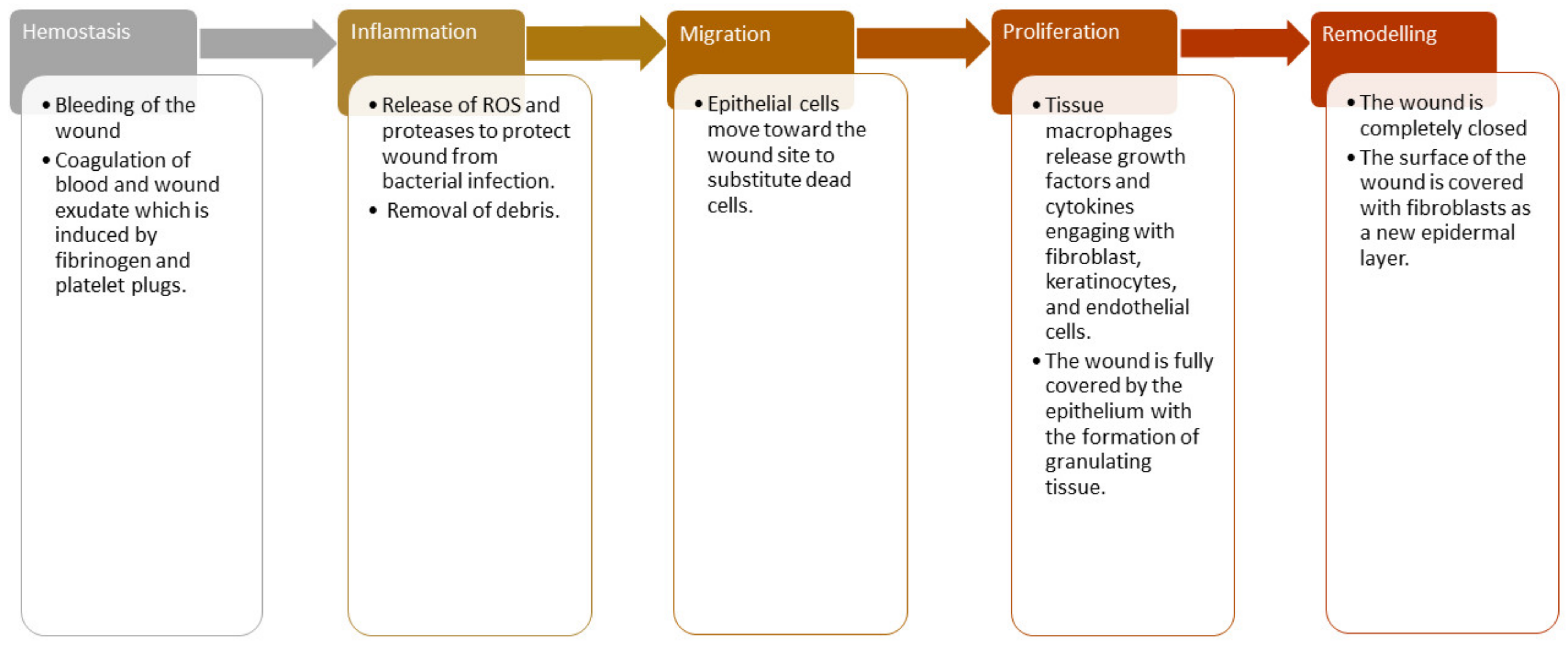
2. Phases of Wound Healing Process
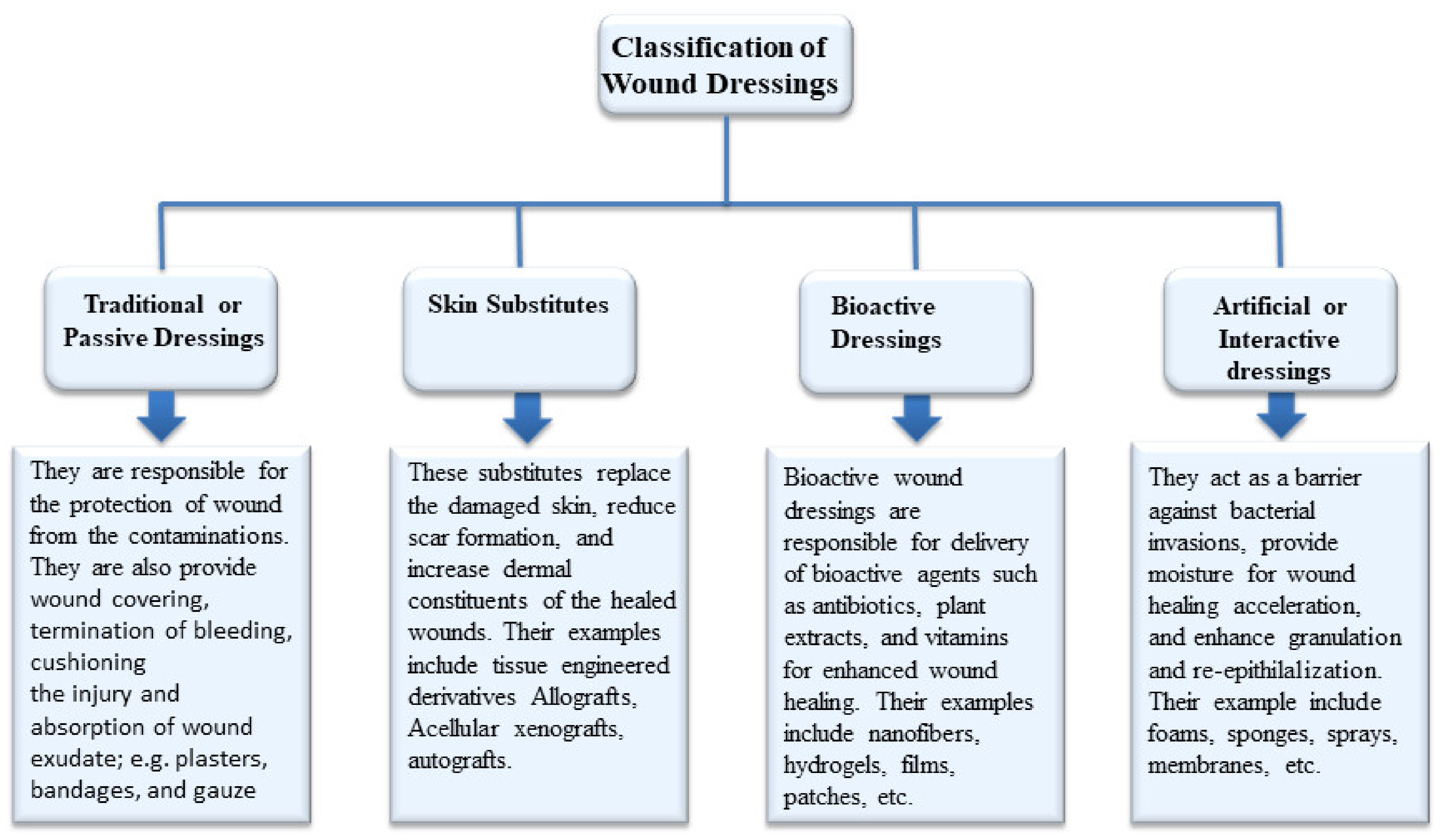
3. Classification of Wound Dressings
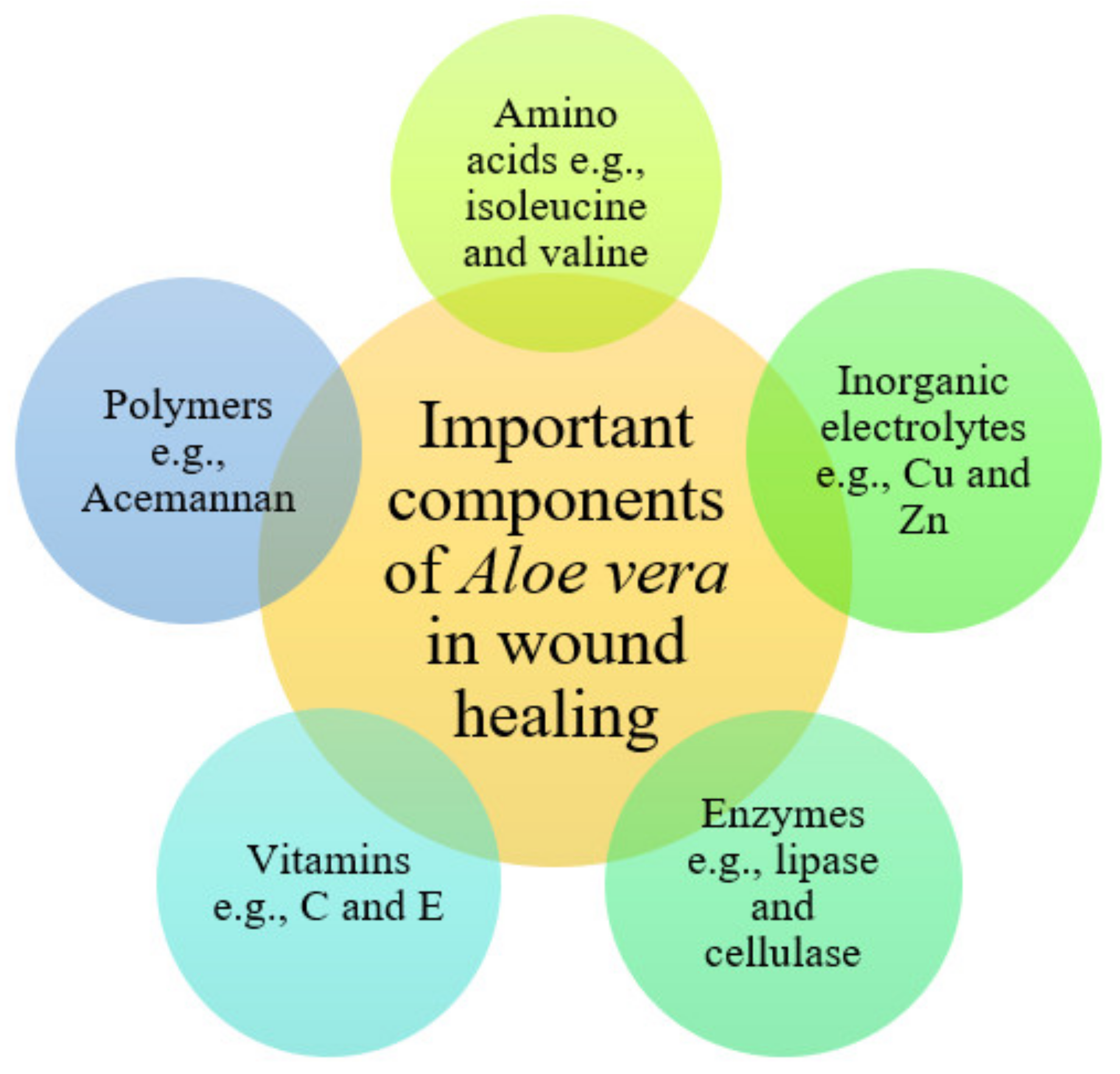
4. Biological Activities and Clinical Studies of Aloe vera in Wound Management
5. Polymer-Based Wound Dressings Scaffolds Enriched with Aloe vera
5.1. Nanofibers/Nanofibrous Materials
5.2. Films/Membranes
5.3. Hydrogels
5.4. Others

| Types of Wound Dressings Loaded with AV | Polymers Used | Effectiveness/Efficacy of Dressing | Harmfulness/Safety of Dressing | Ref |
|---|---|---|---|---|
| Nanofibers | Chitosan and PEO | Superior antibacterial efficacy against S. aureus and E. coli with fast full-thickness wound healing process. | The histological studies demonstrated high cell proliferation and increase blood vessels, indicating non-toxicity. | [67] |
| Silk fibroin and PVA | High antioxidant activity that can result in reduced toxic oxidation products in chronic wounds | These nanofibers were harmless when were incubated with fibroblasts, suggesting their safety in wound care. | [68] | |
| PVA, PVP, and PEG | No biological activities reported, but porosity was high and can promote acceleration of wound by stimulating high gaseous exchange and wound exudate absorption. | No cytotoxicity experiments reported. | [69] | |
| PVA and PAA | They were very effective against microbial strains (P. aeruginosa S. aureus, and E. coli)) | The cytotoxicity studies were not reported | [70] | |
| Gelatin and PCL | They were very effective against S. aureus and E. coli bacterial strains. | These scaffolds are safe because they showed high cell viability of fibroblasts. | [71] | |
| Chitosan and PEO | The initial burst drug release of AV can result in good biological efficacies. | The biocompatibility studies demonstrated non-toxicity on murine fibroblast cells. | [72] | |
| Chitosan and PVA | Excellent antibacterial efficacy against S. aureus and E. coli. | The nanofibers are safe to be used in wound healing due to their non-toxicity on murine fibroblasts. | [73] | |
| Gum tragacanth and PVA | These nanofibers can be effective in wound healing application due to their ability to absorb exudate | There was high cell proliferation of skin cells indicating good biocompatibility | [74] | |
| PVA | The fast release of AV can lead to good biological activities. | Not available | [75] | |
| PVA | Good antibacterial effectiveness against S. aureus and E. coli. | Not reported | [76] | |
| PCL | Excellent antibacterial efficacy against E. coli and S. aureus. | High cell proliferation and viability of human dermal fibroblasts indicating safety in the field of wound healing. | [77] | |
| Zein, PCL, and Collagen | High inhibition zones against S. aureus and E. coli, suggesting excellent antibacterial efficacy. | Cell adhesion and proliferation studies displayed no toxicity effect on fibroblasts, indicating that these nanofibers are harmless. | [78] | |
| Nanofiber membranes | Chitosan and PCL | Excellent bactericidal efficacy against E. coli. | Nanofibers were harmless on human umbilical vein endothelial cells, demonstrating their safety. | [79] |
| PLGA | Acceleration of full-thickness wound healing process. | The nanofibers were non-toxic although they showed a slightly low cell viability of 70%. | [80] | |
| PLGA | Fast wound recovery and reepithelization in full-thickness wound healing | Cell adhesion studies showed a high attachment of fibroblasts on nanofibers, showing non-toxicity. | [81] | |
| Nanofiber sponge | Chitosan and PVA | higher wound healing mechanism. | Cytocompatibility studies toward skin cells showed non-toxicity of nanofibers making them suitable for wound-healing applications. | [82] |
| Nanofiber pads | PVA | Drug release studies demonstrated that these pads could result in good biological activities. | Not available | [83] |
| Films | Chitosan | Good antibacterial synergistic activity against E. coli and S aureus with fast wound recovery. | High cell viability of about 112.49% of fibroblast cells, indicating that these films are very safe. | [85] |
| PVA | These films demonstrated favorable WVTR that can promote fast wound healing activity. | Good cell proliferation of fibroblasts showing non-toxicity. | [86] | |
| Alginate | High water uptake capacity that can reduce excess exudate to accelerate wound healing. | Not reported | [87] | |
| Chitosan | Appropriate WVTR that can lead to a fast wound-healing process | Not reported | [88] | |
| Alginate and PVA | Fast wound healing process | Not reported | [89] | |
| Alginate | Superior antibacterial efficacy against S. aureus than E. coli. Quick wound-healing process. | Excellent biocompatibility, indicating their safety. | [90] | |
| Chitosan and alginate | Excellent antibacterial activity against S. aureus and P. auregonosa | Good cytocompatibility, indicating non-toxicity. | [91] | |
| Alginate | Accelerated wound healing mechanism. | Not reported | [92] | |
| Alginate | faster wound healing mechanism. | Not reported | [93] | |
| Membranes | PVA, PEO, and carboxymethyl cellulose | High antibacterial activity against S. aureus and E. coli. | The drug release studies showed that these scaffolds are non-toxic. | [94] |
| PVA, PEO, and carboxymethyl cellulose | Moderate WVTR demonstrated that these dressings can promote fast wound healing. | The drug release profile displayed that these scaffolds are non-toxic. | [95] | |
| Chitosan | Quick MRSA-infected full-thickness wound healing process. | Histological studies demonstrated that these membranes are not harmful to skin cells. | [96] | |
| Dextran | Almost 100% bactericidal efficacy against both E. coli and S. aureus, with fast wound healing. | Good biocompatibility, showing safety to be used in wound treatment. | [97] | |
| Hydrogels | Polymethacrylic acid | High antimicrobial efficacy of 100% against S. aureus and more than 98% against E. coli, and good wound healing effects. | The histopathological experiment showed that these wound dressing are non-toxic to skin cells. | [102] |
| Alginate and gelatin | The quick biodegradation of these hydrogels can result in fast skin regeneration. | High cell viability and proliferation of fibroblast cells, indicating non-toxicity. | [103] | |
| poly (N-vinylpyrrolidone-Acrylamide) copolymer | Ability to induce wound healing. | Non-toxic. | [104] | |
| Alginate and PVA | Drug release profile demonstrated that these hydrogels could result in good biological activities. | Excellent biocompatibility and non-toxicity, indicating their safety | [105] | |
| Composite sponges | Chitosan | Higher inhibitory action against E. coli, S. aureus, K. pneumoniae, and B. subtilis. | Good cytocompatibility, confirming that they are harmless. | [106] |
| Cotton gauze | Cellulose | Good antibacterial activity against S. aureus and E. coli. | Non-toxicity effects when incubated with HepG2 cells. | [107] |
| Biocomposite dressing | Pectin and gelatin | Good radical scavenging and antibacterial efficacy with accelerated wound healing. | High cell viability when incubated with fibroblasts, indicating harmlessness. | [108] |
| Nanocapsules | Tragacanth gum | Rapid wound healing activity. | High cell viability of human fibroblasts, indicating non-toxicity. | [109] |
| Cotton fabric dressings | Tragacanth gum | Good antimicrobial efficacy against E. coli, S. aureus and C. albicans. | Good biocompatibility that can demonstrate safety in wound treatment. | [110] |
| Hollow fibers | Collagen | Excellent wound healing efficacy. | Cell migration rate, demonstrating non-toxicity. | [111] |
| Biocomposite wound dressing | Alginate and PEG | Good antibacterial activity against E. coli and S. aureus | High cell viability of human skin fibroblasts, suggesting safety. | [112] |
6. Conclusions
Author Contributions
Funding
Conflicts of Interest
References
- Takeo, M.; Lee, W.; Ito, M. Wound healing and skin regeneration. Cold Spring Harb. Perspect. Med. 2015, 5, 023267. [Google Scholar] [CrossRef] [Scilit] [PubMed]
- Schreml, S.; Szeimies, R.; Prantl, L.; Karrer, S.; Landthaler, M.; Babilas, P. Oxygen in acute and chronic wound healing. Br. J. Dermatol. 2010, 163, 257–268. [Google Scholar] [CrossRef] [Scilit]
- Han, G.; Ceilley, R. Chronic Wound healing: A review of current management and treatments. Adv. Ther. 2017, 34, 599–610. [Google Scholar] [CrossRef] [Scilit] [PubMed]
- Alven, S.; Nqoro, X.; Aderibigbe, B. Polymer-based materials loaded with curcumin for wound healing application. Polymers 2020, 12, 2286. [Google Scholar] [CrossRef] [Scilit] [PubMed]
- Li, S.; Li, L.; Guo, C.; Qin, H.; Yu, X. A promising wound dressing material with excellent cytocompatibility and proangiogenesis action for wound healing: Strontium loaded Silk fibroin/Sodium alginate (SF/SA) blend films. Int. J. Biol. Macromol. 2017, 104, 969–978. [Google Scholar] [CrossRef] [Scilit]
- Ye, S.; Jiang, L.; Su, C.; Zhu, Z.; Wen, Y.; Shao, W. Development of gelatin/bacterial cellulose composite sponges as potential natural wound dressings. Int. J. Biol. Macromol. 2019, 133, 148–155. [Google Scholar] [CrossRef] [Scilit] [PubMed]
- Archana, D.; Singh, B.K.; Dutta, J.; Dutta, P.K. Chitosan-PVP-nano silver oxide wound dressing: In vitro and in vivo evaluation. Int. J. Biol. Macromol. 2015, 73, 49–57. [Google Scholar] [CrossRef] [Scilit]
- Wang, T.; Zhu, X.; Xue, X.; Wu, D. Hydrogel sheets of chitosan, honey and gelatin as burn wound dressings. Carbohydr. Polym. 2012, 88, 75–83. [Google Scholar] [CrossRef] [Scilit]
- Hussain, Z.; Thu, H.E.; Shuid, A.N.; Katas, H.; Hussain, F. Recent advances in polymer-based wound dressings for the treatment of diabetic foot ulcer: An overview of state-of-the-art. Curr. Drug Targets 2017, 18, 527–550. [Google Scholar] [CrossRef] [Scilit]
- Bajpai, S.K.; Chand, N.; Ahuja, S.; Roy, M.K. Curcumin/cellulose micro crystals/chitosan films: Water absorption behavior and in vitro cytotoxicity. Int. J. Biol. Macromol. 2015, 75, 239–247. [Google Scholar] [CrossRef] [Scilit]
- Conzatti, G.; Chamary, S.; De Geyter, N.; Cavalie, S.; Morent, R.; Tourrette, A. Surface functionalization of plasticized chitosan fi lms through PNIPAM grafting via UV and plasma graft polymerization. Eur. Polym. J. 2018, 105, 434–441. [Google Scholar] [CrossRef] [Scilit]
- Solaberrieta, I.; Jim, A.; Cacciotti, I.; Garrigos, M.G. Encapsulation of bioactive compounds from Aloe vera agrowastes in electrospun poly(ethylene oxide) nanofibers. Polymers 2020, 12, 1323. [Google Scholar] [CrossRef] [Scilit]
- Azevedo, J.; Juliao, E.; Dantas, J.; Reis, J. Is Aloe vera effective for wound healing? The state of the art abstract. J. Oral Diagn. 2019, 04, e20190005. [Google Scholar]
- Hashemi, S.A.; Madani, S.A.; Abediankenari, S. The review on properties of Aloe vera in healing of cutaneous wounds. Rev. Prop. Aloe Vera Heal. Cutan. Wounds 2015, 2015, 714216. [Google Scholar] [CrossRef] [Scilit]
- Boateng, J.S.; Matthews, K.H.; Stevens, H.N.E.; Eccleston, G.M. Wound healing dressings and drug delivery systems: A review. J. Pharm. Sci. 2008, 97, 2892–2923. [Google Scholar] [CrossRef] [Scilit]
- Yaşayan, G.; Karaca, G.; Akgüner, Z.P.; Öztürk, A.B. Chitosan/collagen composite films as wound dressings encapsulating allantoin and lidocaine hydrochloride. Int. J. Polym. Mater. Polym. Biomater. 2020, 70, 623–635. [Google Scholar] [CrossRef] [Scilit]
- Ajmal, G.; Bonde, G.V.; Mittal, P.; Khan, G.; Pandey, V.K.; Bakade, B.V.; Mishra, B. Biomimetic PCL-gelatin based nanofibers loaded with ciprofloxacin hydrochloride and quercetin: A potential antibacterial and anti-oxidant dressing material for accelerated healing of a full thickness wound. Int. J. Pharm. 2019, 567, 118480. [Google Scholar] [CrossRef] [Scilit]
- Rezvanian, M.; Ahmad, N.; Amin, M.C.I.M.; Ng, S.F. Optimization, characterization, and in vitro assessment of alginate-pectin ionic cross-linked hydrogel film for wound dressing applications. Int. J. Biol. Macromol. 2017, 97, 131–140. [Google Scholar] [CrossRef] [Scilit]
- Gauglitz, G.G.; Korting, H.C.; Pavicic, T.; Ruzicka, T.; Jeschke, M.G. Hyper- trophic scarring and keloids: Pathomechanisms and current and emerging treatment strategies. Mol. Med. 2011, 17, 113–125. [Google Scholar] [CrossRef] [Scilit]
- Velnar, T.; Bailey, T.; Smrkolj, V. The wound healing process: An overview of the cellular and molecular mechanisms. J. Int. Med. Res. 2009, 37, 1528–1542. [Google Scholar] [CrossRef] [Scilit]
- Wang, P.; Huang, B.; Horng, H.; Yeh, C.; Chen, Y.J. Wound healing. J. Chin. Med. Assoc. 2018, 81, 94–101. [Google Scholar] [CrossRef] [Scilit]
- Guo, S.A.; DiPietro, L.A. Factors affecting wound healing. J. Dent. Res. 2010, 89, 219–229. [Google Scholar] [CrossRef] [Scilit]
- Patel, S.; Srivastava, S.; Singh, M.R.; Singh, D. Mechanistic insight into diabetic wounds: Pathogenesis, molecular targets and treatment strategies to pace wound healing. Biomed. Pharmacother. 2019, 112, 108615. [Google Scholar] [CrossRef] [Scilit]
- Wang, W.; Lu, K.; Yu, C.; Huang, Q.L.; Du, Y.Z. Nano-drug delivery systems in wound treatment and skin regeneration. J. Nanobiotech. 2019, 17, 82. [Google Scholar] [CrossRef] [Scilit]
- Farokhi, M.; Mottaghitalab, F.; Fatahi, Y.; Khademhosseini, A.; Kaplan, D.L. Overview of silk fibroin use in wound dressings. Trends Biotechnol. 2018, 36, 907–922. [Google Scholar] [CrossRef] [Scilit]
- Stoica, A.E.; Chircov, C.; Grumezescu, A.M. Nanomaterials for wound dressings: An up-to-date overview. Molecules 2020, 25, 2699. [Google Scholar] [CrossRef] [Scilit]
- Rajendran, N.K.; Kumar, S.S.D.; Houreld, N.N.; Abrahamse, H. A review on nanoparticle based treatment for wound healing. J. Drug Deliv. Sci. Technol. 2018, 44, 421–430. [Google Scholar] [CrossRef] [Scilit]
- Walker, R.M.; Gillespie, B.M.; Thalib, L.; Higgins, N.S.; Whitty, J.A. Foam dressings for treating pressure injuries in patients of any age in any care setting: An abridged Cochrane systematic review. Int. J. Nurs. Stud. 2018, 87, 140–147. [Google Scholar] [CrossRef] [Scilit] [PubMed]
- Vijayakumar, V.; Samal, S.K.; Mohanty, S.; Nayak, S.K. Recent advancements in biopolymer and metal nanoparticle-based materials in diabetic wound healing management. Int. J. Biol. Macromol. 2019, 122, 137–148. [Google Scholar] [CrossRef] [Scilit] [PubMed]
- Moeini, A.; Pedram, P.; Makvandi, P.; Malinconico, M.; Gomez d’Ayala, G. Wound healing and antimicrobial effect of active secondary metabolites in chitosan-based wound dressings: A review. Carbohydr. Polym. 2019, 233, 115839. [Google Scholar] [CrossRef] [Scilit] [PubMed]
- Borda, L.J.; Macquhae, F.E.; Kirsner, R.S. Wound dressings: A comprehensive review. Curr. Dermatol. Rep. 2016, 5, 287–297. [Google Scholar] [CrossRef] [Scilit]
- Dhivyaa, S.; Padmab, V.V.; Santhinia, E. Wound dressings—A review. BioMedicine 2015, 5, 24–28. [Google Scholar] [CrossRef] [Scilit]
- Sheikh, Z.; Hamdan, N.; Ikeda, Y.; Grynpas, M.; Ganss, B.; Glogauer, M. Natural graft tissues and synthetic biomaterials for periodontal and alveolar bone reconstructive applications: A review. Biomater. Res. 2017, 21, 9. [Google Scholar] [CrossRef] [Scilit]
- Mir, M.; Najabat, M.; Afifa, A.; Ayesha, B.; Munam, G.; Shizza, A. Synthetic polymeric biomaterials for wound healing: A review. Prog. Biomater. 2018, 7, 1–21. [Google Scholar] [CrossRef] [Scilit] [PubMed]
- Aderibigbe, B.A.; Buyana, B. Alginate in wound dressings. Pharmaceutics 2018, 10, 42. [Google Scholar] [CrossRef] [Scilit]
- Felgueiras, H.P.; Amorim, M.T.P. Functionalization of electrospun polymeric wound dressings with antimicrobial peptides. Colloids Surf. B Biointerfaces 2017, 156, 133–148. [Google Scholar] [CrossRef] [Scilit] [PubMed]
- Georgescu, M.C.; Chifiriuc, M.; Marutescu, L.; Gheorghe, I.; Lazar, V.; Bolocan, A.; Bertesteanu, S. Bioactive wound dressings for the management of chronic wounds. Curr. Org. Chem. 2017, 21, 53–63. [Google Scholar] [CrossRef] [Scilit]
- Naseri-Nosar, M.; Maria, Z. Wound dressings from naturally-occurring polymers: A review on homopolysaccharide-based composites. Carbohydr. Polym. 2018, 189, 379–398. [Google Scholar] [CrossRef] [Scilit]
- Kumar, R.; Singh, A.K.; Gupta, A.; Bishayee, A.; Pandey, A.K. Phytomedicine therapeutic potential of Aloe vera—A miracle gift of nature. Phytomedicine 2019, 60, 152996. [Google Scholar] [CrossRef] [Scilit]
- Gorsi, F.I.; Kausar, T.; Murtaza, M.A. Evaluation of antibacterial and antioxidant activity of Aloe vera (Aloe barbadensis Miller) gel powder using different solvents. Pure Appl. Biol. 2019, 8, 1265–1270. [Google Scholar] [CrossRef] [Scilit]
- Ashraf, J.M.; Ansaria, M.A.; Khan, H.M.; Alzohairy, M.A.; Choi, I. Green synthesis of silver nanoparticles and characterization of their inhibitory effects on AGEs formation using biophysical techniques. Sci. Rep. 2016, 6, 20414. [Google Scholar] [CrossRef] [Scilit]
- Liu, C.; Cui, Y.; Pi, F.; Cheng, Y.; Guo, Y.; Qian, H. Extraction, purification, structural characteristics, biological activities and pharmacological applications of acemannan, a polysaccharide from Aloe vera: A review. Molecules 2019, 24, 1554. [Google Scholar] [CrossRef] [Scilit] [PubMed]
- Maenthaisong, R.; Chaiyakunapruk, N.; Niruntraporn, S.; Kongkaew, C. The efficacy of aloe vera used for burn wound healing: A systematic review. Burns 2007, 33, 713–718. [Google Scholar] [CrossRef] [Scilit] [PubMed]
- Bozzi, A.; Perrin, C.; Austin, S.; Vera, F.A. Quality and authenticity of commercial Aloe vera gel powders. Food Chem. 2007, 103, 22–30. [Google Scholar] [CrossRef] [Scilit]
- Tarameshloo, M.; Norouzian, M.; Zarein-dolab, S.; Dadpay, M. Aloe vera gel and thyroid hormone cream may improve wound healing in Wistar rats. Anat. Cell Biol. 2012, 45, 170–177. [Google Scholar] [CrossRef] [Scilit]
- Eshun, K.; He, Q. Aloe vera: A valuable ingredient for the food, pharmaceutical and cosmetic industries—A review. Crit. Rev. Food Sci. Nutr. 2010, 44, 91–96. [Google Scholar] [CrossRef] [Scilit]
- Hamman, J.H. Composition and applications of Aloe vera leaf gel. Molecules 2008, 13, 1599–1616. [Google Scholar] [CrossRef] [Scilit]
- Zhang, L.; Tizard, I.R. Activation of a mouse macrophage cell line by acemannan: The major carbohydrate fraction from Aloe vera gel. Immunopharmacology 1996, 35, 119–128. [Google Scholar] [CrossRef] [Scilit]
- Moriyama, M.; Moriyama, H.; Uda, J.; Kubo, H.; Nakajima, Y.; Goto, A.; Akaki, J.; Yoshida, I.; Matsuoka, N.; Hayakawa, T. Beneficial effects of the genus aloe on wound healing, cell proliferation, and differentiation of epidermal keratinocytes. PLoS ONE 2016, 11, 0164799. [Google Scholar] [CrossRef] [Scilit]
- Liu, L.Y.; Chen, X.D.; Wu, B.; Jiang, Q. Influence of Aloe polysaccharide on proliferation and hyaluronic acid and hydroxyproline secretion of human fibroblasts in vitro. J. Chin. Integr. Med. 2010, 8, 256–262. [Google Scholar] [CrossRef] [Scilit]
- Moghbel, A.; Ghalambor, A.; Allipanah, S. Wound healing and toxicity evaluation of Aloe vera cream on outpatients with second degree burns. Iran. J. Pharm. Sci. Summer 2007, 3, 157–160. [Google Scholar]
- Somboonwong, J.; Thanamittramanee, S.; Jariyapongskul, A.; Patumraj, S. Therapeutic effects of Aloe vera on cutaneous microcirculation and wound healing in second degree burn model in rats. J. Med. Assoc. Thail. 2000, 83, 417–425. [Google Scholar]
- Hekmatpou, D.; Mehrabi, F.; Rahzani, K.; Aminiyan, A. The effect of Aloe vera clinical trials on prevention and healing of skin wound: A systematic review. Iran. J. Med. Sci. 2019, 44, 1–9. [Google Scholar]
- West, D.P.; Zhu, Y.F. Evaluation of Aloe vera gel gloves in the treatment of dry skin associated with occupational exposure. Am. J. Infect. Control 2003, 31, 40–42. [Google Scholar] [CrossRef] [Scilit] [PubMed]
- Eshghi, F.; Hosseinimehr, S.J.; Rahmani, N.; Khademloo, M.; Norozi, M.S.; Hojati, O. Effects of Aloe vera cream on posthemorrhoidectomy pain and wound healing: Results of a randomized, blind, placebo-control study. J. Altern. Complementary Med. 2010, 16, 647–650. [Google Scholar] [CrossRef] [Scilit]
- Burusapat, C.; Supawan, M.; Pruksapong, C.; Pitiseree, A.; Suwantemee, C. Topical Aloe vera gel for accelerated wound healing of split-thickness skin graft donor Sites: A double-blind, randomized, controlled trial and systematic review. Plast. Reconstr. Surg. 2018, 142, 217. [Google Scholar] [CrossRef] [Scilit]
- Molazem, Z.; Mohseni, F.; Masoumeh Younesi, M.; Keshavarzi, S. Aloe vera gel and cesarean wound healing; A randomized controlled clinical trial. Glob. J. Health Sci. 2015, 7. [Google Scholar] [CrossRef] [Scilit] [PubMed]
- Khorasani, G.; Hosseinimehr, S.J.; Azadbakht, M.; Zamani, A.; Mahdavi, M.R. Aloe versus silver sulfadiazine creams for second-degree burns: A randomized controlled study. Surg. Today 2009, 39, 587–591. [Google Scholar] [CrossRef] [Scilit]
- Hosseini, A.M.; Ghaffarzadegan, R.; Alizadeh, S.A.; Ghaffarzadegan, R.; Agaei, R.H.; Ahmadlou, M. Effect of Aloe vera gel, compared to 1% silver sulfadiazine cream on second-degree burn wound healing. Complementary Med. J. Fac. Nurs. Midwif. 2013, 3, 418–428. [Google Scholar]
- Rahmani, N.; Khademloo, M.; Vosoughi, K.; Assadpour, S. Effects of Aloe vera cream on chronic anal fissure pain, wound healing and hemorrhaging upon defection: A prospective double blind clinical trial. Eur. Rev. Med. Pharmacol. Sci. 2014, 18, 1078–1084. [Google Scholar]
- Xu, H.; Barnes, G.T.; Yang, Q.; Tan, G.; Yang, D.; Chou, C.J.; Sole, J.; Nichols, A.; Ross, J.S.; Tartaglia, L.A.; et al. Chronic inflammation in fat plays a crucial role in the development of obesity-related insulin resistance. J. Clin. Investig. 2003, 112, 1821–1830. [Google Scholar] [CrossRef]
- Liu, G.; Gu, Z.; Hong, Y.; Cheng, L.; Li, C. Electrospun starch nanofibers: Recent advances, challenges, and strategies for potential pharmaceutical application. J. Control. Release 2017, 252, 95–107. [Google Scholar] [CrossRef] [Scilit] [PubMed]
- Arthanari, S.; Mani, G.; Jang, J.H.; Choi, J.O.; Cho, Y.H.; Lee, J.H.; Cha, S.E.; Oh, H.S.; Kwon, D.H.; Jang, H.T. Preparation and characterization of gatifloxacin- loaded alginate/poly (vinyl alcohol) electrospun nanofibers. Artif. Cells Nanomed. Biotechnol. Int. J. 2016, 44, 847–852. [Google Scholar] [CrossRef] [Scilit] [PubMed]
- Nadem, S.; Ziyadi, H.; Hekmati, M.; Baghali, M. Cross-linked poly(vinyl alcohol) nanofibers as drug carrier of clindamycin. Polym. Bull. 2019, 77, 5615–5629. [Google Scholar] [CrossRef] [Scilit]
- Kalantari, K.; Afifi, A.M.; Jahangirian, H.; Webster, T.J. Biomedical applications of chitosan electrospun nanofibers as a green polymer—Review. Carbohydr. Polym. 2019, 207, 588–600. [Google Scholar] [CrossRef] [Scilit]
- Abrigo, M.; McArthur, S.L.; Kingshott, P. Electrospun nanofibers as dressings for chronic wound care: Advances, challenges, and future prospects. Macromol. Biosci. 2014, 14, 772–792. [Google Scholar] [CrossRef] [Scilit]
- Pathalamuthu, P.; Siddharthan, A.; Giridev, V.R.; Victoria, V.; Thangam, R.; Sivasubramanian, S.; Savariar, V.; Hemamalini, T. Enhanced performance of Aloe vera incorporated chitosan-polyethylene oxide electrospun wound scaffold produced using novel Spirograph based collector assembly. Int. J. Biol. Macromol. 2019, 140, 808–824. [Google Scholar] [CrossRef] [Scilit] [PubMed]
- Kheradvar, S.A.; Nourmohammadi, J.; Tabesh, H.; Bagheri, B. Starch nanoparticle as a vitamin E-TPGS carrier loaded in silk fibroin-poly(vinyl alcohol)-Aloe vera nanofibrous dressing. Colloids Surf. B Biointerfaces 2018, 166, 9–16. [Google Scholar] [CrossRef] [Scilit]
- Uslu, İ.; Keskin, S.; Gül, A.; Karabulut, T.C.; Aksu, M.L. Preparation and properties of electrospun poly (vinyl alcohol) blended hybrid polymer with Aloe vera and HPMC as wound dressing. Hacet. J. Biol. Chem. 2010, 38, 19–25. [Google Scholar]
- Serinçay, H.; Özkan, S.; Yılmaz, N.; Koçyiğit, S.; Uslu, I.; Gürcan, S. PVA/PAA-based antibacterial wound dressing material with Aloe vera. Polym. Plast. Technol. Eng. 2013, 52, 1308–1315. [Google Scholar] [CrossRef] [Scilit]
- Baghersad, S.; Bahrami, S.H.; Ranjbar, M.; Reza, M.; Mojtahedi, M.; Brouki, P. Development of biodegradable electrospun gelatin/aloe-vera/poly (ε-caprolactone) hybrid nano fibrous scaffold for application as skin substitutes. Mater. Sci. Eng. C 2018, 93, 367–379. [Google Scholar] [CrossRef] [Scilit]
- Nikbakht, M.; Salehi, M.; Razayat, S.; Majidi, R. Various parameters in the preparation of chitosan/polyethylene oxide electrospun nanofibers containing Aloe vera extract for medical applications. Nanomedicine 2020, 7, 21–28. [Google Scholar]
- Rafieian, S.; Mahdavi, H.; Masoumi, M.E. Improved mechanical, physical and biological properties of chitosan films using Aloe vera and electrospun PVA nanofibers for wound dressing applications. J. Ind. Text. 2019. [Google Scholar] [CrossRef] [Scilit]
- Ranjbar-Mohammadi, M. Characteristics of aloe vera incorporated poly (e-caprolactone)/ gum tragacanth nanofibers as dressings for wound care. J. Ind. Eng. Chem. 2018, 47, 1464–1477. [Google Scholar] [CrossRef] [Scilit]
- Sirima, S.; Phiriyawirut, M.; Suttisintong, K. Comparison of the release of Aloe vera extracts from poly (vinyl alcohol) electrospun fibers and hydrogel films for wound healing applications. Key Eng. Mater. 2017, 751, 592–598. [Google Scholar] [CrossRef] [Scilit]
- Bootdee, K.; Nithitanakul, M. Poly(d,l-lactide-co-glycolide) nanospheres within composite poly ( vinyl alcohol )/ aloe vera electrospun nanofiber as a novel wound dressing for controlled release of drug. Int. J. Polym. Mater. Polym. Biomater. 2021, 70, 223–230. [Google Scholar] [CrossRef] [Scilit]
- Ezhilarasu, H.; Ramalingam, R.; Dhand, C.; Lakshminarayanan, R.; Sadiq, A.; Gandhimathi, C.; Ramakrishna, S.; Bay, B.H.; Venugopal, J.R.; Srinivasan, D.K. Biocompatible Aloe vera and tetracycline hydrochloride loaded hybrid nanofibrous scaffolds for skin tissue engineering. Int. J. Mol. Sci. 2019, 20, 5174. [Google Scholar] [CrossRef] [Scilit]
- Ghorbani, M.; Nezhad-Mokhtari, P.; Ramazani, S. Aloe vera -loaded nanofibrous scaffold based on zein/polycaprolactone/collagen for wound healing. Int. J. Biol. Macromol. 2020, 153, 921–930. [Google Scholar] [CrossRef] [Scilit]
- Yin, J.; Xu, L. Batch preparation of electrospun polycaprolactone/ chitosan/aloe vera blended nanofiber membranes for novel wound dressing. Int. J. Biol. Macromol. 2020, 160, 352–363. [Google Scholar] [CrossRef] [Scilit]
- Garcia-Orue, I.; Gainza, G.; Garcia-Garcia, P.; Gutierrez, F.B.; Aguirre, J.J.; Hernandez, R.M.; Delgado, A.; Igartua, M. Composite nano fi brous membranes of PLGA/Aloe vera containing lipid nanoparticles for wound dressing applications. Int. J. Pharm. 2019, 556, 320–329. [Google Scholar] [CrossRef] [Scilit]
- Garcia-Orue, I.; Gainza, G.; Gutierrez, F.B.; Aguirre, J.J.; Evora, C.; Pedraz, J.L.; Hernandez, R.M.; Delgado, A.; Igartua, M. Novel nanofibrous dressings containing rhEGF and Aloe vera for wound healing applications. Int. J. Pharm. 2017, 523, 556–566. [Google Scholar] [CrossRef] [Scilit]
- Naseri-Nosar, M.; Farzamfar, S.; Salehi, M.; Vaez, A.; Tajerian, R.; Azami, M. Erythropoietin/aloe polyvinyl alcohol/chitosan sponge-like wound dressing: In vitro and in vivo studies. J. Bioact. Compat. Polym. 2018, 33, 269–281. [Google Scholar] [CrossRef] [Scilit]
- Isfahani, F.R.; Tavanai, H.; Morshed, M. Release of Aloe vera from electrospun Aloe vera-PVA nanofibrous pad. Fibers Polym. 2017, 18, 264–271. [Google Scholar] [CrossRef] [Scilit]
- Negut, I.; Grumezescu, V.; Grumezescu, A.M. Treatment strategies for infected wounds. Molecules 2018, 23, 2392. [Google Scholar] [CrossRef] [Scilit]
- Liu, X.; You, L.; Tarafder, S.; Zou, L.; Fang, Z.; Chen, J.; Lee, C.H.; Zhang, Q. Curcumin-releasing chitosan/aloe membrane for skin regeneration. Chem. Eng. J. 2019, 359, 1111–1119. [Google Scholar] [CrossRef] [Scilit]
- Hajian, M.; Mahmoodi, M.; Imani, R. In vitro assessment of poly (Vinyl Alcohol) film incorporating Aloe vera for potential application as a wound dressing. J. Macromol. Sci. Part B Phys. 2017, 2348, 435–450. [Google Scholar] [CrossRef] [Scilit]
- Pereira, R.; Tojeira, A.; Vaz, D.C.; Mendes, A.; Bartolo, P. Preparation and characterization of Films based on alginate and Aloe vera. Int. J. Polym. Anal. Charact. 2011, 5341, 449–464. [Google Scholar] [CrossRef] [Scilit]
- Khoshgozaran-Abras, S.; Hossein, M.; Hamidy, Z.; Bagheripoor-Fellah, N. Mechanical, physicochemical and color properties of chitosan based-films as a function of Aloe vera gel incorporation. Carbohydr. Polym. 2012, 87, 2058–2062. [Google Scholar] [CrossRef] [Scilit]
- Pereira, G.G.; Guterres, S.S.; Balducci, A.G.; Colombo, P.; Sonvico, F. Polymeric films loaded with vitamin E and Aloe vera for topical application in the treatment of burn wounds. BioMed Res. Int. 2014, 2014, 641590. [Google Scholar] [CrossRef] [Scilit]
- Thomas, D.; Nath, M.S.; Mathew, N.; Reshmy, R.; Philip, E.; Latha, M.S. Alginate film modified with aloe vera gel and cellulose nanocrystals for wound dressing application: Preparation, characterization and in vitro evaluation. J. Drug Deliv. Sci. Technol. 2020, 59, 101894. [Google Scholar] [CrossRef] [Scilit]
- Gómez Chabala, L.F.; Cuartas, C.E.E.; López, M.E.L. Release behavior and antibacterial activity of chitosan/alginate blends with Aloe vera and silver nanoparticles. Mar. Drugs 2017, 15, 328. [Google Scholar] [CrossRef] [Scilit]
- Pereira, R.F.; Carvalho, A.; Gil, M.H.; Mendes, A.; Bártolo, P.J. Influence of Aloe vera on water absorption and enzymatic in vitro degradation of alginate hydrogel films. Carbohydr. Polym. 2013, 98, 311–320. [Google Scholar] [CrossRef] [Scilit]
- Pereira, R.; Carvalho, A.; Vaz, D.C.; Gil, M.H.; Mendes, A.; Bártolo, P. Development of novel alginate based hydrogel films for wound healing applications. Int. J. Biol. Macromol. 2013, 52, 221–230. [Google Scholar] [CrossRef] [Scilit]
- Gupta, B.; Agarwal, R.; Alam, M.S. Antimicrobial and release study of drug loaded PVA/PEO/CMC wound dressings. J. Mater. Sci. Mater. Med. 2014, 25, 1613–1622. [Google Scholar] [CrossRef] [Scilit]
- Gupta, B.; Agarwal, R.; Alam, M.S. Aloe vera loaded poly (vinyl alcohol)–poly (ethylene oxide)-carboxymethyl cellulose-polyester nonwoven membranes. J. Biomater. Tissue Eng. 2013, 3, 503–511. [Google Scholar] [CrossRef] [Scilit]
- Ranjbar, R.; Yousefi, A. Effects of Aloe vera and chitosan nanoparticle thin-film membranes on wound healing in full thickness infected wounds with methicillin resistant Staphylococcus aureus. Bull. Emerg. Trauma 2018, 6, 8–15. [Google Scholar] [CrossRef] [Scilit]
- Singh, S.; Gupta, A.; Gupta, B. Scar free healing mediated by the release of aloe vera and manuka honey from dextran bionanocomposite wound dressings. Int. J. Biol. Macromol. 2018, 120, 1581–1590. [Google Scholar] [CrossRef] [Scilit]
- Alven, S.; Aderibigbe, B. Combination therapy strategies for the treatment of malaria. Molecules 2019, 24, 3601. [Google Scholar] [CrossRef] [Scilit]
- Chiang, C.; Chu, C. Synthesis of photoresponsive hybrid alginate hydrogel with photo-controlled release behavior. Carbohydr. Polym. 2015, 119, 18–25. [Google Scholar] [CrossRef] [Scilit]
- Du, X.; Liu, Y.; Wang, X.; Yan, H.; Wang, L.; Qu, L.; Kong, D.; Qiao, M.; Wang, L. Injectable hydrogel composed of hydrophobically modi fi ed chitosan/oxidized-dextran for wound healing. Mater. Sci. Eng. C 2019, 104, 109930. [Google Scholar] [CrossRef] [Scilit]
- Kamoun, E.A.; Kenawy, E.S.; Chen, X. A review on polymeric hydrogel membranes for wound dressing applications: PVA-based hydrogel dressings. J. Adv. Res. 2017, 98, 217–233. [Google Scholar] [CrossRef] [Scilit]
- Anjum, S.; Gupta, A.; Sharma, D.; Gautam, D.; Bhan, S.; Sharma, A.; Kapil, A.; Gupta, B. Development of novel wound care systems based on nanosilver nanohydrogels of polymethacrylic acid with Aloe vera and curcumin. Mater. Sci. Eng. C 2016, 64, 157–166. [Google Scholar] [CrossRef] [Scilit]
- Dadashzadeh, A.; Imani, R.; Moghassemi, S.; Omidfar, K.; Abolfathi, N. Study of hybrid alginate/gelatin hydrogel-incorporated niosomal Aloe vera capable of sustained release of Aloe vera. Polym. Bull. 2020, 77, 387–403. [Google Scholar] [CrossRef] [Scilit]
- Dey, A.; Bera, R.; Chakrabarty, D. Influence of Aloe vera on the properties of N-vinylpyrrolidone-Acrylamide copolymer hydrogel. Mater. Chem. Phys. 2015, 168, 168–179. [Google Scholar] [CrossRef] [Scilit]
- Bialik-Wąs, K.; Pluta, K.; Malina, D.; Malarz, K.; Mrozek-Wilczkiewicz, A. Advanced SA/PVA-based hydrogel matrices with prolonged release of Aloe vera as promising wound dressings. Mater. Sci. Eng. C 2020, 120, 111667. [Google Scholar] [CrossRef] [Scilit]
- Anbazhagan, S.; Thangavelu, K.P. Application of tetracycline hydrochloride loaded-fungal chitosan and Aloe vera extract based composite sponges for wound dressing. J. Adv. Res. 2018, 14, 63–71. [Google Scholar] [CrossRef] [Scilit]
- Salah, F.; El Ghoul, Y.; Alminderej, F.M.; El Golli-Bennour, E.; Ouanes, Z.; Maciejak, O.; Jarroux, N.; Majdoub, H.; Sakli, F. Development, characterization, and biological assessment of biocompatible cellulosic wound dressing grafted Aloe vera bioactive polysaccharide. Cellulose 2019, 26, 4957–4970. [Google Scholar] [CrossRef] [Scilit]
- Tummalapalli, M.; Berthet, M.; Verrier, B.; Deopura, B.L.; Alam, M.S.; Gupta, B. Composite wound dressings of pectin and gelatin with Aloe vera and curcumin as bioactive agents. Int. J. Biol. Macromol. 2016, 82, 104–113. [Google Scholar] [CrossRef] [Scilit]
- Ghayempour, S.; Montazer, M.; Mahmoudi Rad, M. Encapsulation of Aloe Vera extract into natural Tragacanth Gum as a novel green wound healing product. Int. J. Biol. Macromol. 2016, 93, 344–349. [Google Scholar] [CrossRef] [Scilit]
- Ghayempour, S.; Montazer, M.; Mahmoudi Rad, M. Simultaneous encapsulation and stabilization of Aloe vera extract on cotton fabric for wound dressing application. RSC Adv. 2016, 6, 111895. [Google Scholar] [CrossRef] [Scilit]
- Abdel-Mohsen, A.M.; Abdel-Rahman, R.M.; Kubena, I.; Kobera, L.; Spotz, Z.; Zboncak, M.; Prikryl, R.; Brus, J.; Jancar, J. Chitosan-glucan complex hollow fibers reinforced collagen wound dressing embedded with Aloe vera. Part I: Preparation and characterization. Carbohydr. Polym. 2020, 230, 115708. [Google Scholar] [CrossRef] [Scilit] [PubMed]
- Rubio-Elizalde, I.; Bernáldez-Sarabia, J.; Moreno-Ulloa, A.; Vilanova, C.; Juárez, P.; Licea-Navarro, A.; Castro-Ceseña, A.B. Scaffolds based on alginate-PEG methyl ether methacrylate-Moringa oleifera-Aloe vera for wound healing applications. Carbohydr. Polym. 2019, 206, 455–467. [Google Scholar] [CrossRef] [Scilit] [PubMed]
Publisher’s Note: MDPI stays neutral with regard to jurisdictional claims in published maps and institutional affiliations. |
© 2021 by the authors. Licensee MDPI, Basel, Switzerland. This article is an open access article distributed under the terms and conditions of the Creative Commons Attribution (CC BY) license (https://creativecommons.org/licenses/by/4.0/).
Share and Cite
Alven, S.; Khwaza, V.; Oyedeji, O.O.; Aderibigbe, B.A. Polymer-Based Scaffolds Loaded with Aloe vera Extract for the Treatment of Wounds. Pharmaceutics 2021, 13, 961. https://doi.org/10.3390/pharmaceutics13070961
Alven S, Khwaza V, Oyedeji OO, Aderibigbe BA. Polymer-Based Scaffolds Loaded with Aloe vera Extract for the Treatment of Wounds. Pharmaceutics. 2021; 13(7):961. https://doi.org/10.3390/pharmaceutics13070961
Chicago/Turabian StyleAlven, Sibusiso, Vuyolwethu Khwaza, Opeoluwa O. Oyedeji, and Blessing A. Aderibigbe. 2021. "Polymer-Based Scaffolds Loaded with Aloe vera Extract for the Treatment of Wounds" Pharmaceutics 13, no. 7: 961. https://doi.org/10.3390/pharmaceutics13070961
APA StyleAlven, S., Khwaza, V., Oyedeji, O. O., & Aderibigbe, B. A. (2021). Polymer-Based Scaffolds Loaded with Aloe vera Extract for the Treatment of Wounds. Pharmaceutics, 13(7), 961. https://doi.org/10.3390/pharmaceutics13070961

