Next Article in Journal
Nanoemulsions of Satureja montana Essential Oil: Antimicrobial and Antibiofilm Activity against Avian Escherichia coli Strains
Next Article in Special Issue
Pharmacokinetic Estimation Models-based Approach to Predict Clinical Implications for CYP Induction by Calcitriol in Human Cryopreserved Hepatocytes and HepaRG Cells
Previous Article in Journal
Comparison of Genetically Engineered Immunodeficient Animal Models for Nonclinical Testing of Stem Cell Therapies
Article

Model-Based Prediction to Evaluate Residence Time of Hyaluronic Acid Based Dermal Fillers
1
Gwangkyo R & D Center, Medytox Inc., Suwon 16506, Korea
2
College of Pharmacy, Chungnam National University, Daejeon 34134, Korea
3
Osong R & D Center, Medytox Inc., Cheongju 28126, Korea
*
Authors to whom correspondence should be addressed.
These authors contribute equally to this paper.
Academic Editor: Yu Chul Kim
Pharmaceutics 2021, 13(2), 133; https://doi.org/10.3390/pharmaceutics13020133

Received: 14 December 2020 / Revised: 14 January 2021 / Accepted: 18 January 2021 / Published: 21 January 2021
(This article belongs to the Special Issue Model-Informed Drug Discovery and Development)
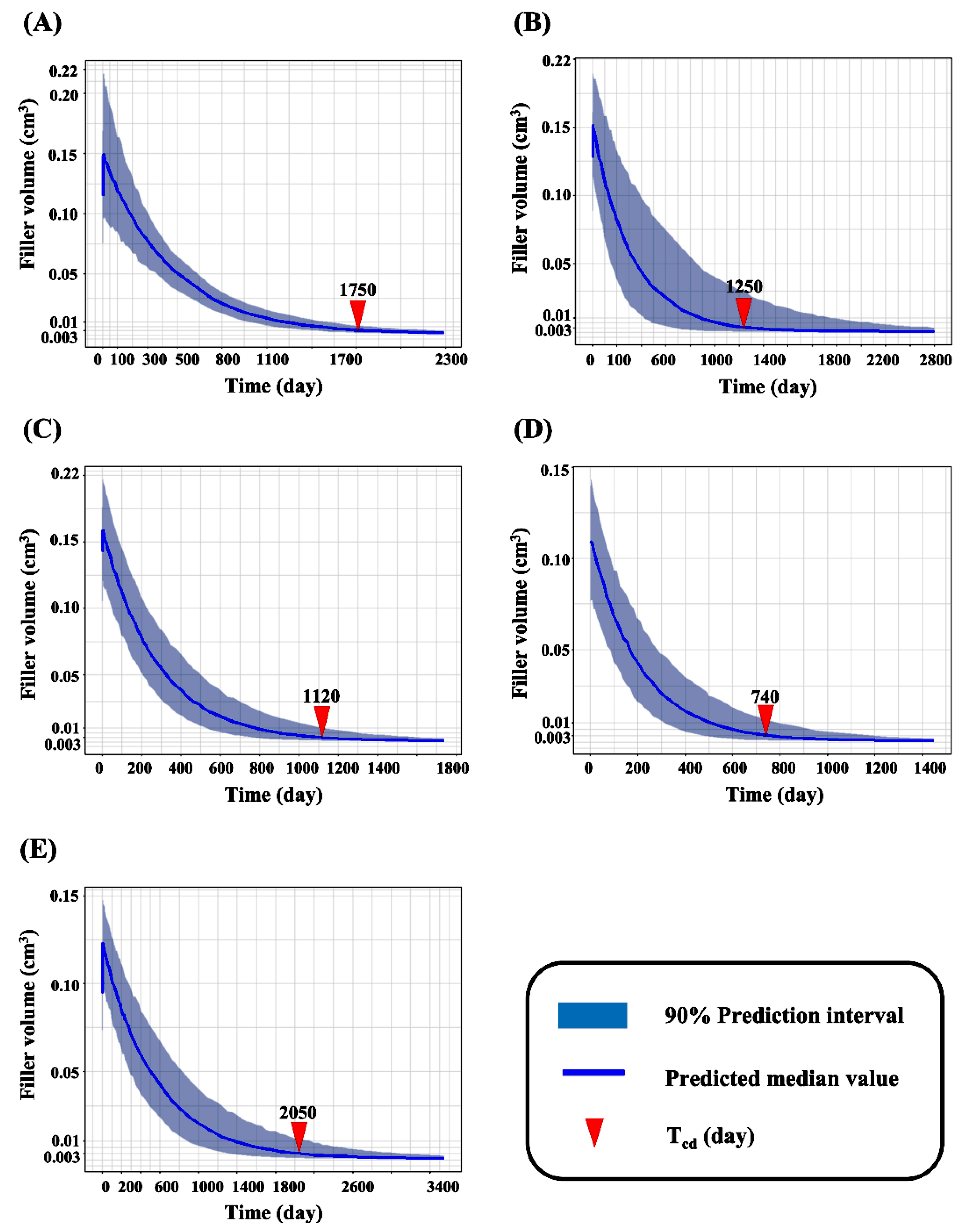
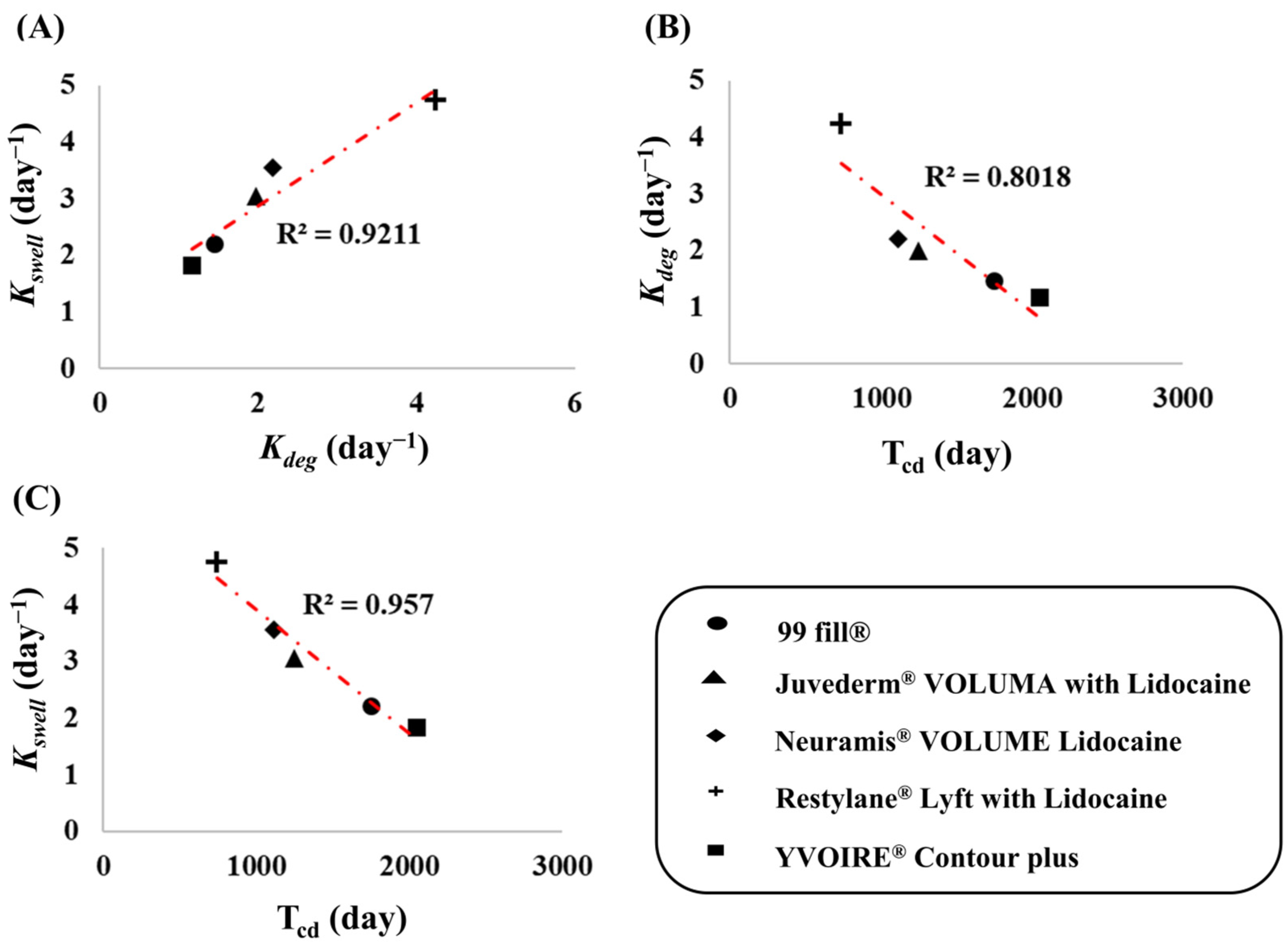
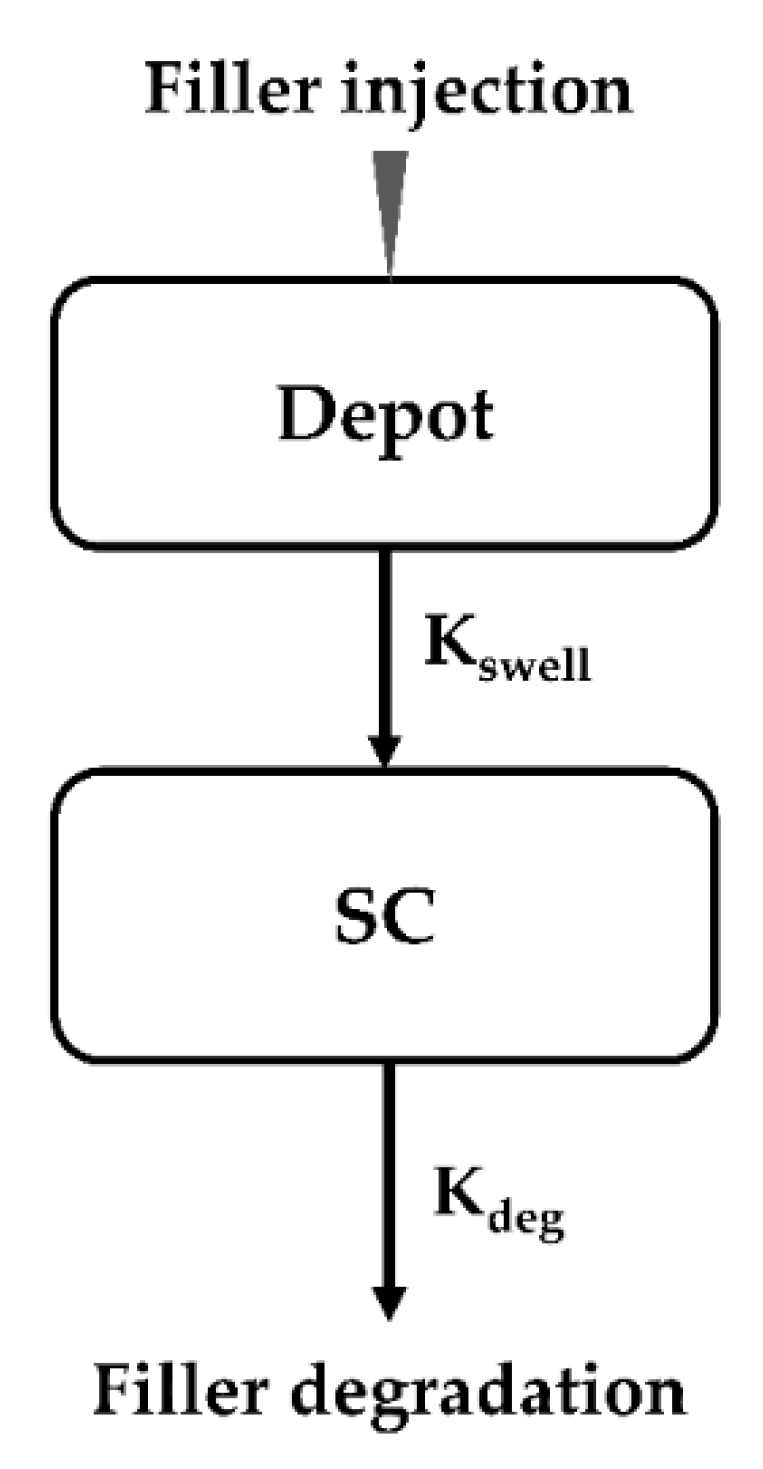
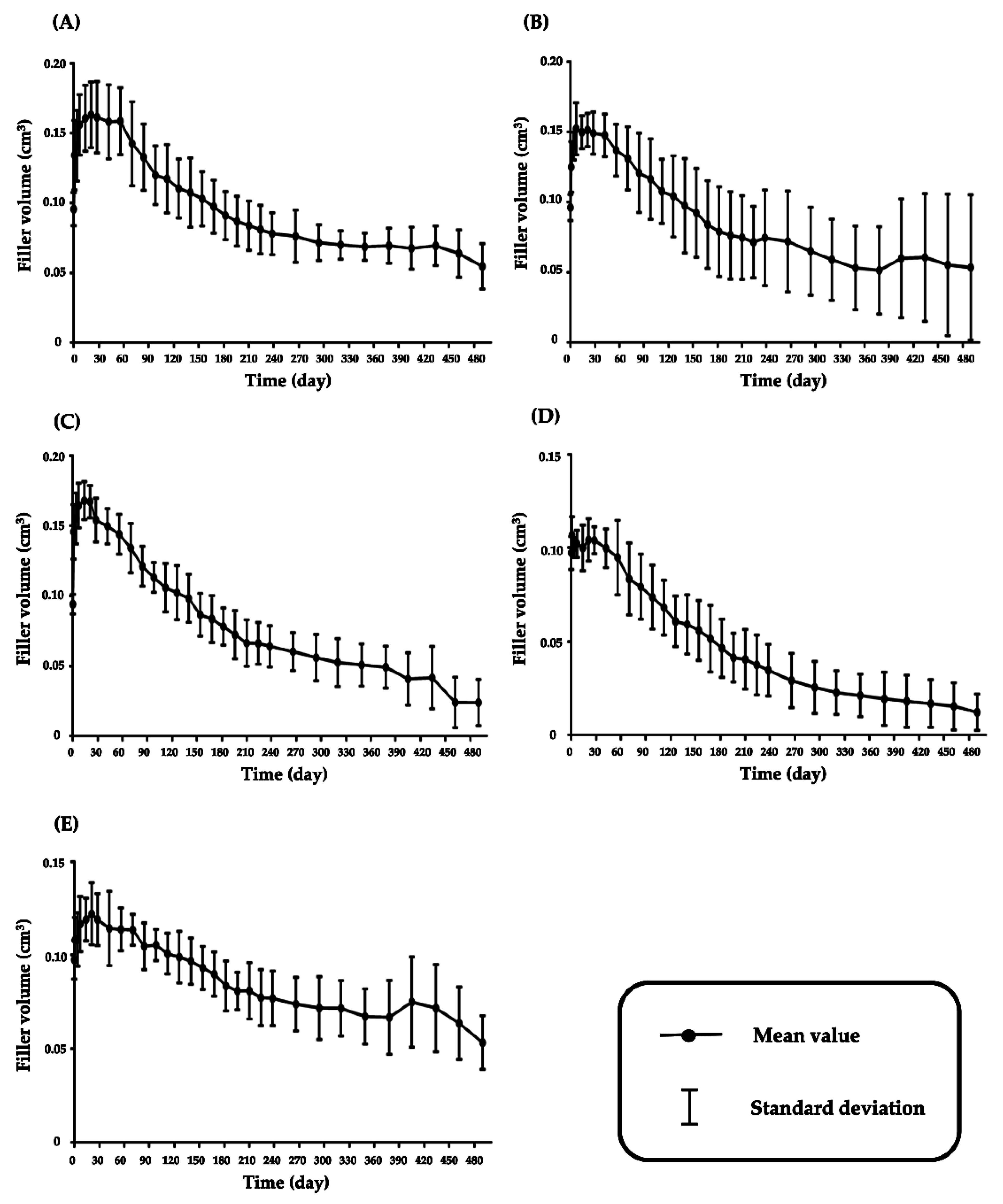
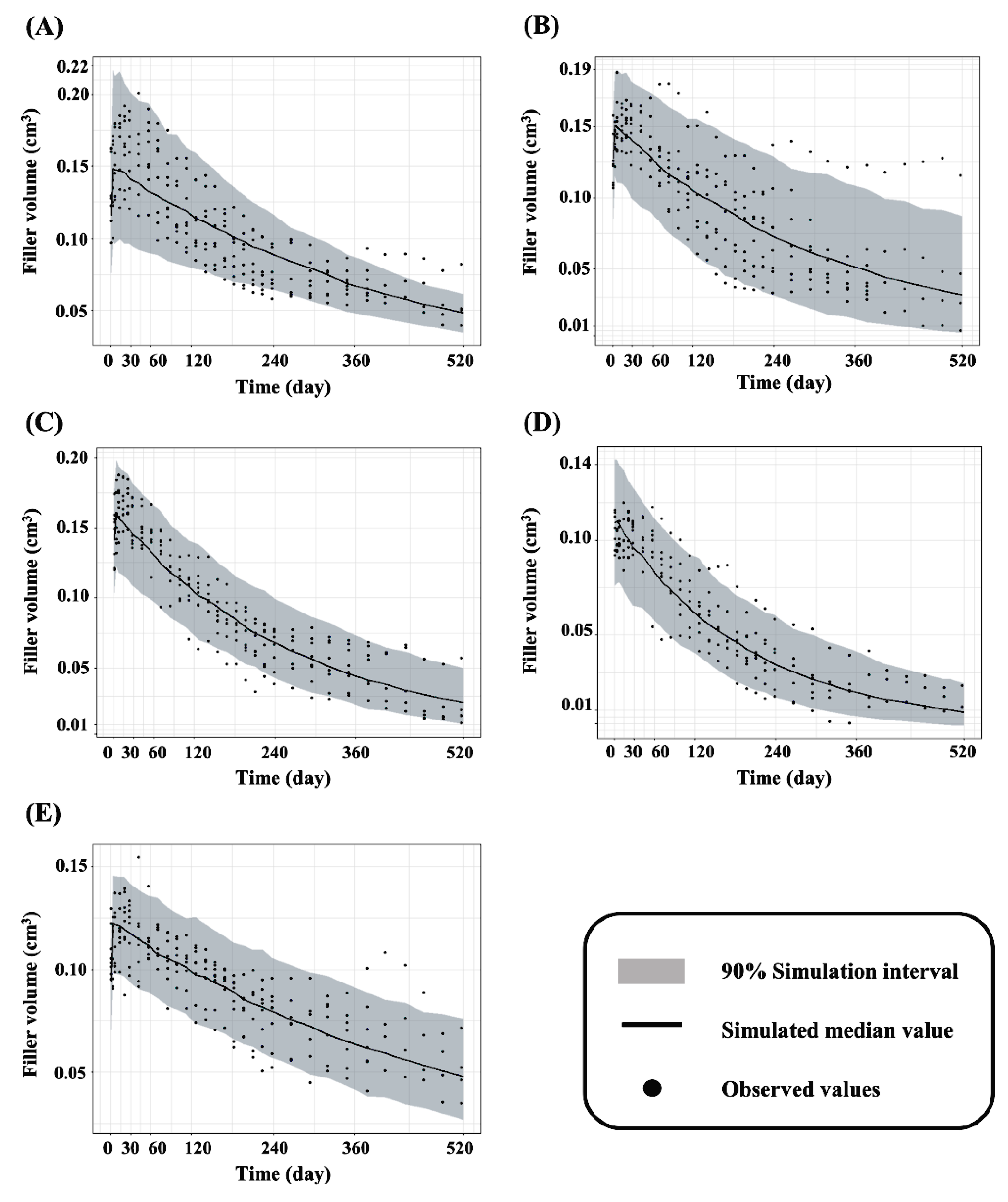
Dermal fillers are gel-type substances for nonsurgical medical-device use to achieve facial rejuvenation. Currently, the most widely used skin fillers are hyaluronic-acid-based dermal fillers. This study aimed to explain the change in the volume of injected dermal fillers by developing a mathematical kinetic model for various dermal fillers. The kinetics of the injected fillers were separated by a biphasic phenomenon. We attributed an increase in filler volume to the hydration of hyaluronic acid molecules and injection-site reaction and a decrease in volume to enzyme-mediated degradation. To explain these in vivo characteristics of dermal fillers, we proposed a two-compartment model, divided into a depot compartment (where the filler was injected) and a subcutaneous compartment (an observation compartment where the fillers swell and degrade), assuming that the swelling and degradation occurred in accordance with the swelling and degradation rate constants, respectively. The model was developed using five hyaluronic-acid-based dermal fillers and NONMEM. We determined that the rate-limiting step for the complete degradation of the dermal fillers in vivo was the swelling phase, as described by the swelling rate constant (Kswell). This study could enable scientists developing novel dermal fillers to predict the in vivo behavior of fillers. View Full-Text
Keywords: HA-based dermal filler; kinetic model; swelling; degradation; prediction; NONMEM HA-based dermal filler; kinetic model; swelling; degradation; prediction; NONMEM
Show Figures

Figure 1

  • Supplementary File 1:

    PDF-Document (PDF, 691 KiB)

  • Externally hosted supplementary file 1
    Doi: 10.5281/zenodo.4320177
    Link: https://zenodo.org/record/4320177#.X9bh5FUzaM8
    Description: Table S1. Properties of four HA dermal fillers (except for 99 fill®* ) Text S1. The NONMEM 7.4 code of the kinetic model of Neuramis® VOLUME LIDOCAINE. Figure S1. The goodness of fit plots of the final filler’s models (A) 99 fill®; (B) Juvederm® VOLUMA with Lidocaine; (C) Neuramis® VOLUME Lidocaine; (D) Restylane® Lyft with Lidocaine; and (E) YVOIRE® Contour plus.
MDPI and ACS Style

Ryu, H.-j.; Kwak, S.-s.; Rhee, C.-h.; Yang, G.-h.; Yun, H.-y.; Kang, W.-h. Model-Based Prediction to Evaluate Residence Time of Hyaluronic Acid Based Dermal Fillers. Pharmaceutics 2021, 13, 133. https://doi.org/10.3390/pharmaceutics13020133
AMA Style

Ryu H-j, Kwak S-s, Rhee C-h, Yang G-h, Yun H-y, Kang W-h. Model-Based Prediction to Evaluate Residence Time of Hyaluronic Acid Based Dermal Fillers. Pharmaceutics. 2021; 13(2):133. https://doi.org/10.3390/pharmaceutics13020133
Chicago/Turabian Style

Ryu, Hyo-jeong, Seong-sung Kwak, Chang-hoon Rhee, Gi-hyeok Yang, Hwi-yeol Yun, and Won-ho Kang. 2021. "Model-Based Prediction to Evaluate Residence Time of Hyaluronic Acid Based Dermal Fillers" Pharmaceutics 13, no. 2: 133. https://doi.org/10.3390/pharmaceutics13020133
Find Other Styles
Note that from the first issue of 2016, MDPI journals use article numbers instead of page numbers. See further details here.

Article Access Map by Country/Region

1
Back to TopTop