Review

Liposomal Formulations for Nose-to-Brain Delivery: Recent Advances and Future Perspectives

1
Department of Integrated Bioscience and Biotechnology, Sejong University, 209 Neungdong-ro, Gwangjin-gu, Seoul 05006, Korea
2
College of Pharmacy, Chung-ang University, 84 Heukseok-ro, Dongjak-gu, Seoul 06974, Korea
3
College of Pharmacy, Hangang University, 55 Hanyangdaehak-ro, Sangnok-gu, Ansan 15588, Korea
*
Author to whom correspondence should be addressed.
Pharmaceutics 2019, 11(10), 540; https://doi.org/10.3390/pharmaceutics11100540

Submission received: 31 August 2019 / Revised: 1 October 2019 / Accepted: 14 October 2019 / Published: 17 October 2019
(This article belongs to the Special Issue Advanced Formulation Approaches for Targeted Drug Delivery)

Abstract

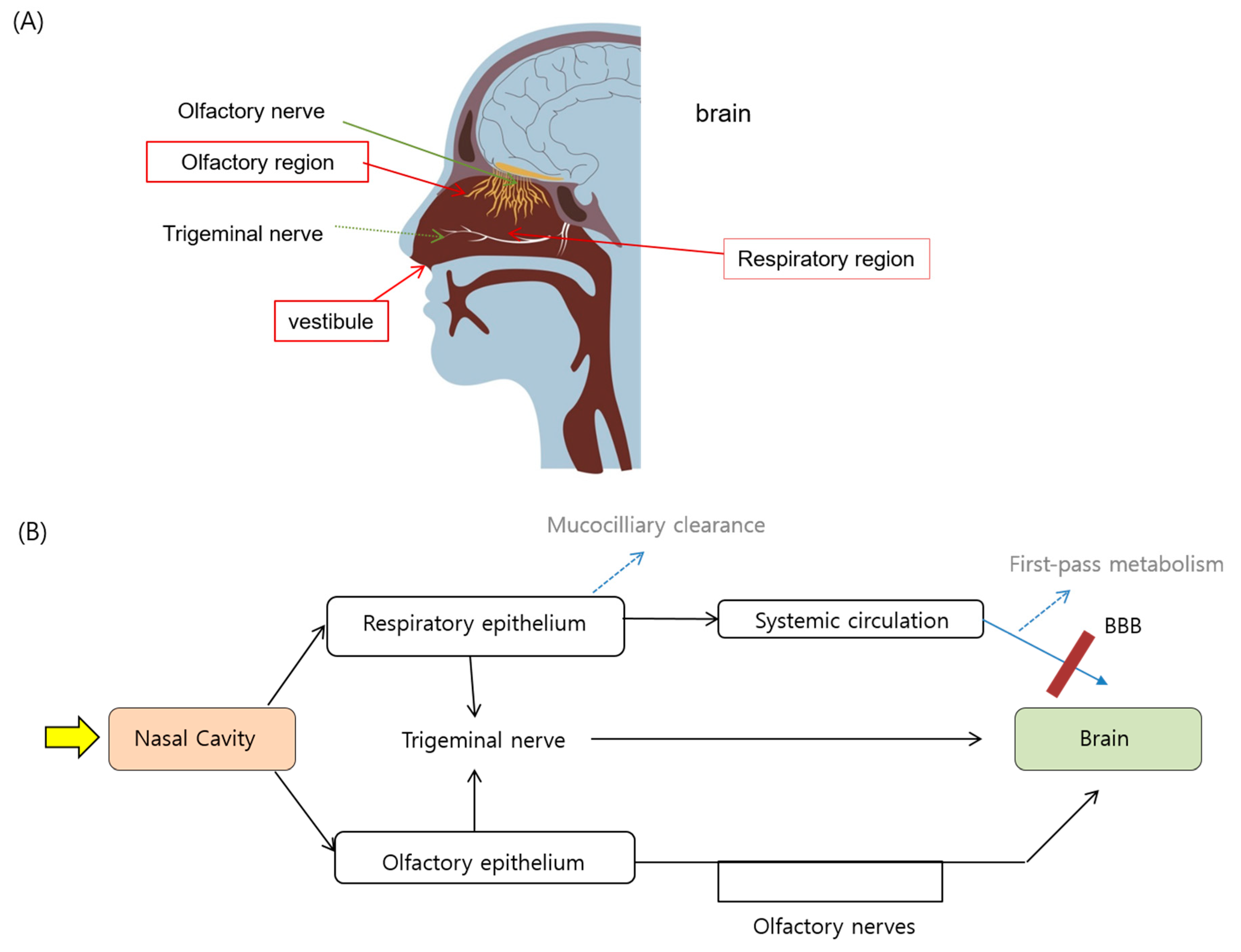
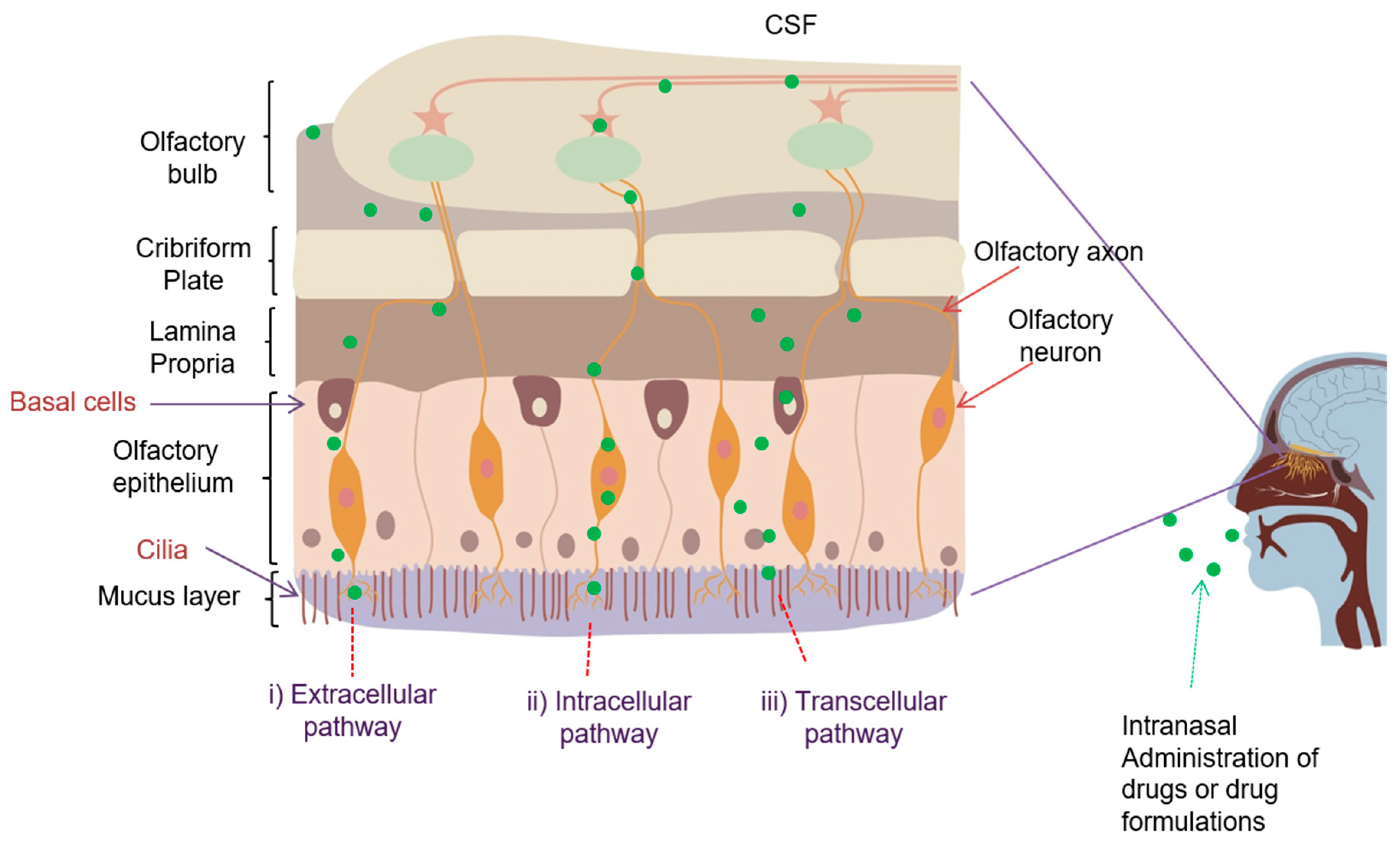
Restricted drug entry to the brain that is closely associated with the existence of the blood brain barrier (BBB) has limited the accessibility of most potential active therapeutic compounds to the brain from the systemic circulation. Recently, evidences for the presence of direct nose-to-brain drug transport pathways have been accumulated by several studies and an intranasal drug administration route has gained attention as a promising way for providing direct access to the brain without the needs to cross to the BBB. Studies aiming for developing nanoparticles as an intranasal drug carrier have shown considerable promise in overcoming the challenges of intranasal drug delivery route. This review gives a comprehensive overview of works having investigated liposomes as a potential vehicle to deliver drugs to the brain through nose-to-brain route while considering the excellent biocompatibility and high potential of liposomes for clinical development. Herein, studies are reviewed with special emphasis on the impact of formulation factors, such as liposome composition and surface modification of liposomes with targeting moieties, in addition to intranasal environmental factors that may affect the extent/site of absorption of intranasally administered, liposome-encapsulated drugs.
Keywords: liposomes; intranasal; formulation; brain delivery; nanoparticle liposomes; intranasal; formulation; brain delivery; nanoparticle