CCR5 as a Therapeutic Target in HIV Disease: From CRISPR/Cas9 Gene Editing to Maraviroc-Mediated Inhibition

Abstract
1. Introduction:
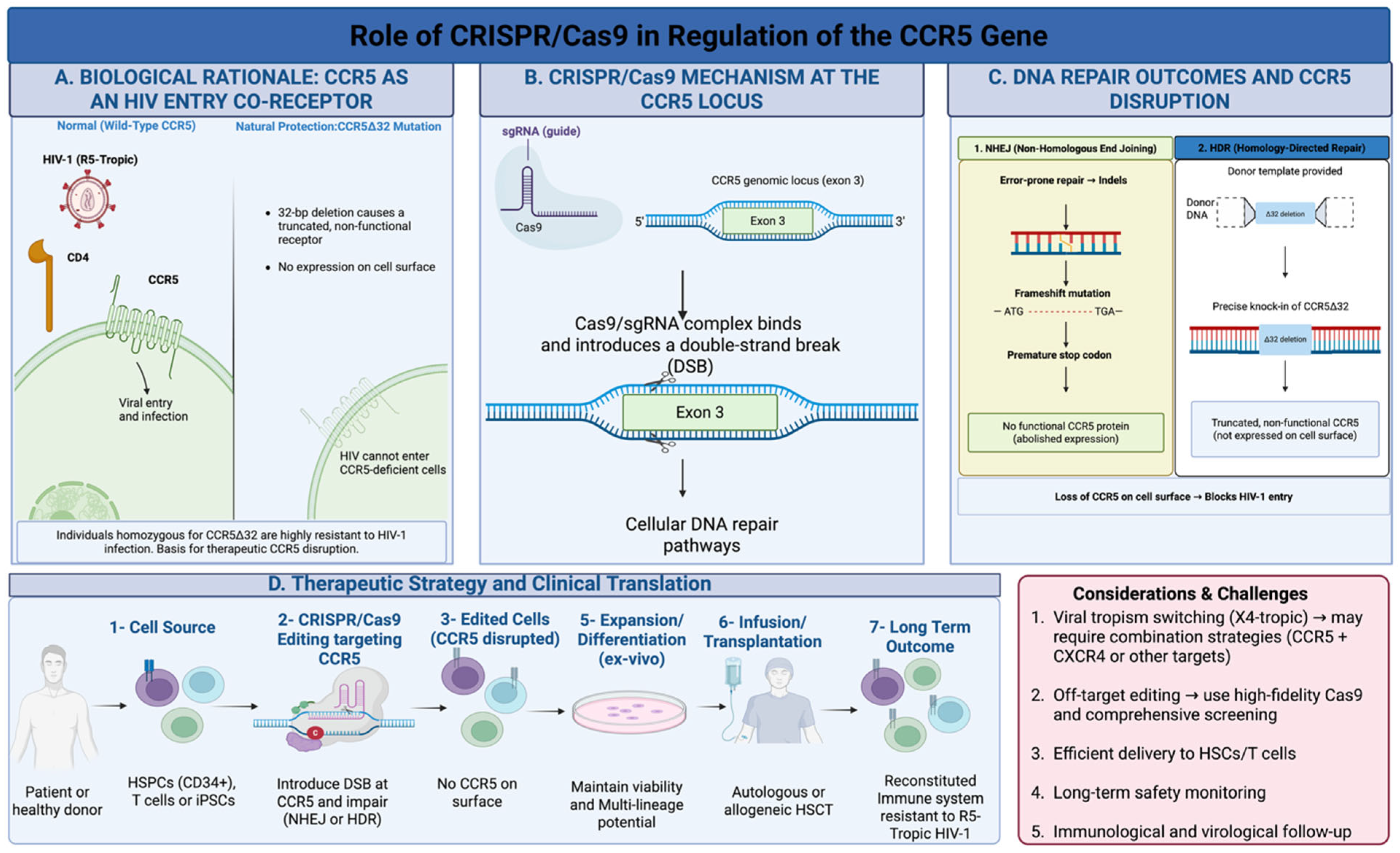
2. Role of CRISPR/Cas9 in CCR5 Gene Regulation
2.1. Mechanism of CRISPR/Cas9-Mediated CCR5 Disruption
2.2. Preclinical Evidence in Cell and Animal Models
2.3. Clinical Translation: First-in-Human Evidence
2.4. Addressing the Limitation of Viral Tropism Switching
2.5. Safety Considerations and Off-Target Effects
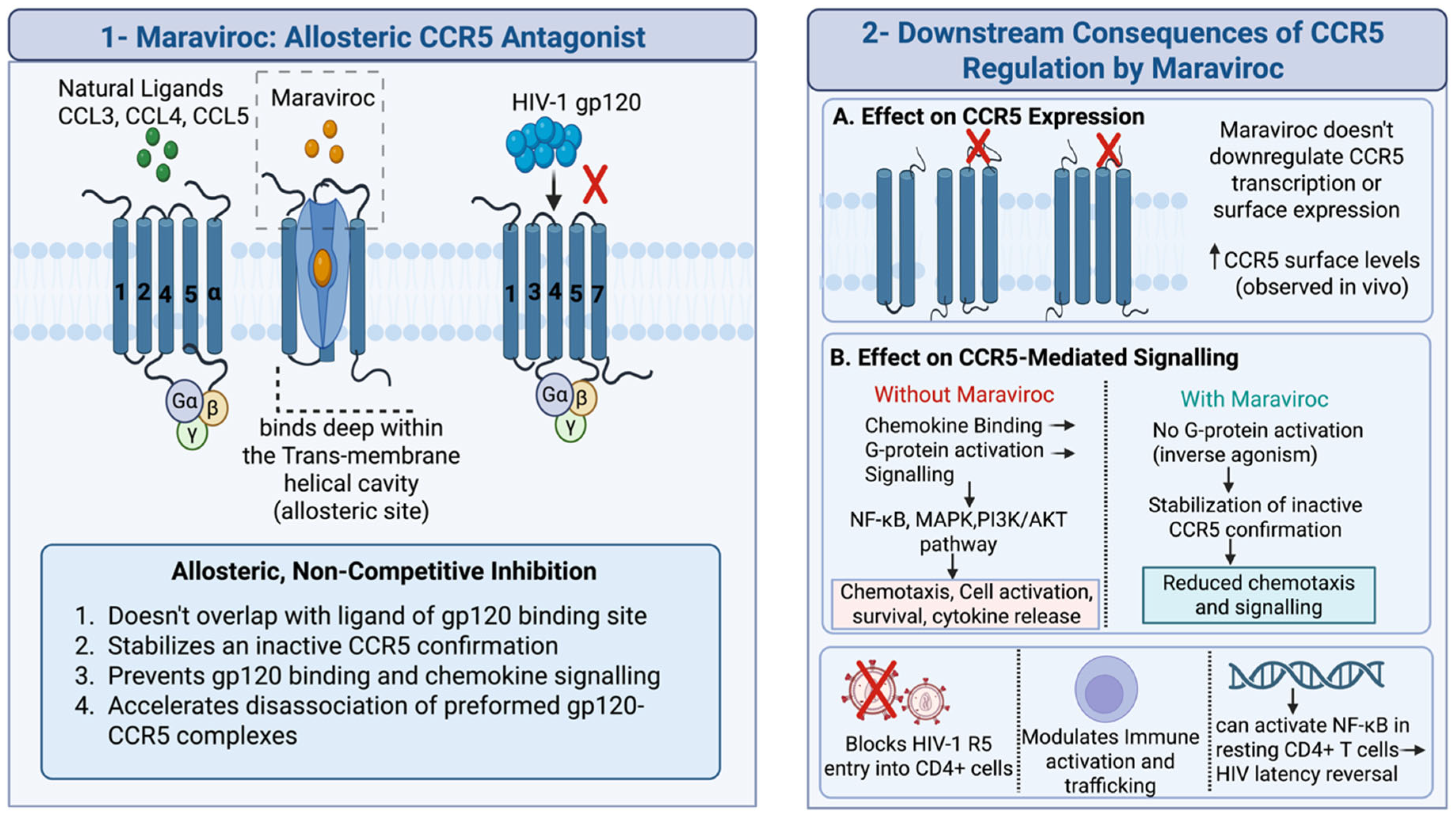
3. CCR5 as the Therapeutic Target of Maraviroc
3.1. Effects of Maraviroc on CCR5 Expression and Immune Parameters In Vivo
3.2. Maraviroc as a Latency-Reversing Agent Through CCR5-Mediated NF-κB Activation
3.3. Clinical Efficacy Data of Maraviroc
3.4. Safety and Adverse Effects
3.5. Drug Accessibility and Tropism Testing
3.6. Long-Term Outcomes and Combination Therapy
3.7. Resistance and Treatment Failure
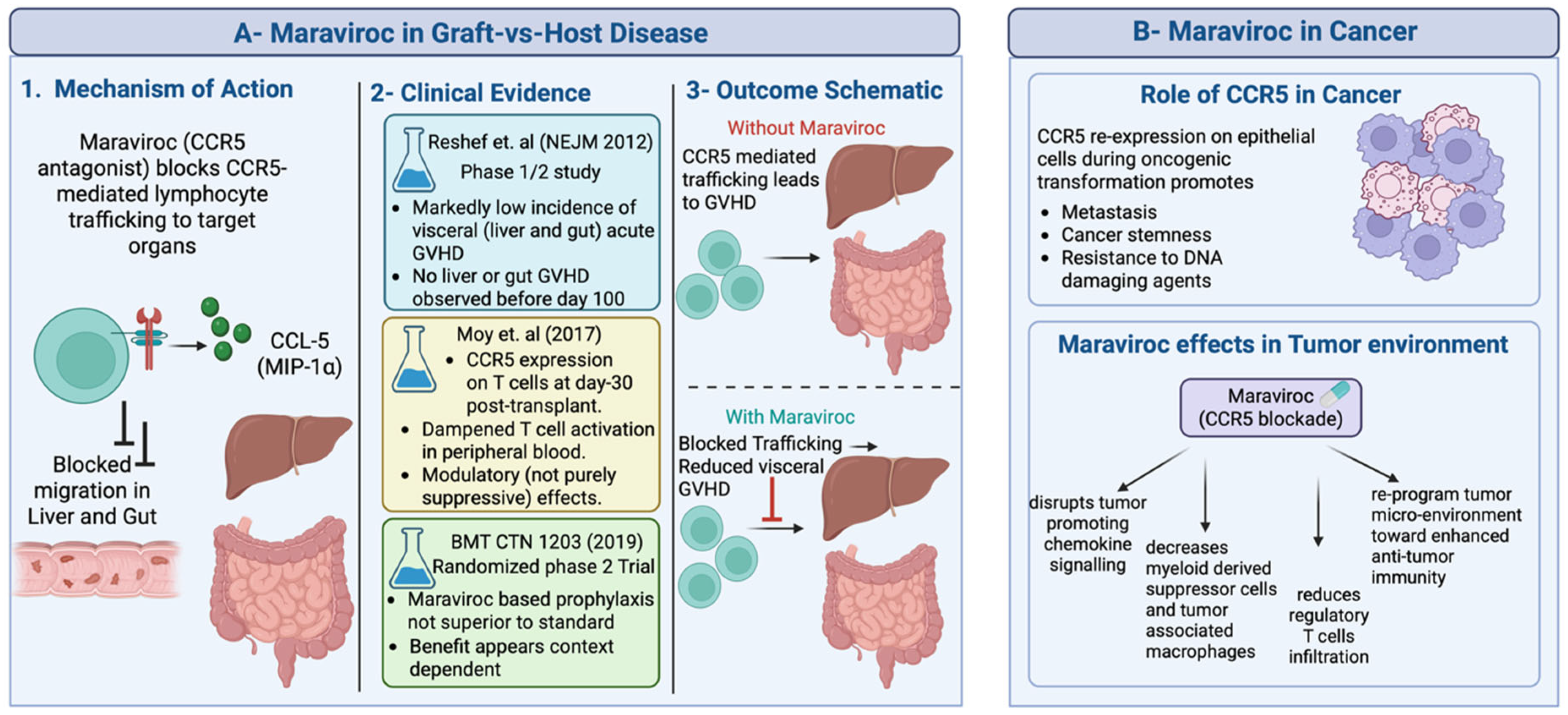
3.8. CCR5 Modulation by Maraviroc Beyond HIV: Graft-Versus-Host Disease and Cancer
3.9. Maraviroc in Cancer
3.10. Maraviroc in the Contemporary Antiretroviral Landscape: Comparison with INSTIs and Newer Agents
3.11. Displacement by INSTIs in First-Line Therapy
3.12. Comparative Efficacy and Tolerability Data
3.13. Maraviroc in the Context of CCR5 Gene-Editing Cure Strategies
3.14. Integrating Maraviroc with CCR5 Gene Editing in Future Cure Paradigms
3.15. A Critical Comparison of Gene Editing Versus Pharmacological CCR5 Inhibition
3.16. A Forward-Looking Perspective for CCR5-Targeted HIV Therapeutics
Author Contributions
Funding
Institutional Review Board Statement
Informed Consent Statement
Data Availability Statement
Conflicts of Interest
References
- Wang, J.W.; Liu, J.H.; Xun, J.J. CCR5 gene editing and HIV immunotherapy: Current understandings, challenges, and future directions. Front. Immunol. 2025, 16, 1590690. [Google Scholar] [CrossRef] [Scilit] [PubMed]
- Obrien, s.J. Legacy of a magic gene-CCR5-∆ 32: From discovery to clinical benefit in a generation. Proc. Natl. Acad. Sci. USA 2024, 121, e2321907121. [Google Scholar] [CrossRef] [Scilit] [PubMed]
- Bharti, S.A.K.; Mukherjee, A.G.; Gopalakrishnan, A.V.; Gajendran, B.; Vashishth, R.; Prince, S.E. From bench to bedside: Stem cell therapy as a transformative approach against HIV. Mol. Biol. Rep. 2026, 53, 442. [Google Scholar] [CrossRef] [Scilit] [PubMed]
- Khamaikawin, W.; Saisawang, C.; Tassaneetrithep, B.; Bhukhai, K.; Phanthong, P.; Borwornpinyo, S.; Phuphuakrat, A.; Pasomsub, E.; Chaisavaneeyakorn, S.; Anurathapan, U.; et al. CRISPR/Cas9 genome editing of CCR5 combined with C46 HIV-1 fusion inhibitor for cellular resistant to R5 and X4 tropic HIV-1. Sci. Rep. 2024, 14, 10852. [Google Scholar] [CrossRef] [Scilit] [PubMed]
- Dash, P.K.; Chen, C.; Kaminski, R.; Su, H.; Mancuso, P.; Sillman, B.; Zhang, C.; Liao, S.; Sravanam, S.; Liu, H.; et al. CRISPR editing of CCR5 and HIV-1 facilitates viral elimination in antiretroviral drug-suppressed virus-infected humanized mice. Proc. Natl. Acad. Sci. USA 2023, 120, e2217887120. [Google Scholar] [CrossRef] [Scilit] [PubMed]
- Xu, L.; Wang, J.; Liu, Y.; Xie, L.; Su, B.; Mou, D.; Wang, L.; Liu, T.; Wang, X.; Zhang, B.; et al. CRISPR-Edited Stem Cells in a Patient with HIV and Acute Lymphocytic Leukemia. N. Engl. J. Med. 2019, 381, 1240–1247. [Google Scholar] [CrossRef] [Scilit] [PubMed]
- Anderson, A.K.; Georgakopoulou, A.; Kuhlmann, A.S.; Wang, H.; Riker, A.; Karuppusamy, K.V.; Radtke, S.; Bui, J.K.; Kiem, H.P.; Lieber, A.; et al. In vitro and in vivo base editing of CCR5 in hematopoietic stem cells confers HIV-1 resistance. Mol. Ther. 2026, 34, 4084–4103. [Google Scholar] [CrossRef] [Scilit] [PubMed]
- Dudek, A.M.; Feist, W.N.; Sasu, E.J.; Luna, S.E.; Ben-Efraim, K.; Bak, R.O.; Cepika, A.M.; Porteus, M.H. A simultaneous knockout knockin genome editing strategy in HSPCs potently inhibits CCR5- and CXCR4-tropic HIV-1 infection. Cell Stem Cell 2024, 31, 499–518.e6. [Google Scholar] [CrossRef] [Scilit] [PubMed]
- Woollard, S.M.; Kanmogne, G.D. Maraviroc: A review of its use in HIV infection and beyond. Drug Des. Devel Ther. 2015, 9, 5447–5468. [Google Scholar] [CrossRef] [Scilit] [PubMed]
- Madrid-Elena, N.; García-Bermejo, M.L.; Serrano-Villar, S.; Díaz-de Santiago, A.; Sastre, B.; Gutiérrez, C.; Dronda, F.; Coronel Díaz, M.; Domínguez, E.; López-Huertas, M.R.; et al. Maraviroc Is Associated with Latent HIV-1 Reactivation through NF-κB Activation in Resting CD4+ T Cells from HIV-Infected Individuals on Suppressive Antiretroviral. Ther. J. Virol. 2018, 92, e01931-17. [Google Scholar] [CrossRef] [Scilit] [PubMed]
- De La Torre Tarazona, E.; Moraga, E.; Vaquer, R.; Sánchez-Palomino, S.; de Lazzari, E.; Luna, L.; Vicens-Artés, S.; García Fraile, L.J.; Peraire, J.; Garcia-Gasalla, M.; et al. Impact of the initial administration of an antiretroviral drug with latency reversal properties on the HIV reservoir size. Sci. Rep. 2025, 15, 25306. [Google Scholar] [CrossRef] [Scilit] [PubMed]
- S Marques, B.; Vitorino, C.; V Ventura, F. CRISPR Applications in HIV Management—Prevention, Diagnosis, Monitoring and Treatment. Curr. HIV/AIDS Rep. 2026, 23. 1. [Google Scholar] [CrossRef] [Scilit] [PubMed]
- Donyavi, T.; Bokharaei-Salim, F.; Nahand, J.S.; Garshasbi, S.; Esghaei, M.; Sadeghi, M.; Jamshidi, S.; Khanaliha, K. Evaluation of CCR5-Δ32 mutation among individuals with high risk behaviors, neonates born to HIV-1 infected mothers, HIV-1 infected individuals, and healthy people in an Iranian population. J. Med. Virol. 2020, 92, 1158–1164. [Google Scholar] [CrossRef] [Scilit] [PubMed]
- Deng, Q.; Chen, Z.; Shi, L.; Lin, H. Developmental progress of CRISPR/Cas9 and its therapeutic applications for HIV-1 infection. Rev. Med. Virol. 2018, 28, e1998. [Google Scholar] [CrossRef] [Scilit] [PubMed]
- Ye, L.; Wang, J.; Beyer, A.I.; Teque, F.; Cradick, T.J.; Qi, Z.; Chang, J.C.; Bao, G.; Muench, M.O.; Yu, J.; et al. Seamless modification of wild-type induced pluripotent stem cells to the natural CCR5Δ32 mutation confers resistance to HIV infection. Proc. Natl. Acad. Sci. USA 2014, 111, 9591–9596. [Google Scholar] [CrossRef] [Scilit] [PubMed]
- Scheller, S.H.; Rashad, Y.; Saleh, F.M.; Willingham, K.A.; Reilich, A.; Lin, D.; Izadpanah, R.; Alt, E.U.; Braun, S.E. Biallelic, Selectable, Knock-in Targeting of CCR5 via CRISPR-Cas9 Mediated Homology Directed Repair Inhibits HIV-1 Replication. Front. Immunol. 2022, 13, 821190. [Google Scholar] [CrossRef] [Scilit] [PubMed]
- Xiao, Q.; Chen, S.; Wang, Q.; Liu, Z.; Liu, S.; Deng, H.; Hou, W.; Wu, D.; Xiong, Y.; Li, J.; et al. CCR5 editing by Staphylococcus aureus Cas9 in human primary CD4+ T cells and hematopoietic stem/progenitor cells promotes HIV-1 resistance and CD4+ T cell enrichment in humanized mice. Retrovirology 2019, 16, 15. [Google Scholar] [CrossRef] [Scilit] [PubMed]
- Vakulskas, C.A.; Dever, D.P.; Rettig, G.R.; Turk, R.; Jacobi, A.M.; Collingwood, M.A.; Bode, N.M.; McNeill, M.S.; Yan, S.; Camarena, J.; et al. A high-fidelity Cas9 mutant delivered as a ribonucleoprotein complex enables efficient gene editing in human hematopoietic stem and progenitor cells. Nat. Med. 2018, 24, 1216–1224. [Google Scholar] [CrossRef] [Scilit] [PubMed]
- Xu, L.; Yang, H.; Gao, Y.; Chen, Z.; Xie, L.; Liu, Y.; Liu, Y.; Wang, X.; Li, H.; Lai, W.; et al. CRISPR/Cas9-Mediated CCR5 Ablation in Human Hematopoietic Stem/Progenitor Cells Confers HIV-1 Resistance In Vivo. Mol. Ther. 2017, 25, 1782–1789. [Google Scholar] [CrossRef] [Scilit] [PubMed]
- Li, S.; Holguin, L.; Burnett, J.C. CRISPR-Cas9-mediated gene disruption of HIV-1 co-receptors confers broad resistance to infection in human T cells and humanized mice. Mol. Ther. Methods Clin. Dev. 2022, 24, 321–331. [Google Scholar] [CrossRef] [Scilit] [PubMed]
- Pan, X.; Naruse, C.; Matsuzaki, T.; Ishibashi, O.; Sugihara, K.; Asada, H.; Asano, M. Critical role of the potential O-linked glycosylation sites of CXCR4 in cell migration and bone marrow homing of hematopoietic stem progenitor cells. Stem Cells 2025, 43, sxaf025. [Google Scholar] [CrossRef] [Scilit] [PubMed]
- Alvarez, P.; Carrillo, E.; Vélez, C.; Hita-Contreras, F.; Martínez-Amat, A.; Rodríguez-Serrano, F.; Boulaiz, H.; Ortiz, R.; Melguizo, C.; Prados, J.; et al. Regulatory systems in bone marrow for hematopoietic stem/progenitor cells mobilization and homing. Biomed. Res. Int. 2013, 2013, 312656. [Google Scholar] [CrossRef] [Scilit] [PubMed]
- Zehentmeier, S.; Pereira, J.P. Cell circuits and niches controlling B cell development. Immunol. Rev. 2019, 289, 142–157. [Google Scholar] [CrossRef] [Scilit] [PubMed]
- Möhle, R.; Bautz, F.; Rafii, S.; Moore, M.A.; Brugger, W.; Kanz, L. The chemokine receptor CXCR-4 is expressed on CD34+ hematopoietic progenitors and leukemic cells and mediates transendothelial migration induced by stromal cell-derived factor-1. Blood 1998, 91, 4523–4530. [Google Scholar] [CrossRef] [Scilit]
- Mandal, K.; Ferreira, L.M.; Collins, R.; Meissner, T.B.; Boutwell, C.L.; Friesen, M.; Vrbanac, V.; Garrison, B.S.; Stortchevoi, A.; Bryder, D.; et al. Efficient ablation of genes in human hematopoietic stem and effector cells using CRISPR/Cas9. Cell Stem Cell 2014, 15, 643–652. [Google Scholar] [CrossRef] [Scilit] [PubMed]
- Falcon, A.; Cuevas, M.T.; Rodriguez-Frandsen, A.; Reyes, N.; Pozo, F.; Moreno, S.; Ledesma, J.; Martínez-Alarcón, J.; Nieto, A.; Casas, I. CCR5 deficiency predisposes to fatal outcome in influenza virus infection. J. Gen. Virol. 2015, 96, 2074–2078. [Google Scholar] [CrossRef] [Scilit] [PubMed]
- Matos, A.R.; Martins, J.S.C.C.; Oliveira, M.L.A.; Garcia, C.C.; Siqueira, M.M. Human CCR5Δ32 (rs333) polymorphism has no influence on severity and mortality of influenza A(H1N1)pdm09 infection in Brazilian patients from the post pandemic period. Infect. Genet. Evol. 2019, 67, 55–59. [Google Scholar] [CrossRef] [Scilit] [PubMed]
- Maestri, A.; dos Santos, M.C.; Ribeiro-Rodrigues, E.M.; de Mello, W.A.; Sousa, R.C.; dos Santos, S.E.; Sortica, V.A. The CCR5Δ32 (rs333) polymorphism is not a predisposing factor for severe pandemic influenza in the Brazilian admixed population. BMC Res. Notes 2015, 8, 326. [Google Scholar] [CrossRef] [Scilit] [PubMed]
- Zheng, B.; Wiklund, F.; Gharizadeh, B.; Sadat, M.; Gambelunghe, G.; Hallmans, G.; Dillner, J.; Wallin, K.L.; Ghaderi, M. Genetic polymorphism of chemokine receptors CCR2 and CCR5 in Swedish cervical cancer patients. Anticancer Res. 2006, 26, 3669–3674. [Google Scholar] [PubMed]
- Upadhyaya, C.; Jiao, X.; Ashton, A.; Patel, K.; Kossenkov, A.V.; Pestell, R.G. The G protein coupled receptor CCR5 in cancer. Adv. Cancer Res. 2020, 145, 29–47. [Google Scholar] [CrossRef] [Scilit] [PubMed]
- Dorr, P.; Westby, M.; Dobbs, S.; Griffin, P.; Irvine, B.; Macartney, M.; Mori, J.; Rickett, G.; Smith-Burchnell, C.; Napier, C.; et al. Maraviroc (UK-427,857), a potent, orally bioavailable, and selective small-molecule inhibitor of chemokine receptor CCR5 with broad-spectrum anti-human immunodeficiency virus type 1 activity. Antimicrob. Agents Chemother. 2005, 49, 4721–4732. [Google Scholar] [CrossRef] [Scilit] [PubMed]
- Garcia-Perez, J.; Rueda, P.; Staropoli, I.; Kellenberger, E.; Alcami, J.; Arenzana-Seisdedos, F.; Lagane, B. New insights into the mechanisms whereby low molecular weight CCR5 ligands inhibit HIV-1 infection. J. Biol. Chem. 2011, 286, 4978–4990. [Google Scholar] [CrossRef] [Scilit] [PubMed]
- Lobritz, M.A.; Ratcliff, A.N.; Marozsan, A.J.; Dudley, D.M.; Tilton, J.C.; Arts, E.J. Multifaceted mechanisms of HIV inhibition and resistance to CCR5 inhibitors PSC-RANTES and Maraviroc. Antimicrob. Agents Chemother. 2013, 57, 2640–2650. [Google Scholar] [CrossRef] [Scilit] [PubMed]
- van Lelyveld, S.F.; Drylewicz, J.; Krikke, M.; Veel, E.M.; Otto, S.A.; Richter, C.; Soetekouw, R.; Prins, J.M.; Brinkman, K.; Mulder, J.W.; et al. MIRS study group. Maraviroc Intensification of cART in Patients with Suboptimal Immunological Recovery: A 48-Week, Placebo-Controlled Randomized Trial. PLoS ONE 2015, 10, e0132430. [Google Scholar] [CrossRef] [Scilit] [PubMed]
- Hunt, P.W.; Shulman, N.S.; Hayes, T.L.; Dahl, V.; Somsouk, M.; Funderburg, N.T.; McLaughlin, B.; Landay, A.L.; Adeyemi, O.; Gilman, L.E.; et al. The immunologic effects of maraviroc intensification in treated HIV-infected individuals with incomplete CD4+ T-cell recovery: A randomized trial. Blood 2013, 121, 4635–4646. [Google Scholar] [CrossRef] [Scilit] [PubMed]
- López-Huertas, M.R.; Gutiérrez, C.; Madrid-Elena, N.; Hernández-Novoa, B.; Olalla-Sierra, J.; Plana, M.; Delgado, R.; Rubio, R.; Muñoz-Fernández, M.Á.; Moreno, S. Prolonged administration of maraviroc reactivates latent HIV in vivo but it does not prevent antiretroviral-free viral rebound. Sci. Rep. 2020, 10, 22286. [Google Scholar] [CrossRef] [Scilit] [PubMed]
- López-Huertas, M.R.; Jiménez-Tormo, L.; Madrid-Elena, N.; Gutiérrez, C.; Rodríguez-Mora, S.; Coiras, M.; Alcamí, J.; Moreno, S. The CCR5-antagonist Maraviroc reverses HIV-1 latency in vitro alone or in combination with the PKC-agonist Bryostatin-1. Sci. Rep. 2017, 7, 2385. [Google Scholar] [CrossRef] [Scilit] [PubMed]
- Gulick, R.M.; Lalezari, J.; Goodrich, J.; Clumeck, N.; DeJesus, E.; Horban, A.; Nadler, J.; Clotet, B.; Karlsson, A.; Wohlfeiler, M.; et al. Maraviroc for previously treated patients with R5 HIV-1 infection. N. Engl. J. Med. 2008, 359, 1429–1441. [Google Scholar] [CrossRef] [Scilit] [PubMed]
- Cooper, D.A.; Heera, J.; Goodrich, J.; Tawadrous, M.; Saag, M.; Dejesus, E.; Clumeck, N.; Walmsley, S.; Ting, N.; Coakley, E.; et al. Maraviroc versus efavirenz, both in combination with zidovudine-lamivudine, for the treatment of antiretroviral-naive subjects with CCR5-tropic HIV-1 infection. J. Infect. Dis. 2010, 201, 803–813. [Google Scholar] [CrossRef] [Scilit] [PubMed]
- Cooper, D.A.; Heera, J.; Ive, P.; Botes, M.; Dejesus, E.; Burnside, R.; Clumeck, N.; Walmsley, S.; Lazzarin, A.; Mukwaya, G.; et al. Efficacy and safety of maraviroc vs. efavirenz in treatment-naive patients with HIV-1: 5-year findings. AIDS 2014, 28, 717–725. [Google Scholar] [CrossRef] [Scilit] [PubMed]
- Swenson, L.C.; Mo, T.; Dong, W.W.; Zhong, X.; Woods, C.K.; Thielen, A.; Jensen, M.A.; Knapp, D.J.; Chapman, D.; Portsmouth, S.; et al. Deep V3 sequencing for HIV type 1 tropism in treatment-naive patients: A reanalysis of the MERIT trial of maraviroc. Clin. Infect. Dis. 2011, 53, 732–742. [Google Scholar] [CrossRef] [Scilit] [PubMed]
- Pett, S.L.; Amin, J.; Horban, A.; Andrade-Villanueva, J.; Losso, M.; Porteiro, N.; Sierra Madero, J.; Belloso, W.; Tu, E.; Silk, D.; et al. Maraviroc Switch (MARCH) Study Group. Maraviroc, as a Switch Option, in HIV-1-infected Individuals With Stable, Well-controlled HIV Replication and R5-tropic Virus on Their First Nucleoside/Nucleotide Reverse Transcriptase Inhibitor Plus Ritonavir-boosted Protease Inhibitor Regimen: Week 48 Results of the Randomized, Multicenter MARCH Study. Clin. Infect. Dis. 2016, 63, 122–132. [Google Scholar] [CrossRef] [Scilit] [PubMed]
- Nozza, S.; Galli, L.; Antinori, A.; Chiappetta, S.; Mazzotta, F.; Zaccarelli, M.; Ottou, S.; De Battista, D.; Pogliaghi, M.; Di Pietro, M.; et al. Maraviroc 150 mg daily plus lopinavir/ritonavir, a nucleoside/nucleotide reverse transcriptase inhibitor-sparing regimen for HIV-infected naive patients: 48-week final results of VEMAN study. Clin. Microbiol. Infect. 2015, 21, 510.e1–510.e9. [Google Scholar] [CrossRef] [Scilit] [PubMed]
- Pulido, I.; Genebat, M.; Alvarez-Rios, A.I.; De Pablo-Bernal, R.S.; Rafii-El-Idrissi Benhnia, M.; Pacheco, Y.M.; Ruiz-Mateos, E.; Leal, M. Immunovirological Efficacy of Once-Daily Maraviroc Plus Ritonavir-Boosted Atazanavir After 48 Weeks in Naive HIV-Infected Patients. Viral Immunol. 2016, 29, 471–477. [Google Scholar] [CrossRef] [Scilit] [PubMed]
- Kagan, R.M.; Johnson, E.P.; Siaw, M.; Biswas, P.; Chapman, D.S.; Su, Z.; Platt, J.L.; Pesano, R.L. A genotypic test for HIV-1 tropism combining Sanger sequencing with ultradeep sequencing predicts virologic response in treatment-experienced patients. PLoS ONE 2012, 7, e46334. [Google Scholar] [CrossRef] [Scilit] [PubMed][Green Version]
- Ayoub, A.; Alston, S.; Goodrich, J.; Heera, J.; Hoepelman, A.I.; Lalezari, J.; Mchale, M.; Nelson, M.; van der Ryst, E.; Mayer, H. Hepatic safety and tolerability in the maraviroc clinical development program. AIDS 2010, 24, 2743–2750. [Google Scholar] [CrossRef] [Scilit] [PubMed]
- Rockstroh, J.K.; Plonski, F.; Bansal, M.; Fätkenheuer, G.; Small, C.B.; Asmuth, D.M.; Pialoux, G.; Zhang-Roper, R.; Wang, R.; Pineda, J.A.; et al. Hepatic safety of maraviroc in patients with HIV-1 and hepatitis C and/or B virus: 144-week results from a randomized, placebo-controlled trial. Antivir. Ther. 2017, 22, 263–269. [Google Scholar] [CrossRef] [Scilit] [PubMed]
- A Thompson, M.; A Horberg, M.; Agwu, A.L.; A Colasanti, J.; Jain, M.K.; Short, W.R.; Singh, T.; A Aberg, J. Primary Care Guidance for Persons with Human Immunodeficiency Virus: 2020 Update by the HIV Medicine Association of the Infectious Diseases Society of America. Clin. Infect. Dis. 2020, 73, e3572–e3605. [Google Scholar] [CrossRef] [Scilit] [PubMed]
- Vandekerckhove, L.P.; Wensing, A.M.; Kaiser, R.; Brun-Vézinet, F.; Clotet, B.; De Luca, A.; Dressler, S.; Garcia, F.; Geretti, A.M.; Klimkait, T.; et al. European Consensus Group on clinical management of tropism testing. European guidelines on the clinical management of HIV-1 tropism testing. Lancet Infect. Dis. 2011, 11, 394–407. [Google Scholar] [CrossRef] [Scilit] [PubMed]
- Recordon-Pinson, P.; Soulié, C.; Flandre, P.; Descamps, D.; Lazrek, M.; Charpentier, C.; Montes, B.; Trabaud, M.A.; Cottalorda, J.; Schneider, V.; et al. ANRS AC11 Resistance Study Group. Evaluation of the genotypic prediction of HIV-1 coreceptor use versus a phenotypic assay and correlation with the virological response to maraviroc: The ANRS GenoTropism study. Antimicrob. Agents Chemother. 2010, 54, 3335–3340. [Google Scholar] [CrossRef] [Scilit] [PubMed][Green Version]
- Mulinge, M.; Lemaire, M.; Servais, J.Y.; Rybicki, A.; Struck, D.; da Silva, E.S.; Verhofstede, C.; Lie, Y.; Seguin-Devaux, C.; Schmit, J.C.; et al. HIV-1 tropism determination using a phenotypic Env recombinant viral assay highlights overestimation of CXCR4-usage by genotypic prediction algorithms for CRF01_AE and CRF02_AG [corrected]. PLoS ONE 2013, 8, e60566. [Google Scholar] [CrossRef] [Scilit] [PubMed]
- Lucas, G.M.; Ross, M.J.; Stock, P.G.; Shlipak, M.G.; Wyatt, C.M.; Gupta, S.K.; Atta, M.G.; Wools-Kaloustian, K.K.; Pham, P.A.; Bruggeman, L.A.; et al. Clinical practice guideline for the management of chronic kidney disease in patients infected with HIV: 2014 update by the HIV Medicine Association of the Infectious Diseases Society of America. Clin. Infect. Dis. 2014, 59, e96–e138. [Google Scholar] [CrossRef] [Scilit] [PubMed]
- Gandhi, R.T.; Bedimo, R.; Hoy, J.F.; Landovitz, R.J.; Smith, D.M.; Eaton, E.F.; Lehmann, C.; Springer, S.A.; Sax, P.E.; Thompson, M.A.; et al. Antiretroviral Drugs for Treatment and Prevention of HIV Infection in Adults. JAMA 2023, 329, 63–84. [Google Scholar] [CrossRef] [Scilit] [PubMed]
- Weehuizen, J.M.; Wensing, A.M.J.; Mudrikova, T.; Wit, F.W.N.M.; Hoepelman, A.I.M. Efficacy and safety of long-term maraviroc use in a heterogeneous group of HIV-infected patients: A retrospective cohort study. Int. J. Antimicrob. Agents 2019, 54, 215–222. [Google Scholar] [CrossRef] [Scilit] [PubMed]
- De Luca, A.; Pezzotti, P.; Boucher, C.; Döring, M.; Incardona, F.; Kaiser, R.; Lengauer, T.; Pfeifer, N.; Schülter, E.; Vandamme, A.M.; et al. Clinical use, efficacy, and durability of maraviroc for antiretroviral therapy in routine care: A European survey. PLoS ONE 2019, 14, e0225381. [Google Scholar] [CrossRef] [Scilit] [PubMed]
- Potard, V.; Reynes, J.; Ferry, T.; Aubin, C.; Finkielsztejn, L.; Yazdanpanah, Y.; Costagliola, D.; FHDH ANRS CO4. Durability and Effectiveness of Maraviroc-Containing Regimens in HIV-1-Infected Individuals with Virological Failure in Routine Clinical Practice. PLoS ONE 2015, 10, e0144746. [Google Scholar] [CrossRef] [Scilit] [PubMed]
- Wilson, E.M.; Sereti, I. Immune restoration after antiretroviral therapy: The pitfalls of hasty or incomplete repairs. Immunol. Rev. 2013, 254, 343–354. [Google Scholar] [CrossRef] [Scilit] [PubMed]
- Funderburg, N.; Kalinowska, M.; Eason, J.; Goodrich, J.; Heera, J.; Mayer, H.; Rajicic, N.; Valdez, H.; Lederman, M.M. Effects of maraviroc and efavirenz on markers of immune activation and inflammation and associations with CD4+ cell rises in HIV-infected patients. PLoS ONE 2010, 5, e13188. [Google Scholar] [CrossRef] [Scilit] [PubMed]
- Cillo, A.R.; Hilldorfer, B.B.; Lalama, C.M.; McKinnon, J.E.; Coombs, R.W.; Tenorio, A.R.; Fox, L.; Gandhi, R.T.; Ribaudo, H.; Currier, J.S.; et al. Virologic and immunologic effects of adding maraviroc to suppressive antiretroviral therapy in individuals with suboptimal CD4+ T-cell recovery. AIDS 2015, 29, 2121–2129. [Google Scholar] [CrossRef] [Scilit] [PubMed]
- Rusconi, S.; Vitiello, P.; Adorni, F.; Colella, E.; Focà, E.; Capetti, A.; Meraviglia, P.; Abeli, C.; Bonora, S.; D’Annunzio, M.; et al. Maraviroc as intensification strategy in HIV-1 positive patients with deficient immunological response: An Italian randomized clinical trial. PLoS ONE 2013, 8, e80157. [Google Scholar] [CrossRef] [Scilit] [PubMed]
- De La Torre Tarazona, E.; Calderón-Vicente, S.; Fons-Contreras, M.; Rava, M.; Ruiz-Sancho, A.L.; Rivero, A.; Macías, J.; Olalla, J.; Alcaraz Vidal, B.; Rodríguez Díaz, D.; et al. Intensification with a CCR5 inhibitor at antiretroviral therapy initiation modulates interleukin-18 and inflammation-driven immune pathways in people with HIV. Int. J. Infect. Dis. 2026, 163, 108306. [Google Scholar] [CrossRef] [Scilit] [PubMed]
- Moy, R.H.; Huffman, A.P.; Richman, L.P.; Crisalli, L.; Wang, X.K.; Hoxie, J.A.; Mick, R.; Emerson, S.G.; Zhang, Y.; Vonderheide, R.H.; et al. Clinical and immunologic impact of CCR5 blockade in graft-versus-host disease prophylaxis. Blood 2017, 129, 906–916. [Google Scholar] [CrossRef] [Scilit] [PubMed]
- Khandelwal, P.; Fukuda, T.; Teusink-Cross, A.; Kashuba, A.D.M.; Lane, A.; Mehta, P.A.; Marsh, R.A.; Jordan, M.B.; Grimley, M.S.; Myers, K.C.; et al. CCR5 inhibitor as novel acute graft versus host disease prophylaxis in children and young adults undergoing allogeneic stem cell transplant: Results of the phase II study. Bone Marrow Transplant. 2020, 55, 1552–1559. [Google Scholar] [CrossRef] [Scilit] [PubMed]
- Lewis, M.; Mori, J.; Toma, J.; Mosley, M.; Huang, W.; Simpson, P.; Mansfield, R.; Craig, C.; van der Ryst, E.; Robertson, D.L.; et al. Clonal analysis of HIV-1 genotype and function associated with virologic failure in treatment-experienced persons receiving maraviroc: Results from the MOTIVATE phase 3 randomized, placebo-controlled trials. PLoS ONE 2018, 13, e0204099. [Google Scholar] [CrossRef] [Scilit] [PubMed]
- Fätkenheuer, G.; Nelson, M.; Lazzarin, A.; Konourina, I.; Hoepelman, A.I.; Lampiris, H.; Hirschel, B.; Tebas, P.; Raffi, F.; Trottier, B.; et al. MOTIVATE 1 and MOTIVATE 2 Study Teams. Subgroup analyses of maraviroc in previously treated R5 HIV-1 infection. N. Engl. J. Med. 2008, 359, 1442–1455. [Google Scholar] [CrossRef] [Scilit] [PubMed]
- Swenson, L.C.; Chui, C.K.S.; Brumme, C.J.; Chan, D.; Woods, C.K.; Mo, T.; Dong, W.; Chapman, D.; Lewis, M.; Demarest, J.F.; et al. Genotypic Analysis of the V3 Region of HIV from Virologic Nonresponders to Maraviroc-Containing Regimens Reveals Distinct Patterns of Failure. Antimicrob. Agents Chemother. 2013, 57, 6122–6130. [Google Scholar] [CrossRef] [Scilit] [PubMed]
- Jiang, X.; Feyertag, F.; Meehan, C.J.; McCormack, G.P.; Travers, S.A.; Craig, C.; Westby, M.; Lewis, M.; Robertson, D.L. Characterizing the Diverse Mutational Pathways Associated with R5-Tropic Maraviroc Resistance: HIV-1 That Uses the Drug-Bound CCR5 Coreceptor. J. Virol. 2015, 89, 11457–11472. [Google Scholar] [CrossRef] [Scilit] [PubMed]
- Srinivas, N.; Cottrell, M.; Maffuid, K.; Prince, H.A.; Nelson, J.A.E.; White, N.; Sykes, C.; Dellon, E.S.; Madanick, R.D.; Shaheen, N.J.; et al. Translational Approach to Predicting the Efficacy of Maraviroc-Based Regimens as HIV Preexposure Prophylaxis. Antimicrob. Agents Chemother. 2020, 64, e01729-19. [Google Scholar] [CrossRef] [Scilit] [PubMed]
- Niu, J.W.; Pan, T.; Zhang, B.; Chen, H. The effect of CCR5Δ32 on the risk of grade 3-4 acute graft-versus-host disease after allogeneic hematopoietic stem cell transplantation: A systematic review and meta-analysis. Clin. Transplant. 2017, 31. [Google Scholar] [CrossRef] [Scilit] [PubMed]
- Reshef, R.; Luger, S.M.; Hexner, E.O.; Loren, A.W.; Frey, N.V.; Nasta, S.D.; Goldstein, S.C.; Stadtmauer, E.A.; Smith, J.; Bailey, S.; et al. Blockade of Lymphocyte Chemotaxis in Visceral Graft-versus-Host Disease. N. Engl. J. Med. 2012, 367, 135–145. [Google Scholar] [CrossRef] [Scilit] [PubMed]
- Kean, L.S.; Turka, L.A.; Blazar, B.R. Advances in targeting co-inhibitory and co-stimulatory pathways in transplantation settings: The Yin to the Yang of cancer immunotherapy. Immunol. Rev. 2017, 276, 192–212. [Google Scholar] [CrossRef] [Scilit] [PubMed]
- Bolaños-Meade, J.; Reshef, R.; Fraser, R.; Fei, M.; Abhyankar, S.; Al-Kadhimi, Z.; Alousi, A.M.; Antin, J.H.; Arai, S.; Bickett, K.; et al. Three prophylaxis regimens (tacrolimus, mycophenolate mofetil, and cyclophosphamide; tacrolimus, methotrexate, and bortezomib; or tacrolimus, methotrexate, and maraviroc) versus tacrolimus and methotrexate for prevention of graft-versus-host disease with haemopoietic cell transplantation with reduced-intensity conditioning: A randomised phase 2 trial with a non-randomised contemporaneous control group (BMT CTN 1203). Lancet Haematol. 2019, 6, e132–e143. [Google Scholar] [CrossRef] [Scilit] [PubMed]
- Jiao, X.; Nawab, O.; Patel, T.; Kossenkov, A.V.; Halama, N.; Jaeger, D.; Pestell, R.G. Recent Advances Targeting CCR5 for Cancer and Its Role in Immuno-Oncology. Cancer Res. 2019, 79, 4801–4807. [Google Scholar] [CrossRef] [Scilit] [PubMed]
- Aldinucci, D.; Borghese, C.; Casagrande, N. The CCL5/CCR5 Axis in Cancer Progression. Cancers 2020, 12, 1765. [Google Scholar] [CrossRef] [Scilit] [PubMed]
- Basson, C.; Serem, J.C.; Bipath, P.; Hlophe, Y.N. Chemokines as possible therapeutic targets in metastatic melanoma. Cancer Med. 2023, 12, 14387–14402. [Google Scholar] [CrossRef] [Scilit] [PubMed]
- Jiao, X.; Velasco-Velázquez, M.A.; Wang, M.; Li, Z.; Rui, H.; Peck, A.R.; Korkola, J.E.; Chen, X.; Xu, S.; DuHadaway, J.B.; et al. CCR5 Governs DNA Damage Repair and Breast Cancer Stem Cell Expansion. Cancer Res. 2018, 78, 1657–1671. [Google Scholar] [CrossRef] [Scilit] [PubMed]
- Ghasemi, K. C-C motif glycoprotein ligand 5 (CCL5) and its GPCR CCR5: Macromolecular game-changers in cancer biology. Int. J. Biol. Macromol. 2025, 329, 147737. [Google Scholar] [CrossRef] [Scilit] [PubMed]
- Hemmatazad, H.; Berger, M.D. CCR5 is a potential therapeutic target for cancer. Expert. Opin. Ther. Targets 2021, 25, 311–327. [Google Scholar] [CrossRef] [Scilit] [PubMed]
- Ban, Y.; Mai, J.; Li, X.; Mitchell-Flack, M.; Zhang, T.; Zhang, L.; Chouchane, L.; Ferrari, M.; Shen, H.; Ma, X. Targeting Autocrine CCL5-CCR5 Axis Reprograms Immunosuppressive Myeloid Cells and Reinvigorates Antitumor Immunity. Cancer Res. 2017, 77, 2857–2868. [Google Scholar] [CrossRef] [Scilit] [PubMed]
- Halvorsen, E.C.; Hamilton, M.J.; Young, A.; Wadsworth, B.J.; LePard, N.E.; Lee, H.N.; Firmino, N.; Collier, J.L.; Bennewith, K.L. Maraviroc decreases CCL8-mediated migration of CCR5(+) regulatory T cells and reduces metastatic tumor growth in the lungs. Oncoimmunology 2016, 5, e1150398. [Google Scholar] [CrossRef] [Scilit] [PubMed]
- Li, S.; Zhang, J.; Wang, Y.; Hui, Z.; Zhang, X.; Zhou, L.; Ren, X. CCL5 Orchestrates Paradoxical Immune Landscapes in NSCLC: Simultaneous Recruitment of Effector and Suppressor Cells Shapes Immunotherapy Resistance. Cancers 2026, 18, 1271. [Google Scholar] [CrossRef] [Scilit] [PubMed]
- Pervaiz, A.; Ansari, S.; Berger, M.R.; Adwan, H. CCR5 blockage by maraviroc induces cytotoxic and apoptotic effects in colorectal cancer cells. Med. Oncol. 2015, 32, 158. [Google Scholar] [CrossRef] [Scilit] [PubMed]
- Pervaiz, A.; Zepp, M.; Georges, R.; Bergmann, F.; Mahmood, S.; Faiza, S.; Berger, M.R.; Adwan, H. Antineoplastic effects of targeting CCR5 and its therapeutic potential for colorectal cancer liver metastasis. J. Cancer Res. Clin. Oncol. 2021, 147, 73–91. [Google Scholar] [CrossRef] [Scilit] [PubMed]
- Pant, A.; Hwa-Lin Bergsneider, B.; Srivastava, S.; Kim, T.; Jain, A.; Bom, S.; Shah, P.; Kannapadi, N.; Patel, K.; Choi, J.; et al. CCR2 and CCR5 co-inhibition modulates immunosuppressive myeloid milieu in glioma and synergizes with anti-PD-1 therapy. Oncoimmunology 2024, 13, 2338965. [Google Scholar] [CrossRef] [Scilit] [PubMed]
- Wang, J.; Saung, M.T.; Li, K.; Fu, J.; Fujiwara, K.; Niu, N.; Muth, S.; Wang, J.; Xu, Y.; Rozich, N.; et al. CCR2/CCR5 inhibitor permits the radiation-induced effector T cell infiltration in pancreatic adenocarcinoma. J. Exp. Med. 2022, 219, e20211631. [Google Scholar] [CrossRef] [Scilit] [PubMed]
- Haag, G.M.; Springfeld, C.; Grün, B.; Apostolidis, L.; Zschäbitz, S.; Dietrich, M.; Berger, A.K.; Weber, T.F.; Zoernig, I.; Schaaf, M.; et al. Pembrolizumab and maraviroc in refractory mismatch repair proficient/microsatellite-stable metastatic colorectal cancer—The PICCASSO phase I trial. Eur. J. Cancer. 2022, 167, 112–122. [Google Scholar] [CrossRef] [Scilit] [PubMed]
- Wu, Y.; Che, J.; Dong, J.; Zhang, X.; Deng, Y.; Chen, W.; Zhang, J. CCR5 antagonist maraviroc alleviates doxorubicin-induced neuroinflammation and neurobehavioral deficiency by regulating NF-κB/NLRP3 signaling in a breast cancer mouse model. Neuropharmacology 2024, 254, 109981. [Google Scholar] [CrossRef] [Scilit] [PubMed]
- Huang, H. Targeting the CCL5/CCR5-PI3K-AKT axis suppresses hepatic stellate cell-induced breast cancer metastasis. Cancer Cell Int. 2026, 26, 225. [Google Scholar] [CrossRef] [Scilit] [PubMed]
- Gandhi, R.T.; Landovitz, R.J.; Sax, P.E.; Smith, D.M.; Springer, S.A.; Günthard, H.F.; Thompson, M.A.; Bedimo, R.J.; Benson, C.A.; Buchbinder, S.P.; et al. Antiretroviral Drugs for Treatment and Prevention of HIV in Adults: 2024 Recommendations of the International Antiviral Society-USA Panel. JAMA 2025, 333, 609–628. [Google Scholar] [CrossRef] [Scilit] [PubMed]
- Gulick, R.M. Antiretroviral Therapy. N. Engl. J. Med. 2026, 395, 374–387. [Google Scholar] [CrossRef] [Scilit] [PubMed]
- Nickel, K.; Halfpenny, N.J.A.; Snedecor, S.J.; Punekar, Y.S. Comparative efficacy, safety and durability of dolutegravir relative to common core agents in treatment-naïve patients infected with HIV-1: An update on a systematic review and network meta-analysis. BMC Infect. Dis. 2021, 21, 222. [Google Scholar] [CrossRef] [Scilit] [PubMed]
- Sax, P.E.; Pozniak, A.; Montes, M.L.; Koenig, E.; DeJesus, E.; Stellbrink, H.J.; Antinori, A.; Workowski, K.; Slim, J.; Reynes, J.; et al. Coformulated bictegravir, emtricitabine, and tenofovir alafenamide versus dolutegravir with emtricitabine and tenofovir alafenamide, for initial treatment of HIV-1 infection (GS-US-380-1490): A randomised, double-blind, multicentre, phase 3, non-inferiority trial. Lancet 2017, 390, 2073–2082. [Google Scholar] [CrossRef] [Scilit] [PubMed]
- Yukselten, Y.; Wishah, H.; Li, J.A.; Sutton, R.E. Targeting CCR5: A central approach to HIV treatment and cure strategies. Virology 2025, 603, 110375. [Google Scholar] [CrossRef] [Scilit] [PubMed]
- Tebas, P.; Jadlowsky, J.K.; Shaw, P.A.; Tian, L.; Esparza, E.; Brennan, A.L.; Kim, S.; Naing, S.Y.; Richardson, M.W.; Vogel, A.N.; et al. CCR5-edited CD4+ T cells augment HIV-specific immunity to enable post-rebound control of HIV replication. J. Clin. Investig. 2021, 131, e144486. [Google Scholar] [CrossRef] [Scilit] [PubMed]
- Karuppusamy, K.V.; Babu, P.; Thangavel, S. The Strategies and Challenges of CCR5 Gene Editing in Hematopoietic Stem and Progenitor Cells for the Treatment of HIV. Stem Cell Rev. Rep. 2021, 17, 1607–1618. [Google Scholar] [CrossRef] [Scilit] [PubMed]
- Deeks, S.G.; Archin, N.; Cannon, P.; Collins, S.; Jones, R.B.; de Jong, M.A.W.P.; Lambotte, O.; Lamplough, R.; Ndung’u, T.; Sugarman, J.; et al. International AIDS Society (IAS) Global Scientific Strategy working group. Research priorities for an HIV cure: International AIDS Society Global Scientific Strategy 2021. Nat. Med. 2021, 27, 2085–2098. [Google Scholar] [CrossRef] [Scilit] [PubMed]
- Zhang, C.; Chaudhary, B.N.; Ali, M.U.; Heser, M.G.; Patel, S.S.; Du, X.; Dey, S.S.; Mosley, R.L.; Panja, S.; Gendelman, H.E. Searching for a HIV-1 Cure. Theranostics 2026, 16, 2170–2191. [Google Scholar] [CrossRef] [Scilit] [PubMed]



| Sr. No. | CRISPR-Based Strategy | Target/Approach | Model | Key Findings | Major Limitations/Considerations | Reference |
|---|---|---|---|---|---|---|
| 1 | CCR5 knockout using SpCas9 | Disruption of CCR5 through Cas9-mediated DSB and NHEJ | CD34+ HSPCs; humanized mice | CCR5 ablation conferred HIV-1 resistance and edited cells were selectively enriched following HIV challenge | Editing efficiency remains a major barrier to achieving sufficient protection | [19] |
| 2 | CCR5 editing using SpCas9 | Smaller S. aureus Cas9 targeting CCR5 | Primary CD4+ T cells and CD34+ HSPCs; humanized mice | Promoted HIV-1 resistance and selective enrichment of edited CD4+ T cells | Requires careful optimization of delivery and editing efficiency | [17] |
| 3 | HDR-mediated CCR5Δ32 recreation | Precise introduction of the naturally protective CCR5Δ32 mutation | iPSCs and differentiated monocytes/macrophages | Biallelic targeting reached up to 33%; differentiated cells demonstrated resistance to HIV-1 | HDR is generally less efficient than NHEJ and requires a donor template | [15] |
| 4 | Biallelic selectable knock-in | CRISPR/Cas9-mediated HDR with selectable biallelic CCR5 disruption | Human cells | Enabled selection of cells carrying frameshift mutation in both CCR5 alleles and inhibited HIV-1 infection | Additional selection/manufacturing steps may complicate clinical translation | [16] |
| 5 | Dual CCR5 + HIV proviral DNA targeting | Simultaneous disruption of host CCR5 and integrated HIV-1 proviral DNA | HIV-infected humanized mice | Eliminated replication-competent virus in 58% of infected animals under ART | Requires efficient delivery to both infected target cells and viral reservoirs | [5] |
| 6 | In vivo CCR5 base editing | Base editors delivered using helper-dependent adenoviral vectors | HSCs; humanized mice | Approx 50% of CCR5 editing in bone marrow mononuclear cells and ~12-fold-lower plasma HIV titers | In vivo delivery, durability, immunogenicity and long-term safety remain important challenges | [7] |
| 7 | CCR5 knock-out + C46 Inhibitor | CCR5 disruption combined with membrane-anchored HIV fusion inhibitor C46 | Cell line models | Provided resistance against both R5 and X4 tropic HIV-1, superior to either strategy alone | Requires combination engineering and validation in clinically relevant models | [4] |
| 8 | CCR5 + CXCR4 targeting | Simultaneous disruption of both HIV coreceptors | T cells; humanized mice | Broad resistance against R5, X4 and dual-tropic HIV-1 | CXCR4 disruption is problematic in HSPCs because CXCL12/CXCR4 signaling is essential for bone marrow homing and maintenance | [20,21,22,23,24] |
| 9 | High-fidelity Cas9 | HiFi Cas9 variant delivered as an RNP | Human HSPCs | Maintained efficient CCR5 targeting while reducing off-target editing | Requires further long-term clinical safety validation | [18] |
Disclaimer/Publisher’s Note: The statements, opinions and data contained in all publications are solely those of the individual author(s) and contributor(s) and not of MDPI and/or the editor(s). MDPI and/or the editor(s) disclaim responsibility for any injury to people or property resulting from any ideas, methods, instructions or products referred to in the content. |
© 2026 by the authors. Licensee MDPI, Basel, Switzerland. This article is an open access article distributed under the terms and conditions of the Creative Commons Attribution (CC BY) license.
Share and Cite
Iqbal, U.; Khalid, K.; Shaltout, M.; Yukselten, Y.; Sutton, R.E. CCR5 as a Therapeutic Target in HIV Disease: From CRISPR/Cas9 Gene Editing to Maraviroc-Mediated Inhibition. Viruses 2026, 18, 972. https://doi.org/10.3390/v18090972
Iqbal U, Khalid K, Shaltout M, Yukselten Y, Sutton RE. CCR5 as a Therapeutic Target in HIV Disease: From CRISPR/Cas9 Gene Editing to Maraviroc-Mediated Inhibition. Viruses. 2026; 18(9):972. https://doi.org/10.3390/v18090972
Chicago/Turabian StyleIqbal, Uzair, Khadija Khalid, Mohamed Shaltout, Yunus Yukselten, and Richard E. Sutton. 2026. "CCR5 as a Therapeutic Target in HIV Disease: From CRISPR/Cas9 Gene Editing to Maraviroc-Mediated Inhibition" Viruses 18, no. 9: 972. https://doi.org/10.3390/v18090972
APA StyleIqbal, U., Khalid, K., Shaltout, M., Yukselten, Y., & Sutton, R. E. (2026). CCR5 as a Therapeutic Target in HIV Disease: From CRISPR/Cas9 Gene Editing to Maraviroc-Mediated Inhibition. Viruses, 18(9), 972. https://doi.org/10.3390/v18090972