Protecting Newborns from Multidrug-Resistant Infections: The Emerging Role of Bacteriophages

Abstract
1. Introduction: Core Bacterial Species in Terms of Forming a Microbiota and Their Potential Pathogenicity
2. Forming a Gut Phageome
3. Antibiotic Resistance Among Bacterial Pathogens Affecting Newborns
4. Bacteriophages vs. Antibiotics
5. Phage Application to Cure Infections Caused by Neonatal Pathogens
6. Other Phage-Based Strategies to Aid Newborns
7. Conclusions
Author Contributions
Funding
Institutional Review Board Statement
Informed Consent Statement
Data Availability Statement
Acknowledgments
Conflicts of Interest
Abbreviations
| C-section | Caesarean section |
| CrAssphage | Cross-assembly phage |
| dsDNA | Double-stranded DNA |
| EOD | Early-onset neonatal disease |
| ESKAPE | Enterococcus spp.; Staphylococcus aureus; Klebsiella pneumoniae; Acinetobacter baumannii; Pseudomonas aeruginosa; Enterobacter spp. |
| HMOs | Human milk oligosaccharides |
| MDR | Multidrug resistant |
| MRSA | Methicillin-resistant Staphylococcus aureus |
| NEC | Necrotizing enterocolitis |
| NICU | Neonatal intensive care unit |
| RBP | Receptor binding protein |
| UTI | Urinary tract infection |
| VAP | Ventilator-associated pneumonia |
| WHO | World Health Organization |
References
- Collado, M.C.; Rautava, S.; Aakko, J.; Isolauri, E.; Salminen, S. Human gut colonisation may be initiated in utero by distinct microbial communities in the placenta and amniotic fluid. Sci. Rep. 2016, 6, 23129. [Google Scholar] [CrossRef]
- Stinson, L.F.; Boyce, M.C.; Payne, M.S.; Keelan, J.A. The not-so-sterile womb: Evidence that the human fetus is exposed to bacteria prior to birth. Front. Microbiol. 2019, 10, 1124. [Google Scholar] [CrossRef] [PubMed]
- Stupak, A.; Gęca, T.; Kwaśniewska, A.; Mlak, R.; Piwowarczyk, P.; Nawrot, R.; Goździcka-Józefiak, A.; Kwaśniewski, W. Comparative analysis of the placental microbiome in pregnancies with late fetal growth restriction versus physiological pregnancies. Int. J. Mol. Sci. 2023, 24, 6922. [Google Scholar] [CrossRef]
- Lim, E.S.; Rodriguez, C.; Holtz, L.R. Amniotic fluid from healthy term pregnancies does not harbor a detectable microbial community. Microbiome 2018, 6, 87. [Google Scholar] [CrossRef]
- Kennedy, K.M.; de Goffau, M.C.; Perez-Muñoz, M.E.; Arrieta, M.C.; Bäckhed, F.; Bork, P.; Braun, T.; Bushman, F.D.; Dore, J.; de Vos, W.M.; et al. Questioning the fetal microbiome illustrates pitfalls of low-biomass microbial studies. Nature 2023, 613, 639–649. [Google Scholar] [CrossRef]
- Liu, Y.; Ma, J.; Li, X.; Zhao, H.; Ai, Q.; Zhang, L.; Tong, Y.; Meng, L.; Yang, H. No microorganism was detected in amniotic fluid of healthy pregnancies from the second trimester to the delivery. Microbiome 2025, 13, 20. [Google Scholar] [CrossRef]
- Maslowski, K.M.; Vieira, A.T.; Ng, A.; Kranich, J.; Sierro, F.; Yu, D.; Schilter, H.C.; Rolph, M.S.; Mackay, F.; Artis, D.; et al. Regulation of inflammatory responses by gut microbiota and chemoattractant receptor GPR43. Nature 2009, 461, 1282–1286. [Google Scholar] [CrossRef] [PubMed]
- Busi, S.B.; de Nies, L.; Habier, J.; Wampach, L.; Fritz, J.V.; Heintz-Buschart, A.; May, P.; Halder, R.; de Beaufort, C.; Wilmes, P. Persistence of birth mode-dependent effects on gut microbiome composition, immune system stimulation and antimicrobial resistance during the first year of life. ISME Commun. 2021, 1, 8. [Google Scholar] [CrossRef]
- Arrieta, M.C.; Stiemsma, L.T.; Dimitriu, P.A.; Thorson, L.; Russell, S.; Yurist-Doutsch, S.; Kuzeljevic, B.; Gold, M.J.; Britton, H.M.; Lefebvre, D.L.; et al. Early infancy microbial and metabolic alterations affect risk of childhood asthma. Sci. Transl. Med. 2015, 7, 307ra152. [Google Scholar] [CrossRef]
- Fujimura, K.E.; Sitarik, A.R.; Havstad, S.; Lin, D.L.; Levan, S.; Fadrosh, D.; Panzer, A.R.; LaMere, B.; Rackaityte, E.; Lukacs, N.W.; et al. Neonatal gut microbiota associates with childhood multisensitized atopy and T cell differentiation. Nat. Med. 2016, 22, 1187–1191. [Google Scholar] [CrossRef] [PubMed]
- Khan Mirzaei, M.; Khan, M.A.A.; Ghosh, P.; Taranu, Z.E.; Taguer, M.; Ru, J.; Chowdhury, R.; Kabir, M.M.; Deng, L.; Mondal, D.; et al. Bacteriophages isolated from stunted children can regulate gut bacterial communities in an age-specific manner. Cell Host Microbe 2020, 27, 199–212.e5. [Google Scholar] [CrossRef] [PubMed]
- Mueller, N.T.; Bakacs, E.; Combellick, J.; Grigoryan, Z.; Dominguez-Bello, M.G. The infant microbiome development: Mom matters. Trends Mol. Med. 2015, 21, 109–117. [Google Scholar] [CrossRef] [PubMed]
- Lathrop, S.K.; Bloom, S.M.; Rao, S.M.; Nutsch, K.; Lio, C.W.; Santacruz, N.; Peterson, D.A.; Stappenbeck, T.S.; Hsieh, C.S. Peripheral education of the immune system by colonic commensal microbiota. Nature 2011, 478, 250–254. [Google Scholar] [CrossRef] [PubMed]
- Hanachi, M.; Maghrebi, O.; Bichiou, H.; Trabelsi, F.; Bouyahia, N.M.; Zhioua, F.; Belghith, M.; Harigua-Souiai, E.; Baouendi, M.; Guizani-Tabbane, L.; et al. Longitudinal and comparative analysis of gut microbiota of Tunisian newborns according to delivery mode. Front. Microbiol. 2022, 13, 780568. [Google Scholar] [CrossRef]
- Wang, S.; Egan, M.; Ryan, C.A.; Boyaval, P.; Dempsey, E.M.; Ross, R.P.; Stanton, C. A good start in life is important-perinatal factors dictate early microbiota development and longer term maturation. FEMS Microbiol. Rev. 2020, 44, 763–781. [Google Scholar] [CrossRef]
- Marrs, T.; Jo, J.H.; Perkin, M.R.; Rivett, D.W.; Witney, A.A.; Bruce, K.D.; Logan, K.; Craven, J.; Radulovic, S.; Versteeg, S.A.; et al. Gut microbiota development during infancy: Impact of introducing allergenic foods. J. Allergy Clin. Immunol. 2021, 147, 613–621.e9. [Google Scholar] [CrossRef]
- Cho, H.; Kim, J.; Kim, S.; Jeong, H.I.; Kwon, M.; Kim, H.M.; Shim, J.S.; Kim, K.; Baek, J.; Kyung, Y.; et al. Postpartum maternal anxiety affects the development of food allergy through dietary and gut microbial diversity during early infancy. Allergy Asthma Immunol. Res. 2024, 16, 154–167. [Google Scholar] [CrossRef]
- Bäckhed, F.; Roswall, J.; Peng, Y.; Feng, Q.; Jia, H.; Kovatcheva-Datchary, P.; Li, Y.; Xia, Y.; Xie, H.; Zhong, H.; et al. Dynamics and stabilization of the human gut microbiome during the first year of life. Cell Host Microbe 2015, 17, 690–703. [Google Scholar] [CrossRef]
- Van de Vliet, M.; Joossens, M. The resemblance between bacterial gut colonization in pigs and humans. Microorganisms 2022, 10, 1831. [Google Scholar] [CrossRef]
- Dominguez-Bello, M.G.; Costello, E.K.; Contreras, M.; Magris, M.; Hidalgo, G.; Fierer, N.; Knight, R. Delivery mode shapes the acquisition and structure of the initial microbiota across multiple body habitats in newborns. Proc. Natl. Acad. Sci. USA 2010, 107, 11971–11975. [Google Scholar] [CrossRef] [PubMed]
- Adlerberth, I.; Lindberg, E.; Aberg, N.; Hesselmar, B.; Saalman, R.; Strannegård, I.L.; Wold, A.E. Reduced enterobacterial and increased staphylococcal colonization of the infantile bowel: An effect of hygienic lifestyle? Pediatr. Res. 2006, 59, 96–101. [Google Scholar] [CrossRef]
- Shi, X.; Liu, Y.; Ma, T.; Jin, H.; Zhao, F.; Sun, Z. Delivery mode and maternal gestational diabetes are important factors in shaping the neonatal initial gut microbiota. Front. Cell. Infect. Microbiol. 2024, 14, 1397675. [Google Scholar] [CrossRef]
- Shao, Y.; Forster, S.C.; Tsaliki, E.; Vervier, K.; Strang, A.; Simpson, N.; Kumar, N.; Stares, M.D.; Rodger, A.; Brocklehurst, P.; et al. Stunted microbiota and opportunistic pathogen colonization in caesarean-section birth. Nature 2019, 574, 117–121. [Google Scholar] [CrossRef] [PubMed]
- Mukherjee, S.; Mitra, S.; Dutta, S.; Basu, S. Neonatal sepsis: The impact of carbapenem-resistant and hypervirulent Klebsiella pneumoniae. Front. Med. 2021, 8, 634349. [Google Scholar] [CrossRef] [PubMed]
- Xiao, L.; Zhao, F. Microbial transmission, colonisation and succession: From pregnancy to infancy. Gut 2023, 72, 772–786. [Google Scholar] [CrossRef]
- Puri, K.; Taft, D.H.; Ambalavanan, N.; Schibler, K.R.; Morrow, A.L.; Kallapur, S.G. Association of chorioamnionitis with aberrant neonatal gut colonization and adverse clinical outcomes. PLoS ONE 2016, 11, e0162734. [Google Scholar] [CrossRef] [PubMed]
- Franke, T.; Deppenmeier, U. Physiology and central carbon metabolism of the gut bacterium Prevotella copri. Mol. Microbiol. 2018, 109, 528–540. [Google Scholar] [CrossRef]
- Fettweis, J.M.; Serrano, M.G.; Brooks, J.P.; Edwards, D.J.; Girerd, P.H.; Parikh, H.I.; Huang, B.; Arodz, T.J.; Edupuganti, L.; Glascock, A.L.; et al. The vaginal microbiome and preterm birth. Nat. Med. 2019, 25, 1012–1021. [Google Scholar] [CrossRef]
- Yoshii, K.; Hosomi, K.; Sawane, K.; Kunisawa, J. Metabolism of dietary and microbial vitamin B family in the regulation of host immunity. Front. Nutr. 2019, 6, 48. [Google Scholar] [CrossRef]
- Gulavi, E.; Mwendwa, F.; Atandi, D.O.; Okiro, P.O.; Hall, M.; Beiko, R.G.; Adam, R.D. Vaginal microbiota in women with spontaneous preterm labor versus those with term labor in Kenya: A case control study. BMC Microbiol. 2022, 22, 270. [Google Scholar] [CrossRef]
- Russell, M.M.; Leimanis-Laurens, M.L.; Bu, S.; Kinney, G.A.; Teoh, S.T.; McKee, R.L.; Ferguson, K.; Winters, J.W.; Lunt, S.Y.; Prokop, J.W.; et al. Loss of health promoting bacteria in the gastrointestinal microbiome of PICU infants with bronchiolitis: A single-center feasibility study. Children 2022, 9, 114. [Google Scholar] [CrossRef] [PubMed]
- Xu, Y.; Huang, Y.; Shen, Z.; Shi, L. The nasal microbiome of predicting bronchopulmonary dysplasia in preterm infants. Sci. Rep. 2022, 12, 7727. [Google Scholar] [CrossRef]
- Yan, C.; Hong, F.; Xin, G.; Duan, S.; Deng, X.; Xu, Y. Alterations in the vaginal microbiota of patients with preterm premature rupture of membranes. Front. Cell. Infect. Microbiol. 2022, 12, 858732. [Google Scholar] [CrossRef] [PubMed]
- Huang, C.; Gin, C.; Fettweis, J.; Foxman, B.; Gelaye, B.; MacIntyre, D.A.; Subramaniam, A.; Fraser, W.; Tabatabaei, N.; Callahan, B. Meta-analysis reveals the vaginal microbiome is a better predictor of earlier than later preterm birth. BMC Biol. 2023, 21, 199. [Google Scholar] [CrossRef]
- McMath, A.L.; Aguilar-Lopez, M.; Cannavale, C.N.; Khan, N.A.; Donovan, S.M. A systematic review on the impact of gastrointestinal microbiota composition and function on cognition in healthy infants and children. Front. Neurosci. 2023, 17, 1171970. [Google Scholar] [CrossRef]
- Thorsen, J.; Li, X.J.; Peng, S.; Sunde, R.B.; Shah, S.A.; Bhattacharyya, M.; Poulsen, C.S.; Poulsen, C.E.; Leal Rodriguez, C.; Widdowson, M.; et al. The airway microbiota of neonates colonized with asthma-associated pathogenic bacteria. Nat. Commun. 2023, 14, 6668. [Google Scholar] [CrossRef]
- Shenouda, M.; Kakouri, A.; McCulley, T.J.; Chen, Y. A rare case of infantile acute polymicrobial dacryocystitis due to Serratia marcescens, Haemophilus aphrophilus, and Prevotella intermedia. J. AAPOS 2024, 28, 104019. [Google Scholar] [CrossRef]
- Sun, Y.; Li, Z.; Li, Y.; Zhang, C.; Wang, M.; Yu, W.; Liu, G.; Wang, S. The first infant anaerobic meningitis infected by Prevotella bivia: A case report and literature review. Infect. Drug Resist. 2024, 17, 3081–3088. [Google Scholar] [CrossRef]
- Pérez-Moreno, J.; Taboada Castro, L.; Tolín Hernani, M.; Sánchez Sánchez, C.; Álvarez-Calatayud, G. Probioticoterapia en el cólico del lactante: Caso clínico [Probiotics for the treatment of infant colic: A clinical case]. Nutr. Hosp. 2015, 31, 78–82. [Google Scholar] [PubMed]
- Ficara, M.; Pietrella, E.; Spada, C.; Della Casa Muttini, E.; Lucaccioni, L.; Iughetti, L.; Berardi, A. Changes of intestinal microbiota in early life. J. Matern. Fetal Neonatal Med. 2020, 33, 1036–1043. [Google Scholar] [CrossRef]
- Hagen, P.C.; Skelley, J.W. Efficacy of Bifidobacterium species in prevention of necrotizing enterocolitis in very-low birth weight infants. A systematic review. J. Pediatr. Pharmacol. Ther. 2019, 24, 10–15. [Google Scholar] [CrossRef]
- Zheng, J.; Wittouck, S.; Salvetti, E.; Franz, C.M.A.P.; Harris, H.M.B.; Mattarelli, P.; O’Toole, P.W.; Pot, B.; Vandamme, P.; Walter, J.; et al. A taxonomic note on the genus Lactobacillus: Description of 23 novel genera, emended description of the genus Lactobacillus Beijerinck 1901, and union of Lactobacillaceae and Leuconostocaceae. Int. J. Syst. Evol. Microbiol. 2020, 70, 2782–2858. [Google Scholar] [CrossRef]
- Chen, Y.; Ma, W.; Zhao, J.; Stanton, C.; Ross, R.P.; Zhang, H.; Chen, W.; Yang, B. Lactobacillus plantarum ameliorates colorectal cancer by ameliorating the intestinal barrier through the CLA-PPAR-γ axis. J. Agric. Food Chem. 2024, 72, 19766–19785. [Google Scholar] [CrossRef] [PubMed]
- Chortatos, A.; Pesonen, M.; Thomas, O.; Toffol, E.; Airaksinen, V.; Musakka, E.; Täubel, M.; Kirjavainen, P.; Backman, K.; Pekkanen, J.; et al. Microbial exposure at birth and the development of behavioral temperament during the first three years of childhood. Dev. Psychopathol. 2024, 37, 2087–2098. [Google Scholar] [CrossRef]
- Gonia, S.; Heisel, T.; Miller, N.; Haapala, J.; Harnack, L.; Georgieff, M.K.; Fields, D.A.; Knights, D.; Jacobs, K.; Seburg, E.; et al. Maternal oral probiotic use is associated with decreased breastmilk inflammatory markers, infant fecal microbiome variation, and altered recognition memory responses in infants-A pilot observational study. Front. Nutr. 2024, 11, 1456111. [Google Scholar] [CrossRef]
- Huang, X.; Bao, J.; Yang, M.; Li, Y.; Liu, Y.; Zhai, Y. The role of Lactobacillus plantarum in oral health: A review of current studies. J. Oral Microbiol. 2024, 16, 2411815. [Google Scholar] [CrossRef]
- Maidment, T.I.; Pelzer, E.S.; Borg, D.J.; Cheung, E.; Begun, J.; Nitert, M.D.; Rae, K.M.; Clifton, V.L.; Carey, A.J. Group B Streptococcus vaginal colonisation throughout pregnancy is associated with decreased Lactobacillus crispatus and increased Lactobacillus iners abundance in the vaginal microbial community. Front. Cell. Infect. Microbiol. 2024, 14, 1435745. [Google Scholar] [CrossRef]
- Abda, A.; Sandoval, A.; Paquette, M.; Blackburn, J.; Barrington, K.J.; Martin, B.; Autmizguine, J. Bifidobacterium and Lactobacillus bacteremia among infants receiving probiotics in the neonatal intensive care unit. J. Pediatr. 2025, 280, 114521. [Google Scholar] [CrossRef]
- Su, H.; Yang, S.; Chen, S.; Chen, X.; Guo, M.; Zhu, L.; Xu, W.; Liu, H. What happens in the gut during the formation of neonatal jaundice-Underhand manipulation of gut microbiota? Int. J. Mol. Sci. 2024, 25, 8582. [Google Scholar] [CrossRef] [PubMed]
- DiGiulio, D.B. Diversity of microbes in amniotic fluid. Semin. Fetal Neonatal Med. 2012, 17, 2–11. [Google Scholar] [CrossRef] [PubMed]
- Gentile, G.L.; Rupert, A.S.; Carrasco, L.I.; Garcia, E.M.; Kumar, N.G.; Walsh, S.W.; Jefferson, K.K. Identification of a cytopathogenic toxin from Sneathia amnii. J. Bacteriol. 2020, 202, e00162-20. [Google Scholar] [CrossRef] [PubMed]
- Gruwier, L.; Sprenkels, A.; Hulsbosch, S.; Vankeerberghen, A.; Cartuyvels, R. Sneathia amnii bacteraemia and chorioamnionitis leading to second trimester abortion: A case report. Access Microbiol. 2021, 3, 000290. [Google Scholar] [CrossRef]
- O’Brien, C.K.; Raskin, J.R.; Amankwa Asare, I.; Wei, C.; Ma, J.; McCoy, Z.T.; Jefferson, K.K. Identification of the pore-forming and binding domains of the Sneathia vaginalis cytopathogenic toxin A. PLoS ONE 2023, 18, e0284349. [Google Scholar] [CrossRef]
- Kulshrestha, S.; Narad, P.; Singh, B.; Pai, S.S.; Vijayaraghavan, P.; Tandon, A.; Gupta, P.; Modi, D.; Sengupta, A. Biomarker identification for preterm birth susceptibility: Vaginal microbiome meta-analysis using systems biology and machine learning approaches. Am. J. Reprod. Immunol. 2024, 92, e13905. [Google Scholar] [CrossRef]
- McCoy, Z.T.; Serrano, M.G.; Edupuganti, L.; Spaine, K.M.; Edwards, D.J.; Buck, G.A.; Jefferson, K.K. Antibody response to the Sneathia vaginalis cytopathogenic toxin A during pregnancy. Immunohorizons 2024, 8, 114–121. [Google Scholar] [CrossRef] [PubMed]
- Huyghe, A.; François, P.; Mombelli, A.; Tangomo, M.; Girard, M.; Baratti-Mayer, D.; Bolivar, I.; Pittet, D.; Schrenzel, J. Geneva Study Group on Noma. Microarray analysis of microbiota of gingival lesions in noma patients. PLoS Negl. Trop. Dis. 2013, 7, e2453. [Google Scholar] [CrossRef]
- Lif Holgerson, P.; Öhman, C.; Rönnlund, A.; Johansson, I. Maturation of oral microbiota in children with or without dental caries. PLoS ONE 2015, 10, e0128534. [Google Scholar] [CrossRef]
- Łaniewski, P.; Herbst-Kralovetz, M.M. Bacterial vaginosis and health-associated bacteria modulate the immunometabolic landscape in 3D model of human cervix. npj Biofilms Microbiomes 2021, 7, 88. [Google Scholar] [CrossRef]
- Ng, S.; Chen, M.; Kundu, S.; Wang, X.; Zhou, Z.; Zheng, Z.; Qing, W.; Sheng, H.; Wang, Y.; He, Y.; et al. Large-scale characterisation of the pregnancy vaginal microbiome and sialidase activity in a low-risk Chinese population. npj Biofilms Microbiomes 2021, 7, 89. [Google Scholar] [CrossRef] [PubMed]
- Odogwu, N.M.; Chen, J.; Onebunne, C.A.; Jeraldo, P.; Yang, L.; Johnson, S.; Ayeni, F.A.; Walther-Antonio, M.R.S.; Olayemi, O.O.; Chia, N.; et al. Predominance of Atopobium vaginae at midtrimester: A potential indicator of preterm birth risk in a Nigerian cohort. mSphere 2021, 6, e01261-20. [Google Scholar] [CrossRef]
- Short, C.S.; Quinlan, R.A.; Wang, X.; Preda, V.G.; Smith, A.; Marchesi, J.R.; Lee, Y.S.; MacIntyre, D.A.; Bennett, P.R.; Taylor, G.P. Vaginal microbiota, genital inflammation and extracellular matrix remodelling collagenase: MMP-9 in pregnant women with HIV, a potential preterm birth mechanism warranting further exploration. Front. Cell. Infect. Microbiol. 2021, 11, 750103. [Google Scholar] [CrossRef] [PubMed]
- Bretelle, F.; Loubière, S.; Desbriere, R.; Loundou, A.; Blanc, J.; Heckenroth, H.; Schmitz, T.; Benachi, A.; Haddad, B.; Mauviel, F.; et al. Effectiveness and costs of molecular screening and treatment for bacterial vaginosis to prevent preterm birth: The AuTop randomized clinical trial. JAMA Pediatr. 2023, 177, 894–902. [Google Scholar] [CrossRef]
- Weiss, S.J.; Hamidi, M. Maternal stress during the third trimester of pregnancy and the neonatal microbiome. J. Matern. Fetal Neonatal Med. 2023, 36, 2214835. [Google Scholar] [CrossRef]
- Li, H.; Han, M.; Xu, J.; Li, N.; Cui, H. The vaginal microbial signatures of preterm birth woman. BMC Pregnancy Childbirth 2024, 24, 428. [Google Scholar] [CrossRef] [PubMed]
- Naspolini, N.F.; Schüroff, P.A.; Figueiredo, M.J.; Sbardellotto, G.E.; Ferreira, F.R.; Fatori, D.; Polanczyk, G.V.; Campos, A.C.; Taddei, C.R. The gut microbiome in the first one thousand days of neurodevelopment: A systematic review from the microbiome perspective. Microorganisms 2024, 12, 424. [Google Scholar] [CrossRef]
- Brook, I. Anaerobic osteomyelitis in children. Pediatr. Infect. Dis. 1986, 5, 550–556. [Google Scholar] [CrossRef]
- Brook, I. Bacteremia due to anaerobic bacteria in newborns. J. Perinatol. 1990, 10, 351–356. [Google Scholar]
- Tsabouri, S.; Priftis, K.N.; Chaliasos, N.; Siamopoulou, A. Modulation of gut microbiota downregulates the development of food allergy in infancy. Allergol. Immunopathol. 2014, 42, 69–77. [Google Scholar] [CrossRef]
- Stiemsma, L.T.; Arrieta, M.C.; Dimitriu, P.A.; Cheng, J.; Thorson, L.; Lefebvre, D.L.; Azad, M.B.; Subbarao, P.; Mandhane, P.; Becker, A.; et al. Shifts in Lachnospira and Clostridium sp. in the 3-month stool microbiome are associated with preschool age asthma. Clin. Sci. 2016, 130, 2199–2207. [Google Scholar] [CrossRef] [PubMed]
- Bernard, K.; Burdz, T.; Wiebe, D.; Alfa, M.; Bernier, A.M. Clostridium neonatale sp. nov. linked to necrotizing enterocolitis in neonates and a clarification of species assignable to the genus Clostridium (Prazmowski 1880) emend. Lawson and Rainey 2016. Int. J. Syst. Evol. Microbiol. 2018, 68, 2416–2423. [Google Scholar] [CrossRef]
- Dieterle, M.G.; Rao, K.; Young, V.B. Novel therapies and preventative strategies for primary and recurrent Clostridium difficile infections. Ann. N. Y. Acad. Sci. 2019, 1435, 110–138. [Google Scholar] [CrossRef]
- Foong, B.; Wong, K.P.L.; Jeyanthi, C.J.; Li, J.; Lim, K.B.L.; Tan, N.W.H. Osteomyelitis in immunocompromised children and neonates, a case series. BMC Pediatr. 2021, 21, 568. [Google Scholar] [CrossRef]
- Couturier, J.; Lepage, P.; Jolivet, S.; Delannoy, J.; Mesa, V.; Ancel, P.Y.; Rozé, J.C.; Butel, M.J.; Barbut, F.; Aires, J. Gut microbiota diversity of preterm neonates is associated with Clostridioides difficile colonization. Front. Cell. Infect. Microbiol. 2022, 12, 907323. [Google Scholar] [CrossRef]
- Brook, I. Bacteroides infections in children. J. Med. Microbiol. 1995, 43, 92–98. [Google Scholar] [CrossRef] [PubMed]
- Aslam, R.; Herrles, L.; Aoun, R.; Pioskowik, A.; Pietrzyk, A. Link between gut microbiota dysbiosis and childhood asthma: Insights from a systematic review. J. Allergy Clin. Immunol. Glob. 2024, 3, 100289. [Google Scholar] [CrossRef]
- Fan, X.; Zang, T.; Liu, J.; Wu, N.; Dai, J.; Bai, J.; Liu, Y. Changes in the gut microbiome in the first two years of life predicted the temperament in toddlers. J. Affect. Disord. 2023, 333, 342–352. [Google Scholar] [CrossRef]
- Kozhakhmetov, S.; Meiirmanova, Z.; Mukhanbetzhanov, N.; Jarmukhanov, Z.; Vinogradova, E.; Mureyev, S.; Kozhakhmetova, S.; Morenko, M.; Shnaider, K.; Duisbayeva, A.; et al. Compositional and functional variability of the gut microbiome in children with infantile colic. Sci. Rep. 2023, 13, 9530. [Google Scholar] [CrossRef]
- Ma, Y.; Peng, X.; Zhang, J.; Zhu, Y.; Huang, R.; Li, G.; Wu, Y.; Zhou, C.; You, J.; Fang, S.; et al. Gut microbiota in preterm infants with late-onset sepsis and pneumonia: A pilot case-control study. BMC Microbiol. 2024, 24, 272. [Google Scholar] [CrossRef] [PubMed]
- Chen, Z.; Chen, H.; Huang, W.; Guo, X.; Yu, L.; Shan, J.; Deng, X.; Liu, J.; Li, W.; Shen, W.; et al. Bacteroides fragilis alleviates necrotizing enterocolitis through restoring bile acid metabolism balance using bile salt hydrolase and inhibiting FXR-NLRP3 signaling pathway. Gut Microbes 2024, 16, 2379566. [Google Scholar] [CrossRef] [PubMed]
- Kim, S.Y.; Youn, Y.A. Gut dysbiosis in the first-passed meconium microbiomes of Korean preterm infants compared to full-term neonates. Microorganisms 2024, 12, 1271. [Google Scholar] [CrossRef]
- Nilsen, M.; Rehbinder, E.M.; Lødrup Carlsen, K.C.; Haugen, G.; Hedlin, G.; Jonassen, C.M.; Killingstad, M.E.; Nordlund, B.; Ormaasen, I.; Skjerven, H.O.; et al. A globally distributed Bacteroides caccae strain is the most prevalent mother-child shared Bacteroidaceae strain in a large Scandinavian cohort. Appl. Environ. Microbiol. 2023, 89, e00789-23. [Google Scholar] [CrossRef]
- Olm, M.R.; Mueller, N.T. Milk to mucus: How B. fragilis colonizes the gut. Cell Host Microbe 2024, 32, 149–150. [Google Scholar] [CrossRef]
- Price, C.E.; Valls, R.A.; Ramsey, A.R.; Loeven, N.A.; Jones, J.T.; Barrack, K.E.; Schwartzman, J.D.; Royce, D.B.; Cramer, R.A.; Madan, J.C.; et al. Intestinal Bacteroides modulates inflammation, systemic cytokines, and microbial ecology via propionate in a mouse model of cystic fibrosis. mBio 2024, 15, e03144-23. [Google Scholar] [CrossRef]
- Valdez-Palomares, F.; Aguilar, J.R.; Pérez-Campos, E.; Mayoral, L.P.; Meraz-Cruz, N.; Palacios-González, B. Veillonella and Bacteroides are associated with gestational diabetes mellitus exposure and gut microbiota immaturity. PLoS ONE 2024, 19, e0302726. [Google Scholar] [CrossRef]
- Jiao, X.; Liu, B.; Dong, X.; Wang, S.; Cai, X.; Zhang, H.; Qin, Z. Exploring PLGA-OH-CATH30 microspheres for oral therapy of Escherichia coli-induced enteritis. Biomolecules 2024, 14, 86. [Google Scholar] [CrossRef] [PubMed]
- Akbar, M.; Toppo, P.; Nazir, A. Ageing, proteostasis, and the gut: Insights into neurological health and disease. Ageing Res. Rev. 2024, 101, 102504. [Google Scholar] [CrossRef] [PubMed]
- Morandi, S.C.; Herzog, E.L.; Munk, M.; Kreuzer, M.; Largiadèr, C.R.; Wolf, S.; Zinkernagel, M.; Zysset-Burri, D.C. The gut microbiome and HLA-B27-associated anterior uveitis: A case-control study. J. Neuroinflamm. 2024, 21, 120. [Google Scholar] [CrossRef]
- Aires, J.; Ilhan, Z.E.; Nicolas, L.; Ferraris, L.; Delannoy, J.; Bredel, M.; Chauvire-Drouard, A.; Barbut, F.; Rozé, J.C.; Lepage, P.; et al. Occurrence of neonatal necrotizing enterocolitis in premature neonates and gut microbiota: A case-control prospective multicenter study. Microorganisms 2023, 11, 2457. [Google Scholar] [CrossRef]
- Deriu, E.; Liu, J.Z.; Pezeshki, M.; Edwards, R.A.; Ochoa, R.J.; Contreras, H.; Libby, S.J.; Fang, F.C.; Raffatellu, M. Probiotic bacteria reduce Salmonella typhimurium intestinal colonization by competing for iron. Cell Host Microbe 2013, 14, 26–37. [Google Scholar] [CrossRef]
- Golińska, E.; Kozień, Ł.; Tomusiak-Plebanek, A.; Kędzierska, J.; Dorycka, M.; Lauterbach, R.; Pawlik, D.; Rzepecka-Węglarz, B.; Janiszewska, M.; Heczko, P.B.; et al. Epidemiology of neonatal sepsis in two neonatal intensive care units in Krakow, Poland in 2016–2017 years. BMC Infect. Dis. 2023, 23, 827. [Google Scholar] [CrossRef]
- Roilides, E.; Bradley, J.S.; Lonchar, J.; Huntington, J.A.; Wickremasingha, P.; Su, F.H.; Bruno, C.J.; Johnson, M.G. Subgroup analysis of phase 2 study of ceftolozane/tazobactam in neonates and young infants with pyelonephritis. Microbiol. Spectr. 2023, 11, e01800-23. [Google Scholar] [CrossRef]
- Alenazi, A.M.; Taher, I.A.; Taha, A.E.; Elawamy, W.E.; Alshlash, A.S.; El-Masry, E.A.; Ghazy, A.A. Pregnancy-associated asymptomatic bacteriuria and antibiotic resistance in the maternity and children’s hospital, Arar, Saudi Arabia. J. Infect. Dev. Ctries. 2023, 17, 1740–1747. [Google Scholar] [CrossRef]
- Cousin, V.L.; Miatello, J.; Sierra, R.; Sologashvili, T.; Wacker, J.; Andrey, D.O.; L’Huillier, A.G. Mediastinitis caused by an NDM-1 Escherichia coli in a child with Dacron Sano shunt after pulmonary atresia with ventricular septal defect surgery treated with combination of aztreonam-avibactam. Int. J. Antimicrob. Agents 2024, 64, 107295. [Google Scholar] [CrossRef]
- Dantas, M.; Eckard, A.R.; Taylor, M.; Williams, D.; Thacker, S.A.; Teufel, R.J. Antibiotic appropriateness for urinary tract infections in children. Hosp. Pediatr. 2024, 14, 909–918. [Google Scholar] [CrossRef] [PubMed]
- Das, S.; Neupane, R.; Beard, J.; Solomon, H.; Das, M.; Errickson, N.; Simon, J.L.; Nisar, Y.B.; MacLeod, W.B.; Hamer, D.H. Aetiology of diarrhoea in children aged zero to nine years in low- and middle-income countries: A systematic review. J. Glob. Health 2024, 14, 04168. [Google Scholar] [CrossRef] [PubMed]
- Dorum, B.A.; Elmas Bozdemir, Ş.; Kral, B.Z.; Erdoğan, A.; Çakır, S.Ç. Bacteriological profile and antibiotic susceptibility of neonatal sepsis cases in the neonatal intensive care unit of a tertiary hospital in Türkiye. Children 2024, 11, 1208. [Google Scholar] [CrossRef]
- Gashaw, M.; Ali, S.; Berhane, M.; Tesfaw, G.; Eshetu, B.; Workneh, N.; Seeholzer, T.; Froeschl, G.; Kroidl, A.; Wieser, A.; et al. Neonatal sepsis due to multidrug-resistant bacteria at a tertiary teaching hospital in Ethiopia. Pediatr. Infect. Dis. J. 2024, 43, 687–693. [Google Scholar] [CrossRef] [PubMed]
- Jones, A.; Ahmed, S.M.; Platts-Mills, J.A.; Kotloff, K.L.; Levine, A.C.; Nelson, E.J.; Pavia, A.T.; Khan, A.I.; Leung, D.T. Etiology of severely dehydrating diarrheal illness in infants and young children residing in low- and middle-income countries. Open Forum Infect. Dis. 2024, 11, ofae619. [Google Scholar] [CrossRef]
- Kamioka, Y.; Izumida, K.; Ohtaka, E.; Hashimoto, Y.; Okada, H.; Narazaki, H.; Itoh, Y. Acute focal bacterial nephritis in an infant referred with apnea caused by mixed infection with Enterococcus raffinosus and Escherichia coli. J. Nippon. Med. Sch. 2025, 92, 403–408. [Google Scholar] [CrossRef]
- Lo Bianco, M.; Rinella, S.; D’Arco, F.; Ioannidou, E.; Kaliakatsos, M. Isolated cerebellar stroke in a paediatric patient with typical haemolytic uraemic syndrome: A case report and literature review. Neuroradiology 2024, 66, 1859–1865. [Google Scholar] [CrossRef]
- Mahtab, S.; Madewell, Z.J.; Baillie, V.; Dangor, Z.; Lala, S.G.; Assefa, N.; Berihun, M.; Madrid, L.; Regassa, L.D.; Scott, J.A.G.; et al. Etiologies and comorbidities of meningitis deaths in children under 5 years in high-mortality settings: Insights from the CHAMPS Network in the post-pneumococcal vaccine era. J. Infect. 2024, 89, 106341. [Google Scholar] [CrossRef] [PubMed]
- Munyemana, J.B.; Kabayiza, J.C.; Nilsson, S.; Andersson, M.E.; Lindh, M. Shigella and enterotoxigenic Escherichia coli have replaced rotavirus as main causes of childhood diarrhea in Rwanda after 10 years of rotavirus vaccination. J. Infect. Dis. 2024, 230, e1176–e1180. [Google Scholar] [CrossRef]
- Olayinka, A.A.; Oginni-Falajiki, I.O.; Okeke, I.N.; Aboderin, A.O. Diarrhoeagenic Escherichia coli associated with childhood diarrhoea in Osun state, Nigeria. BMC Infect. Dis. 2024, 24, 928. [Google Scholar] [CrossRef] [PubMed]
- Osborn, B.; Hatfield, J.; Lanier, W.; Wagner, J.; Oakeson, K.; Casey, R.; Bullough, J.; Kache, P.; Miko, S.; Kunz, J.; et al. Shiga toxin-producing Escherichia coli O157:H7 illness outbreak associated with untreated, pressurized, municipal irrigation water-Utah, 2023. MMWR Morb. Mortal. Wkly. Rep. 2024, 73, 411–416. [Google Scholar] [CrossRef]
- Powell, J.; Beirne, I.; Minihan, B.; O’Connell, N.H.; Sharma, S.; Dunworth, M.; Philip, R.K.; Dunne, C.P. Neonatal bacteraemia in Ireland: A ten-year single-institution retrospective review. PLoS ONE 2024, 19, e0306855. [Google Scholar] [CrossRef]
- Zhang, Y.; Li, S.; Li, Y.; Zheng, J.; Dong, Y. Analysis and risk factors of deep vein catheterization-related bloodstream infections in neonates. Medicine 2024, 103, e37184. [Google Scholar] [CrossRef]
- Das, S.; Rao, A.S.; Sahu, S.K.; Sharma, S. Corynebacterium spp. as causative agents of microbial keratitis. Br. J. Ophthalmol. 2016, 100, 939–943. [Google Scholar] [CrossRef]
- Mortensen, M.S.; Brejnrod, A.D.; Roggenbuck, M.; Abu Al-Soud, W.; Balle, C.; Krogfelt, K.A.; Stokholm, J.; Thorsen, J.; Waage, J.; Rasmussen, M.A.; et al. The developing hypopharyngeal microbiota in early life. Microbiome 2016, 4, 70. [Google Scholar] [CrossRef] [PubMed]
- Pérez-Losada, M.; Alamri, L.; Crandall, K.A.; Freishtat, R.J. Nasopharyngeal microbiome diversity changes over time in children with asthma. PLoS ONE 2017, 12, e0170543. [Google Scholar] [CrossRef]
- Sokol-Leszczynska, B.; Leszczynski, P.; Lachowicz, D.; Rostkowska, O.; Niemczyk, M.; Piecha, T.; van Belkum, A.; Sawicka-Grzelak, A.; Mlynarczyk, G. Corynebacterium coyleae as potential urinary tract pathogen. Eur. J. Clin. Microbiol. Infect. Dis. 2019, 38, 1339–1342. [Google Scholar] [CrossRef]
- Hufnagl, K.; Pali-Schöll, I.; Roth-Walter, F.; Jensen-Jarolim, E. Dysbiosis of the gut and lung microbiome has a role in asthma. Semin. Immunopathol. 2020, 42, 75–93. [Google Scholar] [CrossRef]
- Alba, C.; Aparicio, M.; González-Martínez, F.; González-Sánchez, M.I.; Pérez-Moreno, J.; Toledo Del Castillo, B.; Rodríguez, J.M.; Rodríguez-Fernández, R.; Fernández, L. Nasal and fecal microbiota and immunoprofiling of infants with and without RSV bronchiolitis. Front. Microbiol. 2021, 12, 667832. [Google Scholar] [CrossRef]
- Reddy, K.; Gericke, S.; Rabie, H.; Pienaar, C.; Maloba, M. Exudative pharyngitis and Corynebacterium pseudodiphtheriticum: A case report and review of the literature. S. Afr. J. Infect. Dis. 2021, 36, 225. [Google Scholar] [CrossRef]
- Xu, L.; Earl, J.; Pichichero, M.E. Nasopharyngeal microbiome composition associated with Streptococcus pneumoniae colonization suggests a protective role of Corynebacterium in young children. PLoS ONE 2021, 16, e0257207. [Google Scholar] [CrossRef] [PubMed]
- Jamir, I.; Ketan, P.; Anguraj, S.; Jahan, L.; Parameswaran, N.; Divakarjose, R.R.; Sastry, A.S. Case report: Bloodstream infection with toxigenic Corynebacterium diphtheriae and gram-negative sepsis in a child with burns. Am. J. Trop. Med. Hyg. 2022, 107, 930–933. [Google Scholar] [CrossRef]
- Kelly, M.S.; Plunkett, C.; Yu, Y.; Aquino, J.N.; Patel, S.M.; Hurst, J.H.; Young, R.R.; Smieja, M.; Steenhoff, A.P.; Arscott-Mills, T.; et al. Non-diphtheriae Corynebacterium species are associated with decreased risk of pneumococcal colonization during infancy. ISME J. 2022, 16, 655–665. [Google Scholar] [CrossRef] [PubMed]
- Taylor, S.L.; Papanicolas, L.E.; Richards, A.; Ababor, F.; Kang, W.X.; Choo, J.M.; Woods, C.; Wesselingh, S.L.; Ooi, E.H.; MacFarlane, P.; et al. Ear microbiota and middle ear disease: A longitudinal pilot study of Aboriginal children in a remote south Australian setting. BMC Microbiol. 2022, 22, 24. [Google Scholar] [CrossRef]
- McDonald, S.A.; van Wijhe, M.; de Melker, H.; van Meijeren, D.; Wallinga, J. Regional differences in historical diphtheria and scarlet fever notification rates in The Netherlands, 1905–1925: A spatial-temporal analysis. R. Soc. Open Sci. 2023, 10, 230966. [Google Scholar] [CrossRef] [PubMed]
- Giffen, S.R.; Alby, K. The brief case: A case of bloodstream infection with Corynebacterium kroppenstedtii in an infant. J. Clin. Microbiol. 2024, 62, e00820-23. [Google Scholar] [CrossRef]
- Xia, Q.; Gu, M.; Xu, Y.; Sang, H.; Lin, W.; Wang, Y.; Liu, K. Unmasking the invisible enemy: A case report of metagenomics-guided diagnosis and treatment of neonatal septic meningitis caused by Corynebacterium aurimucosum in a preterm infant with neonatal lupus erythematosus. Medicine 2024, 103, e35968. [Google Scholar] [CrossRef]
- Xie, A.G.; Yomogida, K.; Berry, I.; Briggs, N.L.; Esie, P.; Hamlet, A.; Paris, K.; Tromble, E.; DeBolt, C.; Graff, N.R.; et al. Notes from the field: Increase in nontoxigenic Corynebacterium diphtheriae-Washington, 2018–2023. MMWR Morb. Mortal. Wkly. Rep. 2024, 73, 405–407. [Google Scholar] [CrossRef]
- Walawender, L.; Hains, D.S.; Schwaderer, A.L. Diagnosis and imaging of neonatal UTIs. Pediatr. Neonatol. 2020, 61, 195–200. [Google Scholar] [CrossRef]
- Kalcioglu, M.T.; Durmaz, R.; Ari, O.; Celik, S.; Karabudak, S. Microbiological investigation of samples collected from healthy middle ears during cochlear implant surgery. Diagn. Microbiol. Infect. Dis. 2021, 100, 115390. [Google Scholar] [CrossRef] [PubMed]
- Jovandaric, M.Z.; Stefanovic, S.; Babic, S.; Milenkovic, S.J.; Babovic, I.R. Importance of Staphylococcus epidermidis findings in the blood and cerebrospinal fluid of a full-term newborn: A case report. J. Int. Med. Res. 2022, 50, 3000605221093216. [Google Scholar] [CrossRef]
- Minotti, C.; Zuccon, I.; Priante, E.; Bonadies, L.; Di Chiara, C.; Donà, D.; Baraldi, E.; Costenaro, P. Daptomycin for treatment of S. epidermidis endocarditis in an extremely preterm neonate-Outcome and perspectives. Children 2022, 9, 457. [Google Scholar] [CrossRef] [PubMed]
- Shadbolt, R.; We, M.L.S.; Kohan, R.; Porter, M.; Athalye-Jape, G.; Nathan, E.; Shrestha, D.; Strunk, T. Neonatal Staphylococcus aureus sepsis: A 20-year Western Australian experience. J. Perinatol. 2022, 42, 1440–1445. [Google Scholar] [CrossRef] [PubMed]
- Zheng, Y.; Hunt, R.L.; Villaruz, A.E.; Fisher, E.L.; Liu, R.; Liu, Q.; Cheung, G.Y.C.; Li, M.; Otto, M. Commensal Staphylococcus epidermidis contributes to skin barrier homeostasis by generating protective ceramides. Cell Host Microbe 2022, 30, 301–313.e9. [Google Scholar] [CrossRef]
- Ali, A.I.; Mohamed, A.A.; Hirsi, I.M.; Ali, M.N. An infant with measles developed ecthyma gangrenosum caused by coagulase-negative Staphylococcus: A rare case report from Somalia. Int. Med. Case Rep. J. 2023, 16, 763–766. [Google Scholar] [CrossRef]
- Fukaura, R.; Terashima-Murase, C.; Ota, M.; Noda, H.; Oka, K.; Ishihara, Y.; Shibayama, K.; Akiyama, M. Methicillin-resistant Staphylococcus aureus-induced staphylococcal scalded skin syndrome in a preterm infant, and subsequent toxigenic analysis. J. Dermatol. 2023, 50, e422–e423. [Google Scholar] [CrossRef]
- Garrine, M.; Quintó, L.; Costa, S.S.; Messa, A., Jr.; Massinga, A.J.; Vubil, D.; Nhampossa, T.; Massora, S.; Ácacio, S.; Cossa, A.; et al. Epidemiology and clinical presentation of community-acquired Staphylococcus aureus bacteraemia in children under 5 years of age admitted to the Manhiça District Hospital, Mozambique, 2001–2019. Eur. J. Clin. Microbiol. Infect. Dis. 2023, 42, 653–659. [Google Scholar] [CrossRef] [PubMed]
- Li, X.C.; Sun, L.; Li, T. Neonatal methicillin-resistant Staphylococcus aureus pneumonia-related recurrent fatal pyopneumothorax: A case report and review of literature. World J. Clin. Cases 2023, 11, 7475–7484. [Google Scholar] [CrossRef]
- Sabzevari, F.; Sinaei, R.; Gholami, A.; Tahmasbi, F. Empyema thoracic in a neonate co-infected with SARS-CoV-2 and Staphylococcus aureus successfully treated with fibrinolysis: A brief report. BMC Pediatr. 2023, 23, 552. [Google Scholar] [CrossRef]
- Bazan, I.G.M.; Lobo, B.B.P.; Schreiber, A.Z.; Calil, R.; Marba, S.T.M.; de Siqueira Caldas, J.P. Long-lasting effects of control measures on trends in incidence in neonatal late-onset sepsis due to multiresistant bacteria in a Brazilian neonatal unit. Am. J. Infect. Control 2024, 53, 22–29. [Google Scholar] [CrossRef] [PubMed]
- Bui, R.; Sommer, L.M.; Walther, M.; Hulten, K.G.; Vallejo, J.G.; Kaplan, S.L.; McNeil, J.C. The utilization of echocardiography in children with Staphylococcus aureus bacteremia. J. Pediatr. Infect. Dis. Soc. 2024, 13, 537–540. [Google Scholar] [CrossRef] [PubMed]
- Jihwaprani, M.C.; Sula, I.; Coha, D.; Alhebshi, A.; Alsamal, M.; Hassaneen, A.M.; Alreshidi, M.A.; Saquib, N. Bacterial profile and antimicrobial susceptibility patterns of common neonatal sepsis pathogens in Gulf Cooperation Council countries: A systematic review and meta-analysis. Qatar Med. J. 2024, 2024, 62. [Google Scholar] [CrossRef]
- Mansfield, A.; Hine, C.; Nagakumar, P.; Davies, B.; Desai, M. Evaluating CRMS/CFSPID phenotypes and outcomes: A retrospective study from a large UK cystic fibrosis centre. Heliyon 2024, 10, e39935. [Google Scholar] [CrossRef]
- Martin, V.T.; Dhagey, I.A.; Wu, H.; Xu, S.; Yu, B. Systematic review of heel puncture-related osteomyelitis of the calcaneus in newborn infants. Infect. Dis. Ther. 2024, 13, 991–1004. [Google Scholar] [CrossRef]
- Masi, A.C.; Beck, L.C.; Perry, J.D.; Granger, C.L.; Hiorns, A.; Young, G.R.; Bode, L.; Embleton, N.D.; Berrington, J.E.; Stewart, C.J. Human milk microbiota, oligosaccharide profiles, and infant gut microbiome in preterm infants diagnosed with necrotizing enterocolitis. Cell Rep. Med. 2024, 5, 101708. [Google Scholar] [CrossRef]
- Uberos, J.; Nieto-Ruiz, A.; Contreras Chova, F.; Carrasco-Solis, M.; Ruiz-López, A.; Fernandez-Marín, E.; Laynez-Rubio, C.; Campos-Martinez, A. Late neonatal sepsis in very-low-birth-weight premature newborns is associated with alterations in neurodevelopment at twenty-five months of age. Pediatr. Infect. Dis. J. 2024, 43, 550–555. [Google Scholar] [CrossRef] [PubMed]
- Ulziibat, M.; Buettcher, M.; Altankhuyag, U.; Chuluunbaatar, B.; Mikhlay, Z.; Sharav, C.; Bira, S.; Essig, S.; Ritz, N.; Munkhuu, B. Microbiological spectrum of osteoarticular infections and their management in Mongolian children. Glob. Pediatr. Health 2024, 11, 2333794X241298801. [Google Scholar] [CrossRef]
- Weber, S.; Schlaeppi, C.; Barbey, F.; Buettcher, M.; Deubzer, B.; Duppenthaler, A.; Jaboyedoff, M.; Kahlert, C.; Kottanattu, L.; Relly, C.; et al. Clinical characteristics and management of children and adolescents hospitalized with pyomyositis. Pediatr. Infect. Dis. J. 2024, 43, 831–840. [Google Scholar] [CrossRef] [PubMed]
- Asiamah, R.; Owusu, G.; Amoako, P.T.; Amponsah, R.; Adator, E.; Kyei, S. Epidemiology of ophthalmia neonatorum: A systematic review and meta-analysis. BMC Pediatr. 2025, 25, 31. [Google Scholar] [CrossRef]
- Sharon, I.; Morowitz, M.J.; Thomas, B.C.; Costello, E.K.; Relman, D.A.; Banfield, J.F. Time series community genomics analysis reveals rapid shifts in bacterial species, strains, and phage during infant gut colonization. Genome Res. 2013, 23, 111–120. [Google Scholar] [CrossRef]
- Chang, H.W.; Yan, D.; Singh, R.; Liu, J.; Lu, X.; Ucmak, D.; Lee, K.; Afifi, L.; Fadrosh, D.; Leech, J.; et al. Alteration of the cutaneous microbiome in psoriasis and potential role in Th17 polarization. Microbiome 2018, 6, 154. [Google Scholar] [CrossRef]
- Ge, Y.; Gong, M.; Colliou, N.; Zadeh, M.; Li, J.; Jones, D.P.; Li, S.; Mohamadzadeh, M. Neonatal intestinal immune regulation by the commensal bacterium, P. UF1. Mucosal Immunol. 2019, 12, 434–444. [Google Scholar] [CrossRef]
- Li, H.; Xiao, B.; Zhang, Y.; Xiao, S.; Luo, J.; Huang, W. Impact of maternal intrapartum antibiotics on the initial oral microbiome of neonates. Pediatr. Neonatol. 2019, 60, 654–661. [Google Scholar] [CrossRef] [PubMed]
- Moschino, L.; Verlato, G.; Duci, M.; Cavicchiolo, M.E.; Guiducci, S.; Stocchero, M.; Giordano, G.; Fascetti Leon, F.; Baraldi, E. The metabolome and the gut microbiota for the prediction of necrotizing enterocolitis and spontaneous intestinal perforation: A systematic review. Nutrients 2022, 14, 3859. [Google Scholar] [CrossRef]
- Oliveira, R.A.; Ng, K.M.; Correia, M.B.; Cabral, V.; Shi, H.; Sonnenburg, J.L.; Huang, K.C.; Xavier, K.B. Klebsiella michiganensis transmission enhances resistance to Enterobacteriaceae gut invasion by nutrition competition. Nat. Microbiol. 2020, 5, 630–641. [Google Scholar] [CrossRef]
- Paveglio, S.; Ledala, N.; Rezaul, K.; Lin, Q.; Zhou, Y.; Provatas, A.A.; Bennett, E.; Lindberg, T.; Caimano, M.; Matson, A.P. Cytotoxin-producing Klebsiella oxytoca in the preterm gut and its association with necrotizing enterocolitis. Emerg. Microbes Infect. 2020, 9, 1321–1329. [Google Scholar] [CrossRef] [PubMed]
- El Manouni El Hassani, S.; Niemarkt, H.J.; Berkhout, D.J.C.; Peeters, C.F.W.; Hulzebos, C.V.; van Kaam, A.H.; Kramer, B.W.; van Lingen, R.A.; Jenken, F.; de Boode, W.P.; et al. Profound pathogen-specific alterations in intestinal microbiota composition precede late-onset sepsis in preterm infants: A longitudinal, multicenter, case-control study. Clin. Infect. Dis. 2021, 73, e224–e232. [Google Scholar] [CrossRef]
- McCartney, A.L.; Hoyles, L. The role of Klebsiella populations in preterm infants. Biochem. Soc. Trans. 2023, 51, 887–896. [Google Scholar] [CrossRef] [PubMed]
- Perez-Palacios, P.; Girlich, D.; Soraa, N.; Lamrani, A.; Maoulainine, F.M.R.; Bennaoui, F.; Amri, H.; El Idrissi, N.S.; Bouskraoui, M.; Birer, A.; et al. Multidrug-resistant Enterobacterales responsible for septicaemia in a neonatal intensive care unit in Morocco. J. Glob. Antimicrob. Resist. 2023, 33, 208–217. [Google Scholar] [CrossRef]
- The Editors of Encyclopaedia Britannica. Klebsiella. Available online: https://www.britannica.com/science/Klebsiella (accessed on 13 May 2026).
- Chen, Y.; Fang, C.; Luo, J.; Pan, X.; Gao, Z.; Tang, S.; Li, M. Combination therapy for OXA-48 carbapenemase-producing Klebsiella pneumoniae bloodstream infections in premature infant: A case report and literature review. Infect. Drug Resist. 2024, 17, 1987–1997. [Google Scholar] [CrossRef]
- Mansouri, S.; Savari, M.; Malakian, A.; Abbasi Montazeri, E. High prevalence of multidrug-resistant Enterobacterales carrying extended-spectrum beta-lactamase and AmpC genes isolated from neonatal sepsis in Ahvaz, Iran. BMC Microbiol. 2024, 24, 136. [Google Scholar] [CrossRef]
- Wei, X.; Liang, J.; Zhang, H.; Yan, C.; Lu, X.; Chen, Y.; Li, L. Clinical features and risk factors of Klebsiella pneumoniae infection in premature infants: A retrospective cohort study. BMC Infect. Dis. 2024, 24, 1311. [Google Scholar] [CrossRef] [PubMed]
- Yu, Z.; Li, L.; Cheng, P.; Zhang, H.; Xu, S. Clinical characteristics and mortality risk factors of premature infants with carbapenem-resistant Klebsiella pneumoniae bloodstream infection. Sci. Rep. 2024, 14, 29486. [Google Scholar] [CrossRef] [PubMed]
- Casaburi, G.; Wei, J.; Kazi, S.; Liu, J.; Wang, K.; Tao, G.Z.; Lin, P.Y.; Dunn, J.C.Y.; Henrick, B.M.; Frese, S.A.; et al. Metabolic model of necrotizing enterocolitis in the premature newborn gut resulting from enteric dysbiosis. Front. Pediatr. 2022, 10, 893059. [Google Scholar] [CrossRef]
- Li, Q.; Sun, X.; Yu, K.; Lv, J.; Miao, C.; Yang, J.; Wang, S.; Fu, Z.; Sun, Y.; Zhang, H.; et al. Enterobacter ludwigii protects DSS-induced colitis through choline-mediated immune tolerance. Cell Rep. 2022, 40, 111308. [Google Scholar] [CrossRef]
- Pallitto, C.R.; Feuerstein, J.L.; Baer, A.Z.; Bishara, J.D.; Bhavsar, S.M. Enterobacter cloacae complex meningitis in a full-term neonate. Clin. Pediatr. 2023, 62, 1150–1154. [Google Scholar] [CrossRef]
- Sinha, R.; Ottosen, E.N.; Ngwaga, T.; Shames, S.R.; DiRita, V.J. Carbapenem-resistant Enterobacter hormaechei uses mucus metabolism to facilitate gastrointestinal colonization. mBio 2025, 16, e0288424. [Google Scholar] [CrossRef]
- Brook, I. Meningitis and shunt infection caused by anaerobic bacteria in children. Pediatr. Neurol. 2002, 26, 99–105. [Google Scholar] [CrossRef]
- Lubián-López, S.P.; Galán-Sánchez, F.; Rodriguez-Iglesias, M.; Benavente-Fernández, I. Pyogenic intraventricular empyema owing to Veillonella parvula in a preterm infant. Enferm. Infecc. Microbiol. Clin. 2017, 35, 541–542. [Google Scholar] [CrossRef]
- Thorsen, J.; Rasmussen, M.A.; Waage, J.; Mortensen, M.; Brejnrod, A.; Bønnelykke, K.; Chawes, B.L.; Brix, S.; Sørensen, S.J.; Stokholm, J.; et al. Infant airway microbiota and topical immune perturbations in the origins of childhood asthma. Nat. Commun. 2019, 10, 5001. [Google Scholar] [CrossRef] [PubMed]
- Megrian, D.; Taib, N.; Witwinowski, J.; Beloin, C.; Gribaldo, S. One or two membranes? Diderm Firmicutes challenge the Gram-positive/Gram-negative divide. Mol. Microbiol. 2020, 113, 659–671. [Google Scholar] [CrossRef] [PubMed]
- Karandikar, K.; Bhonde, G.; Palav, H.; Padwal, V.; Velhal, S.; Pereira, J.; Meshram, H.; Goel, A.; Shah, I.; Patel, V.; et al. A novel gut microbiome-immune axis influencing pathology in HCMV infected infants with neonatal cholestasis. Microbes Infect. 2023, 25, 105165. [Google Scholar] [CrossRef]
- Hutchinson, R.; Wade, W.; Millar, M.; Ansbro, K.; Stacey, F.; Costeloe, K.; Fleming, P. Changes in the intestinal microbiome of the preterm baby associated with stopping non-invasive pressure support: A prospective cohort study. BMJ Paediatr. Open 2024, 8, e002675. [Google Scholar] [CrossRef]
- Wang, M.; Valizadegan, N.; Fields, C.J.; Donovan, S.M. Fecal microbiome and metabolomic profiles of mixed-fed infants are more similar to formula-fed than breastfed infants. Microorganisms 2025, 13, 166. [Google Scholar] [CrossRef]
- Rio-Aige, K.; Azagra-Boronat, I.; Castell, M.; Selma-Royo, M.; Collado, M.C.; Rodríguez-Lagunas, M.J.; Pérez-Cano, F.J. The breast milk immunoglobulinome. Nutrients 2021, 13, 1810. [Google Scholar] [CrossRef] [PubMed]
- Attia, S.L.; Odhiambo, S.A.; Mogaka, J.N.; Ondondo, R.; Schadler, A.; McQuerry, K.; Fuchs, G.J., III; Williams, J.E.; McGuire, M.K.; Waterman, C.; et al. Impact of maternal Moringa oleifera leaf supplementation on milk and serum vitamin A and carotenoid concentrations in a cohort of breastfeeding Kenyan women and their infants. Nutrients 2024, 16, 3425. [Google Scholar] [CrossRef] [PubMed]
- Cinkilli Aktağ, E.; Yalçin, S.S.; Yirün, A.; Balci Özyurt, A.; Erkekoğlu, P. Unveiling connections: Bisphenol A and vitamin D dynamics in breast milk among healthy lactating mothers. Int. J. Environ. Health Res. 2024, 35, 1870–1882. [Google Scholar] [CrossRef] [PubMed]
- Givonetti, A.; Galantin, C.; Fiorilla, I.; Todesco, A.M.; Braghin, M.; Uga, E.; Cosi, G.; Audrito, V.; Cavaletto, M. Impact of holder pasteurization on protein and eNAMPT/Visfatin content in human breast milk. Sci. Rep. 2024, 14, 29246. [Google Scholar] [CrossRef]
- Immune Globulin. In Drugs and Lactation Database (LactMed®); National Institute of Child Health and Human Development: Bethesda, MD, USA, 2024.
- Van den Abbeele, P.; Heine, R.G.; Van de Vliet, M.; Favre, L.; Tytgat, H.L.P.; Sprenger, N.; Deyaert, S.; Baudot, A.; Nutten, S. Impact of two human milk oligosaccharides and lactose on the faecal microbiome of infants with probable cow’s milk allergy. Benef. Microbes 2024, 16, 171–185. [Google Scholar] [CrossRef]
- Wang, H.; Yang, Z.; Wang, S.; Wu, H.; Pang, X.; Hu, Y.; Yang, X. Study on vitamin K levels in mature milk of Chinese lactating mothers. Nutrients 2024, 16, 3351. [Google Scholar] [CrossRef] [PubMed]
- Fricker, A.D.; Sejane, K.; Desai, M.; Snyder, M.W.; Duran, L.; Mackelprang, R.; Bode, L.; Ross, M.G.; Flores, G.E. A pilot study exploring the relationship between milk composition and microbial capacity in breastfed infants. Nutrients 2025, 17, 338. [Google Scholar] [CrossRef]
- Langel, S.N.; Otero, C.E.; Steppe, J.T.; Williams, C.A.; Travieso, T.; Chang, J.; Webster, H.; Williamson, L.E.; Crowe, J.E., Jr.; Greenberg, H.B.; et al. Breast milk delivery of an engineered dimeric IgA protects neonates against rotavirus. Mucosal Immunol. 2025, 18, 441–452. [Google Scholar] [CrossRef]
- Li, K.; Jin, J.; Liu, Z.; Chen, C.; Huang, L.; Sun, Y. Dysbiosis of infant gut microbiota is related to the altered fatty acid composition of human milk from mothers with gestational diabetes mellitus: A prospective cohort study. Gut Microbes 2025, 17, 2455789. [Google Scholar] [CrossRef]
- Medić, A.; Milićević, T.; Khraibah, A.; Herceg Romanić, S.; Matek Sarić, M.; Li, Y.; D’Mello, R.; Berezovski, M.; Popović, A.; Minić, Z.; et al. Total proteome and calcium-binding proteins from human breast milk: Exploring the impact of tobacco smoke exposure and environmental factors. Food Chem. 2025, 472, 142959. [Google Scholar] [CrossRef]
- Long, L.; Bi, H.; Zeng, S.; Wang, S.; Zhang, Z.; Yao, J.; Wang, Z. Breastfeeding premature infants affects the microbiota composition of breast milk. Am. J. Transl. Res. 2024, 16, 2474–2482. [Google Scholar] [CrossRef]
- Hunt, K.M.; Foster, J.A.; Forney, L.J.; Schütte, U.M.; Beck, D.L.; Abdo, Z.; Fox, L.K.; Williams, J.E.; McGuire, M.K.; McGuire, M.A. Characterization of the diversity and temporal stability of bacterial communities in human milk. PLoS ONE 2011, 6, e21313. [Google Scholar] [CrossRef] [PubMed]
- Fernández, L.; Rodríguez, J.M. Human milk microbiota: Origin and potential uses. Nestle Nutr. Inst. Workshop Ser. 2020, 94, 75–85. [Google Scholar]
- Thayagabalu, S.; Cacho, N.; Sullivan, S.; Smulian, J.; Louis-Jacques, A.; Bourgeois, M.; Chen, H.; Weerasuriya, W.; Lemas, D.J. A systematic review of contaminants in donor human milk. Matern. Child. Nutr. 2024, 20, e13627. [Google Scholar] [CrossRef]
- Demmelmair, H.; Jiménez, E.; Collado, M.C.; Salminen, S.; McGuire, M.K. Maternal and perinatal factors associated with the human milk microbiome. Curr. Dev. Nutr. 2020, 4, nzaa027. [Google Scholar] [CrossRef]
- Montagnani, C.; Cocchi, P.; Lega, L.; Campana, S.; Biermann, K.P.; Braggion, C.; Pecile, P.; Chiappini, E.; de Martino, M.; Galli, L. Serratia marcescens outbreak in a neonatal intensive care unit: Crucial role of implementing hand hygiene among external consultants. BMC Infect. Dis. 2015, 15, 11. [Google Scholar] [CrossRef] [PubMed]
- Morillo, Á.; González, V.; Aguayo, J.; Carreño, C.; Torres, M.J.; Jarana, D.; Artacho, M.J.; Jiménez, F.; Conde, M.; Aznar, J. A six-month Serratia marcescens outbreak in a neonatal intensive care unit. Enferm. Infecc. Microbiol. Clin. 2016, 34, 645–651. [Google Scholar] [CrossRef]
- Cristina, M.L.; Sartini, M.; Spagnolo, A.M. Serratia marcescens infections in neonatal intensive care units (NICUs). Int. J. Environ. Res. Public Health 2019, 16, 610. [Google Scholar] [CrossRef]
- Ottolini, K.M.; Litke-Wager, C.A.; Johnson, R.L.; Schulz, E.V. Serratia chorioamnionitis and culture proven sepsis in a preterm neonate: A case report and review of the literature. Pediatr. Infect. Dis. J. 2021, 40, e62–e65. [Google Scholar] [CrossRef] [PubMed]
- Van Goethem, S.; Xavier, B.B.; Glupczynski, Y.; Berkell, M.; Willems, P.; Van Herendael, B.; Hoet, K.; Plaskie, K.; Van Brusselen, D.; Goossens, H.; et al. Genomic epidemiological analysis of a single-centre polyclonal outbreak of Serratia marcescens, Belgium, 2022 to 2023. Euro Surveill. 2024, 29, 2400144. [Google Scholar] [CrossRef] [PubMed]
- Malihy, Z.; El Abdallaoui, I.; Abassor, T.; Sghir, S.; Ben Lahlou, Y.; Abilkassem, R.; Benaissa, E.; Chadli, M. First case of infective endocarditis due to NDM-type carbapenemase-producing Serratia marcescens in a preterm infant: A case report. Access Microbiol. 2025, 7, 000933.v3. [Google Scholar] [CrossRef]
- Mookadam, F.; Moustafa, S.E.; Sun, Y.; Wilson, F.C.; Mohammed, S.S.; Park, S.; Tleyjeh, I.M.; Oh, J.K.; Tajik, J. Infectious pericarditis: An experience spanning a decade. Acta Cardiol. 2009, 64, 297–302. [Google Scholar] [CrossRef]
- Sampaio-Maia, B.; Monteiro-Silva, F. Acquisition and maturation of oral microbiome throughout childhood: An update. Dent. Res. J. 2014, 11, 291–301. [Google Scholar]
- Gomez, A.; Nelson, K.E. The oral microbiome of children: Development, disease, and implications beyond oral health. Microb. Ecol. 2017, 73, 492–503. [Google Scholar] [CrossRef] [PubMed]
- Dzidic, M.; Collado, M.C.; Abrahamsson, T.; Artacho, A.; Stensson, M.; Jenmalm, M.C.; Mira, A. Oral microbiome development during childhood: An ecological succession influenced by postnatal factors and associated with tooth decay. ISME J. 2018, 12, 2292–2306. [Google Scholar] [CrossRef] [PubMed]
- Pollenus, J.; Van Lierde, S. Neonatal parotitis: A case report and review of the literature. Pediatr. Infect. Dis. J. 2023, 42, e323–e327. [Google Scholar] [CrossRef]
- Ayash, T.A.; Allard, M.J.; Chevin, M.; Sébire, G. IL-1 blockade mitigates autism and cerebral palsy traits in offspring in-utero exposed to group B Streptococcus chorioamnionitis. Int. J. Mol. Sci. 2024, 25, 11393. [Google Scholar] [CrossRef]
- Fakhraei, R.; Fell, D.B.; El-Chaâr, D.; Thampi, N.; Sander, B.; Brown, K.A.; Crowcroft, N.; Bolotin, S.; Barrett, J.; Darling, E.K.; et al. Burden of infant group B Streptococcus disease and impact of maternal screening and antibiotic prophylaxis in Ontario, Canada: A population-based cohort study. Lancet Reg. Health Am. 2024, 39, 100914. [Google Scholar] [CrossRef]
- Pereira, M.D.C.A.; Hilário, F.F.; Campana, E.H.; Sousa, E.S.S.; Perez, V.P. Distribution of group B streptococci serotypes on women nasopharynx. Braz. J. Infect. Dis. 2024, 28, 104469. [Google Scholar] [CrossRef]
- Alfayez, A.A.; Skef, Z. Recurrent necrotizing enterocolitis in late preterm and full-term babies: A case report and literature review. Cureus 2025, 17, e80554. [Google Scholar] [CrossRef]
- Manuel, G.; Twentyman, J.; Noble, K.; Eastman, A.J.; Aronoff, D.M.; Seepersaud, R.; Rajagopal, L.; Adams Waldorf, K.M. Group B streptococcal infections in pregnancy and early life. Clin. Microbiol. Rev. 2025, 38, e0015422. [Google Scholar] [CrossRef]
- Sanches Ferreira, A.D.; King, A.C.; Wolters, F.; Wertheim, H.F.L.; Mulder, B.; Swanink, C.M.A.; van der Gaast-de Jongh, C.E.; Arends, D.W.; van Sorge, N.M.; Schaars, C.; et al. Investigating two decades of Streptococcus pneumoniae bacteraemia in the Gelderland area, the Netherlands, using whole-genome sequencing. Microb. Genom. 2025, 11, 001377. [Google Scholar] [CrossRef]
- Azapağası, E.; Öz, F.N.; Uysal Yazıcı, M.; Ceylan, D.; Ocak, E.; Taşçı Yıldız, Y.; Aytekin, C. Pseudomonas aeruginosa sepsis in a previously healthy infant with subcutaneous nodules and mastoid bone destruction. J. Pediatr. Intensive Care 2021, 10, 148–151. [Google Scholar] [CrossRef]
- Alhazmi, A.; Abuallut, I.; Alwadani, I.; Haddad, M.; Ageeli, B.; Majrabi, H.; Muslihi, I.; AlAli, L.; Homadi, H.; Madkhli, E.; et al. Neonatal healthcare-associated conjunctivitis: A descriptive study from Saudi Arabia. Medicina 2022, 58, 1448. [Google Scholar] [CrossRef]
- Teixeira, F.H.F.; Biancardi, A.L.; Vieira, M.G.C.; Alves, J.; Tavares, N.; Moreira, P.P.; Curi, A.L.L. Community-acquired Pseudomonas keratitis: An unusual presentation in a 2-month old infant that led to corneal transplant. Arq. Bras. Oftalmol. 2022, 85, 200–201. [Google Scholar] [CrossRef]
- Akiyama, M.; Kamei, K.; Nishi, K.; Kaneda, T.; Inoki, Y.; Osaka, K.; Sato, M.; Ogura, M.; Ito, S. Frequency and prognosis of peritoneal dialysis-associated peritonitis in children. Clin. Exp. Nephrol. 2024, 28, 692–700. [Google Scholar] [CrossRef]
- Daaboul, D.; Osman, M.; Kassem, I.I.; Yassine, I.; Girlich, D.; Proust, A.; Mounir, C.; Zerouali, K.; Raymond, J.; Naas, T.; et al. Neonatal sepsis due to NDM-1 and VIM-2 co-producing Pseudomonas aeruginosa in Morocco. J. Antimicrob. Chemother. 2024, 79, 1614–1618. [Google Scholar] [CrossRef]
- Elidottir, H.; Bjarnadottir, S.R.; Baldursson, O.; Jonsdottir, B. Cystic fibrosis in Iceland and the high prevalence of the N1303K variant. Pediatr. Pulmonol. 2024, 59, 1944–1951. [Google Scholar] [CrossRef]
- Liu, L.; Zhu, L.; Hu, C.; Zhu, S.; Ye, S. Rare cases of Pseudomonas aeruginosa meningitis in children: 10-year experience in a single center. J. Child Neurol. 2024, 39, 113–121. [Google Scholar] [CrossRef] [PubMed]
- Shkalim Zemer, V.; Ashkenazi, S.; Levinsky, Y.; Richenberg, Y.; Jacobson, E.; Nathanson, S.; Shochat, T.; Kushnir, S.; Cohen, M.; Cohen, A.H. Pathogens causing pediatric community acquired urinary tract infections and their increasing antimicrobial resistance: A nationwide study. Pathogens 2024, 13, 201. [Google Scholar] [CrossRef] [PubMed]
- Christie, M.; Avenant, T.; Nembudani, M.; Mnqandi, A.; Muller, C.; de Villiers, M.; Bhikhoo, Z. Insights into bloodstream infections in South African paediatric burn patients: Implications for antimicrobial stewardship. BMC Infect. Dis. 2025, 25, 362. [Google Scholar] [CrossRef] [PubMed]
- Sharma, D.; Sharma, P.; Soni, P.; Gupta, B. Ralstonia picketti neonatal sepsis: A case report. BMC Res. Notes 2017, 10, 28. [Google Scholar] [CrossRef]
- Souza, D.C.; Palmeiro, J.K.; Maestri, A.C.; Cogo, L.L.; Rauen, C.H.; Graaf, M.E.; Grein, F.L.; Nogueira, K.D.S. Ralstonia mannitolilytica bacteremia in a neonatal intensive care unit. Rev. Soc. Bras. Med. Trop. 2018, 51, 709–711. [Google Scholar] [CrossRef] [PubMed]
- Fu, X.; Li, S.; Jiang, Y.; Hu, X.; Wu, H. Necrotizing enterocolitis and intestinal microbiota: The timing of disease and combined effects of multiple species. Front. Pediatr. 2021, 9, 657349. [Google Scholar] [CrossRef]
- Rajendran, U.D.; Sundaramoorthy, S.; Sethuraman, G. Ralstonia mannitolilytica sepsis in neonatal intensive care unit-Be(a)ware of the multidrug resistant nosocomial bug. Trop. Doct. 2022, 52, 216–217. [Google Scholar] [CrossRef] [PubMed]
- Song, Z.; Li, S.; Li, R. An investigation into the correlation of intestinal flora with obesity and gestational diabetes mellitus. Comput. Math. Methods Med. 2022, 2022, 5677073. [Google Scholar] [CrossRef]
- Mehra, K.; Khera, D.; Didel, S.; Tak, V. Outbreak of Ralstonia pickettii blood stream infection in pediatric intensive care unit. Indian J. Pediatr. 2024, 91, 636. [Google Scholar] [CrossRef]
- Upendra Bhatia, S.; Kumar, R.; Krishnamoorthy, V.; Durairaj Paramasivam, J. Hidden in plain sight: Ralstonia mannitolilytica as a rare cause of urinary tract infections. Cureus 2024, 16, e70013. [Google Scholar] [CrossRef]
- Özdemir, M.; Pekcan, S.; Demircili, M.E.; Taşbent, F.E.; Feyzioğlu, B.; Pirinç, Ş.; Baykan, M. A rare cause of bacteremia in a pediatric patient with Down syndrome: Sphingomonas paucimobilis. Int. J. Med. Sci. 2011, 8, 537–539. [Google Scholar] [CrossRef][Green Version]
- Chowdhary, P.; Ranjan, R.; Pandey, A.; Kumar, R. Sphingomonas paucimobilis septicemia in a neonate: A rare case report. Indian J. Pathol. Microbiol. 2016, 59, 119–121. [Google Scholar] [CrossRef]
- Aşkın, F.N.; Erinmez, M.; Ören, A.C.; Manay, A.B.; Zer, Y. Sphingomonas paucimobilis outbreak in a pediatric hematology-oncology hospital: Epidemiological investigation and literature review of an emerging healthcare-associated infection. Jpn. J. Infect. Dis. 2022, 75, 374–381. [Google Scholar] [CrossRef]
- Yao, J.; Ai, T.; Xia, W.; Fan, Y.; Xie, C.; Zhang, L. Bacterial composition and colony structure of the lower respiratory tract in infants and children with recurrent wheezing: A case-control study. Ital. J. Pediatr. 2022, 48, 120. [Google Scholar] [CrossRef] [PubMed]
- Li, H.; Ma, X.; Li, Y.; Liu, Q.; Tian, Q.; Yang, X.; Zhou, Z.; Ren, J.; Sun, B.; Feng, X.; et al. The metagenomic and metabolomic profile of the gut microbes in Chinese full-term and late preterm infants treated with Clostridium butyricum. Sci. Rep. 2023, 13, 18775. [Google Scholar] [CrossRef]
- Marincu, I.; Bratosin, F.; Bogdan, I.; Dumitru, C.; Stoica, C.N.; Csep, A.N.; Mederle, N.; Fericean, R.M.; Mederle, A.O.; Prathipati, R.; et al. Concurrent Sphingomonas paucimobilis and Mycobacterium tuberculosis meningitis in an immunocompromised patient: A rare case report and comprehensive review of literature. Medicina 2023, 59, 687. [Google Scholar] [CrossRef] [PubMed]
- Gotoh, A.; Katoh, T.; Sakanaka, M.; Ling, Y.; Yamada, C.; Asakuma, S.; Urashima, T.; Tomabechi, Y.; Katayama-Ikegami, A.; Kurihara, S.; et al. Sharing of human milk oligosaccharides degradants within bifidobacterial communities in faecal cultures supplemented with Bifidobacterium bifidum. Sci. Rep. 2018, 8, 13958. [Google Scholar] [CrossRef] [PubMed]
- Sakanaka, M.; Gotoh, A.; Yoshida, K.; Odamaki, T.; Koguchi, H.; Xiao, J.Z.; Kitaoka, M.; Katayama, T. Varied pathways of infant gut-associated Bifidobacterium to assimilate human milk oligosaccharides: Prevalence of the gene set and its correlation with bifidobacteria-rich microbiota formation. Nutrients 2019, 12, 71. [Google Scholar] [CrossRef]
- Ardura-Garcia, C.; Curtis, N.; Zimmermann, P. Systematic review of the impact of intestinal microbiota on vaccine responses. npj Vaccines 2024, 9, 254. [Google Scholar] [CrossRef] [PubMed]
- Jain, V.; Dalby, M.J.; Alexander, E.C.; Burford, C.; Acford-Palmer, H.; Serghiou, I.R.; Teng, N.M.Y.; Kiu, R.; Gerasimidis, K.; Zafeiropoulou, K.; et al. Association of gut microbiota and gut metabolites and adverse outcomes in biliary atresia: A longitudinal prospective study. Hepatol. Commun. 2024, 8, e0550. [Google Scholar] [CrossRef]
- Depner, M.; Taft, D.H.; Peschel, S.; Roduit, C.; Karvonen, A.M.; Barnig, C.; Divaret-Chauveau, A.; Riedler, J.; Pekkanen, J.; Schmausser-Hechfellner, E.; et al. The Janus face of Bifidobacterium in the development of atopic eczema: A role for compositional maturation. Pediatr. Allergy Immunol. 2025, 36, e70041. [Google Scholar] [CrossRef] [PubMed]
- Kelley, K.; Dogru, D.; Huang, Q.; Yang, Y.; Palm, N.W.; Altindis, E.; Ludvigsson, J. Children who develop celiac disease are predicted to exhibit distinct metabolic pathways among their gut microbiota years before diagnosis. Microbiol. Spectr. 2025, 13, e0146824. [Google Scholar] [CrossRef]
- Liu, T.; Stokholm, J.; Zhang, M.; Vinding, R.; Sørensen, S.J.; Zhao, N.; Mueller, N.T. Infant gut microbiota and childhood blood pressure: Prospective associations and the modifying role of breastfeeding. J. Am. Heart Assoc. 2025, 14, e037447. [Google Scholar] [CrossRef]
- Shibata, R.; Nakanishi, Y.; Suda, W.; Nakano, T.; Sato, N.; Inaba, Y.; Kawasaki, Y.; Hattori, M.; Shimojo, N.; Ohno, H. Neonatal gut microbiota and risk of developing food sensitization and allergy. J. Allergy Clin. Immunol. 2025, 155, 932–946. [Google Scholar] [CrossRef]
- Pammi, M.; Thapa, S.; Balderas, M.; Runge, J.K.; Venkatachalam, A.; Luna, R.A. Microbiome signatures in neonatal central line associated bloodstream infections. PLoS ONE 2020, 15, e0227967. [Google Scholar] [CrossRef] [PubMed]
- Dornelles, L.V.; Procianoy, R.S.; Roesch, L.F.W.; Corso, A.L.; Dobbler, P.T.; Mai, V.; Silveira, R.C. Meconium microbiota predicts clinical early-onset neonatal sepsis in preterm neonates. J. Matern. Fetal Neonatal Med. 2022, 35, 1935–1943. [Google Scholar] [CrossRef]
- Minotti, C.; Bonadies, L.; Liberati, C.; De Pieri, M.; Giaquinto, C.; Baraldi, E.; Donà, D. Enteral linezolid as an effective option to treat an extremely preterm infant with Bacillus cereus sepsis. Children 2022, 9, 415. [Google Scholar] [CrossRef]
- Rollán-Martínez Herrera, M.; González-Urdiales, P.; Zubizarreta-Zamalloa, A.; Rodríguez-Merino, E.; Martínez-Dubarbie, F. Central nervous system infection by Bacillus cereus: A case report and literature review. Rev. Neurol. 2022, 75, 239–245. [Google Scholar] [CrossRef] [PubMed]
- Dalai, R.; Priyadarshi, M.; Verma, A.; Naranje, P. Neonatal pneumocephalus secondary to Acinetobacter meningitis. Indian J. Pediatr. 2021, 88, 616. [Google Scholar] [CrossRef]
- Ioannou, P.; Mavrikaki, V.; Kofteridis, D.P. Infective endocarditis by Acinetobacter species: A systematic review. J. Chemother. 2021, 33, 203–215. [Google Scholar] [CrossRef]
- Singal, A.; Dhir, B. Neonatal purpura fulminans caused by Acinetobacter baumannii: Unusual occurrence of three coincident cases. Indian J. Dermatol. Venereol. Leprol. 2021, 88, 132. [Google Scholar] [CrossRef] [PubMed]
- Paouris, D.; Dallos, T.; Pitiriga, V. Polymicrobial acute suppurative parotitis in a 33-day-old infant: A case report and review of the literature. Clin. Pediatr. 2022, 61, 802–807. [Google Scholar] [CrossRef]
- Das, G. Acinetobacter baumannii ophthalmia neonatorum-A very rare presentation. Indian J. Ophthalmol. 2023, 71, 2595–2597. [Google Scholar] [CrossRef]
- Liao, Y.; Xiao, J.; Fang, F.; Zhou, H.; Liu, L.; Liu, X. Case report: Acinetobacter baumannii septic arthritis in an immunocompetent infant. Front. Med. 2023, 10, 1135178. [Google Scholar] [CrossRef] [PubMed]
- Pereira Neto, B.; Tuna, R.; Sampaio, L.; Vilan, A. Symptomatic subdural hygroma following Acinetobacter meningitis in an infant. Cureus 2023, 15, e48164. [Google Scholar] [CrossRef] [PubMed]
- AbdelHalim, M.M.; El Sherbini, S.A.; Ahmed, E.S.S.; Gharib, H.A.A.; Elgendy, M.O.; Ibrahim, A.R.N.; Abdel Aziz, H.S. Management of ventilator-associated pneumonia caused by Pseudomonas and Acinetobacter organisms in a pediatric center: A randomized controlled study. Medicina 2024, 60, 2098. [Google Scholar] [CrossRef]
- Aletayeb, S.M.H.; Dehdashtian, M.; Aramesh, M.R.; Malakian, A.; Hardani, A.K.; Farhadi, S. Ten-year review of hospital-acquired neonatal meningitis in a tertiary-level NICU: The important role of Acinetobacter species. BMC Infect. Dis. 2025, 25, 574. [Google Scholar] [CrossRef] [PubMed]
- Dorrough, S.; Ryan, K. Early onset sepsis. Pediatr. Clin. N. Am. 2025, 72, 623–637. [Google Scholar] [CrossRef] [PubMed]
- Fu, C.; Xu, J.; Wang, H.; Chen, D.; Liu, Z. Citrobacter and Acinetobacter are respectively involved in feeding intolerance in preterm infants of different gestational ages: A prospective case-control study. Ital. J. Pediatr. 2025, 51, 184. [Google Scholar] [CrossRef]
- Li, Y.; Wei, M.; Cui, L.; Huo, X.; Ma, L.; Tao, R.; Wu, T.; Qi, S.; Wang, B.; Shi, X.; et al. Respiratory pathogens in infants and young children with acute respiratory illness: A prospective cohort study, China, 2023–2024. Front. Public Health 2025, 13, 1548190. [Google Scholar] [CrossRef]
- Chonmaitree, T.; Jennings, K.; Golovko, G.; Khanipov, K.; Pimenova, M.; Patel, J.A.; McCormick, D.P.; Loeffelholz, M.J.; Fofanov, Y. Nasopharyngeal microbiota in infants and changes during viral upper respiratory tract infection and acute otitis media. PLoS ONE 2017, 12, e0180630. [Google Scholar] [CrossRef]
- Wrotek, A.; Czajkowska, M.; Jackowska, T. Bacteremia in children hospitalized due to respiratory syncytial virus infection. Adv. Exp. Med. Biol. 2020, 1271, 21–28. [Google Scholar]
- Shi, X.; Qiu, S.; Ji, L.; Lu, H.; Wu, S.; Chen, Q.; Zou, X.; Hu, Q.; Feng, T.; Chen, S.; et al. Pathogenetic characterization of a Micrococcus luteus strain isolated from an infant. Front. Pediatr. 2023, 11, 1303040. [Google Scholar] [CrossRef]
- Alameri, M.; Gharaibeh, L.; Alsous, M.; Yaghi, A.; Tanash, A.; Sa’id, S.; Sartawi, H. Antibiotic prescription practice and resistance patterns of bacterial isolates from a neonatal intensive care unit: A retrospective study from Jordan. Antibiotics 2025, 14, 105. [Google Scholar] [CrossRef]
- Theodosiou, A.A.; Laver, J.R.; Dale, A.P.; Cleary, D.W.; Jones, C.E.; Read, R.C. Controlled human infection with Neisseria lactamica in late pregnancy to measure horizontal transmission and microbiome changes in mother-neonate pairs: A single-arm interventional pilot study protocol. BMJ Open 2022, 12, e056081. [Google Scholar] [CrossRef]
- Hong, H.; Wang, L.; Qi, Y. Characteristics of the oropharyngeal microbiota among infants with pneumonia and their effects on immune response and subsequent respiratory morbidity. Eur. J. Pediatr. 2023, 182, 3649–3658. [Google Scholar] [CrossRef] [PubMed]
- Mrozowska-Nyckowska, K.; Zbrzeźniak, J.; Paradowska-Stankiewicz, I. Meningitis and encephalitis in Poland in 2021. Przegl. Epidemiol. 2023, 77, 387–402. [Google Scholar] [CrossRef] [PubMed]
- Yama, K.; Morishima, S.; Tsutsumi, K.; Jo, R.; Aita, Y.; Inokuchi, T.; Okuda, T.; Watai, D.; Ohara, K.; Maruyama, M.; et al. Oral microbiota development in the first 60 months: A longitudinal study. J. Dent. Res. 2024, 103, 1249–1257. [Google Scholar] [CrossRef]
- Castro Ochoa, K.J.; Gurnani, B. Ophthalmia Neonatorum. In StatPearls; StatPearls Publishing: Treasure Island, FL, USA, 2025. [Google Scholar]
- Clark, S.A.; Heymer, E.; Campbell, H.; Ribeiro, S.; Lekshmi, A.; Lucidarme, J.; Bai, X.; Ladhani, S.N.; Borrow, R. Clinical and microbiological characteristics of meningococcal eye infections: Retrospective national surveillance in England, 2010–2022. Clin. Infect. Dis. 2025, 82, e9–e16. [Google Scholar] [CrossRef] [PubMed]
- Cocchio, S.; Cozzolino, C.; Cozza, A.; Furlan, P.; Frasson, E.; Tarantino, S.; Conte, E.; Chiusaroli, L.; Amoruso, I.; Zanella, F.; et al. Surveillance of pediatric invasive bacterial diseases in the Veneto Region: Epidemiological trends and outcomes over 17 years (2007–2023). Vaccines 2025, 13, 230. [Google Scholar] [CrossRef]
- Næss, L.M.; Watle, S.V. Vaccination against meningococcal disease in children-A European perspective. Acta Paediatr. 2025. [Google Scholar] [CrossRef]
- Nelson, C.; Deshler, B.J.; Bernstein, B.; Aronoff, S. Variability in the evaluation and treatment of healthy neonates with uncomplicated conjunctivitis. J. Pediatr. Ophthalmol. Strabismus 2025, 62, 143–149. [Google Scholar] [CrossRef]
- Rausch-Phung, E.A.; Siddiqui, J.A.; Gulick, P.G. Meningococcemia. In StatPearls; StatPearls Publishing: Treasure Island, FL, USA, 2025. [Google Scholar]
- Lin, H.; Guo, Q.; Ran, Y.; Lin, L.; Chen, P.; He, J.; Chen, Y.; Wen, J. Multiomics study reveals Enterococcus and Subdoligranulum are beneficial to necrotizing enterocolitis. Front. Microbiol. 2021, 12, 752102. [Google Scholar] [CrossRef]
- Angulo-Zamudio, U.A.; Velazquez-Meza, M.L.; Martinez-Garcia, J.J.; Leon-Sicairos, N.; Velazquez-Roman, J.; Flores-Villaseñor, H.; Leon-Sicairos, C.; Martínez-Villa, F.A.; Canizalez-Roman, A. Characteristics of neonates with sepsis associated with antimicrobial resistance and mortality in a tertiary hospital in Mexico: A retrospective observational study. Pathogens 2025, 14, 588. [Google Scholar] [CrossRef]
- Dai, Y.; Yu, Q.; Zhang, F.; Ma, K.; Yan, X.; Chen, W.; Chen, X.; Li, S.; Han, S. Effect of probiotics on necrotizing enterocolitis in preterm infants: A network meta-analysis of randomized controlled trials. BMC Pediatr. 2025, 25, 237. [Google Scholar] [CrossRef] [PubMed]
- He, L.; Yu, M.; Sun, Z.; Zhao, C.; Sun, H. Dynamic analysis of pathogenic distribution and drug resistance mechanism in neonatal suppurative meningitis: A retrospective study. Ital. J. Pediatr. 2025, 51, 206. [Google Scholar] [CrossRef] [PubMed]
- Horlenko, O.M.; Pikina, I.Y.; Pushkarenko, O.A.; Korchynska, O.O.; Boysak, I.M.; Pushkash, I.I.; Beley, H.M. Cytomorphological characteristics of the nasopharyngeal mucosa in children with acute respiratory infections. Wiad. Lek. 2025, 78, 853–859. [Google Scholar] [CrossRef]
- Lu, X.; Chen, Q.; Wang, L.; Zhu, H.; Huang, L.; Zhou, J.; Guo, Y. Association between platelet to lymphocyte ratio and febrile urinary tract infection after double-J stent removal in children underwent laparoscopic pyeloplasty. BMC Urol. 2025, 25, 122. [Google Scholar] [CrossRef] [PubMed]
- Namukonda, S.; Shawa, M.; Siame, A.; Mwansa, J.; Mulundu, G. Prevalence and antibiotic resistance profiles of ESKAPE pathogens in the neonatal intensive care unit of the women and newborn hospital in Lusaka, Zambia. Antimicrob. Resist. Infect. Control 2025, 14, 96. [Google Scholar] [CrossRef]
- Waller, M.E.; Gutierrez, A.; Ticer, T.D.; Glover, J.S.; Baatz, J.E.; Wagner, C.L.; Engevik, M.A.; Chetta, K.E. Profiling the response of individual gut microbes to free fatty acids (FFAs) found in human milk. J. Funct. Foods 2025, 125, 106664. [Google Scholar] [CrossRef]
- Morniroli, D.; Consales, A.; Crippa, B.L.; Vizzari, G.; Ceroni, F.; Cerasani, J.; Colombo, L.; Mosca, F.; Giannì, M.L. The antiviral properties of human milk: A multitude of defence tools from mother nature. Nutrients 2021, 13, 694. [Google Scholar] [CrossRef]
- Mohandas, S.; Pannaraj, P.S. Beyond the bacterial microbiome: Virome of human milk and effects on the developing infant. Nestle Nutr. Inst. Workshop Ser. 2020, 94, 86–93. [Google Scholar]
- Shkoporov, A.N.; Clooney, A.G.; Sutton, T.D.S.; Ryan, F.J.; Daly, K.M.; Nolan, J.A.; McDonnell, S.A.; Khokhlova, E.V.; Draper, L.A.; Forde, A.; et al. The human gut virome is highly diverse, stable, and individual specific. Cell Host Microbe 2019, 26, 527–541.e5. [Google Scholar] [CrossRef]
- Liang, G.; Zhao, C.; Zhang, H.; Mattei, L.; Sherrill-Mix, S.; Bittinger, K.; Kessler, L.R.; Wu, G.D.; Baldassano, R.N.; DeRusso, P.; et al. The stepwise assembly of the neonatal virome is modulated by breastfeeding. Nature 2020, 581, 470–474. [Google Scholar] [CrossRef] [PubMed]
- Mathieu, A.; Dion, M.; Deng, L.; Tremblay, D.; Moncaut, E.; Shah, S.A.; Stokholm, J.; Krogfelt, K.A.; Schjørring, S.; Bisgaard, H.; et al. Virulent coliphages in 1-year-old children fecal samples are fewer, but more infectious than temperate coliphages. Nat. Commun. 2020, 11, 378. [Google Scholar] [CrossRef]
- Beller, L.; Deboutte, W.; Vieira-Silva, S.; Falony, G.; Tito, R.Y.; Rymenans, L.; Yinda, C.K.; Vanmechelen, B.; Van Espen, L.; Jansen, D.; et al. The virota and its transkingdom interactions in the healthy infant gut. Proc. Natl. Acad. Sci. USA 2022, 119, e2114619119. [Google Scholar] [CrossRef] [PubMed]
- Yew, W.C.; Young, G.R.; Nelson, A.; Cheung, W.; Stewart, C.J.; Bridge, S.H.; Granger, C.; Berrington, J.E.; Embleton, N.D.; Smith, D.L. The core phageome and its interrelationship with preterm human milk lipids. Cell Rep. 2023, 42, 113373. [Google Scholar] [CrossRef]
- Bushman, F.; Liang, G. Assembly of the virome in newborn human infants. Curr. Opin. Virol. 2021, 48, 17–22. [Google Scholar] [CrossRef]
- Shamash, M.; Maurice, C.F. Phages in the infant gut: A framework for virome development during early life. ISME J. 2022, 16, 323–330. [Google Scholar] [CrossRef] [PubMed]
- Subramanian, P.; Romero-Soto, H.N.; Stern, D.B.; Maxwell, G.L.; Levy, S.; Hourigan, S.K. Delivery mode impacts gut bacteriophage colonization during infancy. medRxiv 2023, 11.13.23298307. [Google Scholar] [CrossRef]
- Liang, G.; Bushman, F.D. The human virome: Assembly, composition and host interactions. Nat. Rev. Microbiol. 2021, 19, 514–527. [Google Scholar] [CrossRef]
- Bhagchandani, T.; Nikita; Verma, A.; Tandon, R. Exploring the human virome: Composition, dynamics, and implications for health and disease. Curr. Microbiol. 2023, 81, 16. [Google Scholar] [CrossRef]
- Shah, S.A.; Deng, L.; Thorsen, J.; Pedersen, A.G.; Dion, M.B.; Castro-Mejía, J.L.; Silins, R.; Romme, F.O.; Sausset, R.; Jessen, L.E.; et al. Expanding known viral diversity in the healthy infant gut. Nat. Microbiol. 2023, 8, 986–998. [Google Scholar] [CrossRef]
- Rybicka, I.; Kaźmierczak, Z. The human phageome: Niche-specific distribution of bacteriophages and their clinical implications. Appl. Environ. Microbiol. 2025, 91, e01788-24. [Google Scholar] [CrossRef] [PubMed]
- Li, H.; Wang, H.; Ju, H.; Lv, J.; Yang, S.; Zhang, W.; Lu, H. Comparison of gut viral communities in children under 5 years old and newborns. Virol. J. 2023, 20, 52. [Google Scholar] [CrossRef] [PubMed]
- Lou, Y.C.; Chen, L.; Borges, A.L.; West-Roberts, J.; Firek, B.A.; Morowitz, M.J.; Banfield, J.F. Infant gut DNA bacteriophage strain persistence during the first 3 years of life. Cell Host Microbe 2024, 32, 35–47.e6. [Google Scholar] [CrossRef] [PubMed]
- Guo, Y.; Liu, Y.; Xu, S.; Zhang, R.; Yu, Z.; He, W. Phage diversity in human breast milk: A systematic review. Eur. J. Pediatr. 2025, 184, 334. [Google Scholar] [CrossRef]
- Lugli, G.A.; Milani, C.; Turroni, F.; Tremblay, D.; Ferrario, C.; Mancabelli, L.; Duranti, S.; Ward, D.V.; Ossiprandi, M.C.; Moineau, S.; et al. Prophages of the genus Bifidobacterium as modulating agents of the infant gut microbiota. Environ. Microbiol. 2016, 18, 2196–2213. [Google Scholar] [CrossRef] [PubMed]
- Yi, C.; Chen, J.; She, X. The emerging role of the gut virome in necrotizing enterocolitis. Heliyon 2024, 10, e30496. [Google Scholar] [CrossRef]
- Górski, A.; Międzybrodzki, R.; Łobocka, M.; Głowacka-Rutkowska, A.; Bednarek, A.; Borysowski, J.; Jończyk-Matysiak, E.; Łusiak-Szelachowska, M.; Weber-Dąbrowska, B.; Bagińska, N.; et al. Phage therapy: What have we learned? Viruses 2018, 10, 288. [Google Scholar] [CrossRef]
- Leal Rodríguez, C.; Shah, S.A.; Rasmussen, M.A.; Thorsen, J.; Boulund, U.; Pedersen, C.T.; Castro-Mejía, J.L.; Poulsen, C.E.; Poulsen, C.S.; Deng, L.; et al. The infant gut virome is associated with preschool asthma risk independently of bacteria. Nat. Med. 2024, 30, 138–148. [Google Scholar] [CrossRef]
- Megremis, S.; Constantinides, B.; Xepapadaki, P.; Yap, C.F.; Sotiropoulos, A.G.; Bachert, C.; Finotto, S.; Jartti, T.; Tapinos, A.; Vuorinen, T.; et al. Respiratory eukaryotic virome expansion and bacteriophage deficiency characterize childhood asthma. Sci. Rep. 2023, 13, 8319. [Google Scholar] [CrossRef]
- Li, Y.; Fu, X.; Ma, J.; Zhang, J.; Hu, Y.; Dong, W.; Wan, Z.; Li, Q.; Kuang, Y.Q.; Lan, K.; et al. Altered respiratory virome and serum cytokine profile associated with recurrent respiratory tract infections in children. Nat. Commun. 2019, 10, 2288. [Google Scholar] [CrossRef]
- Zhu, J.; He, M.; Li, S.; Lei, Y.; Xiang, X.; Guo, Z.; Wang, Q. Shaping oral and intestinal microbiota and the immune system during the first 1000 days of life. Front. Pediatr. 2025, 13, 1471743. [Google Scholar]
- Stockdale, S.R.; Hill, C. Progress and prospects of the healthy human gut virome. Curr. Opin. Virol. 2021, 51, 164–171. [Google Scholar] [CrossRef] [PubMed]
- Majewska, J.; Kaźmierczak, Z.; Lahutta, K.; Lecion, D.; Szymczak, A.; Miernikiewicz, P.; Drapała, J.; Harhala, M.; Marek-Bukowiec, K.; Jędruchniewicz, N.; et al. Induction of phage-specific antibodies by two therapeutic staphylococcal bacteriophages administered per os. Front. Immunol. 2019, 10, 2607. [Google Scholar] [CrossRef] [PubMed]
- Podlacha, M.; Grabowski, Ł.; Kosznik-Kawśnicka, K.; Zdrojewska, K.; Stasiłojć, M.; Węgrzyn, G.; Węgrzyn, A. Interactions of bacteriophages with animal and human organisms-Safety issues in the light of phage therapy. Int. J. Mol. Sci. 2021, 22, 8937. [Google Scholar] [CrossRef]
- Górski, A.; Międzybrodzki, R.; Jończyk-Matysiak, E.; Kniotek, M.; Letkiewicz, S. Therapeutic phages as modulators of the immune response: Practical implications. Clin. Infect. Dis. 2023, 77, S433–S439. [Google Scholar] [CrossRef] [PubMed]
- Zamora, P.F.; Reidy, T.G.; Armbruster, C.R.; Sun, M.; Van Tyne, D.; Turner, P.E.; Koff, J.L.; Bomberger, J.M. Lytic bacteriophages induce the secretion of antiviral and proinflammatory cytokines from human respiratory epithelial cells. PLoS Biol. 2024, 22, e3002566. [Google Scholar] [CrossRef]
- Bichet, M.C.; Adderley, J.; Avellaneda-Franco, L.; Magnin-Bougma, I.; Torriero-Smith, N.; Gearing, L.J.; Deffrasnes, C.; David, C.; Pepin, G.; Gantier, M.P.; et al. Mammalian cells internalize bacteriophages and use them as a resource to enhance cellular growth and survival. PLoS Biol. 2023, 21, e3002341. [Google Scholar] [CrossRef]
- Al Allaf, L.; Chechushkov, A.V.; Morozova, V.V.; Kozlova, Y.N.; Ushakova, T.A.; Tikunova, N.V. Phage PM16 therapy induce long-term protective immunity against Proteus mirabilis via macrophage priming. Pathogens 2026, 15, 99. [Google Scholar] [CrossRef]
- Sweere, J.M.; Van Belleghem, J.D.; Ishak, H.; Bach, M.S.; Popescu, M.; Sunkari, V.; Kaber, G.; Manasherob, R.; Suh, G.A.; Cao, X.; et al. Bacteriophage trigger antiviral immunity and prevent clearance of bacterial infection. Science 2019, 363, eaat9691. [Google Scholar] [CrossRef]
- Majewska, J.; Beta, W.; Lecion, D.; Hodyra-Stefaniak, K.; Kłopot, A.; Kaźmierczak, Z.; Miernikiewicz, P.; Piotrowicz, A.; Ciekot, J.; Owczarek, B.; et al. Oral application of T4 phage induces weak antibody production in the gut and in the blood. Viruses 2015, 7, 4783–4799. [Google Scholar] [CrossRef]
- Gembara, K.; Dąbrowska, K. Phage-specific antibodies. Curr. Opin. Biotechnol. 2021, 68, 186–192. [Google Scholar] [CrossRef]
- Baigenzhin, A.; Bissenova, N.; Yergaliyeva, A.; Marassulov, S.; Tuleubayeva, E.; Aitysheva, U. ESKAPE pathogens in pediatric cardiac surgery patients: 5-year microbiological monitoring in a tertiary hospital in Kazakhstan. Acta Microbiol. Immunol. Hung. 2024, 71, 211–219. [Google Scholar] [CrossRef]
- World Health Organization. WHO Bacterial Priority Pathogens List, 2024: Bacterial Pathogens of Public Health Importance to Guide Research, Development and Strategies to Prevent and Control Antimicrobial Resistance; WHO: Geneva, Switzerland, 2024. [Google Scholar]
- Faccin, I.D.; de Souza, H.H.A.; Vicente, J.C.P.; da Silva Damaceno, N.; Perez, E.V.O.; Martins, W.; Gales, A.C.; Simionatto, S. The potential of bacteriophages in treating multidrug-resistant ESKAPE pathogen infections. Expert Opin. Ther. Pat. 2025, 35, 983–999. [Google Scholar] [CrossRef]
- Williams, A.; Coombs, G.W.; Bell, J.; Daley, D.A.; Mowlaboccus, S.; Bryant, P.A.; Campbell, A.J.; Cooley, L.; Iredell, J.; Irwin, A.D.; et al. Australian Group on Antimicrobial Resistance surveillance outcome programs-Bloodstream infections and antimicrobial resistance patterns from patients less than 18 years of age, January 2020–December 2021. Commun. Dis. Intell. 2024, 48, 32. [Google Scholar] [CrossRef]
- Wang, B.; Pan, F.; Wang, C.; Zhao, W.; Sun, Y.; Zhang, T.; Shi, Y.; Zhang, H. Molecular epidemiology of carbapenem-resistant Klebsiella pneumoniae in a paediatric hospital in China. Int. J. Infect. Dis. 2020, 93, 311–319. [Google Scholar] [CrossRef]
- El Zein, Z.; Boutros, C.F.; El Masri, M.; El Tawil, E.; Sraj, M.; Salameh, Y.; Ghadban, S.; Salameh, R.; El Baasiri, S.; Haddara, A.; et al. The challenge of multidrug resistance in hospitalized pediatric patients with urinary tract infections. Front. Cell. Infect. Microbiol. 2025, 15, 1570405. [Google Scholar] [CrossRef]
- Kumar, S.; Ray, P.; Sahana, R. Emerging trend of multidrug-resistant organisms causing sepsis in ventilated newborns. Ann. Afr. Med. 2025, 24, 604–609. [Google Scholar] [CrossRef] [PubMed]
- Soni, P.; Matoria, R.; Nagalli, M.M. Antibiotic strategies for neonatal sepsis: Navigating efficacy and emerging resistance patterns. Eur. J. Pediatr. 2025, 184, 439. [Google Scholar] [CrossRef] [PubMed]
- Robinson, M.L.; Johnson, J.; Naik, S.; Patil, S.; Kulkarni, R.; Kinikar, A.; Dohe, V.; Mudshingkar, S.; Kagal, A.; Smith, R.M.; et al. Maternal colonization versus nosocomial transmission as the source of drug-resistant bloodstream infection in an Indian neonatal intensive care unit: A prospective cohort study. Clin. Infect. Dis. 2023, 77, S38–S45. [Google Scholar] [CrossRef] [PubMed]
- Egbule, O.S.; Enwa, O.F.; Omenogor, P.K.; Odum, E.I.; Iweriebor, B.C.; Obi, C.L. Multidrug resistant group B Streptococcus isolates from pregnant women in Delta State, Nigeria. Pak. J. Biol. Sci. 2024, 27, 447–454. [Google Scholar] [CrossRef]
- Costa, D.M.; Johani, K.; Melo, D.S.; Lopes, L.K.O.; Lopes Lima, L.K.O.; Tipple, A.F.V.; Hu, H.; Vickery, K. Biofilm contamination of high-touched surfaces in intensive care units: Epidemiology and potential impacts. Lett. Appl. Microbiol. 2019, 68, 269–276. [Google Scholar] [CrossRef]
- Grygiel, I.; Bajrak, O.; Wójcicki, M.; Krusiec, K.; Jończyk-Matysiak, E.; Górski, A.; Majewska, J.; Letkiewicz, S. Comprehensive approaches to combatting Acinetobacter baumannii biofilms: From biofilm structure to phage-based therapies. Antibiotics 2024, 13, 1064. [Google Scholar] [CrossRef] [PubMed]
- Asghar, M.U.; Ain, N.U.; Tariq, M.; Zaidi, A.H. Antimicrobial peptides as next-generation disinfectants: Tackling biocide and antimicrobial resistance in hospital hygiene-A narrative review. Probiotics Antimicrob. Proteins 2025, 18, 3327–3342. [Google Scholar] [CrossRef]
- Baidya, S.; Sharma, S.; Mishra, S.K.; Kattel, H.P.; Parajuli, K.; Sherchand, J.B. Biofilm formation by pathogens causing ventilator-associated pneumonia at intensive care units in a tertiary care hospital: An armor for refuge. BioMed Res. Int. 2021, 2021, 8817700. [Google Scholar] [CrossRef] [PubMed]
- Avila-Aguero, M.L.; German, G.; Paris, M.M.; Herrera, J.F. Safe Toys Study Group. Toys in a pediatric hospital: Are they a bacterial source? Am. J. Infect. Control 2004, 32, 287–290. [Google Scholar] [CrossRef] [PubMed]
- Aleksejeva, V.; Dovbenko, A.; Kroiča, J.; Skadiņš, I. Toys in the playrooms of children’s hospitals: A potential source of nosocomial bacterial infections? Children 2021, 8, 914. [Google Scholar] [CrossRef]
- Mwananyanda, L.; Pierre, C.; Mwansa, J.; Cowden, C.; Localio, A.R.; Kapasa, M.L.; Machona, S.; Musyani, C.L.; Chilufya, M.M.; Munanjala, G.; et al. Preventing bloodstream infections and death in Zambian neonates: Impact of a low-cost infection control bundle. Clin. Infect. Dis. 2019, 69, 1360–1367. [Google Scholar] [CrossRef] [PubMed]
- Flannery, D.D.; Chiotos, K.; Gerber, J.S.; Puopolo, K.M. Neonatal multidrug-resistant gram-negative infection: Epidemiology, mechanisms of resistance, and management. Pediatr. Res. 2022, 91, 380–391. [Google Scholar] [CrossRef]
- Zhou, Q.; Zhan, Z.; Huang, F.; Zhao, M.; Huang, D.; Xu, J.; Huang, L.; Xie, L.; Zhang, A. Case report: A rare multidrug-resistant Escherichia coli causes fatal neonatal meningoencephalitis. Front. Public Health 2023, 11, 1174536. [Google Scholar] [CrossRef]
- Osei Sekyere, J.; Mmatli, M.; Bosch, A.; Ntsoane, R.V.; Naidoo, H.; Doyisa, S.; Maningi, N.E.; Mbelle, N.M.; Said, M. Molecular epidemiology of multidrug-resistant Klebsiella pneumoniae, Enterobacter cloacae, and Escherichia coli outbreak among neonates in Tembisa hospital, South Africa. Front. Cell. Infect. Microbiol. 2024, 14, 1328123. [Google Scholar] [CrossRef]
- Shao, H.; Zhang, X.; Li, Y.; Gao, Y.; Wang, Y.; Shao, X.; Dai, L. Epidemiology and drug resistance analysis of bloodstream infections in an intensive care unit from a children’s medical center in Eastern China for six consecutive years. Int. Microbiol. 2024, 27, 1345–1355. [Google Scholar] [CrossRef] [PubMed]
- Fleischmann-Struzek, C.; Goldfarb, D.M.; Schlattmann, P.; Schlapbach, L.J.; Reinhart, K.; Kissoon, N. The global burden of paediatric and neonatal sepsis: A systematic review. Lancet Respir. Med. 2018, 6, 223–230. [Google Scholar] [CrossRef] [PubMed]
- Zou, H.; Jia, X.; He, X.; Su, Y.; Zhou, L.; Shen, Y.; Sheng, C.; Liao, A.; Li, C.; Li, Q. Emerging threat of multidrug resistant pathogens from neonatal sepsis. Front. Cell. Infect. Microbiol. 2021, 11, 694093. [Google Scholar] [CrossRef]
- Mugoya, B.; Tumwine, J.K.; Ategeka, E.; Nduhukire, T.; Mfitumukiza, V.; Tamu, M.; Mary, A.P.; Okafor, C.N.; Turyasingura, J.; Jane, K.; et al. Prevalence and factors associated with poor umbilical cord care among postpartum mothers in South Western Uganda: A cross sectional study. BMC Pediatr. 2025, 25, 607. [Google Scholar] [CrossRef] [PubMed]
- Vasilyev, I.Y.; Nikolaeva, I.V.; Siniagina, M.N.; Kharchenko, A.M.; Shaikhieva, G.S. Multidrug-resistant hypervirulent Klebsiella pneumoniae found persisting silently in infant gut microbiota. Int. J. Microbiol. 2020, 2020, 4054393. [Google Scholar] [CrossRef] [PubMed]
- Mbhele, Z.N.; Shobo, C.O.; Amoako, D.G.; Zishiri, O.T.; Bester, L.A. Occurrence, antibiotic resistance, virulence factors, and genetic diversity of Bacillus spp. from public hospital environments in South Africa. Microb. Drug Resist. 2021, 27, 1692–1704. [Google Scholar] [CrossRef]
- Severgnini, M.; Camboni, T.; Ceccarani, C.; Morselli, S.; Cantiani, A.; Zagonari, S.; Patuelli, G.; Pedna, M.F.; Sambri, V.; Foschi, C.; et al. Distribution of ermB, ermF, tet(W), and tet(M) resistance genes in the vaginal ecosystem of women during pregnancy and puerperium. Pathogens 2021, 10, 1546. [Google Scholar] [CrossRef]
- Zhu, Y.; Yang, W.; Schwarz, S.; Xu, Q.; Yang, Q.; Wang, L.; Liu, S.; Zhang, W. Characterization of an MDR Lactobacillus salivarius isolate harbouring the phenicol-oxazolidinone-tetracycline resistance gene poxtA. J. Antimicrob. Chemother. 2022, 77, 2125–2129. [Google Scholar] [CrossRef]
- Benwan, K.A.; Jamal, W.; Shahin, M. Third Kuwaiti multicenter survey of antibiotic susceptibility of anaerobic bacteria: A comparative analysis of 20-year data. Microb. Drug Resist. 2024, 30, 372–384. [Google Scholar] [CrossRef]
- Da Silva Morais, E.; Grimaud, G.M.; Warda, A.; Stanton, C.; Ross, P. Genome plasticity shapes the ecology and evolution of Phocaeicola dorei and Phocaeicola vulgatus. Sci. Rep. 2024, 14, 10109. [Google Scholar] [CrossRef] [PubMed]
- Golli, A.L.; Popa, S.G.; Cara, M.L.; Stoica, G.A.; Fortofoiu, D.; Stoica, M. Antibiotic resistance pattern of pathogens isolated from pediatric patients during and after the COVID-19 pandemic. Antibiotics 2024, 13, 966. [Google Scholar] [CrossRef]
- Khodadadi, R.B.; El Zein, S.; Rivera O’Connor, C.G.; Stevens, R.W.; Schuetz, A.N.; Abu Saleh, O.M.; Fida, M. Retrospective analysis of antimicrobial susceptibility profiles of non-diphtheriae Corynebacterium species from a tertiary hospital and reference laboratory, 2012–2023. J. Clin. Microbiol. 2024, 62, e01199-24. [Google Scholar] [CrossRef]
- Nellikka, A.; Cheruvari, A.; Vasu, P.; Mutturi, S.; Rajagopal, K. Bifidobacterium adolescentis is resistant to pyrazinamide, isoniazid, and streptomycin. Sci. Rep. 2024, 14, 29562. [Google Scholar] [CrossRef]
- Russo, C.; Mariani, M.; Bavastro, M.; Mesini, A.; Saffioti, C.; Ricci, E.; Ugolotti, E.; Bandettini, R.; Castagnola, E. The etiology of bloodstream infections at an Italian pediatric tertiary care hospital: A 17-year-long series. Pathogens 2024, 13, 675. [Google Scholar] [CrossRef]
- Sahara, S.; Kinoshita, T.; Amano, T.; Ishida, M.; Yamakita, T.; Takimoto, N.; Oka, K. Decubitus ulcer infection and bacteremia due to tazobactam/piperacillin-resistant Veillonella parvula. Nagoya J. Med. Sci. 2024, 86, 524–530. [Google Scholar]
- Adhikary, R.; Sarkar, I.; Patel, D.; Gang, S.; Nath, U.K.; Hazra, S. De novo assembly of multidrug resistant biofilm forming Micrococcus luteus genome from hemodialysis tunneled cuffed catheter tips of patients undergoing renal failure treatment. Microbiol. Resour. Announc. 2025, 14, e00095-25. [Google Scholar] [CrossRef]
- Dragosloveanu, S.; Birlutiu, R.M.; Neamtu, B.; Birlutiu, V. Microbiological profiles, antibiotic susceptibility patterns and the role of multidrug-resistant organisms in patients diagnosed with periprosthetic joint infection over 8 years: Results from a single-center observational cohort study from Romania. Microorganisms 2025, 13, 1168. [Google Scholar] [CrossRef] [PubMed]
- Du, T.; Silva, A.; Choi, K.B.; Lybeck, C.; Golding, G.R.; Hizon, R.; Ahmed, S.; Anderson, N.; Bakai-Anderson, S.; Chow, B.; et al. Characterization of adult and pediatric healthcare-associated and community-associated Clostridioides difficile infections, Canada, 2015–2022. Emerg. Infect. Dis. 2025, 31, 1109–1120. [Google Scholar] [CrossRef] [PubMed]
- Henares, D.; Cubero, M.; Martinez-de-Albeniz, I.; Arranz, A.; Rocafort, M.; Brotons, P.; Perez-Argüello, A.; Troyano, M.J.; Gene, A.; Lluansi, A.; et al. Rapid identification of a Serratia marcescens outbreak in a neonatal intensive care unit by third-generation long-read nanopore sequencing. Antimicrob. Resist. Infect. Control 2025, 14, 63. [Google Scholar] [CrossRef] [PubMed]
- Kasai, M.; Nakano, S.; Koide, S.; Otake, S.; Shibata, M.; Ishida-Kuroki, K.; Sugawara, Y.; Akeda, Y.; Nozu, K.; Sugai, M. Prevalence of candidate vaccine targets and genomic features of pediatric invasive Streptococcus agalactiae in Japan. J. Infect. Dis. 2025, 233, e11–e21. [Google Scholar] [CrossRef]
- Mizushima, H.; Komori, M.; Yoshida, C.A.; Miyairi, I. Neonatal gonococcal conjunctivitis caused by fluoroquinolone-resistant Neisseria gonorrhoeae. Emerg. Infect. Dis. 2025, 31, 2043–2045. [Google Scholar] [CrossRef]
- Nabih, I.; Idbaha, Y.; Aissaoui, O. Ralstonia pickettii: Two cases of bacteremia in a Moroccan pediatric intensive care unit. Cureus 2025, 17, e82189. [Google Scholar] [CrossRef] [PubMed]
- Sripath, K.; Bangperng, J.; Chumnanpeun, P.; E-Kobon, T. Unique genetic diversity of Propionibacterium acnes isolated from human facial skins in Thailand revealed by the multi-locus sequence typing scheme. BMC Microbiol. 2025, 25, 643. [Google Scholar] [CrossRef]
- Xing, J.; Zhang, H.; Zheng, L.; Zhao, J.; Zhang, Y.; Xu, Z.; Zhai, Y.; Hu, G.; Li, J.; Wu, H. Phage therapy against Klebsiella pneumoniae: An evolving perspective. Biotechnol. Adv. 2025, 84, 108689. [Google Scholar] [CrossRef] [PubMed]
- Olszak, T.; Latka, A.; Roszniowski, B.; Valvano, M.A.; Drulis-Kawa, Z. Phage life cycles behind bacterial biodiversity. Curr. Med. Chem. 2017, 24, 3987–4001. [Google Scholar] [CrossRef] [PubMed]
- Cieślik, M.; Wójcicki, M.; Migdał, P.; Grygiel, I.; Bajrak, O.; Orwat, F.; Górski, A.; Jończyk-Matysiak, E. Fighting biofilm: Bacteriophages eliminate biofilm formed by multidrug-resistant Enterobacter hormaechei on urological catheters. Med. Microbiol. Immunol. 2025, 214, 33. [Google Scholar] [CrossRef]
- Fatima, R.; Nair, G.; Mayol, J.; MacNeil, L.T.; Hynes, A.P. Temperate phages increase antibiotic effectiveness in a Caenorhabditis elegans infection model. mBio 2025, 16, e0162125. [Google Scholar] [CrossRef]
- Cieślik, M.; Bagińska, N.; Jończyk-Matysiak, E.; Węgrzyn, A.; Węgrzyn, G.; Górski, A. Temperate bacteriophages-The powerful indirect modulators of eukaryotic cells and immune functions. Viruses 2021, 13, 1013. [Google Scholar] [CrossRef]
- Egido, J.E.; Costa, A.R.; Aparicio-Maldonado, C.; Haas, P.J.; Brouns, S.J.J. Mechanisms and clinical importance of bacteriophage resistance. FEMS Microbiol. Rev. 2022, 46, fuab048. [Google Scholar] [CrossRef]
- Hendricks, H.; Israel, S.; Weitkamp, J.H.; Pakala, S.; Rajagopala, S.; Banerjee, R. Associations between antibiotic exposure intensity, intestinal microbiome perturbations, and outcomes in premature neonates with bacteremia. J. Perinatol. 2025, 45, 986–992. [Google Scholar] [CrossRef]
- Shaw, S.Y.; Blanchard, J.F.; Bernstein, C.N. Association between the use of antibiotics in the first year of life and pediatric inflammatory bowel disease. Am. J. Gastroenterol. 2010, 105, 2687–2692. [Google Scholar] [CrossRef] [PubMed]
- Azad, M.B.; Bridgman, S.L.; Becker, A.B.; Kozyrskyj, A.L. Infant antibiotic exposure and the development of childhood overweight and central adiposity. Int. J. Obes. 2014, 38, 1290–1298. [Google Scholar] [CrossRef]
- Boursi, B.; Mamtani, R.; Haynes, K.; Yang, Y.X. The effect of past antibiotic exposure on diabetes risk. Eur. J. Endocrinol. 2015, 172, 639–648. [Google Scholar] [CrossRef]
- Zanvit, P.; Konkel, J.E.; Jiao, X.; Kasagi, S.; Zhang, D.; Wu, R.; Chia, C.; Ajami, N.J.; Smith, D.P.; Petrosino, J.F.; et al. Antibiotics in neonatal life increase murine susceptibility to experimental psoriasis. Nat. Commun. 2015, 6, 8424. [Google Scholar] [CrossRef]
- Gu, H.; Tao, E.; Fan, Y.; Long, G.; Jia, X.; Yuan, T.; Chen, L.; Shu, X.; Zheng, W.; Jiang, M. Effect of β-lactam antibiotics on the gut microbiota of term neonates. Ann. Clin. Microbiol. Antimicrob. 2024, 23, 69. [Google Scholar] [CrossRef]
- Choi, E.Y.; Bea, S.; Lee, H.; Choi, A.; Han, J.Y.; Kang, E.H.; Shin, J.Y. Exposure to antibiotics during pregnancy or early infancy and the risk of autoimmune disease in children: A nationwide cohort study in Korea. PLoS Med. 2025, 22, e1004677. [Google Scholar] [CrossRef]
- Kim, Y.K.; Park, P.G. Impact of early life antibiotic exposure on the preschool developmental status: A nationwide population-based study. BMJ Paediatr. Open 2025, 9, e003361. [Google Scholar] [CrossRef] [PubMed]
- Kristal, E.; Shitrit, I.B.; Faitelson, Y.; Hazan, G.; Beigelman, A. Postnatal antibiotic exposure due to maternal group B Streptococcus is associated with childhood asthma. Pediatr. Allergy Immunol. 2025, 36, e70167. [Google Scholar] [CrossRef] [PubMed]
- Ofri, M.; Kristal, E.; Cohen, B.; Beigelman, A.; Hazan, G. The impact of neonatal antibiotic exposure on the development of childhood food allergies. Eur. J. Pediatr. 2025, 184, 304. [Google Scholar] [CrossRef]
- Talat, A.; Zuberi, A.; Khan, A.U. Unravelling the gut-microbiome-brain axis: Implications for infant neurodevelopment and future therapeutics. Curr. Microbiol. 2025, 82, 390. [Google Scholar] [CrossRef]
- Berken, J.A.; Rico, M.C.; Chou, J.H.; Matute, J.D. The double-edged sword of early antibiotic exposure in extremely preterm infants: Implications for necrotizing enterocolitis and growth faltering. Pediatr. Res. 2025, 98, 3–7. [Google Scholar] [CrossRef]
- Iqbal, F.; Shenoy, P.A.; Lewis, L.E.S.; Siva, N.; Purkayastha, J.; Eshwara, V.K. Influence of perinatal antibiotic on neonatal gut microbiota: A prospective cohort study. BMC Pediatr. 2025, 25, 560. [Google Scholar] [CrossRef]
- Gudnadottir, U.; Wickström, R.; Gunnerbeck, A.; Prast-Nielsen, S.; Brusselaers, N. Prenatal and early childhood exposure to antibiotics or gastric acid inhibitors and increased risk of epilepsy: A nationwide population-based study. Clin. Pharmacol. Ther. 2025, 118, 206–217. [Google Scholar] [CrossRef] [PubMed]
- Yuu, E.Y.; Bührer, C.; Eckmanns, T.; Fulde, M.; Herz, M.; Kurzai, O.; Lindstedt, C.; Panagiotou, G.; Piro, V.C.; Radonic, A.; et al. The gut microbiome, resistome, and mycobiome in preterm newborn infants and mouse pups: Lack of lasting effects by antimicrobial therapy or probiotic prophylaxis. Gut Pathog. 2024, 16, 27. [Google Scholar] [CrossRef] [PubMed]
- Sommer, M.O.; Dantas, G. Antibiotics and the resistant microbiome. Curr. Opin. Microbiol. 2011, 14, 556–563. [Google Scholar] [CrossRef]
- Keshet, A.; Hochwald, O.; Lavon, A.; Borenstein-Levin, L.; Shoer, S.; Godneva, A.; Glantz-Gashai, Y.; Cohen-Dolev, N.; Timstut, F.; Lotan-Pompan, M.; et al. Development of antibiotic resistome in premature infants. Cell Rep. 2025, 44, 115515. [Google Scholar] [CrossRef]
- Gasparrini, A.J.; Wang, B.; Sun, X.; Kennedy, E.A.; Hernandez-Leyva, A.; Ndao, I.M.; Tarr, P.I.; Warner, B.B.; Dantas, G. Persistent metagenomic signatures of early-life hospitalization and antibiotic treatment in the infant gut microbiota and resistome. Nat. Microbiol. 2019, 4, 2285–2297. [Google Scholar] [CrossRef]
- Luchen, C.C.; Chibuye, M.; Spijker, R.; Simuyandi, M.; Chisenga, C.; Bosomprah, S.; Chilengi, R.; Schultsz, C.; Mende, D.R.; Harris, V.C. Impact of antibiotics on gut microbiome composition and resistome in the first years of life in low- to middle-income countries: A systematic review. PLoS Med. 2023, 20, e1004235. [Google Scholar] [CrossRef]
- Ding, Y.; Jiang, X.; Wu, J.; Wang, Y.; Zhao, L.; Pan, Y.; Xi, Y.; Zhao, G.; Li, Z.; Zhang, L. Synergistic horizontal transfer of antibiotic resistance genes and transposons in the infant gut microbial genome. mSphere 2024, 9, e00608-23. [Google Scholar] [CrossRef]
- Aljarbou, A.N.; Aljofan, M. Genotyping, morphology and molecular characteristics of a lytic phage of Neisseria strain obtained from infected human dental plaque. J. Microbiol. 2014, 52, 609–618. [Google Scholar] [CrossRef] [PubMed]
- Devoto, A.E.; Santini, J.M.; Olm, M.R.; Anantharaman, K.; Munk, P.; Tung, J.; Archie, E.A.; Turnbaugh, P.J.; Seed, K.D.; Blekhman, R.; et al. Megaphages infect Prevotella and variants are widespread in gut microbiomes. Nat. Microbiol. 2019, 4, 693–700. [Google Scholar] [CrossRef]
- Marmo, P.; Thaller, M.C.; Di Lallo, G.; Henrici De Angelis, L.; Poerio, N.; De Santis, F.; Fraziano, M.; Migliore, L.; D’Andrea, M.M. Characterization of vB_StuS_MMDA13, a newly discovered bacteriophage infecting the agar-degrading species Sphingomonas turrisvirgatae. Viruses 2020, 12, 894. [Google Scholar] [CrossRef]
- Hedžet, S.; Rupnik, M.; Accetto, T. Novel Siphoviridae bacteriophages infecting Bacteroides uniformis contain diversity generating retroelement. Microorganisms 2021, 9, 892. [Google Scholar] [CrossRef]
- Cieślik, M.; Harhala, M.; Orwat, F.; Dąbrowska, K.; Górski, A.; Jończyk-Matysiak, E. Two newly isolated Enterobacter-specific bacteriophages: Biological properties and stability studies. Viruses 2022, 14, 1518. [Google Scholar] [CrossRef]
- Wang, J.; Zhang, M.; Pei, J.; Yi, W.; Fan, L.; Wang, C.; Xiao, X. Isolation and identification of a novel phage targeting clinical multidrug-resistant Corynebacterium striatum isolates. Front. Cell. Infect. Microbiol. 2024, 14, 1361045. [Google Scholar] [CrossRef] [PubMed]
- Wang, K.; Yuan, X.; Wang, J.; Huang, Z.; Yu, S.; Jin, H.; Wu, S.; Xue, L.; Wu, Q.; Ding, Y. Isolation and characterization of a novel Bacillus cereus bacteriophage vBce-DP7. Microb. Pathog. 2024, 194, 106792. [Google Scholar] [CrossRef]
- Abebe, A.A.; Birhanu, A.G.; Tessema, T.S. Isolation, purification, and phenotypic characterization of virulent Klebsiella pneumoniae phages from environmental samples in Addis Ababa, Ethiopia: A synergistic approach combining spot assay and streak plating. PLoS ONE 2025, 20, e0331955. [Google Scholar] [CrossRef] [PubMed]
- Batool, K.; Alvi, I.A.; Rehman, S.U. PSK1, a bacteriophage with antibacterial activity against extended-spectrum-beta-lactamase-producing Escherichia coli sequence type 131 with serotype O25:H4. Arch. Virol. 2025, 170, 225. [Google Scholar] [CrossRef]
- Cieślik, M.; Bajrak, O.; Wójcicki, M.; Orwat, F.; Łodej, N.; Błażejak, S.; Pawlak, E.; Pawlik, K.J.; Górski, A.; Jończyk-Matysiak, E. Biological characterization and stability of three lytic wastewater-derived bacteriophages targeting multidrug-resistant Acinetobacter baumannii and A. johnsonii clinical strains. Microbiol. Res. 2025, 301, 128320. [Google Scholar] [CrossRef] [PubMed]
- El-Telbany, M.; Yamamura, K.; Saito, N.; Masuda, Y.; Miyamoto, T.; Honjoh, K.I. Characterization of phage vB_EfS_C1 and investigation of antibacterial and antibiofilm properties against vancomycin-susceptible and vancomycin-resistant Enterococcus faecium. Virology 2025, 612, 110685. [Google Scholar] [CrossRef]
- Frankowska, N.; Szarek, K.; Iwanicki, A.; Wultańska, D.; Pituch, H.; Kabała, M.; Negri, A.; Obuchowski, M.; Hinc, K. The phi027 bacteriophage influences physiology and virulence of the lysogenic strain of Clostridioides difficile. Sci. Rep. 2025, 15, 18856. [Google Scholar] [CrossRef]
- Januário, B.D.; de Rezende, R.R.; Morgan, T.; Alfenas-Zerbini, P. Description of two novel bacteriophages of the class Caudoviricetes that infect Ralstonia solanacearum and Ralstonia pseudosolanacearum. Arch. Virol. 2025, 170, 86. [Google Scholar] [CrossRef] [PubMed]
- Li, L.; Li, K.; Mi, Y.; Wu, X.; Zhong, Y.; Zhang, C.; Wang, P.; Zhao, H. Isolation, characterization, and genomic analysis of a novel phage WSPA with lytic activity against Serratia marcescens. Microbiol. Spectr. 2025, 13, e02716-24. [Google Scholar] [CrossRef] [PubMed]
- Majlesain, F.; Abbasifard Semnani, A.; Abolmaali, S.; Sadeghi, M.; Darvish Alipour Astaneh, S. Isolation and characterization of a novel Pbunavirus with promising antibiofilm activity against Pseudomonas aeruginosa. Curr. Microbiol. 2025, 82, 507. [Google Scholar] [CrossRef]
- Nguyen, P.D.; Nakanishi, K.; Hosokawa, C.; Han, N.S.; Kitao, M.; Yoshimoto, M.; Kamei, K. Characterization of the novel Cutibacterium acnes phage KIT08 and its associated pseudolysogenic bacterial isolate. Arch. Microbiol. 2025, 207, 261. [Google Scholar] [CrossRef]
- Ouancharee, W.; Prompipak, J.; Leela, N.; Kerdsin, A.; Van Doan, H.; Chitmanat, C.; Faksri, K.; Charoensri, N. Characterization and genome comparison of bacteriophage KKU62-1 infecting hypervirulent Streptococcus agalactiae ST283. Curr. Microbiol. 2025, 82, 464. [Google Scholar] [CrossRef] [PubMed]
- Stopnisek, N.; Hedžet, S.; Accetto, T.; Rupnik, M. Insights into diversity, host-range, and temporal stability of Bacteroides and Phocaeicola prophages. BMC Microbiol. 2025, 25, 92. [Google Scholar] [CrossRef]
- Yao, X.; Jia, C.; Qin, T.; Peng, D.; Huang, L.; Liu, Y.; Zhang, S.; Han, Y.; Yang, Y.; Li, H.; et al. Characterization of vB_SaRS_FS19-1, a newly isolated broad-host-range and virulent bacteriophage infecting Staphylococcus aureus and its application in foods. Food Chem. 2025, 493, 146116. [Google Scholar] [CrossRef]
- Zhao, Y.; Xiong, C.; Wang, B.; Li, D.; Liu, J.; Wei, S.; Hou, Y.; Zhou, Y.; Zheng, R. The discovery of phages in the substantia nigra and its implication for Parkinson’s disease. Research 2025, 8, 0657. [Google Scholar] [CrossRef]
- Pirnay, J.-P.; Djebara, S.; Steurs, G.; Griselain, J.; Cochez, C.; De Soir, S.; Glonti, T.; Spiessens, A.; Berghe, E.V.; Green, S.; et al. Personalized bacteriophage therapy outcomes for 100 consecutive cases: A multicentre, multinational, retrospective observational study. Nat. Microbiol. 2024, 9, 1434–1453. [Google Scholar] [CrossRef]
- Furfaro, L.L.; Chang, B.J.; Payne, M.S. Applications for bacteriophage therapy during pregnancy and the perinatal period. Front. Microbiol. 2018, 8, 2660. [Google Scholar] [CrossRef]
- Howard-Jones, A.R.; Iredell, J.R.; Khatami, A. Phage therapy in pediatrics: The way forward for difficult-to-treat infections? Expert Rev. Anti Infect. Ther. 2022, 20, 487–491. [Google Scholar] [CrossRef] [PubMed]
- Haq, K.; Figgitt, M.; Lee, D. Phage therapy against antibiotic-resistant and multidrug-resistant infections involving nonhealing wounds and prosthetic joint infections associated with biofilms: A mini-review. Can. J. Infect. Dis. Med. Microbiol. 2024, 2024, 6252415. [Google Scholar] [CrossRef]
- Strój, L.; Weber-Dąbrowska, B.; Partyka, K.; Mulczyk, M.; Wójcik, M. Skuteczne zastosowanie bakteriofagoterapii w ropnym zapaleniu opon mózgowo-rdzeniowych u noworodka [Successful treatment with bacteriophage in purulent cerebrospinal meningitis in a newborn]. Neurol. Neurochir. Pol. 1999, 33, 693–698. [Google Scholar] [PubMed]
- Paul, K.; Merabishvili, M.; Hazan, R.; Christner, M.; Herden, U.; Gelman, D.; Khalifa, L.; Yerushalmy, O.; Coppenhagen-Glazer, S.; Harbauer, T.; et al. Bacteriophage rescue therapy of a vancomycin-resistant Enterococcus faecium infection in a one-year-old child following a third liver transplantation. Viruses 2021, 13, 1785. [Google Scholar] [CrossRef]
- Morozova, V.V.; Kozlova, Y.N.; Tikunova, N.V. Successful use of phage and antibiotics therapy for the eradication of two bacterial pathogens from the respiratory tract of an infant. Methods Mol. Biol. 2024, 2734, 237–243. [Google Scholar] [PubMed]
- Yan, H.; Wu, N.; Zhou, J.; Jin, A.; Cheng, M.; Liu, J.; Yang, Q.; Wang, C.; He, L.; Chen, W.; et al. Personalized aerosolized bacteriophage treatment of a pulmonary infection due to carbapenem-resistant Acinetobacter baumannii and Klebsiella pneumoniae in an infant. Int. J. Infect. Dis. 2025, 160, 108075. [Google Scholar] [CrossRef]
- Navaeifar, M.R.; Rahimzadeh, G.; Rezai, R.; Ranjbar, H.; Asare-Addo, K.; Nokhodchi, A.; Rezai, M.S. The efficacy of inhaled phage cocktail to prevent ventilator-associated pneumonia in children: A double-blind clinical trial. Biomedicines 2025, 13, 2103. [Google Scholar] [CrossRef]
- Gatea Kaabi, S.A.; Musafer, H.K. New phage cocktail against infantile sepsis bacteria. Microb. Pathog. 2020, 148, 104447. [Google Scholar] [CrossRef] [PubMed]
- Spiegelhauer, M.R.; Offersen, S.M.; Krych, L.; Nielsen, D.S.; Gambino, M.; Brunse, A.; Nguyen, D.N. Characterization of a virulent bacteriophage consortium targeting Enterobacteriaceae from inflamed preterm gut mucosa. Future Virol. 2025, 20, 205–218. [Google Scholar] [CrossRef]
- Wu, Y.; Zhang, L.; Zheng, H.; Huang, W.; Zhang, X.; Ji, W.; Ma, R.; Mao, X.; Huang, Y.; Liu, X.; et al. Oral bacteriophage therapy effectively prevent and control of Clostridium perfringens type C infections in newborn piglets. Vet. Microbiol. 2025, 300, 110330. [Google Scholar] [CrossRef]
- D’Accolti, M.; Soffritti, I.; Mazzacane, S.; Caselli, E. Bacteriophages as a potential 360-degree pathogen control strategy. Microorganisms 2021, 9, 261. [Google Scholar] [CrossRef]
- Chen, Y.T.; Chen, L.K.; Jiang, R.S.; Chang, K.C.; Tseng, C.C. Phage-based decontamination: Exploring resistance, disinfectant tolerance, and virulence trade-offs in Acinetobacter baumannii. Ecotoxicol. Environ. Saf. 2025, 303, 119052. [Google Scholar] [CrossRef]
- Chavignon, M.; Kolenda, C.; Medina, M.; Bonhomme, M.; Blazere, L.; Legendre, T.; Tristan, A.; Laurent, F.; Butin, M. Bacteriophage-based decontamination to control environmental colonization by Staphylococcus capitis in neonatal intensive care units: An in vitro proof-of-concept. Front. Cell. Infect. Microbiol. 2022, 12, 1060825. [Google Scholar] [CrossRef] [PubMed]
- Mousavi, Z.E.; Koolman, L.; Macori, G.; Fanning, S.; Butler, F. Comprehensive genomic characterization of Cronobacter sakazakii isolates from infant formula processing facilities using whole-genome sequencing. Microorganisms 2023, 11, 2749. [Google Scholar] [CrossRef] [PubMed]
- Imm, S.; Chang, Y. Evaluation of the biocontrol potential of a collagen peptide/trehalose-based Cronobacter sakazakii phage powder in rehydrated powdered infant formula. Food Res. Int. 2023, 173, 113257. [Google Scholar] [CrossRef]
- Zou, G.; Ndayishimiye, L.; Xin, L.; Cai, M.; Zhang, L.; Li, J.; Song, Z.; Wu, R.; Zhou, Y.; Shi, Y.; et al. Application of a novel phage LPCS28 for biological control of Cronobacter sakazakii in milk and reconstituted powdered infant formula. Food Res. Int. 2023, 172, 113214. [Google Scholar] [CrossRef]
- Kim, K.P.; Klumpp, J.; Loessner, M.J. Enterobacter sakazakii bacteriophages can prevent bacterial growth in reconstituted infant formula. Int. J. Food Microbiol. 2007, 115, 195–203. [Google Scholar] [CrossRef] [PubMed]
- Endersen, L.; Buttimer, C.; Nevin, E.; Coffey, A.; Neve, H.; Oliveira, H.; Lavigne, R.; O’Mahony, J. Investigating the biocontrol and anti-biofilm potential of a three phage cocktail against Cronobacter sakazakii in different brands of infant formula. Int. J. Food Microbiol. 2017, 253, 1–11. [Google Scholar] [CrossRef]
- Lee, J.H.; Bai, J.; Shin, H.; Kim, Y.; Park, B.; Heu, S.; Ryu, S. A novel bacteriophage targeting Cronobacter sakazakii is a potential biocontrol agent in foods. Appl. Environ. Microbiol. 2016, 82, 192–201. [Google Scholar] [CrossRef]
- Zeng, H.; Li, C.; Luo, D.; Zhang, J.; Ding, Y.; Chen, M.; Yang, X.; Lei, T.; Wu, S.; Ye, Q.; et al. Novel phage vB_CtuP_B1 for controlling Cronobacter malonaticus and Cronobacter turicensis in ready-to-eat lettuce and powdered infant formula. Food Res. Int. 2021, 143, 110255. [Google Scholar] [CrossRef]
- Kim, H.S.; Ashrafudoulla, M.; Kim, B.R.; Mizan, M.F.R.; Jung, S.J.; Sadekuzzaman, M.; Park, S.H.; Ha, S.D. The application of bacteriophage to control Cronobacter sakazakii planktonic and biofilm growth in infant formula milk. Biofouling 2021, 37, 606–614. [Google Scholar] [CrossRef]
- Luo, D.; Li, C.; Wu, Q.; Ding, Y.; Yang, M.; Hu, Y.; Zeng, H.; Zhang, J. Isolation and characterization of new phage vB_CtuP_A24 and application to control Cronobacter spp. in infant milk formula and lettuce. Food Res. Int. 2021, 141, 110109. [Google Scholar] [CrossRef]
- Erickson, S.; Gil, J.; Stach, J.; Hahn, W.; Nguyen, M.M. Validation of PhageDx™ Cronobacter assay for the identification of Cronobacter spp. in powdered infant formula: AOAC Performance Tested MethodSM 051803. J. AOAC Int. 2021, 104, 1580–1592. [Google Scholar] [CrossRef]
- Nawaz, N.; Nawaz, S.; Hussain, A.; Anayat, M.; Wen, S.; Wang, F. Integrative in silico and experimental characterization of endolysin LysPALS22: Structural diversity, ligand binding affinity, and heterologous expression. Int. J. Mol. Sci. 2025, 26, 8579. [Google Scholar] [CrossRef] [PubMed]
- Kim, J.; Kong, M. Isolation and characterization of a Bacillus amyloliquefaciens bacteriophage JBA6 and its endolysin PlyJBA6. J. Microbiol. Biotechnol. 2025, 35, e2502026. [Google Scholar] [CrossRef] [PubMed]
- Valente, L.G.; Le, N.D.; Pitton, M.; Chiffi, G.; Grandgirard, D.; Jakob, S.M.; Cameron, D.R.; Resch, G.; Que, Y.A.; Leib, S.L. Efficacy assessment of a novel endolysin PlyAZ3aT for the treatment of ceftriaxone-resistant pneumococcal meningitis in an infant rat model. PLoS ONE 2022, 17, e0266928. [Google Scholar] [CrossRef] [PubMed]
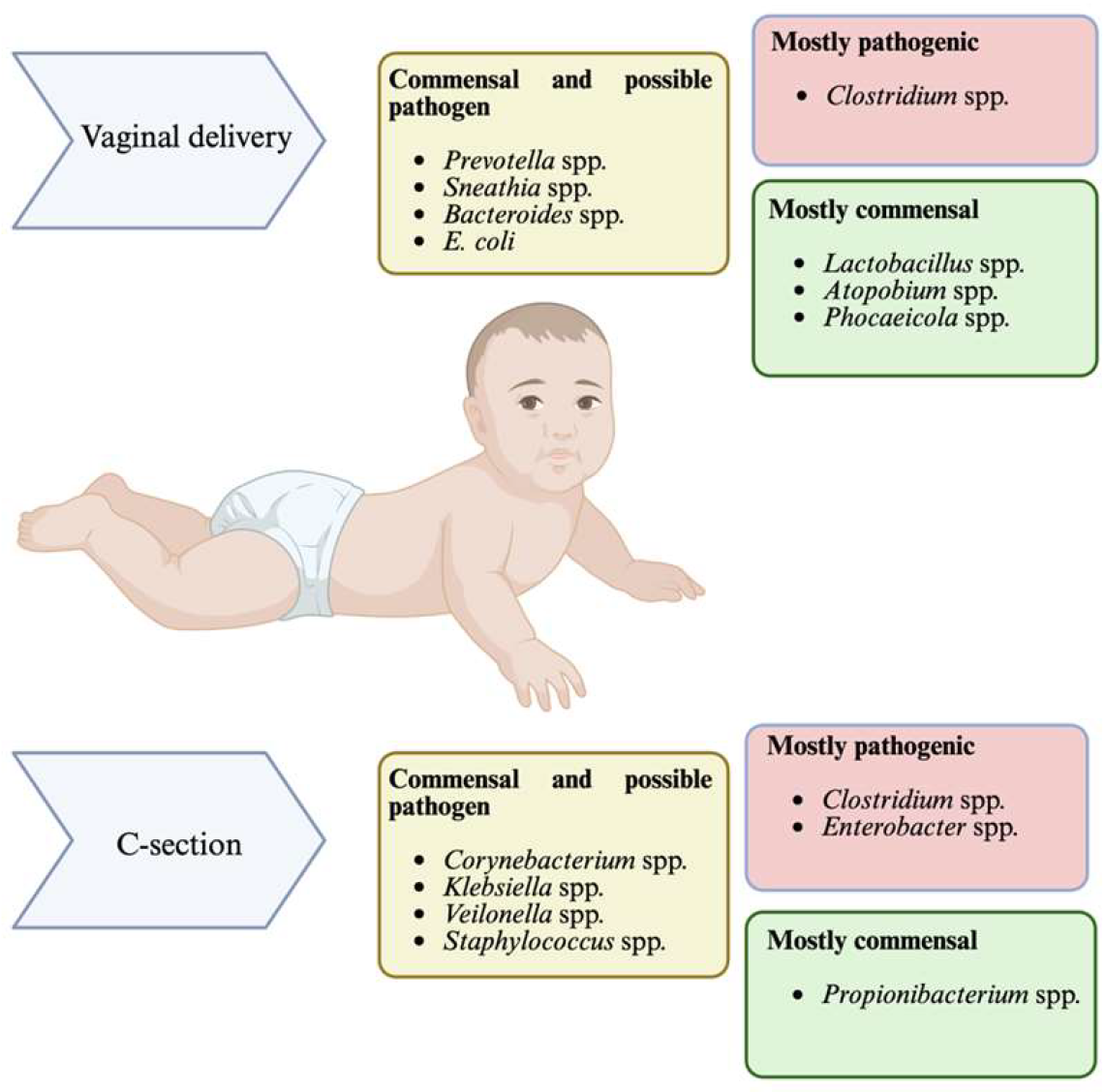



| Genus | Role in the Infant Microbiota | Developmental Stage of Relevance | Adverse Impact/Pathogenicity | Reference |
|---|---|---|---|---|
| Prevotella spp. | Natural gut commensal involved in vitamin biosynthesis, immune boosting, and carbon metabolism | Initial colonization | Associated with meningitis, dacryocystis, chorioamnionitis (which may lead to sepsis), behavioral problems, pediatric asthma; may be a cause of preterm birth (e.g., by premature rupture of membranes) affecting newborn, e.g., by causing bronchopulmonary dysplasia; correlated with viral bronchiolitis and microbial invasion of the amniotic cavity | [26,27,28,29,30,31,32,33,34,35,36,37,38] |
| Lactobacillus spp. | Probiotic bacteria competing with pathogens (e.g., Group B Streptococcus, Shigella sonnei, Salmonella typhimurium, S. aureus, Clostridium difficile, and fungi); involved in inhibition of colorectal cancer development and down-regulation of pro-inflammatory cytokines, its presence is correlated with lower possibility of infant colic and necrotizing enterocolitis (NEC) | Initial colonization/ early microbiota development | May be a cause of neurological problems: poor language skills, behavioral problems, lower recognition memory response; very rare cases of bacteremia (usually within infants suffering from a concurrent gastrointestinal complications) | [28,35,39,40,41,42,43,44,45,46,47,48,49] |
| Sneathia spp. | Responsible for shaping the development immune system of a newborn | Initial colonization | Associated with chorioamnionitis, which may lead to sepsis; strongly associated with preterm birth; correlated with microbial invasion of the amniotic cavity | [26,28,50,51,52,53,54,55] |
| Atopobium spp. | An important component of the intestinal microbiota at 3 years of age | Initial colonization/ early microbiota development | Mostly correlated with preterm birth; can induce proinflammatory response within maternal organism affecting her microbiota, hence affecting the newborn’s microbiota and newborn’s neurodevelopment; associated with dental caries or the noma (cancrum oris) during children’s first years of life | [56,57,58,59,60,61,62,63,64,65] |
| Clostridium spp. | Significantly affects the composition of neonate gut microbiota | Early microbiota development | Associated with anaerobic osteomyelitis and bacteremia; Clostridium neonatale is linked with NEC and pre-school age asthma; Clostridium difficile can be correlated with pseudomembranous colitis, diarrhea, and food allergy considering young children | [49,66,67,68,69,70,71,72,73] |
| Bacteroides spp. | Competing with pathogens causing, e.g., child’s asthma; responsible for human milk oligosaccharides (HMOs) digestion; producer of propionate, which affects inflammation, secretion of cytokines (both pro-inflammatory and anti-inflammatory and microbial ecology; member of the “core microbiota” group of microorganisms; shaping the infant’s immune system, e.g., by stimulation of T-cell production and differentiation | Early microbiota development | Linked with pneumonia, cystis, abscess, conjunctivitis, empyema, bacteremia, meningitis, leukemia, rectal abscess, perforated appendix, prematurity, NEC, empyema, and immune deficiency; associated with neurological problems: poor language skills, behavioral problems, sub-dimensions frustration, sadness, and lower negative affectivity; may be associated with gestational diabetes, mellitus exposure and gut microbiota immaturity; linked with infantile colic | [35,49,63,74,75,76,77,78,79,80,65,81,82,83,84] |
| Phocaeicola spp. | One of the first microorganisms colonizing infant’s gut; commensal competing with pathogens (e.g., E. coli); correlated with higher abundance of bacteriophages within infant’s gut; degradation of plant-derived heteropolysaccharides; a keystone of infant’s microbiota affecting many metabolic pathways | Initial colonization | Low colonization by these species may affect cognitive performances (e.g., reduced memory functions); reduced abundance of these species was linked with anterior uveitis | [22,85,86,87] |
| E. coli | Predominant commensal inside gastrointestinal tract competing with other pathogens; responsible for production of β-glucuronidase and enhancement of enterohepatic circulation in the gut; responsible for production of vitamin K and B12; by consuming oxygen may help growing other commensal microorganisms crucial for the gastrointestinal tract equilibrium; may reduce the colonization of Salmonella typhimurium within the gut | Initial colonization/ early microbiota development | Most common bacterial pathogen affecting neonates; associated with neonatal meningitidis, diarrhea, neonatal sepsis, urinary tract infection (UTI), pyelonephritis, bacteremia, jaundice, acute focal bacterial nephritis, mediastinitis, cerebellar stroke, hemolytic uremic syndrome, bloodstream infections, NEC, pregnancy-associated asymptomatic bacteriuria | [49,88,89,90,91,92,93,94,95,96,97,98,99,100,101,102,103,104,105,106] |
| Genus | Role in Infant Microbiota | Developmental Stage of Relevance | Adverse Impact/Pathogenicity | Reference |
|---|---|---|---|---|
| Corynebacterium spp. | As a commensal competing with other pathogens within hypopharyngeal and nasopharyngeal microbiota (e.g., Haemophilus sp.) may decrease asthma risk; competing with Streptococcus pneumoniae within nasopharyngeal microbiota preventing from infections (which may lead to e.g., otitis media or bronchiolitis) | Early microbiota development | Can be linked with endocarditis; Corynevbacterium kroppenstedtii and Corynebacterium diphteriae may be associated with bloodstream infections; Corynebacterium aurimucosum may cause neonatal septic meningitis; Corynebacterium pseudodiphtheriticum may cause exudative pharyngitis; Corynebacterium coyleae was correlated with UTI; before obligatory vaccination, C. diptheriae was associated with diphteria | [107,108,109,110,111,112,113,114,115,116,117,118,119,120,121] |
| Staphylococcus spp. | Staphylococcus epidermidis is an important commensal component of skin microbiota Enhancing skin barrier; an important bacterium involved in maintaining middle ear microbiota | Initial colonization/ early microbiota development | Can be associated with cystic fibrosis, developing food allergy, neonatal sepsis, endocarditis, neonatal conjunctivitis osteoarticular infections (e.g., osteomyelitis), bacteremia, NEC, late-onset neonatal sepsis (which may lead to alteration in neurodevelopment), pyomyositis, pregnancy-associated asymptomatic bacteriuria, scaled skin syndrome, ecthyma gangrenosum, UTI; was correlated with recurrent fatal pyopneumothorax or empyema thoracic (which were caused by pneumonia or SARS-CoV2 respectively) | [49,68,90,92,97,105,122,123,124,125,126,127,128,129,130,131,132,133,134,135,136,137,138,139,140,141,142] |
| Propionibacterium spp. | Plays an important role in skin homeostasis; present in healthy individuals, with regard to those affected by NEC, which suggests inhibition of pathogens causing this disease; plays an important role in the development of inflammation (induces the differentiation of bacteria-specific Th17 lymphocytes); competing with pathogens forming a skin barrier (e.g., against S. aureus); an important bacterium involved in maintaining middle ear microbiota | Early microbiota development | Associated with endodontic infections, infectious pericarditis and bacteremia; may cause immunostimulation | [67,123,143,144,145,146,147] |
| Klebsiella spp. | Commensal (saprophyte) in gastrointestinal and respiratory tract; Klebsiella michiganensis may impede gut colonization for E. coli | Initial colonization/ early microbiota development | Associated with sepsis, necrotizing small bowel colitis, neonatal meningitis, osteoarticular infections, neonatal and late-onset sepsis, pregnancy-associated asymptomatic bacteriuria, UTI, NEC, bacteremia (which may lead to tachycardia, fever or apnea episodes) | [39,49,90,92,97,101,140,148,149,150,151,152,153,154,155,156,157] |
| Enterobacter spp. | Enterobacter ludwigii possibly protects from colitis | Initial colonization/ early microbiota development | Can be correlated with osteoarticular infections, neonatal and late-onset sepsis, bacteremia, meningitis, NEC, UTI | [49,122,140,152,155,158,159,160,161] |
| Clostridium spp. | Significantly affects the composition of neonate gut microbiota | Early microbiota development | Associated with anaerobic osteomyelitis and bacteremia; C. neonatale is linked with NEC and pre-school age asthma; C. difficile can be correlated with pseudomembranous colitis, diarrhea, and food allergy considering young children | [49,66,67,68,69,70,71,72,73] |
| Veillonella spp. | Maintaining acidic pH as a protectant against other pathogen’s biofilms; present in healthy individuals, with regard to those affected by NEC, which suggests inhibition of pathogens causing this disease; involved in the production of short-chain fatty acids | Early microbiota development | May be associated with gestational diabetes mellitus exposure, gut microbiota immaturity, infections, and bacteremia; correlated with the immunopathology of cholestasis and meningitis; may cause asthma at the age of 6; V. parvula was correlated with causing pyogenic intraventricular empyema | [18,49,67,84,147,162,163,164,165,166,167] |
| Genus | Role in Infant’s Microbiota | Developmental Stage of Relevance | Adverse Impact/Pathogenicity | Reference |
|---|---|---|---|---|
| Staphylococcus spp. | S. epidermidis is an important commensal within skin microbiota enhancing skin barrier; an important bacterium involved in maintaining middle ear microbiota | Initial colonization/ early microbiota development | Can be associated with cystic fibrosis, developing food allergy, neonatal sepsis, neonatal conjunctivitis, endocarditis, osteoarticular infections (e.g., osteomyelitis), bacteremia, NEC, late-onset neonatal sepsis (which may lead to alteration in neurodevelopment), pyomyositis, pregnancy-associated asymptomatic bacteriuria, scaled skin syndrome, ecthyma gangrenosum; infectious pericarditis, UTI; correlated with recurrent fatal pyopneumothorax or empyema thoracic (which were caused by pneumonia or SARS-CoV2 respectively) | [49,68,90,92,97,105,122,123,124,125,126,127,128,129,130,131,132,133,134,135,136,137,138,139,140,141,142] |
| Serratia spp. | Mostly pathogenic | Initial colonization/ early microbiota development | May be a reason of neonatal conjunctivitis, keratitis, lower respiratory tract infections (leading to pneumonia), bacteremia, neonatal sepsis, intracranial and intestinal infections, UTI, meningitis, endocarditis; mother affected by this bacterium might suffer from chorioamnionitis | [39,49,142,185,186,187,188,189,190] |
| Streptococcus spp. | One of the most prevalent bacteria in breastmilk; Streptococcus agalactiae or Group B Streptococcus are commensals in gastrointestinal and genitourinary tract, and oropharynx; metabolic products derived from reactions (maintained by Streptococcus sp.) involving oligosaccharides present in breast milk as substrates, allow a colonization of other bacteria (e.g., Actinomyces sp.); an important bacterium involved in maintaining middle ear microbiota | Initial colonization | May be a reason of bacteremia, early-onset neonatal disease (EOD), neonatal sepsis, neonatal parotitis, meningitis, pericarditis, NEC, pneumonia, impaired neurodevelopment (e.g., learning disabilities, autistic and cerebral palsy traits), osteomyelitis, tooth decay; mother affected by this bacterium might suffer from chorioamnionitis; might cause preterm birth and stillbirth | [49,123,191,192,193,194,195,196,197,198,199,200,201] |
| Pseudomonas spp. | Mostly pathogenic | Initial colonization | May be correlated with ecthyma gangrenosum, peritonitis, meningitis, UTI, cystic fibrosis, neonatal sepsis, bloodstream infections, conjunctivitis, keratitis, subcutaneous nodules and mastoid bone destruction | [39,49,128,202,203,204,205,206,207,208,209,210] |
| Corynebacterium spp. | A commensal competing with other pathogens within hypopharyngeal and nasopharyngeal microbiota (e.g., Haemophilus sp.) may decrease asthma risk; competing with Streptococcus pneumoniae within nasopharyngeal microbiota preventing from infections (which may lead to, e.g., otitis media or bronchiolitis) | Early microbiota development | Can be linked with endocarditis; C. kroppenstedtii and C. diphteriae may be associated with bloodstream infections; C. aurimucosum may cause neonatal septic meningitis; C. pseudodiphtheriticum may cause exudative pharyngitis; C. coyleae was correlated with UTI; before obligatory vaccination, C. diptheriae was associated with diphteria | [107,108,109,110,111,112,113,114,115,116,117,118,119,120,121] |
| Ralstonia spp. | Maintaining proper newborn birth weight; involved in maintaining middle ear microbiota | Initial colonization/ early microbiota development | Associated with UTI, bacteremia, neonatal sepsis, NEC, meningitis, septicemia | [123,211,212,213,214,215,216,217] |
| Propionibacterium spp. | Has an important role in skin homeostasis; present in healthy individuals, with regard to those affected by NEC, which suggests inhibition of pathogens causing this disease; plays an important role in the development of inflammation (induces the differentiation of bacteria-specific Th17 lymphocytes); competing with pathogens forming a skin barrier (e.g., against S. aureus); an important bacterium involved in maintaining middle ear microbiota | Early microbiota development | Associated with endodontic infections, infectious pericarditis and bacteremia; may cause immunostimulation | [67,123,143,144,145,146,147] |
| Sphingomonas spp. | Mostly acting as opportunistic pathogens | Early microbiota development | Correlated with food sensitization, bronchiolitis, systemic lupus erythematosus, meningitis, bacteremia, endocarditis, soft tissue infection, UTI, infections within the central nervous system, septic arthritis, pneumonia, septicemia, biliary tract infection, wheezing; Sphingomonas paucimobilis and Sphingomonas echinoides are known to be opportunistic pathogens for the newborns amongst Sphingomonas sp. | [178,218,219,220,221,222,223] |
| Bifidobacterium spp. | Dominates the infant gut microbiota; balances (anti-inflammatory properties) and accelerates the maturation of the immune system, increases acetate production, improves intestinal barrier function; its presence is correlated with lower possibility of infant colic and NEC, responsible for the assimilation of HMOs and production of short-chain fatty acids (important for cardiovascular health and/or prevention from colorectal tumorigenesis), correlated with the protection against atopic eczema, celiac disease, biliary atresia, and other diseases caused by infections of pathogens with whom Bifidobacterium sp. compete as a commensal (by modulating mucosal barrier function and promoting immunological, and inflammatory response); improves the response to vaccination; assures a protection from food sensitization and food allergy | Initial colonization/ early microbiota development | Known as a “good bacterium”, commensal; very rare cases of bacteremia (usually within infants suffering from a concurrent gastrointestinal complications) | [12,39,41,48,49,224,225,40,226,227,228,229,230,231] |
| Bradyrhizobium spp. | As a commensal competing with other pathogens within gut microbiota | Initial colonization | Associated with bloodstream infections, early onset neonatal sepsis | [232,233] |
| Genus | Role in Infant Gut Microbiota | Developmental Stage of Relevance | Adverse Impact/Pathogenicity | Reference |
|---|---|---|---|---|
| Staphylococcus spp. | S. epidermidis is an important commensal within skin microbiota enhancing skin barrier; an important bacterium involved in maintaining middle ear microbiota | Initial colonization/ early microbiota development | Can be associated with cystic fibrosis, developing food allergy, neonatal sepsis, neonatal conjunctivitis, endocarditis, osteoarticular infections (e.g., osteomyelitis), bacteremia, NEC, late-onset neonatal sepsis (which may lead to alteration in neurodevelopment), pyomyositis, pregnancy-associated asymptomatic bacteriuria, scaled skin syndrome, ecthyma gangrenosum; infectious pericarditis, UTI; was correlated with recurrent fatal pyopneumothorax or empyema thoracic (which were caused by pneumonia or SARS-CoV2 respectively) | [49,68,90,92,97,105,122,123,124,125,126,127,128,129,130,131,132,133,134,135,136,137,138,139,140,141,142] |
| Bacillus spp. | Mostly acts as a pathogen in terms of newborns | Early microbiota development | May be associated with infections of the central nervous system, meningitis, empyema; bacteremia, sepsis; respiratory tract infections (pneumonia); skin infections; gastrointestinal infections; osteoarticular infections (arthritis, osteitis); kidney and urinary tract infections | [234,235] |
| Acinetobacter spp. | Mostly acts as a pathogen in terms of newborns | Initial colonization/ early microbiota development | One of the most causative agents of respiratory tract infections (e.g., ventilator associated pneumonia (VAP), early-onset sepsis (which may be following septic arthritis); correlated with feeding intolerance in preterm infants; meningitis (possibly following symptomatic subdural hygroma, neonatal pneumocephalus); neonatal conjunctivitis; suppurative parotitis; neonatal purpura fulminans; NEC; infective endocarditis | [49,213,236,237,238,239,240,241,242,243,244,245,246,247] |
| Micrococcus spp. | Its lower abundance in nasopharyngeal microbiota is correlated with a possibility for acute otitis media, which might stand for the fact that it is a commensal competing with pathogenic bacteria; natural commensal, shaping skin microflora | Early microbiota development | Known as non-pathogenic bacterium; can be associated with bacteremia (leading to bloodstream infection and/or sepsis) | [248,249,250,251] |
| Corynebacterium spp. | As a commensal competing with other pathogens within hypopharyngeal and nasopharyngeal microbiota (e.g., Haemophilus sp.) may decrease asthma risk; competing with S. pneumoniae within nasopharyngeal microbiota preventing from infections (which may lead to, e.g., otitis media or bronchiolitis) | Early microbiota development | Can be linked with endocarditis; C. kroppenstedtii and C. diphteriae may be associated with bloodstream infections; C. aurimucosum may cause neonatal septic meningitis; C. pseudodiphtheriticum may cause exudative pharyngitis; C. coyleae was correlated with UTI; before obligatory vaccination, C. diptheriae was associated with diphteria | [107,108,109,110,111,112,113,114,115,116,117,118,119,120,121] |
| Propionibacterium spp. | Has an important role in skin homeostasis; present in healthy individuals, with regard to those affected by NEC, which suggests inhibition of pathogens causing this disease; plays an important role in the development of inflammation (induces the differentiation of bacteria-specific Th17 lymphocytes); competing with pathogens forming a skin barrier (e.g., against S. aureus); an important bacterium involved in maintaining middle ear microbiota | Early microbiota development | Associated with endodontic infections, infectious pericarditis and bacteremia; may cause immunostimulation | [67,123,143,144,145,146,147] |
| Enterobacter spp. | E. ludwigii possibly protects from colitis | Initial colonization/ early microbiota development | Can be linked with osteoarticular infections, neonatal and late-onset sepsis, bacteremia, meningitis, NEC, UTI | [49,122,140,152,155,158,159,160,161] |
| Klebsiella spp. | Commensal (saprophyte) in gastrointestinal and respiratory tract; K. michiganensis may impede gut colonization for E. coli | Initial colonization/ early microbiota development | Associated with sepsis, necrotizing small bowel colitis, neonatal meningitis, osteoarticular infections, neonatal and late-onset sepsis, pregnancy-associated asymptomatic bacteriuria, UTI, NEC, bacteremia (which may lead to tachycardia, fever or apnea episodes) | [39,49,90,92,97,101,140,148,149,150,151,152,153,154,155,156,157] |
| E. coli | Predominant commensal inside gastrointestinal tract competing with other pathogens; responsible for production of β-glucuronidase and enhancement of enterohepatic circulation in the gut; responsible for production of vitamin K and B12; by consuming oxygen may help growing other commensal microorganisms crucial for the gastrointestinal tract equilibrium; may reduce the colonization of S. typhimurium within the gut | Initial colonization/ early microbiota development | Most common bacterial pathogen affecting neonates; associated with neonatal meningitidis, diarrhea, neonatal sepsis, UTI, pyelonephritis, bacteremia, jaundice, acute focal bacterial nephritis, mediastinitis, cerebellar stroke, hemolytic uremic syndrome, bloodstream infections, NEC, pregnancy-associated asymptomatic bacteriuria | [49,88,89,90,91,92,93,94,95,96,97,98,99,100,101,102,103,104,105,106,107] |
| Neisseria spp. | Mostly pathogenic; might prevent dental caries and periodontal disease and competes with pathogenic Fusobacterium nucleatum; Neisseria lactamica is known to be a natural pharyngeal commensal | Early microbiota development | Causative agent of an invasive meningococcal disease (leading to pneumonia, arthritis, otitis media, epiglottitis, and encephalitis); correlated with meningococcal eye infection, childhood bacteremia (leading to sepsis), conjunctivitis (ophthalmia neonatorum); associated with respiratory tract infection; Neisseria oralis may cause septicemia | [252,253,254,255,256,257,258,259,260,261] |
| Serratia spp. | Mostly acts as a pathogen in terms of newborns | Initial colonization/ early microbiota development | May be a reason of neonatal conjunctivitis, keratitis, lower respiratory tract infections (leading to pneumonia), bacteremia, neonatal sepsis, intracranial and intestinal infections, UTI, meningitis, endocarditis; mother affected by this bacterium might suffer from chorioamnionitis | [39,49,142,185,186,187,188,189,190] |
| Enterococcus spp. | Phages associated with Enterococcus spp. have been shown to enhance T-cell immunity, and certain strains of Enterococcus faecalis have demonstrated the ability to counteract NEC pathology | Initial colonization/ early microbiota development | Associated with biliary atresia; bloodstream infections (possibly leading to sepsis); meningitis; respiratory tract infections; febrile urinary tract infections; NEC; correlated with acute focal bacterial nephritis | [49,99,227,262,263,264,265,266,267,268,269] |
| Streptococcus spp. | One of the most prevalent bacteria in breastmilk; S. agalactiae or Group B Streptococcus are commensals in gastrointestinal and genitourinary tract, and oropharynx; metabolic products derived from reactions (maintained by Streptococcus sp.) involving oligosaccharides present in breast milk as substrates, allow a colonization of other bacteria (e.g., Actinomyces sp.); an important bacterium involved in maintaining middle ear microbiota | Initial colonization | May be a reason of bacteremia, EOD, neonatal sepsis, neonatal parotitis, meningitis, pericarditis, NEC, pneumonia, impaired neurodevelopment (e.g., learning disabilities, autistic and cerebral palsy traits), osteomyelitis, tooth decay; mother affected by this bacterium might suffer from chorioamnionitis; might cause preterm birth and stillbirth | [49,123,191,192,193,194,195,196,197,198,199,200,201] |
Disclaimer/Publisher’s Note: The statements, opinions and data contained in all publications are solely those of the individual author(s) and contributor(s) and not of MDPI and/or the editor(s). MDPI and/or the editor(s) disclaim responsibility for any injury to people or property resulting from any ideas, methods, instructions or products referred to in the content. |
© 2026 by the authors. Licensee MDPI, Basel, Switzerland. This article is an open access article distributed under the terms and conditions of the Creative Commons Attribution (CC BY) license.
Share and Cite
Bajrak, O.; Górski, A.; Jończyk-Matysiak, E. Protecting Newborns from Multidrug-Resistant Infections: The Emerging Role of Bacteriophages. Viruses 2026, 18, 664. https://doi.org/10.3390/v18060664
Bajrak O, Górski A, Jończyk-Matysiak E. Protecting Newborns from Multidrug-Resistant Infections: The Emerging Role of Bacteriophages. Viruses. 2026; 18(6):664. https://doi.org/10.3390/v18060664
Chicago/Turabian StyleBajrak, Olaf, Andrzej Górski, and Ewa Jończyk-Matysiak. 2026. "Protecting Newborns from Multidrug-Resistant Infections: The Emerging Role of Bacteriophages" Viruses 18, no. 6: 664. https://doi.org/10.3390/v18060664
APA StyleBajrak, O., Górski, A., & Jończyk-Matysiak, E. (2026). Protecting Newborns from Multidrug-Resistant Infections: The Emerging Role of Bacteriophages. Viruses, 18(6), 664. https://doi.org/10.3390/v18060664