Comparative Analysis of Transcription Factor Binding Sites in the Long Control Region Across Human Papillomavirus Types


Abstract
1. Introduction
2. Materials and Methods
2.1. HPV Genome Collection and LCR Extraction
2.2. Transcription Factor Binding Site Prediction
2.3. Statistical Analysis of Differential TF Binding
2.4. ChIP-Seq Analysis
2.5. TCGA-HNSC and TCGA-CESC RNA-Seq Validation
2.6. IPA Upstream Regulator Analysis
2.7. Intra-Type Conservation Analysis
2.8. Late Promoter Analysis
3. Results
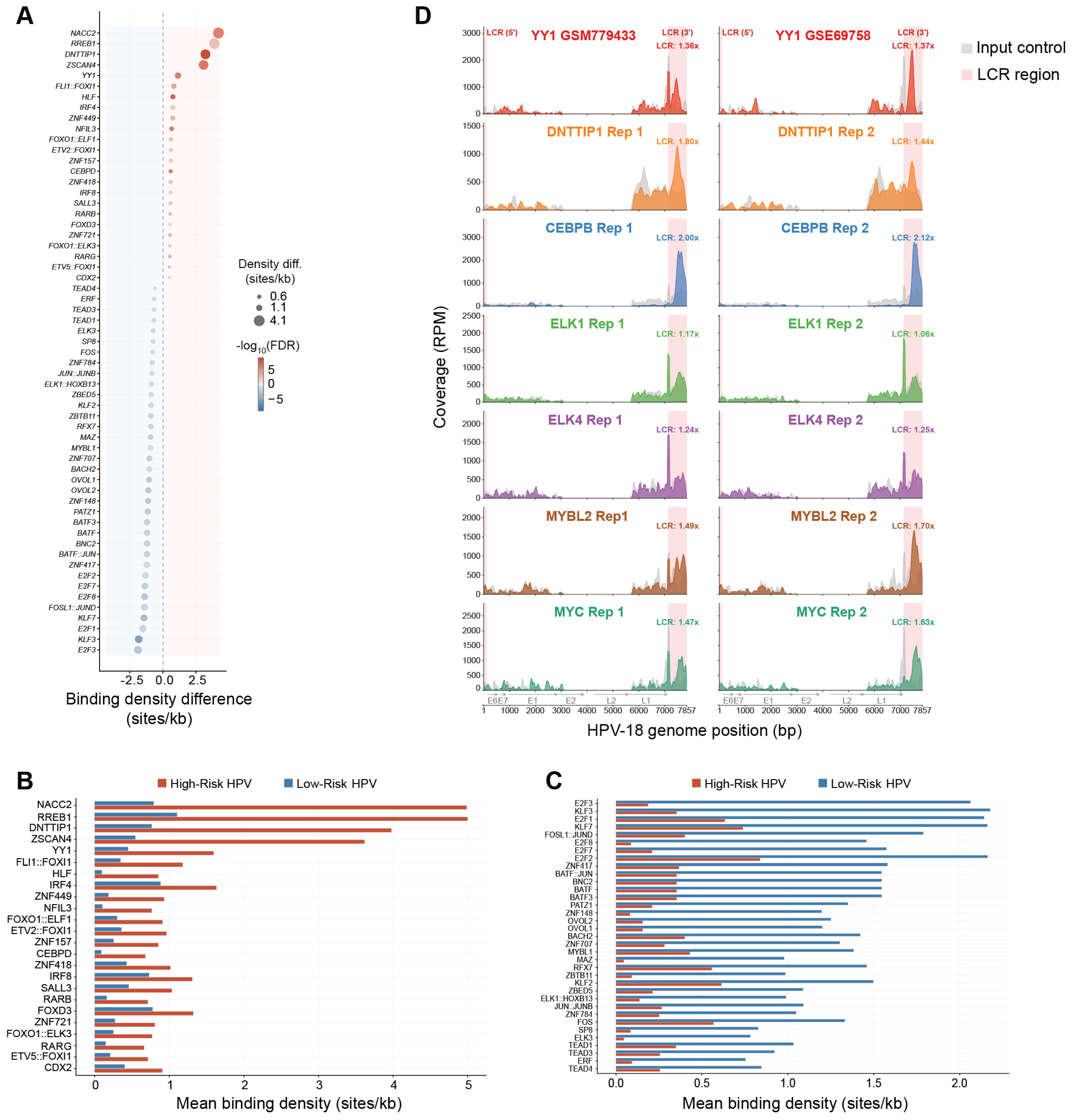
3.1. Differential TF Enrichment Across High- and Low-Risk HPV LCRs
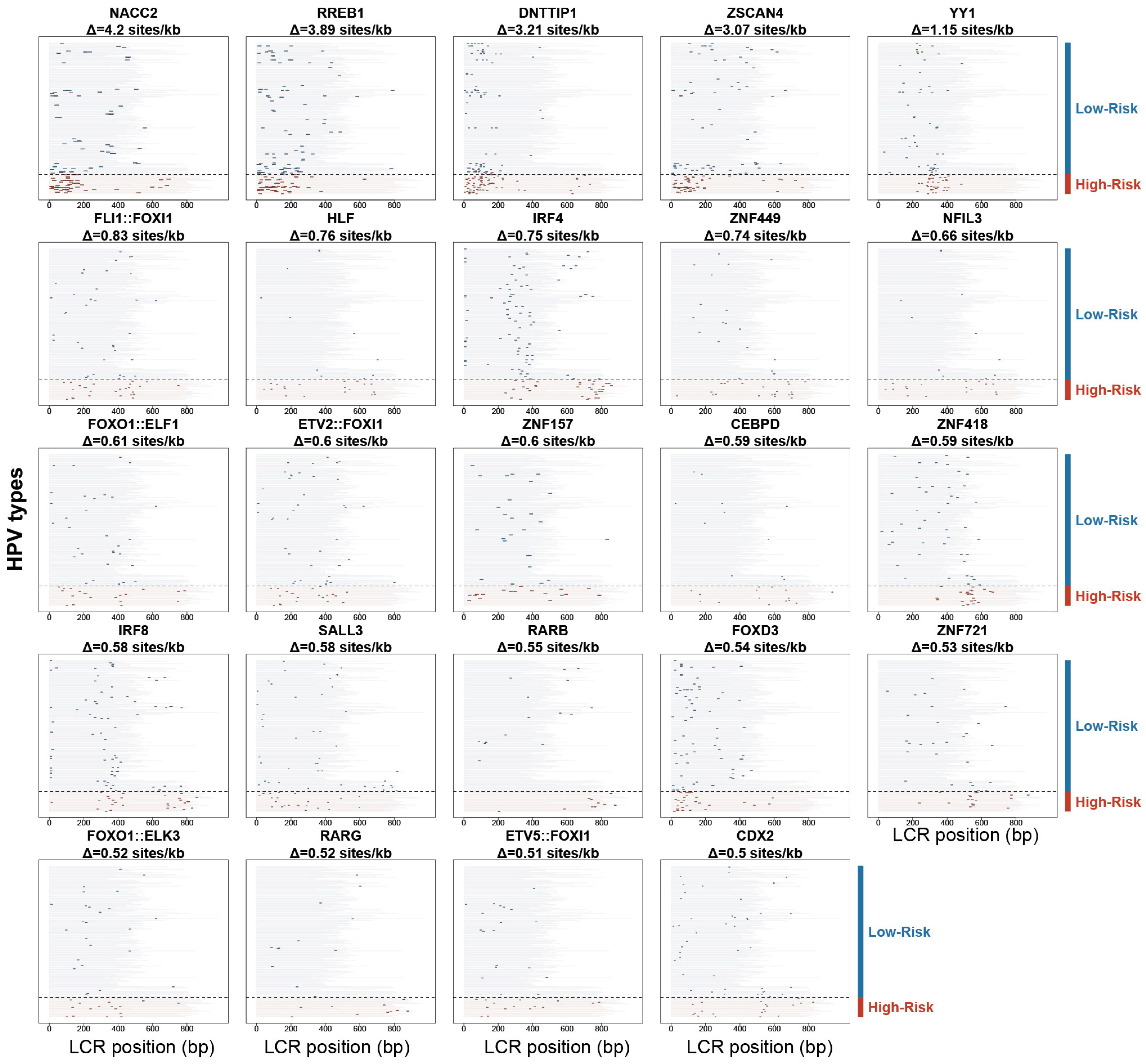
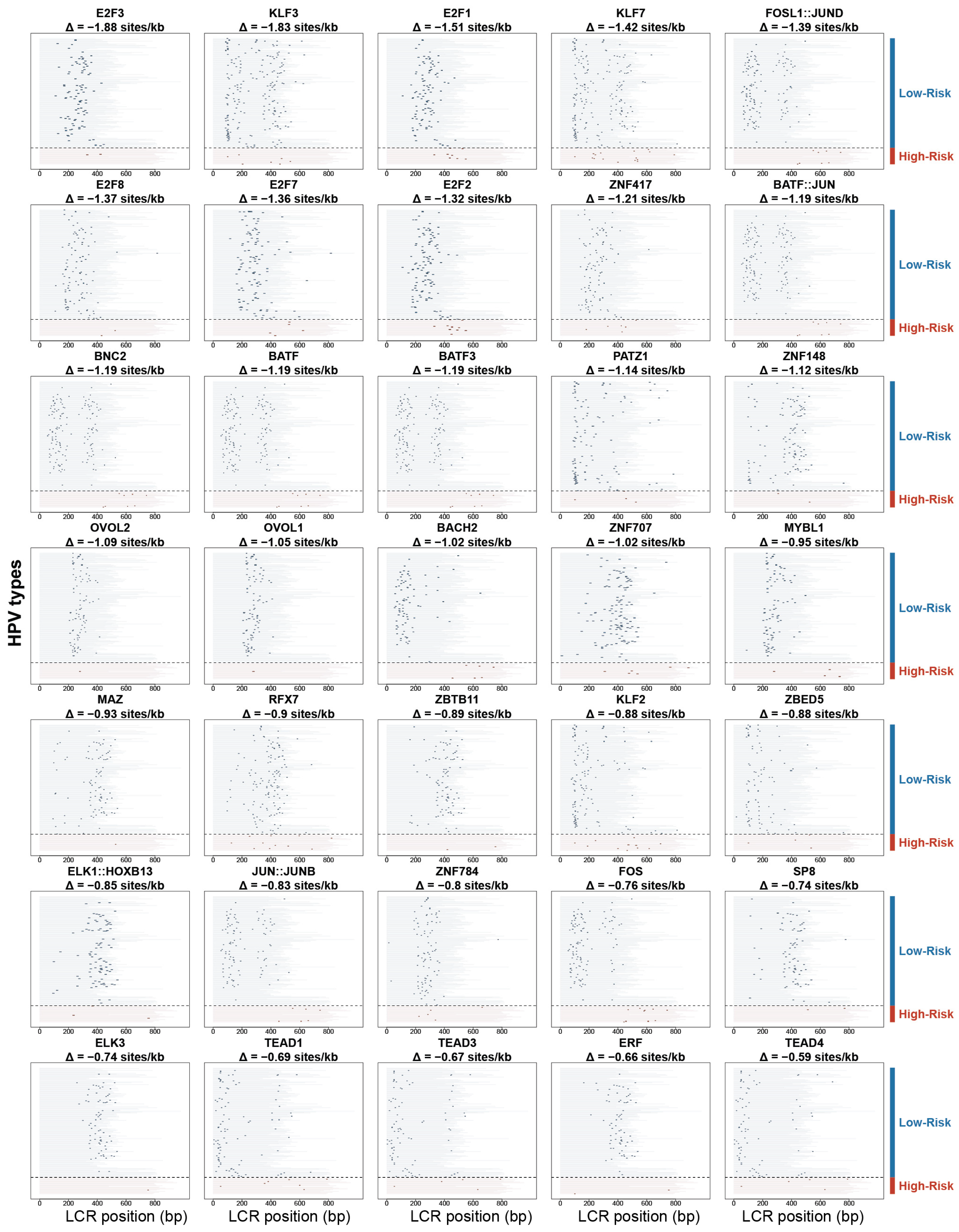
3.2. Spatial Distribution and Binding Patterns of Differentially Enriched TFs Across the HPV LCR
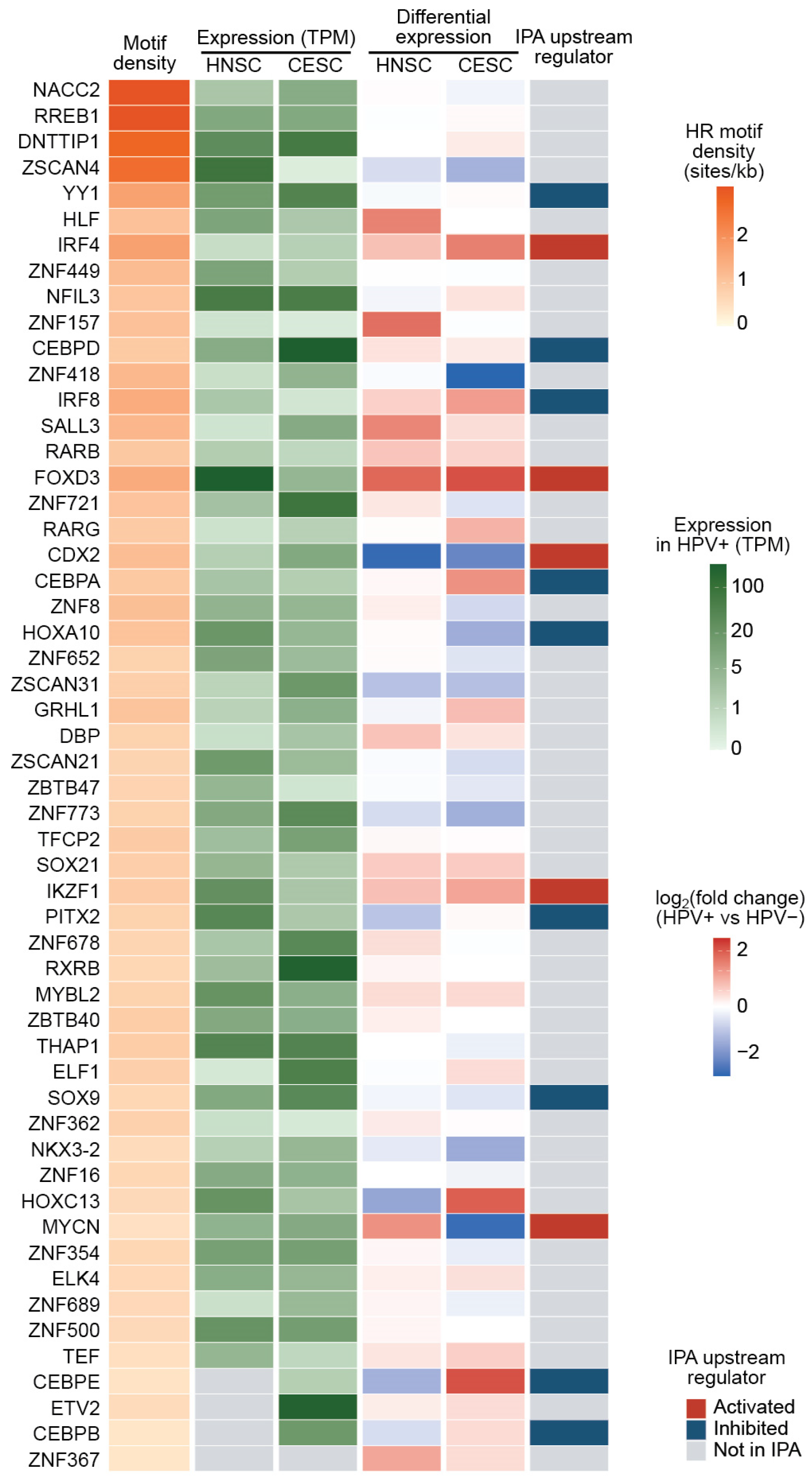
3.3. High-Risk LCR Regulators Are Expressed in HPV-Positive Tumors
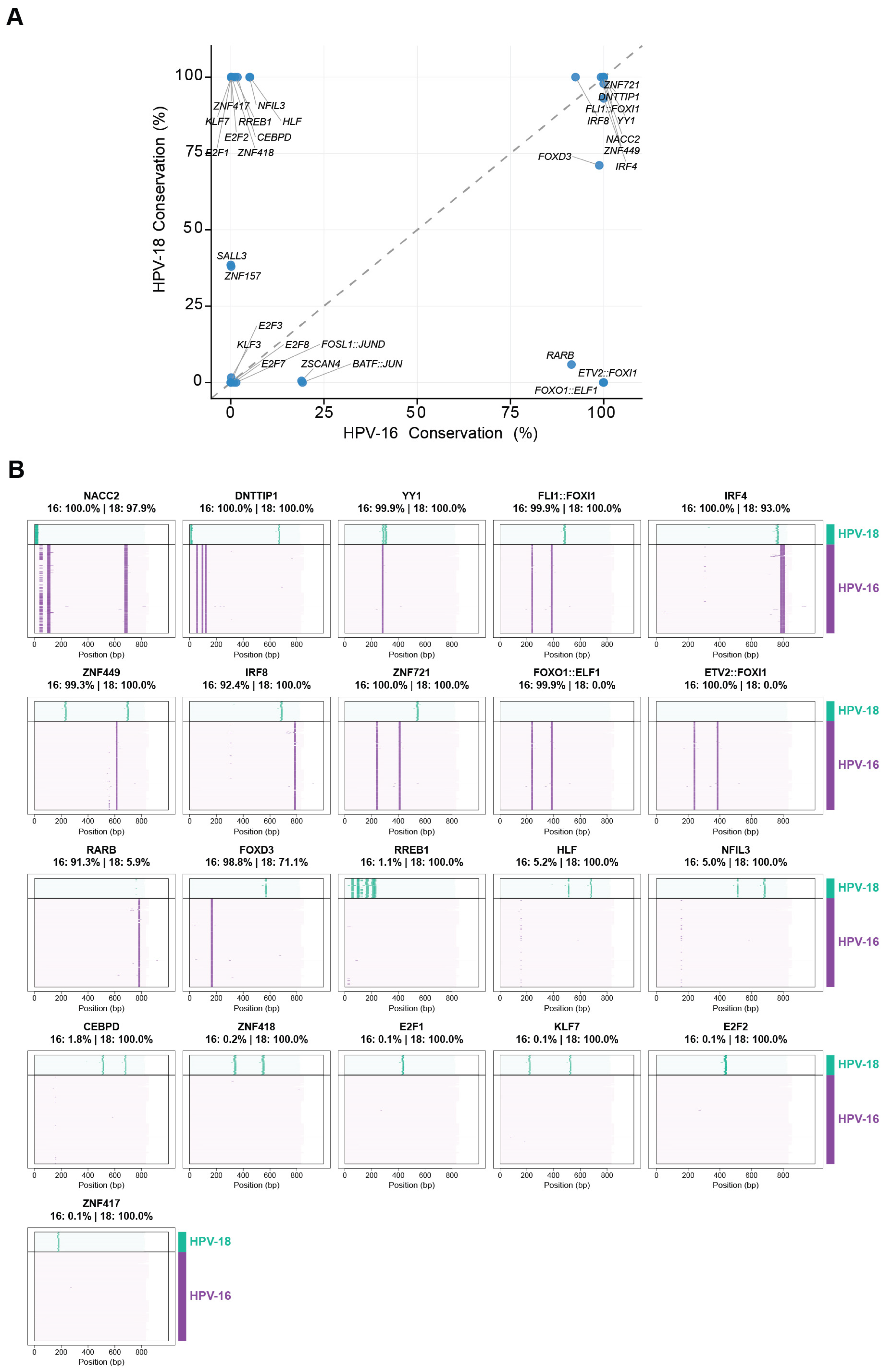
3.4. Evolutionary Conservation of Regulatory TFs Across HPV-16 and HPV-18 Isolates
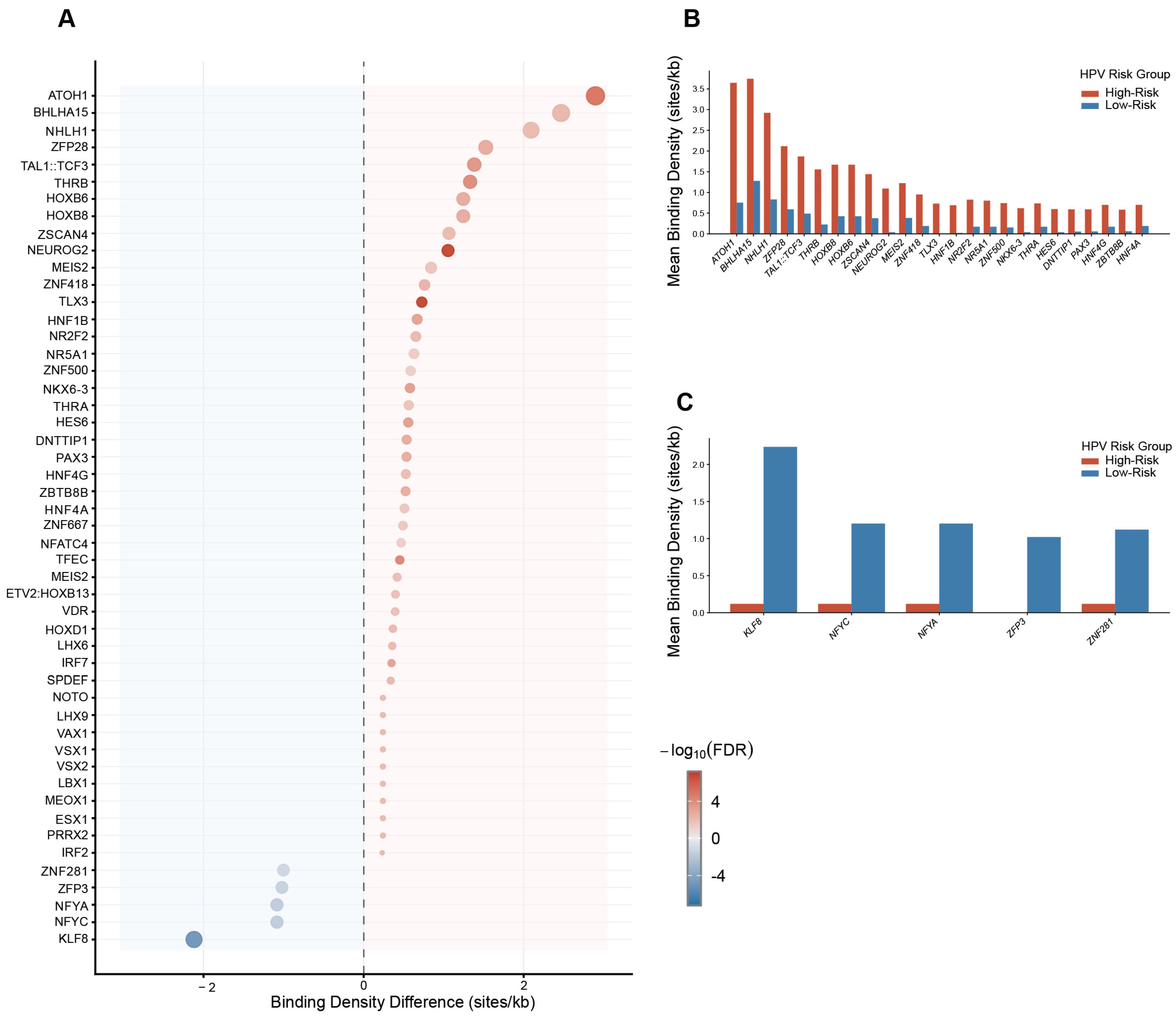
3.5. TF Binding Site Enrichment in the HPV Late Promoter
4. Discussion
Supplementary Materials
Author Contributions
Funding
Institutional Review Board Statement
Informed Consent Statement
Data Availability Statement
Conflicts of Interest
References
- Walboomers, J.M.; Jacobs, M.V.; Manos, M.M.; Bosch, F.X.; Kummer, J.A.; Shah, K.V.; Snijders, P.J.; Peto, J.; Meijer, C.J.; Muñoz, N. Human Papillomavirus Is a Necessary Cause of Invasive Cervical Cancer Worldwide. J. Pathol. 1999, 189, 12–19. [Google Scholar] [CrossRef]
- Roman, B.R.; Aragones, A. Epidemiology and Incidence of HPV-Related Cancers of the Head and Neck. J. Surg. Oncol. 2021, 124, 920–922. [Google Scholar] [CrossRef]
- Graham, S.V. The Human Papillomavirus Replication Cycle, and Its Links to Cancer Progression: A Comprehensive Review. Clin. Sci. 2017, 131, 2201–2221. [Google Scholar] [CrossRef]
- Alhamlan, F.S.; Alfageeh, M.B.; Al Mushait, M.A.; Al-Badawi, I.A.; Al-Ahdal, M.N. Human Papillomavirus-Associated Cancers. Adv. Exp. Med. Biol. 2021, 1313, 1–14. [Google Scholar] [CrossRef]
- Zheng, Z.-M.; Baker, C.C. Papillomavirus Genome Structure, Expression, and Post-Transcriptional Regulation. Front. Biosci. 2006, 11, 2286–2302. [Google Scholar] [CrossRef]
- Münger, K.; Baldwin, A.; Edwards, K.M.; Hayakawa, H.; Nguyen, C.L.; Owens, M.; Grace, M.; Huh, K. Mechanisms of Human Papillomavirus-Induced Oncogenesis. J. Virol. 2004, 78, 11451–11460. [Google Scholar] [CrossRef]
- Zhao, W.; Chow, L.T.; Broker, T.R. Transcription Activities of Human Papillomavirus Type 11 E6 Promoter-Proximal Elements in Raft and Submerged Cultures of Foreskin Keratinocytes. J. Virol. 1997, 71, 8832–8840. [Google Scholar] [CrossRef] [PubMed]
- Park, T.W.; Fujiwara, H.; Wright, T.C. Molecular Biology of Cervical Cancer and Its Precursors. Cancer 1995, 76, 1902–1913. [Google Scholar] [CrossRef] [PubMed]
- Cripe, T.P.; Haugen, T.H.; Turk, J.P.; Tabatabai, F.; Schmid, P.G.; Dürst, M.; Gissmann, L.; Roman, A.; Turek, L.P. Transcriptional Regulation of the Human Papillomavirus-16 E6-E7 Promoter by a Keratinocyte-Dependent Enhancer, and by Viral E2 Trans-Activator and Repressor Gene Products: Implications for Cervical Carcinogenesis. EMBO J. 1987, 6, 3745–3753. [Google Scholar] [CrossRef] [PubMed]
- Sailaja, G.; Watts, R.M.; Bernard, H.U. Many Different Papillomaviruses Have Low Transcriptional Activity in Spite of Strong Epithelial Specific Enhancers. J. Gen. Virol. 1999, 80, 1715–1724. [Google Scholar] [CrossRef][Green Version]
- Kikuchi, K.; Taniguchi, A.; Yasumoto, S. Induction of the HPV16 Enhancer Activity by Jun-B and c-Fos through Cooperation of the Promoter-Proximal AP-1 Site and the Epithelial Cell Type--Specific Regulatory Element in Fibroblasts. Virus Genes 1996, 13, 45–52. [Google Scholar] [CrossRef] [PubMed]
- Dong, X.-P.; Pfister, H. Overlapping YY1- and Aberrant SP1-Binding Sites Proximal to the Early Promoter of Human Papillomavirus Type 16. J. Gen. Virol. 1999, 80, 2097–2101. [Google Scholar] [CrossRef]
- Bauknecht, T.; Angel, P.; Royer, H.D.; zur Hausen, H. Identification of a Negative Regulatory Domain in the Human Papillomavirus Type 18 Promoter: Interaction with the Transcriptional Repressor YY1. EMBO J. 1992, 11, 4607–4617. [Google Scholar] [CrossRef]
- Morris, P.J.; Dent, C.L.; Ring, C.J.; Latchman, D.S. The Octamer Binding Site in the HPV16 Regulatory Region Produces Opposite Effects on Gene Expression in Cervical and Non-Cervical Cells. Nucleic Acids Res. 1993, 21, 1019–1023. [Google Scholar] [CrossRef][Green Version]
- Struyk, L.; van der Meijden, E.; Minnaar, R.; Fontaine, V.; Meijer, I.; ter Schegget, J. Transcriptional Regulation of Human Papillomavirus Type 16 LCR by Different C/EBPbeta Isoforms. Mol. Carcinog. 2000, 28, 42–50. [Google Scholar] [CrossRef]
- García-Vallvé, S.; Iglesias-Rozas, J.R.; Alonso, A.; Bravo, I.G. Different Papillomaviruses Have Different Repertoires of Transcription Factor Binding Sites: Convergence and Divergence in the Upstream Regulatory Region. BMC Evol. Biol. 2006, 6, 20. [Google Scholar] [CrossRef]
- Grant, C.E.; Bailey, T.L.; Noble, W.S. FIMO: Scanning for Occurrences of a given Motif. Bioinformatics 2011, 27, 1017–1018. [Google Scholar] [CrossRef]
- Castro-Mondragon, J.A.; Riudavets-Puig, R.; Rauluseviciute, I.; Lemma, R.B.; Turchi, L.; Blanc-Mathieu, R.; Lucas, J.; Boddie, P.; Khan, A.; Manosalva Pérez, N.; et al. JASPAR 2022: The 9th Release of the Open-Access Database of Transcription Factor Binding Profiles. Nucleic Acids Res. 2022, 50, D165–D173. [Google Scholar] [CrossRef] [PubMed]
- Langmead, B.; Salzberg, S.L. Fast Gapped-Read Alignment with Bowtie 2. Nat. Methods 2012, 9, 357–359. [Google Scholar] [CrossRef] [PubMed]
- Li, H.; Handsaker, B.; Wysoker, A.; Fennell, T.; Ruan, J.; Homer, N.; Marth, G.; Abecasis, G.; Durbin, R. 1000 Genome Project Data Processing Subgroup The Sequence Alignment/Map Format and SAMtools. Bioinformatics 2009, 25, 2078–2079. [Google Scholar] [CrossRef]
- Colaprico, A.; Silva, T.C.; Olsen, C.; Garofano, L.; Cava, C.; Garolini, D.; Sabedot, T.S.; Malta, T.M.; Pagnotta, S.M.; Castiglioni, I.; et al. TCGAbiolinks: An R/Bioconductor Package for Integrative Analysis of TCGA Data. Nucleic Acids Res. 2016, 44, e71. [Google Scholar] [CrossRef]
- Love, M.I.; Huber, W.; Anders, S. Moderated Estimation of Fold Change and Dispersion for RNA-Seq Data with DESeq2. Genome Biol. 2014, 15, 550. [Google Scholar] [CrossRef]
- Krämer, A.; Green, J.; Pollard, J.; Tugendreich, S. Causal Analysis Approaches in Ingenuity Pathway Analysis. Bioinformatics 2014, 30, 523–530. [Google Scholar] [CrossRef] [PubMed]
- Stünkel, W.; Bernard, H.U. The Chromatin Structure of the Long Control Region of Human Papillomavirus Type 16 Represses Viral Oncoprotein Expression. J. Virol. 1999, 73, 1918–1930. [Google Scholar] [CrossRef]
- Hoppe-Seyler, F.; Butz, K.; zur Hausen, H. Repression of the Human Papillomavirus Type 18 Enhancer by the Cellular Transcription Factor Oct-1. J. Virol. 1991, 65, 5613–5618. [Google Scholar] [CrossRef]
- Bauknecht, T.; See, R.H.; Shi, Y. A Novel C/EBP Beta-YY1 Complex Controls the Cell-Type-Specific Activity of the Human Papillomavirus Type 18 Upstream Regulatory Region. J. Virol. 1996, 70, 7695–7705. [Google Scholar] [CrossRef]
- Liu, Y.; Ding, S.; Liu, H. A Genome-Wide Analysis of YY1 and TFAP2 Competition on Overlapping Motifs Reveals Their Roles in HPV-Induced Carcinogenesis. PLoS Pathog. 2025, 21, e1013524. [Google Scholar] [CrossRef]
- Zhou, Y.; Huang, T.; Cheng, A.S.L.; Yu, J.; Kang, W.; To, K.F. The TEAD Family and Its Oncogenic Role in Promoting Tumorigenesis. Int. J. Mol. Sci. 2016, 17, 138. [Google Scholar] [CrossRef]
- Yuan, Y.; Park, J.; Feng, A.; Awasthi, P.; Wang, Z.; Chen, Q.; Iglesias-Bartolome, R. YAP1/TAZ-TEAD Transcriptional Networks Maintain Skin Homeostasis by Regulating Cell Proliferation and Limiting KLF4 Activity. Nat. Commun. 2020, 11, 1472. [Google Scholar] [CrossRef] [PubMed]
- Zhao, B.; Ye, X.; Yu, J.; Li, L.; Li, W.; Li, S.; Yu, J.; Lin, J.D.; Wang, C.-Y.; Chinnaiyan, A.M.; et al. TEAD Mediates YAP-Dependent Gene Induction and Growth Control. Genes. Dev. 2008, 22, 1962–1971. [Google Scholar] [CrossRef] [PubMed]
- Li, H.; Gao, P.; Chen, H.; Zhao, J.; Zhang, X.; Li, G.; Wang, L.; Qin, L. HOXC13 Promotes Cell Proliferation, Metastasis and Glycolysis in Breast Cancer by Regulating DNMT3A. Exp. Ther. Med. 2023, 26, 439. [Google Scholar] [CrossRef] [PubMed]
- Wu, X.; Zhang, X.; Yu, L.; Zhang, C.; Ye, L.; Ren, D.; Li, Y.; Sun, X.; Yu, L.; Ouyang, Y.; et al. Zinc Finger Protein 367 Promotes Metastasis by Inhibiting the Hippo Pathway in Breast Cancer. Oncogene 2020, 39, 2568–2582. [Google Scholar] [CrossRef]
- Liu, R.; Shi, P.; Wang, Z.; Yuan, C.; Cui, H. Molecular Mechanisms of MYCN Dysregulation in Cancers. Front. Oncol. 2020, 10, 625332. [Google Scholar] [CrossRef] [PubMed]
- Kirk, A.; Graham, S.V. The Human Papillomavirus Late Life Cycle and Links to Keratinocyte Differentiation. J. Med. Virol. 2024, 96, e29461. [Google Scholar] [CrossRef]
- Kukimoto, I.; Kanda, T. Displacement of YY1 by Differentiation-Specific Transcription Factor hSkn-1a Activates the P(670) Promoter of Human Papillomavirus Type 16. J. Virol. 2001, 75, 9302–9311. [Google Scholar] [CrossRef]
- Kukimoto, I.; Takeuchi, T.; Kanda, T. CCAAT/Enhancer Binding Protein Beta Binds to and Activates the P670 Promoter of Human Papillomavirus Type 16. Virology 2006, 346, 98–107. [Google Scholar] [CrossRef]
- Gunasekharan, V.K.; Li, Y.; Andrade, J.; Laimins, L.A. Post-Transcriptional Regulation of KLF4 by High-Risk Human Papillomaviruses Is Necessary for the Differentiation-Dependent Viral Life Cycle. PLoS Pathog. 2016, 12, e1005747. [Google Scholar] [CrossRef]
- Gunasekharan, V.; Haché, G.; Laimins, L. Differentiation-Dependent Changes in Levels of C/EBPβ Repressors and Activators Regulate Human Papillomavirus Type 31 Late Gene Expression. J. Virol. 2012, 86, 5393–5398. [Google Scholar] [CrossRef] [PubMed]
- Ye, H.; Li, S.; Bai, J.; Wan, F.-Z.; Wang, H.; Hu, X.-Y.; Chen, L.; Zeng, S.-H.; Qin, X.-L.; Zou, X.-X.; et al. BHLHA15 Promotes Cervical Cancer Cholesterol Synthesis and Tumor Progression. Cell. Signal. 2025, 134, 111966. [Google Scholar] [CrossRef]
- Kömüves, L.G.; Shen, W.F.; Kwong, A.; Stelnicki, E.; Rozenfeld, S.; Oda, Y.; Blink, A.; Krishnan, K.; Lau, B.; Mauro, T.; et al. Changes in HOXB6 Homeodomain Protein Structure and Localization during Human Epidermal Development and Differentiation. Dev. Dyn. 2000, 218, 636–647. [Google Scholar] [CrossRef]
- Zhang, J.-W.; Gao, X.-L.; Wang, J.; Fan, X.-L.; Liang, Q.-W. Comprehensive Analysis Illustrating the Role of HOXB8 in Head and Neck Squamous Cell Carcinoma: Evidence from Multi-Omics Analysis and Experiments Validation. BMC Cancer 2025, 25, 804. [Google Scholar] [CrossRef]
- Wang, T.; Lin, F.; Sun, X.; Jiang, L.; Mao, R.; Zhou, S.; Shang, W.; Bi, R.; Lu, F.; Li, S. HOXB8 Enhances the Proliferation and Metastasis of Colorectal Cancer Cells by Promoting EMT via STAT3 Activation. Cancer Cell Int. 2019, 19, 3. [Google Scholar] [CrossRef]
- Wang, C.; Dou, C.; Wang, Y.; Liu, Z.; Roberts, L.; Zheng, X. TLX3 Repressed SNAI1-Induced Epithelial-Mesenchymal Transition by Directly Constraining STAT3 Phosphorylation and Functionally Sensitized 5-FU Chemotherapy in Hepatocellular Carcinoma. Int. J. Biol. Sci. 2019, 15, 1696–1711. [Google Scholar] [CrossRef]
- Desgrange, A.; Heliot, C.; Skovorodkin, I.; Akram, S.U.; Heikkilä, J.; Ronkainen, V.-P.; Miinalainen, I.; Vainio, S.J.; Cereghini, S. HNF1B Controls Epithelial Organization and Cell Polarity during Ureteric Bud Branching and Collecting Duct Morphogenesis. Development 2017, 144, 4704–4719. [Google Scholar] [CrossRef] [PubMed]
- Ferri, C.A.; de Lima, V.J.; Dos Santos, P.K.; Rados, P.V.; Visioli, F. Is Vitamin D Receptor (VDR) Polymorphism Associated with Head and Neck Cancer Risk? A Systematic Review and Meta-Analysis. J. Oral. Pathol. Med. 2024, 53, 341–357. [Google Scholar] [CrossRef]
- Wang, X.; Zheng, M.; Liu, G.; Xia, W.; McKeown-Longo, P.J.; Hung, M.-C.; Zhao, J. Krüppel-like Factor 8 Induces Epithelial to Mesenchymal Transition and Epithelial Cell Invasion. Cancer Res. 2007, 67, 7184–7193. [Google Scholar] [CrossRef]
- Nardini, M.; Gnesutta, N.; Donati, G.; Gatta, R.; Forni, C.; Fossati, A.; Vonrhein, C.; Moras, D.; Romier, C.; Bolognesi, M.; et al. Sequence-Specific Transcription Factor NF-Y Displays Histone-like DNA Binding and H2B-like Ubiquitination. Cell 2013, 152, 132–143. [Google Scholar] [CrossRef]
- Xuan, C.; Wang, Q.; Han, X.; Duan, Y.; Li, L.; Shi, L.; Wang, Y.; Shan, L.; Yao, Z.; Shang, Y. RBB, a Novel Transcription Repressor, Represses the Transcription of HDM2 Oncogene. Oncogene 2013, 32, 3711–3721. [Google Scholar] [CrossRef] [PubMed]
- Bojang, P.; Wang, Y.; Ramos, K.S. LINE1 Insertion into the NACC2 Locus Disrupts the HDM2 Axis and Activates Lung Oncogenic Signaling. npj Precis. Oncol. 2025, 9, 255. [Google Scholar] [CrossRef] [PubMed]
- Deng, Y.-N.; Xia, Z.; Zhang, P.; Ejaz, S.; Liang, S. Transcription Factor RREB1: From Target Genes towards Biological Functions. Int. J. Biol. Sci. 2020, 16, 1463–1473. [Google Scholar] [CrossRef]
- Su, J.; Morgani, S.M.; David, C.J.; Wang, Q.; Er, E.E.; Huang, Y.-H.; Basnet, H.; Zou, Y.; Shu, W.; Soni, R.K.; et al. TGF-β Orchestrates Fibrogenic and Developmental EMTs via the RAS Effector RREB1. Nature 2020, 577, 566–571. [Google Scholar] [CrossRef]
- Ding, S.; Gao, Y.; Lv, D.; Tao, Y.; Liu, S.; Chen, C.; Huang, Z.; Zheng, S.; Hu, Y.; Chow, L.K.-Y.; et al. DNTTIP1 Promotes Nasopharyngeal Carcinoma Metastasis via Recruiting HDAC1 to DUSP2 Promoter and Activating ERK Signaling Pathway. EBioMedicine 2022, 81, 104100. [Google Scholar] [CrossRef]
- Sawai, Y.; Kasamatsu, A.; Nakashima, D.; Fushimi, K.; Kasama, H.; Iyoda, M.; Kouzu, Y.; Shiiba, M.; Tanzawa, H.; Uzawa, K. Critical Role of Deoxynucleotidyl Transferase Terminal Interacting Protein 1 in Oral Cancer. Lab. Investig. 2018, 98, 980–988. [Google Scholar] [CrossRef]
- Turnbull, R.E.; Fairall, L.; Saleh, A.; Kelsall, E.; Morris, K.L.; Ragan, T.J.; Savva, C.G.; Chandru, A.; Millard, C.J.; Makarova, O.V.; et al. The MiDAC Histone Deacetylase Complex Is Essential for Embryonic Development and Has a Unique Multivalent Structure. Nat. Commun. 2020, 11, 3252. [Google Scholar] [CrossRef]
- Go, S.-H.; Rho, S.B.; Yang, D.-W.; Kim, B.-R.; Lee, C.H.; Lee, S.-H. HPV-18 E7 Interacts with Elk-1 Leading to Elevation of the Transcriptional Activity of Elk-1 in Cervical Cancer. Biomol. Ther. 2022, 30, 593–602. [Google Scholar] [CrossRef]
- Gao, F.; Wang, C.; Bai, X.; Ji, J.; Huang, X. ELK4 Promotes Cell Cycle Progression and Stem Cell-like Characteristics in HPV-Associated Cervical Cancer by Regulating the FBXO22/PTEN Axis. Balk. Med. J. 2023, 40, 409–414. [Google Scholar] [CrossRef]
- Zalzman, M.; Falco, G.; Sharova, L.V.; Nishiyama, A.; Thomas, M.; Lee, S.-L.; Stagg, C.A.; Hoang, H.G.; Yang, H.-T.; Indig, F.E.; et al. Zscan4 Regulates Telomere Elongation and Genomic Stability in ES Cells. Nature 2010, 464, 858–863. [Google Scholar] [CrossRef]
- Portney, B.A.; Arad, M.; Gupta, A.; Brown, R.A.; Khatri, R.; Lin, P.N.; Hebert, A.M.; Angster, K.H.; Silipino, L.E.; Meltzer, W.A.; et al. ZSCAN4 Facilitates Chromatin Remodeling and Promotes the Cancer Stem Cell Phenotype. Oncogene 2020, 39, 4970–4982. [Google Scholar] [CrossRef]
- Muñoz, N.; Bosch, F.X.; de Sanjosé, S.; Herrero, R.; Castellsagué, X.; Shah, K.V.; Snijders, P.J.F.; Meijer, C.J.L.M. International Agency for Research on Cancer Multicenter Cervical Cancer Study Group Epidemiologic Classification of Human Papillomavirus Types Associated with Cervical Cancer. N. Engl. J. Med. 2003, 348, 518–527. [Google Scholar] [CrossRef]
- Clijsters, L.; Hoencamp, C.; Calis, J.J.A.; Marzio, A.; Handgraaf, S.M.; Cuitino, M.C.; Rosenberg, B.R.; Leone, G.; Pagano, M. Cyclin F Controls Cell-Cycle Transcriptional Outputs by Directing the Degradation of the Three Activator E2Fs. Mol. Cell 2019, 74, 1264–1277.e7. [Google Scholar] [CrossRef]
- Christensen, J.; Cloos, P.; Toftegaard, U.; Klinkenberg, D.; Bracken, A.P.; Trinh, E.; Heeran, M.; Di Stefano, L.; Helin, K. Characterization of E2F8, a Novel E2F-like Cell-Cycle Regulated Repressor of E2F-Activated Transcription. Nucleic Acids Res. 2005, 33, 5458–5470. [Google Scholar] [CrossRef] [PubMed]
- Kent, L.N.; Leone, G. The Broken Cycle: E2F Dysfunction in Cancer. Nat. Rev. Cancer 2019, 19, 326–338. [Google Scholar] [CrossRef] [PubMed]
- Cheng, S.; Schmidt-Grimminger, D.C.; Murant, T.; Broker, T.R.; Chow, L.T. Differentiation-Dependent up-Regulation of the Human Papillomavirus E7 Gene Reactivates Cellular DNA Replication in Suprabasal Differentiated Keratinocytes. Genes Dev. 1995, 9, 2335–2349. [Google Scholar] [CrossRef]
- Bauknecht, T.; Shi, Y. Overexpression of C/EBPbeta Represses Human Papillomavirus Type 18 Upstream Regulatory Region Activity in HeLa Cells by Interfering with the Binding of TATA-Binding Protein. J. Virol. 1998, 72, 2113–2124. [Google Scholar] [CrossRef]
- Wilhelm, E.; Poirier, M.; Da Rocha, M.; Bédard, M.; McDonald, P.P.; Lavigne, P.; Hunter, C.L.; Bell, B. Mitotic Deacetylase Complex (MiDAC) Recognizes the HIV-1 Core Promoter to Control Activated Viral Gene Expression. PLoS Pathog. 2024, 20, e1011821. [Google Scholar] [CrossRef]
- Sadasivam, S.; Duan, S.; DeCaprio, J.A. The MuvB Complex Sequentially Recruits B-Myb and FoxM1 to Promote Mitotic Gene Expression. Genes. Dev. 2012, 26, 474–489. [Google Scholar] [CrossRef] [PubMed]
- Lam, E.W.; Morris, J.D.; Davies, R.; Crook, T.; Watson, R.J.; Vousden, K.H. HPV16 E7 Oncoprotein Deregulates B-Myb Expression: Correlation with Targeting of P107/E2F Complexes. EMBO J. 1994, 13, 871–878. [Google Scholar] [CrossRef]
- Mathelier, A.; Wasserman, W.W. The next Generation of Transcription Factor Binding Site Prediction. PLoS Comput. Biol. 2013, 9, e1003214. [Google Scholar] [CrossRef]



Disclaimer/Publisher’s Note: The statements, opinions and data contained in all publications are solely those of the individual author(s) and contributor(s) and not of MDPI and/or the editor(s). MDPI and/or the editor(s) disclaim responsibility for any injury to people or property resulting from any ideas, methods, instructions or products referred to in the content. |
© 2026 by the authors. Licensee MDPI, Basel, Switzerland. This article is an open access article distributed under the terms and conditions of the Creative Commons Attribution (CC BY) license.
Share and Cite
Bright, D.; Fuxman Bass, J.I. Comparative Analysis of Transcription Factor Binding Sites in the Long Control Region Across Human Papillomavirus Types. Viruses 2026, 18, 646. https://doi.org/10.3390/v18060646
Bright D, Fuxman Bass JI. Comparative Analysis of Transcription Factor Binding Sites in the Long Control Region Across Human Papillomavirus Types. Viruses. 2026; 18(6):646. https://doi.org/10.3390/v18060646
Chicago/Turabian StyleBright, Derrin, and Juan I. Fuxman Bass. 2026. "Comparative Analysis of Transcription Factor Binding Sites in the Long Control Region Across Human Papillomavirus Types" Viruses 18, no. 6: 646. https://doi.org/10.3390/v18060646
APA StyleBright, D., & Fuxman Bass, J. I. (2026). Comparative Analysis of Transcription Factor Binding Sites in the Long Control Region Across Human Papillomavirus Types. Viruses, 18(6), 646. https://doi.org/10.3390/v18060646