RNA Folding Energy of Long-Range Genomic Interactions Regulates Discontinuous Transcription in SARS-CoV-2

 , , ,
, , ,  ,
,  and
and
Abstract
1. Importance
2. Introduction
3. Materials and Methods
3.1. Biosafety Statement
3.2. Cell Culture
3.3. Generation of Viral Stocks
3.4. Generation of rSARS-CoV-2
3.5. SARS-CoV-2 Infection
3.6. rMHV Infection
3.7. Poly(A)-Selected RNA-Seq
3.8. QuantSeq-Flex (–) sgRNA RNA-Seq Library Preparation
3.9. Yeast RNA Extraction
3.10. In Silico TRS ΔG Analysis
3.11. sgRNA Quantification
4. Results
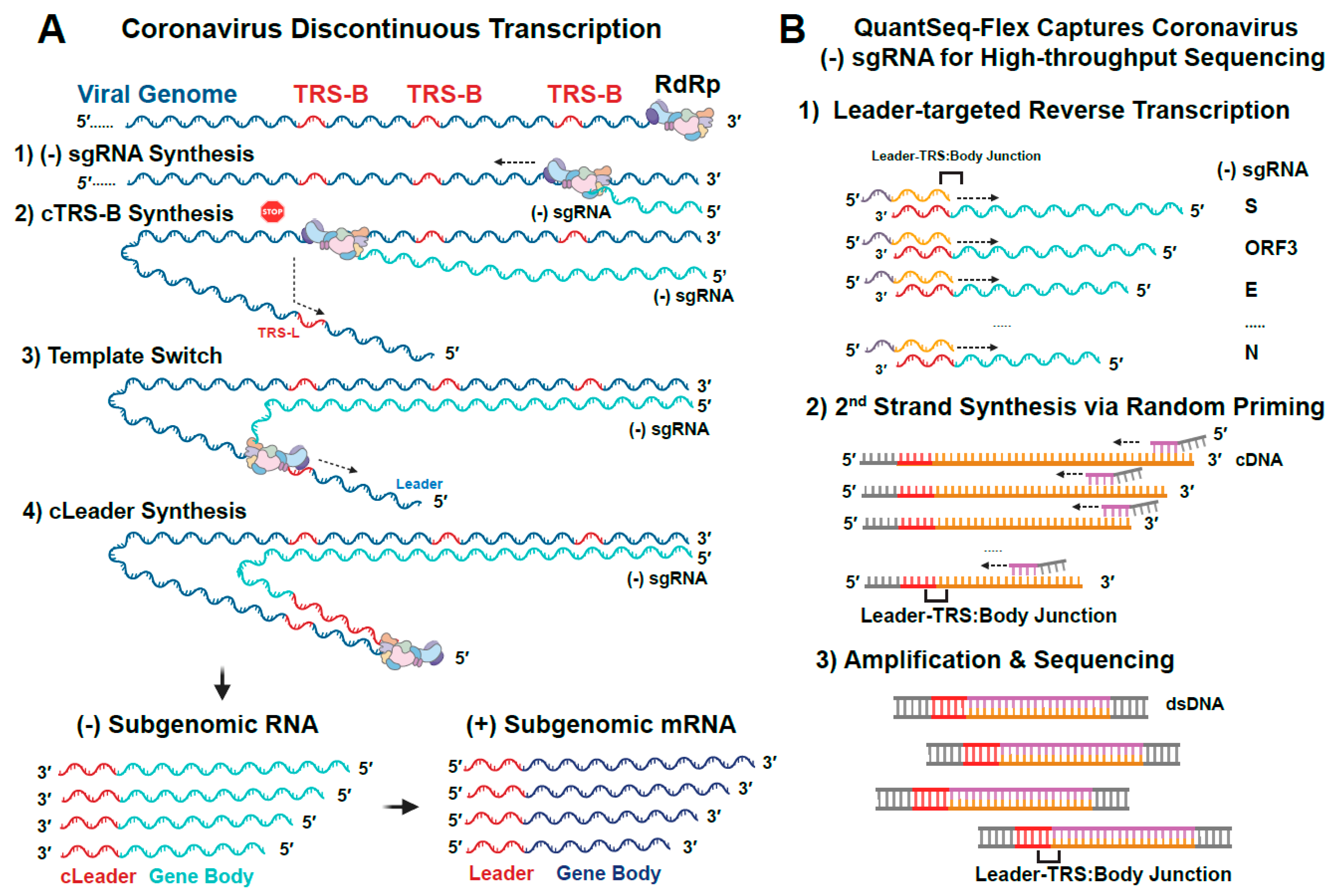
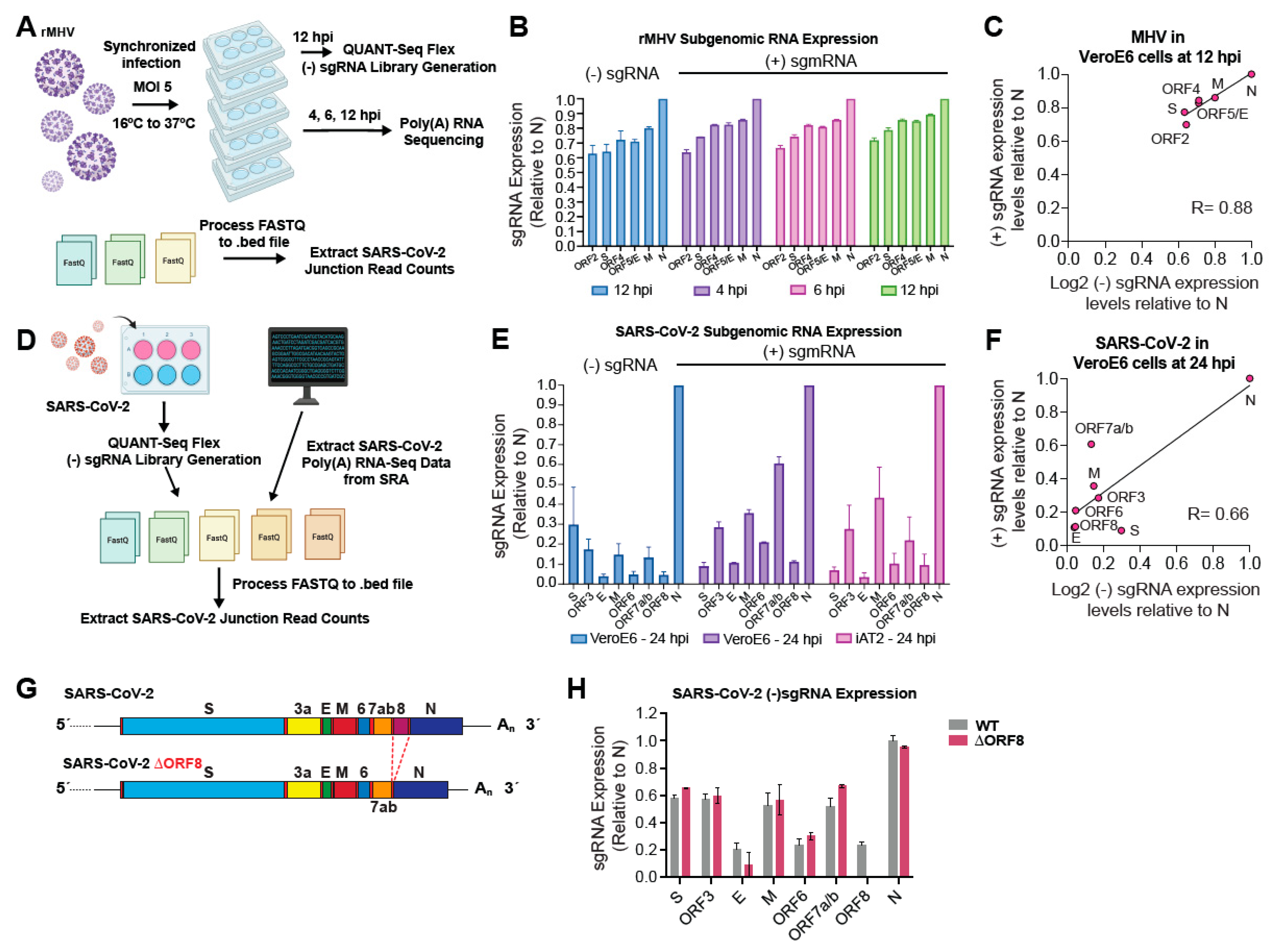
4.1. Coronavirus (–) sgRNA Expression Determines (+) sgmRNA Abundance
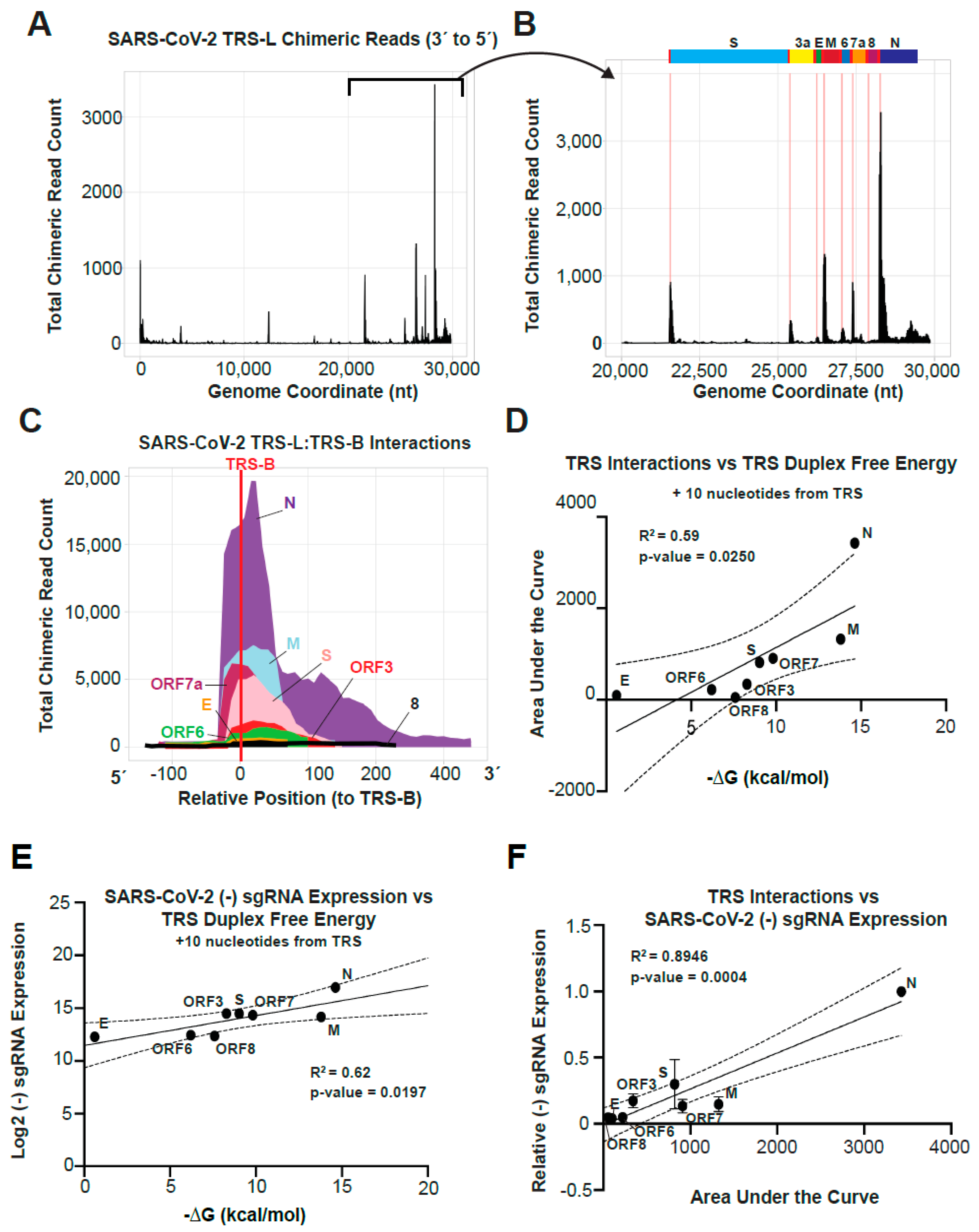
4.2. Long-Range RNA–RNA Interactions Predict sgRNA Transcript Abundance
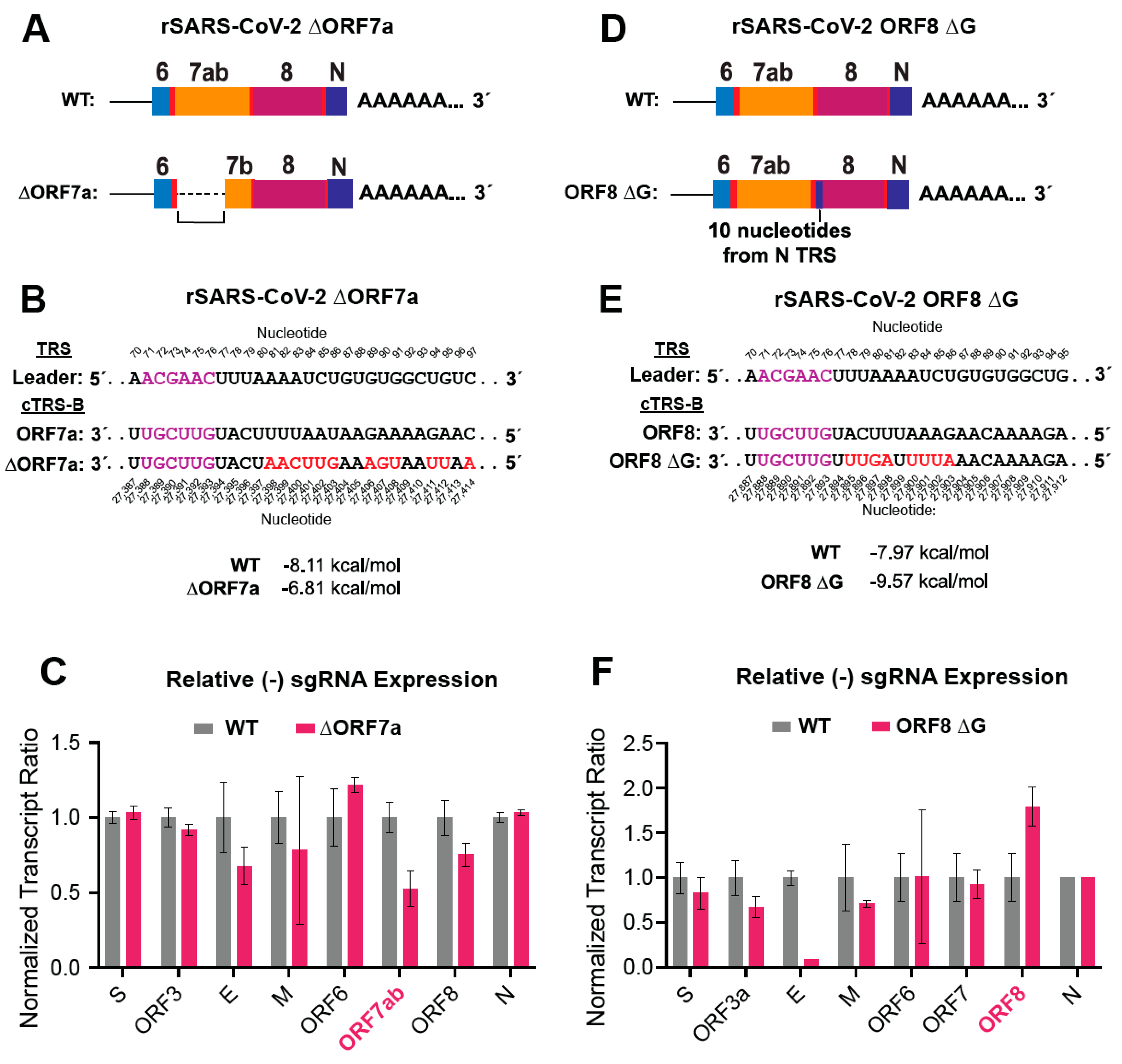
4.3. TRS-L:cTRS-B Interactions Beyond the Core Sequence Influence (–) sgRNA Synthesis
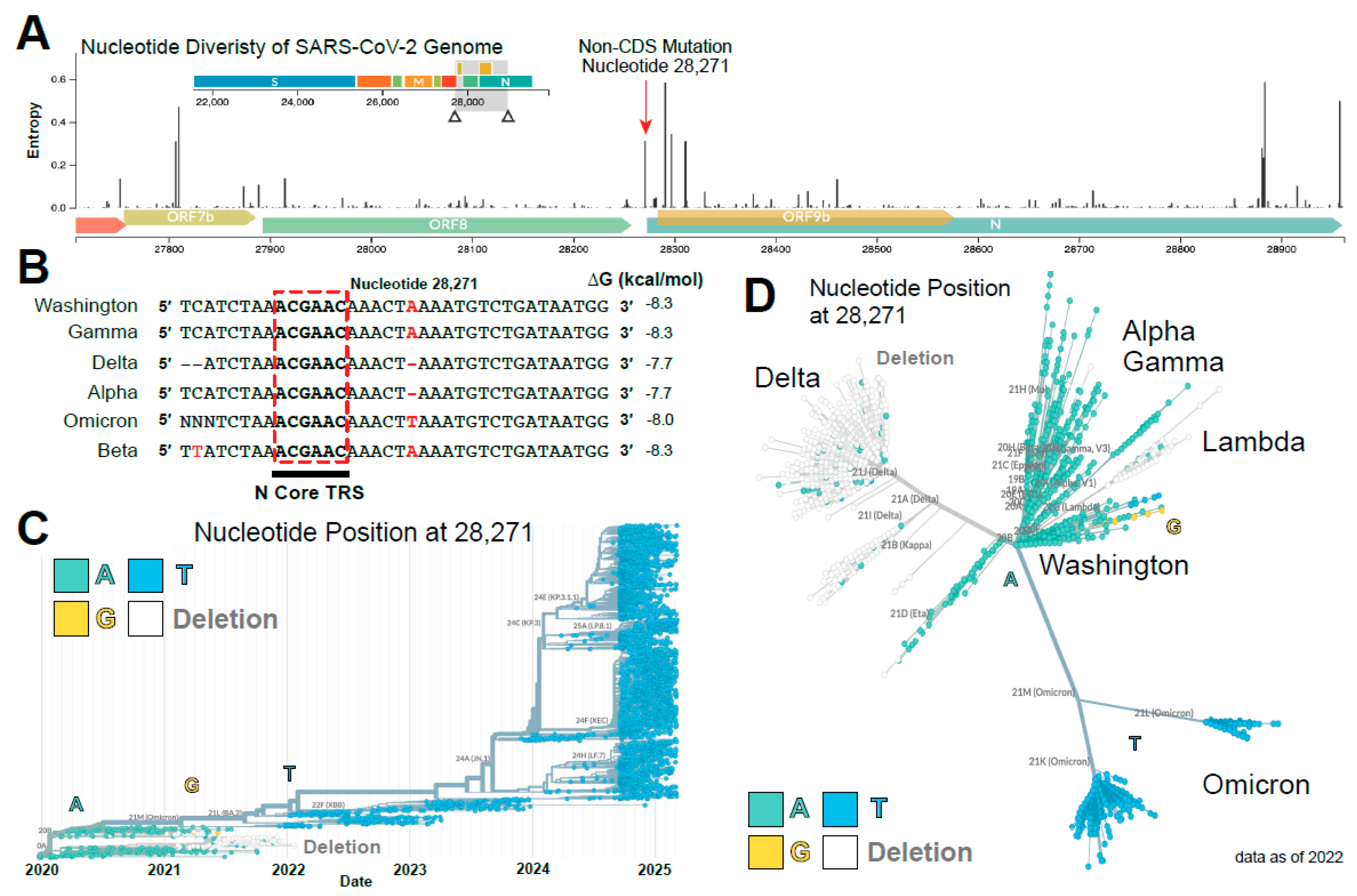
4.4. Evolutionary Implications of TRS Base-Pairing Potential
5. Discussion
Supplementary Materials
Author Contributions
Funding
Data Availability Statement
Acknowledgments
Conflicts of Interest
References
- Kim, D.; Lee, J.-Y.; Yang, J.-S.; Kim, J.W.; Kim, V.N.; Chang, H. The Architecture of SARS-CoV-2 Transcriptome. Cell 2020, 181, 914–921.e10. [Google Scholar] [CrossRef]
- Lai, M.; Stohlman, S.A. Comparative analysis of RNA genomes of mouse hepatitis viruses. J. Virol. 1981, 38, 661–670. [Google Scholar] [CrossRef]
- Sola, I.; Almazán, F.; Zúñiga, S.; Enjuanes, L. Continuous and Discontinuous RNA Synthesis in Coronaviruses. Annu. Rev. Virol. 2015, 2, 265–288. [Google Scholar] [CrossRef]
- Mingaleeva, R.N.; Nigmatulina, N.A.; Sharafetdinova, L.M.; Romozanova, A.M.; Gabdoulkhakova, A.G.; Filina, Y.V.; Shavaliyev, R.F.; Rizvanov, A.A.; Miftakhova, R.R. Biology of the SARS-CoV-2 Coronavirus. Biochemistry 2022, 87, 1662–1678. [Google Scholar] [CrossRef]
- Sawicki, S.G.; Sawicki, D.L. A new model for coronavirus transcription. Adv. Exp. Med. Biol. 1998, 440, 215–219. [Google Scholar] [CrossRef]
- Sawicki, S.G.; Sawicki, D.L. Coronaviruses use Discontinuous Extension for Synthesis of Subgenome-Length Negative Strands. In Corona- and Related Viruses: Current Concepts in Molecular Biology and Pathogenesis; Talbot, P.J., Levy, G.A., Eds.; Springer: Boston, MA, USA, 1995; pp. 499–506. [Google Scholar]
- Ayslan, C.B.; Hu, Z.; Chen, A.Z.; Majerciak, V.; Yewdell, J.; Zheng, Z.-M. Discontinuous template switching generates coronavirus subgenomic RNAs from the 3′ viral genome end by 5′ to 3′ transcription. J. Virol. 2025, 99, e01438-25. [Google Scholar] [CrossRef]
- Alonso, S.; Izeta, A.; Sola, I.; Enjuanes, L. Transcription regulatory sequences and mRNA expression levels in the coronavirus transmissible gastroenteritis virus. J. Virol. 2002, 76, 1293–1308. [Google Scholar] [CrossRef]
- Sola, I.; Moreno José, L.; Zúñiga, S.; Alonso, S.; Enjuanes, L. Role of Nucleotides Immediately Flanking the Transcription-Regulating Sequence Core in Coronavirus Subgenomic mRNA Synthesis. J. Virol. 2005, 79, 2506–2516. [Google Scholar] [CrossRef]
- Zúñiga, S.; Sola, I.; Alonso, S.; Enjuanes, L. Sequence Motifs Involved in the Regulation of Discontinuous Coronavirus Subgenomic RNA Synthesis. J. Virol. 2004, 78, 980–994. [Google Scholar] [CrossRef]
- Moreno, J.L.; Zúñiga, S.; Enjuanes, L.; Sola, I. Identification of a Coronavirus Transcription Enhancer. J. Virol. 2008, 82, 3882–3893. [Google Scholar] [CrossRef] [PubMed]
- Omoru, O.B.; Pereira, F.; Janga, S.C.; Manzourolajdad, A. A Putative long-range RNA-RNA interaction between ORF8 and Spike of SARS-CoV-2. PLoS ONE 2022, 17, e0260331. [Google Scholar] [CrossRef]
- Ziv, O.; Price, J.; Shalamova, L.; Kamenova, T.; Goodfellow, I.; Weber, F.; Miska, E.A. The Short- and Long-Range RNA-RNA Interactome of SARS-CoV-2. Mol. Cell 2020, 80, 1067–1077.e5. [Google Scholar] [CrossRef]
- Zhang, Y.; Huang, K.; Xie, D.; Lau, J.Y.; Shen, W.; Li, P.; Wang, D.; Zou, Z.; Shi, S.; Ren, H.; et al. In vivo structure and dynamics of the SARS-CoV-2 RNA genome. Nat. Commun. 2021, 12, 5695. [Google Scholar] [CrossRef] [PubMed]
- Sun, L.; Li, P.; Ju, X.; Rao, J.; Huang, W.; Ren, L.; Zhang, S.; Xiong, T.; Xu, K.; Zhou, X.; et al. In vivo structural characterization of the SARS-CoV-2 RNA genome identifies host proteins vulnerable to repurposed drugs. Cell 2021, 184, 1865–1883.e20. [Google Scholar] [CrossRef]
- Züst, R.; Cervantes-Barragán, L.; Kuri, T.; Blakqori, G.; Weber, F.; Ludewig, B.; Thiel, V. Coronavirus Non-Structural Protein 1 Is a Major Pathogenicity Factor: Implications for the Rational Design of Coronavirus Vaccines. PLoS Pathog. 2007, 3, e109. [Google Scholar] [CrossRef]
- Ye, C.; Chiem, K.; Park, J.G.; Oladunni, F.; Platt, R.N., II; Anderson, T.; Almazan, F.; de la Torre, J.C.; Martinez-Sobrido, L. Rescue of SARS-CoV-2 from a Single Bacterial Artificial Chromosome. mBio 2020, 11, e02168-20. [Google Scholar] [CrossRef]
- Ye, C.; Martinez-Sobrido, L. Use of a Bacterial Artificial Chromosome to Generate Recombinant SARS-CoV-2 Expressing Robust Levels of Reporter Genes. Microbiol. Spectr. 2022, 10, e0273222. [Google Scholar] [CrossRef] [PubMed]
- Coley, S.E.; Lavi, E.; Sawicki, S.G.; Fu, L.; Schelle, B.; Karl, N.; Siddell, S.G.; Thiel, V. Recombinant mouse hepatitis virus strain A59 from cloned, full-length cDNA replicates to high titers in vitro and is fully pathogenic in vivo. J. Virol. 2005, 79, 3097–3106. [Google Scholar] [CrossRef]
- Irigoyen, N.; Firth, A.E.; Jones, J.D.; Chung, B.Y.; Siddell, S.G.; Brierley, I. High-Resolution Analysis of Coronavirus Gene Expression by RNA Sequencing and Ribosome Profiling. PLoS Pathog. 2016, 12, e1005473. [Google Scholar] [CrossRef]
- Blanco-Melo, D.; Nilsson-Payant, B.E.; Liu, W.-C.; Uhl, S.; Hoagland, D.; Møller, R.; Jordan, T.X.; Oishi, K.; Panis, M.; Sachs, D.; et al. Imbalanced Host Response to SARS-CoV-2 Drives Development of COVID-19. Cell 2020, 181, 1036–1045.e9. [Google Scholar] [CrossRef]
- Wyler, E.; Mösbauer, K.; Franke, V.; Diag, A.; Gottula, L.T.; Arsiè, R.; Klironomos, F.; Koppstein, D.; Hönzke, K.; Ayoub, S.; et al. Transcriptomic profiling of SARS-CoV-2 infected human cell lines identifies HSP90 as target for COVID-19 therapy. iScience 2021, 24, 102151. [Google Scholar] [CrossRef]
- Finkel, Y.; Mizrahi, O.; Nachshon, A.; Weingarten-Gabbay, S.; Morgenstern, D.; Yahalom-Ronen, Y.; Tamir, H.; Achdout, H.; Stein, D.; Israeli, O.; et al. The coding capacity of SARS-CoV-2. Nature 2021, 589, 125–130. [Google Scholar] [CrossRef] [PubMed]
- Huang, J.; Hume, A.J.; Abo, K.M.; Werder, R.B.; Villacorta-Martin, C.; Alysandratos, K.D.; Beermann, M.L.; Simone-Roach, C.; Lindstrom-Vautrin, J.; Olejnik, J.; et al. SARS-CoV-2 Infection of Pluripotent Stem Cell-Derived Human Lung Alveolar Type 2 Cells Elicits a Rapid Epithelial-Intrinsic Inflammatory Response. Cell Stem Cell 2020, 27, 962–973.e7. [Google Scholar] [CrossRef] [PubMed]
- Beerens, N.; Selisko, B.; Ricagno, S.; Imbert, I.; van der Zanden, L.; Snijder, E.J.; Canard, B. De Novo Initiation of RNA Synthesis by the Arterivirus RNA-Dependent RNA Polymerase. J. Virol. 2007, 81, 8384–8395. [Google Scholar] [CrossRef]
- Lee, E.; Bujalowski, P.J.; Teramoto, T.; Gottipati, K.; Scott, S.D.; Padmanabhan, R.; Choi, K.H. Structures of flavivirus RNA promoters suggest two binding modes with NS5 polymerase. Nat. Commun. 2021, 12, 2530. [Google Scholar] [CrossRef]
- Terada, Y.; Amarbayasgalan, S.; Matsuura, Y.; Kamitani, W. Regulation viral RNA transcription and replication by higher-order RNA structures within the nsp1 coding region of MERS coronavirus. Sci. Rep. 2024, 14, 19594. [Google Scholar] [CrossRef] [PubMed]
- Hsue, B.; Masters, P.S. A bulged stem-loop structure in the 3′ untranslated region of the genome of the coronavirus mouse hepatitis virus is essential for replication. J. Virol. 1997, 71, 7567–7578. [Google Scholar] [CrossRef]
- Madhugiri, R.; Karl, N.; Petersen, D.; Lamkiewicz, K.; Fricke, M.; Wend, U.; Scheuer, R.; Marz, M.; Ziebuhr, J. Structural and functional conservation of cis-acting RNA elements in coronavirus 5′-terminal genome regions. Virology 2018, 517, 44–55. [Google Scholar] [CrossRef]
- Mears, H.V.; Young, G.R.; Sanderson, T.; Harvey, R.; Barrett-Rodger, J.; Penn, R.; Cowton, V.; Furnon, W.; De Lorenzo, G.; Crawford, M.; et al. Emergence of SARS-CoV-2 subgenomic RNAs that enhance viral fitness and immune evasion. PLoS Biol. 2025, 23, e3002982. [Google Scholar] [CrossRef]
- Sawicki, S.G.; Sawicki, D.L. Coronavirus minus-strand RNA synthesis and effect of cycloheximide on coronavirus RNA synthesis. J. Virol. 1986, 57, 328–334. [Google Scholar] [CrossRef]
- Sawicki, S.G.; Sawicki, D.L. Coronavirus transcription: A perspective. Curr. Top. Microbiol. Immunol. 2005, 287, 31–55. [Google Scholar] [CrossRef]
- Sola, I.; Mateos-Gomez, P.A.; Almazan, F.; Zuñiga, S.; Enjuanes, L. RNA-RNA and RNA-protein interactions in coronavirus replication and transcription. RNA Biol. 2011, 8, 237–248. [Google Scholar] [CrossRef]
- Mateos-Gómez, P.A.; Zuniga, S.; Palacio, L.; Enjuanes, L.; Sola, I. Gene N proximal and distal RNA motifs regulate coronavirus nucleocapsid mRNA transcription. J. Virol. 2011, 85, 8968–8980. [Google Scholar] [CrossRef]
- Miao, Z.; Tidu, A.; Eriani, G.; Martin, F. Secondary structure of the SARS-CoV-2 5′-UTR. RNA Biol. 2021, 18, 447–456. [Google Scholar] [CrossRef]
- Yang, D.; Leibowitz, J.L. The structure and functions of coronavirus genomic 3′ and 5′ ends. Virus Res. 2015, 206, 120–133. [Google Scholar] [CrossRef] [PubMed]
- Grelewska-Nowotko, K.; Elhag, A.E.; Turowski, T.W. Transcription Kinetics in the Coronavirus Life Cycle. WIREs RNA 2025, 16, e70000. [Google Scholar] [CrossRef]
- Malone, B.; Urakova, N.; Snijder, E.J.; Campbell, E.A. Structures and functions of coronavirus replication–transcription complexes and their relevance for SARS-CoV-2 drug design. Nat. Rev. Mol. Cell Biol. 2022, 23, 21–39. [Google Scholar] [CrossRef] [PubMed]
- Liang, J.; Shi, J.; Chen, S.; Duan, G.; Yang, F.; Cheng, Z.; Li, X.; Ruan, J.; Mi, D.; Gao, S. How the Replication and Transcription Complex Functions in Jumping Transcription of SARS-CoV-2. Front. Genet. 2022, 13, 904513. [Google Scholar] [CrossRef]
- Dufour, D.; Mateos-Gomez, P.A.; Enjuanes, L.; Gallego, J.; Sola, I. Structure and functional relevance of a transcription-regulating sequence involved in coronavirus discontinuous RNA synthesis. J. Virol. 2011, 85, 4963–4973. [Google Scholar] [CrossRef] [PubMed]
- Huston, N.C.; Wan, H.; Strine, M.S.; de Cesaris Araujo Tavares, R.; Wilen, C.B.; Pyle, A.M. Comprehensive in vivo secondary structure of the SARS-CoV-2 genome reveals novel regulatory motifs and mechanisms. Mol. Cell 2021, 81, 584–598.e5. [Google Scholar] [CrossRef]
- Nicholson, B.L.; White, K.A. Functional long-range RNA-RNA interactions in positive-strand RNA viruses. Nat. Rev. Microbiol. 2014, 12, 493–504. [Google Scholar] [CrossRef]
- Li, H.P.; Huang, P.; Park, S.; Lai, M.M. Polypyrimidine tract-binding protein binds to the leader RNA of mouse hepatitis virus and serves as a regulator of viral transcription. J. Virol. 1999, 73, 772–777. [Google Scholar] [CrossRef]
- Li, H.P.; Zhang, X.; Duncan, R.; Comai, L.; Lai, M.M. Heterogeneous nuclear ribonucleoprotein A1 binds to the transcription-regulatory region of mouse hepatitis virus RNA. Proc. Natl. Acad. Sci. USA 1997, 94, 9544–9549. [Google Scholar] [CrossRef] [PubMed]
- Yang, S.L.; DeFalco, L.; Anderson, D.E.; Zhang, Y.; Aw, J.G.A.; Lim, S.Y.; Lim, X.N.; Tan, K.Y.; Zhang, T.; Chawla, T.; et al. Comprehensive mapping of SARS-CoV-2 interactions in vivo reveals functional virus-host interactions. Nat. Commun. 2021, 12, 5113. [Google Scholar] [CrossRef]
- Haddox, H.K.; Angehrn, G.; Sesta, L.; Jennings-Shaffer, C.; Temple, S.D.; Galloway, J.G.; Hinrichs, A.S.; DeWitt, W.S.; Bloom, J.D.; Iv, F.A.M.; et al. The mutation rate of SARS-CoV-2 is highly variable between sites and is influenced by sequence context, genomic region, and RNA structure. Nucleic Acids Res. 2025, 53, gkaf503. [Google Scholar] [CrossRef] [PubMed]
- Mulloy, R.P.; Evseev, D.; Sharlin, N.; Bui-Marinos, M.P.; Lacasse, É.; Dubuc, I.; Flamand, L.; Corcoran, J.A. Evolution of a truncated nucleocapsid protein enhances SARS-CoV-2 fitness by suppressing antiviral responses. PLoS Biol. 2026, 24, e3003646. [Google Scholar] [CrossRef] [PubMed]



| Mutant Name | Type of Mutation | Nucleotides | Description |
|---|---|---|---|
| ΔORF8 | Deletion | 27,888–28,259 | ORF8, including its TRS, were deleted from the SARS-CoV-2 WA1 genome |
| ΔORF7a | Deletion | 27,394–27,755 | ORF7a was deleted from the SARS-CoV-2 WA1 genome, leaving TRS intact for the expression of ORF7b |
| ORF8 ΔG Mutant | Substitution | 27,894–27,903 | The first 3′ 10 nucleotides of the ORF8 TRS were substituted with nucleotides that decrease the predicted ΔG value of this sequence (to increase thermodynamic stability of predicted TRS duplex). |
| DOI | Author | Virus | Reference | Cells | Timepoint | MOI | Sequencing | Replicates |
|---|---|---|---|---|---|---|---|---|
| 10.1016/j.cell.2020.04.026 | Blanco-Melo | SARS-CoV-2 | NC_045512.2 | Calu-3 | 24 hpi | 2 | poly(A) | 3 |
| 10.1016/j.cell.2020.04.026 | Blanco-Melo | SARS-CoV-2 | NC_045512.2 | A549-ACE2 | 24 hpi | 2 | poly(A) | 3 |
| 10.1016/j.isci.2021.102151 | Wyler | SARS-CoV-2 | AY310120 | Caco-2 | 12 hpi | 0.3 | poly(A) | 2 |
| 10.1016/j.isci.2021.102151 | Wyler | SARS-CoV-2 | AY310120 | Caco-2 | 24 hpi | 0.3 | poly(A) | 2 |
| 10.1038/s41586-020-2739-1 | Finkel | SARS-CoV-2 | NC_045512.2 | Vero E6 | 5 hpi | 0.2 | poly(A) | 2 |
| 10.1038/s41586-020-2739-1 | Finkel | SARS-Cov-2 | NC_045512.2 | Vero E6 | 24 hpi | 0.2 | poly(A) | 2 |
| 10.1016/j.stem.2020.09.013 | Huang | SARS-Cov-2 | NC_045512.2 | iAT2 | 24 hpi | 5 | Bulk RNA | 3 |
| 10.1016/j.stem.2020.09.013 | Huang | SARS-Cov-2 | NC_045512.2 | iAT2 | 96 hpi | 5 | Bulk RNA | 3 |
Disclaimer/Publisher’s Note: The statements, opinions and data contained in all publications are solely those of the individual author(s) and contributor(s) and not of MDPI and/or the editor(s). MDPI and/or the editor(s) disclaim responsibility for any injury to people or property resulting from any ideas, methods, instructions or products referred to in the content. |
© 2026 by the authors. Licensee MDPI, Basel, Switzerland. This article is an open access article distributed under the terms and conditions of the Creative Commons Attribution (CC BY) license.
Share and Cite
Ross, S.J.; Ye, C.; Moxon, S.; Mühlberger, E.; Martinez-Sobrido, L.; Cifuentes, D. RNA Folding Energy of Long-Range Genomic Interactions Regulates Discontinuous Transcription in SARS-CoV-2. Viruses 2026, 18, 620. https://doi.org/10.3390/v18060620
Ross SJ, Ye C, Moxon S, Mühlberger E, Martinez-Sobrido L, Cifuentes D. RNA Folding Energy of Long-Range Genomic Interactions Regulates Discontinuous Transcription in SARS-CoV-2. Viruses. 2026; 18(6):620. https://doi.org/10.3390/v18060620
Chicago/Turabian StyleRoss, Stephen J., Chengjin Ye, Simon Moxon, Elke Mühlberger, Luis Martinez-Sobrido, and Daniel Cifuentes. 2026. "RNA Folding Energy of Long-Range Genomic Interactions Regulates Discontinuous Transcription in SARS-CoV-2" Viruses 18, no. 6: 620. https://doi.org/10.3390/v18060620
APA StyleRoss, S. J., Ye, C., Moxon, S., Mühlberger, E., Martinez-Sobrido, L., & Cifuentes, D. (2026). RNA Folding Energy of Long-Range Genomic Interactions Regulates Discontinuous Transcription in SARS-CoV-2. Viruses, 18(6), 620. https://doi.org/10.3390/v18060620