1. Introduction
The H3N2 influenza virus, first emerging in 1968 and causing the Hong Kong flu pandemic, has remained a persistent global pathogen driving seasonal epidemics [
1,
2,
3,
4]. Since its emergence, H3N2 has undergone continuous evolutionary adaptation through genetic reassortment and point mutations, with notable divergence in hemagglutinin (HA) glycosylation patterns, a key determinant of immune evasion and host adaptation [
5]. Initially conserved, HA glycosylation sites have dynamically shifted over time: existing sites have been lost or modified, while novel sites have emerged, directly shaping viral antigenicity and virulence in response to host immune pressure [
6,
7].
The functional impact of HA glycosylation is well-documented. For instance, glycosylation at position 158 enhances antibody evasion by masking neutralizing epitopes [
8], while modifications at 165 promote antigenic drift by altering receptor-binding specificity [
9]. Glycosylation at position 144, acquired during the 1980s–1990s, increased pathogenicity by stabilizing HA structure under acidic conditions, facilitating endosomal fusion and viral entry [
10]. Collectively, these modifications enhance viral fitness by balancing receptor binding, immune evasion, and structural stability; such processes complicate vaccine development and diagnostic accuracy because traditional strategies struggle to track rapidly evolving glycoepitopes [
11]. Beyond genetic and immune pressures, microenvironmental cues within the host may modulate viral glycosylation. Influenza infection induces pulmonary tissue damage and metabolic stress, creating a hypoxic microenvironment [
12,
13]. While hypoxia is known to alter host cell glycosylation machinery, its impact on viral protein modifications remains largely unexplored. This knowledge gap is critical, as oxygen-deprived conditions could drive context-specific glycosylation changes that enhance viral replication or immune evasion in vivo.
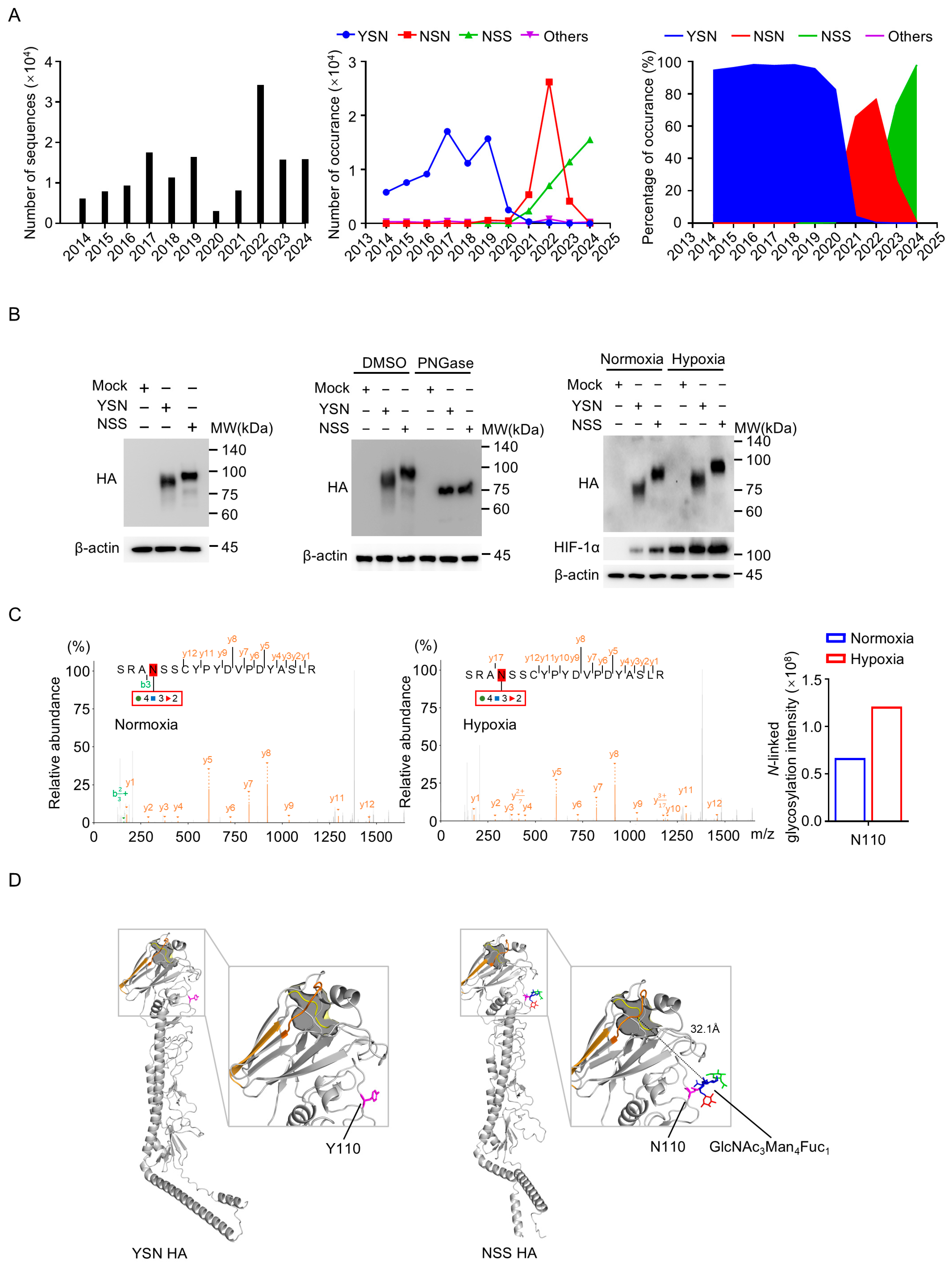
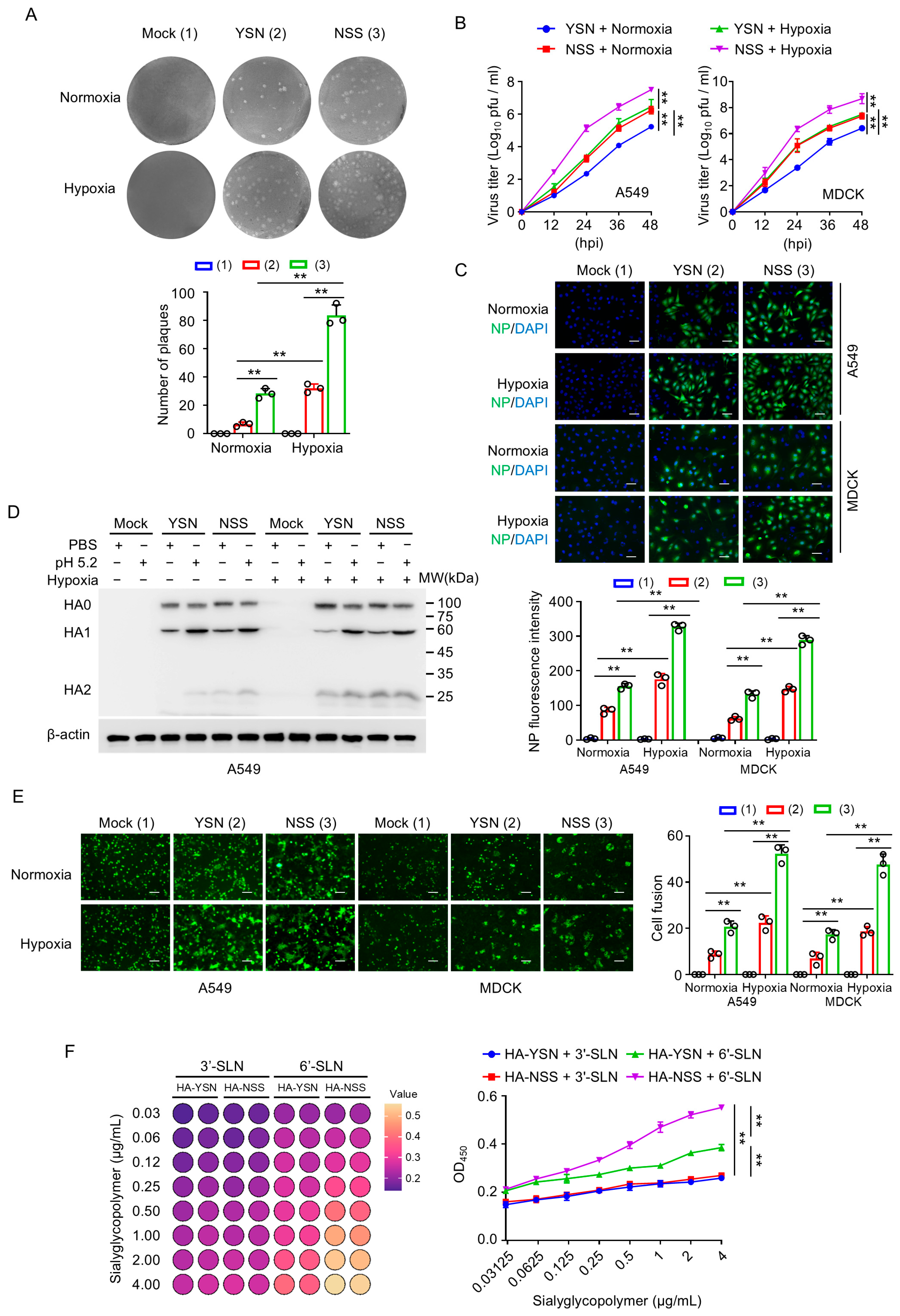
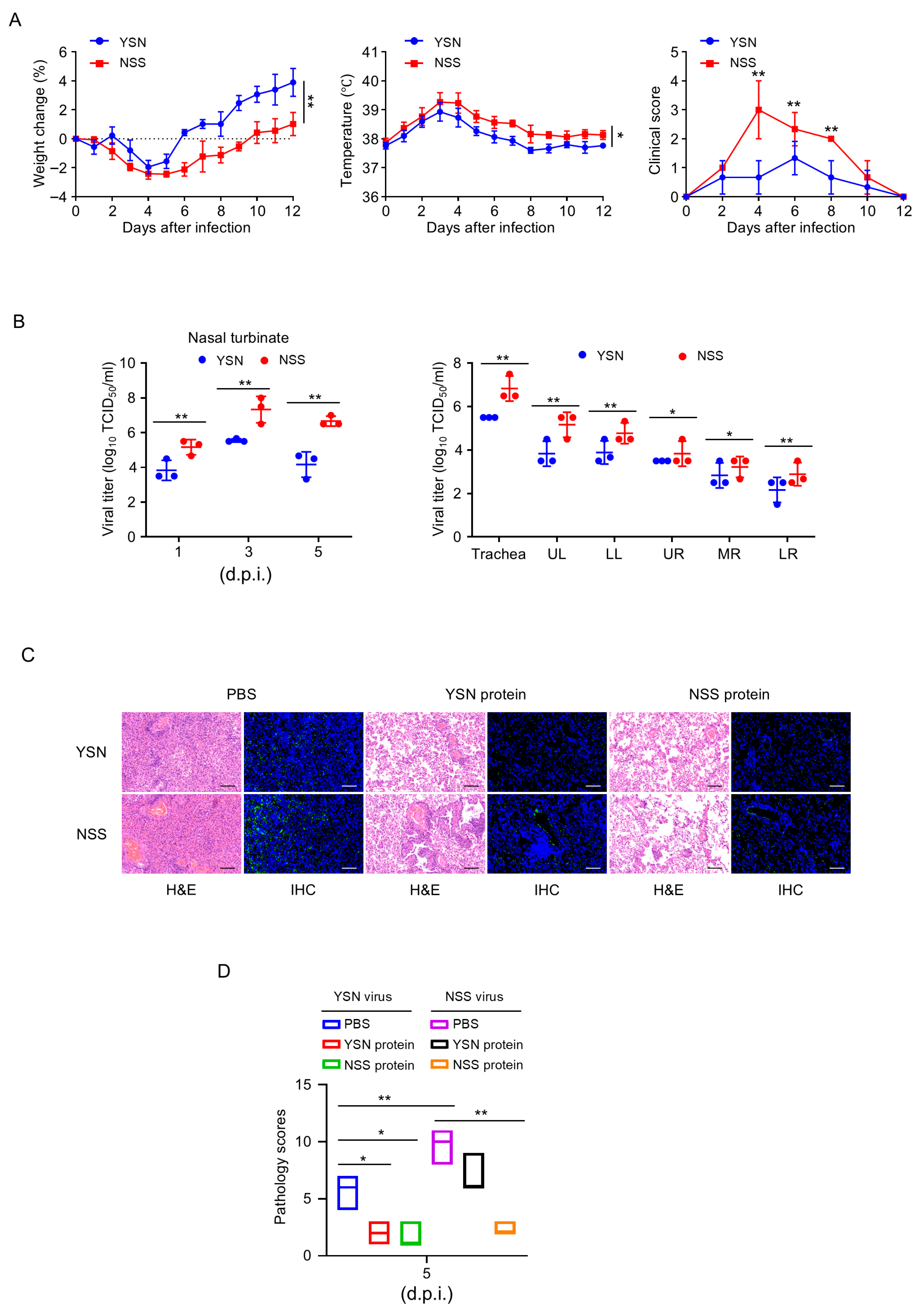
The 2023–2024 influenza season in China, dominated by H3N2 variants, underscores the urgency of understanding novel glycosylation events. Here, we identify a novel N-linked glycosylation site at position N110 in contemporary H3N2 HA. Functional analyses reveal that N110 glycosylation enhances receptor binding signal, particularly for human 2,6-linked sialic acid receptors, accelerates HA cleavage and cell fusion, and increases viral replication in hypoxic environments. In ferret models, this modification correlates with heightened pathogenicity, including severe weight loss and respiratory symptoms. Importantly, N110 glycosylation alters antigenic presentation, reducing cross-neutralization by antibodies induced by ancestral strains or current vaccines.
Our findings highlight the dual role of N110 glycosylation in viral adaptation: it promotes fitness through enhanced replication and receptor binding while enabling immune evasion via altered epitope exposure. By demonstrating hypoxia-dependent modulation of N110 glycosylation, this study reveals a novel host–virus interaction axis that may drive seasonal H3N2 outbreaks. These insights emphasize the need to integrate microenvironmental factors into glycosylation research and inform next-generation vaccine design targeting evolving glycoepitopes.
2. Materials and Methods
2.1. HA Sequence Analysis
Approximately 145,000 HA protein sequences of human H3N2 viruses were downloaded from the GISAID database:
https://www.gisaid.org (accessed on 17 October 2024). Multiple sequence alignments were generated using MAFFT v7.526, and sequence patterns at positions 110–112 were analyzed using a Perl script. The frequency of each genotype (Y110, N110, N112, and S112) was stratified by year.
2.2. Cell Cultures
Lung epithelial cells (A549, CRM-CCL-185), Madin-Darby canine kidney cells (MDCK, CCL-34) and human embryonic kidney cells (HEK293T, CRL-11268) were purchased from American Type Culture Collection (ATCC, Manassas, VA, USA). All cell lines were cultured in complete medium [DMEM containing 10% FBS (FSP500, ExCell, Shanghai, China) and 1% Penicillin-Streptomycin-Amphotericin B Solution (C0052, TargetMol, Boston, MA, USA)] at 37 °C with 5% CO2. For experiments under different oxygen tensions, cells were cultured in either normoxic (21% O2) or hypoxic (5% O2) conditions. Normoxic cultures were maintained in a standard humidified incubator. Hypoxic conditions were established and maintained using a dedicated tri-gas incubator (Heracell™ VIOS 160i, Thermo Scientific, Waltham, MA, USA), which was flushed with a gas mixture of 5% CO2, 5% O2, and 90% N2. The oxygen concentration was continuously monitored and allowed to stabilize for at least 24 h before initiating experiments. All cells were routinely tested for mycoplasma contamination.
2.3. Antibodies
Rabbit polyclonal anti-H3N2 HA (11056-T62) and anti-NP (11675-T62) were obtained from Sino Biological (Beijing, China). HRP-conjugated anti-FLAG (A8592) was purchased from Sigma-Aldrich (St. Louis, MO, USA). HRP-conjugated anti-MYC (sc-40HRP) and anti-β-actin (sc-47778HRP) were purchased from Santa Cruz (Santa Cruz, CA, USA). V5-tag Polyclonal antibody was purchased from Proteintech (Rosemont, IL, USA). Rabbit polyclonal anti-B4GAT1 (D263257) was obtained from Sangon Biotech (Shanghai, China). Rabbit polyclonal anti-B4GALT1 (PAB85Hu01) was obtained from Cloud-Clone (Wuhan, China). Mouse monoclonal anti-HIF-1α (610958) was obtained from BD Biosciences (San Jose, CA, USA).
2.4. Viruses and Plasmids
Recombinant H3N2 viruses (YSN and NSS) were generated using reverse genetics. The eight viral gene segments (PB2, PB1, PA, HA, NP, NA, M, NS) were amplified from A/Wujiaqu/XJ58/2017 (XJ58) strain by RT-PCR (primers in
Table S1) and cloned into the pHW2000 vector, as described by Won-Suk Cho et al. [
14]. The HA-NSS variant was constructed via site-directed mutagenesis (Mut Express II Fast Mutagenesis Kit V2, C214-01, Vazyme, Nanjing, China) using YSN HA as the template (primers in
Table S2). For rescue, HEK293T cells (95% confluent) were co-transfected with eight pHW2000 plasmids using Lipofectamine 3000 (L3000150, Invitrogen, Carlsbad, CA, USA). At 24 h post-transfection, medium was replaced with serum-free DMEM containing 1 μg/mL TPCK-trypsin (Thermo Scientific, 20233). Supernatants were harvested at 48–72 h and passaged in MDCK cells for amplification. All experiments were performed in a BSL-2+ facility.
B4GAT1 (P15699) and B4GALT1 (P57791) eukaryotic expression vector was purchased from MiaoLing Plasmid Platform (Wuhan, China). Eukaryotic expression plasmids encoding FLAG-tagged, MYC-tagged, or V5-tagged proteins were cloned into pcDNA3.1 (Invitrogen, V79020). FLAG-HA-NSS was generated by mutating FLAG-HA-YSN (Mut Express II Kit, Vazyme C214-01; primers in
Table S2). For knockdown experiments, shRNA target sequences are listed in
Table S1. The lentiviral shRNA vectors were cloned into the pSIH-H1-Puro (System Biosciences, Palo Alto, CA, USA). For lentiviral infection, HEK293T cells were co-transfected with recombinant lentiviral vector and pPACK Packing Plasmid Mix (System Biosciences) using Megatran reagent (TT210003, Origene, Rockville, MD, USA) to obtain lentiviruses. Viral supernatant was used to infect A549 cells in the presence of polybrene (10 μg/mL). Stable cell lines were obtained following puromycin selection at 1 μg/mL.
2.5. Glycosylation Analysis
Proteins were extracted in 8 M urea with 10% protease inhibitor, centrifuged at 14,000×
g for 20 min, and quantified via Bradford assay. Samples were reduced with 200 mM DTT (37 °C for 1 h), diluted 4 times with 25 mM ammonium bicarbonate, and digested with trypsin (1:50
w/
w; V5111, Promega, Madison, WI, USA) overnight at 37 °C. Digestion was terminated with 50 μL 0.1% formic acid (FA). The resulting peptides were purified using a C18 column (28105-204630, Thermo Scientific), eluted with 70% acetonitrile (ACN), and then subjected to glycopeptide enrichment using a HILIC enrichment column (97502-052130, Thermo Scientific). Eluates were lyophilized, resuspended in 0.2% FA, and analyzed via Liquid Chromatography-Tandem Mass Spectrometry (LC-MS/MS) on a quadrupole Orbitrap mass spectrometer (Thermo Scientific). The mass spectrometer was operated in “top-40” data-dependent mode. Briefly, the Orbitrap mass analyzer (120,000 resolution, 350–1500
m/
z range) collects MS1 (full-scan) spectra with an automatic gain control (AGC) target of 3E6 and a maximum ion injection time of 80 ms. The most intense ions from the full scan were isolated with an isolation width of 1.6
m/
z. Following higher-energy collisional dissociation (HCD) with a normalized collision energy (NCE) of 27, MS2 (fragmentation) spectra were collected in the Orbitrap (15,000 resolution) with an AGC target of 5E4 and a maximum ion injection time of 45 ms. Precursor dynamic exclusion was enabled with a duration of 16 s. Data were searched against the UniProt Homo sapiens database (
https://www.uniprot.org/uniprotkb?query=Homo+sapiens, accessed on 21 September 2024) using Byonic40 (1% FDR, Byonic score > 300). Quantitative analysis was performed via R version 4.3.2 using Byonic v4.2.0 and MaxQuant 2.4.0.0 values.
2.6. PNGase F Treatment, HA Cleavage Assay, and Immunoblotting
For peptide N-glycosidase F (PNGase F) treatment, virions were denatured in 3 × reducing SDS loading buffer (94 °C for 5 min), cooled, and treated with PNGase F (NEB, P0704S) per manufacturer instructions. Proteins were resolved via SDS-PAGE (Bio-Rad system, Hercules, CA, USA).
For HA cleavage assay, A549 cells infected with recombinant viruses for 24 h were treated with 5 μg/mL TPCK-trypsin for 15 min, lysed in RIPA buffer with protease inhibitors, and analyzed via immunoblotting.
For immunoblotting, proteins were extracted in RIPA buffer, quantified via BCA (Vazyme, E112), and separated via SDS-PAGE. Proteins were transferred to nitrocellulose membranes, blocked in 5% skim milk, and probed with primary/secondary antibodies. Signals were detected using the SuperPico ECL Chemiluminescence Kit (E422-01, Vazyme, Nanjing, China) and imaged using ChemiDoc Imaging Systems with Image Lab 2.0 (Bio-Rad, Hercules, CA, USA).
2.7. Plaque Assay
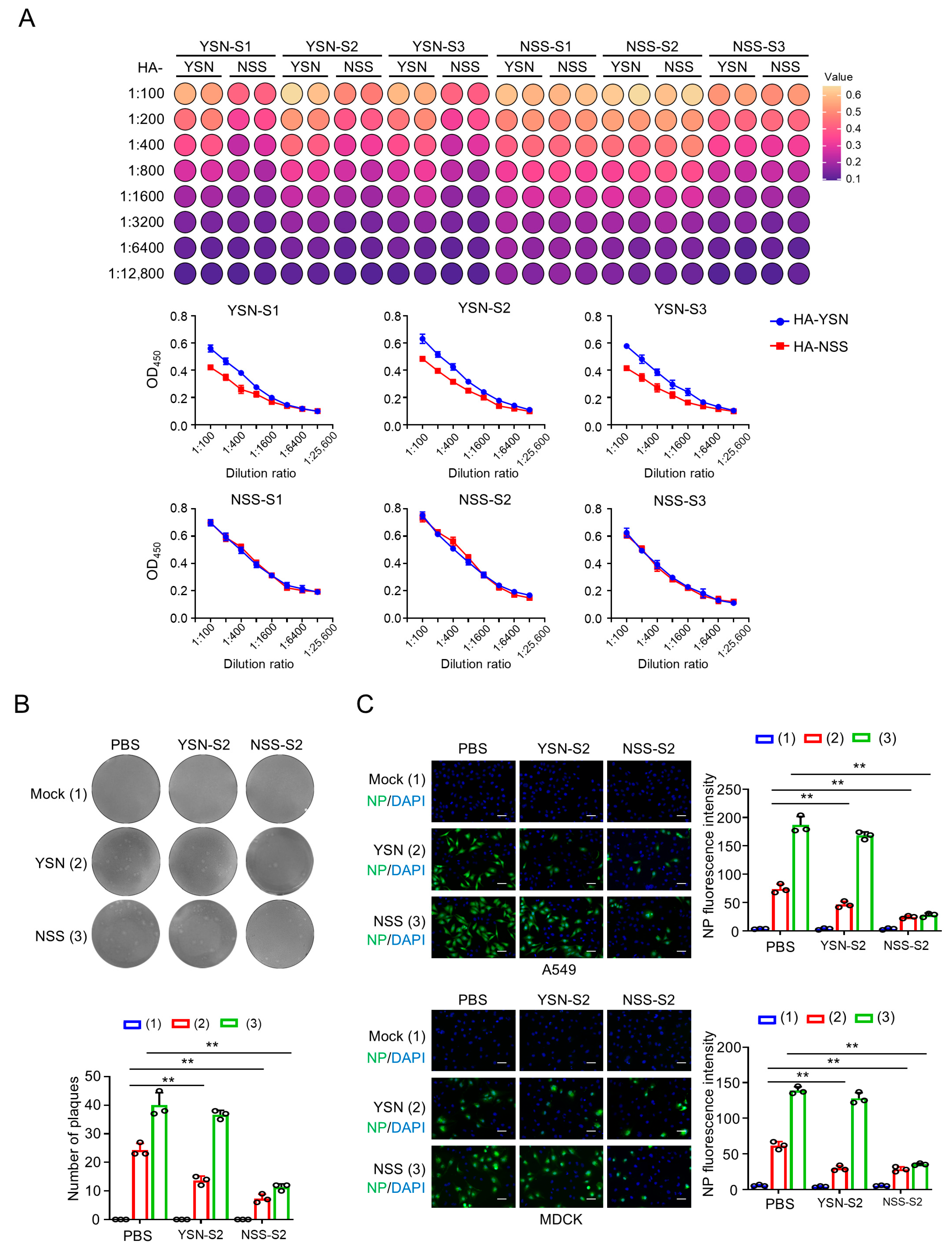
MDCK monolayers in 6-well plates were washed with PBS, inoculated with virus dilutions (serum-free DMEM + 1 μg/mL TPCK-trypsin), and incubated at 37 °C for 1 h (shaking every 15 min). Cells were overlaid with DMEM containing 2% low-melting agarose (Sigma-Aldrich, A9414), 1% FBS, and 1 μg/mL TPCK-trypsin. Plates were incubated at 37 °C for 3 days, fixed with 4% paraformaldehyde (P0099, Beyotime, Shanghai, China), stained with 0.5% crystal violet (Y268090, Beyotime), and plaques were counted by manual counting of the original plates on a high-contrast light box, where plaques were clearly discernible.
2.8. Virus Replication Kinetics
A549 and MDCK cells were infected with the recombinant viruses in serum-free DMEM supplemented with 1 μg/mL TPCK-trypsin. After adsorption of viruses for 1 h at 37 °C, cells were washed with PBS buffer and maintained in complete medium at 37 °C for various time points. Then supernatants were harvested to determine the virus titer by performing plaque assay in MDCK cells.
2.9. Immunofluorescence
Cells were grown on glass coverslips and fixed in 4% paraformaldehyde fix solution for 15 min at room temperature and permeabilized with Immunostaining Permeabilization Buffer with Triton X-100 (I997471-100 mL, Macklin, Shanghai, China) for 10 min and blocked in sheep serum working solution (ZLI-9056, ZSGB-BIO, Beijing, China) for 30 min. For immunofluorescence staining of NP, cells were incubated in NP antibody and Alexa Fluor 488-conjugated secondary antibodies (A-11094, Invitrogen) diluted in blocking buffer, respectively. For co-localization immunofluorescence staining of B4GAT1 and B4GALT1, cells were incubated in B4GAT1 antibody and Alexa Fluor 488-conjugated secondary antibodies diluted in blocking buffer, respectively. Then, cells were fixed in 2% paraformaldehyde fix solution for 15 min and incubated in 25 mM Glycine solution for 15 min at room temperature. Next, cells were incubated in B4GALT1 antibody and Alexa Fluor 594-conjugated secondary antibodies (A-11012, Invitrogen) diluted in blocking buffer, respectively. The nuclei were stained with 5 μg/mL DAPI solution (R20274, Yuanye Bio, Shanghai, China) for 5 min, before being mounted on glass slides using Antifade Solution (C1210, APPLYGEN, Beijing, China). Imaging was performed using a fluorescence microscope and images were analysed using Image J software (version 2.14.0).
2.10. Enzyme-Linked Immunosorbent Assay (ELISA)
Microtiter 96-well plates (260887, Thermo Scientific) were coated with 0.5 μg recombinant HA-YSN/NSS proteins at 4 °C overnight. For HA-sialic acid receptor binding assay, plates were washed with cold wash buffer and incubated with serial dilutions of biotinylated Sialyl-N-acetylactosamine (SLN) (3′-SLN-biotin SCGC-101115, 6′-SLN-biotin SCGC-101198, Scrbio, Shanghai, China) for 1.5 h at 4 °C. After washing, plates were incubated with HRP-streptavidin (35105ES, Yeasen, Shanghai, China) for 1 h at room temperature in the dark. For sera antibody binding assay, plates were washed with cold wash buffer and incubated with serial dilutions of ferret sera for 1.5 h at 4 °C. Subsequently, plates were incubated with HRP-conjugated Goat Anti-Ferret IgG (H+L) (ab112770, Abcam, Cambridge, UK) for 1 h at room temperature in the dark. For both assays, after a final wash, 100 μL of TMB substrate solution (PA107, TIANGEN, Beijing, China) was added to each well, and the plates were incubated at room temperature in the dark for 10–15 min to allow color development. The reaction was terminated by adding 50 μL of 2 M sulfuric acid to each well, and the absorbance was immediately measured at 450 nm using a MultiskanTM FC Microplate Photometer (Thermo Scientific).
2.11. Syncytium Assay
A549 and MDCK cells stably expressing copGFP were infected with recombinant viruses. At 24 h post-infection, cells were then washed several times with PBS buffer and treated with 5 μg/mL of TPCK-trypsin for 5 min at 37 °C. The trypsin was then inactivated by washing with PBS buffer containing FBS. To initiate cell fusion, the cells were treated with acidic PBS (pH 5.2, adjusted with citric acid) for 1 min and then incubated in complete medium at 37 °C for 30 min. Fused cells were observed under a fluorescence microscope (Nikon, Tokyo, Japan).
2.12. Transfection and Coimmunoprecipitation
HEK293T or A549 cells were transfected with plasmids using Lipofectamine 3000 (L3000150, Thermo Scientific). At 6 h post-transfection, medium was replaced with a fresh medium. Cells were collected 24 h after transfection for further study. For coimmunoprecipitation, cells were infected with RG viruses or transfected with plasmids as indicated and followed by lysing. The protein extracts were then immunoprecipitated with anti-FLAG® M2 Affinity Gel (A2220, Sigma-Aldrich) or indicated antibody according to the manufacturer’s instructions. Precipitated proteins were analyzed via immunoblotting.
2.13. Reverse Transcriptase-Polymerase Chain Reaction (RT-PCR)
Total RNA was extracted from cells using TRIzol (R401-01, Vazyme), and 1 μg RNA was reverse-transcribed using HiScript III All-in-one RT SuperMix Perfect (R333-01, Vazyme). The cDNA products were amplified via PCR using gene-specific primers (
Table S3). β-actin was used as a reference.
2.14. Protein Expression and Purification
HEK293T cells were transfected with FLAG-tagged HA-YSN/NSS plasmids. At 24 h post-transfection, cells were lysed in IP buffer, centrifuged (12,000 rpm, 4 °C), and supernatants were incubated with anti-FLAG® M2 Affinity Gel (A2220, Sigma-Aldrich) for 4 h at 4 °C. Proteins were eluted with 3 × FLAG peptide (F4799, Sigma-Aldrich) and quantified via BCA.
2.15. Immunopurification and Mass Spectrometry (MS)
MS was performed to obtain HA-interacting proteins by Beijing Qinglian Biotech, Co., Ltd (Beijing, China). A549 cells expressing FLAG-HA-YSN or NSS were lysed in IP buffer and immunoprecipitated using anti-FLAG
® M2 Affinity Gel (A2220, Sigma-Aldrich), followed by elution with 3 × FLAG peptide according to the manufacturer’s instructions. The eluted proteins were added to NuPAGE 4–12% Bis-Tris gel (Invitrogen, Cat: NP0321PK2) to separate protein complexes, silver stained (24600, Pierce, Rockford, Illinois, USA) and subjected to MS sequencing and data analysis. Briefly, the stained protein bands were cut into 1 mm
3 pieces and destained with 50% ACN in 50 mM ammonium bicarbonate until the gel turned white. Proteins were reduced with 10 mM DTT at 56 °C and alkylated with 55 mM iodoacetamide at room temperature in the dark. Subsequently, trypsin digestion was performed overnight at 37 °C with gentle shaking. Digested peptides were isolated using 1% trifluoroacetic acid in 50% ACN, vacuum-dried, and reconstituted in 0.1% formic acid. Nanoflow LC-MS/MS analysis of tryptic peptides was conducted on a quadrupole Orbitrap mass spectrometer (Q Exactive HF-X, Thermo Scientific) coupled to an EASY nLC 1200 ultra-high-pressure system (Thermo Scientific) via a nano-electrospray ion source. MS/MS data were generated with a data-dependent analysis mode and analyzed using PLGS 2.4 software, and the resulting peak list was searched against the NCBI database with the MASCOT v2.8 search engine. Interacting proteins are listed in
Table S4.
2.16. Ferret Models
Ferret in vivo animal model experiments were performed under an animal biosafety level 2+ (ABSL2+) condition in isolator cages by Beijing Vital River Laboratory Animal Technology Co., Ltd (Beijing, China).
For virus infection experiment, 3-month-old seronegative female ferrets (n = 3 per group) were anesthetized with isoflurane and inoculated intranasally with 106 TCID50 YSN/NSS virus (250 μL per nostril). Weight, temperature and clinical signs were monitored daily. At 12 dpi, serum samples were collected for further study. Subsequently, the ferrets were euthanized. For ferret serum collection, after anesthesia, the ferret is secured dorsally in a biosafety cabinet, and fur from the neck to sternum is clipped. The strongest heartbeat point is palpated and disinfected, followed by blood collection using a 1 mL syringe. The whole blood is transferred to a serum separation tube, left at room temperature for ≥30 min, centrifuged at 10,000 r/min for 5 min, and the supernatant serum is aliquoted and stored at −80 °C.
For vaccine challenge experiment, ferrets were immunized intramuscularly with 5 μg of recombinant HA-YSN/NSS formulated with MF59 adjuvant (AVT) and then boosted three weeks later, the control group received PBS formulated with an equal volume of MF59 adjuvant as a negative control. Three weeks post-boost, ferrets were challenged by intranasal inoculation with 106 TCID50 of 250 μL YSN/NSS virus (n = 3 per group). Nasal swabs were collected at 1, 3, and 5 dpi for viral titration, and lung tissues were harvested at 5 dpi for viral titration, histopathological and immunohistochemistry analysis. For viral titration, sterile swabs were collected and immersed in preservation medium, then centrifuged at 3000× g for 10 min at 4 °C to remove impurities. Lung tissues were weighed and homogenized in ice-cold PBS buffer at a concentration of 10% (w/v), followed by centrifugation under the same conditions. The supernatants were serially diluted ten-fold in serum-free DMEM. Each dilution was inoculated in quadruplicate onto MDCK cells in 96-well plates and incubated at 37 °C with 5% CO2 for 72 to 96 h. Cytopathic effect (CPE) was monitored daily. The viral titer of each sample was calculated as the 50% tissue culture infectious dose (TCID50) per milliliter using the Reed-Muench method. Lung tissues were fixed in 4% paraformaldehyde fix solution, embedded in paraffin, and sections were stained with hematoxylin and eosin using a Hematoxylin and Eosin Staining Kit (Beyotime, C0105S) or with anti-NP antibody, photographed by a fluorescence microscope. Pathology scores quantifying lung inflammation were assessed blindly by a pathologist based on alveolar damage, interstitial edema, and inflammatory cell infiltration.
2.17. Virus Neutralization Assay
Immune sera were collected from ferrets inoculated with recombinant YSN or NSS type virus and heat-inactivated at 56 °C for 30 min to remove complement. Serial two-fold dilutions of sera were prepared in serum-free DMEM medium, and 50 μL of each dilution was mixed with an equal volume of virus (100 TCID50/50 μL or 100 PFU/50 μL). The mixtures were incubated at 37 °C for 30 min to allow neutralization. Preliminary experiments were performed to optimize the virus titer and serum dilution range, and the optimized conditions were applied to subsequent viral infectivity assays.
2.18. Statistical Analysis
Data are presented as mean ± SD. A two-tailed Student’s t test was used for two-group comparisons, and one-way ANOVA or two-way repeated-measures ANOVA with Bonferroni correction was used for multiple comparisons. p < 0.05 was considered significant. Analyses were performed using GraphPad Prism 8.4.0.
4. Discussion
The glycosylation sites of influenza viruses, particularly those on the HA protein of H3N2 subtypes, exhibit a dynamic evolutionary pattern closely linked to viral immune evasion and adaptation. For instance, H5N6 influenza viruses possess an N-glycosylation site at position 158 of the HA protein, which promotes viral assembly and replication in various cell types while enhancing pathogenicity in mice, although its deletion increases thermal stability and viral transmission [
22]. H1N1 viruses have shown site-specific glycosylation variations in HA, with increased glycan complexity in the globular head region, and NA protein glycosylation at position N73 with predominantly biantennary complex-type structures [
23]. H5 and H9 subtypes demonstrate a higher potential to acquire new glycosylation sites through nucleotide mutations, suggesting greater adaptability to immune pressure compared to H7 subtypes [
24]. In contrast, the HA protein of H3N2 influenza viruses has undergone significant glycosylation site expansion, primarily in the globular head region, driven by positive selection to shield antigenic epitopes and evade immune responses [
25]. Early H3N2 strains contained only two N-glycosylation sites in the HA head domain, but subsequent evolution led to the accumulation of additional sites, including N144, which emerged as an immune escape mutation reducing neutralization sensitivity to human sera [
10], and N158, whose glycosylation via the NYT motif blocks receptor binding and antibody recognition [
8]. Further modifications include N142 and N174, identified in recent strains, which alter epitope structure and antibody affinity [
26], while conserved sites like N165 and N285 with high-mannose glycans enhance interactions with surfactant protein D (SP-D) to promote viral clearance and reduce virulence [
9]. Notably, the N110 glycosylation site identified in this study represents a functional departure from the previously characterized mechanisms. The structural modeling reveals that the N110 glycan is localized to a distal lateral surface approximately 32.1 Å from the RBS. Our experimental evidence demonstrates that rather than imposing steric hindrance, N110 glycosylation significantly enhances receptor-binding signal. This suggests a novel role for N110 as a non-shielding structural stabilizer that may optimize the HA head conformation or local biophysical environment to increase viral fitness. This finding highlights an evolutionary shift in H3N2 adaptation, where glycosylation serves not only as a passive shield for immune escape but also as an active modulator to refine receptor engagement. Continued surveillance of such non-canonical sites is essential to inform vaccine development and therapeutic strategies.
Hypoxia, primarily through the stabilization of HIF-1α, exerts multifaceted and virus-specific effects on viral invasion and host cell infection. For example, hypoxia reduces SARS-CoV-2 invasion by modulating ACE2 and ADAM17 via HIF-1α [
27,
28], promotes HBV persistence through A3B suppression and enhances replication via BCP transactivation [
29,
30], and boosts oncolytic herpesvirus replication by upregulating metabolic enzymes [
31]. Beyond direct viral modulation, hypoxia also influences host protein glycosylation to alter cellular functions: it induces GLT8D1 to stabilize CD133 via N-glycosylation in glioma [
32], suppresses FUT1/FUT2 to reduce fucosylation in pancreatic cancer [
33], modifies PFK1 O-GlcNAcylation to regulate glycolysis [
34], and upregulates glycosyltransferases to promote tumor migration [
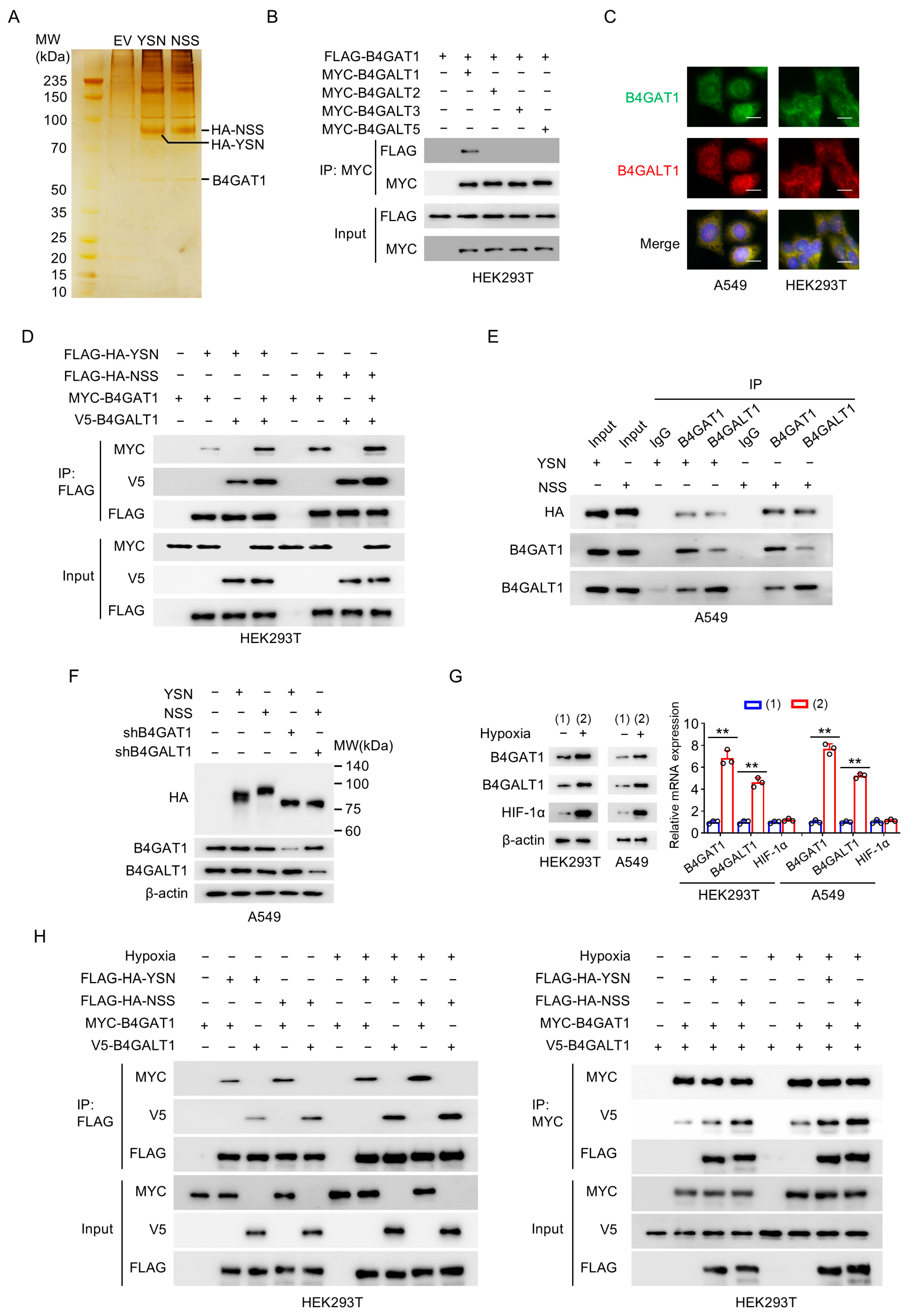
35]. However, whether hypoxia affects viral invasion and infection by altering viral protein glycosylation remains unreported. Our study is the first to demonstrate that hypoxia significantly enhances the N-linked glycosylation of the H3N2 HA protein, particularly by increasing the abundance of hybrid-type N-glycans at the N110 site. This modification enhances viral binding signal to host cell receptors and promotes efficient infection and replication in in vitro models. Furthermore, viral infections can actively modulate host hypoxic microenvironments to dysregulate cellular functions: H1N1 influenza virus stabilizes HIF-1α by inhibiting proteasomal degradation and reducing FIH-1 expression under normoxia [
12], induces HIF-1α nuclear translocation to promote proinflammatory cytokine secretion [
36], and upregulates HIF-1α/HK2-mediated glycolysis to enhance viral replication [
13]. Respiratory viruses like SARS-CoV-2 also exacerbate hypoxic stress through inflammatory-HIF-1α crosstalk [
37]. While our study focused on hypoxia-driven viral glycosylation (H3N2 HA) rather than viral modulation of host hypoxia, we observed that H3N2 infection significantly enhanced HIF-1α stability, with the NSS virus further augmenting this effect. However, the underlying mechanisms remain unclear. Future research should focus on these mechanisms and how viral–host hypoxic crosstalk impacts glycosylation-dependent viral fitness.
Glycosyltransferases play pivotal roles in regulating viral infection, protein folding, and immune evasion through viral protein glycosylation [
38,
39]. Oligosaccharyl transferase (OST) mediates the initial transfer of core glycans to asparagine residues, with mammalian OST isoforms STT3A and STT3B governing co-translational and post-translational N-linked glycosylation, respectively [
40]. Similarly, mammalian homologs POMT1 and POMT2 must form heterodimers to facilitate essential O-mannosylation [
41]. In our study, mass spectrometry and biochemical validation identified B4GAT1 as a critical binding partner of HA. While B4GAT1 is traditionally known as a β-1,4-glucuronyltransferase involved in α-dystroglycan functional glycosylation [
20,
42], recent evidence suggests it can interact with β-1,4-galactosyltransferase 1 (B4GALT1) to cooperatively regulate N-glycosylation [
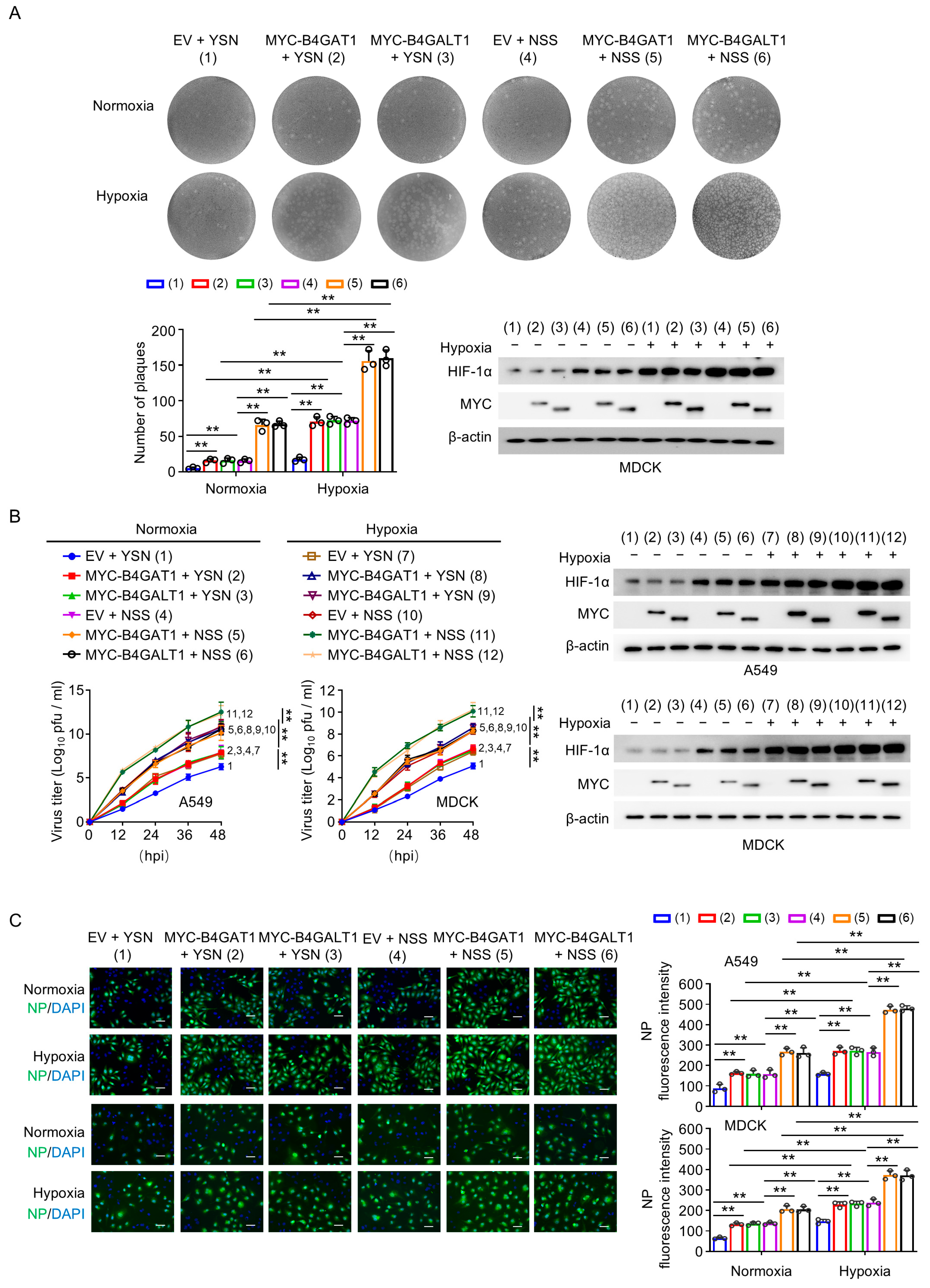
19]. Indeed, we demonstrated that B4GAT1 and B4GALT1 form a stable functional complex that mediates the N110 glycosylation of H3N2 HA. Interestingly, our results showed that knockdown of either B4GAT1 or B4GALT1 not only abolished the N110-linked glycan but also led to a reduction in the overall molecular weight of HA below its baseline levels, suggesting that this complex plays a broader regulatory role in the general N-glycosylation maturation of HA by processing multiple nascent sites. Nevertheless, the preferential recruitment of this enzymatic axis to the N110 site is driven by the significantly higher binding affinity of the HA-NSS variant for the B4GAT1-B4GALT1 complex compared to the YSN variant. Notably, hypoxia significantly upregulated both B4GAT1 and B4GALT1 at the mRNA and protein levels, while simultaneously strengthening the formation of the HA-B4GAT1-B4GALT1 ternary complex. This hypoxia-augmented interaction selectively intensified its impact on the HA-NSS variant, leading to superior replicative capacity and infectivity. Critically, the glycosylation changes mediated by this complex, particularly at sites like N110, may represent adaptations that are not only selected by immune pressure but also initiated by host cellular environments, such as hypoxia. These findings reveal a novel mechanism where the host microenvironment modulates viral fitness by inducing a specific glycosyltransferase complex, identifying the B4GAT1-B4GALT1 axis as a potential therapeutic target for intervening in the glycosylation-dependent viral life cycle. In our study, cellular hypoxia is confirmed to be a major and direct driver of glycosylation changes at the N110 site of the HA protein in H3N2 influenza virus. This perspective does not negate the well-established theory of immune-driven evolution but rather provides an important complement to it. First, immune selection pressure alone cannot adequately explain the observed changes in glycosylation intensity at the N110 site under hypoxic conditions. Second, growing evidence indicates that influenza virus infection actively induces a “pseudo-hypoxic” state. Specifically, studies have shown that the virus stabilizes the host transcription factor HIF-1α [
12]. This stabilization triggers a cascade of events, including metabolic reprogramming toward glycolysis and lactate production, which in turn disrupts key innate immune signaling pathways (e.g., MAVS/RIG-I) to suppress interferon production [
13]. Thus, hypoxia is not a passive consequence of inflammation but an active viral strategy that both promotes viral replication and suppresses innate immunity. Our study reveals that the localized hypoxic microenvironment induced by viral infection rapidly upregulates intracellular HIF-1α protein levels and enhances the expression of the glycosyltransferases B4GAT1 and B4GALT1. This mechanism acts directly on the host glycosylation machinery, operating independently of adaptive immune responses. Therefore, we propose a co-evolution model in which hypoxia-driven glycosylation may generate initial glycan diversity and form a protective shield, upon which immune selection subsequently acts to refine antigenicity. For H3N2 influenza virus, hypoxia is far from a minor factor—it is a crucial upstream physiological trigger that profoundly shapes the glycosylation landscape of HA, playing a significant role in fully understanding the evolutionary dynamics and adaptive advantages of the virus. It should be noted that certain methodological limitations exist in our study. In the receptor-binding ELISA, the binding curves did not reach full saturation (B
max) under the tested concentrations, preventing the determination of precise affinity constants. Therefore, these results represent the apparent binding response under specific experimental conditions rather than absolute biophysical affinity. Future studies utilizing Surface Plasmon Resonance (SPR) or Bio-Layer Interferometry (BLI) will be required to further elucidate the kinetic parameters of these interactions. Additionally, while the combination of hypoxia and the B4GAT1-B4GALT1 Complex showed a markedly increased effect on viral replication, this was not formally tested for mathematical synergy. Thus, these observations should be interpreted as a collective enhancement rather than a formal synergistic interaction.
Viral protein glycosylation plays a pivotal role in influenza vaccine design by modulating antigenicity, immune evasion, and vaccine efficacy. Accumulation of N-linked glycans on the HA head domain, driven by immune selection, shields antigenic sites and enables antigenic drift, reducing vaccine effectiveness against rapidly evolving strains like H3N2 [
43,
44,
45]. For example, egg-based vaccine production often induces HA mutations (e.g., loss of glycosylation site N160 in H3N2), leading to antigenic mismatch with circulating viruses and diminished neutralizing antibody responses [
46,
47]. Novel strategies such as “monoglycosylated HA” (HAmg) technology, which trims glycans to expose conserved epitopes, have shown promise in inducing broader cross-reactive immunity [
48]. Glycosylation also influences viral subpopulation dynamics, as altered glycan profiles may affect particle assembly and infectivity, impacting live attenuated vaccine safety and efficacy [
49]. In our study, sera from ferrets immunized with HA-NSS protein potently inhibited infection and replication of both YSN and NSS viruses, whereas sera from HA-YSN-immunized ferrets showed poor neutralization against NSS virus. This highlights the critical role of N110 glycosylation in shaping protective immune responses and vaccine design. Notably, the WHO-recommended quadrivalent influenza vaccines for 2024 and 2025 incorporate two H3N2 strains (A/Thailand/8/2022 and A/Croatia/10136RV/2023) that possess the NSS genotype and the associated N110 glycosylation site. Our research provides a theoretical basis for the effectiveness of this vaccine, reinforcing that timely vaccination with annually updated influenza vaccines is crucial to resisting infection, inhibiting transmission, and reducing seasonal influenza incidence.




 ,
,