Article

Eye Health and Vision Function in Adults Aging with Well-Controlled HIV
1
Department of Epidemiology, Colorado School of Public Health, University of Colorado, Anschutz Medical Campus, Aurora, CO 80045, USA
2
Department of Ophthalmology, University of Colorado, Anschutz Medical Campus, Aurora, CO 80045, USA
3
Department of Epidemiology, Johns Hopkins Bloomberg School of Public Health, Baltimore, MD 21205, USA
4
Department of Ophthalmology, Johns Hopkins School of Medicine, Baltimore, MD 21287, USA
5
Department of Medicine, Georgetown University Medical Center, Washington, DC 20057, USA
6
Department of Molecular Microbiology and Immunology, Johns Hopkins Bloomberg School of Public Health, Baltimore, MD 21205, USA
*
Author to whom correspondence should be addressed.
Viruses 2026, 18(4), 431; https://doi.org/10.3390/v18040431
Submission received: 3 March 2026 / Revised: 25 March 2026 / Accepted: 27 March 2026 / Published: 2 April 2026
(This article belongs to the Special Issue HIV and Aging)

Abstract

Here, we describe vision health in aging adults living with HIV (PLWH) and comparable people without HIV (PWOH) from the MACS/WIHS Combined Cohort Study (MWCCS). PLWH and PWOH aged 60 years and older were recruited from Baltimore/Washington, DC, from September 2021 to September 2023. Exact matching and sample weights were used to create age-balanced comparisons. Visual impairment (VA worse than 20/40 after refraction or CS worse than 1.50 logCS in the better eye) and the presence of eye pathology were assessed. We studied 74 PLWH (97% virally suppressed) and 65 PWOH, aged 61 to 79 years, 36% Black, and 87% male. For PLWH and PWOH, distance VA impairment was noted in 4% vs. 1%, respectively, and uncorrected refractive error in 15% vs. 5%. More than half had signs of dry eye disease (63% for PLWH and 51% for PWOH). About half of PLWH had developed at least an early stage of cataract, compared to 20% of PWOH. Posterior chamber abnormalities were observed in 4% and 0%, and glaucomatous changes in 19% and 25% of PLWH and PWOH, respectively. The need for eyecare was high among this sample of PLWH with viral suppression and PWOH.

1. Introduction

Vision loss is highly prevalent in older adults [1,2,3,4] and results in functional declines that directly impact quality of life [5,6,7,8]. People living and aging with HIV are enjoying longer lives, thanks to effective antiviral therapies, but appear to experience more frequent and earlier age-related comorbidities, possibly as a result of long-term exposure to inflammation [9,10,11]. Studies have demonstrated a higher risk of many age-related comorbidities among adults aging with HIV compared to similarly aged and comparable individuals without HIV [12,13]; the same excess risk may extend to age-related eye disease and accompanying vision loss.
Unfortunately, we know very little about the burden of eye disease and vision loss in the modern antiretroviral therapy era with its context of well-controlled HIV, as has been highlighted in the literature [14]. Earlier studies established the risk of vision abnormalities and ocular complications in people with AIDS. From data two decades old, adults living with HIV who are severely immunocompromised are at risk for neuroretinal involvement, intraocular inflammation, structural ocular complications, and visual impairment, as well as earlier cataract development, visual field abnormalities, and thinner retinas [15,16,17,18,19]. However, in the era of highly effective antiretroviral therapy, AIDS has become less relevant as rates of antiretroviral use and durable viral suppression have risen [13]. While many age-related chronic diseases are a focus of current research and funding in existing HIV cohorts, age-related eye diseases and vision outcomes have been largely ignored. One recent study suggested that adults aging with HIV are more likely to report vision difficulties than similarly aged adults living without HIV, though objective assessment of vision function was lacking [20]. The population of adults living with HIV in the US is entering ages where the risk of age-related eye disease is significant, and the additional burden of vision loss could be particularly impactful. Vision loss may amplify the effect of other co-existing conditions on daily life [21], and it may contribute to poor engagement in care [22] and poor patient activation [23,24], which could particularly affect antiretroviral medication adherence [22].
Here we report results from the HIV Vision study, an ancillary descriptive study of the Baltimore/Washington, DC, sites of the MACS/WIHS Combined Cohort Study (MWCCS) that conducted eye and vision exams in a sample of adults aging with HIV and a comparison sample of similar aging adults living without HIV. The purpose of this study was to describe the current burden of eye pathology and vision loss in adults aging with HIV in the modern therapy era. These data can inform strategies for screening and integrated vision care, as some of the most common causes of vision loss in aging adults are correctable [3].

2. Materials and Methods

2.1. Study Setting and Population

Participants 60 years and older from the Baltimore/Washington DC site of the MWCCS, including people living with HIV (PLWH) and people without HIV (PWOH), were invited to a single vision study visit at the Johns Hopkins Wilmer Eye Institute. The study visit occurred from September 2021 to September 2023. The study protocol adhered to the tenets of Helsinki and was approved by the Institutional Review Boards at the University of Colorado, Johns Hopkins University, and Georgetown University. Written informed consent was obtained from all study participants.

2.2. Visual Function, Visual Processing Speed and Refractive Error

Participants completed a series of visual function evaluations, including distance presenting visual acuity (VA), distance corrected VA, near presenting VA, and contrast sensitivity (CS). Distance presenting VA was measured in the right and left eyes separately, with the participant’s habitual correction worn, while reading letters from a retro-illuminated Early Treatment Diabetic Retinopathy Study chart (Precision Vision, La Salle, IL, USA). Each participant was asked to start reading at the top line (corresponding with a VA of 20/200), and the total number of letters correctly read was recorded. Near presenting VA was assessed binocularly with usual correction using sentences from the MNRead charts (Precision Vision) following standard procedures [25]. Participants were instructed to read the test sentences aloud as quickly and accurately as possible, with the MNRead charts placed at a viewing distance of 40 cm. Time and errors in completing each sentence were documented. Refraction and distance-corrected VA were measured using an autorefractor with a built-in VA chart (Nidek ARK 560A, Marco Technologies, Somerset, NJ, USA). CS was measured using the MARS letter CS test (The Mars Perceptrix Corporation, Chappaqua, NY, USA). The right and left eyes were tested separately at 40 cm with habitual corrective lenses worn. The number of letters correctly identified was documented. Room lighting was standardized for each test. Data from the better-functioning eye for each aspect of visual function were used in the analysis because the better eye function has been determined to be most influential on physical function and QoL [26].
Visual processing speed when searching for a target under divided visual attention and in the presence or absence of visual clutter was measured using the online Useful Field of View (UFOV) test (Visual Awareness Research Group, Punta Gorda, FL, USA) [27]. Studies indicate that older adults who perform poorly in a useful field of view task are more likely to experience difficulties in visual tasks of everyday living and are at an elevated risk for motor vehicle collision involvement [28]. Participants completed a sequence of evaluations of processing speed, divided attention, and selective attention.
VA impairment (VI) was defined as acuity worse than 20/40 in the better eye for presenting and corrected distance vision and worse than 20/40 binocularly for presenting near vision. CS impairment (CSI) was defined as worse than 1.50 logCS in the better eye. Uncorrected or undercorrected refractive error (URE) was defined as having worse than 20/40 presenting distance VA and better than 20/40 corrected distance VA in either eye.

2.3. Eye Examination and OCT Retinal Imaging

Intraocular pressure (IOP) was measured twice in each eye using iCare tonometry (iCare, Raleigh, NC, USA), and the average was taken. Schirmer’s II test was administered to determine the severity of tear insufficiency, with severity defined based on the length of moisture area from the Schirmer II test [29] and categorized as: none (>15 mm), mild (>10 mm, ≤15 mm), moderate (>5 mm, ≤10 mm), and severe (≤5 mm). Signs of dry eye disease included either the presence of mild or more severe tear insufficiency or Meibomian gland dysfunction, based on one or more findings, including blocked orifices, frothy or foamy secretion, secretion of meibum, telangiectasias, or hyperemia. Participants were also asked about eye discomfort.
Participants were eligible for dilation if no contraindications were identified. In most participants, the right eye was dilated using 2.5% phenylephrine (Alcon Vision LLC, Fort Worth, TX, USA) or 1% tropicamide (Somerset Pharma, Mountainside Medical Equipment, Marcy, NY, USA). The left eye was dilated when the right eye was deemed not eligible or when the left eye had distance-corrected VA worse than 20/40 or logCS worse than 1.50. An ophthalmologist performed slit lamp examinations on dilated eyes, focusing on cataract grading using the Wilmer lens opacity grading system [30], identifying other anterior segment diseases, including Meibomian gland dysfunction, corneal abnormalities, active uveitis, and assessing the posterior segment, including vitreous, fundus, and optic nerve. Any ocular pathology was documented. Cataract was defined as either past evidence of cataract surgery, a nuclear cataract grading ≥ 2, a posterior Subcapsular cataract grading ≥ 3 mm or a cortical cataract grading ≥ 4/16.
Macular angiography centered at the fovea and optic nerve head structural scans were captured using RTVue-XR Avanti OCT (Optovue, Fremont, CA, USA) imaging system. Images were exported with machine-processed measurements, including nerve fiber layer (NFL) thickness, superficial plexus vessel density (VD), and the size of the fovea avascular zone (FAZ).

2.4. Other Covariates

Demographics data on age, sex at birth (female, male), race, and ethnicity (Black, Hispanic, White, Other) were extracted from the MWCCS cohort database. The educational background was obtained from the MWCCS baseline visit; annual household income, smoking and alcohol use, diabetes mellitus (DM), hypertension status, and health insurance coverage were obtained from the nearest MWCCS visit. PLWH CD4 cell count, HIV viral load, and years of HIV infection were extracted from the nearest visit. Most values were captured within 2 years of the vision exam date, with the following exceptions: one participant’s viral load, one participant’s smoking status, one participant’s income, one participant’s current alcohol use, and one participant’s hypertension were drawn from 2018 and 2019. DM status was considered positive if the participant had two of the following: (1) self-reported ever use of antidiabetic medication, (2) fasting glucose level ≥ 126 mg/dL, (3) hemoglobin A1c concentration ≥ 6.5%, or (4) self-reported diabetes. Hypertension status was considered positive if the participant had any of the following: (1) systolic blood pressure ≥ 130 mmHg; (2) diastolic blood pressure ≥ 80 mmHg; (3) self-reported use of hypertensive medications and self-reported diagnosis. Years of HIV infection under observation were defined as the number of years between the date of entry into the cohort (if seroconversion occurred prior to baseline) or the estimated seroconversion date (if seroconversion occurred after baseline) and the eye exam date. The seroconversion date was estimated as the midpoint between the last known date when the participant was seronegative and the first known date when the participant was seropositive if the gap between those dates was less than 6 years; otherwise, the first known seropositive date was used.

2.5. Statistical Analysis

As age is a critical factor driving the risk of eye disease, matching was used to reduce the mean age difference between PLWH and PWOH at the time of the vision assessment in this descriptive study. The R package matchit [31] (R Statistical Software v4.2.2; R Core Team 2022) was used to implement exact matching, and sample weights were used to create age-balanced comparison groups for analysis. All analyses were performed in the weighted dataset.
Descriptive statistics, including weighted means, medians, and percentages, were calculated for vision loss and eye disease prevalence. Missing covariate data at a visit were filled in using data within 5 years of the visit. Participants with missing data on vision and eye health parameters were excluded from individual summary statistics (listwise deletion), though counts of missingness are included in the table footnotes. For the description of OCTA data, we used the Eye Determinants of Cognition study (EyeDOC) participants as the population benchmark, as the EyeDOC sample was drawn from two distinct general aging adult communities and used similar methods to capture vision function and retinal images [32,33,34]. Descriptions of median NFL thickness, VD, and FAZ area were made stratified by age (60 to 69 years, 70 to 79 years, and 80 to 89 years) and HIV status. Statistical comparisons were made in some cases using weighted Chi-squared tests, weighted T tests, median tests, and exact tests, as appropriate.

3. Results

Of the 154 participants enrolled in the study, 139 were included in the analysis following age matching across HIV serostatus groups (74 [53.2%] PLWH and 65 [46.8%] PWOH) (Table 1). The mean weighted age of the PLWH and PWOH groups after age matching and weighting was 67.4 years, 57% were non-Hispanic White, and 36% were non-Hispanic Black. Most participants (87%) were male at birth, limiting our ability to stratify by sex. About one-third of the participants had a household annual income of $30,000 or less, and 57% had at least some college education. 13% were current smokers; 72% were current alcohol users. Among the PLWH group, the weighted average duration of HIV infection under observation in the MWCCS was 28 years (IQR: 20 to 38 years), and 97% had a suppressed viral load defined as less than 200 copies/mL, reflecting the well-treated and durably suppressed context of the current MWCCS cohort.

3.1. Visual Function

The distribution of various indicators of visual function is shown in Figure 1, with an aging adult community sample from the EyeDOC study, which had a mean age of 80 years, shown as a population benchmark [33]. Results are shown for the 70–79 years age strata, as all three samples are represented in this age strata. From Table 2, the prevalence of distance presenting VI in the weighted sample was 4% and 1%, respectively, for PLWH and PWOH. Near-presenting VI was also rare but present more in PLWH than PWOH (9% vs. 4%). For CS, 3% and 4% of PLWH and PWOH had CSI, respectively. URE was more prevalent in PLWH, with 15% (vs. 5% for PWOH) having less than optimally corrected distance acuity. Visual processing speed was equivalent between the PLWH and PLOH groups at 18.4 ms. However, PWOH had slightly higher scores on divided attention (138.7 ms for PLWH vs. 147.4 ms for PWOH), indicating greater difficulty performing multiple tasks simultaneously, while PLWH had higher scores for selective attention (222.1 ms for PLWH vs. 211.4 ms for PWOH), suggesting more difficulty ignoring distractors and focusing on a central target. Comparisons of vision function metrics were tested across HIV groups, but no difference reached statistical significance.

3.2. OCTA Findings

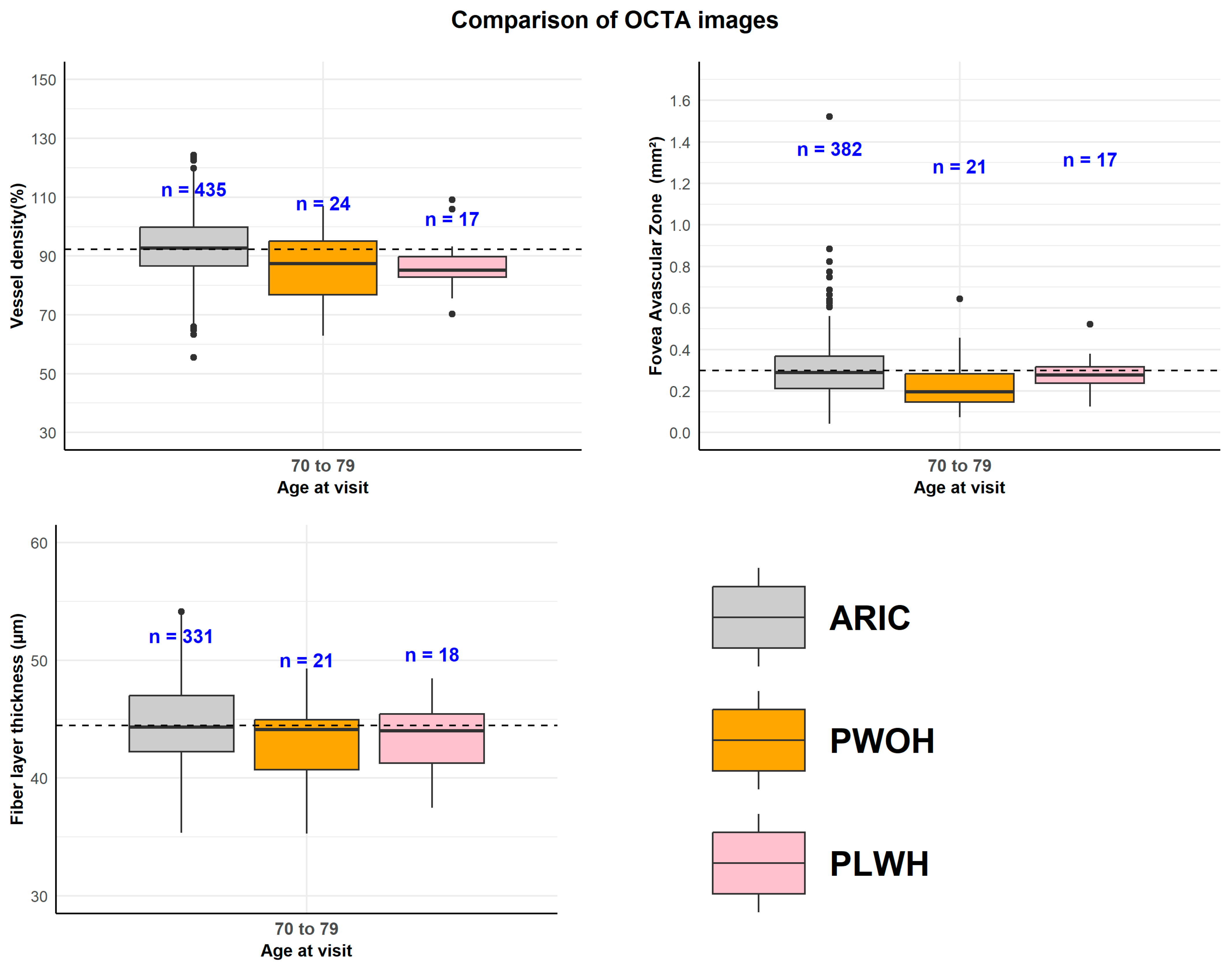
The weighted average optic nerve head NFL thickness was 90 ± 10.7 µm (mean ± SD) for PLWH and 87.5 ± 14.6 µm for PWOH. The weighted superficial capillary plexus VD for the 6 × 6 mm2 macular region was 45.1 ± 4.5% and 44.4 ± 3.9% for PLWH and PWOH, respectively. As little data have been published in general population samples to use as a benchmark for OCT-based measures of retinal health, we compared the present data to data from an aging adult community sample in the EyeDOC study, which had a mean age of 80 years [33]. Results are shown in Figure 2 for the 70–79 years age strata, as all three samples are represented in this age strata. The median FAZ among PLWH was larger than that in PWOH but was similar to that in the community sample. Both PLWH and PWOH had lower median RNFL thickness compared to the community sample; the median VD was lower in PLWH compared to the community sample. Comparisons of OCT parameters were tested across HIV groups and between HIV groups and the ARIC sample. Only the lower median VD in PLWH was statistically different from that in the ARIC community sample (p = 0.03).

3.3. Clinical Findings and Vision Care Access

In PLWH, anterior segment manifestation, including abnormalities of the cornea, iris, ciliary body, and lens, was a common ocular finding. Observed ocular changes included signs of dry eye, conjunctival congestion, corneal endothelial precipitates, corneal scars, superficial punctate keratitis, and iris atrophic changes. Cataract was present in 49% of PLWH and 20% of PWOH, with cortical cataract seen far more often in PLWH (12% versus 1%). Compared to 7% of PWOH, 26% of PLWH had undergone cataract surgery. Meibomian gland dysfunction and other anterior segment abnormalities were apparent in 20% of PLWH participants as opposed to 8% of PWOH participants. Conjunctival congestion and redness were present in 11% of PLWH compared to 4% of PWOH. Thirty-four per cent of the PLWH participants had moderate to severe tear insufficiency, a similar burden to the 33% noted in PWOH. Signs of dry eye disease, defined by meibomian gland dysfunction or mild or worse tear insufficiency, were present in 63% and 51% of PLWH and PWOH, respectively.
Abnormalities in the posterior chamber included retinitis, observed in 4% of the PLWH participants (compared to 0% in PWOH) and glaucomatous changes, including optic disc pallor, optic disc cupping, thinning or notching of neuroretinal rim, observed in 19% of the PLWH participants (compared to 25% of PWOH). Nine per cent of PLWH and 15% of PWOH had an epiretinal membrane. Macular degeneration and diabetic retinopathy were rare in both groups.
For vision care access, 81% and 87% of PLWH and PWOH, respectively, reported having an eye care provider. Access to vision care is highly dependent upon insurance; 57% and 50% of PLWH and PWOH, respectively, reported having private health insurance, and the majority of the remaining participants had Medicare. Despite self-report of generally good access to vision care, 8 participants (6% of the sample; 4 PLWH, 4 PWOH) had high IOP at the time of the HIV Vision Study assessment: 4 reported a glaucoma diagnosis, and 2 reported not having an eye doctor.

4. Discussion

Vision health is an important aspect of aging health, given its close links to many domains of functionality that contribute to quality of life [6]. PLWH in the present study who underwent a vision and eye health assessment generally had a low prevalence of VI that was similar to, although slightly higher than, that in PWOH. For example, we found URE to be more prevalent in PLWH (15% vs. 5% for PWOH) after controlling for age differences through matching. Data from the CDC suggest that the prevalence of URE in adults aged 65–79 years is 5%, echoing what we saw among the sample of PWOH [35]. Visual processing speed was equivalent between PLWH and similarly aged PWOH, but PLWH had higher scores for selective attention, which indicates more difficulty ignoring distractors and focusing on a central target.
Numerous studies have found ocular manifestations to be more common in PLWH with low CD4 cell counts [36,37], though the impact on eye disease risk of long-term HIV infection with controlled viral load in the era of highly effective therapy is not well investigated. Underlying mechanisms that could lead to higher prevalence of age-related eye disease and vision dysfunction at earlier ages among PLWH include long-term immune activation [10,11] and mitochondrial dysfunction [38,39]. Ocular tissues are particularly susceptible to inflammation, resulting in vascular and neuronal damage [8,12,13], which can be seen on an ophthalmologic exam. A differential burden of eye disease and vision loss [14,15] in adults aging with HIV compared to age-matched PWOH may implicate chronic immune activation in increasing risk for age-related eye disease and visual dysfunction.
While much attention has been placed on posterior eye dysfunction in PLWH, relatively fewer studies have specifically characterized anterior segment and external ocular disorders. Prior research has found that these disorders affect around one-third of PLWH in the era of highly effective therapy [40,41], with dry eye, the most common anterior segment disorder, found in at least 10% of PLWH [41]. In the present study, the prevalence of signs of dry eye disease was the most common ocular manifestation, affecting 63% and 51% PLWH and PWOH, respectively. In comparison, the US prevalence of symptomatic dry eye was reported by the TFOS DEWS-II report to range from 6.8% in the Physicians Health Study to 21.6% in the Beaver Dam Eye Study [42], suggesting that our sample had an unusually high prevalence of dry eye disease signs. Conjunctival congestion and redness were also noted to be more common among PLWH in our study.
Stable treatment with ART may not reduce the risk of dry eye and other anterior segment disorders among PLWH, as detectable HIV RNA levels have been observed in ocular tissues [43,44,45], even in the absence of a detectable plasma viral load [46], and it has been suggested that HIV impairs and penetrates the blood–retinal barrier by inducing an inflammatory state in retinal pigment epithelium cells through exposure to HIV proteins [47,48]. An autoimmune-like etiology of abnormal tear production, linked to lymphocyte infiltration and ultimately the death of lacrimal gland acini and ducts, may result in a higher prevalence of dry eye in PLWH [49]. As summarized by Nguyen et al. in their paper about Meibomian gland dropout in PLWH, “a comprehensive and quantitative characterization of anterior ocular health in individuals on stable ART is currently lacking.” [50].
Lastly, we noted a higher prevalence of cataract in this sample of well-treated, aging adults living with HIV compared to age-matched PWOH (49% vs. 20%, respectively), with the difference largely driven by a higher prevalence of cortical cataract and a history of cataract surgery. An elevated risk of cataract development has been linked to HIV in the context of AIDS and low CD4 counts [17,51]; the presence of lens opacities in younger adults with HIV has even been suggested as evidence of an accelerated aging phenotype in PLWH [51,52]. Oxidative stress and inflammatory reactions in the eye linked to HIV may accelerate the formation of cataracts [53].
This descriptive study of visual function and eye disease in PLWH and age-matched PWOH has several limitations. Firstly, our study was limited by the size of the sample, as most eye diseases are relatively rare even in aging adults. Hence, the results from this descriptive study are suggestive and should be replicated in larger samples. The sample was also predominantly male, precluding our ability to stratify by sex, as some eye diseases appear to occur more often in women [54]. The MWCCS, while representative of well-treated adults aging with HIV and engaged in care, does not represent the overall population of adults living with HIV in the US. Finally, we were unable to dilate both eyes for all participants for the cataract grading and posterior segment evaluation.

5. Conclusions

The results from this descriptive study of vision and eye health in adults aging with and without HIV suggest that there may be a slightly higher burden of vision loss and URE, a higher burden of dry eye and a higher burden of cataract in PLWH compared to age-matched PWOH. Given population estimates from CDC of PLWH over 50 [55] and our estimates of prevalence, this would mean an additional 59,400 PLWH experiencing URE, an additional 71,280 PLWH experiencing dry eye symptoms, and an additional 172,260 PLWH experiencing cataract compared to their PWOH counterparts. Routine ophthalmic examination for aging adults living with HIV could improve detection and diagnosis of correctable vision loss and treatable eye disease [56]. Developing strategies for screening and integrated vision care in conjunction with HIV and aging services could improve the quality of life and functionality among adults aging with HIV.

Author Contributions

A.G.A. and M.W.P. conceptualized the study. T.T.B., J.B.M. and A.G.A. were responsible for obtaining funding. X.G., P.R., A.M. and S.B. collected data and oversaw protocol implementation. S.L. performed the analysis with oversight from A.G.A., X.G., S.L. and S.B. drafted the manuscript. All authors have read and agreed to the published version of the manuscript.

Funding

The MWCCS is funded primarily by the National Heart, Lung, and Blood Institute (NHLBI). The HIV Vision study was funded by a supplement to U01HL146201.

Institutional Review Board Statement

The study was conducted in accordance with the Declaration of Helsinki and approved by the Institutional Review Board of the University of Colorado (COMIRB protocol 20-2775, approved 12 February 2021).

Informed Consent Statement

Informed consent was obtained from all subjects involved in the study.

Data Availability Statement

Data associated with this paper are available by request from the MWCCS: https://statepi.jhsph.edu/mwccs/work-with-us/ (MWCCS data release date: 15 October 2024).

Acknowledgments

The contents of this publication are solely the responsibility of the authors and do not represent the official views of the National Institutes of Health (NIH). MWCCS (Principal Investigators): Atlanta CRS (Cecile Lahiri, Anandi Sheth, and Gina Wingood), U01-HL146241; Baltimore CRS (Todd Brown and Joseph Margolick), U01-HL146201; Bronx CRS (David Hanna and Anjali Sharma), U01-HL146204; Brooklyn CRS (Deborah Gustafson and Tracey Wilson), U01-HL146202; Data Analysis and Coordination Center (Gypsyamber D’Souza, Stephen Gange, and Elizabeth Topper), U01-HL146193; Chicago-Cook County CRS (Mardge Cohen, Audrey French, and Ryan Ross), U01-HL146245; Chicago-Northwestern CRS (Steven Wolinsky, Frank Palella, and Valentina Stosor), U01-HL146240; Northern California CRS (Bradley Aouizerat, Jennifer Price, and Phyllis Tien), U01-HL146242; Los Angeles CRS (Roger Detels and Matthew Mimiaga), U01-HL146333; Metropolitan Washington CRS (Seble Kassaye and Daniel Merenstein), U01-HL146205; Miami CRS (Maria Alcaide, Claudia Martinez, and Deborah Jones), U01-HL146203; Pittsburgh CRS (Jeremy Martinson and Charles Rinaldo), U01-HL146208; UAB-MS CRS (Mirjam-Colette Kempf, James B. Brock, and Emily Levitan), U01-HL146192; UNC CRS (M. Bradley Drummond and Michelle Floris-Moore), U01-HL146194. The MWCCS is funded primarily by the National Heart, Lung, and Blood Institute (NHLBI), with additional co-funding from the Eunice Kennedy Shriver National Institute of Child Health & Human Development (NICHD), National Institute on Aging (NIA), National Institute of Dental & Craniofacial Research (NIDCR), National Institute of Allergy and Infectious Diseases (NIAID), National Institute of Neurological Disorders and Stroke (NINDS), National Institute of Mental Health (NIMH), National Institute on Drug Abuse (NIDA), National Institute of Nursing Research (NINR), National Cancer Institute (NCI), National Institute on Alcohol Abuse and Alcoholism (NIAAA), National Institute on Deafness and Other Communication Disorders (NIDCD), National Institute of Diabetes and Digestive and Kidney Diseases (NIDDK), National Institute on Minority Health and Health Disparities (NIMHD), and in coordination and alignment with the research priorities of the National Institutes of Health, Office of AIDS Research (OAR). MWCCS data collection is also supported by UL1-TR000004 (UCSF CTSA), UL1-TR003098 (JHU ICTR), UL1-TR001881 (UCLA CTSI), P30-AI-050409 (Atlanta CFAR), P30-AI-073961 (Miami CFAR), P30-AI-050410 (UNC CFAR), P30-AI-027767 (UAB CFAR), P30-AI-124414 (ERC-CFAR), P30-MH-116867 (Miami CHARM), UL1-TR001409 (DC CTSA), KL2-TR001432 (DC CTSA), and TL1-TR001431 (DC CTSA). The authors gratefully acknowledge the contributions of the study participants and the dedication of the staff at the MWCCS sites.

Conflicts of Interest

None of the authors has any proprietary interests or conflicts of interest related to this submission.

References

  1. Campbell, V.A.; Crews, J.E.; Moriarty, D.G.; Zack, M.M.; Blackman, D.K. Surveillance for Sensory Impairment, Activity Limitation, and Health-Related Quality of Life Among Older Adults—United States, 1993–1997. Morb. Mortal. Wkly. Rep. Surveill. Summ. 1999, 48, 131–156. [Google Scholar]
  2. Congdon, N.; O’Colmain, B.; Klaver, C.C.W.; Klein, R.; Muñoz, B.; Friedman, D.S.; Kempen, J.; Taylor, H.R.; Mitchell, P.; Eye Diseases Prevalence Research Group. Causes and prevalence of visual impairment among adults in the United States. Arch. Ophthalmol. 2004, 122, 477–485. [Google Scholar] [CrossRef]
  3. Vitale, S.; Cotch, M.F.; Sperduto, R.D. Prevalence of visual impairment in the United States. JAMA 2006, 295, 2158–2163. [Google Scholar] [CrossRef]
  4. Varma, R.; Vajaranant, T.S.; Burkemper, B.; Wu, S.; Torres, M.; Hsu, C.; Choudhury, F.; McKean-Cowdin, R. Visual Impairment and Blindness in Adults in the United States: Demographic and Geographic Variations from 2015 to 2050. JAMA Ophthalmol. 2016, 134, 802–809. [Google Scholar] [CrossRef]
  5. Kwon, H.-J.; Kim, J.-S.; Kim, Y.-J.; Kwon, S.-J.; Yu, J.-N. Sensory Impairment and Health-Related Quality of Life. Iran. J. Public Health 2015, 44, 772–782. [Google Scholar]
  6. National Academies of Sciences, Engineering, and Medicine; Health and Medicine Division; Board on Population Health and Public Health Practice; Committee on Public Health Approaches to Reduce Vision Impairment and Promote Eye Health; Teutsch, S.M.; McCoy, M.A.; Woodbury, R.B.; Welp, A. The Impact of Vision Loss; National Academies Press (US): Washington, DC, USA, 2016. Available online: https://www.ncbi.nlm.nih.gov/books/NBK402367/ (accessed on 21 March 2022).
  7. Owsley, C. Vision and Aging. Annu. Rev. Vis. Sci. 2016, 2, 255–271. [Google Scholar] [CrossRef]
  8. Chia, E.-M.; Mitchell, P.; Ojaimi, E.; Rochtchina, E.; Wang, J.J. Assessment of Vision-Related Quality of Life in an Older Population Subsample: The Blue Mountains Eye Study. Ophthalmic Epidemiol. 2006, 13, 371–377. [Google Scholar] [CrossRef]
  9. Bhatia, R.; Ryscavage, P.; Taiwo, B. Accelerated aging and human immunodeficiency virus infection: Emerging challenges of growing older in the era of successful antiretroviral therapy. J. NeuroVirology 2011, 18, 247–255. [Google Scholar] [CrossRef]
  10. Pathai, S.; Bajillan, H.; Landay, A.L.; High, K.P. Is HIV a model of accelerated or accentuated aging? J. Gerontol. A Biol. Sci. Med. Sci. 2014, 69, 833–842. [Google Scholar] [CrossRef] [PubMed]
  11. Deeks, S.G. Immune dysfunction, inflammation, and accelerated aging in patients on antiretroviral therapy. Top. HIV Med. 2009, 17, 118–123. [Google Scholar] [PubMed]
  12. Deeks, S.G.; Lewin, S.R.; Havlir, D.V. The end of AIDS: HIV infection as a chronic disease. Lancet 2013, 382, 1525–1533. [Google Scholar] [CrossRef]
  13. Justice, A.C. HIV and aging: Time for a new paradigm. Curr. HIV/AIDS Rep. 2010, 7, 69–76. [Google Scholar] [CrossRef]
  14. Demirkaya, N.; Wit, F.; Schlingemann, R.; Verbraak, F. Neuroretinal Degeneration in HIV Patients Without Opportunistic Ocular Infections in the cART Era. AIDS Patient Care STDS 2015, 29, 519–532. [Google Scholar] [CrossRef]
  15. Jabs, D.A.; Drye, L.; Van Natta, M.L.; Thorne, J.E.; Holland, G.N. Incidence and long-term outcomes of the human immunodefıciency virus neuroretinal disorder in patients with AIDS. Ophthalmology 2015, 122, 760–768. [Google Scholar] [CrossRef] [PubMed]
  16. Jabs, D.A.; Van Natta, M.L.; Holbrook, J.T.; Kempen, J.H.; Meinert, C.L.; Davis, M.D. Longitudinal study of the ocular complications of AIDS: 2. Ocular examination results at enrollment. Ophthalmology 2007, 114, 787–793. [Google Scholar] [CrossRef] [PubMed]
  17. Kempen, J.H.; Sugar, E.A.; Varma, R.; Dunn, J.P.; Heinemann, M.-H.; Jabs, D.A.; Lyon, A.T.; Lewis, R.A. Risk of cataract among subjects with acquired immune deficiency syndrome free of ocular opportunistic infections. Ophthalmology 2014, 121, 2317–2324. [Google Scholar] [CrossRef]
  18. Kozak, I.; Bartsch, D.-U.; Cheng, L.; Kosobucki, B.R.; Freeman, W.R. Objective analysis of retinal damage in HIV-positive patients in the HAART era using OCT. Am. J. Ophthalmol. 2005, 139, 295–301. [Google Scholar] [CrossRef]
  19. Freeman, W.R.; Van Natta, M.L.; Jabs, D.; Sample, P.A.; Sadun, A.A.; Thorne, J.; Shah, K.H.; Holland, G.N. Vision function in HIV-infected individuals without retinitis: Report of the Studies of Ocular Complications of AIDS Research Group. Am. J. Ophthalmol. 2008, 145, 453–462. [Google Scholar] [CrossRef]
  20. Abraham, A.G.; Ervin, A.; Swenor, B.; Ramulu, P.; Channa, R.; Kong, X.; Stosor, V.; Friedman, M.R.; Detels, R.; Plankey, M. Prevalence and Consequences of Perceived Vision Difficulty in Aging Adults with HIV Infection. Am. J. Ophthalmol. 2020, 218, 268–278. [Google Scholar] [CrossRef]
  21. Crews, J.E.; Jones, G.C.; Kim, J.H. Double Jeopardy: The Effects of Comorbid Conditions among Older People with Vision Loss. J. Vis. Impair. Blind. 2006, 100, 824–848. [Google Scholar] [CrossRef]
  22. Abraham, A.G.; Tong, W.; Stosor, V.; Friedman, M.R.; Detels, R.; Plankey, M. Vision Problems As a Contributor to Lower Engagement in Care Among Aging Men Living with HIV. Ophthalmic Epidemiol. 2024, 32, 143–152. [Google Scholar] [CrossRef]
  23. Morse, A.R.; Seiple, W. Activation in individuals with vision loss. J. Health Psychol. 2021, 26, 2603–2612. [Google Scholar] [CrossRef]
  24. Assi, L.; Kozhaya, K.; Swenor, B.K.; Reed, N.S. Vision Impairment and Patient Activation among Medicare Beneficiaries. Ophthalmic Epidemiol. 2023, 30, 159–165. [Google Scholar] [CrossRef] [PubMed]
  25. Mansfield, J.; Legge, G.; Luebker, A.; Cunningham, K. MNRead Acuity Charts; University of Minnesota: Minneapolis, MN, USA, 1994. [Google Scholar]
  26. Rubin, G.S.; Muñoz, B.; Bandeen-Roche, K.; West, S.K. Monocular versus binocular visual acuity as measures of vision impairment and predictors of visual disability. Investig. Ophthalmol. Vis. Sci. 2000, 41, 3327–3334. [Google Scholar]
  27. Wood, J.M.; Owsley, C. Useful field of view test. Gerontology 2014, 60, 315–318. [Google Scholar] [CrossRef]
  28. Owsley, C. Visual processing speed. Vis. Res. 2013, 90, 52–56. [Google Scholar] [CrossRef]
  29. Palay, D.A.; Krachmer, J.H. Primary Care Ophthalmology, 2nd ed.; Elsevier: Amsterdam, The Netherlands, 2005. [Google Scholar]
  30. Taylor, H.R.; West, S.K. The clinical grading of lens opacities. Aust. N. Z. J. Ophthalmol. 1989, 17, 81–86. [Google Scholar] [CrossRef]
  31. Ho, D.; Imai, K.; King, G.; Stuart, E.A. MatchIt: Nonparametric Preprocessing for Parametric Causal Inference. J. Stat. Softw. 2011, 42, 1–28. [Google Scholar] [CrossRef]
  32. Abraham, A.; Guo, X.; Kong, X.; Sharrett, R.; Huang, D.; Ramulu, P.Y. Retinal microvascular health and what it tells us about cognitive function: The Eye Determinants of Cognition (EyeDOC) Study. Investig. Ophthalmol. Vis. Sci. 2019, 60, 4561. [Google Scholar]
  33. Dong, Y.; Guo, X.; Arsiwala-Scheppach, L.T.; Sharrett, A.R.; Ramulu, P.Y.; Mihailovic, A.; Pan-Doh, N.; Mosley, T.; Coresh, J.; Abraham, A.G. Association of Optical Coherence Tomography and Optical Coherence Tomography Angiography Retinal Features with Visual Function in Older Adults. JAMA Ophthalmol. 2022, 140, 809–817. [Google Scholar] [CrossRef]
  34. Arsiwala, L.T.; Guo, X.; Ramulu, P.Y.; Sharrett, A.R.; Mihailovic, A.; Swenor, B.K.; Mosley, T.; Dong, Y.; Abraham, A.G. Associations of Visual Function with Cognitive Performance in Community-Based Older Adults: The Eye Determinants of Cognition Study. J. Gerontol. A Biol. Sci. Med. Sci. 2022, 77, 2133–2140. [Google Scholar] [CrossRef]
  35. Centers for Disease Control and Prevention. Vision & Eye Health Surveillance System (VEHSS). Available online: https://www.cdc.gov/vision-health-data/index.html (accessed on 11 October 2024).
  36. Gharai, S.; Venkatesh, P.; Garg, S.; Sharma, S.K.; Vohra, R. Ophthalmic manifestations of HIV infections in India in the era of HAART: Analysis of 100 consecutive patients evaluated at a tertiary eye care center in India. Ophthalmic Epidemiol. 2008, 15, 264–271. [Google Scholar] [CrossRef]
  37. Bekele, S.; Gelaw, Y.; Tessema, F. Ocular manifestation of HIV/AIDS and correlation with CD4+ cells count among adult HIV/AIDS patients in Jimma town, Ethiopia: A cross sectional study. BMC Ophthalmol. 2013, 13, 20. [Google Scholar] [CrossRef]
  38. Mao, H.; Seo, S.J.; Biswal, M.R.; Li, H.; Conners, M.; Nandyala, A.; Jones, K.; Le, Y.-Z.; Lewin, A.S. Mitochondrial oxidative stress in the retinal pigment epithelium leads to localized retinal degeneration. Investig. Ophthalmol. Vis. Sci. 2014, 55, 4613–4627. [Google Scholar] [CrossRef] [PubMed]
  39. Brown, E.E.; DeWeerd, A.J.; Ildefonso, C.J.; Lewin, A.S.; Ash, J.D. Mitochondrial oxidative stress in the retinal pigment epithelium (RPE) led to metabolic dysfunction in both the RPE and retinal photoreceptors. Redox Biol. 2019, 24, 101201. [Google Scholar] [CrossRef]
  40. Sharma, M.; Chauhan, A.; Sharma, G.; Chauhan, V. Ocular manifestations in patients attending antiretroviral therapy centre at a tertiary care hospital in Himachal Pradesh, India. Indian J. Med. Res. 2018, 147, 496–500. [Google Scholar] [CrossRef] [PubMed]
  41. Singalavanija, T.; Ausayakhun, S.; Tangmonkongvoragul, C. Anterior segment and external ocular disorders associated with HIV infections in the era of HAART in Chiang Mai University Hospital, a prospective descriptive cross sectional study. PLoS ONE 2018, 13, e0193161. [Google Scholar] [CrossRef]
  42. Stapleton, F.; Alves, M.; Bunya, V.Y.; Jalbert, I.; Lekhanont, K.; Malet, F.; Na, K.-S.; Schaumberg, D.; Uchino, M.; Vehof, J.; et al. TFOS DEWS II Epidemiology Report. Ocul. Surf. 2017, 15, 334–365. [Google Scholar] [CrossRef]
  43. Ablashi, D.V.; Sturzenegger, S.; Hunter, E.A.; Palestine, A.G.; Fujikawa, L.S.; Kim, M.K.; Nussenblatt, R.B.; Markham, P.D.; Salahuddin, S.Z. Presence of HTLV-III in tears and cells from the eyes of AIDS patients. J. Exp. Pathol. 1987, 3, 693–703. [Google Scholar]
  44. Fujikawa, L.S.; Salahuddin, S.Z.; Palestine, A.G.; Masur, H.; Nussenblatt, R.B.; Gallo, R.C. Isolation of human T-Lymphotropic virus type III from the tears of a patient with the acquired immunodeficiency syndrome. Lancet 1985, 326, 529–530. [Google Scholar] [CrossRef]
  45. Pathanapitoon, K.; Riemens, A.; Kongyai, N.; Sirirungsi, W.; Leechanachai, P.; Ausayakhun, S.; Ayuso, V.K.; Kunavisarut, P.; de Groot-Mijnes, J.D.; Rothova, A. Intraocular and plasma HIV-1 RNA loads and HIV uveitis. AIDS 2011, 25, 81–86. [Google Scholar] [CrossRef]
  46. Han, Y.; Wu, N.; Zhu, W.; Li, Y.; Zuo, L.; Ye, J.; Qiu, Z.; Xie, J.; Li, T. Detection of HIV-1 viruses in tears of patients even under long-term HAART. AIDS 2011, 25, 1925–1927. [Google Scholar] [CrossRef]
  47. Tan, S.; Duan, H.; Xun, T.; Ci, W.; Qiu, J.; Yu, F.; Zhao, X.; Wu, L.; Li, L.; Lu, L.; et al. HIV-1 impairs human retinal pigment epithelial barrier function: Possible association with the pathogenesis of HIV-associated retinopathy. Lab. Investig. 2014, 94, 777–787. [Google Scholar] [CrossRef]
  48. Che, X.; Fan, X.-Q.; Wang, Z.-L. Mechanism of blood-retinal barrier breakdown induced by HIV-1 (Review). Exp. Ther. Med. 2014, 7, 768–772. [Google Scholar] [CrossRef]
  49. Pflugfelder, S.C.; Wilhelmus, K.R.; Osato, M.S.; Matoba, A.Y.; Font, R.L. The autoimmune nature of aqueous tear deficiency. Ophthalmology 1986, 93, 1513–1517. [Google Scholar] [CrossRef] [PubMed]
  50. Nguyen, B.N.; Chung, A.W.; Lopez, E.; Silvers, J.; Kent, H.E.; Kent, S.J.; Downie, L.E. Meibomian gland dropout is associated with immunodeficiency at HIV diagnosis: Implications for dry eye disease. Ocul. Surf. 2020, 18, 206–213. [Google Scholar] [CrossRef] [PubMed]
  51. Pathai, S.; Lawn, S.D.; Weiss, H.A.; Cook, C.; Bekker, L.G.; Gilbert, C.E. Increased ocular lens density in HIV-infected individuals with low nadir CD4 counts in South Africa: Evidence of accelerated aging. J. Acquir. Immune Defic. Syndr. 2013, 63, 307–314. [Google Scholar] [CrossRef]
  52. Rasmussen, L.D.; Kessel, L.; Molander, L.D.; Pedersen, C.; Gerstoft, J.; Kronborg, G.; Obel, N. Risk of cataract surgery in HIV-infected individuals: A Danish Nationwide Population-based cohort study. Clin. Infect. Dis. 2011, 53, 1156–1163. [Google Scholar] [CrossRef]
  53. Lee, B.; Afshari, N.A.; Shaw, P.X. Oxidative stress and antioxidants in cataract development. Curr. Opin. Ophthalmol. 2024, 35, 57–63. [Google Scholar] [CrossRef] [PubMed]
  54. Korpole, N.R.; Kurada, P.; Korpole, M.R. Gender Difference in Ocular Diseases, Risk Factors and Management with Specific Reference to Role of Sex Steroid Hormones. J. Midlife Health 2022, 13, 20–25. [Google Scholar] [CrossRef]
  55. Office of AIDS Research, National Institutes of Health. HIV and Older People. 2024. Available online: https://hivinfo.nih.gov/understanding-hiv/fact-sheets/hiv-and-older-people#:~:text=Yes%2C%20anyone%20can%20get%20HIV,who%20are%20living%20with%20HIV (accessed on 13 October 2024).
  56. Li, W.; Wang, X.; Zhao, L.; Lin, D.; Yang, Y.; Liu, Z.; Wu, X.; Wang, J.; Zhu, Y.; Chen, C.; et al. The value and implementation of routine ophthalmic examination in the era of HAART. eClinicalMedicine 2021, 31, 100646. [Google Scholar] [CrossRef] [PubMed]
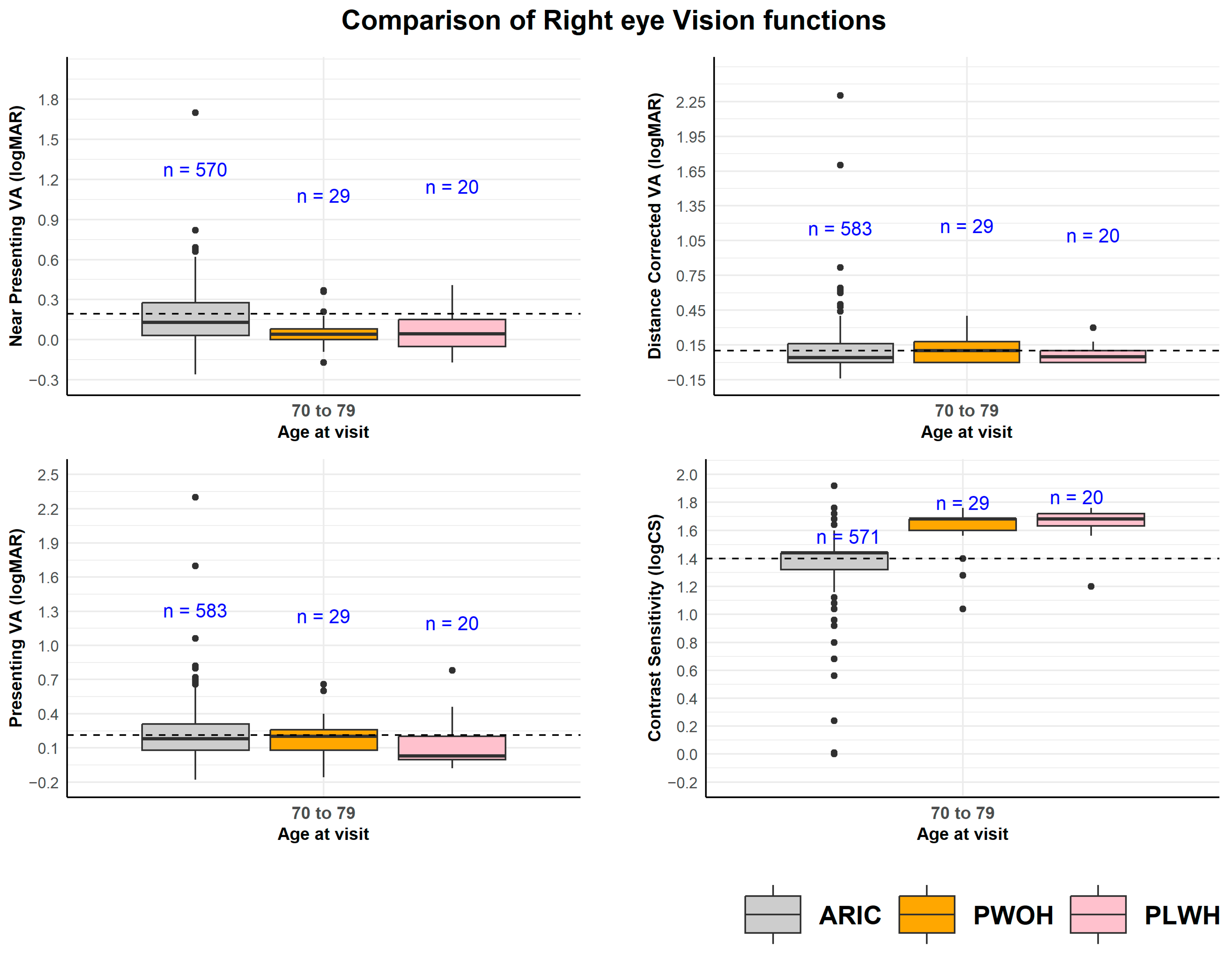
Figure 1. Vision function parameters from vision testing of the right eye. Comparisons of the PLWH and PWOH samples to an aging adult community sample from the EyeDOC study for the age group of 70–79 years. A general aging adult population sample is included from the Atherosclerosis in Communities Study to give a general population age-matched benchmark. The dotted line represents the overall mean value.
Viruses 18 00431 g001
Figure 2. Retinal health parameters from Optical Coherence Tomography images. Comparisons of the PLWH and PWOH samples to an aging adult community sample from the EyeDOC study for the age group of 70–79 years. A general aging adult population sample is included from the Atherosclerosis in Communities Study to give a general population, age-matched comparison. The dotted line represents the overall mean value.
Viruses 18 00431 g002
Table 1. Demographics and medical history of the study sample.
PLWH
N = 74
PWOH
N = 65
Demographics and comorbidities
Age at HIV Vision Study visit (years), weighted mean (SD)67.4 (4.7)67.4 (4.7)
Sex at birth, %
          Female224
          Male7896
Race and Ethnicity, %
          Black, non-Hispanic4722
          Hispanic, any race36
          White, non-Hispanic4670
          Other, non-Hispanic42
Household income /year *, %
          ≤$30,000 4126
          $30,001–$75,000 3045
          >$75,000 3029
Education *, %
          Basic (Less than high school)71
          Intermediate (High school)4236
          Advanced (At least some college)5163
Smoking status, %
          Never2730
          Former5562
          Current188
Current alcohol use, % 6977
Diabetes mellitus, % 2526
Hypertension, % 5758
HIV-related
Current CD4 cells/µL *, %
          <200 1
          200–500 29
          >500 70
Nadir CD4 cells/µL, %
          <200 36
          200–500 54
          >500 10
Current HIV RNA copies/µL among detectable, weighted median (IQR)40 (30, 52)
          <20097
Years of HIV infection, weighted mean (SD)42 (5.3)
Health insurance and provider access
Has an eye care provider *, % 8187
Health insurance, %
          Private Insurance5345
          Medicaid88
          Medicare3538
          Other coverage (VA, Other health insurance specified)19
          Unknown (reported they have insurance not the type of insurance)30
Abbreviations. HIV: Human Immunodeficiency Virus; PLWH: people living with HIV; PWOH: people living without HIV. Note: all percentages are from the weighted data. * Missing data. Participants with missing data on education and income, and have eye care providers: 1; current CD4 cell count: 2.
Table 2. Visual function, ocular condition, and OCTA findings in PLWH and PWOH.
PLWH
N = 74
PWOH
N = 65
Visual Function
VA Impairment, %
          Distance Presenting VA Impairment41
          Distance Corrected VA Impairment *03
          Near Presenting VA Impairment94
CS Impairment, % 34
Processing Speed * (ms) weighted mean (SD)18.4(8.5)18.4(8.5)
Divided Attention * (ms) weighted mean (SD)138.7(62.9)147.4(89.7)
Selective Attention * (ms) weighted mean (SD)222.1(87.9)211.4(91.2)
Ocular Condition
Uncorrected refractive error, % 155
VA improvement by refraction *, %6364
IOP > 21 mmHg *, % 64
Has an eye care provider *, % 8187
Dilation *, %
          One eye4452
          Both eyes4746
Had cataract surgery, %267
Cataract grading, %
          Nuclear grading (≥2)1412
          Posterior Subcapsular * (≥3 mm)01
          Cortical grading* (≥4/16)121
Cataract *:
          •
Had cataract surgery or
          •
Nuclear grading (≥2) or
          •
Posterior Subcapsular (≥3 mm) or
          •
Cortical grading (≥4/16)
4920
Meibomian gland dysfunction *, % 208
Conjunctival redness *, % 114
Tear Insufficiency by Schirmer II test, %
          Mild1915
          Moderate2116
          Severe1619
Signs of Dry Eye Disease *: %
          •
Meibomian gland dysfunction or
          •
Mild or worse tear insufficiency
6351
Pigments on endothelium *, % 37
Irregular pupil size or shape *, % 31
Active uveitis *, % 00
Retinitis *, % 40
Glaucomatous optic neuropathy *, % 1925
Age-related macular degeneration *, % 14
Other retinal pathology *, % 41
Epiretinal membrane *, % 915
Pre-proliferative DR *, % 14
Proliferative DR *, % 00
Macular Edema *, % 10
OCT retinal measurements
Optic nerve head nerve fiber layer thickness * (µm), weighted mean (SD) 90(11)88(15)
Superficial capillary plexus vessel density * (%), weighted mean (SD)45(4)44(4)
FAZ * (mm2), weighted mean (SD)0.3(0.1)0.2 (0.09)
Abbreviations. PLWH: people living with HIV; PWOH: people living without HIV; VA: visual acuity; CS: contrast sensitivity; IOP: Intraocular pressure; DR: diabetic retinopathy; OCT: optical coherence tomography; FAZ: foveal avascular zone. Definitions. VA Impairment: visual acuity worse than 20/40 in the better eye; CS Impairment: contrast sensitivity worse than 1.50 log CS in the better eye; Other retinal pathology included macular degeneration other than age-related macular degeneration, epiretinal membrane, pre-proliferative DR, proliferative DR, and macular edema. * Missing data. Participants with missing data on distance corrected VI, cataract, and dilation: 1; uncorrected refractive error, cataract surgery, conjunctival redness, pigments on endothelium, and irregular pupil size or shape: 2; high IOP and Meibomian gland dysfunction: 4; posterior subcapsular and cortical grading: 10; cataract, signs of dry eye disease, and tear insufficiency: 8; active uveitis, retinitis, glaucomatous optic neuropathy, age-related macular degeneration, other macular degeneration, epiretinal membrane, pre-proliferative DR and proliferative DR, and macular edema: 5; optic nerve head nerve fiber layer thickness: 24; superficial capillary plexus vessel density: 27; FAZ: 29; processing speed: 6; divided and selective attention, UVOF: 7.
Disclaimer/Publisher’s Note: The statements, opinions and data contained in all publications are solely those of the individual author(s) and contributor(s) and not of MDPI and/or the editor(s). MDPI and/or the editor(s) disclaim responsibility for any injury to people or property resulting from any ideas, methods, instructions or products referred to in the content.