Review

Inside the European Plant Viroid Scenario: Continental Distribution, Host Range, and Genetic Features of the Main Viroid Populations


1
Department of Biological and Environmental Sciences and Technologies, University of Salento, 73100 Lecce, Italy
2
National Biodiversity Future Center, 90133 Palermo, Italy
*
Author to whom correspondence should be addressed.
Viruses 2026, 18(3), 325; https://doi.org/10.3390/v18030325
Submission received: 30 January 2026 / Revised: 24 February 2026 / Accepted: 4 March 2026 / Published: 5 March 2026
(This article belongs to the Section Viruses of Plants, Fungi and Protozoa)

Abstract

Viroids are a serious threat to plant health due to their broad host range, high infectivity, and latent infections. Europe’s heterogeneous climate, ecology, and agriculture make it a key setting for viroid research. Despite numerous country- and host-specific reports, a continental synthesis has been lacking. In this study, we systematically collected all available official records of plant viroids in Europe from 1972 to 2025. A total of 255 documents were analyzed, encompassing 35 countries of the European continent and 118 host plant species, classified by host use (cultivated, ornamental, wild) and growth habit. Nucleotide sequences of the most common European viroids were retrieved from the NCBI database to assess genetic diversity and recombination. Europe hosts 32 of the 45 recognized viroid species worldwide (~71%), representing all eight genera. Southern Europe emerged as the main hotspot (~70% of reports), largely associated with Mediterranean climates and intensive cultivation of woody crops. Cultivated plants were the dominant hosts across all regions, while ornamentals were particularly important in Northern and Western Europe. Population genetic analyses revealed heterogeneous patterns, quasispecies dynamics, and recombination, shaped by host and geography. This is the first integrated overview of viroids across Europe, highlighting the importance of surveillance, sequencing, and genomic research.

1. Introduction

The European continent, with approximately 10.18 million square kilometers, exhibits extraordinary geographical, climatic, and ecological diversity, bounded by the Atlantic Ocean to the west, the Arctic Ocean to the north, and the Mediterranean, Black, and Caspian Seas to the south, with the Ural Mountains and River delineating its eastern frontier with Asia [1,2]. Europe includes more than 50 nations, including geographically European sovereign states, transcontinental countries with partial European territories such as Russia, Türkiye, Kazakhstan, Azerbaijan, and Georgia. Its varied landscape ranges from northern tundra and glacial fjords to alpine chains such as the Alps and the Carpathians, fertile central plains, and Mediterranean coastal regions. Climatic zones span subarctic, temperate, and Mediterranean bands, contributing to the continent’s agroecological heterogeneity [3].
In this complex scenario, further challenged by climate change, cultivated plants for food, feed, or ornamental purposes, as well as wild species in landscapes, constantly face the threat of plant pathogens, which can have devastating effects on production and, consequently, a strong socio-economic impact on the well-being of countries [4,5,6,7].
Viroids rank among the most concerning plant pathogens and are recognized as the smallest infectious agents known. These obligate parasites consist solely of single-stranded, circular RNA molecules measuring between 240 and 440 nucleotides in length, and they lack a protective coat protein [8]. Despite their structural simplicity, viroids can cause severe plant diseases, a threat further heightened by their ability to spread through various ways [9,10]. Vegetative propagation, grafting, and mechanical transmission (via contaminated hands, pruning, and harvesting tools) are the most prevalent modes at both global and local scales [11,12]. However, seed and pollen transmission can occur for some viroids [13]. In addition, some biological vectors, such as insects, parasitic plants, and goats, are known to transmit viroids [14,15]. Notably, recent studies have demonstrated that viroids can replicate within and be transmitted by phytopathogenic ascomycete fungi under laboratory conditions, suggesting that fungi may also act as natural vectors [16].
Although symptoms associated with viroids had been documented as early as the 1920s and were initially attributed to a putative viral agent [17,18], the first identification was achieved in 1971 by Diener [19,20], who recognized Pospiviroid fusituberis (PSTVd) as the etiological agent of potato spindle tuber disease in the United States of America. Since this discovery, it has become evident that viroid infections can induce a wide range of symptoms, whose expression varies with the host species and environmental conditions, particularly favored by high temperatures (25 °C to 35 °C) and light [21,22,23,24]. Typical symptoms include stunting, chlorosis, leaf deformation, fruit malformation, and bark necrosis. In severe cases, they may lead to plant death. However, some viroids remain asymptomatic, hindering detection and management [18,25]. Interestingly, symptoms induced by viroids seem to be closely linked to their ability to interfere with host gene regulation through RNA silencing mechanisms [26].
Therefore, they represent a considerable threat to agriculture due to their wide host range, spanning from woody to herbaceous species, and affecting major crops such as grapevine, stone fruits, pome fruits, horticultural crops, and ornamental plants [27,28,29,30]. As a result, yield losses associated with these pathogens can exceed 20% and, in some cases, compromise the entire harvest [31,32,33], leading to reduced product quality and marketability, resulting in extensive economic damage [34,35]. Moreover, additional economic burdens arise from increased field management costs for viroid diseases, as well as from the need for strict certification procedures for commercial plant materials to prevent their spread into unaffected areas [36]. For these reasons, some viroids are classified as quarantine pests (e.g., Cocadviroid cadangi, CCCVd) or regulated non-quarantine pests (RNQP) that must be excluded from propagation material (e.g., Apscaviroid cicatricimali, ASSVd; Pospiviroid exocortiscitri, CEVd; Hostuviroid impedihumuli, HSVd; Pospiviroid fusituberis, PSTVd) by the European Union [37].
Current taxonomy classifies viroids into two primary families based on distinct differences in genome structure, replication sites and mechanisms, and the presence or absence of ribozyme sequences [38,39]. To date, 45 viroid species have been identified [40]. Members of the family Pospiviroidae are replicated in the nucleus via an asymmetric rolling-circle mechanism and include the genera Apscaviroid (19 species), Pospiviroid (10), Coleviroid (5), Cocadviroid (4), and Hostuviroid (2). They typically adopt a rod-shaped secondary structure, functionally divided into five domains, including a conserved central region. In contrast, viroids of the family Avsunviroidae are replicated in the chloroplast via a symmetric rolling-circle mechanism. This family includes the genera Pelamoviroid (3 species), Avsunviroid (1 species), and Elaviroid (1 species). Their structures may be rod-shaped, branched, or semi-branched and are characterized by the presence of self-cleaving hammerhead ribozyme sequences [41,42,43]. Unlike viruses, viroids do not encode any proteins and rely entirely on the host’s cellular machinery for replication and movement [9].
Detecting viroids through bioassays has proven challenging, particularly when mixed infections are involved, as different viroid variants can mask or reduce symptom expression. Moreover, viroids exhibit high genetic variability, and even a single nucleotide change can significantly affect symptom manifestation. Complicating matters further, different viroid species, such as those within the Pospiviroid genus, can produce similar symptoms on the same indicator host plant [24]. Additionally, because they are non-coding and lack protein expression, viroids do not produce structural or non-structural proteins capable of triggering immune responses or serving as antigenic markers. As a result, only the recent advances in detection technologies have unveiled novel insights into viroids, highlighting their diffusion on a global and regional scale, even in regions previously considered unaffected, and identifying both new and previously reported viroids in different areas [44,45,46,47]. To the best of our knowledge, only a few studies have realized a systematic synthesis of all or partial available data across European countries [48,49]. To bridge this gap and summarize the latest research on this topic, a comprehensive analysis was conducted with the aim of (i) describing the evolution of European research across decades, presenting data on viroid research in Europe from the perspectives of (ii) country, (iii) host, (iv) viroid, and (v) providing insights into the most widespread reported viroid in Europe, including its symptoms and population studies.

2. Data Recovery and Bioinformatics Analyses

A database was created in July 2025 examining (i) peer-reviewed articles, (ii) institutional documents, (iii) conference proceedings, and (iv) an international database concerning all available data about viorids diffusion in European countries. The data were searched in the Web of Science (Thompson-ISI, Philadelphia, PA, USA), Google Scholar (Google, Mountain View, CA USA), Scopus (Elsevier, Amsterdam, Netherlands), and European and Mediterranean Plant Protection Organization (EPPO; https://gd.eppo.int/, accessed on 30 July 2025) database using multiple combinations of “viroid”, “diagnosis”, “diffusion”, “epidemiology”, “first report”, “host”, “identification”, “report”, and the single name of every 51 European countries (Supplementary Table S1). The reference lists of all articles identified through the literature search were cross-checked to include any additional relevant sources, resulting in a total of 255 documents. The collected data were examined to extract the following information: (i) viroid identified, (ii) year of report, (iii) host species in which the viroid was detected, and (iv) country of report, regardless of whether the record represented the first detection of the viroid and/or the host. To better analyze data, European countries showing viroids reports were enclosed in geographical areas as follows: Central Europe (CE), Eastern Europe (EE), Northern Europe (NE), Southern Europe (SE) and Western Europe (WE). Moreover, each host species record was classified by use (cultivated, ornamental, or wild plants) and growth form (woody, shrub, or herbaceous plants). Abbreviations of single species, i.e., sp., or multiple species, i.e., spp., associated with a genus were maintained as recovered by documents. All the recovered data were reported in an ad hoc database (Supplementary Material S1).
Finally, the main European viroids identified have undergone a focus on symptoms and genetic features based on nucleotide sequences reported in Europe. Nucleotide sequences of these viroids were retrieved from the NCBI database (https://www.ncbi.nlm.nih.gov/, accessed on 30 July 2025), considering only those in which the “country” field was directly reported, and downloaded for analysis. The sequences were organized into different viroid datasets, and each sequence was named as follows: accession number, host (if present), and country/countries. Sequences were aligned using BioEdit [50] and manually checked to remove ambiguous sequences in the populations (Supplementary Table S2). The recombinant events in the nucleotide sequences were evaluated using the RDP4 program (v. 4.39) with 3Seq, Bootscan, Chimaera, GENECONV, MaxChi, RDP, and SiScan algorithms [51]. They were accepted only if identified by at least four methods (p < 0.05) and a significant p-value displayed is due to multiple comparison (MC) correction (p < 0.05). Nucleotide diversity (π), haplotype numbers, haplotype diversity (Hd), and Tajima’s neutrality test (D) were calculated for each viroid population to evaluate genetic variability and potential signatures of selection. To assess the contribution of taxonomic and geographic factors to genomic variation, an Analysis of Molecular Variance (AMOVA) was conducted, considering three grouping factors: country, genus, and country × genus. To ensure comparability across groups and avoid statistical bias, groups with fewer than three sequences were excluded because very small sample sizes can artificially inflate or distort variance estimates and reduce the robustness of the analysis. From each remaining group, up to ten sequences were randomly selected (or all sequences were included if fewer than ten were available). Finally, the significance (p < 0.05) of group differentiation was evaluated using permutation tests (1000 permutations), and Phi-statistics (ΦST) were used to quantify the proportion of genetic variance explained by group structure. These analyses were performed using the ‘pegas’ package (Population and Evolutionary Genetics Analysis System) in R Studio (Version 2026.01.0+392) [52,53].

3. Distribution and Epidemiology of Viroids in Europe

3.1. Temporal and Geographic Trends

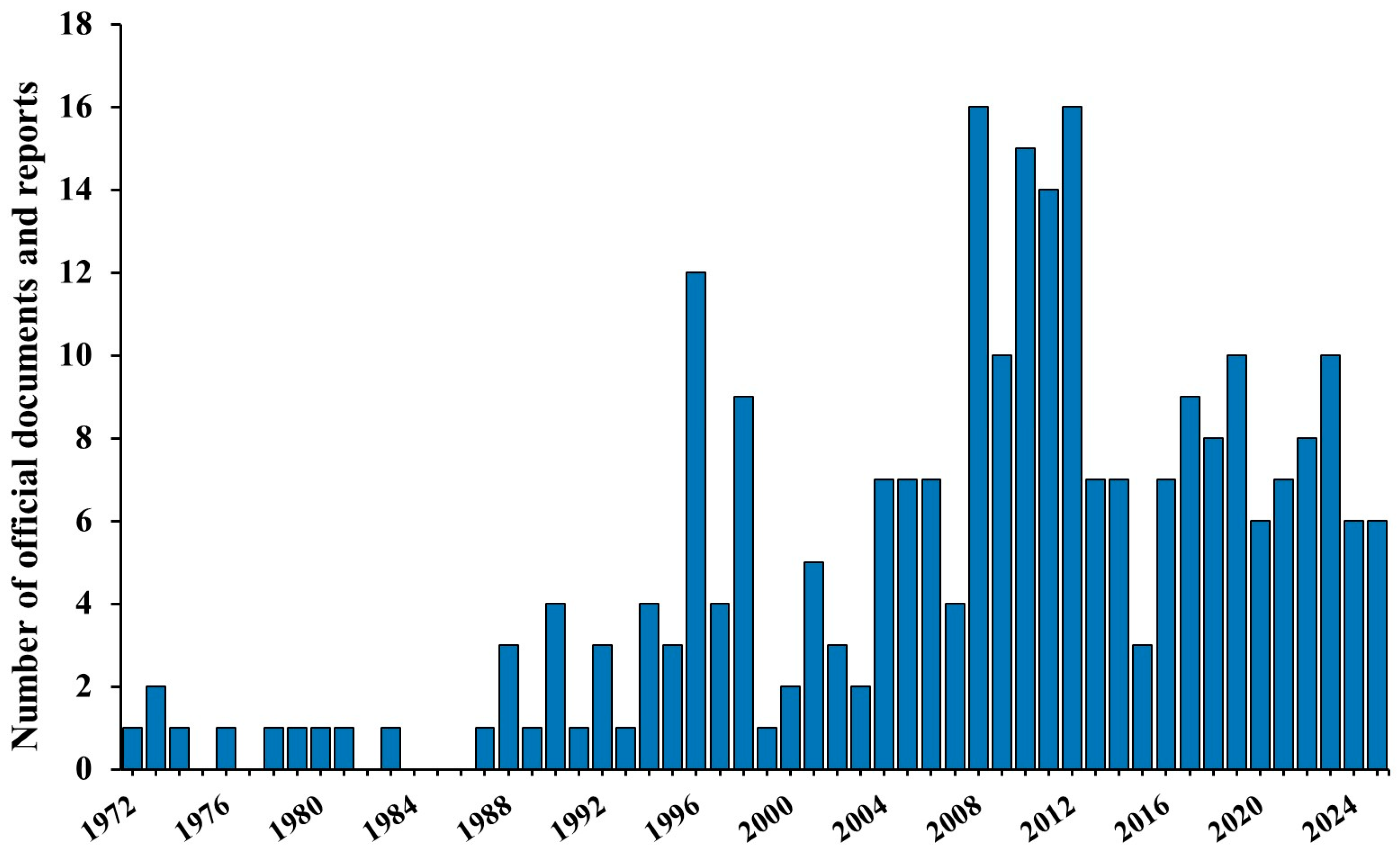
Viroid research in Europe was closely linked to the evolution of molecular tools, with the late 1990s and 2010s representing the periods with the highest number of reports. This increase also reflects the implementation of surveillance programs in several European countries after late-1990s findings revealed that various ornamental plants harbored multiple pospiviroids. This progression is clear in the collected documents, which cover a 54-year period (1972–2025; Figure 1).
Although serological techniques commonly employed for virus detection were available from the 1970s, they were ineffective for identifying viroids [54]. As a result, from their discovery until the late 1980s, only a few reports appeared due to the lack of sensitive and specific diagnostic tools capable of detecting their presence in host plants [55,56]. The introduction of new molecular techniques in 1987 led to the development of more precise, reliable, and rapid tools, unlocking the ability not only to detect viroids but also to study their structure, thereby fueling renewed interest [57,58]. One of the early techniques, polyacrylamide gel electrophoresis (PAGE), was among the first significant breakthroughs [59,60,61]. Over time, nucleic acid-based approaches such as hybridization with labeled probes and reverse transcription polymerase chain reaction (RT-PCR) became standard tools [62,63,64,65]. In the 1990s, viroids were classified for the first time, and studies describing their structure and distribution proliferated, particularly in the latter part of the decade [41]. More recently, reverse transcription loop-mediated isothermal amplification (RT-LAMP) and next-generation sequencing (NGS) have enabled faster and more sensitive viroid detection [66,67,68,69]. As a result, a second surge of epidemiological work followed in the late 2000s, driven by high-throughput sequencing (HTS), which revealed all RNA pathogens in infected plants and uncovered previously unreported viroids [70]. From 2013 onward, new viroid publications stabilized at around seven per year, while research increasingly focused on the mechanisms of plant-viroid interactions [71,72,73]. Together, this expanding body of work has dramatically deepened our understanding of viroid biology, especially in epidemiological studies, highlighting their substantial presence across Europe.
These methodological advances not only accelerated viroid detection but also reshaped the geographic landscape of viroid reports. As diagnostic capacity improved, viroids were progressively identified in an increasing number of countries, revealing clear temporal and spatial trends in their distribution.
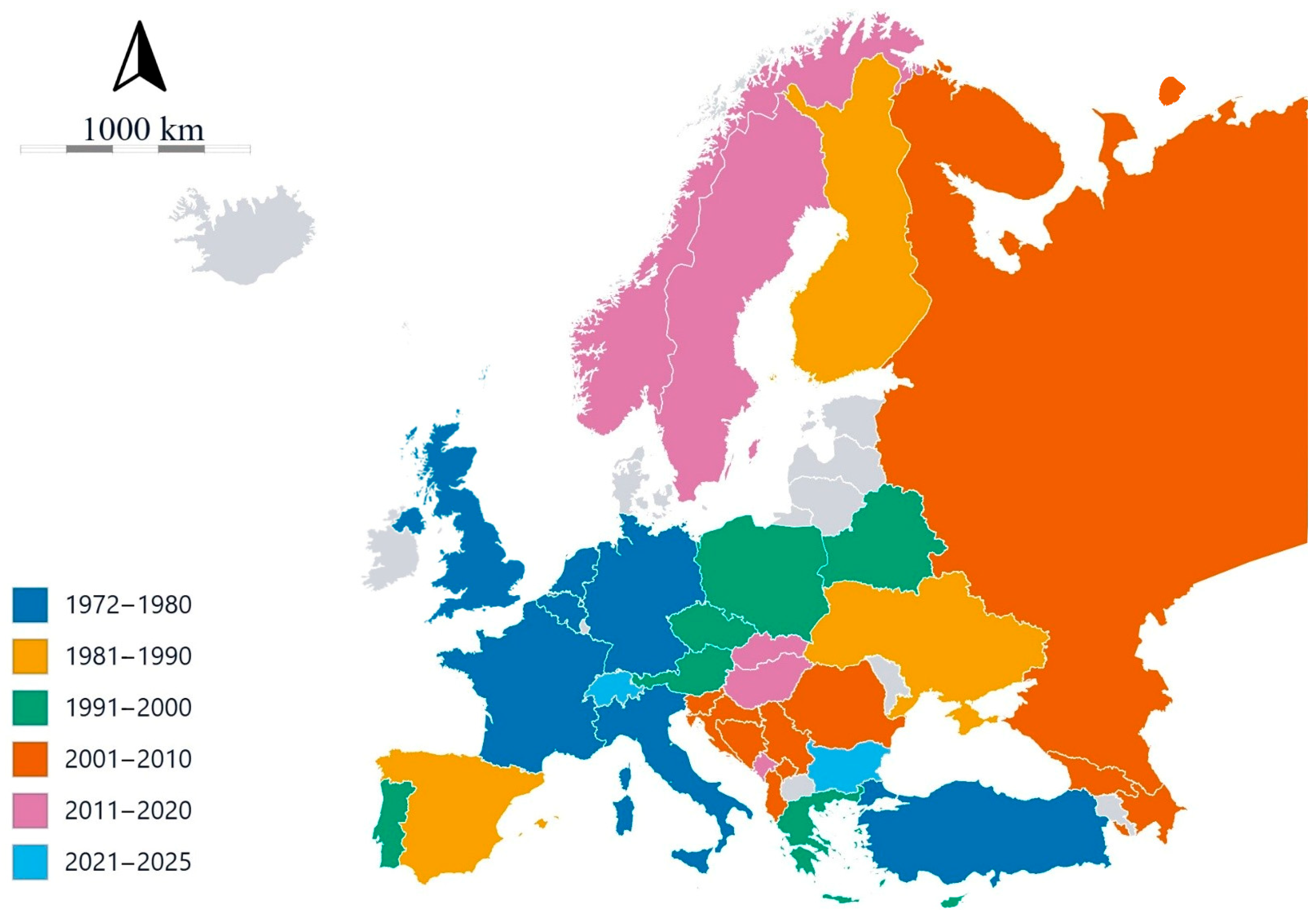
Currently, viroids have been reported in 35 of 51 European countries, encompassing geographically European sovereign states and transcontinental nations with European territories (Figure 2).
The earliest European reports appeared in Belgium (1972), soon followed by Germany (1973), the United Kingdom (1973), the Netherlands (1974), France (1976), Italy (1978) and Türkiye (1979). During the 1980s and 1990s, viroid detections spread steadily north and east, with records from Finland (1981), Spain (1987), Ukraine (1990), Cyprus (1992), Czechia (1994), Portugal (1995), Poland (1994), Austria (1996) and finally Belarus and Greece (1998). In the 2000s through the early 2020s, reports became more geographically widespread, encompassing Albania (2004), Bosnia and Herzegovina (2005), Kosovo and Romania (2006), Croatia and Serbia (2008), and Azerbaijan, Georgia, and Russia (European part; 2009). Subsequent detections were recorded in Slovenia (2010), Norway (2011), Montenegro (2012), Slovakia (2016), Sweden (2017), and Hungary (2018), with the most recent records from Switzerland (2023), Malta (2024), and Bulgaria (2025). No detections were documented in Andorra, Armenia, Denmark, Estonia, Iceland, Ireland, Kazakhstan (European part), Latvia, Liechtenstein, Lithuania, Luxembourg, Moldova, Monaco, North Macedonia, San Marino, and Vatican City. Based on these data, the geographical regions were defined as follows: NE including Finland, Norway, Sweden, and United Kingdom; CE with Austria, Czechia, Germany, Hungary, Poland, Slovakia, and Switzerland; EE including Azerbaijan, Belarus, Georgia, Romania, Russia (European part), and Ukraine; SE with Albania, Bosnia and Herzegovina, Bulgaria, Croatia, Cyprus, Greece, Italy, Kosovo, Malta, Montenegro, Portugal, Serbia, Slovenia, Spain, and Türkiye; WE including Belgium, France, and Netherlands.
The chronological pattern reflects both the heterogeneous intensity of surveillance among countries and the progressive improvement in diagnostic capacity and awareness of viroid threats, driven by the introduction of new molecular techniques and the expansion of intra-European trade and plant material exchange [24,74]. Indeed, countries with well-developed research infrastructures and subject to intense import activity of plant materials (e.g., Italy, France, and Germany) detected viroids earlier, whereas others may have experienced delayed or underreported occurrences, likely due to limited research capacity or low plant import.

3.2. Geographical Distribution and Host Types

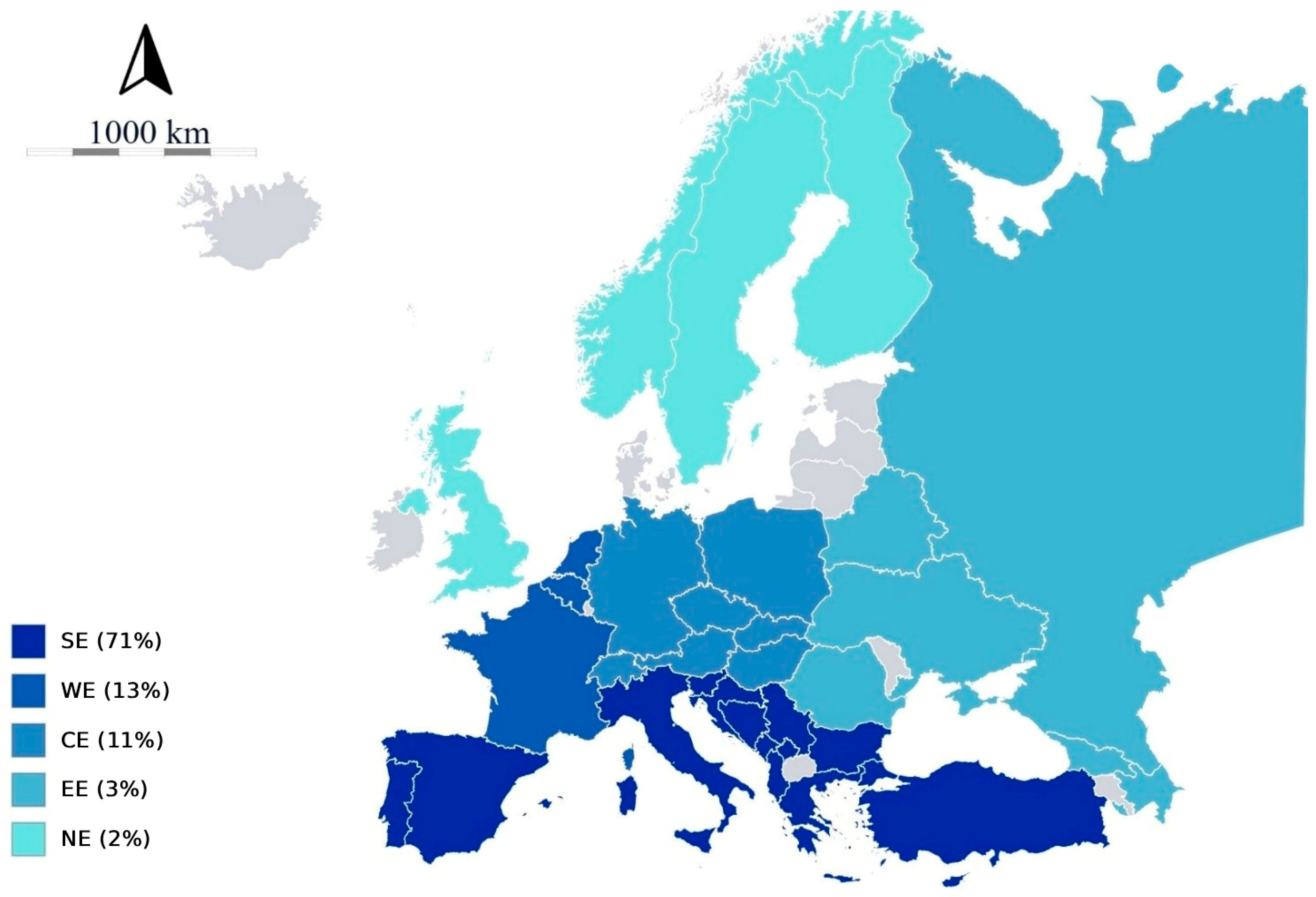
Southern Europe emerged as the central hub for viroids, accounting for approximately 70% of the reports of new or established viroids in investigated host plants (Figure 3).
This was followed by WE at around 13%, CE at around 11%, and EE and NE at approximately 3% and 2%, respectively. Italy, France, Czechia, Russia, and Finland, respectively, are the countries with major reports within the geographical regions. However, only Italy (first) and France (fifth) ranked among the European top five, with the remaining positions occupied by Greece (second), Türkiye (third), and Spain (fourth; Supplementary Table S3). Indeed, the Mediterranean countries above reported collectively accounted for approximately 56% of all reports at the European level and for 79% of SE reports, showing their prominence in viroid reports and studies.
The result is not surprising, given the Mediterranean basin’s central role as a hotspot for viroids. This is driven by its warm climate, often aligning with the optimal thermal range for viroid activity (25 °C to 35 °C), and by socio-cultural practices that have facilitated their transmission across diverse host plant species [21,75,76]. Those factors enhance the replication, transmission, and persistence of viroids in susceptible host plants, contributing significantly to their epidemiological dynamics in the region [77]. Consequently, the increasing temperatures due to climate change represent a growing challenge for the European continent and raise awareness of their potential to increase viroid presence and facilitate their spread into regions where they were previously limited or absent [5]. This expansion could be further accelerated by cultivating new crops that serve as viroid hosts, especially in areas previously considered unsuitable for such agriculture due to climatic constraints [78]. In a forward-looking perspective, these variations highlight the need for strengthened surveillance strategies, including the systematic monitoring of emerging putative viroid hosts, particularly in northern latitudes. This requires integrating established methodologies (i.e., ELISA, PCR) with innovative approaches such as predictive modeling and early-detection tools (i.e., Artificial Intelligence models, satellites), combined into multi-source early-warning networks capable of supporting timely phytosanitary interventions, similar to what is already being developed for other plant pathogens within the European STELLA Pest Surveillance System (PSS) project [79].
Fifty-three genera are recognized as viroid hosts, involving around 117 species (Table 1).
Cultivated plants represent the majority (about 59%) of infected species, followed by ornamentals (32%) and wild plants (9%). Around 68 cultivated species are reported as hosts, including woody (52 species), herbaceous (10), and shrub (6) species. The most frequently reported are Vitis vinifera (L.), Prunus persica (L.) Batsch, Prunus armeniaca (L.), Solanum lycopersicum (L.), and Citrus × limon. Ornamentals include about 39 species, predominantly herbaceous (22), followed by shrubs (14) and woody plants (3). The most common ornamental hosts are Solanum jasminoides (J. Paxton), Chrysanthemum sp. (L.), Petunia sp. (Juss), Lycianthes rantonnetii (Carrière) Bitter, and Brugmansia sp. (Pers). Wild hosts comprise ten species, with woody and herbaceous plants equally represented (4 each) and shrubs less common (2). Key wild hosts include Solanum dulcamara (L.), Malus sylvestris (L.) Mill., Pyrus amygdaliformis (Vill.), Jacobaea vulgaris (Gaertn.), and Portulaca oleracea (L.).
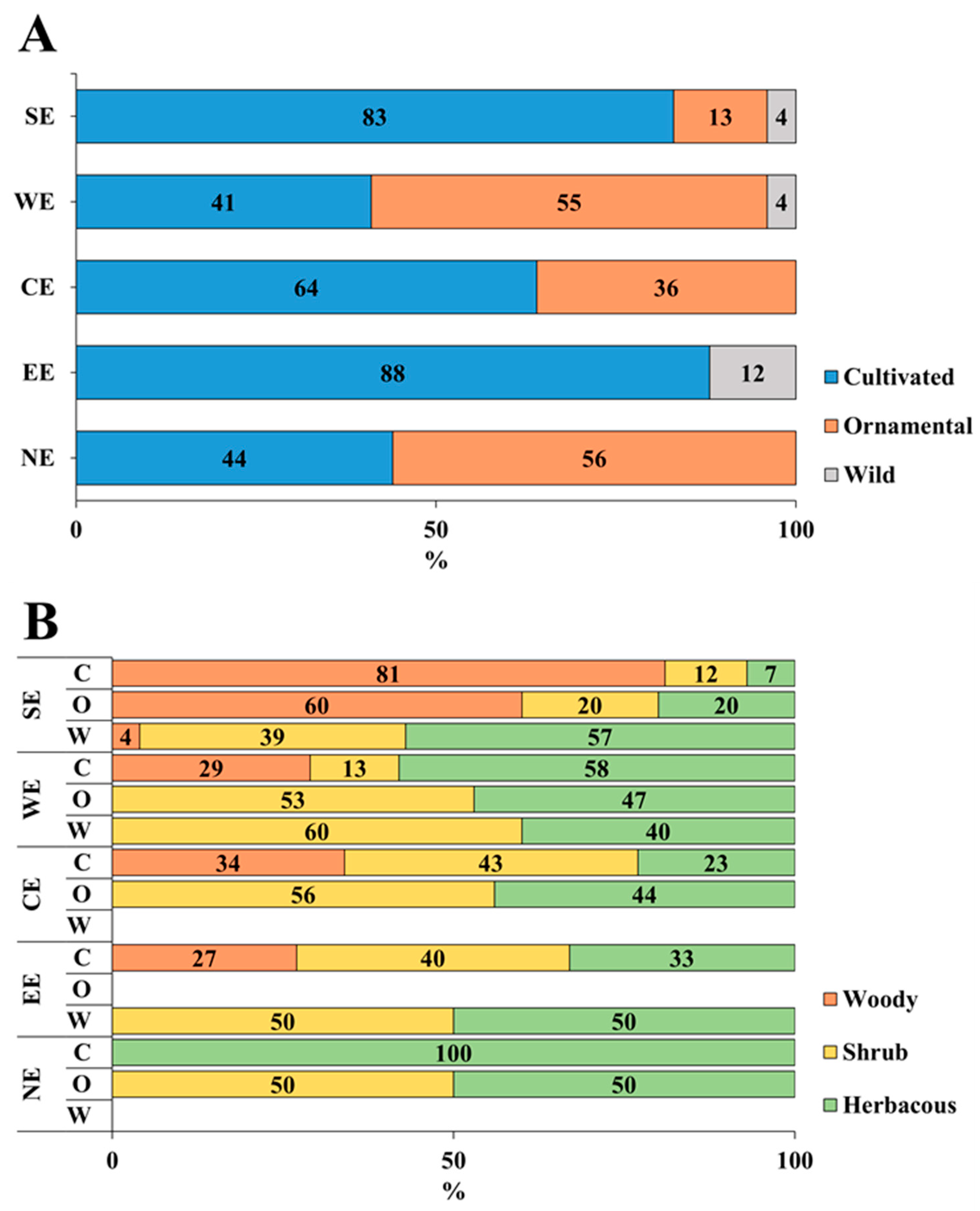
Across Europe, clear regional contrasts emerged in the distribution of host plants (Figure 4A,B).
Overall, cultivated hosts dominate in SE, CE, and EE, while ornamental hosts are more prevalent in WE and NE. The proportion of wild hosts remained consistently low (<15%) across Europe, suggesting that most records originate from managed agricultural, urban, and greenhouse environments. Moreover, a latitudinal gradient is evident across Europe, where woody and shrubby plants are more common in the SE and CE, whereas herbaceous hosts increase toward the NE. This likely reflects both climatic constraints on woody vegetation and regional differences in land use and plant trade patterns. The key species as viroid hosts were again confirmed to be cultivated and ornamental, highlighting the significant role of human activity in the viroids’ threat [80]. However, wild species have never been deeply investigated, leaving a gap in understanding the role they play in viroid epidemiology.

4. Biological and Genetic Features of Viroids in the European Continent

4.1. Taxonomic Diversity and Dominant Species

Europe harbors a remarkably high diversity of viroids, with 32 out of the 45 viroid species formally recognized by the ICTV [40], encompassing all eight recognized genera, detected in cultivation fields, nurseries, and /or natural settings (Table 2).
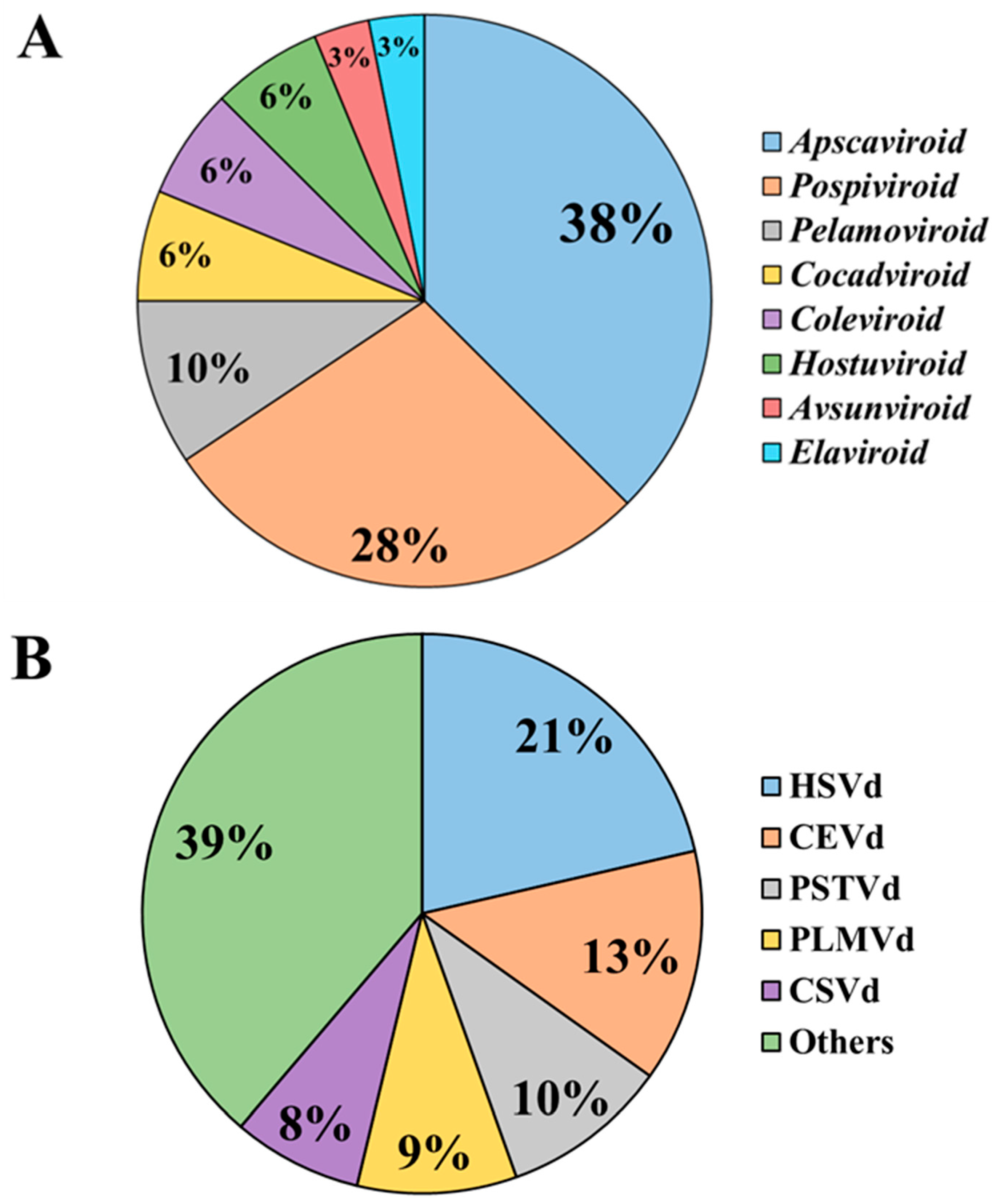
The main ones are Apscaviroid (38%), Pospiviroid (28%), and Pelamoviroid (10%), making Pospiviroidae the predominant family in Europe. (Figure 5A). In addition, two viroid-like RNAs (i.e., GHVd and CarSV-1) were also detected. Differently, thirteen viroids have never been reported in Europe, including Apscaviroid betadiospyri (PVd-2), Apscaviroid dendrobii (DVd), Apscaviroid diospyri (PVd), Apscaviroid etacitri (CVd-VII), Apscaviroid japanvitis (JGVd), Apscaviroid latenspruni (PLVd-1), Apscaviroid litchis (LVd), Cocadviroid cadangi (CCCVd), Cocadviroid tinangajae (CTVd), Coleviroid betacolei (CbVd2), Coleviroid epsiloncolei (CbVd-5), Coleviroid zetacolei (CbVd-6), and Pospiviroid machoplantae (TPMVd). Their absence is likely due to the lack or limited presence of suitable hosts, as well as restricted geographical distribution in extra-European areas, such as in the case of CCCVd and LVd [81,82].
The first viroids identified in Europe in the 1970s were CSVd on Chrysanthemum sp. (L.) in Belgium [83] and Germany [84], although the specific host plants were not reported in the latter country. PSTVd was detected in the United Kingdom on Solanum tuberosum [85], HSVd in the Netherlands on Cucumis sativus [86], and PLMVd was detected in France in P. persica (L.) Batsch [87]. They were followed by CEVd in Italy on Citrus medica (L.), Citrus × limon (L.) Burm. f., and Citrus × sinensis (L.) Osbeck [88] (Table 2). The detection of additional viroids reflected the progressive evolution of diagnostic techniques, with certain species remaining unreported for years, while others were rapidly identified as methodologies advanced. Currently, the most frequently described viroids across the continent account 61% of reports and include HSVd (21%), CEVd (13%), PSTVd (10%), PLMVd (9%), and CSVd (8%), with others equal or less than 5% (Figure 5B).

4.2. Host Range and Ecological Specialization

The main viroids in Europe show different host ranges and ecological patterns, with HSVd and CEVd characterized by a broad spectrum and greater epidemiological risk, PSTVd mainly linked to the ornamental sector, PLMVd preferentially associated with cultivated woody species, and CSVd with natural reservoirs in wild hosts that promote its persistence and spread.
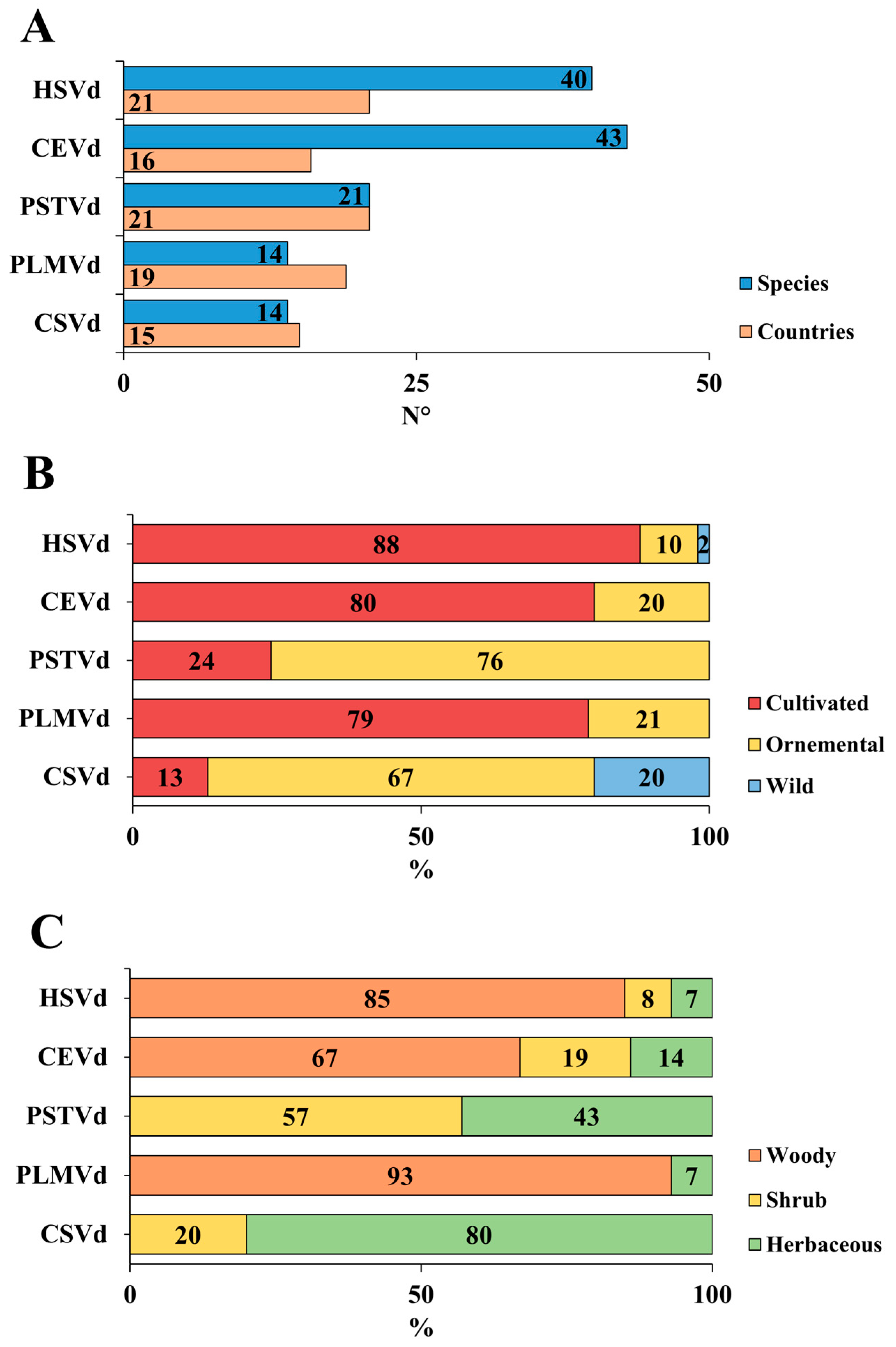
HSVd was reported since 1974 and is currently present in 21 countries spanning all European geographical regions, infecting 40 plant species (Figure 6A).
CEVd, first detected in 1978, is now spread in 16 countries across all continent except the NE and infects around 43 plant species. PSTVd, identified since 1973, occurs in 21 countries across all European continent but is associated with only 21 plant species, markedly fewer than those of other viroids. PLMVd, known since 1976, has been reported in 19 countries across all macroareas, except the NE, and infects 14 plant species. Finally, CSVd has been detected in 15 countries across all Europe, affecting 14 plant species. HSVd hosts include cultivated woody plants, primarily from the Citrus and Prunus genera, as well as Malus domestica (Suckow) Borkh., Mespilus germanica (L.) Kuntze, Pistacia vera (L.), and Pyrus communis (L.) [89,90,91,92,93,94,95] (Figure 6B and 6C). Among shrubs, it was detected in Punica granatum (L.) and in V. vinifera (L.) scions and rootstocks [96,97,98]. In herbaceous plants, HSVd occurs in major crop species such as Cucumis sativus (L.) and Humulus lupulus (L.) [99,100]. Although less frequently observed in ornamental species, HSVd has been identified in woody, shrub, and herbaceous hosts, including Morus alba (L.), Prunus cerasifera (Ehrh.), Hibiscus rosa-sinensis (L.), and Chrysanthemum sp. (L.), as well as in the wild woody species M. sylvestris [91,99,101,102,103]. CEVd primarily infects cultivated woody plants, especially those belonging to the Citrus genus and Ficus carica (L.), followed by shrubs such as Fortunella margaria (Lour.) Swingle, V. vinifera (L.) and several major herbaceous crops, including Brassica rapa (L.), Daucus carota (L.), S. lycopersicum (L.) and Solanum melongena (L.) [49,104,105,106]. Unlike HSVd, CEVd exhibits a broader host range among ornamental shrub and herbaceous plants, including Cestrum nocturnum (L.), Cestrum sp. (L.), H. rosa-sinensis (L.), L. rantonnetii (L.), Nematanthus sp. (Schrad.), and S. jasminoides (J. Paxton), as well as Verbena sp. (L.), and Verbena × hybrida [49,68,107,108,109,110]. PSTVd presence in cultivated plants is limited to shrubs such as Physalis peruviana (L.) and Solanum muricatum (Aiton), and to herbaceous crops such as S. lycopersicum (L.) and S. tuberosum (L.) [29,44,111,112]. Notably, PSTVd infection represents the only documented case of viroid infection on Matricaria chamomilla (L.) in Europe [113]. In contrast, PSTVd shows a broader host range among ornamental plants, including shrubs such as Argyranthemum frutescens (L.), Brugmansia sanguinea (Ruiz & Pav.) D. Don, Brugmansia sp. (Pers.), Brugmansia suaveolens (Willd.) Sweet, Cestrum sp. (L.), Datura sp. (L.), L. rantonnetii (L.), S. jasminoides (J. Paxton), Solanum pseudocapsicum (L.), and Streptosolen jamesonii (Benth.) Miers, as well as herbaceous plants such as Calibrachoa sp. (Cerv.), Chrysanthemum sp. (L.), Dahlia sp. (Cav.), Diascia sp. (Link & Otto), and Petunia sp. (Juss.), including Petunia × hybrida [114,115,116,117,118,119,120,121,122]. PLMVd infection mainly affects cultivated woody plants, with several species belonging to the genus Prunus, followed by Cydonia oblonga (Mill.), Diospyros kaki (L.f.), Juglans regia (L.), and P. communis (L.) [49,95,123,124]. No natural infections were reported in shrub or herbaceous cultivated plants, nor in ornamental species, regardless of growth form. Interestingly, wild plants were also identified as hosts, including the woody species Crataegus monogyna (Jacq.) and P. amygdaliformis (Vill.), as well as the herbaceous species Sorghum halepense [49,123]. CSVd distribution is primarily concentrated among herbaceous hosts, particularly ornamental species, whereas in cultivated crops, detections were limited to S. lycopersicum (L.) and S. tuberosum (L.) [108,112]. Accordingly, CSVd was more frequently identified in ornamental shrubs such as A. frutescens (L.) and S. jasminoides (J. Paxton), and especially in herbaceous plants including Calibrachoa sp. (Cerv.), Chrysanthemum sp. (L.), Chrysanthemum × grandiflorum, Petunia sp. (Juss), Petunia × hybrida, Vinca major (L.), and Vinca minor (L.) [45,48,108,109,110,125]. While these viroids differ in their host ranges and ecological associations across Europe, the symptoms they cause are often difficult to distinguish, partly due to their latent behavior.

4.3. Compendium of Viroid Symptomatology

Across main European viroids (HSVd, CEVd, PSTVd, PLMVd, and CSVd), infections range from severe host-specific manifestations to latent or indistinguishable forms, underscoring both their epidemiological complexity and diagnostic challenges.
Symptoms caused by HSVd vary widely depending on the host species. In Citrus spp. (L.), the viroid induces stunting, leaf rolling and mottling, reduced fruit size and yield, and bark scaling or corking in specific scion-rootstock combinations. Certain variants are also associated with citrus cachexia/xyloporosis [126,127]. In Prunus spp. (L.), infections may remain latent, as in P. armeniaca (L.), or produce dapple fruit symptoms, as observed in P. avium (L.), P. domestica (L.), and P. persica (L.) Batsch [128,129]. In V. vinifera (L.), infections are frequently symptomless, although some vines show shortened, spindly canes and small leaves [130,131]. In C. sativus (L.), HSVd causes leaf rugosity and chlorosis, crumpled flowers, and pale or yellow bottle-shaped fruits [99]. In H. lupulus (L.), yellowish-green leaves and drooping petioles appear from early to mid-season, followed by stunting of both main and lateral bines; visible stunting typically develops only after several years, and cone production may be reduced [132]. In M. alba (L.), symptoms include vein clearing, yellow speckling, and leaf deformation [133]. Symptoms associated with CEVd can be challenging to identify, as infections may be symptomless or masked by co-infections with other viroids or pathogens [68,134,135]. In Citrus spp. (L.), CEVd causes exocortis disease, characterized by bark scaling, dwarfing, severe stunting, and leaf epinasty. In F. carica (L.), infection leads to leaf mosaic and malformations [136,137]. In S. lycopersicum (L.) and S. melongena (L.), symptoms include stunted growth and downward-curling, rough leaves [138]. Among ornamentals, Gynura aurantiaca (Blume) DC., the first species historically identified as a CEVd host, exhibits stunting, leaf epinasty, and midvein necrosis [139]. PSTVd infections are often latent, with only certain species or cultivars displaying visible symptoms [140]. In S. lycopersicum (L.), these include stunting, leaf curling, bent leaves, chlorosis, and reduced fruit size. In S. tuberosum (L.), infected plants grow upright with small leaflets, show reduced development, and produce distorted tubers with growth cracks and the characteristic spindle-shaped deformation [141,142]. In Matricaria chamomilla (L.), symptoms include pronounced stunting, shortened rosette nodes, reduced rosette size, inhibited flowering, yellowish leaves, and late-stage leaf necrosis. Chrysanthemum sp. (L.) develops light green young leaves, stunting, small leaves and flowers, and reduced rooting ability [113,143]. As with many viroids, many PLMVd-infected hosts remain asymptomatic or exhibit only mild symptoms [123]. However, several Prunus species exhibit clear and sometimes severe manifestations. In P. persica (L.) Batsch, these include leaf chlorotic mosaics or blotches, marginal chlorosis, and generalized yellowing, with phenotype expression linked to sequence polymorphisms. Some variants induce peach calico, characterized by extensive leaf albinism. Additional symptoms involve fruit malformations (misshapen or discolored fruit, suture cracking), enlarged or rounded stones, and bud necrosis; severe infections may delay foliation, flowering, and fruit ripening, and can reduce tree vigor and lead to premature decline [144,145,146]. In P. domestica (L.), the viroid causes bark necrosis and splitting on branches and trunk, and young shoots appear dwarfed due to shortened internodes [144]. Outside Prunus, only Diospyros kaki (L.f.) shows symptoms, namely fruit deformation [147]. CSVd infections are generally latent, with a notable exception in Chrysanthemum sp. (L.), where the viroid causes stunting, reduced flower size, petal bleaching or discoloration, leaf chlorosis or mottling, poor rooting, and altered flowering patterns [143]. Taken together, symptom variability and latent infections point to an underlying genetic complexity that can only be resolved through population-level genomic analyses.

4.4. Genetic Diversity, Recombination and Population Structure

European nucleotide sequences populations of HSVd, CEVd, PSTVd, PLMVd, and CSVd exhibit highly variable genetic diversity, quasispecies complexity, recombination signatures, and differentiation patterns shaped by host genus, geographic origin, and their interactions.
HSVd population displayed a guanine and cytosine (G + C) content of 56%, with an high mean similarity of 99% among sequences (82–100% range), and a low genetic diversity (π; 0.010 ± 0.003), with 181 haplotypes (Hd = 0.959 ± 0.007) and a prevalence of three of them found in 55, 27 and 17 sequences (other less or equal to five; Table 3).
In contrast, the CEVd population shows a higher G + C content of 60%, a lower mean sequence similarity of 96% (91–100%) and a higher π value (0.037 ± 0.006). Haplotypes were 54 (Hd = 0.985 ± 0.006), with a very slight prevalence of two haplotypes with six and five sequences (others with four or fewer). PSTVd population showed a G + C content of 58%, with a high mean similarity of 98% among sequences (92–100%) and a low π value (0.017 ± 0.004), with 134 haplotypes (Hd = 0.995 ± 0.001) with a slightly higher prevalence of two of them with seven and six sequences (other less or equal to four). PLMVd and CSVd population exhibited the same G + C content of 53% but a big difference in mean similarity among sequences with 93 (81–100%) and 98% (95–100%), respectively, as well as in π value (0.069 ± 0.007 and 0.015 ± 0.003, respectively). Moreover, PLMVd showed 232 haplotypes (Hd = 0.999 ± 0.001) and CSVd 17 (Hd = 0.9508 ± 0.025), with neither showing clear haplotype prevalence. Recombination analysis performed with RDP4 (RDP, GENECONV, BootScan, MaxChi, Chimaera, SiScan, and 3Seq algorithms), identified two HSVd isolates (EU925591, JX401927) and 34 PLMVd (EU708846-EU708848; KX430152-KX430176; MK929590; MK929592-MK929593; ON513342; Supplementary Table S4) with robust multi-method support for a recombinant origin, in agreement with earlier reports showing that, although rare, recombination contributes to viroid diversity [148,149,150]. Notably, all recombinant sequences were detected in woody species (M. sylvestris, P. armeniaca (L.) and P. persica (L.) Batsch), and the major and minor parental sequences involved in recombination also predominantly originated from woody hosts (P. armeniaca (L.) and P. persica (L.) Batsch), except for a single case involving H. lupulus (L). Moreover, most recombinant sequences were reported from Mediterranean countries (Cyprus, Greece, Italy, Spain, and Türkiye), with Hungary representing the only exception. These findings confirmed the central role of SE in shaping viroid dynamics, as observed earlier, and further support the environmental suitability of the Mediterranean basin for viroids [49]. Only HSVd and PSTVd showed significant results in Taijima’s neutrality test (D), with estimates of −2.1 (p = 2.8 × 10⁻²) and −2.4 (p = 1.8 × 10⁻²), respectively. Quasispecies behavior was confirmed in each population, characterized by numerous genetic variants capable of becoming dominant and leading to the emergence of novel infectious strains under favorable conditions [151]. However, using only European sequences for the analyses revealed specific insights, revealing distinct trends within each viroid population in Europe. PLMVd and CEVd displayed higher levels of sequence divergence and haplotype richness, with no dominant haplotypes across populations, indicating their heterogeneity and putative dynamic evolutionary nature. In contrast, HSVd and CSVd show markedly more conservative population structures, characterized by high sequence similarity, low nucleotide diversity, and a restricted set of closely related haplotypes, and, in the case of HSVd, by strong purifying selection acting on the genome. PSTVd occupies an intermediate position, with substantial haplotype diversity but moderate nucleotide divergence and evidence of purifying selection acting on its variant cloud. These trends were supported by previous studies about these viroid populations [152,153,154,155,156]. However, viroid behavior can vary drastically under different host and/or environmental conditions, due to the plasticity and adaptability conferred by quasispecies conformations and their unpredictable reaction due to host–pathogen interactions [151,157].
As a result, geographical (country; C) and taxonomic (genus; G) factors, including their interactions, were evaluated to assess their putative influence on viroid genetic variation (Table 4).
HSVd exhibited significant differentiation among genera (ΦST = 0.508; p = 0.001) and countries (ΦST = 0.179; p = 0.001), with a high level of differentiation observed in combined interactions (ΦST = 0.573; p = 0.001). These results indicated that host species, rather than European geographic origin, primarily contributed to population structure, confirming that host genus also plays a major role in driving variance within European viroid populations [158]. CEVd showed low differentiation among genera (ΦST = 0.115; p = 0.0090, not significant), but moderate to high differentiation among countries (ΦST = 0.337; p = 0.001) and combined interactions (ΦST = 0.492; p = 0.001), suggesting that geographic factors play a stronger role than host in shaping European CEVd populations. However, this appears to contrast with the broad host range and the sequence variation observed in the field, which have highlighted a host-dependent component in the genetic variability of CEVd, likely due to the limited dataset available [159,160]. PSTVd presents a high and intermediate level of differentiation among genera (ΦST = 0.465; p = 0.001) and countries (ΦST = 0.339; p = 0.001), with a high combined differentiation level (ΦST = 0.448; p = 0.001), suggesting both host and European geographic origin contributed substantially to its population structures as observed in previous research on PSTVd [33,120]. PLMVd showed contrasting patterns, with higher differentiation among countries (ΦST = 0.638; p = 0.001) than among genera (ΦST = 0.403; p = 0.001), reflecting a stronger European geographic influence on genetic structuring, in accordance with the previously reported tendency toward geographic clustering [161]. By contrast, the combined interactions (ΦST = 0.302) are lower, suggesting that geographic and host factors are largely independent, each with a prominent role in shaping genetic variation. This interpretation is consistent with above reported epidemiological data, which showed widespread occurrence across European countries but limited host diversity, mainly woody plants, with P. persica (L.) Batsch as the predominant host [49]. CSVd displayed moderate differentiation across genera (ΦST = 0.251; p = 0.001) and countries (ΦST = 0.354; p = 0.001), with a combined interaction (ΦST = 0.356; p = 0.002) suggesting an additive influence of host and European geography. Hosts and geography had yet to be shown to have a moderate influence on CSVd population variability, supporting the observation for the European CSVd population [156,162]. Further studies based on a larger number of nucleotide sequences are required to reconfirm or refine the abovementioned findings and to avoid potential bias arising from the limited sequence data currently available in the NCBI database. Overall, the study of nucleotide sequence populations of the five main viroids spread in Europe indicates that both host species and geographic origin contribute to shaping the genetic structure of viroid populations. However, the relative importance of each factor varies among viroid species, and other environmental factors, such as light exposure, temperature, and humidity, which were not evaluated here, can also shape and influence their population dynamics and evolutionary changes [10].

5. Conclusions

Viroids are classified among the most significant plant pathogens and represent the smallest known infectious agents. Despite their extreme structural simplicity, they are fully capable of replicating within host cells and causing severe diseases in a broad range of plant species worldwide, including those in Europe.
Data obtained from different sources (i.e., peer-reviewed articles, institutional documents, conference proceedings, and European and Mediterranean Plant Protection Organization international database) show that (i) the acceleration of molecular tool development, since the first identification of viroids in the early 1970s, promoted an increase in European viroid reporting, particularly during the late 1990s and 2010s, contributing to (ii) the identification of 35 countries hosting viroids, distributed into different European geographical regions. Among them, SE, under the influence of Mediterranean climate, emerged as a primary hotspot, while distinct macro-regional trends revealed (iii) the predominance of cultivated woody and shrub species in SE and CE and the increasing relevance of herbaceous and ornamental hosts moving toward NE and WE. Europe (iv) accounts for 71% of all known viroids, and the main widespread species are HSVd, CEVd, PSTVd, PLMVd, and CSVd, which exhibit markedly different ecological behaviors and epidemiological patterns. HSVd and CEVd showed exceptionally broad host spectra and high epidemiological risk, PSTVd displayed a primary association with ornamental plants, PLMVd was preferentially associated with cultivated woody species, and CSVd persisted also in wild plant reservoirs, promoting its long-term maintenance and dissemination. Moreover, (v) their biological impact is equally variable, ranging from severe host-specific symptomatology to latent infections that complicate detection and phytosanitary surveillance. At the genomic level, European viroid populations showed highly heterogeneous patterns of diversity, quasispecies dynamics, recombination, and population differentiation. The relative influence of host genus and geographic origin (i.e., country) diverged substantially among viroids, confirming that their evolution in Europe is shaped by multifactorial pressures rather than a single dominant driver. Overall, these findings highlight the need for continuous surveillance, broader sequence acquisition, and integrative ecological-genomic approaches to fully understand and manage both established and newly emerging viroid populations across Europe.

Supplementary Materials

The following supporting information can be downloaded at: https://www.mdpi.com/article/10.3390/v18030325/s1, Supplementary Material S1. Database; Supplementary Table S1. List of 51 European countries, including geographically European sovereign states and transcontinental countries with partial European territories considered in this study; Supplementary Table S2. Accession numbers of nucleotide sequences of the five main viroids reported in Europe. HSVd = Hostuviroid impedihumuli; CEVd = Pospiviroid exocortiscitri; PSTVd = Pospiviroid fusituberis; PLMVd = Pelamoviroid latenspruni; CSVd = Pospiviroid impedichrysanthemi; Supplementary Table S3. Ranking of countries in Europe based on the number of viroid reports recovered in this study; Supplementary Table S4. Recombinant analysis results obtained from European nucleotide sequence populations of Hostuviroid impedihumuli (HSVd) and Pelamoviroid latenspruni (PLMVd) retrieved from the NCBI database. MC p = Multiple comparison correction p-value; bb = beginning breakpoint (bp); eb = ending breakpoint (bp); p-values for Recombination Detection Program (RDP), Bootscan, MaxChi, Chimaera, SiScan, and 3Seq algorithms; map = major parent; %map = percentage of similarity between the major parent and the recombinant sequence; %mip = percentage of similarity between the minor parent and the recombinant sequence; --- = no significant result; AJ297832 = Prunus armeniaca (L.), Cyrprus; ON513443 = Prunus persica (L.) Batsch, Italy; OQ366357 = Humulus lupulus (L.), Türkiye. Only significant results were reported (p < 0.05).

Author Contributions

Conceptualization, methodology, writing—original draft preparation, A.P.; writing—review and editing, supervision, M.V. and L.D.B.; conceptualization, writing—review and editing, supervision, A.L. All authors have read and agreed to the published version of the manuscript.

Funding

This research received no external funding.

Institutional Review Board Statement

Not applicable.

Informed Consent Statement

Not applicable.

Data Availability Statement

No new data were created or analyzed in this study.

Conflicts of Interest

The authors declare no conflicts of interest.

Abbreviations

ACFSVdApscaviroid maculamali
ADFVdApscaviroid fossulamali
AGVdApscaviroid austravitis
AHVdPelamoviroid malleusmali
AMOVAAnalysis of Molecular Variance
ASBVdAvsunviroid albamaculaperseae
ASSVdApscaviroid cicatricimali
CarSV-1Carnation small viroid-like RNA 1
CBCVdCocadviroid rimocitri
CBLVdApscaviroid curvifoliumcitri
CbVd-1Coleviroid alphacolei
CbVd-3Coleviroid gammacolei
CChMVdPelamoviroid maculachrysanthemi
CDVdApscaviroid nanocitri
CECentral Europe
CEVdPospiviroid exocortiscitri
CLVdPospiviroid latenscolumneae
CSVdPospiviroid impedichrysanthemi
CVd-VApscaviroid epsiloncitri
CVd-VIApscaviroid zetacitri
DLVdHostuviroid latensdahliae
EEEastern Europe
ELVdElaviroid latensmelongenae
EPPOEuropean and Mediterranean plant protection organization
GHVdGrapevine hammerhead viroid-like RNA
GLVdApscaviroid latensvitis
GYSVd1Apscaviroid alphaflavivitis
GYSVd2Apscaviroid betaflavivitis
HLVdCocadviroid latenshumuli
HSVdHostuviroid impedihumuli
HTSHigh-throughput sequencing
IVd-1Pospiviroid alphairesinis
ICTV International Committee on Taxonomy of Viruses
NCBINational center for biotechnology information
NENorthern Europe
NGSNext-generation sequencing
PAGEPolyacrylamide gel electrophoresis
PBCVdApscaviroid pustulapyri
PCFVdPospiviroid parvicapsici
PLMVdPelamoviroid latenspruni
PoLVdPospiviroid latensportulacae
PSTVdPospiviroid fusituberis
RNQPRegulated non-quarantine pests
RT-LAMPReverse transcription loop-mediated isothermal amplification
RT-PCRReverse transcription polymerase chain reaction
SESouthern Europe
TASVdPospiviroid apicimpeditum
TCDVdPospiviroid chloronani
WEWestern Europe

References

  1. Mishkova, D.; Trencsényi, B. (Eds.) European Regions and Boundaries: A Conceptual History; Berghahn Books: New York, NY, USA, 2017. [Google Scholar]
  2. Cervellini, M.; Di Musciano, M.; Zannini, P.; Fattorini, S.; Jiménez-Alfaro, B.; Agrillo, E.; Attorre, F.; Angelini, P.; Beierkuhnlein, C.; Casella, L.; et al. Diversity of European Habitat Types Is Correlated with Geography More than Climate and Human Pressure. Ecol. Evol. 2021, 11, 18111–18124. [Google Scholar] [CrossRef]
  3. Beck, H.E.; Zimmermann, N.E.; McVicar, T.R.; Vergopolan, N.; Berg, A.; Wood, E.F. Present and Future Köppen-Geiger Climate Classification Maps at 1-Km Resolution. Sci. Data 2018, 5, 180214. [Google Scholar] [CrossRef]
  4. Papaïx, J.; Burdon, J.J.; Zhan, J.; Thrall, P.H. Crop Pathogen Emergence and Evolution in Agro-Ecological Landscapes. Evol. Appl. 2015, 8, 385–402. [Google Scholar] [CrossRef] [PubMed]
  5. IPPC Secretariat. Scientific Review of the Impact of Climate Change on Plant Pests; FAO on behalf of the IPPC Secretariat: Rome, Italy, 2021. [Google Scholar]
  6. Pedrelli, A.; Carli, M.; Panattoni, A.; Pellegrini, E.; Rizzo, D.; Nali, C.; Cotrozzi, L. Investigating a New Alarming Outbreak of Flavescence Dorée in Tuscany (Central Italy): Molecular Characterization and Map Gene Typing Elucidate the Complex Phytoplasma Ecology in the Vineyard Agroecosystem. Front. Plant Sci. 2024, 15, 1489790. [Google Scholar] [CrossRef] [PubMed]
  7. Vergine, M.; Vita, F.; Casati, P.; Passera, A.; Ricciardi, L.; Pavan, S.; Aprile, A.; Sabella, E.; De Bellis, L.; Luvisi, A. Characterization of the Olive Endophytic Community in Genotypes Displaying a Contrasting Response to Xylella fastidiosa. BMC Plant Biol. 2024, 24, 337. [Google Scholar] [CrossRef] [PubMed]
  8. Zhang, Y.; Bisaro, D.M.; Wu, J. Recent Advances in Viroid Research. Virology 2025, 604, 110424. [Google Scholar] [CrossRef]
  9. Hadidi, A.; Sun, L.; Randles, J.W. Modes of Viroid Transmission. Cells 2022, 11, 719. [Google Scholar] [CrossRef]
  10. Zhang, Y.; Nie, Y.; Wang, L.; Wu, J. Viroid Replication, Movement, and the Host Factors Involved. Microorganisms 2024, 12, 565. [Google Scholar] [CrossRef]
  11. Barbosa, C.J.; Pina, J.A.; Pérez-Panadés, J.; Bernad, L.; Serra, P.; Navarro, L.; Duran-Vila, N. Mechanical Transmission of Citrus Viroids. Plant Dis. 2005, 89, 749–754. [Google Scholar] [CrossRef]
  12. Sano, T.; Isono, S.; Matsuki, K.; Kawaguchi-Ito, Y.; Tanaka, K.; Kondo, K.; Iijima, A.; Bar-Joseph, M. Vegetative Propagation and Its Possible Role as a Genetic Bottleneck in the Shaping of the Apple Fruit Crinkle Viroid Populations in Apple and Hop Plants. Virus Genes 2008, 37, 298–303. [Google Scholar] [CrossRef]
  13. Matsushita, Y.; Yanagisawa, H.; Sano, T. Vertical and Horizontal Transmission of Pospiviroids. Viruses 2018, 10, 706. [Google Scholar] [CrossRef]
  14. Cohen, O.; Batuman, O.; Moskowits, Y.; Rozov, A.; Gootwine, E.; Mawassi, M.; Bar-Joseph, M. Goat Horns: Platforms for Viroid Transmission to Fruit Trees? Phytoparasitica 2005, 33, 141–148. [Google Scholar] [CrossRef]
  15. Hammond, R.W. Seed, Pollen, and Insect Transmission of Viroids. In Viroids and Satellites; Elsevier: Amsterdam, The Netherlands, 2017; pp. 521–530. [Google Scholar]
  16. Wei, S.; Bian, R.; Andika, I.B.; Niu, E.; Liu, Q.; Kondo, H.; Yang, L.; Zhou, H.; Pang, T.; Lian, Z.; et al. Symptomatic Plant Viroid Infections in Phytopathogenic Fungi. Proc. Natl. Acad. Sci. USA 2019, 116, 13042–13050. [Google Scholar] [CrossRef] [PubMed]
  17. Shultz, E.S.; Folsom, D. Transmission, Variation and Control of Certain Degeneration Diseases of Irish Potatoes. J. Agric. Res. 1923, 25, 43–118. [Google Scholar]
  18. Kovalskaya, N.; Hammond, R.W. Molecular Biology of Viroid–Host Interactions and Disease Control Strategies. Plant Sci. 2014, 228, 48–60. [Google Scholar] [CrossRef]
  19. Diener, T.O. Potato Spindle Tuber “Virus”: IV. A replicating, low molecular weight RNA. Virology 1971, 45, 411–428. [Google Scholar] [CrossRef]
  20. Diener, T.O. Discovering Viroids—A Personal Perspective. Nat. Rev. Microbiol. 2003, 1, 75–80. [Google Scholar] [CrossRef]
  21. Harris, P.S.; Browning, I.A. The Effects of Temperature and Light on the Symptom Expression and Viroid Concentration in Tomato of a Severe Strain of Potato Spindle Tuber Viroid. Potato Res. 1980, 23, 85–93. [Google Scholar] [CrossRef]
  22. Flores, R.; Hernández, C.; de Alba, A.E.M.; Daròs, J.-A.; Di Serio, F. Viroids and Viroid-Host Interactions. Annu. Rev. Phytopathol. 2005, 43, 117–139. [Google Scholar] [CrossRef]
  23. Gómez, G.; Martínez, G.; Pallás, V. Viroid-Induced Symptoms in Nicotiana benthamiana Plants Are Dependent on RDR6 Activity. Plant Physiol. 2008, 148, 414–423. [Google Scholar] [CrossRef]
  24. Gucek, T.; Trdan, S.; Jakse, J.; Javornik, B.; Matousek, J.; Radisek, S. Diagnostic Techniques for Viroids. Plant Pathol. 2017, 66, 339–358. [Google Scholar] [CrossRef]
  25. Flores, R.; Di Serio, F.; Navarro, B.; Duran-Vila, N.; Owens, R.A. Viroids and Viroid Diseases of Plants. In Studies in Viral Ecology; Hurst, C.J., Ed.; Wiley: Hoboken, NJ, USA, 2021; pp. 231–273. [Google Scholar]
  26. Di Serio, F.; Owens, R.A.; Navarro, B.; Serra, P.; Martínez de Alba, Á.E.; Delgado, S.; Carbonell, A.; Gago-Zachert, S. Role of RNA Silencing in Plant-Viroid Interactions and in Viroid Pathogenesis. Virus Res. 2023, 323, 198964. [Google Scholar] [CrossRef]
  27. Rubio, M.; Martínez-Gómez, P.; Marais, A.; Sánchez-Navarro, J.A.; Pallás, V.; Candresse, T. Recent Advances and Prospects in Prunus Virology. Ann. Appl. Biol. 2017, 171, 125–138. [Google Scholar] [CrossRef]
  28. Mitrofanova, I.V.; Zakubanskiy, A.V.; Mitrofanova, O.V. Viruses Infecting Main Ornamental Plants: An Overview. Ornam. Hortic. 2018, 24, 95–102. [Google Scholar] [CrossRef]
  29. Panno, S.; Davino, S.; Caruso, A.G.; Bertacca, S.; Crnogorac, A.; Mandić, A.; Noris, E.; Matić, S. A Review of the Most Common and Economically Important Diseases That Undermine the Cultivation of Tomato Crop in the Mediterranean Basin. Agronomy 2021, 11, 2188. [Google Scholar] [CrossRef]
  30. Manzoor, S.; Nabi, S.U.; Ayaz, A.; Rasool, B.; Sharma, S.K.; Chesti, M.H.; Parveen, S.; Verma, M.K.; Diab, M.A.; Rabbee, M.F. Unveiling Viral Threats to Temperate Pome Fruits: Characterization, Transmission, and Sustainable Management Strategies. Front. Microbiol. 2025, 16, 1560720. [Google Scholar] [CrossRef] [PubMed]
  31. Saucedo-Carabez, J.R.; Téliz-Ortiz, D.; Ochoa-Ascencio, S.; Ochoa-Martínez, D.; Vallejo-Pérez, M.R.; Beltrán-Peña, H. Effect of Avocado Sunblotch Viroid (ASBVd) on Avocado Yield in Michoacan, Mexico. Eur. J. Plant Pathol. 2014, 138, 799–805. [Google Scholar] [CrossRef]
  32. Davis, T.J.; Gómez, M.I.; Harper, S.J.; Twomey, M. The Economic Impact of Hop Stunt Viroid and Certified Clean Planting Materials. HortScience 2021, 56, 1471–1475. [Google Scholar] [CrossRef]
  33. Afanasenko, O.S.; Lashina, N.M.; Mironenko, N.V.; Kyrova, E.I.; Rogozina, E.V.; Zubko, N.G.; Khiutti, A.V. Evaluation of Responses of Potato Cultivars to Potato Spindle Tuber Viroid and to Mixed Viroid/Viral Infection. Agronomy 2022, 12, 2916. [Google Scholar] [CrossRef]
  34. Aviña-Padilla, K.; Zamora-Macorra, E.J.; Ochoa-Martínez, D.L.; Alcántar-Aguirre, F.C.; Hernández-Rosales, M.; Calderón-Zamora, L.; Hammond, R.W. Mexico: A Landscape of Viroid Origin and Epidemiological Relevance of Endemic Species. Cells 2022, 11, 3487. [Google Scholar] [CrossRef]
  35. Venkataraman, S.; Shahgolzari, M.; Hefferon, K.; Atri, E.; De Steur, H. Economic Impacts of Viroids. Preprint 2024. [Google Scholar] [CrossRef]
  36. Fuchs, M.; Almeyda, C.V.; Al Rwahnih, M.; Atallah, S.S.; Cieniewicz, E.J.; Farrar, K.; Foote, W.R.; Golino, D.A.; Gómez, M.I.; Harper, S.J.; et al. Economic Studies Reinforce Efforts to Safeguard Specialty Crops in the United States. Plant Dis. 2021, 105, 14–26. [Google Scholar] [CrossRef]
  37. European Union. Commission Implementing Regulation (EU) 2019/2072 of 28 November 2019 Establishing Uniform Conditions for the Implementation of Regulation (EU) 2016/2031 of the European Parliament and the Council, as Regards Protective Measures against Pests of Plants, and Repealing Commission Regulation (EC) No 690/2008 and Amending Commission Implementing Regulation (EU) 2018/2019. Off. J. L 2019, 319, 1–278. [Google Scholar]
  38. Flores, R.; Gago-Zachert, S.; Serra, P.; Sanjuán, R.; Elena, S.F. Viroids: Survivors from the RNA World? Annu. Rev. Microbiol. 2014, 68, 395–414. [Google Scholar] [CrossRef]
  39. Giguère, T.; Perreault, J.-P. Classification of the Pospiviroidae Based on Their Structural Hallmarks. PLoS ONE 2017, 12, e0182536. [Google Scholar] [CrossRef]
  40. ICTV. Current ICTV Taxonomy Release. Available online: https://ictv.global/taxonomy (accessed on 7 July 2025).
  41. Di Serio, F.; Flores, R.; Verhoeven, J.T.J.; Li, S.-F.; Pallás, V.; Randles, J.W.; Sano, T.; Vidalakis, G.; Owens, R.A. Current Status of Viroid Taxonomy. Arch. Virol. 2014, 159, 3467–3478. [Google Scholar] [CrossRef]
  42. Ortolá, B.; Daròs, J.-A. Viroids: Non-Coding Circular RNAs Able to Autonomously Replicate and Infect Higher Plants. Biology 2023, 12, 172. [Google Scholar] [CrossRef] [PubMed]
  43. Koonin, E.V.; Lee, B.D. Diversity and Evolution of Viroids and Viroid-like Agents with Circular RNA Genomes Revealed by Metatranscriptome Mining. Nucleic Acids Res. 2025, 53, gkae1278. [Google Scholar] [CrossRef] [PubMed]
  44. Verhoeven, J.T.J.; Botermans, M.; Roenhorst, J.W.; Westerhof, J.; Meekes, E.T.M. First Report of Potato Spindle Tuber Viroid in Cape Gooseberry (Physalis peruviana) from Turkey and Germany. Plant Dis. 2009, 93, 316. [Google Scholar] [CrossRef]
  45. Torchetti, E.M.; Navarro, B.; Trisciuzzi, V.N.; Nuccitelli, L.; Siletti, M.R.; Di Serio, F. First Report of Chrysanthemum Stunt Viroid in Argyranthemum frutescens in Italy. J. Plant Pathol. 2012, 94, 451–454. [Google Scholar]
  46. Milanović, J.; Kajić, V.; Mihaljević, S. Occurrence and Molecular Variability of Potato Spindle Tuber Viroid and Tomato Apical Stunt Viroid in Ornamental Plants in Croatia. Eur. J. Plant Pathol. 2014, 139, 785–788. [Google Scholar] [CrossRef]
  47. Pappi, P.G.; Efthimiou, K.; Lotos, L.; Katis, N.I.; Maliogka, V.I. First Report of Grapevine Hammerhead Viroid-Like RNA (GHVd) in Grapevine in Greece. J. Plant Pathol. 2020, 102, 257. [Google Scholar] [CrossRef]
  48. Faggioli, F.; Duran-Vila, N.; Tsagris, M.; Pallás, V. Geographical Distribution of Viroids in Europe. In Viroids and Satellites; Elsevier: Amsterdam, The Netherlands, 2017; pp. 473–484. [Google Scholar]
  49. Kaponi, M.; Kyriakopoulou, P.E.; Hadidi, A. Viroids of the Mediterranean Basin. Viruses 2024, 16, 612. [Google Scholar] [CrossRef]
  50. Hall, T. BioEdit: A User-Friendly Biological Sequence Alignment Editor and Analysis Program for Windows 95/98/NT. Nucleic Acids Symp. Ser. 1997, 41, 95–98. [Google Scholar]
  51. Martin, D.P.; Murrell, B.; Golden, M.; Khoosal, A.; Muhire, B. RDP4: Detection and Analysis of Recombination Patterns in Virus Genomes. Virus Evol. 2015, 1, vev003. [Google Scholar] [CrossRef] [PubMed]
  52. Paradis, E.; Jombart, T.; Kamvar, Z.N.; Knaus, B.; Schliep, K.; Potts, A.; Winter, D. Pegas: Population and Evolutionary Genetics Analysis System; R Core Team: Vienna, Austria, 2009. [Google Scholar]
  53. Posit Team. RStudio: Integrated Development Environment for R; R Core Team: Vienna, Austria, 2025. [Google Scholar]
  54. Narayanasamy, P. Molecular Techniques for Detection of Microbial Pathogens. In Molecular Biology in Plant Pathogenesis and Disease Management; Springer: Dordrecht, The Netherlands, 2008; pp. 7–158. [Google Scholar]
  55. Morris, T.J.; Wright, N.S. Detection on Polyacrylamide Gel of a Diagnostic Nucleic Acid from Tissue Infected with Potato Spindle Tuber Viroid. Am. Potato J. 1975, 52, 57–63. [Google Scholar] [CrossRef]
  56. Pfannenstiel, M.A. Detection of Potato Spindle Tuber Viroid in Field-Grown Potatoes by an Improved Electrophoretic Assay. Phytopathology 1980, 70, 1015. [Google Scholar] [CrossRef]
  57. Bernardy, M.G.; Jacoli, G.G.; Ragetli, H.W.J. Rapid Detection of Potato Spindle Tuber Viroid (PSTV) by Dot Blot Hybridization. J. Phytopathol. 1987, 118, 171–180. [Google Scholar] [CrossRef]
  58. Hadidi, A.; Yang, X. Detection of Pome Fruit Viroids by Enzymatic cDNA Amplification. J. Virol. Methods 1990, 30, 261–269. [Google Scholar] [CrossRef]
  59. Singh, R.P.; Clark, M.C. Infectious Low-Molecular Weight Ribonucleic Acid from Tomato. Biochem. Biophys. Res. Commun. 1971, 44, 1077–1083. [Google Scholar] [CrossRef]
  60. Hodgson, R.A.J.; Wall, G.C.; Randles, J.W. Specific Identification of Coconut Tinangaja Viroid for Differential Field Diagnosis of Viroids in Coconut Palm. Phytopathology 1998, 88, 774–781. [Google Scholar] [CrossRef]
  61. Gómez, G.; Pallás, V. Detection of Viroid-Like RNAs in Pomegranate (Punica granatum L.). Acta Hortic. 2001, 550, 321–326. [Google Scholar] [CrossRef]
  62. McInnes, J.L.; Habili, N.; Symons, R.H. Nonradioactive, Photobiotin-Labelled DNA Probes for Routine Diagnosis of Viroids in Plant Extracts. J. Virol. Methods 1989, 23, 299–312. [Google Scholar] [CrossRef]
  63. WenXing, X.; Ni, H.; QiuTing, J.; Farooq, A.B.U.; ZeQiong, W.; YanSu, S.; ChengChun, W.; LiPing, W.; GuoPing, W. Probe Binding to Host Proteins: A Cause for False Positive Signals in Viroid Detection by Tissue Hybridization. Virus Res. 2009, 145, 26–30. [Google Scholar] [CrossRef]
  64. Donovan, N.J. Detection of Viroids by RT-PCR. In Methods in Molecular Biology; Springer: New York, NY, USA, 2022; pp. 143–151. [Google Scholar]
  65. Grunwald, D.J.; MacWilliams, J.; Hackenberg, L.; Stroschein, S.; Rioux, R.; Nachappa, P.; Ellison, S. A Multiplex RT-PCR for the Detection of Three Viruses and One Viroid Infecting Hemp. PhytoFrontiers 2024, 4, 524–532. [Google Scholar] [CrossRef]
  66. Park, J.; Jung, Y.; Kil, E.-J.; Kim, J.; Thi Tran, D.; Choi, S.-K.; Yoon, J.-Y.; Cho, W.K.; Lee, S. Loop-Mediated Isothermal Amplification for the Rapid Detection of Chrysanthemum Chlorotic Mottle Viroid (CChMVd). J. Virol. Methods 2013, 193, 232–237. [Google Scholar] [CrossRef] [PubMed]
  67. Boubourakas, I.N.; Arambatzis, C.; Kyriakopoulou, P.E.; Dovas, C. Amelioration of a Reverse Transcription Polymerase Chain Reaction (RT-PCR) for the Detection of ASSVD, PBCVD and PLMVD Viroids, and Their Presence in Cultivated and Wild Pome and Stone Fruits in Greece. Acta Hortic. 2008, 781, 519–528. [Google Scholar] [CrossRef]
  68. Parrella, G.; Faure, C.; Marais, A.; Troiano, E.; Candresse, T. Detection of Hibiscus Chlorotic Ringspot Virus, Citrus Exocortis Viroid and Citrus Viroid VI in China Rose from Italy Using High-Throughput Sequencing. Phytopathol. Mediterr. 2024, 63, 255–257. [Google Scholar] [CrossRef]
  69. Prajapati, M.R.; Thapa, P.; Diksha, D.; Sharma, S.K.; Gupta, N.; Baranwal, V.K. Complete Genome Sequence of Grapevine Yellow Speckle Viroid 3, a Novel Apscaviroid Infecting Grapevine, Characterized by High-Throughput Sequencing. Arch. Virol. 2024, 169, 194. [Google Scholar] [CrossRef] [PubMed]
  70. Barba, M.; Czosnek, H.; Hadidi, A. Historical Perspective, Development and Applications of Next-Generation Sequencing in Plant Virology. Viruses 2014, 6, 106–136. [Google Scholar] [CrossRef]
  71. Tomassoli, L.; Luison, D.; Luigi, M.; Costantini, E.; Mangiaracina, P.; Faggioli, F. Supportive and Antagonistic Interactions among Pospiviroids Infecting Solanaceous Ornamentals. Acta Hortic. 2015, 1072, 71–77. [Google Scholar] [CrossRef]
  72. Pokorn, T.; Radišek, S.; Javornik, B.; Štajner, N.; Jakše, J. Development of Hop Transcriptome to Support Research into Host-Viroid Interactions. PLoS ONE 2017, 12, e0184528. [Google Scholar] [CrossRef]
  73. Sečnik, A.; Volk, H.; Kunej, U.; Radišek, S.; Štajner, N.; Jakše, J. Genome-Wide DNA Methylation Analysis of CBCVd-Infected Hop Plants (Humulus lupulus var. “Celeia”) Provides Novel Insights into Viroid Pathogenesis. Microbiol. Spectr. 2025, 13, e00394-24. [Google Scholar] [CrossRef]
  74. Barreiro-Hurle, J.; García-Alvarez-Coque, J.M.; Martinez-Gomez, V.; Marti, L. Trade Impacts of External Border Measures under the European Union’s Plant Health Legislation. Pest Manag. Sci. 2024, 80, 1607–1614. [Google Scholar] [CrossRef] [PubMed]
  75. Carbonell, A.; Martínez de Alba, Á.-E.; Flores, R.; Gago, S. Double-Stranded RNA Interferes in a Sequence-Specific Manner with the Infection of Representative Members of the Two Viroid Families. Virology 2008, 371, 44–53. [Google Scholar] [CrossRef] [PubMed]
  76. Hadidi, A.; Czosnek, H.H.; Kalantidis, K.; Palukaitis, P. Viroids and Satellites and Their Vector Interactions. Viruses 2024, 16, 1598. [Google Scholar] [CrossRef] [PubMed]
  77. El-Dougdoug, K.A.; Çağlayan, K.; Elleuch, A.; Al-Tuwariqi, H.Z.; Gyamera, E.A.; Hadidi, A. Geographical Distribution of Viroids in Africa and the Middle East. In Viroids and Satellites; Elsevier: Amsterdam, The Netherlands, 2017; pp. 485–496. [Google Scholar]
  78. Cantero, J.G.; Martínez, C.M.; Gómez, J.L.; Carnelli, F. The Climate Crisis in Mediterranean Europe: Cross-Border and Multidisciplinary Issues on Climate Change. In Geographies of the Anthropocene; Il Sileno: Lago (CS), Italy, 2020; Volume 3. [Google Scholar]
  79. STELLA PSS. Stella Pest Surveillance System. Available online: https://stella-pss.eu/ (accessed on 21 February 2026).
  80. Hammond, R.W. Viroid Disease Control and Strategies. In Fundamentals of Viroid Biology; Elsevier: Amsterdam, The Netherlands, 2024; pp. 323–335. [Google Scholar]
  81. EFSA Panel on Plant Health (PLH); Jeger, M.; Bragard, C.; Caffier, D.; Candresse, T.; Dehnen-Schmutz, K.; Gilioli, G.; Gregoire, J.; Jaques Miret, J.A.; MacLeod, A.; et al. Pest Categorisation of Cadang-Cadang Viroid. EFSA J. 2017, 15, e04928. [Google Scholar] [CrossRef]
  82. Jiang, J.; Zhang, Z.; Hu, B.; Hu, G.; Wang, H.; Faure, C.; Marais, A.; Candresse, T.; Li, S. Identification of a Viroid-like RNA in a Lychee Transcriptome Shotgun Assembly. Virus Res. 2017, 240, 1–7. [Google Scholar] [CrossRef]
  83. Verhoyen, M. Chrysanthemum Stunt Virus in Belgium. Parasitica 1972, 28, 7–15. [Google Scholar]
  84. Oertel, C. Vergleichende Charakteristik des Aspermie-, des B-, des Chlorotic mottle- und des Stunt-Virus im Gesunderhaltungsprogramm der Chrysanthemen. Nachr.-Bl. Pflanzenschutz DDR. 1973, 27, 61–65. [Google Scholar]
  85. Cammack, R.H.; Harris, P.S. Potato Spindle Tuber in the Commonwealth Potato Collection. OEPP/EPPO Bull. 1973, 3, 117–118. [Google Scholar] [CrossRef]
  86. Van Dorst, H.J.; Peters, D. Some Biological Observations on Pale Fruit, a Viroid-Incited Disease of Cucumber. Neth. J. Plant Pathol. 1974, 80, 85–96. [Google Scholar] [CrossRef]
  87. Desvignes, J.C. The Virus Diseases Detected in Greenhouse and in Field by the Peach Seedling GF 305 Indicator. Acta Hortic. 1976, 67, 315–323. [Google Scholar] [CrossRef]
  88. Cartia, G. Trasmissibilità dell’Agente dell’Exocortite Mediante Attrezzi di Lavoro. Riv. Patol. Veg. 1978, 14, 79–83. Available online: https://www.jstor.org/stable/42556738 (accessed on 21 February 2026).
  89. Torres, H.; Gómez, G.; Pallás, V.; Stamo, B.; Shalaby, A.; Aouane, B.; Gavriel, I.; Kominek, P.; Caglayan, K.; Sipahioglu, M.; et al. Detection by Tissue Printing of Stone Fruit Viroids, from Europe, the Mediterranean and North and South America. Acta Hortic. 2004, 657, 379–383. [Google Scholar] [CrossRef]
  90. Matić, S.; Al-Rwahnih, M.; Myrta, A. Occurrence of Stone Fruit Viroids in Bosnia and Herzegovina. Phytopathol. Mediterr. 2005, 44, 285–290. [Google Scholar]
  91. Kaponi, M.; Luigi, M.; Kyriakopoulou, P.E. Mixed Infections of Pome and Stone Fruit Viroids in Cultivated and Wild Trees in Greece. New Dis. Rep. 2012, 26, 8. [Google Scholar] [CrossRef]
  92. Tan, S.H.; Talibov, T.H.O.; Krueger, R.R.; Bodaghi, S.; Dang, T.; Chao, Y.Y.; Greer, G.; Vidalakis, G. First Report of Citrus Exocortis Viroid and Two Citrus Variants of the Hop Stunt Viroid on Lemon in Azerbaijan. Plant Dis. 2016, 100, 2341. [Google Scholar] [CrossRef]
  93. Balsak, S.C.; Buzkan, N. Detection and Genetic Diversity of Hop Stunt Viroid Infecting Pistachio (Pistacia vera L.) Trees in Turkey. Eur. J. Plant Pathol. 2021, 159, 707–710. [Google Scholar] [CrossRef]
  94. Miljanić, V.; Jakše, J.; Kunej, U.; Rusjan, D.; Škvarč, A.; Štajner, N. Virome Status of Preclonal Candidates of Grapevine Varieties (Vitis vinifera L.) from the Slovenian Wine-Growing Region Primorska as Determined by High-Throughput Sequencing. Front. Microbiol. 2022, 13, 830866. [Google Scholar] [CrossRef]
  95. Oksal, H.D. Medlar (Mespilus germanica), a Novel Natural Host for Hop Stunt Viroid (HSVd). Plant Prot. Sci. 2024, 60, 31–40. [Google Scholar] [CrossRef]
  96. Staub, U.; Polivka, H.; Herrmann, J.V.; Gross, H.J. Transmission of Grapevine Viroids Is Not Likely to Occur Mechanically by Normal Pruning. VITIS—J. Grapevine Res. 1995, 34, 119. [Google Scholar] [CrossRef]
  97. Astruc, N.; Marcos, J.F.; Macquaire, G.; Candresse, T.; Pallás, V. Studies on the Diagnosis of Hop Stunt Viroid in Fruit Trees: Identification of New Hosts and Application of a Nucleic Acid Extraction Procedure Based on Non-Organic Solvents. Eur. J. Plant Pathol. 1996, 102, 837–846. [Google Scholar] [CrossRef]
  98. Kemenczeiová, J.; Alaxin, P.; Predajňa, L.; Šubr, Z.; Glasa, M.; Achs, A. High Prevalence and Low Genetic Diversity of Grapevine Yellow Speckle Viroid 1 in Slovakia: Down the Rabbit Hole of RNA Secondary Structure and Phylogeny. Acta Virol. 2025, 69, 14361. [Google Scholar] [CrossRef]
  99. Lemmetty, A.; Werkman, A.W.; Soukainen, M. First Report of Hop Stunt Viroid in Greenhouse Cucumber in Finland. Plant Dis. 2011, 95, 615. [Google Scholar] [CrossRef]
  100. De Jonghe, K.; Van Bogaert, N.; Vandierendonck, S.; Smagghe, G.; Maes, M. First Report of Hop Latent Viroid in Belgian Hops. Plant Dis. 2016, 100, 1956. [Google Scholar] [CrossRef]
  101. Elbeaino, T.; Kubaa, R.A.; Choueiri, E.; Digiaro, M.; Navarro, B. Occurrence of Hop Stunt Viroid in Mulberry (Morus alba) in Lebanon and Italy. J. Phytopathol. 2012, 160, 48–51. [Google Scholar] [CrossRef]
  102. Kaponi, M.S.; Kyriakopoulou, P.E. First Report of Hop Stunt Viroid Infecting Japanese Plum, Cherry Plum, and Peach in Greece. Plant Dis. 2013, 97, 1662. [Google Scholar] [CrossRef] [PubMed]
  103. Luigi, M.; Manglli, A.; Tomassoli, L.; Faggioli, F. First Report of Hop Stunt Viroid in Hibiscus rosa-sinensis in Italy. New Dis. Rep. 2013, 27, 14. [Google Scholar] [CrossRef]
  104. Fagoaga, C.; Duran-Vila, N. Naturally Occurring Variants of Citrus Exocortis Viroid in Vegetable Crops. Plant Pathol. 1996, 45, 45–53. [Google Scholar] [CrossRef]
  105. Rizzo, D.; Materazzi, A.; Stefani, L.; Panattoni, A.; Pierro, R.; De Bellis, L.; Luvisi, A. The Occurrence of Viruses and Viroids in Ornamental Citrus Mother Plants in Tuscany (Central Italy). Crop Prot. 2017, 102, 137–140. [Google Scholar] [CrossRef]
  106. Mathioudakis, M.M.; Tektonidis, N.; Karagianni, A.; Mikalef, L.; Gómez, P.; Hasiów-Jaroszewska, B. Incidence and Epidemiology of Citrus Viroids in Greece: Role of Host and Cultivar in Epidemiological Characteristics. Viruses 2023, 15, 605. [Google Scholar] [CrossRef] [PubMed]
  107. Luigi, M.; Luison, D.; Tomassoli, L.; Faggioli, F. Natural Spread and Molecular Analysis of Pospiviroids Infecting Ornamentals in Italy. J. Plant Pathol. 2011, 93, 491–495. [Google Scholar]
  108. Verhoeven, J.T.J.; Botermans, M.; Meekes, E.T.M.; Roenhorst, J.W. Tomato Apical Stunt Viroid in the Netherlands: Most Prevalent Pospiviroid in Ornamentals and First Outbreak in Tomatoes. Eur. J. Plant Pathol. 2012, 133, 803–810. [Google Scholar] [CrossRef]
  109. Orságová, H.; Schlesingerová, G.; Dziaková, M. Detection of Pospiviroids in the Czech Republic and Their Discrimination by Restriction Analysis. Acta Hortic. 2015, 1072, 123–128. [Google Scholar] [CrossRef]
  110. Van Bogaert, N.; Smagghe, G.; Maes, M.; De Backer, M.; De Jonghe, K. Phylogeny of Five Predominant Pospiviroid Species in Belgium. Eur. J. Plant Pathol. 2017, 149, 25–33. [Google Scholar] [CrossRef]
  111. Mertelik, J.; Kloudova, K.; Cervena, G.; Necekalova, J.; Mikulkova, H.; Levkanicova, Z.; Dedic, P.; Ptacek, J. First report of Potato spindle tuber viroid (PSTVd) in Brugmansia spp., Solanum jasminoides, Solanum muricatum and Petunia spp. in the Czech Republic. Plant Pathol. 2010, 59, 392. [Google Scholar] [CrossRef]
  112. Matsushita, Y.; Yanagisawa, H.; Khiutti, A.; Mironenko, N.; Ohto, Y.; Afanasenko, O. Genetic Diversity and Pathogenicity of Potato Spindle Tuber Viroid and Chrysanthemum Stunt Viroid Isolates in Russia. Eur. J. Plant Pathol. 2021, 161, 529–542. [Google Scholar] [CrossRef]
  113. Matoušek, J.; Stehlík, J.; Procházková, J.; Orctová, L.; Wullenweber, J.; Füssy, Z.; Kováčik, J.; Duraisamy, G.S.; Ziegler, A.; Schubert, J.; et al. Biological and Molecular Analysis of the Pathogenic Variant C3 of Potato Spindle Tuber Viroid (PSTVd) Evolved during Adaptation to Chamomile (Matricaria chamomilla). Biol. Chem. 2012, 393, 605–615. [Google Scholar] [CrossRef]
  114. Verhoeven, J.T.J.; Jansen, C.C.C.; Willemen, T.M.; Kox, L.F.F.; Owens, R.A.; Roenhorst, J.W. Natural Infections of Tomato by Citrus Exocortis Viroid, Columnea Latent Viroid, Potato Spindle Tuber Viroid and Tomato Chlorotic Dwarf Viroid. Eur. J. Plant Pathol. 2004, 110, 823–831. [Google Scholar] [CrossRef]
  115. Di Serio, F. Identification and Characterization of Potato Spindle Tuber Viroid Infecting Solanum jasminoides and S. rantonnetii in Italy. J. Plant Pathol. 2007, 89, 297–300. [Google Scholar]
  116. Červená, G.; Nečekalová, J.; Mikulková, H.; Levkaničová, Z.; Mertelík, J.; Kloudová, K.; Dědič, P.; Ptáček, J. Viroids on Petunia and Other Solanaceous Crops in the Czech Republic. Acta Hortic. 2011, 901, 35–40. [Google Scholar] [CrossRef]
  117. Lemmetty, A.; Laamanen, J.; Soukainen, M. Emerging Virus and Viroid Pathogen Species Identified for the First Time in Horticultural Plants in Finland in 1997–2010. Agric. Food Sci. 2008, 20, 29. [Google Scholar] [CrossRef]
  118. Verhoeven, J.T.J.; Jansen, C.C.C.; Roenhorst, J.W. First Report of Pospiviroids Infecting Ornamentals in the Netherlands: Citrus Exocortis Viroid in Verbena sp., Potato Spindle Tuber Viroid in Brugmansia suaveolens and Solanum jasminoides, and Tomato Apical Stunt Viroid in Cestrum sp. Plant Pathol. 2008, 57, 399. [Google Scholar] [CrossRef]
  119. Virscek Marn, M.; Mavric Plesko, I.; Geric Stare, B. Variability of Potato Spindle Tuber Viroid Isolates from Ornamental Hosts in Slovenia. J. Plant Pathol. 2013, 95, 411–415. [Google Scholar]
  120. Matoušek, J.; Piernikarczyk, R.J.J.; Dědič, P.; Mertelík, J.; Uhlířová, K.; Duraisamy, G.S.; Orctová, L.; Kloudová, K.; Ptáček, J.; Steger, G. Characterization of Potato Spindle Tuber Viroid (PSTVd) Incidence and New Variants from Ornamentals. Eur. J. Plant Pathol. 2014, 138, 93–101. [Google Scholar] [CrossRef]
  121. Luigi, M.; Zindovic, J.; Sojanovic, I.; Faggioli, F. First Report of Potato Spindle Tuber Viroid in Montenegro. J. Plant Pathol. 2016, 98, 171–185. [Google Scholar]
  122. Verhoeven, J.T.J.; Westenberg, M.; Van Ede, E.P.M.; Visser, K.; Roenhorst, J.W. Identification and Eradication of Potato Spindle Tuber Viroid in Dahlia in the Netherlands. Eur. J. Plant Pathol. 2016, 146, 443–447. [Google Scholar] [CrossRef]
  123. Tuncel, F.; Tekkaş, N.; Türk, G.; Oksal, H.D.; Sipahioğlu, H.M. First Detection and Molecular Characterization of Peach Latent Mosaic Viroid in a New Natural Host: Walnut (Juglans regia L.). Alinteri 2020, 35, 37–44. [Google Scholar] [CrossRef]
  124. Gozmanova, M.; Baev, V.; Valkova, R.; Apostolova-Kuzova, E.; Jurac, S.; Yahubyan, G.; Nacheva, L.; Milusheva, S. Viral and Viroid Communities in Peach Cultivars Grown in Bulgaria. Horticulturae 2025, 11, 503. [Google Scholar] [CrossRef]
  125. Marais, A.; Faure, C.; Deogratias, J.M.; Candresse, T. First Report of Chrysanthemum Stunt Viroid in Various Cultivars of Argyranthemum frutescens in France. Plant Dis. 2011, 95, 1196. [Google Scholar] [CrossRef]
  126. Wang, X.; Zhou, Y.; Li, Z.; Tang, K.; Liu, Y.; Cao, M.; Zhou, C. Molecular, Biological and Phylogenetic Analysis of Chinese Isolates of Hop Stunt Viroid Associated with Citrus Cachexia Disease. J. Phytopathol. 2010, 158, 372–377. [Google Scholar] [CrossRef]
  127. Su, X.; Fu, S.; Qian, Y.; Xu, Y.; Zhou, X. Identification of Hop Stunt Viroid Infecting Citrus limon in China Using Small RNAs Deep Sequencing Approach. Virol. J. 2015, 12, 103. [Google Scholar] [CrossRef] [PubMed]
  128. Ragozzino, E.; Faggioli, F.; Barba, M.; Malfitano, M. Molecular Characterization of Hop Stunt Viroid (HSVD) Sequence Variants from Prunus Species. Acta Hortic. 2004, 657, 385–389. [Google Scholar] [CrossRef]
  129. Xu, L.; Wang, J.; Chen, X.; Zhu, D.; Wei, H.; Hammond, R.W.; Liu, Q. Molecular Characterization and Phylogenetic Analysis of Hop Stunt Viroid Isolates from Sweet Cherry in China. Eur. J. Plant Pathol. 2019, 154, 705–713. [Google Scholar] [CrossRef]
  130. Ward, L.I.; Burnip, G.M.; Liefting, L.W.; Harper, S.J.; Clover, G.R.G. First Report of Grapevine Yellow Speckle Viroid 1 and Hop Stunt Viroid in Grapevine (Vitis vinifera) in New Zealand. Plant Dis. 2011, 95, 617. [Google Scholar] [CrossRef]
  131. Alaxin, P.; Predajňa, L.; Achs, A.; Šubr, Z.; Mrkvová, M.; Glasa, M. Analysis of Hop Stunt Viroid Diversity in Grapevine (Vitis vinifera L.) in Slovakia: Coexistence of Two Particular Genetic Groups. Pathogens 2023, 12, 205. [Google Scholar] [CrossRef]
  132. Sano, T. History, Origin, and Diversity of Hop Stunt Disease and Hop Stunt Viroid. Acta Hortic. 2013, 1010, 87–96. [Google Scholar] [CrossRef]
  133. Mazhar, A.M.; Bagherian, S.A.A.; Izadpanah, K. Variants of Hop Stunt Viroid Associated with Mulberry Vein Clearing in Iran. J. Phytopathol. 2014, 162, 269–271. [Google Scholar] [CrossRef]
  134. Hajizadeh, M.; Navarro, B.; Bashir, N.S.; Torchetti, E.M.; Di Serio, F. Development and Validation of a Multiplex RT-PCR Method for the Simultaneous Detection of Five Grapevine Viroids. J. Virol. Methods 2012, 179, 62–69. [Google Scholar] [CrossRef] [PubMed]
  135. Marn, M.V.; Pleško, I.M.; Zindović, J. First Report of Citrus Exocortis Viroid in a Verbena sp. in Montenegro. Plant Dis. 2012, 96, 593. [Google Scholar] [CrossRef] [PubMed]
  136. Gandía, M.; Rubio, L.; Palacio, A.; Duran-Vila, N. Genetic Variation and Population Structure of an Isolate of Citrus Exocortis Viroid (CEVd) and of the Progenies of Two Infectious Sequence Variants. Arch. Virol. 2005, 150, 1945–1957. [Google Scholar] [CrossRef]
  137. Al-Kaeath, N. Molecular Confirmation of Plant Viruses Detected by High-Throughput Sequencing (HTS) in Fruit Trees Using RT-PCR. Ejeba 2025, 2, 106–114. [Google Scholar] [CrossRef]
  138. Vázquez Prol, F.; Márquez-Molins, J.; Rodrigo, I.; López-Gresa, M.P.; Bellés, J.M.; Gómez, G.; Pallás, V.; Lisón, P. Symptom Severity, Infection Progression and Plant Responses in Solanum Plants Caused by Three Pospiviroids Vary with the Inoculation Procedure. Int. J. Mol. Sci. 2021, 22, 6189. [Google Scholar] [CrossRef]
  139. Thangaraj, P.; Balamurali, A.S.; Seethapathy, P. Citrus Exocortis Viroid. In Compendium of Phytopathogenic Microbes in Agro-Ecology; Amaresan, N., Kumar, K., Eds.; Springer Nature: Cham, Switzerland, 2025; pp. 443–451. [Google Scholar]
  140. Tsushima, D.; Fuji, S. Infectivity of Highly Pathogenic Isolates of Potato Spindle Tuber Viroid in Dahlia. Arch. Virol. 2023, 168, 131. [Google Scholar] [CrossRef] [PubMed]
  141. Qiu, C.; Zhang, Z.; Li, S.; Bai, Y.; Liu, S.; Fan, G.; Gao, Y.; Zhang, W.; Zhang, S.; Lü, W.; et al. Occurrence and Molecular Characterization of Potato Spindle Tuber Viroid (PSTVd) Isolates from Potato Plants in North China. J. Integr. Agric. 2016, 15, 349–363. [Google Scholar] [CrossRef]
  142. Sun, J.; Matsushita, Y. Predicting Symptom Severity in PSTVd-Infected Tomato Plants Using the PSTVd Genome Sequence. Mol. Plant Pathol. 2024, 25, e13469. [Google Scholar] [CrossRef]
  143. Cho, W.; Jo, Y.; Jo, K.-M.; Kim, K.-H. A Current Overview of Two Viroids That Infect Chrysanthemums: Chrysanthemum Stunt Viroid and Chrysanthemum Chlorotic Mottle Viroid. Viruses 2013, 5, 1099–1113. [Google Scholar] [CrossRef]
  144. Faggioli, F.; Loreti, S.; Barba, M. Occurrence of Peach Latent Mosaic Viroid (PLMVd) on Plum in Italy. Plant Dis. 1997, 81, 423. [Google Scholar] [CrossRef]
  145. Flores, R.; Navarro, B.; Delgado, S.; Hernández, C.; Xu, W.-X.; Barba, M.; Hadidi, A.; Di Serio, F. Peach Latent Mosaic Viroid in Infected Peach. In Viroids and Satellites; Elsevier: Amsterdam, The Netherlands, 2017; pp. 307–316. [Google Scholar]
  146. Wang, L.; He, Y.; Kang, Y.; Hong, N.; Farooq, A.B.U.; Wang, G.; Xu, W. Virulence Determination and Molecular Features of Peach Latent Mosaic Viroid Isolates Derived from Phenotypically Different Peach Leaves: A Nucleotide Polymorphism in L11 Contributes to Symptom Alteration. Virus Res. 2013, 177, 171–178. [Google Scholar] [CrossRef] [PubMed]
  147. Oksal, H.D.; Aydin, S.; Baran, M.; Emir, C.; Karanfil, A.; Bozdoğan, O.; Sipahioglu, H.M. Persimmon (Diospyros kaki L.) and Johnsongrass [Sorghum halepense (L.) Pers.] Are New Natural Hosts of Peach Latent Mosaic Viroid. Appl. Ecol. Environ. Res. 2021, 19, 4629–4639. [Google Scholar] [CrossRef]
  148. Kofalvi, S.A.; Pallás, V.; Marcos, J.F.; Candresse, T.; Cañizares, M.C. Hop Stunt Viroid (HSVd) Sequence Variants from Prunus Species: Evidence for Recombination between HSVd Isolates. J. Gen. Virol. 1997, 78, 3177–3186. [Google Scholar] [CrossRef] [PubMed]
  149. Hassen, F.I.; Massart, S.; Motard, J.; Roussel, S.; Parisi, O.; Kummert, J.; Fakhfakh, H.; Marrakchi, M.; Perreault, J.P.; Jijakli, M.H. Molecular Features of New Peach Latent Mosaic Viroid Variants Suggest That Recombination May Have Contributed to the Evolution of This Infectious RNA. Virology 2007, 360, 50–57. [Google Scholar] [CrossRef]
  150. Smith, R.L.; Shukla, M.; Creelman, A.; Lawrence, J.; Singh, M.; Xu, H.; Li, X.; Gardner, K.; Nie, X. Coleus Blumei Viroid 7: A Novel Viroid Resulting from Genome Recombination between Coleus Blumei Viroids 1 and 5. Arch. Virol. 2021, 166, 3157–3163. [Google Scholar] [CrossRef]
  151. Wu, J.; Zhang, Y.; Nie, Y.; Yan, F.; Zirbel, C.L.; Bisaro, D.M. RNA Three-Dimensional Structure Drives the Sequence Organization of Potato Spindle Tuber Viroid Quasispecies. PLoS Pathog. 2024, 20, e1012142. [Google Scholar] [CrossRef] [PubMed]
  152. Góra-Sochacka, A.; Kierzek, A.; Candresse, T.; Zagórski, W. The Genetic Stability of Potato Spindle Tuber Viroid (PSTVd) Molecular Variants. RNA 1997, 3, 68–74. [Google Scholar]
  153. Hajeri, S.; Ramadugu, C.; Manjunath, K.; Ng, J.; Lee, R.; Vidalakis, G. In Vivo Generated Citrus Exocortis Viroid Progeny Variants Display a Range of Phenotypes with Altered Levels of Replication, Systemic Accumulation and Pathogenicity. Virology 2011, 417, 400–409. [Google Scholar] [CrossRef]
  154. Glouzon, J.-P.S.; Bolduc, F.; Wang, S.; Najmanovich, R.J.; Perreault, J.-P. Deep-Sequencing of the Peach Latent Mosaic Viroid Reveals New Aspects of Population Heterogeneity. PLoS ONE 2014, 9, e87297. [Google Scholar] [CrossRef]
  155. Lin, C.-Y.; Wu, M.-L.; Shen, T.-L.; Yeh, H.-H.; Hung, T.-H. Multiplex Detection, Distribution, and Genetic Diversity of Hop Stunt Viroid and Citrus Exocortis Viroid Infecting Citrus in Taiwan. Virol. J. 2015, 12, 11. [Google Scholar] [CrossRef]
  156. Choi, H.; Jo, Y.; Yoon, J.-Y.; Choi, S.-K.; Cho, W.K. Sequence Variability of Chrysanthemum Stunt Viroid in Different Chrysanthemum Cultivars. PeerJ 2017, 5, e2933. [Google Scholar] [CrossRef]
  157. Adkar-Purushothama, C.R.; Bolduc, F.; Bru, P.; Perreault, J.-P. Insights Into Potato Spindle Tuber Viroid Quasi-Species From Infection to Disease. Front. Microbiol. 2020, 11, 1235. [Google Scholar] [CrossRef]
  158. Sano, T.; Kashiwagi, A. Host Selection-Producing Variations in the Genome of Hop Stunt Viroid. Virus Res. 2022, 311, 198706. [Google Scholar] [CrossRef] [PubMed]
  159. Szychowski, J.A.; Vidalakis, G.; Semancik, J.S. Host-Directed Processing of Citrus Exocortis Viroid. J. Gen. Virol. 2005, 86, 473–477. [Google Scholar] [CrossRef] [PubMed]
  160. Murcia, N.; Bernad, L.; Duran-Vila, N.; Serra, P. Two Nucleotide Positions in the Citrus Exocortis Viroid RNA Associated with Symptom Expression in Etrog Citron but Not in Experimental Herbaceous Hosts. Mol. Plant Pathol. 2011, 12, 203–208. [Google Scholar] [CrossRef]
  161. Yazarlou, A.; Jafarpour, B.; Tarighi, S.; Habili, N.; Randles, J.W. New Iranian and Australian Peach Latent Mosaic Viroid Variants and Evidence for Rapid Sequence Evolution. Arch. Virol. 2012, 157, 343–347. [Google Scholar] [CrossRef] [PubMed]
  162. Supakitthanakorn, S.; Vichittragoontavorn, K.; Kunasakdakul, K.; Ruangwong, O. Phylogenetic Analysis and Molecular Characterization of Chrysanthemum Chlorotic Mottle Viroid and Chrysanthemum Stunt Viroid from Chrysanthemum in Thailand. J. Phytopathol. 2022, 170, 700–710. [Google Scholar] [CrossRef]
Figure 1. Annual number of peer-reviewed articles and official documents (1972–2025) on viroids reporting new species, new hosts, or new country records in Europe, as retrieved in this study. The introduction of molecular techniques in the late 1980s led to an increase in viroid research, with a marked rise in the late 1990s driven by advances in classification efforts carried out by the International Committee on Taxonomy of Viruses (ICTV), and again in the late 2000s with the adoption of high-throughput sequencing (HTS), which enabled the detection of all RNA pathogens present in infected plants. For the years not reported, no documents were available.
Viruses 18 00325 g001
Figure 2. Timeline of viroid reports across Europe. Different colors highlight the decades in which the first report was made for each country. The chronological pattern reflects both the heterogeneous intensity of surveillance among countries and the progressive improvement in diagnostic capacity driven by the introduction of new molecular techniques and the expansion of intra-European trade and plant material exchange. Countries without reports are shown in gray.
Viruses 18 00325 g002
Figure 3. Distribution and percentage (%) of reports of new or established viroids across the five European macroareas, illustrated in color-coded maps. Southern Europe shows the highest number of viroid occurrences among all regions. CE = Central Europe; EE = Eastern Europe; NE = Northern Europe; SE = Southern Europe; WE = Western Europe.
Viruses 18 00325 g003
Figure 4. (A) Percentage (%) of cultivated, ornamental, and wild species, and (B) growth form distribution for each of these categories of reported species infected by viroids in the five European geographical regions. CE = Central Europe; EE = Eastern Europe; NE = Northern Europe; SE = Southern Europe; WE = Western Europe; C = cultivated; O = Ornamental; W = Wild.
Viruses 18 00325 g004
Figure 5. Percentage (%) of (A) viroid genera and (B) the main reported viroids, including first and successive reports, across Europe. All eight recognized genera are present, with Apscaviroid, Pospiviroid, and Pelamoviroid being the most represented, establishing the Pospiviroidae family as the predominant one in the European area. Hostuviroid impedihumuli (HSVd), Pospiviroid exocortiscitri (CEVd), Pospiviroid fusituberis (PSTVd), Pelamoviroid latenspruni (PLMVd), and Pospiviroid impedichrysanthemi (CSVd) together account for approximately 61% of all viroid reports in Europe.
Viruses 18 00325 g005
Figure 6. (A) Number of host species and number of countries, (B) percentages of cultivated, ornamental, and wild hosts, and (C) percentages of woody, shrub, and herbaceous plants associated with the five main viroids distributed across Europe. HSVd = Hostuviroid impedihumuli; CEVd = Pospiviroid exocortiscitri; PSTVd = Pospiviroid fusituberis; PLMVd = Pelamoviroid latenspruni; CSVd = Pospiviroid impedichrysanthemi.
Viruses 18 00325 g006
Table 1. List of the 117 species reported as viroid hosts in Europe, categorized by type (cultivated, ornamental, wild plants) and ranked according to the number of newly reported viroid-host combinations and/or new geographical distribution records.
SpecieN° of ReportsType
(%)
Vitis vinifera80Cultivated
(59%)
Prunus persica57
Prunus armeniaca42
Solanum lycopersicum39
Citrus spp. 38
Citrus × sinensis37
Citrus × limon35
Prunus domestica27
Malus domestica, Pyrus communis26
Humulus lupulus19
Citrus × clementina, Citrus × paradise, Citrus reticulata15
Solanum tuberosum12
Prunus avium10
Citrus × aurantifolia8
Citrus medica, Ficus carica, Prunus persica var. nucipersica6
Citrus × bergamia, Citrus × latifolia, Cydonia oblonga, Persea americana, Prunus salicina, Punica granatum, Solanum melongena 5
Citrus × aurantium, Citrus × deliciosa, Solanum muricatum4
Citrus × limetta, Citrus × limonia, Citrus × limonimedicaFlorentina’, Citrus × lumia, Citrus × meyeri, Citrus japonica, Cucumis sativus, Eriobotrya japonica, Physalis peruviana, Pistacia vera, Prunus dulcis, Vitis vinifera (rootstock)3
Brassica rapa, Capsicum annuum, Citrus × macrophylla, Daucus carota, Fortunella margarita2
Citrus × limettioides, Citrus × tangelo, Citrus maxima, Citrus reticulata × sinensis, Citrus × deliciosa × Citrus × paradisi, Citrus × grandis, Citrus × limon × Citrus medica, Citrus × mitis, Citrus × myrtifolia, Citrus × volkameriana, Diospyros kaki, Fortunella margarita × Citrus × clementina, Juglans regia, Matricaria chamomilla, Mespilus germanica, Prunus cerasus, Prunus fenzliana, Prunus insititia, Prunus tomentosa, Vicia faba1
Solanum jasminoides34Ornamental
(32%)
Chrysanthemum sp.21
Lycianthes rantonnetii16
Brugmansia sp.13
Petunia spp.11
Argyranthemum frutescens9
Streptosolen jamesonii7
Calibrachoa sp., Petunia × hybrida6
Cestrum nocturnum, Coleus blumei, Hibiscus rosa-sinensis, Verbena sp., Vinca minor5
Cestrum sp.4
Dahlia sp., Plectranthus sp.3
Celosia cristata, Celosia plumosa, Chrysanthemum × grandiflorum, Datura sp., Portulaca spp., Solanum pseudocapsicum2
Brugmansia sanguinea, Brugmansia suaveolens, Brunfelsia undulata, Dianthus caryophyllus, Diascia sp., Iresine herbstii, Malus baccata, Morus alba, Nematanthus sp., Prunus cerasifera, Ptilotus macrocephalus, Solanum jasminoides, Verbena × hybrida, Vinca major, Vinca sp.1
Malus sylvestris, Solanum dulcamara8Wild
(9%)
Pyrus amygdaliformis5
Jacobaea vulgaris4
Portulaca oleracea2
Crataegus monogyna, Crataegus sp., Solanum nigrum, Sorghum halepense, Vitis vinifera subsp. sylvestris1
Table 2. The 32 viroid species and two viroid-like RNAs recorded in European countries between 1972 and 2025 represent all eight recognized genera. The year of the first report, the first host(s), and the country of the first report are indicated.
SpecieOther NameYearFirst Host/sCountry
Apscaviroid alphaflavivitisGYSVd11995Vitis viniferaGermany
Apscaviroid austravitisAGVd2014Vitis viniferaItaly
Apscaviroid betaflavivitisGYSVd22014Vitis viniferaItaly
Apscaviroid cicatricimaliASSVd1998Pyrus communisGreece
Apscaviroid curvifoliumcitriCBLVd1996Citrus × sinensisTürkiye
Apscaviroid epsiloncitriCVd-V2008Citrus spp.Spain
Apscaviroid fossulamaliADFVd1996Malus domesticaItaly
Apscaviroid latensvitisGLVd2018Vitis viniferaItaly
Apscaviroid maculamaliACFSVd2019Malus domesticaAustria
Apscaviroid nanocitriCDVd2000Citrus × meyeriTürkiye
Apscaviroid pustulapyriPBCVd1991Pyrus communisFrance
Apscaviroid zetacitriCVd-VI2024Hibiscus rosa-sinensisItaly
Avsunviroid albamaculaperseaeASBVd1987Persea americanaSpain
Cocadviroid latenshumuliHLVd1988Humulus lupulus,
Vitis vinifera
Germany
Cocadviroid rimocitriCBCVd1988Citrus medicaSpain
Coleviroid alphacoleiCbVd-11990Coleus blumeiGermany
Coleviroid gammacoleiCbVd-31996Coleus blumeiGermany
Elaviroid latensmelongenaeELVd2024Solanum melongenaSpain
Hostuviroid impedihumuliHSVd1974Cucumis sativusNetherlands
Hostuviroid latensdahliaeDLVd2013Dahlia sp.Netherlands
Pelamoviroid latenspruniPLMVd1976Prunus persicaFrance
Pelamoviroid maculachrysanthemiCChMVd2024Chrysantemum sp.France
Pelamoviroid malleusmaliAHVd2019Malus domesticaItaly
Pospiviroid alphairesinisIVd-11996Irsine herbstiiGermany
Pospiviroid apicimpeditumTASVd1996Solanum pseudocapsicumGermany
Pospiviroid chloronaniTCDVd2004Solanum lycopersicumBelgium
Pospiviroid exocortiscitriCEVd1978Citrus spp. Italy
Pospiviroid fusituberisPSTVd1973Solanum tuberosumUnited Kingdom
Pospiviroid impedichrysanthemiCSVd1972Chrysantemum sp.Belgium
Pospiviroid latenscolumneaeCLVd1996Brunfelsia undulataGermany
Pospiviroid latensportulacaePoLVd2015Portulaca sp.Netherlands
Pospiviroid parvicapsiciPCFVd2009Capsicum annuumNetherlands
Carnation small viroid-like RNA 1CarSV-12023Dianthus caryophyllusNetherlands
Grapevine hammerhead viroid-like RNAGHVd2012Vitis viniferaItaly
Table 3. Analyses of nucleotide sequence populations, including number of sequences (N°), guanine + cytosine (G + C) content (%), similarity mean (%), similarity range (%), genetic diversity (π), number of haplotype (N°), haplotype diversity (Hd), and Tajima’s neutrality test (D), for the five main viroids reported in Europe, retrieved from the NCBI database. HSVd = Hostuviroid impedihumuli; CEVd = Pospiviroid exocortiscitri; PSTVd = Pospiviroid fusituberis; PLMVd = Pelamoviroid latenspruni; CSVd = Pospiviroid impedichrysanthemi; * = significant result, S.D. = ± standard deviation; S.E. = ± standard error.
ViroidSequencesG + C Similarity
Mean
Similarity
Range
Genetic
Diversity
HaplotypeHaplotype
Diversity
Taijima’ s
Neutrality Test
%%%πS.D.HdS.E.Dp Value
HSVd315569982–1000.0100.0031810.9590.007−2.10.028 *
CEVd71609691–1000.0370.006540.9850.006−1.30.892
PSTVd157589892–1000.0170.0041340.9950.001−2.30.018 *
PLMVd253539381–1000.0690.0072320.9990.001−0.50.644
CSVd26539895–1000.0150.003170.95080.025−1.50.117
Table 4. AMOVA results for the main European viroid nucleotide sequence populations based on sequences available in the NCBI database, considering geographical (Country; C) and taxonomical (genera; G) metadata, as well as their interactions (G × C). HSVd = Hostuviroid impedihumuli; CEVd = Pospiviroid exocortiscitri; PSTVd = Pospiviroid fusituberis; PLMVd = Pelamoviroid latenspruni; CSVd = Pospiviroid impedichrysanthemi; ΦST = Phi- statistic; * = significant result.
Viroid Factor/sΦST p
HSVdC0.1790.001 *
G0.5080.001 *
G × C0.5730.001 *
CEVdC0.3370.001 *
G0.1150.090
G × C0.4920.001 *
PSTVdC0.3390.001 *
G0.4650.001 *
G × C0.4480.001 *
PLMVdC0.6380.001 *
G0.4030.001 *
G × C0.3020.001 *
CSVdC0.3540.001 *
G0.2510.001 *
G × C0.3560.002 *
Disclaimer/Publisher’s Note: The statements, opinions and data contained in all publications are solely those of the individual author(s) and contributor(s) and not of MDPI and/or the editor(s). MDPI and/or the editor(s) disclaim responsibility for any injury to people or property resulting from any ideas, methods, instructions or products referred to in the content.