Recent Progress in Structures and Functions of Hepatitis C Virus NS3/4A Proteins



Abstract
1. Introduction

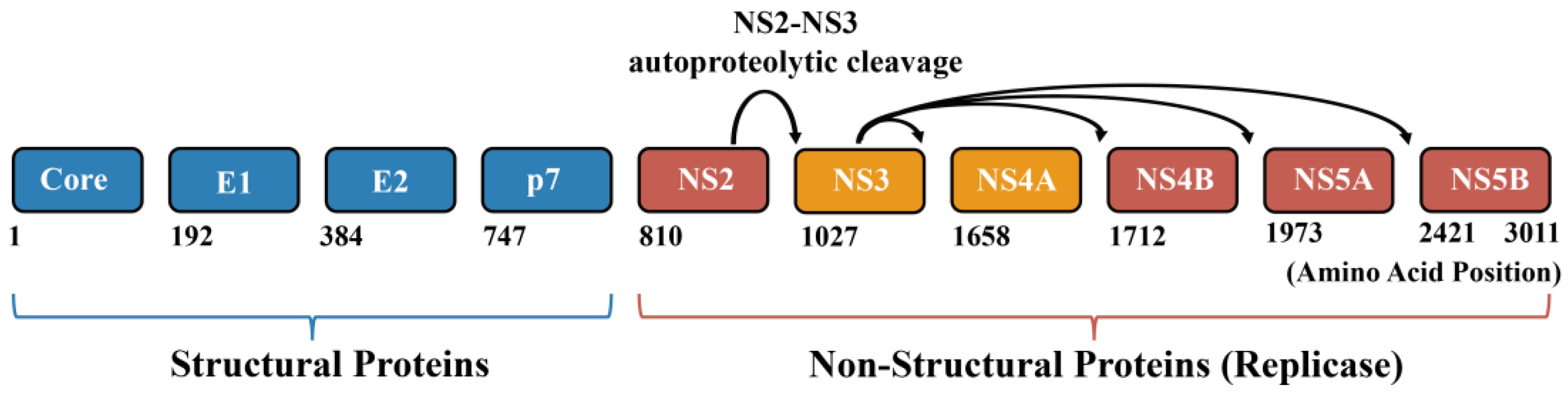
2. Functions of NS3/4A Complex
2.1. Viral Replication
2.2. Immune Evasion
2.3. Metabolic Modulation
2.4. Interdomain Allosteric Regulation
3. Structures of NS3/4A Complex
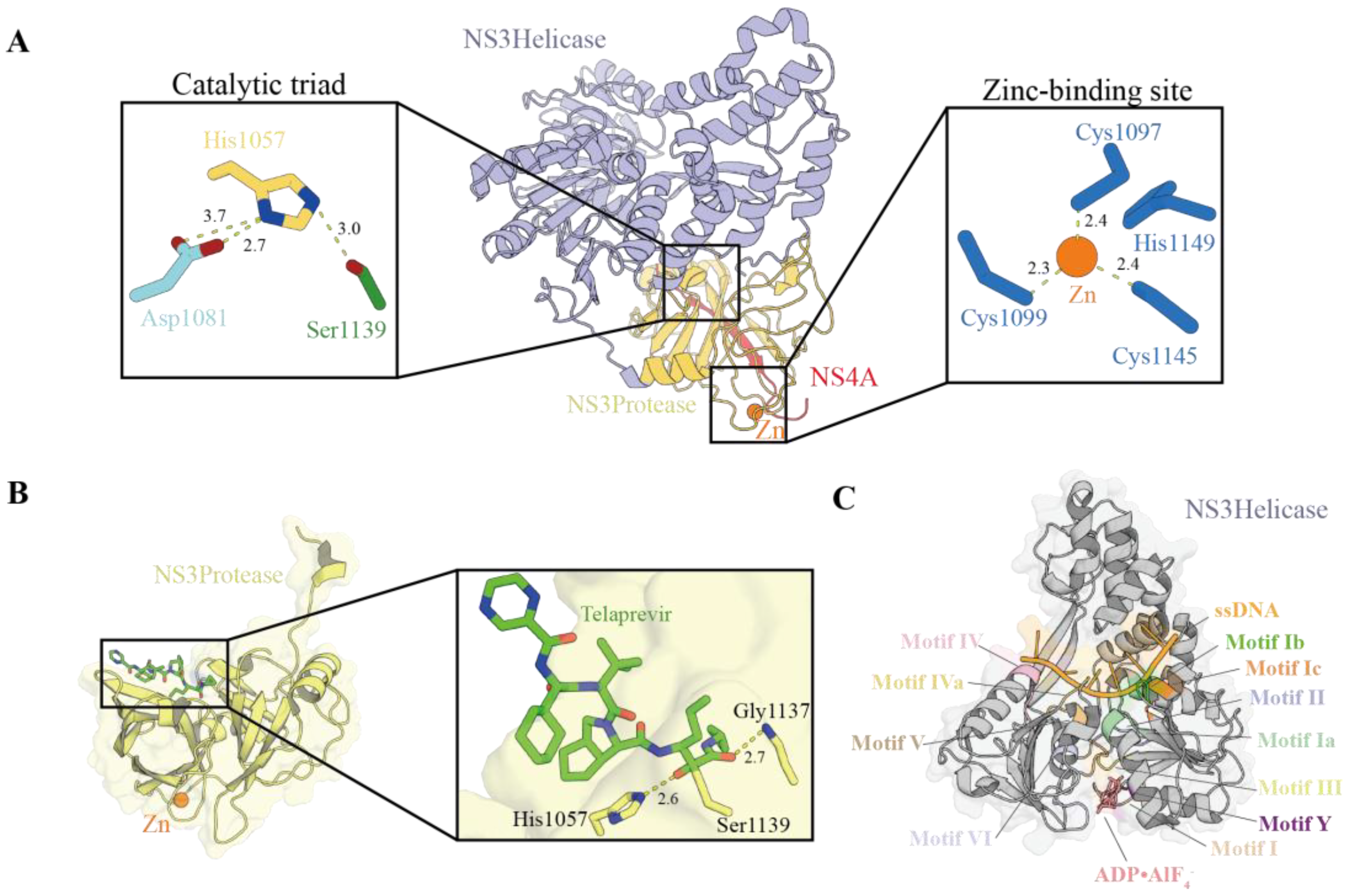
3.1. Protease Domain
3.2. Helicase Domain
3.3. Molecular Docking and Dynamics Studies
3.4. Limitations of Current NS3/4A Structural Models
4. The Application in Drug Design: Inhibition of the NS3/4A Complex
4.1. Evolution and Efficacy of DAAs
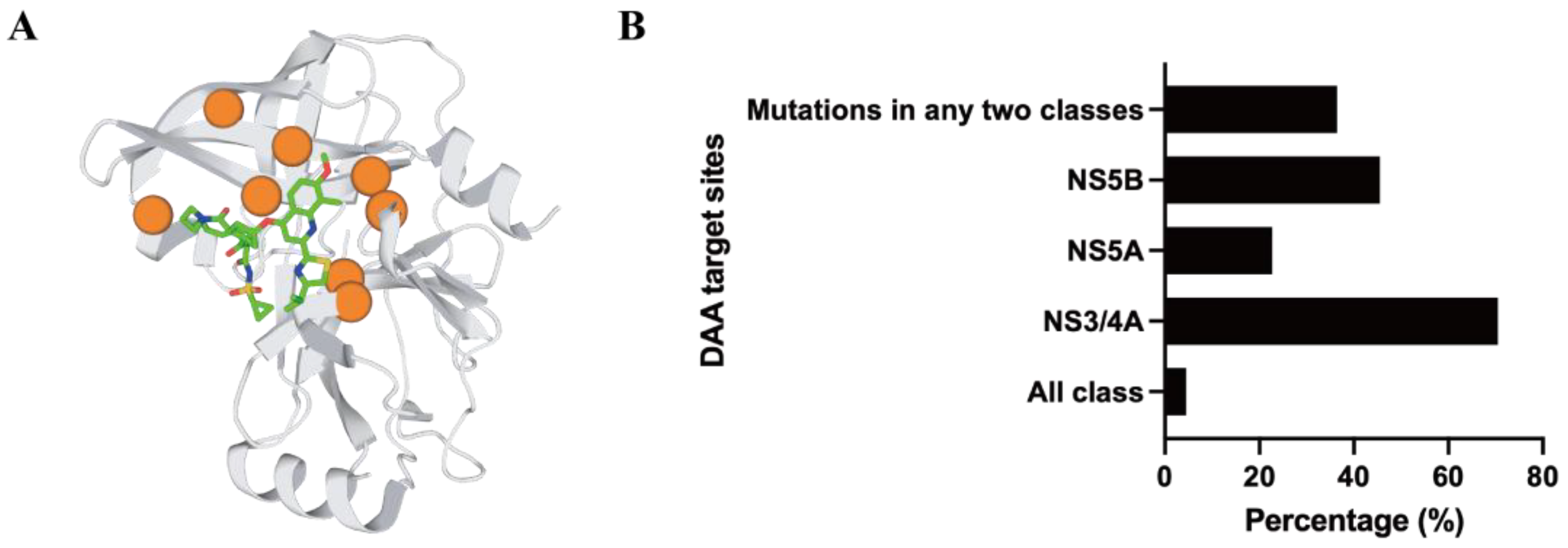
4.2. Resistance Challenges and Genotype 3 Specificity
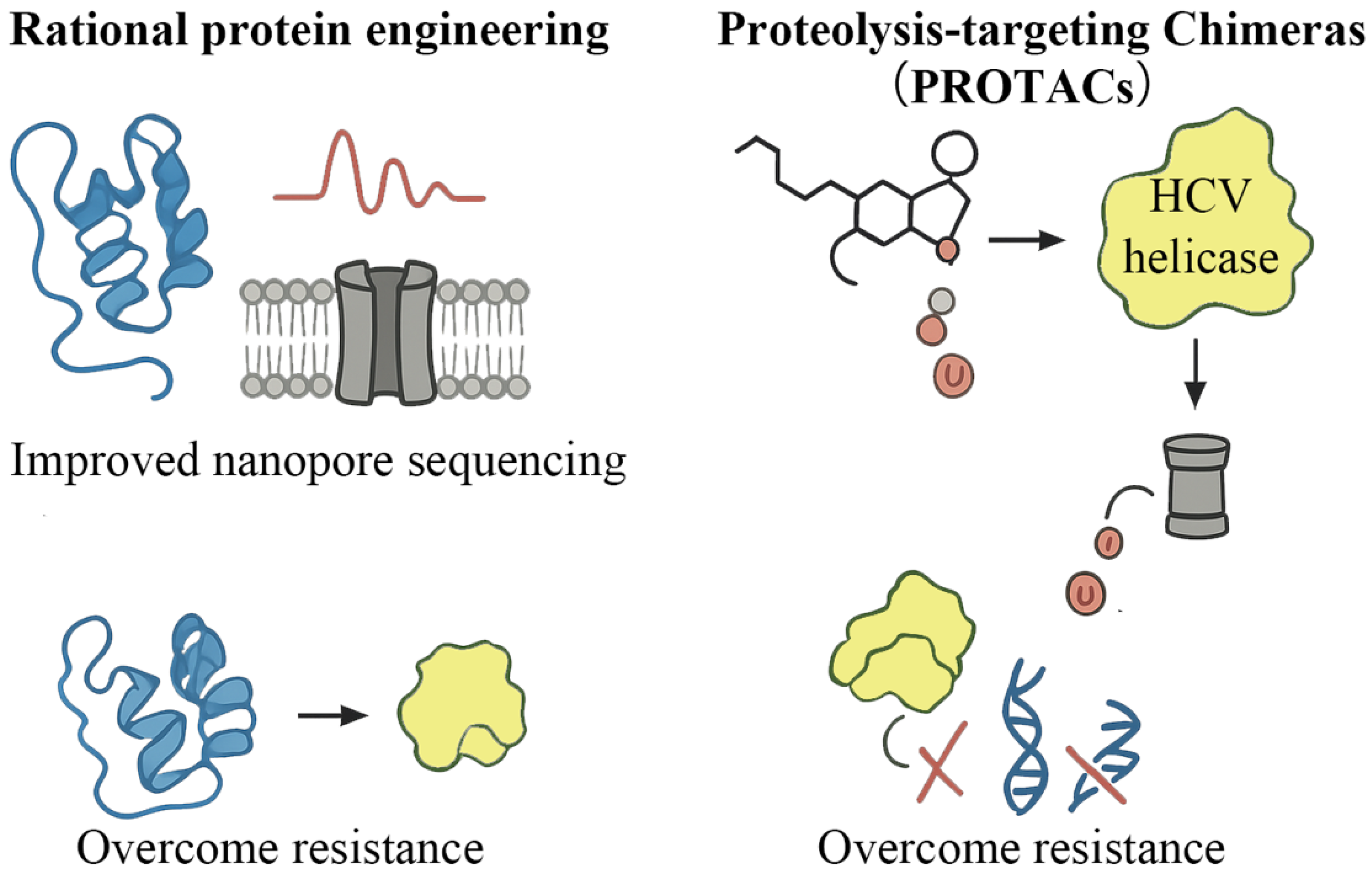
4.3. Emerging Strategies for Novel Inhibitor Discovery

| Category | Representative Agents/Strategies | Mechanism of Action | Development Status | References |
|---|---|---|---|---|
| Approved DAAs | 1st Gen: Telaprevir, Boceprevir | Linear α-ketoamides; reversible covalent inhibition by mimicking peptide substrate | Approved (First-generation) | [4,9,38] |
| 2nd Gen: Simeprevir, Asunaprevir | Macrocyclic compounds; competitive non-covalent inhibition with enhanced stability. | Approved (Second-generation) | [17,38,43] | |
| 3rd Gen: Paritaprevir, Voxilaprevir, Glecaprevir | Pan-genotypic inhibitors with optimized P2+ and P1 fluorination to overcome resistance. | Approved (Standard of care) | [4,13,38,39,40] | |
| Preclinical Inhibitors | TCP, TCM, DCP | Specifically optimized for GT3a; TCM shows high binding affinity (KD = 1.01 × 10⁻⁷ M). | Preclinical/Virtual screening | [9] |
| Compounds 141, 186, Cpd-217 | Novel covalent inhibitors maintaining high affinity across multiple GT3 mutants. | Preclinical/Computational | [18] | |
| Glucaric acid, EGCG, NP_024762 | Natural products and derivatives with favorable safety profiles. | Preclinical screening | [14,17,48] | |
| Allosteric Modulators | Benzothiazole dimers | Targets the protease-helicase interface to disrupt interdomain communication and allosteric coupling. | Research stage | [46] |
| PROTAC-based Strategies | DGY-08 series | Induces ubiquitination and proteasomal degradation of NS3/4A to bypass point-mutation-driven resistance. | Research stage/Emerging therapeutic modality | [4,49] |
| Helicase Inhibitors | RNA-binding cleft inhibitors (e.g., targeting M1485, V1524) | Disrupts ATP hydrolysis, nucleic acid binding, or mechanical unwinding; higher genetic barrier to resistance. | Research stage/Complementary strategy | [22,47,51,52,53,54] |
5. The Application in Protein Engineering—Enhanced Activity of Helicases
5.1. Nanopore Sequencing Applications
5.2. Biochemical Requirements of Helicase Activity
5.3. Engineering Strategies for Optimizing Helicase Activity
6. Discussion
7. Conclusions and Perspectives
7.1. Conclusions
7.2. Perspectives
Author Contributions
Funding
Institutional Review Board Statement
Informed Consent Statement
Data Availability Statement
Conflicts of Interest
Abbreviations
| ADRP | Adipose differentiation-related protein |
| CCTα | CTP-phosphocholine-cytidyl transferase alpha |
| COVID-19 | Coronavirus disease 2019 |
| DAAs | Direct-acting antiviral agents |
| DCP | N-(2,4-dichlorophenyl)-N-(2-(4-(piperidin-1-ylsulfonyl)benzylamino)ethyl)methanesulfonamide |
| FPN1 | Ferroportin 1 |
| GT3 | Genotype 3 |
| HBCVTr | An end-to-end transformer with a deep neural network hybrid model for anti-HBV and HCV activity predictor from SMILES |
| HCV | Hepatitis C virus |
| MAVS | Mitochondrial antiviral-signaling protein |
| MicroED | Microcrystal electron diffraction |
| NS3P | NS3 protease |
| PIs | Protease inhibitors |
| PROTACs | Proteolysis-targeting chimeras |
| RASs | Resistance-associated substitutions |
| RIG-I/MAD5 | Retinoic acid-inducible gene I/melanoma differentiation-associated protein 5 |
| RMSD | Root Mean Square Deviation |
| SF2 | Superfamily 2 |
| SPG20 | Spartin |
| SPR | Surface plasmon resonance |
| SVR | Sustained virologic response |
| TCM | N-(2-(4-(morpholinosulfonyl)benzyl amino)ethyl)-N-(2,4,5-trichlorophenyl)methanesulfonamide |
| TCP | N-(2-(4-(piperidin-1-ylsulfonyl)benzylamino)ethyl)-N-(2,4,5-trichlorophenyl)methanesulfonamide |
| TRIF | TIR-domain-containing adapter-inducing interferon-β |
References
- Meewan, I.; Panmanee, J.; Petchyam, N.; Lertvilai, P. HBCVTr: An end-to-end transformer with a deep neural network hybrid model for anti-HBV and HCV activity predictor from SMILES. Sci. Rep. 2024, 14, 9262. [Google Scholar] [CrossRef]
- Chen, S.L.; Morgan, T.R. The natural history of hepatitis C virus (HCV) infection. Int. J. Med. Sci. 2006, 3, 47–52. [Google Scholar] [CrossRef]
- Chutoam, P.; Srisucharitpanit, K.; Intamaso, U. Investigating the Immunogenic Properties of a Mutagenized NS3/4A-Based HCV Genotype 3a DNA Vaccine. Viral Immunol. 2025, 38, 1–11. [Google Scholar] [CrossRef]
- Martino, S.D.; Petri, G.L.; De Rosa, M. Hepatitis C: The Story of a Long Journey through First, Second, and Third Generation NS3/4A Peptidomimetic Inhibitors. What Did We Learn? J. Med. Chem. 2024, 67, 885–921. [Google Scholar] [CrossRef]
- Dwivedi, M.; Dwivedi, A.; Mukherjee, D. An Insight into Hepatitis C Virus: In Search of Promising Drug Targets. Curr. Drug Targets 2023, 24, 1127–1138. [Google Scholar] [CrossRef]
- Kamal, S.; Shahzad, A.; Rehman, K.; Tariq, K.; Akash, M.S.H.; Imran, M.; Assiri, M.A. Therapeutic Intervention of Serine Protease Inhibitors against Hepatitis C Virus. Curr. Med. Chem. 2024, 31, 2052–2072. [Google Scholar] [CrossRef]
- Ohta, K.; Ito, M.; Chida, T.; Nakashima, K.; Sakai, S.; Kanegae, Y.; Kawasaki, H.; Aoshima, T.; Takabayashi, S.; Takahashi, H.; et al. Role of hepcidin upregulation and proteolytic cleavage of ferroportin 1 in hepatitis C virus-induced iron accumulation. PLoS Pathog. 2023, 19, e1011591. [Google Scholar] [CrossRef]
- Burki, T. WHO’s 2024 global hepatitis report. Lancet Infect. Dis. 2024, 24, e362–e363. [Google Scholar] [CrossRef]
- Nguyen, D.P.; Nguyen, H.X.; Van Nguyen, H.; Dang, L.M.; Nguyen, M.T.; Minh Nguyen, H.T. On the steroids extracted from soft corals against the NS3/4A protease of hepatitis C virus. J. Mol. Graph. Model. 2025, 136, 108936. [Google Scholar] [CrossRef]
- Colasanti, O.; Burm, R.; Huang, H.-E.; Riedl, T.; Traut, J.; Gillich, N.; Li, T.-F.; Corneillie, L.; Faure-Dupuy, S.; Grünvogel, O.; et al. Comparison of HAV and HCV infections in vivo and in vitro reveals distinct patterns of innate immune evasion and activation. J. Hepatol. 2023, 79, 645–656. [Google Scholar] [CrossRef]
- Shahab, M.; Khan, A.; Khan, S.A.; Zheng, G. Unraveling the mechanisms of Sofosbuvir resistance in HCV NS3/4A protease: Structural and molecular simulation-based insights. Int. J. Biol. Macromol. 2024, 267, 131629. [Google Scholar] [CrossRef] [PubMed]
- Iman, K.; Mirza, M.U.; Sadia, F.; Froeyen, M.; Trant, J.F.; Chaudhary, S.U. Pharmacophore-Assisted Covalent Docking Identifies a Potential Covalent Inhibitor for Drug-Resistant Genotype 3 Variants of Hepatitis C Viral NS3/4A Serine Protease. Viruses 2024, 16, 1250. [Google Scholar] [CrossRef]
- Bu, G.; Danelius, E.; Wieske, L.H.E.; Gonen, T. Polymorphic Structure Determination of the Macrocyclic Drug Paritaprevir by MicroED. Adv. Biol. 2024, 8, 2300570. [Google Scholar] [CrossRef]
- Samantaray, M.; Pattabiraman, R.; Murthy, T.P.K.; Ramaswamy, A.; Murahari, M.; Krishna, S.; Kumar, S.B. Structure-based virtual screening of natural compounds against wild and mutant (R1155K, A1156T and D1168A) NS3-4A protease of Hepatitis C virus. J. Biomol. Struct. Dyn. 2024, 42, 8505–8522. [Google Scholar] [CrossRef]
- Moradpour, D.; Penin, F. Hepatitis C Virus Proteins: From Structure to Function. In Hepatitis C Virus: From Molecular Virology to Antiviral Therapy; Bartenschlager, R., Ed.; Springer: Berlin/Heidelberg, Germany, 2013; Volume 369, pp. 113–142. [Google Scholar] [CrossRef]
- Maunye, T.K.; Gededzha, M.P.; Blackard, J.T.; Rakgole, J.N.; Selabe, S.G. Hepatitis C Virus Genotype 5 Variability in Treatment-Naïve Patients in South Africa. Intervirology 2023, 66, 77–87. [Google Scholar] [CrossRef] [PubMed]
- Charles, S.; Edgar, M.P. Geometric Deep learning Prioritization and Validation of Cannabis Phytochemicals as Anti-HCV Non-nucleoside Direct-acting Inhibitors. Biomed. Eng. Comput. Biol. 2024, 15, 11795972241306881. [Google Scholar] [CrossRef]
- Hussain, R.; Haider, Z.; Khalid, H.; Fatmi, M.Q.; Carradori, S.; Cataldi, A.; Zara, S. Computational medicinal chemistry applications to target Asian-prevalent strain of hepatitis C virus. RSC Adv. 2023, 13, 30052–30070. [Google Scholar] [CrossRef]
- Bartenschlager, R.; Lohmann, V. Replication of hepatitis C virus. J. Gen. Virol. 2000, 81, 1631–1648. [Google Scholar] [CrossRef]
- Lindenbach, B.D.; Rice, C.M. The ins and outs of hepatitis C virus entry and assembly. Nat. Rev. Microbiol. 2013, 11, 688–700. [Google Scholar] [CrossRef]
- Moradpour, D.; Penin, F.; Rice, C.M. Replication of hepatitis C virus. Nat. Rev. Microbiol. 2007, 5, 453–463. [Google Scholar] [CrossRef] [PubMed]
- Frick, D.N. The Hepatitis C Virus NS3 Protein: A Model RNA Helicase and Potential Drug Target. Curr. Issues Mol. Biol. 2007, 9, 1–20. [Google Scholar] [CrossRef]
- Dumont, S.; Cheng, W.; Serebrov, V.; Beran, R.K.; Tinoco, I.; Pyle, A.M.; Bustamante, C. RNA translocation and unwinding mechanism of HCV NS3 helicase and its coordination by ATP. Nature 2006, 439, 105–108. [Google Scholar] [CrossRef]
- Sarwar, S.; Randall, G. HCV NS3/4A protease relocalizes CCTα to viral replication sites, enhancing phosphatidylcholine synthesis and viral replication. Proc. Natl. Acad. Sci. USA 2025, 122, e2419632122. [Google Scholar] [CrossRef]
- Matsui, C.; Yuliandari, P.; Deng, L.; Abe, T.; Shoji, I. Hepatitis C virus NS3/4A protease cleaves SPG20, a key regulator of lipid droplet turnover, to promote lipid droplet formation. J. Virol. 2025, 99, e008925. [Google Scholar] [CrossRef]
- Yang, C.-H.; Wu, C.-H.; Lo, S.-Y.; Lua, A.-C.; Chan, Y.-R.; Li, H.-C. Hepatitis C Virus Down-Regulates the Expression of Ribonucleotide Reductases to Promote Its Replication. Pathogens 2023, 12, 892. [Google Scholar] [CrossRef]
- Aydin, C.; Mukherjee, S.; Hanson, A.M.; Frick, D.N.; Schiffer, C.A. The interdomain interface in bifunctional enzyme protein 3/4A (NS3/4A) regulates protease and helicase activities. Protein Sci. 2013, 22, 1786–1798. [Google Scholar] [CrossRef] [PubMed]
- Rajagopal, V.; Gurjar, M.; Levin, M.K.; Patel, S.S. The Protease Domain Increases the Translocation Stepping Efficiency of the Hepatitis C Virus NS3-4A Helicase. J. Biol. Chem. 2010, 285, 17821–17832. [Google Scholar] [CrossRef] [PubMed]
- Romano, K.P.; Ali, A.; Aydin, C.; Soumana, D.; Özen, A.; Deveau, L.M.; Silver, C.; Cao, H.; Newton, A.; Petropoulos, C.J.; et al. The Molecular Basis of Drug Resistance against Hepatitis C Virus NS3/4A Protease Inhibitors. PLoS Pathog. 2012, 8, e1002832. [Google Scholar] [CrossRef]
- Love, R.A.; Parge, H.E.; Wickersham, J.A.; Hostomsky, Z.; Habuka, N.; Moomaw, E.W.; Adachi, T.; Hostomska, Z. The Crystal Structure of Hepatitis C Virus NS3 Proteinase Reveals a Trypsin-like Fold and a Structural Zinc Binding Site. Cell 1996, 87, 331–342. [Google Scholar] [CrossRef]
- Kim, J.L.; Morgenstern, K.A.; Lin, C.; Fox, T.; Dwyer, M.D.; Landro, J.A.; Chambers, S.P.; Markland, W.; Lepre, C.A.; O’Malley, E.T.; et al. Crystal Structure of the Hepatitis C Virus NS3 Protease Domain Complexed with a Synthetic NS4A Cofactor Peptide. Cell 1996, 87, 343–355. [Google Scholar] [CrossRef] [PubMed]
- Sakhor, W.; Teoh, T.C.; Yusof, R.; Lim, S.K.; Razif, M.F.M. Discovery of small molecule inhibitors against the NS3/4A serine protease of Hepatitis C virus genotype 3 via highthroughput virtual screening and in vitro evaluations. Trop. Biomed. 2020, 37, 609–625. [Google Scholar] [CrossRef] [PubMed]
- Hijikata, M.; Mizushima, H.; Akagi, T.; Mori, S.; Kakiuchi, N.; Kato, N.; Tanaka, T.; Kimura, K.; Shimotohno, K. Two distinct proteinase activities required for the processing of a putative nonstructural precursor protein of hepatitis C virus. J. Virol. 1993, 67, 4665–4675. [Google Scholar] [CrossRef]
- Lu, H.; Zhan, Y.; Li, X.; Bai, X.; Yuan, F.; Ma, L.; Wang, X.; Xie, M.; Wu, W.; Chen, Z. Novel insights into the function of an N-terminal region of DENV2 NS4B for the optimal helicase activity of NS3. Virus Res. 2021, 295, 198318. [Google Scholar] [CrossRef] [PubMed]
- Yao, N.; Reichert, P.; Taremi, S.S.; Prosise, W.W.; Weber, P.C. Molecular views of viral polyprotein processing revealed by the crystal structure of the hepatitis C virus bifunctional protease-helicase. Structure 1999, 7, 1353–1363. [Google Scholar] [CrossRef]
- Gu, M.; Rice, C.M. Three conformational snapshots of the hepatitis C virus NS3 helicase reveal a ratchet translocation mechanism. Proc. Natl. Acad. Sci. USA 2010, 107, 521–528. [Google Scholar] [CrossRef] [PubMed]
- Donmez, I.; Rajagopal, V.; Jeong, Y.-J.; Patel, S.S. Nucleic Acid Unwinding by Hepatitis C Virus and Bacteriophage T7 Helicases Is Sensitive to Base Pair Stability. J. Biol. Chem. 2007, 282, 21116–21123. [Google Scholar] [CrossRef][Green Version]
- Liverton, N.J. Evolution of HCV NS3/4a Protease Inhibitors. In HCV: The Journey from Discovery to a Cure: Volume I; Sofia, M.J., Ed.; Springer International Publishing: Cham, Switzerland, 2019; pp. 231–259. [Google Scholar] [CrossRef]
- Tang, C.; Deng, Z.; Li, X.; Yang, M.; Tian, Z.; Chen, Z.; Wang, G.; Wu, W.; Feng, W.-h.; Zhang, G.; et al. Helicase of Type 2 Porcine Reproductive and Respiratory Syndrome Virus Strain HV Reveals a Unique Structure. Viruses 2020, 12, 215. [Google Scholar] [CrossRef]
- Zephyr, J.; Nageswara Rao, D.; Vo, S.V.; Henes, M.; Kosovrasti, K.; Matthew, A.N.; Hedger, A.K.; Timm, J.; Chan, E.T.; Ali, A.; et al. Deciphering the Molecular Mechanism of HCV Protease Inhibitor Fluorination as a General Approach to Avoid Drug Resistance. J. Mol. Biol. 2022, 434, 167503. [Google Scholar] [CrossRef]
- Borghi, C.; Ciancio, A.; Gentile, I.; Perrone Filardi, P.; Pasqualetti, P.; Brillanti, S. Evaluation of Drug Interactions in Patients Treated with DAAs for Hepatitis C Therapy with Comorbidities and Cardiovascular Issues—A Delphi Consensus Project. J. Clin. Med. 2022, 11, 6946. [Google Scholar] [CrossRef]
- Bourlière, M.; Gordon, S.C.; Flamm, S.L.; Cooper, C.L.; Ramji, A.; Tong, M.; Ravendhran, N.; Vierling, J.M.; Tran, T.T.; Pianko, S.; et al. Sofosbuvir, Velpatasvir, and Voxilaprevir for Previously Treated HCV Infection. N. Engl. J. Med. 2017, 376, 2134–2146. [Google Scholar] [CrossRef]
- Izhari, M.A. Molecular Mechanisms of Resistance to Direct-Acting Antiviral (DAA) Drugs for the Treatment of Hepatitis C Virus Infections. Diagnostics 2023, 13, 3102. [Google Scholar] [CrossRef]
- Kattel, H.P.; Sharma, S.; Alfsnes, K.; Pettersson, J.H.; Pathak, R.; Engebretsen, S.B.; Rijal, K.R.; Ghimire, P.; Andreassen, Å.K.; Banjara, M.R. The Genotypes/Subtypes and Antiviral Drug Resistance of the Hepatitis C Virus from Patients in a Tertiary Care Hospital in Nepal. Viruses 2025, 17, 377. [Google Scholar] [CrossRef]
- Cummings, M.D.; Lindberg, J.; Lin, T.-I.; de Kock, H.; Lenz, O.; Lilja, E.; Felländer, S.; Baraznenok, V.; Nyström, S.; Nilsson, M.; et al. Induced-Fit Binding of the Macrocyclic Noncovalent Inhibitor TMC435 to its HCV NS3/NS4A Protease Target. Angew. Chem. Int. Ed. Engl. 2010, 49, 1652–1655. [Google Scholar] [CrossRef]
- Murray, M. Mechanisms and Clinical Significance of Pharmacokinetic Drug Interactions Mediated by FDA and EMA-approved Hepatitis C Direct-Acting Antiviral Agents. Clin. Pharmacokinet. 2023, 62, 1365–1392. [Google Scholar] [CrossRef]
- Riaz, M.; Rehman, A.U.; Waqas, M.; Khalid, A.; Abdalla, A.N.; Mahmood, A.; Hu, J.; Wadood, A. A Novel Approach to Develop New and Potent Inhibitors for the Simultaneous Inhibition of Protease and Helicase Activities of HCV NS3/4A Protease: A Computational Approach. Molecules 2023, 28, 1300. [Google Scholar] [CrossRef]
- Rani, A.; Saini, V.; Patra, P.; Prashar, T.; Pandey, R.K.; Mishra, A.; Jha, H.C. Epigallocatechin Gallate: A Multifaceted Molecule for Neurological Disorders and Neurotropic Viral Infections. ACS Chem. Neurosci. 2023, 14, 2968–2980. [Google Scholar] [CrossRef]
- de Wispelaere, M.; Du, G.; Donovan, K.A.; Zhang, T.; Eleuteri, N.A.; Yuan, J.C.; Kalabathula, J.; Nowak, R.P.; Fischer, E.S.; Gray, N.S.; et al. Small molecule degraders of the hepatitis C virus protease reduce susceptibility to resistance mutations. Nat. Commun. 2019, 10, 3468. [Google Scholar] [CrossRef]
- Newton, L.S.; Gathmann, C.; Ridewood, S.; Smith, R.J.; Wijaya, A.J.; Hornsby, T.W.; Morling, K.L.; Annett, D.; Chiozzi, R.Z.; Reuschl, A.-K.; et al. Macrocycle-based PROTACs selectively degrade cyclophilin A and inhibit HIV-1 and HCV. Nat. Commun. 2025, 16, 1484. [Google Scholar] [CrossRef]
- Tai, C.L.; Chi, W.K.; Chen, D.S.; Hwang, L.H. The helicase activity associated with hepatitis C virus nonstructural protein 3 (NS3). J. Virol. 1996, 70, 8477–8484. [Google Scholar] [CrossRef]
- Appleby, T.C.; Perry, J.K.; Murakami, E.; Barauskas, O.; Feng, J.; Cho, A.; Fox, D.; Wetmore, D.R.; McGrath, M.E.; Ray, A.S.; et al. Structural basis for RNA replication by the hepatitis C virus polymerase. Science 2015, 347, 771–775. [Google Scholar] [CrossRef]
- Liu, D.; Ndongwe, T.P.; Ji, J.; Huber, A.D.; Michailidis, E.; Rice, C.M.; Ralston, R.; Tedbury, P.R.; Sarafianos, S.G. Mechanisms of Action of the Host-Targeting Agent Cyclosporin A and Direct-Acting Antiviral Agents against Hepatitis C Virus. Viruses 2023, 15, 981. [Google Scholar] [CrossRef]
- Belon, C.A.; Frick, D.N. Helicase inhibitors as specifically targeted antiviral therapy for hepatitis C. Future Virol. 2009, 4, 277–293. [Google Scholar] [CrossRef]
- Cui, Y.; Zhai, Y.; Zhao, Y.; Ma, X. Nanopore-Based Label-Free and Single-Molecule Sequencing toward Precision Diagnosis. Adv. Mater. 2025, 38, e13613. [Google Scholar] [CrossRef]
- Beijing Qitan Technology Co., Ltd. NS3 Helicase Mutants for Characterizing Biomolecules and Uses Thereof. CN 120230736 A, 30 April 2024. [Google Scholar]
- Craig, J.M.; Laszlo, A.H.; Nova, I.C.; Brinkerhoff, H.; Noakes, M.T.; Baker, K.S.; Bowman, J.L.; Higinbotham, H.R.; Mount, J.W.; Gundlach, J.H. Determining the effects of DNA sequence on Hel308 helicase translocation along single-stranded DNA using nanopore tweezers. Nucleic Acids Res. 2019, 47, 2506–2513. [Google Scholar] [CrossRef]
- Dorey, A.; Howorka, S. Nanopore DNA sequencing technologies and their applications towards single-molecule proteomics. Nat. Chem. 2024, 16, 314–334. [Google Scholar] [CrossRef]
- Thomas, C.A.; Brinkerhoff, H.; Craig, J.M.; Hoshika, S.; Mihaylova, D.; Pfeffer, A.M.; Franzi, M.C.; Abell, S.J.; Carrasco, J.D.; Gundlach, J.H.; et al. Sequencing a DNA analog composed of artificial bases. Nat. Commun. 2025, 16, 7240. [Google Scholar] [CrossRef]
- Kyono, K.; Miyashiro, M.; Taguchi, I. Expression and Purification of a Hepatitis C Virus NS3/4A Complex, and Characterization of Its Helicase Activity with the Scintillation Proximity Assay System. J. Biochem. 2004, 135, 245–252. [Google Scholar] [CrossRef]
- Lam, A.M.I.; Frick, D.N. Hepatitis C Virus Subgenomic Replicon Requires an Active NS3 RNA Helicase. J. Virol. 2006, 80, 404–411. [Google Scholar] [CrossRef]
- Lohmann, V.; Körner, F.; Koch, J.-O.; Herian, U.; Theilmann, L.; Bartenschlager, R. Replication of Subgenomic Hepatitis C Virus RNAs in a Hepatoma Cell Line. Science 1999, 285, 110–113. [Google Scholar] [CrossRef]
- Yao, N.; Hesson, T.; Cable, M.; Hong, Z.; Kwong, A.D.; Le, H.V.; Weber, P.C. Structure of the hepatitis C virus RNA helicase domain. Nat. Struct. Mol. Biol. 1997, 4, 463–467. [Google Scholar] [CrossRef]
- Lawitz, E.; Mangia, A.; Wyles, D.; Rodriguez-Torres, M.; Hassanein, T.; Gordon, S.C.; Schultz, M.; Davis, M.N.; Kayali, Z.; Reddy, K.R.; et al. Sofosbuvir for Previously Untreated Chronic Hepatitis C Infection. N. Engl. J. Med. 2013, 368, 1878–1887. [Google Scholar] [CrossRef] [PubMed]
- Timm, J.; Kosovrasti, K.; Henes, M.; Leidner, F.; Hou, S.; Ali, A.; Kurt Yilmaz, N.; Schiffer, C.A. Molecular and Structural Mechanism of Pan-Genotypic HCV NS3/4A Protease Inhibition by Glecaprevir. ACS Chem. Biol. 2020, 15, 342–352. [Google Scholar] [CrossRef] [PubMed]


| Activity Category | KEY Observation | Regulatory Mechanism |
|---|---|---|
| DNA unwinding activity | Disrupting the structural interface will significantly enhance the DNA-unwinding rate. | The activity of the interface mutant (e.g., Triple Hel, S1483A-M1485A-V1524A mutation) is up to 11.6-fold higher than that of the wild-type full-length protein. Isolated NS3 helicase unwinds faster than the full-length NS3/4A (up to 5.7-fold). |
| The processivity is consequently affected. | The protease domain enhances the helicase’s processivity under single-turn unwinding conditions. Conversely, mutations that disrupt the direct interface increase overall activity but compromise processivity. | |
| RNA unwinding activity | The RNA unwinding activity of the full-length protein is significantly higher than that of the isolated helicase domain. Specifically, the isolated NS3 helicase unwinds RNA approximately 10-fold more slowly than the full-length scNS3/4A. | The enhanced rate is attributed to the presence of the protease domain rather than mediation through the interdomain interface. |
| Mutations have negligible effects at the interface. | The protease domain may function as a helicase cofactor, stabilizing protein-RNA interactions and modulating RNA unwinding activity and persistence. There is a potential direct interaction between RNA and the protease domain. | |
| ssDNA Binding Affinity | Interface mutations modulate ssDNA affinity. | Notably, certain mutants, exemplified by D1079A, Q1526A, and H1528A, display significantly enhanced binding affinity. In contrast, other mutants, such as Triple Hel, exhibit markedly diminished binding strength. |
| RNA-stimulated ATPase activity | Not affected by interface mutation. | This result is similar to the results of the RNA unwinding experiment. |
| Residue Position | Genotype 1b | Genotype 3a | Structural and Functional Impact on Inhibitor Binding |
|---|---|---|---|
| 1036 | Val (V) | Leu (L) | Increases the hydrophobicity of the S1 pocket, potentially affecting the fit of early-generation protease inhibitors (PIs). |
| 1123 | Arg (R) | Thr (T) | Significant shift: Replaces a long, positively charged side chain with a shorter, polar one, altering the hydrogen-bonding network in the S4 pocket. |
| 1132 | Ile (I) | Leu (L) | Subtle rearrangement of the hydrophobic environment within the S2 pocket, affecting the orientation of the P2 moiety. |
| 1158 | Val (V) | Ile (I) | Positioned near the S3/S4 boundary; the bulkier side chain in GT3a may influence the binding of macrocyclic inhibitors. |
| 1168 | Asp (D) | Gln (Q) | Critical distinction: GT3a naturally carries Gln1168, which lacks the negative charge of Asp1168. This eliminates key electrostatic interactions (salt bridges) with P2 substituents, drastically reducing the potency of macrocyclic inhibitors like BILN 2061. |
| 1175 | Met (M) | Leu (L) | Located near the active site; contributes to the overall stability and minor conformational shifts between the two genotypes. |
| Feature | Phi29 DNA Polymerase | HCV NS3 Helicase |
|---|---|---|
| Substrate Compatibility | Primarily DNA | Both DNA and RNA [61]. |
| Driving Force | DNA Synthesis | ATP-dependent Unwinding |
| Primer Requirement | Requires a primer | Primer-independent |
| Key Advantage | Extreme processivity for DNA | Superior for direct RNA sequencing [62] |
Disclaimer/Publisher’s Note: The statements, opinions and data contained in all publications are solely those of the individual author(s) and contributor(s) and not of MDPI and/or the editor(s). MDPI and/or the editor(s) disclaim responsibility for any injury to people or property resulting from any ideas, methods, instructions or products referred to in the content. |
© 2026 by the authors. Licensee MDPI, Basel, Switzerland. This article is an open access article distributed under the terms and conditions of the Creative Commons Attribution (CC BY) license.
Share and Cite
Huang, K.; Zhang, M.; Huang, Y.; Chen, Z. Recent Progress in Structures and Functions of Hepatitis C Virus NS3/4A Proteins. Viruses 2026, 18, 233. https://doi.org/10.3390/v18020233
Huang K, Zhang M, Huang Y, Chen Z. Recent Progress in Structures and Functions of Hepatitis C Virus NS3/4A Proteins. Viruses. 2026; 18(2):233. https://doi.org/10.3390/v18020233
Chicago/Turabian StyleHuang, Keyang, Manfeng Zhang, Yihua Huang, and Zhongzhou Chen. 2026. "Recent Progress in Structures and Functions of Hepatitis C Virus NS3/4A Proteins" Viruses 18, no. 2: 233. https://doi.org/10.3390/v18020233
APA StyleHuang, K., Zhang, M., Huang, Y., & Chen, Z. (2026). Recent Progress in Structures and Functions of Hepatitis C Virus NS3/4A Proteins. Viruses, 18(2), 233. https://doi.org/10.3390/v18020233