
Resistance Mutations to Broadly Neutralizing Antibodies Destabilize Hemagglutinin and Attenuate H1N1 Influenza Virus
 , , , and
Abstract
1. Introduction
2. Materials and Methods
2.1. Cell Lines and Viruses
2.2. HA and Virus Stability Assay
2.3. Enzyme-Linked Immunosorbent Assay (ELISA)
2.4. Microneutralization Assay
2.5. Mouse Studies
2.6. Ferret Transmission Study
2.7. Expression and Purification of HA Protein Ectodomains and Biolayer Interferometry [24]
2.8. Statistical Analyses
3. Results
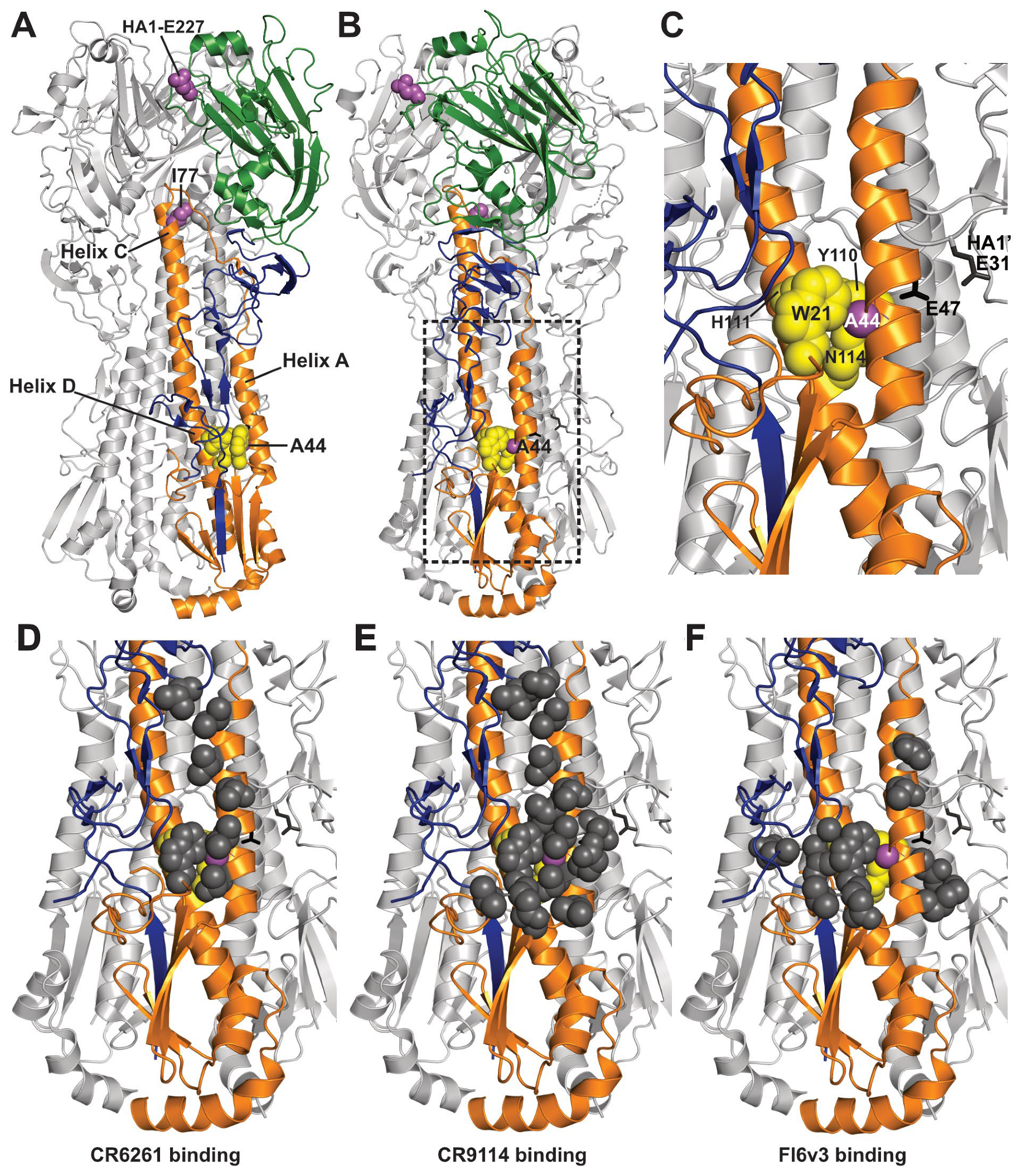
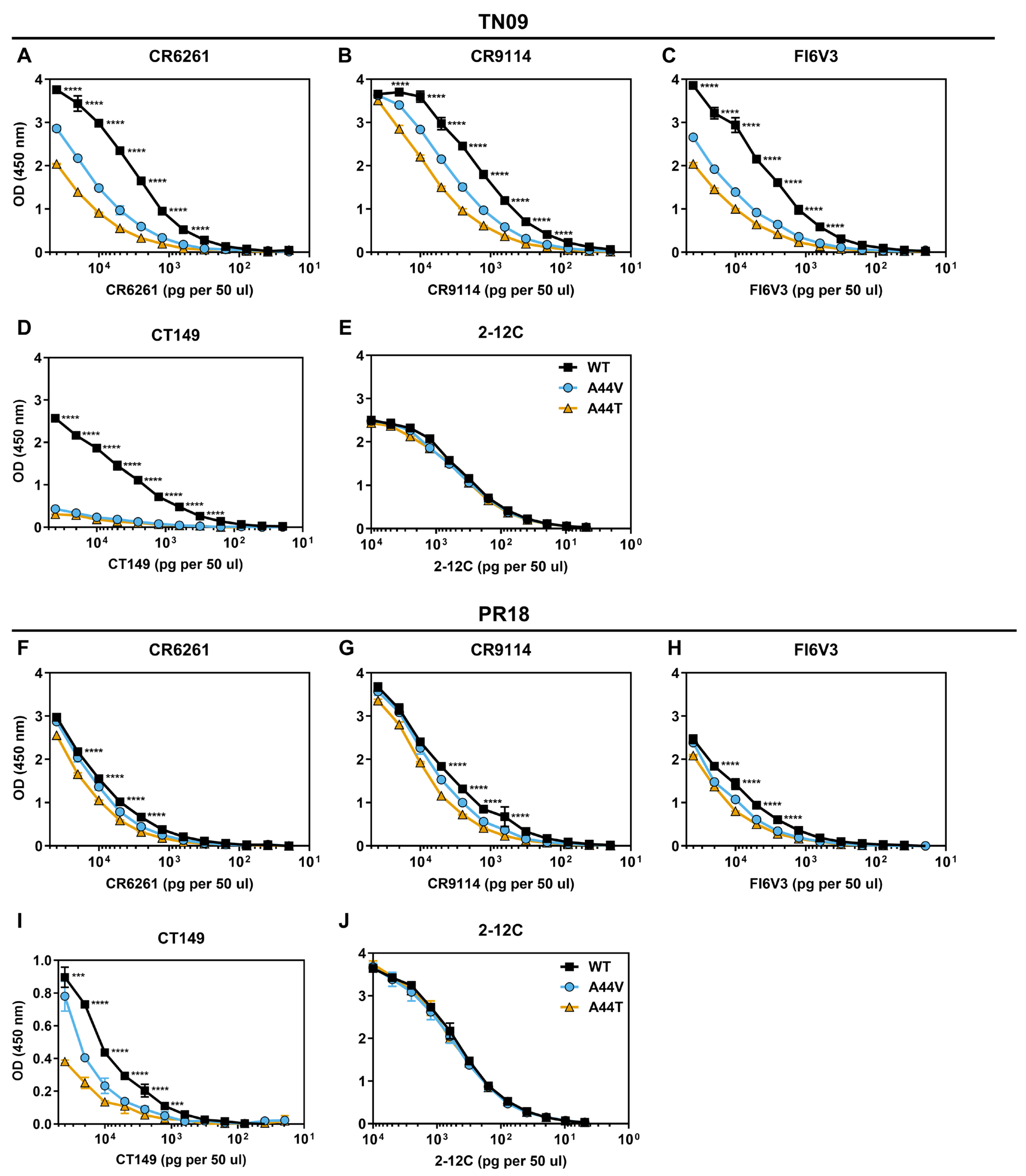
3.1. HA2-A44V and HA2-A44T Mutations Reduce bNAb Binding and Neutralization
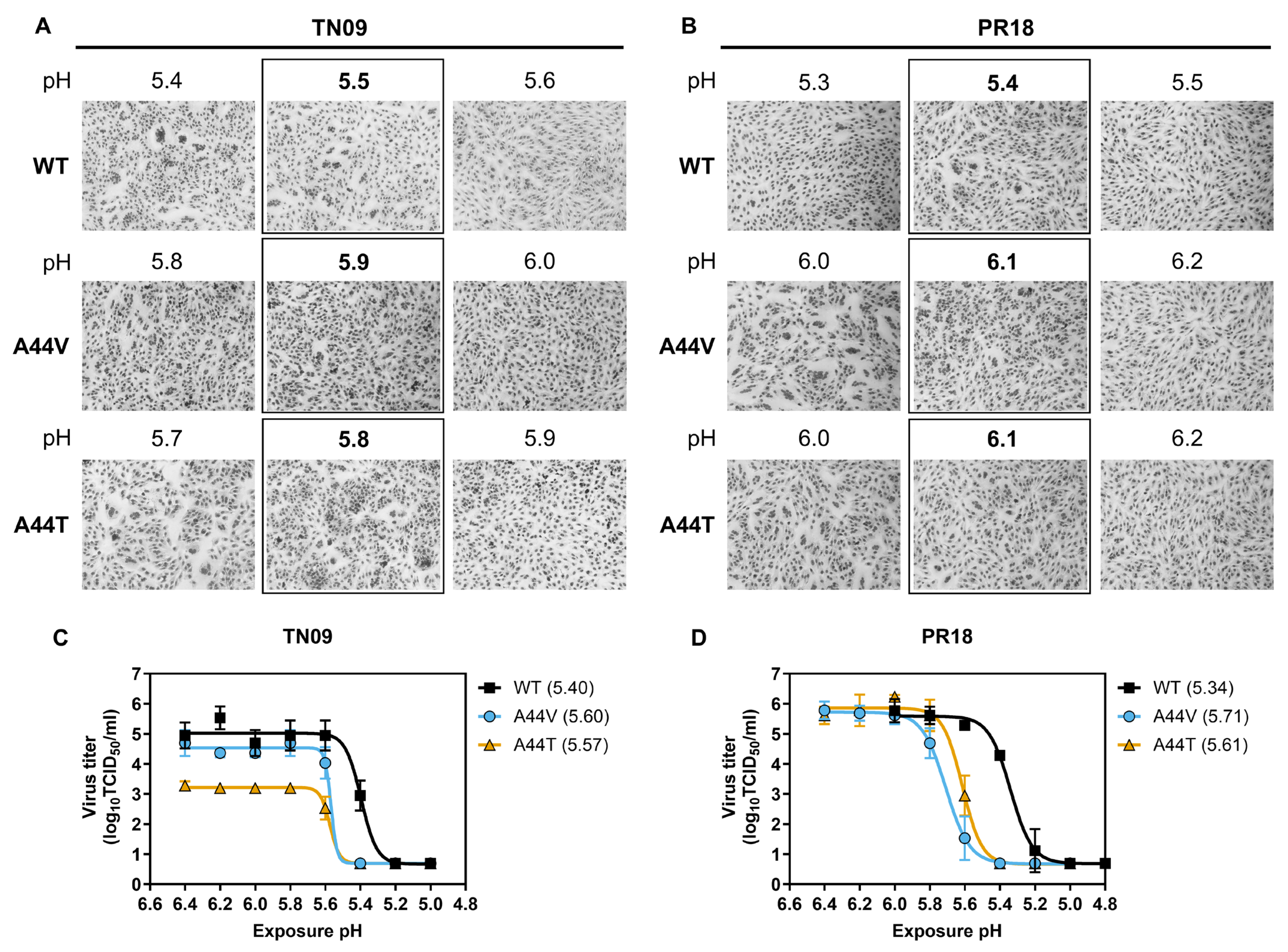
3.2. HA2-A44 Mutations Decrease HA and Virus Stability
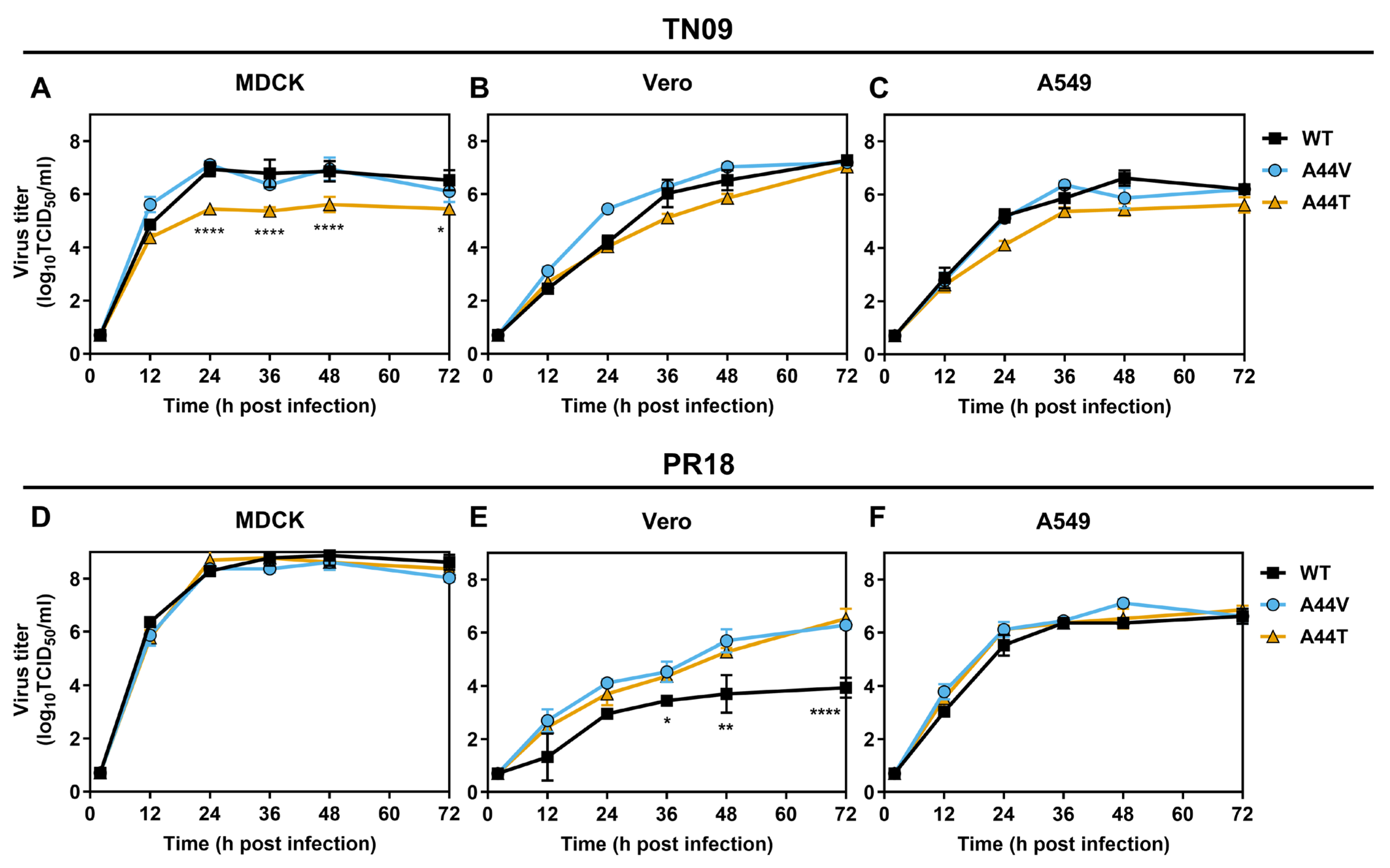
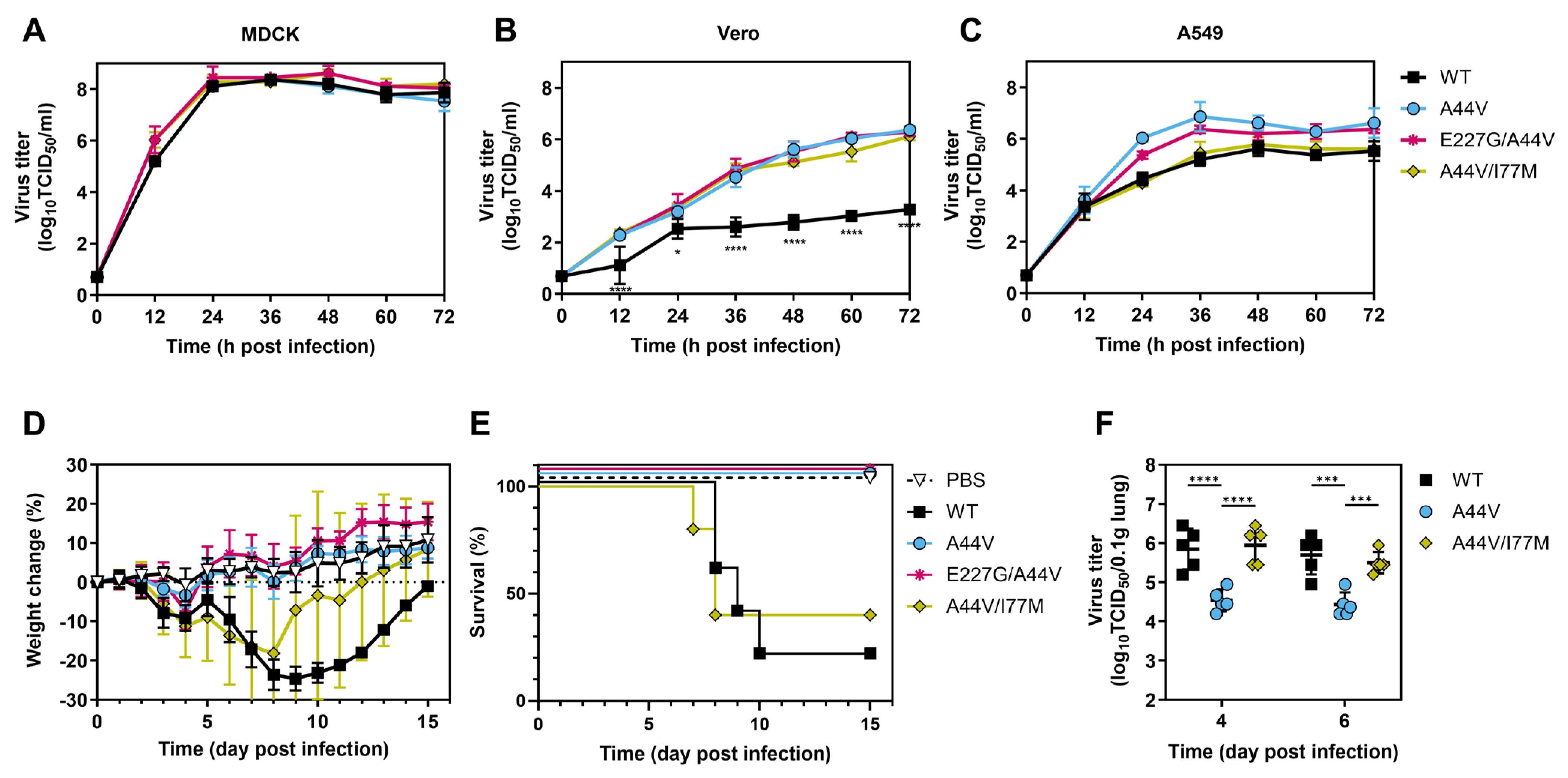
3.3. Virus Growth In Vitro
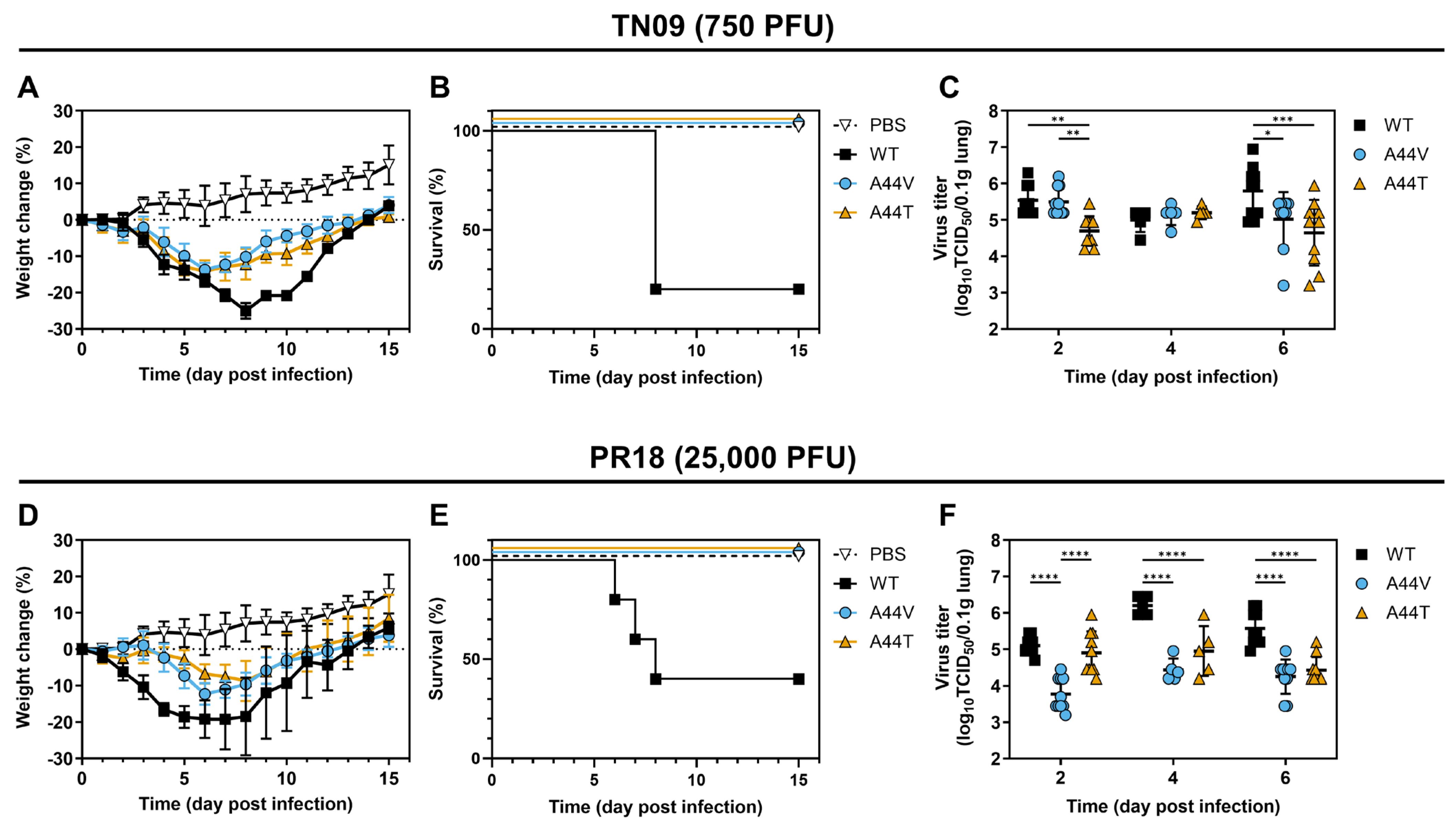
3.4. Destabilizing HA Mutations Reduce Pathogenicity in Mice
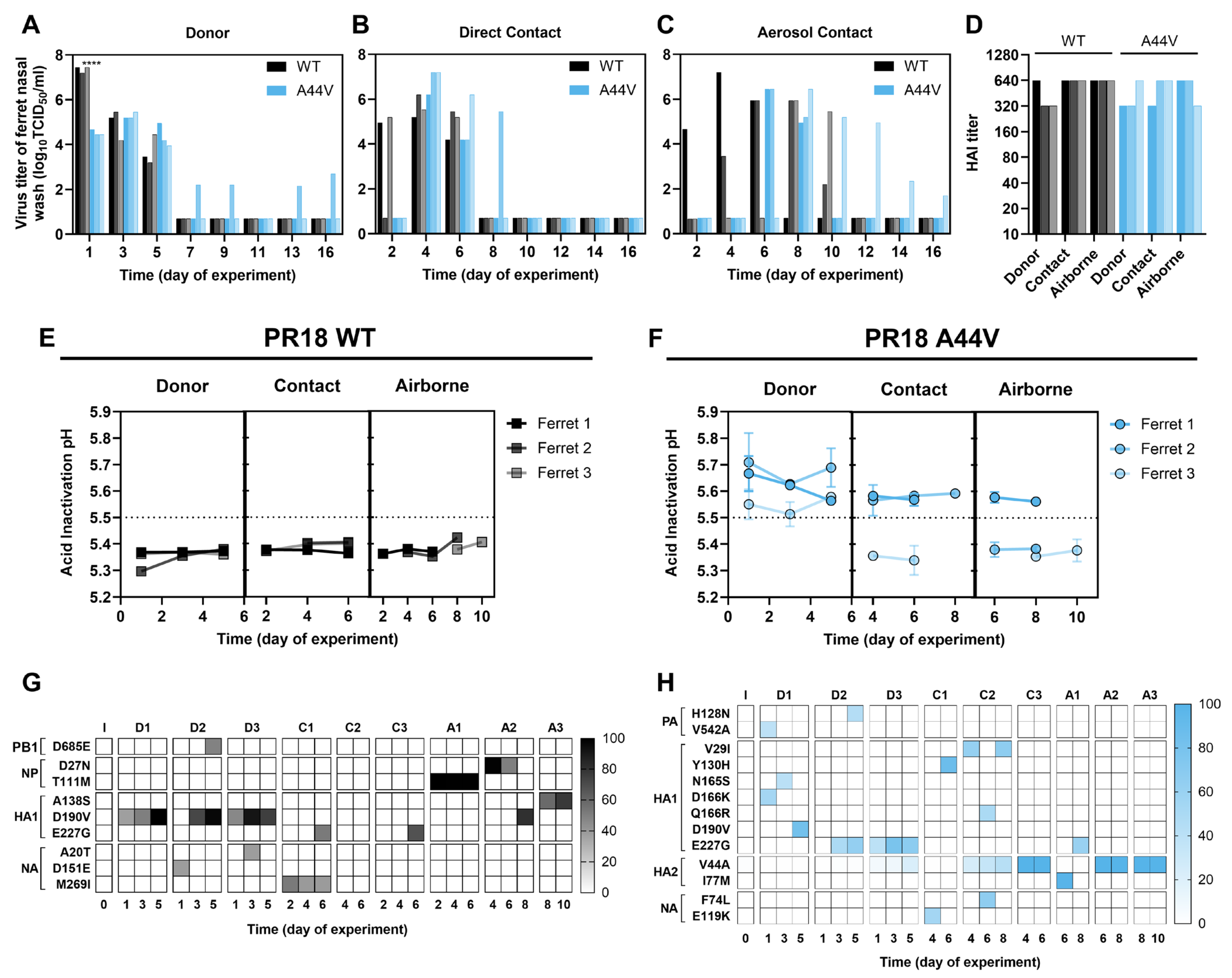
3.5. Impact of HA2-A44V on the Replication and Transmissibility of PR18 Virus in Ferrets
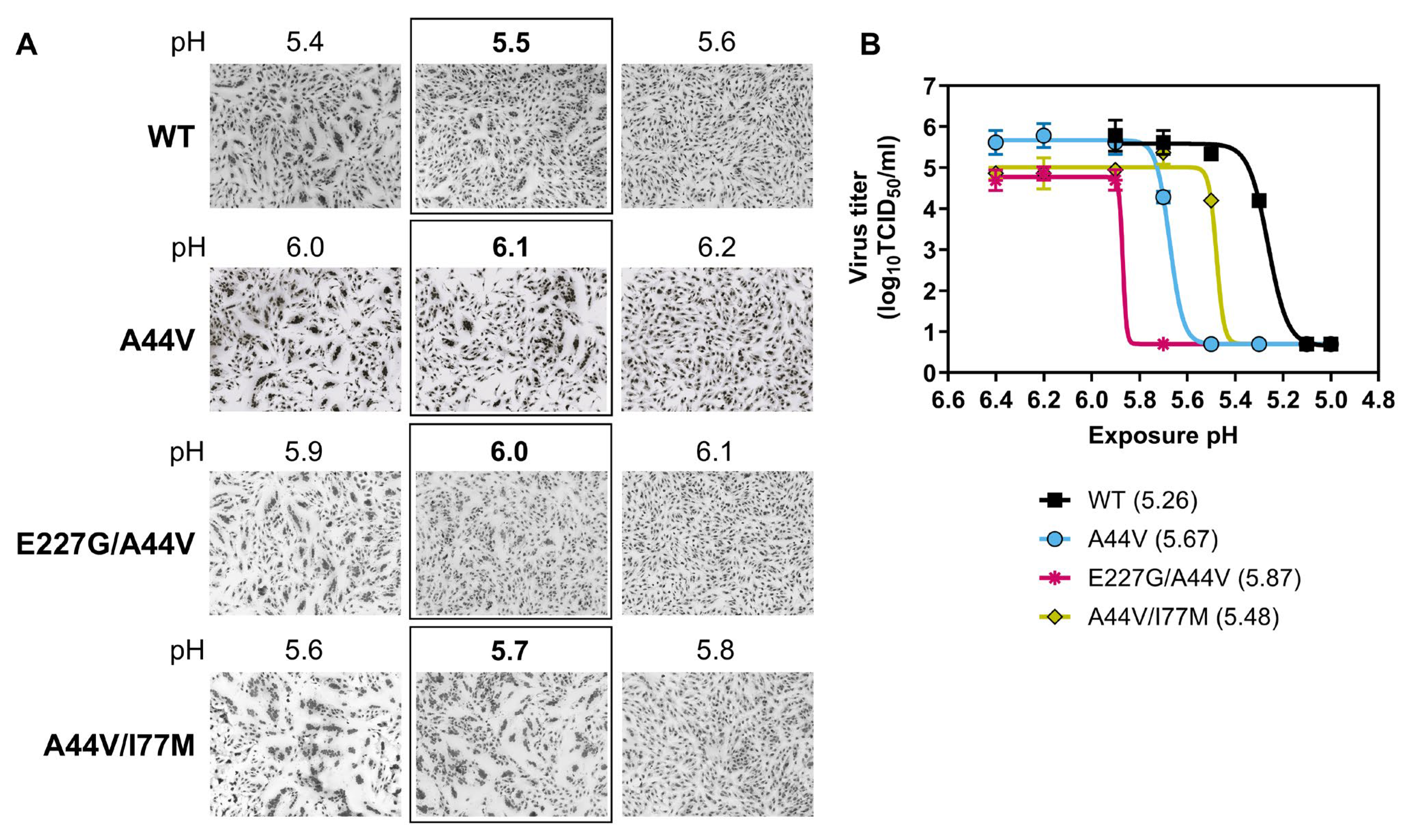
3.6. Effects of HA1-E227G and HA2-I77M on HA and Virus Stability
3.7. HA2-I77M Restores Virus Replication and Pathogenicity
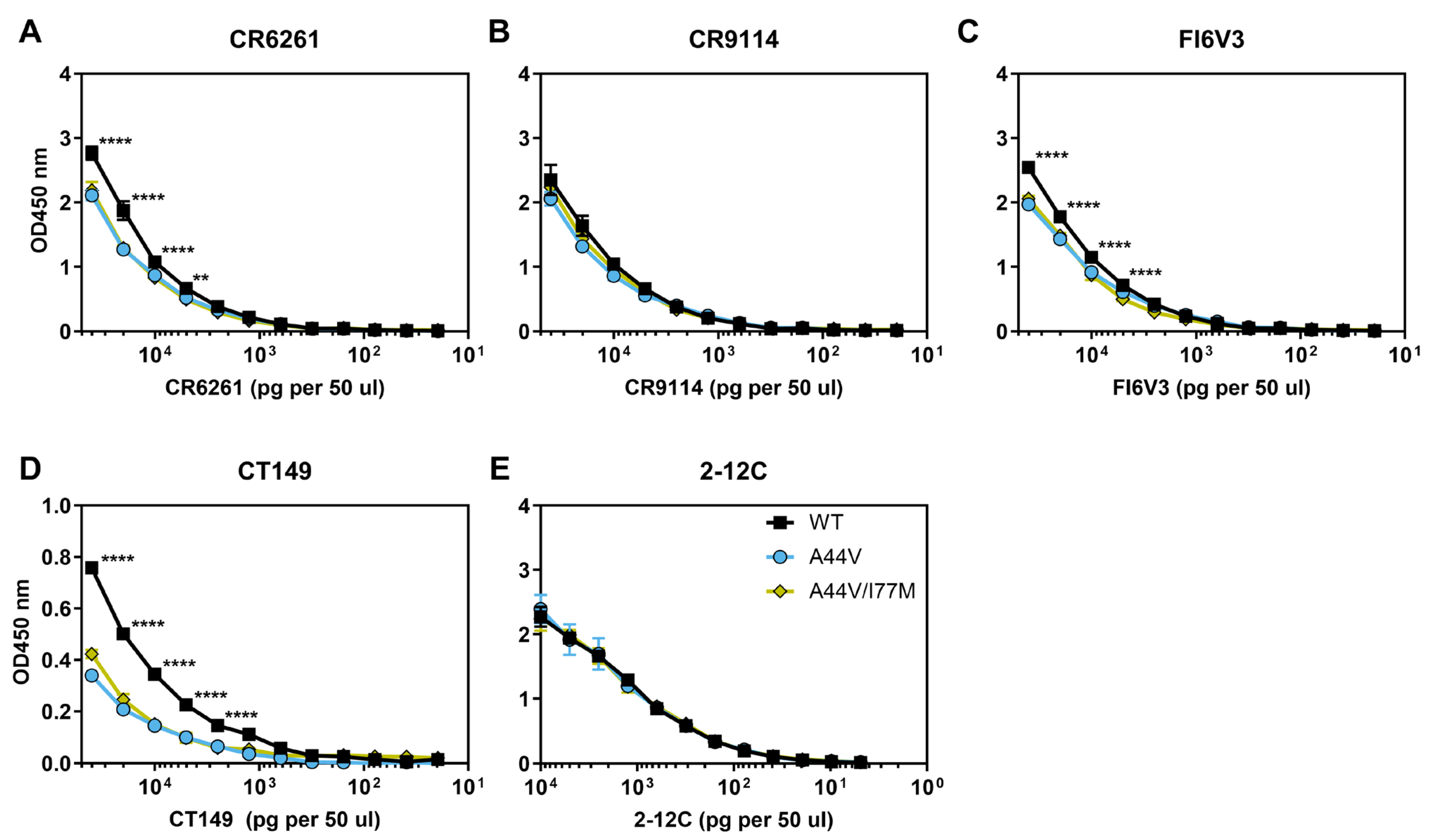
3.8. bNAb Binding by PR18 Virus Containing HA2-A44V/I77M
3.9. Summary of Results
4. Discussion
Author Contributions
Funding
Institutional Review Board Statement
Data Availability Statement
Acknowledgments
Conflicts of Interest
Abbreviations
| 4PL curve | four-parameter logistic curve |
| ANOVA | Analysis of variance |
| A549 cells | Human lung adenocarcinoma cells |
| ADCC | Antibody-dependent cellular cytotoxicity |
| ATCC | American Type Culture Collection |
| BLI | Biolayer interferometry |
| bNAbs | Broadly neutralizing antibodies |
| BSA | Bovine Serum Albumin |
| cDNA | complementary DNA |
| CHO cells | Chinese hamster ovary cells |
| DMEM | Dulbecco’s Modified Eagle’s Medium |
| Dpi | Day post-infection |
| ELISA | Enzyme-Linked Immunosorbent Assay |
| EMPEM | Electron microscopy polyclonal epitope mapping |
| F-12K | Ham’s F-12K (Kaighn’s Modification) medium |
| FBS | Fetal bovine serum |
| GISAID | Global Initiative on Sharing All Influenza Data |
| GMP | Good Manufacturing Practice |
| HA | Hemagglutinin |
| HAUs | Hemagglutination units |
| HEK 293T cells | Human embryonic kidney cells |
| IC50 | Half maximal inhibitory concentration |
| ID50 | Median infectious dose |
| IND | Investigational New Drug application |
| KD value | Dissociation constant |
| mAb | Monoclonal antibody |
| MDCK cells | Madin-Darby Canine Kidney cells |
| MOI | Multiplicity of infection |
| Opti-MEM | Optimized Minimal Essential Media |
| PBS | Phosphate-buffered saline |
| PBST | PBS with 0.1% Tween-20 |
| Pen-Strep | Penicillin-streptomycin |
| PFU | Plaque-Forming Unit |
| PR18 | A/Puerto Rico/15/2018 |
| SDS-PAGE | Sodium dodecyl sulfate-polyacrylamide gel electrophoresis |
| SNVs | Single nucleotide variants |
| TCID50 assay | 50% Tissue Culture Infectious Dose assay |
| TMB substrate | 3,3′,5,5′-Tetramethylbenzidine |
| TPCK-treated trypsin | L-(tosylamido-2-phenyl) ethyl chloromethyl ketone (TPCK)-treated trypsin |
| TN09 | A/Tennessee/1-560/2009 |
| UTR | Untranslated region |
| Vero cells | African green monkey kidney cells |
| WHO | World Health Organization |
| WT | Wild type |
References
- Iuliano, A.D.; Roguski, K.M.; Chang, H.H.; Muscatello, D.J.; Palekar, R.; Tempia, S.; Cohen, C.; Gran, J.M.; Schanzer, D.; Cowling, B.J.; et al. Estimates of global seasonal influenza-associated respiratory mortality: A modelling study. Lancet 2018, 391, 1285–1300. [Google Scholar] [CrossRef] [Scilit]
- Belser, J.A.; Bridges, C.B.; Katz, J.M.; Tumpey, T.M. Past, present, and possible future human infection with influenza virus A subtype H7. Emerg. Infect. Dis. 2009, 15, 859–865. [Google Scholar] [CrossRef] [Scilit]
- Schrauwen, E.J.; de Graaf, M.; Herfst, S.; Rimmelzwaan, G.F.; Osterhaus, A.D.; Fouchier, R.A. Determinants of virulence of influenza A virus. Eur. J. Clin. Microbiol. Infect. Dis. 2014, 33, 479–490. [Google Scholar] [CrossRef] [Scilit]
- Sutton, T.C. The Pandemic Threat of Emerging H5 and H7 Avian Influenza Viruses. Viruses 2018, 10, 461. [Google Scholar] [CrossRef] [Scilit] [PubMed]
- Russell, C.A.; Kasson, P.M.; Donis, R.O.; Riley, S.; Dunbar, J.; Rambaut, A.; Asher, J.; Burke, S.; Davis, C.T.; Garten, R.J.; et al. Improving pandemic influenza risk assessment. Elife 2014, 3, e03883. [Google Scholar] [CrossRef] [Scilit] [PubMed]
- Yamaji, R.; Zhang, W.; Kamata, A.; Adlhoch, C.; Swayne, D.E.; Pereyaslov, D.; Wang, D.; Neumann, G.; Pavade, G.; Barr, I.G.; et al. Pandemic risk characterisation of zoonotic influenza A viruses using the Tool for Influenza Pandemic Risk Assessment (TIPRA). Lancet Microbe 2025, 6, 100973. [Google Scholar] [CrossRef] [Scilit] [PubMed]
- Krammer, F.; Palese, P. Universal Influenza Virus Vaccines That Target the Conserved Hemagglutinin Stalk and Conserved Sites in the Head Domain. J. Infect. Dis. 2019, 219, S62–S67. [Google Scholar] [CrossRef] [Scilit] [PubMed]
- Wu, N.C.; Thompson, A.J.; Lee, J.M.; Su, W.; Arlian, B.M.; Xie, J.; Lerner, R.A.; Yen, H.L.; Bloom, J.D.; Wilson, I.A. Different genetic barriers for resistance to HA stem antibodies in influenza H3 and H1 viruses. Science 2020, 368, 1335–1340. [Google Scholar] [CrossRef] [Scilit] [PubMed]
- Kilbourne, E.D.; Johansson, B.E.; Grajower, B. Independent and disparate evolution in nature of influenza A virus hemagglutinin and neuraminidase glycoproteins. Proc. Natl. Acad. Sci. USA 1990, 87, 786–790. [Google Scholar] [CrossRef] [Scilit]
- Wu, N.C.; Wilson, I.A. A Perspective on the Structural and Functional Constraints for Immune Evasion: Insights from Influenza Virus. J. Mol. Biol. 2017, 429, 2694–2709. [Google Scholar] [CrossRef] [Scilit] [PubMed]
- Skehel, J.J.; Wiley, D.C. Receptor binding and membrane fusion in virus entry: The influenza hemagglutinin. Annu. Rev. Biochem. 2000, 69, 531–569. [Google Scholar] [CrossRef] [Scilit]
- Krammer, F. The human antibody response to influenza A virus infection and vaccination. Nat. Rev. Immunol. 2019, 19, 383–397. [Google Scholar] [CrossRef] [Scilit]
- Kim, H.; Webster, R.G.; Webby, R.J. Influenza Virus: Dealing with a Drifting and Shifting Pathogen. Viral Immunol. 2018, 31, 174–183. [Google Scholar] [CrossRef] [Scilit]
- Han, J.; Schmitz, A.J.; Richey, S.T.; Dai, Y.N.; Turner, H.L.; Mohammed, B.M.; Fremont, D.H.; Ellebedy, A.H.; Ward, A.B. Polyclonal epitope mapping reveals temporal dynamics and diversity of human antibody responses to H5N1 vaccination. Cell Rep. 2021, 34, 108682. [Google Scholar] [CrossRef] [Scilit]
- Leon, A.N.; Rodriguez, A.J.; Richey, S.T.; Torrents de la Pena, A.; Wolters, R.M.; Jackson, A.M.; Webb, K.; Creech, C.B.; Yoder, S.; Mudd, P.A.; et al. Structural mapping of polyclonal IgG responses to HA after influenza virus vaccination or infection. mBio 2025, 16, e0203024. [Google Scholar] [CrossRef] [Scilit] [PubMed]
- Corti, D.; Voss, J.; Gamblin, S.J.; Codoni, G.; Macagno, A.; Jarrossay, D.; Vachieri, S.G.; Pinna, D.; Minola, A.; Vanzetta, F.; et al. A neutralizing antibody selected from plasma cells that binds to group 1 and group 2 influenza A hemagglutinins. Science 2011, 333, 850–856. [Google Scholar] [CrossRef] [Scilit] [PubMed]
- Dreyfus, C.; Laursen, N.S.; Kwaks, T.; Zuijdgeest, D.; Khayat, R.; Ekiert, D.C.; Lee, J.H.; Metlagel, Z.; Bujny, M.V.; Jongeneelen, M.; et al. Highly conserved protective epitopes on influenza B viruses. Science 2012, 337, 1343–1348. [Google Scholar] [CrossRef] [Scilit] [PubMed]
- Ekiert, D.C.; Bhabha, G.; Elsliger, M.A.; Friesen, R.H.; Jongeneelen, M.; Throsby, M.; Goudsmit, J.; Wilson, I.A. Antibody recognition of a highly conserved influenza virus epitope. Science 2009, 324, 246–251. [Google Scholar] [CrossRef] [Scilit]
- Bullough, P.A.; Hughson, F.M.; Skehel, J.J.; Wiley, D.C. Structure of influenza haemagglutinin at the pH of membrane fusion. Nature 1994, 371, 37–43. [Google Scholar] [CrossRef] [Scilit]
- Xu, R.; McBride, R.; Nycholat, C.M.; Paulson, J.C.; Wilson, I.A. Structural characterization of the hemagglutinin receptor specificity from the 2009 H1N1 influenza pandemic. J. Virol. 2012, 86, 982–990. [Google Scholar] [CrossRef] [Scilit]
- Memoli, M.J.; Czajkowski, L.; Reed, S.; Athota, R.; Bristol, T.; Proudfoot, K.; Fargis, S.; Stein, M.; Dunfee, R.L.; Shaw, P.A.; et al. Validation of the wild-type influenza A human challenge model H1N1pdMIST: An A(H1N1)pdm09 dose-finding investigational new drug study. Clin. Infect. Dis. 2015, 60, 693–702. [Google Scholar] [CrossRef] [Scilit]
- Xiao, Y.; Park, J.K.; Williams, S.; Ramuta, M.; Cervantes-Medina, A.; Bristol, T.; Smith, S.; Czajkowski, L.; Han, A.; Kash, J.C.; et al. Deep sequencing of 2009 influenza A/H1N1 virus isolated from volunteer human challenge study participants and natural infections. Virology 2019, 534, 96–107. [Google Scholar] [CrossRef] [Scilit]
- Burke, D.F.; Smith, D.J. A recommended numbering scheme for influenza A HA subtypes. PLoS ONE 2014, 9, e112302. [Google Scholar] [CrossRef] [Scilit] [PubMed]
- Park, J.K.; Xiao, Y.; Ramuta, M.D.; Rosas, L.A.; Fong, S.; Matthews, A.M.; Freeman, A.D.; Gouzoulis, M.A.; Batchenkova, N.A.; Yang, X.; et al. Pre-existing immunity to influenza virus hemagglutinin stalk might drive selection for antibody-escape mutant viruses in a human challenge model. Nat. Med. 2020, 26, 1240–1246. [Google Scholar] [CrossRef] [Scilit] [PubMed]
- Nguyen, Y.T.K.; Zhu, X.; Han, J.; Rodriguez, A.J.; Sun, W.; Yu, W.; Palese, P.; Krammer, F.; Ward, A.B.; Wilson, I.A. Structural characterization of influenza group 1 chimeric hemagglutinins as broad vaccine immunogens. Proc. Natl. Acad. Sci. USA 2025, 122, e2416628122. [Google Scholar] [CrossRef] [Scilit]
- Roubidoux, E.K.; Carreno, J.M.; McMahon, M.; Jiang, K.; van Bakel, H.; Wilson, P.; Krammer, F. Mutations in the Hemagglutinin Stalk Domain Do Not Permit Escape from a Protective, Stalk-Based Vaccine-Induced Immune Response in the Mouse Model. mBio 2021, 12, e03617-20. [Google Scholar] [CrossRef] [Scilit]
- Hoffmann, E.; Neumann, G.; Kawaoka, Y.; Hobom, G.; Webster, R.G. A DNA transfection system for generation of influenza A virus from eight plasmids. Proc. Natl. Acad. Sci. USA 2000, 97, 6108–6113. [Google Scholar] [CrossRef] [Scilit]
- Reed, M.L.; Yen, H.L.; DuBois, R.M.; Bridges, O.A.; Salomon, R.; Webster, R.G.; Russell, C.J. Amino acid residues in the fusion peptide pocket regulate the pH of activation of the H5N1 influenza virus hemagglutinin protein. J. Virol. 2009, 83, 3568–3580. [Google Scholar] [CrossRef] [Scilit]
- Hu, M.; Kackos, C.; Banoth, B.; Ojha, C.R.; Jones, J.C.; Lei, S.; Li, L.; Kercher, L.; Webby, R.J.; Russell, C.J. Hemagglutinin destabilization in H3N2 vaccine reference viruses skews antigenicity and prevents airborne transmission in ferrets. Sci. Adv. 2023, 9, eadf5182. [Google Scholar] [CrossRef] [Scilit] [PubMed]
- Nagashima, K.; Dzimianski, J.V.; Han, J.; Abbadi, N.; Gingerich, A.D.; Royer, F.; O’Rourke, S.; Sautto, G.A.; Ross, T.M.; Ward, A.B.; et al. The Pre-Existing Human Antibody Repertoire to Computationally Optimized Influenza H1 Hemagglutinin Vaccines. J. Immunol. 2022, 209, 5–15. [Google Scholar] [CrossRef] [Scilit]
- Russier, M.; Yang, G.; Briard, B.; Meliopoulos, V.; Cherry, S.; Kanneganti, T.D.; Schultz-Cherry, S.; Vogel, P.; Russell, C.J. Hemagglutinin Stability Regulates H1N1 Influenza Virus Replication and Pathogenicity in Mice by Modulating Type I Interferon Responses in Dendritic Cells. J. Virol. 2020, 94, e01423-19. [Google Scholar] [CrossRef] [Scilit]
- Singanayagam, A.; Zambon, M.; Barclay, W.S. Influenza Virus with Increased pH of Hemagglutinin Activation Has Improved Replication in Cell Culture but at the Cost of Infectivity in Human Airway Epithelium. J. Virol. 2019, 93, e00058-19. [Google Scholar] [CrossRef] [Scilit]
- Reed, M.L.; Bridges, O.A.; Seiler, P.; Kim, J.K.; Yen, H.L.; Salomon, R.; Govorkova, E.A.; Webster, R.G.; Russell, C.J. The pH of activation of the hemagglutinin protein regulates H5N1 influenza virus pathogenicity and transmissibility in ducks. J. Virol. 2010, 84, 1527–1535. [Google Scholar] [CrossRef] [Scilit] [PubMed]
- Murakami, S.; Horimoto, T.; Ito, M.; Takano, R.; Katsura, H.; Shimojima, M.; Kawaoka, Y. Enhanced growth of influenza vaccine seed viruses in vero cells mediated by broadening the optimal pH range for virus membrane fusion. J. Virol. 2012, 86, 1405–1410. [Google Scholar] [CrossRef] [Scilit] [PubMed]
- Cotter, C.R.; Jin, H.; Chen, Z. A single amino acid in the stalk region of the H1N1pdm influenza virus HA protein affects viral fusion, stability and infectivity. PLoS Pathog. 2014, 10, e1003831. [Google Scholar] [CrossRef] [Scilit]
- Sun, X.; Belser, J.A.; Yang, H.; Pulit-Penaloza, J.A.; Pappas, C.; Brock, N.; Zeng, H.; Creager, H.M.; Stevens, J.; Maines, T.R. Identification of key hemagglutinin residues responsible for cleavage, acid stability, and virulence of fifth-wave highly pathogenic avian influenza A(H7N9) viruses. Virology 2019, 535, 232–240. [Google Scholar] [CrossRef] [Scilit]
- Russier, M.; Yang, G.; Rehg, J.E.; Wong, S.S.; Mostafa, H.H.; Fabrizio, T.P.; Barman, S.; Krauss, S.; Webster, R.G.; Webby, R.J.; et al. Molecular requirements for a pandemic influenza virus: An acid-stable hemagglutinin protein. Proc. Natl. Acad. Sci. USA 2016, 113, 1636–1641. [Google Scholar] [CrossRef] [Scilit]
- Imai, M.; Watanabe, T.; Hatta, M.; Das, S.C.; Ozawa, M.; Shinya, K.; Zhong, G.; Hanson, A.; Katsura, H.; Watanabe, S.; et al. Experimental adaptation of an influenza H5 HA confers respiratory droplet transmission to a reassortant H5 HA/H1N1 virus in ferrets. Nature 2012, 486, 420–428. [Google Scholar] [CrossRef] [Scilit]
- Le Sage, V.; Kormuth, K.A.; Nturibi, E.; Lee, J.M.; Frizzell, S.A.; Myerburg, M.M.; Bloom, J.D.; Lakdawala, S.S. Cell-Culture Adaptation of H3N2 Influenza Virus Impacts Acid Stability and Reduces Airborne Transmission in Ferret Model. Viruses 2021, 13, 719. [Google Scholar] [CrossRef] [Scilit] [PubMed]
- Hu, M.; Jones, J.C.; Banoth, B.; Ojha, C.R.; Crumpton, J.C.; Kercher, L.; Webster, R.G.; Webby, R.J.; Russell, C.J. Swine H1N1 Influenza Virus Variants with Enhanced Polymerase Activity and HA Stability Promote Airborne Transmission in Ferrets. J. Virol. 2022, 96, e0010022. [Google Scholar] [CrossRef] [Scilit]
- Herfst, S.; Schrauwen, E.J.; Linster, M.; Chutinimitkul, S.; de Wit, E.; Munster, V.J.; Sorrell, E.M.; Bestebroer, T.M.; Burke, D.F.; Smith, D.J.; et al. Airborne transmission of influenza A/H5N1 virus between ferrets. Science 2012, 336, 1534–1541. [Google Scholar] [CrossRef] [Scilit]
- Russier, M.; Yang, G.; Marinova-Petkova, A.; Vogel, P.; Kaplan, B.S.; Webby, R.J.; Russell, C.J. H1N1 influenza viruses varying widely in hemagglutinin stability transmit efficiently from swine to swine and to ferrets. PLoS Pathog. 2017, 13, e1006276. [Google Scholar] [CrossRef] [Scilit]
- Maurer-Stroh, S.; Lee, R.T.; Eisenhaber, F.; Cui, L.; Phuah, S.P.; Lin, R.T. A new common mutation in the hemagglutinin of the 2009 (H1N1) influenza A virus. PLoS Curr. 2010, 2, RRN1162. [Google Scholar] [CrossRef] [Scilit]
- Zinnecker, T.; Reichl, U.; Genzel, Y. Innovations in cell culture-based influenza vaccine manufacturing—From static cultures to high cell density cultivations. Hum. Vaccin. Immunother. 2024, 20, 2373521. [Google Scholar] [CrossRef] [Scilit] [PubMed]
- Ping, J.; Lopes, T.J.S.; Nidom, C.A.; Ghedin, E.; Macken, C.A.; Fitch, A.; Imai, M.; Maher, E.A.; Neumann, G.; Kawaoka, Y. Development of high-yield influenza A virus vaccine viruses. Nat. Commun. 2015, 6, 8148. [Google Scholar] [CrossRef] [Scilit] [PubMed]
- Donis, R.O.; Influenza Cell Culture Working, G.; Davis, C.T.; Foust, A.; Hossain, M.J.; Johnson, A.; Klimov, A.; Loughlin, R.; Xu, X.; Tsai, T.; et al. Performance characteristics of qualified cell lines for isolation and propagation of influenza viruses for vaccine manufacturing. Vaccine 2014, 32, 6583–6590. [Google Scholar] [CrossRef] [Scilit]
- Russell, C.J. Hemagglutinin Stability and Its Impact on Influenza A Virus Infectivity, Pathogenicity, and Transmissibility in Avians, Mice, Swine, Seals, Ferrets, and Humans. Viruses 2021, 13, 746. [Google Scholar] [CrossRef] [Scilit]
- Russell, C.J.; Hu, M.; Okda, F.A. Influenza Hemagglutinin Protein Stability, Activation, and Pandemic Risk. Trends Microbiol. 2018, 26, 841–853. [Google Scholar] [CrossRef] [Scilit]
- Castelan-Vega, J.A.; Magana-Hernandez, A.; Jimenez-Alberto, A.; Ribas-Aparicio, R.M. The hemagglutinin of the influenza A(H1N1)pdm09 is mutating towards stability. Adv. Appl. Bioinform. Chem. 2014, 7, 37–44. [Google Scholar] [CrossRef] [Scilit] [PubMed]
- Herfst, S.; Zhang, J.; Richard, M.; McBride, R.; Lexmond, P.; Bestebroer, T.M.; Spronken, M.I.J.; de Meulder, D.; van den Brand, J.M.; Rosu, M.E.; et al. Hemagglutinin Traits Determine Transmission of Avian A/H10N7 Influenza Virus between Mammals. Cell Host Microbe 2020, 28, 602–613.e607. [Google Scholar] [CrossRef] [Scilit]
- Hu, M.; Yang, G.; DeBeauchamp, J.; Crumpton, J.C.; Kim, H.; Li, L.; Wan, X.F.; Kercher, L.; Bowman, A.S.; Webster, R.G.; et al. HA stabilization promotes replication and transmission of swine H1N1 gamma influenza viruses in ferrets. Elife 2020, 9, e56236. [Google Scholar] [CrossRef] [Scilit] [PubMed]
- Sun, X.; Belser, J.A.; Pulit-Penaloza, J.A.; Brock, N.; Kieran, T.J.; Zeng, H.; Pappas, C.; Tumpey, T.M.; Maines, T.R. A naturally occurring HA-stabilizing amino acid (HA1-Y17) in an A(H9N2) low-pathogenic influenza virus contributes to airborne transmission. mBio 2024, 15, e0295723. [Google Scholar] [CrossRef] [Scilit] [PubMed]
- Zaraket, H.; Bridges, O.A.; Duan, S.; Baranovich, T.; Yoon, S.W.; Reed, M.L.; Salomon, R.; Webby, R.J.; Webster, R.G.; Russell, C.J. Increased acid stability of the hemagglutinin protein enhances H5N1 influenza virus growth in the upper respiratory tract but is insufficient for transmission in ferrets. J. Virol. 2013, 87, 9911–9922. [Google Scholar] [CrossRef] [Scilit]
- Shelton, H.; Roberts, K.L.; Molesti, E.; Temperton, N.; Barclay, W.S. Mutations in haemagglutinin that affect receptor binding and pH stability increase replication of a PR8 influenza virus with H5 HA in the upper respiratory tract of ferrets and may contribute to transmissibility. J. Gen. Virol. 2013, 94, 1220–1229. [Google Scholar] [CrossRef] [Scilit]
- Yang, J.; Qureshi, M.; Kolli, R.; Peacock, T.P.; Sadeyen, J.R.; Carter, T.; Richardson, S.; Daines, R.; Barclay, W.S.; Brown, I.H.; et al. The haemagglutinin gene of bovine-origin H5N1 influenza viruses currently retains receptor-binding and pH-fusion characteristics of avian host phenotype. Emerg. Microbes Infect. 2025, 14, 2451052. [Google Scholar] [CrossRef] [Scilit]
- Eisfeld, A.J.; Biswas, A.; Guan, L.; Gu, C.; Maemura, T.; Trifkovic, S.; Wang, T.; Babujee, L.; Dahn, R.; Halfmann, P.J.; et al. Pathogenicity and transmissibility of bovine H5N1 influenza virus. Nature 2024, 633, 426–432. [Google Scholar] [CrossRef] [Scilit]
- Russell, C.J. Acid-induced membrane fusion by the hemagglutinin protein and its role in influenza virus biology. Curr. Top. Microbiol. Immunol. 2014, 385, 93–116. [Google Scholar] [CrossRef] [Scilit] [PubMed]
- Mair, C.M.; Ludwig, K.; Herrmann, A.; Sieben, C. Receptor binding and pH stability—How influenza A virus hemagglutinin affects host-specific virus infection. Biochim. Biophys. Acta 2014, 1838, 1153–1168. [Google Scholar] [CrossRef] [Scilit] [PubMed]
- Yu, T.C.; Kikawa, C.; Dadonaite, B.; Loes, A.N.; Englund, J.A.; Bloom, J.D. Pleiotropic mutational effects on function and stability constrain the antigenic evolution of influenza hemagglutinin. bioRxiv 2025. [Google Scholar] [CrossRef] [Scilit]
- Byrd-Leotis, L.; Galloway, S.E.; Agbogu, E.; Steinhauer, D.A. Influenza hemagglutinin (HA) stem region mutations that stabilize or destabilize the structure of multiple HA subtypes. J. Virol. 2015, 89, 4504–4516. [Google Scholar] [CrossRef] [Scilit]
- Jiao, C.; Wang, B.; Chen, P.; Jiang, Y.; Liu, J. Analysis of the conserved protective epitopes of hemagglutinin on influenza A viruses. Front. Immunol. 2023, 14, 1086297. [Google Scholar] [CrossRef] [Scilit] [PubMed]





| Virus | HA (Mutation) | IC50 (ng/50 µL) | ||
|---|---|---|---|---|
| CR6261 | CR9114 | FI6V3 | ||
| TN09 1 | WT | 550.7 | 446.7 | N.D. |
| TN09 | HA2-A44V | 760.0 | 961.6 | N.D. |
| TN09 | HA2-A44T | 837.8 | 2023 * | N.D. |
| PR18 2 | WT | 73.15 | 115.7 | 71.73 |
| PR18 | HA2-A44V | 234.1 **** | 247.2 *** | 138.6 ** |
| PR18 | HA2-A44T | 246.8 **** | 250.1 *** | 250.1 **** |
| Virus | HA (Mutation) | HA Activation pH | ΔHA Activation pH 1 | Virus Inactivation pH | ΔVirus Inactivation pH 1 |
|---|---|---|---|---|---|
| TN09 2 | WT | 5.5 | - | 5.4 | - |
| TN09 | HA2-A44V | 5.9 | +0.4 | 5.6 | +0.2 |
| TN09 | HA2-A44T | 5.8 | +0.3 | 5.6 | +0.2 |
| PR18 3 | WT | 5.4 | - | 5.3 | - |
| PR18 | HA2-A44V | 6.1 | +0.7 | 5.7 | +0.4 |
| PR18 | HA2-A44T | 6.1 | +0.7 | 5.6 | +0.3 |
| Virus | HA (Mutation) | MDCK (TCID50/mL) | Vero (TCID50/mL) | A549 (TCID50/mL) |
|---|---|---|---|---|
| TN09 1 | WT | 8.7 × 10⁶ | 1.9 × 10⁷ | 4.1 × 10⁶ |
| TN09 | HA2-A44V | 1.3 × 10⁷ | 1.6 × 10⁷ | 2.3 × 10⁶ |
| TN09 | HA2-A44T | 4.1 × 10⁵ | 1.1 × 10⁷ | 4.1 × 10⁵ |
| PR18 2 | WT | 7.3 × 10⁸ | 8.6 × 10³ | 4.1 × 10⁶ |
| PR18 | HA2-A44V | 4.1 × 10⁸ | 1.9 × 10⁶ | 1.3 × 10⁷ |
| PR18 | HA2-A44T | 6.1 × 10⁸ | 3.4 × 10⁶ | 7.2 × 10⁶ |
| mAb | HA (Mutation) | Average KD (nM) | X2 | R2 |
|---|---|---|---|---|
| CR6261 | WT | 0.063 | 0.051 | 0.998 |
| A44V 1 | 0.132 | 0.021 | 1.000 | |
| E227G/A44V 2 | 1.60 | 0.035 | 0.995 | |
| A44V/I77M 3 | 1.04 | 0.032 | 1.000 | |
| P1-05 | WT | <0.001 | 0.054 | 0.999 |
| A44V | <0.001 | 0.017 | 1.000 | |
| E227G/A44V | <0.001 | 0.021 | 0.999 | |
| A44V/I77M | <0.001 | 0.031 | 1.000 |
| Virus | HA Activation pH | Virus Inactivation pH | IC50 (ng/50 µL) | |
|---|---|---|---|---|
| CR6261 | FI6v3 | |||
| WT | 5.5 | 5.3 | 73.2 | 71.7 |
| A44V 1 | 6.1 | 5.7 | 234.1 * | 138.6 |
| A44V/I77M 2 | 5.7 | 5.5 | 576.5 **** | 494.7 **** |
Disclaimer/Publisher’s Note: The statements, opinions and data contained in all publications are solely those of the individual author(s) and contributor(s) and not of MDPI and/or the editor(s). MDPI and/or the editor(s) disclaim responsibility for any injury to people or property resulting from any ideas, methods, instructions or products referred to in the content. |
© 2025 by the authors. Licensee MDPI, Basel, Switzerland. This article is an open access article distributed under the terms and conditions of the Creative Commons Attribution (CC BY) license.
Share and Cite
Yang, G.; Chen, P.-L.; Rovito, S.W.; Minari, K.; Writt, H.N.; DeBeauchamp, J.; Crumpton, J.C.; Kercher, L.; DuBois, R.M.; Webby, R.J.; et al. Resistance Mutations to Broadly Neutralizing Antibodies Destabilize Hemagglutinin and Attenuate H1N1 Influenza Virus. Viruses 2026, 18, 32. https://doi.org/10.3390/v18010032
Yang G, Chen P-L, Rovito SW, Minari K, Writt HN, DeBeauchamp J, Crumpton JC, Kercher L, DuBois RM, Webby RJ, et al. Resistance Mutations to Broadly Neutralizing Antibodies Destabilize Hemagglutinin and Attenuate H1N1 Influenza Virus. Viruses. 2026; 18(1):32. https://doi.org/10.3390/v18010032
Chicago/Turabian StyleYang, Guohua, Po-Ling Chen, Samuel W. Rovito, Karine Minari, Haley N. Writt, Jennifer DeBeauchamp, Jeri Carol Crumpton, Lisa Kercher, Rebecca M. DuBois, Richard J. Webby, and et al. 2026. "Resistance Mutations to Broadly Neutralizing Antibodies Destabilize Hemagglutinin and Attenuate H1N1 Influenza Virus" Viruses 18, no. 1: 32. https://doi.org/10.3390/v18010032
APA StyleYang, G., Chen, P.-L., Rovito, S. W., Minari, K., Writt, H. N., DeBeauchamp, J., Crumpton, J. C., Kercher, L., DuBois, R. M., Webby, R. J., & Russell, C. J. (2026). Resistance Mutations to Broadly Neutralizing Antibodies Destabilize Hemagglutinin and Attenuate H1N1 Influenza Virus. Viruses, 18(1), 32. https://doi.org/10.3390/v18010032