Article

Identification of a Conserved Linear Epitope on the p54 Protein of African Swine Fever Virus

1
State Key Laboratory of Agricultural Microbiology, Hubei Hongshan Laboratory, College of Veterinary Medicine, Huazhong Agricultural University, Wuhan 430070, China
2
Key Laboratory of Preventive Veterinary Medicine in Hubei Province, The Cooperative Innovation Center for Sustainable Pig Production, Wuhan 430070, China
3
Dekon Food and Agriculture Group, Chengdu 610200, China
4
Key Laboratory of Development of Veterinary Diagnostic Products, Ministry of Agriculture of the People’s Republic of China, Wuhan 430070, China
5
International Research Center for Animal Disease, Ministry of Science and Technology of the People’s Republic of China, Wuhan 430070, China
6
Guangdong Provincial Key Laboratory of Research on the Technology of Pig-Breeding and Pig-Disease Prevention, Guangzhou 510000, China
*
Authors to whom correspondence should be addressed.
These authors contributed equally to this work.
Viruses 2025, 17(6), 823; https://doi.org/10.3390/v17060823
Submission received: 10 April 2025 / Revised: 3 June 2025 / Accepted: 4 June 2025 / Published: 7 June 2025
(This article belongs to the Section Animal Viruses)

Abstract

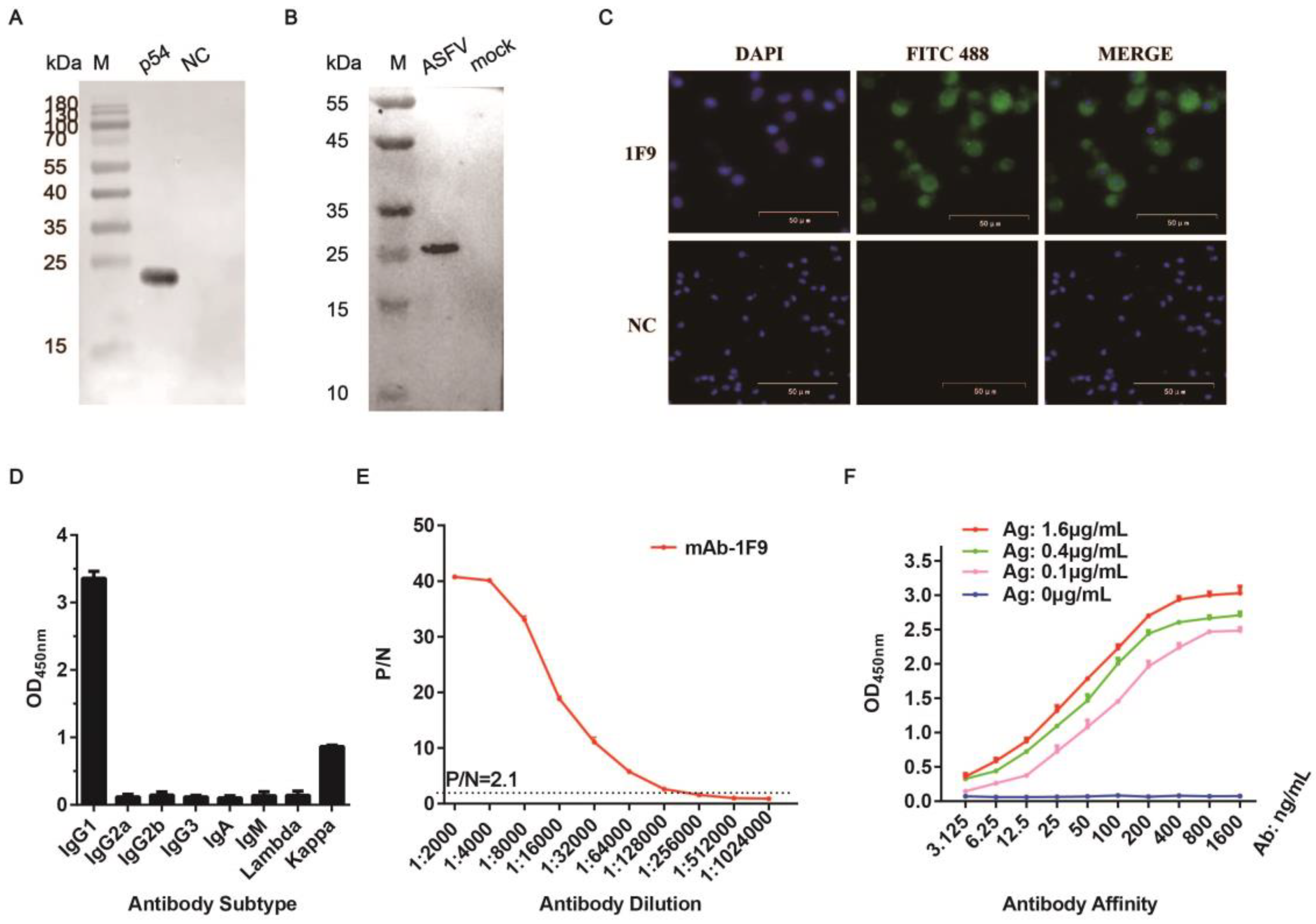
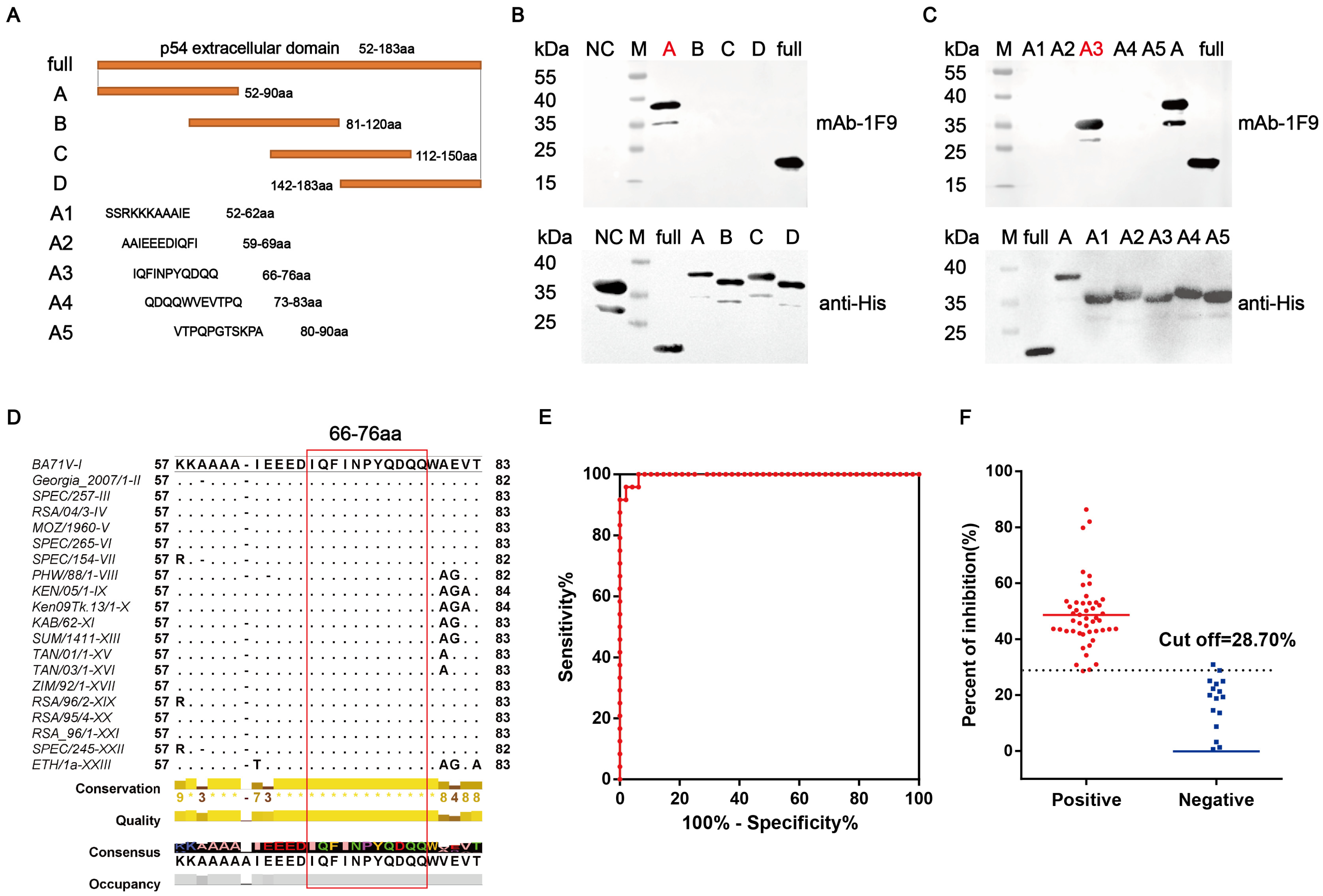
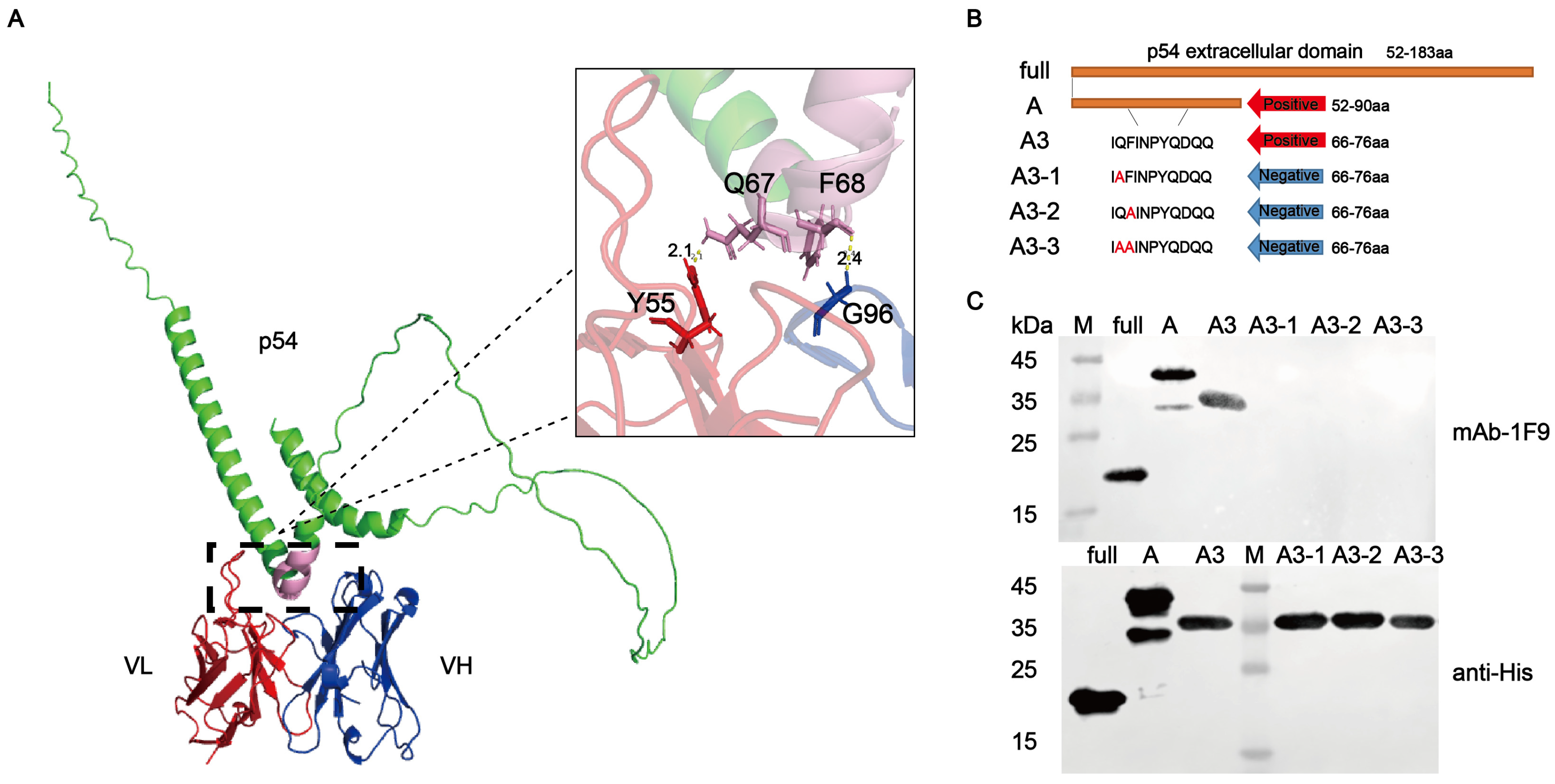
African swine fever virus (ASFV) is a highly virulent pathogen that causes nearly 100% mortality in acute infections and poses persistent risks. Effective containment of ASFV outbreaks requires rapid and reliable diagnostic tools. The p54 protein, a key structural component of ASFV, has emerged as an important target for serological detection. Herein, the recombinant p54 protein (amino acids 53–184) was expressed in Escherichia coli, and three mouse monoclonal antibodies (mAbs) (IgG1/kappa subtype) were developed. Among these mAbs, the mAb 1F9 specifically recognized the B-cell epitope 66IQFINPYQDQQ76, which is conserved across different genotypes of ASFV, suggesting that the epitope may serve as a valuable target for serological detection of ASFV. Structural modeling analysis revealed that this epitope is surface-exposed on the p54 protein, with 67Gln and 68Phe identified as critical residues for 1F9 binding. Moreover, a blocking ELISA based on the mAb 1F9 was established for detecting ASFV-specific antibodies in clinical serum samples, achieving a coincidence rate exceeding 95%. These findings demonstrate that mAb 1F9, targeting a conserved and accessible region of p54, represents a valuable tool for ASFV serodiagnosis, surveillance, and outbreak management.
Keywords: monoclonal antibody; African swine fever virus; p54 protein; B-cell epitope; blocking ELISA monoclonal antibody; African swine fever virus; p54 protein; B-cell epitope; blocking ELISA