Article

Genomic Characterization and Molecular Evolution of Sapovirus in Children under 5 Years of Age

1
Key Laboratory of Medicine, Nantong Center for Disease Control and Prevention, 189 Gongnongnan Road, Chongchuan District, Nantong 226007, China
2
Department of Laboratory Medicine, Nantong Chongchuan Center for Disease Control and Prevention, 47 Zhongxiu Middle Road, Nantong 226001, China
*
Authors to whom correspondence should be addressed.
These authors contributed equally to this work.
Viruses 2024, 16(1), 146; https://doi.org/10.3390/v16010146
Submission received: 20 December 2023 / Revised: 17 January 2024 / Accepted: 18 January 2024 / Published: 19 January 2024
(This article belongs to the Special Issue Caliciviruses)

Abstract

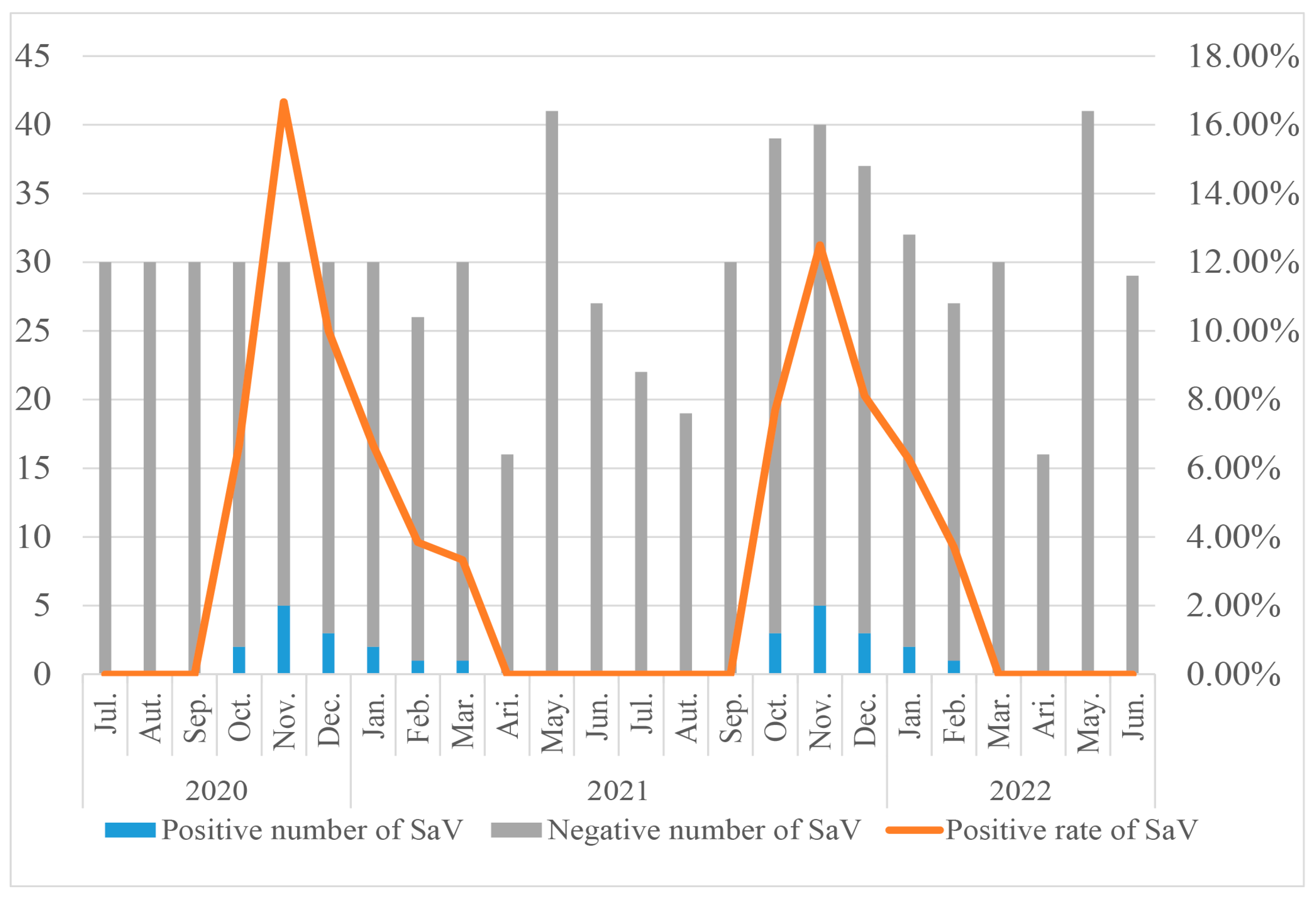
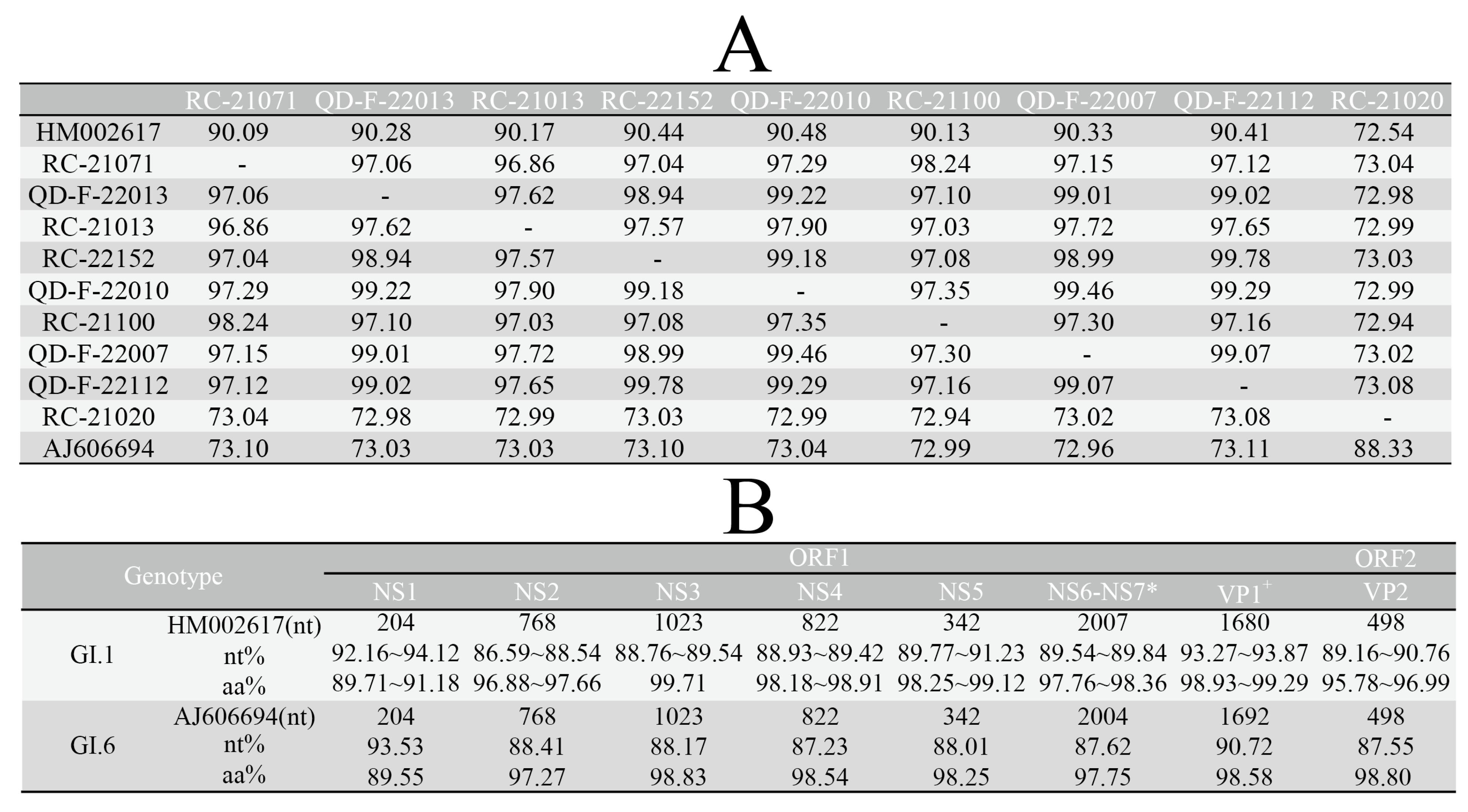
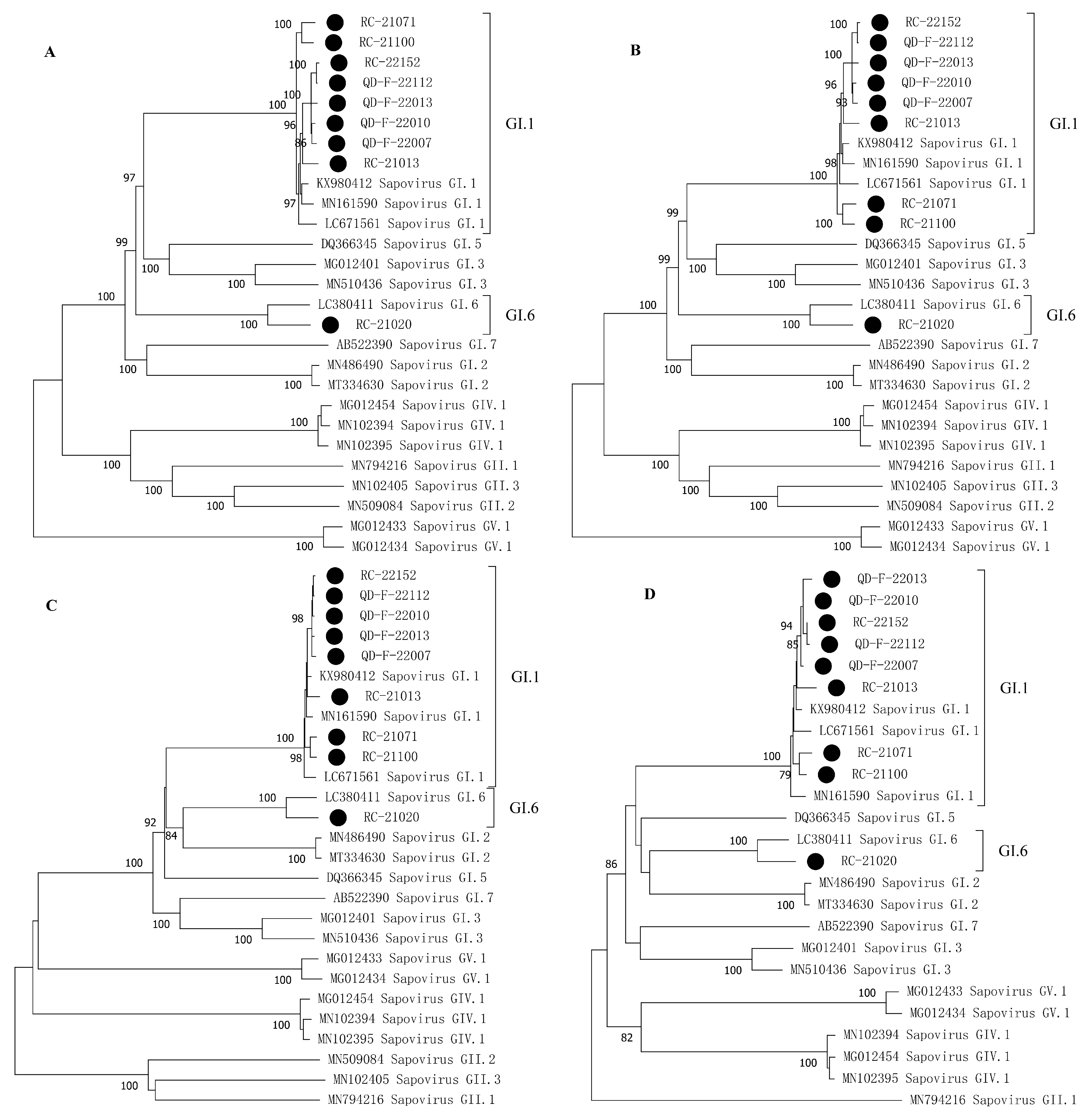
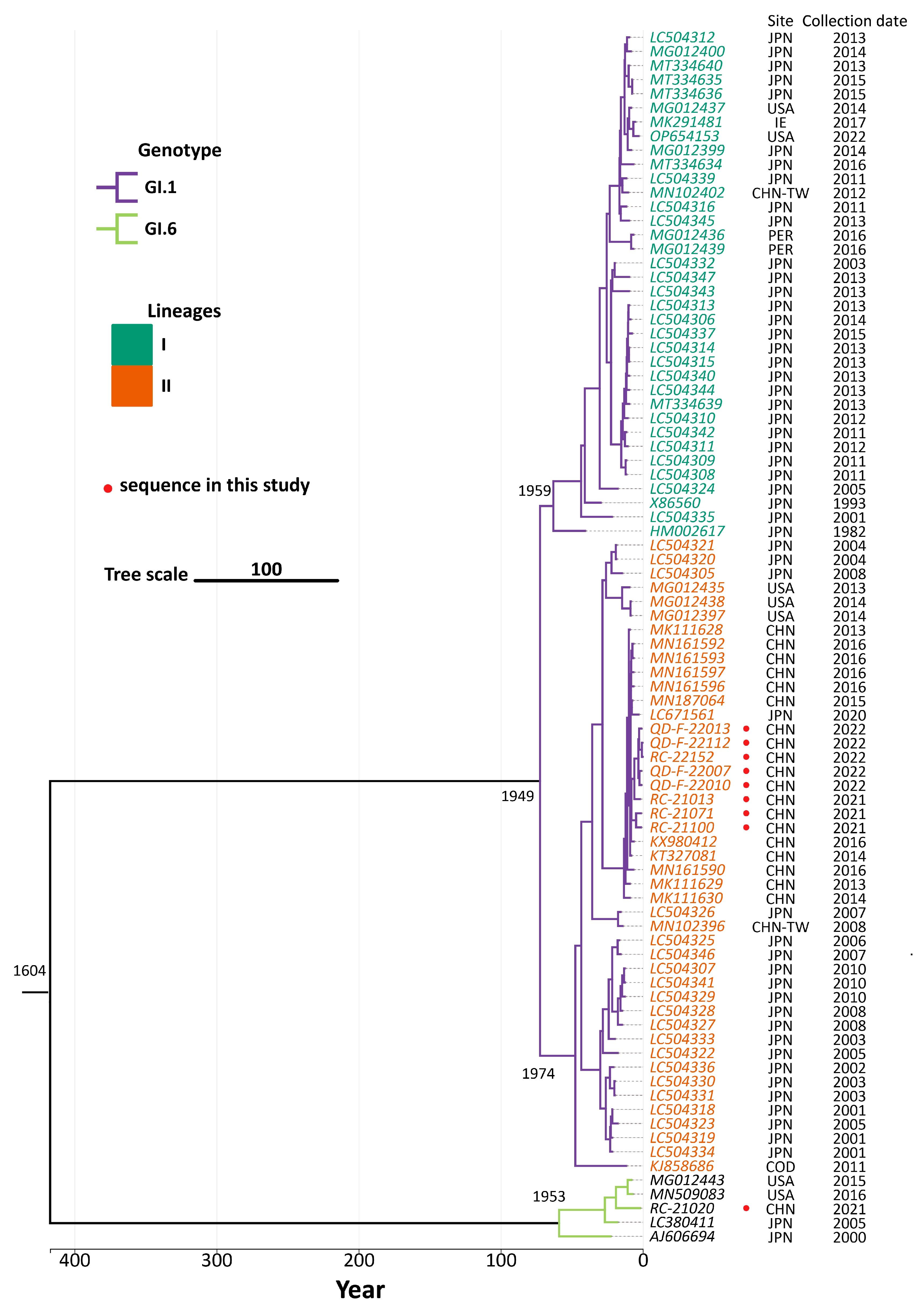
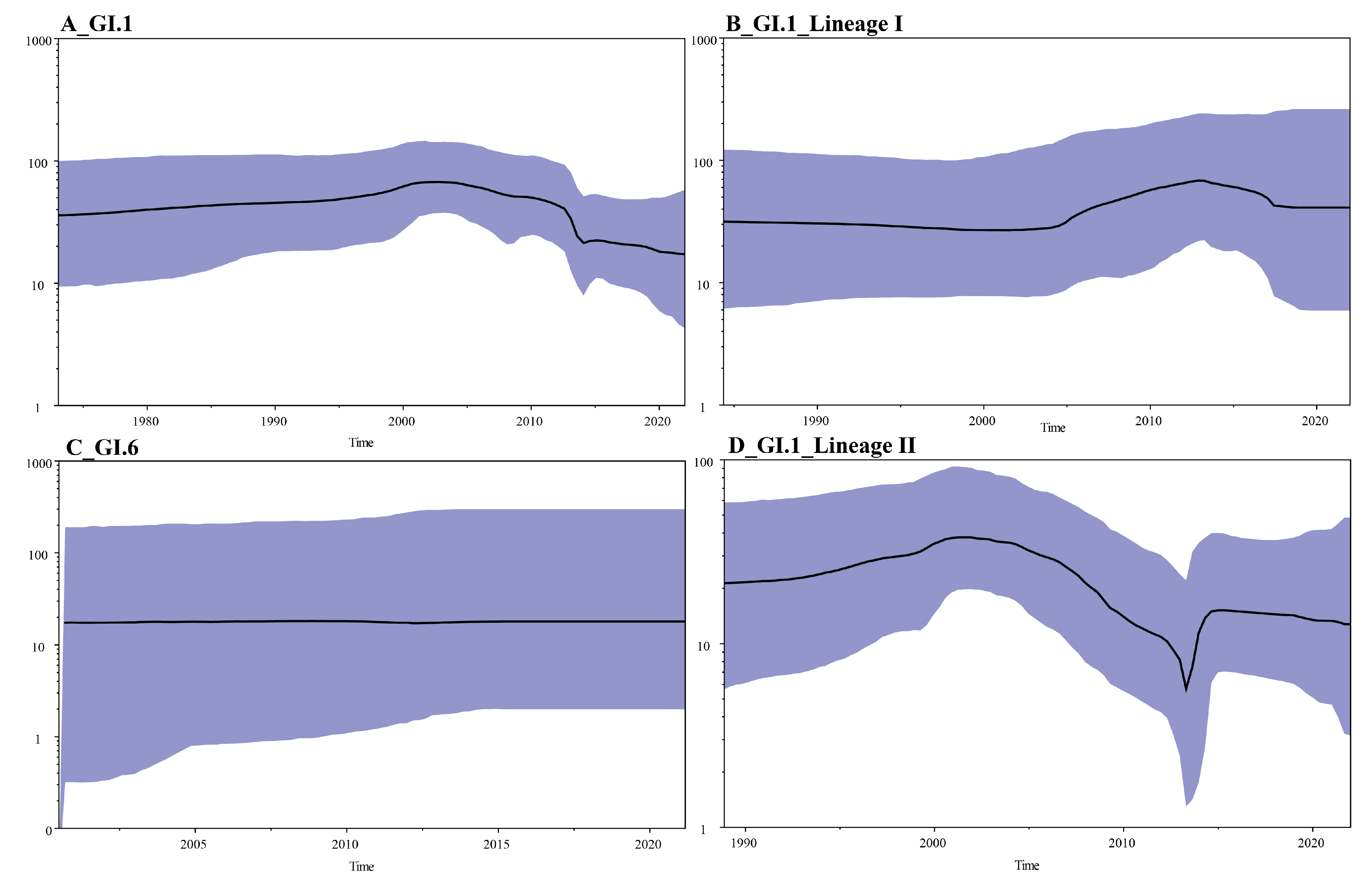
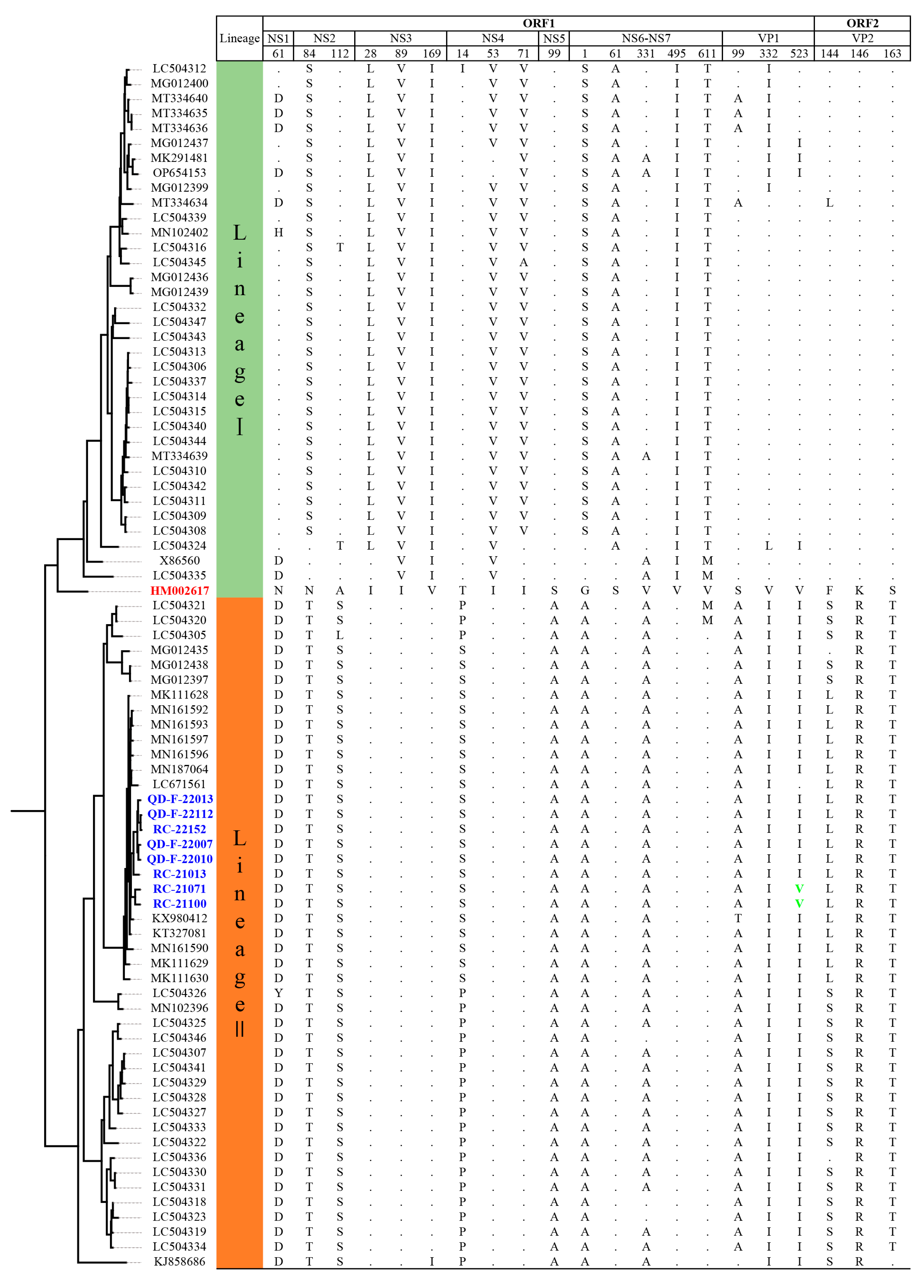
Sapovirus (SaV) is a type of gastroenteric virus that can cause acute gastroenteritis. It is highly contagious, particularly among children under the age of 5. In this study, a total of 712 stool samples from children under the age of 5 with acute gastroenteritis were collected. Out of these samples, 28 tested positive for SaV, resulting in a detection rate of 3.93% (28/712). Samples with Ct < 30 were collected for library construction and high-throughput sequencing, resulting in the acquisition of nine complete genomes. According to Blast, eight of them were identified as GI.1, while the remaining one was GI.6. The GI.6 strain sequence reported in our study represents the first submission of the GI.6 strain complete genome sequence from mainland China to the Genbank database, thus filling the data gap in our country. Sequence identity analysis revealed significant nucleotide variations between the two genotypes of SaV and their corresponding prototype strains. Phylogenetic and genetic evolution analyses showed no evidence of recombination events in the obtained sequences. Population dynamics analysis demonstrated potential competitive inhibition between two lineages of GI.1. Our study provides insights into the molecular epidemiological and genetic evolution characteristics of SaV prevalent in the Nantong region of China, laying the foundation for disease prevention and control, as well as pathogen tracing related to SaV in this area.
Keywords: sapovirus; GI.1; GI.6; molecular evolutionary rate; amino acid variations; population dynamics sapovirus; GI.1; GI.6; molecular evolutionary rate; amino acid variations; population dynamics