Article

Functional Analysis of a Frontal miRNA Cluster Located in the Large Latency Transcript of Pseudorabies Virus
by
Weronika Hoffmann
,
Andrea D. Lipińska
* and
Krystyna Bieńkowska-Szewczyk
*
Laboratory of Virus Molecular Biology, Intercollegiate Faculty of Biotechnology, University of Gdańsk, Abrahama 58, 80-307 Gdańsk, Poland
*
Authors to whom correspondence should be addressed.
Viruses 2022, 14(6), 1147; https://doi.org/10.3390/v14061147
Submission received: 13 April 2022 / Revised: 19 May 2022 / Accepted: 24 May 2022 / Published: 26 May 2022
(This article belongs to the Special Issue State-of-the-Art Animal Virus Research in Poland II)

Abstract

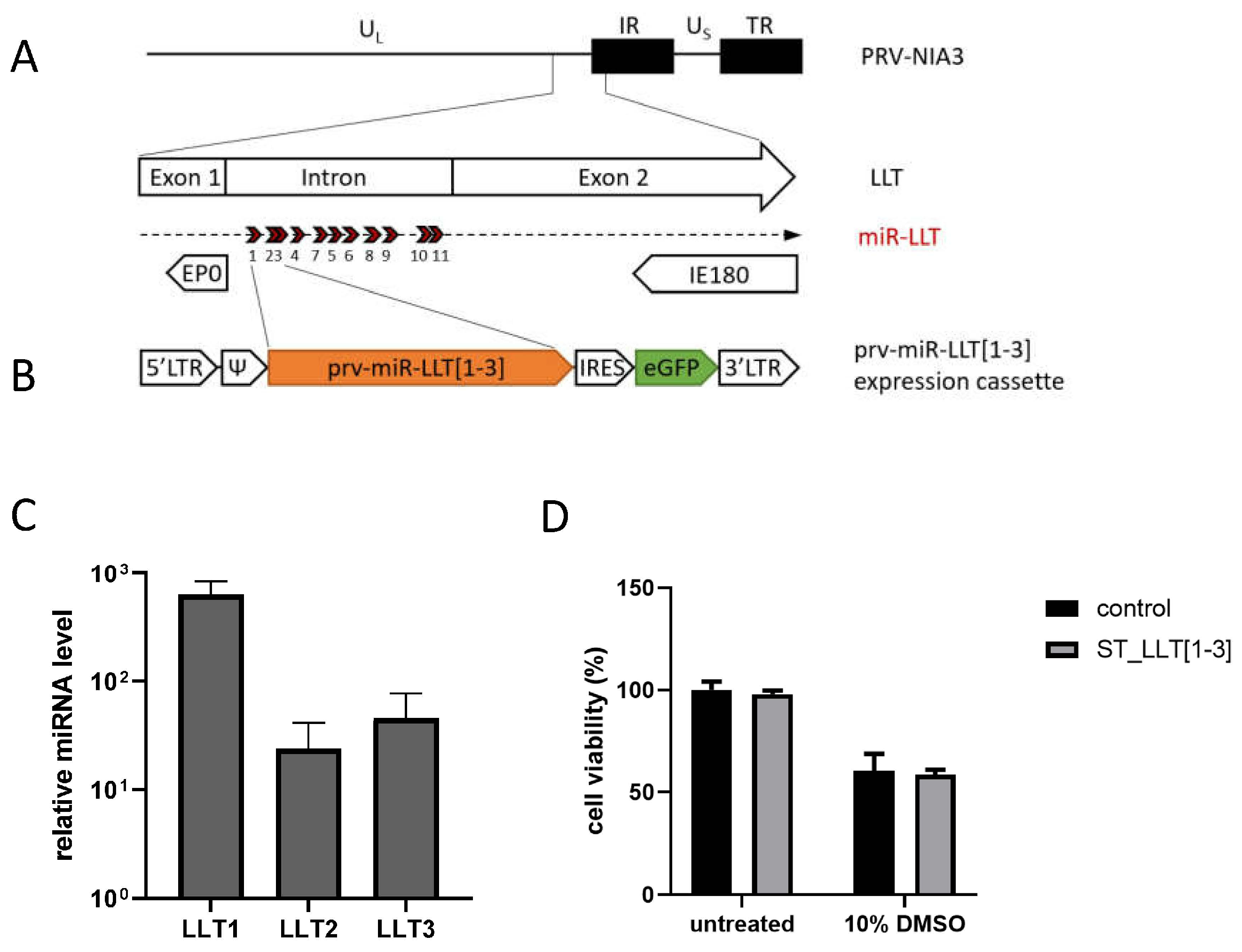
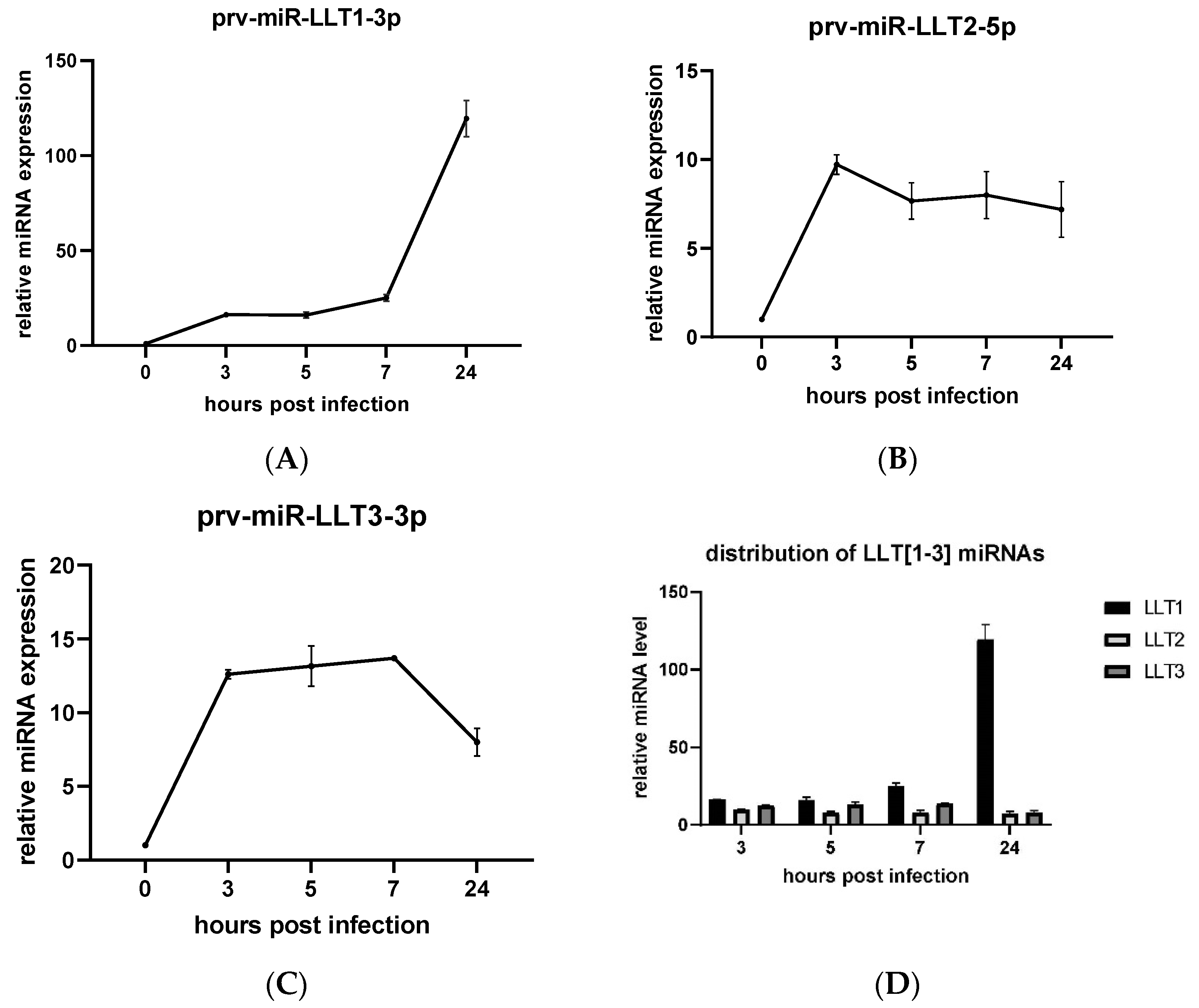
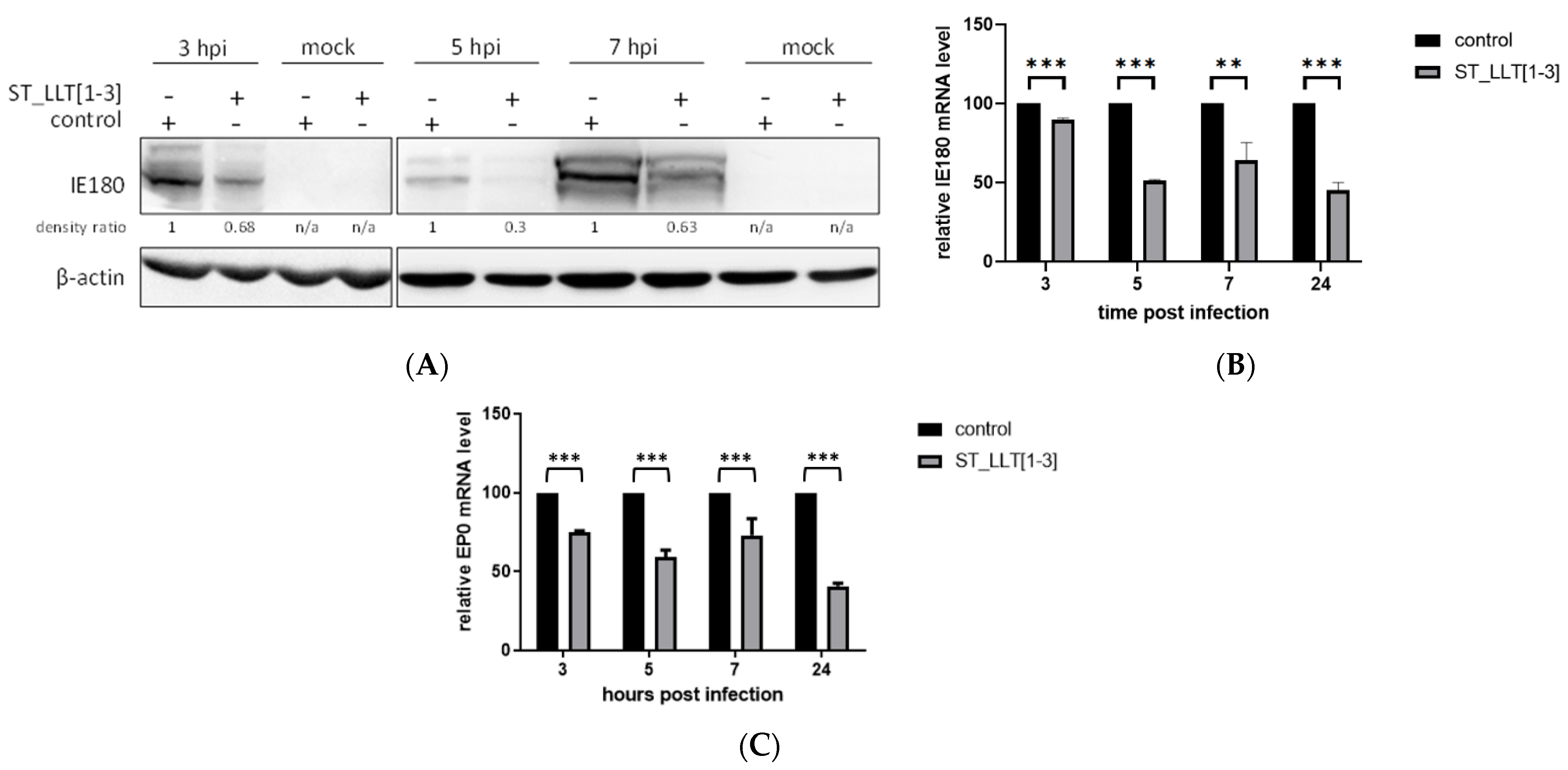
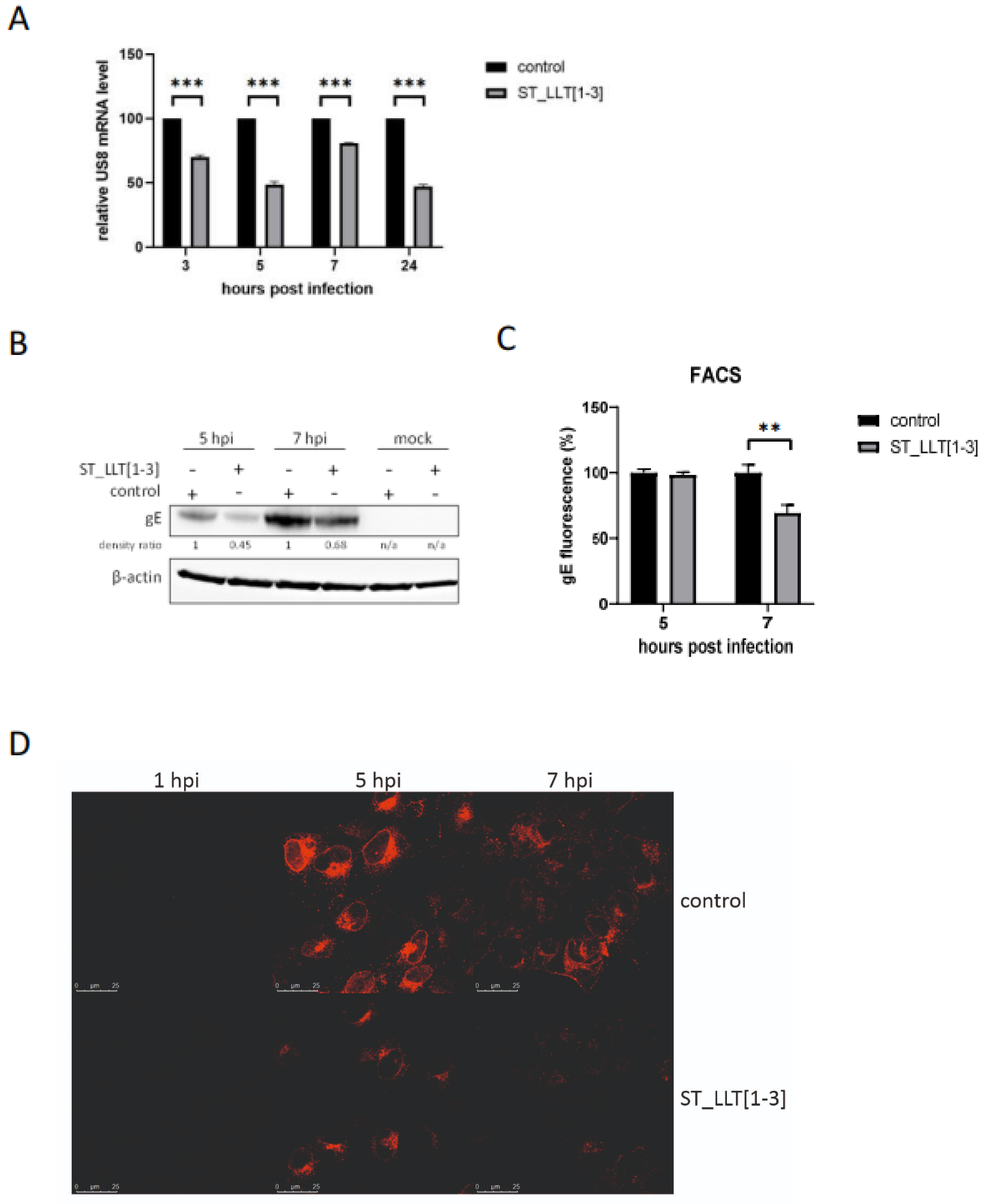
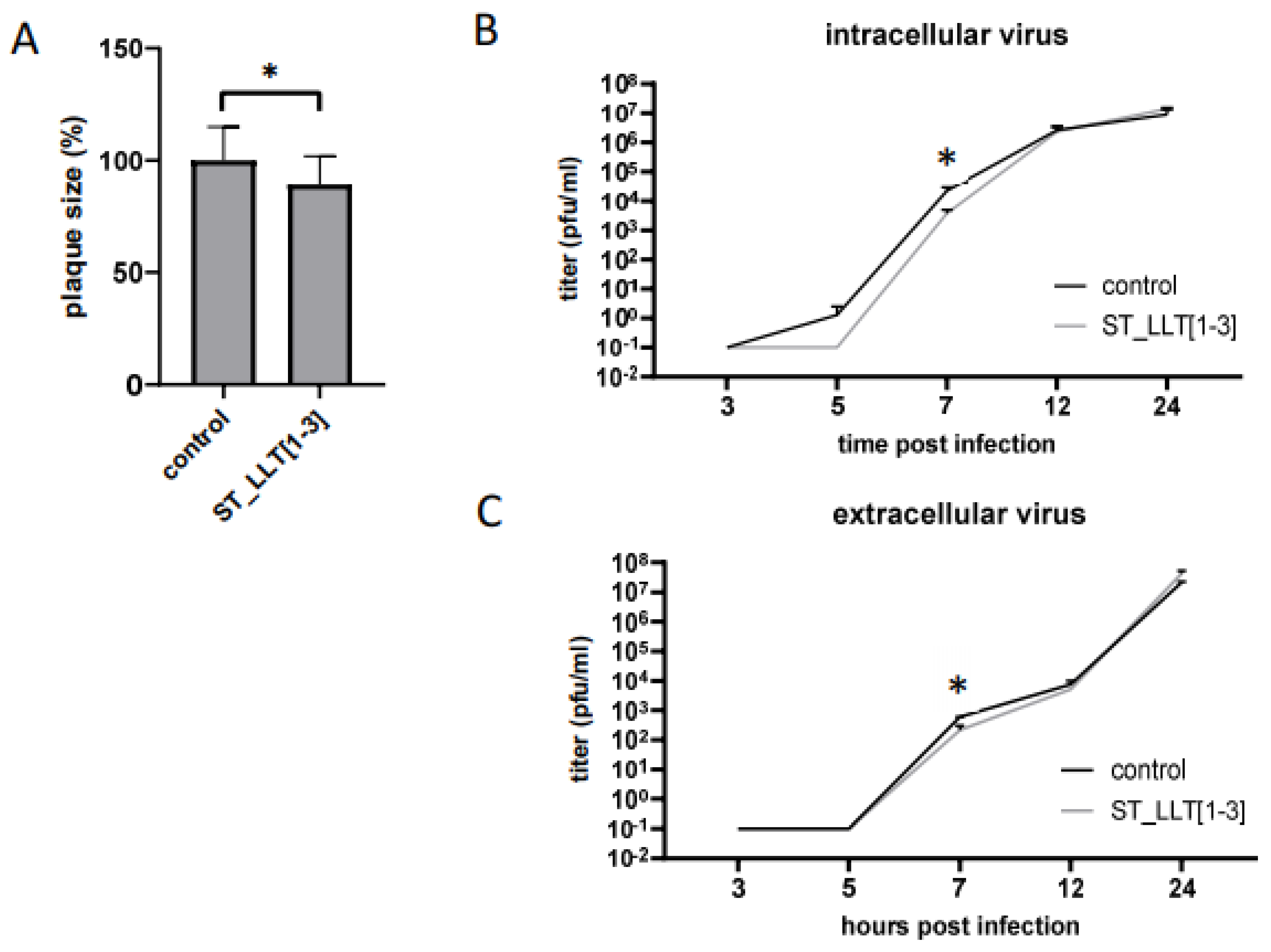
MicroRNAs (miRNAs) have been identified as a class of crucial regulators of virus-host crosstalk, modulating such processes as viral replication, antiviral immune response, viral latency, and pathogenesis. Pseudorabies virus (PRV), a model for the study of alphaherpesvirus biology, codes for 11 distinct miRNAs mapped to the ~4.6 kb intron of Large Latency Transcript (LLT). Recent studies have revealed the role of clusters consisting of nine and eleven miRNA genes in the replication and virulence of PRV. The function of separate miRNA species in regulating PRV biology has not been thoroughly investigated. To analyze the regulatory potential of three PRV miRNAs located in the frontal cluster of the LLT intron, we generated a research model based on the constitutive expression of viral miRNAs in swine testis cells (ST_LLT [1–3] cell line). Using a cell culture system providing a stable production of individual miRNAs at high levels, we demonstrated that the LLT [1–3] miRNA cluster significantly downregulated IE180, EP0, and gE at the early stages of PRV infection. It was further determined that LLT [1–3] miRNAs could regulate the infection process, leading to a slight distortion in transmission and proliferation ability. Collectively, our findings indicate the potential of LLT [1–3] miRNAs to retard the host responses by reducing viral antigenic load and suppressing the expansion of progeny viruses at the early stages of infection.
Keywords: pseudorabies virus; Large Latency Transcript; miRNA cluster; IE180; EP0; glycoprotein E pseudorabies virus; Large Latency Transcript; miRNA cluster; IE180; EP0; glycoprotein E