Article

V5 and GFP Tagging of Viral Gene pp38 of Marek’s Disease Vaccine Strain CVI988 Using CRISPR/Cas9 Editing

1
Viral Oncogenesis Group, The Pirbright Institute, Pirbright, Guildford GU24 0NF, UK
2
The Jenner Institute Laboratories, University of Oxford, Oxford OX1 4BH, UK
3
Department of Zoology, University of Oxford, Oxford OX1 4BH, UK
*
Authors to whom correspondence should be addressed.
These authors contributed equally to this work.
Viruses 2022, 14(2), 436; https://doi.org/10.3390/v14020436
Submission received: 19 January 2022 / Revised: 16 February 2022 / Accepted: 18 February 2022 / Published: 21 February 2022
(This article belongs to the Special Issue Animal Herpesviruses Pathogenesis and Immunity)

Abstract

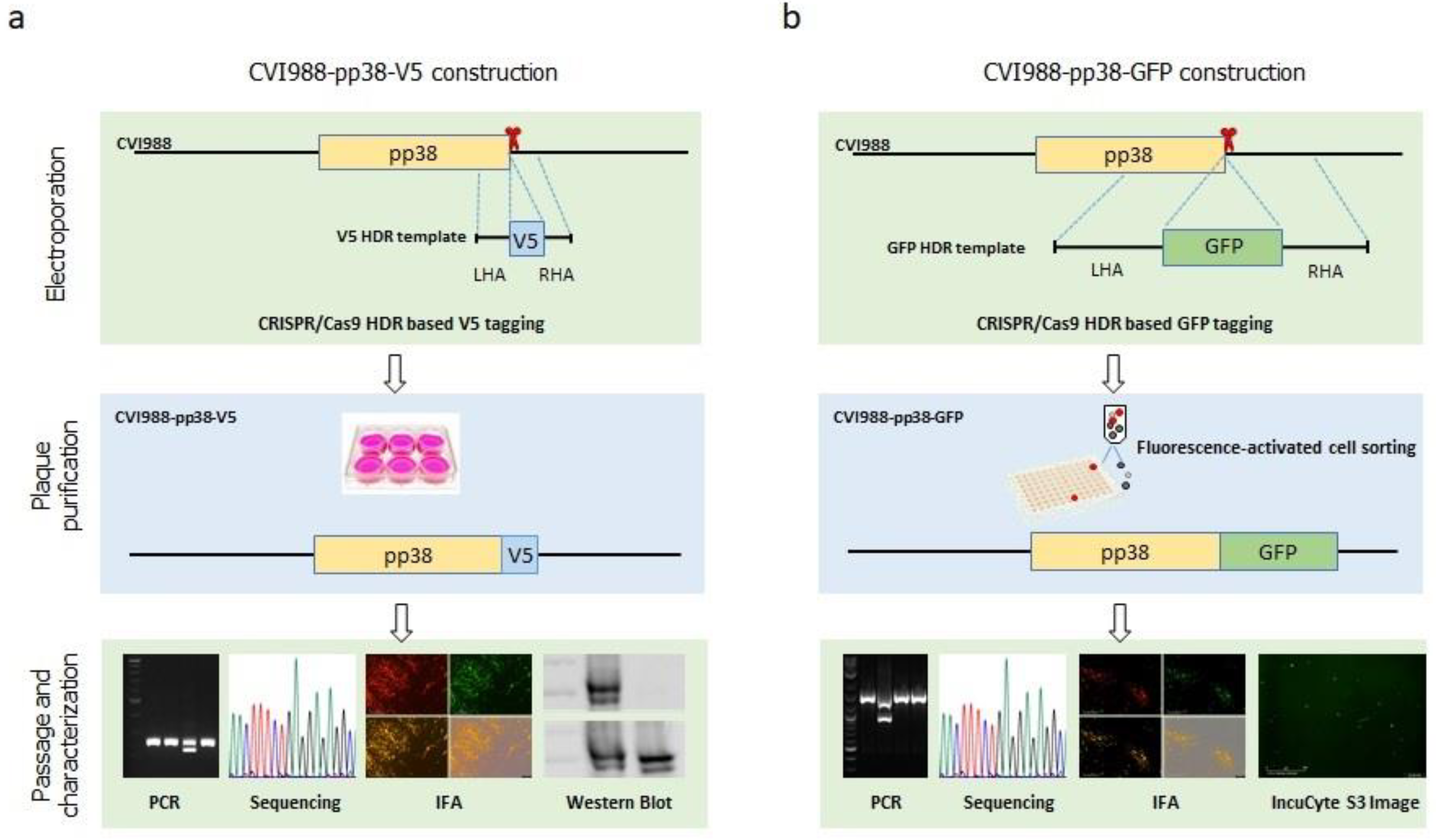
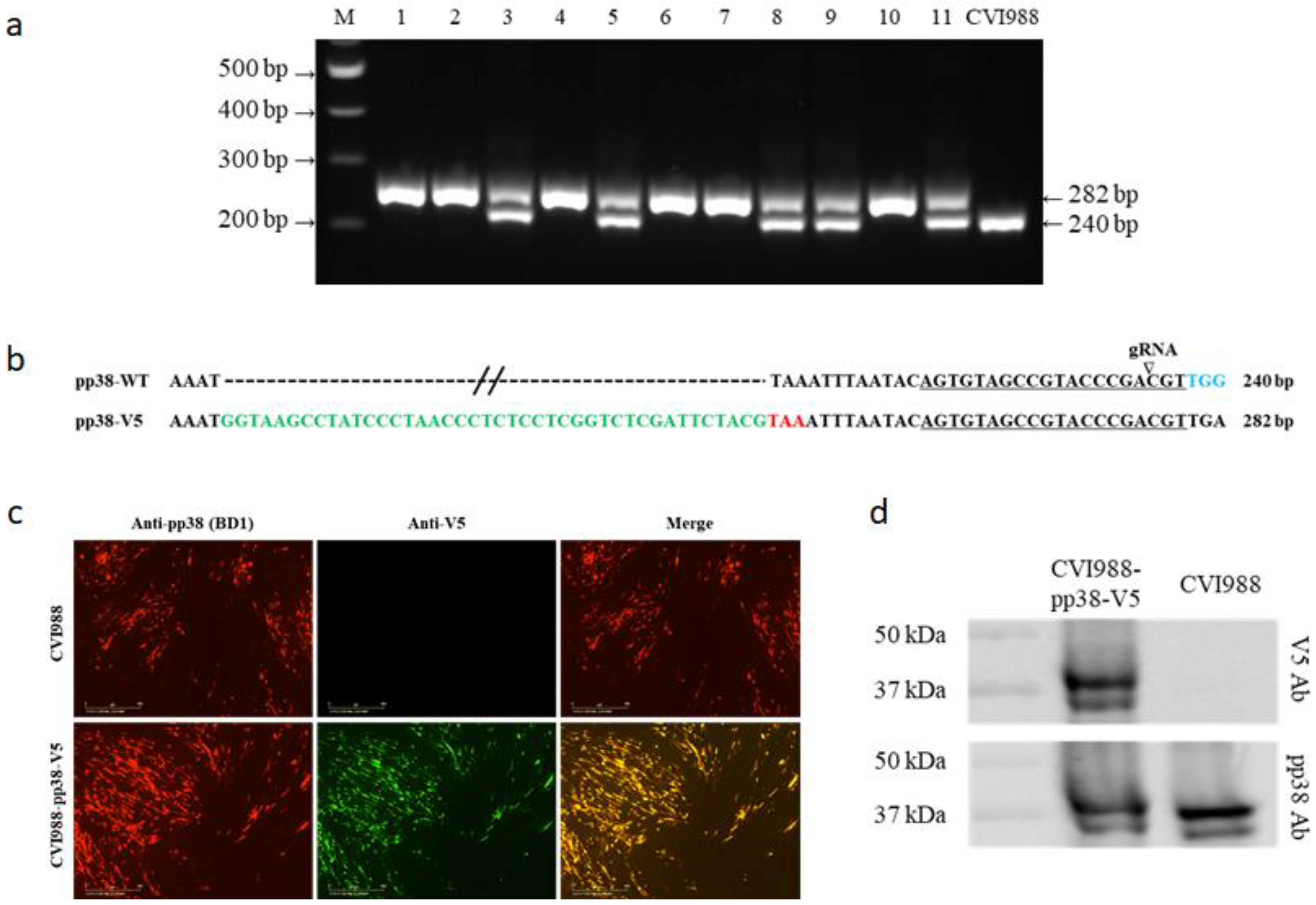
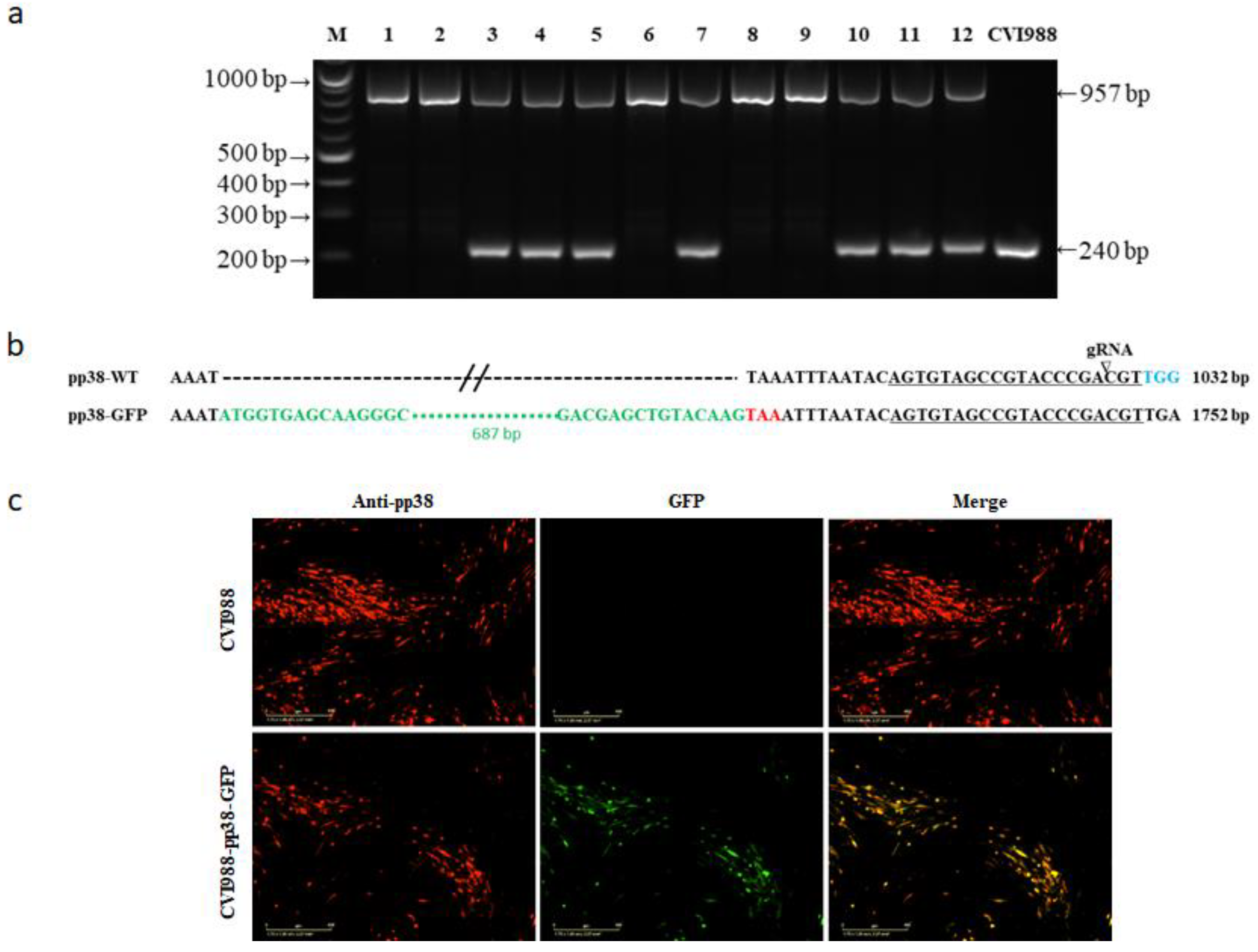
Marek’s disease virus (MDV) is a member of alphaherpesviruses associated with Marek’s disease, a highly contagious neoplastic disease in chickens. The availability of the complete sequence of the viral genome allowed for the identification of major genes associated with pathogenicity using different techniques, such as bacterial artificial chromosome (BAC) mutagenesis and the recent powerful clustered regularly interspaced short palindromic repeats (CRISPR)/CRISPR-associated protein 9 (Cas9)-based editing system. Thus far, most studies on MDV genome editing using the CRISPR/Cas9 system have focused on gene deletion. However, analysis of the expression and interactions of the viral proteins during virus replication in infected cells and tumor cells is also important for studying its role in MDV pathogenesis. The unavailability of antibodies against most of the MDV proteins has hindered the progress in such studies. This prompted us to develop pipelines to tag MDV genes as an alternative method for this purpose. Here we describe the application of CRISPR/Cas9 gene-editing approaches to tag the phosphoprotein 38 (pp38) gene of the MDV vaccine strain CVI988 with both V5 and green fluorescent protein (GFP). This rapid and efficient viral-gene-tagging technique can overcome the shortage of specific antibodies and speed up the MDV gene function studies significantly, leading to a better understanding of the molecular mechanisms of MDV pathogenesis.
Keywords: CRISPR/Cas9; MDV; pp38; tagging; V5; GFP CRISPR/Cas9; MDV; pp38; tagging; V5; GFP